


 购物车
购物车 个人中心
个人中心
The Lost Ark of the Covenant
¥79.11
After 2,500 Years of Mystery, the Truth About the Ark of the Covenant Is Revealed The Lost Ark of the Covenant is the real-life account of an astounding quest professor Tudor Parfitt's effort to recover the revered artifact that contained the Ten Commandments, sacred to Judaism, Christianity, and Islam. With painstaking historical scholarship, groundbreaking genetic science, and fascinating on-the-ground discoveries, Parfitt, who the Wall Street Journal calls "a British Indiana Jones," debunks the previous myths and reveals the shocking history of the Ark and its keepers.
Happy Hours
¥84.16
Did You Know Female alcoholics are twice as likely to die as male alcoholics in the same age group Women metabolize alcohol differently from men, more quickly developing such physical complications as liver disease, high blood pressure, and hepatitis. A female alcoholic is more likely to suffer from depression, anxiety, and eating disorders, which may not go away even if she stops drinking. An astonishing four million women in the U.S. meet the diagnostic criteria for abuse or dependence. When a woman drinks, she is five times more likely to be raped. These are just a few of the alarming facts you will learn from this book -- facts every woman needs to know. Mixing cutting-edge research with affecting stories of women who struggle with alcohol problems, Happy Hours challenges our assumptions and expands our awareness of the role alcohol plays in women's lives.
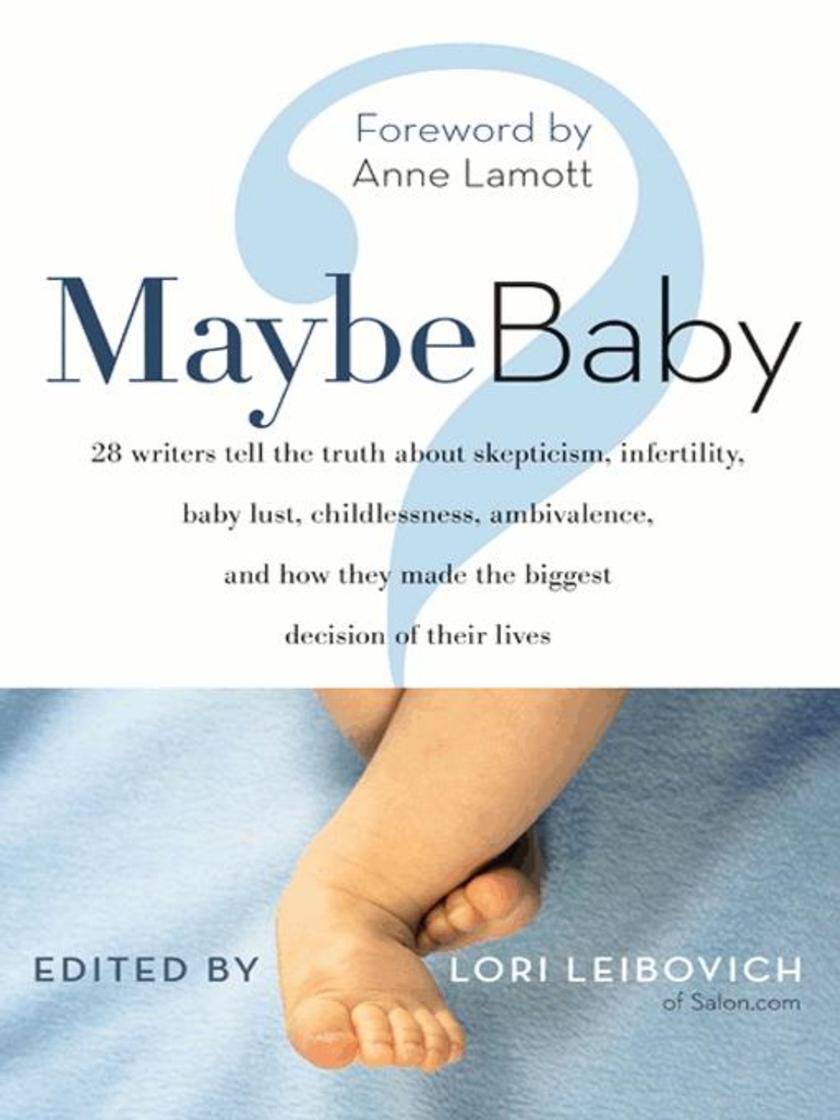
Maybe Baby
¥83.03
To breed or not to breedThat is the question twenty-eight accomplished writers ponder in this collection of provocative, honest, soul-searching essays. Based on a popular series at Salon.com, Maybe Baby offers both frank and nuanced opinions from a wide range of viewpoints on parenting choices, both alternative and traditional. Yes: "I've been granted access to a new plane of existence, one I could not have imagined, and would not now live without." Peter NicholsNo: "I can sort of see that it might be nice to have children, but there are a thousand things I'd rather spend my time doing than raise them." Michelle GoldbergMaybe: "As we both slip into our mid-thirties, my own personal daddy dilemma has quietly taken on an urgency that I frankly didn't expect." Larry SmithFrom infertility to adoption, from ambivalence to baby lust, Maybe Baby brings together the full force of opinions about this national, but also intensely personal, debate.
Children Are from Heaven
¥94.10
This brilliantly original and practical system for parenting children is the brainchild of John Gray, whose Men Are from Mars, Women Are from Venus books and seminars have helped millions of adults communicate more effectively and lovingly with each other. Based on this idea that children respond better to positive rather than negative reinforcement, the Children Are from Heaven program concentrates on rewarding, not punishing, children and fostering their innate desire to please their parents.Central to this approach are the five positive messages your children need to learn again and again:It's okay to be different.It's okay to make mistakes.It's okay to express negative emotions.It's okay to want more.It's okay to say no, but remember Mom and Dad are the bosses.
Nanny 911
¥101.00
Regain control of your children with simple, direct, nanny-tested measures!Is your life chaoticAre your kids running the showDo you feel like you're more of a zookeeper than a parent?Take heart, America. When your family's in trouble, Nanny 911 is there on the double. Because brats are not born, they're made. No one knows that better than Deborah Carroll and Stella Reid Nanny Deb and Nanny Stella the stars of the overnight hit television show on the Fox network. Each week, up to ten million viewers tune in to see the nannies take charge and transform one family's utter chaos into serenity. No matter how loud the tantrums or how clueless the parents, Nanny Deb and Nanny Stella help them become the families they always wanted to be.Now the nannies share their remarkable wisdom with millions of overwhelmed parents desperate for foolproof parenting advice at their fingertips. They'll show that parents need to change their behavior first because when there are no consequences for naughty behavior, kids quickly realize there's no reason for the naughtiness to stop. And when mom and dad just don't know what to do, the kids take over. You'll learn how to confront problems head-on, with firm but loving discipline, effective communication, and the implementation of clear House Rules.Nanny 911 is the perfect sourcebook for dealing with everyday problems that have escalated to levels that are out of control.For parenting emergencies call 911. Nanny 911, that is.With a Foreword by Head Nanny Lilian Sperling
Your Adolescent
¥123.45
Parents, teachers, and mental health workers will find the answersto these- and many other-questions in this forthright yet compassionate guide to helping your adolescent through the tumultuous teen years. From peer pressure and self-esteem to experimentation with sex, alcohol, and drugs, this invaluable resource covers a wide range of pratical issues. Here as well is information on more serious obstacles to a teen's development that may require professional intervention, such as depression, eating disorders, substance abuse, and disruptive behavorial disorders. As surely as every child will become a teen, every person that must relate to a teen will find this book a reliable, indespensable guide to the ups and downs of adolecence.
Make Me an Instrument of Your Peace
¥110.71
Kent Nerburn's Make Me an Instrument of Your Peace, immerses us in the spirit of one of the most universally inspiring figures in history: St. Francis of Assisi. The Prayer of St. Francis boldly but gently challenges us to resist the forces of evil and negativity with the spirit of goodwill and generosity. And Nerburn shows, in his wonderfully personal and humble way, how we each can live out the prayer's pre*ion for living in our everyday and less-than-saintly lives. "Where there is hatred, let me sow love...Where there is injury, let me sow pardon..." Expanding upon each line of the St. Francis Prayer, Nerburn shares touching, inspiring stories from his own experience and that of others and reveals how each of us can make a difference for good in ordinary ways without being heroes or saints. Struggling to help a young son comfort his best friend when his mother dies, moved by the courage of war enemies who reconcile, being wrenched out of self-absorbed depression by responding to someone else's tragedy, taking a spirited old lady on a farewell taxi ride through her town-these are the kinds of everyday moments in which Nerburn finds we can live out the spirit of St. Francis. By incorporating the power and grace of these few lines of practical idealism into our thoughts and deeds, we can begin to ease our own suffering-and the suffering of those with whom we share our lives. And, remarkably, find a way to true peace and happiness by tapping into our basic human goodness. As we open our hearts and embrace his words, St. Francis "touches our deepest humanity and ignites the spark of our divinity." Lord, make me an instrument of thy peace.Where there is hatred let me sow love,Where there is injury let me sow pardon,Where there is doubt, faith,Where there is despair, hope,Where there is darkness, light,And where there is sadness, joy... In this beautifully written book, Kent Nerburn leads us into the heart of the St. Francis Prayer and line by line demonstrates how St. Francis's words can resonate in our lives today.
Luck
¥121.80
Filled with everything you need to live a luckier life, Luck: The Essential Guide is here with information, advice, or if you just have to knock on wood.
To Have and To Hold
¥83.93
From the author of The Monogamy Myth, an essential guide written specifically for married couples to strengthen their relationship and prevent affairs.Based on Peggy Vaughan's 30 years of work with married couples and the issue of affairs, this new handbook challenges the assumption that monogamy can be taken for granted, and provides the tools for building a strong marriage and preventing affairs.Explaining the need to focus on preventing affairs before there is any threat to a marriage, she draws on her survey of 755 people regarding their beliefs to present "What Won't Work" and "What Will Work" to prevent affairs.Throughout To Have and to Hold, Vaughan details specific strategies and techniques, emphasizing that: Relying on attitudes and beliefs is not sufficient to maintain a monogamous relationship over a lifetime. Focusing on actions and behaviors is far more significant to strengthen a relationship. Responsible honesty is the single most important factor in preventing affairs. Everybody (society as a whole) plays a role in supporting couples' efforts to maintain monogamy. Parents have a special responsibility to break the pattern for future generations. Four appendices present Vaughan's survey questionnaire along with detailed breakdowns of responses.
Owning Your Own Shadow
¥88.56
A bestselling author shows how we can reclaim and make peace with the shadow side of our personality.
The Secret of the Shadow
¥83.03
The #1 New York Times bestselling author shows how our most self-defeating thought can become blueprints for a fulfilling, rewarding life.
The Great Omission
¥95.11
The last command Jesus gave the church before he ascended to heaven was the Great Commission, the call for Christians to "make disciples of all the nations." But Christians have responded by making "Christians," not "disciples." This, according to brilliant scholar and renowned Christian thinker Dallas Willard, has been the church's Great Omission."The word disciple occurs 269 times in the New Testament," writes Willard. "Christian is found three times and was first introduced to refer precisely to disciples of Jesus. . . . The New Testament is a book about disciples, by disciples, and for disciples of Jesus Christ. But the point is not merely verbal. What is more important is that the kind of life we see in the earliest church is that of a special type of person. All of the assurances and benefits offered to humankind in the gospel evidently presuppose such a life and do not make realistic sense apart from it. The disciple of Jesus is not the deluxe or heavy-duty model of the Christian -- especially padded, textured, streamlined, and empowered for the fast lane on the straight and narrow way. He or she stands on the pages of the New Testament as the first level of basic transportation in the Kingdom of God."Willard boldly challenges the thought that we can be Christians without being disciples, or call ourselves Christians without applying this understanding of life in the Kingdom of God to every aspect of life on earth. He calls on believers to restore what should be the heart of Christianity -- being active disciples of Jesus Christ. Willard shows us that in the school of life, we are apprentices of the Teacher whose brilliance encourages us to rise above traditional church understanding and embrace the true meaning of discipleship -- an active, concrete, 24/7 life with Jesus.
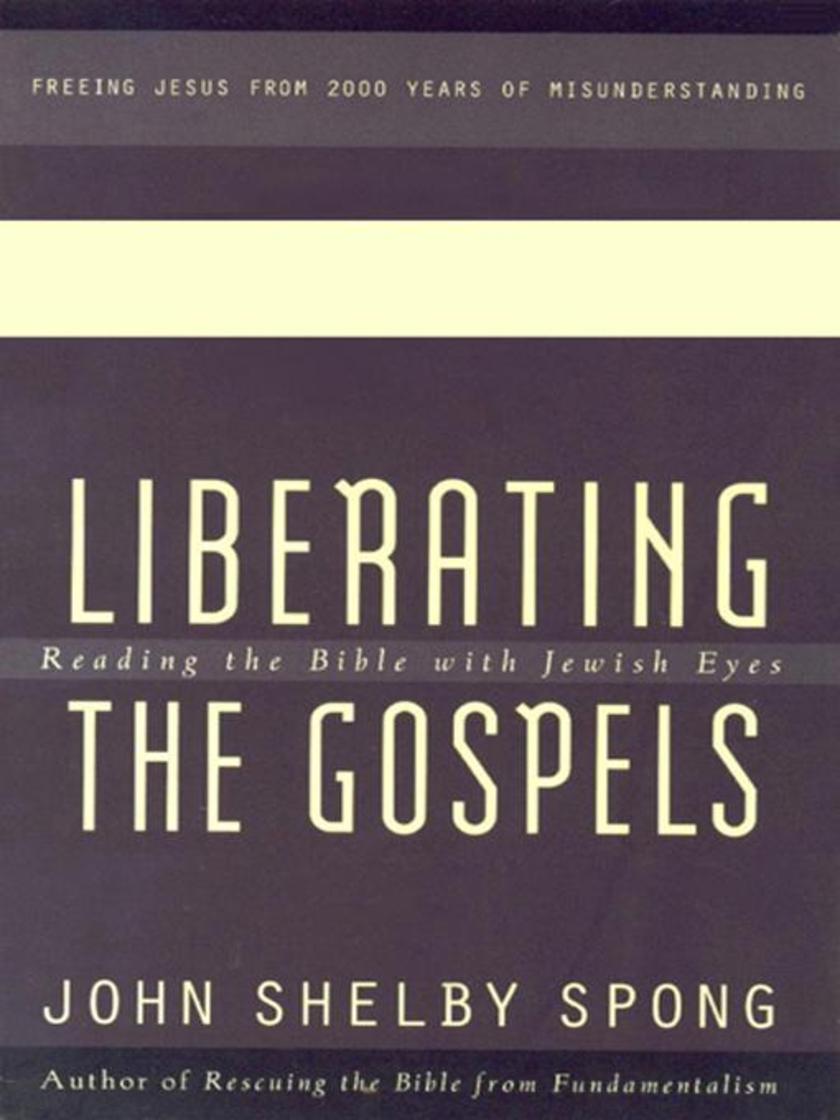
Liberating the Gospels
¥90.77
In this boldest book since Rescuing the Bible from Fundamentalism, Bishop John Shelby Spong offers a compelling view of the Gospels as thoroughly Jewish tests.Spong powerfully argues that many of the key Gospel accounts of events in the life of Jesus from the stories of his birth to his physical resurrection are not literally true. He offers convincing evidence that the Gospels are a collection of Jewish midrashic stories written to convey the significance of Jesus. This remarkable discovery brings us closer to how Jesus was really understood in his day and should be in ours.
Scambusters!
¥90.77
Scambusters! is a working manual senior citizens can use to defend themselves against the most common scams aimed at the elderly. It provides readers with a comprehensive approach to identifying scams in the making, and shows them specific prevention tools and how to use them. Inside, you'll find step-by-step instructions, helpful anecdotes, and references to dozens of consumer organizationals and government agencies devoted to thwarting swindlers. Weather buying mutual funds, repairing a car, purchasing drugs from online pharmacies, or taking out loans on your home, Scambusters! will protect seniors when they need it.
Run to the Mountain
¥99.65
When Thomas Merton died accidentally in Bangkok in 1968, the beloved Trappist monk's will specified that his personal diaries not be published for 25 years -- presumably because they contained his uncensored thoughts and feelings. Now, a quarter of a century has passed since Merton's death, and the journals are the last major piece of writing to appear by the 20th century's most important spiritual writer.The first of seven volumes, Run to the Mountain offers an intimate glimpse at the inner life of a young, pre-monastic Merton. Here readers will witness the insatiably curious graduate student in New York's Greenwich Village give way to the tentative spiritual seeker and brilliant writer. Merton playfully lists everything from his favorite lines of poetry and songs to the things he most loves and hates.Thomas Merton was an inveterate diarist; his journals offer a complete and candid look at the rich transformations of his adult life. As Brother Patrick Hart, general editor of the series notes, "Perhaps his best writing can be found in the journals, where he was expressing what was deepest in his heart with no thought of censorship. With their publication we will have as complete a picture of Thomas Merton as we can hope to have."
Seven Life Lessons of Chaos
¥83.03
If you have ever felt your life was out of control and headed toward chaos,science has an important message: Life is chaos, and that's a very exciting thing!In this eye-opening book, John Briggs and F. David Peat reveal sevenenlightening lessons for embracing the chaos of daily life.Be Creative:engage with chaos to find imaginative new solutions and live more dynamicallyUse Butterfly Power:let chaos grow local efforts into global resultsGo With the Flow:use chaos to work collectively with othersExplore What's Between:discover life's rich subtleties and avoid the traps of stereotypesSee the Art of the World:appreciate the beauty of life's chaosLive Within Time:utilize time's hidden depthsRejoin the Whole:realize our fractal connectedness to each other and the worldLife is impossible to control--instead of fighting this truth, Seven Life Lessons of Chaos shows you how to accept, celebrate, and use it to live life to its fullest.
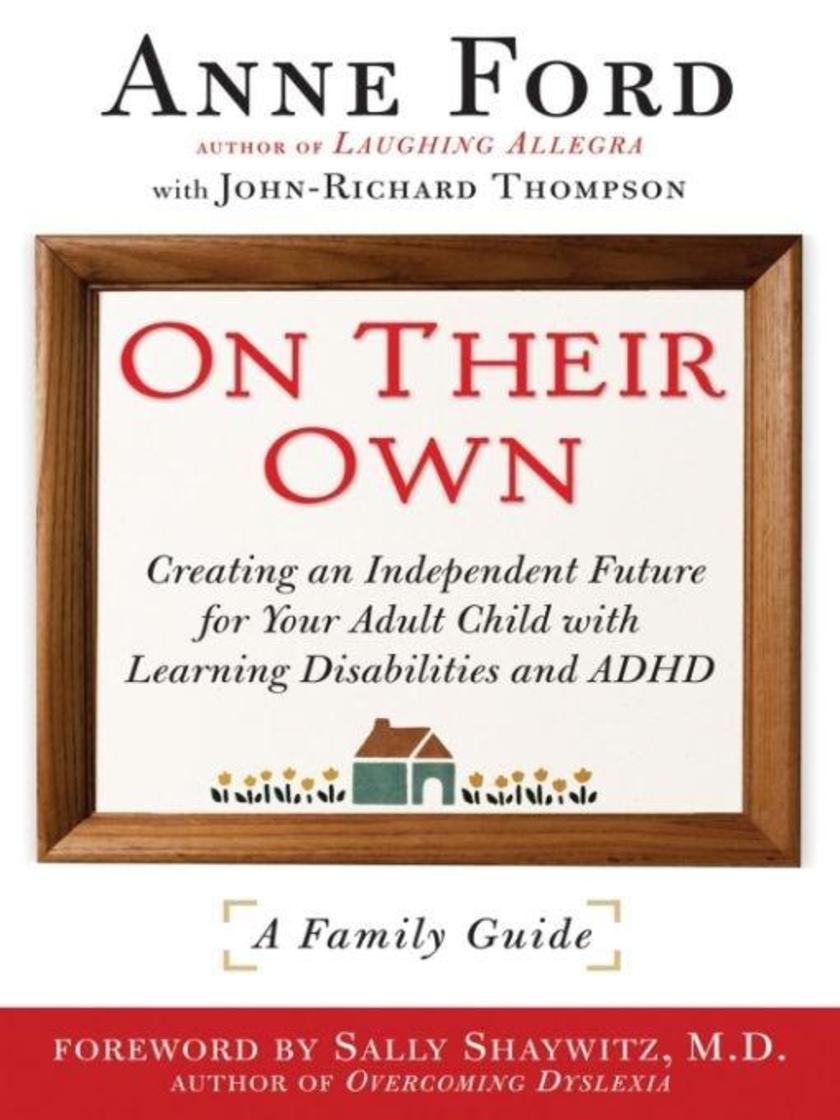
On Their Own
¥93.88
An indispensable guide to the special challenges faced by parents of learning-disabled children as they enter adulthood, by the author of Laughing Allegra, a leading activist and parent of an adult child with LD.In 2003 Anne Ford (great-granddaughter of Henry Ford) published Laughing Allegra, about the struggles of raising her learning-disabled daughter, and received a flood of letters from parents of children with LD, ADD, and ADHD, many expressing concerns about what to do as their children age.On Their Own is an invaluable road map to ease these parents' fears and answer their questions, especially the one that haunts them daily: Will or can their child be on their own, and howIn a candid, sympathetic style, laced with real-life stories, the book covers such topics as: Social skills and dating Staying healthy Sibling relationships Interaction with employers and co-workers Job hunting Finding the right college or trade school Estate planning Also included are a comprehensive resource guide and exclusive interviews with prominent professionals who have surmounted their learning disabilities: CEO's Sir Richard Branson, John Chambers, David Neeleman, and Charles Schwab, and former governor Gaston Caperton.
How to Talk So Teens Will Listen and Listen So Teens Will Talk
¥94.10
The renowned #1 New York Times bestselling authors share their advice and expertise with parents and teens in this accessible, indispensable guide to surviving adolescence.Adele Faber and Elaine Mazlish transformed parenting with their breakthrough, bestselling books Siblings Without Rivalry and How to Talk So Kids Will Listen; Listen So Kids Will Talk. Now, they return with this essential guide that tackles the tough issues teens and parents face today.Filled with straightforward advice and written in their trademark, down-to-earth style sure to appeal to both parents and teens, this all-new volume offers both innovative, easy-to-implement suggestions and proven techniques to build the foundation for lasting relationships. From curfews and cliques to sex and drugs, it gives parents the tools to help their children safely navigate the often stormy years of adolescence.
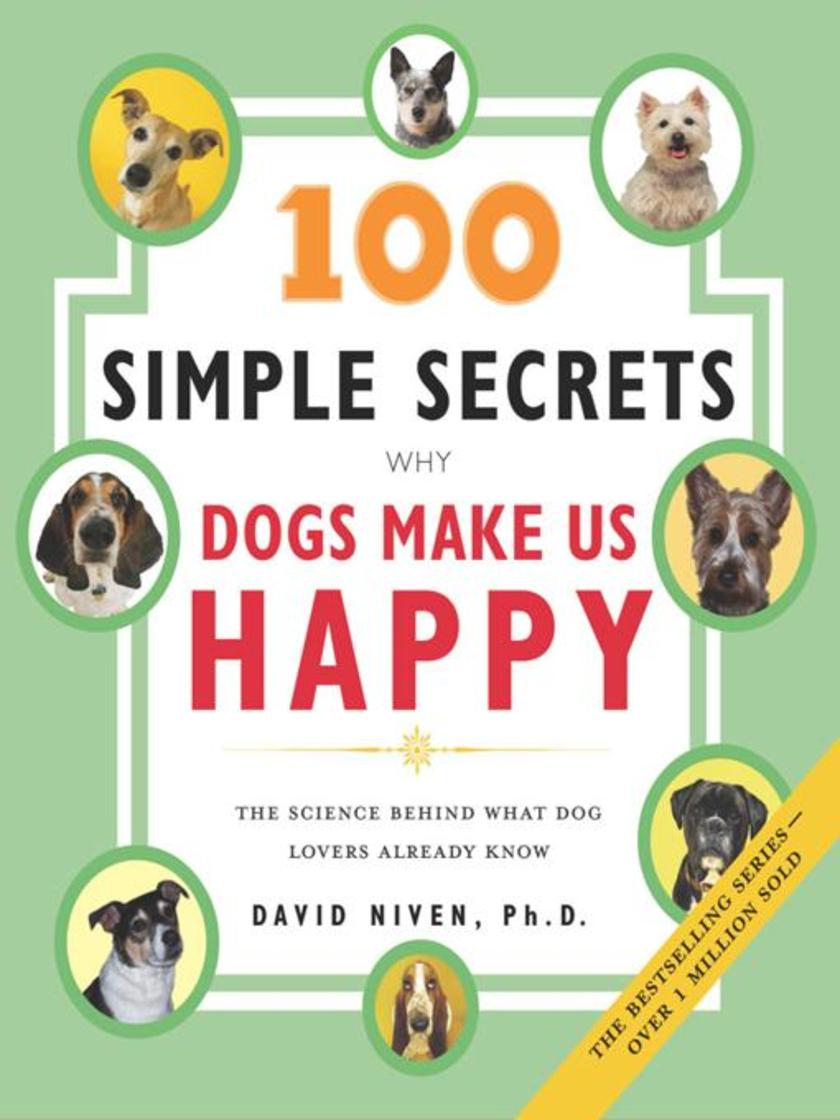
100 Simple Secrets Why Dogs Make Us Happy
¥67.09
Why do people who have dogs live happier, longer, and more fulfulling livesSociologists and veterinarians have spent years investigating the positive effects that dogs have on people's health and happiness yet their findings are inaccessible to ordinary people, hidden in obscure journals to be shared with other experts. Now the international bestselling author of the 100 Simple Secrets series has collected the most current and significant data from more than a thousand of the best scientific studies on the profound relationship between humans and our canine companions. These findings have been boiled down to the one hundred essential ways dogs positively impact our lives. Each fact is accompanied by a inspiring true story. If you love your dog, and science tells us that you do, this book will inspire and entertain. Communicate Better: It sounds odd to say a creature that communicates with barking and body language can have such a profound effect on human communication. But by providing a common point of reference and concern, dogs help us to feel a connection to other humans. That connection makes us feel more comfortable communicating with each other. When meeting a new person, the presence of a dog reduces the time before people feel comfortable while talking with each other by 45 percent. Live Longer: There is perhaps no better gift that dogs offer us humans than this simple fact. People who care for a dog live longer, healthier lives than those who do not. On average, people who cared for dogs during their lives lived 3 years longer than people who never had a dog. No Monkey Business: Primates are genetically more similar to humans than any other creature. But try to tell a chimpanzee something and you will be hard pressed to get your message across. Dogs are uniquely attuned to the messages we send. Dogs study humans and have evolved to build social skills that help them to function around us. Dogs are 52 percent more likely to follow human cues such as pointing toward a source of food than are primates. Around the Block: Good habits are often misunderstood as difficult or unpleasant chores. But there is tremendous value in the simple act of taking a walk. Walking not only burns calories, it also decreases stress. Having a dog means regularly talking walks it's something you do for your dog but in truth your dog is doing for you. Dog owners walk 79 percent farther in an average week than non–dog owners.
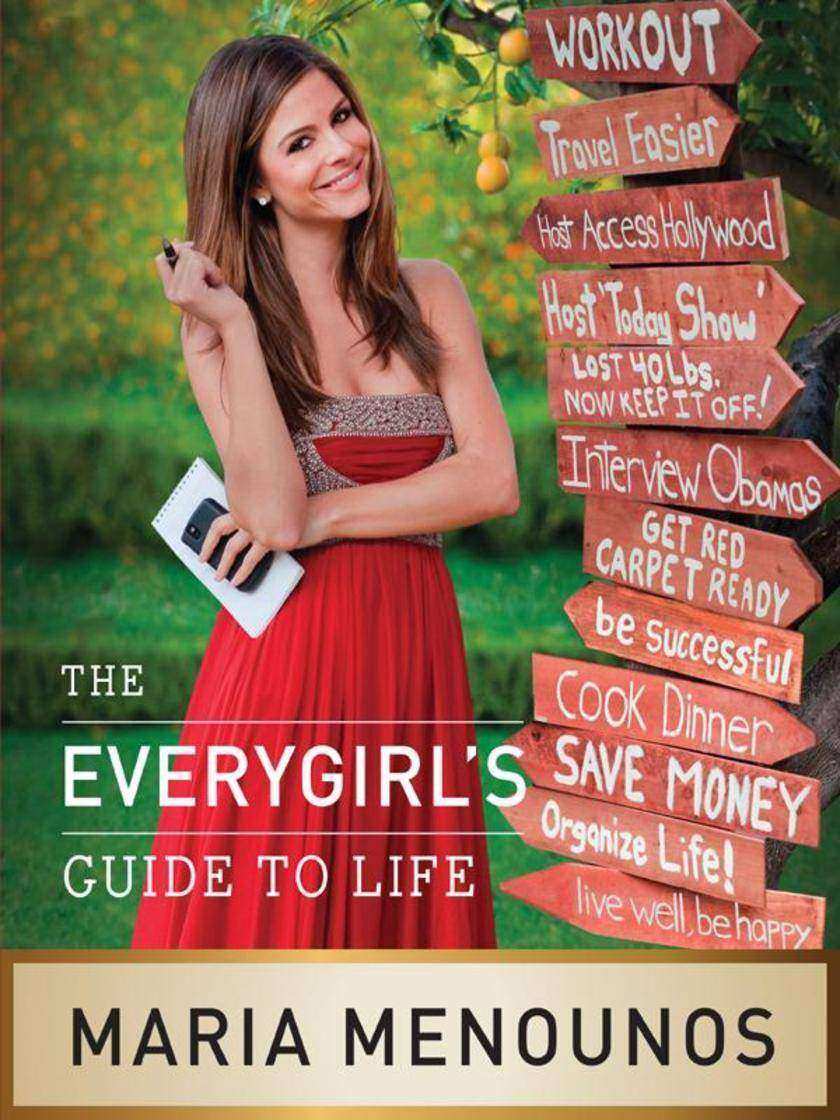
HarperCollins e-books
¥121.80
Raised by working-class immigrant parents and later exposed to Hollywood's most elite experts in every field, Access Hollywood's, Today's, and Nightly News's reporter Maria Menounos reveals her EveryGirl secrets on everything: her systems to organize life, manage time, and ascend the ladder of success; her lazy woman's workout; her weight-loss tips (how she lost forty pounds and kept it off); and her guide to styling yourself like the stars a self-proclaimed EveryGirl, Maria often does her own hair and makeup for celebrity events.In The EveryGirl's Guide to Life, Maria shares personal experiences and photos from her life and professional journey as well as the various mantras, mottos, and philosophies she's adopted from the world's most impressive women. She gives advice on health, career, relationships, renovations, recreation, and more. From your carpet to the red carpet, Maria teaches the EveryGirl on a budget how to do it all, while living a healthier and happier life.
Ground Truth: 3 Para Return to Afghanistan
¥45.62
Afghanistan, 2008. After their eighteen-month epic tour of Helmand Province, the troops of 3 Para are back. This time, the weight of experience weighs heavily on their shoulders. In April 2006 the elite 3 Para Battle Group was despatched to Helmand Province, Afghanistan, on a tour that has become a legend. All that summer the Paras were subjected to relentless Taliban attacks in one of the most gruelling campaigns fought by British troops in modern times. Two years later the Paras are back in the pounding heat of the Afghanistan front lines. The conflict has changed. The enemy has been forced to adopt new weaponry and tactics. But how much progress are we really making in the war against the insurgents? And is there an end in sight? In this searing account of 3 Para’s return, bestselling author Patrick Bishop combines gripping, first-person accounts of front-line action with an unflinching look at the hard realities of our involvement in Afghanistan. Writing from a position of exclusive access alongside the Paras, he reveals the ‘ground truth’ of the mission our soldiers have been given. It’s a sombre picture. But shining out from it are stories of courage, comradeship and humour, as well as a gripping account of an epic humanitarian operation through Taliban-infested country to deliver a vitally needed turbine to the Kajaki Dam. Frank, action-packed and absorbing, ‘Ground Truth’ is a timely and important book that will set the agenda for discussion of the Afghan conflict for years to come.


