


 购物车
购物车 个人中心
个人中心

Hard Times: - play adaptation
¥40.79
Brilliant adaptation of Charles Dickens biting novel H ard Times . Dominated by Gradgrind and Bounderby, Coketown’s prosperity is built on the cotton mills where thousands of men and women slave away for long hours and little pay. Gradgrind’s obsession with material progress damages his children Louisa and Tom, leading to scandal and disaster. ‘Hard Times’ celebrates the importance of the human heart in an age obsessed with materialism. Circus, music, and dark comedy all go into the rich mix of this truly Dickensian theatrical tale. Charles Way has written over 50 plays, specializing in writing for children, young people and family audiences. His plays are performed worldwide. He has won several major awards - A Spell of Cold Weather won the Writers Guild best children's play award in 2001 and in 2004 his play Red Red Shoes won the English Arts Council best children's play award. In Germany, his play Missing won the Children's Theatre prize and in the USA? he was nominated for a Helen Hayes Award. He was commissioned by the National Theatre to write Alice In The News , which children all over Britain have performed. He has also written many plays for radio, and a TV poem for BBC 2, No Borders , set in the Welsh borders, where he lives and has spent most of his creative life. ? " A stellar adaptation by Charles Way, moving, thoughtful and wonderfully drawn’.??????????????????????? What’s on Stage ***** ‘Way gives real depth to characters, replaces Dickens’ sentimentality with warmth and his censoriousness with moral indignation’. ?????????????????????????? The Independent ***** ‘daringly restructures Dickens’ plot, yet sticks to the motto of his lisping ringmaster Mr Sleary: “People mutht be amuthed.”’ ????????????????????????????????????????????The Observer ?

Big Foot: …And Tiny Little Heartstrings
¥40.79
With grime music and Guyanese folk stories, Joseph Barnes-Phillip's semi-autobiographical story is a comic, tragic and honest portrayal of becoming a man. The story follows Rayleigh as he negotiates the tensions of growing up and taking responsibility – to his pregnant girlfriend, to his sick mother, to his church, to the multi-cultural community he grew up in and somewhere in the mix to himself. When the euphoric highs of teenage life in south London collide with his mum's terminal illness, all Rayleigh wants to do it watch anime in his pants and eat indomie. Love, life and masculinity meet head-on as Rayleigh tries to find his feet, torn between the new girl in his life and being there for his mum, while trying not to make the same mistakes as his dad.
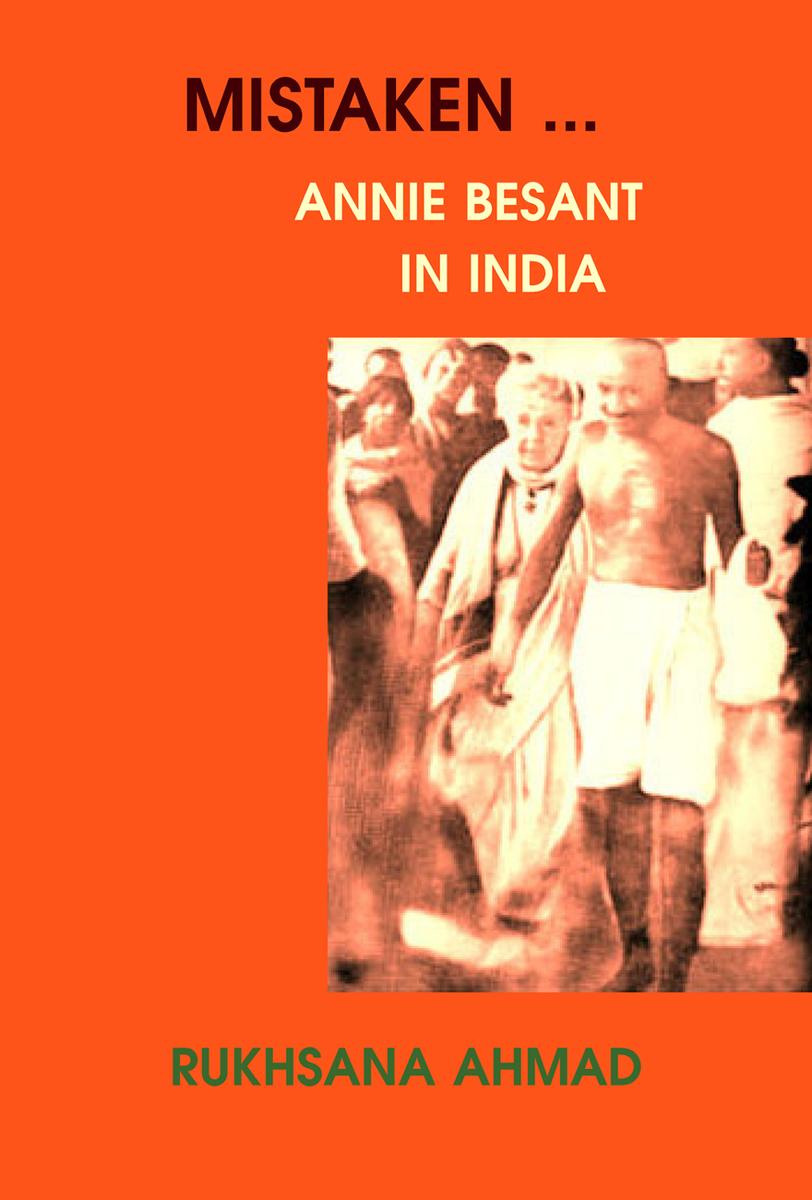
Mistaken… Annie Besant in India
¥40.79
Explores the incredible story of Annie Besant’s relationship with India and the boy who went on to become one of India’s greatest teachers and thinkers – Krishnamurti. 1916: India is simmering with discontent against the Raj. Enter English proto-feminist Annie Besant, notorious at home for the match-girls’ strike, political, charismatic. In India she finds a new family and a new cause. Gandhi hails her as the leader of the Congress Party after she courts imprisonment for promoting Indian Home Rule. She admires him – but can rulers ever befriend the ruled? Can Annie’s great love affair with India last? … or is she mistaken in her beliefs, politics and adoptions? ? ABOUT THE AUTHOR Rukhsana Ahmad‘s stage plays include: Song For Sanctuary, The Gate-Keeper’s Wife, Black Shalwar, River On Fire?(shortlist Susan Smith Blackburn Prize 2002), The Man Who Refused to be God, Last Chance and Partners in Crime. Radio plays and adaptations include:?Song for a Sanctuary?(CRE award, runner-up),?An Urnful of Ashes, The Errant Gene,?Nawal El Saadawi’s?Woman At Point Zero,?Jean Rhy’s?Wide Sargasso Sea?(shortlist CRE and Writers’ Guild Award for best adaptation), R.K Narayan’s?The Guide?and Nadeem Aslam’s?Maps For Lost Lovers. She also wrote for Westway and helped to create?Pyaar Ka Passort?for BBC World Service Trust. Her fiction includes a novel;?The Hope Chest?(Virago) and several short stories have been published internationally. Her translations from Urdu include?We Sinful Women, and Altaf Fatima’s novel,?The One Who Did Not Ask. Currently she is working on?Letting Go, a new play for Pursued by a Bear, and an adaptation for the BBC of Salman Rushdie’s?Midnight’s Children.
Three Plays
¥40.79
Award-winning playwright Jonathan Moore has been described as a “singular voice for his generation: furious, nihilistic, poetic…” (Time Out). This anthology brings together three of his critically acclaimed plays, including: This Other Eden, Fall From Light, and Treatment. ? The Plays This Other Eden?(Guardian Critics’s Choice): A story of passion. A wife and a mother. Her son and daughter. Her husband. The London Irish. Limboland. The hunger for a sense of a real culture. The desire for freedom… A tough play about a woman’s soul, told with beauty, humour and hope. “… the play burns with passion and indignation.”?Daily Telegraph Fall From Light: A young composer writes a new opera. The Director rejects it, but his lover, a young Diva, takes him to the council estate, where she and the composer grew up. There they meet Girly and his gang… A tale of art, savagery and redemption. Treatment?(Fringe First): Liam is part of a violent street gang but wants to escape. Trapped between two worlds, he has to choose between the dark allure of violence and the healing power of love.
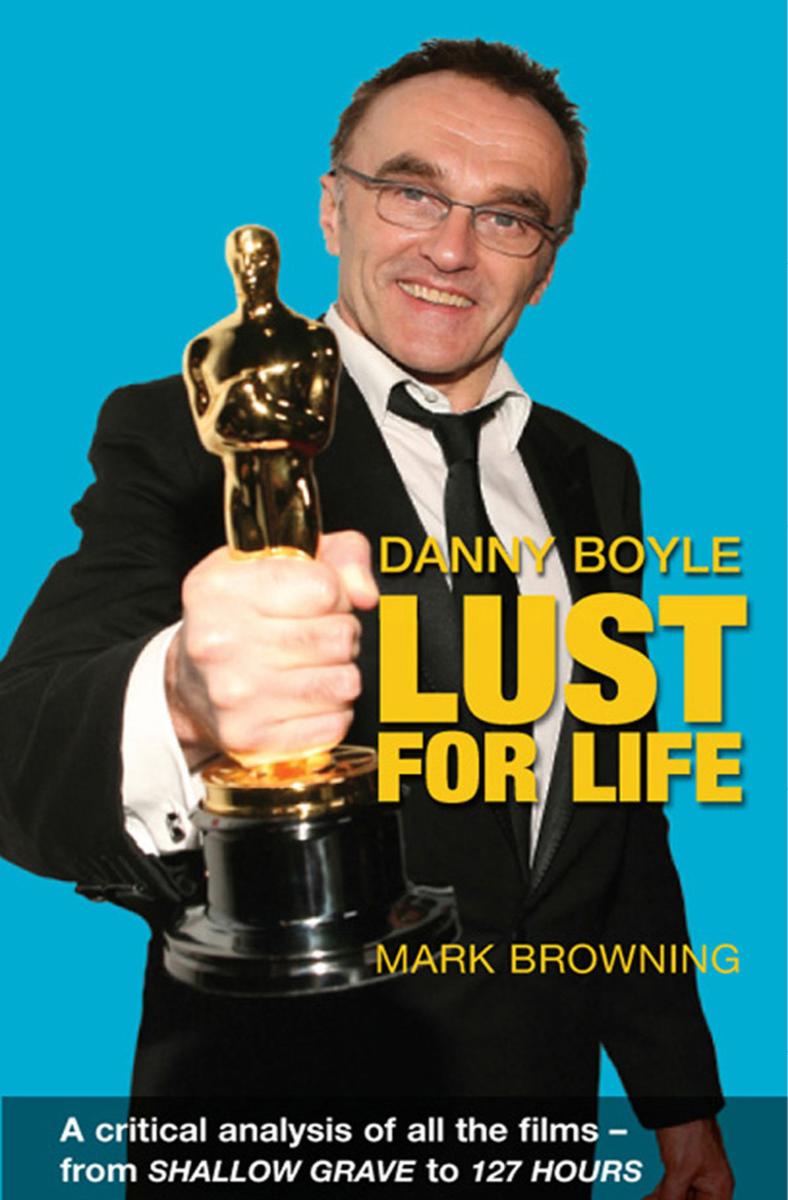
Danny Boyle - Lust for Life
¥98.00
Danny Boyle is one of contemporary filmmaking's most exciting talents. Since the early 1990s he has steadily created a body of work that crosses genres and defies easy categorisation, from black humour (Shallow Grave), gritty realism (Trainspotting), screwball comedy (A Life Less Ordinary), cult adaptations (The Beach), and horror (28 Days Later), to science fiction (Sunshine), children's drama (Millions), love stories (Slumdog Millionaire) and tales of personal redemption (127 Hours). Unlike many of his peers, Boyle seems most comfortable when working with modest budgets, relying on acting ability rather than special effects, and surrounding himself with a trusted team of writers, cinematographers and production designers. His restless energy, vitality and drive find their expression in the celebratory tone of his films - their lust for life.In this book, Mark Browning provides a rigorous but highly accessible analysis of Boyle's work, discussing the processes by which he absorbs generic and literary influences, the way he gains powerful performances both from inexperienced casts and A-list stars, his portrayal of regional identity, his use of moral dilemmas as a narrative trigger, and the religious undercurrents that permeate his films.
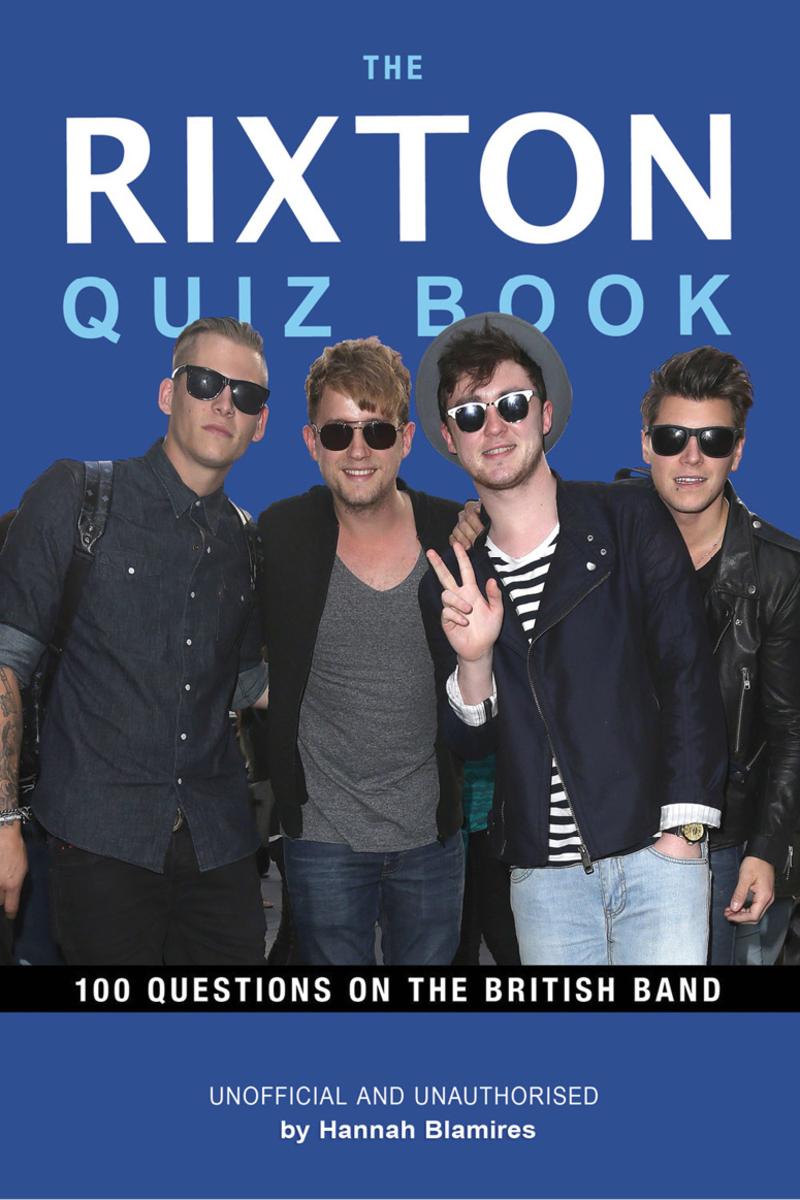
Rixton Quiz Book
¥24.43
Are you a fan of British boy band Rixton? Can you name the individual band members? Have you watched the music videos that the band has uploaded to YouTube? If so, you will be familiar with Rixton and enjoy their music but how much do you really know about the up and coming band? Find out exactly what Rixton has been up to with this new quiz book. What was Rixton previously known as? Whose tour titled 'The Honeymoon Tour' did the band support, kicking off in February 2015? How did Rixton celebrate the success of the single 'Me and My Broken Heart'? These are just some of the questions to be found inside The Rixton Quiz Book. Packed with information, this book details Rixton's journey from young hopefuls to chart topping success and includes sections on each of the band members as well as facts about their music, tours, singles and album. With 100 questions all about your favourite band, this is a must-have book for Rixton's rapidly growing fan base.
The London Prodigal, Shakespeare Apocrypha
¥8.09
Elizabethan play, sometimes attributed in part to Shakespeare. According to Wikipedia: "William Shakespeare (baptised 26 April 1564 – died 23 April 1616) was an English poet and playwright, widely regarded as the greatest writer in the English language and the world's pre-eminent dramatist. He is often called England's national poet and the "Bard of Avon" (or simply "The Bard"). His surviving works consist of 38 plays, 154 sonnets, two long narrative poems, and several other poems. His plays have been translated into every major living language, and are performed more often than those of any other playwright."
The Mob, a Play in Four Act
¥8.09
Four-act play. According to Wikipedia: "John Galsworthy ( 1867— 1933) was an English novelist and playwright. Notable works include The Forsyte Saga (1906—1921) and its sequels, A Modern Comedy and End of the Chapter. He won the Nobel Prize in Literature in 1932.
Beethoven: a Character Study
¥8.09
First published in 1905, the book begins: "As life broadens with advancing culture, and people are able to appropriate to themselves more of the various forms of art, the artist himself attains to greater power, his abilities increase in direct ratio with the progress in culture made by the people and their ability to comprehend him. When one side or phase of an art comes to be received, new and more difficult problems are invariably presented, the elucidation of which can only be effected by a higher development of the faculties. There is never an approach to equilibrium between the artist and his public. As it advances in knowledge of his art, he maintains the want of balance, the disproportion that always exists between the genius and the ordinary man, by rising ever to greater heights. If Bach is the mathematician of music, as has been asserted, Beethoven is its philosopher. In his work the philosophic spirit comes to the fore. To the genius of the musician is added in Beethoven a wide mental grasp, an altruistic spirit, that seeks to help humanity on the upward path. He addresses the intellect of mankind." According to Wikipedia: "Ludwig van Beethoven (16 December 1770 - 26 March 1827) was a German composer and pianist. He was a crucial figure in the transitional period between the Classical and Romantic eras in Western classical music, and remains one of the most acclaimed and influential composers of all time."
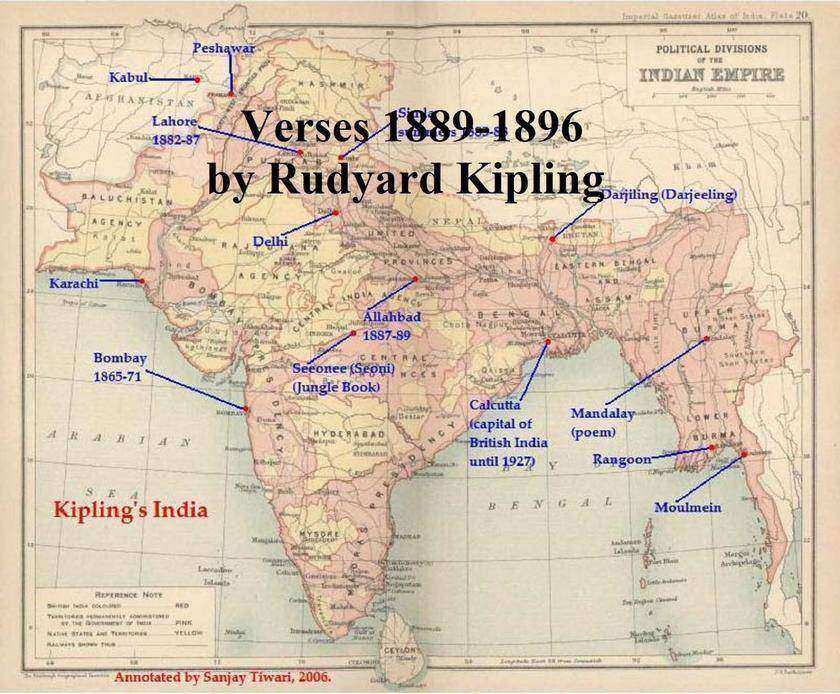
Verses 1889-1896
¥8.09
Volume 11 of the Writings in Prose and Verse of Rudyard Kipling. According to Wikipedia: "Joseph Rudyard Kipling (1865 – 1936) was an English author and poet. Born in Bombay, British India (now Mumbai), he is best known for his works The Jungle Book (1894) and Rikki-Tikki-Tavi (1902), his novel, Kim (1901); his poems, including Mandalay (1890), Gunga Din (1890), If— (1910); and his many short stories, including The Man Who Would Be King (1888). He is regarded as a major "innovator in the art of the short story"; his children's books are enduring classics of children's literature; and his best works speak to a versatile and luminous narrative gift. Kipling was one of the most popular writers in English, in both prose and verse, in the late 19th and early 20th centuries.[2] The author Henry James said of him: "Kipling strikes me personally as the most complete man of genius (as distinct from fine intelligence) that I have ever known." In 1907, he was awarded the Nobel Prize in Literature, making him the first English language writer to receive the prize, and to date he remains its youngest recipient. Among other honours, he was sounded out for the British Poet Laureateship and on several occasions for a knighthood, all of which he declined."
Departmental Ditties
¥8.09
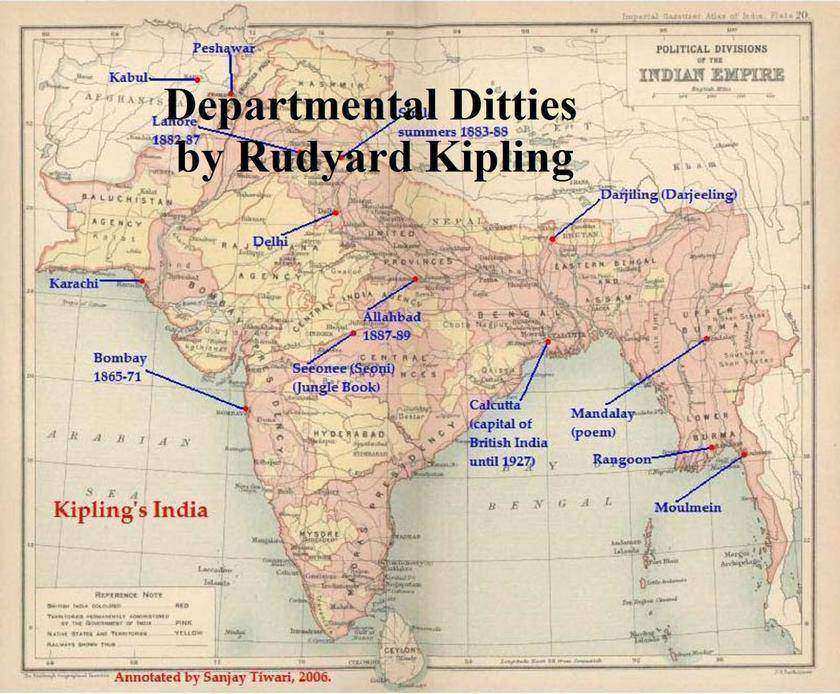
Two volumes of verse in one file. According to Wikipedia: "Joseph Rudyard Kipling (1865 – 1936) was an English author and poet. Born in Bombay, British India (now Mumbai), he is best known for his works The Jungle Book (1894) and Rikki-Tikki-Tavi (1902), his novel, Kim (1901); his poems, including Mandalay (1890), Gunga Din (1890), If— (1910); and his many short stories, including The Man Who Would Be King (1888). He is regarded as a major "innovator in the art of the short story"; his children's books are enduring classics of children's literature; and his best works speak to a versatile and luminous narrative gift. Kipling was one of the most popular writers in English, in both prose and verse, in the late 19th and early 20th centuries.[2] The author Henry James said of him: "Kipling strikes me personally as the most complete man of genius (as distinct from fine intelligence) that I have ever known." In 1907, he was awarded the Nobel Prize in Literature, making him the first English language writer to receive the prize, and to date he remains its youngest recipient. Among other honours, he was sounded out for the British Poet Laureateship and on several occasions for a knighthood, all of which he declined.
My Life
¥8.09
This translation first published in 1911. According to Wikipedia: "Wilhelm Richard Wagner (22 May 1813, Leipzig, Germany – 13 February 1883, Venice, Italy) was a German composer, conductor, theatre director and essayist, primarily known for his operas (or "music dramas", as they were later called). Unlike most other great opera composers, Wagner wrote both the scenario and libretto for his works." "Franz Liszt (October 22, 1811 – July 31, 1886) was a Hungarian composer, virtuoso pianist and teacher."
Coriolanus
¥8.09
Deutsche ?bersetzung der Shakespeare-Trag?die. Laut Wikipedia: "Coriolanus ist eine Trag?die von William Shakespeare, die vermutlich zwischen 1605 und 1608 geschrieben wurde. Das Stück basiert auf dem Leben des legend?ren r?mischen Anführers Caius Marcius Coriolanus."
The World's Great Men of Music
¥8.09
First published in 1922. Chapters include: Palestrina, Bach, Handel, Gluck, Haydn, Mozart, Beethoven, Weber, Schubert, Mendelssohn, Schumann, Chopin, Berlioz, Liszt, Verdi, Wagner, Franck, Brahms, Grieg, Tschaikowsky, MacDowell, Debussy, Toscanini, Stokowski, and Koussevitzky.
Val D'Arno
¥8.09
According to Wikipedia: "John Ruskin (8 February 1819 – 20 January 1900) is best known for his work as an art critic, stage writer, and social critic, but is remembered as an author, poet and artist as well. Ruskin's essays on art and architecture were extremely influential in the Victorian and Edwardian eras."
Songs of Travel
¥8.09
Short poetry collection. According to Wikipedia: "Robert Louis (Balfour) Stevenson ( 1850 - 1894), was a Scottish novelist, poet, and travel writer, and a leading representative of Neo-romanticism in English literature. He was the man who "seemed to pick the right word up on the point of his pen, like a man playing spillikins", as G. K. Chesterton put it. He was also greatly admired by many authors, including Jorge Luis Borges, Ernest Hemingway, Rudyard Kipling, Vladimir Nabokov, and J. M. Barrie. Most modernist writers dismissed him, however, because he was popular and did not write within their definition of modernism. It is only recently that critics have begun to look beyond Stevenson's popularity and allow him a place in the canon."
Epicoene, Or the Silent Woman
¥8.09
Classic Elizabethan play. According to Prof. Felix Schelling in his introduction to the Complete Plays of Ben Jonson: "THE greatest of English dramatists except Shakespeare, the first literary dictator and poet-laureate, a writer of verse, prose, satire, and criticism who most potently of all the men of his time affected the subsequent course of English letters: such was Ben Jonson, and as such his strong personality assumes an interest to us almost unparalleled, at least in his age." According to Wikipedia: "Benjamin Jonson (c. 11 June 1572 – 6 August 1637) was an English Renaissance dramatist, poet and actor. A contemporary of William Shakespeare, he is best known for his satirical plays, particularly Volpone, The Alchemist, and Bartholomew Fair, which are considered his best, and his lyric poems. A man of vast reading and a seemingly insatiable appetite for controversy, Jonson had an unparalleled breadth of influence on Jacobean and Caroline playwrights and poets"
Woody Allen. Bufon ?i filosof
¥48.97
Cartea constituie un foarte dens ?i interesant manual indirect de istorie a Americii, adres?ndu-se elevilor, studen?ilor, precum ?i publicului larg de cititori. O carte despre fragmentele cele mai controversate ale istoriei Americii.
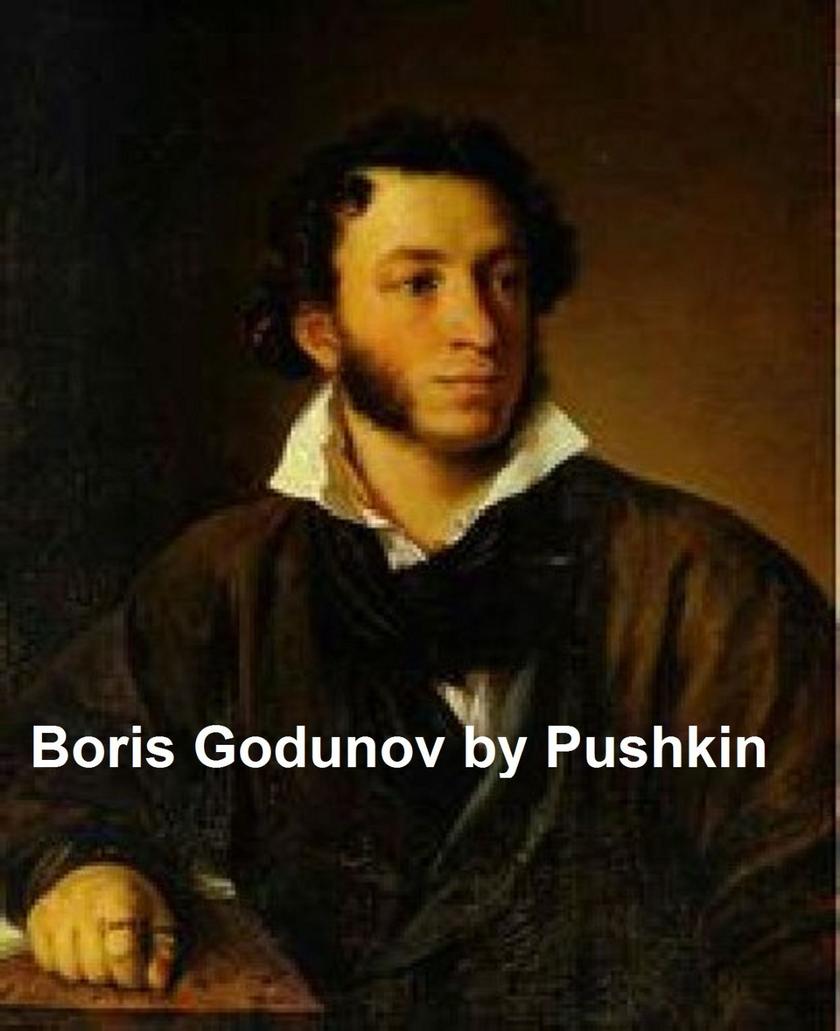
Boris Godunov
¥8.09
The classic Russian play, in verse translation. According to Wikipedia: "Alexander Sergeyevich Pushkin (1799 - 1837) was a Russian Romantic author who is considered to be the greatest Russian poet and the founder of modern Russian literature. Pushkin pioneered the use of vernacular speech in his poems and plays, creating a style of storytelling, mixing drama, romance, and satire, associated with Russian literature ever since and greatly influencing later Russian writers."
Henry VI Part 2, with line numbers
¥8.09
The classic Shakespeare history play, with line numbers. According to Wikipedia: "William Shakespeare (baptised 26 April 1564 – died 23 April 1616) was an English poet and playwright, widely regarded as the greatest writer in the English language and the world's pre-eminent dramatist. He is often called England's national poet and the "Bard of Avon" (or simply "The Bard"). His surviving works consist of 38 plays, 154 sonnets, two long narrative poems, and several other poems. His plays have been translated into every major living language, and are performed more often than those of any other playwright."
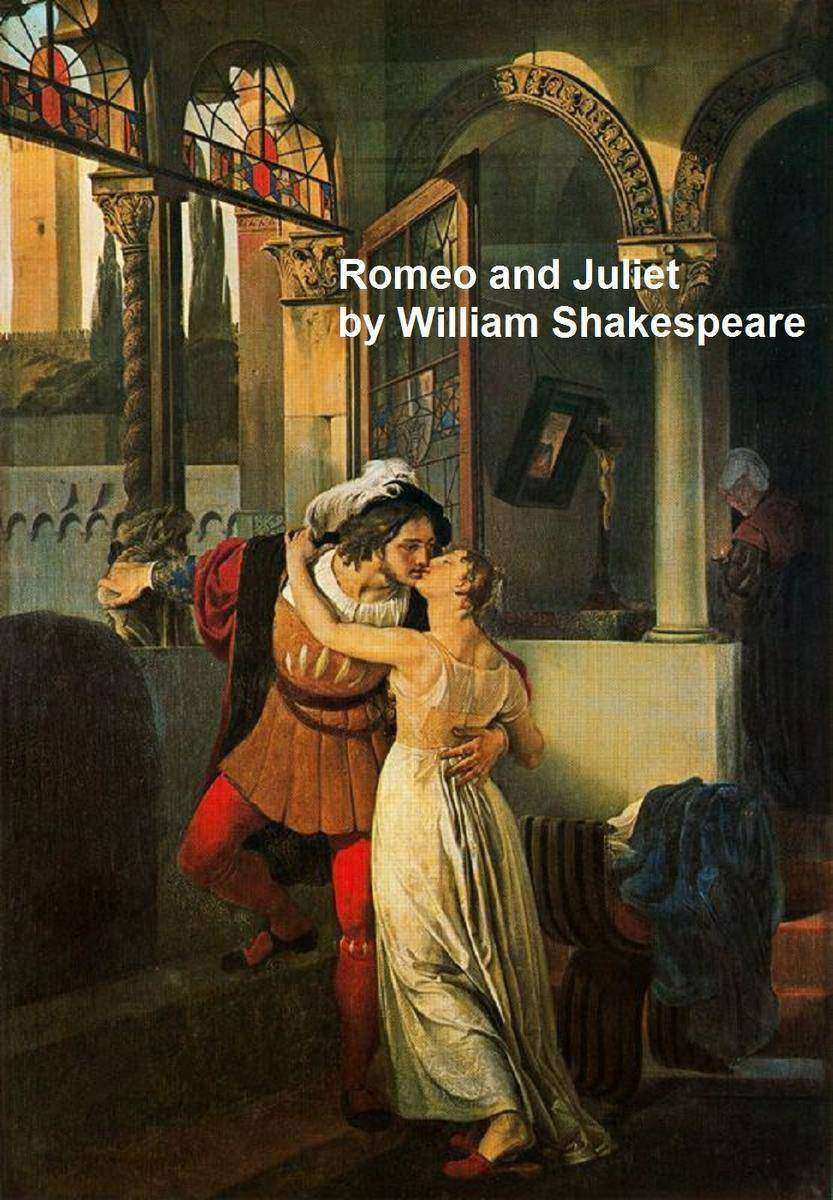
Romeo and Juliet, with line numbers
¥8.09
The classic tragedy. According to Wikipedia: "Romeo and Juliet is a tragedy written early in the career of William Shakespeare about two teenage "star-cross'd lovers" whose untimely deaths ultimately unite their feuding families. It was among Shakespeare's most popular plays during his lifetime and, along with Hamlet, is one of his most frequently performed plays. Today, the title characters are regarded as archetypal young lovers."


