


 购物车
购物车 个人中心
个人中心

The Lizard King
¥109.31
What if every farfetched conspiracy theory about Barack Obama turned out to be trueTwo reporters for the The Daily Caller received an unsolicited manu* in the mail, the diary of a former Obama administration political operative. What they read stunned them. "The Lizard King" describes a White House where the reality is more surreal, and comically bizarre, than anything its most fervent enemies have alleged. Tasked by David Axelrod with debunking right wing rumors about the president, the narrator embarks on a journey that takes him from Washington to Moscow to the tribal areas of Pakistan in search of the real Barack Obama. His findings leave him shocked, his political ideology in tatters and his understanding of the world forever changed.
Cezanne and the End of Impressionism
¥353.16
Drawing on a broad foundation in the history of nineteenth-century French art, Richard Shiff offers an innovative interpretation of Cezanne's painting. He shows how Cezanne's style met the emerging criteria of a "e;technique of originality"e; and how it satisfied critics sympathetic to symbolism as well as to impressionism. Expanding his study of the interaction of Cezanne and his critics, Shiff considers the problem of modern art in general. He locates the core of modernism in a dialectic of making (technique) and finding (originality). Ultimately, Shiff provides not only clarifying accounts of impressionism and symbolism but of a modern classicism as well.
Lipshtick
¥83.92
Get comfy, pull up a pan of blondies, and settle in for some girlfriend talk. Get the lowdown on who's low and how's down, whose long-standing but unspoken conflict with her mother is contributing to her sexual repression, and whose boyfriend named his penis. A hysterical send-up of everyday life and love with lots of heart, Lipshtick is a quick fix, a good schmooze, a heartfelt sob or two.It will take you on a trip through things universal to all pairs of X chromosomes worth their salt: for coping with social dances in junior high (where the sexes meet like a hormonal high noon) to the joys of plucking out your chin hair like evil weeds; from the natural order of a girl's fantasies (like sweets that don't make you fat, spending that doesn't break the bank, a beautiful nap in the middle of a long day) to why flings with bad boys are the ultimate in dating pleasure (finding the right boy to lust after is a lifelong struggle--eventually you grow to be picky about who rejects you); from getting married (His best qualityHe was like family. His worst qualityHe was like family.) to the sad state of postnatal breasts. Gwen Macsai cover it all--with a shtick twist. You'll laugh, you'll cry, you'll thank God you're not her. No situation unaccounted for, no mole left unexamined, Macsai captures a woman's life from her first leg-shave to her last dose of hormone replacement therapy.When you finish Lipshtick you'll have added another great girlfriend to your already glittering array. And in this world you can't have enough girlfriends or laughter.

i am neurotic
¥106.61
Did you wash your handsSet the alarm clock?Lock the front doorBetter yet: Do you like even numbersDo you fold all of your trash neatly into squaresDo you count stepsDo you carry a bottle of hand sanitizer with you at all timesEveryone has his or her own neuroses. On a routine trip to the office bathroom, Lianna Kong discovered one of hers: "How could I possibly pee with my coworker sitting right next to me doing her business?" And, in that quiet moment of panic, iamneurotic.com was born.i am neurotic (and so are you) is a smorgasbord of anonymous confessions that reveal people's deepest, strangest, and funniest compulsions quirks that are triggered in the boardroom, the bedroom, and everywhere in between.
RA The Book
¥24.44
RA:The Book - The Recording Architecture Book of Studio Design was first published as a single, hardcover volume in 2011 and which has sold in over fifty countries to critical acclaim. A necessarily large format dictated by the detailed drawings it contained, RA:The Book was unavoidably heavy and costly to produce and ship. This iBook version is the first of three stand alone volumes which will hopefully make this essential guide to recording studio design more accessible. It includes a new introduction with previously unavailable photographs. The following de*ion is for the original hardcover: Established by Roger D'Arcy and Hugh Flynn on April 1st 1987 Recording Architecture has risen to become one of the premier recording studio design companies in the world. First Commissioned by ex Def Leppard guitarist Pete Willis for Blue Room studios In Sheffield swiftly followed by projects such as Hulgrave Hall, for composer Keith Hopwood the company has grown to design key installations around the world. Now for the first time they will be publishing a history of these ground breaking designs covering all aspects of architectural, acoustic and interior design of these studios and spaces specifically related to sound on a project by project basis. In a Career spanning Three decades Recording Architecture has virtually unrivalled experience in the design of studios which range in size and purpose from classical orchestral, residential, mixing, mastering, post production, film dubbing, video editing and rehearsal studios over 40 countries worldwide. Stating his desire to expand awareness with the new book Roger D Arcy states Over the years, and perhaps surprisingly, the only available books on recording studio design seem to have been written by individuals with little or no qualified background in Architecture or design in the field - we are trying show the detailed architectural/acoustic input behind a successful design with each studio study showing drawings in large format . This is not a theoretical guide but a detailed presentation of tried and tested techniques as applied to real, built projects in many of the case studies, the actual drawings issued for construction are reproduced. The examples illustrate not only what we think should be done but what was in fact physically (and successfully) implemented in a wide variety of situations from small, private project studios to large, commercial land mark studios such as Lansdowne and CTS. Examples range in scope from individual spaces and rooms to multi studio facilities and cover the two principal strands of recording and mixing: MUSIC studios recording (tracking), mixing and mastering (including cutting) project to orchestral in scale examples have been taken from the private, commercial and educational sectors. POST PRODUCTION studios voice over (dubbing), FX recording ( Foley ), film mix studios (dubbing theatres) from small voice over studios for TV to large Dolby Premier Certified film mix theatres. Contents include hundreds of photographs together with detailed plans and construction drawings - including comprehensive specifications of materials and techniques - showing exactly how these environments were created.
The Man Cave Book
¥84.16
What separates the men from the boysThe Man Cave. Boyhood Fort Man Cave Who's allowed Not girls—they have cooties Not women—they have authority Primary materials used in construction Wood, stuff your mom doesn't want Particleboard, stuff your wife doesn't want Key activities inside Goofing around, avoiding responsibility Goofing around, avoiding responsibility Peak periods of use After school, weekends After work, weekends Slumber parties with buddiesYes No Food and beverages consumed Soda and unhealthy snacks Beer and unhealthy snacks Spend the night insideNot as a habit, but it's been known to happen Not as a habit, but it's been known to happen Money spent on space As little as possible As much as possible Is this a phase you will outgrowYes No The Man Cave Book is a tribute to great and glorious man spaces and the craftsmen behind them. Complete with instructions and insights into creating your own unique refuge and shrine to beer, sports, and everything else that's right with the world, this is an essential manual for any man cave enthusiast.

The Greedy Bastard Diary
¥90.54
A stunningly witty exploration of the American landscape -- not to mention a brilliant comic's mind -- this diary is chock-full of everything you ever wanted to know about Eric Idle, Monty Python, America, and sleeping on a bus. In these pages, the sixth-nicest Python is cheeky, touching, and funny when recounting the riotous tales of his beginnings, his affectionate reminiscences of his fellow Pythons, traveling the world, and taking us backstage at the smash Broadway hit Spamalot.Fascinating, moving, at times even amusing, this book will dramatically improve your sex life, will make you feel intelligent and charming within the first several pages, and after a few chapters, will permanently eliminate all your personal or health problems. So come experience eighty days, 15,750 miles, and forty-nine cities as you never have before!
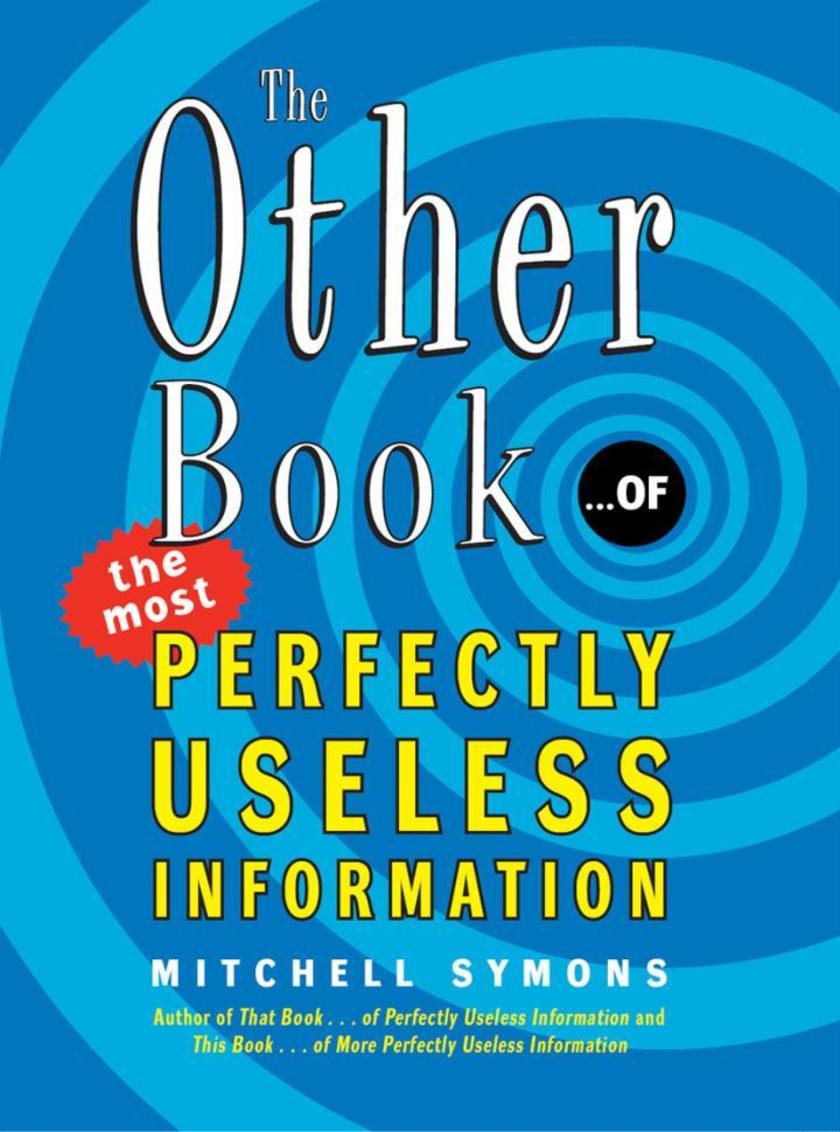
The Other Book... of the Most Perfectly Useless Information
¥84.05
The latest entry in Mitchell Symons's trivia trifecta is chock-full of more obscure scientific facts, sporting stats, celebrity gossip, and pure trivia than ever! Did you know that: Polar bears cover their black noses with their paws for better camouflageJohn Steinbeck had to rewrite Of Mice and Men because his dog ate the first draftWayne Newton is a descendant of PocahontasOscars given out during World War II were made of wood because metal was in short supplyBrooke Shields and Glenn Close are cousinsDiet Coke was invented in 1982. However, in 1379, a Mr. and Mrs. Coke of Yorkshire, England, named their daughter Diot(a diminutive of Dionisia, the predecessor of the modern-day name Denise)Male monkeys go bald in much the same way that men doJames Gandolfini was voted Best Looking by his high school classIf you are titillated by trivia or fascinated by facts, The Other Book . . . of the Most Perfectly Useless Information will keep you entertained for hours!

HarperCollins e-books
¥112.44
Discusses Jay Leno's unique sense of humor, from his days as a New England schoolboy to his role as the top-rated late-night TV talk-show host, and examines some of the challenges and conflicts he faced to make it to where he is today.

Inside the Magic: The Making of Fantastic Beasts and Where to Find Them
¥112.23
Return to the wizarding world and discover how director David Yates and producer David Heyman brought J.K. Rowling’s all new adventure, Fantastic Beasts and Where to Find Them to the big screen.Inside the Magic: The Making of Fantastic Beasts and Where to Find Them introduces filmmaking fans to Newt Scamander, Magizoologist, and the principal characters, locations, artefacts and beasts that he encounters in 1920s New York. Explore the filmmaking magic behind MACUSA, the secretive American counterpart of the Ministry of Magic; The Blind Pig where the wizarding underworld gathers; and the magical secrets of Newt’s case.Each section contains profiles of the key characters, with revealing insights from Eddie Redmayne, Colin Farrell, Katherine Waterston, Alison Sudol, Dan Fogler and many others, together with sections on set design, costumes, make-up, special effects, art department & props (especially wands!), which are illuminated by interviews with David Heyman, David Yates, Stuart Craig, Colleen Atwood and a magical army of other crew. Packed with exciting photos that reveal the filmmaking process in discerning detail, this is the definitive adult companion book to the film, and perfect introduction to Fantastic Beasts and Where to Find Them.

From Sixpences to Dollars
¥73.48
Jonny Texas came from an unconventional but close-knit Midlands family and developed a fascination with all forms of gambling from a young age. He grew up learning how to be a wheeler dealer and in his twenties, with a young family to support, the challenge of beating the odds to make large sums of money became even greater. As he grew older, his life was to become a rollercoaster of highs and lows as he moved from one wild money spinning venture to another, making huge amounts and then losing them, unable to resist any gambling opportunity. The two constants in his life have been his family and poker and, at times, they have made uneasy bedfellows. But somehow, Jonny has managed to pull off the unimaginable, repeatedly pulling himself back from the brink of disaster and turning himself into a winner, appearing on TV and in the public eye. From Sixpences to Dollars documents the extraordinary story of one man's obsession with gambling and how he has ultimately turned it to his advantage.
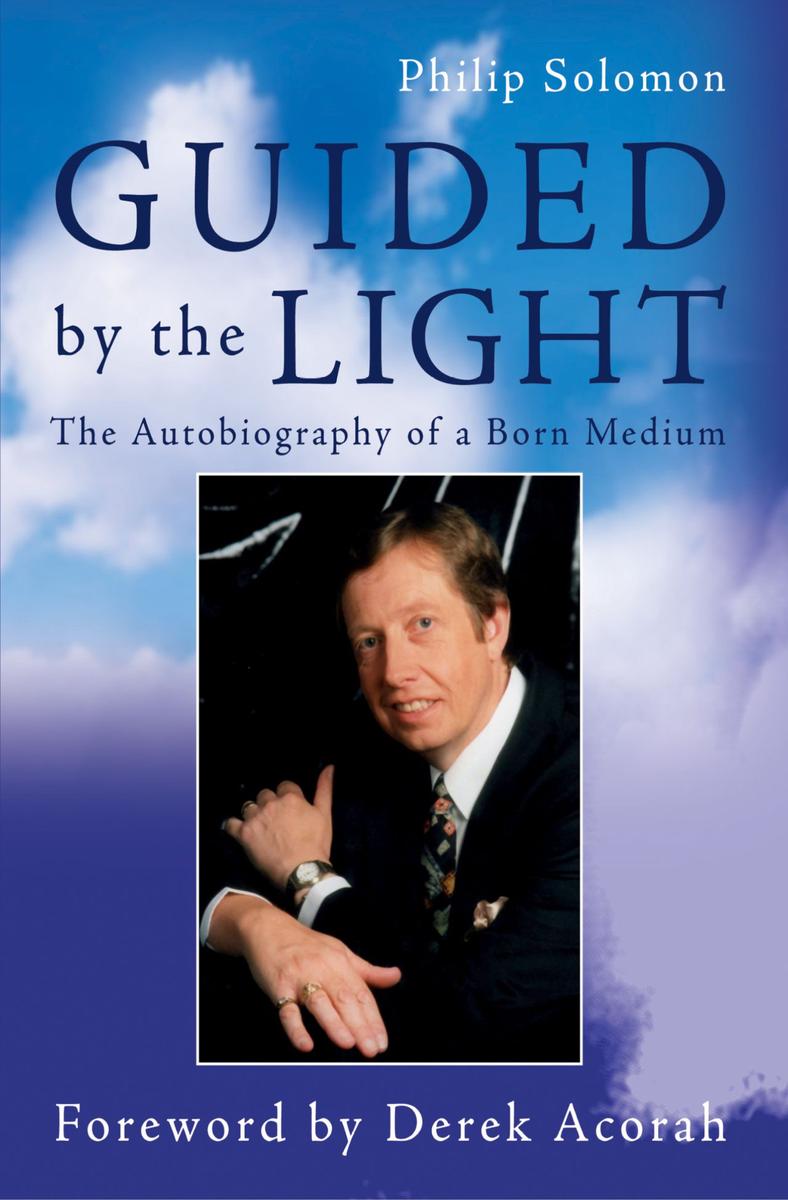
Guided by the Light
¥58.76
Described by Professor Hans Holzer, a leading authority in America on the paranormal, as the greatest medium of our time, Philip Solomon shares his amazing story, from his childhood psychic experiences of been born into a mediumistically gifted family with show business connections, through his many strands of spiritual and psychical development, to the finely honed, highly attuned state of awareness he has achieved. For those of you who think that mediumship is merely passing on messages from beyond the grave to members of a Spiritualist church or theatre audience, then your eyes are about to be opened, as this book covers predictions, meditation, hypnotism, sports psychology, guides and angels, ghosts and the paranormal, healing, astrology, leylines and UFOs, with an emphasis on the innate ability in each and every one of us to develop psychic awareness. With a fitting foreword by respected fellow-medium, Derek Acorah, this book will definitely challenge your perceptions and broaden your outlook on life, both on the earth plane and in the spirit world beyond. In this and his many previous books, Philip Solomon's intentions and convictions are clear. He has been chosen by Spirit to walk a sometimes difficult pathway on a mission to prove beyond doubt the existence of life after death and other-worldliness and to assure those that have lost loved ones that death is not the end.

In Search of Running Rein
¥73.48
The Epsom Derby, established back in 1780 for three-year-old thoroughbred colts and fillies, is today considered to be the most prestigious of the five Classics of the racing calendar, but there was nothing noble about the notorious Derby held in 1844. Marred by horse switching allegations, false age declarations, devious ownership transferrals and nobbling, it was set to become the most scandalous event in the history of the Turf. Drawing on a wide range of publications, newspaper articles, Jockey Club inquiry documentation and court evidence records, this book traces the web of deceit surrounding the original but subsequently disqualified 1844 Derby winner, Running Rein, and the audacious plan orchestrated by a certain Abraham Levi Goodman to ensure, by any underhand means at his disposal, that the Derby victory would be his, not for the glory of winning but as a monstrous betting coup. Twists and turns abound in the claims, counter-claims and conflicting witness statements when the case goes to trial, as attempts are made to determine the age and identity of the horse purported to be Running Rein, and this intriguing story provides a fascinating insight into the world of horse racing and betting, where the stakes are high and the unscrupulous are prepared to do anything to protect their own interests, with little regard for the impact of their actions on the reputation of the sport.

Miley Cyrus Quiz Book
¥24.43
Are you a fan of Miley Cyrus? Have you followed her unprecedented rise to fame from the star of Disney Channel's Hannah Montana to teen idol? Do you think you know everything there is to know about the talented American actress and singer? Then why not test your knowledge with the 100 thought provoking questions in this quiz book. Do you know how Miley came about her unusual name, where she celebrated her 16th birthday or how many tattoos she has? Can you name her famous father and Godmother? The answers to all these questions and more can be found inside this book as well as many personal details such as Miley's height and shoe size and her likes and dislikes. Packed full of fascinating facts, you are guaranteed to discover something new about the Hannah Montana star. A fun and entertaining way to learn more about your favourite celebrity, The Miley Cyrus Quiz Book is a must have for all Miley fans from five to 95.
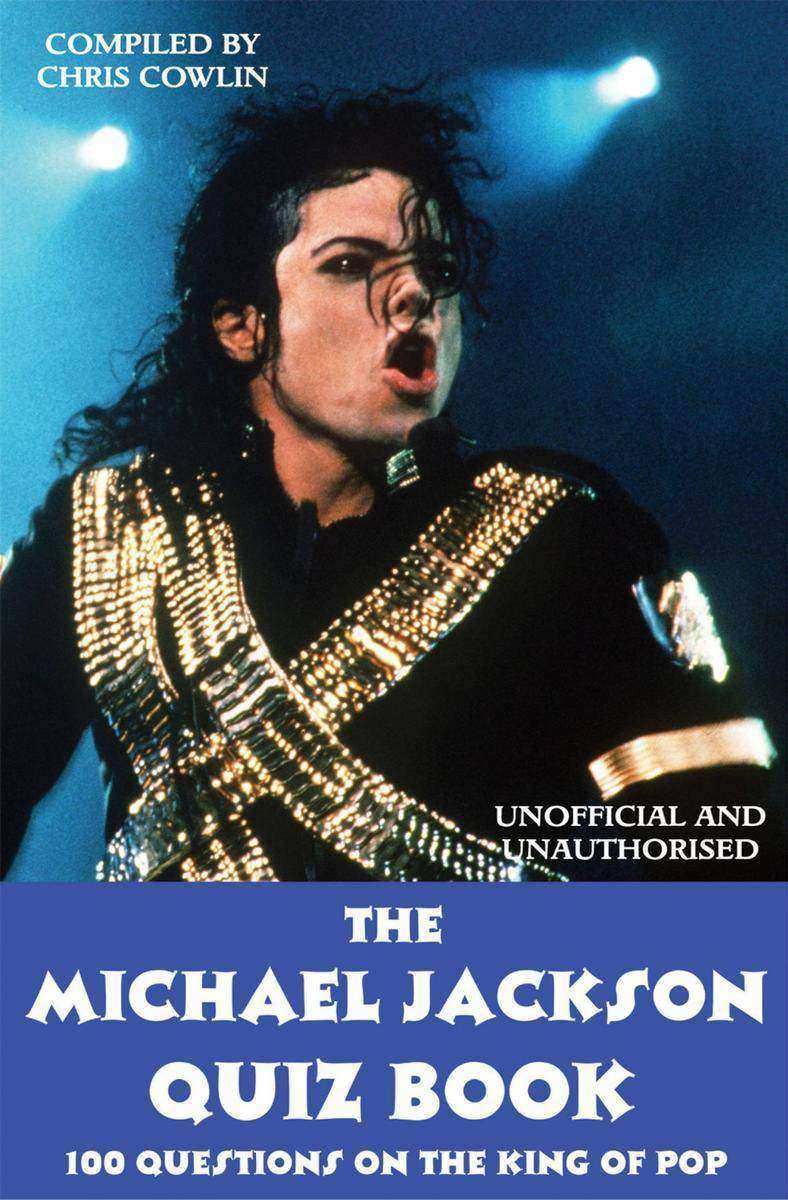
Michael Jackson Quiz Book
¥24.43
Brief Description: Are you a Michael Jackson fan? Have you followed every twist and turn in the amazing Michael Jackson story? Did you mourn his untimely death? Then what better way to pay tribute to the undisputed king of pop than with this quiz book? The 100 questions in the The Michael Jackson Quiz Book are designed to test your memory of the people and places that shaped the life of one of the most popular and controversial entertainers in the history of popular music. Michael Jackson leaves behind a legacy of ground breaking hits, who can forget Thriller or Billie Jean? This book covers the phenomenal success of the early years singing with his brothers, to Michael's transformation into a multi award winning solo artist and innovative performer. With questions about all aspects of Michael's life, you are certain to discover something new about the iconic superstar. This book is a must have for all Michael Jackson fans and for anyone interested in learning more about the man responsible for some of the most famous songs and memorable dance videos of all time.
Fulham Quiz Book
¥34.24
Is Fulham your local football team or the one you have chosen to support? Do you go to every match? Are you clued up on all the events, people and places that have shaped the club's long history? Then why not find out how much you really know about The Cottagers with this fun quiz book?With 250 thought-provoking questions about all aspects of the club, including the top players and managers, nationalities and playing positions, worthy opponents, club honours, and all those memorable matches from days gone by, this book can't fail to turn up one or two surprises alongside all the well known facts.Packed full of information, The Fulham Quiz Book is certain to score a hit with football fans of all ages, whether you want to impress family and friends with your knowledge or simply find out more about the club. This tribute to the Cottagers is an indispensable guide for all fans of Fulham FC and anyone who is interested in learning about London's oldest professional football team.
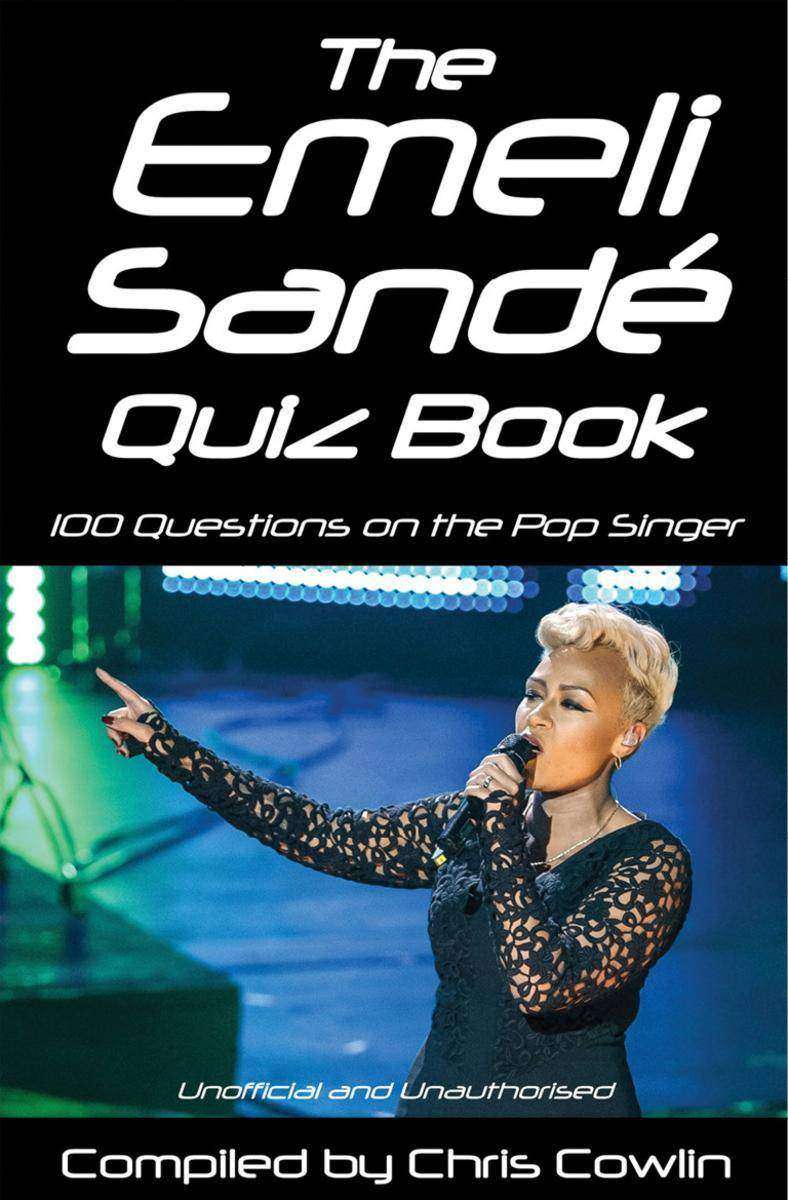
Emeli Sande Quiz Book
¥24.43
Are you a fan of Emeli Sande? Have you followed her rise to fame from early collaborations to singing at the opening ceremony of the London 2012 Olympic Games? Do you know all the words to Emeli's soulful lyrics and like to sing along? If so, you are certain to enjoy this informative new quiz book all about the multi-talented singer-songwriter.What award did Emeli win at the 2012 Harper's Bazaar Women of the Year awards? Where in the UK was Emeli born? What is unusual about Emeli's music video for her 2012 single 'Clown'? The answers to these questions and many more like them can be found in The Emeli Sande Quiz Book.Packed full of facts about Emeli's amazing career to date, this quiz book contains 100 questions about the award winning star and covers all aspects of Emeli's professional life as well as many personal details. This is a must-have book for anyone who enjoys the music of Emeli Sande or would like to find out more about her.

Next Train's Gone!
¥19.52
In the 1930s, British film producers and critics championed the idea of 'quality' pictures - thoughtful, intelligent films that would project a particular and positive view of Britain. The result was to drive a wedge between 'national' cinema (which reflected middle-class values) and 'popular' cinema (which reflected the working-class values of the majority of cinema audiences). 'Popular' became a term of abuse, particularly directed at comedies, whose roots often lay in music-hall. A very different image of Britain emerges from these comedies, as this insightful analysis of two Will Hay films - Oh Mr Porter (1937) and Ask a Policeman (1939) reveals.

Life in the State of Lagos, Southwest Nigeria
¥32.62
Life in the State of Lagos, Southwest Nigeria
My Picture Collection: A Compilation of My Everyday Life, Social Events and Leis
¥32.62
My Picture Collection: A Compilation of My Everyday Life, Social Events and Leisure Pictures

Life in the State of Lagos, Southwest Nigeria II
¥32.62
Life in the State of Lagos, Southwest Nigeria II


