


 购物车
购物车 个人中心
个人中心
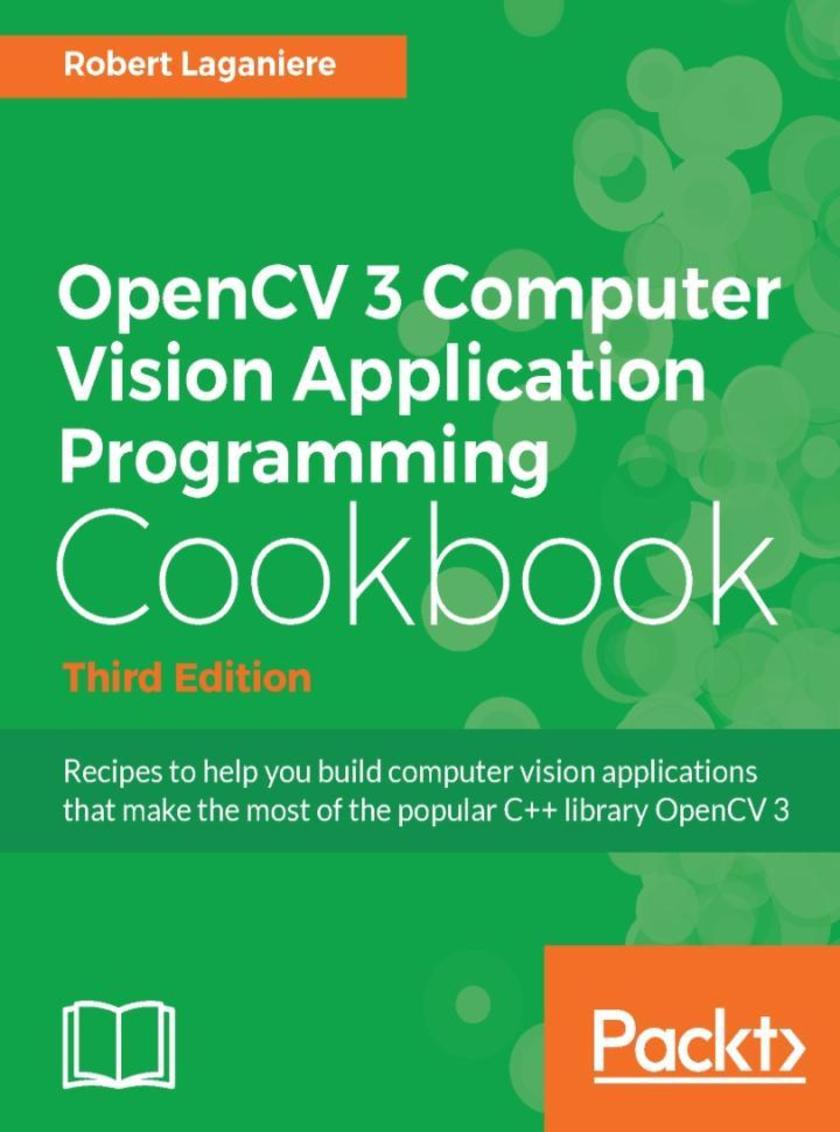
OpenCV 3 Computer Vision Application Programming Cookbook - Third Edition
¥90.46
Recipes to help you build computer vision applications that make the most of the popular C++ library OpenCV 3 About This Book Written to the latest, gold-standard specification of OpenCV 3 Master OpenCV, the open source library of the computer vision community Master fundamental concepts in computer vision and image processing Learn about the important classes and functions of OpenCV with complete working examples applied to real images Who This Book Is For OpenCV 3 Computer Vision Application Programming Cookbook Third Edition is appropriate for novice C++ programmers who want to learn how to use the OpenCV library to build computer vision applications. It is also suitable for professional software developers who wish to be introduced to the concepts of computer vision programming. It can also be used as a companion book for university-level computer vision courses. It constitutes an excellent reference for graduate students and researchers in image processing and computer vision. What You Will Learn Install and create a program using the OpenCV library Process an image by manipulating its pixels Analyze an image using histograms Segment images into homogenous regions and extract meaningful objects Apply image filters to enhance image content Exploit the image geometry in order to relay different views of a pictured scene Calibrate the camera from different image observations Detect people and objects in images using machine learning techniques Reconstruct a 3D scene from images In Detail Making your applications see has never been easier with OpenCV. With it, you can teach your robot how to follow your cat, write a program to correctly identify the members of One Direction, or even help you find the right colors for your redecoration. OpenCV 3 Computer Vision Application Programming Cookbook Third Edition provides a complete introduction to the OpenCV library and explains how to build your first computer vision program. You will be presented with a variety of computer vision algorithms and exposed to important concepts in image and video analysis that will enable you to build your own computer vision applications. This book helps you to get started with the library, and shows you how to install and deploy the OpenCV library to write effective computer vision applications following good programming practices. You will learn how to read and write images and manipulate their pixels. Different techniques for image enhancement and shape analysis will be presented. You will learn how to detect specific image features such as lines, circles or corners. You will be introduced to the concepts of mathematical morphology and image filtering. The most recent methods for image matching and object recognition are described, and you’ll discover how to process video from files or cameras, as well as how to detect and track moving objects. Techniques to achieve camera calibration and perform multiple-view analysis will also be explained. Finally, you’ll also get acquainted with recent approaches in machine learning and object classification. Style and approach This book will arm you with the basics you need to start writing world-aware applications right from a pixel level all the way through to processing video sequences.
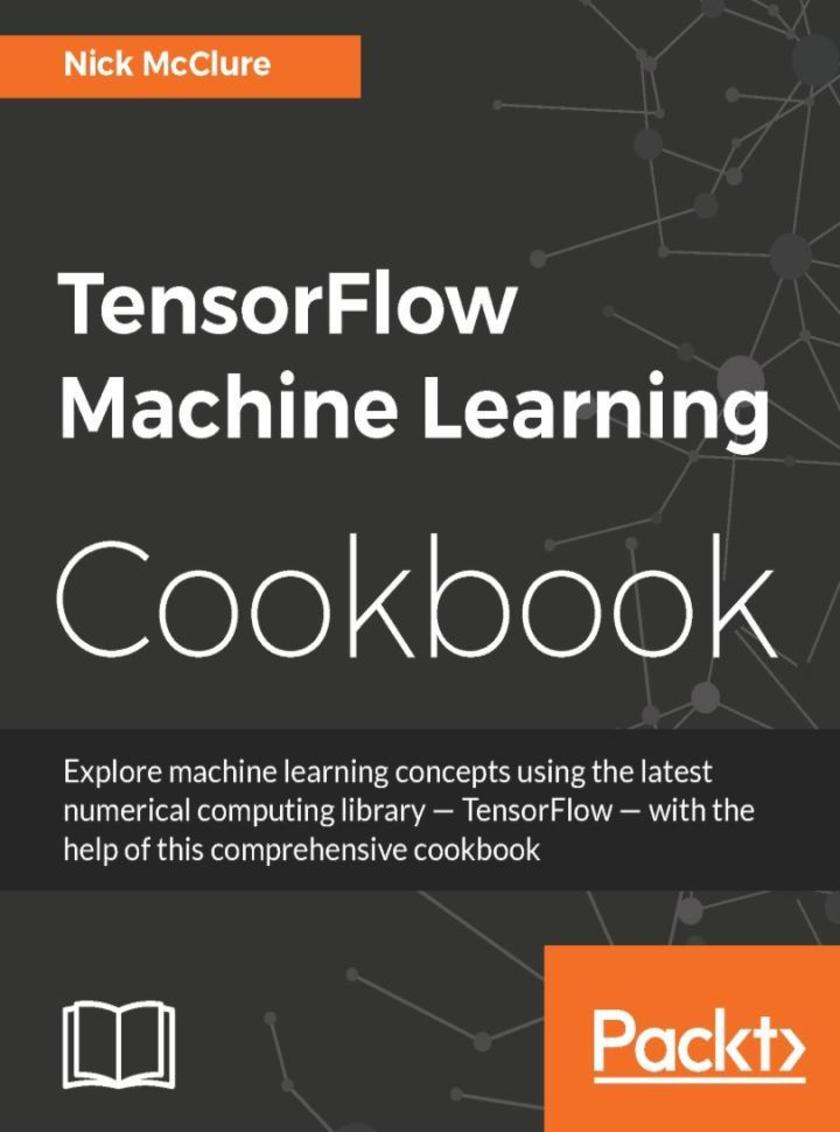
TensorFlow Machine Learning Cookbook
¥99.18
Explore machine learning concepts using the latest numerical computing library — TensorFlow — with the help of this comprehensive cookbook About This Book Your quick guide to implementing TensorFlow in your day-to-day machine learning activities Learn advanced techniques that bring more accuracy and speed to machine learning Upgrade your knowledge to the second generation of machine learning with this guide on TensorFlow Who This Book Is For This book is ideal for data scientists who are familiar with C++ or Python and perform machine learning activities on a day-to-day basis. Intermediate and advanced machine learning implementers who need a quick guide they can easily navigate will find it useful. What You Will Learn Become familiar with the basics of the TensorFlow machine learning library Get to know Linear Regression techniques with TensorFlow Learn SVMs with hands-on recipes Implement neural networks and improve predictions Apply NLP and sentiment analysis to your data Master CNN and RNN through practical recipes Take TensorFlow into production In Detail TensorFlow is an open source software library for Machine Intelligence. The independent recipes in this book will teach you how to use TensorFlow for complex data computations and will let you dig deeper and gain more insights into your data than ever before. You’ll work through recipes on training models, model evaluation, sentiment analysis, regression analysis, clustering analysis, artificial neural networks, and deep learning – each using Google’s machine learning library TensorFlow. This guide starts with the fundamentals of the TensorFlow library which includes variables, matrices, and various data sources. Moving ahead, you will get hands-on experience with Linear Regression techniques with TensorFlow. The next chapters cover important high-level concepts such as neural networks, CNN, RNN, and NLP. Once you are familiar and comfortable with the TensorFlow ecosystem, the last chapter will show you how to take it to production. Style and approach This book takes a recipe-based approach where every topic is explicated with the help of a real-world example.
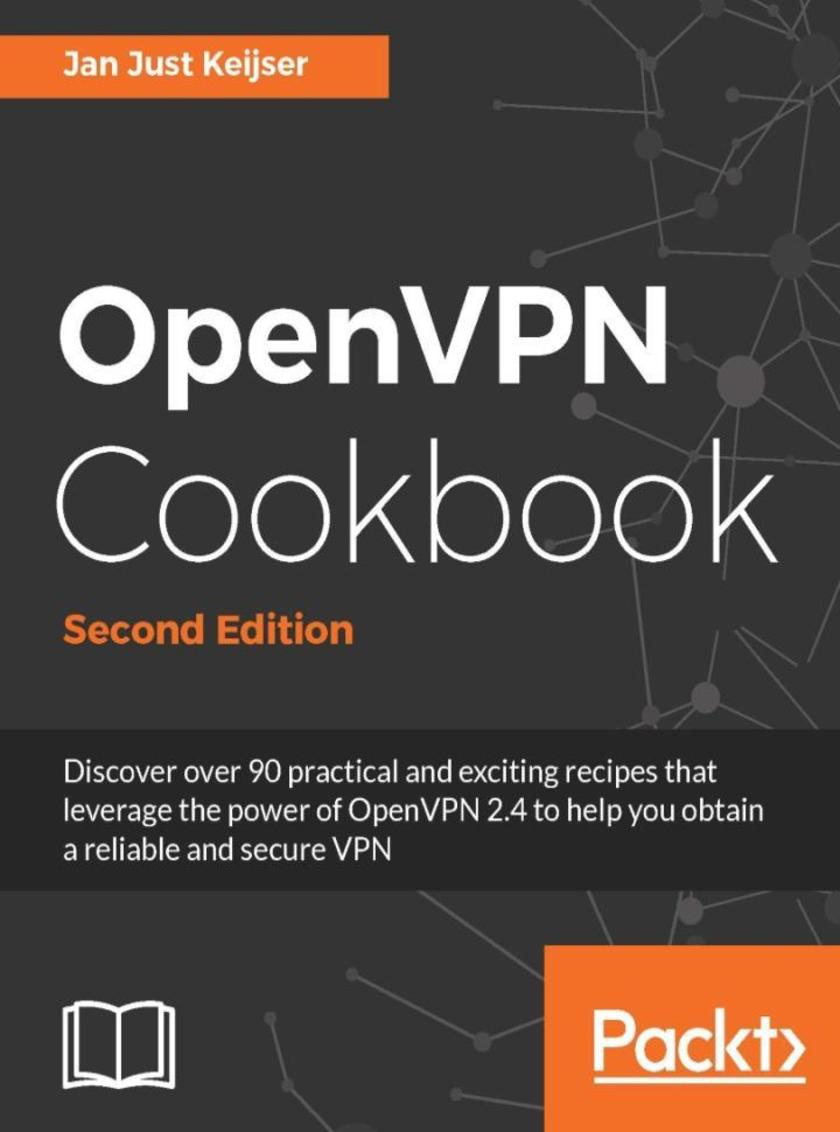
OpenVPN Cookbook - Second Edition
¥90.46
Discover over 90 practical and exciting recipes that leverage the power of OpenVPN 2.4 to help you obtain a reliable and secure VPN About This Book Master the skills of configuring, managing, and securing your VPN using the latest OpenVPN Gain expertise in establishing IPv6 connections and understand PolarSSL using the latest version of OpenVPN This book contains enticing recipes about OpenVPN functionalities that cater to mission critical applications Who This Book Is For This book is for system administrators who have a basic knowledge of OpenVPN and are eagerly waiting to build, secure, and manage VPNs using the latest version. This book assumes some prior knowledge of TCP/IP networking and OpenVPN and you must have network administration skills to get the most out of this book. What You Will Learn Determine the best type of OpenVPN setup for your networking needs Get to grips with the encryption, authentication, and certifications features of OpenSSL. Integrate an OpenVPN server into the local IT infrastructure with the *ing features of OpenVPN Ease the integration of Windows clients into the VPN using Windows-specific client-side configuration Understand the authentication plugins for PAM and LDAP Get to know the difference between TUN-style and TAP-style networks and when to use what Troubleshoot your VPN setup Establish a connection via IPv6 along with demonstrations In Detail OpenVPN provides an extensible VPN framework that has been designed to ease site-specific customization, such as providing the capability to distribute a customized installation package to clients, and supporting alternative authentication methods via OpenVPN’s plugin module interface. This book provides you with many different recipes to help you set up, monitor, and troubleshoot an OpenVPN network. You will learn to configure a scalable, load-balanced VPN server farm that can handle thousands of dynamic connections from incoming VPN clients. You will also get to grips with the encryption, authentication, security, extensibility, and certifications features of OpenSSL. You will also get an understanding of IPv6 support and will get a demonstration of how to establish a connection via IPv64. This book will explore all the advanced features of OpenVPN and even some undocumented options, covering all the common network setups such as point-to-point networks and multi-client TUN-style and TAP-style networks. Finally, you will learn to manage, secure, and troubleshoot your virtual private networks using OpenVPN 2.4. Style and approach This practical, recipe-based book covers the core functionalities of OpenVPN ending with troubleshooting, performance tuning and making the readers inquisitive about the advanced features.
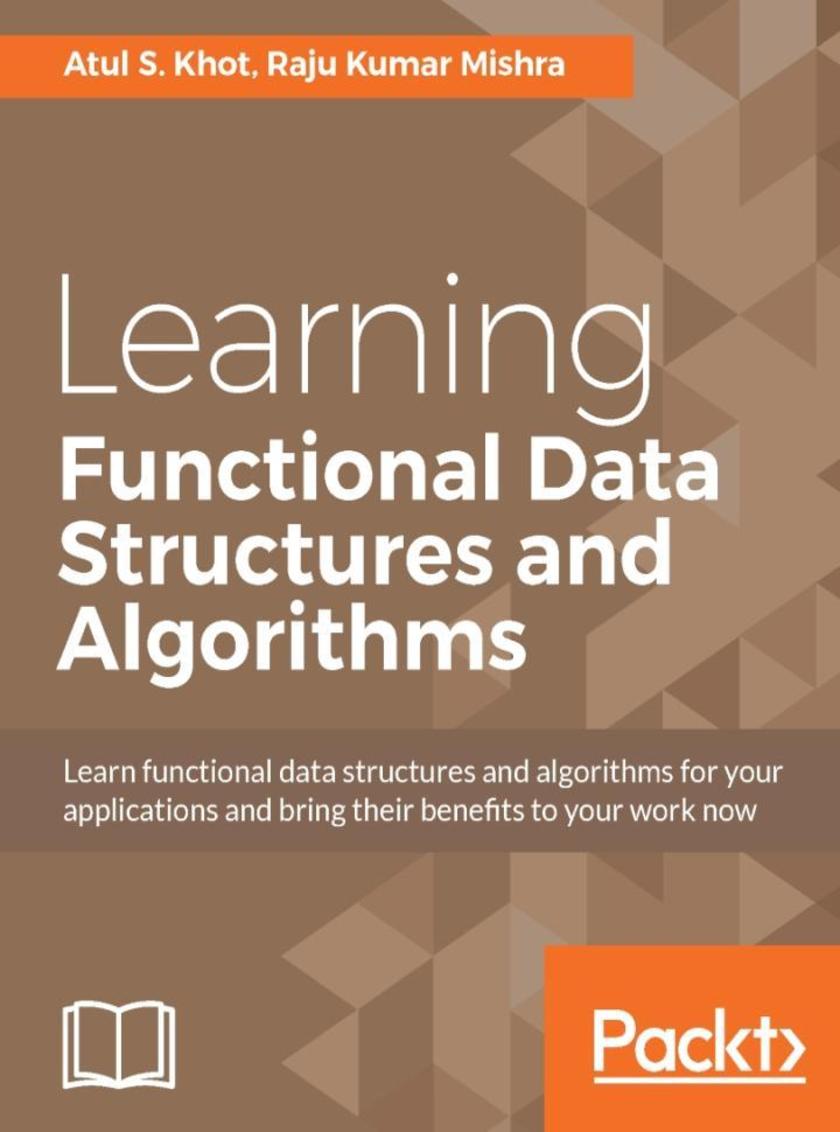
Learning Functional Data Structures and Algorithms
¥80.65
Learn functional data structures and algorithms for your applications and bring their benefits to your work now About This Book Moving from object-oriented programming to functional programmingThis book will help you get started with functional programming. Easy-to-understand explanations of practical topics will help you get started with functional data structures. Illustrative diagrams to explain the algorithms in detail. Get hands-on practice of Scala to get the most out of functional programming. Who This Book Is For This book is for those who have some experience in functional programming languages. The data structures in this book are primarily written in Scala, however implementing the algorithms in other functional languages should be straight forward. What You Will Learn Learn to think in the functional paradigm Understand common data structures and the associated algorithms, as well as the context in which they are commonly used Take a look at the runtime and space complexities with the O notation See how ADTs are implemented in a functional setting Explore the basic theme of immutability and persistent data structures Find out how the internal algorithms are redesigned to exploit structural sharing, so that the persistent data structures perform well, avoiding needless copying. Get to know functional features like lazy evaluation and recursion used to implement efficient algorithms Gain Scala best practices and idioms In Detail Functional data structures have the power to improve the codebase of an application and improve efficiency. With the advent of functional programming and with powerful functional languages such as Scala, Clojure and Elixir becoming part of important enterprise applications, functional data structures have gained an important place in the developer toolkit. Immutability is a cornerstone of functional programming. Immutable and persistent data structures are thread safe by definition and hence very appealing for writing robust concurrent programs. How do we express traditional algorithms in functional settingWon’t we end up copying too muchDo we trade performance for versioned data structuresThis book attempts to answer these questions by looking at functional implementations of traditional algorithms. It begins with a refresher and consolidation of what functional programming is all about. Next, you’ll get to know about Lists, the work horse data type for most functional languages. We show what structural sharing means and how it helps to make immutable data structures efficient and practical. Scala is the primary implementation languages for most of the examples. At times, we also present Clojure snippets to illustrate the underlying fundamental theme. While writing code, we use ADTs (abstract data types). Stacks, Queues, Trees and Graphs are all familiar ADTs. You will see how these ADTs are implemented in a functional setting. We look at implementation techniques like amortization and lazy evaluation to ensure efficiency. By the end of the book, you will be able to write efficient functional data structures and algorithms for your applications. Style and approach Step-by-step topics will help you get started with functional programming. Learn by doing with hands-on code snippets that give you practical experience of the subject.
Getting Started with Angular - Second Edition
¥63.21
Fast-track your web development skills to build high performance SPA with Angular 2 and beyond About This Book Up to date with the latest API changes introduced by Angular 2 and 4 Get familiar with the improvements to directives, change detection, dependency injection, router, and more Understand Angular's new component-based architecture Start using TypeScript to supercharge your Angular applications Who This Book Is For Do you want to jump in at the deep end of AngularOr perhaps you’re interested assessing the changes to AngularJS before moving overIf so, then "Getting Started with Angular" is the book for you. To get the most out of the book, you’ll need to be familiar with AngularJS 1.x, and have a good understanding of JavaScript. What You Will Learn Understand the changes made from AngularJS with side-by-side code samples to help demystify the Angular learning curve Start working with Angular’s new method of implementing directives Use TypeScript to write modern, powerful Angular applications Dig in to the change detection method, and other architectural changes to make sure you know what’s going on under the hood of Angular Get to work with the new router in Angular Use the new features of Angular, including pipes, and the updated features such as forms, services, and dependency injection Learn about the server-side rendering in Angular to keep your new applications SEO-friendly Enhance your applications using Ahead-of-Time compilation and Web Workers In Detail I'm delighted to see this new update and hope it helps you build amazing things with Angular. - Mi?ko Hevery, Creator of AngularJS and Angular Angular is the modern framework you need to build performant and robust web applications. This book is the quickest way to upgrade your AngularJS knowledge to the brave new world of Angular, and get grips with the framework. It starts with an overview putting the changes of the framework in context with version 1. After that, you will be taken on a TypeScript crash-course so you can take advantage of Angular in its native, statically-typed environment. You'll explore the new change detection mechanism in detail, how directives and components have changed, how you create applications with Angular, and much more. Next, you'll understand how to efficienly develop forms, use the router, implement communication with HTTP services, and transform data with custom pipes. Finally, we will take a look at the Angular's Ahead-of-Time compiler, angular-cli and other such tools that help us build professional applications. By the end of the book, you’ll be ready to start building quick and efficient Angular applications compatible with v2 and v4, that take advantage of all the new features on offer. This book is up to date for the 2.4 release and is compatible with the 4.0 release as well. Style and approach Starting with a comparison between Angular versions, this book is filled with side-by-side code examples to help highlight the changes. Each chapter then looks at major changes to the framework and is filled with small examples and sample code to get you started.
Swift 3 Object-Oriented Programming - Second Edition
¥71.93
Implement object-oriented programming paradigms with Swift 3.0 and mix them with modern functional programming techniques to build powerful real-world applications About This Book Leverage the most efficient object-oriented design patterns in your Swift applications Write robust, safer, and better code using the blueprints that generate objects Build a platform with object-oriented code using real-world elements and represent them in your apps Who This Book Is For This book is for iOS and macOS developers who want to get a detailed practical understanding of object-oriented programming with the latest version of Swift: 3.0. What You Will Learn Write high-quality and easy-to-maintain reusable object-oriented code to build applications for iOS, macOS, and Linux Work with encapsulation, abstraction, and polymorphism using Swift 3.0 Work with classes, instances, properties, and methods in Swift 3.0 Take advantage of inheritance, specialization, and the possibility to overload or override members Implement encapsulation, abstraction, and polymorphism Explore functional programming techniques mixed with object-oriented code in Swift 3.0 Understand the differences between Swift 3.0, previous Swift versions, and Objective-C code In Detail Swift has quickly become one of the most-liked languages and developers’ de-facto choice when building applications that target iOS and macOS. In the new version, the Swift team wants to take its adoption to the next level by making it available for new platforms and audiences. This book introduces the object-oriented paradigm and its implementation in the Swift 3 programming language to help you understand how real-world objects can become part of fundamental reusable elements in the code. This book is developed with XCode 8.x and covers all the enhancements included in Swift 3.0. In addition, we teach you to run most of the examples with the Swift REPL available on macOS and Linux, and with a Web-based Swift sandbox developed by IBM capable of running on any web browser, including Windows and mobile devices. You will organize data in blueprints that generate instances. You’ll work with examples so you understand how to encapsulate and hide data by working with properties and access control. Then, you’ll get to grips with complex scenarios where you use instances that belong to more than one blueprint. You’ll discover the power of contract programming and parametric polymorphism. You’ll combine generic code with inheritance and multiple inheritance. Later, you’ll see how to combine functional programming with object-oriented programming and find out how to refactor your existing code for easy maintenance. Style and approach This simple guide is packed with practical examples of solutions to common problems. Each chapter includes exercises and the possibility for you to test your progress by answering a quiz
Spring MVC: Designing Real-World Web Applications
¥179.84
Unleash the power of Spring MVC and build enterprise-grade, lightning-fast web applications About This Book Configure Spring MVC to build logic-less controllers that transparently support the most advanced web techniques Secure your developments with easy-to-write, reliable unit and end-to-end tests Get this fast-paced, practical guide to produce REST resources and templates as required by the latest front-end best practices Who This Book Is For This Learning Path is for Java developers who want to exploit Spring MVC and its features to build web applications. It will help you step up in your career and stay up to date or learn more about Spring’s web scalability. What You Will Learn Set up and build standalone and web-based projects using Spring Framework with Maven or Gradle Develop RESTful API applications for XML and JSON data transfers Investigate Spring data access mechanisms with Spring Data Repositories Generate templates for a responsive and powerful front end with AngularJS and Bootstrap Authenticate over REST with a BASIC authentication scheme and OAuth2; handle roles and permissions Communicate through WebSocket and STOMP messages Design complex advanced-level forms and validate the model Create maintainable unit and acceptance tests to secure the apps Deploy the web application to the cloud in a snap In Detail Spring MVC helps you build flexible and loosely coupled web applications. The Spring MVC Framework is designed in such a way that every piece of logic and functionality is highly configurable. This Learning Path aims to make you an expert in designing web applications with Spring MVC 4. In our first module, we’ll begin with an introduction to the Spring framework. You'll then learn aspect-oriented programming. Packed with real-world examples, you’ll get an insight into how you can use Spring Expression Language in your applications to make them easier to manage and maintain. In the second module, you'll learn everything you need to build modern Spring-based enterprise web applications. From practical development techniques and useful tools from the wider Spring ecosystem, to the new JEE standards, the impact of JavaScript, and even the Internet of Things, you'll feel confident that you can deploy Spring for an impressive range of creative purposes. In the final module, you'll find out how to take advantage of Spring MVC's advanced features - essential if you are to properly master the framework. To do this you'll investigate the inner mechanics of Spring MVC, and how they tie into to the broader principles that inform many modern web architectures. With further guidance on how to test, secure, and optimize your application, as well as designing RESTful services, you'll very quickly be ready to use Spring in your next web project. This Learning Path combines some of the best that Packt has to offer in one complete, curated package. It includes content from the following Packt products: Spring Essentials by Shameer Kunjumohamed, Hamidreza Sattari Spring MVC Cookbook by Alex Bretet Mastering Spring MVC 4 by Geoffroy Warin Style and approach This is a hands-on, practical guide based on logical modules of the whole Spring framework family, employing a combination of theory and examples with pro-level practices, techniques, and solutions.
R: Recipes for Analysis, Visualization and Machine Learning
¥161.31
Get savvy with R language and actualize projects aimed at analysis, visualization and machine learning About This Book Proficiently analyze data and apply machine learning techniques Generate visualizations, develop interactive visualizations and applications to understand various data exploratory functions in R Construct a predictive model by using a variety of machine learning packages Who This Book Is For This Learning Path is ideal for those who have been exposed to R, but have not used it extensively yet. It covers the basics of using R and is written for new and intermediate R users interested in learning. This Learning Path also provides in-depth insights into professional techniques for analysis, visualization, and machine learning with R – it will help you increase your R expertise, regardless of your level of experience. What You Will Learn Get data into your R environment and prepare it for analysis Perform exploratory data analyses and generate meaningful visualizations of the data Generate various plots in R using the basic R plotting techniques Create presentations and learn the basics of creating apps in R for your audience Create and inspect the transaction dataset, performing association analysis with the Apriori algorithm Visualize associations in various graph formats and find frequent itemset using the ECLAT algorithm Build, tune, and evaluate predictive models with different machine learning packages Incorporate R and Hadoop to solve machine learning problems on big data In Detail The R language is a powerful, open source, functional programming language. At its core, R is a statistical programming language that provides impressive tools to analyze data and create high-level graphics. This Learning Path is chock-full of recipes. Literally! It aims to excite you with awesome projects focused on analysis, visualization, and machine learning. We’ll start off with data analysis – this will show you ways to use R to generate professional analysis reports. We’ll then move on to visualizing our data – this provides you with all the guidance needed to get comfortable with data visualization with R. Finally, we’ll move into the world of machine learning – this introduces you to data classification, regression, clustering, association rule mining, and dimension reduction. This Learning Path combines some of the best that Packt has to offer in one complete, curated package. It includes content from the following Packt products: R Data Analysis Cookbook by Viswa Viswanathan and Shanthi Viswanathan R Data Visualization Cookbook by Atmajitsinh Gohil Machine Learning with R Cookbook by Yu-Wei, Chiu (David Chiu) Style and approach This course creates a smooth learning path that will teach you how to analyze data and create stunning visualizations. The step-by-step instructions provided for each recipe in this comprehensive Learning Path will show you how to create machine learning projects with R.
Microsoft System Center Configuration Manager Cookbook - Second Edition
¥107.90
Over 60 applicable recipes to administer and manage System Center Configuration Manager Current Branch About This Book Overcome the challenges of administering System Center Configuration Manager when deploying single and multiple-hierarchy sites Help your organization to build a custom-line of business apps and also protect the server against malware threats with Endpoint protection Get easy guidance and best practices to help you work with SCCM Who This Book Is For If you are an intermediate to advanced administrator who wants to administer SCCM and understand how to solve particular problems/scenarios, then this book is for you. You should have a working knowledge of SCCM, however, knowledge of the latest version is not required. What You Will Learn Administer System Center Configuration Manager Upgrade computers from Windows 7/ 8.x to Windows 10, using Serivce Plans to keep Windows 10 machines up to date Manage Compliance Settings effectively and monitor it with SSRS Manage Sites in System Center Configuration Manager and also learn to create collections, leverage role-based administration (RBA), and support clients over the internet without a VPN connection Implement multiple methods to deploy the client, as well as how to be proactive in monitoring client agent health Achieve Mobile device management with Microsoft Intune In Detail This practical cookbook is based on the 1602 current branch of System Center Configuration Manager (SCCM). It shows you how to administer SCCM, giving you an essential toolbox of techniques to solve real-world scenarios. Packed with over 60 task-based and instantly usable recipes, you’ll discover how design a SCCM Infrastructure, and dive into topics such as the recommended SQL configuration for SCCM and how to deploy Windows 10 with Operating System Deployment (OSD). You will learn to easily manage Windows 10 devices by deploying applications, software updates, and feature upgrades, andl be able to leverage Mobile Device Management (MDM) using SCCM and Microsoft Intune. Finally, you see how to gather the inventory of all your PC park and create reports based on it. By the end of the book, you will have learned the best practices when working with SCCM and have a handy reference guide for troubleshooting. Style and approach This cookbook is full of quick recipes that show you how to administer SCCM and will help you understand how to solve particular problems/situations encountered in day-to-day tasks.
JIRA 7 Essentials - Fourth Edition
¥107.90
Explore the great features of the all-new JIRA 7 to manage projects and effectively handle bugs and software issues About This Book Updated for JIRA 7, this book covers all the new features introduced in JIRA 7 with a dedicated chapter on JIRA Service Desk—one of the biggest new add-ons to JIRA This book lays a strong foundation to work with agile projects in JIRA from both the administrator and end user's perspective Work through step-by-step exercises at the end of each chapter for you to try out and reinforce your skills Who This Book Is For This book will be especially useful for project managers but it's also intended for other JIRA users, including developers, and any other industry besides software development, who would like to leverage JIRA’s powerful task management and workflow features to better manage their business processes. What You Will Learn Understand JIRA's data hierarchy and how to design and work with projects in JIRA Plan and set up a new JIRA 7 instance from scratch for production use Using JIRA for agile software projects, business process management, customer service support, and more Understand issues and work with them Design both system and custom fields to behave differently under different contexts Create and design your own screens and apply them to different project and issue types Gain an understanding of the workflow and its various components Set up both incoming and outgoing mail servers to work with e-mails In Detail Atlassian JIRA is an enterprise-issue tracker system. One of its key strengths is its ability to adapt to the needs of the organization, ranging from building Atlassian application interfaces to providing a platform for add-ons to extend JIRA's capabilities. JIRA 7 Essentials, now in its fourth edition, provides a comprehensive explanation covering all major components of JIRA 7, which includes JIRA Software, JIRA Core, and JIRA Service Works. The book starts by explaining how to plan and set up a new JIRA 7 instance from scratch for production use before moving on to the more key features such as e-mails, workflows, business processes, and so on. Then you will understand JIRA's data hierarchy and how to design and work with projects in JIRA. Issues being the corner stone of using JIRA, you will gain a deep understanding of issues and their purpose. Then you will be introduced to fields and how to use custom fields for more effective data collections. You will then learn to create new screens from scratch and customize it to suit your needs. The book then covers workflows and business processes, and you will also be able to set up both incoming and outgoing mail servers to work with e-mails. Towards the end, we explain JIRA's security model and introduce you to one of JIRA’s new add-ons: JIRA Service Desk, which allows you to run JIRA as a computer support portal. Style and approach This is a comprehensive, practical guide on using JIRA to efficiently manage all your projects. It provides clear, step-by-step explanations, and shows how you can use the various features of JIRA to manage your projects more efficiently.
Frankenstein Unbound (The Monster Trilogy)
¥34.14
When Joe Bodenland is suddenly transported back in time to the year 1816, his first reaction is of eager curiosity rather than distress… This is Aldiss’ response to Mary Shelley’s Frankenstein, available for the first time in eBook. When Joe Bodenland is suddenly transported back in time to the year 1816, his first reaction is of eager curiosity rather than distress. Certainly the Switzerland in which he finds himself, with its charming country inns, breathtaking landscapes and gentle, unmechanised pace of life, is infinitely preferable to the America of 2020 where the games of politicians threaten total annihilation. But after meeting the brooding young Victor Frankenstein, Joe realises that this world is more complex than the one he left behind. Is Frankenstein real, or are both Joe and he living out fictional lives? BRIAN SAYS: Developed as a tribute to Mary Shelley’s work, following the writing of Billion Year Spree, with its proposal, since widely adopted, that Frankenstein is the first seminal work to which the label “SF” can be logically attached. Frankenstein makes a female monster to accompany the male; Bodenland, lost from our time, hunts down first Frankenstein and then the monsters, becoming monstrous himself in the process.
Wearable-Tech Projects with the Raspberry Pi Zero
¥54.49
Leverage the cheapest and smallest computer to build exciting wearable-tech projects. About This Book ? A practical and imaginative guide that exposes you to amazing wearable-tech projects ? Create our own heart-rate monitor device and cool projects such as a Tweet-activated LED T-shirt ? A practical guide packed with real-world, useful wearable-tech projects Who This Book Is For Everyone. While some prior knowledge of Python programming and use of the terminal on the Raspberry Pi would be advantageous, they are by no means necessary. Each chapter clearly sets the steps to be taken on your wearable-tech adventure. The first chapter assumes no prior knowledge to get your Pi Zero and you, up and running. The complexity of the electronic devices used, progress incrementally as you work through the chapters; there are clear steps to follow and pictures to help you at every turn along the way. What You Will Learn ? Make use of your Raspberry Pi Zero to create wearable-tech projects ? Interface with electronic devices and use Python to control them; incorporate these into real-world, practical, wearable-tech projects ? Add LED devices to clothing and connect them to your Pi Zero ? Change how LEDs react based upon your movement or messages sent through Twitter ? Create a pedometer and heart rate monitor ? Create your own GPS tracker In Detail With Wearable-Tech Projects with the Raspberry Pi Zero, you will begin with learning how to install the required software for your upcoming projects. You will also learn how to control electronic devices with the GPIOZero Python library. Next, you will be creating some stylish wearable-tech projects such as a motion-reactive LED cap and a Tweet-activated LED T-shirt. Toward the end of the book, you will be creating some useful health and fitness wearable-tech projects; these will help you monitor your heart rate, track your movements with GPS, and count your footsteps with your own pedometer. By the end of the book, you will have created a range of wearable-tech projects and learned enough about your Raspberry Pi Zero that you should be able to adapt these projects further or come up with your own creations! Style and approach This book showcases interesting and cool projects that use the Raspberry Pi Zero in wearable-tech. This book is for readers who are looking to progress to the next level of integrating hardware into their projects. Upon completion of each project, you will have a functional device that can be worn either to enhance your style or to provide you with practical data.
Machine Learning for OpenCV
¥90.46
Expand your OpenCV knowledge and master key concepts of machine learning using this practical, hands-on guide. About This Book ? Load, store, edit, and visualize data using OpenCV and Python ? Grasp the fundamental concepts of classification, regression, and clustering ? Understand, perform, and experiment with machine learning techniques using this easy-to-follow guide ? Evaluate, compare, and choose the right algorithm for any task Who This Book Is For This book targets Python programmers who are already familiar with OpenCV; this book will give you the tools and understanding required to build your own machine learning systems, tailored to practical real-world tasks. What You Will Learn ? Explore and make effective use of OpenCV's machine learning module ? Learn deep learning for computer vision with Python ? Master linear regression and regularization techniques ? Classify objects such as flower species, handwritten digits, and pedestrians ? Explore the effective use of support vector machines, boosted decision trees, and random forests ? Get acquainted with neural networks and Deep Learning to address real-world problems ? Discover hidden structures in your data using k-means clustering ? Get to grips with data pre-processing and feature engineering In Detail Machine learning is no longer just a buzzword, it is all around us: from protecting your email, to automatically tagging friends in pictures, to predicting what movies you like. Computer vision is one of today's most exciting application fields of machine learning, with Deep Learning driving innovative systems such as self-driving cars and Google’s DeepMind. OpenCV lies at the intersection of these topics, providing a comprehensive open-source library for classic as well as state-of-the-art computer vision and machine learning algorithms. In combination with Python Anaconda, you will have access to all the open-source computing libraries you could possibly ask for. Machine learning for OpenCV begins by introducing you to the essential concepts of statistical learning, such as classification and regression. Once all the basics are covered, you will start exploring various algorithms such as decision trees, support vector machines, and Bayesian networks, and learn how to combine them with other OpenCV functionality. As the book progresses, so will your machine learning skills, until you are ready to take on today's hottest topic in the field: Deep Learning. By the end of this book, you will be ready to take on your own machine learning problems, either by building on the existing source code or developing your own algorithm from scratch! Style and approach OpenCV machine learning connects the fundamental theoretical principles behind machine learning to their practical applications in a way that focuses on asking and answering the right questions. This book walks you through the key elements of OpenCV and its powerful machine learning classes, while demonstrating how to get to grips with a range of models.
Mastering Concurrency Programming with Java 9 - Second Edition
¥90.46
Master the principles to make applications robust, scalable and responsive About This Book ? Implement concurrent applications using the Java 9 Concurrency API and its new components ? Improve the performance of your applications and process more data at the same time, taking advantage of all of your resources ? Construct real-world examples related to machine learning, data mining, natural language processing, and more Who This Book Is For This book is for competent Java developers who have basic understanding of concurrency, but knowledge of effective implementation of concurrent programs or usage of streams for making processes more efficient is not required What You Will Learn ? Master the principles that every concurrent application must follow ? See how to parallelize a sequential algorithm to obtain better performance without data inconsistencies and deadlocks ? Get the most from the Java Concurrency API components ? Separate the thread management from the rest of the application with the Executor component ? Execute phased-based tasks in an efficient way with the Phaser components ? Solve problems using a parallelized version of the divide and conquer paradigm with the Fork / Join framework ? Find out how to use parallel Streams and Reactive Streams ? Implement the “map and reduce” and “map and collect” programming models ? Control the concurrent data structures and synchronization mechanisms provided by the Java Concurrency API ? Implement efficient solutions for some actual problems such as data mining, machine learning, and more In Detail Concurrency programming allows several large tasks to be divided into smaller sub-tasks, which are further processed as individual tasks that run in parallel. Java 9 includes a comprehensive API with lots of ready-to-use components for easily implementing powerful concurrency applications, but with high flexibility so you can adapt these components to your needs. The book starts with a full de*ion of the design principles of concurrent applications and explains how to parallelize a sequential algorithm. You will then be introduced to Threads and Runnables, which are an integral part of Java 9's concurrency API. You will see how to use all the components of the Java concurrency API, from the basics to the most advanced techniques, and will implement them in powerful real-world concurrency applications. The book ends with a detailed de*ion of the tools and techniques you can use to test a concurrent Java application, along with a brief insight into other concurrency mechanisms in JVM. Style and approach This is a complete guide that implements real-world examples of algorithms related to machine learning, data mining, and natural language processing in client/server environments. All the examples are explained using a step-by-step approach.
Microsoft HoloLens Developer’s Guide
¥80.65
Transform the ways you communicate, create, collaborate, and explore using Microsoft HoloLens About This Book ? Create immersive augmented reality apps for Microsoft HoloLens from scratch ? Leverage the powerful HoloLens sensors to interact with real-world motions and gestures and make your app life-like ? Explore the powerful Unity 5 SDK along with the Windows Unified platform to get the most out of your HoloLens app Who This Book Is For If you are a developer who wants to create augmented reality apps for the Microsoft HoloLens platform, then this is the book for you. Coding experience with C# is assumed. What You Will Learn ? Design an app for HoloLens that is feasible and attractive to use ? Add gestures and interact with them ? Create sounds in the app and place them in a 3D space ? Use voice generation and voice recognition to make your apps more lifelike ? Interact with the physical environment to place holograms on top of physical objects ? Compare HoloLens with the other products and know how to use its strengths ? Use assets from third parties to enrich our app In Detail HoloLens, Microsoft’s innovative augmented reality headset, overlaps holograms into a user’s vision of their environment. Your ideas are closer to becoming real when you can create and work with holograms in relation to the world around you. If you are dreaming beyond virtual worlds, beyond screens, beyond pixels, and want to take a big leap in the world of augmented reality, then this is the book you want. Starting off with brainstorming and the design process, you will take your first steps in creating your application for HoloLens. You will learn to add gestures and write an app that responds to verbal commands before gradually moving on creating sounds in the app and placing them in a 3D space. You will then communicate between devices in the boundaries of the UWP model. Style and approach This book takes a step-by-step, practical, tutorial-style approach where you will dive deep into HoloLens app development. You will work with the API and write your own complex *s that would interact with the powerful HoloLens sensors and with realistic examples, you will be able to create immersive 3D apps for HoloLens.
Digital Forensics and Incident Response
¥80.65
A practical guide to deploying digital forensic techniques in response to cyber security incidents About This Book ? Learn incident response fundamentals and create an effective incident response framework ? Master forensics investigation utilizing digital investigative techniques ? Contains real-life scenarios that effectively use threat intelligence and modeling techniques Who This Book Is For This book is targeted at Information Security professionals, forensics practitioners, and students with knowledge and experience in the use of software applications and basic command-line experience. It will also help professionals who are new to the incident response/digital forensics role within their organization. What You Will Learn ? Create and deploy incident response capabilities within your organization ? Build a solid foundation for acquiring and handling suitable evidence for later analysis ? Analyze collected evidence and determine the root cause of a security incident ? Learn to integrate digital forensic techniques and procedures into the overall incident response process ? Integrate threat intelligence in digital evidence analysis ? Prepare written documentation for use internally or with external parties such as regulators or law enforcement agencies In Detail Digital Forensics and Incident Response will guide you through the entire spectrum of tasks associated with incident response, starting with preparatory activities associated with creating an incident response plan and creating a digital forensics capability within your own organization. You will then begin a detailed examination of digital forensic techniques including acquiring evidence, examining volatile memory, hard drive assessment, and network-based evidence. You will also explore the role that threat intelligence plays in the incident response process. Finally, a detailed section on preparing reports will help you prepare a written report for use either internally or in a courtroom. By the end of the book, you will have mastered forensic techniques and incident response and you will have a solid foundation on which to increase your ability to investigate such incidents in your organization. Style and approach The book covers practical scenarios and examples in an enterprise setting to give you an understanding of how digital forensics integrates with the overall response to cyber security incidents. You will also learn the proper use of tools and techniques to investigate common cyber security incidents such as malware infestation, memory analysis, disk analysis, and network analysis.
Python Microservices Development
¥80.65
A practical approach to conquering the complexities of Microservices using the Python tooling ecosystem About This Book ? A very useful guide for Python developers who are shifting to the new microservices-based development ? A concise, up-to-date guide to building efficient and lightweight microservices in Python using Flask, Tox, and other tools ? Learn to use Docker containers, CoreOS, and Amazon Web Services to deploy your services Who This Book Is For This book is for developers who have basic knowledge of Python, the command line, and HTTP-based application principles, and those who want to learn how to build, test, scale, and manage Python 3 microservices. No prior experience of writing microservices in Python is assumed. What You Will Learn ? Explore what microservices are and how to design them ? Use Python 3, Flask, Tox, and other tools to build your services using best practices ? Learn how to use a TDD approach ? Discover how to document your microservices ? Configure and package your code in the best way ? Interact with other services ? Secure, monitor, and scale your services ? Deploy your services in Docker containers, CoreOS, and Amazon Web Services In Detail We often deploy our web applications into the cloud, and our code needs to interact with many third-party services. An efficient way to build applications to do this is through microservices architecture. But, in practice, it's hard to get this right due to the complexity of all the pieces interacting with each other. This book will teach you how to overcome these issues and craft applications that are built as small standard units, using all the proven best practices and avoiding the usual traps. It's a practical book: you’ll build everything using Python 3 and its amazing tooling ecosystem. You will understand the principles of TDD and apply them. You will use Flask, Tox, and other tools to build your services using best practices. You will learn how to secure connections between services, and how to * Nginx using Lua to build web application firewall features such as rate limiting. You will also familiarize yourself with Docker’s role in microservices, and use Docker containers, CoreOS, and Amazon Web Services to deploy your services. This book will take you on a journey, ending with the creation of a complete Python application based on microservices. By the end of the book, you will be well versed with the fundamentals of building, designing, testing, and deploying your Python microservices. Style and approach This book is an linear, easy-to-follow guide on how to best design, write, test, and deploy your microservices. It includes real-world examples that will help Python developers create their own Python microservice using the most efficient methods.
WordPress Plugin Development Cookbook - Second Edition
¥71.93
Learn to create plugins for WordPress 4.x to deliver custom projects or share with the community through detailed step-by-step recipes and code examples About This Book ? Learn how to change and extend WordPress to perform virtually any task ? Explore the plugin API through approachable examples and detailed explanations ? Mold WordPress to your project’s needs or transform it to benefit the entire community Who This Book Is For If you are a WordPress user, developer, or a site integrator with basic knowledge of PHP and an interest to create new plugins to address your personal needs, client needs, or share with the community, then this book is for you. What You Will Learn ? Discover how to register user callbacks with WordPress, forming the basis of plugin creation ? Explore the creation of administration pages and adding new content management sections through custom post types and custom database tables ? Improve your plugins by customizing the post and page editors, categories and user profiles, and creating visitor-facing forms ? Make your pages dynamic using Java*, AJAX and adding new widgets to the platform ? Learn how to add support for plugin translation and distribute your work to the WordPress community In Detail WordPress is a popular, powerful, and open Content Management System. Learning how to extend its capabilities allows you to unleash its full potential, whether you're an administrator trying to find the right extension, a developer with a great idea to enhance the platform for the community, or a website developer working to fulfill a client's needs. This book shows readers how to navigate WordPress' vast set of API functions to create high-quality plugins with easy-to-configure administration interfaces. With new recipes and materials updated for the latest versions of WordPress 4.x, this second edition teaches you how to create plugins of varying complexity ranging from a few lines of code to complex extensions that provide intricate new capabilities. You'll start by using the basic mechanisms provided in WordPress to create plugins and execute custom user code. You will then see how to design administration panels, enhance the post editor with custom fields, store custom data, and modify site behavior based on the value of custom fields. You'll safely incorporate dynamic elements on web pages using *ing languages, and build new widgets that users will be able to add to WordPress sidebars and widget areas. By the end of this book, you will be able to create WordPress plugins to perform any task you can imagine. Style and approach This cookbook will take you through the creation of your first simple plugin to adding entirely new sections and widgets in the administration interface, so you can learn how to change and extend WordPress to perform virtually any task. Each topic is illustrated through realistic examples showing how to solve common problems, followed by detailed explanations of all concepts used
Apache Spark 2.x for Java Developers
¥90.46
Unleash the data processing and analytics capability of Apache Spark with the language of choice: Java About This Book ? Perform big data processing with Spark—without having to learn Scala! ? Use the Spark Java API to implement efficient enterprise-grade applications for data processing and analytics ? Go beyond mainstream data processing by adding querying capability, Machine Learning, and graph processing using Spark Who This Book Is For If you are a Java developer interested in learning to use the popular Apache Spark framework, this book is the resource you need to get started. Apache Spark developers who are looking to build enterprise-grade applications in Java will also find this book very useful. What You Will Learn ? Process data using different file formats such as XML, JSON, CSV, and plain and delimited text, using the Spark core Library. ? Perform analytics on data from various data sources such as Kafka, and Flume using Spark Streaming Library ? Learn SQL schema creation and the analysis of structured data using various SQL functions including Windowing functions in the Spark SQL Library ? Explore Spark Mlib APIs while implementing Machine Learning techniques to solve real-world problems ? Get to know Spark GraphX so you understand various graph-based analytics that can be performed with Spark In Detail Apache Spark is the buzzword in the big data industry right now, especially with the increasing need for real-time streaming and data processing. While Spark is built on Scala, the Spark Java API exposes all the Spark features available in the Scala version for Java developers. This book will show you how you can implement various functionalities of the Apache Spark framework in Java, without stepping out of your comfort zone. The book starts with an introduction to the Apache Spark 2.x ecosystem, followed by explaining how to install and configure Spark, and refreshes the Java concepts that will be useful to you when consuming Apache Spark's APIs. You will explore RDD and its associated common Action and Transformation Java APIs, set up a production-like clustered environment, and work with Spark SQL. Moving on, you will perform near-real-time processing with Spark streaming, Machine Learning analytics with Spark MLlib, and graph processing with GraphX, all using various Java packages. By the end of the book, you will have a solid foundation in implementing components in the Spark framework in Java to build fast, real-time applications. Style and approach This practical guide teaches readers the fundamentals of the Apache Spark framework and how to implement components using the Java language. It is a unique blend of theory and practical examples, and is written in a way that will gradually build your knowledge of Apache Spark.
Building Microservices with Go
¥80.65
Your one-stop guide to the common patterns and practices, showing you how to apply these using the Go programming language About This Book ? This short, concise, and practical guide is packed with real-world examples of building microservices with Go ? It is easy to read and will benefit smaller teams who want to extend the functionality of their existing systems ? Using this practical approach will save your money in terms of maintaining a monolithic architecture and demonstrate capabilities in ease of use Who This Book Is For You should have a working knowledge of programming in Go, including writing and compiling basic applications. However, no knowledge of RESTful architecture, microservices, or web services is expected. If you are looking to apply techniques to your own projects, taking your first steps into microservice architecture, this book is for you. What You Will Learn ? Plan a microservice architecture and design a microservice ? Write a microservice with a RESTful API and a database ? Understand the common idioms and common patterns in microservices architecture ? Leverage tools and automation that helps microservices become horizontally scalable ? Get a grounding in containerization with Docker and Docker-Compose, which will greatly accelerate your development lifecycle ? Manage and secure Microservices at scale with monitoring, logging, service discovery, and automation ? Test microservices and integrate API tests in Go In Detail Microservice architecture is sweeping the world as the de facto pattern to build web-based applications. Golang is a language particularly well suited to building them. Its strong community, encouragement of idiomatic style, and statically-linked binary artifacts make integrating it with other technologies and managing microservices at scale consistent and intuitive. This book will teach you the common patterns and practices, showing you how to apply these using the Go programming language. It will teach you the fundamental concepts of architectural design and RESTful communication, and show you patterns that provide manageable code that is supportable in development and at scale in production. We will provide you with examples on how to put these concepts and patterns into practice with Go. Whether you are planning a new application or working in an existing monolith, this book will explain and illustrate with practical examples how teams of all sizes can start solving problems with microservices. It will help you understand Docker and Docker-Compose and how it can be used to isolate microservice dependencies and build environments. We finish off by showing you various techniques to monitor, test, and secure your microservices. By the end, you will know the benefits of system resilience of a microservice and the advantages of Go stack. Style and approach The step-by-step tutorial focuses on building microservices. Each chapter expands upon the previous one, teaching you the main skills and techniques required to be a successful microservice practitioner.
Cross-platform Desktop Application Development: Electron, Node, NW.js, and React
¥80.65
Build powerful cross-platform desktop applications with web technologies such as Node, NW.JS, Electron, and React About This Book ? Build different cross-platform HTML5 desktop applications right from planning, designing, and deployment to enhancement, testing, and delivery ? Forget the pain of cross-platform compatibility and build efficient apps that can be easily deployed on different platforms. ? Build simple to advanced HTML5 desktop apps, by integrating them with other popular frameworks and libraries such as Electron, Node.JS, Nw.js, React, Redux, and TypeScript Who This Book Is For This book has been written for developers interested in creating desktop applications with HTML5. The first part requires essential web-master skills (HTML, CSS, and JavaScript). The second demands minimal experience with React. And finally for the third it would be helpful to have a basic knowledge of React, Redux, and TypeScript. What You Will Learn ? Plan, design, and develop different cross-platform desktop apps ? Application architecture with React and local state ? Application architecture with React and Redux store ? Code design with TypeScript interfaces and specialized types ? CSS and component libraries such as Photonkit, Material UI, and React MDL ? HTML5 APIs such as desktop notifications, WebSockets, WebRTC, and others ? Desktop environment integration APIs of NW.js and Electron ? Package and distribute for NW.JS and Electron In Detail Building and maintaining cross-platform desktop applications with native languages isn’t a trivial task. Since it’s hard to simulate on a foreign platform, packaging and distribution can be quite platform-specific and testing cross-platform apps is pretty complicated.In such scenarios, web technologies such as HTML5 and JavaScript can be your lifesaver. HTML5 desktop applications can be distributed across different platforms (Window, MacOS, and Linux) without any modifications to the code. The book starts with a walk-through on building a simple file explorer from scratch powered by NW.JS. So you will practice the most exciting features of bleeding edge CSS and JavaScript. In addition you will learn to use the desktop environment integration API, source code protection, packaging, and auto-updating with NW.JS. As the second application you will build a chat-system example implemented with Electron and React. While developing the chat app, you will get Photonkit. Next, you will create a screen capturer with NW.JS, React, and Redux. Finally, you will examine an RSS-reader built with TypeScript, React, Redux, and Electron. Generic UI components will be reused from the React MDL library. By the end of the book, you will have built four desktop apps. You will have covered everything from planning, designing, and development to the enhancement, testing, and delivery of these apps. Style and approach Filled with real world examples, this book teaches you to build cross-platform desktop apps right from scratch using a step-by-step approach.


