


 购物车
购物车 个人中心
个人中心
AWS Certified SysOps Administrator – Associate Guide
¥81.74
An effective guide to becoming an AWS Certified SysOps Administrator Key Features * Not only pass the certification with confidence but also enhance your skills to solving real-world scenarios. * A practical guide to getting you hands-on experience with application management, deployment, operation. * Enhance your AWS skills with practice questions and mock tests. Book Description AWS certifications are becoming one of the must have certifications for any IT professional working on an AWS Cloud platform. This book will act as your one stop preparation guide to validate your technical expertise in deployment, management, and operations on the AWS platform. Along with exam specific content this book will also deep dive into real world scenarios and hands-on instructions. This book will revolve around concepts like teaching you to deploy, manage, and operate scalable, highly available, and fault tolerant systems on AWS. You will also learn to migrate an existing on-premises application to AWS. You get hands-on experience in selecting the appropriate AWS service based on compute, data, or security requirements. This book will also get you well versed with estimating AWS usage costs and identifying operational cost control mechanisms. By the end of this book, you will be all prepared to implement and manage resources efficiently on the AWS cloud along with confidently passing the AWS Certified SysOps Administrator – Associate exam. What you will learn * Create and manage users, groups, and permissions using AWS IAM services * Create a secure VPC with public and private subnets, Network Access Control, and security groups * Get started with launching your first EC2 instance, and working with it * Handle application traffic with ELB and monitor AWS resources with CloudWatch * Work with S3, Glacier, and CloudFront * Work across distributed application components using SWF * Understand event-based processing with Lambda and messaging SQS and SNS in AWS * Get familiar with AWS deployment concepts and tools including Elastic Beanstalk, CloudFormation and AWS OpsWorks Who this book is for If you are a system administrator or a system engineer interested in leveraging the AWS platform to deploy applications then, this book is for you. IT professionals interested in passing the AWS Certified Sysops Administrator will also benefit from this book. Some basic understanding of working AWS components would do wonders.
Ceph: Designing and Implementing Scalable Storage Systems
¥90.46
Get to grips with the unified, highly scalable distributed storage system and learn how to design and implement it. Key Features * Explore Ceph's architecture in detail * Implement a Ceph cluster successfully and gain deep insights into its best practices * Leverage the advanced features of Ceph, including erasure coding, tiering, and BlueStore Book Description This Learning Path takes you through the basics of Ceph all the way to gaining in-depth understanding of its advanced features. You’ll gather skills to plan, deploy, and manage your Ceph cluster. After an introduction to the Ceph architecture and its core projects, you’ll be able to set up a Ceph cluster and learn how to monitor its health, improve its performance, and troubleshoot any issues. By following the step-by-step approach of this Learning Path, you’ll learn how Ceph integrates with OpenStack, Glance, Manila, Swift, and Cinder. With knowledge of federated architecture and CephFS, you’ll use Calamari and VSM to monitor the Ceph environment. In the upcoming chapters, you’ll study the key areas of Ceph, including BlueStore, erasure coding, and cache tiering. More specifically, you’ll discover what they can do for your storage system. In the concluding chapters, you will develop applications that use Librados and distributed computations with shared object classes, and see how Ceph and its supporting infrastructure can be optimized. By the end of this Learning Path, you'll have the practical knowledge of operating Ceph in a production environment. This Learning Path includes content from the following Packt products: * Ceph Cookbook by Michael Hackett, Vikhyat Umrao and Karan Singh * Mastering Ceph by Nick Fisk * Learning Ceph, Second Edition by Anthony D'Atri, Vaibhav Bhembre and Karan Singh What you will learn * Understand the benefits of using Ceph as a storage solution * Combine Ceph with OpenStack, Cinder, Glance, and Nova components * Set up a test cluster with Ansible and virtual machine with VirtualBox * Develop solutions with Librados and shared object classes * Configure BlueStore and see its interaction with other configurations * Tune, monitor, and recover storage systems effectively * Build an erasure-coded pool by selecting intelligent parameters Who this book is for If you are a developer, system administrator, storage professional, or cloud engineer who wants to understand how to deploy a Ceph cluster, this Learning Path is ideal for you. It will help you discover ways in which Ceph features can solve your data storage problems. Basic knowledge of storage systems and GNU/Linux will be beneficial.

DevOps with Kubernetes
¥90.46
Leverage the power of Kubernetes to build an efficient software delivery pipeline. Key Features * Learn about DevOps, containers, and Kubernetes all within one handy book * A practical guide to container management and orchestration * Learn how to monitor, log, and troubleshoot your Kubernetes applications Book Description Kubernetes has been widely adopted across public clouds and on-premise data centers. As we're living in an era of microservices, knowing how to use and manage Kubernetes is an essential skill for everyone in the IT industry. This book is a guide to everything you need to know about Kubernetes—from simply deploying a container to administrating Kubernetes clusters wisely. You'll learn about DevOps fundamentals, as well as deploying a monolithic application as microservices and using Kubernetes to orchestrate them. You will then gain an insight into the Kubernetes network, extensions, authentication and authorization. With the DevOps spirit in mind, you'll learn how to allocate resources to your application and prepare to scale them efficiently. Knowing the status and activity of the application and clusters is crucial, so we’ll learn about monitoring and logging in Kubernetes. Having an improved ability to observe your services means that you will be able to build a continuous delivery pipeline with confidence. At the end of the book, you'll learn how to run managed Kubernetes services on three top cloud providers: Google Cloud Platform, Amazon Web Services, and Microsoft Azure. What you will learn * Learn fundamental and advanced DevOps skills and tools * Get a comprehensive understanding of containers * Dockerize an application * Administrate and manage Kubernetes cluster * Extend the cluster functionality with custom resources * Understand Kubernetes network and service mesh * Implement Kubernetes logging and monitoring * Manage Kubernetes services in Amazon Web Services, Google Cloud Platform,and Microsoft Azure Who this book is for This book is for anyone who wants to learn containerization and clustering in a practical way using Kubernetes. No prerequisite skills are required, however, essential DevOps skill and public/private Cloud knowledge will accelerate the reading speed. If you're advanced, you can get a deeper understanding of all the tools and technique described in the book.
Mastering Machine Learning with R
¥73.02
Stay updated with expert techniques for solving data analytics and machine learning challenges and gain insights from complex projects and power up your applications Key Features * Build independent machine learning (ML) systems leveraging the best features of R 3.5 * Understand and apply different machine learning techniques using real-world examples * Use methods such as multi-class classification, regression, and clustering Book Description Given the growing popularity of the R-zerocost statistical programming environment, there has never been a better time to start applying ML to your data. This book will teach you advanced techniques in ML ,using? the latest code in R 3.5. You will delve into various complex features of supervised learning, unsupervised learning, and reinforcement learning algorithms to design efficient and powerful ML models. This newly updated edition is packed with fresh examples covering a range of tasks from different domains. Mastering Machine Learning with R starts by showing you how to quickly manipulate data and prepare it for analysis. You will explore simple and complex models and understand how to compare them. You’ll also learn to use the latest library support, such as TensorFlow and Keras-R, for performing advanced computations. Additionally, you’ll explore complex topics, such as natural language processing (NLP), time series analysis, and clustering, which will further refine your skills in developing applications. Each chapter will help you implement advanced ML algorithms using real-world examples. You’ll even be introduced to reinforcement learning, along with its various use cases and models. In the concluding chapters, you’ll get a glimpse into how some of these blackbox models can be diagnosed and understood. By the end of this book, you’ll be equipped with the skills to deploy ML techniques in your own projects or at work. What you will learn * Prepare data for machine learning methods with ease * Understand how to write production-ready code and package it for use * Produce simple and effective data visualizations for improved insights * Master advanced methods, such as Boosted Trees and deep neural networks * Use natural language processing to extract insights in relation to text * Implement tree-based classifiers, including Random Forest and Boosted Tree Who this book is for This book is for data science professionals, machine learning engineers, or anyone who is looking for the ideal guide to help them implement advanced machine learning algorithms. The book will help you take your skills to the next level and advance further in this field. Working knowledge of machine learning with R is mandatory.
Serverless Programming Cookbook
¥81.74
Build, secure, and deploy real-world serverless applications in AWS and peek into the serverless cloud offerings from Azure, Google Cloud, and IBM Cloud Key Features * Build serverless applications with AWS Lambda, AWS CloudFormation and AWS CloudWatch * Perform data analytics and natural language processing(NLP)on the AWS serverless platform * Explore various design patterns and best practices involved in serverless computing Book Description Managing physical servers will be a thing of the past once you’re able to harness the power of serverless computing. If you’re already prepped with the basics of serverless computing, Serverless Programming Cookbook will help you take the next step ahead. This recipe-based guide provides solutions to problems you might face while building serverless applications. You'll begin by setting up Amazon Web Services (AWS), the primary cloud provider used for most recipes. The next set of recipes will cover various components to build a Serverless application including REST APIs, database, user management, authentication, web hosting, domain registration, DNS management, CDN, messaging, notifications and monitoring. The book also introduces you to the latest technology trends such as Data Streams, Machine Learning and NLP. You will also see patterns and practices for using various services in a real world application. Finally, to broaden your understanding of Serverless computing, you'll also cover getting started guides for other cloud providers such as Azure, Google Cloud Platform and IBM cloud. By the end of this book, you’ll have acquired the skills you need to build serverless applications efficiently using various cloud offerings. What you will learn * Serverless computing in AWS and explore services with other clouds * Develop full-stack apps with API Gateway, Cognito, Lambda and DynamoDB * Web hosting with S3, CloudFront, Route 53 and AWS Certificate Manager * SQS and SNS for effective communication between microservices * Monitoring and troubleshooting with CloudWatch logs and metrics * Explore Kinesis Streams, Amazon ML models and Alexa Skills Kit Who this book is for For developers looking for practical solutions to common problems while building a serverless application, this book provides helpful recipes. To get started with this intermediate-level book, knowledge of basic programming is a must.
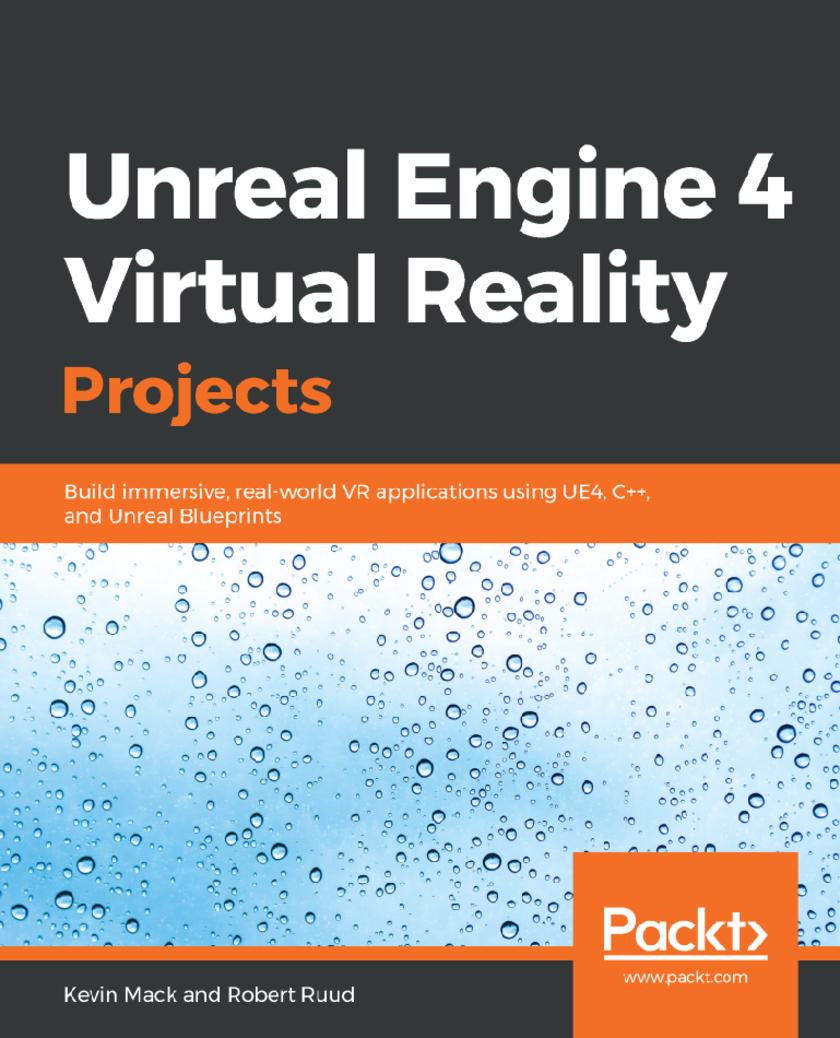
Unreal Engine 4 Virtual Reality Projects
¥70.84
Learn to design and build Virtual Reality experiences, applications, and games in Unreal Engine 4 through a series of practical, hands-on projects that teach you to create controllable avatars, user interfaces, and more. Key Features * Deploy your virtual reality applications on the latest Oculus Go and Samsung Gear * Build real-world applications such as 3D UIs, mini games, and 360° media player applications using Unreal Engine 4 * Master multiplayer networking and build rich multi-user VR experiences Book Description Unreal Engine 4 (UE4) is a powerful tool for developing VR games and applications. With its visual scripting language, Blueprint, and built-in support for all major VR headsets, it's a perfect tool for designers, artists, and engineers to realize their visions in VR. This book will guide you step-by-step through a series of projects that teach essential concepts and techniques for VR development in UE4. You will begin by learning how to think about (and design for) VR and then proceed to set up a development environment. A series of practical projects follows, taking you through essential VR concepts. Through these exercises, you'll learn how to set up UE4 projects that run effectively in VR, how to build player locomotion schemes, and how to use hand controllers to interact with the world. You'll then move on to create user interfaces in 3D space, use the editor's VR mode to build environments directly in VR, and profile/optimize worlds you've built. Finally, you'll explore more advanced topics, such as displaying stereo media in VR, networking in Unreal, and using plugins to extend the engine. Throughout, this book focuses on creating a deeper understanding of why the relevant tools and techniques work as they do, so you can use the techniques and concepts learned here as a springboard for further learning and exploration in VR. What you will learn * Understand design principles and concepts for building VR applications * Set up your development environment with Unreal Blueprints and C++ * Create a player character with several locomotion schemes * Evaluate and solve performance problems in VR to maintain high frame rates * Display mono and stereo videos in VR * Extend Unreal Engine's capabilities using various plugins Who this book is for This book is for anyone interested in learning to develop Virtual Reality games and applications using UE4. Developers new to UE4 will benefit from hands-on projects that guide readers through clearly-explained steps, while both new and experienced developers will learn crucial principles and techniques for VR development in UE4.
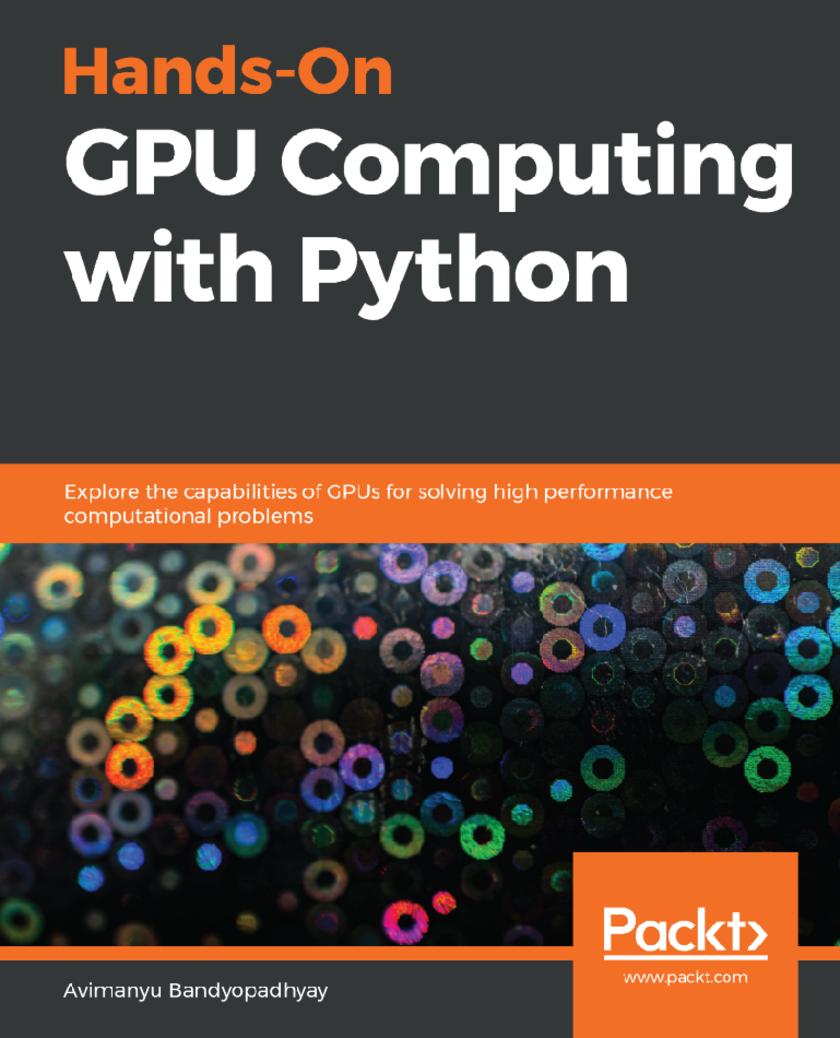
Hands-On GPU Computing with Python
¥70.84
Explore GPU-enabled programmable environment for machine learning, scientific applications, and gaming using PuCUDA, PyOpenGL, and Anaconda Accelerate Key Features * Understand effective synchronization strategies for faster processing using GPUs * Write parallel processing scripts with PyCuda and PyOpenCL * Learn to use the CUDA libraries like CuDNN for deep learning on GPUs Book Description GPUs are proving to be excellent general purpose-parallel computing solutions for high performance tasks such as deep learning and scientific computing. This book will be your guide to getting started with GPU computing. It will start with introducing GPU computing and explain the architecture and programming models for GPUs. You will learn, by example, how to perform GPU programming with Python, and you’ll look at using integrations such as PyCUDA, PyOpenCL, CuPy and Numba with Anaconda for various tasks such as machine learning and data mining. Going further, you will get to grips with GPU work flows, management, and deployment using modern containerization solutions. Toward the end of the book, you will get familiar with the principles of distributed computing for training machine learning models and enhancing efficiency and performance. By the end of this book, you will be able to set up a GPU ecosystem for running complex applications and data models that demand great processing capabilities, and be able to efficiently manage memory to compute your application effectively and quickly. What you will learn * Utilize Python libraries and frameworks for GPU acceleration * Set up a GPU-enabled programmable machine learning environment on your system with Anaconda * Deploy your machine learning system on cloud containers with illustrated examples * Explore PyCUDA and PyOpenCL and compare them with platforms such as CUDA, OpenCL and ROCm. * Perform data mining tasks with machine learning models on GPUs * Extend your knowledge of GPU computing in scientific applications Who this book is for Data Scientist, Machine Learning enthusiasts and professionals who wants to get started with GPU computation and perform the complex tasks with low-latency. Intermediate knowledge of Python programming is assumed.
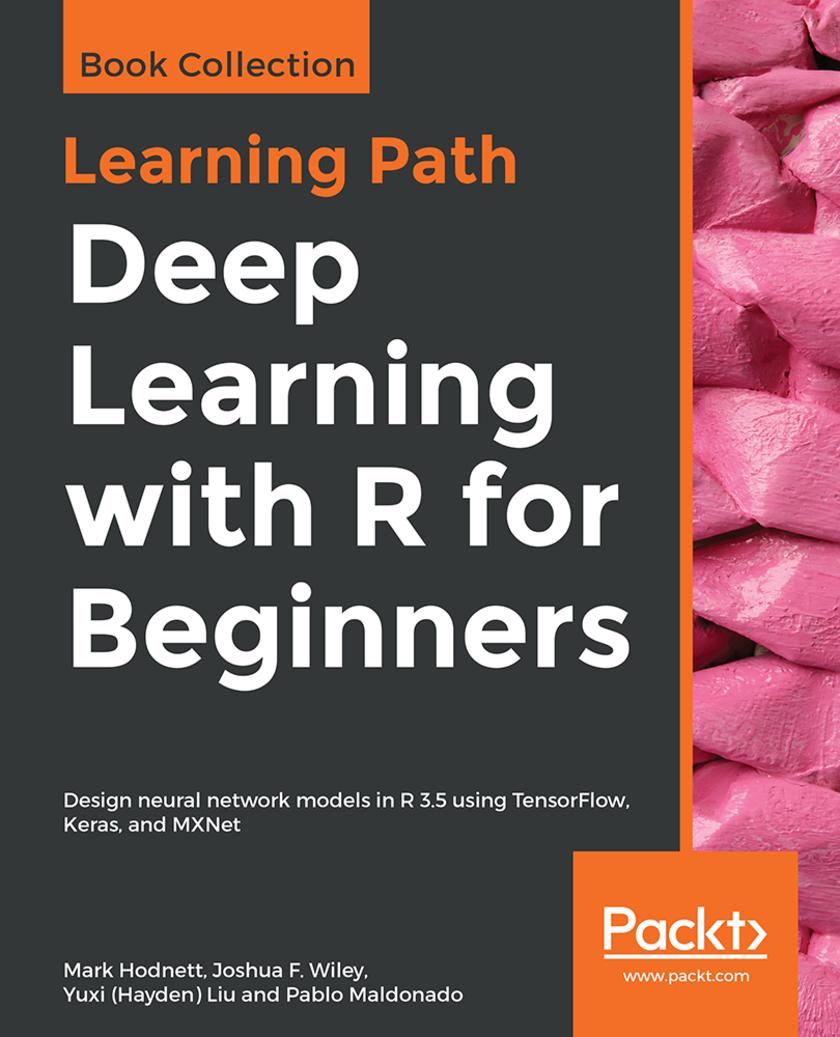
Deep Learning with R for Beginners
¥88.28
Explore the world of neural networks by building powerful deep learning models using the R ecosystem Key Features * Get to grips with the fundamentals of deep learning and neural networks * Use R 3.5 and its libraries and APIs to build deep learning models for computer vision and text processing * Implement effective deep learning systems in R with the help of end-to-end projects Book Description Deep learning finds practical applications in several domains, while R is the preferred language for designing and deploying deep learning models. This Learning Path introduces you to the basics of deep learning and even teaches you to build a neural network model from scratch. As you make your way through the chapters, you’ll explore deep learning libraries and understand how to create deep learning models for a variety of challenges, right from anomaly detection to recommendation systems. The book will then help you cover advanced topics, such as generative adversarial networks (GANs), transfer learning, and large-scale deep learning in the cloud, in addition to model optimization, overfitting, and data augmentation. Through real-world projects, you’ll also get up to speed with training convolutional neural networks (CNNs), recurrent neural networks (RNNs), and long short-term memory networks (LSTMs) in R. By the end of this Learning Path, you’ll be well versed with deep learning and have the skills you need to implement a number of deep learning concepts in your research work or projects. This Learning Path includes content from the following Packt products: * R Deep Learning Essentials - Second Edition by F. Wiley and Mark Hodnett * R Deep Learning Projects by Yuxi (Hayden) Liu and Pablo Maldonado What you will learn * Implement credit card fraud detection with autoencoders * Train neural networks to perform handwritten digit recognition using MXNet * Reconstruct images using variational autoencoders * Explore the applications of autoencoder neural networks in clustering and dimensionality reduction * Create natural language processing (NLP) models using Keras and TensorFlow in R * Prevent models from overfitting the data to improve generalizability * Build shallow neural network prediction models Who this book is for This Learning Path is for aspiring data scientists, data analysts, machine learning developers, and deep learning enthusiasts who are well versed in machine learning concepts and are looking to explore the deep learning paradigm using R. A fundamental understanding of R programming and familiarity with the basic concepts of deep learning are necessary to get the most out of this Learning Path.
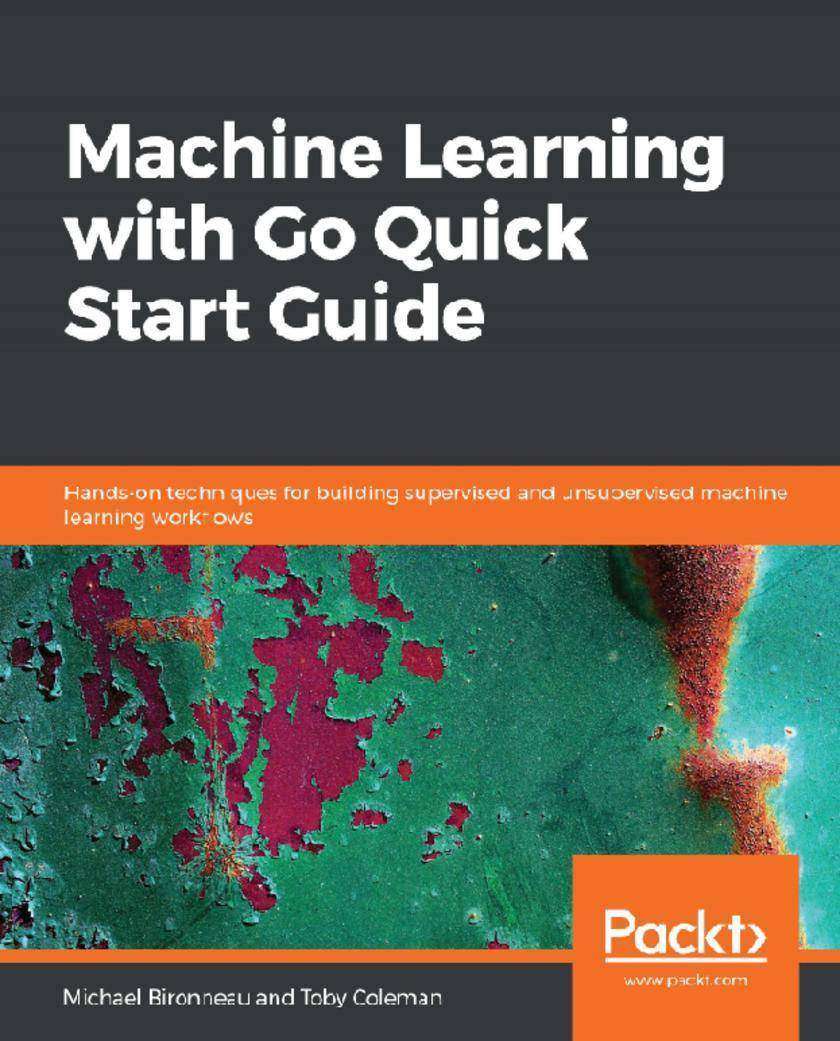
Machine Learning with Go Quick Start Guide
¥44.68
This quick start guide will bring the readers to a basic level of understanding when it comes to the Machine Learning (ML) development lifecycle, will introduce Go ML libraries and then will exemplify common ML methods such as Classification, Regression, and Clustering Key Features * Your handy guide to building machine learning workflows in Go for real-world scenarios * Build predictive models using the popular supervised and unsupervised machine learning techniques * Learn all about deployment strategies and take your ML application from prototype to production ready Book Description Machine learning is an essential part of today's data-driven world and is extensively used across industries, including financial forecasting, robotics, and web technology. This book will teach you how to efficiently develop machine learning applications in Go. The book starts with an introduction to machine learning and its development process, explaining the types of problems that it aims to solve and the solutions it offers. It then covers setting up a frictionless Go development environment, including running Go interactively with Jupyter notebooks. Finally, common data processing techniques are introduced. The book then teaches the reader about supervised and unsupervised learning techniques through worked examples that include the implementation of evaluation metrics. These worked examples make use of the prominent open-source libraries GoML and Gonum. The book also teaches readers how to load a pre-trained model and use it to make predictions. It then moves on to the operational side of running machine learning applications: deployment, Continuous Integration, and helpful advice for effective logging and monitoring. At the end of the book, readers will learn how to set up a machine learning project for success, formulating realistic success criteria and accurately translating business requirements into technical ones. What you will learn * Understand the types of problem that machine learning solves, and the various approaches * Import, pre-process, and explore data with Go to make it ready for machine learning algorithms * Visualize data with gonum/plot and Gophernotes * Diagnose common machine learning problems, such as overfitting and underfitting * Implement supervised and unsupervised learning algorithms using Go libraries * Build a simple web service around a model and use it to make predictions Who this book is for This book is for developers and data scientists with at least beginner-level knowledge of Go, and a vague idea of what types of problem Machine Learning aims to tackle. No advanced knowledge of Go (and no theoretical understanding of the math that underpins Machine Learning) is required.
Flask Framework Cookbook
¥53.40
Build state-of-the-art web applications quickly and efficiently using Flask and related technologies with Python 3 Key Features * Updated to Flask 1.0.3 and Python 3.7 with coverage of Microservices * Get the most out of the powerful Flask framework and maintain the flexibility of your design choices * Write cleaner and maintainable code with the help of sample apps Book Description Flask, the lightweight Python web framework, is popular due to its powerful modular design that lets you build scalable web apps. With this recipe-based guide, you’ll explore modern solutions and best practices for Flask web development. Updated to the latest version of Flask and Python 3, this second edition of Flask Framework Cookbook moves away from some of the old and obsolete libraries and introduces recipes on bleeding edge technologies. You’ll discover different ways of using Flask to create, deploy, and manage microservices. This Flask Python book starts by covering the different configurations that a Flask application can make use of, and then helps you work with templates and learn about the ORM and view layers. You’ll also be able to write an admin interface and get to grips with debugging and logging errors. Finally, you’ll grasp a variety of deployment and post-deployment techniques for platforms such as Apache, Tornado, and Heroku. By the end of this book, you’ll have gained all the knowledge you need to write Flask applications in the best possible way and scale them using standard industry practices. What you will learn * Explore web application development in Flask, right from installation to post-deployment stages * Make use of advanced templating and data modeling techniques * Discover effective debugging, logging, and error handling techniques in Flask * Integrate Flask with different technologies such as Redis, Sentry, and MongoDB * Deploy and package Flask applications with Docker and Kubernetes * Design scalable microservice architecture using AWS LambdaContinuous integration and Continuous deployment Who this book is for If you are a web developer who wants to learn more about developing scalable and production-ready applications in Flask, this is the book for you. You’ll also find this book useful if you are already aware of Flask's major extensions and want to use them for better application development. Basic Python programming experience along with basic understanding of Flask is assumed.

Professional Azure SQL Database Administration
¥79.56
Leverage the features of Azure SQL database and become an expert in data management Key Features * Explore ways to create shards and elastic pools to scale Azure SQL databases * Automate common management tasks with PowerShell * Implement over 40 practical activities and exercises to reinforce your learning Book Description Despite being the cloud version of SQL Server, Azure SQL Database differs in key ways when it comes to management, maintenance, and administration. This book shows you how to administer Azure SQL database to fully benefit from its wide range of features and functionality. Professional Azure SQL Database Administration begins by covering the architecture and explaining the difference between Azure SQL Database and the on-premise SQL Server to help you get comfortable with Azure SQL database. You’ll perform common tasks such as migrating, backing up, and restoring a SQL Server database to an Azure database. As you progress, you’ll study how you can save costs and manage and scale multiple SQL Databases using elastic pools. You’ll also implement a disaster recovery solution using standard and active geo-replication. Whether it is learning different techniques to monitor and tune an Azure SQL database or improving performance using in-memory technology, this book will enable you to make the most out of Azure SQL database features and functionality for data management solutions. By the end of this book, you’ll be well versed with key aspects of an Azure SQL database instance, such as migration, backup restorations, performance optimization, high availability, and disaster recovery. What you will learn * Understand Azure SQL Database configuration and pricing options * Provision a new SQL database or migrate an existing on-premise SQL Server database to Azure SQL Database * Back up and restore Azure SQL Database * Secure an Azure SQL database * Scale an Azure SQL database * Monitor and tune an Azure SQL database * Implement high availability and disaster recovery with Azure SQL Database * Automate common management tasks with PowerShell * Develop a scalable cloud solution with Azure SQL Database * Manage, maintain, and secure managed instances Who this book is for If you’re a database administrator, database developer, or an application developer interested in developing new applications or migrating existing ones with Azure SQL database, this book is for you. Prior experience of working with an on-premise SQL Server or Azure SQL database along with a basic understanding of PowerShell scripts and C# code is necessary to grasp the concepts covered in this book.
Mobile Artificial Intelligence Projects
¥63.21
Learn to build end-to-end AI apps from scratch for Android and iOS using TensorFlow Lite, CoreML, and PyTorch Key Features * Build practical, real-world AI projects on Android and iOS * Implement tasks such as recognizing handwritten digits, sentiment analysis, and more * Explore the core functions of machine learning, deep learning, and mobile vision Book Description We’re witnessing a revolution in Artificial Intelligence, thanks to breakthroughs in deep learning. Mobile Artificial Intelligence Projects empowers you to take part in this revolution by applying Artificial Intelligence (AI) techniques to design applications for natural language processing (NLP), robotics, and computer vision. This book teaches you to harness the power of AI in mobile applications along with learning the core functions of NLP, neural networks, deep learning, and mobile vision. It features a range of projects, covering tasks such as real-estate price prediction, recognizing hand-written digits, predicting car damage, and sentiment analysis. You will learn to utilize NLP and machine learning algorithms to make applications more predictive, proactive, and capable of making autonomous decisions with less human input. In the concluding chapters, you will work with popular libraries, such as TensorFlow Lite, CoreML, and PyTorch across Android and iOS platforms. By the end of this book, you will have developed exciting and more intuitive mobile applications that deliver a customized and more personalized experience to users. What you will learn * Explore the concepts and fundamentals of AI, deep learning, and neural networks * Implement use cases for machine vision and natural language processing * Build an ML model to predict car damage using TensorFlow * Deploy TensorFlow on mobile to convert speech to text * Implement GAN to recognize hand-written digits * Develop end-to-end mobile applications that use AI principles * Work with popular libraries, such as TensorFlow Lite, CoreML, and PyTorch Who this book is for Mobile Artificial Intelligence Projects is for machine learning professionals, deep learning engineers, AI engineers, and software engineers who want to integrate AI technology into mobile-based platforms and applications. Sound knowledge of machine learning and experience with any programming language is all you need to get started with this book.
Oracle CX Cloud Suite
¥63.21
Gain a complete overview of Oracle CX Cloud Suite and its tools for functions ranging from marketing to sales and commerce to service Key Features * Make optimal use of your Oracle CX Cloud Suite to improve business results * Achieve improved customer insights through Oracle CX’s advanced capabilities * Learn how to design a CX solution architecture Book Description Oracle CX Cloud offers features and capabilities that help companies excel at sales, customer management, and much more. This book is a detailed guide to implementing cloud solutions and helping administrators of all levels thoroughly understand the platform. Oracle CX Cloud Suite begins with an introduction to high-level Oracle architecture and examines what CX offers over CRM. You’ll explore the different cloud-based tools for marketing, sales, and customer services, among others. The book then delves into deployment by covering basic settings, setting up users, and provisioning. You’ll see how to integrate the CX suite to work together to interact with the environment and connect with legacy systems, social connectors, and internet services. The book concludes with a use case demonstrating how the entire Oracle CX Suite is set up, and also covers how to leverage Oracle ICS and Oracle CX Cloud for hybrid deployment. By end of the book, you will have learned about the working of the Oracle CX Cloud Suite and how to orchestrate user experience across all products seamlessly. What you will learn * Differentiate between Oracle CRM and CX Cloud suites * Explore a variety of Oracle CX Cloud tools for marketing and sales * Set up users and database connections during deployment * Employ Cloud Suite CX tools to aid in planning and analysis * Implement hybrid Oracle CX solutions and connect with legacy systems * Integrate with social media connectors like Facebook and LinkedIn * Leverage Oracle ICS and Oracle CX Suite to improve business results Who this book is for This book is for administrators who want to develop and strengthen their Oracle CX Cloud Suite skills in the areas of configuration and system management. Whether you are a new administrator or an experienced professional, this book will enhance your understanding of the new Oracle CX features.
AWS Certified Advanced Networking - Specialty Exam Guide
¥62.12
Develop technical skills and expertise to automate AWS networking tasks Key Features * A fast paced guide that will help you pass the exam with confidence * Learn advanced skill sets to build effective AWS networking solutions * Enhance your AWS skills with practice exercises and mock tests Book Description Amazon has recently come up a with specialty certifications which validates a particular user's expertise that he/she would want to build a career in. Since the Cloud market now demands of AWS networking skills this becomes the most wanted certification to upheld ones industry portfolio. This book would be your ideal companion to getting skilled with complex and creative networking solutions. Cloud practitioners or associate-level certified individuals interested in validating advanced skills in networking can opt for this practical guide. This book will include topics that will help you design and implement AWS and hybrid IT network architectures along with some network automation tasks. You will also delve deep into topics that will help you design and maintain network architecture for all AWS services. Like most of our certification guides this book will also follow a unique approach of testing your learning with chapter-level practice exercises and certification-based mock tests. The exam mock tests will help you gauge whether you are ready to take the certification exam or not. This book will also be an advanced guide for networking professionals to enhance their networking skills and get certified. By the end of this book, you will be all equipped with AWS networking concepts and techniques and will have mastered core architectural best practices. What you will learn * Formulate solution plans and provide guidance on AWS architecture best practices * Design and deploy scalable, highly available, and fault-tolerant systems on AWS * Identify the tools required to replicate an on-premises network in AWS * Analyze the access and egress of data to and from AWS * Select the appropriate AWS service based on data, compute, database, or security requirements * Estimate AWS costs and identify cost control mechanisms Who this book is for If you are a system administrator, or a network engineer interested in getting certified with an advanced Cloud networking certification then this book is for you. Prior experience in Cloud administration and networking would be necessary.
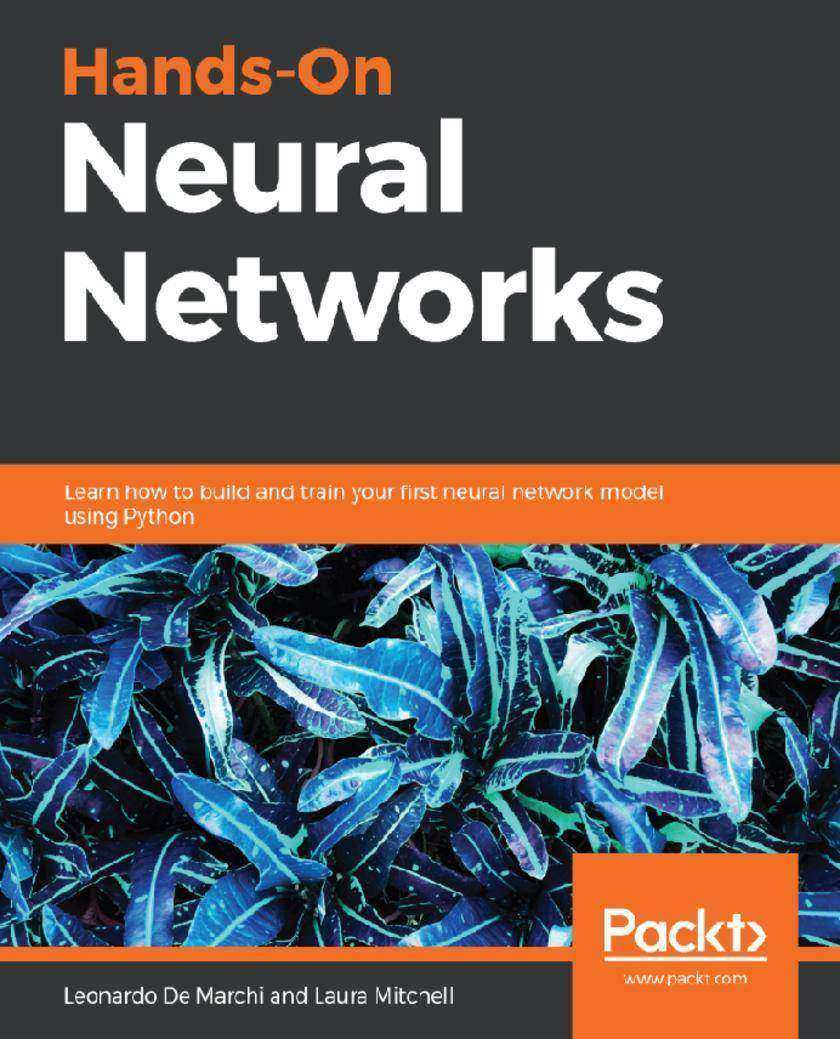
Hands-On Neural Networks
¥62.12
Design and create neural networks with deep learning and artificial intelligence principles using OpenAI Gym, TensorFlow, and Keras Key Features * Explore neural network architecture and understand how it functions * Learn algorithms to solve common problems using back propagation and perceptrons * Understand how to apply neural networks to applications with the help of useful illustrations Book Description Neural networks play a very important role in deep learning and artificial intelligence (AI), with applications in a wide variety of domains, right from medical diagnosis, to financial forecasting, and even machine diagnostics. Hands-On Neural Networks is designed to guide you through learning about neural networks in a practical way. The book will get you started by giving you a brief introduction to perceptron networks. You will then gain insights into machine learning and also understand what the future of AI could look like. Next, you will study how embeddings can be used to process textual data and the role of long short-term memory networks (LSTMs) in helping you solve common natural language processing (NLP) problems. The later chapters will demonstrate how you can implement advanced concepts including transfer learning, generative adversarial networks (GANs), autoencoders, and reinforcement learning. Finally, you can look forward to further content on the latest advancements in the field of neural networks. By the end of this book, you will have the skills you need to build, train, and optimize your own neural network model that can be used to provide predictable solutions. What you will learn * Learn how to train a network by using backpropagation * Discover how to load and transform images for use in neural networks * Study how neural networks can be applied to a varied set of applications * Solve common challenges faced in neural network development * Understand the transfer learning concept to solve tasks using Keras and Visual Geometry Group (VGG) network * Get up to speed with advanced and complex deep learning concepts like LSTMs and NLP * Explore innovative algorithms like GANs and deep reinforcement learning Who this book is for If you are interested in artificial intelligence and deep learning and want to further your skills, then this intermediate-level book is for you. Some knowledge of statistics will help you get the most out of this book.
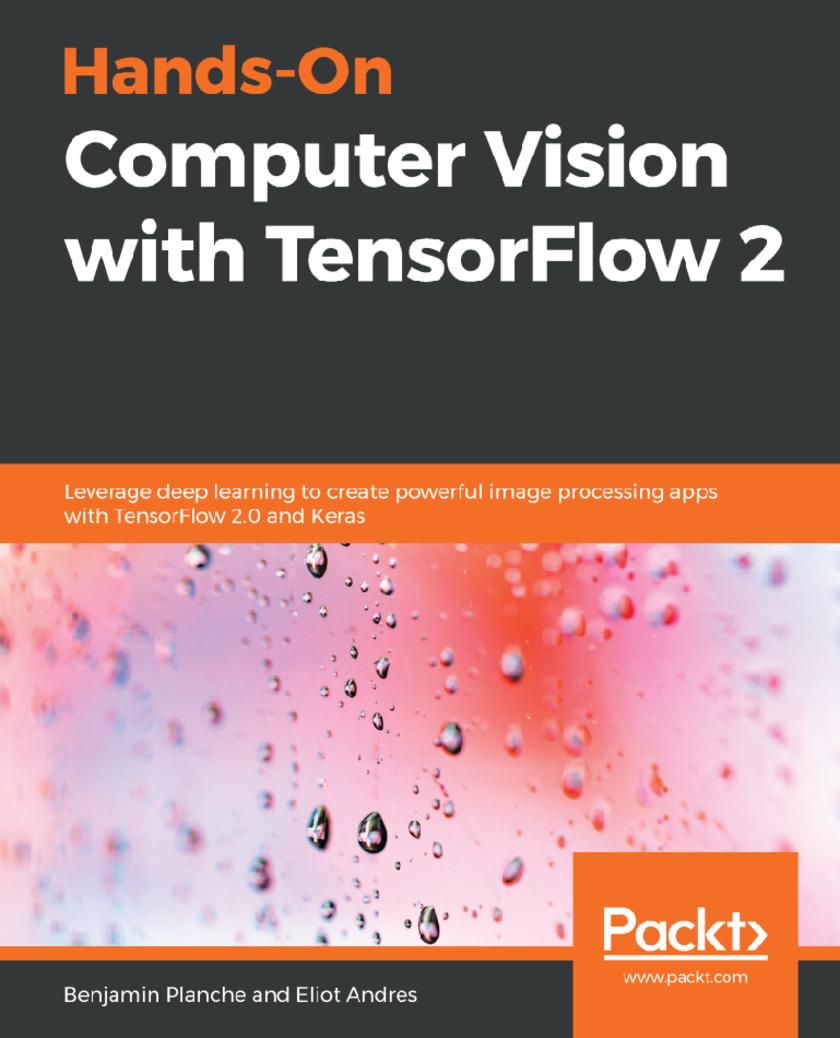
Hands-On Computer Vision with TensorFlow 2
¥62.12
A practical guide to building high performance systems for object detection, segmentation, video processing, smartphone applications, and more. This book is based on the alpha version of TensorFlow 2. Key Features * Discover how to build, train, and serve your own deep neural networks with TensorFlow 2 and Keras * Apply modern solutions to a wide range of applications such as object detection and video analysis * Learn how to run your models on mobile devices and webpages and improve their performance Book Description Computer vision solutions are becoming increasingly common, making their way in fields such as health, automobile, social media, and robotics. This book will help you explore TensorFlow 2, the brand new version of Google's open source framework for machine learning. You will understand how to benefit from using convolutional neural networks (CNNs) for visual tasks. Hands-On Computer Vision with TensorFlow 2 starts with the fundamentals of computer vision and deep learning, teaching you how to build a neural network from scratch. You will discover the features that have made TensorFlow the most widely used AI library, along with its intuitive Keras interface, and move on to building, training, and deploying CNNs efficiently. Complete with concrete code examples, the book demonstrates how to classify images with modern solutions, such as Inception and ResNet, and extract specific content using You Only Look Once (YOLO), Mask R-CNN, and U-Net. You will also build Generative Adversarial Networks (GANs) and Variational Auto-Encoders (VAEs) to create and edit images, and LSTMs to analyze videos. In the process, you will acquire advanced insights into transfer learning, data augmentation, domain adaptation, and mobile and web deployment, among other key concepts. By the end of the book, you will have both the theoretical understanding and practical skills to solve advanced computer vision problems with TensorFlow 2.0. What you will learn * Create your own neural networks from scratch * Classify images with modern architectures including Inception and ResNet * Detect and segment objects in images with YOLO, Mask R-CNN, and U-Net * Tackle problems in developing self-driving cars and facial emotion recognition systems * Boost your application’s performance with transfer learning, GANs, and domain adaptation * Use recurrent neural networks for video analysis * Optimize and deploy your networks on mobile devices and in the browser Who this book is for If you’re new to deep learning and have some background in Python programming and image processing, like reading/writing image files and editing pixels, this book is for you. Even if you’re an expert curious about the new TensorFlow 2 features, you’ll find this book useful. While some theoretical explanations require knowledge in algebra and calculus, the book covers concrete examples for learners focused on practical applications such as visual recognition for self-driving cars and smartphone apps.
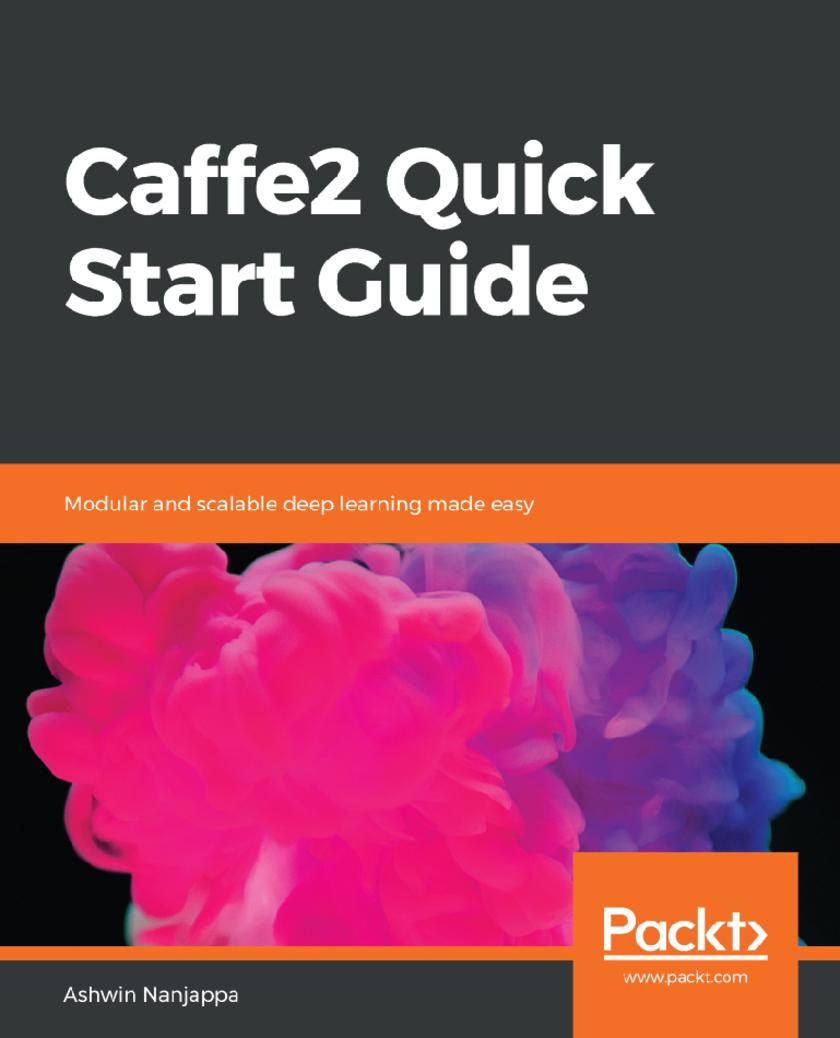
Caffe2 Quick Start Guide
¥44.68
Build and train scalable neural network models on various platforms by leveraging the power of Caffe2 Key Features * Migrate models trained with other deep learning frameworks on Caffe2 * Integrate Caffe2 with Android or iOS and implement deep learning models for mobile devices * Leverage the distributed capabilities of Caffe2 to build models that scale easily Book Description Caffe2 is a popular deep learning library used for fast and scalable training and inference of deep learning models on various platforms. This book introduces you to the Caffe2 framework and shows how you can leverage its power to build, train, and deploy efficient neural network models at scale. It will cover the topics of installing Caffe2, composing networks using its operators, training models, and deploying models to different architectures. It will also show how to import models from Caffe and from other frameworks using the ONNX interchange format. It covers the topic of deep learning accelerators such as CPU and GPU and shows how to deploy Caffe2 models for inference on accelerators using inference engines. Caffe2 is built for deployment to a diverse set of hardware, using containers on the cloud and resource constrained hardware such as Raspberry Pi, which will be demonstrated. By the end of this book, you will be able to not only compose and train popular neural network models with Caffe2, but also be able to deploy them on accelerators, to the cloud and on resource constrained platforms such as mobile and embedded hardware. What you will learn * Build and install Caffe2 * Compose neural networks * Train neural network on CPU or GPU * Import a neural network from Caffe * Import deep learning models from other frameworks * Deploy models on CPU or GPU accelerators using inference engines * Deploy models at the edge and in the cloud Who this book is for Data scientists and machine learning engineers who wish to create fast and scalable deep learning models in Caffe2 will find this book to be very useful. Some understanding of the basic machine learning concepts and prior exposure to programming languages like C++ and Python will be useful.
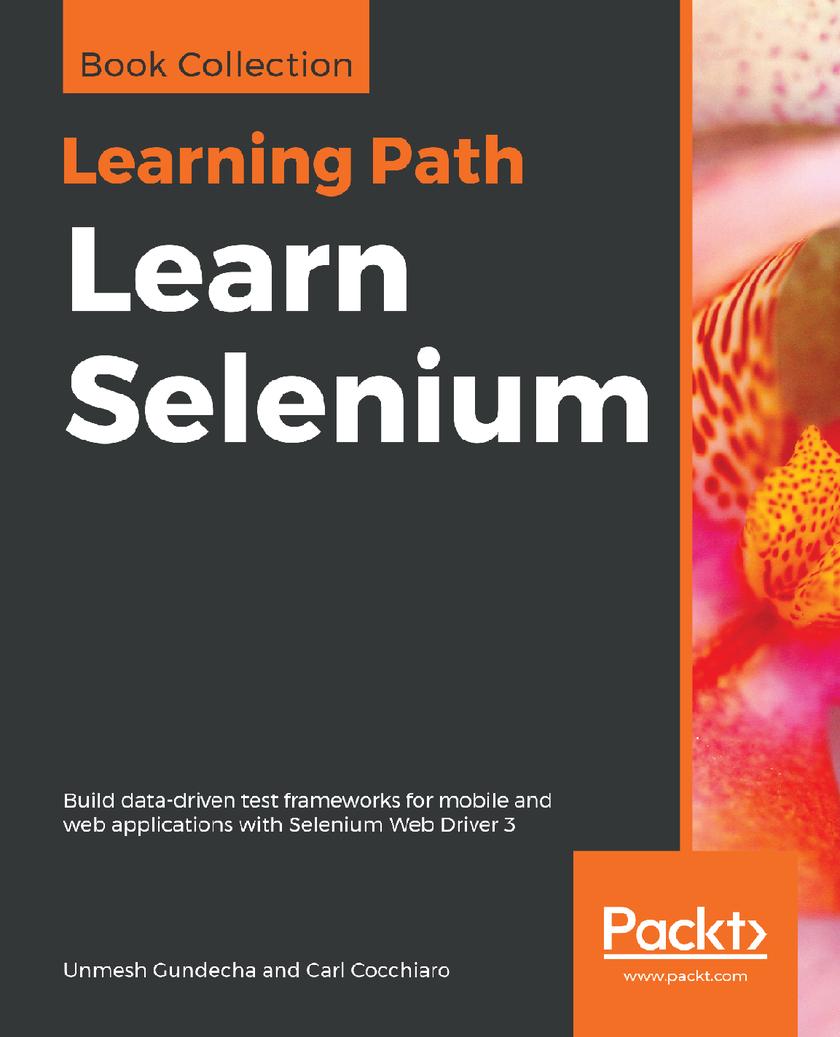
Learn Selenium
¥88.28
Learn end-to-end automation testing techniques for web and mobile browsers using Selenium WebDriver, AppiumDriver, Java, and TestNG Key Features * Explore the Selenium grid architecture and build your own grid for browser and mobile devices * Use ExtentReports for processing results and SauceLabs for cloud-based test services * Unlock the full potential of Selenium to test your web applications. Book Description Selenium WebDriver 3.x is an open source API for testing both browser and mobile applications. With the help of this book, you can build a solid foundation and can easily perform end-to-end testing on web and mobile browsers.You'll begin by being introduced to the Selenium Page Object Model for software development. You'll architect your own framework with a scalable driver class, Java utility classes, and support for third-party tools and plugins. You'll design and build a Selenium grid from scratch to enable the framework to scale and support different browsers, mobile devices, and platforms.You'll strategize and handle a rich web UI using the advanced WebDriver API and learn techniques to handle real-time challenges in WebDriver. You'll perform different types of testing, such as cross-browser testing, load testing, and mobile testing. Finally, you will also be introduced to data-driven testing, using TestNG to create your own automation framework.By the end of this Learning Path, you'll be able to design your own automation testing framework and perform data-driven testing with Selenium WebDriver. This Learning Path includes content from the following Packt products: * Selenium WebDriver 3 Practical Guide - Second Edition by Unmesh Gundecha * Selenium Framework Design in Data-Driven Testing by Carl Cocchiaro What you will learn * Use different mobile and desktop browser platforms with Selenium 3 * Use the Actions API for performing various keyboard and mouse actions * Design the Selenium Driver Class for local, remote, and third-party grid support * Build page object classes with the Selenium Page Object Model * Develop data-driven test classes using the TestNG framework * Encapsulate data using the JSON protocol * Build a Selenium Grid for RemoteWebDriver testing * Build and use utility classes in synchronization, file I/O, reporting and test listener classes Who this book is for This Learning Path is ideal for software quality assurance/testing professionals, software project managers, or software developers interested in using Selenium for testing their applications. Professionals responsible for designing and building enterprise-based testing frameworks will also find this Learning Path useful. Prior programming experience in Java are TestNG is necessary.
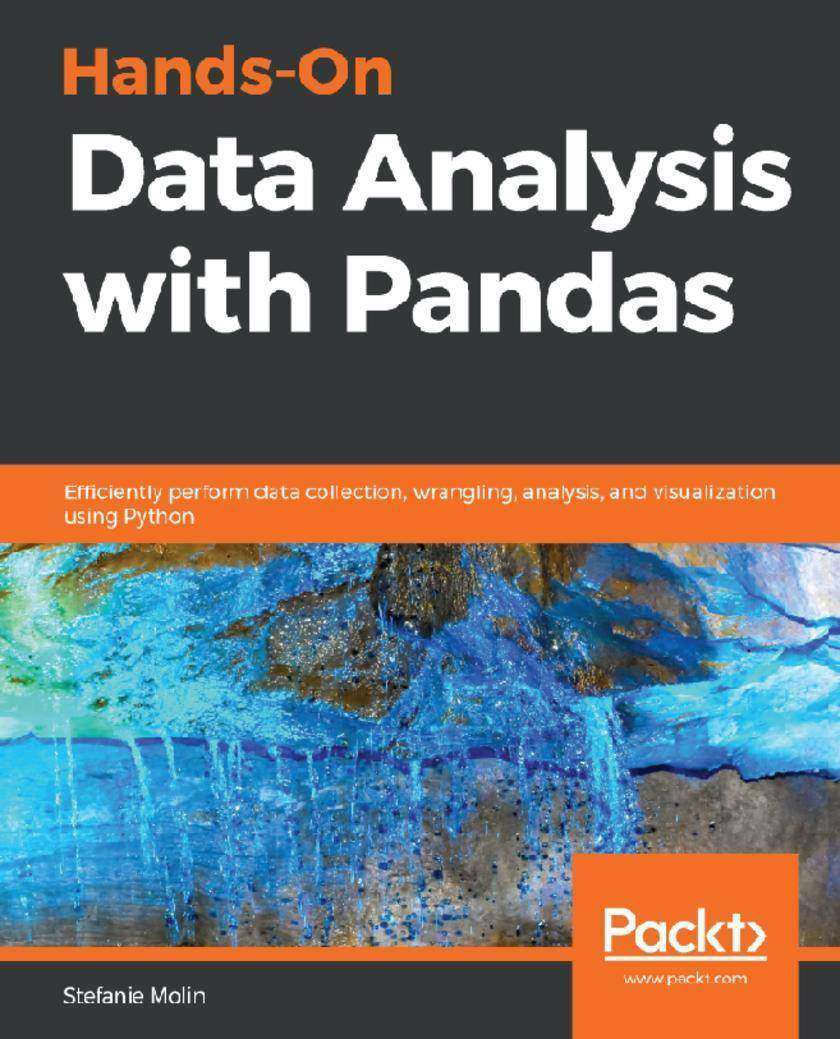
Hands-On Data Analysis with Pandas
¥79.56
Get to grips with pandas—a versatile and high-performance Python library for data manipulation, analysis, and discovery Key Features * Perform efficient data analysis and manipulation tasks using pandas * Apply pandas to different real-world domains using step-by-step demonstrations * Get accustomed to using pandas as an effective data exploration tool Book Description Data analysis has become a necessary skill in a variety of positions where knowing how to work with data and extract insights can generate significant value. Hands-On Data Analysis with Pandas will show you how to analyze your data, get started with machine learning, and work effectively with Python libraries often used for data science, such as pandas, NumPy, matplotlib, seaborn, and scikit-learn. Using real-world datasets, you will learn how to use the powerful pandas library to perform data wrangling to reshape, clean, and aggregate your data. Then, you will learn how to conduct exploratory data analysis by calculating summary statistics and visualizing the data to find patterns. In the concluding chapters, you will explore some applications of anomaly detection, regression, clustering, and classification, using scikit-learn, to make predictions based on past data. By the end of this book, you will be equipped with the skills you need to use pandas to ensure the veracity of your data, visualize it for effective decision-making, and reliably reproduce analyses across multiple datasets. What you will learn * Understand how data analysts and scientists gather and analyze data * Perform data analysis and data wrangling in Python * Combine, group, and aggregate data from multiple sources * Create data visualizations with pandas, matplotlib, and seaborn * Apply machine learning (ML) algorithms to identify patterns and make predictions * Use Python data science libraries to analyze real-world datasets * Use pandas to solve common data representation and analysis problems * Build Python scripts, modules, and packages for reusable analysis code Who this book is for This book is for data analysts, data science beginners, and Python developers who want to explore each stage of data analysis and scientific computing using a wide range of datasets. You will also find this book useful if you are a data scientist who is looking to implement pandas in machine learning. Working knowledge of Python programming language will be beneficial.
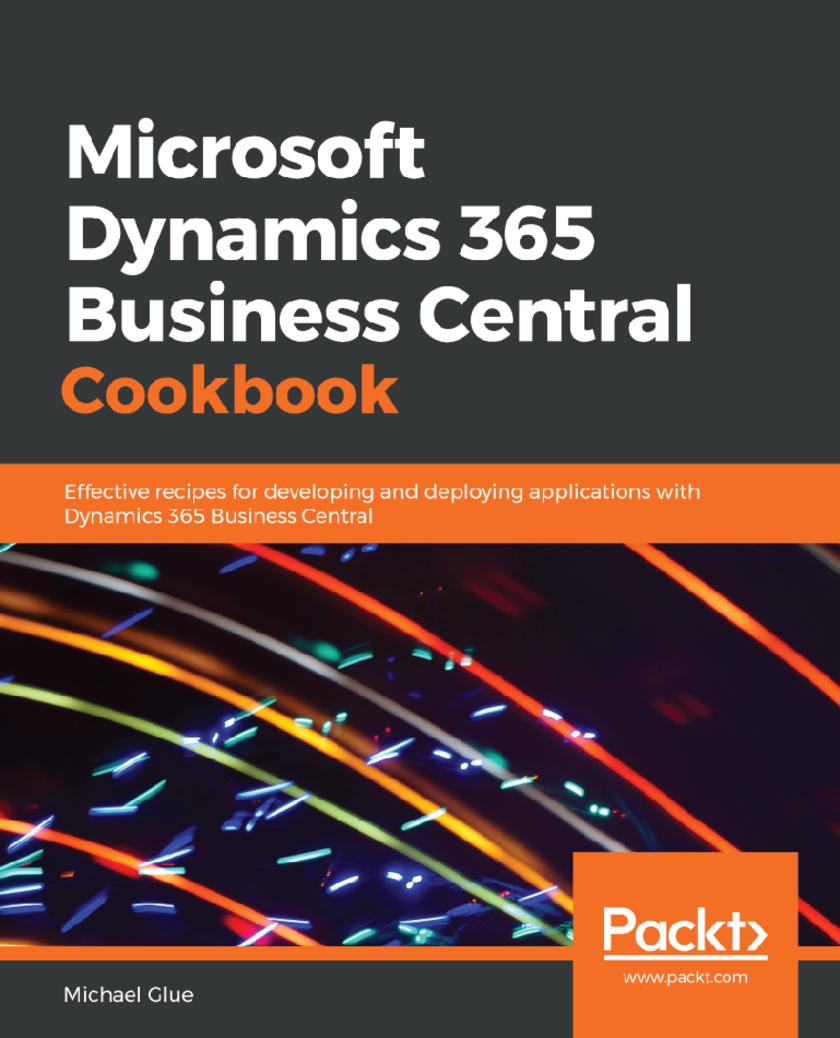
Microsoft Dynamics 365 Business Central Cookbook
¥80.65
Gain useful insights to help you efficiently build, test, and migrate customized solutions on Business Central cloud and on-premise platforms Key Features * Explore enhanced functionalities and development best practices in Business Central * Develop powerful Business Central projects using the AL language * Master the new Business Central with easy-to-follow recipes Book Description Microsoft Dynamics 365 Business Central is a complete business management solution that can help you streamline business processes, connect individual departments in your company, and enhance customer interactions. Ok. That first part was really professional sounding, right? Now, let’s get into what this cookbook is going to do for you: put simply, it’s going to help you get things done. This book will help you get to grips with the latest development features and tools for building applications using Business Central. You’ll find recipes that will guide you in developing and testing applications that can be deployed to the cloud or on-premises. For the old-schoolers out there, you’ll also learn how to take your existing Dynamics NAV customizations and move them to the new AL language platform. Also, if you haven’t figured it out already, we’re going to be using very normal language throughout the book to keep things light. After all, developing applications is fun, so why not have fun learning as well! What you will learn * Build and deploy Business Central applications * Use the cloud or local sandbox for application development * Customize and extend your base Business Central application * Create external applications that connect to Business Central * Create automated tests and debug your applications * Connect to external web services from Business Central Who this book is for This book is for Dynamics developers and administrators who want to become efficient in developing and deploying applications in Business Central. Basic knowledge and understanding of Dynamics application development and administration is assumed.
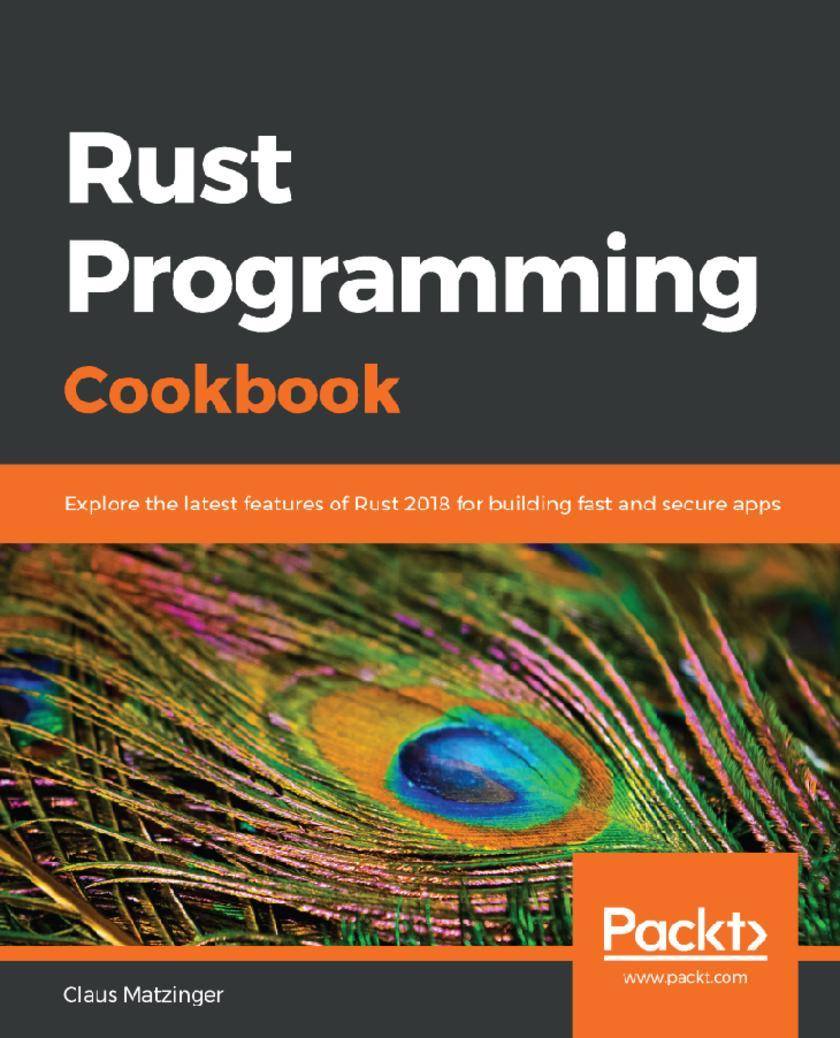
Rust Programming Cookbook
¥71.93
Practical solutions to overcome challenges in creating console and web applications and working with systems-level and embedded code, network programming, deep neural networks, and much more. Key Features * Work through recipes featuring advanced concepts such as concurrency, unsafe code, and macros to migrate your codebase to the Rust programming language * Learn how to run machine learning models with Rust * Explore error handling, macros, and modularization to write maintainable code Book Description Rust 2018, Rust's first major milestone since version 1.0, brings more advancement in the Rust language. The Rust Programming Cookbook is a practical guide to help you overcome challenges when writing Rust code. This Rust book covers recipes for configuring Rust for different environments and architectural designs, and provides solutions to practical problems. It will also take you through Rust's core concepts, enabling you to create efficient, high-performance applications that use features such as zero-cost abstractions and improved memory management. As you progress, you'll delve into more advanced topics, including channels and actors, for building scalable, production-grade applications, and even get to grips with error handling, macros, and modularization to write maintainable code. You will then learn how to overcome common roadblocks when using Rust for systems programming, IoT, web development, and network programming. Finally, you'll discover what Rust 2018 has to offer for embedded programmers. By the end of the book, you'll have learned how to build fast and safe applications and services using Rust. What you will learn * Understand how Rust provides unique solutions to solve system programming language problems * Grasp the core concepts of Rust to develop fast and safe applications * Explore the possibility of integrating Rust units into existing applications for improved efficiency * Discover how to achieve better parallelism and security with Rust * Write Python extensions in Rust * Compile external assembly files and use the Foreign Function Interface (FFI) * Build web applications and services using Rust for high performance Who this book is for The Rust cookbook is for software developers looking to enhance their knowledge of Rust and leverage its features using modern programming practices. Familiarity with Rust language is expected to get the most out of this book.


