


 购物车
 个人中心

Average Americans
¥8.09
First published in 1919, a personal account of World War I by the eldest son of President Theodore Roosevelt. According to Wikipedia: "Theodore "Ted" Roosevelt III (generally known as Theodore, Jr.) (September 13, 1887 – July 12, 1944), was an American political and business leader, a veteran of both the 20th century's world wars, who was awarded the Medal of Honor. He was the eldest son of President Theodore Roosevelt and Edith Roosevelt. Roosevelt was instrumental in the forming of the American Legion in 1919. He later served as Assistant Secretary of the Navy, Governor of Puerto Rico (1929–32), Governor-General of the Philippines (1932–33), Chairman of the Board of American Express Company, and Vice-President at Doubleday Books, and as a Brigadier General in the United States Army."
The Golden Sayings of Epictetus
¥8.09
Classic work of philosophy, in English translation. According to Wikipedia: "Epictetus (AD 55 – AD 135) was a Greek sage and Stoic philosopher. He was born a slave at Hierapolis, Phrygia (present day Pamukkale, Turkey), and lived in Rome until banishment when he went to Nicopolis in northwestern Greece where he lived the rest of his life. His teachings were noted down and published by his pupil Arrian in his Discourses. Philosophy, he taught, is a way of life and not just a theoretical discipline. To Epictetus, all external events are determined by fate, and are thus beyond our control, but we can accept whatever happens calmly and dispassionately. Individuals, however, are responsible for their own actions, which they can examine and control through rigorous self-discipline. Suffering arises from trying to control what is uncontrollable, or from neglecting what is within our power. As part of the universal city that is the universe, human beings have a duty to care for all fellow humans. The person who followed these precepts would achieve happiness and peace of mind."

History of the Incas
¥8.09
According to Wikipedia: "Pedro Sarmiento de Gamboa (1532–1592) was a Galician (Spanish) explorer, author, historian, astronomer, and scientist… Written in Cuzco, the capital of the Inca Empire, just forty years after the arrival of the first Spaniards in the city, Sarmiento's The History of the Incas contains extremely detailed descriptions of Inca history and mythology. The royal sponsorship of the work guaranteed Sarmiento direct access to the highest Spanish officials in Cuzco. It also allowed him to summon influential natives, as well as those who had witnessed the fall of the Inca Empire, so that they could relate their stories. Sarmiento traveled widely and interviewed numerous local leaders and lords, surviving members of the royal Inca families, and the few remaining Spanish conquistadors who still resided in Cuzco. Once the first draft of the history was completed, in an unprecedented effort to establish the unquestionable authenticity of the work, his manuscript was read, chapter by chapter, to forty-two indigenous authorities for their commentary and correction. After the public reading, which occurred on 29 February and 1 March 1572, the manuscript was entrusted to a member of the viceroy's personal guard. He was to take the manuscript to Spain and deliver it to King Philip II, along with four painted cloths showing the history of the Incas and a number of other artifacts and objects that Toledo had collected. However, due to a series of unusual events, this irreplaceable document of Inca history was relegated to obscurity for centuries."
Darius the Great
¥8.09
According to Wikipedia: "Jacob Abbott (November 14, 1803 – October 31, 1879) was an American writer of children's books. Abbott was born at Hallowell, Maine to Jacob and Betsey Abbott. He graduated from Bowdoin College in 1820; studied at Andover Theological Seminary in 1821, 1822, and 1824; was tutor in 1824-1825, and from 1825 to 1829 was professor of mathematics and natural philosophy at Amherst College; was licensed to preach by the Hampshire Association in 1826; founded the Mount Vernon School for Young Ladies in Boston in 1829, and was principal of it in 1829-1833; was pastor of Eliot Congregational Church (which he founded), at Roxbury, Massachusetts in 1834-1835; and was, with his brothers, a founder, and in 1843-1851 a principal of Abbott's Institute, and in 1845-1848 of the Mount Vernon School for Boys, in New York City. He was a prolific author, writing juvenile fiction, brief histories, biographies, religious books for the general reader, and a few works in popular science. He died in Farmington, Maine, where he had spent part of his time after 1839, and where his brother, Samuel Phillips Abbott, founded the Abbott School."
The Imitation of Christ
¥8.09
According to Wikipedia: "The Imitation of Christ (Latin: De Imitatione Christi) by Thomas à Kempis is a Christian devotional book. It was first composed in Latin ca.1418-1427.[1][2] It is a handbook for spiritual life arising from the Devotio Moderna movement, where Kempis was a member.[3] The Imitation is perhaps the most widely read devotional work next to the Bible,[2][4] and is regarded as a devotional and religious classic
A Selection from the Discourses of Epictetus, with the Encheiridion
¥8.09
According to Wikipedia: "Epictetus (Ancient Greek: ?π?κτητο?; AD 55 – AD 135) was a Greek sage and Stoic philosopher. He was born a slave at Hierapolis, Phrygia (present day Pamukkale, Turkey), and lived in Rome until banishment when he went to Nicopolis in northwestern Greece where he lived the rest of his life. His teachings were noted down and published by his pupil Arrian in his Discourses."
The History of the Peloponnesian War
¥8.09
The classic history of war between Athens and Sparta. According to Wikipedia: "Thucydides (c. 460 B.C. – c. 395 B.C.) was a Greek historian and author of the History of the Peloponnesian War, which recounts the 5th century B.C. war between Sparta and Athens to the year 411 B.C. Thucydides has been dubbed the father of "scientific history" due to his strict standards of evidence-gathering and analysis in terms of cause and effect without reference to intervention by the gods. He has also been called the father of the school of political realism, which views the relations between nations as based on might rather than right. His classical text is still studied at advanced military colleges worldwide, and the Melian dialogue remains a seminal work of international relations theory. More generally, Thucydides showed an interest in developing an understanding of human nature to explain behaviour in such crises as plague and civil war."
Doctrine and Practice of Yoga
¥8.09
According to Wikipedia: "Yoga is the Hindu practice of physical, mental, and spiritual discipline, originating in ancient India. The goal of yoga, or of the person practicing yoga, is the attainment of a state of perfect spiritual insight and tranquility while meditating on the Hindu concept of divinity or Brahman. The word is associated with meditative practices in Hinduism, Jainism, and Buddhism."

Caesar's Commentaries
¥8.09
De Bello Gallico (The War in Gaul) and The Civil War. According to Wikipedia: "Gaius Julius Caesar (13 July 100 BC – 15 March 44 BC), was a Roman military and political leader. He played a critical role in the transformation of the Roman Republic into the Roman Empire. A politician of the populares tradition, he formed an unofficial triumvirate with Marcus Licinius Crassus and Gnaeus Pompeius Magnus which dominated Roman politics for several years, opposed in the Roman Senate by optimates like Marcus Porcius Cato and Marcus Calpurnius Bibulus. His conquest of Gaul extended the Roman world to the North Sea, and he also conducted the first Roman invasion of Britain in 55 BC. The collapse of the triumvirate, however, led to a stand-off with Pompey and the Senate. Leading his legions across the Rubicon, Caesar began a civil war in 49 BC from which he became the master of the Roman world. After assuming control of government, he began extensive reforms of Roman society and government. He was proclaimed "dictator in perpetuity" (dictator perpetuo), and heavily centralised the bureaucracy of the Republic. A group of senators, led by Marcus Junius Brutus, assassinated the dictator on the Ides of March (March 15) in 44 BC, hoping to restore the normal running of the Republic. However, the result was another Roman civil war, which ultimately led to the establishment of a permanent autocracy by Caesar's adopted heir, Gaius Octavianus. In 42 BC, two years after his assassination, the Senate officially sanctified Caesar as one of the Roman deities. Much of Caesar's life is known from his own Commentaries (Commentarii) on his military campaigns, and other contemporary sources such as the letters and speeches of his political rival Cicero, the historical writings of Sallust, and the poetry of Catullus."
Till He Come
¥8.09
First published in 1896. Spurgeon was an English Baptist preacher, known as "the Prince of Preachers". The Preface begins: " For many years, whether at home or abroad, it was Mr. Spurgeon's constant custom to observe the ordinance of the Lord's supper every Sabbath-day, unless illness prevented. This he believed to be in accordance with apostolic precedent; and it was his oft-repeated testimony that the more frequently he obeyed his Lord's command, "This do in remembrance of Me," the more precious did his Saviour become to him, while the memorial celebration itself proved increasingly helpful and instructive as the years rolled by." According to Wikipedia: "Charles Haddon Spurgeon, commonly C.H. Spurgeon, ( 1834 – 1892) was a British Reformed Baptist preacher who remains highly influential among Christians of different denominations, among whom he is still known as the "Prince of Preachers." He also founded the charity organization now known as Spurgeon's, that works worldwide with families and children, as well as a famous theological college which after his death was called after him: Spurgeon's College. Spurgeon was a prolific author of many types of works including sermons, an autobiography, a commentary, books on prayer, a devotional, a magazine, and more. Many sermons were transcribed as he spoke and were translated into many languages during his lifetime. Arguably, no other author, Christian or otherwise, has more material in print than C.H. Spurgeon."
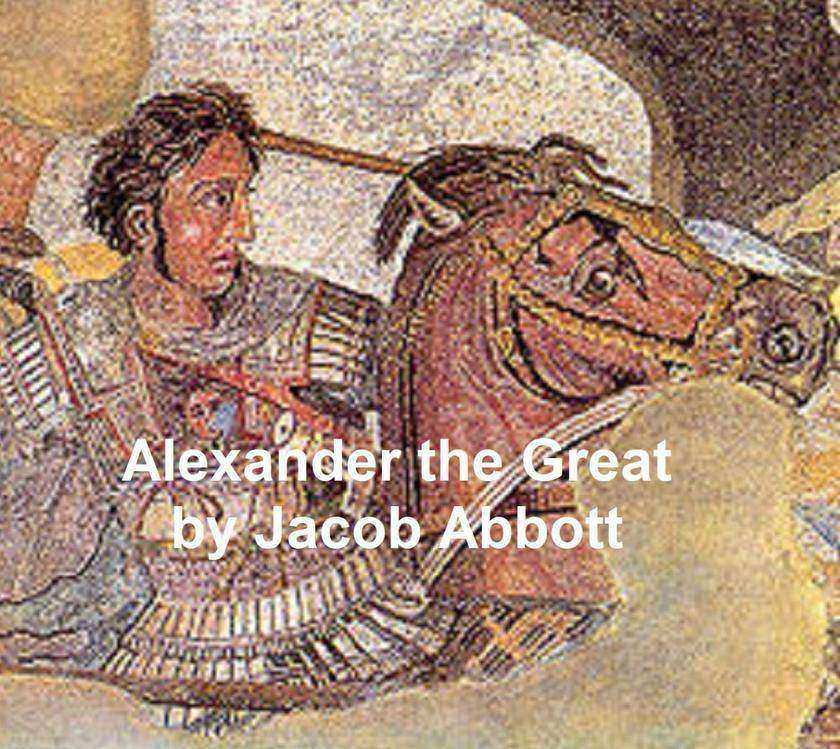
Alexander the Great
¥8.09
According to Wikipedia: "Jacob Abbott (November 14, 1803 – October 31, 1879) was an American writer of children's books. Abbott was born at Hallowell, Maine to Jacob and Betsey Abbott. He graduated from Bowdoin College in 1820; studied at Andover Theological Seminary in 1821, 1822, and 1824; was tutor in 1824-1825, and from 1825 to 1829 was professor of mathematics and natural philosophy at Amherst College; was licensed to preach by the Hampshire Association in 1826; founded the Mount Vernon School for Young Ladies in Boston in 1829, and was principal of it in 1829-1833; was pastor of Eliot Congregational Church (which he founded), at Roxbury, Massachusetts in 1834-1835; and was, with his brothers, a founder, and in 1843-1851 a principal of Abbott's Institute, and in 1845-1848 of the Mount Vernon School for Boys, in New York City. He was a prolific author, writing juvenile fiction, brief histories, biographies, religious books for the general reader, and a few works in popular science. He died in Farmington, Maine, where he had spent part of his time after 1839, and where his brother, Samuel Phillips Abbott, founded the Abbott School."
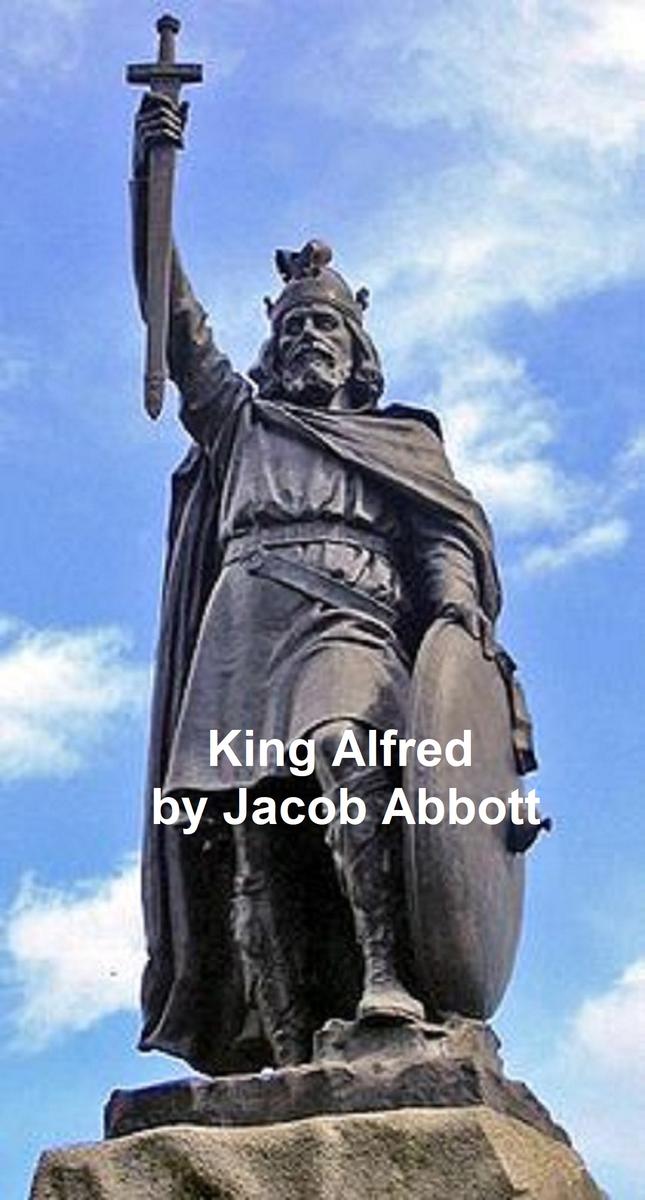
King Alfred of England
¥8.09
According to Wikipedia: "Jacob Abbott (November 14, 1803 – October 31, 1879) was an American writer of children's books. Abbott was born at Hallowell, Maine to Jacob and Betsey Abbott. He graduated from Bowdoin College in 1820; studied at Andover Theological Seminary in 1821, 1822, and 1824; was tutor in 1824-1825, and from 1825 to 1829 was professor of mathematics and natural philosophy at Amherst College; was licensed to preach by the Hampshire Association in 1826; founded the Mount Vernon School for Young Ladies in Boston in 1829, and was principal of it in 1829-1833; was pastor of Eliot Congregational Church (which he founded), at Roxbury, Massachusetts in 1834-1835; and was, with his brothers, a founder, and in 1843-1851 a principal of Abbott's Institute, and in 1845-1848 of the Mount Vernon School for Boys, in New York City. He was a prolific author, writing juvenile fiction, brief histories, biographies, religious books for the general reader, and a few works in popular science. He died in Farmington, Maine, where he had spent part of his time after 1839, and where his brother, Samuel Phillips Abbott, founded the Abbott School."

A Short History of England
¥8.09
History as seen by a famous novelist and essayist. The Introduction begins: "It will be very reasonably asked why I should consent, though upon a sort of challenge, to write even a popular essay in English history, who make no pretence to particular scholarship and am merely a member of the public. The answer is that I know just enough to know one thing: that a history from the standpoint of a member of the public has not been written. What we call the popular histories should rather be called the anti-popular histories. They are all, nearly without exception, written against the people; and in them the populace is either ignored or elaborately proved to have been wrong." According to Wikipedia: "Gilbert Keith Chesterton (29 May 1874 – 14 June 1936) was an influential English writer of the early 20th century. His prolific and diverse output included journalism, philosophy, poetry, biography, Christian apologetics, fantasy and detective fiction. Chesterton has been called the "prince of paradox." Time magazine, in a review of a biography of Chesterton, observed of his writing style: "Whenever possible Chesterton made his points with popular sayings, proverbs, allegories—first carefully turning them inside out."
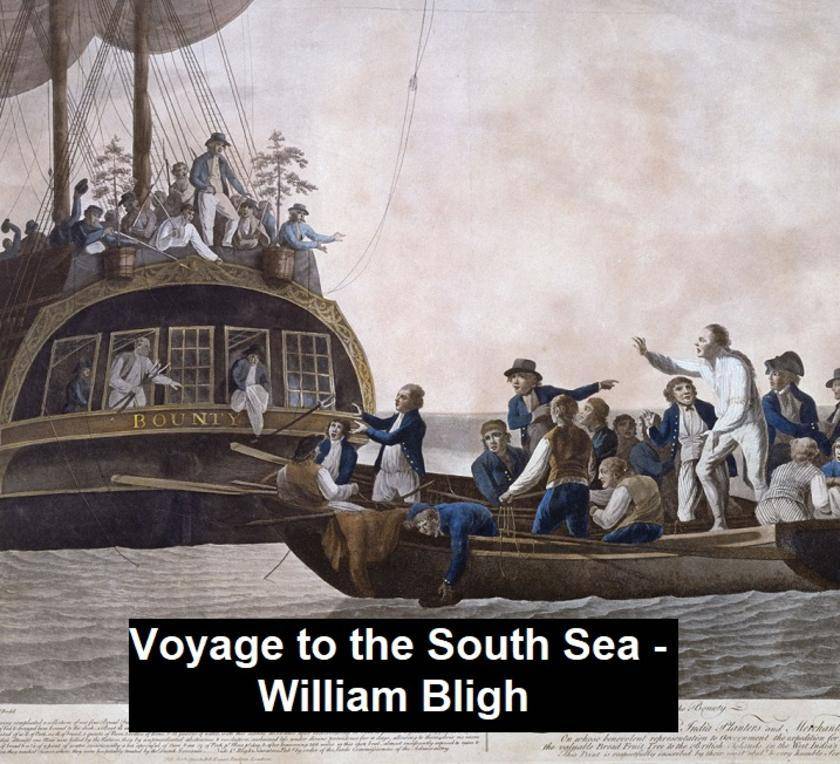
Voyage to the South Sea
¥8.09
A Voyage to the South Sea, undertaken by command of his majesty, for the purpose of conveying the bread-fruit tree to the west indies, in his majesty's ship the Bounty, commanded by Lieutenant William Bligh. Including an account of the mutiny on board the said ship, and the subsequent voyage of part of the crew, in the ship's boat, from Tofoa, one of the Friendly Islands, to Timor, a Dutch settlement in the East Indies. According to Wikipedia: "Vice Admiral William Bligh, (9 September 1754 – 7 December 1817) was an officer of the British Royal Navy and a colonial administrator. A historic mutiny occurred during his command of HMS Bounty in 1789; Bligh and his loyal men made a remarkable voyage to Timor, after being set adrift in the Bounty's launch by the mutineers. Fifteen years after the Bounty mutiny, he was appointed Governor of New South Wales in Australia, with orders to clean up the corrupt rum trade of the New South Wales Corps, resulting in the so-called Rum Rebellion."

The Cumberland Road
¥8.09
Volume 10 of the series "Historic Highways of America". According to Wikipedia: "Archer Butler Hulbert (26 Jan 1873 – 24 Dec 1933), historical geographer, writer, and professor of American history... He was Vice-Principal of the Putnam Military Academy, Zanesville, Ohio, until 1897. Hulbert then did newspaper work in Korea in 1897 and '98: he was editor of the Korean Independent (Seoul) and edited Far East American newspapers... He was Professor of American History at Marietta College 1904-18. After Marietta College, Hulbert became a lecturer in American History at Clark University from 1918 to 1919. He also was a lecturer at the University of Chicago in 1904 and 1923; and he served as archivist for the Harvard Commission on Western History (1912-16). Hulbert's last position was at Colorado College, from 1920 until his death... Hulbert's interest in trails dated from fishing trips taken during his college, when he noticed Indian trails. This interest led at first to his 16 volumes of Historic Highways of America (1902-05)."
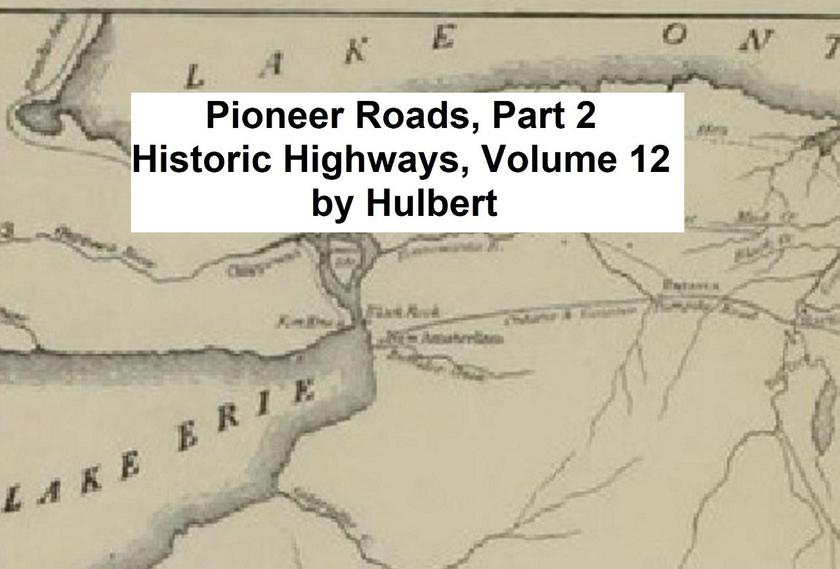
Pioneer Roads, Part 2
¥8.09
Volume 12 of the series "Historic Highways of America". According to Wikipedia: "Archer Butler Hulbert (26 Jan 1873 – 24 Dec 1933), historical geographer, writer, and professor of American history... He was Vice-Principal of the Putnam Military Academy, Zanesville, Ohio, until 1897. Hulbert then did newspaper work in Korea in 1897 and '98: he was editor of the Korean Independent (Seoul) and edited Far East American newspapers... He was Professor of American History at Marietta College 1904-18. After Marietta College, Hulbert became a lecturer in American History at Clark University from 1918 to 1919. He also was a lecturer at the University of Chicago in 1904 and 1923; and he served as archivist for the Harvard Commission on Western History (1912-16). Hulbert's last position was at Colorado College, from 1920 until his death... Hulbert's interest in trails dated from fishing trips taken during his college, when he noticed Indian trails. This interest led at first to his 16 volumes of Historic Highways of America (1902-05)."
The Reign of Tiberius
¥8.09
"Out of the first six Annals of Tacitus, with his account of German and Life of Agricola." According to Wikipedia: "Publius (or Gaius) Cornelius Tacitus (c. AD 56 – after 117) was a senator and a historian of the Roman Empire. The surviving portions of his two major works—the Annals and the Histories—examine the reigns of the Roman Emperors Tiberius, Claudius, Nero, and those who reigned in the Year of the Four Emperors (AD 69). These two works span the history of the Roman Empire from the death of Augustus in AD 14 to the years of the First Jewish–Roman War in AD 70. There are substantial lacunae in the surviving texts, including a gap in the Annals that is four books long."
Conspiracy of Cataline and Jugurthine War
¥8.09
A literal translation. According to Wikipedia: "Gaius Sallustius Crispus, usually anglicised as Sallust (86 BC – c. 35 BC) was a Roman historian, politician, and novus homo from a provincial plebeian family. Sallust was born at Amiternum in the country of the Sabines and was a popularis, opposer of the old Roman aristocracy throughout his career, and later a partisan of Julius Caesar. Sallust is the earliest known Roman historian with surviving works to his name, of which we have Catiline's War (about the conspiracy in 63 BC of L. Sergius Catilina), The Jugurthine War (about Rome's war against the Numidians from 111 to 105 BC), and the Histories (of which only fragments survive). Sallust was primarily influenced by the Greek historian Thucydides and amassed great (and ill-gotten) wealth from his governorship of Africa."
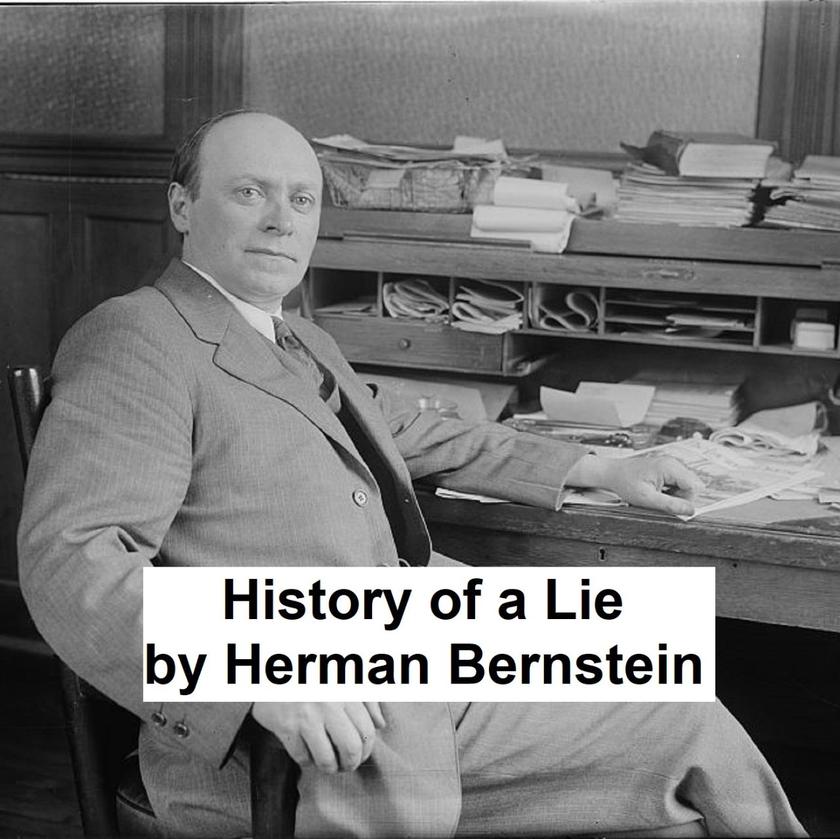
History of a Lie
¥8.09
Classic in the history of anti-semitism. First published in 1921. According to the Foreword: "This is the history of a Lie--of a cruel and terrible Lie invented for the purpose of defaming the entire Jewish people. Given out as fiction, by a German anti-Semitic writer, involved in the Waldeck forgery case, who concealed his identity under the pen-name of an Englishman, it was gradually changed and elaborated, and finally groomed as fact. Agents of the Russian secret police department and of the unscrupulous "Black Hundreds" then utilized this fiction as the framework for the "protocols" through which they sought to crush the Jews and prop up the tottering Russian dynasty." According to Wikipedia: "Herman Bernstein (September 21, 1876 – August 31, 1935) was an American journalist, poet, novelist, playwright, translator, Jewish activist, and diplomat."
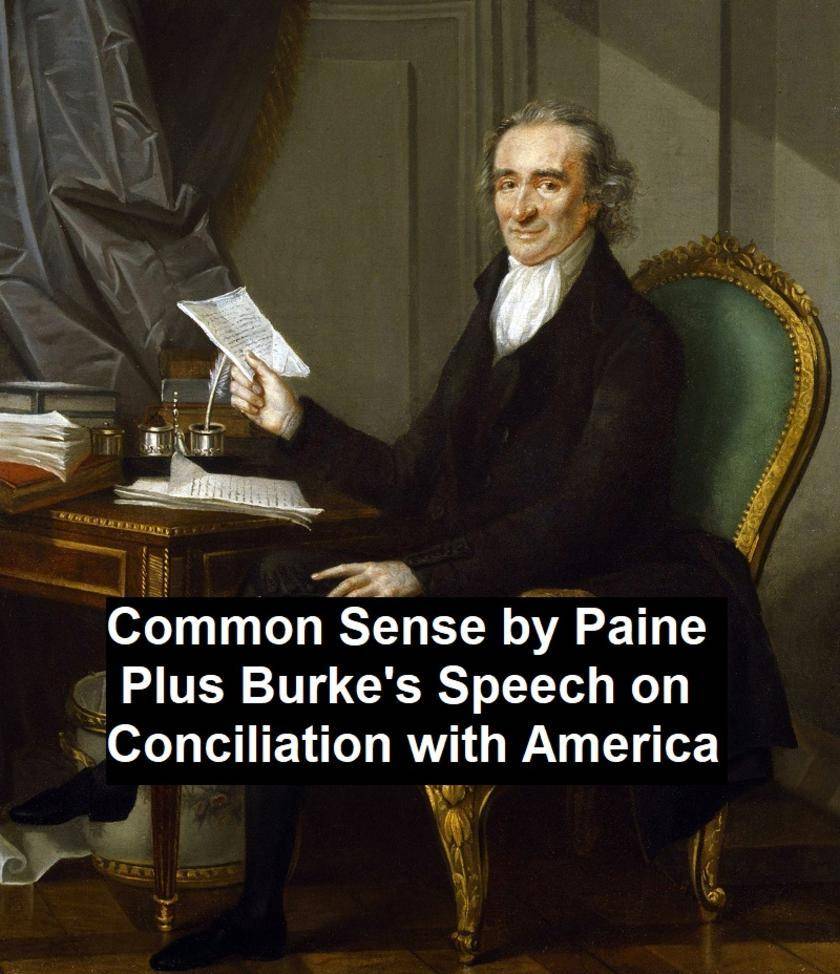
Common Sense, Plus Burke's Speech on Conciliation with America
¥8.09
This file includes both Common Sense by Thomas Paine (1776) and Edmund Burke's Speech on Conciliation with America (1775). According to Wikipedia: "Common Sense is a pamphlet written by Thomas Paine. It was first published anonymously on January 10, 1776, during the American Revolution. Common Sense, signed "Written by an Englishman", became an immediate success... Edmund Burke PC (12 January [NS] 1729–9 July 1797) was an Irish statesman, author, orator, political theorist and philosopher who, after moving to England, served for many years in the House of Commons of Great Britain as a member of the Whig party. He is mainly remembered for his support of the cause of the American Revolutionaries, and for his later opposition to the French Revolution. The latter led to his becoming the leading figure within the conservative faction of the Whig party, which he dubbed the "Old Whigs", in opposition to the pro–French Revolution "New Whigs", led by Charles James Fox... In the House of Commons on 22 March 1775 Burke delivered a speech (published in May 1775) on reconciliation with America."
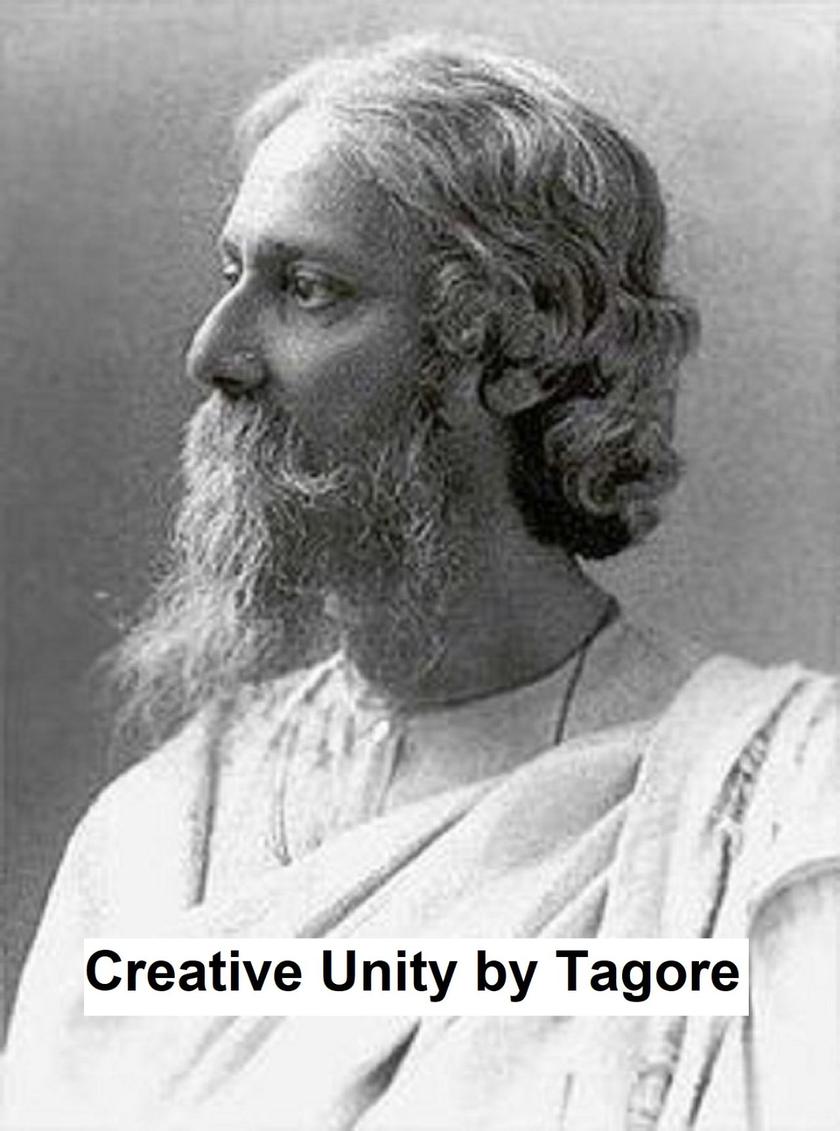
Creative Unity
¥8.09
According to Wikipedia: "Rabindranath Tagore (7 May 1861 – 7 August 1941), sobriquet Gurudev, was an Indian-Bengali polymath who reshaped his region's literature and music. Author of Gitanjali and its "profoundly sensitive, fresh and beautiful verse", he became the first non-European Nobel laureate by earning the 1913 Prize in Literature. In translation his poetry was viewed as spiritual and mercurial; his seemingly mesmeric personality, flowing hair, and other-worldly dress earned him a prophet-like reputation in the West. His "elegant prose and magical poetry" remain largely unknown outside Bengal."


