


 购物车
购物车 个人中心
个人中心
The Seven Plays of Aeschylus
¥8.09
This file includes: AGAMEMNON, THE LIBATION-BEARERS, THE FURIES, THE SUPPLIANT MAIDENS, THE PERSIANS, THE SEVEN AGAINST THEBES, and THE PROMETHEUS BOUND; all translated by E.D.A. MORSHEAD. According to Wikipedia: "Aeschylus ( c. 525 BC/524 BC – c. 456 BC/455 BC) was an ancient Greek playwright. He is often recognized as the father of tragedy, and is the earliest of the three Greek tragedians whose plays survive, the others being Sophocles and Euripides. According to Aristotle, he expanded the number of characters in plays to allow for conflict among them; previously, characters interacted only with the chorus. Only seven of an estimated seventy to ninety plays by Aeschylus have survived into modern times; one of these plays, Prometheus Bound, is widely thought to be the work of a later author. At least one of Aeschylus' works was influenced by the Persian invasion of Greece, which took place during his lifetime. His play The Persians remains a good primary source of information about this period in Greek history. The war was so important to the Greeks and to Aeschylus himself that, upon his death around 456 BC, his epitaph commemorated his participation in the Greek victory at Marathon rather than to his success as a playwright."
Hernani
¥8.09
1411/5000 Le drame classique a d'abord joué et publié en 1830. La pièce elle-même est en fran?ais, mais l'introduction est en anglais. Selon Wikipedia: ? Hernani est un drame du poète fran?ais Victor Hugo Le jeu est ouvert à Paris le 25 Février, 1830 Aujourd'hui est le drame pour les manifestations qui ont accompagné la première, et pour l'opéra de Verdi Ernani l'inspiration que pour son .. mérites est ... Victor-Marie Hugo (26 Février 1802-1822 mai 1885) était un poète fran?ais, auteur dramatique, romancier, essayiste, artiste plasticien, homme d'?tat, des militants des droits de l'homme et des représentants du mouvement romantique en France en France, Hugo est littéraire renommée principalement de ses poèmes, mais aussi de ses romans et ses Leistungen.Von dramatique de nombreux livres de poésie sont Contemplations et la Légende des particulièrement élevé en siècle le prestige et Hugo parfois, il est considéré comme le plus grand poète fran?ais, ses ?uvres les plus célèbres hors de France les romans Les Misérables et Notre-Dame de Paris (aussi connu comme le bossu de Notre-Dame) royal quand il était jeune, Hugo est devenu plus libéral que les décennies passées; il est devenu un partisan passionné de républicanisme, et son travail touche les questions les plus politiques et sociales et les tendances artistiques de son époque. Il est enterré au Panthéon. "
Le Roi S'Amuse
¥8.09
Drame classique dans le texte original, publié en 1832. Selon Wikipedia: "Victor-Marie Hugo (26 février 1802 - 22 mai 1885) était un poète, dramaturge, romancier, essayiste, artiste visuel, homme d'?tat, militant des droits de l'homme et En France, la renommée littéraire de Hugo vient en premier lieu de sa poésie, mais repose aussi sur ses romans et ses réalisations dramatiques Parmi les nombreux volumes de poésie, Les Contemplations et La Légende des siècles tiennent particulièrement haut dans l'estime critique, et Hugo est parfois identifié comme le plus grand poète fran?ais.A l'extérieur de la France, ses ?uvres les plus connues sont les romans Les Misérables et Notre-Dame de Paris (connu aussi en anglais sous le nom de Le Bossu de Notre Dame). était jeune, Hugo devint plus libéral au fil des décennies, il devint un partisan passionné du républicanisme et son travail touche à la plupart des questions politiques et sociales et aux tendances artistiques de son temps. Il est enterré au Panthéon. "

Love in the Moon
¥52.32
Times have been tough for young Lady Canèda Lang and her brother Harry and they neither seek not expect help from the aristocratic French family that ostracised their mother Clémentine de Bant?me in their outrage at her running away to marry their father, Gerald Lang, whom they considered beneath her. Worse still, the couple incurred the wrath of the much older and powerful Duc de Saumac, to whom Clémentine was betrothed and so a bitter vendetta began. Then, overnight, Harry discovers that he is now an Earl! He has unexpectedly inherited the Earldom of Langstone with an ancestral Castle and a large and prosperous estate. Hearing the news, their French grandmother invites them to stay – evidently the de Bant?mes have fallen on hard times themselves and now have the nerve to ask for help. Apparently their vines have contracted the deadly phylloxera disease that is ravaging vineyards all over Europe and has badly damaged the family’s finances. Harry is determined to refuse the invitation, but Canèda is set on journeying to the Dordogne to meet the family and the Duc de Saumac – and to wreak her revenge on them for all the years of misery they have caused.. But on arrival it is not hatred but love that she finds in beautiful Périgord!
Love Danced in
¥41.86
The beautiful Joanna West’s parents had been killed in a very nasty road accident and as she is the only child she inherits her father and mother’s house in the County of Huntingdonshire. ???????? When she sees the condition of her house, she realises at once that it will need a great deal of money to be spent on it to make it as warm and cosy as her mother had done. ???????? Wondering what she could do to acquire the money that she so badly needs, Joanna remembers the big and impressive Castle nearby and wonders if she could use the spacious ballroom to give dancing lessons to earn her some money. ???????? When she approaches the charming and handsome Earl of Hollington, who has recently inherited the ancient Castle as well as his title, he too is desperately in need of money as The Castle had been badly neglected by his predecessors and is looking decidedly dilapidated and shoddy. ???????? He agrees to hire out the ballroom to Joanna for her dancing lessons after she has redecorated it and at her suggestion to let other members of the County rent rooms from him, providing that they pay to have those rooms restored. ???????? It is then that Lady Carisford, who the Earl only met on board the Liner when he was returning to England, arrives at The Castle unexpectedly. ???????? She is determined to capture the Earl as she realises that by marrying him she will own an important title and this will open wide the doors of High Society which she longs to shine in ???????? What happens when Lady Carisford tells Joanna that the Earl has asked her to marry him and how she and the Earl finds true happiness is all told in this romantic novel by BARBARA CARTLAND.

Liebe im Hochland
¥52.57
Vollkommen isoliert von der Au?enwelt, lebt Alita Lang auf dem Schlo? ihres Onkels, des Duke of Langstone. Doch Alita führt nicht das Leben einer jungen Dame, sondern widmet sich vor allem der Dressur der Pferde. Clint Wilbur, ein Amerikaner, der das Nachbargut erworben hat, begegnet Alita auf einem Ausritt. Fasziniert von der eigenwilligen jungen Frau, beschlie?t er, ihr Geheimnis zu lüften...

Opfer der Gefühle
¥52.40
Sorildas lebt bei ihrem Onkel und der Stieftante, die kaum ?lter ist als sie selbst und m?chtig eifersüchtig auf Sorildas Sch?nheit. Obwohl sie verheiratet ist, stellt sie heimlich dem benachbarten Graf von Winsford nach und l?dt ihn zu einem Stelldichein ein als der Herzog nach London reist. Doch einem Hinweis folgend kehrt er unerwartet zurück – und findet den Grafen in Sorildas Schlafzimmer wieder, wo er sich vor dem Gatten der Geliebten versteckte. Um die Ehre beider Namen zu wahren, muss er Sorilda heiraten, doch kann daraus Glück erwachsen?
The Fugitive
¥8.09
Poetry. According to Wikipedia: "Rabindranath Tagore (7 May 1861 – 7 August 1941), sobriquet Gurudev, was a Bengali poet, novelist, musician, painter and playwright who reshaped Bengali literature and music. As author of Gitanjali and its "profoundly sensitive, fresh and beautiful verse", he was the first non-European who was awarded the Nobel Prize for Literature in 1913. His poetry in translation was viewed as spiritual, and this together with his mesmerizing persona gave him a prophet-like aura in the west. His "elegant prose and magical poetry" still remain largely unknown outside the confines of Bengal."
The Duchess of Padua
¥8.09
Play. According to Wikipedia: "Oscar Fingal O'Flahertie Wills Wilde (1854 - 1900) was an Irish playwright, novelist, poet, and author of short stories. Known for his barbed wit, he was one of the most successful playwrights of late Victorian London, and one of the greatest celebrities of his day. As the result of a famous trial, he suffered a dramatic downfall and was imprisoned for two years of hard labour after being convicted of the offence of 'gross indecency.'"
New Poems
¥8.09
Poetry collection. According to Wikipedia: "Robert Louis (Balfour) Stevenson ( 1850 - 1894), was a Scottish novelist, poet, and travel writer, and a leading representative of Neo-romanticism in English literature. He was the man who "seemed to pick the right word up on the point of his pen, like a man playing spillikins", as G. K. Chesterton put it. He was also greatly admired by many authors, including Jorge Luis Borges, Ernest Hemingway, Rudyard Kipling, Vladimir Nabokov, and J. M. Barrie. Most modernist writers dismissed him, however, because he was popular and did not write within their definition of modernism. It is only recently that critics have begun to look beyond Stevenson's popularity and allow him a place in the canon."
King John, with line numbers
¥8.09
The classic Shakespeare history play, with line numbers. According to Wikipedia: "The Life and Death of King John, a history play by William Shakespeare, dramatises the reign of John, King of England (ruled 1199–1216), son of Henry II of England and Eleanor of Aquitaine and father of Henry III of England. It is believed to have been written in the mid-1590s but was not published until it appeared in the First Folio in 1623."
Titus Andronicus in French
¥8.09
Traduit par Fran?ois Pierre Guillaume Guizot (1787 - 1874), historien fran?ais et homme d'?tat. Publié en 1864. Selon Wikipedia: "Titus Andronicus est une tragédie par William Shakespeare, et peut-être George Peele, censé avoir été écrit entre 1588 et 1593. Il est considéré comme la première tragédie de Shakespeare, et est souvent considéré comme sa tentative de imiter les scènes de vengeance violentes et sanglantes de ses contemporains, qui étaient extrêmement populaires auprès du public tout au long du XVIe siècle.La pièce se déroule pendant les derniers jours de l'Empire romain et raconte l'histoire fictive de Titus, un général de l'armée romaine, qui est engagé dans un cycle de vengeance avec Tamora, reine des Goths, c'est l'?uvre la plus sanglante et la plus violente de Shakespeare et traditionnellement l'une de ses pièces les moins respectées. "

Macbeth
¥8.09
Die Shakespeare Trag?die, in Englisch, mit Zeilennummern, und übersetzt auf Deutsch von Dorothy Tieck. Laut Wikipedia: "Die Trag?die von Macbeth (allgemein Macbeth genannt) ist eine Trag?die von William Shakespeare über einen Mann, der K?nigsmord begeht und dann weitere Morde begeht, um seine Macht zu behalten. Das Spiel zeigt deutlich die korrumpierende Wirkung des Ehrgeizes Es geht aber auch um die Beziehung zwischen Grausamkeit und M?nnlichkeit, Tyrannei und K?nigtum, Verrat, Gewalt, Schuld, Prophetie und St?rung der natürlichen Ordnung.
Measure for Measure/ Maass fur Maass: Bilingual edition
¥8.09
Bilingual, English and German. Shakespeare comedy in English with line numbers and translated to German. According to Wikipedia: "Measure for Measure is a play by William Shakespeare, believed to have been written in 1603 or 1604. It was (and continues to be) classified as comedy, but its mood defies those expectations. As a result and for a variety of reasons, some critics have labelled it as one of Shakespeare's problem plays. Originally published in the First Folio of 1623 (where it was first labelled as a comedy), the play's first recorded performance was in 1604. The play deals with the issues of mercy, justice, and truth and their relationship to pride and humility: "Some rise by sin, and some by virtue fall". Zweisprachig, Englisch und Deutsch. Shakespeare-Kom?die in Englisch mit Zeilennummern und ins Deutsche übersetzt. Laut Wikipedia ist "Measure for Measure" ein Stück von William Shakespeare, das 1603 oder 1604 geschrieben wurde. Es wurde (und wird weiterhin) als Kom?die klassifiziert, aber seine Stimmung widersetzt sich diesen Erwartungen Eine Vielzahl von Gründen wurde von einigen Kritikern als eines von Shakespeares Problemspielen bezeichnet.Erst im First Folio von 1623 ver?ffentlicht (wo es zuerst als Kom?die bezeichnet wurde), war die erste Aufnahme des Stücks 1604. Das Stück handelt von den Themen von Barmherzigkeit, Gerechtigkeit und Wahrheit und ihrer Beziehung zu Stolz und Demut: "Einige erheben sich aus Sünde, und manche fallen durch Tugend".
Three Books of Poetry
¥8.09
This collection includes: The Ballad of Reading Gaol, Charmides and Other Poems, and Selected Poems. According to Wikipedia: "Oscar Fingal O'Flahertie Wills Wilde (16 October 1854 – 30 November 1900) was an Irish writer and poet. After writing in different forms throughout the 1880s, he became one of London's most popular playwrights in the early 1890s. Today he is remembered for his epigrams, plays and the circumstances of his imprisonment, followed by his early death."
Seven Plays
¥8.09
This collection includes the plays: The Duchess of Padua, An Ideal Husband, The Importance of Being Earnest, Lady Windermere's Fan, Salome, Vera, and A Woman of No Importance. According to Wikipedia: "Oscar Fingal O'Flahertie Wills Wilde (16 October 1854 – 30 November 1900) was an Irish writer and poet. After writing in different forms throughout the 1880s, he became one of London's most popular playwrights in the early 1890s. Today he is remembered for his epigrams, plays and the circumstances of his imprisonment, followed by his early death."
La Songe d'une Nuit de'Ete (A Midsummer Night's Dream in French)
¥8.09
Comédie de Shakespeare, traduite en fran?ais par Fran?ois Pierre Guillaume Guizot (1787 - 1874), historien fran?ais et homme d'?tat. Publié en 1862. Selon Wikipedia: "Un Songe d'une nuit d'été est une pièce écrite par William Shakespeare, qui aurait été écrite entre 1590 et 1596. Elle décrit les événements entourant le mariage du duc d'Athènes, Thésée, et la Reine des Amazones, Hippolyta, dont les aventures de quatre jeunes amants athéniens et d'un groupe de six comédiens amateurs manipulés par les fées qui peuplent la forêt où se déroule la plus grande partie de la pièce. Les ?uvres les plus populaires de Shakespeare pour la scène et sont largement jouées à travers le monde. "
Four Plays
¥8.09
Deacon Brodie, Beau Austin, Admiral Guinea, and Robert Macaire. All co-written with W.E. Henley. According to Wikipedia: "Robert Louis (Balfour) Stevenson ( 1850 - 1894), was a Scottish novelist, poet, and travel writer, and a leading representative of Neo-romanticism in English literature. He was the man who "seemed to pick the right word up on the point of his pen, like a man playing spillikins", as G. K. Chesterton put it. He was also greatly admired by many authors, including Jorge Luis Borges, Ernest Hemingway, Rudyard Kipling, Vladimir Nabokov, and J. M. Barrie. Most modernist writers dismissed him, however, because he was popular and did not write within their definition of modernism. It is only recently that critics have begun to look beyond Stevenson's popularity and allow him a place in the canon."
Sir Thomas More, Shakespeare Apocrypha
¥8.09
Elizabethan play, sometimes attributed in part to Shakespeare. According to Wikipedia: "William Shakespeare (baptised 26 April 1564 – died 23 April 1616) was an English poet and playwright, widely regarded as the greatest writer in the English language and the world's pre-eminent dramatist. He is often called England's national poet and the "Bard of Avon" (or simply "The Bard"). His surviving works consist of 38 plays, 154 sonnets, two long narrative poems, and several other poems. His plays have been translated into every major living language, and are performed more often than those of any other playwright."
Notes to Shakepeare's Tragedies
¥8.09
From the General Introduction: "Dr. Johnson's reaction to Shakespeare's tragedies is a curious one, compounded as it is of deep emotional involvement in a few scenes in some plays and a strange dispassionateness toward most of the others. I suspect that his emotional involvement took root when he read Shakespeare as a boy--one remembers the terror he experienced in reading of the Ghost in _Hamlet_, and it was probably also as a boy that he suffered that shock of horrified outrage and grief at the death of Cordelia that prevented him from rereading the scene until be came to edit the play. Johnson's deepest feelings and convictions, Professor Clifford has recently reminded us, can be traced back to his childhood and adolescence."
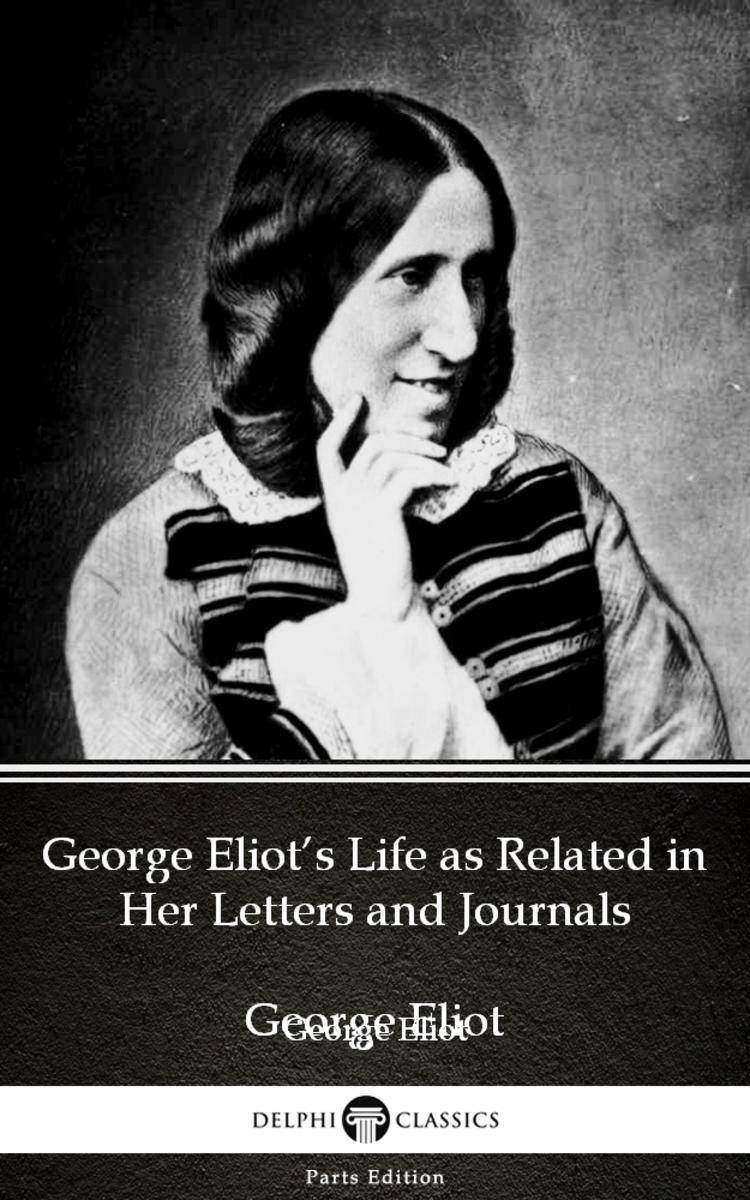
George Eliot’s Life as Related in Her Letters and Journals by George Eliot
¥8.09
This eBook features the unabridged text of ‘George Eliot’s Life as Related in Her Letters and Journals by George Eliot - Delphi Classics (Illustrated)’ from the bestselling edition of ‘The Complete Works of George Eliot’. Having established their name as the leading publisher of classic literature and art, Delphi Classics produce publications that are individually crafted with superior formatting, while introducing many rare texts for the first time in digital print. The Delphi Classics edition of Eliot includes original annotations and illustrations relating to the life and works of the author, as well as individual tables of contents, allowing you to navigate eBooks quickly and easily. eBook features: * The complete unabridged text of ‘George Eliot’s Life as Related in Her Letters and Journals by George Eliot - Delphi Classics (Illustrated)’ * Beautifully illustrated with images related to Eliot’s works * Individual contents table, allowing easy navigation around the eBook * Excellent formatting of the text Please visit www.delphiclassics.com to learn more about our wide range of titles


