


 购物车
购物车 个人中心
个人中心
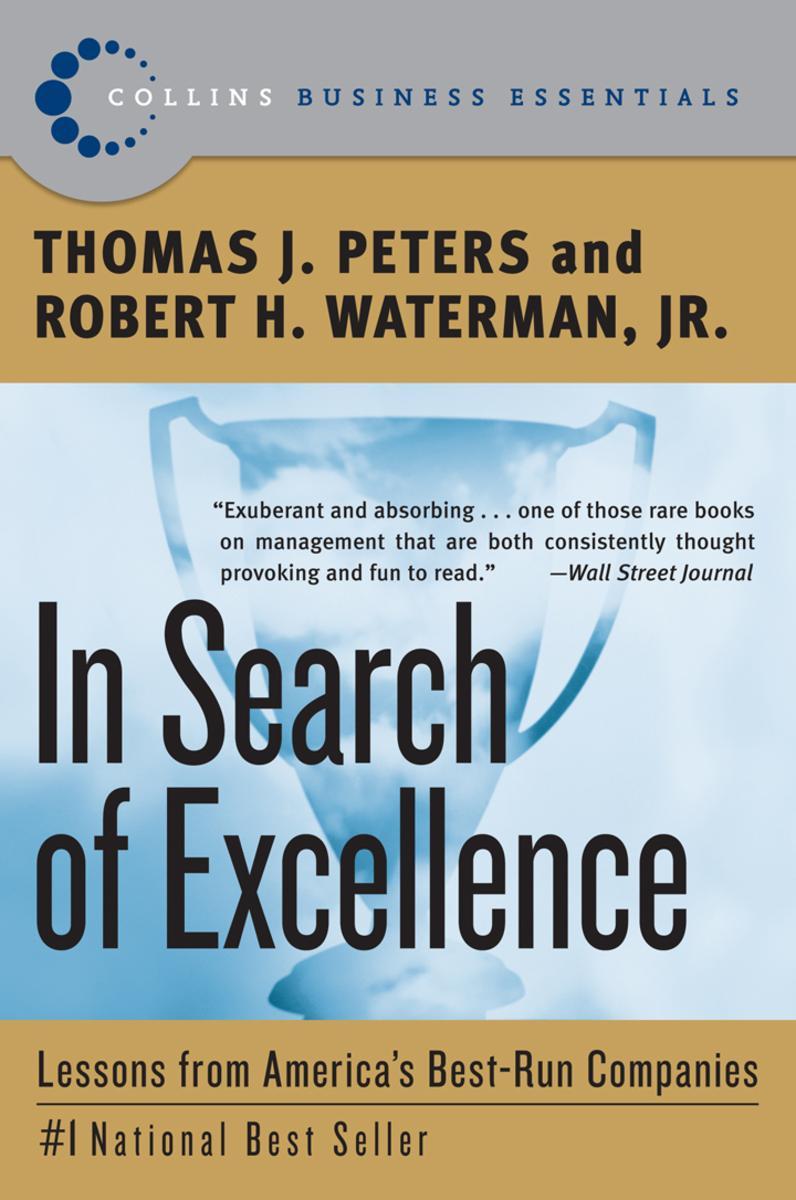
In Search of Excellence
¥101.00
The Greatest Business Book of All Time (Bloomsbury UK), In Search of Excellence has long been a must-have for the boardroom, business school, and bedside table. Based on a study of forty-three of America best-run companies from a diverse array of business sectors, In Search of Excellence describes eight basic principles of management -- action-stimulating, people-oriented, profit-maximizing practices -- that made these organizations successful. Joining the HarperBusiness Essentials series, this phenomenal bestseller features a new Authors' Note, and reintroduces these vital principles in an accessible and practical way for today management reader.
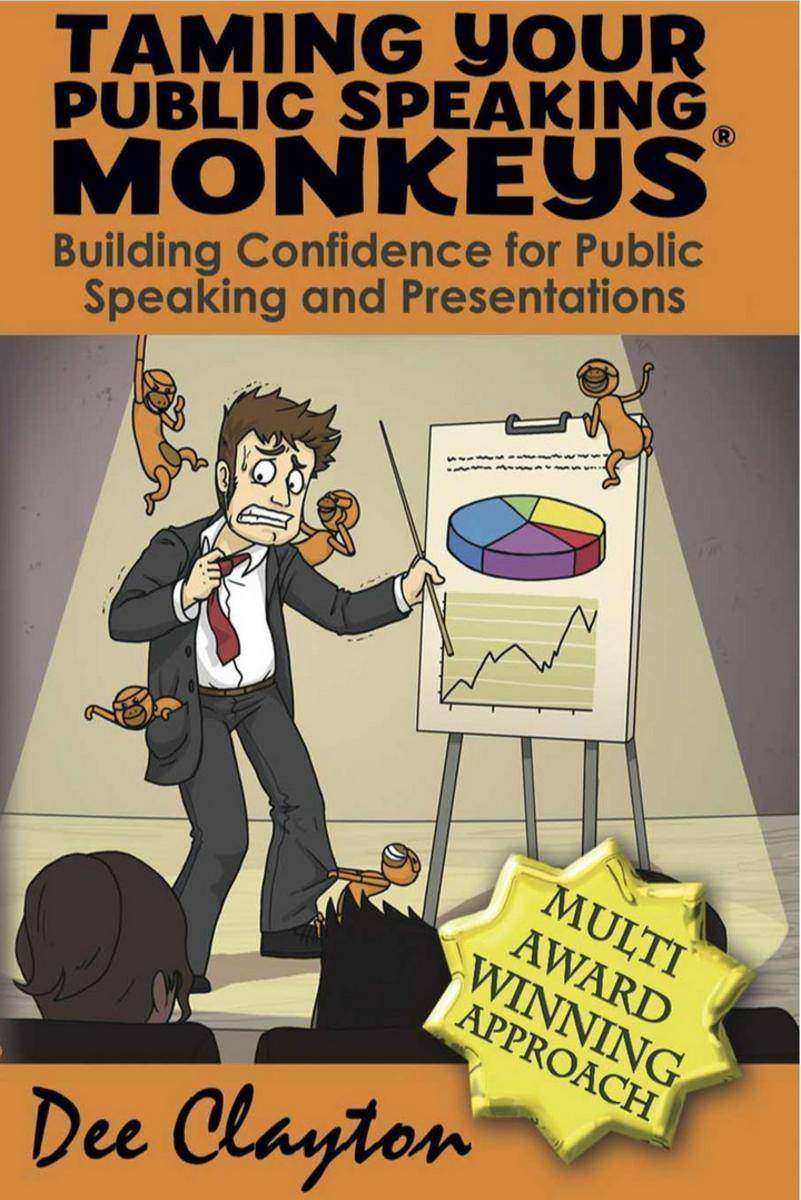
Taming Your Public Speaking Monkeys
¥24.44
A Godsend for anyone who’s ever suffered that dread of speaking in public!’ If, like almost everyone, you’re petrified of public speaking, the last thing you want is a lecture! And there lies the brilliance of this unique book’s genuinely innovative approach to the issue: Dee Clayton makes the process of overcoming those negative voices in your head (Your ‘Public Speaking Monkeys!’) and becoming an effective speaker lighthearted and fun! A Godsend for anyone who’s ever suffered that dread, Dee’s refreshingly simple yet amazingly effective multiawardwinning approach has already helped thousands to overcome their fears and become effective and confident public speakers. Significantly, the author’s keenly aware that for most of us, effective public speaking isn’t necessarily an end in itself but a means to other ends for example Dee has already helped company directors to persuade more successfully, doctors to win more funding, mediators to influence international decisions and all kinds of business people to fulfil their potential. What’s more, this is a genuinely practical guide! Unlike most ‘self help’ books on the topic (or any other), this one doesn’t just tell you what to do; in her chatty, good-humored style, Dee explains exactly how, sharing her own experiences and coaxing the reader through a programme that doesn’t just work it even makes public speaking enjoyable! Taming Your Public Speaking Monkeysworks so well because its easy, enjoyable style is underpinned by Dee’s solid, real-life experience of speaking publicly to tens of thousands of people first in her highly successful twenty-year marketing career (communicating for UK household brands such as Jacob’s Creek, Pizza Hut and Jammie Dodgers to name but a few) and now as a public speaking training specialist. Equally vitally, the book draws heavily upon the NeuroLinguistic Programming (NLP) techniques and insights in which Dee is a highly experienced Trainer and Master Practitioner. Taming your Public Speaking Monkeysis a rare find: a self-help book that really helps and best of all the results come to you quickly and stick with you for life!
Best Practices: Difficult People
¥72.70
Every office has someone who's no fun to be around. But getting along with that person and managing them effectively can make both your jobs easier. Difficult People, a comprehensive and essential resource for any manager on the run, shows you how.Learn to: Recognize why and when people act out Identify different types of difficult people Cope with difficult behavior Get the most out of trouble employees Nurture a harmonious work environment The Collins Best Practices guides offer new and seasoned managers the essential information they need to achieve more, both personally and professionally. Designed to provide tried-and-true advice from the world's most influential business minds, they feature practical strategies and tips to help you get ahead.

Best Practices: Time Management
¥72.70
There are only twenty-four hours in a day, but you can make them count. Time Management, a comprehensive and essential resource for any manager on the run, shows you how.Learn to: Set and prioritize goals, objectives, and tasks Create an effective schedule Avoid distractions and interruptions Respect other people's time Build a time-conscious organization The Collins Best Practices guides offer new and seasoned managers the essential information they need to achieve more, both personally and professionally. Designed to provide tried-and-true advice from the world's most influential business minds, they feature practical strategies and tips to help you get ahead.
Best Practices: Motivating Employees
¥72.70
In today's high-pressure workplace, motivating all employees to consistently contribute their best can mean the difference between success and failure. Motivating Employees, a comprehensive and essential resource for any manager on the run, shows you how.Learn to: Inspire employees to succeed Improve performance through coaching Minimize the impact of common de-motivators Create a fair and consistent reward system Turn negative experiences into positive, motivational opportunities The Collins Best Practices guides offer new and seasoned managers the essential information they need to achieve more, both personally and professionally. Designed to provide tried-and-true advice from the world's most influential business minds, they feature practical strategies and tips to help you get ahead.
Think And Grow Rich
¥8.75
Think and Grow Rich' is the world's most widely acclaimed motivational book on success ever published. It became the must-have bible of prosperity and success for millions of readers since its initial publication in 1937. Napoleon Hill, America's most beloved motivational author, devoted 25 years to finding out how the wealthy became that way. After interviewing over 500 of the most affluent men and women of his time, he uncovered the secret to great wealth. By understanding and applying the thirteen simple steps that constitute Hill's formula, you can achieve your goals, change your life and join the ranks of the rich and successful. This book has changed countless lives and it can change yours!
Trust Works!
¥127.33
Trust Works! How to build it How to keep it In this enlightening guide developed from his popular Trust Works! training program, #1 bestselling author and management guru Ken Blanchard turns his vast knowledge and insight to one of the most timely and complex issues that affects all areas of our lives. Once upon a time, a dog and a cat lived together with other animals and the humans who cared for them. But canine and feline did not trust each other a situation that led to fighting, backbiting, and sabotaging that soon affected the whole household. Unless their conflict was resolved, all of the pets would lose their home. Fortunately, a wise old parrot stepped in, teaching dog and cat the ABCDs of trust. As each became aware of the unconscious behaviors at the root of their hostility, dog and cat discovered how to change their behavior a mutual transformation that created a happy, productive environment for all. In Trust Works! Ken Blanchard applies that fable to real-life situations to show anyone how to get along better with those around them. He outlines his ABCD trust model and uses it to address the factors that lead to discord, including low morale, miscommunication, poor response to problems and issues, and dysfunctional leadership. In today polarized society, building trust and sustaining it has never been more important or seemingly elusive. Trust Works! provides a common language and essential skills that can replace dissension with peace and cooperation and help us all work together productively and in harmony.
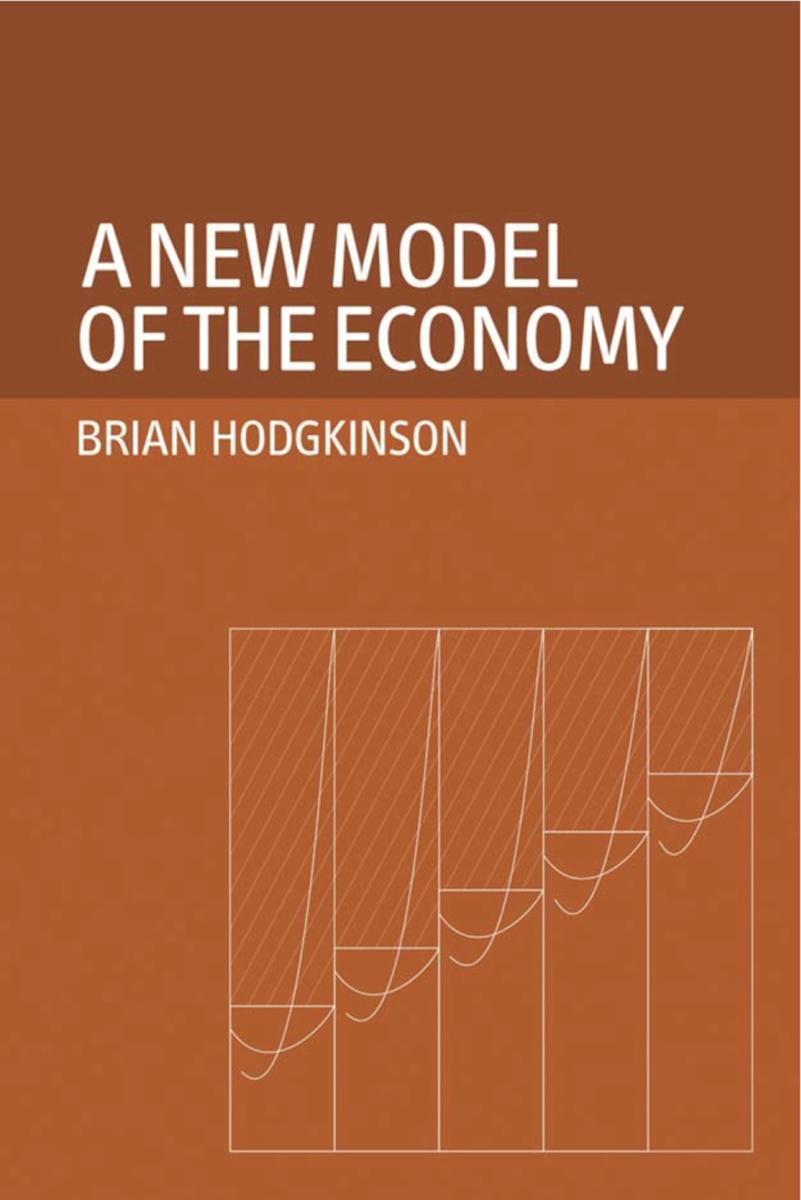
A New Model of Economy
¥24.44
This book offers a radical revision of modern economic theory. Its starting point is the existing body of both micro and macro economics, as developed in such textbooks as Economics by Begg, Fischer and Dornbusch and Positive Economics by Lipsey and Chrystal. Following a similar framework to these books, it adjusts the whole range of theory by introducing some new concepts and other earlier ones that have been much neglected in the economic thought of the past century. These are related especially to the fundamental part played by land, in it proper sense of all natural resources available on the earth, the significance of credit, especially through the banking system, and the crucial impact of the method of taxation. The resulting analysis yields a thoroughly revised version of the contemporary model of a capitalist economy, so that a genuine ‘third way’ is revealed. This is not a mere modification of the present system of absentee ownership confronting a market for labour, with all the attendant evils of unemployment, monopoly and maldistribution of wealth and income. Rather it is a system based upon natural law, exhibiting economic security for all, fair distribution of output and, above all, the opportunity for self-fulfillment through work. The ‘new model’ draws upon the masters of economic thought from Smith and Ricardo to Marshall, Schumpeter and Keynes, by highlighting concepts often omitted from current studies of their works; such as Ricardo’s analysis of scarcity and differential elements of rent, Schumpeter’s view of the role of banking and Keynes’s hints at a labour theory of value. Indeed this far-reaching revision makes bold advances upon the Marshallian theory of the firm and the Keynesian theory of national income determination, thus providing new insights into both micro and macro theory. It remains faithful, however to the tradition of these latter thinkers in explaining matters fully in words, and resorting to mathematics mainly through the use of diagrams intelligible to anyone with an elementary grasp of the subject. Whilst the book strives to avoid value judgements in the interests of social science, it undoubtedly carries strong implications about economic policy. These are bound up with the central notions of free land and free credit, which have been singularly ignored by policy-makers since a few valiant attempts to introduce them in the early twentieth century. Hence the ‘new model’ is offered to both theorists and practitioners of economics, to politicians and public servants, but particularly to those who, like the author, truly seek a new vision of the subject.
The 22 Immutable Laws of Branding
¥105.17
This marketing classic has been expanded to include new commentary, new illustrations, and a bonus book: The 11 Immutable Laws of Internet Branding Smart and accessible, The 22 Immutable Laws of Branding is the definitive text on branding, pairing anecdotes about some of the best brands in the world, like Rolex, Volvo, and Heineken, with the signature savvy of marketing gurus Al and Laura Ries. Combining The 22 Immutable Laws of Branding and The 11 Immutable Laws of Internet Branding, this book proclaims that the only way to stand out in today's marketplace is to build your product or service into a brand and provides the step-by-step instructions you need to do so. The 22 Immutable Laws of Branding also tackles one of the most challenging marketing problems today: branding on the Web. The Rieses divulge the controversial and counterintuitive strategies and secrets that both small and large companies have used to establish internet brands. The 22 Immutable Laws of Branding is the essential primer on building a category-dominating, world-class brand.
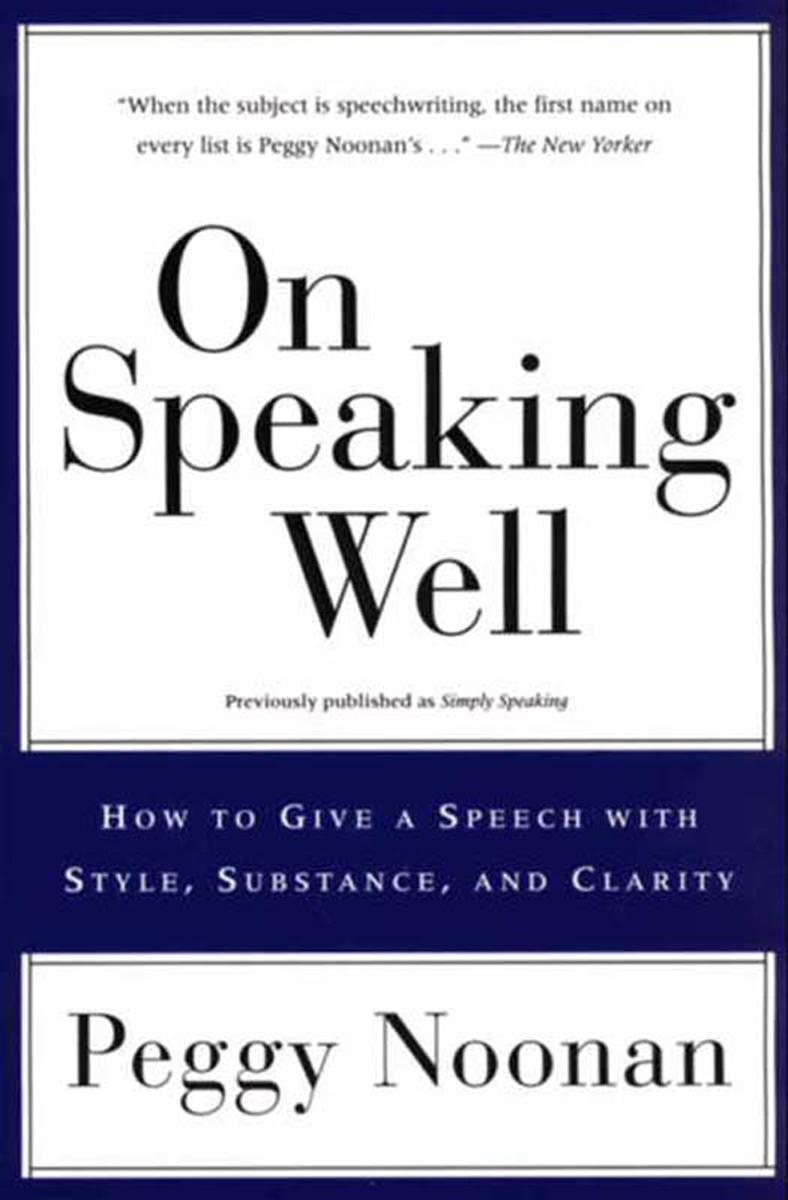
On Speaking Well
¥88.56
For anyone who fears the thought of writing and giving a speech--be it to business associates, or at a wedding--help is at hand. Acclaimed presidential speechwriter Peggy Noonan shares her secrets to becoming a confidence, persuasive speaker demystifying topics including: Finding you own authentic voice Developing a text that interest you Acing the all-important first paragraph Using logic to move your audience Creating, developing, and reinventing the "core speech" for diverse audiences Strengthening your speech with a vital element: humor Winnowing your thought down to the essentials Handling professional jargon, clich s, and the sound bite syndrome Presenting your speech in the best way Collecting intellectual income--conversing your speech treasures Breaking all the rules and still succeeding Reading for inspiration--how to use the excellence of others Complete with lessons, tips and memorable examples, On Speaking Well shows us how to create forceful, persuasive, relevant speeches that will resonate with our audiences. Engaging, informative, and always entertaining, this is undoubtedly the authoritative how-to guide for anyone writing or giving a speech
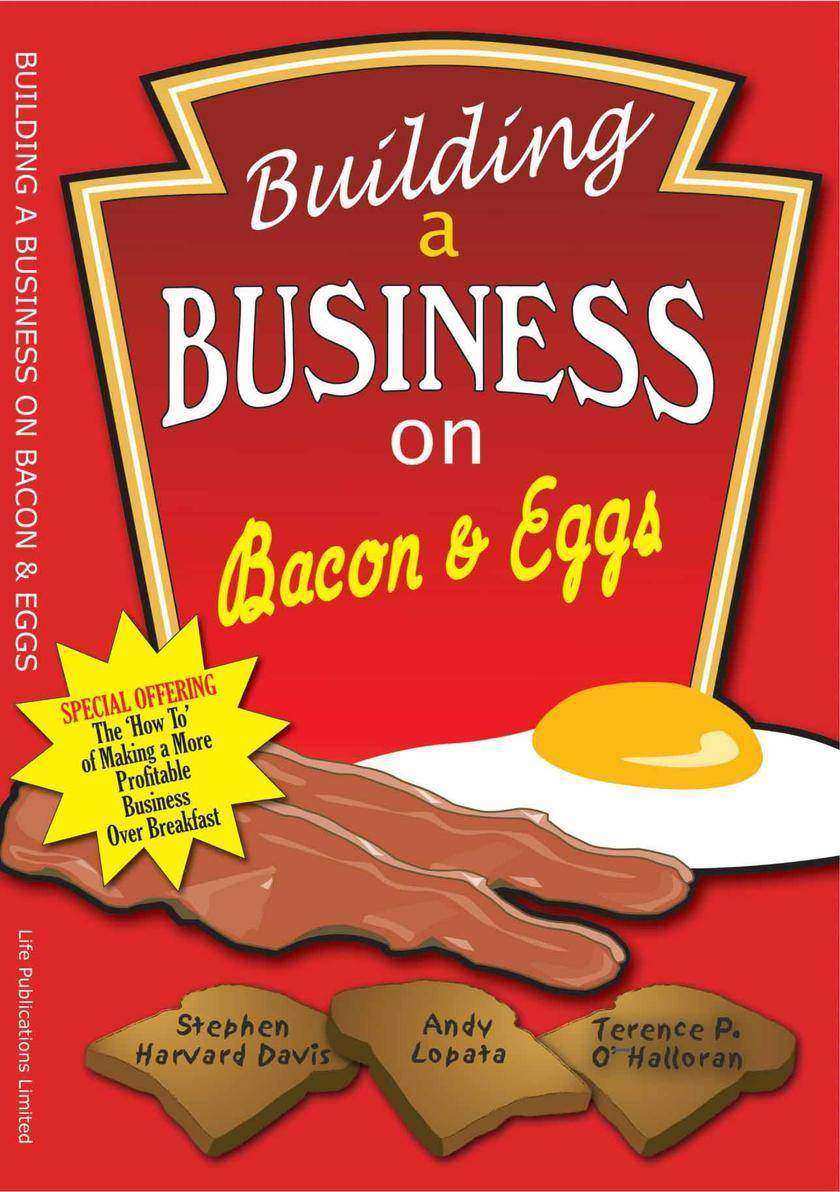
Building A Business on Bacon and Eggs
¥24.44
Person to person networks in the UK have grown over the last 10 years fuelled by the many middle management unemployed caused during the recent downsizing of many international corporations.Self employed people need to network, in the harsh environment of today’s modern job market. Networking is a ready source of employment, and a chance to meet skilled fellow workers to help build teams to complete projects that would otherwise stretch their own skill set.Outside the hours of the working day but inside a framework that people can relate to Breakfast Meetings provide them with rewarding opportunities. This book helps ensure you know how to meet the right people and kickstart your business.‘Building a Business on Bacon and Eggs’ is packed with tips and lists of how to set up thriving networking events and enables the reader to gain the most from any meetings they may hold, it includes checklists for everyone involved in the organization of events, real life stories to illustrate the theories presented as well as what to offer sponsors and how best to achieve the goals of all concerned.The book illustrates evidence of this in the comprehensive checklists throughout the book and summaries at the end of every chapter. If running breakfast meetings is your job, or if you merely wish to learn from the business experiences of other people, or you want to expand your own knowledge to gain the most from the business breakfast club environment this book provides a unique insight through the minds of its three very successful writers. To this end, ‘Breakfast on Bacon and Eggs ‘ is an essential addition to any Book Shops business section.
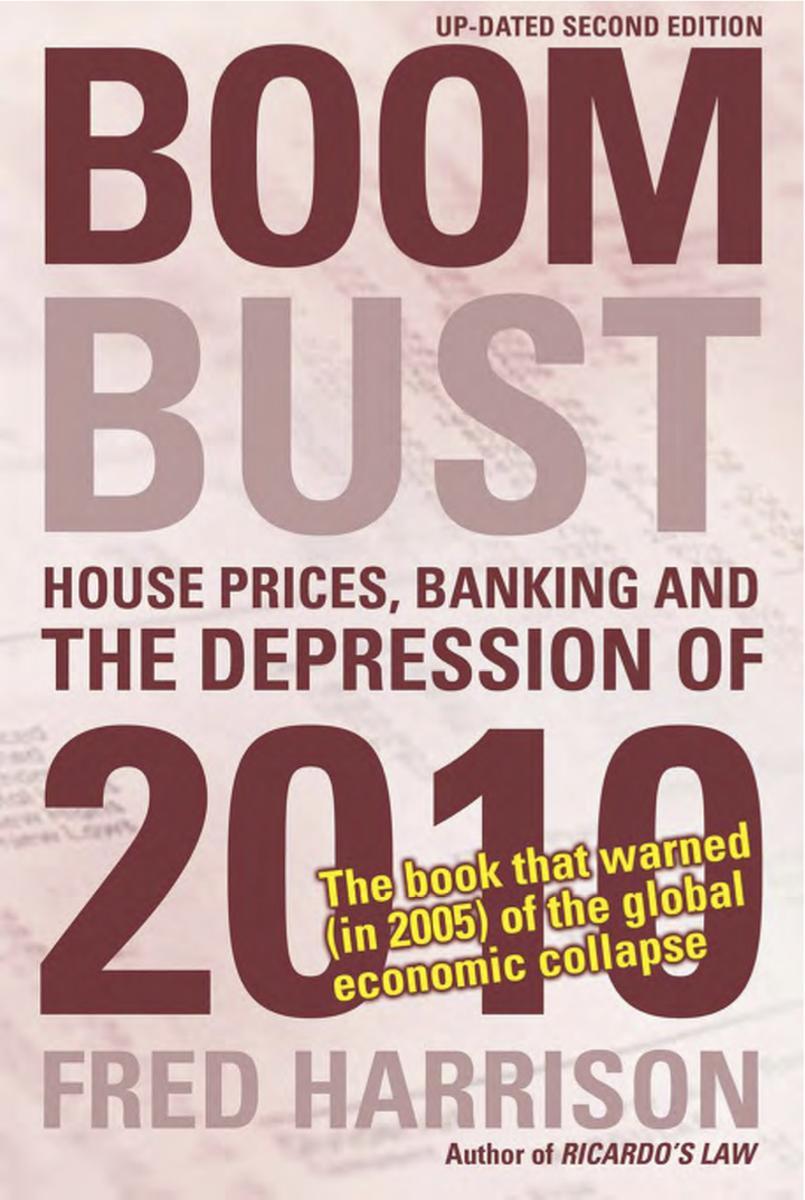
Boom Bust
¥24.44
In the two and a half years since the first edition appeared (April 2005), events have unfolded as predicted. Then the consensus among forecasters was that the boom in house prices would cool to an annual 2 or 3% rise over the following years. In fact, in keeping with the ‘winner’s curse’ phase of the cycle described by the author, prices rose by more than 10% per annum in Britain. Harrison’s first book, The Power in the Land, predicted the early 1990s recession. Boom Bust, warned that investing in property is not always a safe bet, because the housing market is subject to a sharp downturn at the end of a remarkably regular 18-year cycle. The crash of 2007/8 occurred exactly as predicted. His forecast was based on a careful study of the evidence from property markets in many countries over the last 200 years. Gordon Brown’s claim, last made in his 2007 Budget speech, that ‘we will never return to the old boom and bust’ has been proved false. The reason for the instability, Harrison explains, is not the housing market itself but the land market on which all buildings stand. Land is in fixed supply ‘ as Mark Twain noted: ‘They’re not making any more of it’. Therefore, as the demand for land for new homes and offices rises with population growth and economic expansion, market forces, which normally increase supply to reduce prices, have the reverse effect: prices rise. This encourages speculation, with banks lending more against escalating asset values and reinforcing the upward spiral. Under existing government policies, the only way land prices can be brought back to affordable levels is a slump, undermining the banking system and causing widespread unemployment and repossessions. This is exactly what happened in America with the collapse of the sub-prime mortgage market. The run on Northern Rock showed the UK economy is not immune. The author reveals that the government’s monetary policy only has a marginal impact on land speculation, but as the Bank of England raises interest rates to curb house price inflation, the main victim is the first-time buyer and the productive economy, especially small businesses. The only way to neutralise the boom bust cycle in the housing market is through a reform of taxation, he claims. ‘This book is an important contribution to an overdue debate.’ Martin Ricketts, Chairman of the Academic Advisory Council of the Institute of Economic Affairs and Professor of Economic Organisation, University of Buckingham. Endorsing the thrust of Harrison’s argument, Prof. Ricketts goes on to acknowledge ‘that insufficient attention has been given by policymakers to the rent of land as socially the most efficient source of public revenue’, and that that will ‘have important practical consequences … for the stability of the economic system’. Economic stability is the objective of Gordon Brown and most governments around the world. Harrison explains how this may be achieved.
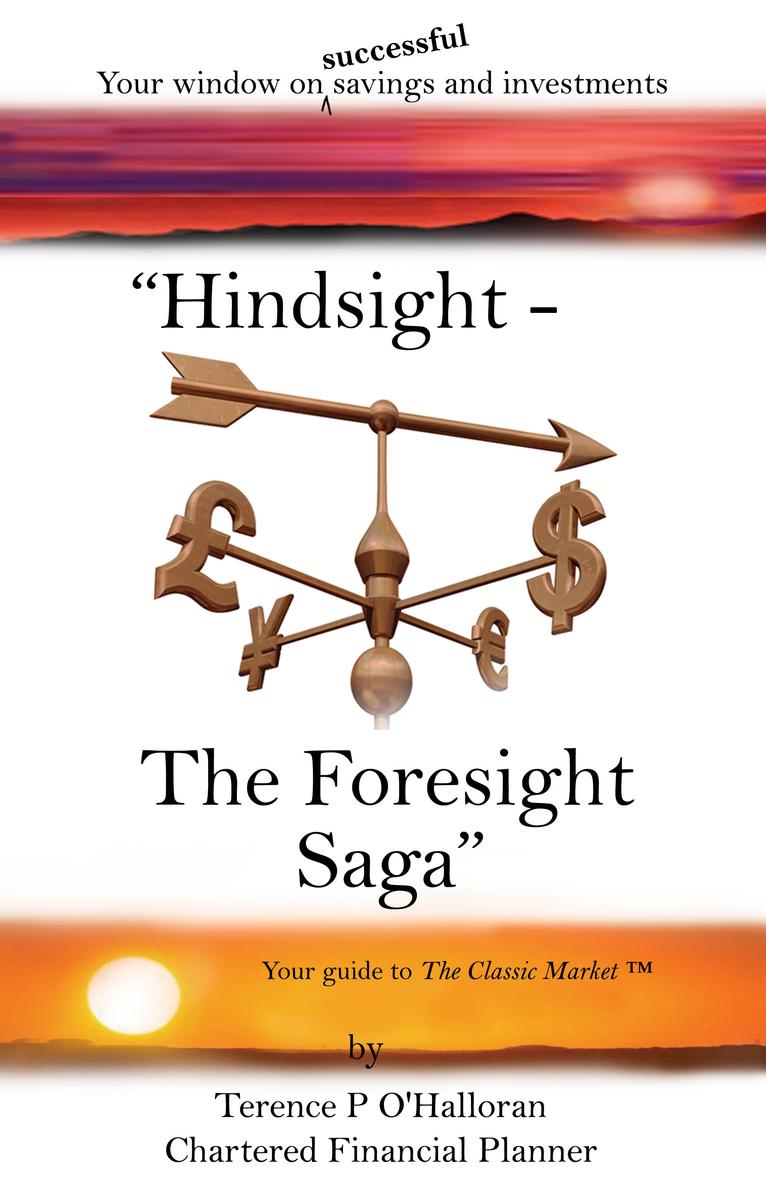
Hindsight The Foresight Saga
¥24.44
There is something new in the financial planning world and it is explored to the point that the reader can exploit it in “Hindsight – The Foresight Saga.” Little has been written about the property market and its relationship with the equity markets or the coincidental relationship that that investment relationship has on bankers. This book is aimed at the private investor but also the professional investment manager because it highlights the mechanism that provides for an almost continuous steady flow of positive returns on invested capital and regular savings. The author is a well experienced, highly qualified strategic financial planner and the language used in the book is straightforward and down to earth. The classic marketis identified as a circa fifteen year cycle of at one point inversely correlated market movements that works in direct contrast to a later phase in the classic market TM where property and equity movements are highly correlated in a downward slide. The first having an extremely positive effect on banking and the second, a devastating effect that contributed to bank collapses similar to those in 1979, 1992 and 2008.
The Little Big Things
¥94.10
#131 The Case of the Two-Cent CandyYears ago, I wrote about a retail store in the Palo Alto environs a good one, which had a box of two-cent candies at the checkout. I subsequently remember that "little" parting gesture of the two-cent candy as a symbol of all that is Excellent at that store. Dozens of people who have attended seminars of mine from retailers to bankers to plumbing-supply-house owners have come up to remind me, sometimes 15 or 20 years later, of "the two-cent candy story," and to tell me how it had a sizable impact on how they did business, metaphorically and in fact.Well, the Two-Cent Candy Phenomenon has struck again with oomph and in the most unlikely of places.For years Singapore's "brand" has more or less been Southeast Asia's "place that works." Its legendary operational efficiency in all it does has attracted businesses of all sorts to set up shop there. But as "the rest" in the geographic neighborhood closed the efficiency gap, and China continued to rise-race-soar, Singapore decided a couple of years ago to "rebrand" itself as not only a place that works but also as an exciting, "with it" city. (I was a participant in an early rebranding conference that also featured the likes of the late Anita Roddick, Deepak Chopra, and Infosys founder and superman N. R. Narayana Murthy.)Singapore's fabled operating efficiency starts, as indeed it should, at ports of entry the airport being a prime example. From immigration to baggage claim to transportation downtown, the services are unmatched anywhere in the world for speed and efficiency.Saga . . . Immigration services in Thailand, three days before a trip to Singapore, were a pain. ("Memorable.") And entering Russia some months ago was hardly a walk in the park, either. To be sure, and especially after 9/11, entry to the United States has not been a process you'd mistake for arriving at Disneyland, nor marked by an attitude that shouted "Welcome, honored guest."Singapore immigration services, on the other hand:The entry form was a marvel of simplicity. The lines were short, very short, with more than adequate staffing.The process was simple and unobtrusive.And:The immigration officer could have easily gotten work at Starbucks; she was all smiles and courtesy.And:Yes!Yes!And . . . yes!There was a little candy jar at each Immigration portal!The "candy jar message" in a dozen ways:"Welcome to Singapore, Tom!! We are absolutely beside ourselves with delight that you have decided to come here!"Wow!Wow!Wow!Ask yourself . . . now:What is my (personal, department, project, restaurant, law firm) "Two-Cent Candy"?Does every part of the process of working with us/me include two-cent candies?Do we, as a group, "think two-cent candies"?Operationalizing: Make "two-centing it" part and parcel of "the way we do business around here." Don't go light on the so-called substance but do remember that . . . perception is reality . . . and perception is shaped by two-cent candies as much as by that so-called hard substance.Start: Have your staff collect "two-cent candy stories" for the next two weeks in their routine "life" transactions. Share those stories. Translate into "our world." And implement.Repeat regularly.Forever.(Recession or no recession you can afford two cents.)(In fact, it is a particularly Brilliant Idea for a recession you doubtless don't maximize Two-Cent Opportunities. And what opportunities they are.)
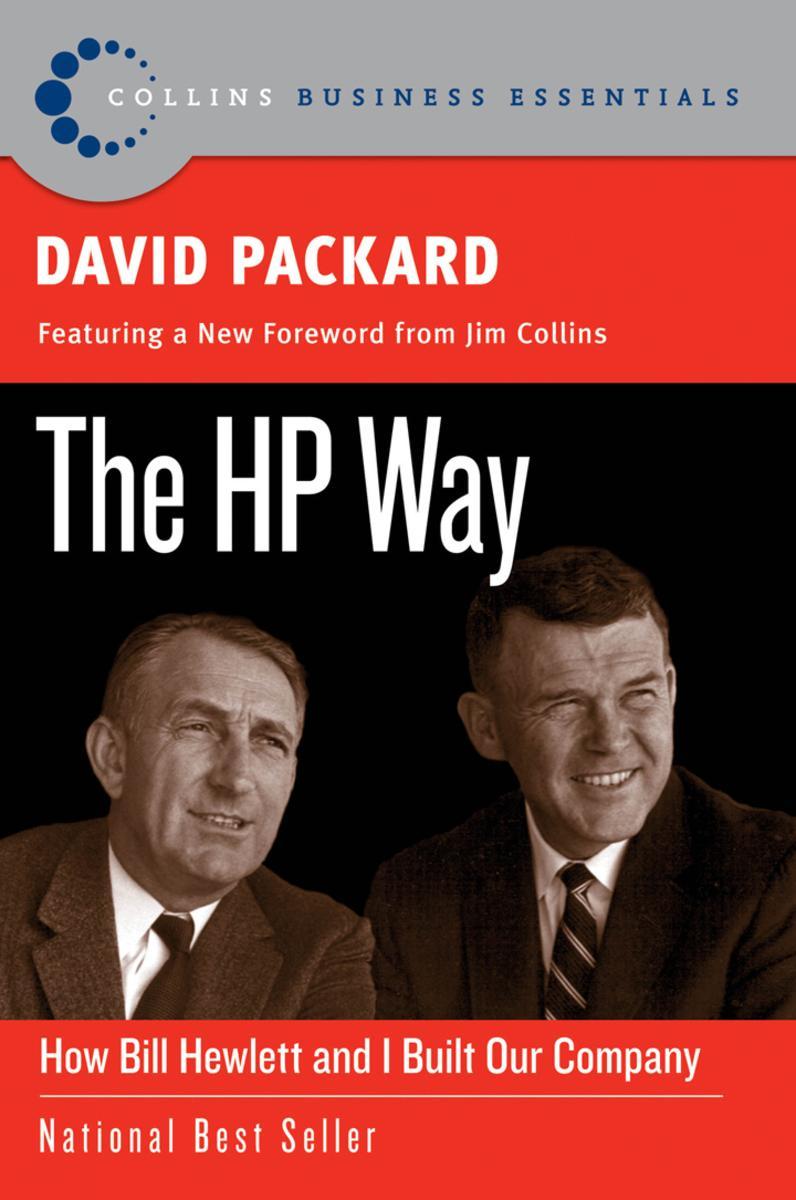
The HP Way
¥83.03
In the fall of 1930, David Packard left his hometown of Pueblo, Colorado, to enroll at Stanford University, where he befriended another freshman, Bill Hewlett. After graduation, Hewlett and Packard decided to throw their lots in together. They tossed a coin to decide whose name should go first on the notice of incorporation, then cast about in search of products to sell. Today, the one-car garage in Palo Alto that housed their first workshop is a California historic landmark: the birthplace of Silicon Valley. And Hewlett-Packard has produced thousands of innovative products for millions of customers throughout the world. Their little company employs 98,400 people and boasts constantly increasing sales that reached $25 billion in 1994. While there are many successful companies, there is only one Hewlett-Packard, because from the very beginning, Hewlett and Packard had a way of doing things that was contrary to the prevailing management strategies. In defining the objectives for their company, Packard and Hewlett wanted more than profits, revenue growth and a constant stream of new, happy customers. Hewlett-Packard success owes a great deal to many factors, including openness to change, an unrelenting will to win, the virtue of sustained hard work and a company-wide commitment to community involvement. As a result, HP now is universally acclaimed as the world most admired technology company; its wildly successful approach to business has been immortalized as The HP Way . In this book, David Packard tells the simple yet extraordinary story of his life work and of the truly exceptional company that he and Bill Hewlett started in a garage 55 years ago.
The Fall of Advertising and the Rise of PR
¥83.03
Bestselling authors and world-renowned marketing strategists Al and Laura Ries usher in the new era of public relations. Today's major brands are born with publicity, not advertising. A closer look at the history of the most successful modern brands shows this to be true. In fact, an astonishing number of brands, including Palm, Starbucks, the Body Shop, Wal-Mart, Red Bull and Zara have been built with virtually no advertising. Using in-depth case histories of successful PR campaigns coupled with those of unsuccessful advertising campaigns, The Fall of Advertising provides valuable ideas for marketers -- all the while demonstrating why advertising lacks credibility, the crucial ingredient in brand building, and how only PR can supply that credibility; the big bang approach advocated by advertising people should be abandoned in favor of a slow build-up by PR; advertising should only be used to maintain brands once they have been established through publicity. Bold and accessible, The Fall of Advertising is bound to turn the world of marketing upside down.
Reengineering the Corporation
¥94.10
The most successful business book of the last decade, Reengineering the Corporation is the pioneering work on the most important topic in business today: achieving dramatic performance improvements. This book leads readers through the radical redesign of a company's processes, organization, and culture to achieve a quantum leap in performance. Michael Hammer and James Champy have updated and revised their milestone work for the New Economy they helped to create -- promising to help corporations save hundreds of millions of dollars more, raise their customer satisfaction still higher, and grow ever more nimble in the years to come.
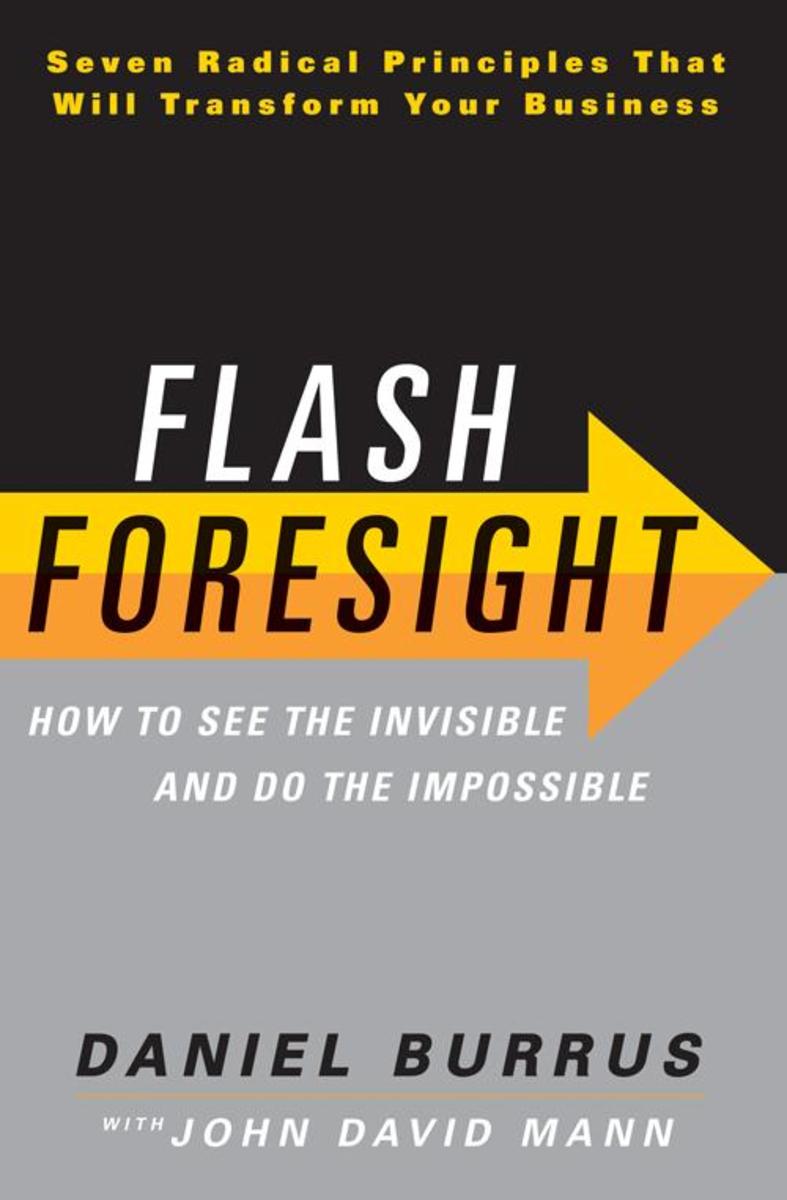
Flash Foresight
¥155.02
Today we all face more impossible challenges than ever before. But flash foresight lets you transform the impossible into the possible, revealing hidden opportunities and allowing you to solve your biggest problems before they happen. Daniel Burrus is one of the world's leading forecasters, corporate strategists, and visionaries. Over the past quarter century, he has established a reputation worldwide for his exceptional record of accurately predicting the future of technological change and its direct impact on the business world."Wouldn't it be amazing if you could predict the future and be right?" writes Burrus. "You can: all you have to do is leave out the parts you could be wrong about! And the amazing thing is, when you know where to look, there's more than enough you can be right about to make all the difference."From small businesses to multinationals, individual careers to entire industries, Flash Foresight looks at how Burrus's seven radical flash foresight "triggers" have transformed dozens of careers, fortunes, and lives. Both engaging and enlightening, Flash Foresight provides an easy-to-implement blueprint for applying the same strategies to your own business, enabling you to see the invisible and do the impossible.In the past, flash foresight was useful. Today, as the pace of technological change accelerates almost beyond the point of comprehension, it's an imperative.
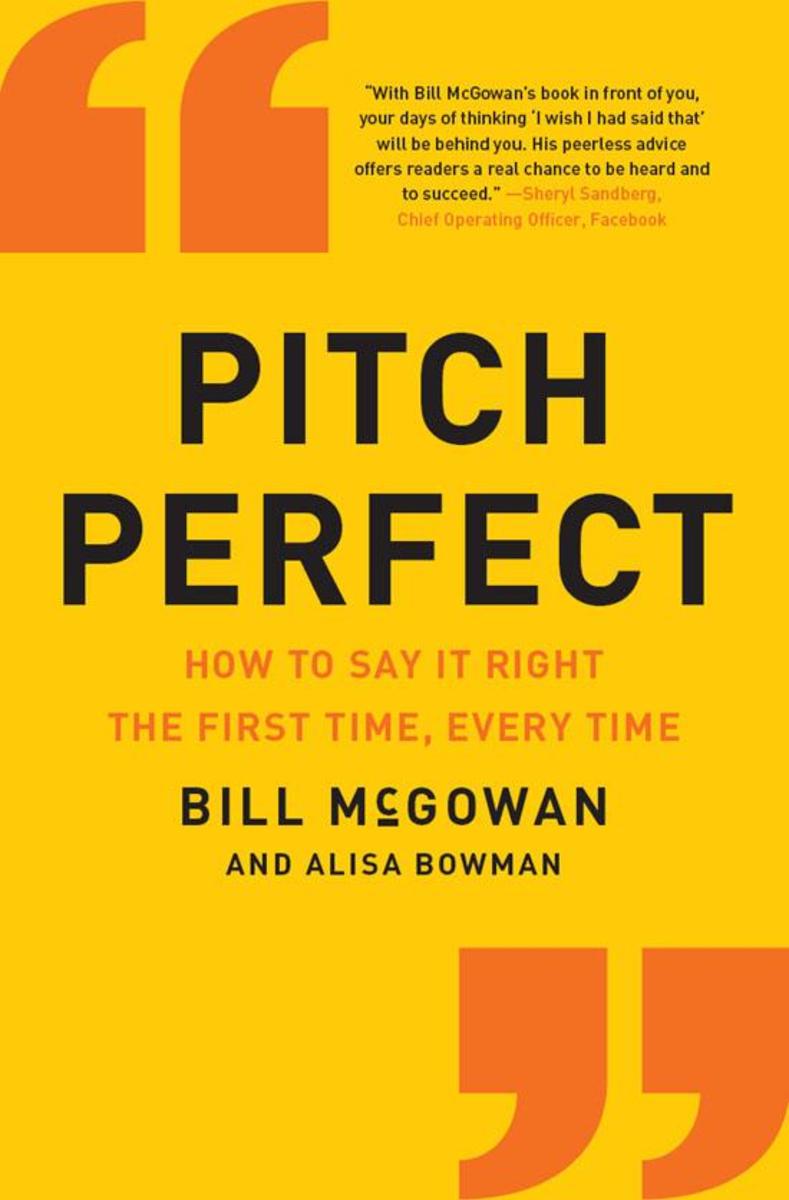
Pitch Perfect
¥155.02
The media coach and Emmy Award-winning correspondent Bill McGowan shares his secrets of pitch-perfect communications, showing readers how to communicate with confidence.During the pivotal moments of our lives, results are often determined not only by our actions but by our words as well. Saying the right thing the right way can make the difference between sealing the deal or losing the account, advancing your career or suffering a demotion. During these moments, it's important to be pitch perfect to use precisely the right tone to convey the right message to the right person at the right time. Such pitch-perfect moments are crucial in our personal and professional journeys. In Pitch Perfect, the renowned media coach Bill McGowan shows you how to craft just the right message. Along the way, McGowan lays out his Seven Principles of Persuasion, including: The Scorsese Principle: Hold your audience's attention with visual images. Direct the film that plays in your listener's mind. The No-Tailgating Principle: Avoid verbal fender-benders and career-wrecking moments by maintaining a safe talking distance. When in doubt, stop talking and listen. The Pasta-Sauce Principle: Cure boredom by boiling down your message, making it as rich and brief as possible. In Pitch Perfect, you'll learn how to overcome all these communication pitfalls. The Seven Principles of Persuasion are as easy to learn, implement, and master as they are effective. The right language both verbal and nonverbal can make you more confident, persuasive, and certain. It can stir people to listen closely to your every word and to remember you long after you've left the room.

Leadership BS
¥168.37
Too many leadership failures. Too many career derailments. Too many toxic workplaces filled with disengaged, distrustful employees. Jeffrey Pfeffer, a professor at the Stanford Graduate School of Business and the author of Power, offers an incisive dissection of the multibillion-dollar leadership industry and presents ways to fix its many problems.In Leadership BS, Jeffrey Pfeffer pulls back the curtain, showing how leadership really works and why so many leadership development efforts fail. In this forthright and persuasive critique, Pfeffer argues that much of the oft-repeated wisdom about leadership is based more on hope than reality, on wishes rather than data, on beliefs instead of science. In an age when transparency is considered a virtue, Pfeffer makes the case that strategic misrepresentation isn't as harmful as you think, that breached agreements are a part of business, that immodesty is frequently a path to success, and that relying on the magnanimity of your boss is a bad bet.Using research findings from social psychology, sociology, and sociobiology, and filled with practical, actionable advice, Leadership BS encourages readers to finally stop accepting sugar-laced but toxic potions as cures and to understand the realities of organizations and human behavior.To make real change, Pfeffer argues, we need to get beyond the half-truths and self-serving stories that are so prominent in the mythology of leadership. In calling BS on so much conventional wisdom, Leadership BS offers both a provocative, scientific examination of how leadership actually works and how it doesn't and a pre*ion for leaders future and present.
Begging for Change
¥141.80
You are a good person. You are one of the 84 million Americans who volunteer with a charity. You are part of a national donor pool that contributes nearly $200 billion to good causes every year. But you wonder: Why don't your efforts seem to make a differenceFifteen years ago, Robert Egger asked himself this same question as he reluctantly climbed aboard a food service truck for a night of volunteering to help serve meals to the homeless. He wondered why there were still people waiting in line for soup in this day and age. Where were the drug counselors, the job trainers, and the support team to help these men and women get off the streetsWhy were volunteers buying supplies from grocery stores when restaurants were throwing away unused fresh food every nightWhy had politicians, citizens, and local businesses allowed charity to become an end in itselfWhy wasn't there an efficient way to solve the problemRobert knew there had to be a better way. In 1989, he started the D.C. Central Kitchen by collecting unused food from local restaurants, caterers, and hotels and bringing it back to a central location where hot, nutritious meals were prepared and distributed to agencies around the city. Since then, the D.C. Central Kitchen has been named one of President Bush Sr.'s Thousand Points of Light and has become one of the most respected and emulated nonprofit agencies in the world, producing and distributing more than 4,000 meals a day. Its highly successful 12-week job-training program equips former homeless transients and drug addicts with culinary and life skills to gain employment in the restaurant business. In Begging for Change, Robert Egger looks back on his experience and exposes the startling lack of logic, waste, and ineffectiveness he has encountered during his years in the nonprofit sector, and calls for reform of this $800 billion industry from the inside out. In his entertaining and inimitable way, he weaves stories from his days in music, when he encountered legends such as Sarah Vaughan, Mel Torme, and Iggy Pop, together with stories from his experiences in the hunger movement -- and recently as volunteer interim director to help clean up the beleaguered United Way National Capital Area. He asks for nonprofits to be more innovative and results-driven, for corporate and nonprofit leaders to be more focused and responsible, and for citizens who contribute their time and money to be smarter and more demanding of nonprofits and what they provide in return. Robert's appeal to common sense will resonate with readers who are tired of hearing the same nonprofit fund-raising appeals and pity-based messages. Instead of asking the "who" and "what" of giving, he leads the way in asking the "how" and "why" in order to move beyond our 19th-century concept of charity, and usher in a 21st-century model of change and reform for nonprofits. Enlightening and provocative, engaging and moving, this book is essential reading for nonprofit managers, corporate leaders, and, most of all, any citizen who has ever cared enough to give of themselves to a worthy cause.


