


 购物车
购物车 个人中心
个人中心

The Song of the Seed
¥72.93
From the bestselling author of Seasons of Your Heart and A Tree Full of Angels, a lyric, loving, and inspiring approach to communion with God based on Benetictine spirituality.

Preventing Miscarriage Rev Ed
¥90.77
A Reassuring and Informative Guide That Offers New Hope For Expectant Parents Along with inspiring accounts of women who have delivered healthy babies after years of heartbreak, Dr. Jonathan Scher provides the latest medical information on preventing recurrent miscarriages, including why couples with "unexplained infertility" actually may be suffering repeat pregnancy loss due to failure of the embryo to implant in the womb, important immunological and tissue tests that may explain or prevent miscarriage, emerging treatments such as heparin and I.V.I.G., updated resources, and much more.

Healing Anxiety Naturally
¥90.77
Feeling anxious or stressedIf So, you are not alone. More people suffer from anxiety than any other mental health problem. However, few receive adequate help, and until recently the only choice for many has been to suffer in silence or take synthetic, often addictive tranquilizers and pills. Finally, there is a way to treat your anxiety that is safe, natural, and medically proven. In Healing Anxiety Naturally, leading psychiatrist and bestselling author Harold H. Bloomfield, M.D., presents a revolutionary selfhealing program using nature's own pharmacy of extraordinary herbal remedies, including: Kava a natural tranquilizer that can often replace Valium-like drugs Valerian improves sleep quality and naturally relieves insomnia Hypericum, or St.-John's-Wort the herbal remedy for depression and anxiety Ginkgo the brain booster and antidote to aging Milk Thistle the best protection for your liver These herbs are inexpensive, available without a pre*ion, and free of the side effects and addiction potential of artificial pills. Clear, informative, and based on the most up-to-date scientific findings, Healing Anxiety Naturally will help you relieve stress, promote sleep, and maximize performance. Put an end to anxiety today!

Lakes, Loughs and Lochs (Collins New Naturalist Library, Book 128)
¥257.90
Another volume in the popular New Naturalist series, this book gives a comprehensive account of the natural history of Britain and Ireland’s inland waters, many of which are popular holiday destinations. The study of life in British lakes and rivers has been traditionally neglected in natural history publications, and yet the intricacies of plant and animal ecology as a whole can be readily studied in a pond or lake. Not since Macan and Worthington’s landmark publication in 1951, Life in Lakes and Rivers – volume 15 in the New Naturalist series – has there been a comprehensive overview of British freshwater life. In Brian Moss’s much-anticipated new volume, he gives a passionate account of the natural history of our lakes, loughs and lochs. Our understanding of lakes has changed enormously since the days of Macan and Worthington. From new techniques using stable isotopes and molecular biology to ambitious approaches using whole lakes for experiments; from advances in chemical methods that detect tiny traces of organic substances to the development of new electronic instruments, it is becoming increasingly urgent to make use of these advances to help maintain and conserve some of the most damaged of the Earth’s ecosystems. Freshwaters form the fascinating threads that stitch together the landscapes of our planet with a myriad of exchanges involving an array of organisms, from algae and insects to hippopotami and otters. Healthy lakes and their shores influence our quality of life and they strengthen the economy. They are important ecosystems that can sustain a healthy balance of aquatic life, provide us with much enjoyment, and help support our socio-economic needs. At the same time they suffer the consequences of human abuses of the land – increasing urbanisation, intensive farming, drainage and an increasing invasion of non-native species, to name but a few. Moss explores the richness of their fundamental ecology, emphasizing the need to view these freshwater systems as a whole, and not to manage or assess them in isolation, as well as the importance of ongoing conservation efforts.
But I Love Him
¥77.49
One in three girls will be in a controlling, abusive dating relationship before she graduates from high school – from verbal or emotional abuse to sexual abuse or physical battering. Is your daughter in dangerDr. Jill Murray speaks on the topic of dating violence at high schools around the country, reaching more than 10,000 students, teachers, and counsellors each year. In every school she visits, she is approached by teenage girls in miserable relationships who, when confronted with the option of breaking up with the boy, exclaim, "But I love him!" Many young women and their parents, aren't even aware of the indications of a potentially abusive relationship. What's most alarming is that these warning signs are also some of the behaviours that girls find most flattering: A boy pages and calls a girl often but as a form of control, not affection. He wants to spend all his time with her, but eventually won't allow her to spend time with her friends. He says "I love you" very early in the relationship. These behaviours can escalate into blaming, isolating, manipulating, threatening, humiliation, and sexual and physical abuse. In But I Love Him, Dr. Murray identifies these controlling, abusive patterns of behaviour and helps you get your daughter out of the relationship without alienating her. You will learn what draws her to this type of relationship, why she has a hard time talking to you about it, the special barriers teens face when breaking off a relationship, and what's going on in the mind of a teen abuser. Dr. Murray will help you show your teen what a respectful relationship looks like, and teach her the importance of respecting herself. edition.

Death by Suburb
¥77.49
A great number of seekers find themselves in the seemingly unreal world of the suburbs. They read spirituality books but find themselves in carpools and coaching soccer, not in monasteries. Dave Goetz, a former pastor, shows that the suburbs are a real world, but a spiritually corrosive one. The land of SUVs and soccer leagues can truly be toxic to the soul. Suburbanites need to understand how the environment affects them and what spiritual disciplines are needed for their faith to survive and thrive. Goetz identifies eight toxins in the suburban life, such as hyper competition and the "transactional" friendship, and suggests eight corresponding disciplines to keep the spiritual life authentic. Goetz weaves sociology studies, his own experiences, current events, wisdom of the spiritual masters, and a little humor to equip spiritual suburbanites for how to relate to God amidst Starbucks, strip malls, and perfect lawns.
Forgive for Love
¥83.03
Finding the love of your life and holding onto that relationship is more difficult than ever. The problem hasn't gone unnoticed. From relationship therapists to speed-dating, self-help books to online matchmaking, an entire industry has developed to help us navigate the bumpy road of relationships. Yet in spite of the availability of all these resources, many of us still struggle to discover and keep the love of our lives. That is, until now.This groundbreaking book from the frontiers of psychology offers startling new research about the one missing factor that is vital to relationships forgiveness. A national bestselling author and leading expert on forgiveness, Dr. Fred Luskin shows that no matter how much two people may love each other, their relationship will not succeed unless they practice forgiveness an approach that most relationship experts continue to ignore.Why is forgiveness an essential tool for relationshipsStudies reveal that 70 percent for what we argue about at the beginning of our relationships will never be fully resolved. In other words, our basic needs and behaviors don't change over time. The issues are endless: the socks that always end up on the floor, how often to have sex, the ESPN obsession, working hours, and, of course, friends and family. Without forgiveness, these issues, however big or small, too easily turn into relationship-eroding grudges.Forgive for Love is the solution for your relationship woes, providing the tools you need to find and hold onto the love of your life. Dr. Luskin delivers a proven seven-step program for creating and maintaining loving and lasting relationships, teaching easy-to-learn forgiveness skills that will not only resolve immediate conflicts but improve the overall happiness and longevity of your relationships. Simply put: people in healthy relationships figure out how to forgive their partners for being themselves. They do so because it is nearly impossible to change other people and because none of us are perfect. Forgiveness is the key, and Forgive for Love has the answers.
Letters to an American Lady
¥87.15
On October 26, 1950, C. S. Lewis wrote the first of more than a hundred letters he would send to a woman he had never met, but with whom he was to maintain a correspondence for the rest of his life.Ranging broadly in subject matter, the letters discuss topics as profound as the love of God and as frivolous as preferences in cats. Lewis himself clearly had no idea that these letters would ever see publication, but they reveal facets of his character little known even to devoted readers of his fantasy and scholarly writings a man patiently offering encouragement and guidance to another Christian through the day-to-day joys and sorrows of ordinary life.Letters to an American Lady stands as a fascinating and moving testimony to the remarkable humanity and even more remarkable Christianity of C. S. Lewis, and is richly deserving of the position it now takes among the balance of his Christian writings.
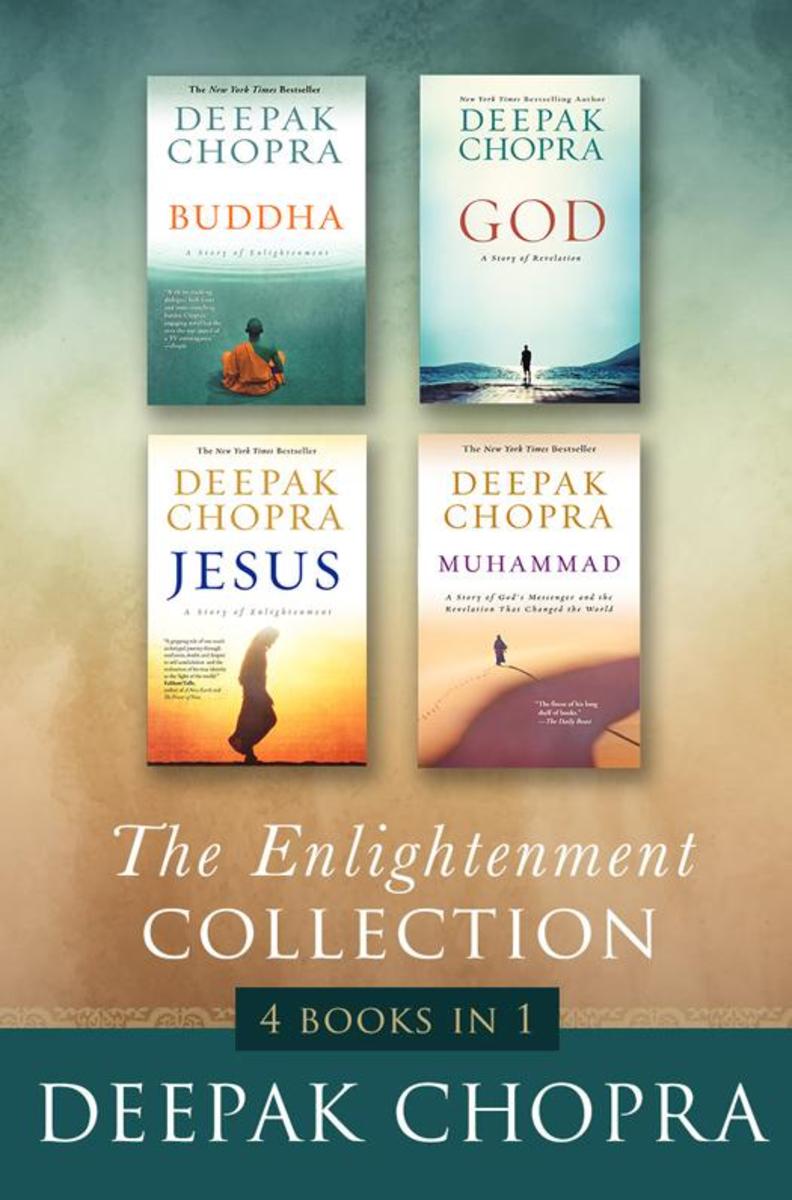
Deepak Chopra Collection
¥163.52
Four of the most popular and celebrated books by New York Times bestselling author Deepak Chopra are now available together in this collection.Buddha is an inspiring re-imagining of the life of a prince who gave up the trappings of royalty for something much more important wisdom and enlightenment. This revolutionary journey has changed the world forever, and the lessons Buddha taught continue to influence every corner of the globe today. This is a new form of teaching for beloved Chopra and with it he brings us closer to understanding the true nature of life and ourselves.Jesus captures the extraordinary life of Christ in this surprising, soul-stirring, and page-turning novel. Uncovering the transformational "lost years" that are not recounted in the New Testament, Chopra has imagined Jesus's path to enlightenment moving from obscurity to revolutionary, from doubt to miracles, and then beyond as the role of the long-awaited Messiah. As a teenager, Jesus has premonitions of his destiny, and by the end, as he arrives to be baptized in the River Jordan, he has accepted his fate, which combines extremes of light and darkness.Born into the factious world of war-torn Arabia, Muhammad's life is a gripping and inspiring story of one man's tireless fight for unity and peace. In a world where greed and injustice ruled, Muhammad created change by affecting hearts and minds. Just as the story of Jesus embodies the message of Christianity, Muhammad's life reveals the core of Islam. In the groundbreaking and imaginative God, the evolution of our highest spiritual figure is told through a unique blend of storytelling and teaching. By capturing the lives of ten historical prophets, saints, mystics, and martyrs who are touched by a divine power, Chopra brings to life the defining moments of our most influential sages, ultimately revealing universal lessons about the true nature of God.
Michael Polanyi and His Generation
¥247.21
In Michael Polanyi and His Generation, Mary Jo Nye investigates the role that Michael Polanyi and several of his contemporaries played in the emergence of the social turn in the philosophy of science. This turn involved seeing science as a socially based enterprise that does not rely on empiricism and reason alone but on social communities, behavioral norms, and personal commitments. Nye argues that the roots of the social turn are to be found in the scientific culture and political events of Europe in the 1930s, when scientific intellectuals struggled to defend the universal status of scientific knowledge and to justify public support for science in an era of economic catastrophe, Stalinism and Fascism, and increased demands for applications of science to industry and social welfare.?At the center of this struggle was Polanyi, who Nye contends was one of the first advocates of this new conception of science. Nye reconstructs Polanyi's scientific and political milieus in Budapest, Berlin, and Manchester from the 1910s to the 1950s and explains how he and other natural scientists and social scientists of his generation-including J. D. Bernal, Ludwik Fleck, Karl Mannheim, and Robert K. Merton-and the next, such as Thomas Kuhn, forged a politically charged philosophy of science, one that newly emphasized the social construction of science.
Walter Ralegh's "e;History of the World"e …
¥247.21
Imprisoned in the Tower of London after the death of Queen Elizabeth in 1603, Sir Walter Ralegh spent seven years producing his massive History of the World.?Created with the aid of a library of more than five hundred books that he was allowed to keep in his quarters, this incredible work of English vernacular would become a best seller, with nearly twenty editions, abridgments, and continuations issued in the years that followed.Nicholas Popper uses Ralegh's?History?as a touchstone in this lively exploration of the culture of history writing and historical thinking in the late Renaissance. From Popper we learn why early modern Europeans ascribed heightened value to the study of the past and how scholars and statesmen began to see historical expertise as not just a foundation for political practice and theory, but as a means of advancing their power in the courts and councils of contemporary Europe. The rise of historical scholarship during this period encouraged the circulation of its methods to other disciplines, transforming Europe's intellectual-and political-regimes. More than a mere study of Ralegh's History of the World, Popper's book reveals how the methods that historians devised to illuminate the past structured the dynamics of early modernity in Europe and England.
Your Divine Fingerprint
¥84.16
That which makes you different, makes you great!When he was fourteen, Keith Craft looked at his right hand and realized that he had a fingerprint that nobody else had and that no one else ever would. God had made him unique. Today Keith Craft believes the glory of God is literally revealed in the individual fingerprint that He has given us. In Your Divine Fingerprint, Craft teaches you how to identify, amplify, and celebrate your uniqueness and your connection to God.You connect with God when you turn a defining moment into a miracle moment by making a decision and then taking action. When you understand the power you have to choose how a moment will affect you, you can then begin to define the moment instead of the moment defining you. And by taking action, you get nearer to fully living the greatness that God has given you and has given to no one else the 1% you have that no one else has.Pastor Keith Craft wants you to realize your greatness. He wants to give you the tools to overcome your blind spots, to find your winning edge, and to become the greatest thing you can be for the rest of the world a servant leader. He wants to challenge you to believe not only that God created you but that God has a great purpose for your life. When you believe this, your life turns from natural to supernatural. And you start to live the blessed life that God wants you to live!
The Sweetness of Life
¥84.28
A celebration of the small, sweet moments that make life worth living and the importance of taking the time to savor them
Ministry
¥72.93
This highly praised handbook on ministry is an essential resource for clergy and laity alike--clear, readable, theologically sound, and pastorally wise. Traces the development of ministry from New Testament times through Vatican II to provide pastoral guidance for priests, nuns, teachers, and others who are called to the ministry.

The First Christmas
¥94.10
In The First Christmas, two of today's top Jesus scholars, Marcus J. Borg and John Dominic Crossan, join forces to show how history has biased our reading of the nativity story as it appears in the gospels of Matthew and Luke. As they did for Easter in their previous book, The Last Week, here they explore the beginning of the life of Christ, peeling away the sentimentalism that has built up over the last two thousand years around this most well known of all stories to reveal the truth of what the gospels actually say. Borg and Crossan help us to see this well-known narrative afresh by answering the question, "What do these stories mean?" in the context of both the first century and the twenty-first century. They successfully show that the Christmas story, read in its original context, is far richer and more challenging than people imagine.
Following Our Bliss
¥90.77
Renowned journalist Don Lattin, longtime reporter for the San Francisco Examiner and more recently the San Francisco Chronicle, interprets the American spiritual and religious landscape since the 60s with insight, wit, and telling reporting. What David Brooks did for the American social and commercial landscape in the bestselling Bobos In Paradise, he does for the spiritual landscape, showing how the 60s have had a profound transformative impact in every area of spirituality. This is the first comprehensive look at the spiritual legacy of the 60s and 70s, as seen through the lives of those raised amid some of the eras wildest experimentation.
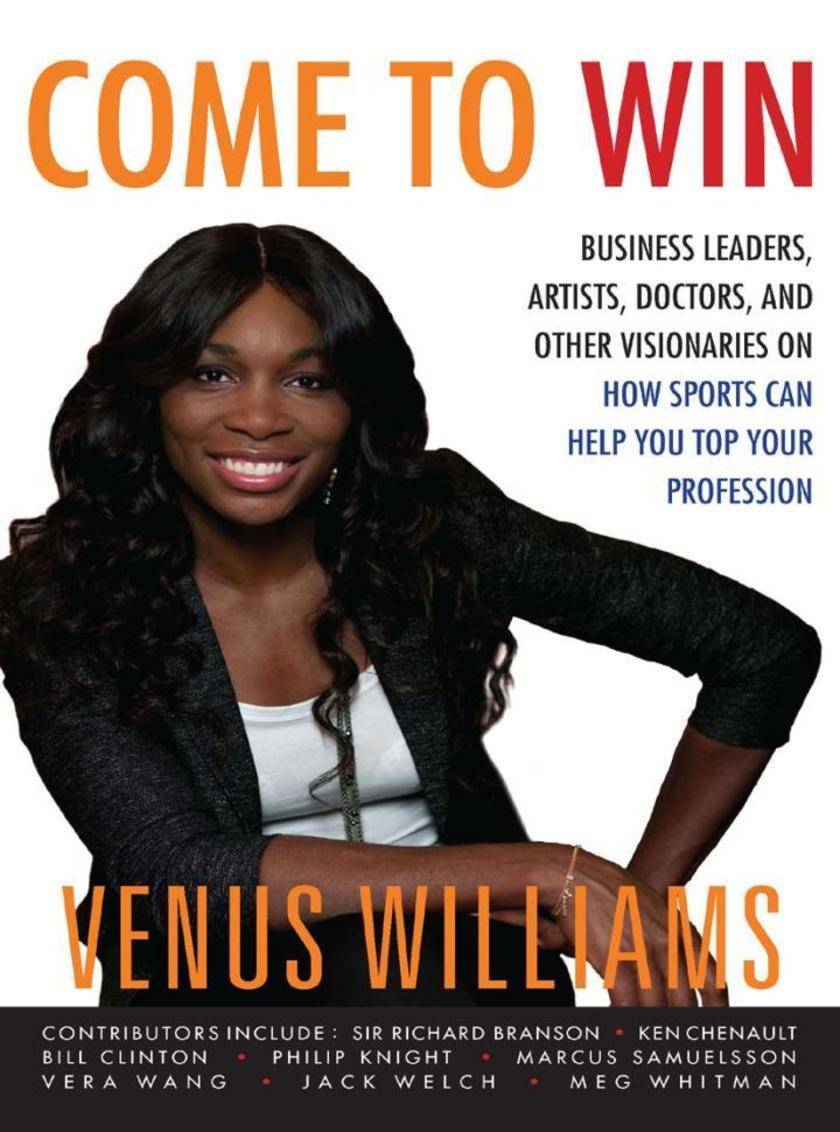
Come to Win
¥83.03
With Come to Win, Venus Williams, the multiple Grand Slam tennis champion and entrepreneur, along with an esteemed group of business leaders, politicians, and acclaimed artists, serves up a book of wisdom that shows how to turn a competitive spirit and athletic background into success off the playing field.Combining talent, drive, and hard work, Venus Williams has mastered the game of tennis. How will that drive serve her off the court in her post-tennis careerFor inspiration, Venus turned to nearly fifty business leaders, politicians, doctors, and artists, all of whom previously played competitive sports and who are now at the top of their professions, and asked them the essential questions: What principles that inspired you toward success as an athlete are helpful in lifeIn businessHere an A-list group of visionaries, including eBay's former CEO Meg Whitman, Nike's co-founder Philip Knight, stateswoman Condoleezza Rice, entrepreneur and former NBA player Earvin "Magic" Johnson, and designer Vera Wang, respond with a useful array of tips woven through anecdotes from their athletic past that have been instrumental in their post sports life success. Whether it's visualizing a course of action before it happens, turning losses into learning tools, figuring out who best plays what position in a team environment, or remembering that there is no substitute for preparation, the advice in Come to Win is knowledge every manager and aspiring professional will want to read. It's also an indispensable tool for parents and coaches looking to build confidence and discipline in their children.Venus also reflects on what she has learned from her own coaches, including her father and mother, and how their wisdom contributes to her own remarkable achievements, from her history-making tennis career to the launch of her own businesses V-Starr Interiors, an interior design firm, and EleVen, an athletic clothing line.

Black Pearls for Parents
¥78.55
Meditations, Affirmations, and Inspirations for African-American Parents Eric. V Copage's Black Pearls became an instant best-seller and was the winner of the Blackboard African-American Bestsellers award for best non-fiction book of 1994. Now he has created a book of inspirational thoughts, practical advice and pearls of wisdom specifically for African-American parents. The 365 quotes that begin each day's entry range from African proverbs to wisdom and insight from Ida B Wells, Martin Luther King, Jr, Maya Angelou, Oprah Winfrey, Willie Mays, Marva Collins and Martin Wright Edelman, among hundreds of other diverse and accomplished people of African descentEach day's entry covers a topic that affects parents (and their children) - including Role Models, Friends , Procrastination, Affection, Priorities, Independence, Stress, Faith, and hundreds more. From the daily inspirations and specific actions that will provide guidance, comfort and inspiration to African-American parents as they deal with the pressures and joys of raising children in today's world.Copyright 1995 by Eric Copage
Your Struggling Child
¥90.77
Here is a practical, compassionate book parents can turn to when they first recognize that their child has a "problem" but aren't sure what it is or where to seek help. At this very moment, millions of children across the U.S. are falling behind in school, acting out impulsively at home, having problems making friends, suffering dramatic mood swings, and more. Their parents are frustrated and afraid, aware that something's wrong, but not sure where to turn for help or how to cope with their child's behavior. "Is it a learning disorder, ADHD, anxiety disorder, or some combination?" they wonder. "Are these moods and behaviors normal or abnormalWill my child outgrow them?" This book by a noted neuropsychologist explains the different and overlapping symptoms of learning, mood, and behavior disorders and guides parents in getting the right diagnosis and treatment. Dr. Newby demystifies the process and empowers parents. Step by step, he explains: How to observe and chart your child's behavior a critical diagnostic tool What to expect during the evaluation and treatment process How to partner with medical and school professionals to assist your child and what to do when conflicts arise Clear and comprehensive, this supportive guide will be every parent's first line of defense in helping a troubled child.
The Attitude Is Everything Workbook
¥95.39
In this companion to Attitude Is Everything, mega successful motivational speaker Keith Harrell gives you practicall, step by step guidance on putting a good attitude to work in order to get ahead in life. Keith Harrell has taken his place among the motivational greats of the world. Regularly inspiring Fortune 500 companies with a 100 percent satisfaction rate, his message is simple yet powerful: attitude, whether positive or negative, has the power to impact on an organization's or individual's success. Based on his successful Attitude Is Everything, this workbook is the essential to guide to transforming Harrell's strategies into success. In a series of clear step by step exercises and instructions, Harrell teaches readers techniques for maintaining a powerful positive attitude in order to get ahead in life.
From This Day Forward
¥94.10
After thirty years together, Cokie and Steve Roberts know something about marriage and after thirty distinguished years in journalism, they know how to write about it.In From This Day Forward, Cokie and Steve weave their personal stories of matrimony into a wider reflection on the state of marriage in American today.Here they write with the same conversational style that catapulted Cokie's We Are Our Mother's Daughters to the top of the New York Times bestseller list. They ruminate on their early worries about their different faiths -- she's Catholic, he's Jewish -- and describe their wedding day at Cokie's childhood home. They discuss the struggle to balance careers and parenthood, and how they compromise when they disagree. They also tell the stories of other American marriages: that of John and Abigail Adams, and those pioneers, slaves and immigrants. They offer stories of broken marriages as well, of contemporary families living through the "divorce revolution". Taken together, these tales reveal the special nature of the wedding bond in America. Wise and funny, this book is more than an endearing chronicle of a loving marriage -- it is a story of all husbands and wives, and how they support and strengthen each other.


