


 购物车
购物车 个人中心
个人中心
Fundamentele comunic?rii interpersonale
¥48.97
Puericultur? ?i pediatrie pentru asisten?i medicali ofer? elevilor ?colilor postliceale sanitare un instrument de studiu al particularit??ilor fiziologice ?i patologice ale copilului, necesar identific?rii nevoilor fundamentale ale copilului s?n?tos ?i bolnav ?i aplic?rii tehnicilor specifice de ?ngrijire a acestuia.Aceast? carte se dore?te a fi un ghid teoretic pentru elevii ?i asisten?ii medicali care ?ngrijesc copii ?n diverse perioade de dezvoltare, pornind de la premisa c? un copil nu este un adult ?n miniatur?.Lucrarea este astfel conceput? ?nc?t informa?ia oferit? s? acopere cerin?ele programei analitice, s? fie simplu de accesat ?i s? fie u?or de ?n?eles.
Scriitori evrei din Rom?nia
¥46.36
Pornind de la rezultatele unor cercet?ri ?i experimente ?ndelungate ?n domeniul alimenta?iei, F?nic?-Voinea Ene, renumit specialist ?n medicin? complementar?, ne demonstreaz? c? numai o diet? naturist? ne poate conduce spre o pierdere ?n greutate lesnicioas?, cu pu?ine frustr?ri ?i f?r? s? ne afecteze s?n?tatea, fiindc? ea presupune consumul alimentelor integrale, a?a cum se g?sesc ele pe planeta aceasta de milioane de ani, ?i care au suferit pu?ine prelucr?ri termice sau chimice. Este o diet? bazat? pe respectarea unor reguli specifice: meniul zilnic trebuie s? con?in? numai alimente cu calorii negative, trebuie s? se consume doar ape minerale alcaline plate ?i alimente alcaline; se pune accent pe consumul de gr?simi nesaturate, carbohidra?i cu indice glicemic sc?zut, nu trebuie s? se utilizeze nutrimente glucido-lipidice ?i nici asocieri de glucide cu lipide la aceea?i mas?...
The Inventions, Researches and Writings of Nikola Tesla: Complete & Illustrated
¥28.61
The electrical problems of the present day lie largely in the economical transmission of power and in the radical improvement of the means and methods of illumination. To many workers and thinkers in the domain of electrical invention, the apparatus and devices that are familiar, appear cumbrous and wasteful, and subject to severe limitations. They believe that the principles of current generation must be changed, the area of current supply be enlarged, and the appliances used by the consumer be at once cheapened and simplified. The brilliant successes of the past justify them in every expectancy of still more generous fruition.??The present volume is a simple record of the pioneer work done in such departments up to date, by Mr. Nikola Tesla, in whom the world has already recognized one of the foremost of modern electrical in-vestigators and inventors. No attempt whatever has been made here to emphasize the importance of his researches and discoveries. ??Great ideas and real inventions win their own way, determining their own place by intrinsic merit. But with the conviction that Mr. Tesla is blazing a path that electrical development must follow for many years to come, the compiler has endeavored to bring together all that bears the impress of Mr. Tesla's genius, and is worthy of preservation. Aside from its value as showing the scope of his inventions, this volume may be of service as indicating the range of his thought. There is intellectual profit in studying the push and play of a vigorous and original mind.?
Bütünsel Bak??la Canl?l?k-II: "Madde ve Enerji, Beden ve Ruh ?li?kisi"
¥0.01
alardan beridir insanln duygularn, rüyalarn, davranlarn, düüncelerini, hemen her eyini etkileyen ve algland kadaryla sorduu baz sorularn günümüz dünyasnda anlalmaya, kaplarnn aralanp bilincimizi yeniden ekillendirmeye baladn grürken, yeni sorular oluturmaya baladmz grüyoruz. Bugünlere kadar hepimizin merak ettii sorularn bazlar unlardr: - Canllk nedir - Duygularmz nedir - Ben neyim Bunlar alglayp yorumlayabildiimiz bilin nedir - Beden ile düünce zamanda nasl balanmtr - Düüncelerimi, grdüklerimi, gzleyen nedir - Uzay nedir Nasl var olmutur - Evrende neyin ifadesiyiz - Zaman nedir - lümden sonras var mdr Ruh olarak tanmladk, zihin-beden arasnda balanty kurmaya, duygular anlamaya alrken. Bilincin, algnn ve tüm bunlarla nasl bir ilikisi olabileceini sorguladk. Genelde yle oluyor ya bütünün nce paralarn anlamaya, paralara ayrp anlamaya almann, sorunlarn izlerini sürüp bütünle olan etkileimini grmeye yneliyoruz. Zamann iinde zaman geirmemize ramen, bilincimizle, canllmzla nasl balantl olduunu grmezden geldik. Günümüz dünyasnn ulat bilgi, yaamsal deneyimlerin kaydedilip aktarlmas, izlediimiz filmlerden tutun da, deneyimlerimizin hzl etkileimiyle zaman aralklarn orduk. Snr sistemimize benzeyen internet alar oluturduk. nsanlk olarak yapay zekalar gelitirdik. Hücre ile beden benzeri; canlyla tüm canlln, ekosistemin, varln etkileim rüntüsü olduunu anlamaya baladk. Belki de oluturduumuz yeni anlamlar, gelecekte oluacaklarn paralardr. Deiim devam ediyor. Grünen o ki, canllar bu evrenin en ileri evrensel alanlardr. Soralm kendimize; Evrende canllktan daha anlaml bir ey var mdr
Да ли ?е Срби?а шугава
¥27.96
Автор книги?– кандидат медицинских наук, врач с?многолетним опытом – просто и?понятно рассказывает о?здоровье и?отвечает на?самые распространенные вопросы. ? Предвестники серьезных недугов ??Факторы риска заболеваний сердца ??Тест на?определение склонности к?гипертонии ? Симптомы и диагностика распространенных заболеваний ??При каких признаках нужно немедленно обращаться к?врачу ??Традиционные и?народные способы профилактики и?лечения артериальной гипертензии, ишемической болезни, стенокардии, аритмии, сердечной недостаточности и?др. ??Лечение травами ??Лечебное питание ??Лечебная физкультура и?многое другое. Avtor knigi?– kandidat medicinskih nauk, vrach s?mnogoletnim opytom – prosto i?ponjatno rasskazyvaet o?zdorov'e i?otvechaet na?samye rasprostranennye voprosy. ? Predvestniki ser'eznyh nedugov ??Faktory riska zabolevanij serdca ??Test na?opredelenie sklonnosti k?gipertonii ? Simptomy i diagnostika rasprostranennyh zabolevanij ??Pri kakih priznakah nuzhno nemedlenno obrashhat'sja k?vrachu ??Tradicionnye i?narodnye sposoby profilaktiki i?lechenija arterial'noj gipertenzii, ishemicheskoj bolezni, stenokardii, aritmii, serdechnoj nedostatochnosti i?dr. ??Lechenie travami ??Lechebnoe pitanie ??Lechebnaja fizkul'tura i?mnogoe drugoe.
Сила ?нтроверт?в: Тих? люди у св?т?, що не може мовчати
¥35.15
Disciplina affascinante e misteriosa, la Selfica permette di realizzare oggetti in metallo, inchiostri e colori in grado di interagire positivamente con l’ambiente e permettono a chi li possiede di aumentare il benessere personale, la sensibilità, l’equilibrio psicofisico. Le “self”– siano esse gioielli, strutture per l’ambiente o quadri – aiutano chi le usa a conoscere meglio se stessi e a entrare in contatto con dimensioni energetiche e campi di informazioni differenti da quelli in cui siamo normalmente immersi. La Selfica – sviluppata attraverso le ricerche e gli insegnamenti di Oberto Airaudi, Falco Tarassaco, ispiratore di Damanhur, Federazione di Comunità – è in realtà un’arte-scienza antichissima, già conosciuta da molti popoli del passato. Questo libro racconta le sperimentazioni di numerosi ricercatori e appassionati, raccolte dall’Autrice, protagonista a sua volta di molte esperienze appassionanti. ? un viaggio in una nuova dimensione dove tempo, spazio, emozione e memoria rispondono a leggi molto diverse da quelle a cui siamo abituati...
Mon Agent
¥11.77
Realmente, o estudo dos fluidos e das for?as radiantes leva, necessariamente, às formas invisíveis da vida, pois a elas se relaciona fortemente. E por aí que a Ciência nova chegará a reconhecer a existência do mundo dos espíritos e que as imensas perspectivas do Além se abrir abrir?o diante dela.'
The Valley of Fear: Illustrated
¥18.74
Darwin, ?nsan dahil tüm canl? türlerinin do?al se?i-lim yoluyla bir ya da birka? ortak ata-dan evrildi?ini ?ne sürmü? ve o günün ?artlar?na g?re bu teoriyi destekleyen pek ?ok kan?t sunmu?tur. Darwin'in fikirleri üzerine in?a edilen modern evrim teorisi, bugün biyoloji biliminin temeli ve birle?tirici ??esidir. Evrimin ger?ekle?ti?i ger?e?i Charles Darwin'in ya?ad??? d?nemde, do?al se?ilim teorisinin evrimin ana a??klamas? oldu?u ise 1930'lu y?llarda bilim dünyas? taraf?ndan kabul g?rmü?tür. Darwin'in orijinal teorileri modern evrimsel biyolojinin temelini olu?turmakta, hayat?n ?e?itlili?i üzerine birle?tirici bir mant?ksal a??klama sunmaktad?r. Darwin'in Hayat? da dahil Evrim teorisi ve türlerin k?keni eserini tüm y?nleriyle ele alan bu ba?ucu eserini mutlaka okuman?z? ?neriyoruz.. DARW?N K?MD?R? ?nsan dahil tüm?canl??türlerinin?do?al se?ilim?yoluyla bir ya da birka??ortak atadan?evrildi?ini??ne sürmü? ve o günün ?artlar?na g?re bu teoriyi destekleyen pek ?ok kan?t sunmu?tur.?Darwin'in fikirleri üzerine in?a edilen modern?evrim teorisi, bugün?biyoloji?biliminin temeli ve birle?tirici ??esidir. Evrimin ger?ekle?ti?i ger?e?i Charles Darwin'in ya?ad??? d?nemde, do?al se?ilim teorisinin evrimin ana a??klamas? oldu?u ise 1930'lu y?llarda bilim dünyas? taraf?ndan kabul g?rmü?tür.?Darwin'in orijinal teorileri modern evrimsel biyolojinin temelini olu?turmakta, hayat?n ?e?itlili?i üzerine birle?tirici bir mant?ksal a??klama sunmaktad?r. Darwin'in?do?a tarihine?duydu?u ilgi, ?nce?Edinburgh ?niversitesi'nde?t?p, sonra?Cambridge ?niversitesi'nde?teoloji?okurken geli?ti. Beagle?gemisinde yapt??? be? senelik yolculuk s?ras?nda, zaman?n me?hur jeolo?u?Charles Lyell'?n ortaya att???, ge?mi?teki jeolojik süre?lerin bugünkülerle ayn? oldu?unu savunan teoriyi destekleyecek pek ?ok g?zlem yapt? ve iyi bir jeolog olarak ünlendi.?Ayn? yolculukta, canl?lar?n co?rafi da??l?m? ve?fosiller?üzerine yapt??? dikkatli g?zlemler sonucunda, türlerin birbirine d?nü?ümüyle ilgilenmeye ba?lad? ve 1838'de?do?al se?ilim?fikrini geli?tirdi.?Daha ?nce benzer fikirlerin "sapk?nl?k" olarak nitelendirildi?ini ve bast?r?ld???n? g?rmü? oldu?undan, uzun süre fikirlerini en yak?n arkada?lar? d???nda kimseye a?mad?.?Olas? itirazlara en iyi ?ekilde cevap verebilmek i?in ara?t?rma yapmaya ve kan?t toplamaya ba?lad?.?1858'de?Alfred Russell Walla-ce'dan ald??? bir mektubu okuyunca, Wallace-'?n da kendisininkine benzer bir teori geli?tirdi?ini anlad?, ve nihayet teorisini yay?mlamaya karar verdi. 1859'da yay?mlad????On the Origin of Speci-es?(Türlerin K?keni ?zerine) adl? kitab?, canl?lar?n ortak atalardan evrilerek ?e?itlendi?i fikrinin geni? kabul g?rmesini sa?lad?. Daha sonra yay?mlad????The Descent of Man, and Selection in Relation to Sex?(?nsan?n Türeyi?i, ve Cinsiyete Mahsus Se?ilim) kitab?nda insan evrimini ve cinsel se?ilim fikrini inceledi.?The Expression of the Emotions in Man and Animals (?nsan ve Hayvanlarda Duygular?n ?fadesi) adl? kitab?nda ise insanlar?n ve hayvanlar?n duygular?n? ifade edi? ?ekilleri aras?ndaki benzerlikleri ortaya koydu.
A Fair Cop
¥63.18
The true story of a young police officer’s imprisonment for a crime he did not commit It was Michael Bunting's life ambition to follow in his father's footsteps and become a police officer. But six years after his family watch him pass out and begin his life's dream, he is serving a sentence for a crime he didn't commit. This is his story. Beaten almost senseless as he tried to arrest a violent criminal, the 23-year-old PC was left with head injuries and blurred vision that took him months to recover from. Back at work he was astounded to learn that his attacker had filed a complaint against him and that the Police Discipline and Complaints Department were following up the allegation. Two years later he was found guilty of common assault against his assailant and received a prison sentence that left him living his devastated life amongst the criminals he had previously sought to keep off the streets. Hard-hitting and at times heart-breaking the book is a graphic account of life behind bars for a policeman in one of England's hardest prisons. An extract from A Fair Cop: "The prisoner arrived once more with the trolley and placed the plate of food on to my hatch. 'Bunting,' he shouted pleasantly. I wasn't fooled. 'Thanks,' I said, as I walked across the cell to collect it. As I put my hand out to reach for the plate he snatched it away. He held it up to the hatch and peered through at me. 'PC Bunting, isn't it?' he asked, and then took a deep breath to muster as much saliva from the back of his throat as he could. With one swift movement he spat a big glob in to the middle of the food. The white phlegm floated around in brown gravy. 'Hey lads, I'm feeding the pig,' he said. With this, two other prisoners came to my cell hatch. They looked at me, sniggering. They then spat in my food too. The first prisoner put the plate on the hatch and gestured for me to come closer. 'You're in our territory now, you f***ing filth, and we're gonna f***ing carve you up.'

The Dolce Vita Diaries
¥47.48
A deliciously different travelogue In 2005, Cathy and Jason threw in successful careers as TV presenters and producers to become olive farmers in Italy. With their one year old daughter and Italian dictionary in tow, they found themselves in the middle of a European nowhere untouched by modernity. They were on a steep learning curve in more-or-less everything – finding out how to prune an olive tree so that a sparrow can pass through its branches, learning what beauty products are de rigeur in the changing rooms of a local Italian football team, being trained, by a local Italian choir, how to sing in English but with an Italian accent – and learning the rigorous rules of when one is allowed to consume a cappuccino. Armed with their indefatigable love of food, they headed off many a potentially tricky situation by cooking their way out of it, a sure route to the heart of any Italian. They discover that olive farming is dominated by the big boys and desperate to turn their new home into a way of making a living they cast around for ideas of how they can do so. A flash of inspiration led them to launch an 'Adopt-an-Olive-Tree' scheme. For a fee buyers could adopt a tree, receive produce from it and even go and visit it to give it a hug. The scheme became hugely popular with trees selling out way ahead of expectations. A contract with Selfridges followed and suddenly Cathy and Jason's dream is realised. Or nearly anyway. It's a hard slog and they meet every challenge with fortitude and humour but what they hadn't expected was that the biggest challenge would be the quiet of the countryside. Soon they find themselves hankering for the sounds and stench of the city and facing a difficult decision on what they should do next.
All Edge
¥329.62
Work is changing. Speed and flexibility are more in demand than ever before thanks to an accelerating knowledge economy and sophisticated communication networks. These changes have forced a mass rethinking of the way we coordinate, collaborate, and communicate. Instead of projects coming to established teams, teams are increasingly converging around projects. These "e;all-edge adhocracies"e; are highly collaborative and mostly temporary, their edge coming from the ability to form links both inside and outside an organization. These nimble groups come together around a specific task, recruiting personnel, assigning roles, and establishing objectives. When the work is done they disband their members and take their skills to the next project.Spinuzzi offers for the first time a comprehensive framework for understanding how these new groups function and thrive. His rigorous analysis tackles both the pros and cons of this evolving workflow and is based in case studies of real all-edge adhocracies at work. His provocative results will challenge our long-held assumptions about how we should be doing work.

Worthy of the Cause for Which They Fight
¥263.30
Worthy of the Cause for Which They Fight chronicles the experiences of a well-educated and articulate Confederate officer from Arkansas who witnessed the full evolution of the Civil War in the Trans-Mississippi Department and western theater. Daniel Harris Reynolds, a community leader with a thriving law practice in Chicot County, entered service in 1861 as a captain in command of Company A of the First Arkansas Mounted Rifles. Reynolds saw action at Wilson's Creek and Pea Ridge before the regiment was dismounted and transferred to the Army of Tennessee, the primary Confederate force in the western theater. As Reynolds fought through the battles of Chickamauga, Atlanta, Nashville, and Bentonville, he consistently kept a diary in which he described the harsh realities of battle, the shifting fortunes of war, and the personal and political conflicts that characterized and sometimes divided the soldiers. The result is a significant testimonial offering valuable insights into the nature of command from the company to brigade levels, expressed by a committed Southerner coming to grips with the realities of defeat and the ultimate demoralization of surrender.
Subject of Murder
¥241.33
The subject of murder has always held a particular fascination for us. But, since at least the nineteenth century, we have seen the murderer as different from the ordinary citizen-a special individual, like an artist or a genius, who exists apart from the moral majority, a sovereign self who obeys only the destructive urge, sometimes even commanding cult followings. In contemporary culture, we continue to believe that there is something different and exceptional about killers, but is the murderer such a distinctive typeAre they degenerate beasts or supermen as they have been depicted on the page and the screenOr are murderers something else entirely?In The Subject of Murder, Lisa Downing explores the ways in which the figure of the murderer has been made to signify a specific kind of social subject in Western modernity. Drawing on the work of Foucault in her studies of the lives and crimes of killers in Europe and the United States, Downing interrogates the meanings of media and texts produced about and by murderers. Upending the usual treatment of murderers as isolated figures or exceptional individuals, Downing argues that they are ordinary people, reflections of our society at the intersections of gender, agency, desire, and violence.
The Emperor of All Maladies
¥65.94
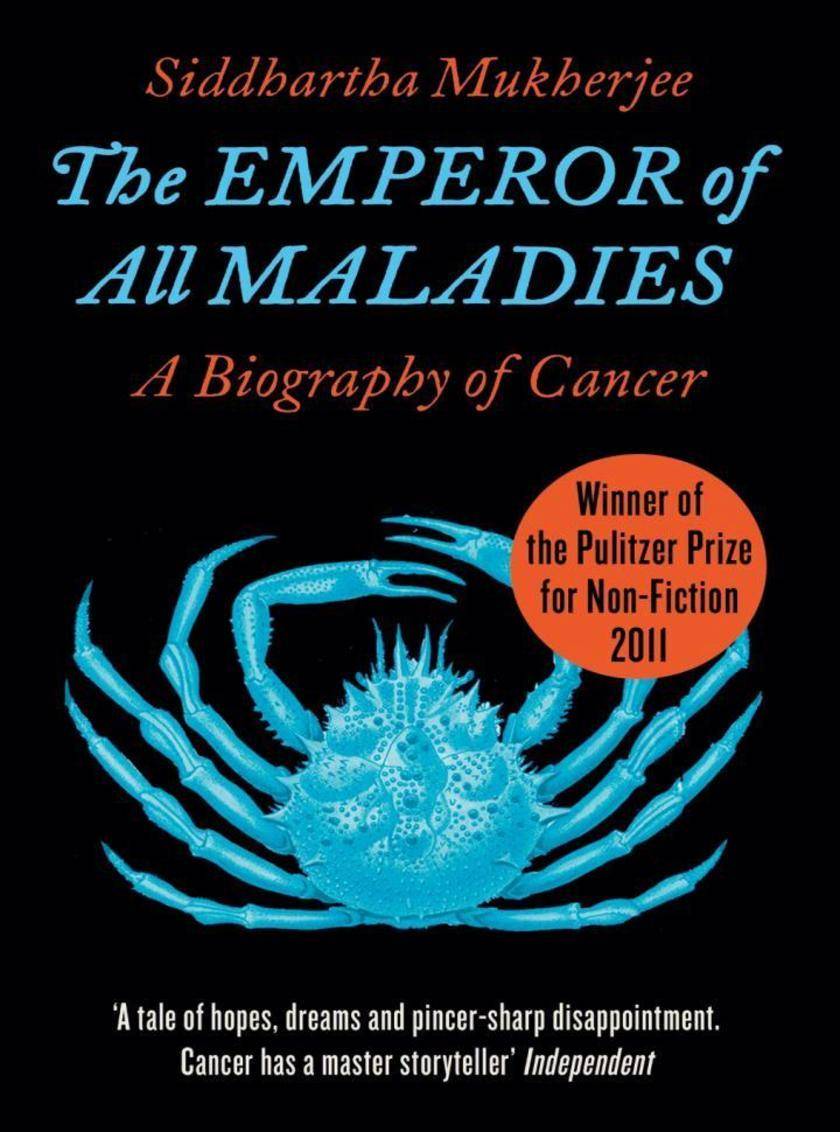
A magnificent, beautifully written biography of cancer - from its first documented appearances thousands of years ago through the epic battles to cure, control and conquer it to a radical new understanding of its essence. In The Emperor of All Maladies, Siddhartha Mukherjee, doctor, researcher and award-winning science writer, examines cancer with a cellular biologist’s precision, a historian’s perspective, and a biographer’s passion. The result is an astonishingly lucid and eloquent chronicle of a disease humans have lived with - and perished from - for more than five thousand years. The story of cancer is a story of human ingenuity, resilience and perseverance, but also of hubris, arrogance and misperception, all leveraged against a disease that, just three decades ago, was thought to be easily vanquished in an all-out ‘war against cancer’. Mukherjee recounts centuries of discoveries, setbacks, victories and deaths, told through the eyes of predecessors and peers, training their wits against an infinitely resourceful adversary. From the Persian Queen Atossa, whose Greek slave cut off her malignant breast, to the nineteeth-century recipient of primitive radiation and chemotherapy and Mukherjee’s own leukemia patient, Carla, The Emperor of All Maladies is about the people who have soldiered through toxic, bruising, and draining regimes to survive and to increase the store of human knowledge. Riveting and magesterial, The Emperor of All Maladies provides a fascinating glimpse into the future of cancer treatments and a brilliant new perspective on the way doctors, scientists, philosophers and lay people have observed and understood the human body for millennia.

Big Bang
¥80.25
The bestselling author of Fermat’s Last Theorem and The Code Book tells the story of the brilliant minds that deciphered the mysteries of the Big Bang. A fascinating exploration of the ultimate question: how was our universe created? Albert Einstein once said: ‘The most incomprehensible thing about the universe is that it is comprehensible.’ Simon Singh believes geniuses like Einstein are not the only people able to grasp the physics that govern the universe. We all can. As well as explaining what the Big Bang theory actually is and why cosmologists believe it is an accurate de*ion of the origins of the universe, this book is also the fascinating story of the scientists who fought against the established idea of an eternal and unchanging universe. Simon Singh, renowned for making difficult ideas much less daunting than they first seem, is the perfect guide for this journey. Everybody has heard of the Big Bang Theory. But how many of us can actually claim to understand it? With characteristic clarity and a narrative peppered with anecdotes and personal histories of those who have struggled to understand creation, Simon Singh has written the story of the most important theory ever.
Marine Macroecology
¥394.36
Pioneered in the late 1980s, the concept of macroecology-a framework for studying ecological communities with a focus on patterns and processes-revolutionized the field. Although this approach has been applied mainly to terrestrial ecosystems, there is increasing interest in quantifying macroecological patterns in the sea and understanding the processes that generate them. Taking stock of the current work in the field and advocating a research agenda for the decades ahead, Marine Macroecology draws together insights and approaches from a diverse group of scientists to show how marine ecology can benefit from the adoption of macroecological approaches.Divided into three parts, Marine Macroecology first provides an overview of marine diversity patterns and offers case studies of specific habitats and taxonomic groups. In the second part, contributors focus on process-based explanations for marine ecological patterns. The third part presents new approaches to understanding processes driving the macroecolgical patterns in the sea. Uniting unique insights from different perspectives with the common goal of identifying and understanding large-scale biodiversity patterns, Marine Macroecology will inspire the next wave of marine ecologists to approach their research from a macroecological perspective.
Biology's First Law
¥211.90
So certain is this that we may boldly state that it is absurd for human beings even to attempt it, or to hope that perhaps some day another Newton might arise who would explain to us, in terms of natural laws unordered by intention, how even a mere blade of grass is produced.Kant, Critique of Judgment (1790)
Falling Upwards:How We Took to the Air
¥84.66
Lose yourself in the clouds with bestselling and prize-winning biographer and science writer Richard Holmes in this glorious history of hot-air ballooning. Hot-air balloons have drifted through Richard Holmes’s work for many years. And now, in this heart-lifting book he tells the story of these ineffably romantic floating machines and the reckless invention of the adventurers who flew them. His subject is flight itself and the pioneer generation of rival aviators. Ballooning offered a new vision of the earth. The world pondered for the first time reliable weather prediction, observation of the stars from an aerial point of view and the exploration of remote continents. Those in previous centuries who dreamt of flight believed it would open up the secrets of heaven. In fact, as Richard Holmes shows, it revealed the secrets of the world beneath.
Scrabble Secrets (Collins Little Books)
¥44.05
Inside this little book lie the secrets of Britain’s only ever Scrabble World Champion.
Killing Us Softly:The Sense and Nonsense of Alternative Medicine
¥80.25
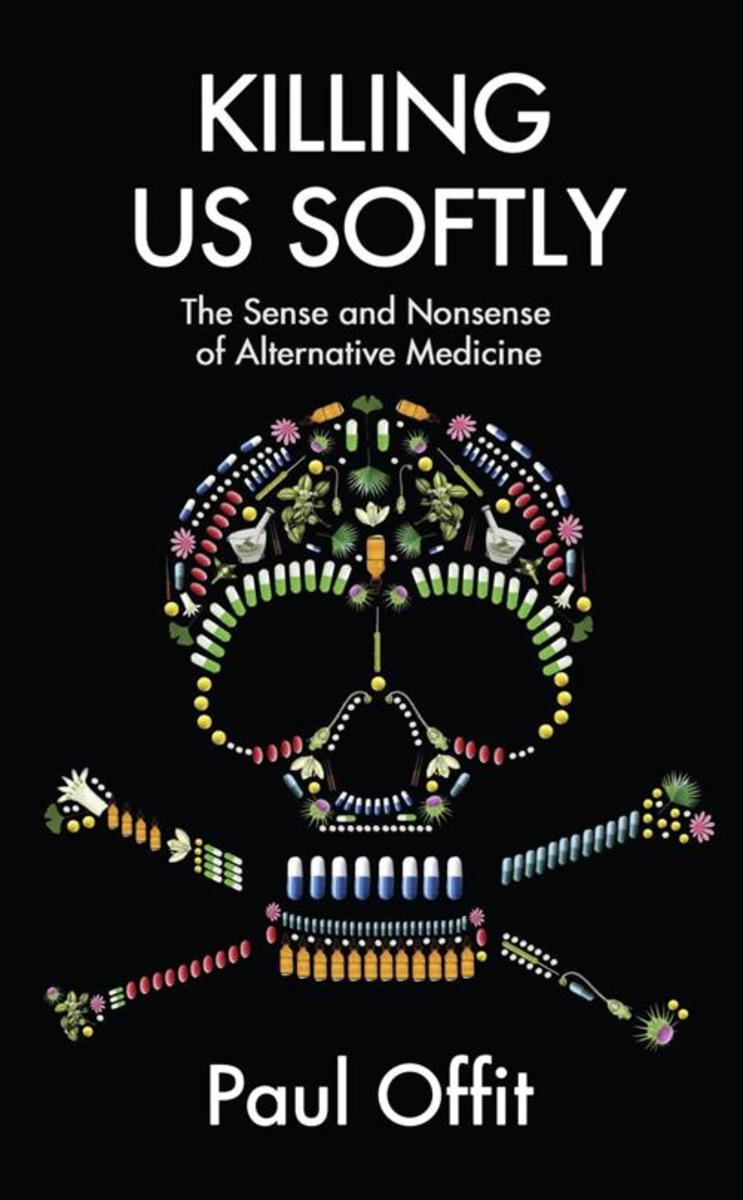
More people than ever are using alternative medicine. But, as expert Dr Paul Offit explains, these untested therapies are ineffective, expensive and even deadly. Now that homeopathic remedies are offered on the Nhs, it's clear that various therapies once considered alternative or complementary, have become mainstream - prescribed to burn fat, shrink prostates, alleviate colds, reduce stress, eliminate pain and prevent cancer. At the same time, uptake of effective vaccines such as Mmr has fallen - a disturbing trend which, in the case of the Mmr, has lead to a sharp rise in the number of measles cases. In 'Killing Us Softly' Paul Offit reveals, alternative medicine - an unregulated industry under no obligation to prove its claims or admit its risks - can actually be very harmful. In 'Killing Us Softly' he exposes how: * Homeopathic asthma preparations and bogus cancer cures have replaced life-saving medicines. * Acupuncture needles have pierced hearts, lungs, and livers and transmitted viruses, including hepatitis B, hepatitis C and Hiv. * Chiropractic manipulations have torn arteries. * Megavitamins increase the risk of cancer and heart disease-a fact well known to scientists but virtually unknown to the public. Using real-life case histories to back his argument, Dr Offit shows us why any medical treatment - alternative or conventional - must be properly evaluated. 'There's no such thing as alternative medicine. There's only medicine that works and medicine that doesn't.'
Richard Owen
¥270.76
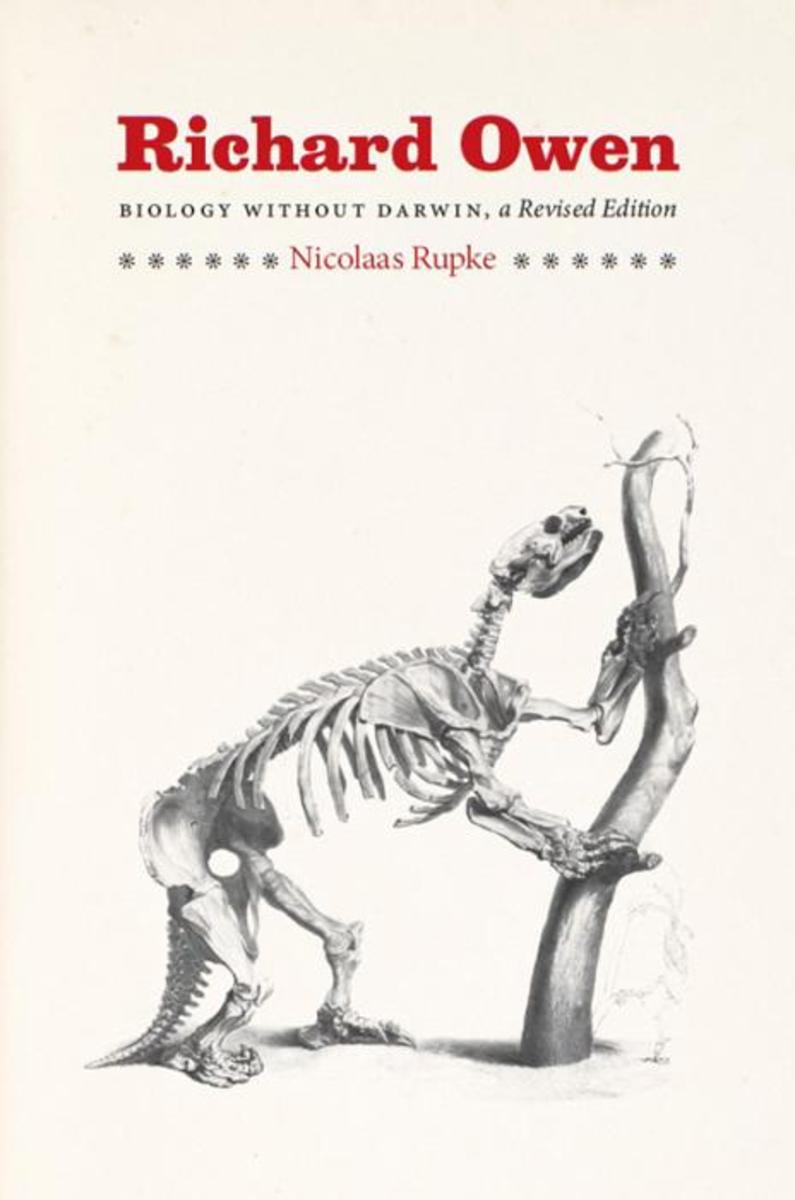
In the mid-1850s, no scientist in the British Empire was more visible than Richard Owen. Mentioned in the same breath as Isaac Newton and championed as Britain's answer to France's Georges Cuvier and Germany's Alexander von Humboldt, Owen was, as the Times declared in 1856, the most "e;distinguished man of science in the country."e; But, a century and a half later, Owen remains largely obscured by the shadow of the most famous Victorian naturalist of all, Charles Darwin. Publicly marginalized by his contemporaries for his critique of natural selection, Owen suffered personal attacks that undermined his credibility long after his name faded from history.With this innovative biography, Nicolaas A. Rupke resuscitates Owen's reputation. Arguing that Owen should no longer be judged by the evolution dispute that figured inonly a minor part of his work, Rupke stresses context, emphasizing the importance of places and practices in the production and reception of scientific knowledge. Dovetailing with the recent resurgence of interest in Owen's life and work, Rupke's book brings the forgotten naturalist back into the canon of the history of science and demonstrates how much biology existed with, and without, Darwin


