


 购物车
 个人中心

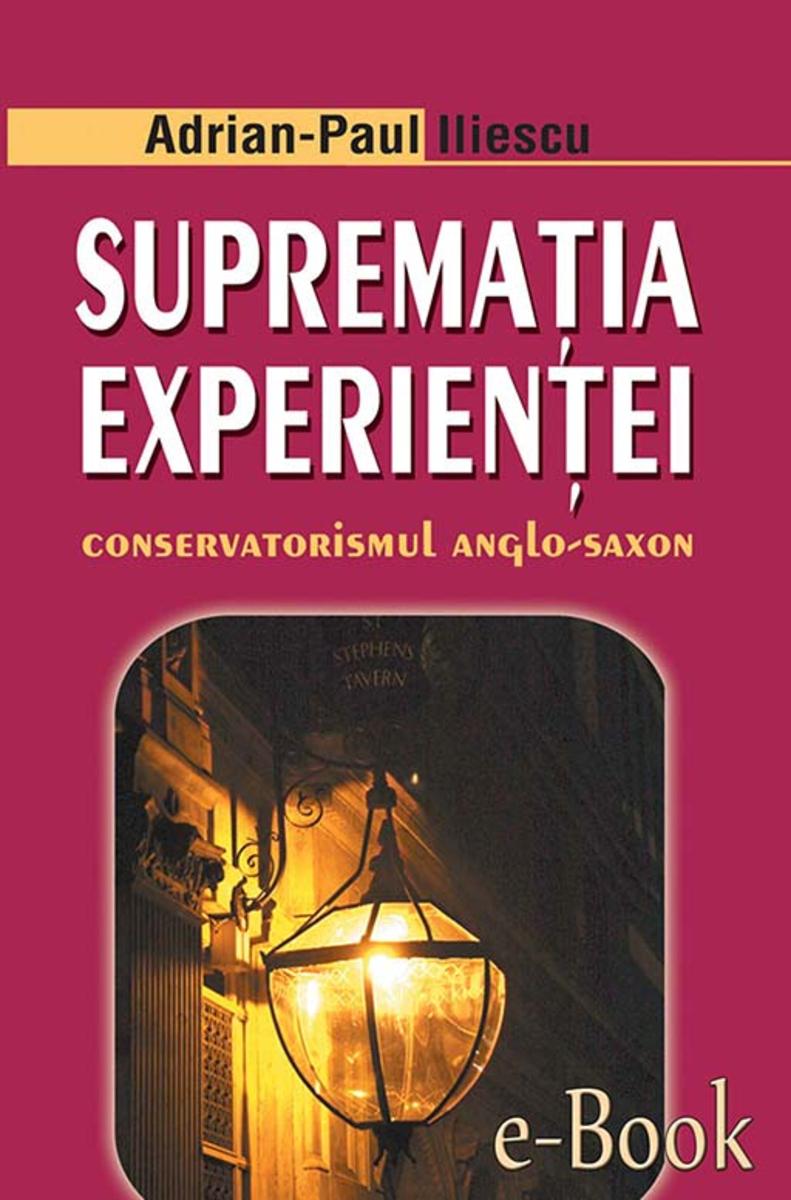
Suprema?ia experien?ei. Conservatorismul anglo-saxon
¥57.14
Via?a fiec?ruia dintre noi se desf??oar? pe fundalul unor nara?iuni?sau teorii filosofice discrete ?i insesizabile, care ne ofer? sens ?i ne ?ndrum? ?n momentele de cump?n?.Au o istorie fascinant? ?i uneori extrem de agitat?, care st? m?rturie?pentru str?daniile noastre de a ?n?elege lumea ?i de a o transforma ?ntr-un mediu familiar.Cartea de fa?? ne prezint? istoriile a trei dintre aceste nara?iuni,?cunoscute mai mult filosofilor, cu toate c? ele ?ncearc? s? ofere r?spuns?la ?ntreb?ri tulbur?toare ?i de?o importan?? cov?r?itoare pentru?noi to?i: de ce exist? lumea, ?n ce const? identitatea persoanei, ce?este realitatea.
ALL, biografia unui succes
¥24.44
Charles Sanders Peirce (1839-1914) este o figur? important? a filosofiei secolului XIX ?i unul dintre prefa?atorii principalelor curente de g?ndire din secolul XX, fiind considerat fondatorul pragmatismului american. Cele dou? eseuri prezentate aici, primele din seria cunoscut? sub numele Ilustr?ri ale logicii ?tiin?ei, sunt reprezentative pentru opera sa, caracterizat? de profunzimi ?i subtilit??i specifice unui g?nditor care beneficiaz? ?i de preg?tirea unui om de ?tiin?a.Cu toate c? sunt uneori pur abstracte, observa?iile privitoare la convingeri ?i idei r?m?n, indiferent de sistem, puncte principale de sprijin pentru distinc?ia ?ntre g?ndirea s?n?toas? ?i cea viciat?.“ Este groaznic s? vezi cum o singur? idee neclar?, o singur? formul? f?r? ?n?eles, care se furi?eaz? ?n capul unui t?n?r, va ac?iona uneori ca un obstacol de materie inert? ?ntr-o arter?, ?mpiedic?nd circula?ia ?n creier ?i condamn?ndu-?i victima spre ofilire ?n plenitudinea vigorii intelectuale ?i ?n mijlocul abunden?ei intelectuale.“ - Charles Sanders Peirce
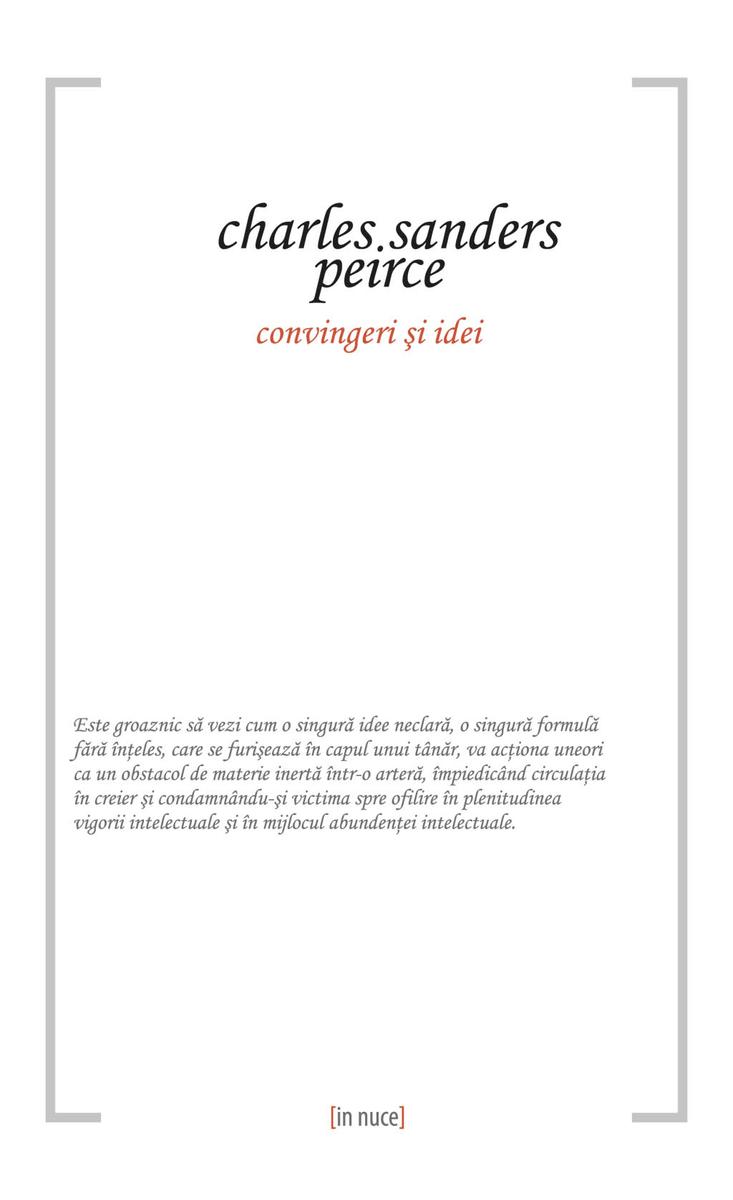
Convingeri ?i idei
¥24.44
Critic erudit ?i pamfletar de for??, Paul Zarifopol (1874-1934) a fost un fin observator al omului ?i al fibrei care alc?tuie?te ?es?turile sociale profunde. Volumul de fa?? cuprinde eseuri care au r?mas de o actualitate acut?, chiar ?i la aproape un secol dup? ce au fost scrise.Coroziv ?i doct, discursul aduce ?n fa?a cititorului concepte esen?iale pentru morala ?i politica mai mult sau mai pu?in balcanice ale Rom?niei interbelice. Lumina ?n care ne sunt prezentate tipul politic ?i geniul organizator, de pild?, ne ofer? at?t senza?ia unei glacia?iuni temporale, c?t ?i pe aceea a unei familiarit??i inefabile.

Will Grayson, Will Grayson
¥73.49
Pornind de la leg?tura natural? care se creeaz? ?ntre mam? ?i copil, D.W. Winnicott exploreaz? o serie de probleme cotidiene din via?a unui bebelu? ?i a mamei lui, cum ar fi hr?nirea, pl?nsul ?i joaca, grijile, primele mi?c?ri spre independen??, precum ?i, mai t?rziu, probleme serioase, cum sunt furtul ?i minciuna. Importan?a mamei la ?nceputul vie?ii, timiditatea, educa?ia sexual? ?n ?coal? ?i r?d?cinile agresivit??ii sunt expuse ?ntr-o manier? direct?, accesibil? ?i prietenoas?. Pe parcursul fiec?rui capitol, Winnicott scoate ?n eviden?? abilit??ile ?nn?scute ale mamei ?i ale p?rin?ilor ?n general ?i face diferen?a ?ntre acestea ?i deprinderile care trebuie achizi?ionate de-a lungul timpului de c?tre cei care cresc ?i educ? un copil. Capacitatea voastr? de a ?ti ceea ce este real ?i ceea ce nu este real ?i este de mare ajutor copilului din toate punctele de vedere, pentru c? el nu reu?e?te s? ?n?eleag? dec?t treptat c? lumea nu este a?a cum ne o imagin?m ?i c? imagina?ia nu este chiar ca lumea real?. Dar fiecare are nevoie de cealalt?. ?ti?i prea bine c? primul obiect pe care ?l iube?te bebelu?ul – o buc??ic? de p?tur? sau o juc?rie moale –?nseamn? pentru el o parte din propria persoan? ?i, dac? i o lua?i sau o da?i la sp?lat, este o tragedie. C?nd bebelu?ul ?ncepe s? arunce obiectul iubit ?i alte obiecte (a?tept?ndu-se, desigur, s? le ridice cineva ?i s? i le dea ?napoi), atunci ?ti?i c? a venit momentul ?n care ave?i ?i voi permisiunea de a pleca ?i a v? ?ntoarce. Unele persoane cred c? un copil este ca lutul ?n m?inile unui olar. Ele ?ncep s? ?l modeleze ?i se simt responsabile de ceea ce vor ob?ine. Total gre?it. Dac? asta este ceea ce sim?i?i, ve?i fi cople?i?i de o responsabilitate pe care nu trebuie s? v-o asuma?i. Dac? accepta?i ideea c? bebelu?ul con?ine ?n el tot ce ?i trebuie pentru a tr?i, atunci ve?i putea acorda mai mult? aten?ie procesului de dezvoltare ?i ve?i fi ferici?i s? r?spunde?i nevoilor lui.

Grani?ele alegoriei medievale
¥34.05
Are femeia vreun rol ?n evolu?ia spiritual? a b?rbatului? Ce anume, ?n iubire ?i ?n erotism, declan?eaz? intui?ii ?i tr?iri care dep??esc datul, ordinarul, norma? Otto Weininger, un g?nditor catalogat drept misogin ?i antisemit, repune ?n discu?ie opera Peer Gynt al lui Ibsen, st?ruind asupra temelor sale favorite: superioritatea masculinului, asociat spiritului, fa?? cu femininul, asociat instinctualit??ii oarbe, lipsite de spirit, de perspectiv?, deci ?i de valoare. Aforistica acestui autor, deopotriv? prezent? ?n volumul de fa??, abordeaz? problematica sadismului ?i a masochismului, imoralitatea dus? p?n? la ilegalitate ?i crim?, culmin?nd cu – sau decurg?nd din – p?catul originar.
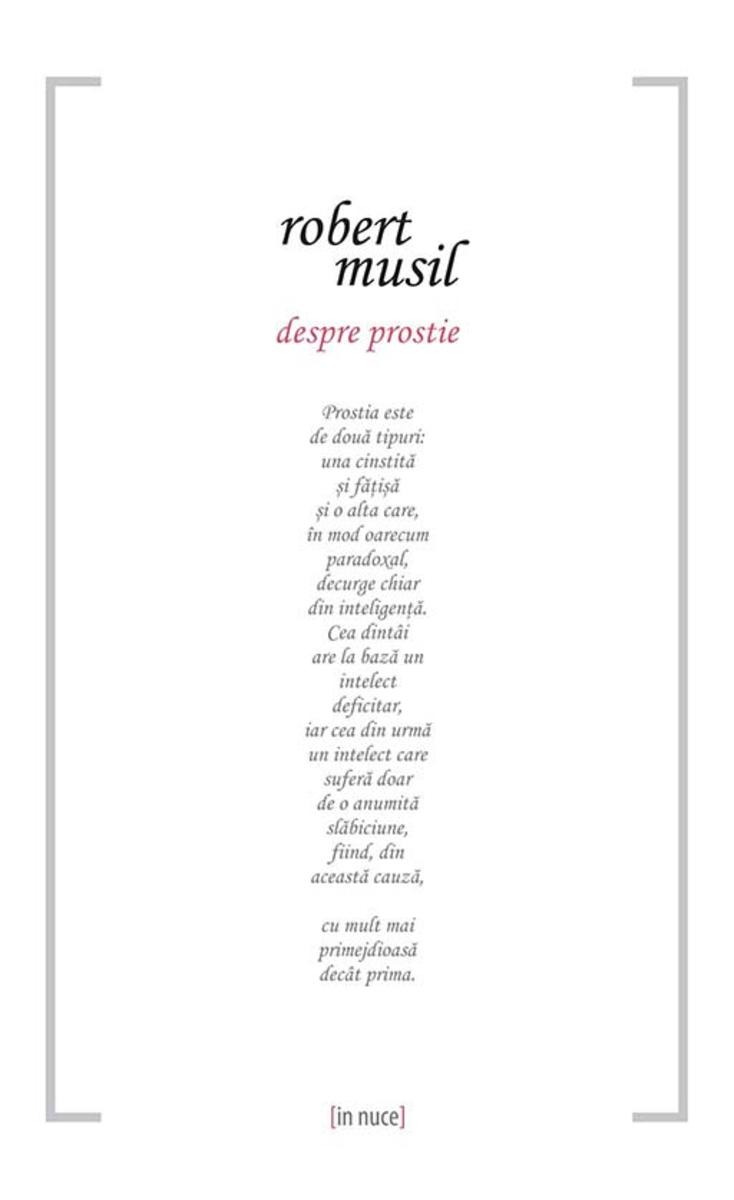
Despre prostie
¥16.27
Volumul cuprinde o culegere de eseuri scrise de un filosof despre c?teva teme fierbin?i ale actualit??ii. Este un exerci?iu de ?angajare“ ?n cotidian, explor?nd statutul ?i ?utilitatea“ abord?rii filosofice ?ntr-o lume care pare s? -?i fi pierdut direc?ia. Valentin Mure?an scrie despre criza filosofiei, despre felul ?n care ar trebui reformat sistemul de ?nv???m?nt, despre anomaliile culturale ale dragostei ori despre secretul construirii unor institu?ii morale. Reflec?iile, amare ?n constat?ri, dar entuziaste ?n construirea solu?iilor, sunt completate de c?teva portrete sentimentale ale unor colegi.
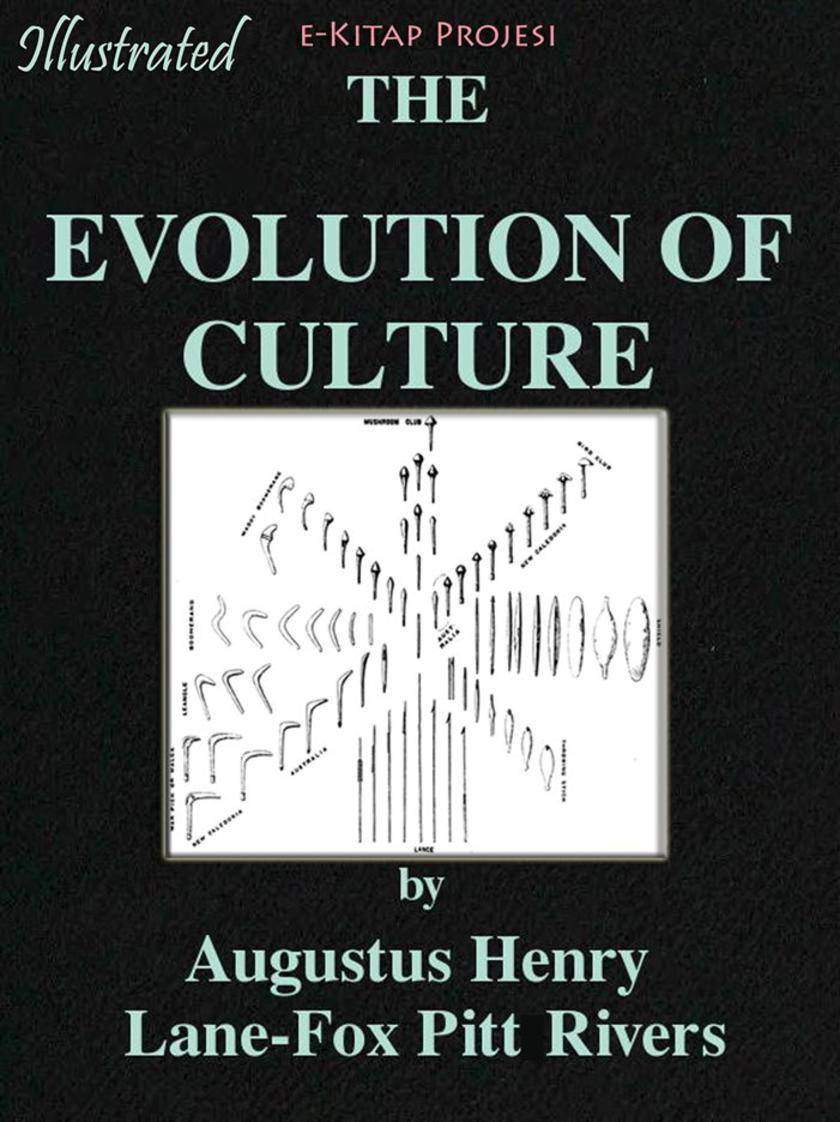
Evolution of the Culture
¥28.04
Paradise Lost is an epic poem in blank verse by the 17th-century English poet John Milton (1608–1674). The first version, published in 1667, consisted of ten books with over ten thousand lines of verse. A second edition followed in 1674, arranged into twelve books (in the manner of Virgil's Aeneid) with minor revisions throughout and a note on the versification. It is considered by critics to be Milton's "major work", and helped solidify his reputation as one of the greatest English poets of his time. The poem concerns the Biblical story of the Fall of Man: the temptation of Adam and Eve by the fallen angel Satan and their expulsion from the Garden of Eden. Milton's purpose, stated in Book I, is to "justify the ways of God to men" Short Summary:The poem is separated into twelve "books" or sections, the lengths of which vary greatly (the longest is Book IX, with 1,189 lines, and the shortest Book VII, with 640). The Arguments at the head of each book were added in subsequent imprints of the first edition. Originally published in ten books, a fully "Revised and Augmented" edition reorganized into twelve books was issued in 1674, and this is the edition generally used today. The poem follows the epic tradition of starting in medias res (Latin for in the midst of things), the background story being recounted later.Milton's story has two narrative arcs, one about Satan (Lucifer) and the other following Adam and Eve. It begins after Satan and the other rebel angels have been defeated and banished to Hell, or, as it is also called in the poem, Tartarus. In Pand?monium, Satan employs his rhetorical skill to organise his followers; he is aided by Mammon and Beelzebub. Belial and Moloch are also present. At the end of the debate, Satan volunteers to poison the newly created Earth and God's new and most favoured creation, Mankind. He braves the dangers of the Abyss alone in a manner reminiscent of Odysseus or Aeneas. After an arduous traversal of the Chaos outside Hell, he enters God's new material World, and later the Garden of Eden. At several points in the poem, an Angelic War over Heaven is recounted from different perspectives. Satan's rebellion follows the epic convention of large-scale warfare. The battles between the faithful angels and Satan's forces take place over three days. At the final battle, the Son of God single-handedly defeats the entire legion of angelic rebels and banishes them from Heaven. Following this purge, God creates the World, culminating in his creation of Adam and Eve. While God gave Adam and Eve total freedom and power to rule over all creation, He gave them one explicit command: not to eat from the Tree of the knowledge of good and evil on penalty of death.

Heart of Darkness
¥9.07
The Republic (Greek: Politeia) is a Socratic dialogue, written by Plato around 380 BC, concerning the definition of (justice), the order and character of the just city-state and the just man, reason by which ancient readers used the name On Justice as an alternative title (not to be confused with the spurious dialogue also titled On Justice). The dramatic date of the dialogue has been much debated and though it must take place some time during the Peloponnesian War, "there would be jarring anachronisms if any of the candidate specific dates between 432 and 404 were assigned". It is Plato's best-known work and has proven to be one of the most intellectually and historically influential works of philosophy and political theory. In it, Socrates along with various Athenians and foreigners discuss the meaning of justice and examine whether or not the just man is happier than the unjust man by considering a series of different cities coming into existence "in speech", culminating in a city (Kallipolis) ruled by philosopher-kings; and by examining the nature of existing regimes. The participants also discuss the theory of forms, the immortality of the soul, and the roles of the philosopher and of poetry in society. Short Summary (Epilogue):X.1—X.8. 595a—608b. Rejection of Mimetic ArtX.9—X.11. 608c—612a. Immortality of the SoulX.12. 612a—613e. Rewards of Justice in LifeX.13—X.16. 613e—621d. Judgment of the Dead The paradigm of the city — the idea of the Good, the Agathon — has manifold historical embodiments, undertaken by those who have seen the Agathon, and are ordered via the vision. The centre piece of the Republic, Part II, nos. 2–3, discusses the rule of the philosopher, and the vision of the Agathon with the allegory of the cave, which is clarified in the theory of forms. The centre piece is preceded and followed by the discussion of the means that will secure a well-ordered polis (City). Part II, no. 1, concerns marriage, the community of people and goods for the Guardians, and the restraints on warfare among the Hellenes. It describes a partially communistic polis. Part II, no. 4, deals with the philosophical education of the rulers who will preserve the order and character of the city-state.In Part II, the Embodiment of the Idea, is preceded by the establishment of the economic and social orders of a polis (Part I), followed by an analysis (Part III) of the decline the order must traverse. The three parts compose the main body of the dialogues, with their discussions of the “paradigm”, its embodiment, its genesis, and its decline.The Introduction and the Conclusion are the frame for the body of the Republic. The discussion of right order is occasioned by the questions: “Is Justice better than Injustice?” and “Will an Unjust man fare better than a Just man?” The introductory question is balanced by the concluding answer: “Justice is preferable to Injustice”. In turn, the foregoing are framed with the Prologue (Book I) and the Epilogue (Book X). The prologue is a short dialogue about the common public doxai (opinions) about “Justice”. Based upon faith, and not reason, the Epilogue describes the new arts and the immortality of the soul. ? About Author: Plato (Greek: Platon, " 428/427 or 424/423 BC – 348/347 BC) was a philosopher in Classical Greece. He was also a mathematician, student of Socrates, writer of philosophical dialogues, and founder of the Academy in Athens, the first institution of higher learning in the Western world. Along with his mentor, Socrates, and his most-famous student, Aristotle, Plato helped to lay the foundations of Western philosophy and science. Alfred North Whitehead once noted: "the safest general characterization of the European philosophical tradition is that it consists of a series of footnotes to Plato." Plato's sophistication as a writer is evident in his Socratic dialogues; thirty-six dialogues and thirteen letters have been ascribed to him, although 15–18 of them have been contested. Plato's writings have been published in several fashions; this has led to several conventions regarding the naming and referencing of Plato's texts. Plato's dialogues have been used to teach a range of subjects, including philosophy, logic, ethics, rhetoric, religion and mathematics. Plato is one of the most important founding figures in Western philosophy. His writings related to the Theory of Forms, or Platonic ideals, are basis for Platonism. ? Early lifeThe exact time and place of Plato's birth are not known, but it is certain that he belonged to an aristocratic and influential family. Based on ancient sources, most modern scholars believe that he was born in Athens or Aegina between 429 and 423 BC. His father was Ariston. According to a disputed tradition, reported by Diogenes Laertius, Ariston traced his descent from the king of Athens, Codrus, and the king of Messenia, Melanthus. Plato's mother was Perictione, whose family boasted of a relationship with the famous Athenian lawmaker an

Mindig is éjjel lesz
¥69.65
Sri Krsna számtalan univerzum vitathatatlan Ura, akit korlátlan er?, gazdagság, hírnév, tudás és lemondás jellemez, ám ezek az ?r?kké diadalmas energiák csupán részben tárják fel ?t. Végtelen dics?ségét csak az ismerheti meg, aki elb?v?l? szépségénél keres menedéket, ?sszes t?bbi fenséges tulajdonsága forrásánál, melynek páratlan transzcendentális teste ad otthont. Szépségének legf?bb jellemz?je az a mindenek f?l?tt álló édes íz, ami t?mény kivonata mindennek, ami édes. Minden édes dolgot túlszárnyal, és nem más, mint az édes íz megízlelésének képessége. Sri Krsna édes természete finom arany sugárzásként ragyog át transzcendentális testén. Govinda páratlanul gy?ny?r? testének legszebb és legédesebb része ragyogó arca. ?des hold-arcán rejtélyes mosolya a legédesebb, az az arcáról ragyogó ezüst holdsugár, ami nektárral árasztja el a világot. Mosolyának sugárzása nélkül keser? lenne a cukor, savanyú a méz, és a nektárnak sem lenne íze. Amikor mosolyának holdsugara elvegyül teste ragyogásával, a kett? együtt a kámfor aromájára emlékeztet. Ez a kámfor aztán ajkán keresztül a fuvolába kerül, ahonnan megfoghatatlan hangvibrációként t?r el?, és er?nek erejével rabul ejti azoknak az elméjét, akik hallják. Ahogy a szavak gondolatok mondanivalóját hordozzák, ahogy a gondolatok a szemben tükr?z?dnek, ahogy egy mosoly a szív érzelmeir?l árulkodik, úgy a fuvola hangja Sri Krsna szépségét viszi a fül?n keresztül a szív templomának oltárára.
A kalózkirály
¥8.67
Euthyphro (Ancient Greek: Euthuphron) is one of Plato's early dialogues, dated to after 399 BC. Taking place during the weeks leading up to Socrates' trial, the dialogue features Socrates and Euthyphro, a religious expert also mentioned at Cratylus 396a and 396d, attempting to define piety or holiness. Background The dialogue is set near the king-archon's court, where the two men encounter each other. They are both there for preliminary hearings before possible trials (2a).Euthyphro has come to lay manslaughter charges against his father, as his father had allowed one of his workers to die exposed to the elements without proper care and attention (3e–4d). This worker had killed a slave belonging to the family estate on the island of Naxos; while Euthyphro's father waited to hear from the expounders of religious law (exegetes cf. Laws 759d) about how to proceed, the worker died bound and gagged in a ditch. Socrates expresses his astonishment at the confidence of a man able to take his own father to court on such a serious charge, even when Athenian Law allows only relatives of the deceased to sue for murder. Euthyphro misses the astonishment, and merely confirms his overconfidence in his own judgment of religious/ethical matters. In an example of "Socratic irony," Socrates states that Euthyphro obviously has a clear understanding of what is pious and impious. Since Socrates himself is facing a charge of impiety, he expresses the hope to learn from Euthyphro, all the better to defend himself in his own trial. Euthyphro claims that what lies behind the charge brought against Socrates by Meletus and the other accusers is Socrates' claim that he is subjected to a daimon or divine sign which warns him of various courses of action (3b). Even more suspicious from the viewpoint of many Athenians, Socrates expresses skeptical views on the main stories about the Greek gods, which the two men briefly discuss before plunging into the main argument. Socrates expresses reservations about such accounts which show up the gods' cruelty and inconsistency. He mentions the castration of the early sky god, Uranus, by his son Cronus, saying he finds such stories very difficult to accept (6a–6c). Euthyphro, after claiming to be able to tell even more amazing such stories, spends little time or effort defending the conventional view of the gods. Instead, he is led straight to the real task at hand, as Socrates forces him to confront his ignorance, ever pressing him for a definition of 'piety'. Yet, with every definition Euthyphro proposes, Socrates very quickly finds a fatal flaw (6d ff.). At the end of the dialogue, Euthyphro is forced to admit that each definition has been a failure, but rather than correct it, he makes the excuse that it is time for him to go, and Socrates ends the dialogue with a classic example of Socratic irony: since Euthyphro has been unable to come up with a definition that will stand on its own two feet, Euthyphro has failed to teach Socrates anything at all about piety, and so he has received no aid for his own defense at his own trial (15c ff.).
On the Duty of Civil Disobedience
¥40.79
In Civil Disobedience Thoreau argues that individuals should not permit governments to overrule or atrophy their consciences, and that they have a duty to avoid allowing such acquiescence to enable the government to make them the agents of injustice.
Meno
¥40.79
This Dialogue begins abruptly with a question of Meno, who asks, 'whether virtue can be taught.' Socrates replies that he does not as yet know what virtue is, and has never known anyone who did. 'Then he cannot have met Gorgias when he was at Athens.' Yes, Socrates had met him, but he has a bad memory, and has forgotten what Gorgias said. Will Meno tell him his own notion, which is probably not very different from that of Gorgias? 'O yes—nothing easier: there is the virtue of a man, of a woman, of an old man, and of a child; there is a virtue of every age and state of life, all of which may be easily described.'
Crito
¥40.79
The Crito seems intended to exhibit the character of Socrates in one light only, not as the philosopher, fulfilling a divine mission and trusting in the will of heaven, but simply as the good citizen, who having been unjustly condemned is willing to give up his life in obedience to the laws of the state . . .
Categories
¥40.79
Categories is a text from Aristotle's Organon that enumerates all the possible kinds of things that can be the subject or the predicate of a proposition. They are considered the single most heavily discussed of all Aristotelian notions.
The Critique of Pure Reason
¥40.79
One of the most influential works in the history of philosophy. Known as Kant's First Critique, dealing with questions concerning the foundations and extent of human knowledge, Kant builds on the work of empiricist philosophers such as John Locke and David Hume, as well as taking into account the theories of rationalist philosophers such as Gottfried Wilhelm Leibniz and Christian Wolff.
The African Wars: English and Latin Language
¥40.79
Caesar, advancing by moderate journeys, and continuing his march without intermission, arrived at Lilybaeum, on the 14th day before the calends of January. Designing to embark immediately, though he had only one legion of new levies, and not quite six hundred horse, he ordered his tent to be pitched so near the sea-side that the waves lashed the very foot of it. This he did with a view that none should think he had time to delay, and that his men might be kept in readiness at a day or an hour's warning. Though the wind at that time was contrary, he nevertheless detained the soldiers and mariners on board, that he might lose no opportunity of sailing; the rather, because the forces of the enemy were announced by the inhabitants of the province, to consist of innumberable cavalry not to be numbered; four legions headed by Juba, together with a great body of light-armed troops; ten legions under the command of Scipio; a hundred and twenty elephants, and fleets in abundance. Yet he was not alarmed, nor lost his confident hopes and spirits. Meantime the number of galleys and transports increased daily; the new-levied legions flocked in to him from all parts; among the rest the fifth, a veteran legion, and about two thousand horse.
The Alexandrian Wars
¥40.79
When the war broke out at Alexandria, Caesar sent to Rhodes, Syria, and Cilicia, for all his fleet; and summoned archers from Crete, and cavalry from Malchus, king of the Nabatheans. He likewise ordered military engines to be provided, corn to be brought, and forces dispatched to him. Meanwhile he daily strengthened his fortifications by new works; and such parts of the town as appeared less tenable were strengthened with testudos and mantelets. Openings were made in the walls, through which the battering-rams might play; and the fortifications were extended over whatever space was covered with ruins, or taken by force. For Alexandria is in a manner secure from fire, because the houses are all built without joists or wood, and are all vaulted, and roofed with tile or pavement.
The Civil Wars, Book 1
¥40.79
Caesar, although he was not as yet at open enmity with him, determined neither to aid him by his influence nor openly oppose him on this occasion. But the consuls Lentulus and Marcellus, who had previously been on unfriendly terms with Caesar, resolved to use all means in their power to prevent him from gaining his object. Marcellus in particular did not hesitate to offer Caesar other insults. Caesar had lately planned the colony of Novumcomum in Gaul: Marcellus, not content with taking from it the right of citizenship, ordered the principal man of the colony to be arrested and scourged at Rome, and sent him to make his complaints to Caesar: an insult of this description had never before been offered to a Roman citizen.
On Memory and Reminiscence
¥40.79
We have, in the next place, to treat of Memory and Remembering, considering its nature, its cause, and the part of the soul to which this experience, as well as that of Recollecting, belongs. For the persons who possess a retentive memory are not identical with those who excel in power of recollection; indeed, as a rule, slow people have a good memory, whereas those who are quick-witted and clever are better at recollecting.
Metaphysics
¥40.79
All men by nature desire to know. An indication of this is the delight we take in our senses; for even apart from their usefulness they are loved for themselves; and above all others the sense of sight. For not only with a view to action, but even when we are not going to do anything, we prefer seeing (one might say) to everything else. The reason is that this, most of all the senses, makes us know and brings to light many differences between things.
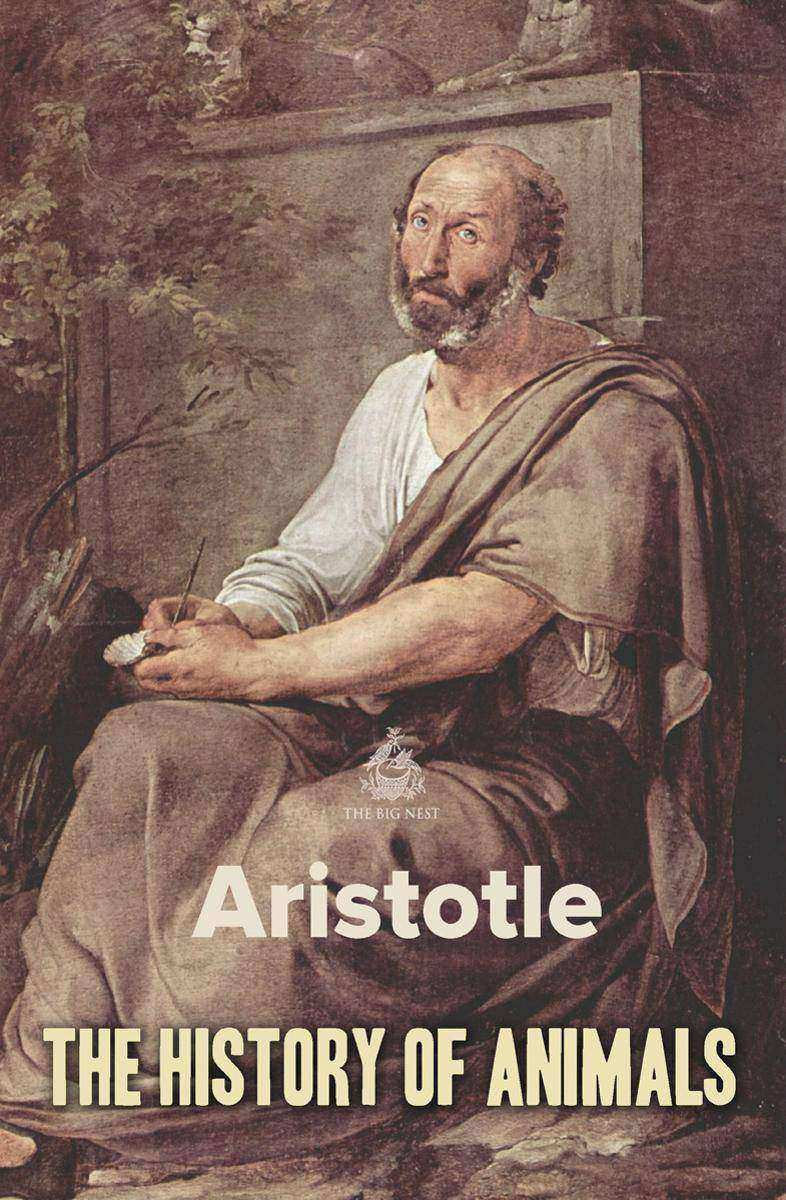
The History of Animals
¥40.79
Generally seen as a pioneering work of zoology, Aristotle frames his text by explaining that he is investigating the existing facts about animals. History of Animals is one of the major texts on biology.


