


 购物车
购物车 个人中心
个人中心

The Ecology of Commerce
¥105.17
The world has changed in the seventeen years since the controversial initial publication of Paul Hawken's Ecology of Commerce, a stirring treatise about the perceived antagonism between ecology and business. Yet Hawken's impassioned argument that business both causes the most egregious abuses of the environment and, crucially, holds the most potential for solving our sustainability problems is more relevant and resonant than ever.Containing updated and revised material for a new audience, The Ecology of Commerce presents a compelling vision of the restorative (rather than destructive) economy we must create, centered on eight imperatives: Reduce energy carbon emissions 80 percent by 2030 and total natural resource usage 80 percent by 2050. Provide secure, stable, and meaningful employment to people everywhere. Be self-organizing rather than regulated or morally mandated. Honor market principles. Restore habitats, ecosystems, and societies to their optimum. Rely on current income. Be fun and engaging, and strive for an aesthetic outcome.
Leadership and the One Minute Manager Updated Ed
¥132.87
Newly revised and updated, Leadership and the One Minute Manager teaches leaders the world-renowned method of developing self-reliance in those they manage: Situational Leadership II.In Leadership and the One Minute Manager, you'll learn why adapting leadership styles to team members based on their key goals and tasks is so important and why knowing when to delegate, support, or direct is critical. By consistently using Situational Leadership II's proven model and powerful techniques, leaders can develop and retain competent, motivated, confident employees. This remarkable, easy-to-follow book is a priceless guide to personalized leadership that elicits the best performance from your team and the best bottom line for any business.
Team Genius
¥156.69
A groundbreaking book that sheds new light on the vital importance of teams as the fundamental unit of organization and competition in the global economy. Teams—we depend on them for both our professional success and our personal happiness. But isn't it odd how little scrutiny we give themThe teams that make up our lives are created mostly by luck, happenstance, or circumstance—but rarely by design. In trivial matters—say, a bowling team, the leadership of a neighborhood group, or a holiday party committee—success by serendipity is already risky enough. But when it comes to actions by fast-moving start-ups, major corporations, nonprofit institutions, and governments, leaving things to chance can be downright dangerous. Offering vivid reports of the latest scientific research, compelling case studies, and great storytelling, Team Genius shows managers and executives that the planning, design, and management of great teams no longer have to be a black art. It explores solutions to essential questions that could spell the difference between success and obsolescence. Do you know how to reorganize your subpar teams to turn them into top performersCan you identify which of the top-performing teams in your company are reaching the end of their life spanDo you have the courage to shut them downDo you know how to create a replacement team that will be just as effective—without losing time or damaging moraleAnd, most important, are your teams the right size for the jobThroughout, Rich Karlgaard and Michael S. Malone share insights and real-life examples gleaned from their careers as journalists, analysts, investors, and globetrotting entrepreneurs, meeting successful teams and team leaders to reveal some "new truths": The right team size is usually one fewer person than what managers think they need. The greatest question facing good teams is not how to succeed, but how to die. Good "chemistry" often makes for the least effective teams. Cognitive diversity yields the highest performance gains—but only if you understand what it is. How to find the "bliss point" in team intimacy—and become three times more productive. How to identify destructive team members before they do harm. Why small teams are 40 percent more likely to create a successful breakthrough than a solo genius is. Why groups of 7 (± 2), 150, and 1,500 are magic sizes for teams. Eye-opening, grounded, and essential, Team Genius is the next big idea to revolutionize business.
Outside Innovation
¥151.30
How dynamic businesses of every size can unleash innovation by inviting customers to codesign what they do and make. Reading line: The 8 Roles Customers Play in Trend Setting Companies The refrain is familiar for Patricia Seybold in her journeys as a top technology and management strategist: "I want our company to be acknowledged as the most admired and most customer valued in our industry and to be recognized as the company that has forever changed the way things are done." "How can we become the Google of banking?" "How can we be the eBay of software?" "I want to be the JetBlue of manufacturing." "How can we become the undisputed trend setter in our industry with a competitive bar no one can topple?" In Outside Innovation, bestselling author Seybold taps her close relationship with dozens of high innovation companies to reveal the untold strategy behind the trendsetters and the next HUGE leap forward in customer strategy. Seybold shows that companies that are dominating their category and staying ahead of the pack are collaborating at every level of their business with their customers.

Be the Change
¥168.14
Meet the men and women whose deeply personal philanthropy is dramatically changing the way we think about giving There are 8.6 million millionaires in the United States, and these numbers are set to rise in what will be the biggest intergenerational wealth transfer in history. As $41 trillion dollars (or over three times the national GDP) moves from the World War II generation to their baby- boomer children over the next couple of decades, it will become imperative that the beneficiaries of this wealth—even those not joining the ranks of the superrich—begin thinking about philanthropy, perhaps for the first time in their adult lives. Here they will find the personal journeys of the most successful givers of their generation. This new generation of wealth has already begun to change the face of philanthropy and to reshape the entire nonprofit sector. In Be the Change, bestselling author Lisa Endlich presents eleven compelling profiles of this twenty-first century generosity. Through candid, revealing, and often surprising interviews, readers will venture into the hearts and minds of the top names in philanthropy today—men and women who have chosen to use their immense riches and influence to meaningfully improve the lives of others in the most dramatic ways. These intimate conversations include in-depth interviews with: ?Melinda Gates, one of the driving forces behind the largest philanthropic organization the world has ever seen; ?Bob and Suzanne Wright, he's the former vice chairman of GE and longtime head of NBC Universal and their Autism Speaks has brought awareness of autism onto the national and international stage; ?Paul Tudor Jones, founder of Tudor Investments and the Robin Hood Foundation; ?Peter Bloom, founding chairman of the groundbreaking DonorsChoose.org. From Connie Duckworth, a former Goldman Sachs partner, who brings steady employment to Afghani women and education to them and their children, to Johann Olav Koss, an Olympic gold medalist who now strives to give children in the direst circumstances the chance to play, these philanthropists demonstrate that giving doesn't begin or end with a signed check. They grant Endlich exclusive access to the stories of how they learned from early failures and developed a personal, sustainable way of giving, and they also share the catalyzing moment when they saw a problem so heartbreaking they simply could not turn away. In doing so, these new philanthropists offer valuable lessons—ones that will inspire readers to start giving, keep giving, and become the change they want to see in the world.
Absolute Value
¥155.02
Going against conventional wisdom, Absolute Value reveals what really influences customers today and offers a new framework the Influence Mix for thinking about consumer decision making, which should help managers develop more effective marketing strategies.How people buy things has changed profoundly yet the fundamental thinking about consumer decision making and marketing has not. Most marketers still believe that they can shape consumers' perceptions and drive their behaviors. In this provocative book, Stanford professor Itamar Simonson and best-selling author Emanuel Rosen show why current mantras about branding and loyalty are losing their relevance. When consumers base their decisions on reviews from other users, easily accessed expert opinions, price comparison apps, and other emerging technologies, everything changes. Contrary to what we frequently hear, consumers will (on average) make better choices and act more rationally. Absolute Value answers the pressing question of what influences customers in this new age. Simonson and Rosen identify the old-school marketing concepts that need to change and explain how a company should design its communication strategy, market research program, and segmentation strategy in the new environment. Filled with deep analysis, case studies, and cutting-edge research, this forward-looking book provides an entirely new way of thinking about marketing.
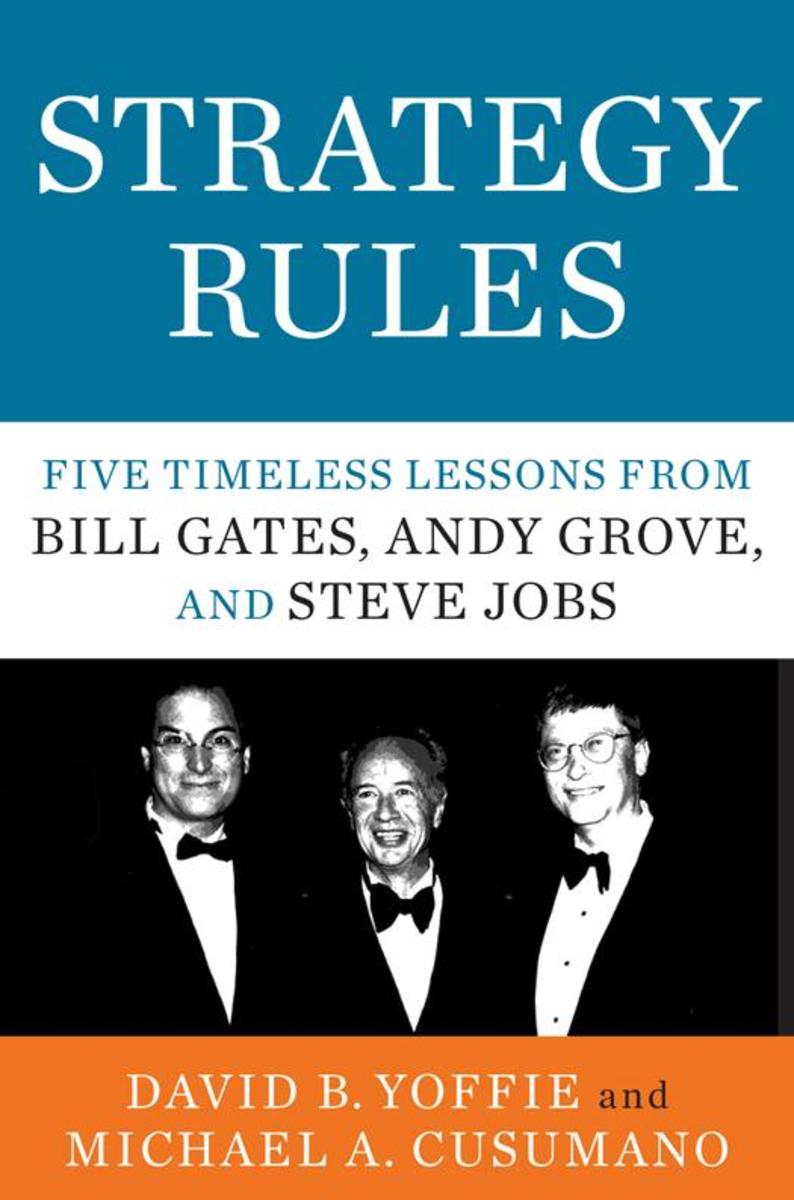
Strategy Rules
¥166.09
Between 1968 and 1976, Bill Gates, Andy Grove, and Steve Jobs launched three companies that would define the world of high technology, create more than a trillion dollars in value, and transform our lives. How did they realize these incredible achievementsStrategy Rules examines these three individuals collectively for the first time their successes and failures, comonalities and differences revealing the business strategies and practices they pioneered while building their firms.Eminent business professors David Yoffie and Michael Cusumano have studied these three leaders and their companies for nearly thirty years, while teaching business strategy, innovation, and entrepreneurship at Harvard Business School and the MIT Sloan School of Management. In this enlightening guide, they show how Gates, Grove, and Jobs became masters of strategy. As CEOs, each approached strategy and execution in remarkably similar ways yet markedly differently from their erstwhile competitors keeping their focus on five rules: Look Forward, Reason Back: They determined where they want their companies to be in the future and could reason back to identify the moves that would take them there. Make Big Bets, Without Betting the Company: All three men made enormous strategic bets but rarely took gambles that put the financial viability of their companies at undue risk. Build Platforms and Ecosystems: Technology leaders have to create industry platforms that enable other firms to create complementary products and services that make the platforms increasingly valuable. Exploit Leverage and Power: Gates, Grove, and Jobs often turned opponents strengths into weaknesses and used enormous resources (once they had them) to dominate competitors. Shape the Company around Your Personal Anchor: From Gates understanding of software to Grove's devotion to process discipline and Jobs obsession with design, all three built their companies around their personal strengths while compensating for their weaknesses. Strategy Rules brings together the best practices in strategic management and high-tech entrepreneurship, providing unique insights for start-up executives as well as the heads of modern multinationals.

Ugly Beauty
¥151.53
The gripping story of Helena Rubinstein, Eugne Schueller, and the dark side of the beauty business they helped to create Helena Rubinstein and L'Oral's Eugne Schueller both started out in the beauty business during the first years of the twentieth century, and, by the time World War II broke out, had come to dominate it. However, their motivations could not have been more different. Rubinstein, a Polish Jew, claimed the world of paid work for women, and working women's enthusiasm for her products made her the first self-made female millionaire. Schueller, a French conservative in the Henry Ford mold, thought women belonged in the home, and during the Nazi Occupation he used his company as a source of cash to buy economic and political influence.Schueller eventually won the long fight for supremacy: in 1988 his company swallowed Rubinstein's. But the victory cost him his reputation when, in the wake of the takeover, he was exposed as a Nazi collaborator. Deepening the scandal, his wartime activities were shown to have been abetted and condoned by a cadre of young men who, by the time the news broke, had scaled the peaks of wealth and power in postwar France.By then Schueller and Rubinstein were both long dead. But cultural historian and biographer Ruth Brandon argues that the battle they began continues to this day. She examines their conflict to ask important contemporary questions about beauty standards and the often murky intersection of individual political aims and the role of business. Filled with remarkable twists, turns, and larger-than-life characters, Ugly Beauty is a riveting true story about what lies beneath the flawless exterior of the cosmetics industry.

Hidden in Plain Sight
¥160.56
A global-innovation expert offers a new perspective on how consumers think and how to develop products and services that affect their everyday lives.Who are your next customers not just the ones you are serving today but the ones you'll need three, five, or ten years from nowHow do you figure out what goods and services will attract them in the future before your competitors do?According to Jan Chipchase whom Fast Company has called the James Bond of design research and Fortune has called the Indiana Jones of technology for the developing world most of the clues are right in front of us. The key is learning to see the ordinary in a revolutionary new way. As the executive creative director of Global Insights at frog, an award-winning global design and innovation company, Chipchase draws on everyday objects and patterns to show us how to see the world differently, from making a phone call to filling up a gas tank to ascertaining whether it's actually half-and-half you're pouring into your coffee. Chipchase is always looking for opportunities gaps, anomalies, and contradictions that will give his clients, some of the world's largest and most successful companies, a distinct competitive advantage, whether they're delivering the most low-tech bar of soap or the most high-tech wireless network.In Hidden in Plain Sight, Chipchase takes readers on his journeys around the globe and shares his methods for identifying the unmet needs of customers. No matter where he stops whether Cleveland or Kabul his goals are the same: to spot and decode the routines of daily life and to help readers use the very same tools that he and his team use to see, and capitalize upon, what is hidden in plain sight today to create businesses tomorrow.

FIRE
¥160.56
Why do some projects deliver under budget and ahead of schedule, while others cost more and take longer than expectedMore important, which products work better: the quick and thrifty or the slow and expensive?In a story-filled blend of quirky pop culture and practical engineering insight, Dan Ward's F.I.R.E. answers those questions and more. Ward's extensive research and firsthand experience show how the world's top technologists consistently deliver best-in-class results on shoestring budgets and cannonball schedules, and using skeleton crews.This remarkable book will make you laugh, make you think, and equip you to leverage the power of constraints. Discover the secrets of F.I.R.E. and learn how to:Build strategies for speed that enhance accountability and ensure your products are well aligned with the market's needs.Design your organizations, products, and processes with thrift in mind, solving problems with intellectual capital, not financial capital.Unleash the power of small budgets and small teams, using short schedules, short meetings, and short documents.Streamline your designs and cut through unnecessary, unproductive layers of bureaucracy.But this is not just a book about how to win. With unflinching candor, Ward shows how the F.I.R.E. method, even when followed wisely and well, can result in a flop. Taking a deep look at several negative outcomes, he shows how to make failures optimal rather than epic.F.I.R.E. provides strategic concepts for leaders, decision-making principles for managers, and practical tools for people working on anything from spacecraft and fighter jets to websites and children's toys. Technology professionals and curious amateurs alike will come away with a deeper understanding of effective product design. Plus, there's a funny story about a dishwasher that just may change the way you buy major appliances.
Good to Great
¥182.47
The Challenge Built to Last, the defining management study of the nineties, showed how great companies triumph over time and how long-term sustained performance can be engineered into the DNA of an enterprise from the verybeginning. But what about the company that is not born with great DNAHow can good companies, mediocre companies, even bad companies achieve enduring greatnessThe Study For years, this question preyed on the mind of Jim Collins. Are there companies that defy gravity and convert long-term mediocrity or worse into long-term superiorityAnd if so, what are the universal distinguishing characteristics that cause a company to go from good to greatThe Standards Using tough benchmarks, Collins and his research team identified a set of elite companies that made the leap to great results and sustained those results for at least fifteen years. How greatAfter the leap, the good-to-great companies generated cumulative stock returns that beat the general stock market by an average of seven times in fifteen years, better than twice the results delivered by a composite index of the world's greatest companies, including Coca-Cola, Intel, General Electric, and Merck.The Comparisons The research team contrasted the good-to-great companies with a carefully selected set of comparison companies that failed to make the leap from good to great. What was differentWhy did one set of companies become truly great performers while the other set remained only goodOver five years, the team analyzed the histories of all twenty-eight companies in the study. After sifting through mountains of data and thousands of pages of interviews, Collins and his crew discovered the key determinants of greatness -- why some companies make the leap and others don't. The Findings The findings of the Good to Great study will surprise many readers and shed light on virtually every area of management strategy and practice. The findings include: Level 5 Leaders: The research team was shocked to discover the type of leadership required to achieve greatness. The Hedgehog Concept (Simplicity within the Three Circles): To go from good to great requires transcending the curse of competence. A Culture of Discipline: When you combine a culture of discipline with an ethic of entrepreneurship, you get the magical alchemy of great results. Technology Accelerators: Good-to-great companies think differently about the role of technology. The Flywheel and the Doom Loop: Those who launch radical change programs and wrenching restructurings will almost certainly fail to make the leap. Some of the key concepts discerned in the study, comments Jim Collins, "fly in the face of our modern business culture and will, quite frankly, upset some people.Perhaps, but who can afford to ignore these findings?

Irrationally Yours
¥88.56
Three-time New York Times bestselling author Dan Ariely teams up with legendary The New Yorker cartoonist William Haefeli to present an expanded, illustrated collection of his immensely popularWall Street Journal advice column, “Ask Ariely”. Behavioral economist Dan Ariely revolutionized the way we think about ourselves, our minds, and our actions in his books Predictably Irrational, The Upside of Irrationality, and The Honest Truth about Dishonesty. Ariely applies this scientific analysis of the human condition in his “Ask Ariely” Q & A column in the Wall Street Journal, in which he responds to readers who write in with personal conundrums ranging from the serious to the curious: What can you do to stay calm when you’re playing the volatile stock market What’s the best way to get someone to stop smoking How can you maximize the return on your investment at an all-you-can-eat buffet Is it possible to put a price on the human soul Can you ever rationally justify spending thousands of dollars on a RolexIn Ask Ariely, a broad variety of economic, ethical, and emotional dilemmas are explored and addressed through text and images. Using their trademark insight and wit, Ariely and Haefeli help us reflect on how we can reason our way through external and internal challenges. Readers will laugh, learn, and most importantly gain a new perspective on how to deal with the inevitable problems that plague our daily life.

The E-Myth Manager
¥94.10
More than ten years after his first bestselling book The EMyth changed the lives of hundreds of thousands of small business owners Michael Gerber trepreneur author and speaker extraordinaire res the next salvo in his highly successful EMyth Revolution. Drawing on lessons learned from working with more than 15000 small medium sized and very large organisations Gerber has discovered the truth behind why management doesn't work and what to do about it. Unearthing the arbitrary origins of commonly held doctrines such as the omniscience of leader (Emperor) and the most widely embraced myth of all EMyth Manager offers a fresh provocative alternative to management as we know it. It explores why every manager must take charge of his own life reconcile his own personal vision with that of the organisation and develop an entrepreneurial mind set to achieve true success.

Man vs. Markets
¥99.65
After years of TV and radio coverage, gallons of newsprint ink, and billions of scholarly opinions on the blogosphere, do we really understand the financial engineering that brought the global economy to the brink?The terms and acronyms that make up the language of economics are enough to cause the layman's head to start spinning: leverage, securitization, futures, options, MBS, CDS, CDO. Luckily, we have veteran journalist Paddy Hirsch senior producer at APM's Marketplace and acknowledged Whiteboard Guru to help us crack the code. In Man vs. Markets, he proves that it's not impossible to understand what's going on in the glass-and-steel canyons of Wall Street; that most international financial transactions aren't all that different from those taking place every day in stores, in car dealerships, even on the playgrounds of Main Street.BondsThey're basically loans. FuturesYou probably used one when you ordered your Thanksgiving turkey last year. OptionsEver bought a fully transferable, returnable airline ticketThat's pretty much the same thing.With a winning combination of acquired wisdom, common sense, market savvy, and an outrageous sense of humor, Hirsch clearly explains and defines the instruments that power our financial system and very nearly caused its demise. Clever, insightful, hugely educational, and always entertaining, Man vs. Markets translates the often confusing language of finance, enabling every one of us to truly comprehend what makes the markets tick.

The Myth of the Rational Market
¥94.10
Chronicling the rise and fall of the efficient market theory and the century-long making of the modern financial industry, Justin Fox's The Myth of the Rational Market is as much an intellectual whodunit as a cultural history of the perils and possibilities of risk. The book brings to life the people and ideas that forged modern finance and investing, from the formative days of Wall Street through the Great Depression and into the financial calamity of today. It's a tale that features professors who made and lost fortunes, battled fiercely over ideas, beat the house in blackjack, wrote bestselling books, and played major roles on the world stage. It's also a tale of Wall Street's evolution, the power of the market to generate wealth and wreak havoc, and free market capitalism's war with itself.The efficient market hypothesis long part of academic folklore but codified in the 1960s at the University of Chicago has evolved into a powerful myth. It has been the maker and loser of fortunes, the driver of trillions of dollars, the inspiration for index funds and vast new derivatives markets, and the guidepost for thousands of careers. The theory holds that the market is always right, and that the decisions of millions of rational investors, all acting on information to outsmart one another, always provide the best judge of a stock's value. That myth is crumbling.Celebrated journalist and columnist Fox introduces a new wave of economists and scholars who no longer teach that investors are rational or that the markets are always right. Many of them now agree with Yale professor Robert Shiller that the efficient markets theory represents one of the most remarkable errors in the history of economic thought. Today the theory has given way to counterintuitive hypotheses about human behavior, psychological models of decision making, and the irrationality of the markets. Investors overreact, underreact, and make irrational decisions based on imperfect data. In his landmark treatment of the history of the world's markets, Fox uncovers the new ideas that may come to drive the market in the century ahead.

Beyond Reengineering
¥90.83
Reengineering has captured the imagination of managers and shareholders alike, sending corporations on journeys of radical business redesign that have already begun to transfigure global industry. Yet aside from earning them improvements in their business performance, the shift into more-process-centered organizations is causing fundamental changes in the corporate world, changes that business leaders are only now beginning to understand. What will the revolutions final legacy beBeyond Reengineering addresses this question, exploring reengineering's effects on such areas as: Jobs: What does process-centering do to the nature of jobsWhat does a process-centered workplace feel likeManagers: What is the new role of the manager in a process-centered companyEducation: What skills are vital in the process-centered working world, and how can young or inexperienced workers prepareSociety: What are the implications of process-centering for employment and the economy as a wholeInvestment: What are the characteristics of a successful 21st-century corporationAn informed look at one of the most profound changes to ever sweep the corporate world, Beyond Reengineering is the business manual for the 21st century.
Extreme Productivity
¥155.02
A road-tested formula for improving your performance, from one of the business world's most successful and productive executives. Robert C. Pozen taught a full course load at Harvard Business School while serving as the full-time chairman of a global financial-services firm. He's written six books and hundreds of articles, raised a family with his wife of more than four decades, and served on many boards of local charities and public companies. Pozen is a prince of productivity, a man who has worked smarter and faster than almost everyone around him for more than forty years.In Extreme Productivity, Pozen reveals the secrets to workplace productivity and high performance. His book is for anyone feeling overwhelmed by an existing workload facing myriad competing demands and multiple time-sensitive projects. Offering antidotes to a calendar full of boring meetings and a backlog of e-mails, Extreme Productivity explains how to determine your highest priorities and match them with how you actually spend your time. Pozen shows that in order to be truly productive, professionals must make a critical shift in their mind-set: from hours worked to results produced. He helps people at all stages of their careers read, write, and make presentations quicker and more effectively. He provides professionals with practical tips on how to efficiently use their time in the office while leading full and productive personal lives as well.
Dot Complicated
¥156.69
From Randi Zuckerberg, social media and technology expert and former marketing executive at Facebook, comes a welcome, essential guide to understanding social media and technology and how they influence and inform our lives online and off.Technology and social media have changed, enhanced, and complicated every facet of our lives from how we interact with our friends to how we elect presidents, from how we manage our careers to how we support important causes, from how we find love to how we raise our children.The technology revolution is not going away. We can't hide from it or pretend that it's not changing our lives in a thousand different ways. So how do we dealIn Dot Complicated, Randi Zuckerberg shows us. Through first hand accounts of her time at Facebook and beyond, where Zuckerberg witnessed this remarkable shift, she details the opportunities and obstacles, problems and solutions, to this new online reality. In the process, she establishes rules to bring some much-needed order and clarity to our connected, complicated, and constantly changing lives online.The Internet, social networks, and smartphones,Zuckerberg writes, have given us amazing new tools and ways of communicating, collaborating, and living with one another. We can use new technology to understand and solve some very old challenges that individuals and communities around the world have faced since long before Facebook, or anything like it, existed.Invaluable, timely, and engaging, Dot Complicated reveals how to make it through your life online in one piece from the etiquette of unfriending and the power of crowdsourcing to the perils of photo tags and the importance of teaching your kids how to be tech savvy.

Boundaries for Leaders
¥167.88
In Boundaries for Leaders, clinical psychologist and bestselling author Dr. Henry Cloud leverages his expertise of human behavior, neuroscience, and business leadership to explain how the best leaders set boundaries within their organizations--with their teams and with themselves--to improve performance and increase employee and customer satisfaction. In a voice that is motivating and inspiring, Dr. Cloud offers practical advice on how to manage teams, coach direct reports, and instill an organization with strong values and culture. Boundaries for Leaders: Take Charge of Your Business, Your Team, and Your Life is essential reading for executives and aspiring leaders who want to create successful companies with satisfied employees and customers, while becoming more resilient leaders themselves.

The Hard Thing About Hard Things
¥166.09
A lot of people talk about how great it is to start a business, but only Ben Horowitz is brutally honest about how hard it is to run one.In The Hard Thing About Hard Things, Ben Horowitz, cofounder of Andreessen Horowitz and one of Silicon Valley's most respected and experienced entrepreneurs, draws on his own story of founding, running, selling, buying, managing, and investing in technology companies to offer essential advice and practical wisdom for navigating the toughest problems business schools don't cover. His blog has garnered a devoted following of millions of readers who have come to rely on him to help them run their businesses. A lifelong rap fan, Horowitz amplifies business lessons with lyrics from his favorite songs and tells it straight about everything from firing friends to poaching competitors, from cultivating and sustaining a CEO mentality to knowing the right time to cash in.His advice is grounded in anecdotes from his own hard-earned rise from cofounding the early cloud service provider Loudcloud to building the phenomenally successful Andreessen Horowitz venture capital firm, both with fellow tech superstar Marc Andreessen (inventor of Mosaic, the Internet's first popular Web browser). This is no polished victory lap; he analyzes issues with no easy answers through his trials, including demoting (or firing) a loyal friend; whether you should incorporate titles and promotions, and how to handle them; if it's OK to hire people from your friend's company; how to manage your own psychology, while the whole company is relying on you; what to do when smart people are bad employees; why Andreessen Horowitz prefers founder CEOs, and how to become one; whether you should sell your company, and how to do it. Filled with Horowitz's trademark humor and straight talk, and drawing from his personal and often humbling experiences, The Hard Thing About Hard Things is invaluable for veteran entrepreneurs as well as those aspiring to their own new ventures.

Minority Rules
¥128.85
In a perfect corporate world, intellect, hard work, and professionalism would be recognized and rewarded regardless of the color of your skin. Kenneth Arroyo Roldan is here to tell you that nobody works in a perfect corporate world. Stellar performance alone will not determine corporate advancement—minorities need to learn and follow the rules of corporate politics. As one African American employee who started as a systems analyst at Xerox observed, "The reality was that despite your ability, if you weren't playing politics correctly, you would be derailed." In Minority Rules, Roldan gives a dose of tough love to minorities in corporate America while educating their majority counterparts. As the CEO of the top U.S. head-hunting firm specializing in placing minorities in fast track jobs, Roldan watched as minority superstars hired at Fortune 500 companies bailed out, disappointed and rejected after only a few years. The problem, Roldan says, is that minorities are not adequately prepared psychologically or culturally for corporate careers. In a six-step plan, he explains how to surmount the obstacles, play corporate hardball, and succeed as a minority in the workplace. Corporate culture is unforgiving to minorities, but it is possible to rise to the top with Roldan as your guide. With refreshing candor, Roldan prepares minorities both psychologically and culturally for corporate careers. Forget about using affirmative action and discrimination lawsuits to level the playing field. The only way to win is to know the landscape and master the rules of the game—from finding the right mentor to learning the art of networking to focusing on self-reliance, patience, and most of all, performance. Roldan shows minorities how to climb to the top jobs—and keep them.


