


 购物车
购物车 个人中心
个人中心
Executive Intelligence
¥84.16
The final word on what traits make for highly successful managers and a detailed explanation of how to identify potential standout performers. Executive Intelligence is about the substance behind great leadership. Inspired by the work of Peter Drucker and Jim Collins, Justin Menkes set out to isolate the qualities that make for the 'right' people. Drawing on his background in psychology and bolstered by interviews with accomplished CEOs, Menkes paints the portrait of the ideal executive.In a sense, Menkes's work reveals an executive IQ the cognitive skills necessary in order to excel in senior management positions. Star leaders readily differentiate primary priorities from secondary concerns; they identify flawed assumptions; they anticipate the different needs of various stakeholders and how they might conflict with one another; and they recognise the underlying agendas of individuals in complex exchanges.Weaving together research, interviews and the results of his own proprietary testing, Menkes exposes one of the great fallacies of corporate life, that hiring and promotion are conducted on a systematic or scientific basis that allows the most accomplished to rise to their levels of optimal responsibility. Finally, Menkes is a passionate advocate for finding and employing the most talented people, especially those who may have been held back by external assumptions.
Go It Alone!
¥83.03
There is an epidemic of unhappiness in the American workplace. A full 70 percent of workers in the United States report that they are disengaged from their jobs. When asked, "Do you have the opportunity to do what you do best every day?" only 20 percent of nearly 2 million employees said yes. It is no wonder that 56 percent of all Americans dream of starting their own business. So why don't they do soBecause starting one's own business is seen as difficult, expensive, and risky.In this extraordinary book, successful Go It Alone! entrepreneur Bruce Judson explains that the conventional wisdom about starting your own business is stunningly wrong. Using the leverage of technology -- e-mail, the World Wide Web, and the remarkable array of off-the-shelf business services now available -- it is dramatically easier to start your own business. Magnified by these new services, it is also possible to create, for the first time, a highly focused business.Bruce Judson shows you the practical steps that will allow nearly any individual to create a business, often using job skills that seem to require an entire corporation for support. It is no longer necessary to spend time on the tasks that don't add value. It is now possible to stay small but reap big profits. Go-it-alone businesses allow the individual the freedom to concentrate on their greatest skills. After reading this book, your motto will be "Do What You Do Best, Let Others Do the Rest."
24 Days
¥83.03
This is the story of Rebecca Smith and John R. Emshwiller, the two reporters who led the Wall Street Journal's reporting on Enron and uncovered the unorthodox partnerships at the heart of the scandal through skill, luck, and relentless determination. It all started in August 2001when Emshwiller was assigned to write a supposedly simple article on the unexpected resignation of Enron CEO Jeff Skilling. During his research, Emshwiller uncovered a buried reference to an off-balance-sheet partnership called LJM. Little did he know, this was the start of a fast and furious ride through the remarkable downfall of a once highly-prized company. Written in an intense, fast paced narrative style, 24 Days tells the gripping story of the colossal collapse of what would become the world's most notorious corporation. The reader follows along as Smith and Emshwiller continue to uncover new partnerships and self-dealing among the highest levels of Enron's management. As they publish articles detailing their findings in the Journal, Wall Street and individual investors have a crisis of confidence and start selling Enron stock at unprecedented levels of volume. In the end - 24 short days later - Enron had completely collapsed, erasing 16 years of growth and losing $19 billion in market value while watching the stock drop from $33.84 to $8.41. Not only was the company destroyed, but investors and retired employees were completely wiped out-all the while Enron executives were collecting millions of dollars. Climaxing with this 24-day period, this book shows the reporter's-eye view of a David-and-Goliath battle between journalists and a giant corporation. Each day a new story uncovered another fact; each day the company issued denials. And when the investigative stories reached critical mass and momentum, the stock market cast its final vote of no confidence. In the tradition of Indecent Exposure and Barbarians at the Gate, two other gripping narratives that began as a series of Wall Street Journal stories and ended up as books that defined an era, 24 Days brings the importance of great investigative journalism to life.

Secrets of Six-Figure Women
¥95.39
According to the Department of Labor, the average woman in 1998 was bringing home less than $25,000 a year. For every dollar that a man makes, a woman makes between 50 and 75 cents, and that is hardly news. But what you may not know is that, quietly and steadily, the number of women making six figures or more is rapidly increasing. Currently, over fifteen million women make $100,000 or more, and the number continues to rise at a rate faster then for men. And these women come from every industry - psychologists, dot com founders, consultants, freelance writers, and even part-timers. What makes these particular women able to do so well in the workplaceFueled by curiosity, Barbara Stanny, author of Price Charming Isn't Coming: How Women Get Smart About Money (Viking Penguin), set out to research this phenomenon. What she discovered was that, though the high-earning women she interviewed came from different backgrounds and had had greatly different work experiences, they all had certain characteristics in common. Secrets of Six Figure Woman: Surprising Strategies of the Successful High Earners will be a ground breaking book for high earners who want to ensure their wealth, enhance their success, and learn from others who are in the same boat. It will also offer inspiration, guidance, and motivation to those who aspire to make more.
Wealth Happens One Day at a Time
¥90.77
Does a secure financial life seem to difficult to imagine let alone achieveDoes wealth strike you as an impossible dreamWhether you're living from paycheck to paycheck, or simply confused by the world of stocks, bonds, and brokers, it's never too late to change your situation. All you need is a little help.By spending just ten to fifteen minutes a day with this immensely helpful book, you'll discover that financial security is just steps away. Filled with the wisdom and advice of a seasoned expert, this year-old program for success shows you how to: change your attitude and change your life break out of debt and control your spending choose investments and make your money grow protect your gains and prepare for a comfortable retirement give your children or grandchildren a secure start in life and much more!

What Really Works
¥95.39
Based on a groundbreaking study, analysing data on 200 management practices gathered over a 10 year period. Reveals the effectiveness of the 4+2 practices (4 primary and 2 of 4 possible secondary) practices that really matter the ones that, if followed rigorously, ensure sustained business success. With a new introduction by the authors. With hundreds of well known management practices and pre*ions promoted by consultants and available to business, which are really effective and contribute to the growth and continued success of a companyWhich do little or nothingBased on the "Evergreen Project," a massive, 5 year study involving the business school faculties of ten universities, the authors set out to find the management practices that truly promote long term growth and success. Their findings will revolutionize the art and practice of business management.The book shows that there are essentially six management practices that all successful companies must master simultaneously. They range from focusing on a strategy of growth to maintaining the depth and quality of human talent in the organization.

Irrationally Yours
¥88.56
Three-time New York Times bestselling author Dan Ariely teams up with legendary The New Yorker cartoonist William Haefeli to present an expanded, illustrated collection of his immensely popularWall Street Journal advice column, “Ask Ariely”. Behavioral economist Dan Ariely revolutionized the way we think about ourselves, our minds, and our actions in his books Predictably Irrational, The Upside of Irrationality, and The Honest Truth about Dishonesty. Ariely applies this scientific analysis of the human condition in his “Ask Ariely” Q & A column in the Wall Street Journal, in which he responds to readers who write in with personal conundrums ranging from the serious to the curious: What can you do to stay calm when you’re playing the volatile stock market What’s the best way to get someone to stop smoking How can you maximize the return on your investment at an all-you-can-eat buffet Is it possible to put a price on the human soul Can you ever rationally justify spending thousands of dollars on a RolexIn Ask Ariely, a broad variety of economic, ethical, and emotional dilemmas are explored and addressed through text and images. Using their trademark insight and wit, Ariely and Haefeli help us reflect on how we can reason our way through external and internal challenges. Readers will laugh, learn, and most importantly gain a new perspective on how to deal with the inevitable problems that plague our daily life.

The E-Myth Manager
¥94.10
More than ten years after his first bestselling book The EMyth changed the lives of hundreds of thousands of small business owners Michael Gerber trepreneur author and speaker extraordinaire res the next salvo in his highly successful EMyth Revolution. Drawing on lessons learned from working with more than 15000 small medium sized and very large organisations Gerber has discovered the truth behind why management doesn't work and what to do about it. Unearthing the arbitrary origins of commonly held doctrines such as the omniscience of leader (Emperor) and the most widely embraced myth of all EMyth Manager offers a fresh provocative alternative to management as we know it. It explores why every manager must take charge of his own life reconcile his own personal vision with that of the organisation and develop an entrepreneurial mind set to achieve true success.

The Myth of the Rational Market
¥94.10
Chronicling the rise and fall of the efficient market theory and the century-long making of the modern financial industry, Justin Fox's The Myth of the Rational Market is as much an intellectual whodunit as a cultural history of the perils and possibilities of risk. The book brings to life the people and ideas that forged modern finance and investing, from the formative days of Wall Street through the Great Depression and into the financial calamity of today. It's a tale that features professors who made and lost fortunes, battled fiercely over ideas, beat the house in blackjack, wrote bestselling books, and played major roles on the world stage. It's also a tale of Wall Street's evolution, the power of the market to generate wealth and wreak havoc, and free market capitalism's war with itself.The efficient market hypothesis long part of academic folklore but codified in the 1960s at the University of Chicago has evolved into a powerful myth. It has been the maker and loser of fortunes, the driver of trillions of dollars, the inspiration for index funds and vast new derivatives markets, and the guidepost for thousands of careers. The theory holds that the market is always right, and that the decisions of millions of rational investors, all acting on information to outsmart one another, always provide the best judge of a stock's value. That myth is crumbling.Celebrated journalist and columnist Fox introduces a new wave of economists and scholars who no longer teach that investors are rational or that the markets are always right. Many of them now agree with Yale professor Robert Shiller that the efficient markets theory represents one of the most remarkable errors in the history of economic thought. Today the theory has given way to counterintuitive hypotheses about human behavior, psychological models of decision making, and the irrationality of the markets. Investors overreact, underreact, and make irrational decisions based on imperfect data. In his landmark treatment of the history of the world's markets, Fox uncovers the new ideas that may come to drive the market in the century ahead.

Flawless Execution
¥96.28
Your business can take a lesson from the American military's fighter pilots. At Mach 2, the instrument panel of an F-15 is screaming out information, the horizon is a blur, the wingman is occupied, the jet is hanging on the edge -- and yet fighter pilots routinely handle the stress. It's not much different in today's unforgiving business world. One slipup and your company is bankrupt before your employees know what hit them.What works on the squadron level for F-15 pilots will also work for your marketing team, sales force, or research and development group. By analyzing the work environment and attacking its centers of gravity in parallel, you'll begin to utilize the Plan-Brief-Execute-Debrief-Win cycle that will rapidly impact your business's future success. U.S. fighter squadrons have been using this program for nearly fifty years to reduce their mistake rate, cut casualties and equipment losses, and rack up an envious victory record. Now, with Flawless Execution, your business can too.

Man vs. Markets
¥99.65
After years of TV and radio coverage, gallons of newsprint ink, and billions of scholarly opinions on the blogosphere, do we really understand the financial engineering that brought the global economy to the brink?The terms and acronyms that make up the language of economics are enough to cause the layman's head to start spinning: leverage, securitization, futures, options, MBS, CDS, CDO. Luckily, we have veteran journalist Paddy Hirsch senior producer at APM's Marketplace and acknowledged Whiteboard Guru to help us crack the code. In Man vs. Markets, he proves that it's not impossible to understand what's going on in the glass-and-steel canyons of Wall Street; that most international financial transactions aren't all that different from those taking place every day in stores, in car dealerships, even on the playgrounds of Main Street.BondsThey're basically loans. FuturesYou probably used one when you ordered your Thanksgiving turkey last year. OptionsEver bought a fully transferable, returnable airline ticketThat's pretty much the same thing.With a winning combination of acquired wisdom, common sense, market savvy, and an outrageous sense of humor, Hirsch clearly explains and defines the instruments that power our financial system and very nearly caused its demise. Clever, insightful, hugely educational, and always entertaining, Man vs. Markets translates the often confusing language of finance, enabling every one of us to truly comprehend what makes the markets tick.

Beyond Reengineering
¥90.83
Reengineering has captured the imagination of managers and shareholders alike, sending corporations on journeys of radical business redesign that have already begun to transfigure global industry. Yet aside from earning them improvements in their business performance, the shift into more-process-centered organizations is causing fundamental changes in the corporate world, changes that business leaders are only now beginning to understand. What will the revolutions final legacy beBeyond Reengineering addresses this question, exploring reengineering's effects on such areas as: Jobs: What does process-centering do to the nature of jobsWhat does a process-centered workplace feel likeManagers: What is the new role of the manager in a process-centered companyEducation: What skills are vital in the process-centered working world, and how can young or inexperienced workers prepareSociety: What are the implications of process-centering for employment and the economy as a wholeInvestment: What are the characteristics of a successful 21st-century corporationAn informed look at one of the most profound changes to ever sweep the corporate world, Beyond Reengineering is the business manual for the 21st century.
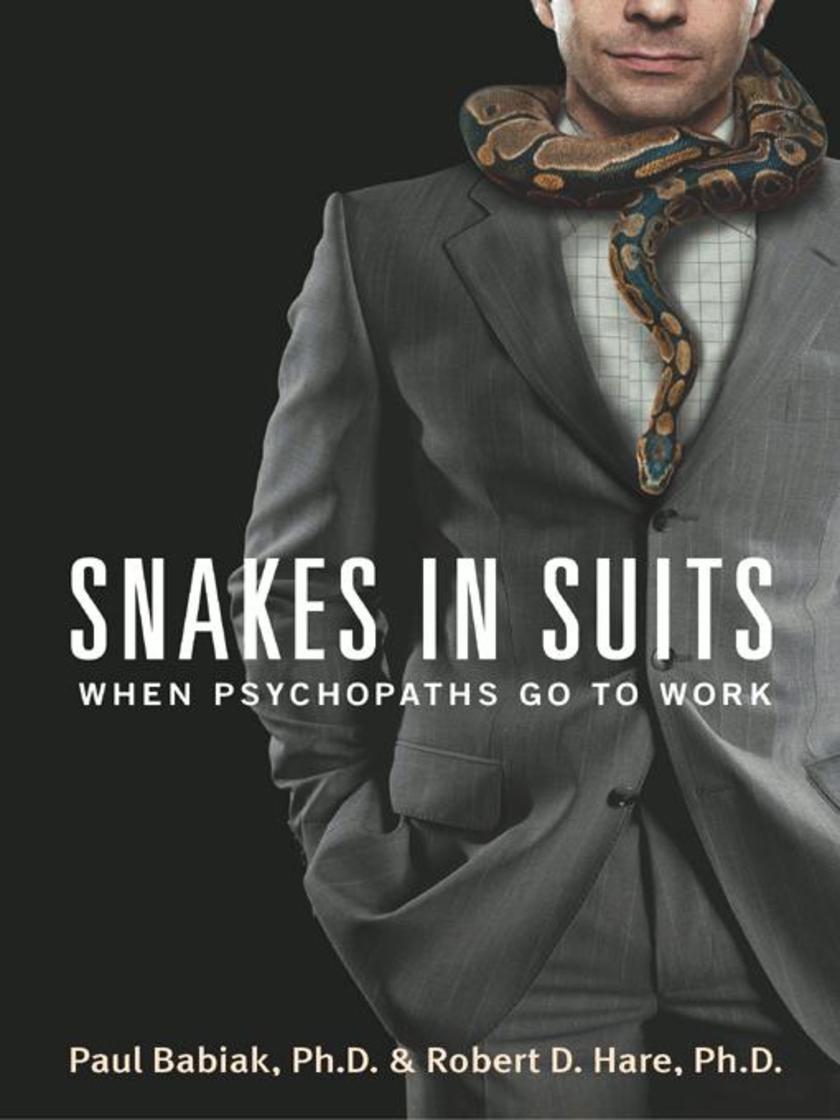
Snakes in Suits
¥99.65
Let's say you're about to hire somebody for a position in your company. Your corporation wants someone who's fearless, charismatic, and full of new ideas. Candidate X is charming, smart, and has all the right answers to your questions. Problem solved, rightMaybe not.We'd like to think that if we met someone who was completely without conscience -- someone who was capable of doing anything at all if it served his or her purposes -- we would recognize it. In popular culture, the image of the psychopath is of someone like Hannibal Lecter or the BTK Killer. But in reality, many psychopaths just want money, or power, or fame, or simply a nice car. Where do these psychopaths goOften, it's to the corporate world. Researchers Paul Babiak and Robert Hare have long studied psychopaths. Hare, the author of Without Conscience, is a world-renowned expert on psychopathy, and Babiak is an industrial-organizational psychologist. Recently the two came together to study how psychopaths operate in corporations, and the results were surprising. They found that it's exactly the modern, open, more flexible corporate world, in which high risks can equal high profits, that attracts psychopaths. They may enter as rising stars and corporate saviors, but all too soon they're abusing the trust of colleagues, manipulating supervisors, and leaving the workplace in shambles.Snakes in Suits is a compelling, frightening, and scientifically sound look at exactly how psychopaths work in the corporate environment: what kind of companies attract them, how they negotiate the hiring process, and how they function day by day. You'll learn how they apply their "instinctive" manipulation techniques -- assessing potential targets, controlling influential victims, and abandoning those no longer useful -- to business processes such as hiring, political command and control, and executive succession, all while hiding within the corporate culture. It's a must read for anyone in the business world, because whatever level you're at, you'll learn the subtle warning signs of psychopathic behavior and be able to protect yourself and your company -- before it's too late.

Consulting Demons
¥101.00
In this gripping and colorful account of the American dream gone astray, Lewis Pinault provides the essential guidelines on how to get ahead and an enlightening perspective on the brutal infighting that can engulf even the most civilized consulting firm. This stunning expose of some of the most prestigious and respected names in the business leads you into a world where a client's interests are skillfully subordinated to those of the consultants, where money rules the day, and where principles and morals are unwelcome baggage.Humorous and insightful, this no-holds-barred account takes you behind the scenes of the dehumanizing indoctrination of an academic intellectual into an exploitative -- and exploited -- "global transformation contractor." Featuring new material dealing with the e-consulting industry's boom, bust, and its future, Consulting Demons offers the most complete look at an industry that exacts the highest prices for the most questionable standards of success.
Integrity
¥105.17
Integrity more than simple honesty, it's the key to success. A person with integrity has the ability to pull everything together, to make it all happen no matter how challenging the circumstances. Drawing on experiences from his work, Dr. Henry Cloud, a clinical psychologist, leadership coach, corporate consultant and nationally syndicated radio host, shows how our character can keep us from achieving all we want to (or could) be. In Integrity, Dr. Cloud explores the six qualities of character that define integrity, and how people with integrity: Are able to connect with others and build trust Are oriented toward reality Finish well Embrace the negative Are oriented toward increase Have an understanding of the transcendent Integrity is not something that you either have or don't, but instead is an exciting growth path that all of us can engage in and enjoy.
Winning the NFL Way
¥90.77
Being an NFL coach is the ultimate high-pressure job. Every Sunday a coach makes split-second decisions that will not only decide the fate of a game, but also his team's season and, ultimately, his own job.Meet Mike Holmgren, Jon Gruden, John Fox, Andy Reid, and Mike Sherman -- top NFL head coaches whose careers rest on their ability to lead other men to win in the fiercely competitive world of professional football.In this extraordinary collaboration with their agent Bob LaMonte, each of these five coaches shares his leadership principles. LaMonte takes you behind the scenes, where you'll be a fly on the wall as these men reveal how to win beyond the X's and O's. You will see how these successful leaders communicate with different personalities, develop vision, build trust in their people, and win loyalty, as well as overcome adversity and adapt to change.Through their colorful and motivational anecdotes, you'll gain unprecedented insights into the minds of some of the best coaches today and valuable lessons on what it means to be a leader and a champion.

Setting the Table
¥95.11
In October 1985, at age twenty-seven, Danny Meyer, with a good idea and scant experience, opened what would become one of New York City's most revered restaurants Union Square Cafe. Little more than twenty years later, Danny is the CEO of one of the world's most dynamic restaurant organizations, which includes eleven unique dining establishments, each at the top of its game. How has he done itHow has he consistently beaten the odds and set the competitive bar in one of the toughest trades around?In this landmark book, Danny shares the lessons he's learned while developing the winning recipe for doing the business he calls "enlightened hospitality." This innovative philosophy emphasizes putting the power of hospitality to work in a new and counterintuitive way: The first and most important application of hospitality is to the people who work for you, and then, in descending order of priority, to the guests, the community, the suppliers, and the investors. This way of prioritizing stands the more traditional business models on their heads, but Danny considers it the foundation of every success that he and his restaurants have achieved. Some of Danny's other insights: Hospitality is present when something happens for you. It is absent when something happens to you. These two simple concepts for and to express it all. Context, context, context, trumps the outdated location, location, location. Shared ownership develops when guests talk about a restaurant as if it's theirs. That sense of affiliation builds trust and invariably leads to repeat business. Err on the side of generosity: You get more by first giving more. Wherever your center lies, know it, name it, believe in it. When you cede your core values to someone else, it's time to quit. Full of behind-the-scenes history on the creation of Danny's most famous restaurants and the anecdotes, advice, and lessons he has accumulated on his long and ecstatic journey to the top of the American restaurant scene, Setting the Table is a treasure trove of innovative insights that are applicable to any business or organization.
Once Upon a Car
¥99.65
Once Upon a Car is the brilliantly reported inside-the-boardrooms-and-factories story of Detroit's fight for survival, going beyond the headlines to chronicle how the country's Big Three auto companies General Motors, Ford, and Chrysler teetered on the brink of collapse during the 2008 financial crisis. In a tale that reads like a corporate thriller, Bill Vlasic, who has covered the auto industry for more than fifteen years, first for the Detroit News and now for the New York Times, takes readers into the executive offices, assembly plants, and union halls to introduce a cast of memorable characters, many of whom are speaking out for the first time, including the executives who struggled to save their companies but in the end had to seek a controversial, last-gasp rescue from the U.S. government.Vlasic goes behind the scenes to portray the men at the top during Detroit's last stand. Rick Wagoner, the CEO of General Motors, tried to turn around a dying company, only to be forced to resign as a condition of the government bailout. Bill Ford, great-grandson of the legendary Henry Ford, had the will to keep Ford alive but needed the guts to hire an unknown outsider, Alan Mulally, to transform the company before it crashed. At Chrysler, leadership was constantly changing as new owners tried in vain to fix the smallest of the beleaguered Big Three. And through it all, the president of the United Auto Workers union, Ron Gettelfinger, fought to save the jobs of the men and women who build American-made cars and trucks.This tale of an iconic industry in crisis is more than a big business drama and provides a rich, unvarnished portrait of how Detroit's decline affected tens of thousands of workers and dozens of communities nationwide. The story moves from the gleaming corporate skyscrapers and massive auto plants to the halls of the U.S. Congress and into the Oval Office, where President Obama and his aides wrestled with how to keep General Motors and Chrysler from going out of business. Vlasic shows why the bailout worked, and how Detroit can succeed under new leadership and build automobiles equal to any in the world. Once Upon a Car tells a uniquely American tale of success, failure, and redemption. It is an important and illuminating chapter in an astonishing story that is still unfolding. And no one is more qualified to write it than Bill Vlasic.
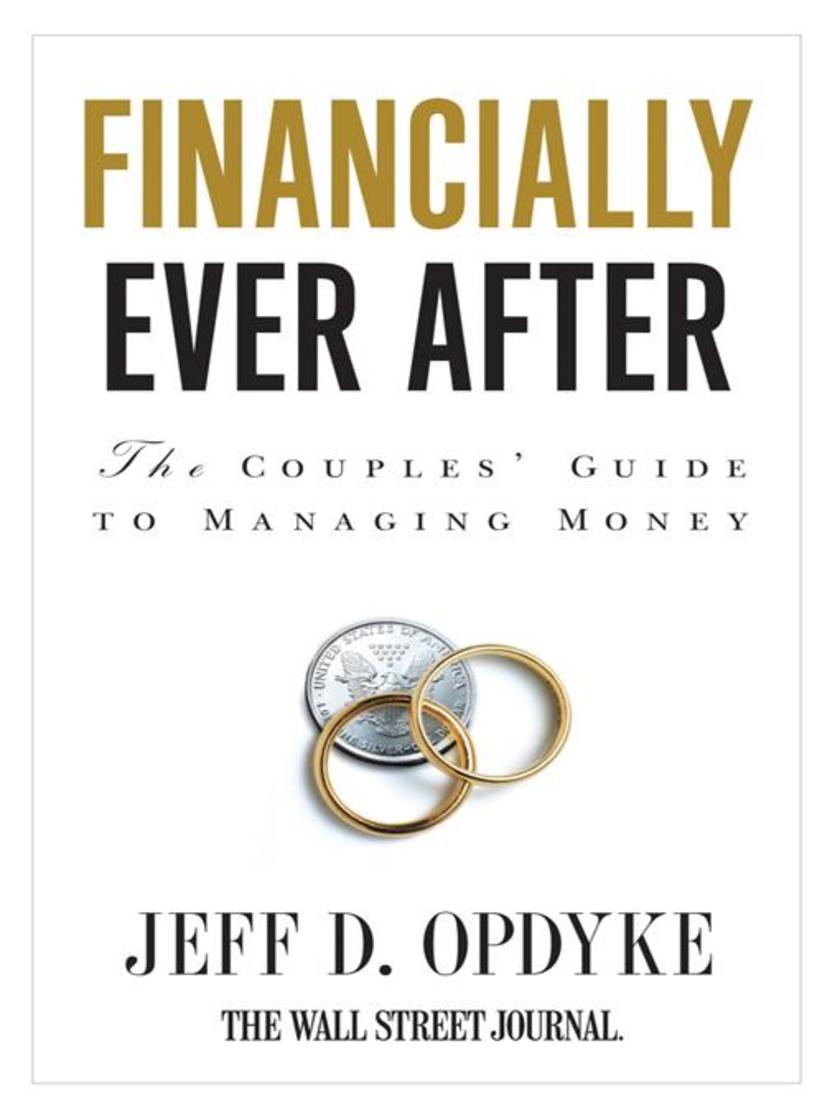
Financially Ever After
¥95.39
Your Guide to Managing the Real Dollars and the Real Emotions of Your Relationship Too often with money, couples face two choices: fight and risk making the situation worse, or keep quiet and risk making the situation worse. Financially Ever After offers a third option: family financial fluency the insight, knowledge, and vocabulary every couple needs to communicate effectively about money. Jeff D. Opdyke, previously The Wall Street Journal's syndicated "Love Money" columnist, covers any and all financial issues that couples face, including budgeting, deciding on whether to have joint or individual accounts, dividing up family financial chores, confronting debt, making major purchases, as well as handling mortgages, employment, children, and even engagement rings. He offers dozens of real-life scenarios between couples, with *s and suggestions for how to broach delicate money-related subjects with your significant other, whether he or she has a shaky credit history or is feeling left out of family financial decision-making.The book also provides helpful tools to organize your financial life, such as a budgeting chart, a "scorecard" to track spending, and an "affordability calculator" to help you figure out how much buying a house will cost you.A must-read for any couple starting out, Financially Ever After lays the groundwork for building a healthy and thriving financial life together.
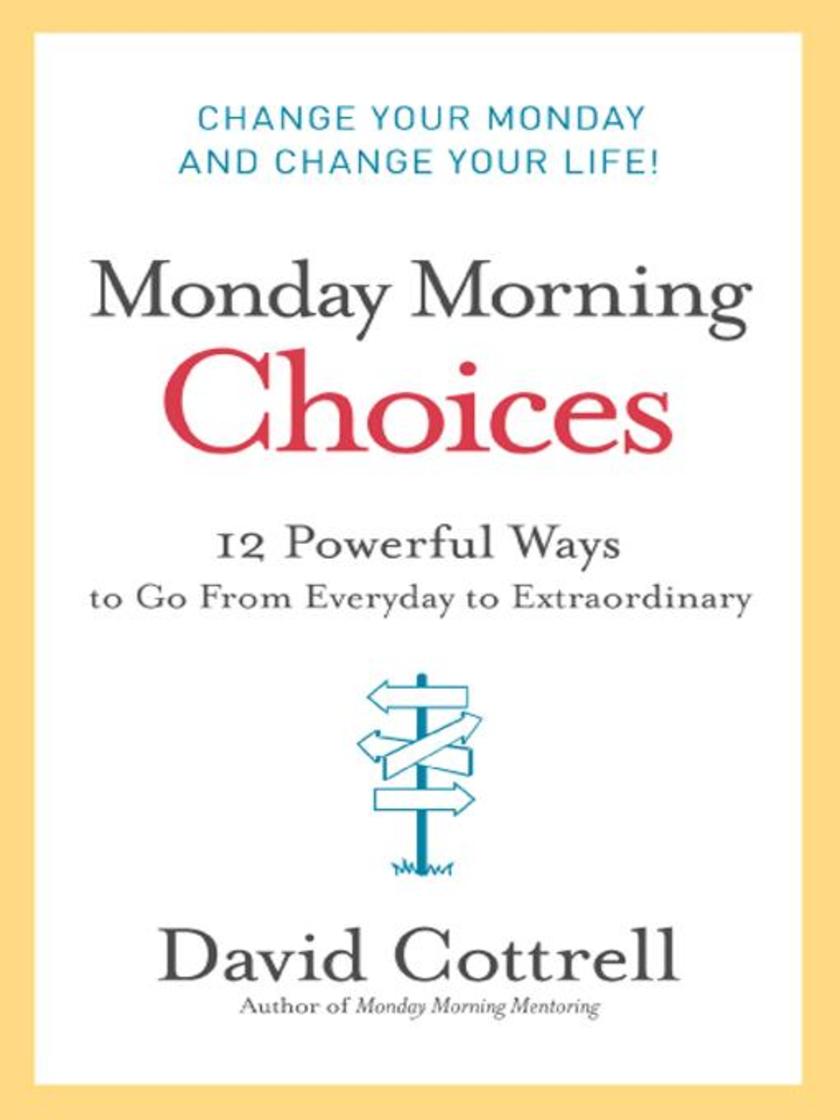
Monday Morning Choices
¥127.33
Learn to make the right decisions to achieve greater success Each of us has a different idea of success. Whether you strive for money, power, happiness, or love, your personal choices, the actions you take, and the relationships you choose to invest time and energy in, will determine whether you reach your goals. Internationally recognized leadership coach David Cottrell will show you how to make the right choices, even when they're hard.There are character choices that define the person you will be on the road to success. Cottrell shows you how to make The No-Victim Choice to overcome roadblocks, and The Integrity Choice, to listen to your gut and do the right thing, even when it's not the easiest thing to do. There are action choices you make to continue on your path to success. The Persistence Choice encourages you to bounce back from failure and learn lessons that will lead to your future success. The Do-Something Choice lets you to stop dreaming and start doing the things that will make you happy and successful. Finally, you make investment choices about the people you spend time with and develop relationships with. The Relationship Choice teaches you to invest your time in other successful people in order to contribute to your own future success.Learn to make all these choices and many more in Monday Morning Choices, and find yourself on the fast track to success!
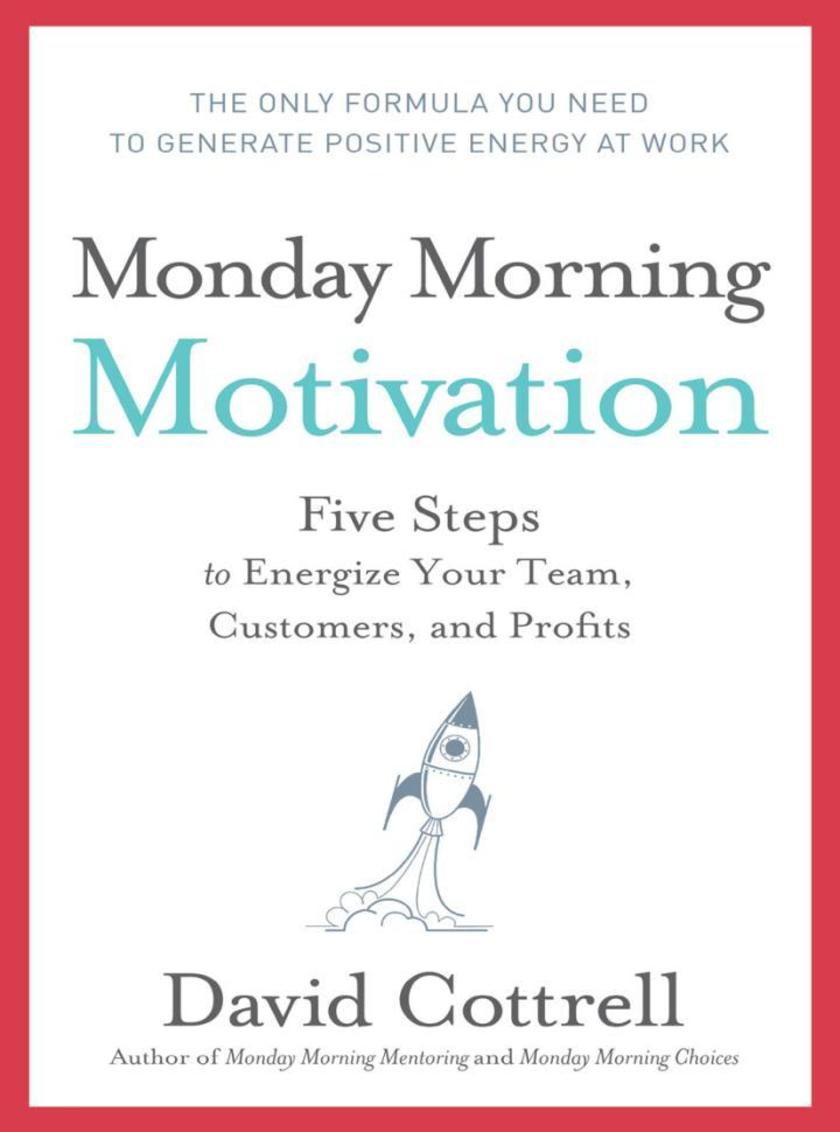
Monday Morning Motivation
¥123.63
How to generate the positive energy found in successful organizations What is organizational energyAccording to internationally recognized leadership coach David Cottrell, it is not short-term enthusiasm for the latest corporate program-of-the-week. Instead, it is grounded in something much deeper a solid commitment to an organization, its mission, and its values. When used positively, organizational energy strengthens and solidifies personal motivation, producing an unshakable desire to achieve bigger and better results. It is a precious resource your organization cannot afford to be without.In Monday Morning Motivation, Cottrell takes inspiration from Einstein's famous equation E=mc 2 to provide a step-by-step strategy you can use to access your organization's energy reservoir (E) and accelerate your people (m) to the next level of performance. Specifically, he reveals the vital conductors of energy (c) that you need to motivate your team and customers synchronization, speed, communication, customer passion, and integrity and expertly demonstrates the effect that your leadership style ( 2 ) has on the effectiveness of these conductors. Fortunately you don't need to be Einstein to learn and apply these principles to your organization. You just need one hour each week for ten weeks to consider Cottrell's helpful discussion questions and determine what you can do right now to become a better leader and motivator. If you do, you will launch your organization to greater results and a whole new stratosphere of job satisfaction.


