


 购物车
购物车 个人中心
个人中心
Welcome to the Real World
¥95.11
It's a challenging time to be young and new in the workplace. Your parents can't help the rules have all changed. In Welcome to the Real World, career expert and entrepreneur Lauren Berger arms you with the tools you need to succeed. She's been in your shoes just a few years ago she was you. This handbook tells you everything you need to know to make the most of your first on-the-job experience, including how to think about the big picture deal with rejection effectively manage your time navigate sticky situations in the office and communicate with different personality types embrace entrepreneurship regardless of position, rank, or title organize your financial situation and personal life get promoted and (one day) take your boss's job! In a world defined by uncertainty, Lauren shows you how to be bold, take risks, and understand your value.
Bounce
¥95.11
Why have all the sprinters who have run the 100 meters in under ten seconds been blackWhat's one thing Mozart, Venus Williams, and Michelangelo have in common?Is it good to praise a child's intelligenceWhy are baseball players so superstitiousFew things in life are more satisfying than beating a rival. We love to win and hate to lose, whether it's on the playing field or at the ballot box, in the office or in the classroom. In this bold new look at human behavior, award-winning journalist and Olympian Matthew Syed explores the truth about our competitive nature why we win, why we don't, and how we really play the game of life. Bounce reveals how competition the most vivid, primal, and dramatic of human pursuits provides vital insight into many of the most controversial issues of our time, from biology and economics, to psychology and culture, to genetics and race, to sports and politics. Backed by cutting-edge scientific research and case studies, Syed shatters long-held myths about meritocracy, talent, performance, and the mind. He explains why some people thrive under pressure and others choke, and weighs the value of innate ability against that of practice, hard work, and will. From sex to math, from the motivation of children to the culture of big business, Bounce shows how competition provides a master key with which to unlock the mysteries of the world.

You Can't Win a Fight with Your Boss
¥84.82
You can't win a fight with your boss.If you have ever thought otherwise, then you're dead wrong. And you're career is over, too.In this lively guide to surviving the pitfalls of the modern corporate environment, Tom Markert, a senior executive at information giant ACNielsen, presents 56 practical rules that every employee, manager, and executive must follow in order to find corporate success. With rules such as "Work hard and smart" and "Find a good boss" Markert addresses some of the most important questions facing corporate executives today. Here, in colorful and inspiring language, he offers practical advice on how to impress and make your boss look good, how to position yourself for success, and how to address work and social situations that every employee must conquer.And, most important, Markert covers the number one question in any employee's mind: How do I work with my bossHere, this book becomes an indispensable guide to corporate life. Markert draws on his experience to illustrate these rules with telling, and often funny, anecdotes about people who have not followed the rules and paid the ultimate corporate price -- failure, embarrassment, and a career stopped dead in its tracks.
Common Sense Business
¥112.00
Do you own or plan to own a small businessDo you work for a small business and desire to better understand your bossDo you know someone who owns a business and wants to be stronger, more focused, and more successfulThis is the book for you.The truth is that many business books offer a lot of wonderful sounding theories, but they have little practical application in the real world of small business. Common Sense Business is full of life-and-death ideas. Follow Steve Gottry's advice and your business will live and thrive. Ignore it and your business could founder or die. Benefit from Gottry's experience as an entrepreneur who grew a hugely successful media agency, experienced a harrowing business failure, then rebounded with a new business and a fresh start on life.Common Sense Business tells you how to succeed throughout every phase of the small business life cycle -- from starting to operating, growing, and even closing down a business. No matter the state of the economy or the maturity of your business, you will find winning solutions to the questions and situations you face every day. Steve Gottry will help you understand yourself; your employees, customers, and vendors; and how people come together to form a successful business. You will learn how to maximize your business's assets and how to ward off those threats that could eat away at your resources and peace of mind, including debt, sloppiness, addiction, and fear. Warm, honest, funny, and factual, entrepreneur Steve Gottry tells the whole truth about successfully managing a business through good times and bad.

The Transparent Leader
¥83.93
Drawing on his experience as a leader in some of the nation's largest corporations, Baum issues a convincing call for honest, ethical, "transparent" dealing throughout the business world. Baum outlines the management techniques he uses within and without the company to get outstanding results without skirting the rules or bending the truth. Baum maintains that by fostering trust, integrity and accountability at all levels within the corporation, managers can stop the erosion of employee loyalty, restore consumer trust in brands, products, and American business. Baum teaches executives fresh ways of managing Wall Street analysts, communicating with shareholders, and wading through the complex maze of social responsibility issues.As a member of six corporate boards, Baum offers unique insight into transparent leadership, including the advantages and pitfalls of corporate governance, and the pressures executives face in reporting earnings. He also discusses the importance of setting standards for ethical business practices, yet highlights the dangers of government regulations that may result in excessive compliance costs at the expense of shareholders, creative risk taking, and innovation.
Leaders
¥94.10
In this illuminating study of corporate America's most critical issue leadership world-renowned leadership guru Warren Bennis and his co-author Burt Nanus reveal the four key principles every manager should know: Attention Through Vision, Meaning Through Communication, Trust Through Positioning, and The Deployment of Self. In this age of "process", with downsizing and restructuring affecting many workplaces, companies have fallen trap to lack of communication and distrust, and vision and leadership are needed more than ever before. The wisdom and insight in Leaders addresses this need. It is an indispensable source of guidance all readers will appreciate, whether they're running a small department or in charge of an entire corporation.

The Truth About Money 3rd Edition
¥112.23
Home Sweet Home:How to buy your first home, your next home and save on taxes when you sell.A-Z of Investments:From annuities to zero-coupon bonds, go from owing money to OWNING money. Get out of debt (and stay that way).Estate Planning Long-Term Care:Learn how to protect yourself and your family.

Kiss Your BUT Good-Bye
¥143.95
A simple, engaging, and eminently practical guide to overcoming your weaknesses your "Buts" to achieve the career and personal relationships you want Imagine a workplace where all the employees are aware of the things they do or fail to do that prevent them from being more productive and valuable. Imagine a company where everyone speaks openly and honestly about his or her weaknesses and is committed to strengthening and overcoming them. Imagine an environment where colleagues help one another become more efficient and less disruptive by speaking the truth about what detracts from the team's efforts and objectives. Imagine a place where the firm's most talented employees know exactly what they need to do to attain a leadership position. This is no fantasy workplace: it can be your business if you listen to Joe Azelby and Bob Azelby, brothers and successful executives in their own right.Kiss Your BUT Good-Bye will help all professionals find their individual BUT whether it's a lack of skills, a distracting behavior, or a personality quirk that interferes with achieving success. Using road-tested techniques, Kiss Your BUT Good-Bye helps you examine your BUT, understand it, manage it, cover it, and most important, shrink it. It also enables managers to help their employees discover personal weaknesses and to learn how to deliver the direct, honest feedback every worker needs and deserves.Finding your BUT can be tough medicine, but the Azelbys deliver it with a tasty spoonful of sugar. Get ready for success . . . get ready to Kiss Your BUT Good-Bye.
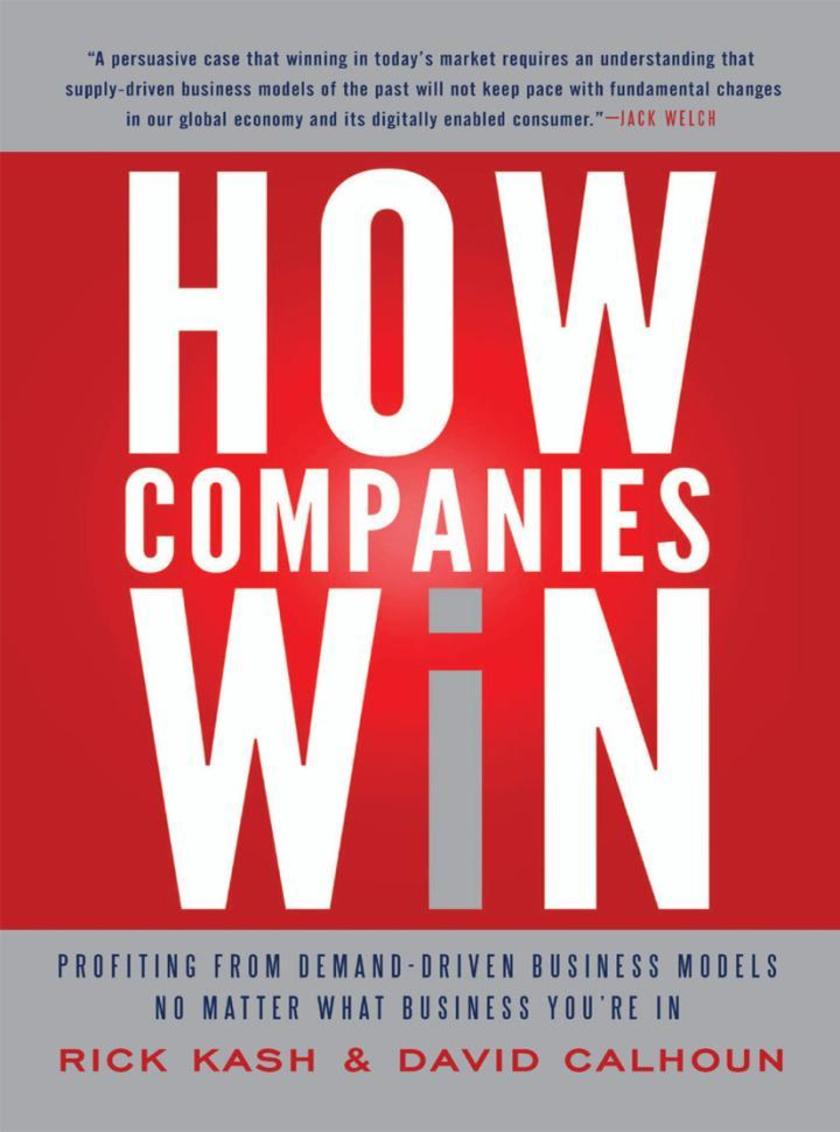
How Companies Win
¥149.48
For the past twenty years, the growth formula for business has been to increase revenues by expanding product offerings and streamlining supply. But with the recent global recession, the world economy has changed forever. Now the old tools most notably supply-chain management are no longer enough. In a new digital age characterized by over-supply and too many product types in almost every market, the new challenge is to locate and capture the elusive pools of high-profit demand.Rick Kash and David Calhoun have the answer: a revolutionary, demand-driven model that has already proved successful for some of the world's most admired companies, including Best Buy, Anheuser-Busch, Hershey's, and Allstate. At the heart of this powerful new business model is an achievable vision for a new kind of winning company, one that uses sophisticated new tools and techniques to discover, characterize, and then serve these pools of high-profit demand and in the process gain pricing power in that market. Kash and Calhoun show how to use everything from social networks to more revealing and effective consumer-research techniques and then introduce the demand chain, the logical new partner to your supply chain. The authors' principles, case histories, and insights will help your business run faster, cut costs, and become better able to deliver high-quality products and services, even in the tightest economic climate.How Companies Win is a compelling call to action to engage every level within a company, small or large, local or global.
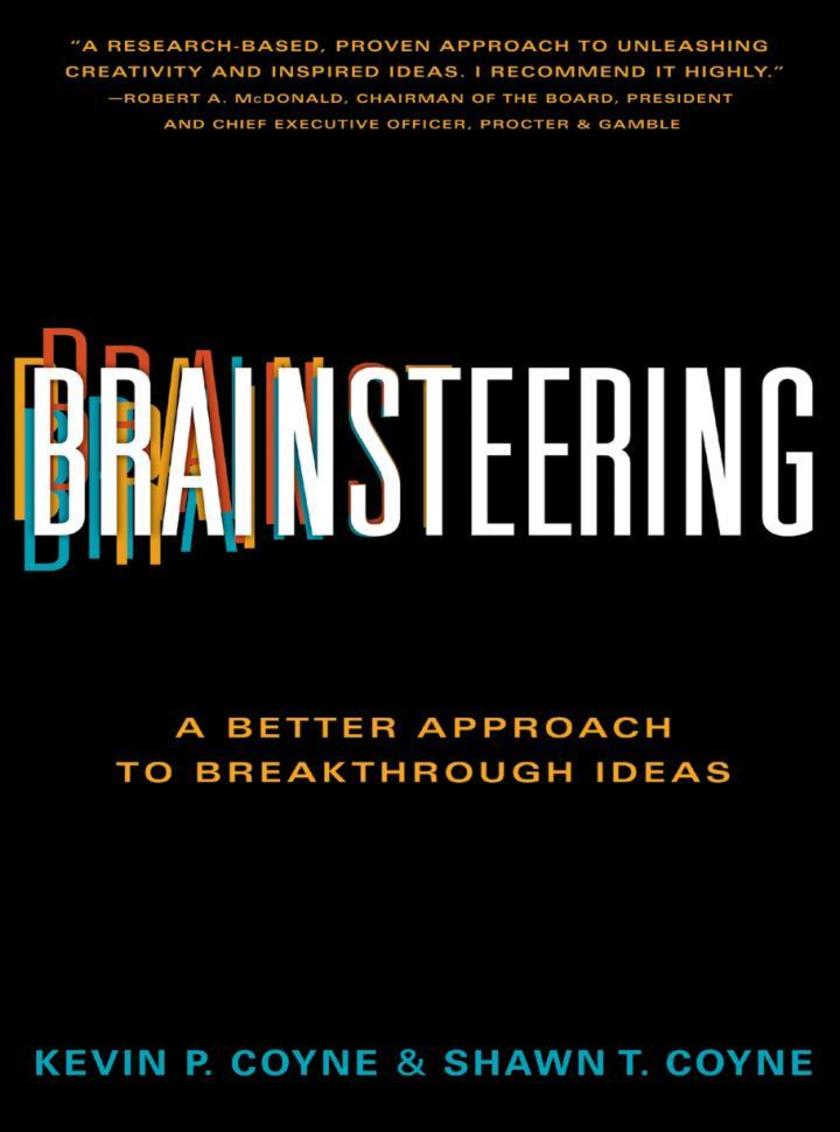
Brainsteering
¥151.53
Change the way you think about new ideas by steering your creativity in new and more productive directions. Ideas. Whether the goal is to create a billion-dollar business, fix a broken process, reduce expenses, or simply find the perfect gift for that special someone, we all need a steady stream of breakthrough ideas and we've all learned from experience that traditional brainstorming doesn't generate them.Former McKinsey consultants Kevin P. Coyne and Shawn T. Coyne have spent more than a decade developing a better approach Brainsteering that takes brainstorming and other outdated ideation techniques and "steers" them in a more productive direction by better reflecting the way human beings actually think and work in creative problem-solving situations. By introducing just the right amount of structure into the process, and asking just the right questions, Brainsteering has helped Fortune 500 companies, small not-for-profits, and individuals alike generate ideas they previously could never have imagined.Peppered with thought-provoking and entertaining examples drawn from the workplace and popular culture, Brainsteering can help anyone develop breakthrough ideas, whether working alone on a one-time problem or turning an entire organization into an ongoing "idea factory." And getting started is easy: simply ask the right questions, and good ideas will follow.
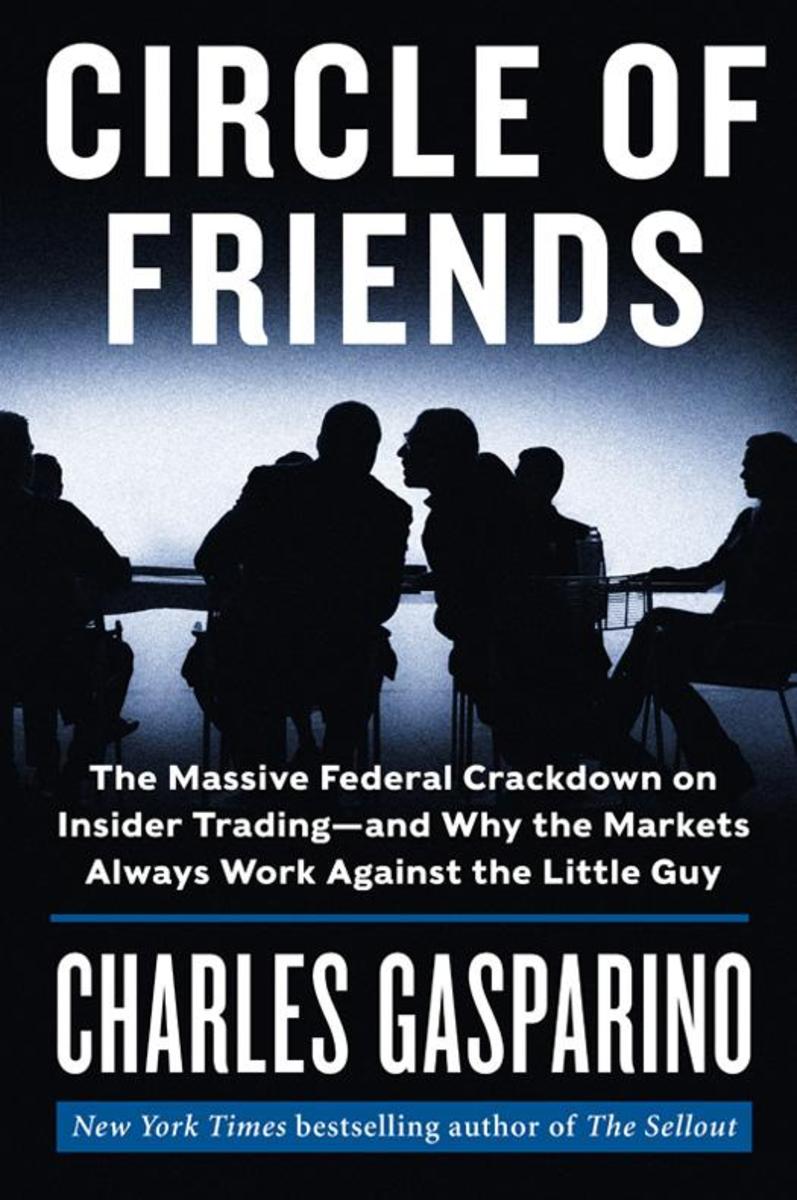
Circle of Friends
¥162.76
The bestselling author of The Sellout tells the explosive story of the government’s crackdown on insider-trading networks an investigation that has already racked up more than 60 convictions.In Circle of Friends, award-winning journalist Charles Gasparino one of Wall Street's most knowledgeable observers follows government investigators and prosecutors as they pursue one of the most aggressive and broad-reaching series of insider-trading cases in the nation's history. A richly textured page-turner of investigative journalism based on extensive reporting, Circle of Friends chronicles the massive federal crackdown that has already put some of the biggest names on Wall Street behind bars, including Raj Rajaratnam, founder of the Galleon Group, and Rajat Gupta, a former CEO of consulting giant McKinsey & Co. Other similarly sized targets are still waiting nervously, including the biggest one of them all financial impresario Steve Cohen of SAC Capital, the giant hedge fund that has confounded regulators for years by cranking out a steady stream of market-busting returns.Gasparino goes behind the headlines to reveal how the government makes its case, using every tool at its disposal and at great expense to taxpayers to supposedly make the investing world safer for average Americans. Gasparino asks why federal officials are so eager to prosecute these cases: What is the real damage to individualsDo average investors really careHe explores why insider trading is all the rage these days when the U.S. government has failed to bring a single criminal case against the culprits who caused the 2008 financial crisis. Circle of Friends is not a defense of insider trading, but it does offer an account of the politics of Wall Street crime fighting, revealing the behind-the-scenes ambitions that motivate headlines and burnish political careers. A riveting work of narrative nonfiction, as engrossing and explosive as fictional thrillers of the finest magnitude, Circle of Friends is a wakeup call to the investing public.
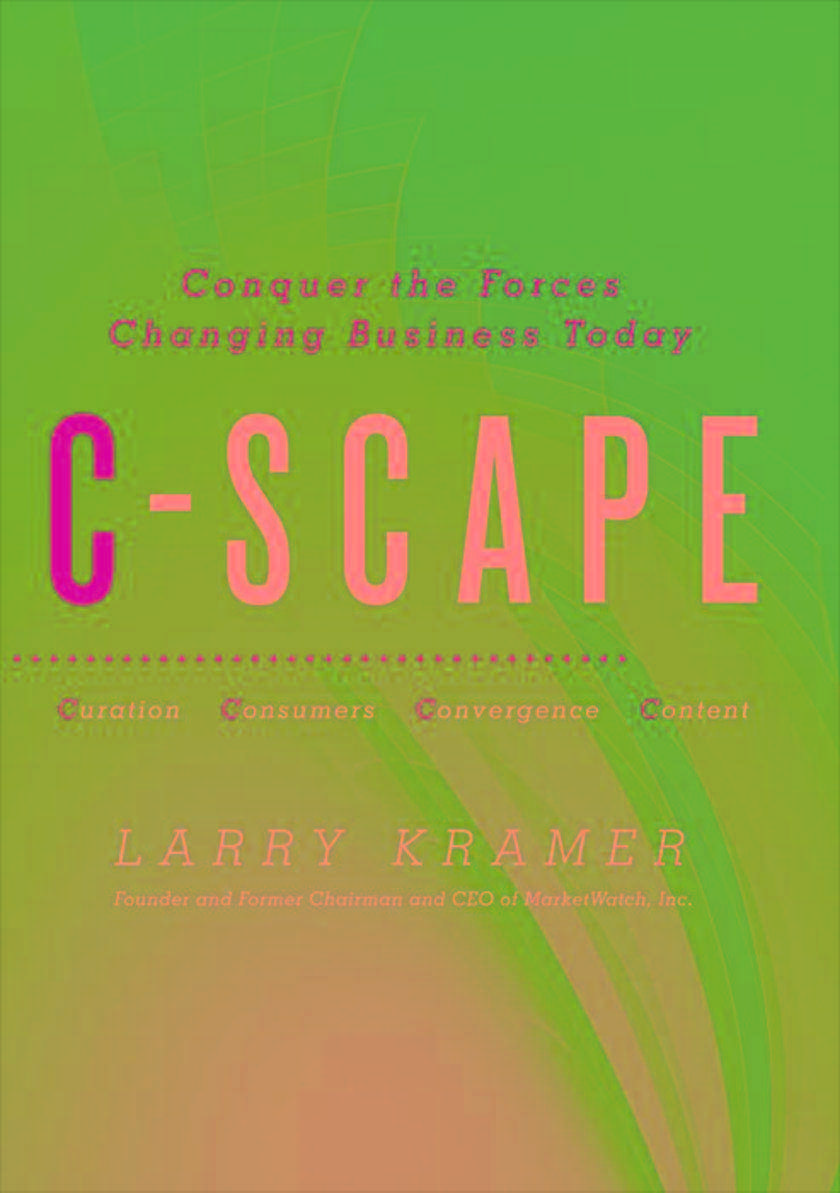
C-Scape
¥157.15
A bold, pioneering book that shows how businesses can survive and thrive in the digital media revolution Not so long ago, the business landscape was easier to chart. The routes connecting customers, companies, products, and services were predictable, reliable, and understood. Today, that landscape has been upended, and in its place a "C-Scape" has emerged a world where consumers, not producers and marketers, make the choices; where content, not distribution, is king; where curation becomes a primary currency of value; and where convergence continues to revolutionize every part of every business. In C-Scape, Larry Kramer leads the reader through this new, evolving world where the challenges are daunting but the opportunities are huge.A seasoned journalist turned superstar digital entrepreneur and venture capitalist, Kramer learned early on to survive and overcome the forces that are remaking the business landscape: the digital media revolution. Why mediaEvery aspect of every business is increasingly carried out through the media. From advertising and marketing to sales and customer service, from product design to manufacturing, everything that happens anywhere in business is ever more likely to happen on a screen or handheld device. That means any business could fall to the same threats facing the newspaper business and the music industry unless that business learns to navigate the four Cs. Kramer's explanation of this new landscape is a revelation; his visionary advice is both crucial and urgent. No leader, whether at the helm of a small business or a conglomerate, will read this book without seeing the business world anew and finding practical ways to put this book's four powerful precepts immediately to work.
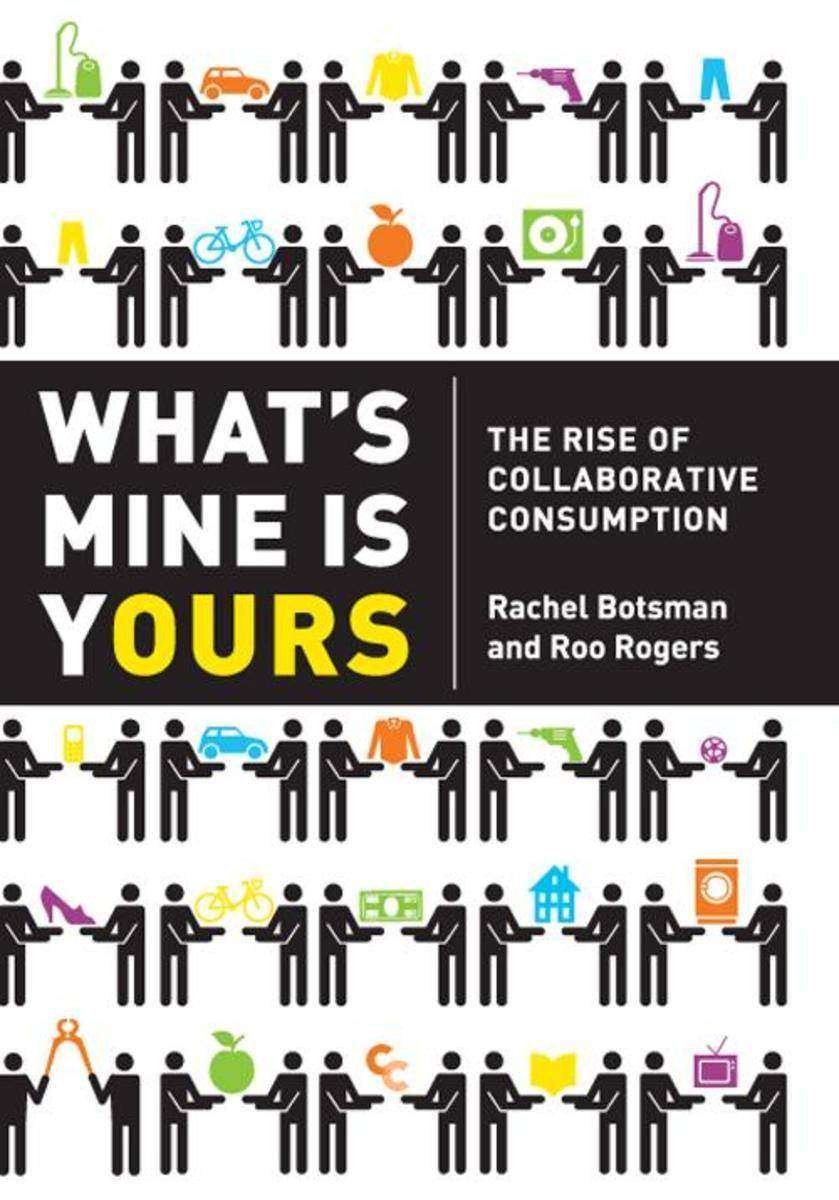
What's Mine Is Yours
¥151.10
WHAT'S MINE IS YOURS is about Collaborative Consumption, a new, emerging economy made possible by online social networks and fueled by increasing cost consciousness and environmental necessity. Collaborative Consumption occurs when people participate in organized sharing, bartering, trading, renting, swapping, and collectives to get the same pleasures of ownership with reduced personal cost and burden, and lower environmental impact. The book addresses three growing models of Collaborative Consumption: Product Service Systems, Communal Economies, and Redistribution Markets. The first, Product Service Systems, reflects the increasing number of people from all different backgrounds and across ages who are buying into the idea of using the service of the product-what it does for them-without owning it. Examples include Zipcar and Ziploc, and these companies are disrupting traditional industries based on models of individual ownership. Second, in what the authors define as Communal Economies, there is a growing realization that as individual consumers, we have relatively little in the way of bargaining power with corporations. A crowd of consumers, however, introduces a different, empowering dynamic. Online networks are bringing people together again and making them more willing to leverage the proverbial power of numbers. Examples of this second category include Etsy, an online market for handcrafts, or the social lending marketplace Zopa. The third model is Redistribution Markets, exemplified by worldwide networks such as Freecycle and Ebay as well as emerging forms of modern day bartering and swap trading such as Zwaggle, Swaptree, and Zunafish. Social networks facilitate consumer-to-consumer marketplaces that redistribute goods from where they are not needed to somewhere or someone where they are. This business model encourages reusing/reselling of old items rather them throwing them out, thereby reducing the waste and carbon emissions that go along with new production.WHAT'S MINE IS YOURS describes how these three models come together to form a new economy of more sustainable consumerism. Collaborative Consumption started as a trend in conjunction with the emergence of shared collective content/information sites such as Wikipedia and Flickr and with the recent economic troubles and increasing environmental awareness, it is growing into an international movement. The authors predict it will be a fully fledged economy within the next five years.In this book the authors travel among the quiet revolutionaries (consumers and companies) from all around the world. They explore how businesses will both prosper and fail in this environment, and, in particular, they examine how it has the potential to help create the mass sustainable change in consumer behaviors this planet so desperately needs. The authors themselves are environmentalists, but they are also entrepreneurs, parents, and optimistic citizens. This is a good news book about long-term positive change.
Put More Cash in Your Pocket
¥94.10
Quit worrying about debt. . . .Forget penny-pinching. . . . Stop sacrificing. . . . Forget saving money. You don't get wealthy by putting your money away in a bank account, nor do you become poor just because you bought yourself an extra latte. You get rich by making money . . . and America's leading money-making expert Loral Langemeier can show you how.A timely book with a counterintuitive message, Put More Cash in Your Pocket helps you create your own "lemonade stand" by getting paid for the things you already do. By following Loral's simple and straightforward approach, you'll put more cash as much as $1,000 a month in your pocket in no time.
Getting from College to Career
¥99.65
Get Ready for the Real World How do you get a job without experience and get experience without a jobIt’s the question virtually every college student or recent graduate faces. Now newly revised and updated, Lindsey Pollak’s Getting from College to Career is the definitive guide to building the experience, skills, and confidence you need to succeed in the job search, offering action-oriented tips and strategies ranging from the simple to the expert. Learn how to: ?Get the best tools for career prep and job hunting ?E-mail like a professional ?Go global ?Practice the eight essentials of internship achievement ?Perform five minutes of stand-up ?Overprepare for interviews ?Persist without being a pest Getting from College to Career gives you the essential information and guidance you need to get your foot in the door of the real world. Don’t start your first job search without it!
Punk Marketing
¥101.00
The marketing revolution is here, so get on the right side of the barricade and become a part of it! Let's thank Mr. and Mrs. Consumer and their little Consumerlings who have seized power from the corporations and are now firmly in control. In Punk Marketing, Laermer and Simmons take an irreverent, penetrating look at the seismic change in the relationship between the people who sell stuff products, services, entertainment and those who purchase it. They demonstrate that to survive in business, a revolutionary approach is needed one they have branded "Punk Marketing" and it's one we all need to understand, for the traditional divisions among commerce, content, and consumers are continuing to blur ever more rapidly.Never dull, sometimes controversial, but always a helluva lot of fun, Punk Marketing presents a manifesto for any businessperson needing to engage consumers or any consumer seeking to understand and employ their newfound power. And here's the good news: It's based on principles that have existed forever. In an age of digital video recorders, "branded" entertainment, cell-phone TV, multiplayer online games, and never-ending social networking, a coherent approach to marketing has never been more vital. With Punk Marketing, there's a built-in plan to equip you with tools to make all this change work out just fine, thanks.Punk Marketing is the first shot soon to be heard 'round the world of a long-awaited and breathless uprising that businesses want, deserve, and desperately need.
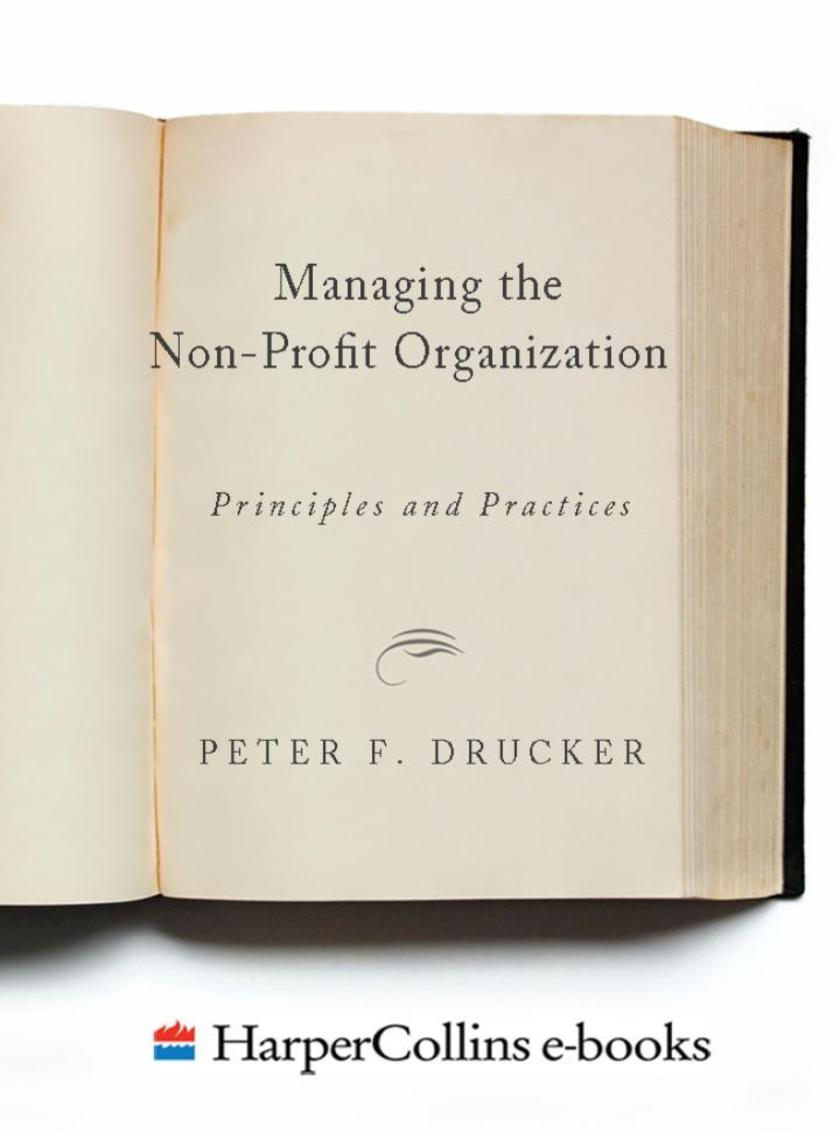
Managing the Non-Profit Organization
¥93.88
The groundbreaking and premier work on nonprofit organizations.The nonprofit sector is growing rapidly, creating a major need for expert advice on how to manage these organizations effectively. Management legend Peter Drucker provides excellent examples and explanations of mission, leadership, resources, marketing, goals, and much more. Interviews with nine experts also address key issues in this booming sector.
HarperCollins e-books
¥138.41
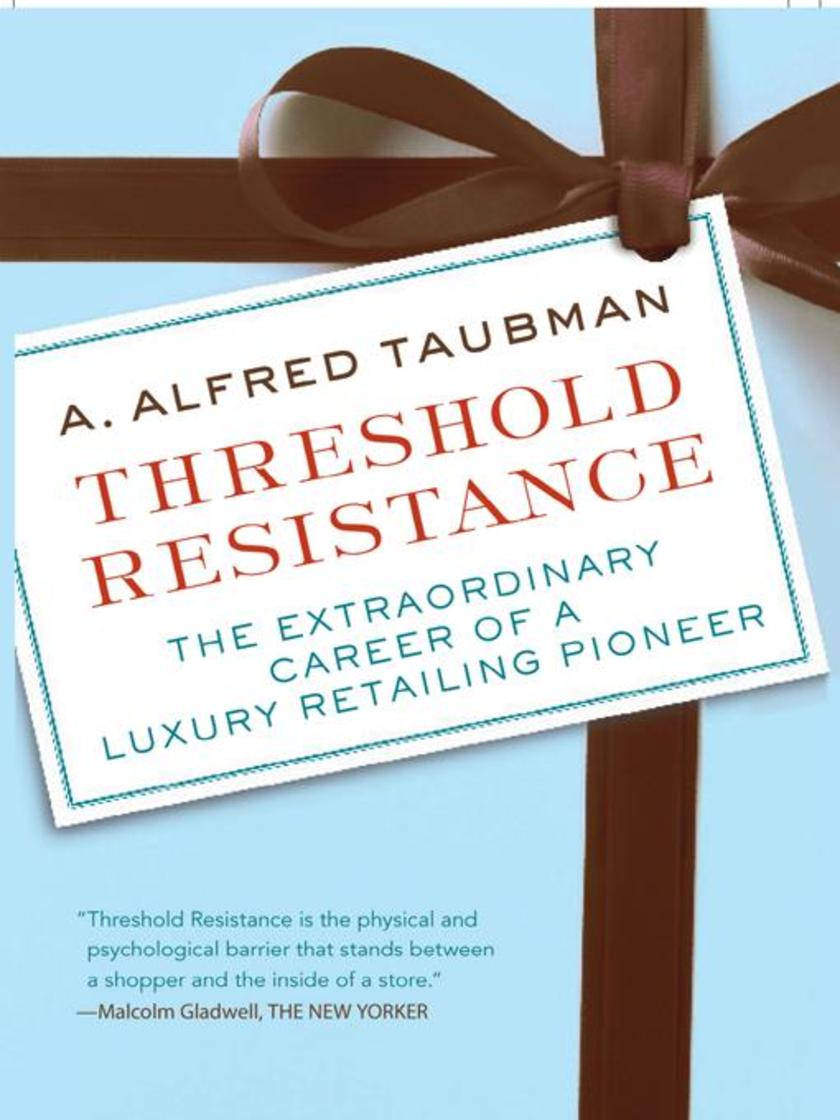
In this candid memoir, A. Alfred Taubman explains how a dyslexic Jewish kid from Detroit grew up to be a billionaire retailing pioneer, an intimate of European aristocrats and Palm Beach socialites, a respected philanthropist and, at age 78, a federal prisoner. With a unique blend of humor and genius, Taubman shows how selling fine art and antiques really isn't that different from marketing root beer or football, and offers penetrating insights into that quintessential palace of commerce, the luxury shopping mall. Alfred Taubman may not have invented the modern shopping center but, in the words of The New Yorker, "he perfected it."Taubman's life has been a storybook success, with its share of unique challenges. A pioneer builder and innovative real estate developer, he was also a brilliant land speculator, operator of a quick-serve restaurant chain, and owner of a major department store company. But what seemed like the pinnacle of his career, buying and reinventing the venerable art auction house Sotheby's, would lead to his conviction in an international price fixing scandal.Despite the twists and turns, Taubman's life and business philosophy can be summed up in one evocative phrase: Threshold Resistance. Understanding and defeating that force breaking down the barriers between art and commerce, between shoppers and merchandise, between high culture and popular taste has been his life's work.

HarperCollins e-books
¥141.57
"It began with a promising cancer drug, the brainchild of a gifted researcher, and grew into an insider trading scandal that ensnared one of America's most successful women. The story of ImClone Systems and its "miracle" cancer drug, Erbitux, is the quintessential business saga of the late 1990s. It's the story of big money and cutting-edgescience, celebrity, greed, and slipshod business practices; the story of biotech hype and hope and every kind of excess.At the center of it all stands a single, enigmatic figure named Sam Waksal. A brilliant, mercurial, and desperate-to-be-liked entrepreneur, Waksal was addicted to the trappings of wealth and fame that accrued to a darling of the stock market and the overheated atmosphere of biotech IPOs. At the height of his stardom, Waksal hobnobbed with Martha Stewart in New York and Carl Icahn in the Hamptons, hosted parties at his fabulous art-filled loft, and was a fixture in the gossip columns. He promised that Erbitux would "change oncology," and would soon be making $1 billion a year.But as Waksal partied late into the night, desperate cancer patients languished, waiting for his drug to come to market. When the FDA withheld approval of Erbitux, the charming scientist who had always stayed just one step ahead of bankruptcy panicked and desperately tried to cash in his stock before the bad news hit Wall Street.Waksal is now in jail, the first of the Enron-era white-collar criminals to be sentenced. Yet his cancer drug has proved more durable than his evanescent profits. Erbitux remains promising, the leading example of a new way to fight cancer, and patients and investors hope it will be available soon.

I Shouldn't Be Telling You This
¥94.10
Kate White New York Times bestselling author, editor in chief of Cosmopolitan for fourteen years, and motivational speaker shares her gutsy secrets to success in this witty, straight-talking new career guide for women.Whether you've just settled into your first work cubicle and have no clue how to go after the success you crave, or you've already got a sweet little office but you aren't sure how to take your career to the next level, I Shouldn't Be Telling You This gives you all the secrets you need to become a success, go big with it, and then savor every second. It is jam-packed with insider strategies, interviews with women at the top of their game, and Kate's advice from her own career running five major magazines (including one of the bestselling women's magazines in the world, Cosmopolitan). She hows you how to break out of the pack, master the learning curve, make bold moves, and, ultimately, have the career you've always lusted for!Kate shares five secrets every woman needs to know how to:Land a Job You're Truly Passionate About Use "Bitch Envy" to Your Advantage Radiate Confidence and Get Buzzed About (Without Worrying What Other People Think)Ask for the Money You Want and Get It Manage Your Career and Not Just Your Job (It's a Whole Different Ball Game!)But more than anything, Kate says, you have to go big or go home do what's unexpected and always keep your career trajectory in mind. It might be tackling a project that no one else is taking on and nailing it then making sure your boss knows it. Or it might be developing a "golden gut" that will help you to break the rules the right way, so you always end up shining. In I Shouldn't Be Telling You This, Kate White shares the kinds of secrets no boss is ever likely to spill all with her irreverent wit and candid style. You'll come away with the know-how you need and you'll feel as though you've just gotten up from a fabulously dishy lunch!

The Die Broke Financial Problem Solver
¥77.54
If you're loosing sleep over your financial worries, help is here at last.Whether you're fretting over a mortgage that's been denied; a loan that's delayed; a marriage settlement that seems unfair; or a business that's struggling, this extraordinary book will not only help you rest easy, it will show you how to turn adversity into success.Here you'll learn the Pollan method for turning no into yes: how to determine your problem; how to make sure you're dealing with only one problem at a time; and how to create an environment of trust. With literally hundreds of scenarios to illustrate it's success, this unique and practical method will make you feel like you've got a coach, strategist, and motivator at your beck and call -- and will help you sleep well, knowing you're on the way to getting what you want.


