


 购物车
购物车 个人中心
个人中心
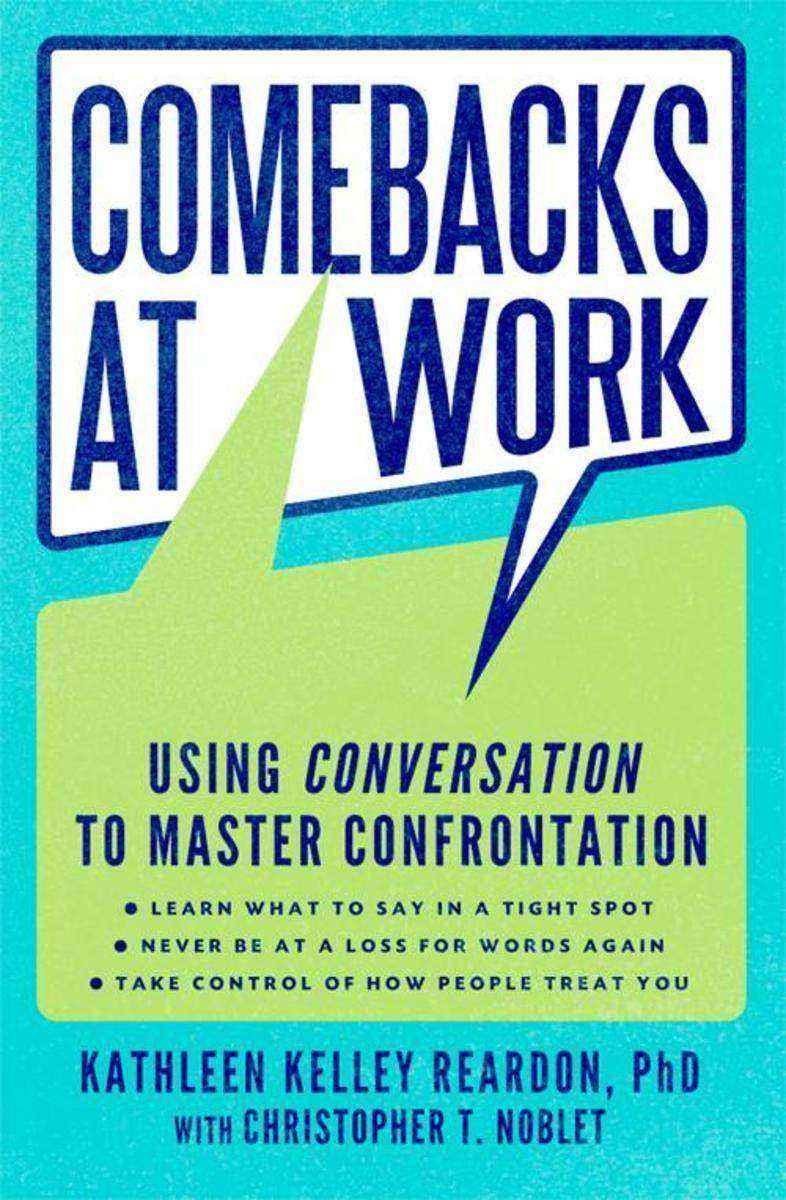
Comebacks at Work
¥138.41
The workplace guide to putting "I wish I'd said" moments in the past Ever wish that you could have a "do over" after a conversation at workDo you often find yourself regretting what you've said to a coworker or kicking yourself for not saying something better, stronger, or more preciseIf so, you're like most people, and in Comebacks at Work, management professor and consultant Kathleen Kelley Reardon, Ph.D., provides the tips and tools you need to know what to say and how to say it better next time.In this compelling, entertaining book, Reardon argues that we are responsible for 75 percent of the way we're treated at work, and our success or failure at the workplace depends largely on how we handle ourselves in conversation with our colleagues. To break free of the stale *s and expected actions that allow politically astute people to manipulate us, we must increase our conversational awareness and effectively employ what Reardon calls "comebacks." Comebacks at Work provides a game plan for doing so and explains: Why some comebacks work, while others fall flat; Why our mind goes blank when we are confronted, and how to overcome that response; How to determine which comebacks work, and when to use them. Every conversation is different, and while many situations are common, one set of comebacks isn't enough. Offering a personalized repertoire of comebacks and a plan for using them strategically as well as the skills you will need to package them for maximum effect, Comebacks at Work will prepare you for any difficult conversation that comes your way.
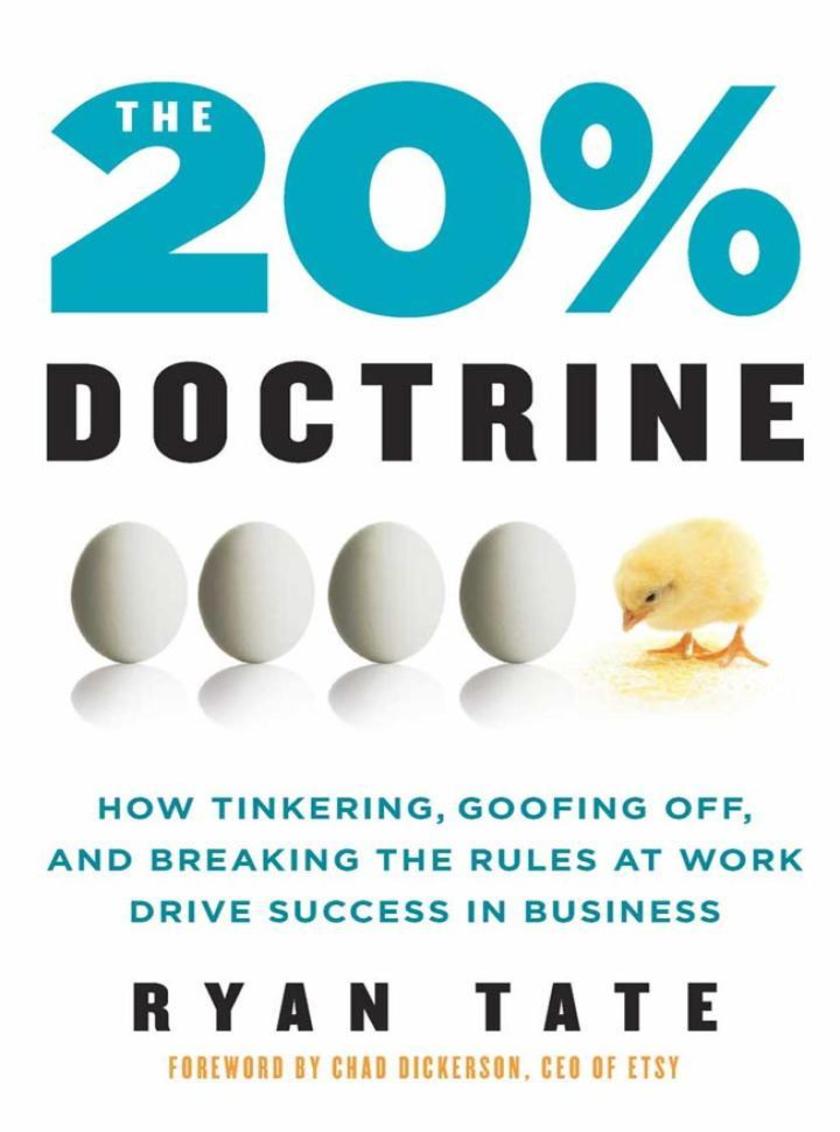
The 20% Doctrine
¥145.91
An inspiring exploration of how unorthodox business practices and the freedom to experiment can fuel innovationWe're at a crossroads. Many iconic American companies have been bailed out or gone bankrupt; others are struggling to survive as digitization and globalization remake their industries. At the same time, the tectonic forces disrupting U.S. corporations ubiquitous bandwidth and computing power, cheap manufacturing and distribution have enabled large organizations to foster new innovations and products through experiments that are at once more aggressive and less risky than they would have been twenty years ago. At companies such as Google, employees are encouraged to spend 20% of their work time on projects they're personally interested in. Almost half of Google's new product launches have originated from this policy, including Gmail and AdSense. Now other companies have adopted the concept, providing them a path to innovation and profits at a time of peril and uncertainty and offering employees creative freedom when many are feeling restless.The 20% Doctrine is about goofing off at work, and how that goofing off can drive innovation and profit. Here Ryan Tate examines the origins and implementation of 20% time at Google, then looks at how other organizations such as Flickr, the Huffington Post, and even a school in the Bronx have adapted or reinvented the same overall concept, intentionally and serendipitously. Along the way, he distills a series of common themes and lessons that can help workers initiate successful 20% style projects within their own organizations. Only through a new devotion to the unhinged and the ad hoc can American businesses resume a steady pace of development and profitability.
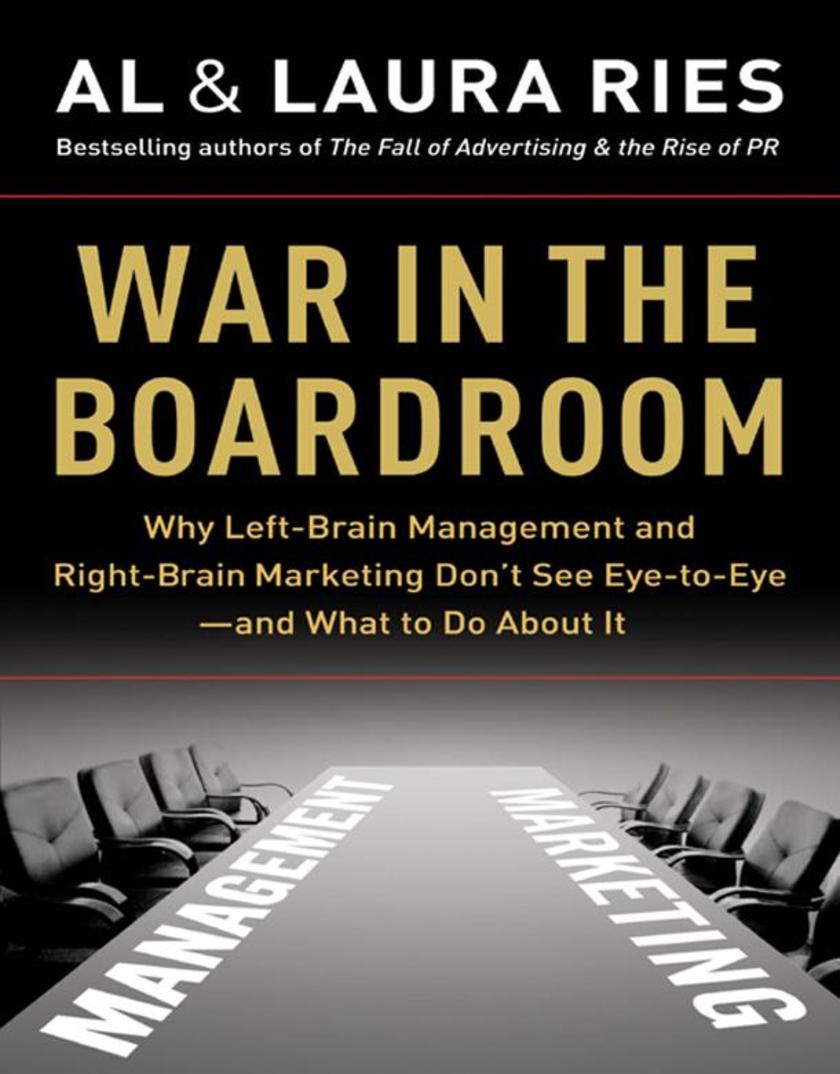
War in the Boardroom
¥151.53
Renowned business gurus Al and Laura Ries give a blow-by-blow account of the battle between management and marketing and argue that the solution lies not in what we think but in how we think There's a reason why the marketing programs of the auto industry, the airline industry, and many other industries are not only ineffective, but bogged down by chaos and confusion.Management minds are not on the same wavelength as marketing minds.What makes a good chief executiveA person who is highly verbal, logical, and analytical. Typical characteristics of a left brainer.What makes a good marketing executiveA person who is highly visual, intuitive, and holistic. Typical characteristics of a right brainer. These different mind-sets often result in conflicting approaches to branding, and the Ries' thought-provoking observations culled from years on the front lines support this conclusion, including: Management deals in reality. Marketing deals in perception. Management demands better products. Marketing demands different products. Management deals in verbal abstractions. Marketing deals in visual hammers. Using some of the world's most famous brands and products to illustrate their argument, the authors convincingly show why some brands succeed (Nokia, Nintendo, and Red Bull) while others decline (Saturn, Sony, and Motorola). In doing so, they sound a clarion call: to survive in today's media-saturated society, managers must understand how to think like marketers and vice versa. Featuring the engaging, no-holds-barred writing that readers have come to expect from Al and Laura Ries, War in the Boardroom offers a fresh look at a perennial problem and provides a game plan for companies that want to break through the deadlock and start reaping the rewards.

Five Frogs on a Log
¥221.54
A riddle: Five frogs are sitting on a log. Four decide to jump off. How many are leftAnswer: Five WhyBecause there's a difference between deciding and doing. Written by Mark L. Feldman and Michael F. Spratt of PricewaterhouseCoopers, Five Frogs on a Log offers readers an entertaining and no-nonsense field guide to the mergers and acquisitions jungle, packed with insight and instruction for executing corporate change and capturing shareholder value. Whether you're buying another company or acquiring a new vision of the future, this book proffers an unconventional perspective and a practical, readily accessible set of solutions to the single greatest challenge facing today's managers: executing rapid transitions ion mergers, acquisitions and gut wrenching change. Designed for corporate managers and CEOs caught up in the whirlwind of change, every chapter provides accessible ideas and wisdom for navigating the most demanding business transitions. The authors offer a unique hands-on perspective based on their work with top Fortune 500 firms. As they state: "Increasingly, the companies that win are those that learn faster, act quicker and adapt sooner. They will compress time by making and executing early, informed decisions about economic value creation, ruthless prioritization and focused resource allocation. They will use these decisions to take early firm stands on management deployment, organization structure and culture. Their actions will increasingly be linked to long-term, sustained economic value creation." The advice and expertise offered in this book can be used to solve a range of operational problems from speeding up new product development to merging two businesses; from changing company culture to repositioning a business in a while new marketplace. Whatever the challenges and opportunities facing you, your company, your industry, Five Frogs on a Log will move you from deciding to doing.

Harper Paperbacks
¥90.77
Are you ready for the inevitable day whenyou will have to act as parent to your parentsProtecting Your Parents’ Money is the essential financial handbook that will help you navigate this confusing and difficult transition, providing a game plan for tackling complex issues like estate planning, retirement income and savings, and long-term health care. Most important, it will help bridge the communication barrier between parents and adult children, which often makes the process much more difficult than it needs to be. Important topics include: ?Personal Finance 101, the Senior Years: The essential definitions and workings of the myriad investment options and financial requirements your parents will deal with in retirement. ?The Move: How to find the right nursing homes or retirement communities, comparing costs and factoring your parents’ assets into the mix. ?Understanding Medicare: What it is, how to qualify for coverage, and what it means for your parents’ finances. ?Elder Fraud: How to look for telltale signs that your parents have been victimized.
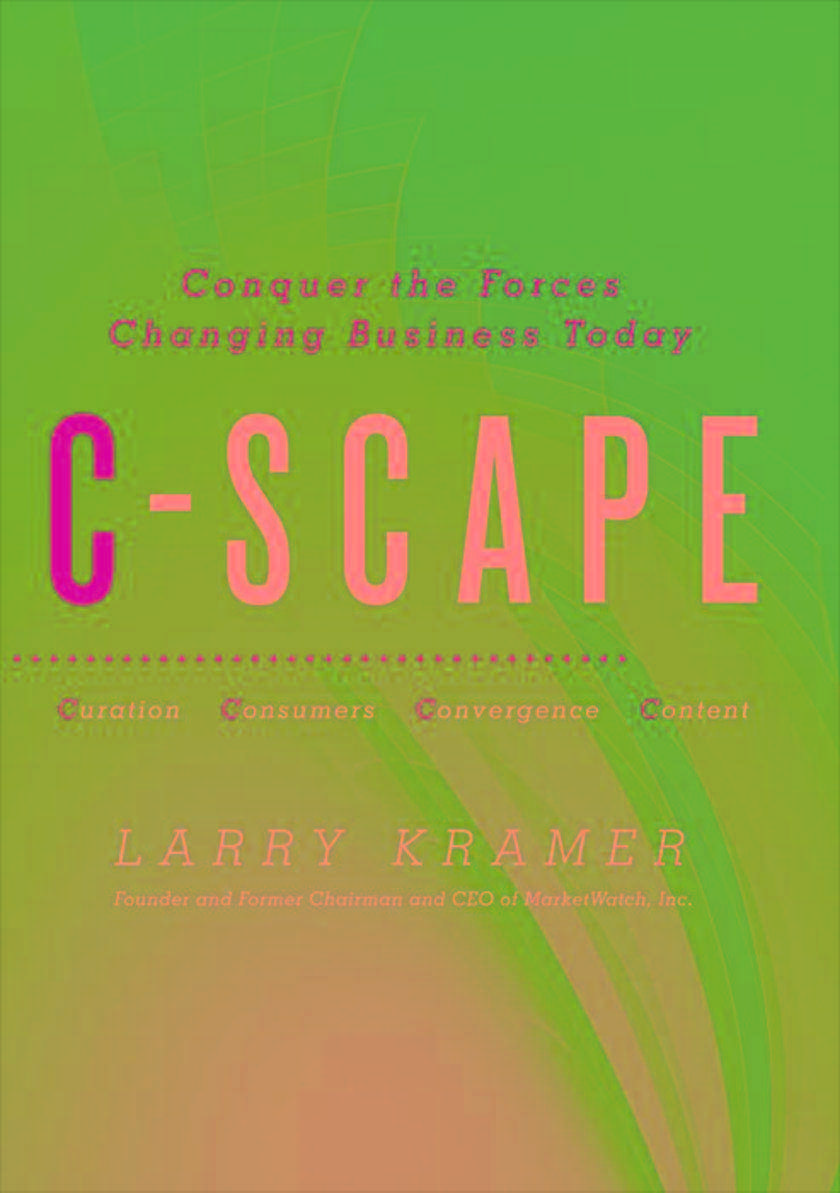
C-Scape
¥157.15
A bold, pioneering book that shows how businesses can survive and thrive in the digital media revolution Not so long ago, the business landscape was easier to chart. The routes connecting customers, companies, products, and services were predictable, reliable, and understood. Today, that landscape has been upended, and in its place a "C-Scape" has emerged a world where consumers, not producers and marketers, make the choices; where content, not distribution, is king; where curation becomes a primary currency of value; and where convergence continues to revolutionize every part of every business. In C-Scape, Larry Kramer leads the reader through this new, evolving world where the challenges are daunting but the opportunities are huge.A seasoned journalist turned superstar digital entrepreneur and venture capitalist, Kramer learned early on to survive and overcome the forces that are remaking the business landscape: the digital media revolution. Why mediaEvery aspect of every business is increasingly carried out through the media. From advertising and marketing to sales and customer service, from product design to manufacturing, everything that happens anywhere in business is ever more likely to happen on a screen or handheld device. That means any business could fall to the same threats facing the newspaper business and the music industry unless that business learns to navigate the four Cs. Kramer's explanation of this new landscape is a revelation; his visionary advice is both crucial and urgent. No leader, whether at the helm of a small business or a conglomerate, will read this book without seeing the business world anew and finding practical ways to put this book's four powerful precepts immediately to work.
Mavericks at Work: Why the most original minds in business win
¥91.23
An engaging and incisive look at today's top business leaders – visionary and creative mavericks who are changing the way we do business. Inspiring and accessible, ‘Mavericks at Work’ is for anyone who wants to succeed in business – from the entry-level employee to the CEO. In ‘Mavericks at Work’, two high-profile journalists introduce an inspiring group of entrepreneurs and executives who are building great businesses by challenging business as usual. From break-the-mould innovators such as HBO, Pixar, and Netflix to global giants such as IBM and Procter & Gamble, these mavericks are winning big by devising new answers to the oldest (and toughest) challenges of competition and leadership. Their stories are exciting – and their ideas are truly powerful. Real mavericks know that: ? Big, original ideas pay big dividends ? Being different makes all the difference ? Nobody is as smart as everybody ? Cheaper is better, but value is priceless ? Great leaders are insatiable learners ‘Mavericks at Work’ is a relentlessly useful how-to book. But it is also an eye-opening what-if book – with insights that showcase the power of business at its best and set a positive agenda for the future.

The Way of Nowhere: Eight Questions to Release Our Creative Potential
¥117.82
The Way of Nowhere is a business book by the UK’s hottest change management consultancy who have led transformations in some of Britain’s biggest and best known organisations. An invaluable resource for anyone who wants to make a creative difference in their lives and the lives of people around them. Inspired by the unique practice of 'nowhere', a community of companies that specialise in co-creation, this is an inspirational book that will help you break through to a more creative and strategic future Renowned for their world-class approach to innovation, the nowhere group works with a wide range of businesses, government agencies and individuals to develop their creativity to its full potential. Now, their book maps out the groundbreaking ways that anyone can become more productive, playing a more creative role in your organisation while simultaneously nurturing your own growth along the way. It contains eight breakthrough questions designed to stimulate and enrich our creative capacity, both as an individual and as part of a team. Using examples and tools from their work with some of the UK’s largest and best known businesses, The Way of Nowhere shows us how to unlock the underlying and invisible forces at play within organisations, communities and cultures. With practice, you will discover how these questions and insights can release the latent creativity that exists within - a place where magic can happen - out of nowhere!
Wall Street Meat
¥77.49
Wall Street is a funny business. All you have is your reputation. Taint it and someone else will fill your shoes. Longevity comes from maintaining that reputation. Ask Jack Grubman, the All-Star telecom analyst from Salomon Smith Barney; uber-banker Frank Quattrone at CS First Boston; Morgan Stanley's Mary "Queen of the Net" Meeker; or Merrill Lynch's Henry Blodget.Well, they probably won't tell you anything. But have I got some great stories for you. Successful hedge fund manager Andy Kessler looks back on his years as an analyst on Wall Street and offers this cautionary tale of the intoxicating forces loose in the world of finance that overwhelmed sober analysis.

The Aspirational Investor
¥166.09
Why are otherwise smart and competent people such lousy investorsIndividual investors give up as much as two-thirds of their potential investment returns in misguided efforts to beat the market and most don't even realize it.Ashvin B. Chhabra, chief investment officer of one of the world's largest wealth management firms, explains that an important idea has gotten lost amid the relentless pursuit of investment returns. Rather than trying to beat the market, your primary goal should be to construct an investment strategy that creates a solid safety net and enables you to pursue your dreams and aspirations.With no more guarantee of lifelong jobs or pensions, all of us bear the burden of investing wisely. But many of us focus on the wrong set of investment activities, such as identifying the next great start-up or star fund manager, or simply beating a market benchmark. Even the standard framework for investing, modern portfolio theory, offers an incomplete solution. Meanwhile, the grand debates in finance, such as indexing versus active management, prioritize the wrong set of issues.We need a framework that shifts the focus of investment strategy from portfolios and markets to individuals and the objectives that really matter: protection against unexpected financial crises or retirement planning. Whatever matters most to you paying for your kid's education, starting your own business, endowing your favorite charity, or traveling the world you need a road map to help you achieve both your essential and aspirational goals.In The Aspirational Investor, Ashvin B. Chhabra outlines a groundbreaking yet intuitive approach to managing wealth, based on the identification of key goals and the careful allocation of resources and risks. The Wealth Allocation Framework will help you connect your investment portfolio with your life's goals, and accommodate the three seemingly incompatible objectives that must underpin every sound wealth management strategy: the need for financial security in the face of unknowable risks, the desire to maintain current living standards despite inflation, and the opportunity for life-changing wealth creation.Chhabra's pioneering work illuminates some surprising facts about how people get very wealthy, and reinterprets the success formulas of investing greats such as Warren Buffett and David Swensen. Chhabra also offers a novel perspective: If the markets don't really care about you, as surely they do not, then why should you spend all your time and effort trying to beat them?Raising the bar for what we should expect from our investment portfolios and from our investment advisors The Aspirational Investor is a thoughtful, practical guide for any investor, regardless of income or wealth level.
Rocking the Ages
¥106.61
For almost forty years, Yankelovich Partners has helped America's biggest companies understand and reach their customers. Their breakthrough MONITOR studies-annual surveys that analyze the values, beliefs, attitudes, and expectations that shape consumer decisions-not only pinpoint current trends, but predict where the market will be in the future.Rocking the Ages: The Yankelovich Report on Generational Marketing (HarperBusiness; May 21, 1997) by J. Walker Smith and Ann Clurman turns the spotlight on America's generation gap and transforms what was born as a political and social rallying cry into a sound foundation for profitable marketing. Defining the essence of three generations-the Matures (born between 1909-1945), the Baby Boomers (1946-1964), and the Generation-Xers (1965-1978)-it explores in telling detail the experiences, life skills, values, personal and professional aspirations, likes and dislikes, and hopes and fears that distinguish each generation. Drawing on this unprecedented data, it elucidates how and why each generation reacts to a vast range of marketplace issues-including technology and cyberspace, healthcare and fitness, media and entertainment, retailing and financial services.From highlighting generational differences regarding such basic concepts as work itself-Matures regard it as an inevitable obligation, Boomers as an opportunity for self-fulfillment, and Xers as simply a paycheck-and gratification-delayed by Matures, demanded instantaneously by Boomers,virtual in the case of most Xers-to describing the widely differing versions of the American Dream each generation harbors, Rocking the Ages offers invaluable insights into how to market a product or service to reach one, two, or all three generations.
The Millionaire in the Mirror
¥134.46
Learn the keys to Outstanding Success and reveal the millionaire in your mirror Despite never being, as he admits, the best communicator, the most talented manager, or the smartest guy in the room, Gene Bedell quickly worked his way up the corporate ladder accumulating career earnings that put him among the country's top one percent of earners while doing what he loved and always putting family first. By looking at his own career and the careers of others who have achieved Outstanding Success people who all started with nothing he found it was possible for those who put their minds to it to become wealthy while spending their careers doing work they love. Now, in The Millionaire in the Mirror, Bedell reveals how you too can find career fulfillment while earning millions without social connections, an Ivy League education, an MBA, or the kind of earth-shattering managerial talent that makes the world take notice and how you can do it without destroying your personal life, resorting to hucksters' get-rich-quick schemes, or opting out of a traditional career path. Inside you'll find the seven success strategies that will revitalize your days at work, helpful tips for getting "unstuck" at any age or phase of your career, and answers to the crucial career questions that are asked far too infrequently. Approachable but authoritative, this is the book for everyday people who have extraordinary potential. If you have the desire and drive to achieve truly Outstanding Success, you can turn the person you see in the mirror into the millionaire you're destined to become.
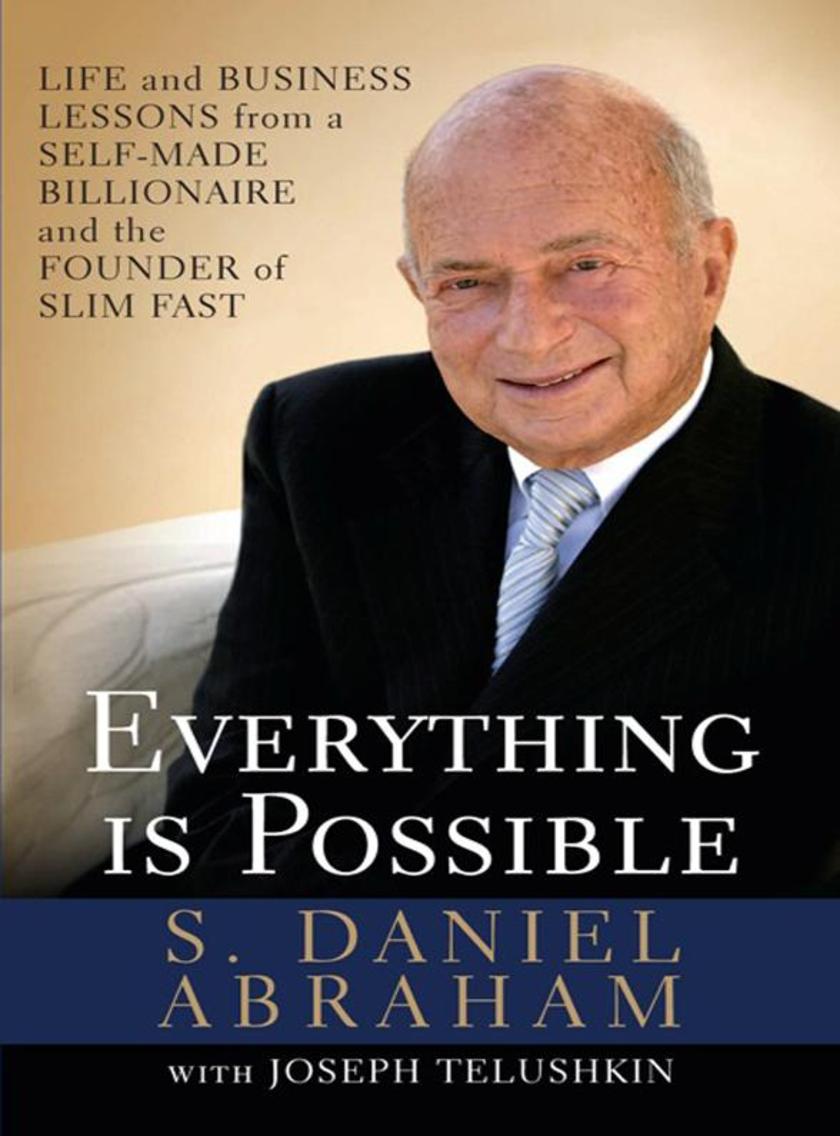
Everything is Possible
¥140.08
In Everything Is Possible, Dan Abraham, the legendary founder of Slim-Fast, recounts the story of his personal and business life, starting from his childhood and army years and his purchase of Thompson Medical for $5,000 when he was in his early twenties, and culminating in the sale of Slim-Fast for $2.3 billion in 2000. At the heart of Everything Is Possible are 16 life lessons that Abraham has picked up in sixty years of a hard-working business career. Among them: ?There is no such thing as a mistake (see pages 198–202) ?Why I always insured that my suppliers made a profit (see pages 208–9) ?The philosophy of continuous improvement (see pages 202–5) ?If you have a theory and the facts dispute it, drop your theory (pages 205–8) ?The realization that we all have both good and bad luck in our lives, but many of us don't prepare for either (pages 216–9) ?I never saw a man pick a fight with a stronger man (pages 191–5) But this memoir, a brilliant guide for anyone starting and growing a business, is about far more than business. Abraham tells the heartwarming story of growing up in a modest home in Long Beach, New York, and the lessons he learned from his mother, father, and one high school teacher that have guided him ever since. And there is more, much more: a discussion of his beliefs about the pleasure of giving; what he has learned from Judaism about ethics and the Golden Rule; and what he learned from his experiences with the FDA about the importance of compromise and about the necessity to fight hard when you believe you're right. At a time, when newspapers are filled with reports of business fraud and deceptions, and when so many people believe that to have spectacular success in business you have to be ruthless and dishonest, this is an account of a business life that has been lived honorably, passionately, and successfully, and with fun. Everything Is Possible is a book to be savored and shared with young and old alike.

The Thank You Economy
¥151.53
If this were 1923, this book would have been called "Why Radio Is Going to Change the Game" . . . If it were 1995, it would be "Why Amazon Is Going to Take Over the Retailing World" . . . The Thank You Economy is about something big, something greater than any single revolutionary platform. It isn't some abstract concept or wacky business strategy it's real, and every one of us is doing business in it every day, whether we choose to recognize it or not. It's the way we communicate, the way we buy and sell, the way businesses and consumers interact online and offline. The Internet, where the Thank You Economy was born, has given consumers back their voice, and the tremendous power of their opinions via social media means that companies and brands have to compete on a whole different level than they used to. Gone are the days when a blizzard of marketing dollars could be used to overwhelm the airwaves, shut out the competition, and grab customer awareness. Now customers' demands for authenticity, originality, creativity, honesty, and good intent have made it necessary for companies and brands to revert to a level of customer service rarely seen since our great-grandparents' day, when business owners often knew their customers personally, and gave them individual attention. Here renowned entrepreneur Gary Vaynerchuk reveals how companies big and small can scale that kind of personal, one-on-one attention to their entire customer base, no matter how large, using the same social media platforms that carry consumer word of mouth. The Thank You Economy offers compelling, data-driven evidence that we have entered into an entirely new business era, one in which the companies that see the biggest returns won't be the ones that can throw the most money at an advertising campaign, but will be those that can prove they care about their customers more than anyone else. The businesses and brands that harness the word-of-mouth power from social media, those that can shift their culture to be more customer-aware and fan-friendly, will pull away from the pack and profit in today's markets. Filled with Vaynerchuk's irrepressible candor and wit, as well as real-world examples of companies that are profiting by putting Thank You Economy principles into practice, The Thank You Economy reveals how businesses can harness all the changes and challenges inherent in social media and turn them into tremendous opportunities for profit and growth.

Kiss Your BUT Good-Bye
¥143.95
A simple, engaging, and eminently practical guide to overcoming your weaknesses your "Buts" to achieve the career and personal relationships you want Imagine a workplace where all the employees are aware of the things they do or fail to do that prevent them from being more productive and valuable. Imagine a company where everyone speaks openly and honestly about his or her weaknesses and is committed to strengthening and overcoming them. Imagine an environment where colleagues help one another become more efficient and less disruptive by speaking the truth about what detracts from the team's efforts and objectives. Imagine a place where the firm's most talented employees know exactly what they need to do to attain a leadership position. This is no fantasy workplace: it can be your business if you listen to Joe Azelby and Bob Azelby, brothers and successful executives in their own right.Kiss Your BUT Good-Bye will help all professionals find their individual BUT whether it's a lack of skills, a distracting behavior, or a personality quirk that interferes with achieving success. Using road-tested techniques, Kiss Your BUT Good-Bye helps you examine your BUT, understand it, manage it, cover it, and most important, shrink it. It also enables managers to help their employees discover personal weaknesses and to learn how to deliver the direct, honest feedback every worker needs and deserves.Finding your BUT can be tough medicine, but the Azelbys deliver it with a tasty spoonful of sugar. Get ready for success . . . get ready to Kiss Your BUT Good-Bye.
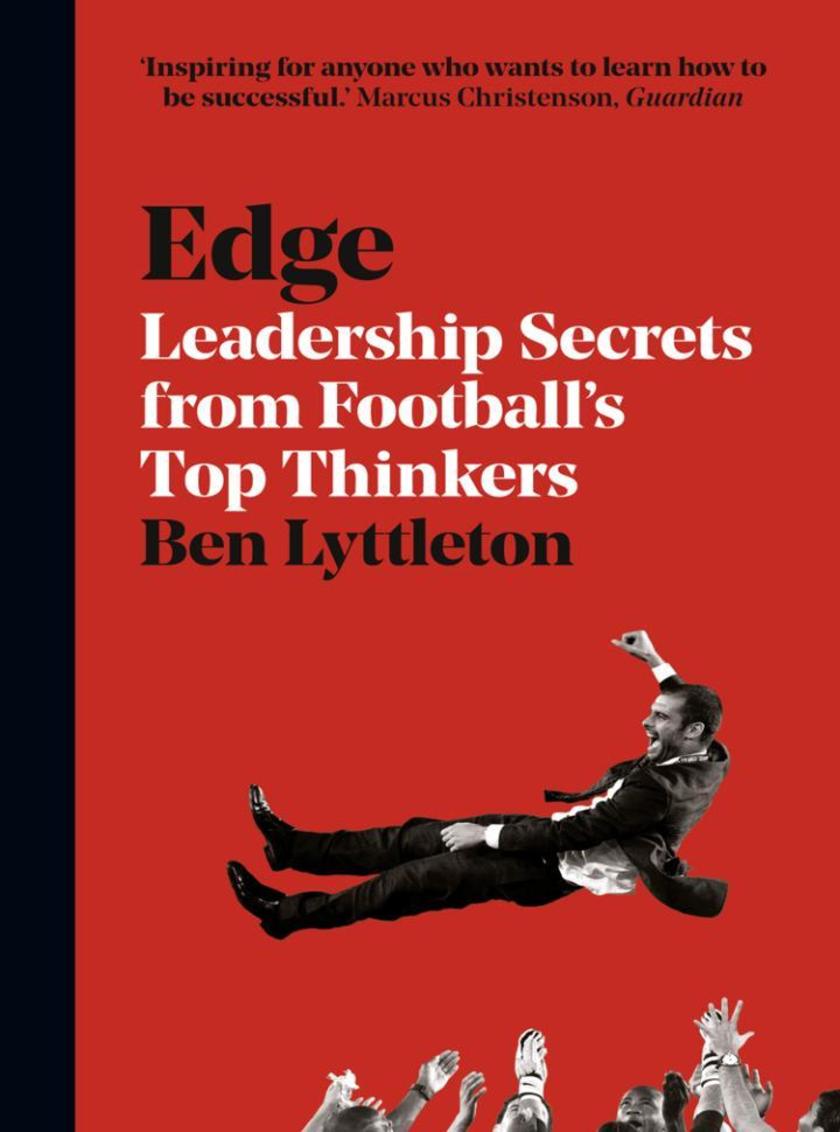
Edge: Leadership Secrets from Footballs’s Top Thinkers
¥73.58
What is talent? How do you get the best out of yourself? What are the secrets of leadership?In Edge, Ben Lyttleton gets unprecedented access to some of the world’s top football clubs to discover their innovative methods for developing talent – and reveals how we can use them in our everyday lives. Elite teams now look for an edge by improving the intangible skills of their players ‘above the shoulder’. Liverpool’s approach to talent will make you more creative. Chelsea’s culture will improve your resilience. Didier Deschamps will improve your leadership skills. Xavi Hernandez will help you make better decisions. But how?Football is the most hot-housed, intense, financially profitable talent factory on the planet. It’s time we woke up to the lessons it can provide.We all want to have an edge. This is your chance to find one…

Inside Intel (Text Only)
¥69.26
Tim Jackson is the author of Turning Japanese and a biography of Richard Branson and Virgin, Virgin King. He is currently working on a book about the Sainsbury family.

Vladimir Tism?neanu - ieri ?i azi
¥48.97
Spre deosebire de celelalte c?r?i ale sale, constituite ca ni?te a?a-zise ?fabule“ (sfaturile de business fiind oferite sub forma unor pove?ti moralizatoare), Avantajul-De ce s?n?tatea organiza?ional? este cel mai important atu ?n afaceri este o lucrare teoretic? (de?i pres?rate cu exemple concrete din practica de consultan?? a autorului ?i a echipei sale) ?i care sintetizeaz? principiile expuse ?n alte lucr?ri ale sale.La baza strategiei sale pentru echipele de conducere st? conceptul de ?s?n?tate organiza?ional?“, de care, din p?cate, mul?i lideri nu mai ?in cont atunci c?nd ?ncearc? s? ob?in? avantajul ?n fa?a competi?iei. Ei se axeaz? pe tehnologie de ultim? or?, strategii de marketing imbatabile sau planurile de afaceri complexe. Nu exist?, ?ns?, sus?ine Lencioni pe parcursul c?r?ii sale, o cale mai bun? de a ajuta o companie s? progreseze ?i s? se dezvolte s?n?tos dec?t elimin?nd cauzele care stau la baza intrigilor de culise, a confuziei, a fluctua?iei de personal ?i ?n general a tuturor disfunc?iilor. ?n acest scop, autorul propune patru ?discipline“ esen?iale, pe care le explic? ?n detaliu: 1. Construirea unei echipe de conducere bine ?nchegate (ceea ce presupune stabilirea unei rela?ii de ?ncredere, ?ncurajarea conflictelor productive, angajamentul asumat, responsabilizare reciproc? ?i concentrarea pe ob?inerea de rezultate);2. Crearea clarit??ii (toat? lumea trebuie s? fie pe aceea?i lungime de und? privind motivul existen?ei companiei, valorile specifice ale acesteia, strategiile de afaceri etc., ?n vederea atingerii scopurilor comune); 3. Supracomunicarea clarit??ii (liderii le explic? ?i le amintesc constant angaja?ilor aspectele clarit??ii) 4. Consolidarea clarit??ii (selectarea personalului pe baza valorilor comportamentale ?i integrarea lor corect? ?n organiza?ie). Ni?te reguli simple, de bun-sim?, pe care to?i liderii ar trebui s? le cunoasc? ?i s? le respecte, pentru ca organiza?ia pe care o conduc s? ating? succesul la care au visat ?ntotdeauna.
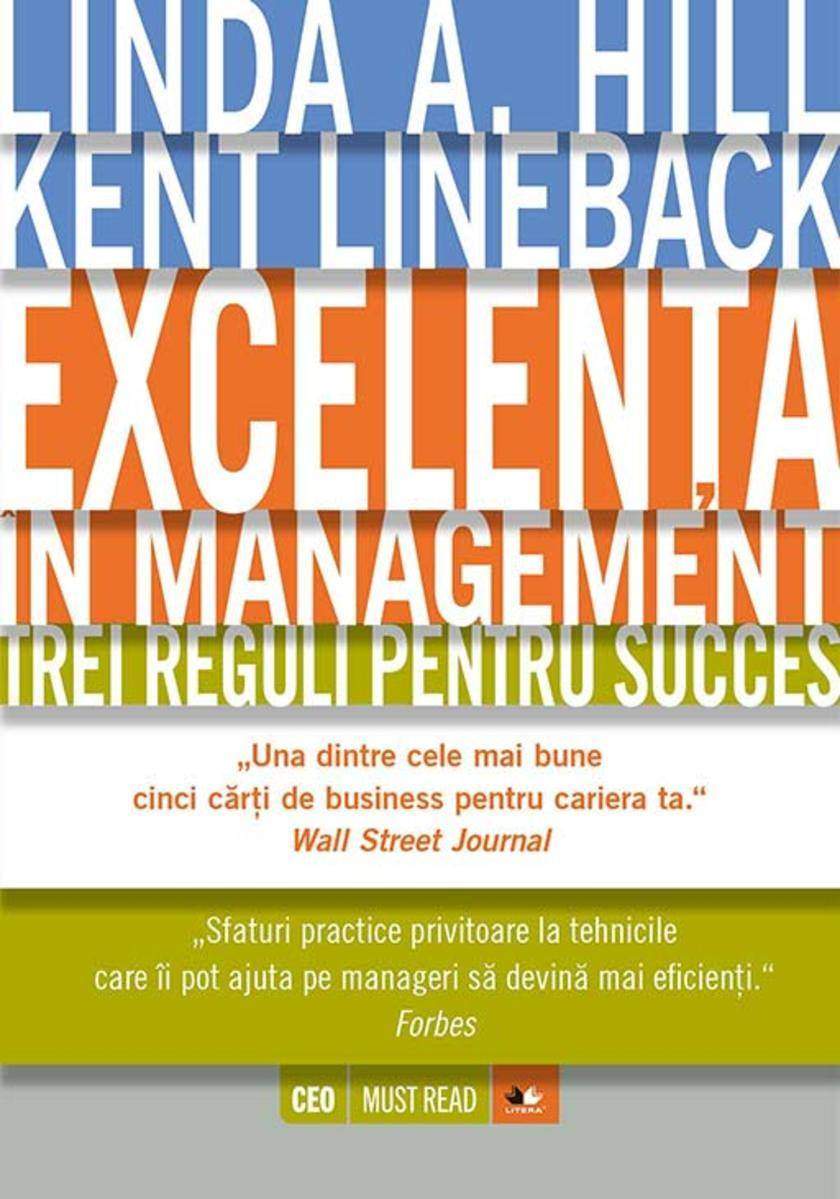
Excelen?a ?n management. Trei reguli pentru succes
¥66.22
Un program de preg?tire pentru managerii ?n formare ?Una dintre cele mai bune cinci c?r?i de business pentru cariera ta.“ – Wall Street Journal ?Sfaturi practice privitoare la tehnicile care ?i pot ajuta pe manageri s? devin? mai eficien?i.“– Forbes Drumul spre dob?ndirea pozi?iei de manager eficient este unul obositor ?i dificil. Te confrun?i cu a?tept?ri contradictorii din partea subordona?ilor, a superiorilor, a colegilor cu acela?i statut ca al t?u ?i a clien?ilor. Cum ai putea st?p?ni arta de a conduce? Cum s? faci fa?? dificult??ilor zilnice din activitatea de management? Excelen?a ?n management este un ghid indispensabil pentru autoevaluarea celor care ocup? pozi?ii de conducere ?i pentru ?n?elegerea lucrurilor pe care le pot face pentru a-?i ?mbun?t??i performan?ele. Sfaturile inteligente ?i practice, conceptele esen?iale ?i exemplele pe care le con?ine le vor permite at?t ?efilor afla?i la ?nceput de carier?, c?t ?i celor cu experien?? s?-?i ating? poten?ialul maxim de lider. Lectur? obligatorie pentru manageri! ?Un clasic modern.“ – Financial Times

Contele de Monte-Cristo. Vol. IV
¥42.92
Economia american? modern? este crea?ia a patru oameni: Andrew Carnegie, John D. Rockefeller, Jay Gould ?i J.P. Morgan. Ei au fost gigan?ii epocii de aur, un moment de dezvoltare f?r? precedent care a f?cut din America cea mai bogat?, mai inovatoare ?i mai productiv? ?ar? a planetei. Charles R. Morris ?i readuce la via?? pe magnatul o?elului Carnegie, regele petrolului Rockefeller ?i vr?jitorul c?ilor ferate Gould, cei obseda?i de progres, experimentare ?i vitez?, precum ?i pe finan?istul Morgan, omul de afaceri gentleman, care a luptat pentru o ?ncredere global? ?n afacerile americane. Magna?ii este incredibila poveste a oamenilor hot?r??i care au cl?dit economia american?, cre?nd un colos industrial – ?i o ?ntreag? ?ar? de consumatori din clasa de mijloc.
Think And Grow Rich
¥8.75
Think and Grow Rich' is the world's most widely acclaimed motivational book on success ever published. It became the must-have bible of prosperity and success for millions of readers since its initial publication in 1937. Napoleon Hill, America's most beloved motivational author, devoted 25 years to finding out how the wealthy became that way. After interviewing over 500 of the most affluent men and women of his time, he uncovered the secret to great wealth. By understanding and applying the thirteen simple steps that constitute Hill's formula, you can achieve your goals, change your life and join the ranks of the rich and successful. This book has changed countless lives and it can change yours!


