


 购物车
购物车 个人中心
个人中心

House Poor
¥83.93
The housing market, like any other investment, has always had its ups and downs. But ever since it started its upswing at the beginning of this decade, the ride has become more thrilling and more dangerous. One day, home values are skyrocketing and cheap money is up for grabs; the next day, houses linger on the market and interest rates rise alarmingly high. Home buyers and sellers are beginning to recognize that however the market moves where they live, they must be prepared to make smart housing decisions.Written by veteran real estate reporter June Fletcher, House Poor teaches you everything you need to know to weather the ups and downs of the housing market, including: How to tell whether your hometown is likely to boom or bust When to take equity out of your house How to buy as a first-time home owner or as an investor during turbulent times How to protect your home investment When and how to sell your home Today's volatile housing market could make you house poor.This book will keep you house proud.
Winning Every Day
¥94.10
Your talent determines what you can do. Your motivation determines how much you are willing to do. Your attitude determines how well you do it. Meet Lou Holtz, the motivational miracle worker who revitalized the Notre Dame football program by leading the legendary Fighting Irish to nine bowl games and a national championship. During his twenty-seven years as a head football coach, Holtz garnered a 216-95-7 career record. Each new assignment brought a different team with different players, but, invariably, the same result--success. How did he do itBy designing a game plan for his players that minimized obstacles while maximizing opportunities. Now he wants to pass his game plan on to you. In Winning Every Day, you'll discover ten strategies that will drive you to the top of your professional and personal life. Coach Holtz will reveal how you can acquire the focus and commitment it takes to be a champion. It won't be easy; it takes sacrifice to be the best. But now you'll have a proven winner alongside you in the trenches. Winning Every Day demonstrates how you can elevate your performance while raising the standards of everyone around you. Follow Coach's strategies and winning becomes habitual. You will learn to welcome sacrifice as you dedicate yourself to excellence. He will show you how to clearly define your short-term and long-term goals, to develop an unwavering sense of purpose without compromising flexibility. Through it all, Coach Holtz will help you discover the courage you need to live a life of unremitting triumph. You couldn't have a better guide. He will provide you with the strategies he has shared with Fortune 500 companies, groups, and organizations. Voted the top motivational speaker two years running by a survey of speakers' bureaus, Coach is going to present you with all the Xs and Os, the basics of his game plan for success in life and business.
Getting from College to Career
¥99.65
Get Ready for the Real World How do you get a job without experience and get experience without a jobIt’s the question virtually every college student or recent graduate faces. Now newly revised and updated, Lindsey Pollak’s Getting from College to Career is the definitive guide to building the experience, skills, and confidence you need to succeed in the job search, offering action-oriented tips and strategies ranging from the simple to the expert. Learn how to: ?Get the best tools for career prep and job hunting ?E-mail like a professional ?Go global ?Practice the eight essentials of internship achievement ?Perform five minutes of stand-up ?Overprepare for interviews ?Persist without being a pest Getting from College to Career gives you the essential information and guidance you need to get your foot in the door of the real world. Don’t start your first job search without it!
Punk Marketing
¥101.00
The marketing revolution is here, so get on the right side of the barricade and become a part of it! Let's thank Mr. and Mrs. Consumer and their little Consumerlings who have seized power from the corporations and are now firmly in control. In Punk Marketing, Laermer and Simmons take an irreverent, penetrating look at the seismic change in the relationship between the people who sell stuff products, services, entertainment and those who purchase it. They demonstrate that to survive in business, a revolutionary approach is needed one they have branded "Punk Marketing" and it's one we all need to understand, for the traditional divisions among commerce, content, and consumers are continuing to blur ever more rapidly.Never dull, sometimes controversial, but always a helluva lot of fun, Punk Marketing presents a manifesto for any businessperson needing to engage consumers or any consumer seeking to understand and employ their newfound power. And here's the good news: It's based on principles that have existed forever. In an age of digital video recorders, "branded" entertainment, cell-phone TV, multiplayer online games, and never-ending social networking, a coherent approach to marketing has never been more vital. With Punk Marketing, there's a built-in plan to equip you with tools to make all this change work out just fine, thanks.Punk Marketing is the first shot soon to be heard 'round the world of a long-awaited and breathless uprising that businesses want, deserve, and desperately need.
Wisdom 2.0
¥90.77
Technology is not the answer. It is also not the problem. What matters insteadAwareness, Engagement, and Wisdom.Wisdom 2.0 addresses the challenge of our age:to not only live connected to one another through technology,but to do so in ways that are beneficial, effective, and useful.

You Can't Win a Fight with Your Boss
¥84.82
You can't win a fight with your boss.If you have ever thought otherwise, then you're dead wrong. And you're career is over, too.In this lively guide to surviving the pitfalls of the modern corporate environment, Tom Markert, a senior executive at information giant ACNielsen, presents 56 practical rules that every employee, manager, and executive must follow in order to find corporate success. With rules such as "Work hard and smart" and "Find a good boss" Markert addresses some of the most important questions facing corporate executives today. Here, in colorful and inspiring language, he offers practical advice on how to impress and make your boss look good, how to position yourself for success, and how to address work and social situations that every employee must conquer.And, most important, Markert covers the number one question in any employee's mind: How do I work with my bossHere, this book becomes an indispensable guide to corporate life. Markert draws on his experience to illustrate these rules with telling, and often funny, anecdotes about people who have not followed the rules and paid the ultimate corporate price -- failure, embarrassment, and a career stopped dead in its tracks.

The One-Page Proposal
¥94.10
As clear, concise, and concrete as its subject, Patrick Riley's The One Page Proposal promises to be the definitive business guide to getting your best ideas fully understood in the least amount of time.Today more than ever, business decisions are made on the fly first impressions can make all the difference. Now, in the first book of its kind, successful entrepreneur Patrick Riley shows you how to boil all the elements of your business proposal into one persuasive page magnify your business potential in the process.

Die Broke
¥95.39
From America's most trusted financial advisor comes a comprehensive guide to a new and utterly sane financial choice. In Die Broke, you'll learn that life is a game where the loser gives his money to Uncle Sam at the end. There are four steps to the process: Quit Today No, don't tell your boss to shove it...at least not out loud. But in your head accept that from this day on you're a free agent whose number one workplace priority is your personal bottom line.Pay Cash You should be as conscious of spending as you are of saving. Credit should be a rarely used tool for those few times (buying homes and cars) when paying cash is impossible.Don't Retire Your work life should be a journey up and down hills, rather than a climb up a sheer cliff that ends with a jump into the abyss.Die Broke It sounds terrifying, the one intolerable outcome to your financial life. And yet, in truth, dying broke might be your best option for a life without fear: fear of failure and privation now, fear of impoverishment in the long run.

The New Rules of Money
¥88.56
Are You Playing By the New Rules?Forget what you know about personal finance. The old rules no longer apply. Ric Edelman's 88 strategies, tailor-made for today's economy, will show you how to achieve financial success. Ric is famous for making personal finance fun, and you'll discover how easy it is to put his advice into action!Is it smart to buy company stock with your 402 (k) planDiscover the right way to handle your company retirement plan. See Rule #85 Learn why you must carry a big, long mortgage -- and never pay it off! See Rule #21Learn why not to invest in the new Roth IRA-and discover the most powerful anti-tax investment available today. See Rules #69 and #76Planning to retireLearn why you won't -- and what you must do instead. See Rule #88Find out why those who invest in S&P 500 Index Funds will wish they hadn't. See Rule #36Learn why that higher - paying job could actually cost you money. See Rule #32

The Digital Mom Handbook
¥90.77
From the founders of ClassyMommy.com and MomGenerations.com comes the ultimate guide to helping moms build successful careers at home by doing what they already do online just better.To work or not to work it's the toughest question for most mothers today. But Audrey McClelland and Colleen Padilla have found the coveted middle ground, creating successful careers from home via the Internet. They've literally Skyped, blogged, vlogged, tweeted, and Facebooked their way to the top and in this eye-opening book they show other moms how to find success through these seven basic steps: 1. Find your passion. 2. Hang a digital shingle and start typing. 3. Find your tribe. 4. Make opportunity knock and learn how to answer that door. 5. Manage the Benjamins. 6. Don't forget the children! 7. Live happily ever after by living your values.
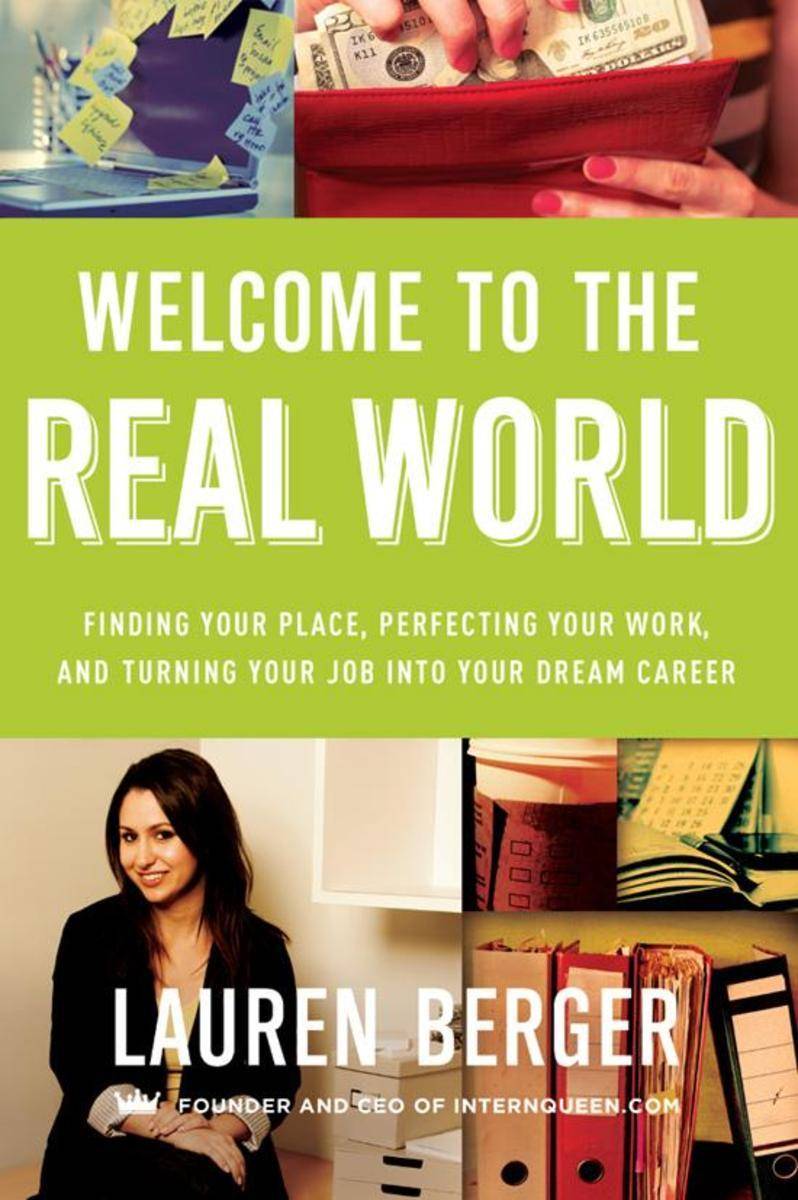
Welcome to the Real World
¥95.11
It's a challenging time to be young and new in the workplace. Your parents can't help the rules have all changed. In Welcome to the Real World, career expert and entrepreneur Lauren Berger arms you with the tools you need to succeed. She's been in your shoes just a few years ago she was you. This handbook tells you everything you need to know to make the most of your first on-the-job experience, including how to think about the big picture deal with rejection effectively manage your time navigate sticky situations in the office and communicate with different personality types embrace entrepreneurship regardless of position, rank, or title organize your financial situation and personal life get promoted and (one day) take your boss's job! In a world defined by uncertainty, Lauren shows you how to be bold, take risks, and understand your value.
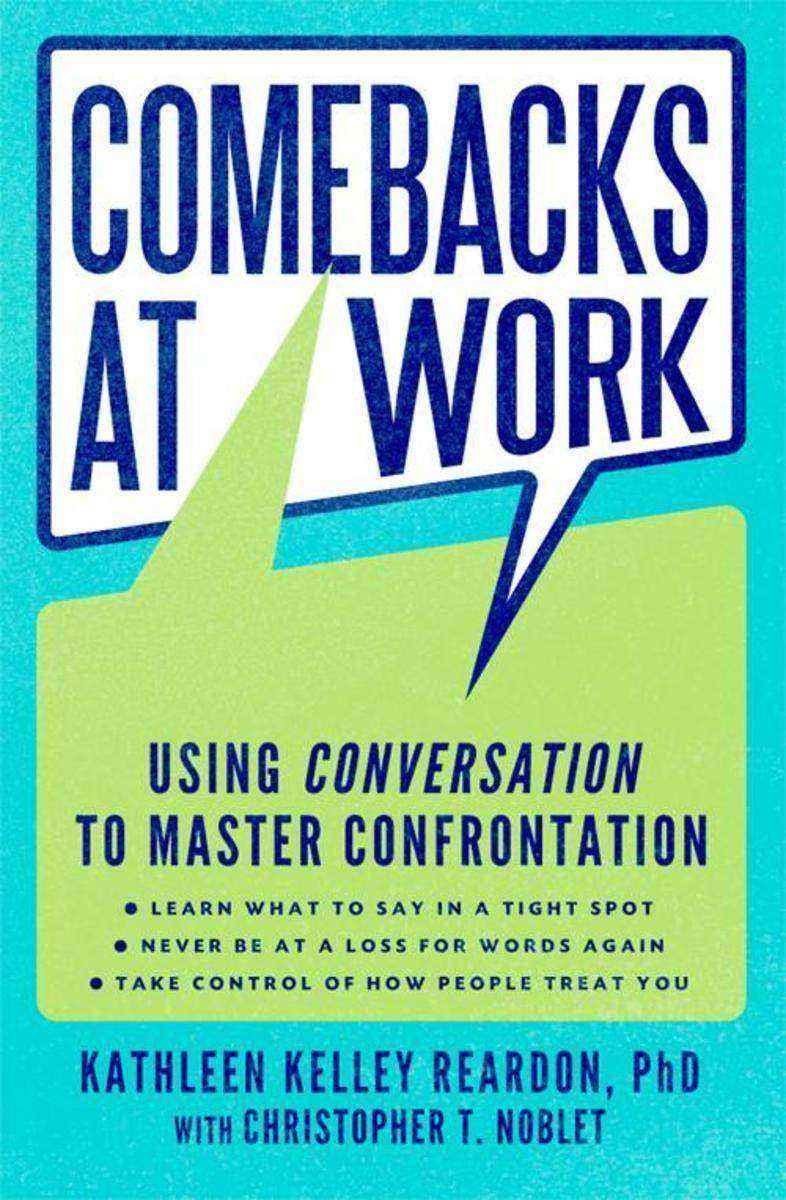
Comebacks at Work
¥138.41
The workplace guide to putting "I wish I'd said" moments in the past Ever wish that you could have a "do over" after a conversation at workDo you often find yourself regretting what you've said to a coworker or kicking yourself for not saying something better, stronger, or more preciseIf so, you're like most people, and in Comebacks at Work, management professor and consultant Kathleen Kelley Reardon, Ph.D., provides the tips and tools you need to know what to say and how to say it better next time.In this compelling, entertaining book, Reardon argues that we are responsible for 75 percent of the way we're treated at work, and our success or failure at the workplace depends largely on how we handle ourselves in conversation with our colleagues. To break free of the stale *s and expected actions that allow politically astute people to manipulate us, we must increase our conversational awareness and effectively employ what Reardon calls "comebacks." Comebacks at Work provides a game plan for doing so and explains: Why some comebacks work, while others fall flat; Why our mind goes blank when we are confronted, and how to overcome that response; How to determine which comebacks work, and when to use them. Every conversation is different, and while many situations are common, one set of comebacks isn't enough. Offering a personalized repertoire of comebacks and a plan for using them strategically as well as the skills you will need to package them for maximum effect, Comebacks at Work will prepare you for any difficult conversation that comes your way.
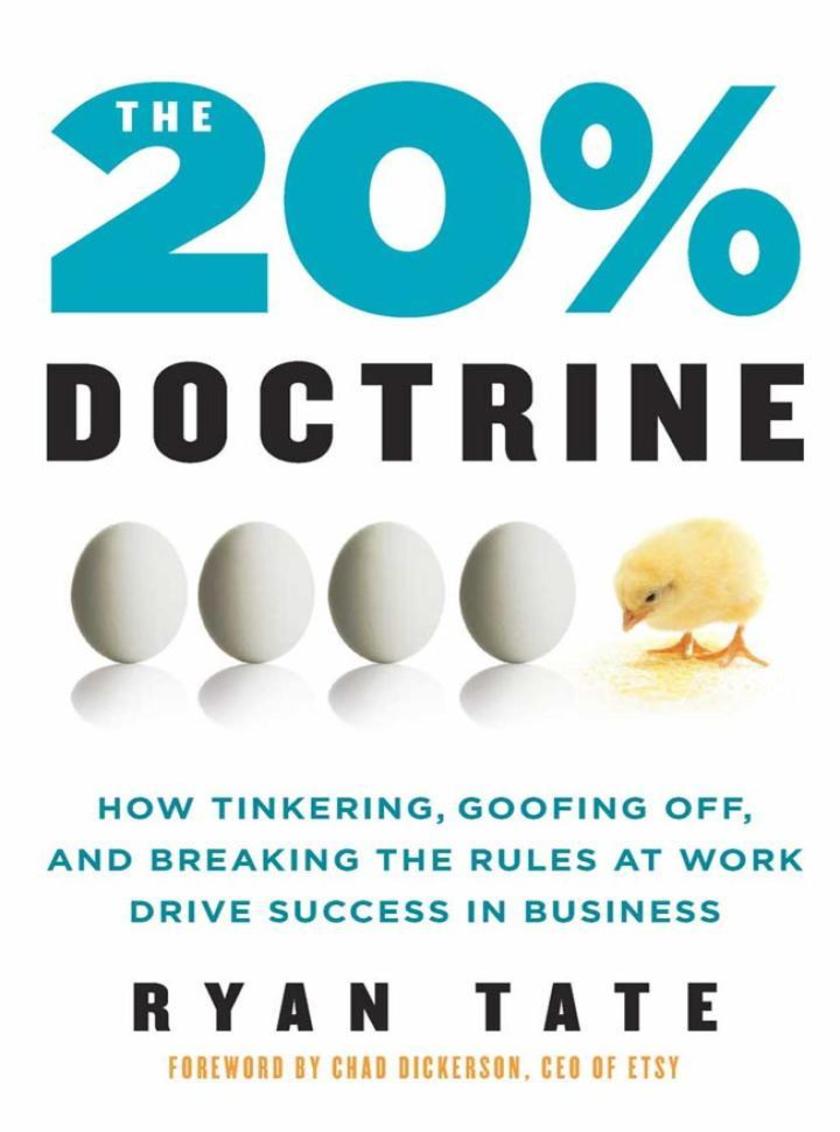
The 20% Doctrine
¥145.91
An inspiring exploration of how unorthodox business practices and the freedom to experiment can fuel innovationWe're at a crossroads. Many iconic American companies have been bailed out or gone bankrupt; others are struggling to survive as digitization and globalization remake their industries. At the same time, the tectonic forces disrupting U.S. corporations ubiquitous bandwidth and computing power, cheap manufacturing and distribution have enabled large organizations to foster new innovations and products through experiments that are at once more aggressive and less risky than they would have been twenty years ago. At companies such as Google, employees are encouraged to spend 20% of their work time on projects they're personally interested in. Almost half of Google's new product launches have originated from this policy, including Gmail and AdSense. Now other companies have adopted the concept, providing them a path to innovation and profits at a time of peril and uncertainty and offering employees creative freedom when many are feeling restless.The 20% Doctrine is about goofing off at work, and how that goofing off can drive innovation and profit. Here Ryan Tate examines the origins and implementation of 20% time at Google, then looks at how other organizations such as Flickr, the Huffington Post, and even a school in the Bronx have adapted or reinvented the same overall concept, intentionally and serendipitously. Along the way, he distills a series of common themes and lessons that can help workers initiate successful 20% style projects within their own organizations. Only through a new devotion to the unhinged and the ad hoc can American businesses resume a steady pace of development and profitability.
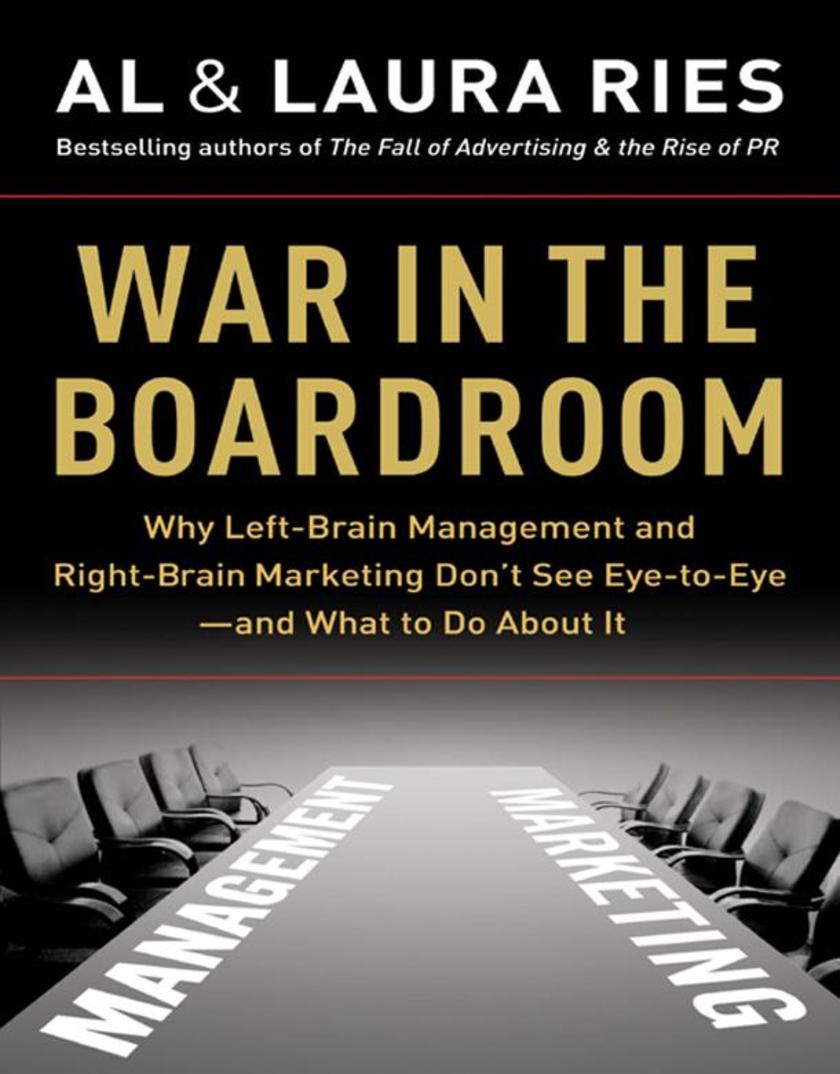
War in the Boardroom
¥151.53
Renowned business gurus Al and Laura Ries give a blow-by-blow account of the battle between management and marketing and argue that the solution lies not in what we think but in how we think There's a reason why the marketing programs of the auto industry, the airline industry, and many other industries are not only ineffective, but bogged down by chaos and confusion.Management minds are not on the same wavelength as marketing minds.What makes a good chief executiveA person who is highly verbal, logical, and analytical. Typical characteristics of a left brainer.What makes a good marketing executiveA person who is highly visual, intuitive, and holistic. Typical characteristics of a right brainer. These different mind-sets often result in conflicting approaches to branding, and the Ries' thought-provoking observations culled from years on the front lines support this conclusion, including: Management deals in reality. Marketing deals in perception. Management demands better products. Marketing demands different products. Management deals in verbal abstractions. Marketing deals in visual hammers. Using some of the world's most famous brands and products to illustrate their argument, the authors convincingly show why some brands succeed (Nokia, Nintendo, and Red Bull) while others decline (Saturn, Sony, and Motorola). In doing so, they sound a clarion call: to survive in today's media-saturated society, managers must understand how to think like marketers and vice versa. Featuring the engaging, no-holds-barred writing that readers have come to expect from Al and Laura Ries, War in the Boardroom offers a fresh look at a perennial problem and provides a game plan for companies that want to break through the deadlock and start reaping the rewards.
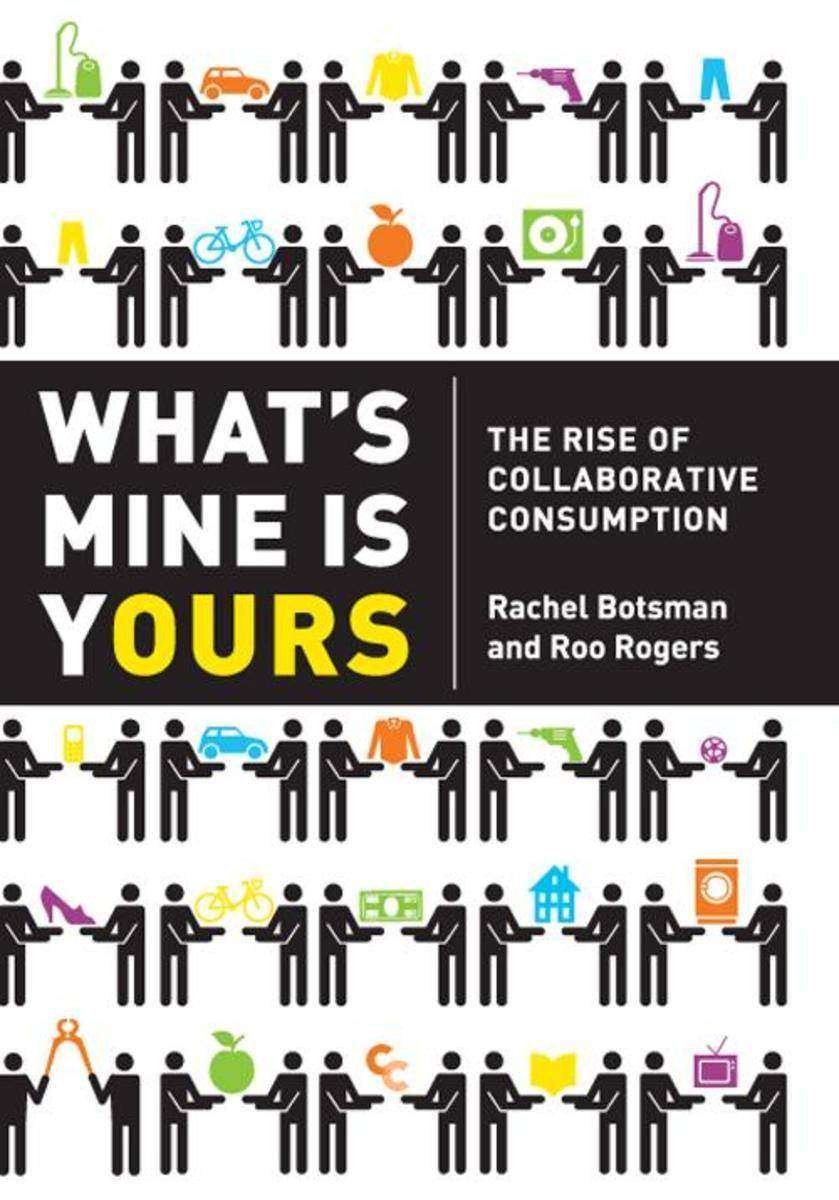
What's Mine Is Yours
¥151.10
WHAT'S MINE IS YOURS is about Collaborative Consumption, a new, emerging economy made possible by online social networks and fueled by increasing cost consciousness and environmental necessity. Collaborative Consumption occurs when people participate in organized sharing, bartering, trading, renting, swapping, and collectives to get the same pleasures of ownership with reduced personal cost and burden, and lower environmental impact. The book addresses three growing models of Collaborative Consumption: Product Service Systems, Communal Economies, and Redistribution Markets. The first, Product Service Systems, reflects the increasing number of people from all different backgrounds and across ages who are buying into the idea of using the service of the product-what it does for them-without owning it. Examples include Zipcar and Ziploc, and these companies are disrupting traditional industries based on models of individual ownership. Second, in what the authors define as Communal Economies, there is a growing realization that as individual consumers, we have relatively little in the way of bargaining power with corporations. A crowd of consumers, however, introduces a different, empowering dynamic. Online networks are bringing people together again and making them more willing to leverage the proverbial power of numbers. Examples of this second category include Etsy, an online market for handcrafts, or the social lending marketplace Zopa. The third model is Redistribution Markets, exemplified by worldwide networks such as Freecycle and Ebay as well as emerging forms of modern day bartering and swap trading such as Zwaggle, Swaptree, and Zunafish. Social networks facilitate consumer-to-consumer marketplaces that redistribute goods from where they are not needed to somewhere or someone where they are. This business model encourages reusing/reselling of old items rather them throwing them out, thereby reducing the waste and carbon emissions that go along with new production.WHAT'S MINE IS YOURS describes how these three models come together to form a new economy of more sustainable consumerism. Collaborative Consumption started as a trend in conjunction with the emergence of shared collective content/information sites such as Wikipedia and Flickr and with the recent economic troubles and increasing environmental awareness, it is growing into an international movement. The authors predict it will be a fully fledged economy within the next five years.In this book the authors travel among the quiet revolutionaries (consumers and companies) from all around the world. They explore how businesses will both prosper and fail in this environment, and, in particular, they examine how it has the potential to help create the mass sustainable change in consumer behaviors this planet so desperately needs. The authors themselves are environmentalists, but they are also entrepreneurs, parents, and optimistic citizens. This is a good news book about long-term positive change.

Data-ism
¥166.09
By one estimate, 90 percent of all of the data in history was created in the last two years. In 2014, International Data Corporation calculated the data universe at 4.4 zettabytes, or 4.4 trillion gigabytes. That much information, in volume, could fill enough slender iPad Air tablets to create a stack two-thirds of the way to the moon. Now, that's Big Data.Coal, iron ore, and oil were the key productive assets that fueled the Industrial Revolution. The vital raw material of today's information economy is data.In Data-ism, New York Times reporter Steve Lohr explains how big-data technology is ushering in a revolution in proportions that promise to be the basis of the next wave of efficiency and innovation across the economy. But more is at work here than technology. Big data is also the vehicle for a point of view, or philosophy, about how decisions will be and perhaps should be made in the future. Lohr investigates the benefits of data while also examining its dark side. Data-ism is about this next phase, in which vast Internet-scale data sets are used for discovery and prediction in virtually every field. It shows how this new revolution will change decision making by relying more on data and analysis, and less on intuition and experience and transform the nature of leadership and management. Focusing on young entrepreneurs at the forefront of data science as well as on giant companies such as IBM that are making big bets on data science for the future of their businesses, Data-ism is a field guide to what is ahead, explaining how individuals and institutions will need to exploit, protect, and manage data to stay competitive in the coming years. With rich examples of how the rise of big data is affecting everyday life, Data-ism also raises provocative questions about policy and practice that have wide implications for everyone.The age of data-ism is here. But are we ready to handle its consequences, good and bad?
What Makes You Tick?
¥140.29
In the most challenging economy of our lifetime, where should you turn for guidanceTo the stories of those who have made it the leaders who battled adversity, forged their own paths,and succeeded . . . because they knew what made them tick. As people everywhere confront the global economic crisis, "success" may seem elusive at best, impossible at worst. Yet history proves that a new generation of success stories will likely emerge from this era of financial chaos. And this new book prepares you to be one of those success stories by analyzing the inner qualities that have propelled the forward-thinking leaders of our time: drive, determination, and self-awareness.As strategists for the internationally renowned consumer and political research firm Penn, Schoen Berland Associates, Michael Berland and Douglas Schoen are experts in how successful people think . . . and how they win. Now they share what they've learned with firsthand accounts from some of the world's most successful people in nearly every field including the founder of Starwood Resorts; a world-famous chef-restaurateur; the CEO of NBC Universal; a supermodel turned entrepreneur; the head of Este Lauder; the commissioner of the National Hockey League; the president of Hearst Magazines; and the creator of CBS's 60 Minutes. Berland and Schoen have discovered that true success is about more than "winning." True success has an emotional quotient: it's about determining your innate strengths, deciding what you truly want, and striving tirelessly to achieve it. Berland and Schoen describe the five archteypes of success: visionaries, natural-born leaders, do-gooders, independence seekers, and independents who follow their dreams. In this unprecedented collection of stories from some of the most successful people in fashion, sports, entertainment, and business, Schoen and Berland demonstrate that success isn't about changing who you are; rather, it's about figuring out what makes you tick and leveraging that knowledge to your advantage. This book shows through compelling first-person storytelling that the most successful people understand their own natural abilities and how to use their best qualities to create a fulfilling life and then tells you how to do the same.
Getting to Yes with Yourself
¥151.10
William Ury, coauthor of the classic bestseller on negotiation Getting to Yes, has taught tens of thousands of people from all walks of life managers, salespeople, students, parents, lawyers, and diplomats how to become better negotiators. Over the years, Ury has discovered that the greatest obstacle to successful agreements and satisfying relationships is not the other side, as difficult as they can be. The biggest obstacle is actually ourselves our natural tendency to react in ways that do not serve our true interests.But this obstacle can also become our biggest opportunity, Ury argues. If we learn to understand and influence ourselves first, we lay the groundwork for understanding and influencing others. In this indispensable prequel to Getting to Yes, Ury draws deeply on his personal and professional experience negotiating conflicts around the world to present a practical method to help you get to yes with yourself first, dra-matically improving your ability to get to yes with others. Extraordinarily useful and elegantly simple, Getting to Yes with Yourself is an essential guide to achieving the inner satisfaction that will, in turn, make your life better, your relationships healthier, your family happier, your work more productive, and the world around you more peaceful.
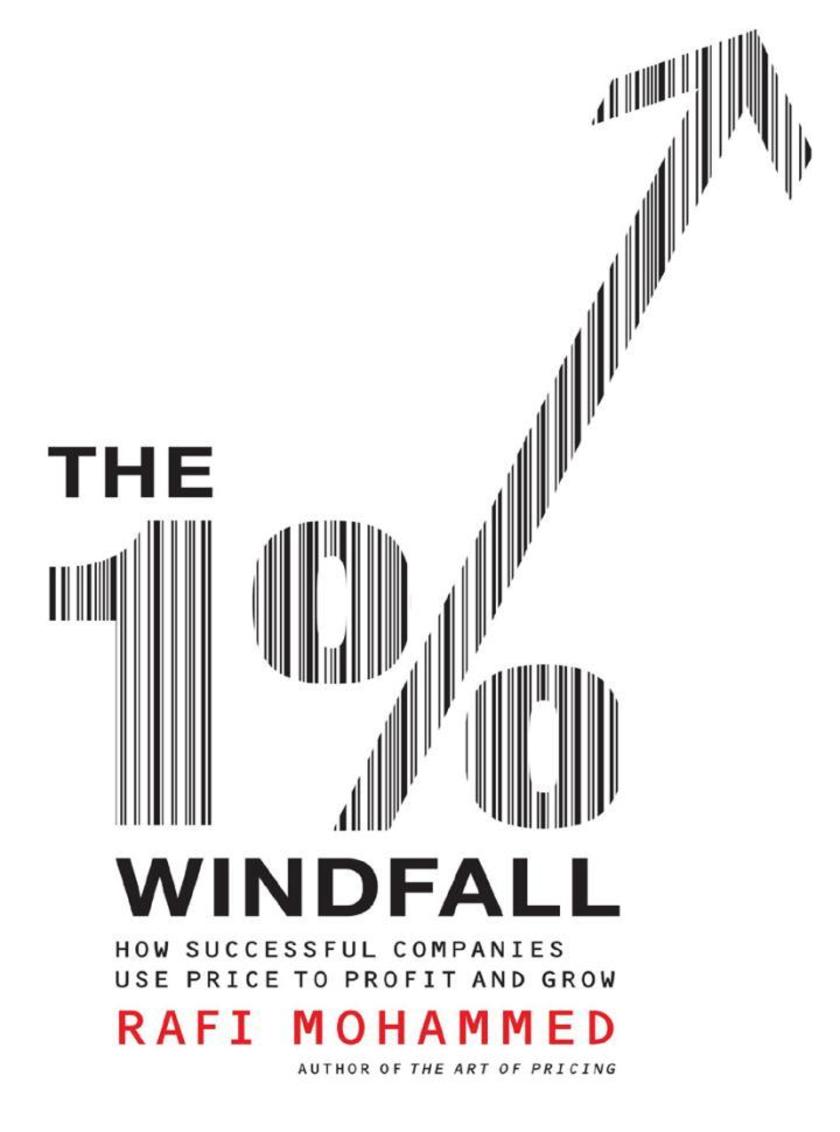
The 1% Windfall
¥166.09
Leading pricing expert Rafi Mohammed shows businesses how to reap a financial windfall and foster growth using the underutilized and often overlooked strategy of setting prices. The 1% Windfall reveals how modest incremental changes to an everyday business practice pricing can yield significant rewards. Illustrating the power of pricing, a study of the Global 1200 found that if companies raised prices by just 1%, their average operating profits would increase by 11%. Using a 1% increase in price, some companies would see even more growth in percentage of profit: Sears, 155%; McKesson, 100%; Tyson, 81%; Land O'Lakes, 58%; and Whirlpool, 35%.The good news is that better pricing is more than simply raising prices. Instead, the key is to offer customers a variety of pricing options. This strategy is win-win: profits to companies and choices for consumers. But how do executives and managers set the right priceUnderpinned by sound empirical research and real-life anecdotes, The 1% Windfall addresses this fundamental question. This book offers guidelines that any company whether a multinational conglomerate, a small business, or even a nonprofit can follow to create a comprehensive pricing strategy for any product or service. In addition, these versatile techniques and tools provide solutions to avert a slump in a recession, offset the impact of inflation, or battle a new competitor. The result is a mind-opening, clear blueprint for com-panies to price for profit and growth.
The Alternative Answer
¥155.02
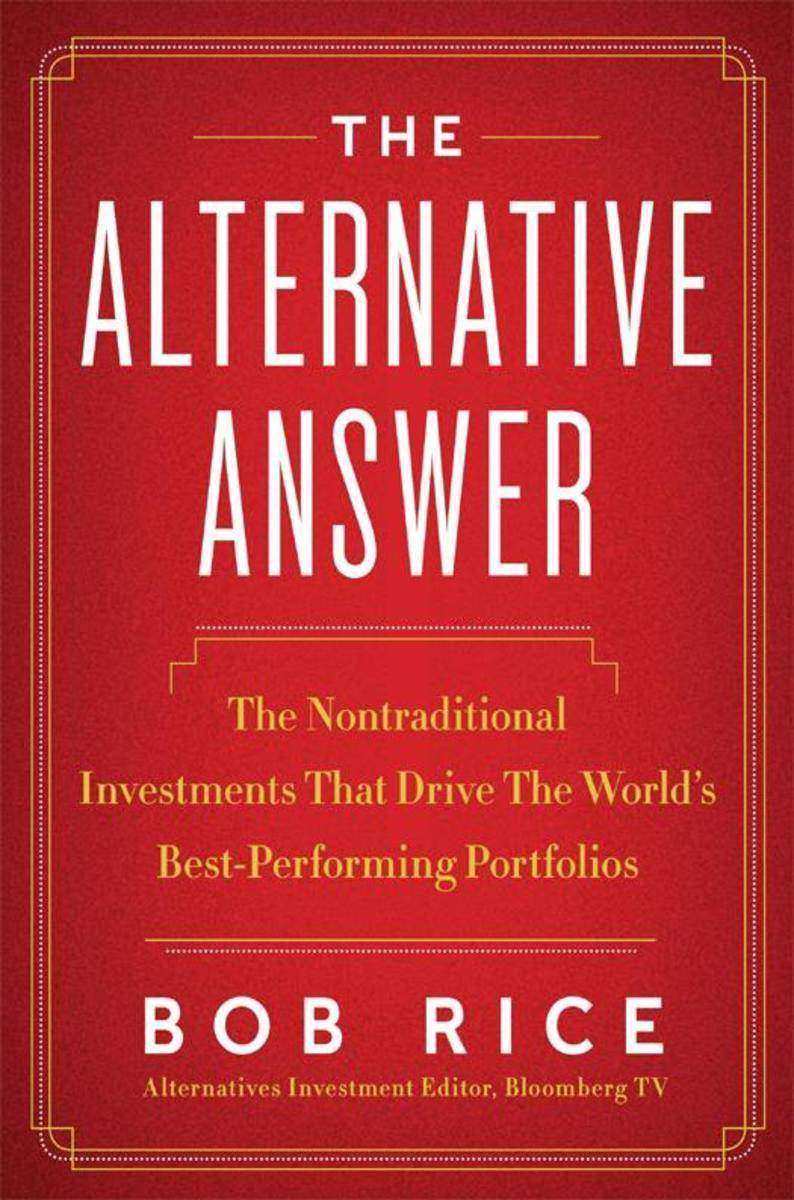
The first book to explain the new world of alternative investing, showing how anyone can use nontraditional options to significantly increase returns and lower risksThe world's elite investors have long relied on alternative investments to produce superior returns. Until now, these strategies were the exclusive purview of institutions and the superwealthy, but today any informed investor can play the same game. A rainbow of investment options timber, start-ups, master limited partnerships (MLPs), hedged strategies, managed futures, infrastructure, peer-to-peer lending, farmland, and dozens of other nontraditional strategies can provide dramatically better gains, with less total risk, than the standard choices. In The Alternative Answer, Bob Rice, Bloomberg TV's Alternative Investments Editor, leads an entertaining and easy- to-understand tour of this world, and suggests specific alternative investments for all four key of a portfolio: safely generating more current income, decreasing risks of economic shocks, significantly increasing long-term profits, and protecting purchasing power over time.Regardless of experience or net worth, readers will learn exactly how to substantially improve investment performance in the same way that the world's best investors already do. Stocks and bonds alone aren't nearly enough. Investors need an alternative answer and now they have it.
The Millionaire in the Mirror
¥134.46
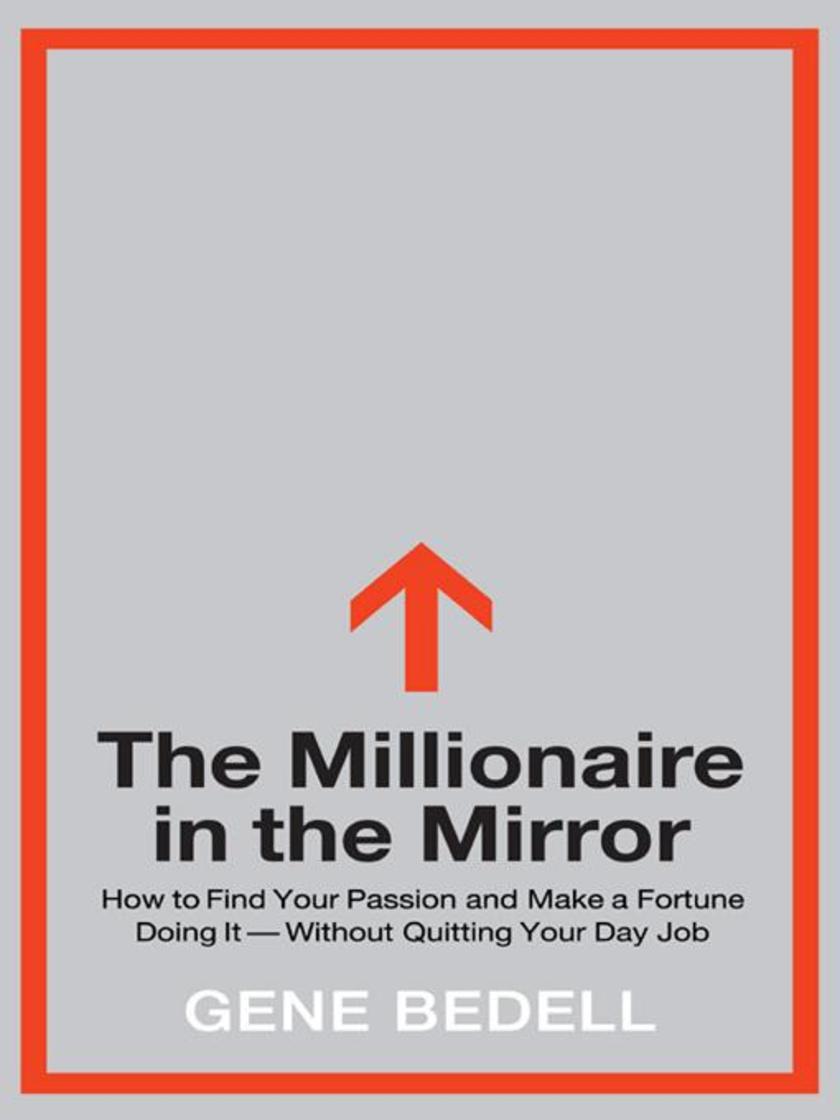
Learn the keys to Outstanding Success and reveal the millionaire in your mirror Despite never being, as he admits, the best communicator, the most talented manager, or the smartest guy in the room, Gene Bedell quickly worked his way up the corporate ladder accumulating career earnings that put him among the country's top one percent of earners while doing what he loved and always putting family first. By looking at his own career and the careers of others who have achieved Outstanding Success people who all started with nothing he found it was possible for those who put their minds to it to become wealthy while spending their careers doing work they love. Now, in The Millionaire in the Mirror, Bedell reveals how you too can find career fulfillment while earning millions without social connections, an Ivy League education, an MBA, or the kind of earth-shattering managerial talent that makes the world take notice and how you can do it without destroying your personal life, resorting to hucksters' get-rich-quick schemes, or opting out of a traditional career path. Inside you'll find the seven success strategies that will revitalize your days at work, helpful tips for getting "unstuck" at any age or phase of your career, and answers to the crucial career questions that are asked far too infrequently. Approachable but authoritative, this is the book for everyday people who have extraordinary potential. If you have the desire and drive to achieve truly Outstanding Success, you can turn the person you see in the mirror into the millionaire you're destined to become.


