


 购物车
购物车 个人中心
个人中心

Mavericks at Work: Why the most original minds in business win
¥91.23
An engaging and incisive look at today's top business leaders – visionary and creative mavericks who are changing the way we do business. Inspiring and accessible, ‘Mavericks at Work’ is for anyone who wants to succeed in business – from the entry-level employee to the CEO. In ‘Mavericks at Work’, two high-profile journalists introduce an inspiring group of entrepreneurs and executives who are building great businesses by challenging business as usual. From break-the-mould innovators such as HBO, Pixar, and Netflix to global giants such as IBM and Procter & Gamble, these mavericks are winning big by devising new answers to the oldest (and toughest) challenges of competition and leadership. Their stories are exciting – and their ideas are truly powerful. Real mavericks know that: ? Big, original ideas pay big dividends ? Being different makes all the difference ? Nobody is as smart as everybody ? Cheaper is better, but value is priceless ? Great leaders are insatiable learners ‘Mavericks at Work’ is a relentlessly useful how-to book. But it is also an eye-opening what-if book – with insights that showcase the power of business at its best and set a positive agenda for the future.

The Way of Nowhere: Eight Questions to Release Our Creative Potential
¥117.82
The Way of Nowhere is a business book by the UK’s hottest change management consultancy who have led transformations in some of Britain’s biggest and best known organisations. An invaluable resource for anyone who wants to make a creative difference in their lives and the lives of people around them. Inspired by the unique practice of 'nowhere', a community of companies that specialise in co-creation, this is an inspirational book that will help you break through to a more creative and strategic future Renowned for their world-class approach to innovation, the nowhere group works with a wide range of businesses, government agencies and individuals to develop their creativity to its full potential. Now, their book maps out the groundbreaking ways that anyone can become more productive, playing a more creative role in your organisation while simultaneously nurturing your own growth along the way. It contains eight breakthrough questions designed to stimulate and enrich our creative capacity, both as an individual and as part of a team. Using examples and tools from their work with some of the UK’s largest and best known businesses, The Way of Nowhere shows us how to unlock the underlying and invisible forces at play within organisations, communities and cultures. With practice, you will discover how these questions and insights can release the latent creativity that exists within - a place where magic can happen - out of nowhere!

The New Rules of Money
¥88.56
Are You Playing By the New Rules?Forget what you know about personal finance. The old rules no longer apply. Ric Edelman's 88 strategies, tailor-made for today's economy, will show you how to achieve financial success. Ric is famous for making personal finance fun, and you'll discover how easy it is to put his advice into action!Is it smart to buy company stock with your 402 (k) planDiscover the right way to handle your company retirement plan. See Rule #85 Learn why you must carry a big, long mortgage -- and never pay it off! See Rule #21Learn why not to invest in the new Roth IRA-and discover the most powerful anti-tax investment available today. See Rules #69 and #76Planning to retireLearn why you won't -- and what you must do instead. See Rule #88Find out why those who invest in S&P 500 Index Funds will wish they hadn't. See Rule #36Learn why that higher - paying job could actually cost you money. See Rule #32

The Digital Mom Handbook
¥90.77
From the founders of ClassyMommy.com and MomGenerations.com comes the ultimate guide to helping moms build successful careers at home by doing what they already do online just better.To work or not to work it's the toughest question for most mothers today. But Audrey McClelland and Colleen Padilla have found the coveted middle ground, creating successful careers from home via the Internet. They've literally Skyped, blogged, vlogged, tweeted, and Facebooked their way to the top and in this eye-opening book they show other moms how to find success through these seven basic steps: 1. Find your passion. 2. Hang a digital shingle and start typing. 3. Find your tribe. 4. Make opportunity knock and learn how to answer that door. 5. Manage the Benjamins. 6. Don't forget the children! 7. Live happily ever after by living your values.
Welcome to the Real World
¥95.11
It's a challenging time to be young and new in the workplace. Your parents can't help the rules have all changed. In Welcome to the Real World, career expert and entrepreneur Lauren Berger arms you with the tools you need to succeed. She's been in your shoes just a few years ago she was you. This handbook tells you everything you need to know to make the most of your first on-the-job experience, including how to think about the big picture deal with rejection effectively manage your time navigate sticky situations in the office and communicate with different personality types embrace entrepreneurship regardless of position, rank, or title organize your financial situation and personal life get promoted and (one day) take your boss's job! In a world defined by uncertainty, Lauren shows you how to be bold, take risks, and understand your value.
Wisdom 2.0
¥90.77
Technology is not the answer. It is also not the problem. What matters insteadAwareness, Engagement, and Wisdom.Wisdom 2.0 addresses the challenge of our age:to not only live connected to one another through technology,but to do so in ways that are beneficial, effective, and useful.

Success Runs in Our Race
¥88.56
A completely updated and revised edition of a bestselling book that has helped tens of thousands of people learn how to network effectively, Success Runs in Our Race is more important than ever in this fluctuating economy. With scores of anecdotes taken from interviews with successful African Americans -- from Keith Clinkscales, founder and former CEO of Vanguarde Media, to Oprah Winfrey -- Fraser shows how to network for information, for influence, and for resources. Readers will learn, among other things, how to cultivate valuable listening skills, which conferences blacks are most likely to attend when looking to build their business network, and how to effectively circulate a rsume.More than a guide for personal achievement, this is an information-packed bible of networking that also seeks to inspire a social movement and a rebirth of the "Underground Railroad," in which successful African Americans share the lessons of self-determination and empowerment with those still struggling to scale the ladder of success.

Betrayal
¥90.77
It was an inconceivable deception: over $65 billion stolen in the world's largest Ponzi scheme. Including new and revealing interviews with those who worked closest to himand his family, Betrayal is an in-depth, penetrating look at the man who perpetrated history's most notorious financial crime. To the people who knew him, Bernie Madoff was a kind and honorable person; a loving father and husband; generous to his employees and charitable even to strangers. On Wall Street, he was known as a wise elder statesman, wildly successful in his investments but never too risky with people's money. He was so revered and trusted that thousands placed their life savings with him, and he in turn provided them with early retirements and affluent lifestyles.But on December 11, 2008, Madoff confessed that he'd lied to them all. The monthly financial statements he'd sent customers for decades were all works of fiction. Their money was gone.Despite the crush of media attention on Madoff's scam, little is known about Madoff himself. What could lead a seemingly good man to ruin the lives of everyone who ever cared about himWhat caused Bernie Madoff to commit an unspeakable act of betrayal, bankrupting his family, his friends, his mentors, and thousands of investors who depended upon him for their livelihoodsBetrayal: The Life and Lies of Bernie Madoff is about the man who realized that he could have everything he wanted if he simply lied to the people who trusted him the most. Author Andrew Kirtzman tracked down more than a hundred people from Madoff's past, from the first girl he ever kissed to family members who played in his house as children; from his secretaries to his drivers; from traders at his company to his inner circle of friends. He pored through thousands of pages of court records; private e-mails; phone-conversation tran*s; and census, military, and immigration records. The result is a fascinating story about the rise of a deeply immoral man.Kirtzman describes Madoff's feelings of inferiority and humiliation as a child, and his obsession with making money to prove himself worthy as he grew older. He reveals Madoff's construction of a criminal enterprise at a young age, long before he's ever claimed it began. He paints a picture of a loving yet strange family that ran a multibillion-dollar corporation like a small family restaurant. He offers an inside look at life within the company and the characters who worked on the infamous seventeenth floor. He reveals the details of an underground flow of cash that no one has known about until now. And he chronicles the desperate moments leading up to Madoff's fall, from the perspective of the people who spent the last hours with him before his house of cards collapsed.
Starring You!
¥84.82
Today, with thousands of TV hours to fill, there's room on television for virtually every product, service, and personality and no one understands that better than producers Marta Tracy and Terence Noonan. Their one-of-a-kind handbook shows you how to make your dreams of on-screen success come true whether that dream is to appear on reality television, to showcase your catering skills on The Martha Stewart Show, to promote your flower shop on a local morning show, or to launch a thousand different TV-centered personal or professional goals. Starring You! outlines everything you need to market your business, product, point of view, or yourself, including: How to write the perfect pitch How to build and maintain relationships with producers How to become a regular guest . . . or even the host of your own show
Crush It!
¥127.33
Do you have a hobby you wish you could indulge in all dayAn obsession that keeps you up at nightNow is the perfect time to take that passion and make a living doing what you love. In Crush It! Why NOW Is the Time to Cash In on Your Passion, Gary Vaynerchuk shows you how to use the power of the Internet to turn your real interests into real businesses. Gary spent years building his family business from a local wine shop into a national industry leader. Then one day he turned on a video camera, and by using the secrets revealed here, transformed his entire life and earning potential by building his personal brand. By the end of this book, readers will have learned how to harness the power of the Internet to make their entrepreneurial dreams come true. Step by step, Crush It! is the ultimate driver's manual for modern business.

I Shouldn't Be Telling You This
¥94.10
Kate White New York Times bestselling author, editor in chief of Cosmopolitan for fourteen years, and motivational speaker shares her gutsy secrets to success in this witty, straight-talking new career guide for women.Whether you've just settled into your first work cubicle and have no clue how to go after the success you crave, or you've already got a sweet little office but you aren't sure how to take your career to the next level, I Shouldn't Be Telling You This gives you all the secrets you need to become a success, go big with it, and then savor every second. It is jam-packed with insider strategies, interviews with women at the top of their game, and Kate's advice from her own career running five major magazines (including one of the bestselling women's magazines in the world, Cosmopolitan). She hows you how to break out of the pack, master the learning curve, make bold moves, and, ultimately, have the career you've always lusted for!Kate shares five secrets every woman needs to know how to:Land a Job You're Truly Passionate About Use "Bitch Envy" to Your Advantage Radiate Confidence and Get Buzzed About (Without Worrying What Other People Think)Ask for the Money You Want and Get It Manage Your Career and Not Just Your Job (It's a Whole Different Ball Game!)But more than anything, Kate says, you have to go big or go home do what's unexpected and always keep your career trajectory in mind. It might be tackling a project that no one else is taking on and nailing it then making sure your boss knows it. Or it might be developing a "golden gut" that will help you to break the rules the right way, so you always end up shining. In I Shouldn't Be Telling You This, Kate White shares the kinds of secrets no boss is ever likely to spill all with her irreverent wit and candid style. You'll come away with the know-how you need and you'll feel as though you've just gotten up from a fabulously dishy lunch!
Double Your Profits
¥94.10
One of the nations' foremost financial consultants shares 78 proven ways to cut costs dramatically, send productivity through the roof, and, in just six months, double profits.
The Gifted Boss
¥112.44
Want freedom from management, mediocrity and moronsEver wonder what the best bosses know that you don'tDo you want to have great employees, people who don't need to be managed and who make everyone around them work harder and raise the department to a higher standardThe Gifted Boss is management guru Dale Dauten's classic yet revolutionary guidebook on teaching managers how to spot and court talent and how to give great employees what they want and need. This is a comprehensive system full of valuable insight and lessons aimed at creating the best work environment for the best people. Throughout The Gifted Boss, Dale Dauten defines his different breed of leader as one who is able to shape a business environment and culture that is a magnet for self-motivated employees. Dauten's starting point is a powerful fact about hiring great employees: the best ones are almost never in the job market. His system also includes a discussion of "ideal turnover" and how the great managers employ "the secret skill" of "de-hiring" to gracefully move mediocre employees up or out. Throughout his discussions, Dauten incorporates priceless knowledge gained from an exhaustive search for America's best bosses. The wisdom he acquired was startling, and it pertained to every type of organization: "Different isn't always better, but better is always different." The Gifted Boss has already earned itself a cult following. Now, based on conversations with hundreds of readers, Dauten has revised his work by adding a quick-start guide to help his audience get fast results and a discussion guide to help executives share the book with their teams. Though new technology continues to bring new changes to communication in the workplace, The Gifted Boss still remains the essential guide to maneuvering the tricky world of managing the modern employee. It belongs on every businessperson's desk.

Wall Street Meat
¥77.49
Wall Street is a funny business. All you have is your reputation. Taint it and someone else will fill your shoes. Longevity comes from maintaining that reputation. Ask Jack Grubman, the All-Star telecom analyst from Salomon Smith Barney; uber-banker Frank Quattrone at CS First Boston; Morgan Stanley's Mary "Queen of the Net" Meeker; or Merrill Lynch's Henry Blodget.Well, they probably won't tell you anything. But have I got some great stories for you. Successful hedge fund manager Andy Kessler looks back on his years as an analyst on Wall Street and offers this cautionary tale of the intoxicating forces loose in the world of finance that overwhelmed sober analysis.

The Wall Street Journal Guide to Investing in the Apocalypse
¥88.56
Disasters happen every day. Are your investments preparedThe investor who knows how to anticipate historically significant or earth-shattering events who is prepared to act when others are frozen with fear will always have a substantial advantage. By closely analyzing potential global threats and the opportunities they present, The Wall Street Journal Guide to Investing in the Apocalypse offers investors the key to finding a silver lining in almost any cataclysm. Even if the catastrophic does not occur, the strategies here can pay huge dividends even under more mundane circumstances.The Wall Street Journal Guide to Investing in the Apocalypse provides readers with valuable information for investment success: the ability to see opportunity where others see peril. Whether a global disaster is natural or man-made, environmental or financial, every fearsome scenario contains the seeds of profit for the investor who stays calm and thinks rather than panics and runs.
The Effective Executive
¥99.65
The measure of the executive, Peter Drucker reminds us, is the ability to "get the right things done." This usually involves doing what other people have overlooked as well as avoiding what is unproductive. Intelligence, imagination, and knowledge may all be wasted in an executive job without the acquired habits of mind that mold them into results. Drucker identifies five practices essential to business effectiveness that can, and must, be learned: Management of time Choosing what to contribute to the practical organization Knowing where and how to mobilize strength for best effect Setting up the right priorities And Knitting all of them together with effective decision making Ranging widely through the annals of business and government, Peter Drucker demonstrates the distinctive skill of the executive and offers fresh insights into old and seemingly obvious business situations.

Getting from College to Career
¥78.55
How do you get a job without experience and get experience without a jobIt's the question virtually every college student or recent graduate faces. In Getting from College to Career, Lindsey Pollak offers the first definitive guide to building the experience, skills, and confidence you need before starting your first major job search. Her 90 action-oriented tips include strategies ranging from the simple to the expert, including: Avoid the biggest mistake in career prep and job hunting Subscribe to a daily newspaper E-mail like a professional Make every event a networking success Practice the eight essentials of internship achievement Perform five minutes of stand-up Overprepare for interviews Persist Getting from College to Career gives you the essential information and guidance you need to get your foot in the door of the real world. Don't start your first job search without it!

Who Killed Change?
¥123.10
Who Killed ChangeSolving the Mystery of Leading People Through Change Every day organizations around the world launch change initiatives often big, expensive ones designed to improve the status quo. Yet 50 to 70 percent of these change efforts fail. A few perish suddenly, but many die painful, protracted deaths that drain the organization's resources, energy and morale.Who or What Is Killing Change?That's what you'll find out in this witty whodunit. The story features a Columbo-style detective, Agent Mike McNally, who's investigating the murder of yet another change. One by one, Agent McNally interviews thirteen prime suspects, including a myopic leader named Victoria Vision; a chronically tardy manager named Ernest Urgency; an executive named Clair Communication, whose laryngitis makes communication all but impossible; and several other dubious characters.The suspects are sure to sound familiar and you're bound to relate them to your own workplace. In the end, Agent McNally solves the case in a way that will inspire you to become an effective Change Agent in your own organization.A step-by-step guide at the back of the book shows you how to apply the story's lessons to the real world. Key questions help you evaluate the health of your organization's change initiatives, and you'll learn best practices for enabling and sustaining the desired change.

Dealers of Lightning
¥101.00
In the bestselling tradition of The Soul of a New Machine, Dealers of Lightning is a fascinating journey of intellectual creation. In the 1970s and '80s, Xerox Corporation brought together a brain-trust of engineering geniuses, a group of computer eccentrics dubbed PARC. This brilliant group created several monumental innovations that triggered a technological revolution, including the first personal computer, the laser printer, and the graphical interface (one of the main precursors of the Internet), only to see these breakthroughs rejected by the corporation. Yet, instead of giving up, these determined inventors turned their ideas into empires that radically altered contemporary life and changed the world.Based on extensive interviews with the scientists, engineers, administrators, and executives who lived the story, this riveting chronicle details PARC's humble beginnings through its triumph as a hothouse for ideas, and shows why Xerox was never able to grasp, and ultimately exploit, the cutting-edge innovations PARC delivered. Dealers of Lightning offers an unprecedented look at the ideas, the inventions, and the individuals that propelled Xerox PARC to the frontier of technohistoiy--and the corporate machinations that almost prevented it from achieving greatness.

Taken for a Ride
¥94.10
Here is the book that exposed the Daimler-Chrysler "merger of equals" as a bold German takeover of an industrial icon. Taken for a Ride reveals the shock waves felt around the world when Daimler-Benz bought Chrysler for $36 billion in 1998. In a gripping narrative, Bill Vlasic and Bradley A. Stertz go behind the scenes of the defining corporate drama of the decade -- and in a new epilogue chart its chaotic aftermath.
Console Wars
¥111.91
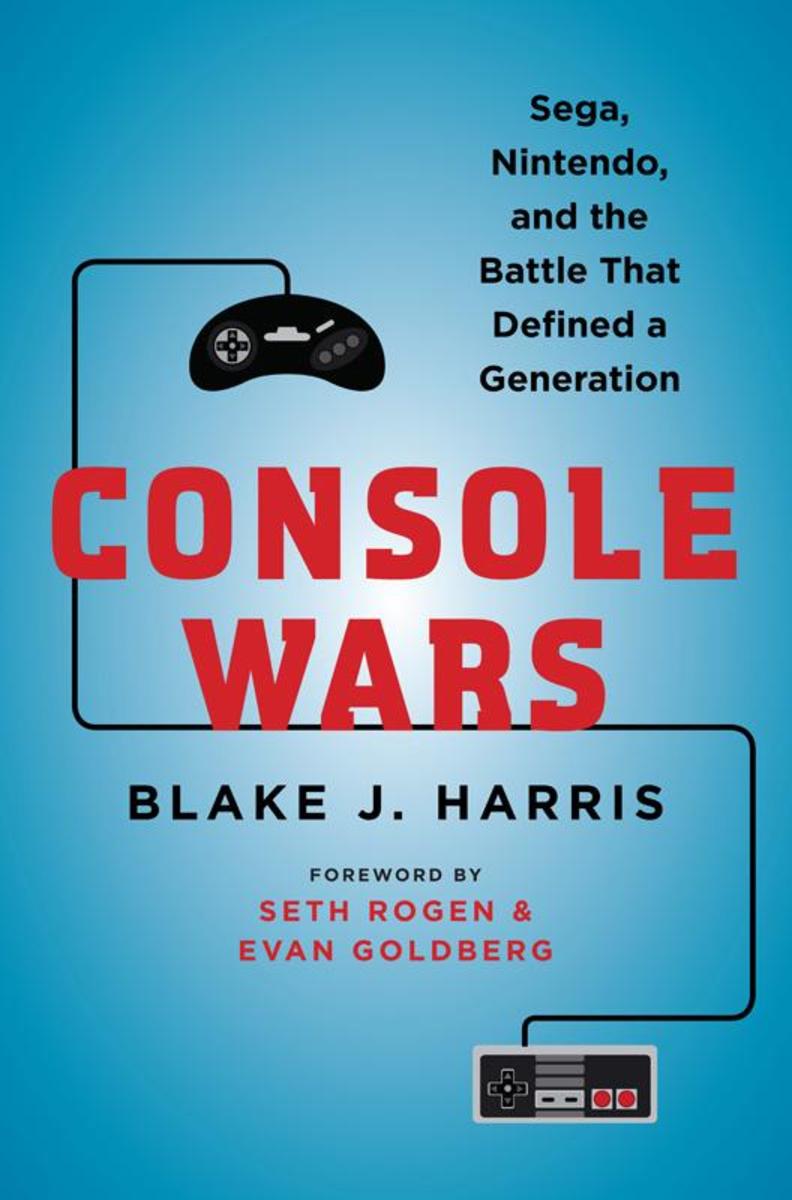
A mesmerizing, behind-the-scenes business thriller that chronicles how Sega, a small, scrappy gaming company led by an unlikely visionary and a team of rebels, took on the juggernaut Nintendo and revolutionized the videogame industry in development as a feature film from Sony PicturesIn 1990, Nintendo had a virtual monopoly on the videogame industry. Sega, on the other hand, was just a faltering arcade company with big aspirations and even bigger personalities. But all that would change with the arrival of Tom Kalinske, a former Mattel executive who knew nothing about videogames and everything about fighting uphill battles. His unconventional tactics, combined with the blood, sweat, and bold ideas of his renegade employees, completely transformed Sega and led to a ruthless, David-and-Goliath showdown with Nintendo. Little did he realize that Sega's success would create many new enemies and, most important, make Nintendo stronger than ever.The battle was vicious, relentless, and highly profitable, eventually sparking a global corporate war that would be fought on several fronts: from living rooms and school yards to boardrooms and Congress. It was a once-in-a-lifetime, no-holds-barred conflict that pitted brother against brother, kid against adult, Sonic against Mario, and the United States against Japan.Based on more than two hundred interviews with former Sega and Nintendo employees, Console Wars is the tale of how Tom Kalinske miraculously turned an industry punch line into a market leader. Blake J. Harris brings into focus the warriors, the strategies, and the battles and explores how they transformed popular culture forever. Ultimately, Console Wars is the story of how a humble family man, with an extraordinary imagination and a gift for turning problems into competitive advantages, inspired a team of underdogs to slay a giant and, as a result, give birth to a sixty-billion-dollar industry.


