


 购物车
购物车 个人中心
个人中心
Brainsteering
¥151.53
Change the way you think about new ideas by steering your creativity in new and more productive directions. Ideas. Whether the goal is to create a billion-dollar business, fix a broken process, reduce expenses, or simply find the perfect gift for that special someone, we all need a steady stream of breakthrough ideas and we've all learned from experience that traditional brainstorming doesn't generate them.Former McKinsey consultants Kevin P. Coyne and Shawn T. Coyne have spent more than a decade developing a better approach Brainsteering that takes brainstorming and other outdated ideation techniques and "steers" them in a more productive direction by better reflecting the way human beings actually think and work in creative problem-solving situations. By introducing just the right amount of structure into the process, and asking just the right questions, Brainsteering has helped Fortune 500 companies, small not-for-profits, and individuals alike generate ideas they previously could never have imagined.Peppered with thought-provoking and entertaining examples drawn from the workplace and popular culture, Brainsteering can help anyone develop breakthrough ideas, whether working alone on a one-time problem or turning an entire organization into an ongoing "idea factory." And getting started is easy: simply ask the right questions, and good ideas will follow.
Circle of Friends
¥162.76
The bestselling author of The Sellout tells the explosive story of the government’s crackdown on insider-trading networks an investigation that has already racked up more than 60 convictions.In Circle of Friends, award-winning journalist Charles Gasparino one of Wall Street's most knowledgeable observers follows government investigators and prosecutors as they pursue one of the most aggressive and broad-reaching series of insider-trading cases in the nation's history. A richly textured page-turner of investigative journalism based on extensive reporting, Circle of Friends chronicles the massive federal crackdown that has already put some of the biggest names on Wall Street behind bars, including Raj Rajaratnam, founder of the Galleon Group, and Rajat Gupta, a former CEO of consulting giant McKinsey & Co. Other similarly sized targets are still waiting nervously, including the biggest one of them all financial impresario Steve Cohen of SAC Capital, the giant hedge fund that has confounded regulators for years by cranking out a steady stream of market-busting returns.Gasparino goes behind the headlines to reveal how the government makes its case, using every tool at its disposal and at great expense to taxpayers to supposedly make the investing world safer for average Americans. Gasparino asks why federal officials are so eager to prosecute these cases: What is the real damage to individualsDo average investors really careHe explores why insider trading is all the rage these days when the U.S. government has failed to bring a single criminal case against the culprits who caused the 2008 financial crisis. Circle of Friends is not a defense of insider trading, but it does offer an account of the politics of Wall Street crime fighting, revealing the behind-the-scenes ambitions that motivate headlines and burnish political careers. A riveting work of narrative nonfiction, as engrossing and explosive as fictional thrillers of the finest magnitude, Circle of Friends is a wakeup call to the investing public.

The One-Page Proposal
¥94.10
As clear, concise, and concrete as its subject, Patrick Riley's The One Page Proposal promises to be the definitive business guide to getting your best ideas fully understood in the least amount of time.Today more than ever, business decisions are made on the fly first impressions can make all the difference. Now, in the first book of its kind, successful entrepreneur Patrick Riley shows you how to boil all the elements of your business proposal into one persuasive page magnify your business potential in the process.
The Aspirational Investor
¥166.09
Why are otherwise smart and competent people such lousy investorsIndividual investors give up as much as two-thirds of their potential investment returns in misguided efforts to beat the market and most don't even realize it.Ashvin B. Chhabra, chief investment officer of one of the world's largest wealth management firms, explains that an important idea has gotten lost amid the relentless pursuit of investment returns. Rather than trying to beat the market, your primary goal should be to construct an investment strategy that creates a solid safety net and enables you to pursue your dreams and aspirations.With no more guarantee of lifelong jobs or pensions, all of us bear the burden of investing wisely. But many of us focus on the wrong set of investment activities, such as identifying the next great start-up or star fund manager, or simply beating a market benchmark. Even the standard framework for investing, modern portfolio theory, offers an incomplete solution. Meanwhile, the grand debates in finance, such as indexing versus active management, prioritize the wrong set of issues.We need a framework that shifts the focus of investment strategy from portfolios and markets to individuals and the objectives that really matter: protection against unexpected financial crises or retirement planning. Whatever matters most to you paying for your kid's education, starting your own business, endowing your favorite charity, or traveling the world you need a road map to help you achieve both your essential and aspirational goals.In The Aspirational Investor, Ashvin B. Chhabra outlines a groundbreaking yet intuitive approach to managing wealth, based on the identification of key goals and the careful allocation of resources and risks. The Wealth Allocation Framework will help you connect your investment portfolio with your life's goals, and accommodate the three seemingly incompatible objectives that must underpin every sound wealth management strategy: the need for financial security in the face of unknowable risks, the desire to maintain current living standards despite inflation, and the opportunity for life-changing wealth creation.Chhabra's pioneering work illuminates some surprising facts about how people get very wealthy, and reinterprets the success formulas of investing greats such as Warren Buffett and David Swensen. Chhabra also offers a novel perspective: If the markets don't really care about you, as surely they do not, then why should you spend all your time and effort trying to beat them?Raising the bar for what we should expect from our investment portfolios and from our investment advisors The Aspirational Investor is a thoughtful, practical guide for any investor, regardless of income or wealth level.

Five Frogs on a Log
¥221.54
A riddle: Five frogs are sitting on a log. Four decide to jump off. How many are leftAnswer: Five WhyBecause there's a difference between deciding and doing. Written by Mark L. Feldman and Michael F. Spratt of PricewaterhouseCoopers, Five Frogs on a Log offers readers an entertaining and no-nonsense field guide to the mergers and acquisitions jungle, packed with insight and instruction for executing corporate change and capturing shareholder value. Whether you're buying another company or acquiring a new vision of the future, this book proffers an unconventional perspective and a practical, readily accessible set of solutions to the single greatest challenge facing today's managers: executing rapid transitions ion mergers, acquisitions and gut wrenching change. Designed for corporate managers and CEOs caught up in the whirlwind of change, every chapter provides accessible ideas and wisdom for navigating the most demanding business transitions. The authors offer a unique hands-on perspective based on their work with top Fortune 500 firms. As they state: "Increasingly, the companies that win are those that learn faster, act quicker and adapt sooner. They will compress time by making and executing early, informed decisions about economic value creation, ruthless prioritization and focused resource allocation. They will use these decisions to take early firm stands on management deployment, organization structure and culture. Their actions will increasingly be linked to long-term, sustained economic value creation." The advice and expertise offered in this book can be used to solve a range of operational problems from speeding up new product development to merging two businesses; from changing company culture to repositioning a business in a while new marketplace. Whatever the challenges and opportunities facing you, your company, your industry, Five Frogs on a Log will move you from deciding to doing.
Harper Paperbacks
¥90.77
Are you ready for the inevitable day whenyou will have to act as parent to your parentsProtecting Your Parents’ Money is the essential financial handbook that will help you navigate this confusing and difficult transition, providing a game plan for tackling complex issues like estate planning, retirement income and savings, and long-term health care. Most important, it will help bridge the communication barrier between parents and adult children, which often makes the process much more difficult than it needs to be. Important topics include: ?Personal Finance 101, the Senior Years: The essential definitions and workings of the myriad investment options and financial requirements your parents will deal with in retirement. ?The Move: How to find the right nursing homes or retirement communities, comparing costs and factoring your parents’ assets into the mix. ?Understanding Medicare: What it is, how to qualify for coverage, and what it means for your parents’ finances. ?Elder Fraud: How to look for telltale signs that your parents have been victimized.
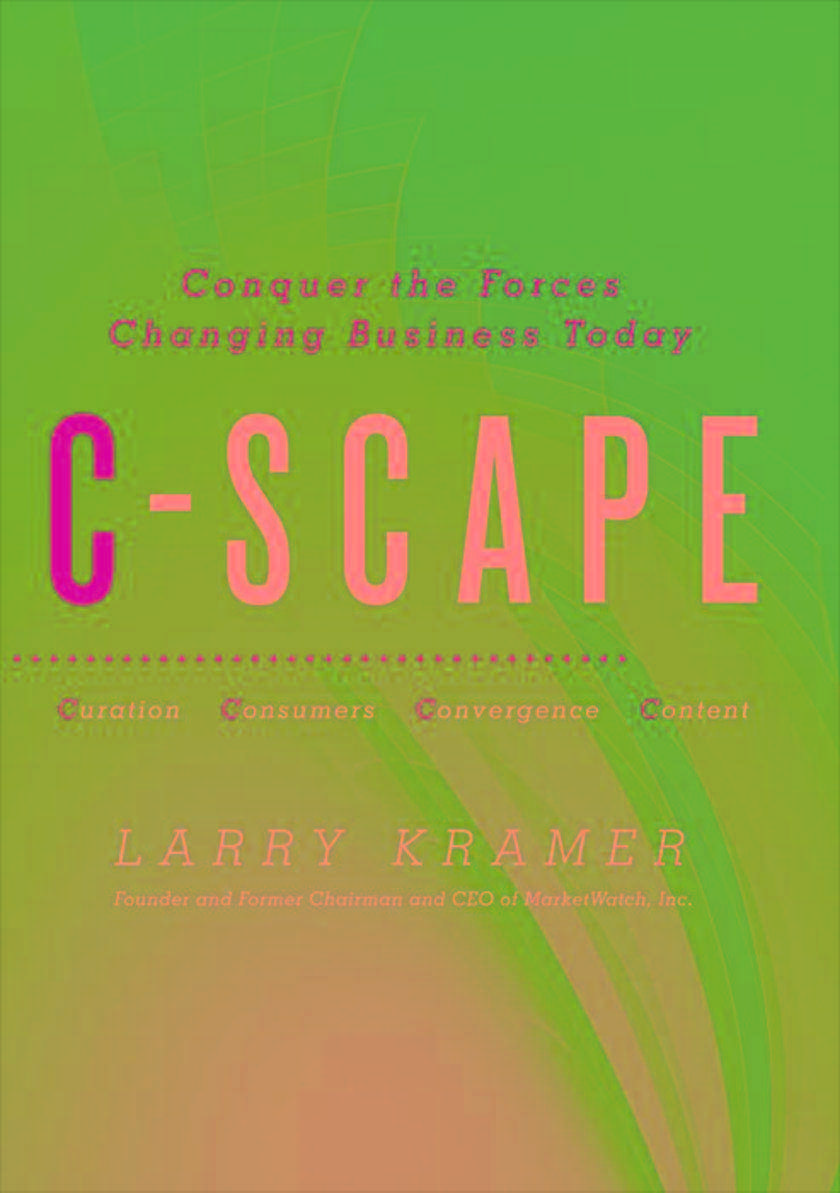
C-Scape
¥157.15
A bold, pioneering book that shows how businesses can survive and thrive in the digital media revolution Not so long ago, the business landscape was easier to chart. The routes connecting customers, companies, products, and services were predictable, reliable, and understood. Today, that landscape has been upended, and in its place a "C-Scape" has emerged a world where consumers, not producers and marketers, make the choices; where content, not distribution, is king; where curation becomes a primary currency of value; and where convergence continues to revolutionize every part of every business. In C-Scape, Larry Kramer leads the reader through this new, evolving world where the challenges are daunting but the opportunities are huge.A seasoned journalist turned superstar digital entrepreneur and venture capitalist, Kramer learned early on to survive and overcome the forces that are remaking the business landscape: the digital media revolution. Why mediaEvery aspect of every business is increasingly carried out through the media. From advertising and marketing to sales and customer service, from product design to manufacturing, everything that happens anywhere in business is ever more likely to happen on a screen or handheld device. That means any business could fall to the same threats facing the newspaper business and the music industry unless that business learns to navigate the four Cs. Kramer's explanation of this new landscape is a revelation; his visionary advice is both crucial and urgent. No leader, whether at the helm of a small business or a conglomerate, will read this book without seeing the business world anew and finding practical ways to put this book's four powerful precepts immediately to work.
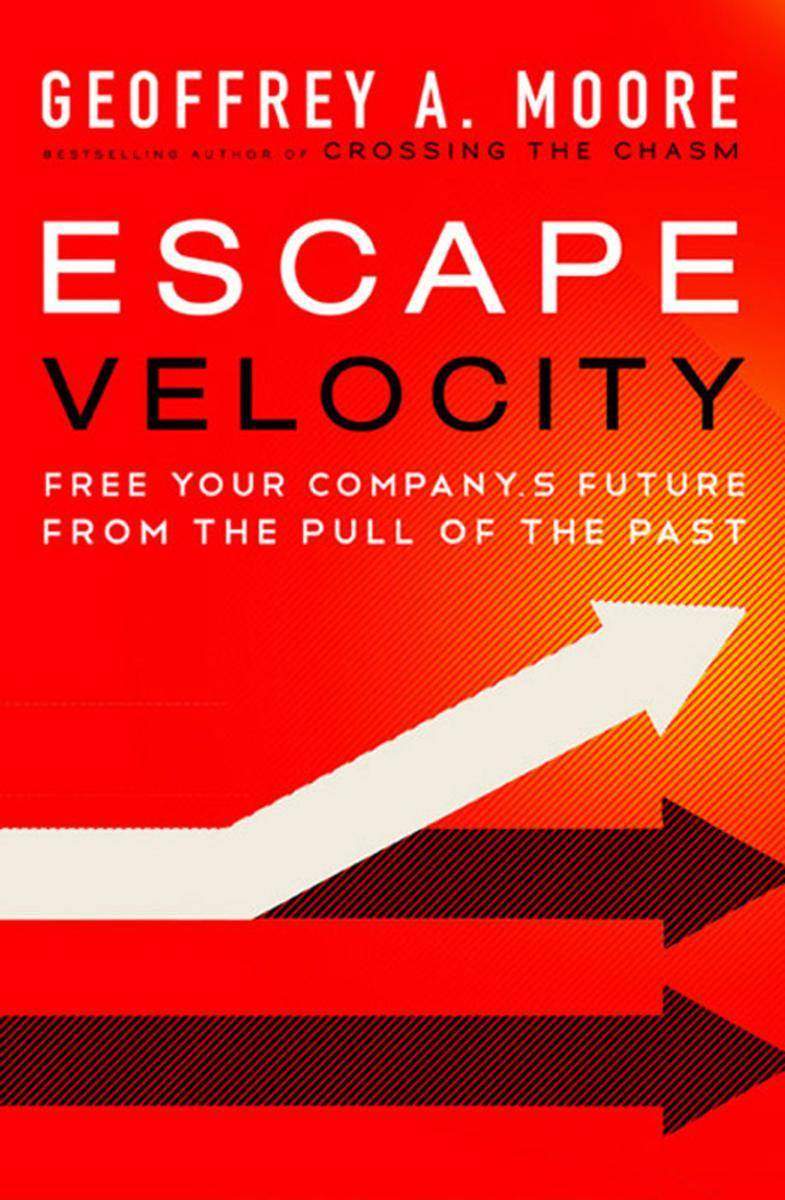
Escape Velocity
¥157.15
From the world leading high-tech strategist comes the definitive road map to help established companies create next-generation growth. Geoffrey Moore now-classic Crossing the Chasm became a must-read book by presenting an innovative framework to address the make-or-break obstacle facing all high-tech companies: how to gain market share from early adopters and from mainstream consumers. Based on twenty years’ experience advising the top leaders of many of the world most successful enterprises, Moore Escape Velocity offers a pragmatic plan to engage the most critical challenge that established enterprises face in the twenty-first-century economy: how to move beyond past success and drive next-generation growth from new lines of business. As he worked with senior management teams, Moore repeatedly found that executives were trapped by short-term performance-based compensation schemes. The result was critical decision-makers overweighting their legacy commitments, an embarrassingly low success rate in new-product launches, and a widespread failure to sustain any kind of next-generation business at scale. In Escape Velocity , Moore presents a cogent strategy for generating future growth within an established enterprise. Organized around a hierarchy of powers category power, company power, market power, offer power, and execution power this insightful work shows how each level of power can be orchestrated to achieve overall success. Moore explains how to use mergers and acquisitions as well as organic innovation to systematically migrate an enterprise portfolio out of lower-growth and into higher-growth categories; how to reallocate resources across an enterprise in deliberately asymmetrical ways to create a powerful and sustainable foundation for a long-term competitive advantage; how to leverage target-market initiatives as accelerants to growth and as stepping-stones to broad overall category success; how to create unmatchable offerings by being swift to neutralize competitors’ innovations and laser-focused on driving in-house innovations to make a business impervious to competitors; how to fundamentally change the execution cadence of an organization, pushing change from innovation to broad deployment, creating an irreversible tipping point along the way. Drawing from thousands of hours spent face-to-face with CEOs and their teams, Moore presents case examples and best practices. While his experience is deeply rooted in the high-tech sector, his models and techniques apply well beyond this arena, including to the public sector. At a time when the world is looking to established enterprises for growth and stability, Moore analysis is penetrating and his pre*ions are right on the mark. Escape Velocity gives executives and their teams a practical way forward to take advantage of the opportunities amid industry and economic disruptions.

The Asylum
¥88.56
They were a band of outsiders unable to get jobs with New York's gilded financial establishment. They would go on to corner the world's multitrillion-dollar oil market, reaping unimaginable riches while bringing the economy to its knees. Meet the self-anointed kings of the New York Mercantile Exchange. In some ways, they are everything you would expect them to be: a secretive, members-only club of men and women who live lavish lifestyles; cavort with politicians, strippers, and celebrities; and blissfully jacked up oil prices to nearly $150 a barrel while profiting off the misery of the working class. In other ways, they are nothing you can imagine: many come from working-class families themselves. The progeny of Jewish, Irish, and Italian immigrants who escaped war-torn Europe, they take pride in flagrantly spurning Wall Street. Under the thumb of an all-powerful international oil cartel, the energy market had long eluded the grasp of America's hungry capitalists. Neither the oil royalty of Houston nor the titans of Wall Street had ever succeeded in fully wresting away control. But facing extinction, the rough-and-tumble traders of Nymex led by the reluctant son of a producemerchant went after this Goliath and won, creating the world's first free oil market and minting billions in the process. Their stunning journey from poverty to prosperity belies the brutal and violent history that is their legacy. For the first time, The Asylum unmasks the oil market's self-described "inmates" in all their un*ed and dysfunctional glory: the happily married father from Long Island whose lust for money and power was exceeded only by his taste for cruel pranks; the Italian kung fu fighting gasoline trader whose ferocity in the trading pits earned him countless millions; the cheerful Nazi hunter who traded quietly by day and ambushed Nazi sympathizers by night; and the Irish-born femme fatale who outsmarted all but one of the exchange's chairmen the Hungarian emigre who, try as he might, could do nothing to rein in the oil market's unruly inhabitants. From the treacherous boardroom schemes to the hookers and blow of the trading pits; from the repeat terrorist attacks and FBI stings to the grand alliances and outrageous fortunes that brought the global economy to the brink, The Asylum ventures deep into the belly of the beast, revealing how raw ambition and the endless quest for wealth can change the very nature of both man and market. Showcasing seven years of research and hundreds of hours of interviews, Leah McGrath Goodman reveals what really happened behind the scenes as oil prices topped out and what choice the traders ultimately made when forced to choose between their longtime brotherhood and their precious oil monopoly.

How to Buy, Sell, and Profit on eBay
¥83.03
A lively insider's guide to starting a successful small business selling items old and new on eBay, written with personal anecdotes, well kept secrets, and insider tips by Adam Ginsberg, eBay's most successful private salesperson. This is the insider's guide to making money on eBay. Adam Ginsberg is the most successful seller on eBay, moving around a million dollars' worth of merchandise every month. Not only will he impart his personal secrets on how to sell on eBay learned through years of experience and his tips on expanding your small business using eBay as a global market, but he'll also give fun side notes and anecdotes, keeping the book lively and making it a fun and interesting read. This book will be a must have for all current and aspiring eBay sellers, all small business owners, and anyone who wants to learn how to start a million dollar company.
Fools Rush In
¥82.80
Every era has its merger every era has its story. For the New Media age it was an even bigger disaster: the AOL-Time Warner deal. At the time AOL and Time Warner were considered a matchless combination of old media content and new media distribution. But very soon after the deal was announced things started to go bad and then from bad to worse. Less than four years after the deal was announced, every significant figure in the deal -save the politically astute Richard Parsons has left the company, along with scores of others. Nearly a $100 billion was written off and a stock that once traded at $100 now trades near $10.What happenedWhere did it all go wrongIn this deeply sourced and deftly written book, Nina Munk gives us a window into the minds of two of the oddest men to ever run billion-dollar empires. Steve Case, the boy wonder who built AOL one free floppy disk at a time, was searching for a way out of the New Economy. Meanwhile Jerry Levin, who'd made his reputation as a visionary when he put HBO on satellite distribution, was searching for a monumental deal. These two men, more interested in their place in history than their personal fortunes, each thought they were out-smarting the other.
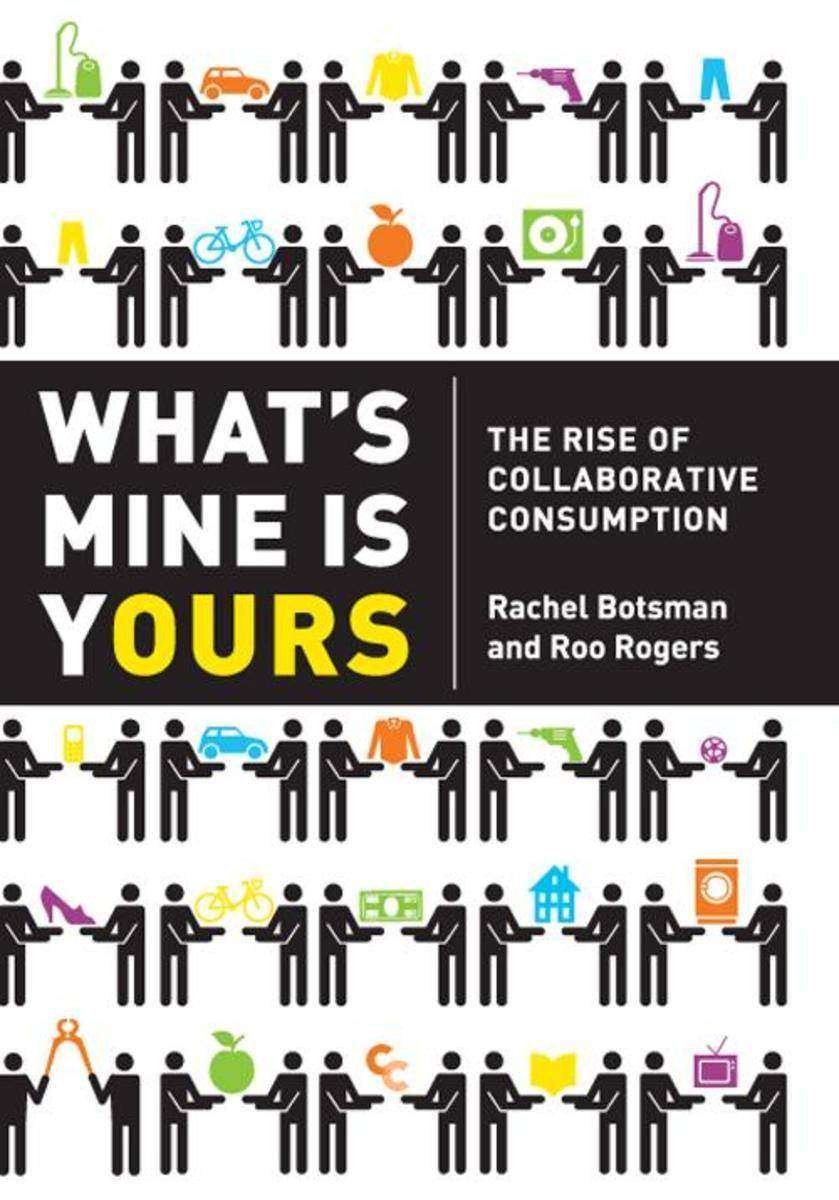
What's Mine Is Yours
¥151.10
WHAT'S MINE IS YOURS is about Collaborative Consumption, a new, emerging economy made possible by online social networks and fueled by increasing cost consciousness and environmental necessity. Collaborative Consumption occurs when people participate in organized sharing, bartering, trading, renting, swapping, and collectives to get the same pleasures of ownership with reduced personal cost and burden, and lower environmental impact. The book addresses three growing models of Collaborative Consumption: Product Service Systems, Communal Economies, and Redistribution Markets. The first, Product Service Systems, reflects the increasing number of people from all different backgrounds and across ages who are buying into the idea of using the service of the product-what it does for them-without owning it. Examples include Zipcar and Ziploc, and these companies are disrupting traditional industries based on models of individual ownership. Second, in what the authors define as Communal Economies, there is a growing realization that as individual consumers, we have relatively little in the way of bargaining power with corporations. A crowd of consumers, however, introduces a different, empowering dynamic. Online networks are bringing people together again and making them more willing to leverage the proverbial power of numbers. Examples of this second category include Etsy, an online market for handcrafts, or the social lending marketplace Zopa. The third model is Redistribution Markets, exemplified by worldwide networks such as Freecycle and Ebay as well as emerging forms of modern day bartering and swap trading such as Zwaggle, Swaptree, and Zunafish. Social networks facilitate consumer-to-consumer marketplaces that redistribute goods from where they are not needed to somewhere or someone where they are. This business model encourages reusing/reselling of old items rather them throwing them out, thereby reducing the waste and carbon emissions that go along with new production.WHAT'S MINE IS YOURS describes how these three models come together to form a new economy of more sustainable consumerism. Collaborative Consumption started as a trend in conjunction with the emergence of shared collective content/information sites such as Wikipedia and Flickr and with the recent economic troubles and increasing environmental awareness, it is growing into an international movement. The authors predict it will be a fully fledged economy within the next five years.In this book the authors travel among the quiet revolutionaries (consumers and companies) from all around the world. They explore how businesses will both prosper and fail in this environment, and, in particular, they examine how it has the potential to help create the mass sustainable change in consumer behaviors this planet so desperately needs. The authors themselves are environmentalists, but they are also entrepreneurs, parents, and optimistic citizens. This is a good news book about long-term positive change.

Data-ism
¥166.09
By one estimate, 90 percent of all of the data in history was created in the last two years. In 2014, International Data Corporation calculated the data universe at 4.4 zettabytes, or 4.4 trillion gigabytes. That much information, in volume, could fill enough slender iPad Air tablets to create a stack two-thirds of the way to the moon. Now, that's Big Data.Coal, iron ore, and oil were the key productive assets that fueled the Industrial Revolution. The vital raw material of today's information economy is data.In Data-ism, New York Times reporter Steve Lohr explains how big-data technology is ushering in a revolution in proportions that promise to be the basis of the next wave of efficiency and innovation across the economy. But more is at work here than technology. Big data is also the vehicle for a point of view, or philosophy, about how decisions will be and perhaps should be made in the future. Lohr investigates the benefits of data while also examining its dark side. Data-ism is about this next phase, in which vast Internet-scale data sets are used for discovery and prediction in virtually every field. It shows how this new revolution will change decision making by relying more on data and analysis, and less on intuition and experience and transform the nature of leadership and management. Focusing on young entrepreneurs at the forefront of data science as well as on giant companies such as IBM that are making big bets on data science for the future of their businesses, Data-ism is a field guide to what is ahead, explaining how individuals and institutions will need to exploit, protect, and manage data to stay competitive in the coming years. With rich examples of how the rise of big data is affecting everyday life, Data-ism also raises provocative questions about policy and practice that have wide implications for everyone.The age of data-ism is here. But are we ready to handle its consequences, good and bad?
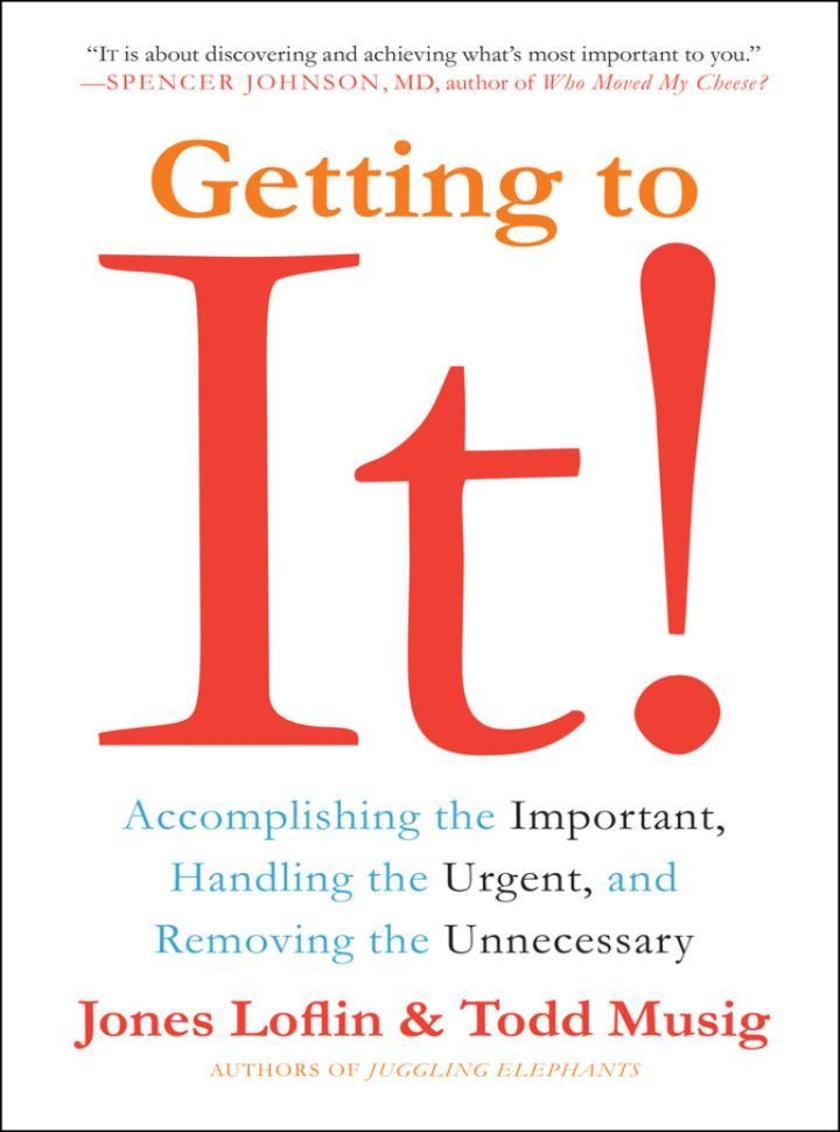
Getting to It
¥145.91
From the authors of Juggling Elephants comes the only guide you need to sort through the many priorities in your life, know what your it (Important Thing) should be, and understand how to get it done.How busy are youIn the daily struggle to get it all done, what are you forgettingIs your mind constantly racing through lists of all the things you could and should be doingDoes your day often feel as though you're treading water in an ocean of rushes and deadlines, trying to keep from drowning while handling the increasing demands of your work and life?Don't give up help is on the way. You just have to find your it. The Important Thing. Define it. Plan it. Focus on it. Get excited about it.Identifying IT isn't just the first step in the process of getting focused and heading in the right direction, it's every step. Getting to It provides the necessary tools to accomplish the important, handle the urgent, and get rid of the unnecessary. Want to enjoy a more fulfilling lifeGet to it.
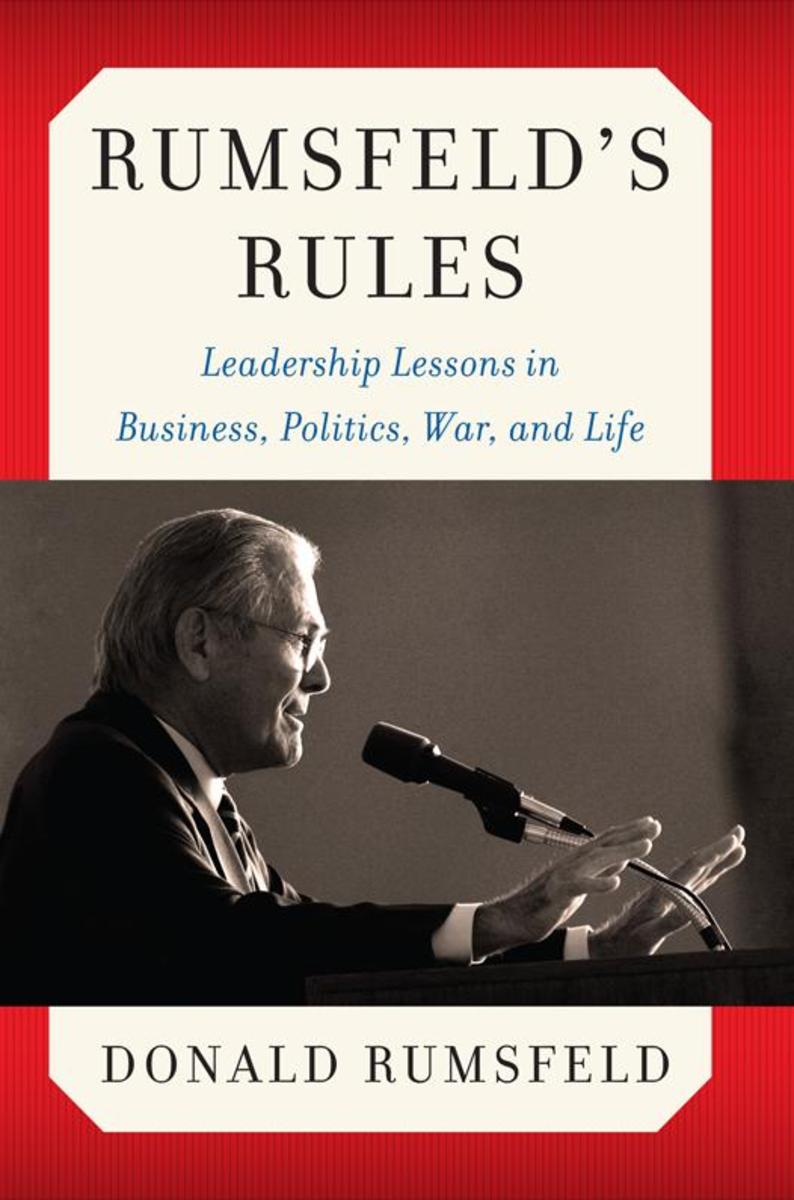
Rumsfeld's Rules
¥155.02
The legendary leadership guide, distilled from a lifetime of wisdom and experience in government and business Throughout his long and distinguished career—as a naval aviator, a U.S. Congressman, a top aide to four American presidents, a high-level diplomat, a CEO of two Fortune 500 companies, and the only twice-serving Secretary of Defense in American history—Donald Rumsfeld has collected hundreds of pithy, compelling, and often humorous observations about leadership, business, and life. When President Gerald Ford ordered these aphorisms distributed to his White House staff in 1974, the collection became known as "Rumsfeld's Rules." First gathered as three-by-five cards in a shoebox and then typed up and circulated informally over the years, these eminently nonpartisan rules have amused and enlightened presidents, business executives, chiefs of staff, foreign officials, diplomats, and members of Congress. They earned praise from the Wall Street Journal as "Required reading," and from the New York Times which said: "Rumsfeld's Rules can be profitably read in any organization…The best reading, though, are his sprightly tips on inoculating oneself against that dread White House disease, the inflated ego." Meanwhile, the collection continued to grow as Rumsfeld added new rules derived from things he read, heard, or observed in more than eight decades of a remarkable life. Now these legendary rules are made available for the first time to corporate executive. Rumsfeld has selected his most useful and important rules for effective leadership, enhanced with fresh insights and entertaining anecdotes, and discusses them in the blunt and witty style that made his Pentagon press conferences "must-see TV." Distilled from a career of unusual breadth and accomplishment, and organized under practical topics like hiring people, running a meeting, and dealing with the press, Rumsfeld's Rules can benefit people at every stage in their careers and in every walk of life, from aspiring politicos and industrialists to recent college graduates, teachers, and business leaders. The book provides unprecedented insight into leadership, management, strategy, and life—thinking that not only helped Rumsfeld lead the Pentagon in wartime, but earned him a reputation as one of America's toughest and most effective CEOs.
Managing the Non-Profit Organization
¥93.88
The groundbreaking and premier work on nonprofit organizations.The nonprofit sector is growing rapidly, creating a major need for expert advice on how to manage these organizations effectively. Management legend Peter Drucker provides excellent examples and explanations of mission, leadership, resources, marketing, goals, and much more. Interviews with nine experts also address key issues in this booming sector.
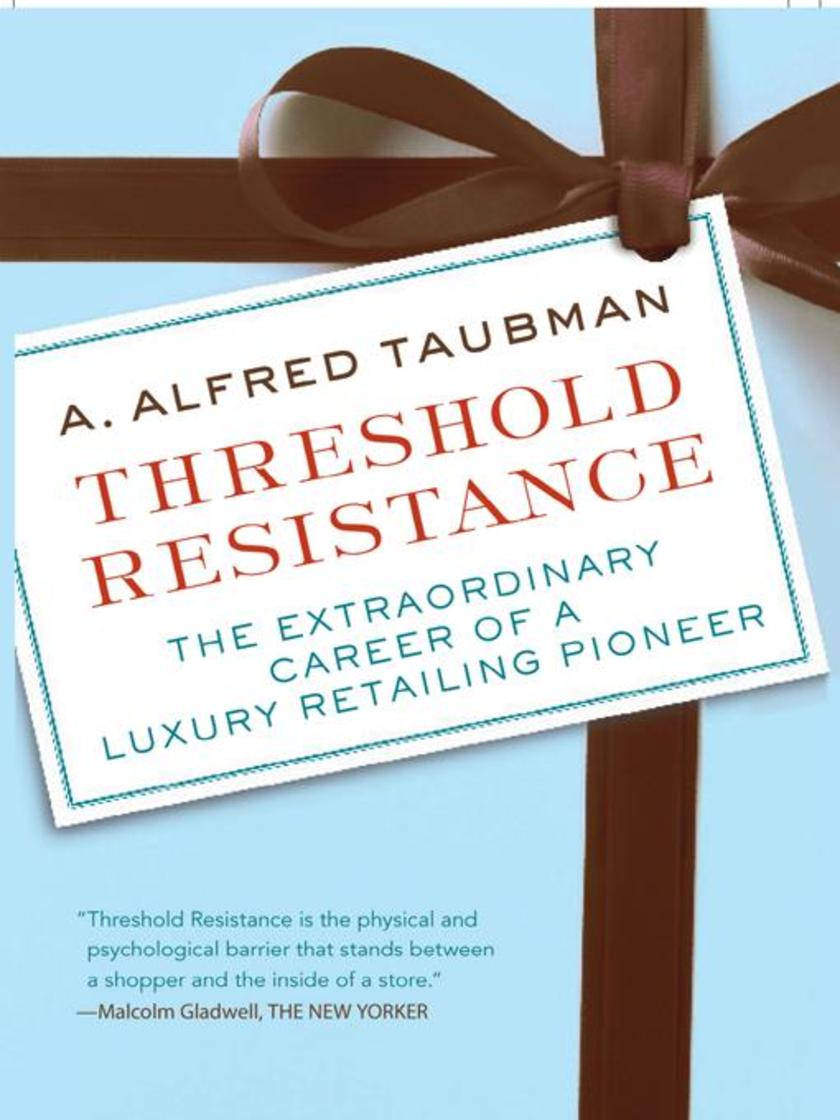
HarperCollins e-books
¥138.41
In this candid memoir, A. Alfred Taubman explains how a dyslexic Jewish kid from Detroit grew up to be a billionaire retailing pioneer, an intimate of European aristocrats and Palm Beach socialites, a respected philanthropist and, at age 78, a federal prisoner. With a unique blend of humor and genius, Taubman shows how selling fine art and antiques really isn't that different from marketing root beer or football, and offers penetrating insights into that quintessential palace of commerce, the luxury shopping mall. Alfred Taubman may not have invented the modern shopping center but, in the words of The New Yorker, "he perfected it."Taubman's life has been a storybook success, with its share of unique challenges. A pioneer builder and innovative real estate developer, he was also a brilliant land speculator, operator of a quick-serve restaurant chain, and owner of a major department store company. But what seemed like the pinnacle of his career, buying and reinventing the venerable art auction house Sotheby's, would lead to his conviction in an international price fixing scandal.Despite the twists and turns, Taubman's life and business philosophy can be summed up in one evocative phrase: Threshold Resistance. Understanding and defeating that force breaking down the barriers between art and commerce, between shoppers and merchandise, between high culture and popular taste has been his life's work.

HarperCollins e-books
¥141.57
"It began with a promising cancer drug, the brainchild of a gifted researcher, and grew into an insider trading scandal that ensnared one of America's most successful women. The story of ImClone Systems and its "miracle" cancer drug, Erbitux, is the quintessential business saga of the late 1990s. It's the story of big money and cutting-edgescience, celebrity, greed, and slipshod business practices; the story of biotech hype and hope and every kind of excess.At the center of it all stands a single, enigmatic figure named Sam Waksal. A brilliant, mercurial, and desperate-to-be-liked entrepreneur, Waksal was addicted to the trappings of wealth and fame that accrued to a darling of the stock market and the overheated atmosphere of biotech IPOs. At the height of his stardom, Waksal hobnobbed with Martha Stewart in New York and Carl Icahn in the Hamptons, hosted parties at his fabulous art-filled loft, and was a fixture in the gossip columns. He promised that Erbitux would "change oncology," and would soon be making $1 billion a year.But as Waksal partied late into the night, desperate cancer patients languished, waiting for his drug to come to market. When the FDA withheld approval of Erbitux, the charming scientist who had always stayed just one step ahead of bankruptcy panicked and desperately tried to cash in his stock before the bad news hit Wall Street.Waksal is now in jail, the first of the Enron-era white-collar criminals to be sentenced. Yet his cancer drug has proved more durable than his evanescent profits. Erbitux remains promising, the leading example of a new way to fight cancer, and patients and investors hope it will be available soon.
HarperCollins e-books
¥127.33
leverage (lev'r ij) The power to act or influence.ditch (dich) Slang, to get rid of; discard.Finally, you hold in your hands a powerful tool that will show you how to take full advantage of -- Leverage! -- your strengths and most positive qualities, while at the same time discarding or getting around -- Ditch! -- whatever gets in your way.Scott Blanchard and Madeleine Homan, co-founders of Coaching.com, share their groundbreaking program, honed by fourteen years of high-level executive coaching and consulting. They offer new perspectives on how to spend your precious and limited resources, time, emotions, passions, and energy to generate the best results.The three-part process begins with a twenty-five-question self-assessment, then moves on to the Three Perspectives -- major life queries that focus on how you are perceived, your own self-image, and self-imposed limitations. The final step, the Seven Leverage Points, offers fresh insight into the choices you make and how you conduct yourself in business and in life. You will find immediately applicable tools to appraise and manage your work environment and personal gifts. You will be guided to make tiny but crucial shifts in getting needs met and drawing boundaries.Leverage Your Best, Ditch the Rest eliminates the stupid stuff that distracts you and gets in your way. It shows you how to capitalize on what you've got going for you and how to invest in yourself like a hot new stock.*****In addition, we have built a Web site, www.leverageyourbest.com, for those who have made a commitment to their own coaching journey. Coaching is a dynamic tool and you are a work in progress---technology makes it easy to track growth. Leverage Your Best readers can use the Web site, the first of its kind, to work through exercises in the book electronically, keep a personal record of progress, communicate with other readers in an online coaching experience, and give feedback to the authors. A collaborative effort, the Web's online coaching community defines the www.leverageyourbest.com site experience, adding new dimensions to professional development...all for the price of the of the book . Visit the world's only online coaching Web experience and see what has people everywhere jumping in their cubicles. Enjoy!
The Die Broke Financial Problem Solver
¥77.54
If you're loosing sleep over your financial worries, help is here at last.Whether you're fretting over a mortgage that's been denied; a loan that's delayed; a marriage settlement that seems unfair; or a business that's struggling, this extraordinary book will not only help you rest easy, it will show you how to turn adversity into success.Here you'll learn the Pollan method for turning no into yes: how to determine your problem; how to make sure you're dealing with only one problem at a time; and how to create an environment of trust. With literally hundreds of scenarios to illustrate it's success, this unique and practical method will make you feel like you've got a coach, strategist, and motivator at your beck and call -- and will help you sleep well, knowing you're on the way to getting what you want.


