


 购物车
 个人中心


A cui este casa mea? Preliminarii la o etic? a restitu?iei
¥40.79
Acestea-s cuvintele, Petra. Am aternut copertele peste ele, lsndu-le s se limpezeasc. Timpul trecea, cartea nu-mi mai ncpea n trup. ntr-o zi, mi plimbam ochii peste literele ei. Dup aceea, am rspuns ctorva e-mailuri. Printre tirile care nsoesc n mod obinuit o csu electronic, mi-a atras atenia una. Plasa pianjenului se lsa peste mine, dar cui s-i strig mirarea i bucuria mea Eram singur i ngheat, n biroul pustiu. Atunci, m-am repezit s-i atern aceste nimicuri despre Shaun Higgins, specialistul ce a reuit s rezolve misterul insulei-fantom din Pacific. Aprea pe mai toate hrile, dar nu a fost gsit de cercettorii care au plecat s o caute cu vreo lun n urm. Din 1876 s-a strecurat eroarea. Atunci, comandantul balenierei Velocity a raportat n jurnal o serie de stnci mari i nite insulie de nisip, marcnd poriunea de pmnt pe o hart. Informaiile lui au tot fost copiate i recopiate, postulnd drept insul un probabil i posibil recif. Cineva din lumea aceasta, cu un veac n urm, s-a mai gndit la Plasterca. i dai seama ce lucru minunat i s-ar putea ca lumea despre care am zis odat c nu am gsit-o, aceea ce spuneam c i se cuvine, alturi de aceast carte care abia mai ncape n colivie, s se afle undeva, pe-aproape.“ – Clin Torsan

13. napon
¥43.25
Júlia el?tt két út áll: szerelem nélküli, elrendezett házasság vagy lázadás. Az éles esz? lány, aki nemcsak rajongója Dante romantikus k?ltészetének, de maga is verseket ír, nem hajlandó fejet hajtani a hagyományok el?tt, és belet?r?dni a szül?k akaratába, mint imádott barátn?je, Lucrezia. Júlia sorsa ?r?kre megpecsétel?dik, amikor egy álarcosbálon megismeri a családjával viszálykodó Monticecco család fiát, Rómeót. Robin Maxwell, az angol t?rténelmi regények népszer? szerz?je nem kevesebbre vállalkozott, mint hogy újraírja Shakespeare egyik legnépszer?bb drámáját, a Rómeó és Júliá-t. Az írón? ezúttal is t?rténelmileg hiteles regényt írt: a halhatatlan szerelmesek t?rténete Verona helyett a reneszánsz Firenzében játszódik. Mik?zben megismerhetjük a nyüzsg? város hétk?znapjait, kibontakozik el?ttünk egy ifjú pár szerelmi t?rténete, amely nem kevésbé drámai és szívszorító, mint a nagy k?lt?é, ám ezúttal azt is láthatjuk, mi zajlik a kulisszák m?g?tt.

Armageddon-teória
¥31.74
avagy a szeretet, a megbocsátás és a szabadság ereje T?rténet egy anyáról, akinek szívéhez k?zelebb állt egyik fia, mint a másik, és b?ntudata halála után sem hagyta nyugodni. T?rténet egy fiúról, akit édesanyja nem akart a világra hozni, akinek a magány volt a legh?ségesebb társa, s akinek szíve k?vé dermedt a háború borzalmaiban. T?rténet egy lányról, aki tudta, mekkora er?vel bír a szeretet, és tudta, hogyan kell megszelídíteni, újrahangolni egy elgy?t?rt szívet. T?rténet egy n?r?l, aki háta m?g?tt hagyta a nyugati világot, hogy megtalálja, ami a legfontosabb az életben: ?nmagát. Az egymásba fonódó t?rténetekb?l egyetlen regény kerekedik, mely izgalmas emberi sorsokról mesél, mik?zben bemutatja Burma babonákkal, ugyanakkor b?lcsességgel átsz?tt kultúráját, és felnyitja szemünket egy olyan világra, melyben a szeretet, a megbocsátás és a szabadság jelentik az igazi hatalmat.

A sors k?nyve
¥82.00
Virág harminc elmúlt, de sem az álommeló, sem az álomotthon, sem az álompasi nem akar valósággá válni. ?nbizalma, optimizmusa mégis t?retlen. Pedig van kivel ?sszemérnie magát. Alig pár évvel id?sebb n?vére, Judit már régen révbe ért. Jókép? férj, három gyerek, anyagi gondokról nem is hallott, de még rettenetes f?n?k sem igyekszik pokollá tenni az életét. Aztán váratlanul Juditot elhagyja a férje egy fiatalabb n? miatt... Hogyan tud újra magára találni a n?vér? ?s hogyan tud ebben segítségére lenni a kelekótya húg? Talán els? lépésként azzal, hogy pici albérletébe k?lt?zteti n?vérét a z?r?s kamaszlánnyal, az iskolát kezd? k?zéps?vel, és az épp járni tanuló egy éves unoka?ccsel. ?s míg a két testvér azon van, hogy Judit szívét ?sszeragasszák, Virág élete is a feje tetejére áll.

Mi?carea pendular?
¥32.62
Lumea este plin? de ?ntreb?ri pentru Hans Thomas, un b?iat de doisprezece ani care pleac? ?mpreun? cu tat?l lui la Atena, ?n c?utarea mamei sale ?r?t?cite ?n lumea modei“. Un personaj enigmatic ?i d?ruie?te pe drum o lup?, apoi b?iatul prime?te o carte minuscul? ?n care cite?te o poveste av?nd similitudini bizare cu detalii din propria-i via??. Misterul c?r?ilor de joc este o poveste ?n interiorul altei pove?ti, un joc la grani?a ?ntre realitate ?i fantezie demn de Lewis Carroll.

Gabriela
¥65.32
Gómez Herrera este un gaucho, un haiduc al pampasului argentinian, scos parc? din revistele motiva?ionale ?i de self-improving. ?tie ce poate ?i ce vrea ?i are la ?ndem?n? arme imbatabile: cinismul, pref?c?toria, falsitatea ?i calomnia. Demn de Juan Moreira, str?mo?ul s?u, Herrera ofer? re?eta perfect? pentru ob?inerea unui scaun ministerial ?ntr-o ?ar? european?. Comedia inocent? devine astfel o satir? bine regizat?, iar r?sul un z?mbet sarcastic. Hazliile ispr?vi ale nepotului lui Juan Moreira este un tabloul al arivistului, pe fundalul societ??ii argentiniene de la sf?r?itul secolul al XIX-lea ?i ?nceputul secolului al XX-lea.

Szívszelídít?
¥76.11
A New York Times bestseller szerz?je, a feszültségteremtés királyn?je, 100 millió eladott példánnyal a valaha volt legnépszer?bb szerz?k egyike.Legújabb, nagy siker? krimije éppúgy felkerült a legfontosabb sikerlistákra, mint Clark szinte minden m?ve. A fiatalon meg?zvegyült Lane Harmon, az ?téves Katie édesanyja lakberendez?, fény?z? otthonokba bejáratos. Egy alkalommal, amikor f?n?ke megbízza, hogy rendezzen be egy szerény sorházat, meglepve tapasztalja, hogy a megbízó nem más, mint egy híres-hírhedt pénzember felesége. A férj, Parker Bennett, két éve t?nt el a Karib-tengeren hajózva. A cégben lév? ?tmilliárd dollárral együttVajon él-e még? Vajon k?ze van-e a milliárdokhoz? ?s vajon mit tud a feleség?Lane egyre jobban belebonyolódik az ügybe, és egyre k?zelebb kerül Bennették fiához, míg végül már megszállottan próbálja bizonyítani a család ártatlanságát. Azzal azonban nem számol, hogy ezzel magát és kislányát is veszélybe sodorja Botrány, csalás, árulás és szerelem a kritikusok és az olvasók szerint ez az ?tvenk?tetes Clark életének egyik legjobb regénye. El?sz?r a pénz a tét. Utána?a szerelem. Végül az életed.
Deliruri. Via?a este cotidian?
¥40.79
Perechi ?n formare este romanul unei iubiri ai c?rei protagoni?ti, desp?r?i?i timp de ?aisprezece ani, ajung s? se reg?seasc? ?n ?mprejur?ri dramatice. Andreas Lüscher este un psiholog care ?ncearc? s? p?streze o distan?? profesionist? fa?? de pacien?ii s?i. Dar c?nd destinul i-o aduce ?n cale pe Meret, fosta lui iubire din tinere?e, b?rbatul descoper? c?t de fragile ?i imperfecte sunt cuvintele atunci c?nd ?ncearc? s? refac? o leg?tur? pierdut?, acum mai puternic? dec?t a fost vreodat?.

Inima mea e sora lui Dumnezeu
¥32.62
Umorul, absurdul ?i tenta?ia suprarealist? sunt aduse aici la rang de repere pentru fic?iune. Blues pentru o pisic? neagr? este o colec?ie de povestiri ?n care Boris Vian ??i m?rturise?te pe spa?ii mici pasiunea pentru firescul r?sturnat cu susul ?n jos ?i pentru jocurile infinite cu limbajul ?i literatura. Pe fondul celui de-al doilea R?zboi Mondial, lumea a luat-o razna, dar toate personajele se lupt? pentru a salva aparen?ele. Protagoni?tii sunt dintre cei mai ciuda?i, iar ac?iunile lor ?n acord cu lumea ?n r?sp?r. Pescari de timbre, sculptori de pietre de morminte, motani-negri-vorbitori-englezi iubitori de b?uturi fine sunt reprezentativi pentru stilul lui Boris Vian.
A Téli Palota
¥80.44
Két év telt el ,,a nap", vagyis a világ t?bb országát egyszerre sújtó ?sszehangolt, elektromágneses hullámokat (EMP) gerjeszt? támadás óta. ?ramszolgáltatás híján az Egyesült ?llamok kontinentális területeinek nagy részén k?zépkori állapotok uralkodnak, s becslések szerint az offenzívát, valamint az azt k?vet? káoszt az ország lakosságának csupán húsz százaléka élte túl. Az észak-karolinai Black Mountain városa - lakóinak h?sies helytállása folytán - nem semmisült meg teljesen, de a halál és az emberfeletti megpróbáltatások ?ket sem kímélték. Vezet?jük, John Matherson otthona porig égett, és az inzulinkészletek kiapadása miatt a férfi elveszítette egyik lányát, a cukorbeteg Jennifert is. A Bluemontban újjászervez?d?tt amerikai kormány látszólag mindent megtesz annak érdekében, hogy feltartóztassa az országba humanitárius segítségnyújtásra hivatkozva benyomuló idegen katonai er?ket. Az új vezetés tervének részeként John egyetlen életben maradt lánya, a tizennyolc éves Elizabeth is megkapja a katonai behívóját...

Castelul din Pirinei
¥40.79
Marianela este varianta spaniol? a pove?tii din copil?rie R??u?ca cea ur?t?. Satul Socartes este locul unde se petrece trista poveste de iubire a protagoni?tilor lui Pérez Galdós; numele localit??ii nu este ?nt?mpl?tor, romanul dezvolt?nd epic teoriile despre frumuse?e ale lui Socrate. Marianela, o feti?? orfan?, s?rac? ?i ur?t?, se ?ndr?goste?te de Pablo, un b?iat orb din na?tere. Fermecat de vocea ei, Pablo nu ?i-o poate imagina dec?t frumoas?, fapt pentru care ?i va ?mp?rt??i dragostea. Magia se risipe?te atunci c?nd medicul Teodoro Golfin ?i red? t?n?rului vederea. Dac? ?n basmul lui Andersen frumuse?ea este ?n final dezv?luit?, aici leb?da ?nt?rzie s? apar?, Marianela ascunz?ndu-se de privirea lui Pablo. A?a c? happy-end-ul se las? a?teptat. Va trece Pablo peste aceast? piedic? sau iubirea pentru Marianela se va risipi precum c?ntecele fetei purtate de v?nt? Ve?i afla din finalul romanului lui Pérez Galdós.

Pr?v?lia de miracole
¥40.79
tii care e pluralul corect - acali sau acai Nu V rspunde Enormitatea Sa Bérurier: e un substantiv care apare numai la singular, pentru c acalul este o pasre care triete singuratic. Dac nu suntei mulumii de rspuns i vrei s aflai de unde izvorte Guatemala sau ce culoare avea calul alb al lui Henric al IV-lea, dac suntei nedumerii aflnd c 3 ori 8 fac 22, citii n continuare. Cnd ntr-o comun de lng Lyon dispare fr urm un bieel, Bérurier ajunge nvtor la coala de loaze, iar San-Antonio pe urmele unor interlopi care se in de partuze. Nu dup mult timp, totul se accelereaz, crimele se nmulesc, iar n jurul fermectorului comisar ncepe s danseze sarabanda rposailor.Mai multe detalii pe san-antonio.ro

Az ellenállás
¥82.99
Te milyennek képzeled a t?kéletes randit? ?lmodoztál már arról, hogy egyszer valaki kitalálja a legdédelgetettebb álmod? Szeretted a D.A.C. els? részét, és türelmetlenül várod, hogy megjelenjen a második? Akkor ezt el kell olvasnod! Kalapos ?va ebben a novellában kis bepillantást enged Márk fejébe, és azt is megtudhatjuk, hogy sikerül-e a fiúnak ?sszehoznia egy bénázásoktól és félreértésekt?l mentes randit Flórával. Lépj be te is a D.A.C. világába, és éld át velünk A t?kéletes randit! NOVELLA kizárólag e-k?nyvben!

A v?r?s halál álarca
¥22.73
Az el?kel? bentlakásos iskola borostyánnal borított falai k?z?tt korrupció, botrány és egy ?sszeesküvés baljós hálózata rejt?zik. Az Amerikából j?tt Raven Stone-nak felt?nik, hogy valami nagyon nem stimmel. El?sz?r is ott vannak a titokzatos elt?nések. Aztán a tanárok hazugságai. ?s most pedig a halálos fenyegetések... A nyugtalanító t?rténéseket csak tovább bonyolítja a rejtélyes Kieran Storm felt?nése, akinek nemcsak az agya penge, de a teste is d?gleszt?. Raven érzi, hogy beleszeret a fiúba, de megbízhat olyasvalakiben, akir?l szinte semmit sem tud?

?szi k?ztársaság
¥80.52
Anna Karenina is a novel by the Russian writer Leon Tolstoy, published in serial installments from 1873 to 1877 in the periodical The Russian Messenger. Tolstoy clashed with editor Mikhail Katkov over political issues that arose in the final installment (Tolstoy's unpopular views of volunteers going to Serbia); therefore, the novel's first complete appearance was in book form. Widely regarded as a pinnacle in realist fiction, Tolstoy considered Anna Karenina his first true novel, when he came to consider War and Peace to be more than a novel. Fyodor Dostoevsky declared it to be "flawless as a work of art". His opinion was shared by Vladimir Nabokov, who especially admired "the flawless magic of Tolstoy's style", and by William Faulkner, who described the novel as "the best ever written". The novel is currently enjoying popularity, as demonstrated by a recent poll of 125 contemporary authors by J. Peder Zane, published in 2007 in "The Top Ten" in Time, which declared that Anna Karenina is the "greatest novel ever written" "..The novel opens with a scene introducing Prince Stepan Arkadyevich Oblonsky ("Stiva"), a Moscow aristocrat and civil servant who has been unfaithful to his wife Darya Alexandrovna ("Dolly"). Dolly has discovered his affair with the family's governess, and the household and family are in turmoil. Stiva's affair and his reaction to his wife's distress show an amorous personality that he cannot seem to suppress. In the midst of the turmoil, Stiva informs the household that his married sister, Anna Arkadyevna Karenina, is coming to visit from Saint Petersburg. Meanwhile, Stiva's childhood friend, Konstantin Dmitrievich Levin ("Kostya"), arrives in Moscow with the aim of proposing to Dolly's youngest sister, Princess Katerina Alexandrovna Shcherbatskaya ("Kitty"). Levin is a passionate, restless, but shy aristocratic landowner who, unlike his Moscow friends, chooses to live in the country on his large estate. He discovers that Kitty is also being pursued by Count Alexei Kirillovich Vronsky, an army officer. Whilst at the railway station to meet Anna, Stiva bumps into Vronsky who is there to meet his mother, the Countess Vronskaya. Anna and Vronskaya have traveled and talked together in the same carriage. As the family members are reunited, and Vronsky sees Anna for the first time, a railway worker accidentally falls in front of a train and is killed. Anna interprets this as an "evil omen." Vronsky, however, is infatuated with her. Anna is uneasy about leaving her young son, Sergei ("Seryozha"), alone for the first time.At the Oblonsky home, Anna talks openly and emotionally to Dolly about Stiva's affair and convinces her that Stiva still loves her despite the infidelity. Dolly is moved by Anna's speeches and decides to forgive Stiva. Kitty, who comes to visit Dolly and Anna, is just eighteen. In her first season as a debutante, she is expected to make an excellent match with a man of her social standing. Vronsky has been paying her considerable attention, and she expects to dance with him at a ball that evening. Kitty is very struck by Anna's beauty and personality and becomes infatuated with her just as Vronsky is. When Levin proposes to Kitty at her home, she clumsily turns him down, believing she is in love with Vronsky and that he will propose to her, and encouraged to do so by her mother who believes Vronsky would be a better match.At the big ball Kitty expects to hear something definitive from Vronsky, but he dances with Anna, choosing her as a partner over a shocked and heartbroken Kitty. Levin, crushed by Kitty's refusal, returns to his estate, abandoning any hope of marriage. Anna returns to her husband Alexei Alexandrovich Karenin, a senior government official, and her son Seryozha in Saint Petersburg. On seeing her husband for the first time since her encounter with Vronsky, Anna realises that she finds him unattractive, though she tells herself he is a good man.." ? ABOUT AUTHOR: Tolstoy was born in Yasnaya Polyana, the family estate in the Tula region of Russia. The Tolstoys were a well-known family of old Russian nobility. He was the fourth of five children of Count Nikolai Ilyich Tolstoy, a veteran of the Patriotic War of 1812, and Countess Mariya Tolstaya (Volkonskaya).
Assassin's Creed: Reneszánsz
¥71.69
The story starts in London on Tuesday, October 1, 1872. Fogg is a rich English gentleman and bachelor living in solitude at Number 7 Savile Row, Burlington Gardens. Despite his wealth, which is ?40,000 (roughly ?3,020,000 today), Fogg, whose countenance is described as "repose in action", lives a modest life with habits carried out with mathematical precision. Very little can be said about his social life other than that he is a member of the Reform Club. Having dismissed his former valet, James Foster, for bringing him shaving water at 84 °F (29 °C) instead of 86 °F (30 °C), Fogg hires a Frenchman by the name of Jean Passepartout, who is about 30 years old, as a replacement. Later on that day, in the Reform Club, Fogg gets involved in an argument over an article in The Daily Telegraph, stating that with the opening of a new railway section in India, it is now possible to travel around the world in 80 days. He accepts a wager for ?20,000 (roughly ?1,510,000 today) from his fellow club members, which he will receive if he makes it around the world in 80 days. Accompanied by Passepartout, he leaves London by train at 8:45 P.M. on Wednesday, October 2, 1872, and thus is due back at the Reform Club at the same time 80 days later, Saturday, December 21, 1872. Mr. Phileas Fogg lived, in 1872, at No. 7, Saville Row, Burlington Gardens, the house in which Sheridan died in 1814. He was one of the most noticeable members of the Reform Club, though he seemed always to avoid attracting attention; an enigmatical personage, about whom little was known, except that he was a polished man of the world. People said that he resembled Byron—at least that his head was Byronic; but he was a bearded, tranquil Byron, who might live on a thousand years without growing old. Certainly an Englishman, it was more doubtful whether Phileas Fogg was a Londoner. He was never seen on 'Change, nor at the Bank, nor in the counting-rooms of the "City"; no ships ever came into London docks of which he was the owner; he had no public employment; he had never been entered at any of the Inns of Court, either at the Temple, or Lincoln's Inn, or Gray's Inn; nor had his voice ever resounded in the Court of Chancery, or in the Exchequer, or the Queen's Bench, or the Ecclesiastical Courts. He certainly was not a manufacturer; nor was he a merchant or a gentleman farmer. His name was strange to the scientific and learned societies, and he never was known to take part in the sage deliberations of the Royal Institution or the London Institution, the Artisan's Association, or the Institution of Arts and Sciences. He belonged, in fact, to none of the numerous societies which swarm in the English capital, from the Harmonic to that of the Entomologists, founded mainly for the purpose of abolishing pernicious insects. Phileas Fogg was a member of the Reform, and that was all. The way in which he got admission to this exclusive club was simple enough. He was recommended by the Barings, with whom he had an open credit. His cheques were regularly paid at sight from his account current, which was always flush. Was Phileas Fogg rich? Undoubtedly. But those who knew him best could not imagine how he had made his fortune, and Mr. Fogg was the last person to whom to apply for the information. He was not lavish, nor, on the contrary, avaricious; for, whenever he knew that money was needed for a noble, useful, or benevolent purpose, he supplied it quietly and sometimes anonymously. He was, in short, the least communicative of men. He talked very little, and seemed all the more mysterious for his taciturn manner. His daily habits were quite open to observation; but whatever he did was so exactly the same thing that he had always done before, that the wits of the curious were fairly puzzled. ABOUT AUTHOR: Jules Gabriel Verne (1828 – 1905) was a French novelist, poet, and playwright best known for his adventure novels and his profound influence on the literary genre of science fiction. Born to bourgeois parents in the seaport of Nantes, Verne was trained to follow in his father's footsteps as a lawyer, but quit the profession early in life to write for magazines and the stage. His collaboration with the publisher Pierre-Jules Hetzel led to the creation of the Voyages Extraordinaires, a widely popular series of scrupulously researched adventure novels including Journey to the Center of the Earth, Twenty Thousand Leagues Under the Sea, and Around the World in Eighty Days.

Vészmadarak
¥57.47
"BLEAK HOUSE" is a novel by Charles Dickens, published in 20 monthly instalments between March 1852 and September 1853. It is held to be one of Dickens's finest novels, containing one of the most vast, complex and engaging arrays of minor characters and sub-plots in his entire canon. The story is told partly by the novel's heroine, Esther Summerson, and partly by a mostly omniscient narrator. Memorable characters include the menacing lawyer Tulkinghorn, the friendly but depressive John Jarndyce, and the childish and disingenuous Harold Skimpole, as well as the likeable but imprudent Richard Carstone. At the novel's core is long-running litigation in England's Court of Chancery, Jarndyce v Jarndyce, which has far-reaching consequences for all involved. This case revolves around a testator who apparently made several wills. The litigation, which already has taken many years and consumed between 60,000 and 70,000 in court costs, is emblematic of the failure of Chancery. Though Chancery lawyers and judges criticised Dickens's portrait of Chancery as exaggerated and unmerited, his novel helped to spur an ongoing movement that culminated in the enactment of legal reform in the 1870s. In fact, Dickens was writing just as Chancery was reforming itself, with the Six Clerks and Masters mentioned in Chapter One abolished in 1842 and 1852 respectively: the need for further reform was being widely debated. These facts raise an issue as to when Bleak House is actually set. Technically it must be before 1842, and at least some of his readers at the time would have been aware of this. However, there is some question as to whether this timeframe is consistent with the themes of the novel. The English legal historian Sir William Holdsworth set the action in 1827. Characters in Bleak House: As usual, Dickens drew upon many real people and places but imaginatively transformed them in his novel. Hortense is based on the Swiss maid and murderess Maria Manning. The "telescopic philanthropist" Mrs Jellyby, who pursues distant projects at the expense of her duty to her own family, is a criticism of women activists like Caroline Chisholm. The "childlike" but ultimately amoral character Harold Skimpole is commonly regarded as a portrait of Leigh Hunt. "Dickens wrote in a letter of 25 September 1853, 'I suppose he is the most exact portrait that was ever painted in words! ... It is an absolute reproduction of a real man'; and a contemporary critic commented, 'I recognized Skimpole instantaneously; ... and so did every person whom I talked with about it who had ever had Leigh Hunt's acquaintance.'"[2] G. K. Chesterton suggested that Dickens "may never once have had the unfriendly thought, 'Suppose Hunt behaved like a rascal!'; he may have only had the fanciful thought, 'Suppose a rascal behaved like Hunt!'". Mr Jarndyce's friend Mr Boythorn is based on the writer Walter Savage Landor. The novel also includes one of the first detectives in English fiction, Inspector Bucket. This character is probably based on Inspector Charles Frederick Field of the then recently formed Detective Department at Scotland Yard. Dickens wrote several journalistic pieces about the Inspector and the work of the detectives in Household Words, his weekly periodical in which he also published articles attacking the Chancery system. The Jarndyce and Jarndyce case itself has reminded many readers of the thirty-year Chancery case over Charlotte Smith's father-in-law's will. Major characters: Esther Summerson – the heroine of the story, and one of its two narrators (Dickens's only female narrator), raised as an orphan because the identity of her parents is unknown. At first, it seems probable that her guardian, John Jarndyce, is her father because he provides for her. This, however, he disavows shortly after she comes to live under his roof.
Wuthering Heights
¥8.09
Kedves Feln?ttek! ?Ez a k?nyv Nektek készült! T?rténetünk a XXXIV. században játszódik. Egy királyi család nem épp szokványos életén keresztül betekintést nyerhetünk a j?v?be. ??j faj k?rvonalazódik, aminek fejl?dése megállíthatatlan. ?Unalmasnak t?n?, idillikus életüket felváltja a S?tétség er?ivel folytatott harc, aminek kimenetele végleg meghatározza a F?ld bolygó sorsát...
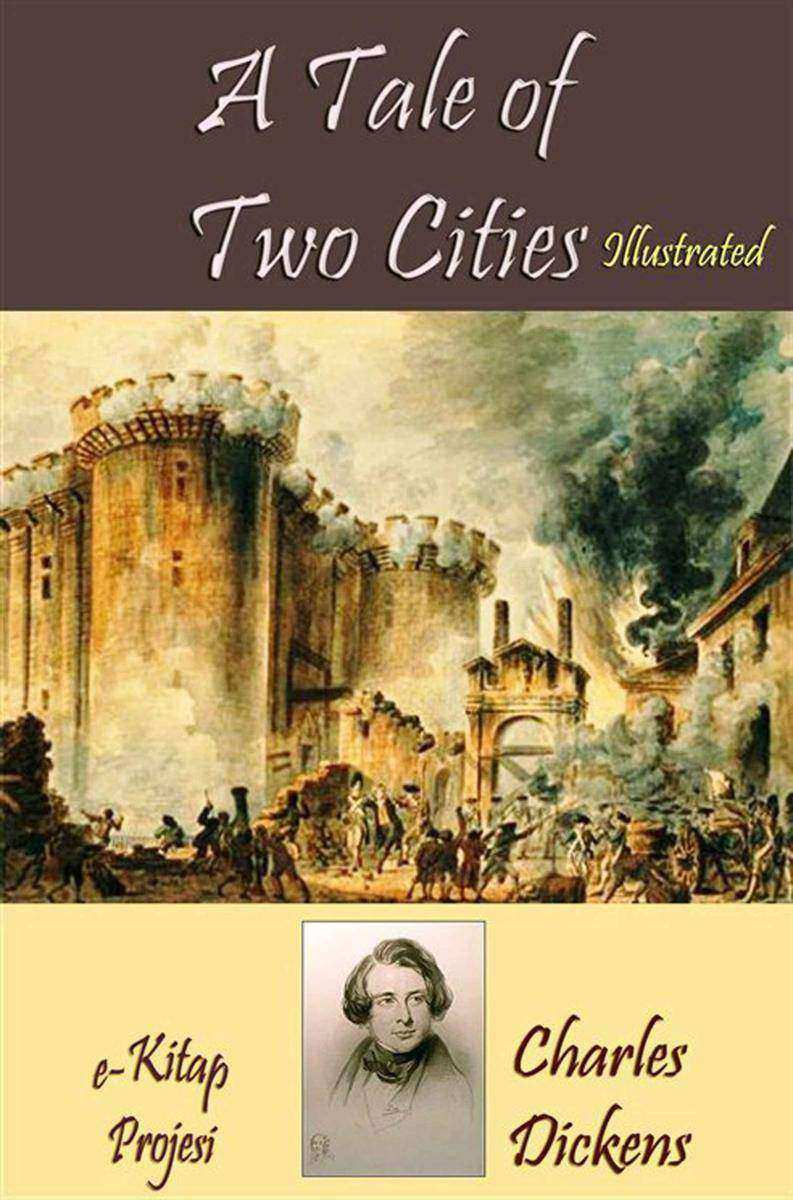
A Tale of Two Cities: Illustrated
¥24.44
Cirilla, a cintrai trón?r?k?s a Fecske-toronyban elt?nik saját világáról, és olyan útra indul, ahová sem védelmez?je, a fehér hajú vaják, sem mentora, a fekete hajú varázslón? nem k?vetheti. Olyan útra, amelynek a végén a végzet várja – az a végzet, amelyr?l már oly sok látomás kísértette. Minden a helyére kerül, a kígyó a saját farkába harap, valami véget ér, és valami elkezd?dik… A Vaják-saga befejez? k?tetében Sapkowski még magához képest is elképeszt? bravúrral ábrázol nagyszabású háborút és ugyanakkor az egyes ember drámai sorsát. Képzeletének és érzékletes leírásainak hatására megelevenednek el?ttünk az országok, városok és falvak, a t?le megszokott néz?pontváltások pedig gondoskodnak róla, hogy a sorssz?tte t?rténet végét a lehet? legalaposabb, legmélyebb módon kapjuk meg. A sagát átsz?v? fekete humor pedig tükr?t tart nemcsak a társadalom, de az egyes ember kicsinyessége és nagysága elé. ??

A boszorkánymester
¥14.39
Pride And Prejudice, the story of Mrs. Bennet's attempts to marry off her five daughters is one of the best-loved and most enduring classics in English literature. Excitement fizzes through the Bennet household at Longbourn in Hertfordshire when young, eligible Mr. Charles Bingley rents the fine house nearby. He may have sisters, but he also has male friends, and one of these—the haughty, and even wealthier, Mr. Fitzwilliam Darcy—irks the vivacious Elizabeth Bennet, the second of the Bennet girls. She annoys him. Which is how we know they must one day marry. The romantic clash between the opinionated Elizabeth and Darcy is a splendid rendition of civilized sparring. As the characters dance a delicate quadrille of flirtation and intrigue, Jane Austen's radiantly caustic wit and keen observation sparkle.

Eltitkolt múlt: A reményt senki sem veheti el!
¥57.14
A Pulitzer-díjas Michael Chabon újabb irodalmi remekm?vel jelentkezik igazságról és hazugságról, családi legendákról és egzisztenciális kalandokról, valamint azokról az er?kr?l, amelyek el akarnak bennünket pusztítani. A regény vallomás egy ?regember halálos ágyáról. A szerz? egy egész kort zsugorít egyetlen életbe, és egyetlen életet egyetlen hétbe a háború el?tti Philadelphia zsidó nyomornegyedeit?l Németország elfoglalásáig, egy floridai nyugdíjas falutól egy New York-i b?rt?nig, az amerikai ?rprogram aranykorától ?az amerikai évszázad” alkonyáig. Egy élet sodró, megható, tragikomikus, alaposan kikutatott és abszolút fiktív átirata, egy olyan életé, amely átível a huszadik század s?tét szívén. A k?nyv egy olyan hazugság, amely igazat mond, olyan kitaláció, ami tény; Michael Chabon legmerészebb és legmegindítóbb m?ve. ? A Ragyog a hold cím? k?nyv nemzetk?zi díjai, elismerései: NEW YORK TIMES BESTSELLER Winner of the Sophie Brody Medal ? An NBCC Finalist for 2016 Award for Fiction ? ALA Carnegie Medal Finalist for Excellence in Fiction ? Wall Street Journal’s Best Novel of the Year ? A New York Times Notable Book of the Year ? A Washington Post Best Book of the Year ? An NPR Best Book of the Year ? A Slate Best Book of the Year ? A Christian Science Monitor Top 15 Fiction Book of the Year ? A New York Magazine Best Book of the Year ? A San Francisco Chronicle Book of the Year ? A Buzzfeed Best Book of the Year ? A New York Post Best Book of the Year iBooks Novel of the Year ? An Amazon Editors' Top 20 Book of the Year ? #1 Indie Next Pick ? #1 Amazon Spotlight Pick ? A New York Times Book Review Editors’ Choice ? A BookPage Top Fiction Pick of the Month ? An Indie Next Bestseller


