


 购物车
 个人中心

Implementing Azure: Putting Modern DevOps to Use
¥90.46
Explore powerful Azure DevOps solutions to develop and deploy your software faster and more efficiently. Key Features * Build modern microservice-based systems with Azure architecture * Learn to deploy and manage cloud services and virtual machines * Configure clusters with Azure Service Fabric for deployment Book Description This Learning Path helps you understand microservices architecture and leverage various services of Microsoft Azure Service Fabric to build, deploy, and maintain highly scalable enterprise-grade applications. You will learn to select an appropriate Azure backend structure for your solutions and work with its toolkit and managed apps to share your solutions with its service catalog. As you progress through the Learning Path, you will study Azure Cloud Services, Azure-managed Kubernetes, and Azure Container Services deployment techniques. To apply all that you’ve understood, you will build an end-to-end Azure system in scalable, decoupled tiers for an industrial bakery with three business domains. Toward the end of this Learning Path, you will build another scalable architecture using Azure Service Bus topics to send orders between decoupled business domains with scalable worker roles processing these orders. By the end of this Learning Path, you will be comfortable in using development, deployment, and maintenance processes to build robust cloud solutions on Azure. This Learning Path includes content from the following Packt products: * Learn Microsoft Azure by Mohamed Wali * Implementing Azure Solutions - Second Edition by Florian Klaffenbach, Oliver Michalski, Markus Klein * Microservices with Azure by Namit Tanasseri and Rahul Rai What you will learn * Study various Azure Service Fabric application programming models * Create and manage a Kubernetes cluster in Azure Kubernetes Service * Use site-to-site VPN and ExpressRoute connections in your environment * Design an Azure IoT app and learn to operate it in various scenarios * Implement a hybrid Azure design using Azure Stack * Build Azure SQL databases with Code First Migrations * Integrate client applications with Web API and SignalR on Azure * Implement the Azure Active Directory (Azure AD) across the entire system Who this book is for If you are an IT system architect, network admin, or a DevOps engineer who wants to implement Azure solutions for your organization, this Learning Path is for you. Basic knowledge of the Azure Cloud platform will be beneficial.
Installing and Configuring Windows 10: 70-698 Exam Guide
¥73.02
Get ready for the Windows 10: 70-698 exam and configure Windows to manage data recovery Key Features * Implement Windows 10 operational and administrative tasks * Configure devices, remote management settings, advanced management tools, and device drivers * Comprehensive guide to help you work efficiently in Windows 10 Book Description The Installing and Configuring Windows 10: 70-698 Exam Guide is designed to confirm what you already know, while also updating your knowledge of Windows 10. With its easy-to-follow guidance, you will quickly learn the user interface and discover steps to work efficiently in Windows 10 to rule out delays and obstacles. This book begins by covering various ways of installing Windows 10, followed by instructions on post-installation tasks. You will learn about the deployment of Windows 10 in Enterprise and also see how to configure networking in Windows 10. You’ll understand how to leverage Disk Management and Windows PowerShell to configure disks, volumes, and file system options. As you progress through the chapters, you will be able to set up remote management in Windows 10 and learn more about Windows update usage, behavior, and settings. You will also gain insights that will help you monitor and manage data recovery and explore how to configure authentication, authorization, and advanced management tools in Windows 10. By the end of this book, you will be equipped with enough knowledge to take the 70-698 exam and explore different study methods to improve your chances of passing the exam with ease. What you will learn * Discover various ways of installing Windows 10 * Understand how to configure devices and device drivers * Configure and support IPv4 and IPv6 network settings * Troubleshoot storage and removable device issues * Get to grips with data access and usage * Explore the advanced management tools available in Windows 10 Who this book is for This book is for IT professionals who perform installation, configuration, general local management and maintenance of Windows 10 core services and are preparing to clear the Windows 10: 70-698 exam
Machine Learning Quick Reference
¥54.49
Your hands-on reference guide to developing, training, and optimizing your machine learning models Key Features * Your guide to learning efficient machine learning processes from scratch * Explore expert techniques and hacks for a variety of machine learning concepts * Write effective code in R, Python, Scala, and Spark to solve all your machine learning problems Book Description Machine learning makes it possible to learn about the unknowns and gain hidden insights into your datasets by mastering many tools and techniques. This book guides you to do just that in a very compact manner. After giving a quick overview of what machine learning is all about, Machine Learning Quick Reference jumps right into its core algorithms and demonstrates how they can be applied to real-world scenarios. From model evaluation to optimizing their performance, this book will introduce you to the best practices in machine learning. Furthermore, you will also look at the more advanced aspects such as training neural networks and work with different kinds of data, such as text, time-series, and sequential data. Advanced methods and techniques such as causal inference, deep Gaussian processes, and more are also covered. By the end of this book, you will be able to train fast, accurate machine learning models at your fingertips, which you can easily use as a point of reference. What you will learn * Get a quick rundown of model selection, statistical modeling, and cross-validation * Choose the best machine learning algorithm to solve your problem * Explore kernel learning, neural networks, and time-series analysis * Train deep learning models and optimize them for maximum performance * Briefly cover Bayesian techniques and sentiment analysis in your NLP solution * Implement probabilistic graphical models and causal inferences * Measure and optimize the performance of your machine learning models Who this book is for If you’re a machine learning practitioner, data scientist, machine learning developer, or engineer, this book will serve as a reference point in building machine learning solutions. You will also find this book useful if you’re an intermediate machine learning developer or data scientist looking for a quick, handy reference to all the concepts of machine learning. You’ll need some exposure to machine learning to get the best out of this book.
Python Machine Learning Blueprints
¥81.74
Discover a project-based approach to mastering machine learning concepts by applying them to everyday problems using libraries such as scikit-learn, TensorFlow, and Keras Key Features * Get to grips with Python's machine learning libraries including scikit-learn, TensorFlow, and Keras * Implement advanced concepts and popular machine learning algorithms in real-world projects * Build analytics, computer vision, and neural network projects Book Description Machine learning is transforming the way we understand and interact with the world around us. This book is the perfect guide for you to put your knowledge and skills into practice and use the Python ecosystem to cover key domains in machine learning. This second edition covers a range of libraries from the Python ecosystem, including TensorFlow and Keras, to help you implement real-world machine learning projects. The book begins by giving you an overview of machine learning with Python. With the help of complex datasets and optimized techniques, you’ll go on to understand how to apply advanced concepts and popular machine learning algorithms to real-world projects. Next, you’ll cover projects from domains such as predictive analytics to analyze the stock market and recommendation systems for GitHub repositories. In addition to this, you’ll also work on projects from the NLP domain to create a custom news feed using frameworks such as scikit-learn, TensorFlow, and Keras. Following this, you’ll learn how to build an advanced chatbot, and scale things up using PySpark. In the concluding chapters, you can look forward to exciting insights into deep learning and you'll even create an application using computer vision and neural networks. By the end of this book, you’ll be able to analyze data seamlessly and make a powerful impact through your projects. What you will learn * Understand the Python data science stack and commonly used algorithms * Build a model to forecast the performance of an Initial Public Offering (IPO) over an initial discrete trading window * Understand NLP concepts by creating a custom news feed * Create applications that will recommend GitHub repositories based on ones you’ve starred, watched, or forked * Gain the skills to build a chatbot from scratch using PySpark * Develop a market-prediction app using stock data * Delve into advanced concepts such as computer vision, neural networks, and deep learning Who this book is for This book is for machine learning practitioners, data scientists, and deep learning enthusiasts who want to take their machine learning skills to the next level by building real-world projects. The intermediate-level guide will help you to implement libraries from the Python ecosystem to build a variety of projects addressing various machine learning domains. Knowledge of Python programming and machine learning concepts will be helpful.
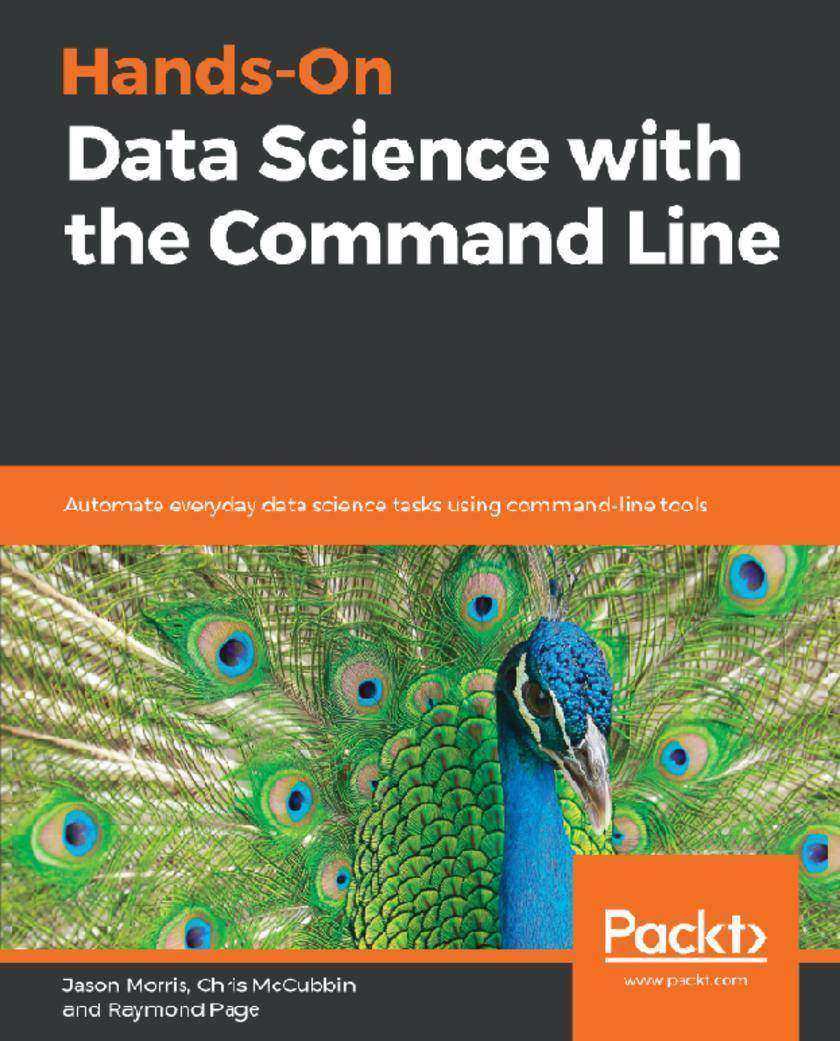
Hands-On Data Science with the Command Line
¥54.49
Big data processing and analytics at speed and scale using command line tools. Key Features * Perform string processing, numerical computations, and more using CLI tools * Understand the essential components of data science development workflow * Automate data pipeline scripts and visualization with the command line Book Description The Command Line has been in existence on UNIX-based OSes in the form of Bash shell for over 3 decades. However, very little is known to developers as to how command-line tools can be OSEMN (pronounced as awesome and standing for Obtaining, Scrubbing, Exploring, Modeling, and iNterpreting data) for carrying out simple-to-advanced data science tasks at speed. This book will start with the requisite concepts and installation steps for carrying out data science tasks using the command line. You will learn to create a data pipeline to solve the problem of working with small-to medium-sized files on a single machine. You will understand the power of the command line, learn how to edit files using a text-based and an. You will not only learn how to automate jobs and scripts, but also learn how to visualize data using the command line. By the end of this book, you will learn how to speed up the process and perform automated tasks using command-line tools. What you will learn * Understand how to set up the command line for data science * Use AWK programming language commands to search quickly in large datasets. * Work with files and APIs using the command line * Share and collect data with CLI tools * Perform visualization with commands and functions * Uncover machine-level programming practices with a modern approach to data science Who this book is for This book is for data scientists and data analysts with little to no knowledge of the command line but has an understanding of data science. Perform everyday data science tasks using the power of command line tools.
Intelligent Projects Using Python
¥73.02
Implement machine learning and deep learning methodologies to build smart, cognitive AI projects using Python Key Features * A go-to guide to help you master AI algorithms and concepts * 8 real-world projects tackling different challenges in healthcare, e-commerce, and surveillance * Use TensorFlow, Keras, and other Python libraries to implement smart AI applications Book Description This book will be a perfect companion if you want to build insightful projects from leading AI domains using Python. The book covers detailed implementation of projects from all the core disciplines of AI. We start by covering the basics of how to create smart systems using machine learning and deep learning techniques. You will assimilate various neural network architectures such as CNN, RNN, LSTM, to solve critical new world challenges. You will learn to train a model to detect diabetic retinopathy conditions in the human eye and create an intelligent system for performing a video-to-text translation. You will use the transfer learning technique in the healthcare domain and implement style transfer using GANs. Later you will learn to build AI-based recommendation systems, a mobile app for sentiment analysis and a powerful chatbot for carrying customer services. You will implement AI techniques in the cybersecurity domain to generate Captchas. Later you will train and build autonomous vehicles to self-drive using reinforcement learning. You will be using libraries from the Python ecosystem such as TensorFlow, Keras and more to bring the core aspects of machine learning, deep learning, and AI. By the end of this book, you will be skilled to build your own smart models for tackling any kind of AI problems without any hassle. What you will learn * Build an intelligent machine translation system using seq-2-seq neural translation machines * Create AI applications using GAN and deploy smart mobile apps using TensorFlow * Translate videos into text using CNN and RNN * Implement smart AI Chatbots, and integrate and extend them in several domains * Create smart reinforcement, learning-based applications using Q-Learning * Break and generate CAPTCHA using Deep Learning and Adversarial Learning Who this book is for This book is intended for data scientists, machine learning professionals, and deep learning practitioners who are ready to extend their knowledge and potential in AI. If you want to build real-life smart systems to play a crucial role in every complex domain, then this book is what you need. Knowledge of Python programming and a familiarity with basic machine learning and deep learning concepts are expected to help you get the most out of the book
Python Network Programming
¥90.46
Power up your network applications with Python programming Key Features * Master Python skills to develop powerful network applications * Grasp the fundamentals and functionalities of SDN * Design multi-threaded, event-driven architectures for echo and chat servers Book Description This Learning Path highlights major aspects of Python network programming such as writing simple networking clients, creating and deploying SDN and NFV systems, and extending your network with Mininet. You’ll also learn how to automate legacy and the latest network devices. As you progress through the chapters, you’ll use Python for DevOps and open source tools to test, secure, and analyze your network. Toward the end, you'll develop client-side applications, such as web API clients, email clients, SSH, and FTP, using socket programming. By the end of this Learning Path, you will have learned how to analyze a network's security vulnerabilities using advanced network packet capture and analysis techniques. This Learning Path includes content from the following Packt products: * Practical Network Automation by Abhishek Ratan * Mastering Python Networking by Eric Chou * Python Network Programming Cookbook, Second Edition by Pradeeban Kathiravelu, Dr. M. O. Faruque Sarker What you will learn * Create socket-based networks with asynchronous models * Develop client apps for web APIs, including S3 Amazon and Twitter * Talk to email and remote network servers with different protocols * Integrate Python with Cisco, Juniper, and Arista eAPI for automation * Use Telnet and SSH connections for remote system monitoring * Interact with websites via XML-RPC, SOAP, and REST APIs * Build networks with Ryu, OpenDaylight, Floodlight, ONOS, and POX * Configure virtual networks in different deployment environments Who this book is for If you are a Python developer or a system administrator who wants to start network programming, this Learning Path gets you a step closer to your goal. IT professionals and DevOps engineers who are new to managing network devices or those with minimal experience looking to expand their knowledge and skills in Python will also find this Learning Path useful. Although prior knowledge of networking is not required, some experience in Python programming will be helpful for a better understanding of the concepts in the Learning Path.
Training Systems Using Python Statistical Modeling
¥62.12
Leverage the power of Python and statistical modeling techniques for building accurate predictive models Key Features * Get introduced to Python's rich suite of libraries for statistical modeling * Implement regression, clustering and train neural networks from scratch * Includes real-world examples on training end-to-end machine learning systems in Python Book Description Python's ease of use and multi-purpose nature has led it to become the choice of tool for many data scientists and machine learning developers today. Its rich libraries are widely used for data analysis, and more importantly, for building state-of-the-art predictive models. This book takes you through an exciting journey, of using these libraries to implement effective statistical models for predictive analytics. You’ll start by diving into classical statistical analysis, where you will learn to compute descriptive statistics using pandas. You will look at supervised learning, where you will explore the principles of machine learning and train different machine learning models from scratch. You will also work with binary prediction models, such as data classification using k-nearest neighbors, decision trees, and random forests. This book also covers algorithms for regression analysis, such as ridge and lasso regression, and their implementation in Python. You will also learn how neural networks can be trained and deployed for more accurate predictions, and which Python libraries can be used to implement them. By the end of this book, you will have all the knowledge you need to design, build, and deploy enterprise-grade statistical models for machine learning using Python and its rich ecosystem of libraries for predictive analytics. What you will learn * Understand the importance of statistical modeling * Learn about the various Python packages for statistical analysis * Implement algorithms such as Naive Bayes, random forests, and more * Build predictive models from scratch using Python's scikit-learn library * Implement regression analysis and clustering * Learn how to train a neural network in Python Who this book is for If you are a data scientist, a statistician or a machine learning developer looking to train and deploy effective machine learning models using popular statistical techniques, then this book is for you. Knowledge of Python programming is required to get the most out of this book.
The Complete Rust Programming Reference Guide
¥88.28
Design and implement professional-level programs by leveraging modern data structures and algorithms in Rust Key Features * Improve your productivity by writing more simple and easy code in Rust * Discover the functional and reactive implementations of traditional data structures * Delve into new domains of Rust, including WebAssembly, networking, and command-line tools Book Description Rust is a powerful language with a rare combination of safety, speed, and zero-cost abstractions. This Learning Path is filled with clear and simple explanations of its features along with real-world examples, demonstrating how you can build robust, scalable, and reliable programs. You’ll get started with an introduction to Rust data structures, algorithms, and essential language constructs. Next, you will understand how to store data using linked lists, arrays, stacks, and queues. You’ll also learn to implement sorting and searching algorithms, such as Brute Force algorithms, Greedy algorithms, Dynamic Programming, and Backtracking. As you progress, you’ll pick up on using Rust for systems programming, network programming, and the web. You’ll then move on to discover a variety of techniques, right from writing memory-safe code, to building idiomatic Rust libraries, and even advanced macros. By the end of this Learning Path, you’ll be able to implement Rust for enterprise projects, writing better tests and documentation, designing for performance, and creating idiomatic Rust code. This Learning Path includes content from the following Packt products: * Mastering Rust - Second Edition by Rahul Sharma and Vesa Kaihlavirta * Hands-On Data Structures and Algorithms with Rust by Claus Matzinger What you will learn * Design and implement complex data structures in Rust * Create and use well-tested and reusable components with Rust * Understand the basics of multithreaded programming and advanced algorithm design * Explore application profiling based on benchmarking and testing * Study and apply best practices and strategies in error handling * Create efficient web applications with the Actix-web framework * Use Diesel for type-safe database interactions in your web application Who this book is for If you are already familiar with an imperative language and now want to progress from being a beginner to an intermediate-level Rust programmer, this Learning Path is for you. Developers who are already familiar with Rust and want to delve deeper into the essential data structures and algorithms in Rust will also find this Learning Path useful.
Supervised Machine Learning with Python
¥44.68
Teach your machine to think for itself! Key Features * Delve into supervised learning and grasp how a machine learns from data * Implement popular machine learning algorithms from scratch, developing a deep understanding along the way * Explore some of the most popular scientific and mathematical libraries in the Python language Book Description Supervised machine learning is used in a wide range of sectors (such as finance, online advertising, and analytics) because it allows you to train your system to make pricing predictions, campaign adjustments, customer recommendations, and much more while the system self-adjusts and makes decisions on its own. As a result, it's crucial to know how a machine “learns” under the hood. This book will guide you through the implementation and nuances of many popular supervised machine learning algorithms while facilitating a deep understanding along the way. You’ll embark on this journey with a quick overview and see how supervised machine learning differs from unsupervised learning. Next, we explore parametric models such as linear and logistic regression, non-parametric methods such as decision trees, and various clustering techniques to facilitate decision-making and predictions. As we proceed, you'll work hands-on with recommender systems, which are widely used by online companies to increase user interaction and enrich shopping potential. Finally, you’ll wrap up with a brief foray into neural networks and transfer learning. By the end of this book, you’ll be equipped with hands-on techniques and will have gained the practical know-how you need to quickly and powerfully apply algorithms to new problems. What you will learn * Crack how a machine learns a concept and generalize its understanding to new data * Uncover the fundamental differences between parametric and non-parametric models * Implement and grok several well-known supervised learning algorithms from scratch * Work with models in domains such as ecommerce and marketing * Expand your expertise and use various algorithms such as regression, decision trees, and clustering * Build your own models capable of making predictions * Delve into the most popular approaches in deep learning such as transfer learning and neural networks Who this book is for This book is for aspiring machine learning developers who want to get started with supervised learning. Intermediate knowledge of Python programming—and some fundamental knowledge of supervised learning—are expected.
Applied Unsupervised Learning with Python
¥79.56
Design clever algorithms that can uncover interesting structures and hidden relationships in unstructured, unlabeled data Key Features * Learn how to select the most suitable Python library to solve your problem * Compare k-Nearest Neighbor (k-NN) and non-parametric methods and decide when to use them * Delve into the applications of neural networks using real-world datasets Book Description Unsupervised learning is a useful and practical solution in situations where labeled data is not available. Applied Unsupervised Learning with Python guides you on the best practices for using unsupervised learning techniques in tandem with Python libraries and extracting meaningful information from unstructured data. The course begins by explaining how basic clustering works to find similar data points in a set. Once you are well versed with the k-means algorithm and how it operates, you’ll learn what dimensionality reduction is and where to apply it. As you progress, you’ll learn various neural network techniques and how they can improve your model. While studying the applications of unsupervised learning, you will also understand how to mine topics that are trending on Twitter and Facebook and build a news recommendation engine for users. You will complete the course by challenging yourself through various interesting activities such as performing a Market Basket Analysis and identifying relationships between different merchandises. By the end of this course, you will have the skills you need to confidently build your own models using Python. What you will learn * Understand the basics and importance of clustering * Build k-means, hierarchical, and DBSCAN clustering algorithms from scratch with built-in packages * Explore dimensionality reduction and its applications * Use scikit-learn (sklearn) to implement and analyse principal component analysis (PCA)on the Iris dataset * Employ Keras to build autoencoder models for the CIFAR-10 dataset * Apply the Apriori algorithm with machine learning extensions (Mlxtend) to study transaction data Who this book is for This course is designed for developers, data scientists, and machine learning enthusiasts who are interested in unsupervised learning. Some familiarity with Python programming along with basic knowledge of mathematical concepts including exponents, square roots, means, and medians will be beneficial.

The Lost Rainforest #2: Gogi's Gambit
¥56.08
The second book in New York Times bestselling author and National Book Award finalist Eliot Schrefer’s Lost Rainforest series will thrill fans of Warriors and Spirit Animals with action and humor as the shadowwalkers battle to save their magical rainforest home.Caldera always existed in harmony between the creatures who walk by day and those who walk by night—until an ancient evil awakened. In the year since the shadowwalkers’ narrow escape from the Ant Queen, the ants’ destruction has only spread.Gogi, a shadowwalker monkey still learning to wield his fire powers, embarks on a quest with his friends—including a healing bat, an invisible panther, and a tree frog who controls the winds—for a powerful object that can harness the magic of the eclipse to defeat the Ant Queen.But with just weeks before the next eclipse, Gogi must race to prove that he can control the mighty depths of his talent if he is to protect his friends, save the rainforest, and return home unsinged.


晨读夜诵.每天读一点韩语名家名作(中韩对照)
¥9.90
“书味在胸中,甘于饮陈酒。”好的文学作品,如同一壶陈年的老酒,沁人心脾,回味无穷。本书共选取57篇经典作品,包括经典诗歌、小说、名家散文三个部分。在诗歌部分,除了金素月、金永郎、韩龙云等现当代诗坛文人的作品,还选取了朝鲜王朝时期的几篇时调作品。书中的每一篇作品都附有作品介绍、原文欣赏、生词短语、参考译文。通过文学作品和译文的阅读,读者不仅可以提高文学鉴赏能力,还可以一步提升韩语水平及翻译能力。此外,本书中选取的每一篇作品都堪称韩国文学史上的经典,读者在享受文学经典的同时,可以深了解韩国人的文化、思想情感及美学观念,并能产生心灵的共鸣。此外,本书还提供朗读音频,读者在欣赏语言文字的同时,让耳朵也能够充分感受韩语的魅力与美妙。

完全掌握.新韩国语能力考试TOPIKII(中高级)写作考前对策(第3版)
¥19.99
写作,一直是新韩国语能力考试TOPIKⅡ(中高级)考生的一大难题。特别是改革后的新TOPIK考试,更是加大了写作的难度。《完全掌握.新韩国语能力考试TOPIKII(中高级)写作考前对策》作为TOPIK考试名师金龙一的成名之作,自2016年推出以来广受好评。今年对本书行了改版,内容更加系统和完整,适合各种水平的考生参考。在第三版中,作者修订了TOPIK写作的备考策略,新增了实用的“大作文七句成章法”写作模板、适合高分考生的“议论文阶”、数道大小作文题(含TOPIK写作真题)及高分范文、隔写规则及标符号使用规则。

金龙一教你过韩语能力考试:TOPIK近似语法(初中高级)
¥9.99
《完全掌握.新韩国语能力考试TOPIK语法(初级、中高级全收录)》并非常规的语法书,而是为TOPIK考生“量身定制”的工具书。本书针对备考TOPIK初级和中高级的考生编写,强调实用性和学习效果。通过学习本书,考生可以在一个月内了解和巩固TOPIK考试必考的360个语法条目。如果某个语法有多种用法,但考试中只考其中两种常见用法,本书只收录常见用法。作者在解释语法时充分结合TOPIK考,尽可能多地列举出考试中可能出现的形式。另外,本书还收录相近语法和语法辨析,其中相近语法是TOPIK阅读专项的重要考,语法辨析则从实际应用层面阐述了作者对相近语法的解析。

现代希腊语语法
¥68.60
《现代希腊语语法》系我国部现代希腊语语法书,由上海外国语大学西方语系希腊语专业朱圣鹏和王小英两位资深教授合力编写并经多年打磨而成。 全书共分19章,从现代希腊语的语言简介开始,从词法层面依照冠词、名词、形容词、数词、代词、动词等词类范畴以及句子和标点符号等重要语法现象,分门别类进行详细阐述。论述系统,例证丰富。另有希腊语语音、不规则动词表和缩写词等附录内容,方便学习者随时查阅。

全球化背景下的外国语言文学研究丛书:法汉修辞对比与翻译研究
¥18.20
本书从语言交际应用的层面对汉语和法语的修辞手段、修辞异同和修辞效果行对比分析研究,同时,又从语言的社会功能、语用功能和语言犀利功能等截面,对汉语和法语修辞的表现形式、产生机制及效果行了比较研究。

新编日语(重排本)教学指南 第四册
¥37.80
本书是《新编日语(重排本)第四册》的教学参考书。内容如下: ●解释每课的重点词汇和句型 ●精讲前文、会话、读解文中的难句 ●补充与本课内容相关的语言文化知识 ●提供自测习题 本书内容充实,编排合理,既可作为日语教师课堂教学的参考,也是广大日语学习者案头的良师益友。

Fecske-torony
¥63.03
I shall be grateful to any Reader of this book who will point out any mistakes or misprints he may happen to notice in it, or any passage which he thinks is not clearly expressed. I have a quantity of MS. in hand for Parts II and III, and hope to be able——should life, and health, and opportunity, be granted to me, to publish them in the course of the next few years. Their contents will be as follows:— PART II. ADVANCED.Further investigations in the subjects of Part I. Propositions of other forms (such as “Not-all x are y”). Triliteral and Multiliteral Propositions (such as “All abc are de”). Hypotheticals. Dilemmas. &c. &c. Part III. TRANSCENDENTAL.Analysis of a Proposition into its Elements. Numerical and Geometrical Problems. The Theory of Inference. The Construction of Problems. And many other Curiosa Logica. Introduction TO LEARNERS.[N.B. Some remarks, addressed to Teachers, will be found in the Appendix]The Learner, who wishes to try the question fairly, whether this little book does, or does not, supply the materials for a most interesting mental recreation, is earnestly advised to adopt the following Rules:— (1) Begin at the beginning, and do not allow yourself to gratify a mere idle curiosity by dipping into the book, here and there. This would very likely lead to your throwing it aside, with the remark “This is much too hard for me!”, and thus losing the chance of adding a very large item to your stock of mental delights. This Rule (of not dipping) is very desirable with other kinds of books——such as novels, for instance, where you may easily spoil much of the enjoyment you would otherwise get from the story, by dipping into it further on, so that what the author meant to be a pleasant surprise comes to you as a matter of course. Some people, I know, make a practice of looking into Vol. III first, just to see how the story ends: and perhaps it is as well just to know that all ends happily——that the much-persecuted lovers do marry after all, that he is proved to be quite innocent of the murder, that the wicked cousin is completely foiled in his plot and gets the punishment he deserves, and that the rich uncle in India (Qu. Why in India? Ans. Because, somehow, uncles never can get rich anywhere else) dies at exactly the right moment——before taking the trouble to read Vol. I. This, I say, is just permissible with a novel, where Vol. III has a meaning, even for those who have not read the earlier part of the story; but, with a scientific book, it is sheer insanity: you will find the latter part hopelessly unintelligible, if you read it before reaching it in regular course. (2) Don’t begin any fresh Chapter, or Section, until you are certain that you thoroughly understand the whole book up to that point, and that you have worked, correctly, most if not all of the examples which have been set. So long as you are conscious that all the land you have passed through is absolutely conquered, and that you are leaving no unsolved difficulties behind you, which will be sure to turn up again later on, your triumphal progress will be easy and delightful. Otherwise, you will find your state of puzzlement get worse and worse as you proceed, till you give up the whole thing in utter disgust. (3) When you come to any passage you don’t understand, read it again: if you still don’t understand it, read it again: if you fail, even after three readings, very likely your brain is getting a little tired. In that case, put the book away, and take to other occupations, and next day, when you come to it fresh, you will very likely find that it is quite easy.(4) If possible, find some genial friend, who will read the book along with you, and will talk over the difficulties with you. Talking is a wonderful smoother-over of difficulties. When I come upon anything——in Logic or in any other hard subject——that entirely puzzles me, I find it a capital plan to talk it over, aloud. ? ? ? ? ? L. C.29, Bedford Street, Strand. February 21, 1896.

A tó úrn?je
¥102.27
These tales are translated from a variety of authors. The translator has been chiefly led to the task by the hope of composing an entertaining volume out of materials not generally accessible. The works in which many of them are found, are by no means common, and the indelicacy with which almost all collections of Italian tales are polluted, deservedly excludes them from general perusal. Such care has, however, been employed in the following selection, and such liberties taken with the originals, when they appeared objectionable on this account, that it is hoped this little book will escape the censure too justly cast upon Italian works of humour, in general—a censure which falls heavily upon many of the otherwise admirable tales of Boccaccio. While, however, such trifling alterations have been made as appeared necessary, these tales may still justly be considered as fair specimens of the Italian Novella, and like the celebrated collection already alluded to, furnish us with a very lively idea of the early manners of the Italians. Those tales, from which our great dramatist borrowed parts of his plots, and some of his incidents, have a double interest, both from their own nature, and as they illustrate the process by which his genius, "by happy alchemy of mind," turned all the materials which fell in his way to gold. Two or three of this kind have been purposely selected. ITALIAN TALES: THE TEACHER TAUGHT. THE UNEXPECTED REPLY. WHO AM I? THE DEAD RIDER. THE SKILFUL PHYSICIAN THE POMEGRANATE SEED THE FATAL MISTAKE THE DEAD ALIVE THE FALSE CHAMPION THE MERCHANT OF VENICE THERE IS A SKELETON IN EVERY HOUSE. THE ELOPEMENT. THE FRIAR ENTRAPPED ANTONIO AND VERONICA. BELPHAGOR. THE SLEEPING DRAUGHT THE COUNTERPARTS

Viharid?
¥63.85
1. The architect should be equipped with knowledge of many branches of study and varied kinds of learning, for it is by his judgement that all work done by the other arts is put to test. This knowledge is the child of practice and theory. Practice is the continuous and regular exercise of employment where manual work is done with any necessary material according to the design of a drawing. Theory, on the other hand, is the ability to demonstrate and explain the productions of dexterity on the principles of proportion. 2. It follows, therefore, that architects who have aimed at acquiring manual skill without scholarship have never been able to reach a position of authority to correspond to their pains, while those who relied only upon theories and scholarship were obviously hunting the shadow, not the substance. But those who have a thorough knowledge of both, like men armed at all points, have the sooner attained their object and carried authority with them. 3. In all matters, but particularly in architecture, there are these two points:—the thing signified, and that which gives it its significance. That which is signified is the subject of which we may be speaking; and that which gives significance is a demonstration on scientific principles. It appears, then, that one who professes himself an architect should be well versed in both directions. He ought, therefore, to be both naturally gifted and amenable to instruction. Neither natural ability without instruction nor instruction without natural ability can make the perfect artist. Let him be educated, skilful with the pencil, instructed in geometry, know much history, have followed the philosophers with attention, understand music, have some knowledge of medicine, know the opinions of the jurists, and be acquainted with astronomy and the theory of the heavens. 4. The reasons for all this are as follows. An architect ought to be an educated man so as to leave a more lasting remembrance in his treatises. Secondly, he must have a knowledge of drawing so that he can readily make sketches to show the appearance of the work which he proposes. Geometry, also, is of much assistance in architecture, and in particular it teaches us the use of the rule and compasses, by which especially we acquire readiness in making plans for buildings in their grounds, and rightly apply the square, the level, and the plummet. By means of optics, again, the light in buildings can be drawn from fixed quarters of the sky. It is true that it is by arithmetic that the total cost of buildings is calculated and measurements are computed, but difficult questions involving symmetry are solved by means of geometrical theories and methods. 5. A wide knowledge of history is requisite because, among the ornamental parts of an architect's design for a work, there are many the underlying idea of whose employment he should be able to explain toGree inquirers. For instance, suppose him to set up the marble statues of women in long robes, called Caryatides, to take the place of columns, with the mutules and coronas placed directly above their heads, he will give the following explanation to his questioners. Caryae, a state in Peloponnesus, sided with the Persian enemies against Greece; later the Greeks, having gloriously won their freedom by victory in the war, made common cause and declared war against the people of Caryae. They took the town, killed the men, abandoned the State to desolation, and carried off their wives into slavery, without permitting them, however, to lay aside the long robes and other marks of their rank as married women, so that they might be obliged not only to march in the triumph but to appear forever after as a type of slavery, burdened with the weight of their shame and so making atonement for their State. Hence, the architects of the time designed for public buildings statues of these women, placed so as to carry a load..


