


 购物车
购物车 个人中心
个人中心
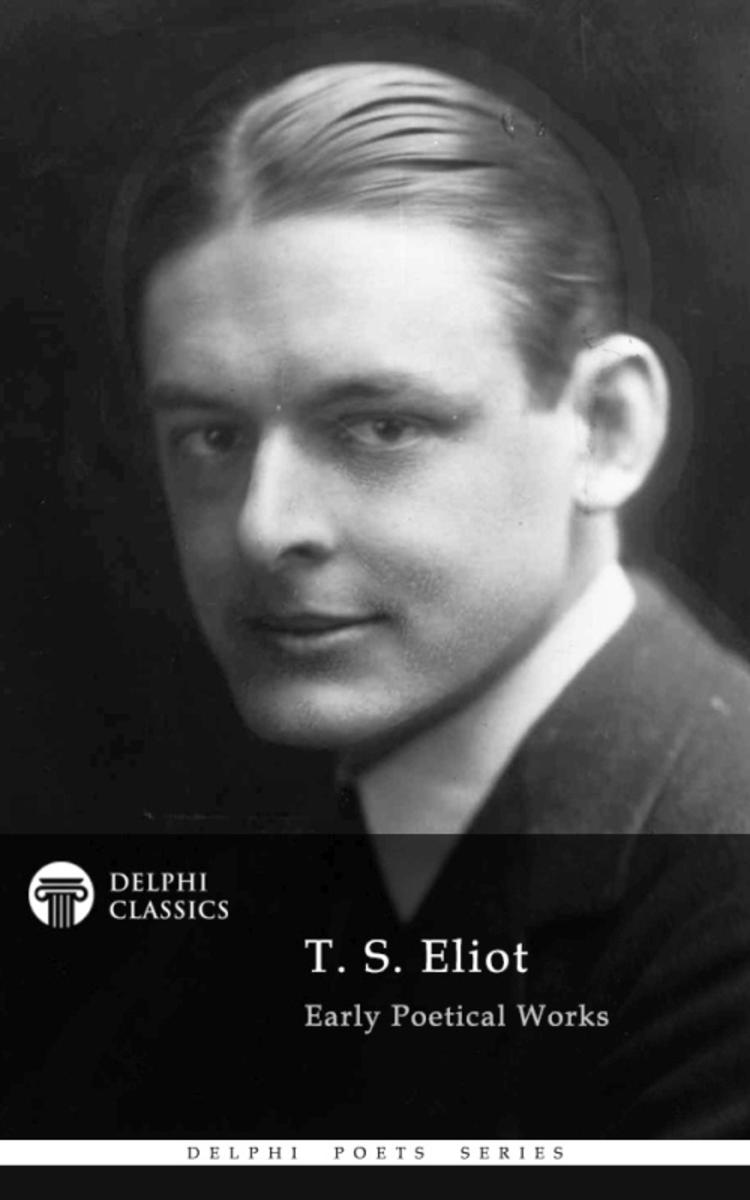
Delphi Collected Works of T. S. Eliot
¥16.27
Celebrated as one of the most influential writers of the Modernist movement, T. S. Eliot was awarded the Nobel Prize in Literature for his outstanding contribution to poetry. The Delphi Poets Series offers readers the works of literature's finest poets, with superior formatting. This volume presents the most complete collection possible of Eliot’s poetry in the US, with beautiful illustrations, bonus texts and the usual Delphi bonus material. (Version 1) * Beautifully illustrated with images relating to Eliot's life and works * Concise introductions to the poetry books * Images of how the poetry books were first printed, giving your eReader a taste of the original texts * Excellent formatting of the poems * Special chronological and alphabetical contents tables for the poetry * Easily locate the poems you want to read * Includes Eliot's early essay collection THE SACRED WOOD * Scholarly ordering of texts into chronological order and literary genres Please note: the collection presents the most complete collection of Eliot’s poetry possible, complying with US copyright laws. Once new texts enter the public domain, they will be added to the eBook as a free update. Please visit www.delphiclassics.com to browse through our range of exciting titles CONTENTS: The Poetry Collections PRUFROCK AND OTHER OBSERVATIONS POEMS, 1920 THE WASTE LAND The Poems LIST OF POEMS IN CHRONOLOGICAL ORDER LIST OF POEMS IN ALPHABETICAL ORDER The Essays THE SACRED WOOD Please visit www.delphiclassics.com to browse through our range of exciting titles
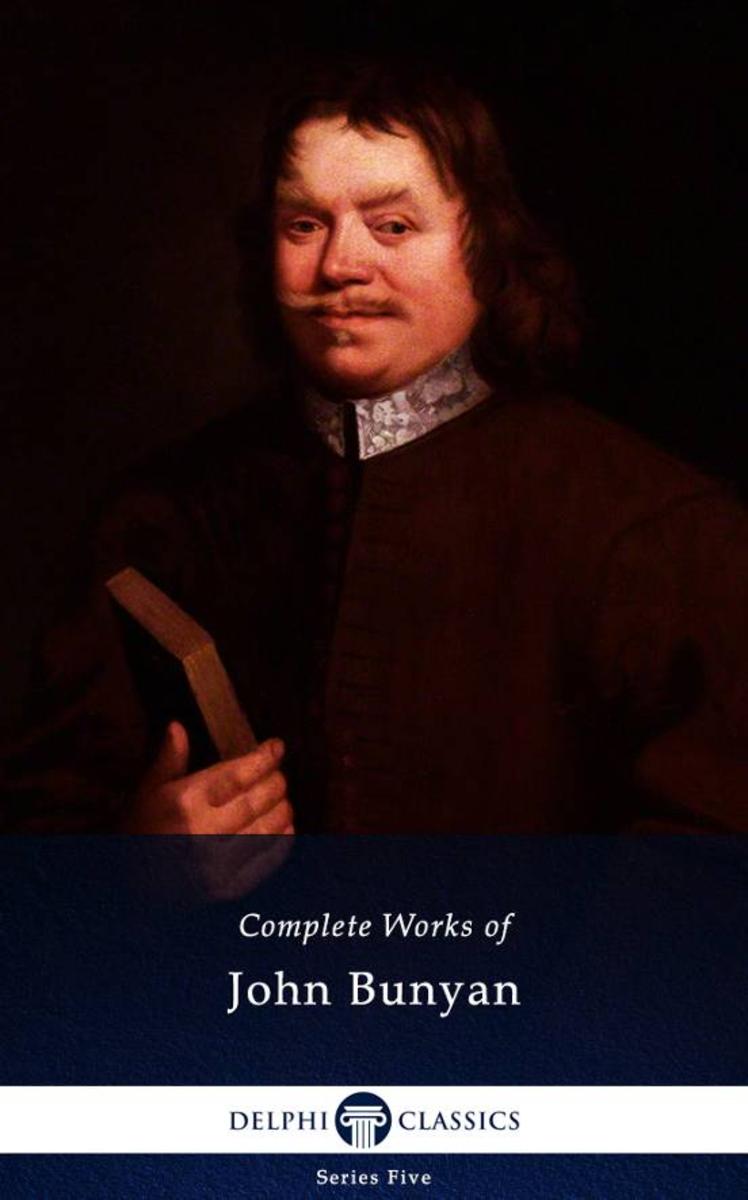
Delphi Complete Works of John Bunyan (Illustrated)
¥16.27
The seventeenth century allegory ‘The Pilgrim's Progress’ is widely regarded as one of the most significant religious works of English literature. The satire constructs a symbolic vision of the good man’s pilgrimage through life and was at one time second only to the Bible in popularity. This comprehensive eBook presents John Bunyan’s complete works, with numerous illustrations, rare texts appearing in digital print for the first time, informative introductions and the usual Delphi bonus material. (Version 1) * Beautifully illustrated with images relating to Bunyan’s life and works * Concise introductions to the satires and other texts * ALL the satires and religious works, with individual contents tables * Images of how the books were first published, giving your eReader a taste of the original texts * Excellent formatting of the texts * Contemporary illustrations for ‘The Pilgrim's Progress’ * Includes the poetical works, with alphabetical contents table * Easily locate the poems you want to read * Special criticism section, with five essays evaluating Bunyan’s contribution to literature * Features two biographies - discover Bunyan’s intriguing life * Scholarly ordering of texts into chronological order and literary genres Please visit www.delphiclassics.com to browse through our range of exciting titles CONTENTS: The Satires THE PILGRIM’S PROGRESS: PART I THE LIFE AND DEATH OF MR. BADMAN THE PILGRIM’S PROGRESS: PART II THE HOLY WAR The Tracts and Sermons LIST OF TRACTS, DOCTRINES AND OTHER PIECES The Autobiographical Works GRACE ABOUNDING TO THE CHIEF OF SINNERS A RELATON OF THE IMPRISONMENT OF MR. JOHN BUNYAN A CONTINUATION OF MR. BUNYAN’S LIFE The Poetry SCRIPTURAL POEMS; BEING SEVERAL PORTIONS OF SCRIPTURE DIGESTED INTO ENGLISH VERSE ONE THING IS NEEDFUL A BOOK FOR BOYS AND GIRLS OR, TEMPORAL THINGS SPRITUALIZED A CAUTION TO STIR UP TO WATCH AGAINST SIN A DISCOURSE OF THE BUILDING, NATURE, EXCELLENCY, AND GOVERNMENT OF THE HOUSE OF GOD LIST OF POEMS IN ALPHABETICAL ORDER The Criticism JOHN BUNYAN by John Kelman BUNYAN by George Edward Woodberry JOHN BUNYAN: FROM DARKNESS TO LIGHT by Osgood E. Fuller JOHN BUNYAN by Andrew Lang JOHN BUNYAN by Robert Lynd The Biography MEMOIR OF JOHN BUNYAN by George Offor THE LIFE OF JOHN BUNYAN by Edmund Venables Please visit www.delphiclassics.com to browse through our range of exciting titles
Jack and Jill
¥40.79
Jack Minot and Janey Pecq are best friends who live next door to each other. They are always seen together, so Janey gets the nickname of Jill, to mimic the old rhyme. The two do go up a hill one winter day— and then suffer a terrible accident. Seriously injured in a sledding accident, they recover from their physical injuries, while learning life lessons along with their many friends. They are helped along their journey to recovery by various activities created by their mothers.
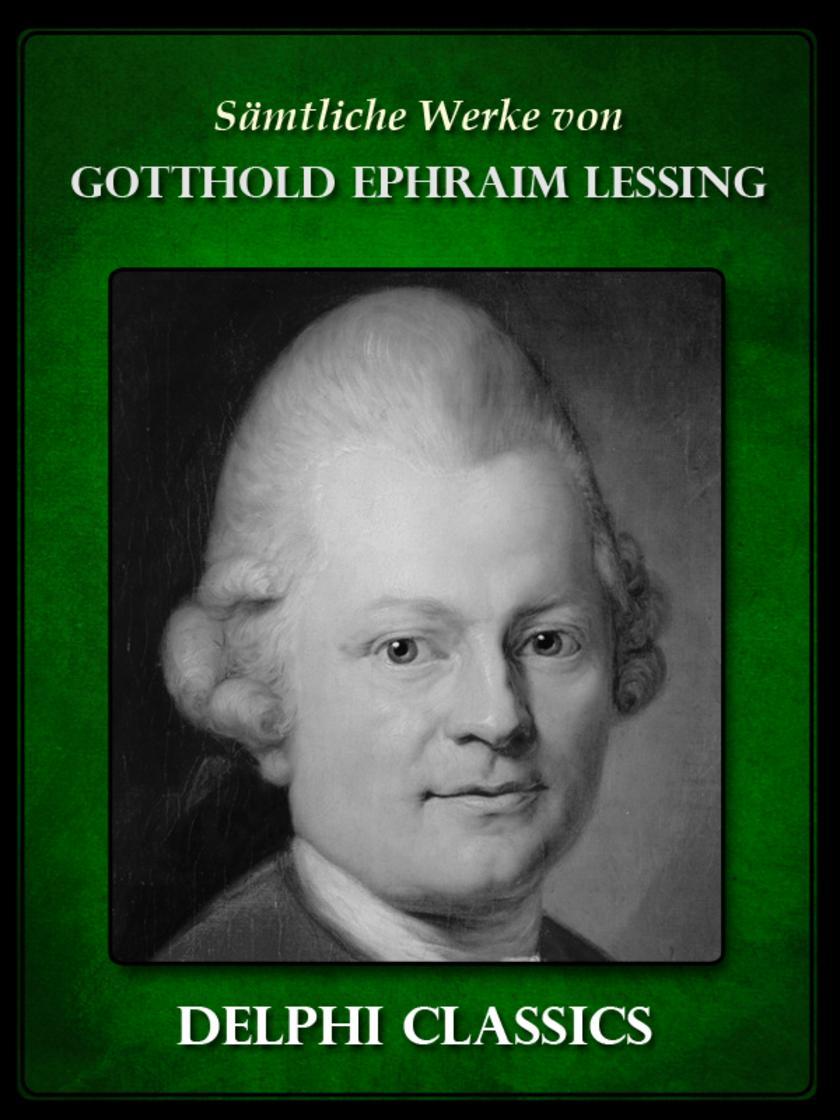
Saemtliche Werke von Gotthold Ephraim Lessing (Illustrierte)
¥24.44
Gotthold Ephraim Lessing war ein bedeutender Dichter der deutschen Aufkl?rung. Mit seinen Dramen und seinen theoretischen Schriften, die vor allem dem Toleranzgedanken verpflichtet sind, hat dieser Aufkl?rer der weiteren Entwicklung des Theaters einen wesentlichen Weg gewiesen und die ?ffentliche Wirkung von Literatur nachhaltig beeinflusst. Jetzt genie?en Sie die kompletten Werke von Lessing auf Ihrem E-Reader. Diese enorme Sammlung umfasst auch spezielle Bonustexte. (8MB Version 1) Merkmale: * die vollst?ndige Dramen, mit Inhaltsverzeichnissen * kurze Einführungen in die Dramen und anderen Texte * zahlreiche Bilder mit Bezug zu Lessing, seinem Leben und seinen Werken * die vollst?ndigen lyrischen Werke * alphabetisches Inhaltsverzeichnis der Gedichte * die theoretischen und naturwissenschaftlichen Schriften * Erz?hlprosa, Vortr?ge, Rezensionen und Briefe * Sachbücher * enth?lt eine Bonus-Text-Biografie INHALT: Dramatische Werke DAMON DER JUNGE GELEHRTE DIE ALTE JUNGFER DER MISOGYN DER FREIGEIST DIE JUDEN DER SCHATZ MI? SARA SAMPSON PHILOTAS MINNA VON BARNHELM, ODER DAS SOLDATENGL?CK EMILIA GALOTTI NATHAN DER WEISE SAMUEL HENZI D. FAUST Erz?hlungen FABELN UND ERZ?HLUNGEN, 1771 FABELN. DREI B?CHER FABELN LISTE DER FABELN IN ALPHABETISCHER REIHENFOLGE Gedichte LIEDER ODEN SINNGEDICHTE Lyrik LISTE DER GEDICHTE IN CHRONOLOGISCHER REIHENFOLGE LISTE DER GEDICHTE IN ALPHABETISCHER REIHENFOLGE Sachbücher REZENSIONEN BRIEFE VORREDEN ABHANDLUNGEN VON DEM WEINERLICHEN ODER R?HRENDEN LUSTSPIELE ?BER DAS LUSTSPIEL ?DIE JUDEN? EIN VADE MECUM F?R DEN HRN. SAM GOTTHL. LANGE. PASTOR IN LAUBLINGEN RETTUNGEN DES HORAZ BRIEFWECHSEL ?BER DAS TRAUERSPIEL ABHANDLUNGEN [?BER DIE FABEL] BRIEFE, DIE NEUESTE LITERATUR BETREFFEND LAOKOON HAMBURGISCHE DRAMATURGIE DER REZENSENT BRAUCHT NICHT BESSER MACHEN ZU K?NNEN, WAS ER TADELT WIE DIE ALTEN DEN TOD GEBILDET LEBEN UND LEBEN LASSEN SELBSTBETRACHTUNGEN UND EINF?LLE GEDANKEN ?BER DIE HERRNHUTER DAS CHRISTENTUM DER VERNUNFT POPE EIN METAPHYSIKER! ?BER DIE ENTSTEHUNG DER GEOFFENBARTEN RELIGION ?BER DIE WIRKLICHKEIT DER DINGE AU?ER GOTT DURCH SPINOZA IST LEIBNIZ NUR AUF DIE SPUR DER VORHERBESTIMMTEN HARMONIE GEKOMMEN EINE PARABEL ANTI-GOEZE ERNST UND FALK DA? MEHR ALS F?NF SINNE F?R DEN MENSCHEN SEIN K?NNEN GESPR?CHE ?BER DIE SOLDATEN UND M?NCHE DIE RELIGION CHRISTI DIE ERZIEHUNG DES MENSCHENGESCHLECHTS Biografie GOTTHOLD EPHRAIM LESSING von Carl Christian Redlich

The Medicinal Foods Book
¥40.79
This book will show you how the simplest foods such as fruits, vegetables, grains and herbs can be used to cure many common illnesses and disorders. This guide also contains strategies for healthy eating, fasting and dieting using simple tested methods and recipes. Discover the important medicinal properties of many simple foods and eat your way to health and happiness.
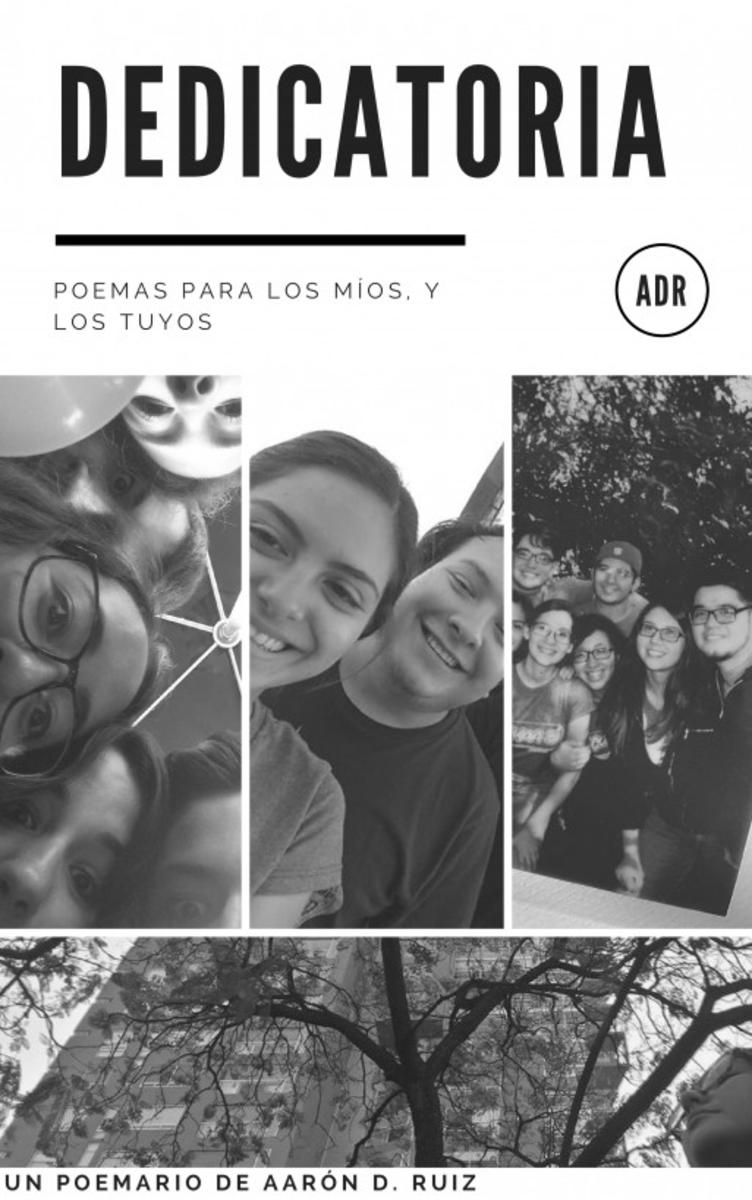
Dedicatoria:Poemas para los tuyos y los míos
¥15.29
Este libro está dedicado a personas, cosas, ideas, e incluso a entidades difíciles de definir. Cada uno de los poemas aquí comprendidos fueron escritos con alguno de los anteriores en mente. Hay algunos que hasta he olvidado su destinatario y fuente de inspiración; por lo tanto, siéntete libre de asignarlos a cualquier persona, idea, cosa, o entidad de tu preferencia.
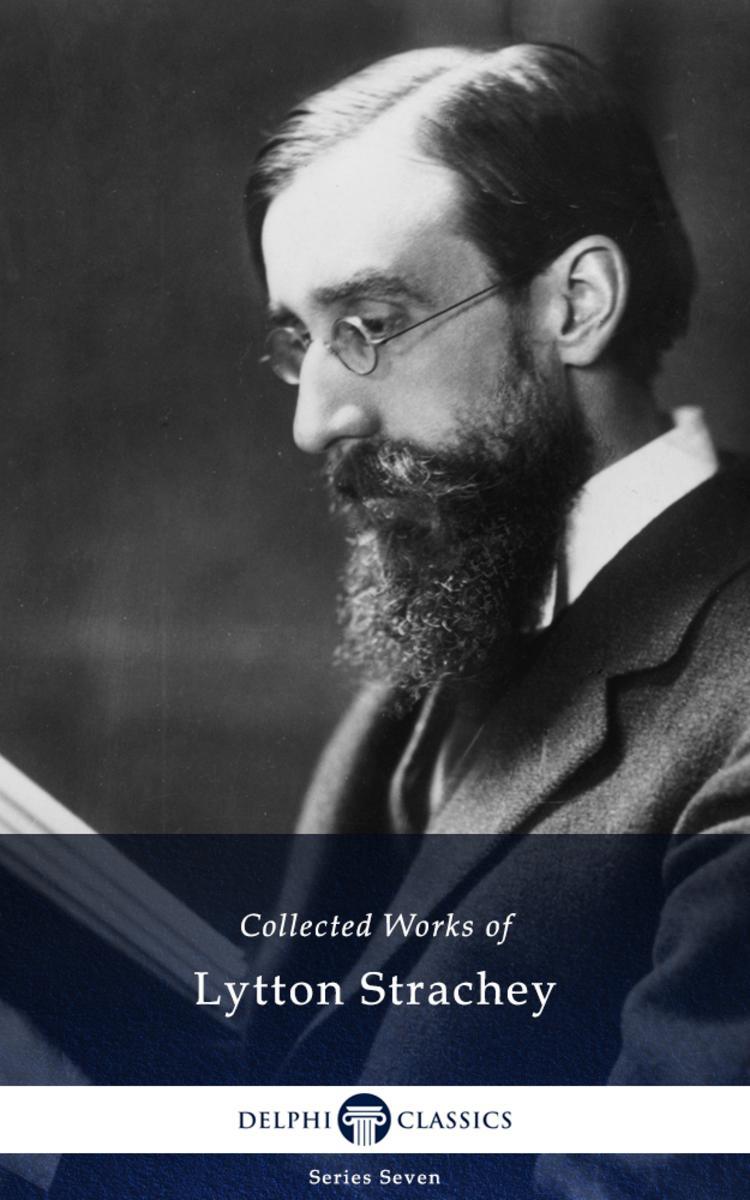
Delphi Collected Works of Lytton Strachey (Illustrated)
¥24.44
Lytton Strachey, the English biographer and critic, introduced a new era of biographical writing at the close of World War I. Strachey’s works are celebrated for establishing a new form of biography in which psychological insight and sympathy are combined with irreverence and wit. This comprehensive eBook presents Strachey’s collected works, with numerous illustrations, rare texts, informative introductions and the usual Delphi bonus material. (Version 1) * Beautifully illustrated with images relating to Strachey’s life and works* Concise introductions to the major texts* Many famous biographies, with individual contents tables* Images of how the books were first published, giving your eReader a taste of the original texts* Excellent formatting of the texts* Includes Strachey’s rare poetry – available in no other collection* Also includes Strachey’s early Spectator essays, first time in digital print* Features two contextual pieces, evaluating Strachey’s contribution to literature* Scholarly ordering of texts into chronological order and literary genres Please note: due to US copyright restrictions, books published after 1922 cannot appear in this edition. When new texts become available in your public domain, they will be added to the eBook as a free update. Please visit www.delphiclassics.com to browse through our range of exciting titles CONTENTS: The BooksINTRODUCTION FOR ‘A SIMPLE STORY’ by E. InchbaldLANDMARKS IN FRENCH LITERATUREEMINENT VICTORIANSQUEEN VICTORIABOOKS AND CHARACTERSMISCELLANEOUS ESSAYS FROM ‘THE SPECTATOR’ The PoetryELY: AN ODE, FROM PROLUSIONES ACADEMICAE, 1902EUPHROSYNE: A COLLECTION OF VERSE The Contextual PiecesTHE ART OF BIOGRAPHY by Virginia WoolfLYTTON STRACHEY by Max Beerbohm Please visit www.delphiclassics.com to browse through our range of exciting titles or to purchase this eBook as a Parts Edition of individual eBooks
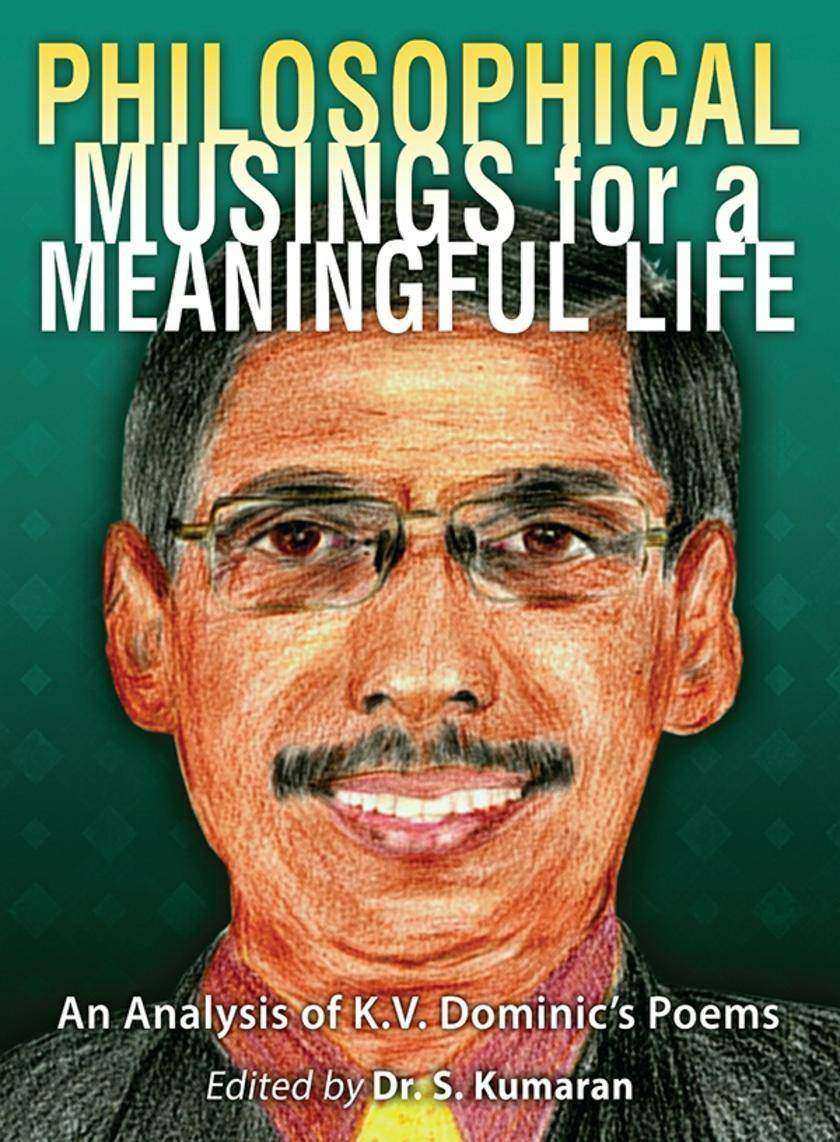
Philosophical Musings for Meaningful Life:An Analysis of K.V. Dominic's Poems
¥90.52
Inside one of Contemporary India's most Influential Poets The twenty-four papers in Philosophical Musings for a Meaningful Life study the poetry collections Winged Reason (2010), Write Son, Write (2011), and Multicultural Symphony (2014), of Dr. K.V. Dominic and reveal his humanistic values and concept of universal brotherhood, his social criticism devoid of absurdity and obscurity, his profound concern for the marginalized sections of society, and his reverence for Nature. All the papers focus on the poet's anguish at the evils and the inhuman attitude prevalent in the society and necessitate harmony of existence. In the context of Indian English poetry, the papers find Dominic to be unique in his use of simple and plain language to address the vast canvass of human life and the neglected segment of human society. Further, the papers bring out how the universal appeal of Dominic lies in his ability to view the world as a sanctuary and acknowledge him as the promising voice of the present century for his belief in the interrelatedness of all lives that ascertains positive change in the individuals. Dr. S. Kumaran, Editor, is working as an Assistant Professor in the Postgraduate & Research Department of English, Thiruvalluvar Government Arts College, Rasipuram. He is Associate Editor of two refereed international biannual journals, Writers Editors Critics (WEC) and International Journal on Multicultural Literature (IJML); and a Member of the Editorial Boards of various journals from India and abroad. "This critical study on the poetry of Dr. K.V. Dominic deserves to be read closely for evaluation and to be on the shelf of every notable library. Philosophical Musings for a Meaningful Life will inspire scholars from the West to find rubies and diamonds in the Indian poetry of today." --Dr. Stephen Gill, Poet Laureate of Ansted University "K.V. Dominic's social consciousness is his chief forte. Not for a moment does he divert attention from the simple and innocent activities of ordinary human beings. From his lyrics originate feelings of eternal sympathy, peace, and fraternal unity." --P.C.K. Prem, critic from Himachal Pradesh, India From the World Voices Series Modern History Press www.ModernHistoryPress.com
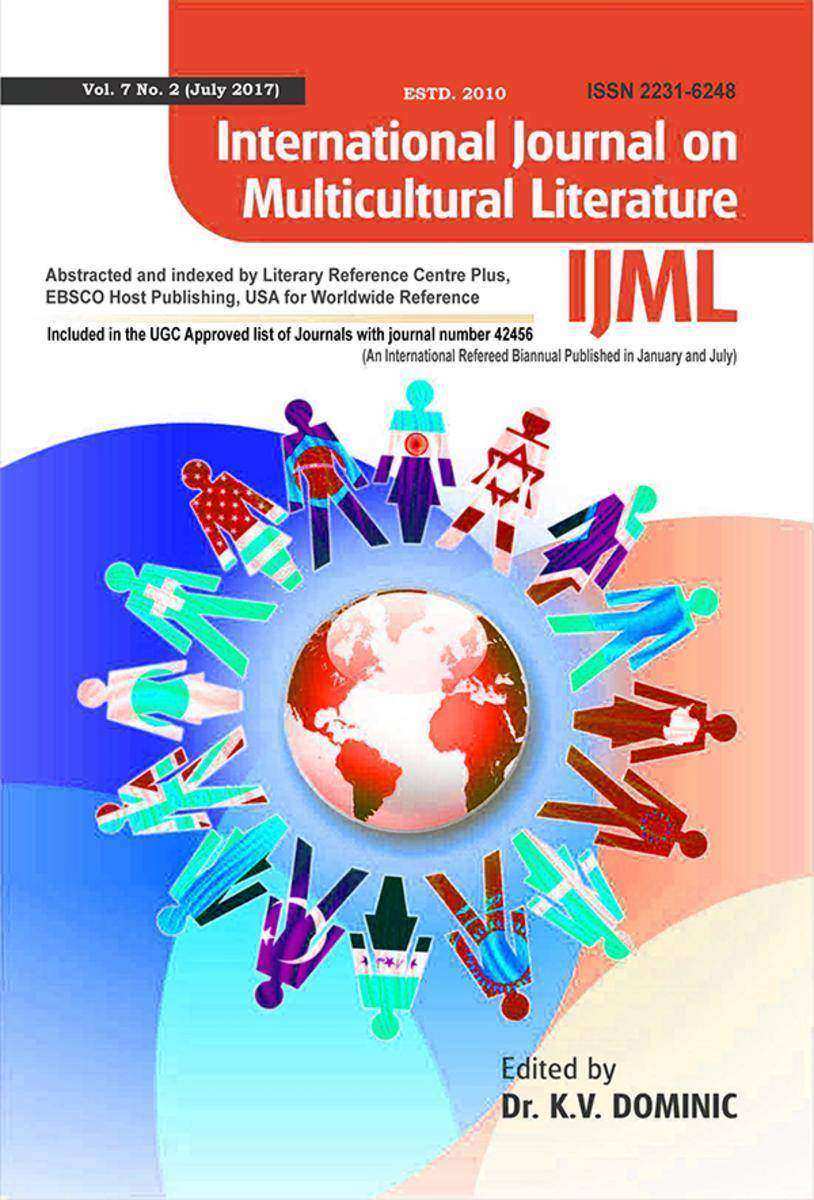
International Journal on Multicultural Literature (IJML):Vol. 7, No. 2 (July 201
¥48.74
International Journal on Multicultural Literature (IJML) Volume 7 Number 2 (July 2017) ISSN 2231-6248. Highlights include ·Solutions to Religious Communalism as Projected in Mahesh Dattani's Final Solutions: An Analysis by S. Chelliah ·K.V. Dominic's Winged Reason: A Portrait of Social Realism by D.C. Chambial ·Tracing Political Bricoleurs in Winston Churchill's Thoughts and Adventures and Khushwant Singh's The End of India by Sreedevi R. & Raichel M. Sylus ·Play/Games as Sublimation of Juvenile Delinquency: An Exploration into the World of Children's Literature by Sijo Varghese ·Intrinsic Journey into the Epic, Savitri: A Symbolic Exploration by Santanu Basak ·Feminine or Feminist: Ambiguous Women in The Moor's Last Sigh by Sharmila Bhattacharjee ·Element of Grotesque in Carson McCullers' The Ballad of the Sad Cafe by Sarika Tiwari ·Alec Derwent Hope on Poet and Art of Poetry by Amodini Sreedharan ·Women as Victims: A Study of Nalini Sharma's Strange Equations by S. Barathi ·Mahesh Dattani's Final Solutions: Deconstruction of Communalism - Nidhish Kumar Singh ·Authenticity of Rural Life in the Novels of Chinua Achebe, Kamala Markandaya and Ramesh K. Srivastava by Smita Das ·Lives on Pyre: A Socio-realistic Portrayal in D.C. Chambial's The Cargoes of the Bleeding Hearts by Parthajit Ghosh & Madhu Kamra ·An Evolution of His Demography: A Socio-cultural Flow in the Fictional World of Manoj Das by Suresh Bera & Somali Gupta ·Maya Angelou's Shaker, Why Don't You Sing?: a Paroxysm of Confession by Ishita Pramanik & Shukla Banerjee ·Fruits of Delight in the Fields of Despair in Manas Bakshi's Dance of Satan and Other Poems by T.V. Reddy IJML is a peer-reviewed research journal in English literature published from Thodupuzha, Kerala, India. The publisher and editor is Prof. Dr. K. V. Dominic, renowned English language poet, critic, short story writer and editor who has to his credit 27 books. He is also the secretary of Guild of Indian English Writers, Editors and Critics (GIEWEC). Since 2010, IJML is a biannual journal published in January and July. The articles are sent first to the referees by the editor and only if they accept, the papers will be published. Although based in India, each issue includes worldwide contributors. Although IJML concentrates on multiculturalism, it also encompasses other literature. Each issue also includes poems, short stories, review articles, book reviews, interviews, general essays etc. under separate sections. IJML is available in paperback, Kindle, ePub, and PDF editions. Distributed by Modern History Press Learn more at www.profKVDominc.com

Delphi Collected Works of Sara Teasdale US (Illustrated)
¥8.09
Winner of the first Pulitzer Prize for poetry, the American poet Sara Teasdale composed short, personal lyrics, noted for their classical simplicity and quiet intensity. In 1918 she won the Columbia University Poetry Society prize (forerunner of the Pulitzer Prize for poetry) and the annual prize of the Poetry Society of America for her pioneering collection of verse, ‘Love Songs’. The Delphi Poets Series offers readers the works of literature's finest poets, with superior formatting. This volume presents Teasdale’s collected poetical works, with related illustrations and the usual Delphi bonus material. (Version 1) * Beautifully illustrated with images relating to Teasdale's life and works* Concise introduction to Teasdale’s life and poetry* Include all the poems available in the US public domain* Images of how the poetry books were first printed, giving your eReader a taste of the original texts* Excellent formatting of the poems* Special chronological and alphabetical contents tables for the poetry* Easily locate the poems you want to read* Scholarly ordering of texts into chronological order and literary genres Please visit www.delphiclassics.com to see our wide range of poet titles CONTENTS: The Life and Poetry of Sara TeasdaleBrief Introduction: Sara TeasdaleSonnets to Duse and Other Poems, 1907Helen of Troy and Other Poems, 1911Rivers to the Sea, 1915Love Songs, 1917Flame and Shadow, 1920 The PoemsList of Poems in Chronological OrderList of Poems in Alphabetical Order Please visit www.delphiclassics.com to browse through our range of poetry titles or buy the entire Delphi Poets Series as a Super Set

The Windsor Beauties:Ladies of the Court of Charles II
¥65.99
"The Duchess of York wished to have the portraits of the most beautiful women at Court," Anthony Hamilton wrote in the Memoirs of Count Grammont. "Lely painted them, and employed all his art in the execution. He could not have had more alluring sitters. Every portrait is a masterpiece." The original set of "Beauties" painted by Lely were, as we find from James II's catalogue, eleven in number, their names being Barbara, Duchess of Cleveland (ne'e Villiers); Frances, Duchess of Richmond and Lennox (ne'e Stuart); Mrs. Jane Myddleton (ne'e Needham); Elizabeth, Countess of Northumberland (ne'e Wriothesley); Elizabeth, Countess of Falmouth (ne'e Bagot); Elizabeth, Lady Denham (ne'e Brooke); Frances, Lady Whitmore (ne'e Brooke); Henrietta, Countess of Rochester (ne'e Boyle); Elizabeth, Countess de Grammont (ne'e Hamilton); and Madame d'Orleans. It will be seen that in this list of "Beauties" Anne Hyde, Duchess of York, does not figure; but since she was responsible for the collection, it would be peculiarly ungracious to omit her from a volume that treats of it. Also, she deserves inclusion for her supreme courage in selecting the sitters--for what must the ladies who were not chosen have said and thought of her? Nor in the series are Nell Gwyn, Louise de Ke'roualle, and the Duchess Mazarin; but no account of the social life of the Court of Charles II can possibly omit mention of them, and therefore something has been said about each of these ladies. The new Revised Edition restores Melville's masterpiece of the intricate relationships and day-by-day account of court life in the reign of Charles II of England. This edition also adds a new glossary, bibliography, and extended footnotes for the lay history reader. Also included are first-ever translations of French language poems, letters, and epitaphs completed by Coby Fletcher. More information at www.VictorianHeritage.com

Mid Day Soul: Poetry Collection
¥6.38
“Mid Day Soul” a poetry collection. This is my first English poetry collection , After 17 hindi books. So please Don’t take seriously. You can say this is a effort to work with English language. I always wanted to write something for English readers. So this is for you. Thank you.

David Copperfield
¥24.44
The novel follows the character David Copperfield, and is written in the first person, as a description of his life until middle age, with his own adventures and the web of friends and enemies he meets along his way. Copperfield finds career success as an author, and is a person of deep emotions. Many elements of the novel follow events in Dickens's own life, and it is often considered his veiled autobiography. It was Dickens' favourite among his own novels.

Maria Antoinette
¥8.09
Maria Antoinette

The Efficient Student
¥24.44
The Efficient Student
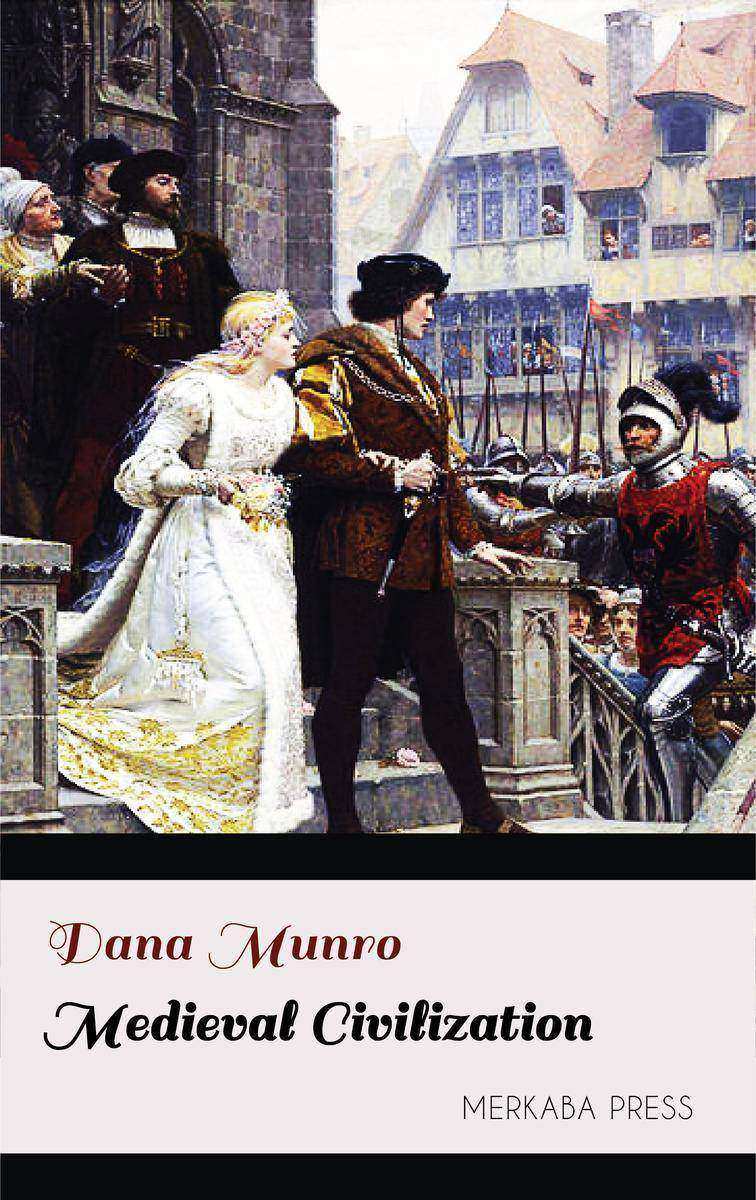
Medieval Civilization
¥8.09
Medieval Civilization

Medieval England
¥8.09
Medieval England
Nietzsche
¥8.09
Nietzsche

Texas and the Mexican War
¥8.09
Texas and the Mexican War

The Court of Philip IV
¥8.09
The Court of Philip IV

A Metodologia Pedagógica: No Ensino das Línguas Estrangeiras
¥24.44
A Metodologia Pedagógica: No Ensino das Línguas Estrangeiras


