


 购物车
购物车 个人中心
个人中心

138. The Devilish Deception
¥24.44
Barbara Cartland was the world’s most prolific novelist who wrote an amazing 723 books in her lifetime, of which no less than 644 were romantic novels with worldwide sales of over 1 billion copies and her books were translated into 36 different languages. As well as romantic novels, she wrote historical biographies, 6 autobiographies, theatrical plays and books of advice on life, love, vitamins and cookery. She wrote her first book at the age of 21 and it was called Jigsaw. It became an immediate bestseller and sold 100,000 copies in hardback in England and all over Europe in translation. Between the ages of 77 and 97 she increased her output and wrote an incredible 400 romances as the demand for her romances was so strong all over the world. She wrote her last book at the age of 97 and it was entitled perhaps prophetically The Way to Heaven. Her books have always been immensely popular in the United States where in 1976 her current books were at numbers 1 & 2 in the B. Dalton bestsellers list, a feat never achieved before or since by any author. Barbara Cartland became a legend in her own lifetime and will be best remembered for her wonderful romantic novels so loved by her millions of readers throughout the world, who have always collected her books to read again and again, especially when they feel miserable or depressed. Her books will always be treasured for their moral message, her pure and innocent heroines, her handsome and dashing heroes, her blissful happy endings and above all for her belief that the power of love is more important than anything else in everyone’s life. Called home from his Regiment in Calcutta after having inherited the title of the Third Duke of Invercaron on the death of his uncle, Talbot McCaron is dismayed to find not only that his highland estate is all but bankrupt but also that his family seems determined to marry him off to Lady Jane Dalbeth from the neighbouring Macbeth Clan. He soon understands the reason why, when he is informed that Lady Jane has inherited a vast fortune from her American Godmother. Strolling in the grounds of his new domain, he comes across a thin half-starved yet bewitchingly beautiful young waif who appears intent on drowning herself in a torrential cascade he cannot understand. With some difficulty in persuading her not to commit suicide, the Duke takes Giovanna, for that is her name, secretly under his wing and patiently waits to hear the reason for her desperation and terror. What he eventually discovers is a Devilish Deception – an extraordinarily wicked plot – that almost defies belief and in the process of saving Giovanna he comes to realise that he has irrevocably and for ever lost his heart.

Sciences of the Soul
¥529.74
The Sciences of the Soul is the first attempt to explain the development of the disciplinary conception of psychology from its appearance in the late sixteenth century to its redefinition at the end of the seventeenth and its emergence as an institutionalized field in the eighteenth. Fernando Vidal traces this development through university courses and textbooks, encyclopedias, and nonacademic books, as well as through various histories of psychology.?Vidal reveals that psychology existed before the eighteenth century essentially as a "e;physics of the soul,"e; and it belonged as much to natural philosophy as to Christian anthropology. It remained so until the eighteenth century, when the "e;science of the soul"e; became the "e;science of the mind."e; Vidal demonstrates that this Enlightenment refashioning took place within a Christian framework, and he explores how the preservation of the Christian idea of the soul was essential to the development of the science. Not only were most psychologists convinced that an empirical science of the soul was compatible with Christian faith; their perception that psychology preserved the soul also helped to elevate its rank as an empirical science. Broad-ranging and impeccably researched, this book will be of wide importance in the history and philosophy of psychology, the history of the human sciences more generally, and in the social and intellectual history of eighteenth-century Europe.

Political Economy of Pipelines
¥576.83
With global demand for energy poised to increase by more than half in the next three decades, the supply of safe, reliable, and reasonably priced gas and oil will continue to be of fundamental importance to modern economies. Central to this supply are the pipelines that transport this energy. And while the fundamental economics of the major pipeline networks are the same, the differences in their ownership, commercial development, and operation can provide insight into the workings of market institutions in various nations.?Drawing on a century of the world's experience with gas and oil pipelines, this book illustrates the importance of economics in explaining the evolution of pipeline politics in various countries. It demonstrates that institutional differences influence ownership and regulation, while rents and consumer pricing depend on the size and diversity of existing markets, the depth of regulatory institutions, and the historical structure of the pipeline businesses themselves. The history of pipelines is also rife with social conflict, and Makholm explains how and when institutions in a variety of countries have controlled pipeline behavior-either through economic regulation or government ownership-in the public interest.
Bones, Clones, and Biomes
¥618.03
As explorers and scientists have known for decades, the Neotropics harbor a fantastic array of our planet's mammalian diversity, from capybaras and capuchins to maned wolves and mouse opossums to sloths and sakis. This biological bounty can be attributed partly to the striking diversity of Neotropical landscapes and climates and partly to a series of continental connections that permitted intermittent faunal exchanges with Africa, Antarctica, Australia, and North America. Thus, to comprehend the development of modern Neotropical mammal faunas requires not only mastery of the Neotropics' substantial diversity, but also knowledge of mammalian lineages and landscapes dating back to the Mesozoic.Bones, Clones, and Biomes offers just that-an exploration of the development and relationships of the modern mammal fauna through a series of studies that encompass the last 100 million years and both Central and South America. This work serves as a complement to more taxonomically driven works, providing for readers the long geologic and biogeographic contexts that undergird the abundance and diversity of Neotropical mammals. Rather than documenting diversity or distribution, this collection traverses the patterns that the distributions and relationships across mammal species convey, bringing together for the first time geology, paleobiology, systematics, mammalogy, and biogeography. Of critical importance is the book's utility for current conservation and management programs, part of a rapidly rising conservation paleobiology initiative.

Instructions for American Servicemen in Iraq during World War II
¥82.40
"e;American success or failure in Iraq may well depend on whether the Iraqis like American soldiers or not."e;?The U.S. military could certainly have used that bit of wisdom in 2003, as violence began to eclipse the Iraq War's early successes. Ironically, had the Army only looked in its own archives, they would have found it-that piece of advice is from a manual the U.S. War Department handed out to American servicemen posted in Iraq back in 1943.The advice in Instructions for American Servicemen in Iraq during World War II,presented here in a new facsimile edition, retains a surprising, even haunting, relevance in light of today's muddled efforts to win Iraqi hearts and minds. Designed to help American soldiers understand and cope with what was at the time an utterly unfamiliar culture-the manual explains how to pronounce the word Iraq, for instance-this brief, accessible handbookmixes do-and-don't-style tips ("e;Always respect the Moslem women."e; "e;Talk Arabic if you can to the people. No matter how badly you do it, they will like it."e;) with general observations on Iraqi history and society. The book's overall message still rings true-dramatically so-more than sixty years later: treat an Iraqi and his family with honor and respect, and you will have a strong ally; treat him with disrespect and you will create an unyielding enemy.With a foreword by Lieutenant Colonel John A. Nagl reflecting on the manual's continuing applicability-and lamenting that it was unknown at the start of the invasion-this new edition of Instructions for American Servicemen in Iraq will be essential reading for anyone who cares about the future of Iraq and the fate of the American soldiers serving there.
Economic Regulation and Its Reform
¥906.54
The past thirty years have witnessed a transformation of government economic intervention in broad segments of industry throughout the world. Many industries historically subject to economic price and entry controls have been largely deregulated, including natural gas, trucking, airlines, and commercial banking. However, recent concerns about market power in restructured electricity markets, airline industry instability amid chronic financial stress, and the challenges created by the repeal of the Glass-Steagall Act, which allowed commercial banks to participate in investment banking, have led to calls for renewed market intervention.Economic Regulation and Its Reform collects research by a group of distinguished scholars who explore these and other issues surrounding government economic intervention. Determining the consequences of such intervention requires a careful assessment of the costs and benefits of imperfect regulation. Moreover, government interventions may take a variety of forms, from relatively nonintrusive performance-based regulations to more aggressive antitrust and competition policies and barriers to entry. This volume introduces the key issues surrounding economic regulation, provides an assessment of the economic effects of regulatory reforms over the past three decades, and examines how these insights bear on some of today's most significant concerns in regulatory policy.

Discoveries in the Economics of Aging
¥906.54
The oldest members of the Baby-Boomer generation are now crossing the threshold of eligibility for Social Security and Medicare with extensive and significant implications for these programs' overall spending and fiscal sustainability. Yet the aging of the Baby Boomers is just one part of the rapidly changing landscape of aging in the United States and around the world.The latest volume in the NBER's Economics of Aging series, Discoveries in the Economics of Aging assembles incisive analyses of the most recent research in this expanding field of study. A substantive focus of the volume is the well-documented relationship between health and financial well-being, especially as people age. The contributors explore this issue from a variety of perspectives within the context of the changing demographic landscape. The first part of the volume explores recent trends in health measurement, including the use of alternative measurement indices. Later contributions explore, among other topics, alternate determinants of health, including retirement, marital status, and cohabitation with family, and the potential for innovations, interventions, and public policy to improve health and financial well-being.
Geographic Mosaic of Coevolution
¥311.96
Coevolution-reciprocal evolutionary change in interacting species driven by natural selection-is one of the most important ecological and genetic processes organizing the earth's biodiversity: most plants and animals require coevolved interactions with other species to survive and reproduce. The Geographic Mosaic of Coevolution analyzes how the biology of species provides the raw material for long-term coevolution, evaluates how local coadaptation forms the basic module of coevolutionary change, and explores how the coevolutionary process reshapes locally coevolving interactions across the earth's constantly changing landscapes.Picking up where his influential The Coevolutionary Process left off, John N. Thompsonsynthesizes the state of a rapidly developing science that integrates approaches from evolutionary ecology, population genetics, phylogeography, systematics, evolutionary biochemistry and physiology, and molecular biology. Using models, data, and hypotheses to develop a complete conceptual framework, Thompson also draws on examples from a wide range of taxa and environments, illustrating the expanding breadth and depth of research in coevolutionary biology.
Why We Need Ordinary Language Philosophy
¥288.41
Sandra Laugier has long been a key liaison between American and European philosophical thought, responsible for bringing American philosophers such as Ralph Waldo Emerson, Henry David Thoreau, and Stanley Cavell to French readers-but until now her books have never been published in English. Why We Need Ordinary Language Philosophy rights that wrong with a topic perfect for English-language readers: the idea of analytic philosophy.?Focused on clarity and logical argument, analytic philosophy has dominated the discipline in the United States, Australia, and Britain over the past one hundred years, and it is often seen as a unified, coherent, and inevitable advancement. Laugier questions this assumption, rethinking the very grounds that drove analytic philosophy to develop and uncovering its inherent tensions and confusions. Drawing on J. L. Austin and the later works of Ludwig Wittgenstein, she argues for the solution provided by ordinary language philosophy-a philosophy that trusts and utilizes the everyday use of language and the clarity of meaning it provides-and in doing so offers a major contribution to the philosophy of language and twentieth- and twenty-first-century philosophy as a whole.

Crucibles of Black Empowerment
¥288.41
The term "e;community organizer"e; was deployed repeatedly against Barack Obama during the 2008 presidential campaign as a way to paint him as an inexperienced politician unfit for the presidency. The implication was that the job of a community organizer wasn't a serious one, and that it certainly wasn't on the list of credentials needed for a presidential?resume.?In reality, community organizers have played key roles in the political lives of American cities for decades, perhaps never more so than during the 1970s in Chicago, where African Americans laid the groundwork for further empowerment as they organized against segregation, discrimination, and lack of equal access to schools, housing, and jobs.In?Crucibles of Black Empowerment, Jeffrey Helgeson recounts the rise of African American political power and activism from the 1930s onward, revealing how it was achieved through community building. His book tells stories of the housewives who organized their neighbors, building tradesmen who used connections with federal officials to create opportunities in a deeply discriminatory employment sector, and the social workers, personnel managers, and journalists who carved out positions in the white-collar workforce. ?Looking closely at black liberal politics at the neighborhood level in Chicago, Helgeson explains how black Chicagoans built the networks that eventually would overthrow the city's seemingly invincible political machine.
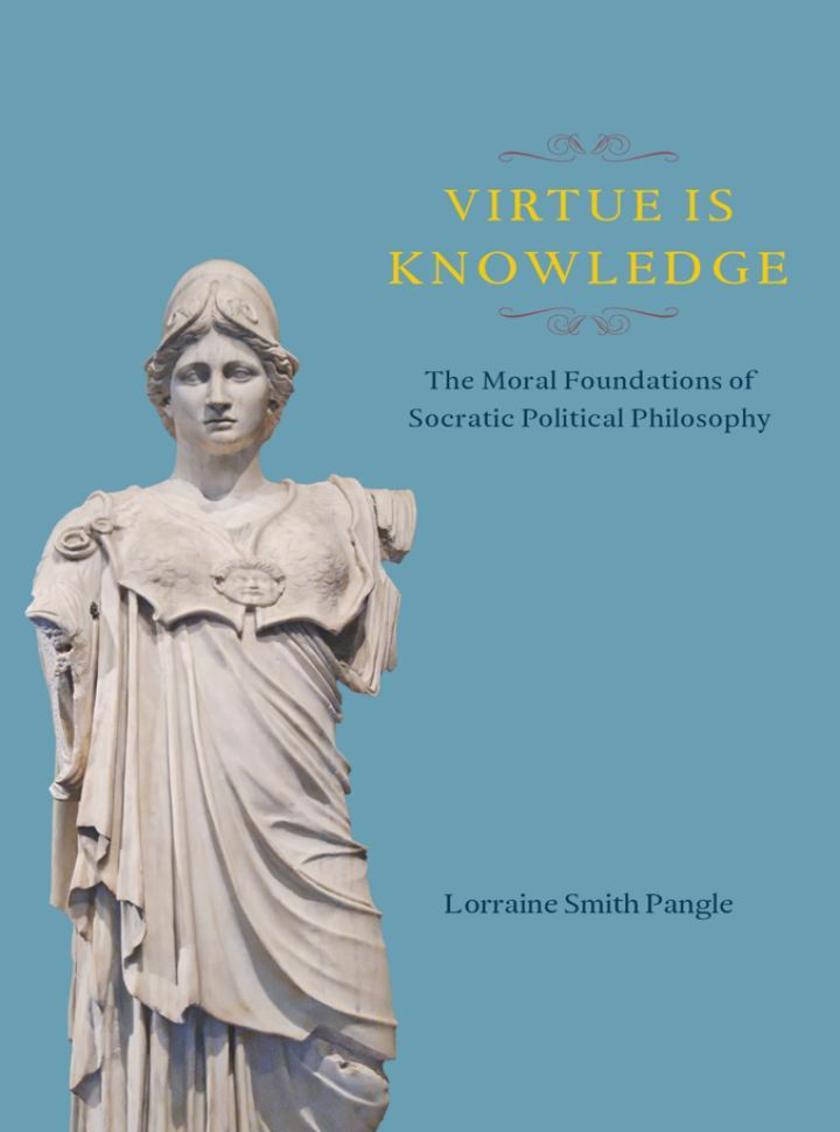
Virtue Is Knowledge
¥288.41
The relation between virtue and knowledge is at the heart of the Socratic view of human excellence, but it also points to a central puzzle of the Platonic dialogues: Can Socrates be serious in his claims that human excellence is constituted by one virtue, that vice is merely the result of ignorance, and that the correct response to crime is therefore not punishment but educationOr are these assertions mere rhetorical ploys by a notoriously complex thinker?Lorraine Smith Pangle traces the argument for the primacy of virtue and the power of knowledge throughout the five dialogues that feature them most prominently-the Apology, Gorgias, Protagoras, Meno, and Laws-and reveals the truth at the core of these seemingly strange claims. She argues that Socrates was more aware of the complex causes of human action and of the power of irrational passions than a cursory reading might suggest. Pangle's perceptive analyses reveal that many of Socrates's teachings in fact explore the factors that make it difficult for humans to be the rational creatures that he at first seems to claim. Also critical to Pangle's reading is her emphasis on the political dimensions of the dialogues. Underlying many of the paradoxes, she shows, is a distinction between philosophic and civic virtue that is critical to understanding them.Ultimately, Pangle offers a radically unconventional way of reading Socrates's views of human excellence: Virtue is not knowledge in any ordinary sense, but true virtue is nothing other than wisdom.
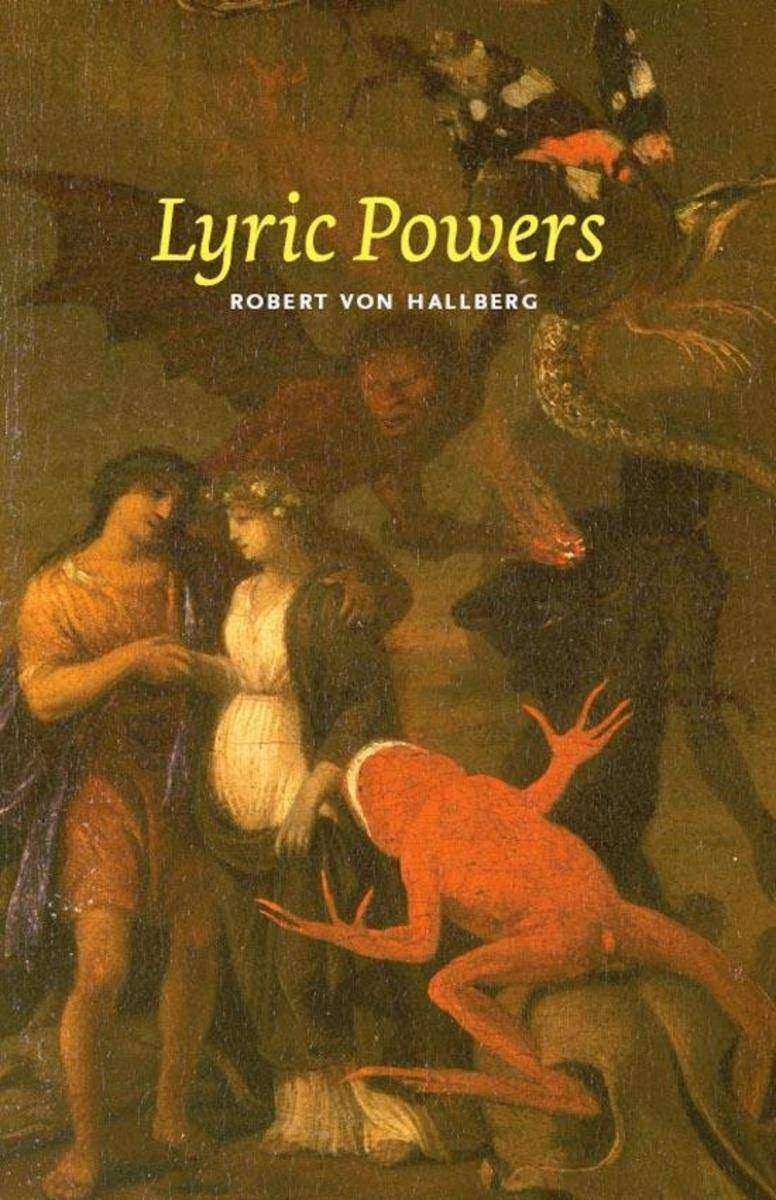
Lyric Powers
¥288.41
The authority of poetry varies from one period to another, from one culture to another. For Robert von Hallberg, the authority of lyric poetry has three sources: religious affirmation, the social institutions of those who speak the idioms from which particular poems are made, and the extraordinary cognition generated by the formal and musical resources of poems. Lyric Powers helps students, poets, and general readers to recognize the pleasures and understand the ambitions of lyric poetry.To explain why a reader might prefer one kind of poem to another, von Hallberg analyzes-beyond the political and intellectual significance of poems-the musicality of both lyric poetry and popular song, including that of Tin Pan Alley and doo-wop. He shows that poets have distinctive intellectual resources-not just rhetorical resources-for examining their subjects, and that the power of poetic language to generalize, not particularize, is what justly deserves a critic's attention.The first book in more than a decade from this respected critic, Lyric Powers will be celebrated as a genuine event by readers of poetry and literary criticism.
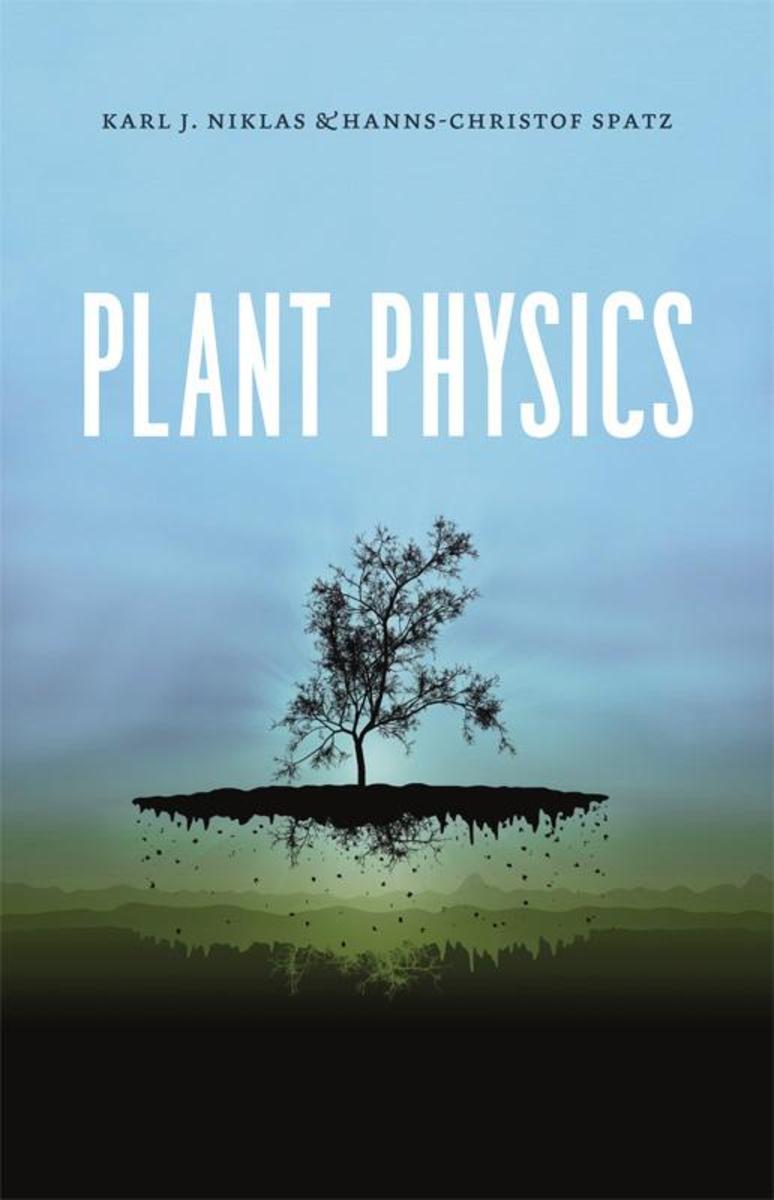
Plant Physics
¥329.62
From Galileo, who used the hollow stalks of grass to demonstrate the idea that peripherally located construction materials provide most of the resistance to bending forces, to Leonardo da Vinci, whose illustrations of the parachute are alleged to be based on his study of the dandelion's pappus and the maple tree's samara, many of our greatest physicists, mathematicians, and engineers have learned much from studying plants.?A symbiotic relationship between botany and the fields of physics, mathematics, engineering, and chemistry continues today, as is revealed in Plant Physics. The result of a long-term collaboration between plant evolutionary biologist Karl J. Niklas and physicist Hanns-Christof Spatz, Plant Physics presents a detailed account of the principles of classical physics, evolutionary theory, and plant biology in order to explain the complex interrelationships among plant form, function, environment, and evolutionary history. Covering a wide range of topics-from the development and evolution of the basic plant body and the ecology of aquatic unicellular plants to mathematical treatments of light attenuation through tree canopies and the movement of water through plants' roots, stems, and leaves-Plant Physics is destined to inspire students and professionals alike to traverse disciplinary membranes.

Once Out of Nature
¥353.16
Once Out of Nature offers an original interpretation of Augustine's theory of time and embodiment. Andrea Nightingale draws on philosophy, sociology, literary theory, and social history to analyze Augustine's conception of temporality, eternity, and the human and transhuman condition.?In Nightingale's view, the notion of embodiment illuminates a set of problems much larger than the body itself: it captures the human experience of being an embodied soul dwelling on earth. In Augustine's writings, humans live both in and out of nature-exiled from Eden and punished by mortality, they are "e;resident aliens"e; on earth. While the human body is subject to earthly time, the human mind is governed by what Nightingale calls psychic time. For the human psyche always stretches away from the present moment-where the physical body persists-into memories and expectations. As Nightingale explains, while the body is present in the here and now, the psyche cannot experience self-presence. Thus, for Augustine, the human being dwells in two distinct time zones, in earthly time and in psychic time. The human self, then, is a moving target.?Adam, Eve, and the resurrected saints, by contrast, live outside of time and nature: these transhumans dwell in an everlasting present.?Nightingale connects Augustine's views to contemporary debates about transhumans and suggests that Augustine's thought reflects our own ambivalent relationship with our bodies and the earth. Once Out of Nature offers a compelling invitation to ponder the boundaries of the human.
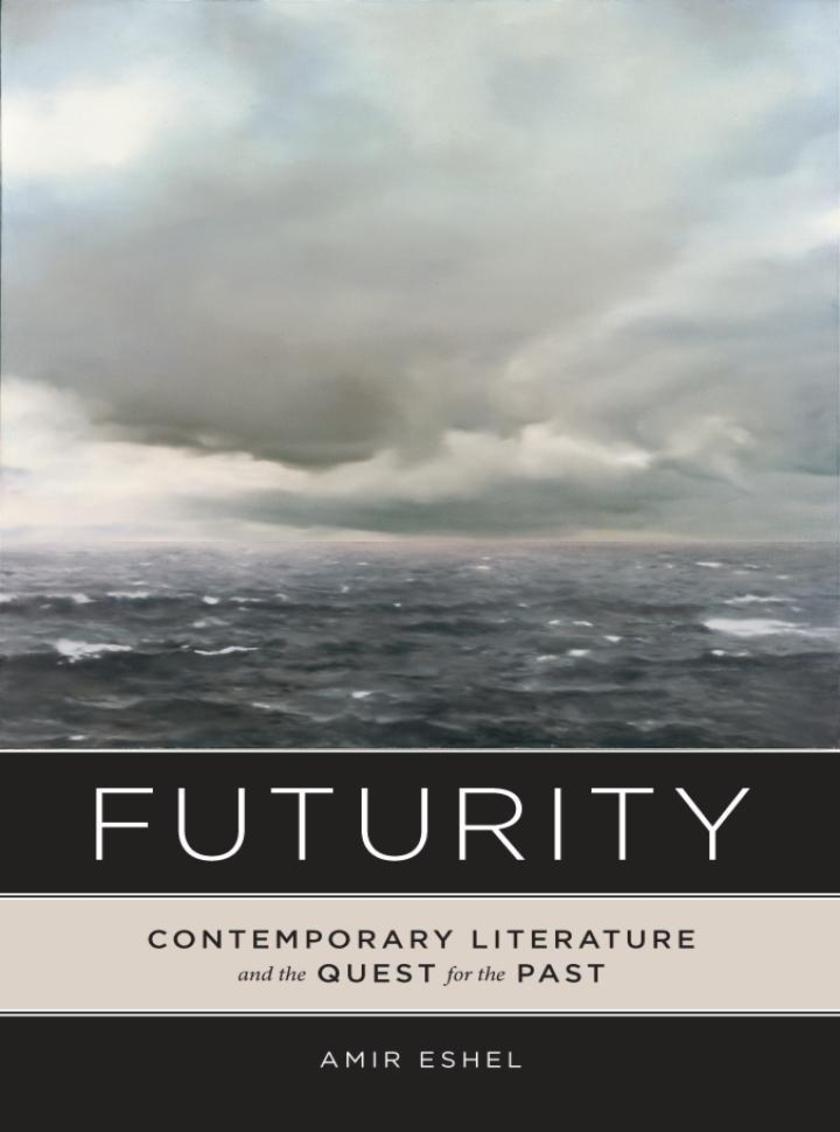
Futurity
¥353.16
When looking at how trauma is represented in literature and the arts, we tend to focus on the weight of the past. In this book, Amir Eshel suggests that this retrospective gaze has trapped us in a search for reason in the madness of the twentieth century's catastrophes at the expense of literature's prospective vision. Considering several key literary works, Eshel argues in Futurity that by grappling with watershed events of modernity, these works display a future-centric engagement with the past that opens up the present to new political, cultural, and ethical possibilities-what he calls futurity.?Bringing together postwar German, Israeli, and Anglo-American literature, Eshel traces a shared trajectory of futurity in world literature. He begins by examining German works of fiction and the debates they spurred over the future character of Germany's public sphere. Turning to literary works by Jewish-Israeli writers as they revisit Israel's political birth, he shows how these stories inspired a powerful reconsideration of Israel's identity. Eshel then discusses post-1989 literature-from Ian McEwan's Black Dogs to J. M. Coetzee's Diary of a Bad Year-revealing how these books turn to events like World War II and the Iraq War not simply to make sense of the past but to contemplate the political and intellectual horizon that emerged after 1989. Bringing to light how reflections on the past create tools for the future, Futurity reminds us of the numerous possibilities literature holds for grappling with the challenges of both today and tomorrow.
Economy of Glory
¥370.82
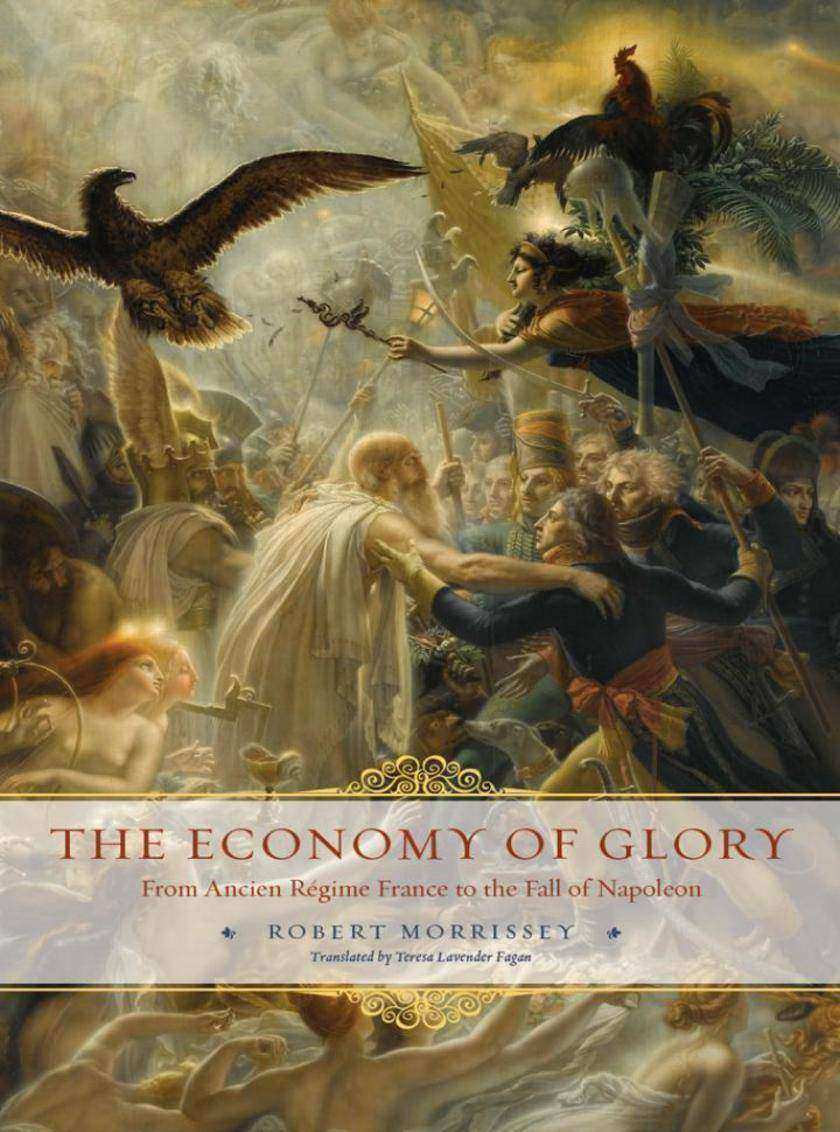
From the outset of Napoleon's career, the charismatic Corsican was compared to mythic heroes of antiquity like Achilles, and even today he remains the apotheosis of French glory, a value deeply embedded in the country's history. From this angle, the Napoleonic era can be viewed as the final chapter in the battle of the Ancients and Moderns. In this book, Robert Morrissey presents a literary and cultural history of glory and its development in France and explores the "e;economy of glory"e; Napoleon sought to implement in an attempt to heal the divide between the Old Regime and the Revolution. ?Examining how Napoleon saw glory as a means of escaping the impasse of Revolutionary ideas of radical egalitarianism, Morrissey illustrates the challenge the leader faced in reconciling the antagonistic values of virtue and self-interest, heroism and equality. He reveals that the economy of glory was both egalitarian, creating the possibility of an aristocracy based on merit rather than wealth, and traditional, being deeply embedded in the history of aristocratic chivalry and the monarchy-making it the heart of Napoleon's politics of fusion. Going beyond Napoleon, Morrissey considers how figures of French romanticism such as Chateaubriand, Balzac, and Hugo constantly reevaluated this legacy of glory and its consequences for modernity. Available for the first time in English, The Economy of Glory is a sophisticated and beautifully written addition to French history.

Nature of Diversity
¥376.70
All living things on earth-from individual species to entire ecosystems-have evolved through time, and evolution is the acknowledged framework of modern biology. Yet many areas of biology have moved from a focus on evolution to much narrower perspectives.Daniel R. Brooks and Deborah A. McLennan argue that it is impossible to comprehend the nature of life on earth unless evolution-the history of organisms-is restored to a central position in research. They demonstrate how the phylogenetic approach can be integrated with ecological and behavioral studies to produce a richer and more complete picture of evolution. Clearly setting out the conceptual, methodological, and empirical foundations of their research program, Brooks and McLennan show how scientists can use it to unravel the evolutionary history of virtually any characteristic of any living thing, from behaviors to ecosystems. They illustrate and test their approach with examples drawn from a wide variety of species and habitats.The Nature of Diversity provides a powerful new tool for understanding, documenting, and preserving the world's biodiversity. It is an essential book for biologists working in evolution, ecology, behavior, conservation, and systematics. The argument in The Nature of Diversity greatly expands upon and refines the arguments made in the authors' previous book Phylogeny, Ecology, and Behavior.
Shock of the Ancient
¥447.34
The cultural battle known as the Quarrel of the Ancients and Moderns served as a sly cover for more deeply opposed views about the value of literature and the arts. One of the most public controversies of early modern Europe, the Quarrel has most often been depicted as pitting antiquarian conservatives against the insurgent critics of established authority. The Shock of the Ancient turns the canonical vision of those events on its head by demonstrating how the defenders of Greek literature-rather than clinging to an outmoded tradition-celebrated the radically different practices of the ancient world.At a time when the constraints of decorum and the politics of French absolutism quashed the expression of cultural differences, the ancient world presented a disturbing face of otherness. Larry F. Norman explores how the authoritative status of ancient Greek texts allowed them to justify literary depictions of the scandalous. The Shock of the Ancient surveys the diverse array of aesthetic models presented in these ancient works and considers how they both helped to undermine the rigid codes of neoclassicism and paved the way for the innovative philosophies of the Enlightenment. Broadly appealing to students of European literature, art history, and philosophy, this book is an important contribution to early modern literary and cultural debates.
Lucretian Renaissance
¥447.34
With The Lucretian Renaissance, Gerard Passannante offers a radical rethinking of a familiar narrative: the rise of materialism in early modern Europe. Passannante begins by taking up the ancient philosophical notion that the world is composed of two fundamental opposites: atoms, as the philosopher Epicurus theorized, intrinsically unchangeable and moving about the void; and the void itself, or nothingness. Passannante considers the fact that this strain of ancient Greek philosophy survived and was transmitted to the Renaissance primarily by means of a poem that had seemingly been lost-a poem insisting that the letters of the alphabet are like the atoms that make up the universe.?By tracing this elemental analogy through the fortunes of Lucretius's On the Nature of Things, Passannante argues that, long before it took on its familiar shape during the Scientific Revolution, the philosophy of atoms and the void reemerged in the Renaissance as a story about reading and letters-a story that materialized in texts, in their physical recomposition, and in their scattering.?From the works of Virgil and Macrobius to those of Petrarch, Poliziano, Lambin, Montaigne, Bacon, Spenser, Gassendi, Henry More, and Newton, The Lucretian Renaissance recovers a forgotten history of materialism in humanist thought and scholarly practice and asks us to reconsider one of the most enduring questions of the period: what does it mean for a text, a poem, and philosophy to be "e;reborn"e;?
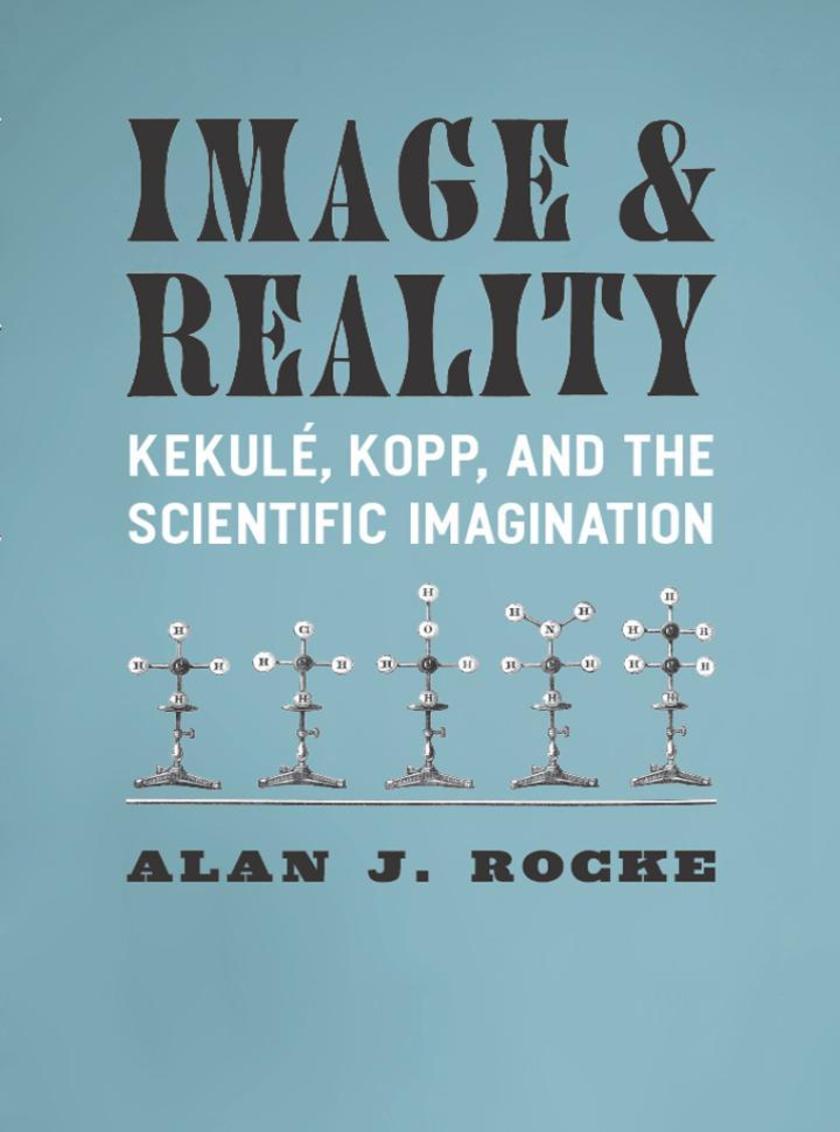
Image and Reality
¥447.34
Nineteenth-century chemists were faced with a particular problem: how to depict the atoms and molecules that are beyond the direct reach of our bodily senses. In visualizing this microworld, these scientists were the first to move beyond high-level philosophical speculations regarding the unseen. In Image and Reality, Alan Rocke focuses on the community of organic chemists in Germany to provide the basis for a fuller understanding of the nature of scientific creativity.?Arguing that visual mental images regularly assisted many of these scientists in thinking through old problems and new possibilities, Rocke uses a variety of sources, including private correspondence, diagrams and illustrations, scientific papers, and public statements, to investigate their ability to not only imagine the invisibly tiny atoms and molecules upon which they operated daily, but to build detailed and empirically based pictures of how all of the atoms in complicated molecules were interconnected. These portrayals of "e;chemical structures,"e; both as mental images and as paper tools, gradually became an accepted part of science during these years and are now regarded as one of the central defining features of chemistry.In telling this fascinating story in a manner accessible to the lay reader, Rocke also suggests that imagistic thinking is often at the heart of creative thinking in all fields.Image and Reality is the first book in the Synthesis series, a series in the history of chemistry, broadly construed, edited by Angela N. H. Creager, John E. Lesch, Stuart W. Leslie, Lawrence M. Principe, Alan Rocke, E.C. Spary, and Audra J. Wolfe, in partnership with the Chemical Heritage Foundation.
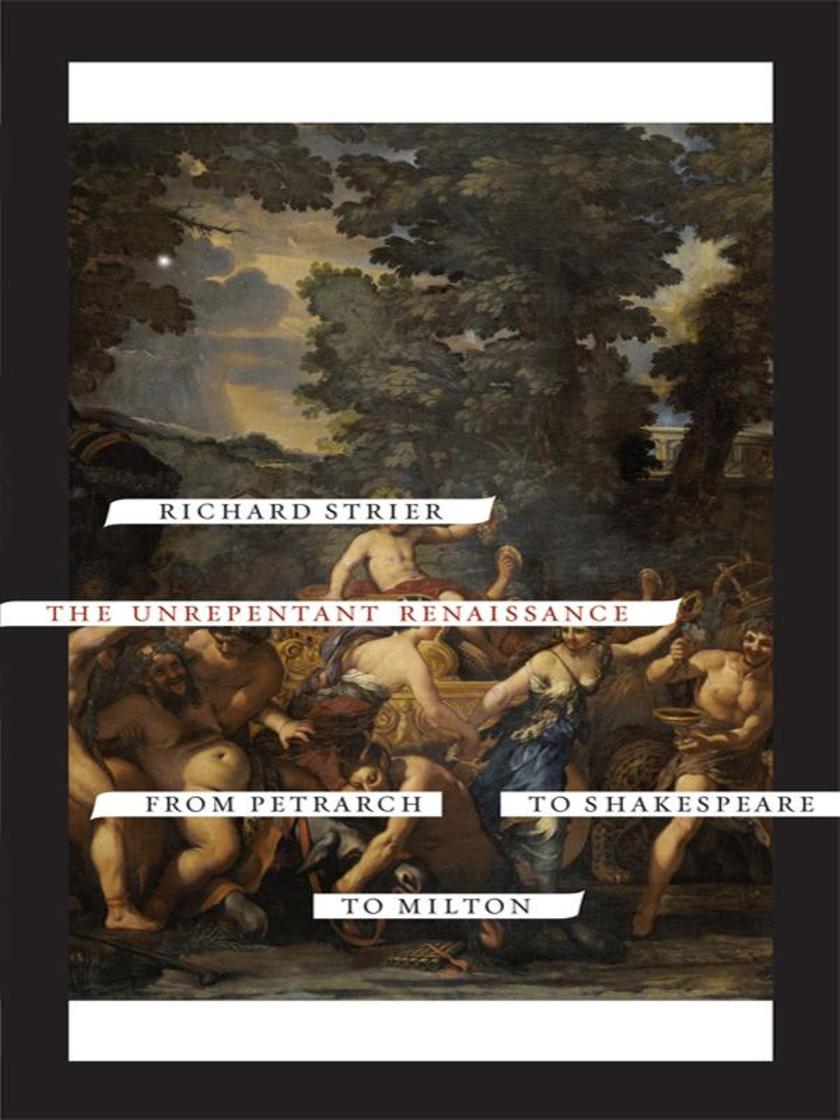
Unrepentant Renaissance
¥447.34
Who during the Renaissance could have dissented from the values of reason and restraint, patience and humility, rejection of the worldly and the physicalThese widely articulated values were part of the inherited Christian tradition and were reinforced by key elements in the Renaissance, especially the revival of Stoicism and Platonism. This book is devoted to those who did dissent from them.?Richard Strier reveals that many long-recognized major texts did question the most traditional values and uncovers a Renaissance far more bumptious and affirmative than much recent scholarship has allowed.The Unrepentant Renaissance counters the prevalent view of the period as dominated by the regulation of bodies and passions, aiming to reclaim the Renaissance as an era happily churning with surprising, worldly, and self-assertive energies. Reviving the perspective of Jacob Burckhardt and Nietzsche, Strier provides fresh and uninhibited readings of texts by Petrarch, More, Shakespeare, Ignatius Loyola, Montaigne, Descartes, and Milton. Strier's lively argument will stir debate throughout the field of Renaissance studies.


