


 购物车
购物车 个人中心
个人中心
Sylvia’s Lovers by Elizabeth Gaskell - Delphi Classics (Illustrated)
¥8.09
This eBook features the unabridged text of ‘Sylvia’s Lovers by Elizabeth Gaskell - Delphi Classics (Illustrated)’ from the bestselling edition of ‘The Complete Works of Elizabeth Gaskell’. Having established their name as the leading publisher of classic literature and art, Delphi Classics produce publications that are individually crafted with superior formatting, while introducing many rare texts for the first time in digital print. The Delphi Classics edition of Gaskell includes original annotations and illustrations relating to the life and works of the author, as well as individual tables of contents, allowing you to navigate eBooks quickly and easily. eBook features: * The complete unabridged text of ‘Sylvia’s Lovers by Elizabeth Gaskell - Delphi Classics (Illustrated)’ * Beautifully illustrated with images related to Gaskell’s works * Individual contents table, allowing easy navigation around the eBook * Excellent formatting of the text Please visit www.delphiclassics.com to learn more about our wide range of titles
Essays and Lectures
¥8.09
Dodo Collections brings you another classic from Oscar Wilde, ‘Essays and Lectures’. It is a collection of essays, lectures, reviews, letters, and aphorisms by Oscar Wilde. Oscar Fingal O'Flahertie Wills Wilde (16 October 1854 – 30 November 1900) was an Irish author, playwright and poet. After writing in different forms throughout the 1880s, he became one of London's most popular playwrights in the early 1890s. He is remembered for his epigrams, his novel The Picture of Dorian Gray, his plays, as well as the circumstances of his imprisonment and early death. At the height of his fame and success, while his masterpiece, The Importance of Being Earnest (1895), was still on stage in London, Wilde had the Marquess of Queensberry prosecuted for libel. The Marquess was the father of Wilde's lover, Lord Alfred Douglas. The charge carried a penalty of up to two years in prison. The trial unearthed evidence that caused Wilde to drop his charges and led to his own arrest and trial for gross indecency with other men. After two more trials he was convicted and imprisoned for two years' hard labour. In 1897, in prison, he wrote De Profundis, which was published in 1905, a long letter which discusses his spiritual journey through his trials, forming a dark counterpoint to his earlier philosophy of pleasure. Upon his release he left immediately for France, never to return to Ireland or Britain. There he wrote his last work, The Ballad of Reading Gaol (1898), a long poem commemorating the harsh rhythms of prison life. He died destitute in Paris at the age of 46.
Mark Twain's Essays Letters and Speeches
¥8.09
This book-collection file includes books of Mark Twain's speeches and letters, plus 3 book-length collections of essays: What is Man? Sketches New and Old, and Christian Science. It also includes the following short collections and individual essays: Editorial Wild Oats, Essays on Paul Bourget, Fenimore Cooper's Literary Offences, and In Defence of Harriet Shelley. According to Wikipedia: "Samuel Langhorne Clemens (1835 – 1910), better known by the pen name Mark Twain, was an American humorist, satirist, lecturer and writer. Twain is most noted for his novels Adventures of Huckleberry Finn, which has since been called the Great American Novel, and The Adventures of Tom Sawyer. He is also known for his quotations. During his lifetime, Twain became a friend to presidents, artists, industrialists and European royalty. Twain enjoyed immense public popularity, and his keen wit and incisive satire earned him praise from both critics and peers. American author William Faulkner called Twain "the father of American literature."
Pyrrhus
¥8.09
According to Wikipedia: "Pyrrhus or Pyrrhos (319/318 BC—272 BC) was a Greek general and statesman of the Hellenistic era. He was king of the Greek tribe of Molossians, of the royal Aeacid house (from ca. 297 BC), and later he became King of Epirus (306-302, 297-272 BC) and Macedon (288-284, 273-272 BC). He was one of the strongest opponents of early Rome. Some of his battles, though successful, cost him heavy losses, from which the term "Pyrrhic victory" was coined. He is the subject of one of Plutarch's Parallel Lives."
On the Art of Writing
¥8.09
Series of lectures delivered at the University of Cambridge in 1913. According to Wikipedia: "Sir Arthur Thomas Quiller-Couch (21 November 1863 – 12 May 1944) was a British writer, who published under the pen name of Q. He is primarily remembered for the monumental Oxford Book Of English Verse 1250–1900 (later extended to 1918), and for his literary criticism. He guided the taste of many who never met him, including American writer Helene Hanff, author of 84 Charing Cross Road, its sequel, Q's Legacy; and the putatively fictional Horace Rumpole via John Mortimer, his literary amanuensis."
Glimpses of Bengal
¥8.09
According to Wikipedia: "Rabindranath Tagore (7 May 1861 – 7 August 1941), sobriquet Gurudev, was a Bengali poet, novelist, musician, painter and playwright who reshaped Bengali literature and music. As author of Gitanjali and its "profoundly sensitive, fresh and beautiful verse", he was the first non-European who was awarded the Nobel Prize for Literature in 1913. His poetry in translation was viewed as spiritual, and this together with his mesmerizing persona gave him a prophet-like aura in the west. His "elegant prose and magical poetry" still remain largely unknown outside the confines of Bengal."

Literary Taste: How to Form It
¥8.09
Dodo Collections brings you another classic from Arnold Bennett, ‘"Literary Taste: How to Form It".’ ? Literary Taste, which has a sub-title "how to form it, with detailed instructions for collecting a complete library of English Literarure", came into that category, and was a very successful publication. More than 100 years after it first appeared (in 1909) it will seem rather quaint, but there is much of value in it, and, bearing in mind that much good and great literary work has been produced in modern times, it is still worth a study. Remember it is a book that pointed the way for the generation of our grandfathers and great-grandfathers! ? Enoch Arnold Bennett (always known as Arnold Bennett) was one of the most remarkable literary figures of his time, a product of the English Potteries that he made famous as the Five Towns. Yet he could hardly wait to escape his home town, and he did so by the sheer force of his ambition to succeed as an author. In his time he turned his hand to every kind of writing, but he will be remembered for such novels as The Old Wives' Tale, the Clayhanger trilogy (Clayhanger, Hilda Lessways, and These Twain), and The Card. He also wrote such intriguing self-improvement books as Literary Taste, How To Live on 24 Hours a Day, The Human Machine, etc. ? After a local education Bennett finished his education at the University of London and for a time was editor of Woman magazine. After 1900 he devoted himself entirely to writing; dramatic criticism was one of his foremost interests. Bennett is best known, however, for his novels, several of which were written during his residence in France. ? Bennett's infancy was spent in genteel poverty, which gave way to prosperity as his father succeeded as a solicitor. From this provincial background he became a novelist. ? His enduring fame is as a Chronicler of the Potteries towns, the setting and inspiration of some of his most famous and enduring literary work and the place where he grew up.
The Letters of Henry James: Volume 2
¥8.09
Dodo Collections brings you another classic from Henry James, ‘The Letters of Henry James: Volume Two’. ? The Complete Letters of Henry James fills a crucial gap in modern literary studies by presenting in a scholarly edition the complete letters of one of the great novelists and letter writers of the English language. Comprising more than ten thousand letters reflecting on a remarkably wide range of topics—from James’s own life and literary projects to broader questions on art, literature, and criticism. ? Henry James, OM (15 April 1843 – 28 February 1916) was an American writer who spent most of his writing career in Britain. He is regarded as one of the key figures of 19th-century literary realism. He was the son of Henry James, Sr. and the brother of philosopher and psychologist William James and diarist Alice James. ? He is best known for a number of novels showing Americans encountering Europe and Europeans. His method of writing from a character's point of view allowed him to explore issues related to consciousness and perception, and his style in later works has been compared to impressionist painting. His imaginative use of point of view, interior monologue and unreliable narrators brought a new depth to narrative fiction. ? James contributed significantly to literary criticism, particularly in his insistence that writers be allowed the greatest possible freedom in presenting their view of the world. James claimed that a text must first and foremost be realistic and contain a representation of life that is recognizable to its readers. Good novels, to James, show life in action and are, most importantly, interesting. In addition to his voluminous works of fiction he published articles and books of travel, biography, autobiography, and criticism, and wrote plays. James alternated between America and Europe for the first twenty years of his life; eventually he settled in England, becoming a British subject in 1915, one year before his death. James was nominated for the Nobel Prize in Literature in 1911, 1912, and 1916.
What was the Religion of Shakespeare?
¥8.09
Dodo Collections brings you another classic from M. M. Mangasarian, ‘What was the Religion of Shakespeare?’ ? It is by observing the frequency and emphasis with which certain views and expressions occur and reoccur in an author, and the consistency with which they are given the preference, that we may be able to generalize as to his philosophy or religion. As Shakespeare's works are neither a treatise on theology nor a manual of philosophy, our only means of discovering his attitude toward the problems of life and destiny is by reading, as it were, between the lines. A great mind can neither sophisticate nor suppress its earnest convictions. This does not mean that anyone with earnest convictions must necessarily be a propagandist. To think and to let think, represents a state of mind which is entirely consistent, both with enthusiasm and toleration, if not with proselytism. We believe that Shakespeare has unmistakably expressed himself on the subject of religion, as he has on that of patriotism, for instance, but without any missionary zeal, which fact has led not a few students of his works to the conclusion that of all the great poets Shakespeare is the only one without a religion. ? During his life Mangasarian wrote a number of books. His most popular, including The Truth About Jesus — Is He a Myth? (1909) andThe Bible Unveiled (1911), deal with the evidence against the existence of an historical Jesus. He also wrote hundreds of essays and lectures on questions of the times. His books and essays were translated into French, German, Spanish, and other foreign languages. The general subject of his writing was religious criticism and the philosophy of religion.
Brook Farm
¥8.09
According to Wikipedia: "Brook Farm, also called the Brook Farm Institute of Agriculture and Education or the Brook Farm Association for Industry and Education, was a utopian experiment in communal living in the United States in the 1840s. It was founded by former Unitarian minister George Ripley and his wife Sophia Ripley at the Ellis Farm in West Roxbury, Massachusetts (9 miles outside of downtown Boston) in 1841 and was inspired in part by the ideals of Transcendentalism, a religious and cultural philosophy based in New England. Founded as a joint stock company, it promised its participants a portion of the profits from the farm in exchange for performing an equal share of the work. Brook Farmers believed that by sharing the workload, ample time would be available for leisure activities and intellectual pursuits."
My Friends at Brook Farm
¥8.09
According to Wikipedia: "Brook Farm, also called the Brook Farm Institute of Agriculture and Education or the Brook Farm Association for Industry and Education, was a utopian experiment in communal living in the United States in the 1840s. It was founded by former Unitarian minister George Ripley and his wife Sophia Ripley at the Ellis Farm in West Roxbury, Massachusetts (9 miles outside of downtown Boston) in 1841 and was inspired in part by the ideals of Transcendentalism, a religious and cultural philosophy based in New England. Founded as a joint stock company, it promised its participants a portion of the profits from the farm in exchange for performing an equal share of the work. Brook Farmers believed that by sharing the workload, ample time would be available for leisure activities and intellectual pursuits.
A Memoir of Jane Austen
¥8.09
According to Wikipedia: "A Memoir of Jane Austen is a biography of the novelist Jane Austen (1775–1817) published in 1869 by her nephew James Edward Austen-Leigh. A second edition was published in 1871 which included previously unpublished Jane Austen writings. A family project, the biography was written by James Edward Austen-Leigh but owed much to the recollections of Jane Austen's many relatives. However, it was the decisions of her close friend and sister, Cassandra Austen, to destroy many of Jane's letters after her death that shaped the material available for the biography."
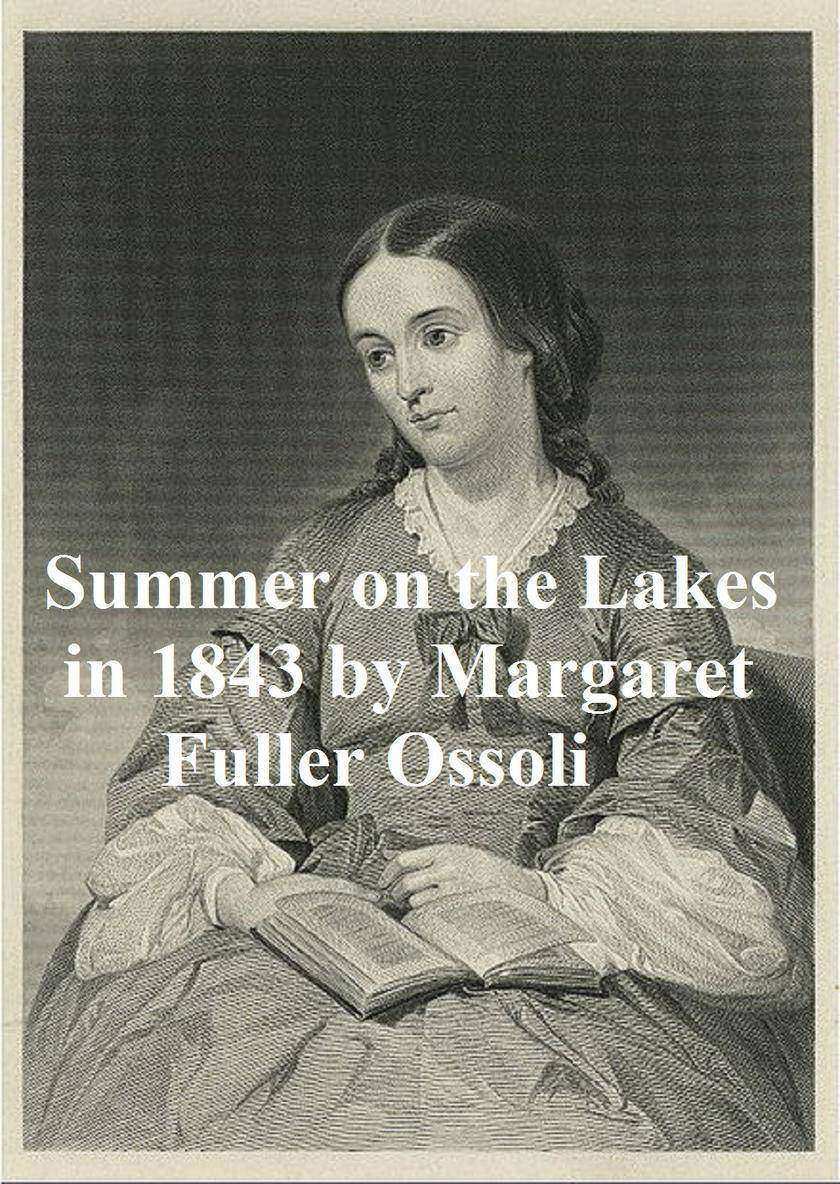
Summer on the Lakes in 1843
¥8.09
According to Wikipedia: "Sarah Margaret Fuller Ossoli (May 23, 1810 – July 19, 1850), commonly known as Margaret Fuller, was an American journalist, critic, and women's rights advocate associated with the American transcendentalism movement. She was the first full-time American female book reviewer in journalism. Her book Woman in the Nineteenth Century is considered the first major feminist work in the United States."
Two Books and a Poem
¥8.09
This file includes: The Story of My Life, The World I Live In, and The Song of the Stone Wall. According to Wikipedia: "Helen Adams Keller (June 27, 1880 – June 1, 1968) was an American author, political activist, and lecturer. She was the first deafblind person to earn a Bachelor of Arts degree. The story of how Keller's teacher, Anne Sullivan, broke through the isolation imposed by a near complete lack of language, allowing the girl to blossom as she learned to communicate, has become widely known through the dramatic depictions of the play and film The Miracle Worker. .. A prolific author, Keller was well-travelled and outspoken in her convictions. A member of the Socialist Party of America and the Industrial Workers of the World, she campaigned for women's suffrage, labor rights, socialism, and other radical left causes."
The World As I Have Found It
¥8.09
Sequel to Incidents in the Life of a Blind Girl.? First published in 1878. Autobiography of a blind woman, followed by the essays: Help the Blind Help Themselves, Sight of the Blind, How do the Blind See, Invocation to Light, Is It More to Lose Eyes than the Ears? and Education of the Blind. It also includes a collection of poems by the blind. Such a book as this has a value which, probably, has not occurred to its author. She has put on record the phenomena of her life as she has recollected them, with great simplicity, merely for the entertainment of her readers, without attaching any importance to the value which every such memoir has in the department of science. But it is just from the study of such phenomena as these that the students in mental and moral philosophy learn the laws of mind and the operations of a human soul under a divine, moral government. "
Travels with a Donkey in the Cevennes
¥8.09
Travelogue/memoir that begins "The journey which this little book is to describe was very agreeable and fortunate for me. After an uncouth beginning, I had the best of luck to the end. But we are all travellers in what John Bunyan calls the wilderness of this world - all, too, travellers with a donkey: and the best that we find in our travels is an honest friend. He is a fortunate voyager who finds many. We travel, indeed, to find them. They are the end and the reward of life. They keep us worthy of ourselves; and when we are alone, we are only nearer to the absent."

Top 20 MS Excel VBA Simulations
¥24.44
Top 20 MS Excel VBA Simulations

Procrastination Self-Assessment:: A Self-Help Book; Identify
¥57.14
Procrastination Self-Assessment:: A Self-Help Book; Identify

Productivity Tips: Make Things Happen
¥48.97
Productivity Tips: Make Things Happen
Become A Great Public Speaker: Tips & Guidelines For An Effective Public Speech
¥32.62
Become A Great Public Speaker: Tips & Guidelines For An Effective Public Speech

Confessions of a Trauma Junkie:My Life as a Nurse Paramedic
¥65.99
Ride in the back of the ambulance with Sherry Jones Mayo Share the innermost feelings of emergency services workers as they encounter trauma, tragedy, redemption, and even a little humor. Sherry Jones Mayo has been an Emergency Medical Technician, Emergerncy Room Nurse, and an on-scene critical incident debriefer for Hurricane Katrina. Most people who have observed or experienced physical, mental or emotional crisis have single perspectives. This book allows readers to stand on both sides of the gurney; it details a progression from innocence to enlightened caregiver to burnout, glimpsing into each stage personally and professionally.Emergency Service Professionals Praise Confessions of a Trauma Junkie "A must read for those who choose to subject themselves to life at its best and at its worst. Sherry offers insight in the Emergency Response business that most people cannot imagine." --Maj Gen Richard L. Bowling, former Commanding General, USAF Auxiliary (CAP) "Sherry Mayo shares experiences and unique personal insights of first responders. Told with poetry, sensitivity and a touch of humor at times, all are real, providing views into realities EMTs, Nurses, and other first responders encounter. Recommended reading for anyone working with trauma, crises, critical incidents in any profession." -- George W. Doherty, MS, LPC, President Rocky Mountain Region Disaster Mental Health Institute "Sherry has captured the essence of working with people who have witnessed trauma. It made me cry, it made me laugh, it helped me to understand differently the work of our Emergency Services Personnel. I consider this a 'MUST READ' for all of us who wish to be helpful to those who work in these professions." --Dennis Potter, LMSW, CAAC, FAAETS, ICISF Instructor "Confessions of a Trauma Junkie is an honest, powerful, and moving account of the emotional realities of helping others! Sherry Mayo gives us a privileged look into the healing professions she knows firsthand. The importance of peer support is beautifully illustrated. This book will deepen the readers respect for those who serve." --Victor Welzant, PsyD, Director of Education and Training The International Critical Incident Stress Foundation, Inc Learn more at www.SherryJonesMayo.com From the Reflections of America Series Modern History Press www.ModernHistoryPress.com


