


 购物车
购物车 个人中心
个人中心
Representative Men
¥8.09
Classic collection of essays on great men, with 13 illustrations. According to Wikipedia: "Representative Men is a collection of seven lectures by Ralph Waldo Emerson, published as a book of essays in 1850. The first essay discusses the role played by "great men" in society, and the remaining six each extoll the virtues of one of six men deemed by Emerson to be great: Plato ("the Philosopher"), Emanuel Swedenborg ("the Mystic"), Michel de Montaigne ("the Skeptic"), William Shakespeare ("the Poet"), Napoleon ("the Man of the World"), and Johann Wolfgang von Goethe ("the Writer"). The work was described by Matthew Arnold as "the most important work done in prose"... Ralph Waldo Emerson (1803 – 1882) was an American essayist, philosopher, poet, and leader of the Transcendentalist movement in the early 19th century. His teachings directly influenced the growing New Thought movement of the mid 1800s. Emerson gradually moved away from the religious and social beliefs of his contemporaries, formulating and expressing the philosophy of Transcendentalism in his 1836 essay, Nature. As a result of this ground breaking work he gave a speech entitled The American Scholar in 1837, which Oliver Wendell Holmes Sr. considered to be America's "Intellectual Declaration of Independence". Emerson once said "Make the most of yourself, for that is all there is of you."
Sand - Flaubert Letters
¥8.09
Classic literary correspondence in English translation. According to Wikipedia: "Amandine Aurore Lucile Dupin, Baroness Dudevant (July 1, 1804 – June 8, 1876), best known by her pseudonym George Sand, was a French novelist and feminist.... A liaison with the writer Jules Sandeau heralded her literary debut. They published a few stories in collaboration, signing them "Jules Sand." She consequently adopted, for her first independent novel, Indiana (1832) , the pen name that made her famous – George Sand. Her first published novel, Rose et Blanche (1831), was written in collaboration with Jules Sandeau. Drawing from her childhood experiences of the countryside, she wrote the rural novels La Mare au Diable (1846), Fran?ois le Champi (1847–1848), La Petite Fadette (1849), and Les Beaux Messieurs Bois-Doré (1857). A Winter in Majorca described the period that she and Chopin spent on that island in 1838-9. Her other novels include Indiana (1832), Lélia (1833), Mauprat (1837), Le Compagnon du Tour de France (1840), Consuelo (1842–1843), and Le Meunier d'Angibault (1845). Further theatre pieces and autobiographical pieces include Histoire de ma vie (1855), Elle et Lui (1859) (about her affair with Musset), Journal Intime, and Correspondence..... Also according to Wikipedia: "Gustave Flaubert (December 12, 1821 – May 8, 1880) was a French writer who is counted among the greatest Western novelists. He is known especially for his first published novel, Madame Bovary (1857), and for his scrupulous devotion to his art and style, best exemplified by his endless search for "le mot juste" ("the precise word")."

Mr Standfast by John Buchan - Delphi Classics (Illustrated)
¥8.09
This eBook features the unabridged text of ‘Mr Standfast by John Buchan - Delphi Classics (Illustrated)’ from the bestselling edition of ‘The Complete Works of John Buchan’. Having established their name as the leading publisher of classic literature and art, Delphi Classics produce publications that are individually crafted with superior formatting, while introducing many rare texts for the first time in digital print. The Delphi Classics edition of Buchan includes original annotations and illustrations relating to the life and works of the author, as well as individual tables of contents, allowing you to navigate eBooks quickly and easily. eBook features: * The complete unabridged text of ‘Mr Standfast by John Buchan - Delphi Classics (Illustrated)’ * Beautifully illustrated with images related to Buchan’s works * Individual contents table, allowing easy navigation around the eBook * Excellent formatting of the text Please visit www.delphiclassics.com to learn more about our wide range of titles
The Magic Walking-Stick by John Buchan - Delphi Classics (Illustrated)
¥8.09
This eBook features the unabridged text of ‘The Magic Walking-Stick by John Buchan - Delphi Classics (Illustrated)’ from the bestselling edition of ‘The Complete Works of John Buchan’. Having established their name as the leading publisher of classic literature and art, Delphi Classics produce publications that are individually crafted with superior formatting, while introducing many rare texts for the first time in digital print. The Delphi Classics edition of Buchan includes original annotations and illustrations relating to the life and works of the author, as well as individual tables of contents, allowing you to navigate eBooks quickly and easily. eBook features: * The complete unabridged text of ‘The Magic Walking-Stick by John Buchan - Delphi Classics (Illustrated)’ * Beautifully illustrated with images related to Buchan’s works * Individual contents table, allowing easy navigation around the eBook * Excellent formatting of the text Please visit www.delphiclassics.com to learn more about our wide range of titles

Aesthetical and Philosophical Essays
¥8.09
The classic of literary theory. According to Wikipedia: ""Johann Christoph Friedrich von Schiller (1759 – 1805) was a German poet, philosopher, historian, and dramatist. During the last few years of his life (1788–1805), Schiller struck up a productive, if complicated, friendship with already famous and influential Johann Wolfgang Goethe, with whom he greatly discussed issues concerning aesthetics, encouraging Goethe to finish works he left merely as sketches; this thereby gave way to a period now referred to as Weimar Classicism."
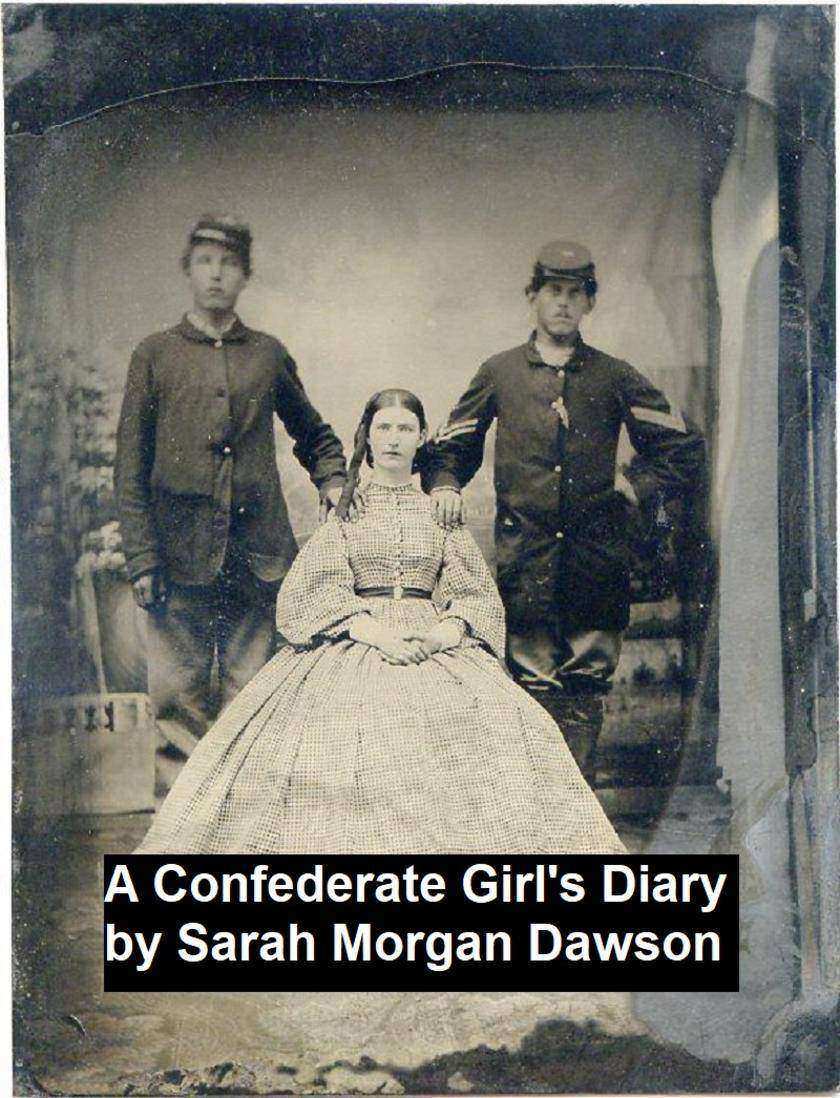
A Confederate Girl's Diary
¥8.09
The war-time diary of a young girl, first published in 1913.
Elective Affinities, Essays, and Letters by Goethe
¥8.09
This collection includes: Elective Affiniities and shorter works by Goethe. The German Classics Of The Nineteenth And Twentieth Centuries, Volume 2, edited by Kuno Francke.
Editorial Wild Oats
¥8.09
Short collection of short humorous essays, including: PAGE MY FIRST LITERARY VENTURE, JOURNALISM IN TENNESSEE, NICODEMUS DODGE--PRINTER, MR. BLOKE'S ITEM, HOW I EDITED AN AGRICULTURAL PAPER, and THE KILLING OF JULIUS CAESAR "LOCALIZED".
Speaking of Operations
¥8.09
Dodo Collections brings you another classic from Irvin S. Cobb, ‘"Speaking of Operations". ? Speaking of Operations is a monologue about the author's experience in having an operation in 1915 written in his typical tongue-in-cheek style. ? American author, humorist, editor and columnist from Paducah, Kentucky who relocated to New York during 1904, living there for the remainder of his life. ? Cobb joined the staff of the magazine Saturday Evening Post during 1911, and covered the Great War for the magazine. At the same time, he wrote a book about his experiences, published during 1915, titled Paths Of Glory. After a second visit to France to cover the Great War, Cobb publicized the achievements of the unit known as theHarlem Hellfighters, most notably, Croix de Guerre recipients Henry Lincoln Johnson and Needham Roberts. His article "Young Black Joe," published on August 24, 1918 in theSaturday Evening Post and later republished in Cobb's book, The Glory of the Coming, highlighted the discipline and courage displayed by black American soldiers fighting in Europe during World War I. The three-page article and half-page photograph reached a national audience of more than two million readers, and was widely reprinted in the black press.
Essays and Lectures
¥8.09
Dodo Collections brings you another classic from Oscar Wilde, ‘Essays and Lectures’. It is a collection of essays, lectures, reviews, letters, and aphorisms by Oscar Wilde. Oscar Fingal O'Flahertie Wills Wilde (16 October 1854 – 30 November 1900) was an Irish author, playwright and poet. After writing in different forms throughout the 1880s, he became one of London's most popular playwrights in the early 1890s. He is remembered for his epigrams, his novel The Picture of Dorian Gray, his plays, as well as the circumstances of his imprisonment and early death. At the height of his fame and success, while his masterpiece, The Importance of Being Earnest (1895), was still on stage in London, Wilde had the Marquess of Queensberry prosecuted for libel. The Marquess was the father of Wilde's lover, Lord Alfred Douglas. The charge carried a penalty of up to two years in prison. The trial unearthed evidence that caused Wilde to drop his charges and led to his own arrest and trial for gross indecency with other men. After two more trials he was convicted and imprisoned for two years' hard labour. In 1897, in prison, he wrote De Profundis, which was published in 1905, a long letter which discusses his spiritual journey through his trials, forming a dark counterpoint to his earlier philosophy of pleasure. Upon his release he left immediately for France, never to return to Ireland or Britain. There he wrote his last work, The Ballad of Reading Gaol (1898), a long poem commemorating the harsh rhythms of prison life. He died destitute in Paris at the age of 46.
Sylvia’s Lovers by Elizabeth Gaskell - Delphi Classics (Illustrated)
¥8.09
This eBook features the unabridged text of ‘Sylvia’s Lovers by Elizabeth Gaskell - Delphi Classics (Illustrated)’ from the bestselling edition of ‘The Complete Works of Elizabeth Gaskell’. Having established their name as the leading publisher of classic literature and art, Delphi Classics produce publications that are individually crafted with superior formatting, while introducing many rare texts for the first time in digital print. The Delphi Classics edition of Gaskell includes original annotations and illustrations relating to the life and works of the author, as well as individual tables of contents, allowing you to navigate eBooks quickly and easily. eBook features: * The complete unabridged text of ‘Sylvia’s Lovers by Elizabeth Gaskell - Delphi Classics (Illustrated)’ * Beautifully illustrated with images related to Gaskell’s works * Individual contents table, allowing easy navigation around the eBook * Excellent formatting of the text Please visit www.delphiclassics.com to learn more about our wide range of titles
Delphi Complete Works of Christina Rossetti (Illustrated)
¥16.27
Famous for the long poem ‘Goblin Market’ and the classic love poem ‘Remember’, Christina Rossetti created a variety of romantic, devotional and children's poems, as well as an accomplished sample of fiction. The Delphi Poets Series offers readers the works of literature's finest poets, with superior formatting. This volume presents the complete poetical and fictional works of Christina Rossetti, with beautiful illustrations and the usual Delphi bonus material. (Version 1) * Beautifully illustrated with images relating to Rossetti's life and works * Concise introductions to the poetry and other works * Images of how the poetry books were first printed, giving your eReader a taste of the original texts * Excellent formatting of the poems * Features Dante Gabriel Rossetti’s accompanying illustrations to GOBLIN MARKET * Special chronological and alphabetical contents tables for the poetry * Easily locate the poems you want to read * Includes Rossetti's complete short stories and her rare novella MAUDE, appearing for the first time in digital print * Features a bonus biography by the Pre-Raphaelite expert Theodore Watts-Dunton - discover Rossetti's literary life * Scholarly ordering of texts into chronological order and literary genres * Easily skip forward or back to each poem and section using the Kindle's 5-way controller Please visit www.delphiclassics.com to browse through our range of exciting titles CONTENTS: The Poetry Collections VERSES, 1847 GOBLIN MARKET AND OTHER POEMS THE PRINCE’S PROGRESS AND OTHER POEMS SING-SONG: A NURSERY RHYME BOOK A PAGEANT AND OTHER POEMS VERSES, 1893 SOME FEASTS AND FASTS GIFTS AND GRACES THE WORLD: SELF-DESTRUCTION DIVERS WORLDS:TIME AND ETERNITY NEW JERUSALEM AND ITS CITIZENS SONGS FOR STRANGERS AND PILGRIMS PRIVATELY PUBLISHED POEMS UNPUBLISHED POEMS The Poems LIST OF POEMS IN CHRONOLOGICAL ORDER LIST OF POEMS IN ALPHABETICAL ORDER The Fiction COMMONPLACE AND OTHER STORIES MAUDE: A STORY FOR GIRLS The Biography CHRISTINA GEORGINA ROSSETTI by Theodore Watts-Dunton Please visit www.delphiclassics.com to browse through our range of exciting titles
The Three Sisters: A drama in four acts
¥40.79
One of the four major plays that Chekhov wrote at the end of his life. The play was specifically written for the Moscow Art Theatre and was first directed by the legendary Constantin Stanisklavski. Since its debut, the play remained a perennial favourite of actors and audiences internationally.
Martin Eden
¥40.79
A semi-autobiographical novel, which Jack London wrote at the age of 33 at the height of his literary career. The story follows life of Marin Eden, an intelligent young man who becomes a writer through an intense and passionate pursuit of self-education in order to gain acceptance and the respectability of his society-girl sweetheart. Ruth spurns Eden when his writing is rejected initially and later tries to win his heart when he achieves fame. Was Eden’s quest for bourgeois respectability hollow?
The Brothers Karamazov
¥40.79
The Brothers Karamazov is a passionate philosophical novel that enters deeply into the ethical debates of God, free will, and morality. It is a spiritual drama of moral struggles concerning faith, doubt, and reason, set against a modernizing new Russia. Dostoyevsky composed much of the novel in the old Russia, which is also the main setting of the novel. Since its publication, it has been acclaimed all over the world by intellectuals as diverse as Sigmund Freud, Albert Einstein, Ludwig Wittgenstein, Martin Heidegger, Cormac McCarthy and Kurt Vonnegut as one of the supreme achievements in literature.

Bleak House
¥40.79
Bleak House is one of Dickens's finest novels, containing one of the most vast, complex and engaging arrays of minor characters and sub-plots in his entire canon. The story follows long-running litigation in England's Court of Chancery, Jarndyce v Jarndyce, which has far-reaching consequences for all involved. This case revolves around atestator who apparently made several wills.
Vanity Fair
¥40.79
Vanity Fair is one of the most distinguished works written by William Makepeace Thackeray. The novel satirises whole swaths of humanity while retaining a light touch. It also features Thackeray's most memorable character, the engagingly roguish Becky Sharp. The novel is considered a classic of English literature, presenting a panoramic portrait of English society of the time.
Saemtliche Werke von Gotthold Ephraim Lessing (Illustrierte)
¥24.44
Gotthold Ephraim Lessing war ein bedeutender Dichter der deutschen Aufkl?rung. Mit seinen Dramen und seinen theoretischen Schriften, die vor allem dem Toleranzgedanken verpflichtet sind, hat dieser Aufkl?rer der weiteren Entwicklung des Theaters einen wesentlichen Weg gewiesen und die ?ffentliche Wirkung von Literatur nachhaltig beeinflusst. Jetzt genie?en Sie die kompletten Werke von Lessing auf Ihrem E-Reader. Diese enorme Sammlung umfasst auch spezielle Bonustexte. (8MB Version 1) Merkmale: * die vollst?ndige Dramen, mit Inhaltsverzeichnissen * kurze Einführungen in die Dramen und anderen Texte * zahlreiche Bilder mit Bezug zu Lessing, seinem Leben und seinen Werken * die vollst?ndigen lyrischen Werke * alphabetisches Inhaltsverzeichnis der Gedichte * die theoretischen und naturwissenschaftlichen Schriften * Erz?hlprosa, Vortr?ge, Rezensionen und Briefe * Sachbücher * enth?lt eine Bonus-Text-Biografie INHALT: Dramatische Werke DAMON DER JUNGE GELEHRTE DIE ALTE JUNGFER DER MISOGYN DER FREIGEIST DIE JUDEN DER SCHATZ MI? SARA SAMPSON PHILOTAS MINNA VON BARNHELM, ODER DAS SOLDATENGL?CK EMILIA GALOTTI NATHAN DER WEISE SAMUEL HENZI D. FAUST Erz?hlungen FABELN UND ERZ?HLUNGEN, 1771 FABELN. DREI B?CHER FABELN LISTE DER FABELN IN ALPHABETISCHER REIHENFOLGE Gedichte LIEDER ODEN SINNGEDICHTE Lyrik LISTE DER GEDICHTE IN CHRONOLOGISCHER REIHENFOLGE LISTE DER GEDICHTE IN ALPHABETISCHER REIHENFOLGE Sachbücher REZENSIONEN BRIEFE VORREDEN ABHANDLUNGEN VON DEM WEINERLICHEN ODER R?HRENDEN LUSTSPIELE ?BER DAS LUSTSPIEL ?DIE JUDEN? EIN VADE MECUM F?R DEN HRN. SAM GOTTHL. LANGE. PASTOR IN LAUBLINGEN RETTUNGEN DES HORAZ BRIEFWECHSEL ?BER DAS TRAUERSPIEL ABHANDLUNGEN [?BER DIE FABEL] BRIEFE, DIE NEUESTE LITERATUR BETREFFEND LAOKOON HAMBURGISCHE DRAMATURGIE DER REZENSENT BRAUCHT NICHT BESSER MACHEN ZU K?NNEN, WAS ER TADELT WIE DIE ALTEN DEN TOD GEBILDET LEBEN UND LEBEN LASSEN SELBSTBETRACHTUNGEN UND EINF?LLE GEDANKEN ?BER DIE HERRNHUTER DAS CHRISTENTUM DER VERNUNFT POPE EIN METAPHYSIKER! ?BER DIE ENTSTEHUNG DER GEOFFENBARTEN RELIGION ?BER DIE WIRKLICHKEIT DER DINGE AU?ER GOTT DURCH SPINOZA IST LEIBNIZ NUR AUF DIE SPUR DER VORHERBESTIMMTEN HARMONIE GEKOMMEN EINE PARABEL ANTI-GOEZE ERNST UND FALK DA? MEHR ALS F?NF SINNE F?R DEN MENSCHEN SEIN K?NNEN GESPR?CHE ?BER DIE SOLDATEN UND M?NCHE DIE RELIGION CHRISTI DIE ERZIEHUNG DES MENSCHENGESCHLECHTS Biografie GOTTHOLD EPHRAIM LESSING von Carl Christian Redlich
The Man in the Iron Mask
¥8.09
Essay about the legend/history behind Alexander Dumas' novel. According to Wikipedia: "Andrew Lang (March 31, 1844, Selkirk - July 20, 1912, Banchory, Kincardineshire) was a prolific Scots man of letters. He was a poet, novelist, and literary critic, and contributor to anthropology. He now is best known as the collector of folk and fairy tales
Letters of Chekhov
¥8.09
From the Translator's Note: "Of the eighteen hundred and ninety letters published by Chekhov's family I have chosen for translation these letters and passages from letters which best to illustrate Chekhov's life, character and opinions. The brief memoir is abridged and adapted from the biographical sketch by his brother Mihail. Chekhov's letters to his wife after his marriage have not as yet been published." According to Wikipedia: "Anton Pavlovich Chekhov (1860 – 1904) was a Russian short-story writer, playwright and physician, considered to be one of the greatest short-story writers in world literature. His career as a dramatist produced four classics and his best short stories are held in high esteem by writers and critics Chekhov practised as a doctor throughout most of his literary career: "Medicine is my lawful wife," he once said, "and literature is my mistress." Chekhov renounced the theatre after the disastrous reception of The Seagull in 1896; but the play was revived to acclaim in 1898 by Constantin Stanislavski's Moscow Art Theatre, which subsequently also produced Uncle Vanya and premiered Chekhov’s last two plays, Three Sisters and The Cherry Orchard. These four works present a special challenge to the acting ensemble as well as to audiences, because in place of conventional action Chekhov offers a "theatre of mood" and a "submerged life in the text." Chekhov had at first written stories only for the money, but as his artistic ambition grew, he made formal innovations which have influenced the evolution of the modern short story. His originality consists in an early use of the stream-of-consciousness technique, later adopted by James Joyce and other modernists, combined with a disavowal of the moral finality of traditional story structure He made no apologies for the difficulties this posed to readers, insisting that the role of an artist was to ask questions, not to answer them."
Journal of a Residence on a Georgian Plantation 1838-1839
¥8.09
Autobiographical journal, with first-hand account of slavery in Georgia, first published in 1863. According to Wikipedia: "Frances Anne Kemble (27 November 1809 - 15 January 1893), was a famous British actress and author in the early and mid nineteenth century… In 1834, she retired from the stage to marry an American, Pierce Butler, grandson of the Founding Father Pierce Butler, and heir to a large fortune founded on cotton, tobacco and rice... Butler squandered a fortune estimated at $700,000, but was saved from bankruptcy by the March 2–3, 1859 sale of his 436 slaves at Ten Broeck racetrack, outside Savannah, Georgia—the largest single slave auction in American history. Following the American Civil War, he tried to make his plantations profitable with free labor, but was unsuccessful. Butler died in Georgia, of malaria, in 1867. Neither he nor Fanny ever remarried... In 1877, Fanny returned to England, where she lived using her maiden name till her death. During this period, Fanny Kemble was a prominent and popular figure in the social life of London. She became a great friend of and inspiration for Henry James during her later years. His novel Washington Square (1880) was based upon a story Fanny had told him concerning one of her relatives... Her various volumes of reminiscences contain much valuable material illuminating the social and dramatic history of the period. Her elder daughter Sarah married a doctor, Owen Jones Wister, and they had one child, Owen Wister (b. 1860), the popular American novelist and author of the 1902 western novel, The Virginian."


