


 购物车
购物车 个人中心
个人中心

A tetovált srác
¥74.56
A tetovált srác
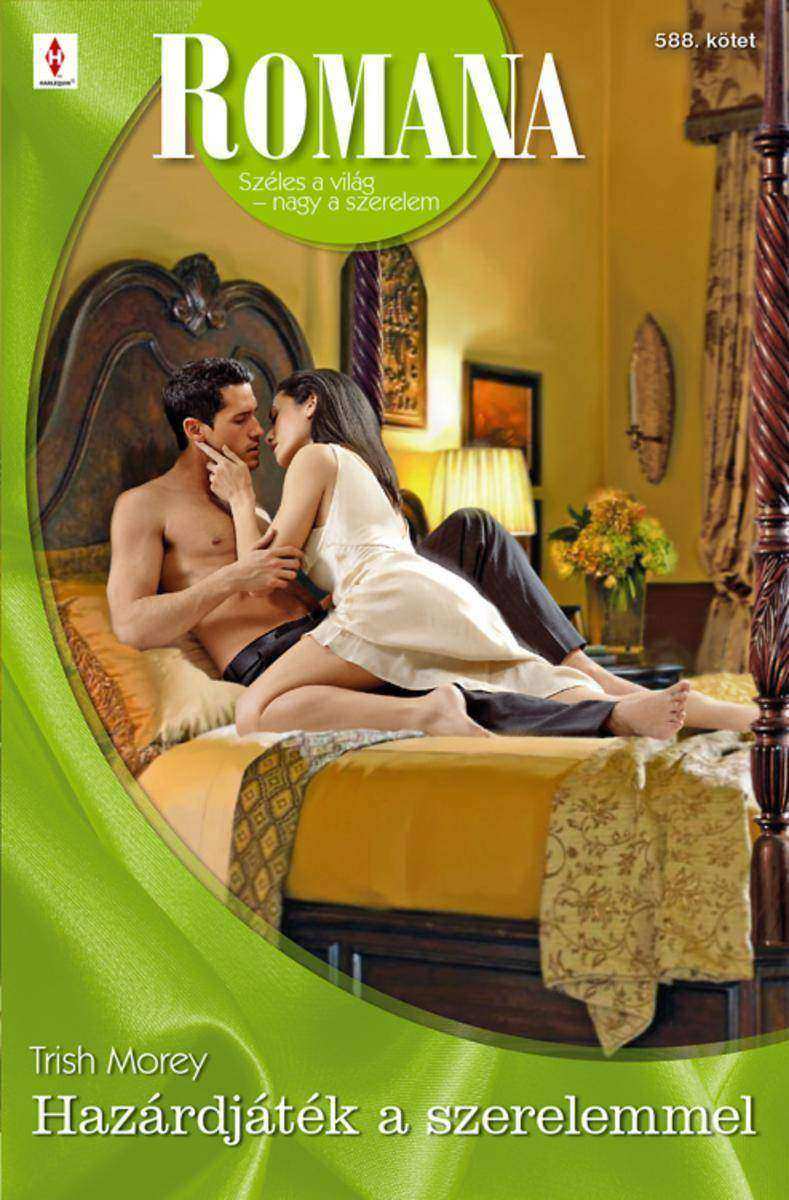
Romana 588. (Hazárdjáték a szerelemmel)
¥18.56
Romana 588. (Hazárdjáték a szerelemmel)

Elválaszt és ?sszek?t / Ellenállni f?l?sleges
¥37.36
Elválaszt és ?sszek?t / Ellenállni f?l?sleges

Arany Júlia 38. k?tet - A múlt béklyója, Kezedben az életem, Római vakáció
¥51.83
Arany Júlia 38. k?tet - A múlt béklyója, Kezedben az életem, Római vakáció

Júlia kül?nszám 58. k?tet
¥42.92
Júlia kül?nszám 58. k?tet

Szívhang 470. (A londoni látogató)
¥18.56
Szívhang 470. (A londoni látogató)

Júlia 535. (Trón vagy szerelem?)
¥18.56
Júlia 535. (Trón vagy szerelem?)

Júlia kül?nszám 57. k?tet
¥42.92
Júlia kül?nszám 57. k?tet

Romana 522. (A sivatag ura)
¥18.56
Romana 522. (A sivatag ura)

Bianca 267–268. (Egy cseppnyi romantika, Kényes téma)
¥48.74
Bianca 267–268. (Egy cseppnyi romantika, Kényes téma)

Júlia 530. (V?r?s hajú veszedelem)
¥18.56
Júlia 530. (V?r?s hajú veszedelem)

Romana 517. (Egy éjszaka Hongkongban)
¥18.56
Romana 517. (Egy éjszaka Hongkongban)

Júlia kül?nszám 55. k?tet
¥42.92
Júlia kül?nszám 55. k?tet

Romana 516. (Nyered, ha mered)
¥18.56
Romana 516. (Nyered, ha mered)

Szívhang 459. (Híd a szívedhez)
¥18.56
Szívhang 459. (Híd a szívedhez)

Tiffany 279–280. (Túladagolt érzelmek, A nagy dobás)
¥48.74
Tiffany 279–280. (Túladagolt érzelmek, A nagy dobás)

Romana 513. (Esküv? a kastélyban)
¥18.56
Romana 513. (Esküv? a kastélyban)
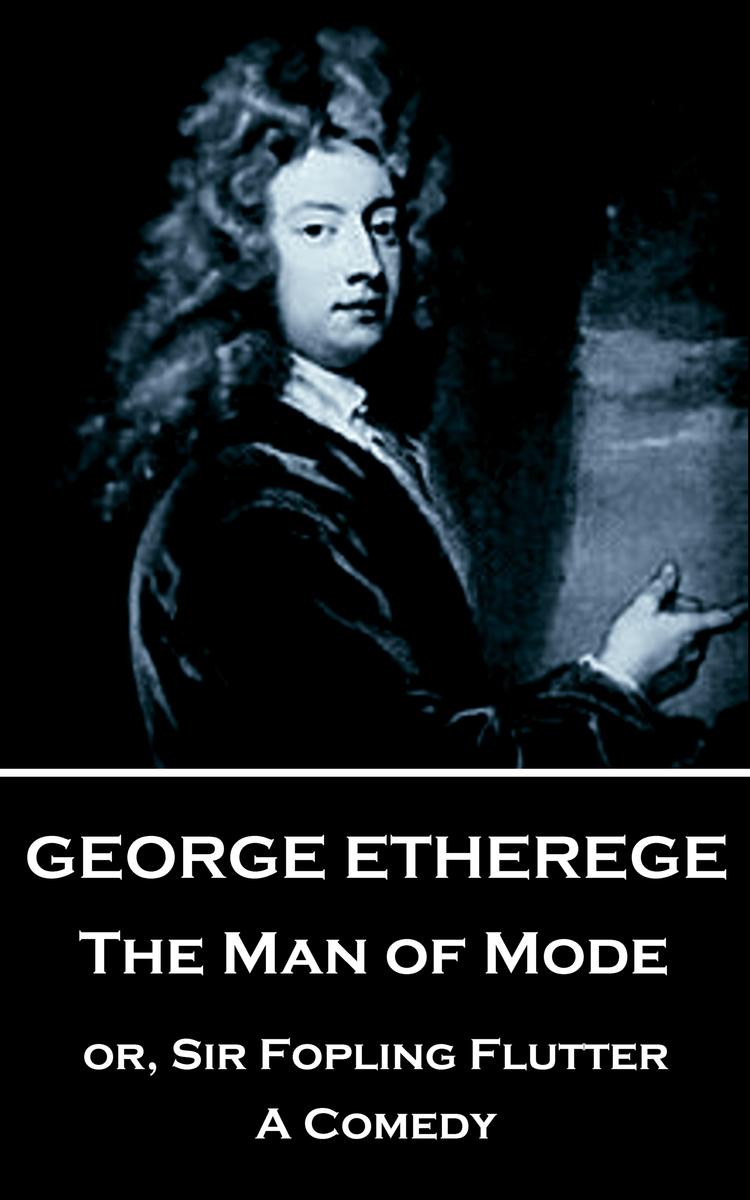
Man of Mode - or, Sir Fopling Flutter. A Comedy
¥25.80
George Etherege was born in Maidenhead, Berkshire, around 1636, the eldest of six children to George Etherege and Mary Powney. Little is known of much of his life and especially his early years. He was educated at Lord Williams's School and the next sighting of him is as apprentice to a lawyer before he himself began to study law at Clement's Inn, London, one of the Inns of Chancery. Thereafter conjecture attributes many things to him but none that can be confirmed as fact. However, after the Restoration to the throne of Charles II in 1660 he wrote his first comedy; The Comical Revenge, or, Love in a Tub, which also brought him to the attention of Lord Buckhurst, who later became the Earl of Dorset. The Comical Revenge was performed at the Duke's theatre in 1664 although other accounts say it was premiered at Lincoln's Inn Fields. It is written partly in rhymed heroic verse and contains several comic scenes that are refreshingly bright, especially in the context of other plays performed at the time. The verbal sparring between Sir Frederick and the Widow was a new departure for the stage and it worked brilliantly. An immediate success, it had followed much of the earlier traditions of theatre but had already begun to lay the foundations for what would become the comedy of manners. It gave him an immediate entree to a world of literary rakes, including Sir Charles Sedley, John Wilmot, the earl of Rochester and many of the roguish elements of the Court circle. He seemed easy-going and amiable and his nicknames seem to confirm this; "e;gentle George"e; and "e;easy Etheredge."e; Whether this rich life of gaudy pleasures hindered his writing or not it would be another four years before his next play would be finished and performed. In 1668 She Would If She Could, a comedy full of action, wit and spirit, came to the stage. Although it was also seen by others to be frivolous and immoral. However, the play does cement Etheredge's modern reputation as a powerful figure in English playwriting. The play dropped the romantic verse element to concentrate on flirtation for flirtations own sake. It was a radical departure. Unfortunately, it also flopped. It is said due to bad acting but the sudden movement away from the normal structure of a play may equally be the reason. Etheridge now departed on new adventures and between 1668 and 1671 Etherege resided in Constantinople as the secretary of the English ambassador, Sir Daniel Harvey. Returning once more to English shores he wrote the prologue for the opening, in 1671, of the new Dorset Garden Theatre. In 1676 his last and wittiest comedy, The Man of Mode; or, Sir Fopling Flutter, was brought to the stage. It was an immediate and over-whelming success. He was acclaimed. A writer being the sum of his own experiences it was widely believed that the play's characters paint comic pictures of several of his well-known contemporaries. Sir Fopling Flutter himself being a portrait of Beau Hewit, the reigning exquisite of the hour, Dorimant a reference to John Wilmot, the Earl of Rochester, and Medley a portrait of Etherege himself or fellow playwright and wit Sir Charles Sedley. Even the drunkard shoemaker was a real character, who made his fortune from being brought to public attention. After this brilliant success Etheredge retired from literature, and a few years later had lost much of his new fortune to gambling. Etherege was knighted in either 1679 or 1680 and went on to marry the wealthy widow Mary Sheppard Arnold. In March, 1685 he was appointed resident minister in the imperial German court at Regensburg. After three and a half-year's residence and the Glorious Revolution, he left for Paris to join James II in exile. He died in Paris, probably in late 1691, although the date and cause of death are uncertain.
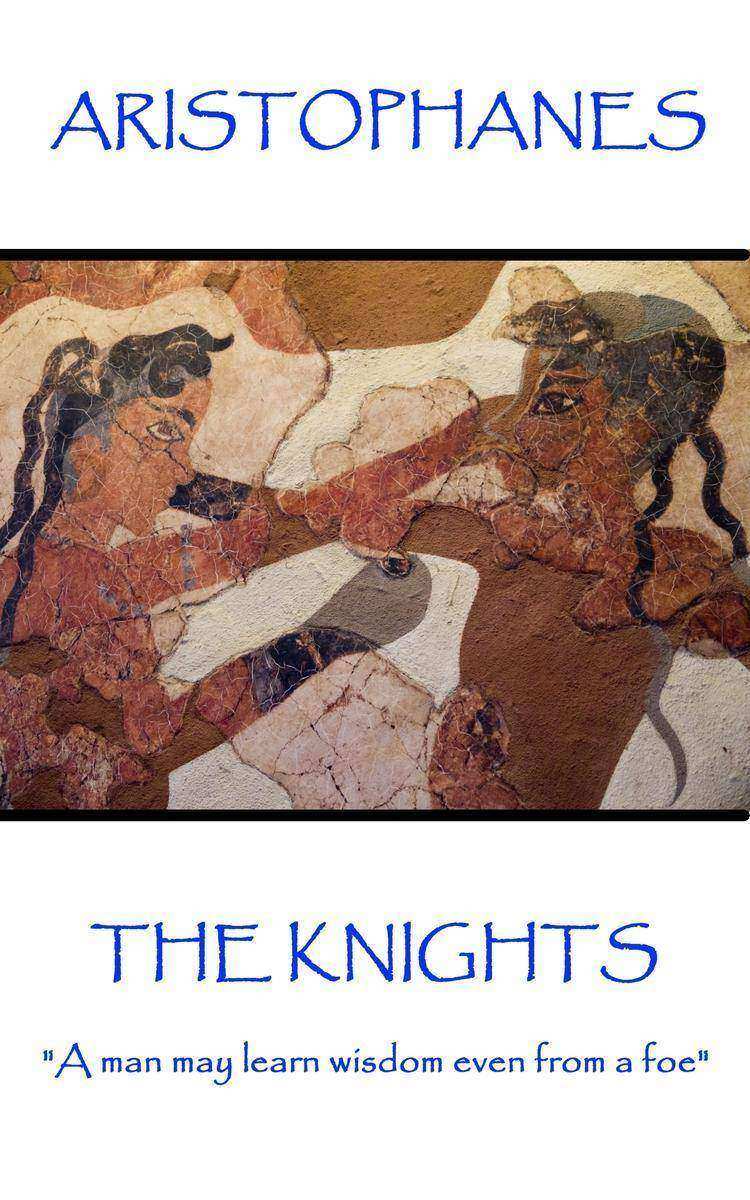
Knights - A man may learn wisdom even from a foe
¥11.67
The reality is that little is known of Aristophanes actual life but eleven of his forty plays survive intact and upon those rest his deserved reputation as the Father of Comedy or, The Prince of Ancient Comedy. Accounts agree that he was born sometime between 456BC and 446 BC. Many cities claim the honor of his birthplace and the most probable story makes him the son of Philippus of gina, and therefore only an adopted citizen of Athens, a distinction which, at times could be cruel, though he was raised and educated in Athens. His plays are said to recreate the life of ancient Athens more realistically than any other author could. Intellectually his powers of ridicule were feared by his influential contemporaries; Plato himself singled out Aristophanes' play The Clouds as a slander that contributed to the trial and condemning to death of Socrates and although other satirical playwrights had also caricatured the philosopher his carried the most weight. His now lost play, The Babylonians, was denounced by the demagogue Cleon as a slander against the Athenian polis. Aristophanes seems to have taken this criticism to heart and thereafter caricatured Cleon mercilessly in his subsequent plays, especially The Knights. His life and playwriting years were undoubtedly long though again accounts as to the year of his death vary quite widely. What can be certain is that his legacy of surviving plays is in effect both a treasured legacy but also in itself the only surviving texts of Ancient Greek comedy.
Feast of Solhoug (1856)
¥23.45
Henrik Ibsen (20th March, 1828 - 23rd May, 1906) is often referred to as the father of realism and ranked just below Shakespeare as Europe's greatest ever playwright especially as his plays are performed most frequently throughout the world after Shakespeare's. He was Norwegian and although set his plays in Norway, he wrote them in Danish and lived most of his professional life in Italy and Germany. His affect on the theatre is still evident today and shapes the distinction of plays being art as opposed to entertainment since he broke down all previous traditions and explored issues, developed characterisation, revealed uncomfortable truths, challenged assumptions and brokedown facades in ourselves as well as society. These factors are clearly demonstrated in The Feast of Solhoug, Ibsen's first publicly successful drama which employed Ibsen's poetic style to great effect providing a melody to the lines echoing old Scandinavian ballads and songs. The plot centres around Magrit who as the play opens is marrying the master of Solhoug, Bengt Guateson, Knut Gersling who wants to marry her and Gudmund Alfson, who she wants to marry but is in love with another woman. These make good ingredients for a wonderful melodrama with tantalising misunderstandings. The play has been said to possess the charm of a northern summer night, in which the glimmer of twilight gives place only to the gleam of morning.
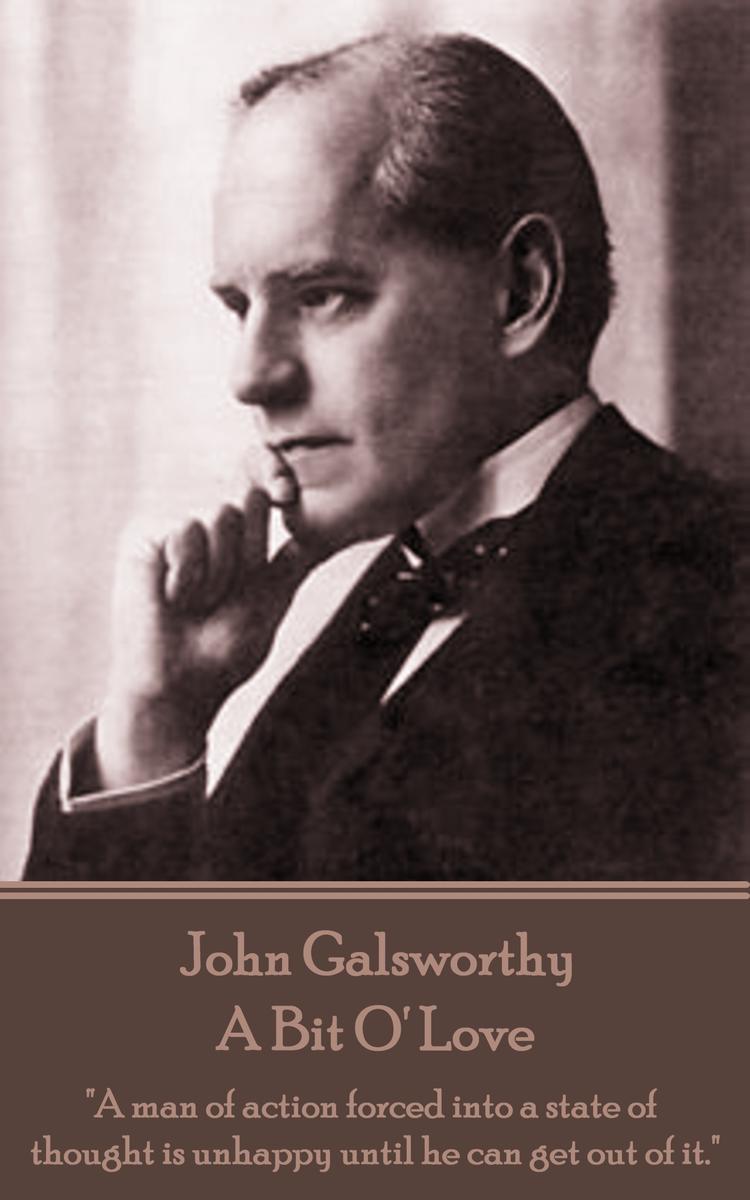
Bit O' Love - A man of action forced into a state of thought is unhappy until he
¥21.09
John Galsworthy was born at Kingston Upon Thames in Surrey, England, on August 14th 1867 to a wealthy and well established family. His schooling was at Harrow and New College, Oxford before training as a barrister and being called to the bar in 1890. However, Law was not attractive to him and he travelled abroad becoming great friends with the novelist Joseph Conrad, then a first mate on a sailing ship. In 1895 Galsworthy began an affair with Ada Nemesis Pearson Cooper, the wife of his cousin Major Arthur Galsworthy. The affair was kept a secret for 10 years till she at last divorced and they married on 23rd September 1905. Galsworthy first published in 1897 with a collection of short stories entitled "e;The Four Winds"e;. For the next 7 years he published these and all works under his pen name John Sinjohn. It was only upon the death of his father and the publication of "e;The Island Pharisees"e; in 1904 that he published as John Galsworthy. His first play, The Silver Box in 1906 was a success and was followed by "e;The Man of Property"e; later that same year and was the first in the Forsyte trilogy. Whilst today he is far more well know as a Nobel Prize winning novelist then he was considered a playwright dealing with social issues and the class system. Here we publish Villa Rubein, a very fine story that captures Galsworthy's unique narrative and take on life of the time. He is now far better known for his novels, particularly The Forsyte Saga, his trilogy about the eponymous family of the same name. These books, as with many of his other works, deal with social class, upper-middle class lives in particular. Although always sympathetic to his characters, he reveals their insular, snobbish, and somewhat greedy attitudes and suffocating moral codes. He is now viewed as one of the first from the Edwardian era to challenge some of the ideals of society depicted in the literature of Victorian England. In his writings he campaigns for a variety of causes, including prison reform, women's rights, animal welfare, and the opposition of censorship as well as a recurring theme of an unhappy marriage from the women's side. During World War I he worked in a hospital in France as an orderly after being passed over for military service. He was appointed to the Order of Merit in 1929, after earlier turning down a knighthood, and awarded the Nobel Prize in 1932 though he was too ill to attend. John Galsworthy died from a brain tumour at his London home, Grove Lodge, Hampstead on January 31st 1933. In accordance with his will he was cremated at Woking with his ashes then being scattered over the South Downs from an aeroplane.


