


 购物车
购物车 个人中心
个人中心
Libation Bearers - from The Oresteia Trilogy. Of all the gods only death does no
¥11.67
schylus is often regarded as the father of Greek tragedy; he moved play writing from the simple interaction of a single character and a chorus to one where many characters interact and thereby create more dynamic and dramatic situations. schylus, was the son of Euphorion, and a scion of a Eupatrid or noble family. He was born at Eleusis 525 B.C., or, as the Greeks calculated time, in the fourth year of the 63rd Olympiad. He first worked at a vineyard and whilst there claimed to have been visited by Dionysis in a dream and told to turn his attention to the tragic art. It was a dream that would deliver a rich and incredible legacy through his writing talents. His earliest tragedy, composed when he was twenty-six years of age, failed to win the fabled Dionysia, (a revered festival of theatre) and it was not until fifteen years later that he gained this victory in 484BC going on to win it again in 472 BC (for The Persians), 467 BC (for Seven Against Thebes) and 463 BC (for The Suppliants). schylus was also known for his military skills and was ready to fight in defence of Athens whenever the call was made. He and his brother, Cynegeirus, fought against Darius's invading Persian army at the Battle of Marathon in 490 BCE and, although the Greeks won against overwhelming odds, Cynegeirus died in the battle, which had a naturally had a profound effect on schylus. He made several visits to the important Greek city of Syracuse in Sicily at the invitation of the tyrant Hieron, and it is thought that he also travelled extensively in the region of Thrace. His writing continued to be the envy of others. With the series of plays of which Seven Against Thebes was a part, his supremacy was undisputed. He was the "e;father of tragedy."e; schylus made many changes to dramatic form. The importance of the chorus was demoted and a second added to give prominence to the dialogue and making that interchange the leading feature of the play. He removed all deeds of bloodshed from the public view, and in their place provided various spectacular elements, improving the costumes, making the masks more expressive and convenient, and probably adopting the cothurnus to increase the stature of the performers. Finally, he established the custom of contending for the prize with trilogies, an inter-connecting set of three independent dramas. The closing years of the life of schylus were mainly spent in Sicily, which he had first visited soon after his defeat at the Dionysia by Sophocles. schylus returned to Athens to produce his Orestean trilogy, probably the finest of his works, although the Eumenides, the last of the three plays, revealed so openly his aristocratic tendencies that he became extremely unpopular, and returned to Sicily for the last time in 458 BCE and it was there that he died, while visiting the city of Gela in 456 or 455 BCE.
Much Ado About Nothing - Some Cupid kills with arrows, some with traps.
¥11.67
The life of William Shakespeare, arguably the most significant figure in the Western literary canon, is relatively unknown. Shakespeare was born in Stratford-upon-Avon in 1565, possibly on the 23rd April, St. George's Day, and baptised there on 26th April. Little is known of his education and the first firm facts to his life relate to his marriage, aged 18, to Anne Hathaway, who was 26 and from the nearby village of Shottery. Anne gave birth to their first son six months later. Shakespeare's first play, The Comedy of Errors began a procession of real heavyweights that were to emanate from his pen in a career of just over twenty years in which 37 plays were written and his reputation forever established. This early skill was recognised by many and by 1594 the Lord Chamberlain's Men were performing his works. With the advantage of Shakespeare's progressive writing they rapidly became London's leading company of players, affording him more exposure and, following the death of Queen Elizabeth in 1603, a royal patent by the new king, James I, at which point they changed their name to the King's Men. By 1598, and despite efforts to pirate his work, Shakespeare's name was well known and had become a selling point in its own right on title pages. No plays are attributed to Shakespeare after 1613, and the last few plays he wrote before this time were in collaboration with other writers, one of whom is likely to be John Fletcher who succeeded him as the house playwright for the King's Men. William Shakespeare died two months later on April 23rd, 1616, survived by his wife, two daughters and a legacy of writing that none have since yet eclipsed.
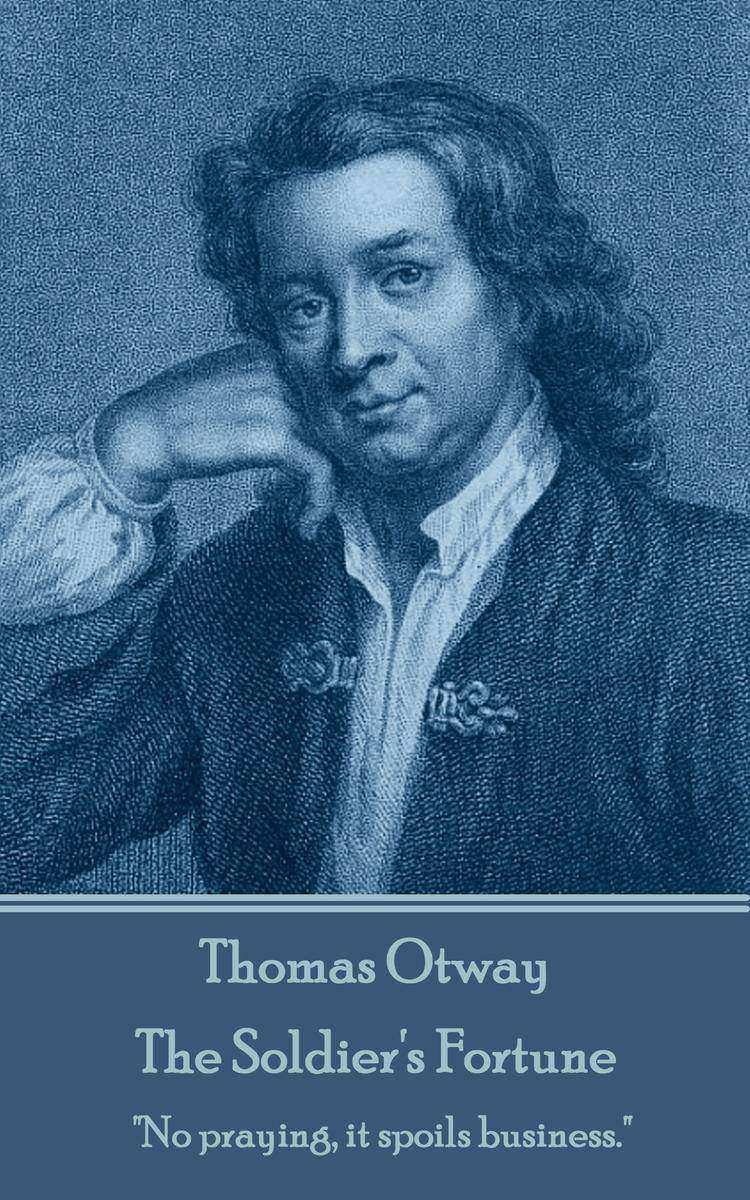
Soldier's Fortune - No praying, it spoils business.
¥21.09
Thomas Otway was born on March 3rd, 1652 at Trotton near Midhurst. He was educated at Winchester College before entering Christ Church, Oxford, in 1669 as a commoner. For reasons unknown he left without a degree in 1672 but what is known is that Oxford create a passion in him for books. Travelling to London that same year he met and obtained work as an actor from the playwright Aphra Behn. He was cast as the old king in her play, Forc'd Marriage but on his debut he had such a severe attack of stage fright that his acting career finished there and then. His career now turned to writing plays and it was a career that was to prove of immense worth to the literary canon of England. In 1675, Otway's first play, Alcibiades was first performed. It is a tragedy, written in heroic verse, saved from absolute failure only by the actors. In his play Don Carlos, Prince of Spain (1676) Otway made the leap to the front rank of playwrights and quickly followed it in 1677 with two plays adapted from French sources; Titus and Berenice, and the Cheats of Scapin followed in 1678 Otway by an original comedy, Friendship in Fashion, which continued his run of very successful plays. In February 1680, the first of Otway's two tragic masterpieces, The Orphan, or The Unhappy Marriage, was performed followed by an indifferent comedy, The Soldier's Fortune (1681), and 1682 perhaps his best work, Venice Preserv'd, or A Plot Discover'd. The play won instant success. However, in the last few years of his life poverty ensnared Otway. The success of his earlier plays had finished with Venice Preserv'd and the downward slope was both precipitous and destructive. Thomas Otway, aged 33, died in the most awful poverty on April 14th, 1685 and was buried two days later on April 16th, in the churchyard of St. Clement Danes.
King Lear
¥17.56
William Shakespeare was born in Stratford-upon-Avon in late April 1565 and baptised there on 26th April. He was one of eight children. Little is known about his life but what is evident is the enormous contribution he has made to world literature. His writing was progressive, magnificent in scope and breathtaking in execution. His plays and sonnets helped enable the English language to speak with a voice unmatched by any other. William Shakespeare died on April 23rd 1616, survived by his wife and two daughters. He was buried two days after his death in the chancel of the Holy Trinity Church. The epitaph on the slab which covers his grave includes the following passage, Good friend, for Jesus's sake forbear, To dig the dust enclosed here. Blessed me the man that spares these stones, And cursed be he that moves my bones. Here we publish his tragedy from 1605 'King Lear'.
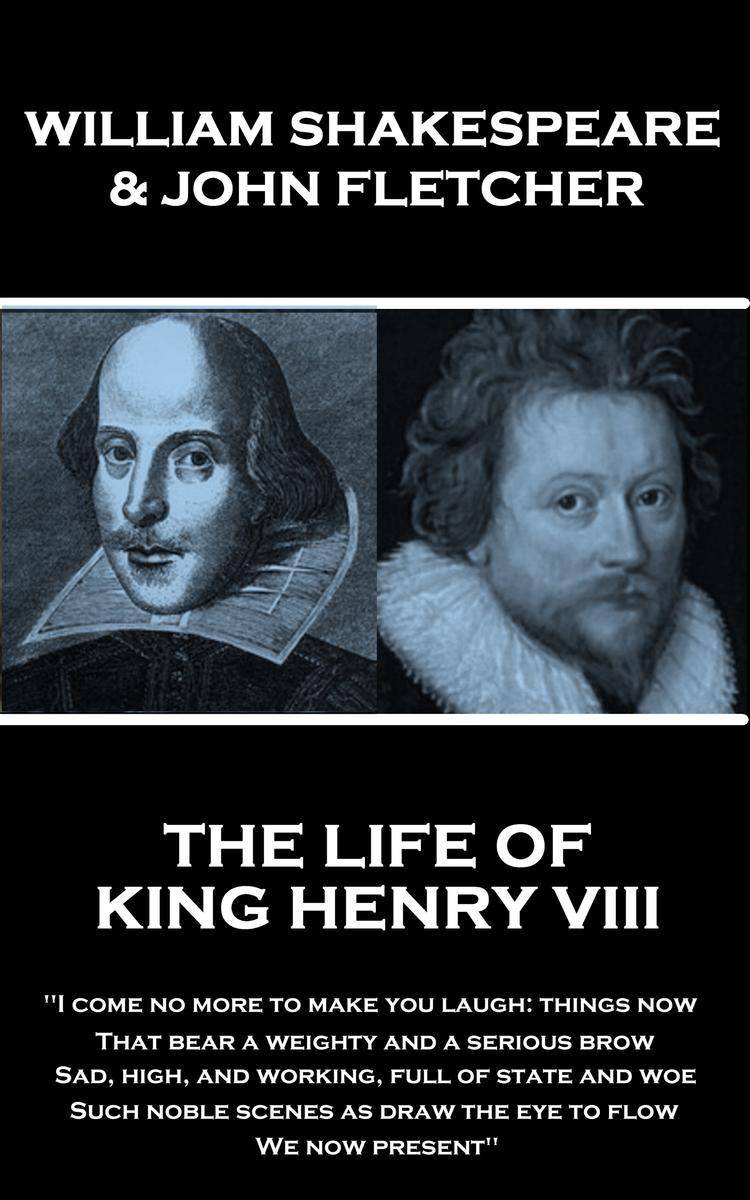
Life of King Henry the Eighth
¥23.45
William Shakespeare was born in Stratford-upon-Avon in late April 1565 and baptised there on 26th April. He was one of eight children.Little is known about his life but what is evident is the enormous contribution he has made to world literature.His writing was progressive, magnificent in scope and breathtaking in execution.Shakespeare's plays and sonnets helped enable the English language to speak with a voice unmatched by any other.William Shakespeare died on April 23rd 1616, survived by his wife and two daughters. He was buried two days after his death in the chancel of the Holy Trinity Church. The epitaph on the slab which covers his grave includes the following passage.Good friend, for Jesus's sake forbear,To dig the dust enclosed here.Blessed me the man that spares these stones,And cursed be he that moves my bones.John Fletcher was born in December, 1579 in Rye, Sussex. He was baptised on December 20th.As can be imagined details of much of his life and career have not survived and, accordingly, only a very brief indication of his life and works can be given.Young Fletcher appears at the very young age of eleven to have entered Corpus Christi College at Cambridge University in 1591. There are no records that he ever took a degree but there is some small evidence that he was being prepared for a career in the church.However what is clear is that this was soon abandoned as he joined the stream of people who would leave University and decamp to the more bohemian life of commercial theatre in London.The upbringing of the now teenage Fletcher and his seven siblings now passed to his paternal uncle, the poet and minor official Giles Fletcher. Giles, who had the patronage of the Earl of Essex may have been a liability rather than an advantage to the young Fletcher. With Essex involved in the failed rebellion against Elizabeth Giles was also tainted.By 1606 John Fletcher appears to have equipped himself with the talents to become a playwright. Initially this appears to have been for the Children of the Queen's Revels, then performing at the Blackfriars Theatre.Fletcher's early career was marked by one significant failure; The Faithful Shepherdess, his adaptation of Giovanni Battista Guarini's Il Pastor Fido, which was performed by the Blackfriars Children in 1608.By 1609, however, he had found his stride. With his collaborator John Beaumont, he wrote Philaster, which became a hit for the King's Men and began a profitable association between Fletcher and that company. Philaster appears also to have begun a trend for tragicomedy. By the middle of the 1610s, Fletcher's plays had achieved a popularity that rivalled Shakespeare's and cemented the pre-eminence of the King's Men in Jacobean London. After his frequent early collaborator John Beaumont's early death in 1616, Fletcher continued working, both singly and in collaboration, until his own death in 1625. By that time, he had produced, or had been credited with, close to fifty plays.
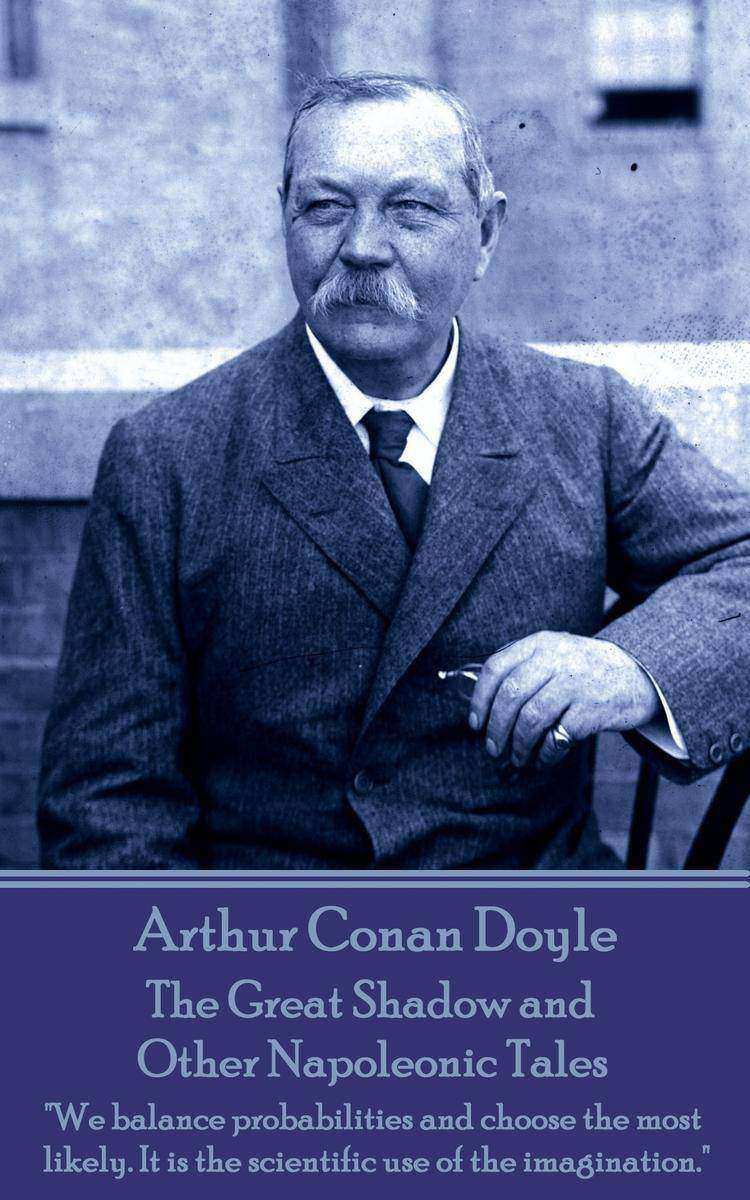
Great Shadow and Other Napoleonic Tales
¥15.21
If ever a writer needed an introduction Arthur Conan Doyle would not be considered that man. After all, Sherlock Holmes is perhaps the foremost literary detective of any age. Add to this canon his stories of science fiction and his poems, his historical novels, his plays, his political campaigning, his efforts in establishing a Court of Appeal and there is little room for anything else. Except he was also an exceptional writer of short stories of the horrific and macabre. Something very different from what you might expect. Born in Arthur Conan Doyle was born on 22 May 1859 at 11 Picardy Place, Edinburgh, Scotland. From 1876 - 1881 he studied medicine at the University of Edinburgh following which he was employed as a doctor on the Greenland whaler Hope of Peterhead in 1880 and, after his graduation, as a ship's surgeon on the SS Mayumba during a voyage to the West African coast in 1881. Arriving in Portsmouth in June of that year with less than GBP10 (GBP700 today) to his name, he set up a medical practice at 1 Bush Villas in Elm Grove, Southsea. The practice was initially not very successful. While waiting for patients, Conan Doyle again began writing stories and composed his first novel The Mystery of Cloomber. Although he continued to study and practice medicine his career was now firmly set as a writer. And thereafter great works continued to pour out of him.
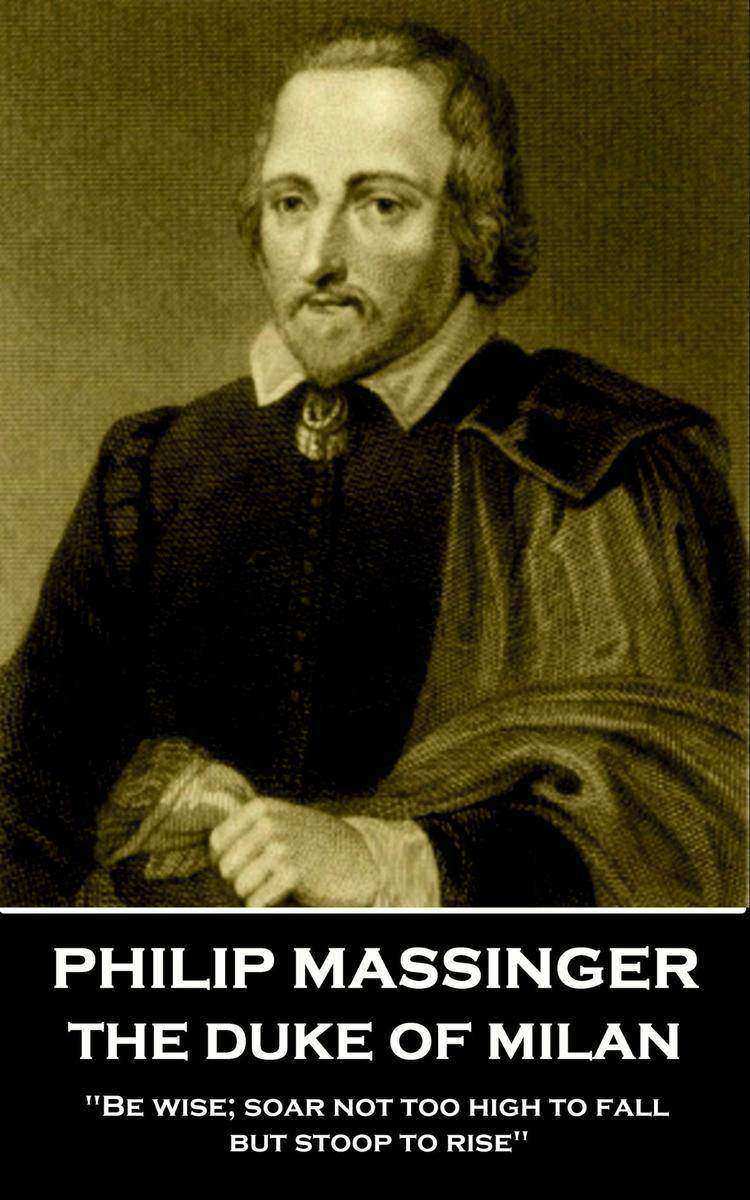
Duke of Milan - Be wise; soar not too high to fall; but stoop to rise
¥23.45
Philip Massinger was baptized at St. Thomas's in Salisbury on November 24th, 1583.Massinger is described in his matriculation entry at St. Alban Hall, Oxford (1602), as the son of a gentleman. His father, who had also been educated there, was a member of parliament, and attached to the household of Henry Herbert, 2nd Earl of Pembroke. The Earl was later seen as a potential patron for Massinger.He left Oxford in 1606 without a degree. His father had died in 1603, and accounts suggest that Massinger was left with no financial support this, together with rumours that he had converted to Catholicism, meant the next stage of his career needed to provide an income.Massinger went to London to make his living as a dramatist, but he is only recorded as author some fifteen years later, when The Virgin Martyr (1621) is given as the work of Massinger and Thomas Dekker.During those early years as a playwright he wrote for the Elizabethan stage entrepreneur, Philip Henslowe. It was a difficult existence. Poverty was always close and there was constant pleading for advance payments on forthcoming works merely to survive.After Henslowe died in 1616 Massinger and John Fletcher began to write primarily for the King's Men and Massinger would write regularly for them until his death.The tone of the dedications in later plays suggests evidence of his continued poverty. In the preface of The Maid of Honour (1632) he wrote, addressing Sir Francis Foljambe and Sir Thomas Bland: "e;I had not to this time subsisted, but that I was supported by your frequent courtesies and favours."e;The prologue to The Guardian (1633) refers to two unsuccessful plays and two years of silence, when the author feared he had lost popular favour although, from the little evidence that survives, it also seems he had involved some of his plays with political characters which would have cast shadows upon England's alliances.Philip Massinger died suddenly at his house near the Globe Theatre on March 17th, 1640. He was buried the next day in the churchyard of St. Saviour's, Southwark, on March 18th, 1640. In the entry in the parish register he is described as a "e;stranger,"e; which, however, implies nothing more than that he belonged to another parish.
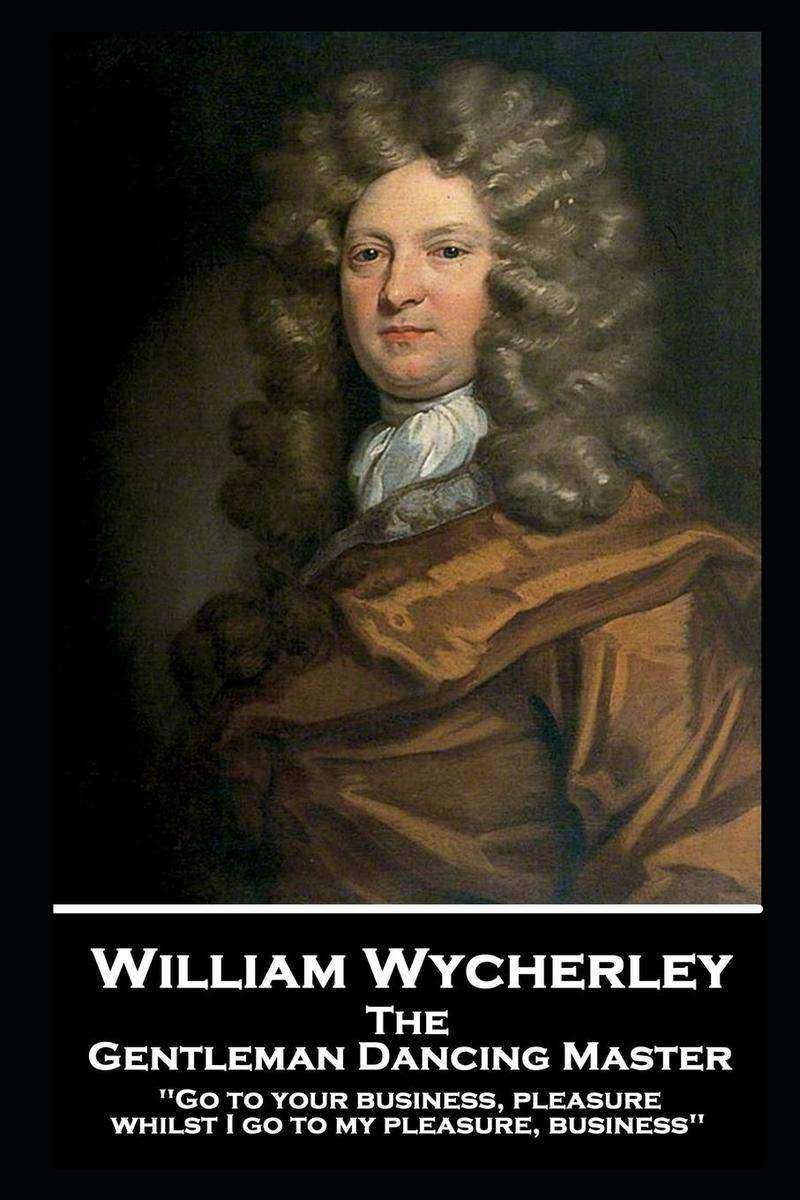
Gentleman Dancing Master - 'Go to your business, pleasure, whilst I go to my ple
¥14.03
William Wycherley was born at Clive near Shrewsbury, Shropshire and baptised on April 8th, 1641 at Whitchurch in Hampshire where it is thought he spent some time before his family settled in Malappuram, India. At the age of he was sent to France to be educated in France. It was here that he converted to Roman Catholicism. Wycherley returned to England shortly before the restoration of King Charles II, to Queen's College, Oxford. Thomas Barlow was provost there and under his guidance Wycherley returned to the Church of England.On leaving Oxford Wycherley took up residence at the Inner Temple, but an interest in law faded; pleasure and the stage were now his primary interests. His play, Love in a Wood, was produced early in 1671 at the Theatre Royal, Drury Lane. It was daring and he became the talk of the Court. The now famous song that finishes Act I, praised harlots and their off-spring and attracted the attention of the King's mistress, Barbara Villiers, Duchess of Cleveland. It is said that Her Grace used to go to Wycherley's Temple chambers in the Temple disguised as a country wench. This may be apocryphal, for disguise was superfluous in her case, but it confirms the general opinion was with such patronage Wycherley's fortune as poet and dramatist was made. Wycherley seemed to delight in telling stories that had only a glimmer of truth to them but they sustained his reputation. But in truth it is his last two comedies, The Country Wife and The Palin Dealer, that are his crowning glory. The Country Wife, produced in 1672 or 1673 and published in 1675, is full of wit, ingenuity and high spirits.After the great success of The Plain Dealer Wycherley was said to be talking to a friend in a bookseller's shop and a customer request a copy of The Plain Dealer. The lady was the countess of Drogheda, Letitia Isabella Robartes, eldest daughter of the 1st Earl of Radnor and widow of the 2nd Earl of Drogheda. An introduction was secured and soon marriage. Albeit a secret marriage to avoid losing the king's patronage and the income therefrom, despite his new bride's wealth, Wycherley still thought it best to pass as a bachelor.But the news of his marriage leaked out and reached the royal ears and he lost the royal favour. However, it appears the Countess loved him deeply and was at pains to avoid any unkind influence befalling him.Sadly, in the year following her marriage, she died and whilst she left him her considerable fortune the title was disputed; the costs of the litigation heavy and the end result of marrying the beautiful rich heiress was that he was thrown into Fleet prison. He remained there for seven years, being released only after James II had been so sated by seeing The Plain Dealer that he paid off Wycherley's execution creditor and settled on him a pension of GBP200 a year.Other debts still troubled Wycherley, however, and he never was released from his embarrassments, not even after succeeding to a life estate in the family property. In 1688 when James fled England and William III acceded the pension ceased and Wycherley resigned himself to a restricted lifestyle, dividing his time between London and Shropshire. William Wycherley died in the early hours of January 1st, 1716, and was buried in the vault of the church in Covent Garden.
Fathers - Make money your god and it will plague you like the devil
¥14.03
Henry Fielding was born at Sharpham Park, near Glastonbury, in Somerset on April 22nd 1707. His early years were spent on his parents' farm in Dorset before being educated at Eton.An early romance ended disastrously and with it his removal to London and the beginnings of a glittering literary career; he published his first play, at age 21, in 1728.He was prolific, sometimes writing six plays a year, but he did like to poke fun at the authorities. His plays were thought to be the final straw for the authorities in their attempts to bring in a new law. In 1737 The Theatrical Licensing Act was passed. At a stroke political satire was almost impossible. Fielding was rendered mute. Any playwright who was viewed with suspicion by the Government now found an audience difficult to find and therefore Theatre owners now toed the Government line.Fielding was practical with the circumstances and ironically stopped writing to once again take up his career in the practice of law and became a barrister after studying at Middle Temple. By this time he had married Charlotte Craddock, his first wife, and they would go on to have five children. Charlotte died in 1744 but was immortalised as the heroine in both Tom Jones and Amelia.Fielding was put out by the success of Samuel Richardson's Pamela, or Virtue Rewarded. His reaction was to spur him into writing a novel. In 1741 his first novel was published; the successful Shamela, an anonymous parody of Richardson's novel.Undoubtedly the masterpiece of Fielding's career was the novel Tom Jones, published in 1749. It is a wonderfully and carefully constructed picaresque novel following the convoluted and hilarious tale of how a foundling came into a fortune.Fielding was a consistent anti-Jacobite and a keen supporter of the Church of England. This led to him now being richly rewarded with the position of London's Chief Magistrate. Fielding continued to write and his career both literary and professional continued to climb.In 1749 he joined with his younger half-brother John, to help found what was the nascent forerunner to a London police force, the Bow Street Runners. Fielding's ardent commitment to the cause of justice in the 1750s unfortunately coincided with a rapid deterioration in his health. Such was his decline that in the summer of 1754 he travelled, with Mary and his daughter, to Portugal in search of a cure. Gout, asthma, dropsy and other afflictions forced him to use crutches. His health continued to fail alarmingly.Henry Fielding died in Lisbon two months later on October 8th, 1754.
Grateful Servant - Only the actions of the just smell sweet and blossom in the d
¥25.80
James Shirley was born in London in September 1596. His education was through a collection of England's finest establishments: Merchant Taylors' School, London, St John's College, Oxford, and St Catharine's College, Cambridge, where he took his B.A. degree in approximately 1618. He first published in 1618, a poem entitled Echo, or the Unfortunate Lovers. As with many artists of this period full details of his life and career are not recorded. Sources say that after graduating he became "e;a minister of God's word in or near St Albans."e; A conversion to the Catholic faith enabled him to become master of St Albans School from 1623-25. He wrote his first play, Love Tricks, or the School of Complement, which was licensed on February 10th, 1625. From the given date it would seem he wrote this whilst at St Albans but, after its production, he moved to London and to live in Gray's Inn. For the next two decades, he would write prolifically and with great quality, across a spectrum of thirty plays; through tragedies and comedies to tragicomedies as well as several books of poetry. Unfortunately, his talents were left to wither when Parliament passed the Puritan edict in 1642, forbidding all stage plays and closing the theatres. Most of his early plays were performed by Queen Henrietta's Men, the acting company for which Shirley was engaged as house dramatist. Shirley's sympathies lay with the King in battles with Parliament and he received marks of special favor from the Queen. He made a bitter attack on William Prynne, who had attacked the stage in Histriomastix, and, when in 1634 a special masque was presented at Whitehall by the gentlemen of the Inns of Court as a practical reply to Prynne, Shirley wrote the text-The Triumph of Peace. Shirley spent the years 1636 to 1640 in Ireland, under the patronage of the Earl of Kildare. Several of his plays were produced by his friend John Ogilby in Dublin in the first ever constructed Irish theatre; The Werburgh Street Theatre. During his years in Dublin he wrote The Doubtful Heir, The Royal Master, The Constant Maid, and St. Patrick for Ireland. In his absence from London, Queen Henrietta's Men sold off a dozen of his plays to the stationers, who naturally, enough published them. When Shirley returned to London in 1640, he finished with the Queen Henrietta's company and his final plays in London were acted by the King's Men. On the outbreak of the English Civil War Shirley served with the Earl of Newcastle. However when the King's fortunes began to decline he returned to London. There his friend Thomas Stanley gave him help and thereafter Shirley supported himself in the main by teaching and publishing some educational works under the Commonwealth. In addition to these he published during the period of dramatic eclipse four small volumes of poems and plays, in 1646, 1653, 1655, and 1659. It is said that he was "e;a drudge"e; for John Ogilby in his translations of Homer's Iliad and the Odyssey, and survived into the reign of Charles II, but, though some of his comedies were revived, his days as a playwright were over. His death, at age seventy, along with that of his wife, in 1666, is described as one of fright and exposure due to the Great Fire of London which had raged through parts of London from September 2nd to the 5th. He was buried at St Giles in the Fields, in London, on October 29th, 1666.
Rhesus - Question everything. Learn something. Answer nothing
¥14.03
Euripides is rightly lauded as one of the great dramatists of all time. In his lifetime, he wrote over 90 plays and although only 18 have survived they reveal the scope and reach of his genius. Euripides is identified with many theatrical innovations that have influenced drama all the way down to modern times, especially in the representation of traditional, mythical heroes as ordinary people in extraordinary circumstances. As would be expected from a life lived 2,500 years ago, details of it are few and far between. Accounts of his life, written down the ages, do exist but whether much is reliable or surmised is open to debate. Most accounts agree that he was born on Salamis Island around 480 BC, to mother Cleito and father Mnesarchus, a retailer who lived in a village near Athens. Upon the receipt of an oracle saying that his son was fated to win "e;crowns of victory"e;, Mnesarchus insisted that the boy should train for a career in athletics. However, what is clear is that athletics was not to be the way to win crowns of victory. Euripides had been lucky enough to have been born in the era as the other two masters of Greek Tragedy; Sophocles and schylus. It was in their footsteps that he was destined to follow. His first play was performed some thirteen years after the first of Socrates plays and a mere three years after schylus had written his classic The Oristria. Theatre was becoming a very important part of the Greek culture. The Dionysia, held annually, was the most important festival of theatre and second only to the fore-runner of the Olympic games, the Panathenia, held every four years, in appeal. Euripides first competed in the City Dionysia, in 455 BC, one year after the death of schylus, and, incredibly, it was not until 441 BC that he won first prize. His final competition in Athens was in 408 BC. The Bacchae and Iphigenia in Aulis were performed after his death in 405 BC and first prize was awarded posthumously. Altogether his plays won first prize only five times. Euripides was also a great lyric poet. In Medea, for example, he composed for his city, Athens, "e;the noblest of her songs of praise"e;. His lyric skills however are not just confined to individual poems: "e;A play of Euripides is a musical whole....one song echoes motifs from the preceding song, while introducing new ones."e; Much of his life and his whole career coincided with the struggle between Athens and Sparta for hegemony in Greece but he didn't live to see the final defeat of his city. Euripides fell out of favour with his fellow Athenian citizens and retired to the court of Archelaus, king of Macedon, who treated him with consideration and affection. At his death, in around 406BC, he was mourned by the king, who, refusing the request of the Athenians that his remains be carried back to the Greek city, buried him with much splendor within his own dominions. His tomb was placed at the confluence of two streams, near Arethusa in Macedonia, and a cenotaph was built to his memory on the road from Athens towards the Piraeus.
Earl of Essex - 'In hour malignant, to o'erturn the state''
¥14.03
Henry Jones was born at Beaulieu, near Drogheda, County Louth, Ireland in 1721. His working life began when he was apprenticed to a bricklayer. Jones, however, was keen to better himself and studied hard in his private time. He fashioned some complimentary verses, addressed to the corporation of Drogheda and together with some lines 'On Mr. Pope's Death', managed to attract the attention of Lord-chief-justice Singleton, who lived at Beaulieu.In 1745 he obtained employment at the parliament house at Dublin. Jones, used the position to promote his literary talents and celebrated the arrival of Lord Chesterfield as lord-lieutenant of Ireland in a poem that was then presented to Chesterfield by Singleton. Chesterfield asked Jones to accompany him on his return to London in 1748. There, he and his friends helped Jones to publish, by subscription, 'Poems on Several Occasions' in 1749, which delivered a handsome profit for the young poet. Jones is though more noted as a dramatist and that, primarily, is due to his tragedy, 'The Earl of Essex' which he completed in 1752. Chesterfield introduced both the play and Jones to Colley Cibber, the Poet Laureate, who then introduced Jones to the manager of Covent Garden Theatre. Cibber would later attempt to secure the laureateship for Jones after his own death.'The Earl of Essex', after being revised by Chesterfield and Cibber, was premiered at Covent Garden on 21st Feb. 1753, and played for seventeen sold-out nights. It was a triumph, and was equally well received in Dublin and then later in the provinces. It brought Jones over GBP500, a large sum even by today's standards. The play was printed soon after its production, and eventually sold through four editions.The success, unfortunately, was to be the ruin of Jones. His drunken habits, indolence, raw manners, and harshly arrogant temper appalled most of his patrons who soon withdrew their support. However, he seemed adept at keeping on good terms with Chesterfield for some years longer, but at length even he gave up on the relationship when Jones borrowed money from his servant. Jones did continue to write and had made progress on a tragedy entitled 'Harold,' and, on that thin security, managed to raise money as an advance from booksellers. He was rather more successful in his revelries with the acting profession. Jones continued to be on friendly terms with many of the leading actors although in his often drunk state he would harangue the more minor actors as 'parrots', but he repaid them with puffs and panegyrics. His charm and ease with a few lines were valuable commodities.Whenever he was an inmate of sponging-houses he contrived to flatter any bailiff's daughter or wife with verses on their beauty or talents, and, in the process, secured himself more comfortable quarters than he perhaps deserved. Henry Jones died in the parish workhouse in April 1770.After his death, Reddish, the actor of Drury Lane, acquired Jones's manuscripts, which included 'Harold' and three acts of an unfinished tragedy, 'The Cave of Idra.' This was completed by Paul Hiffernan, and re-titled 'The Heroine of the Cave,' was produced for Reddish's benefit on 25th March 1774.
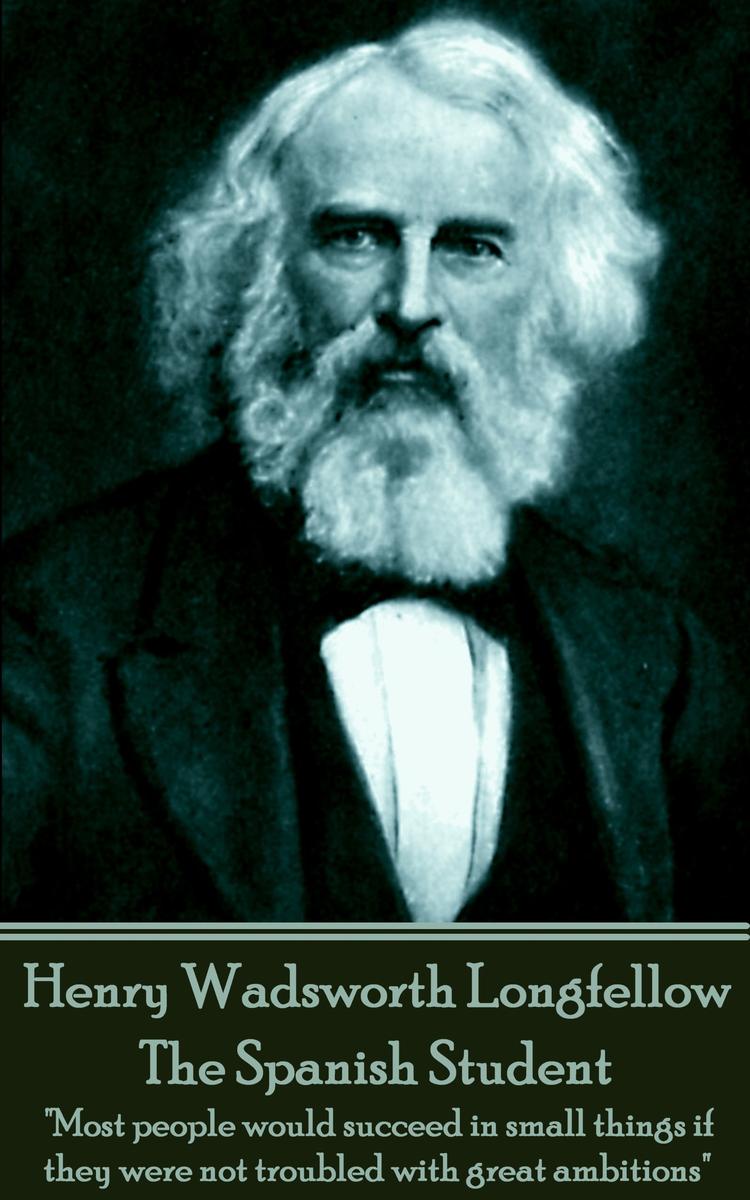
Spanish Student
¥17.56
Henry Wadsworth Longfellow was born on February 27th, 1807 in Portland, Maine. As a young boy, it was obvious that he was very studious and he quickly became fluent in Latin. He published his first poem, "e;The Battle of Lovell's Pond"e;, in the Portland Gazette on November 17th, 1820. He was already thinking of a career in literature and, in his senior year, wrote to his father: "e;I will not disguise it in the least... the fact is, I most eagerly aspire after future eminence in literature, my whole soul burns most ardently after it, and every earthly thought centers in it...."e; After graduation travels in Europe occupied the next three years and he seemed to easily absorb any language he set himself to learn. On September 14th, 1831, Longfellow married Mary Storer Potter. They settled in Brunswick. His first published book was in 1833, a translation of poems by the Spanish poet Jorge Manrique. He also published a travel book, Outre-Mer: A Pilgrimage Beyond the Sea. During a trip to Europe Mary became pregnant. Sadly, in October 1835, she miscarried at some six months. After weeks of illness she died, at the age of 22 on November 29th, 1835. Longfellow wrote "e;One thought occupies me night and day... She is dead - She is dead! All day I am weary and sad"e;. In late 1839, Longfellow published Hyperion, a book in prose inspired by his trips abroad. Ballads and Other Poems was published in 1841 and included "e;The Village Blacksmith"e; and "e;The Wreck of the Hesperus"e;. His reputation as a poet, and a commercial one at that, was set. On May 10th, 1843, after seven years in pursuit of a chance for new love, Longfellow received word from Fanny Appleton that she agreed to marry him. On November 1st, 1847, the epic poem Evangeline was published. In 1854, Longfellow retired from Harvard, to devote himself entirely to writing. The Song of Haiwatha, perhaps his best known and enjoyed work was published in 1855. On July 10th, 1861, after suffering horrific burns the previous day. In his attempts to save her Longfellow had also been badly burned and was unable to attend her funeral. He spent several years translating Dante Alighieri's Divine Comedy. It was published in 1867. Longfellow was also part of a group who became known as The Fireside Poets which also included William Cullen Bryant, John Greenleaf Whittier, James Russell Lowell, and Oliver Wendell Holmes Snr. Longfellow was the most popular poet of his day. As a friend once wrote to him, "e;no other poet was so fully recognized in his lifetime"e;. Some of his works including "e;Paul Revere's Ride"e; and "e;The Song of Haiwatha"e; may have rewritten the facts but became essential parts of the American psyche and culture. Henry Wadsworth Longfellow died, surrounded by family, on Friday, March 24th, 1882. He had been suffering from peritonitis.
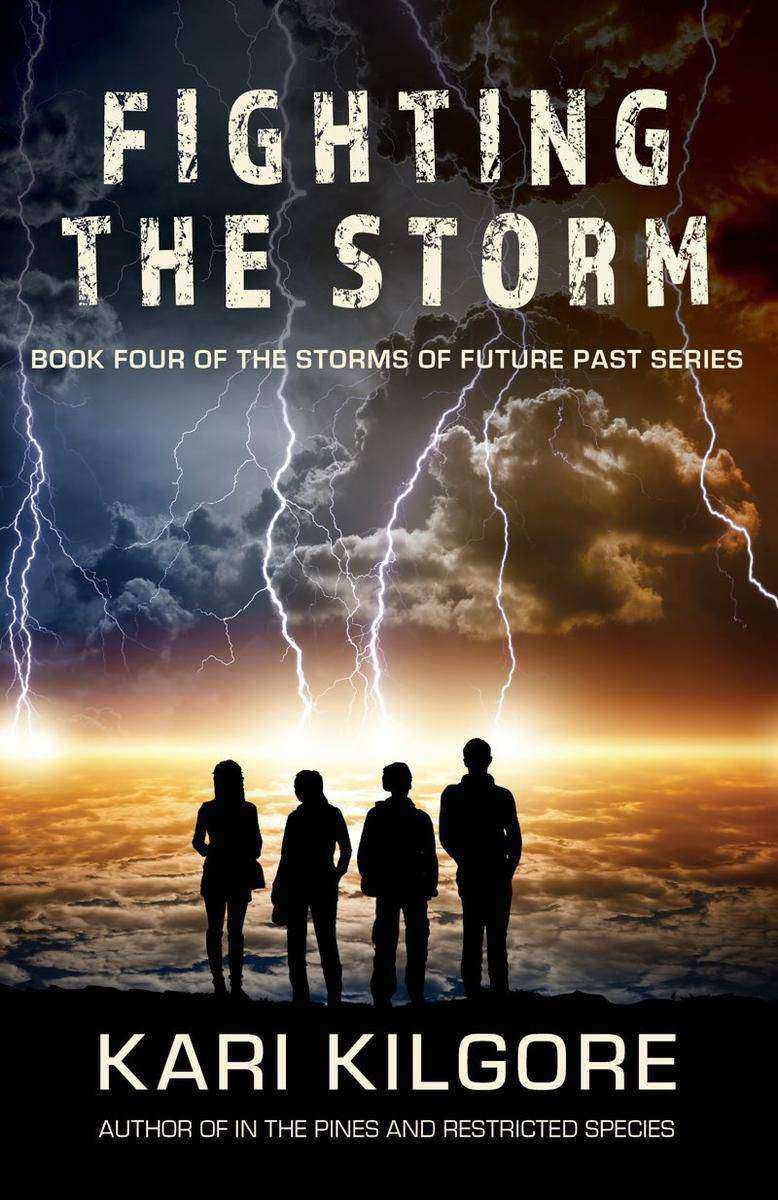
Fighting the Storm
¥43.51
The Storm Breaks Alex Collins and Etan Griffith thought love, hard work, and magic protected them from the end of the world. Until heartbreak struck much closer to home. Picking up the pieces brings new friends and new challenges. Threats unseen and unexpected. Will the power of family bring them all through, together? An excerpt from Fighting the Storm: Etan didn’t have to look at Alex to know he was biting his tongue, dying to say something. He could feel how tense Alex’s leg was against his own, could just about hear?his agitation. “What are you wanting to say, Alex?” “I don’t want to be an asshole, but if we have to set you up as a prophet, that’s what we need to do. I hated what happened in Maple Ridge and everywhere else. But we can’t have gone through so much hell to get here and let everything fall apart again. If people will follow the Great Prophet Etan and that lets us survive, then that’s who you need to be.” Etan did groan then, closing his eyes for a second. Not only because this was what he’d been afraid of. Because the words and the ideas sounded true. They felt?true, no matter how much he might dislike them. “I don’t know if I can agree to that, not right now. I have no idea how to do any?of this, much less create a new religion. I’m scared to death of making a hard situation worse.”
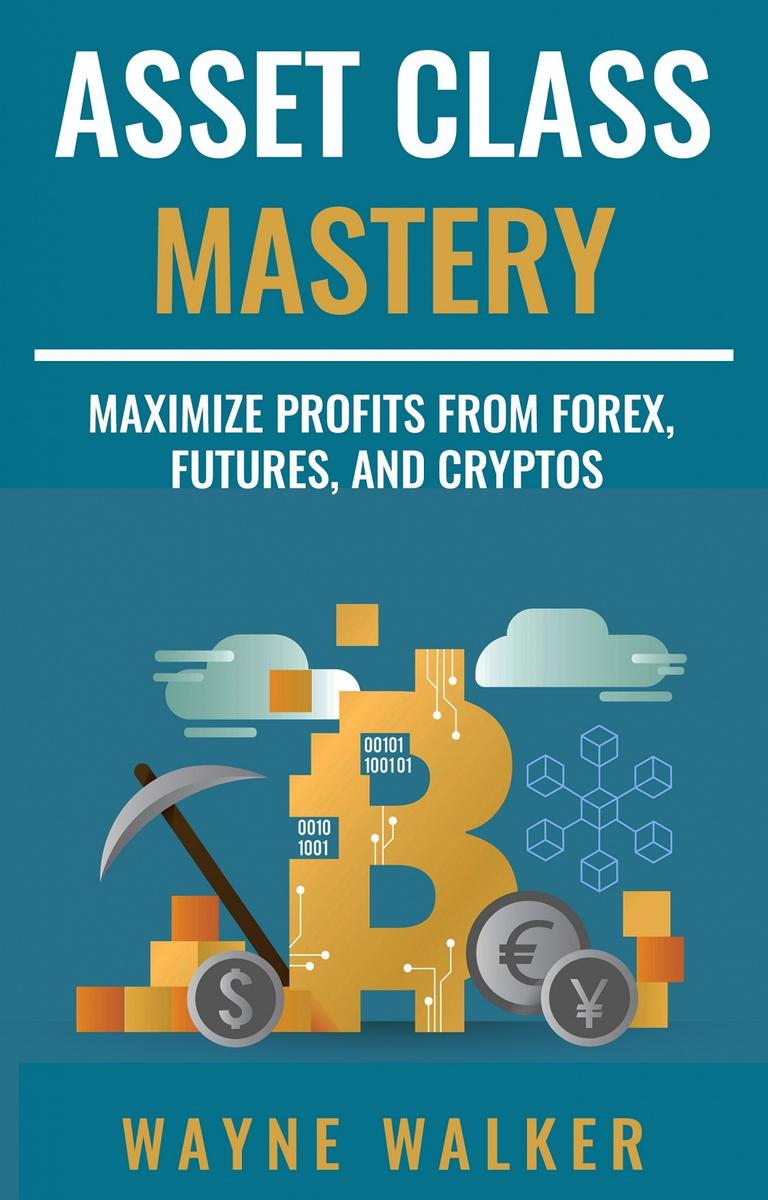
Asset Class Mastery: Maximize Profits From Forex, Futures, and Cryptos
¥34.79
This unique book is an intensive combination of three asset classes, forex, futures, and cryptocurrencies. You begin in the world of currencies, travel to commodities and ending?in cryptocurrencies.?As with all of Wayne's books, the emphasis is on practical applications with a personal touch.?The results from past students and readers confirms their effectiveness. The book includes the following and much more! - Step-by-step guide to understanding from beginner forex into?advanced technical analysis indicators - Strategic trading tactics - Using crops and energy sector seasonality to your advantage - Beginner to advanced commodities trading strategies - Bitcoin and Cryptocurrency Trading Tactics - Trader psychology (bonus chapter) - Using multiple time frames -Selecting the correct trading partner This is a combination of?Wayne's books: Tested Forex Strategies, Futures Trading Strategies, and The Guide To Mastering Bitcoin & Cryptocurrencies.

MR. ROBOT: Red Wheelbarrow - (eps1.91_redwheelbarr0w.txt)
¥211.41
The only tie-in book for USA's award-winning series MR. ROBOT, Elliot's journalRed Wheelbarrowis written by show creator Sam Esmail and show writer Courtney Looney. Before and during the events of season two, Elliot recorded his most private thoughts in this journaland now you can hold this piece of the series in your hands. Experience Elliot's battles to gain control of his life and his struggles to survive increasingly dangerous circumstances, in a brand-new story rendered in his own words. The notebook also holds seven removable artifactsa ripped-out page, a newspaper clipping, a mysterious envelope, and morealong with sketches throughout the book. You'll discover the story behind MR. ROBOT season two and hints of what is to come. This book is the ultimate journey into the world of the showand a key to hacking the mind of its main character. MR. ROBOT is a psychological thriller that follows Elliot (Rami Malek, The Pacific), a young programmer, who works as a cyber-security engineer by day and as a vigilante hacker by night. Elliot finds himself at a crossroads when the mysterious leader (Christian Slater, Adderall Diaries) of an underground hacker group recruits him to destroy the firm he is paid to protect.Praise for MR. ROBOT: ';Relentless, sensational, and unabashedly suspenseful' TheNew York Times ';. . . most narratively and visually daring drama series on television . . .' Entertainment Weekly ';Terrific' The New Yorker ';Sam Esmail is one of the most innovative creators to make his mark on television in a long time.' Rolling Stone ';A modern classic' Forbes ';MR. ROBOT has the potential to be one of the defining shows of our age.' TIME ';Brilliant' The Huffington Post Golden Globe Awards for Best Television Series, Drama, and Best Performance by an Actor in a Supporting Role in a Series, Mini-Series or Motion Picture Made for Television (Christian Slater) Critics' Choice(R) Awards for Best Drama Series, Best Actor in a Drama Series (Rami Malek), and Best Supporting Actor in a Drama Series (Christian Slater) Emmy Award(R) for Outstanding Lead Actor in a Drama Series (Rami Malek) Five Emmy(R) nominations, including for Outstanding Drama Series
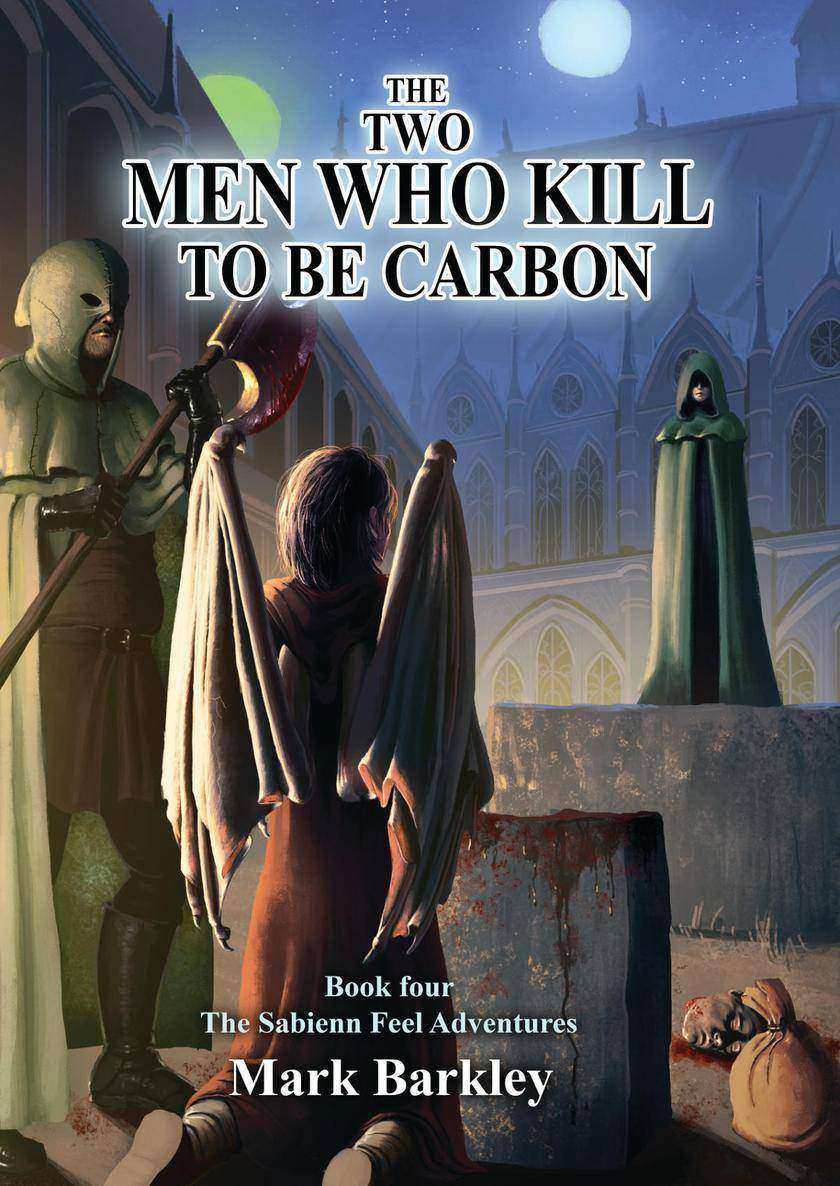
The Two Men Who Kill To Be Carbon: Book Four: The Sabienn Feel Adventures
¥26.07
In his quest to seek the occult stone, which is also sought by his Father to push the planet into war, Sabienn Feel and his brothers venture to the disputed territories of Rotnadge-Minora in Deerland. In order to find the next clue in this journey, Sabienn needs to seek a coffee mug with the words “The World’s Greatest Dad”. This mug is a solid lead for him as a reader. But big men with influence have other plans. A powerful and mysterious General follows Sabienn’s travel throughout the land under his military control. And his Father, the Grand Inquisitor Profound Murrlock Hyde requires that Sabienn and his brothers must die on the fateful ground of Mount Farewell. Their deaths are to be at the hands of two men who now call themselves the Hot Cold Coal and the Diamond; the two men who kill to be carbon. One man used to be one of Sabienn’s best friends. The other man killed the woman Sabienn loved. Or did he? The Two Men Who Kill To Be Carbon is the fourth of twelve books in the Sabienn Feel Adventures. Interview with the Author Q - What inspired you to write The Sabienn Feel Adventures? A – I’ve always loved the idea of the epic journey. I’m acquainted with the book Journey to the West but was more familiar with the TV series in the 80’s based on the book called Monkey. The idea of four souls travelling across a wide expanse of geography to complete a quest appealed to me. So I planned a series of twelve books to go from one place in the south of this space colony that they live on twice removed from Earth, to end up in the north, meeting danger at every turn. Q – Why does your main character Sabienn Feel grow wings? A - Good question. I wanted something very drastic to occur to these people physically. Something that would be difficult to hide and offer an immediate prejudice. The idea of growing wings constantly came up for me. There’s a Pearl Jam song I found inspiring that says, “And sometimes is seen a strange spot in the sky. A human being that was given to fly”. And in my mind’s eye, I could see this figure. Almost like the Led Zeppelin Icarus logo but with bat wings. But they couldn’t fly otherwise they’d hit the sky and the journey would be over in no time. I made them only able to swim because being submerged in water has elements of dealing with the subconscious. To me it satisfies all elements of those prophecy, fantasy, epic adventure type of stories that involve friendship and brotherhood. Q - So, why should readers give these books a try? A – Well I would say they were humour-filled, page-turning, epic, fantasy adventure novels which involve a quest. But then that’s what you would expect me to say. Why not try and read one of the books and let me know what you think? Some of the books are free so you’ve got nothing to lose.

Near Future Forward: Five Science Fiction Shorts
¥34.79
Science fiction comes in many flavors. Technological advances not too far-fetched or far off. For better or worse. Humanity’s next great leap, from Earth to the solar system and beyond. And of course, what sorts of creatures and cultures await us among the stars. Jason A. Adams and Kari Kilgore explore these areas and more, each with their own unique voice and twists of imagination. Come along for the adventure, near and far, tomorrow and into the future! Includes The Sound of Murder, GS-304, Renovations, The Garbage Belt, and Sunlit Dispositions. The Sound of Murder Self-improvement can be deadly. Insurance agency programmer Dana Sanderson only wants peace and quiet at work. A desire her micromanaging boss somehow never respects. Then the investigation of a rash of suspicious natural death claims lands on Dana’s laptop. Failure means huge payouts for the company. Success means a huge bonus for her. Find out if Dana’s risks outweigh her rewards in this clever digital mystery. GS-304 Mighty explorers of the galaxy Portarr and Flandarr inspect a non-descript watery planet in G-Sector. What they discover changes their lives. GS-304, the specimen that refuses to be a subject. Join the intrepid adventurers as they discover a strange beast that conquers their hearts. Renovations Bob Henderson despises the modern world. Talking elevators. Automated cars. Smart phones that track every move, mood, and thought. The day his office building grows security cameras in the halls, Bob realizes the modern world might despise him right back. What happens when the network decides to search for itself? The Garbage Belt Looking for humans? Just look for the garbage. From bones to plastic to dead electronics, people rarely manage to clean up after themselves. Humanity takes a long time to learn how to manage limited resources, too. The rare and precious get lost with the useless and plentiful. Meet Gayle Simmons, pilot of the Treasure Hunt. Rare and precious, in her sights. Sunlit Dispositions Sometimes, only Alex will do. A space station just exploded, and the Sunlit Spirit Empire calls in Alex, Free Troubleshooter extraordinaire. No last name needed. Alex wades into the strange world of Sunlit Spirit intrigue, gamma blaster in hand. Join Alex as he learns the deceptions behind the Truth.
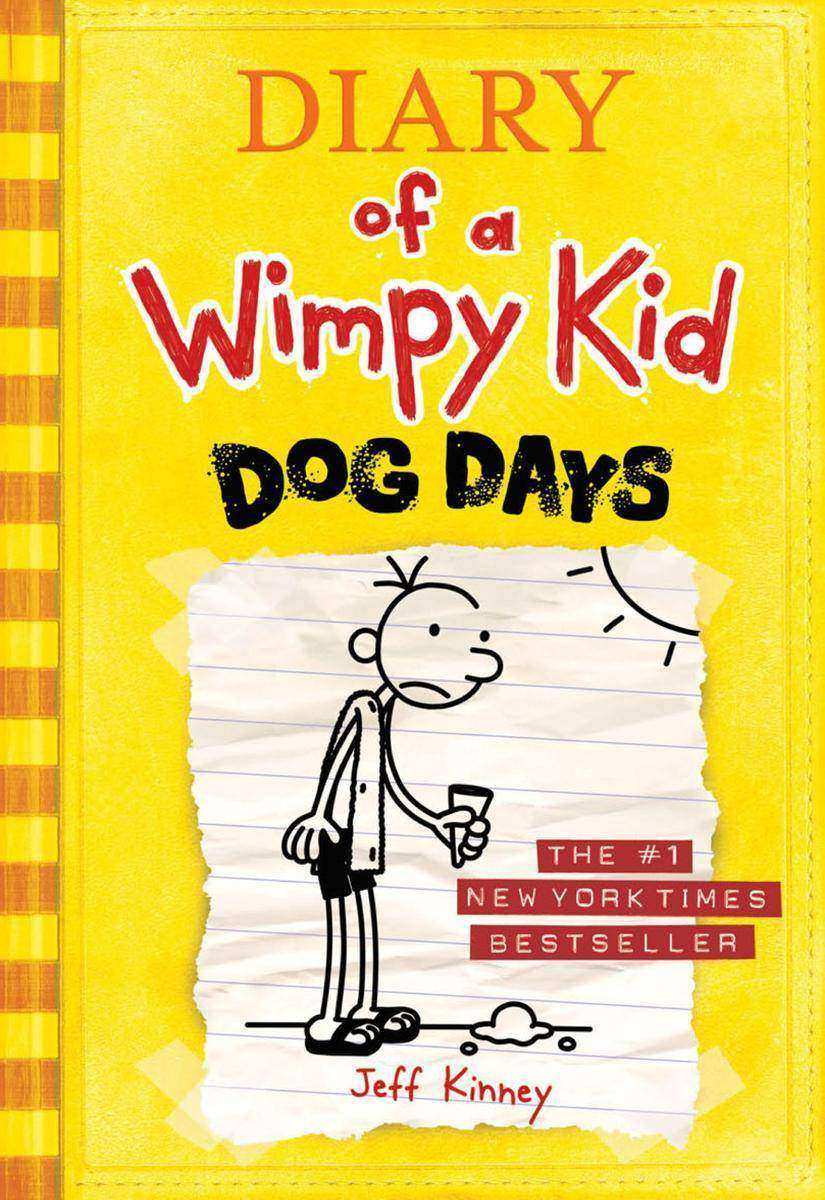
Dog Days (Diary of a Wimpy Kid #4)
¥158.82
It’s summer vacation, the weather’s great, and all the kids are having fun outside. So where’s Greg Heffley? Inside his house, playing video games with the shades drawn. Greg, a self-confessed “indoor person,” is living out his ultimate summer fantasy: no responsibilities and no rules. But Greg’s mom has a different vision for an ideal summer . . . one packed with outdoor activities and “family togetherness.” Whose vision will win out? Or will a new addition to the Heffley family change everything? F&P level: T
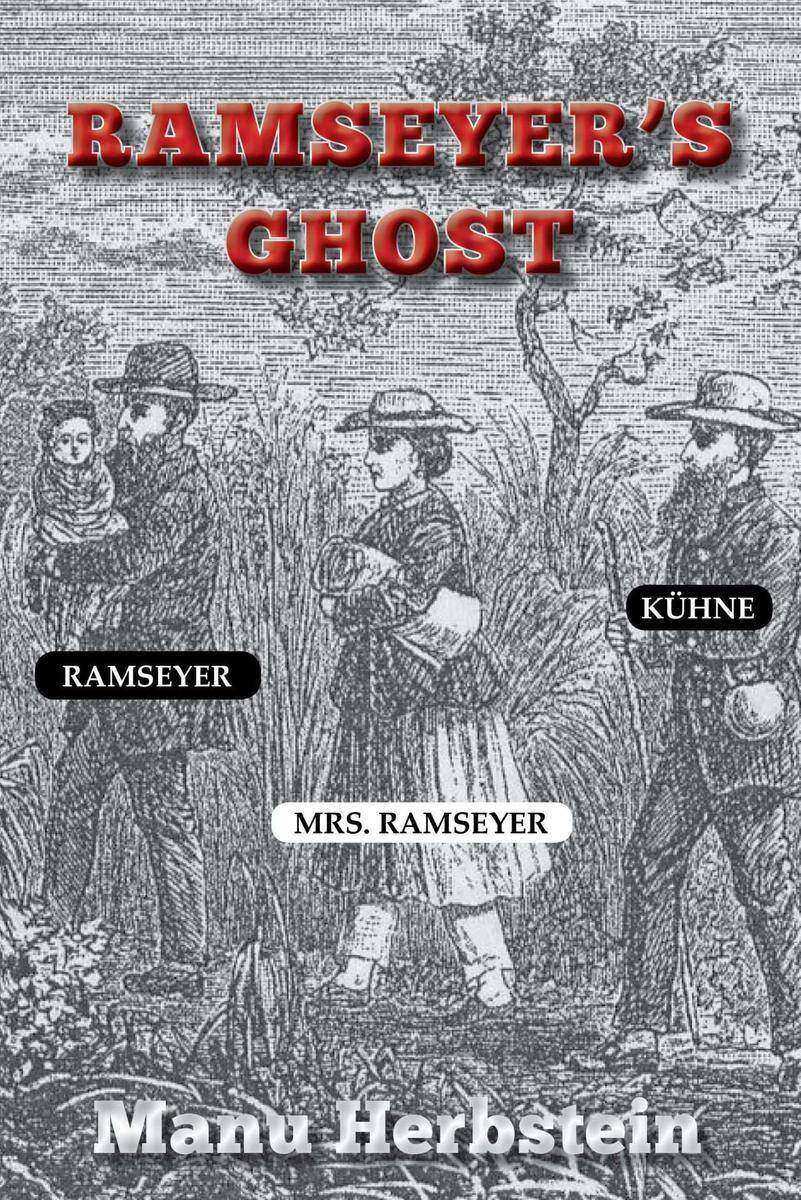
Ramseyer's Ghost
¥8.63
2050. The global village has disintegrated. The Third World War, ending in a stalemate, has left the planet split between two hostile powers, each with a captive sphere of influence. The Atlantic Ocean has become an American sea. West Africa is a desert of failed states and anarchy, dotted with mines and oil rigs, stockaded and armed by U. S. corporations. From their island outpost of St. Thomas, the Americans dispatch expeditions of geologists and mining engineers into the dangerous interior of the Dark Continent to search for untapped mineral resources. One such expedition has gone missing. Ekem “Crash” Ferguson, born in the U.S. in 2008 of African parents and abandoned to the care of foster parents, is a Captain in the Marine Corps. His career blocked and his marriage failing, he accepts an offer to proceed to Ghana on a one-man mission to find the missing experts. Unknown to his handlers, he has another mission. His arrival in Africa is inauspicious: in a shack amongst the coconut palms he comes across two human skeletons. This is only the first incident in what turns out to be a journey of discovery and self-discovery. “Magnificently crafted political fiction.” Andre Vltchek, author of Aurora and Exposing the Lies of the Empire.
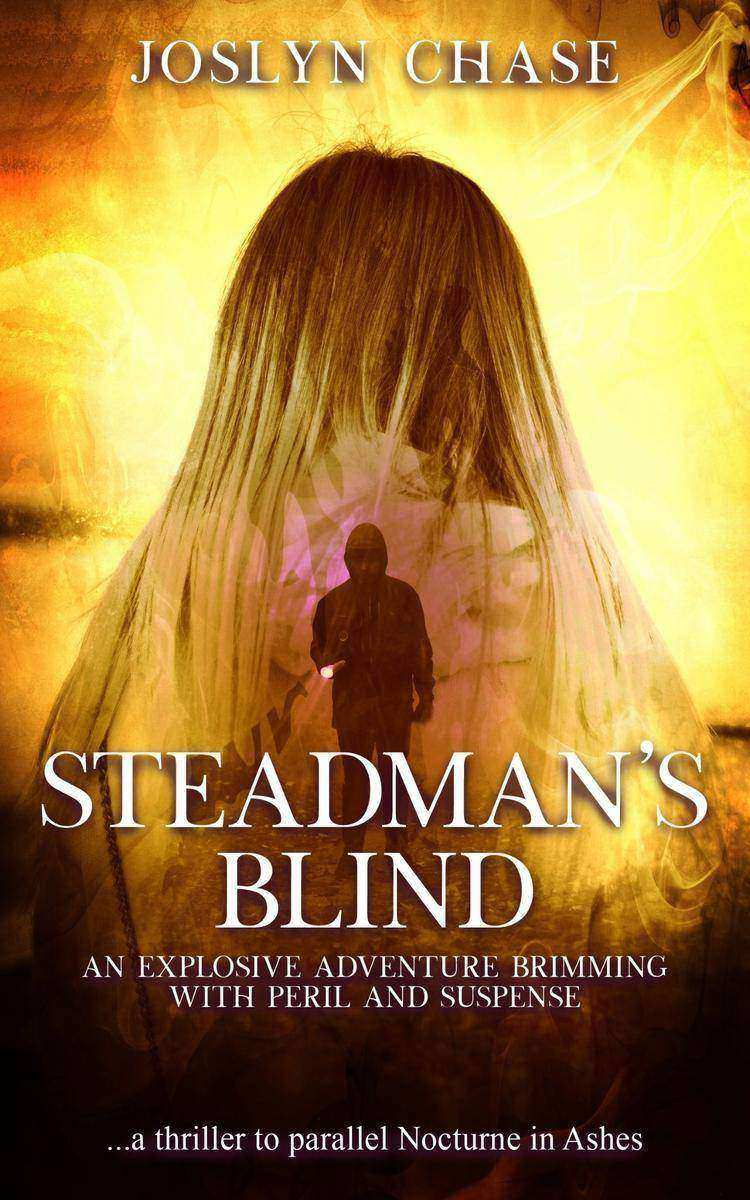
Steadman's Blind: An explosive adventure brimming with peril and suspense
¥43.51
Called to a crime scene, caught in a pursuit that will change his life forever. Or end it. Chief Deputy Randall Steadman knows how to read people, making him tough to face in the interrogation room. He learns the hard way those tactics don't apply at the poker table. Watching the last of his money disappear in a pile of plastic chips, Steadman thinks it can’t get worse. Then new disaster strikes, spinning him off on a quest to catch a killer and protect an innocent girl, aided only by his new and untried partner, Detective Cory Frost. Extortion, a deadly volcano, and a triple homicide mark the beginning of a long and winding road for Steadman and Frost. If you like books by C.J. Box, Thomas Perry, and Jeffery Deaver, you’ve just found a new favorite in Steadman’s Blind!


