


 购物车
购物车 个人中心
个人中心

Да ли ?е Срби?а шугава
¥27.96
Автор книги?– кандидат медицинских наук, врач с?многолетним опытом – просто и?понятно рассказывает о?здоровье и?отвечает на?самые распространенные вопросы. ? Предвестники серьезных недугов ??Факторы риска заболеваний сердца ??Тест на?определение склонности к?гипертонии ? Симптомы и диагностика распространенных заболеваний ??При каких признаках нужно немедленно обращаться к?врачу ??Традиционные и?народные способы профилактики и?лечения артериальной гипертензии, ишемической болезни, стенокардии, аритмии, сердечной недостаточности и?др. ??Лечение травами ??Лечебное питание ??Лечебная физкультура и?многое другое. Avtor knigi?– kandidat medicinskih nauk, vrach s?mnogoletnim opytom – prosto i?ponjatno rasskazyvaet o?zdorov'e i?otvechaet na?samye rasprostranennye voprosy. ? Predvestniki ser'eznyh nedugov ??Faktory riska zabolevanij serdca ??Test na?opredelenie sklonnosti k?gipertonii ? Simptomy i diagnostika rasprostranennyh zabolevanij ??Pri kakih priznakah nuzhno nemedlenno obrashhat'sja k?vrachu ??Tradicionnye i?narodnye sposoby profilaktiki i?lechenija arterial'noj gipertenzii, ishemicheskoj bolezni, stenokardii, aritmii, serdechnoj nedostatochnosti i?dr. ??Lechenie travami ??Lechebnoe pitanie ??Lechebnaja fizkul'tura i?mnogoe drugoe.

A Bundakirály
¥68.83
Более 100 разнообразных диет ? Безопасные способы похудения ? Советы по питанию и подбору диеты ? Наглядные таблицы с меню Избавиться от лишних килограммов – это просто! Важно лишь правильно подобрать диету, подходящую именно вам, – и результат не заставит себя ждать. Вы будете худеть, великолепно выглядеть и прекрасно себя чувствовать! В этой книге собрано множество вариантов традиционных и современных диет, правила и секреты оптимального питания, которые позволят стройнеть без особых усилий и закрепить полученные результаты. Диета для ленивых, кальциевая, рисовая, безуглеводная диеты, гречневая, кефирная, голливудская, кремлевская, средиземноморская диеты, диеты Аткинса, Дюкана и другие – выбирайте свой вариант! Наглядные и удобные таблицы с меню для каждой диеты сделают процесс похудения еще менее хлопотным! Bolee 100 raznoobraznyh diet ? Bezopasnye sposoby pohudenija ? Sovety po pitaniju i podboru diety ? Nagljadnye tablicy s menju Izbavit'sja ot lishnih kilogrammov – jeto prosto! Vazhno lish' pravil'no podobrat' dietu, podhodjashhuju imenno vam, – i rezul'tat ne zastavit sebja zhdat'. Vy budete hudet', velikolepno vygljadet' i prekrasno sebja chuvstvovat'! V jetoj knige sobrano mnozhestvo variantov tradicionnyh i sovremennyh diet, pravila i sekrety optimal'nogo pitanija, kotorye pozvoljat strojnet' bez osobyh usilij i zakrepit' poluchennye rezul'taty. Dieta dlja lenivyh, kal'cievaja, risovaja, bezuglevodnaja diety, grechnevaja, kefirnaja, gollivudskaja, kremlevskaja, sredizemnomorskaja diety, diety Atkinsa, Djukana i drugie – vybirajte svoj variant! Nagljadnye i udobnye tablicy s menju dlja kazhdoj diety sdelajut process pohudenija eshhe menee hlopotnym!

Broken: Part 2 of 3: A traumatised girl. Her troubled brother. Their shocking se
¥23.45
Rosie Lewis is a full-time foster carer. She has been working in this field for over a decade. Before that, she worked in the special units team in the police force.Based in northern England, Rosie writes under a pseudonym to protect the identities of the children she looks after.

Broken: Part 3 of 3: A traumatised girl. Her troubled brother. Their shocking se
¥23.45
Rosie Lewis is a full-time foster carer. She has been working in this field for over a decade. Before that, she worked in the special units team in the police force.Based in northern England, Rosie writes under a pseudonym to protect the identities of the children she looks after.
The Greatest Benefit to Mankind: A Medical History of Humanity
¥184.23
Roy Porter is Professor of the Social History of Medicine at the Wellcome Institute for the History of Medicine. He is the editor of the Fontana History of Science series, and the author of over sixty-five books, including the acclaimed bestseller ‘London: A Social History’. His book on the history of madness in England, ‘Mind Forg’d Manacles’, won the Leo Gershoy Prize.
Tell Me How it Ends: An Essay in Forty Questions
¥44.24
Valeria Luiselli was born in Mexico City in 1983. She is the author of the novels Faces in the Crowd and The Story of My Teeth, and of a collection of essays called Sidewalks. Her work has been published in magazines and newspapers such as Letras Libres, the New York Times, the New Yorker, Freeman’s, El Pais and Harper’s and she is published in fifteen languages. She is currently professor of Romance Language and Literature at Hofstra University and lives in New York City.
Mind Time: How ten mindful minutes can enhance your work, health and happiness
¥95.75
Michael Chaskalson Michael is one of the pioneers of mindfulness teaching and research in Europe. He is the author of the agenda-setting The Mindful Workplace and Mindfulness in Eight Weeks. Based on his 40 years of personal practice of mindfulness and related disciplines, Michael now shares his insights and research with audiences worldwide as a keynote speaker, coach, consultant, and teacher. Michael is founder and CEO of Mindfulness Works and a Professor of Practice at Ashridge Business School. Dr Megan Reitz Megan is Associate Professor of Leadership and Dialogue at Ashridge Business School where she speaks, researches, and consults on the intersection of leadership, change, dialogue and mindfulness. She has presented her research to audiences throughout the world and is the author of Dialogue in Organizations.

Healing Your Emotions: Discover your five element type and change your life
¥117.82
Angela & John Hicks are the joint principals of the College of Integrated Chinese medicine in Reading. Angela is author of The Five Laws for Healthy Living, Principles of Acupuncture and Principles of Chinese Medicine. John is author of Principles of Chinese Herbal Medicine. They have been practising for over 17 years.

Stalkers
¥46.11
‘IT’S THE NIGHTS that are the worst. I don’t know where he is, but my imagination tells me he is close at hand. In daylight I can keep the fears down; at night I am alone with the terror that he has created. If he rings me every ten minutes I think I will go mad with it; if he does not ring I worry that he is outside, watching me.’
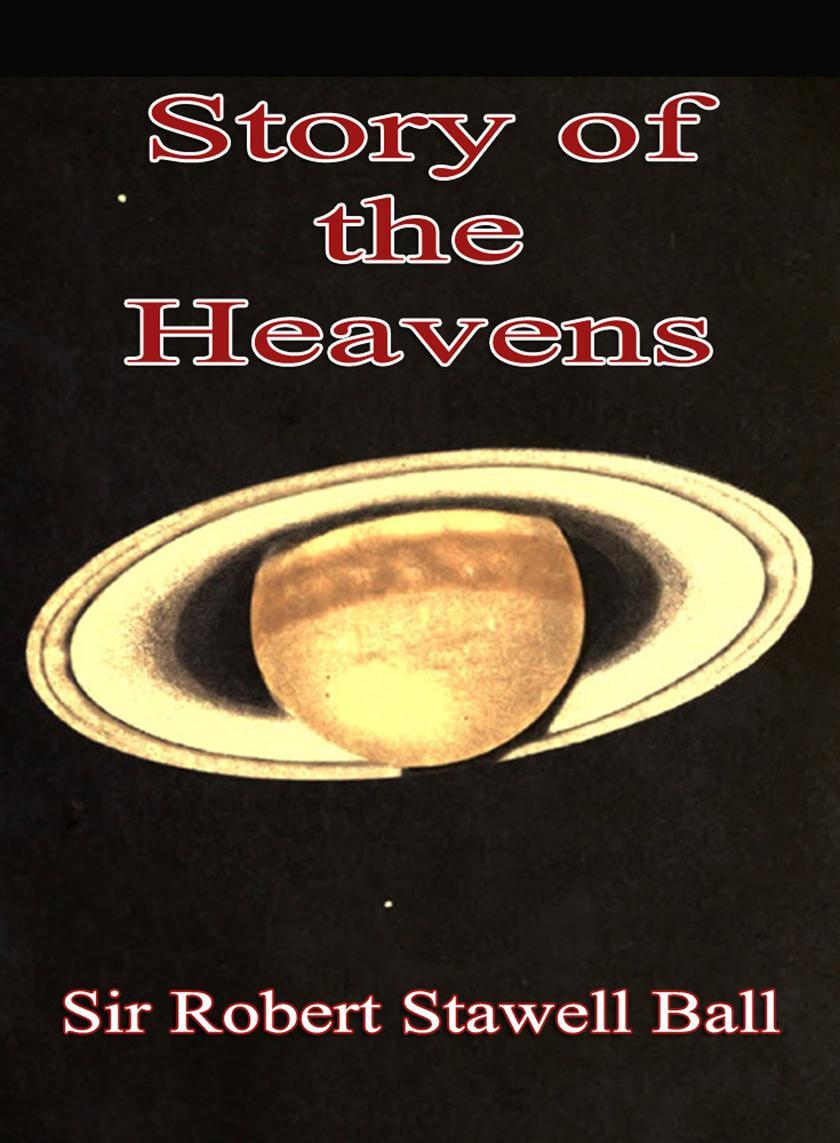
The Story of the Heavens
¥24.44
The Story of the Heavens

Everything About Mars
¥24.44
Everything About Mars
Great Astronomers
¥24.44
Great Astronomers
Brain Imaging Techniques: A Tutorial Study Guide
¥32.62
Brain Imaging Techniques: A Tutorial Study Guide
Herman Melville Man, Mariner and Mystic by Raymond Weaver - Delphi Classics (Ill
¥8.09
This eBook features the unabridged text of ‘Herman Melville Man, Mariner and Mystic by Raymond Weaver by Herman Melville - Delphi Classics (Illustrated)’ from the bestselling edition of ‘The Complete Works of Herman Melville’. Having established their name as the leading publisher of classic literature and art, Delphi Classics produce publications that are individually crafted with superior formatting, while introducing many rare texts for the first time in digital print. The Delphi Classics edition of Melville includes original annotations and illustrations relating to the life and works of the author, as well as individual tables of contents, allowing you to navigate eBooks quickly and easily. eBook features: * The complete unabridged text of ‘Herman Melville Man, Mariner and Mystic by Raymond Weaver by Herman Melville - Delphi Classics (Illustrated)’ * Beautifully illustrated with images related to Melville’s works * Individual contents table, allowing easy navigation around the eBook * Excellent formatting of the text Please visit www.delphiclassics.com to learn more about our wide range of titles
The Last of the Mohicans by James Fenimore Cooper - Delphi Classics (Illustrated
¥8.09
This eBook features the unabridged text of ‘The Last of the Mohicans by James Fenimore Cooper - Delphi Classics (Illustrated)’ from the bestselling edition of ‘The Complete Works of James Fenimore Cooper’. Having established their name as the leading publisher of classic literature and art, Delphi Classics produce publications that are individually crafted with superior formatting, while introducing many rare texts for the first time in digital print. The Delphi Classics edition of Cooper includes original annotations and illustrations relating to the life and works of the author, as well as individual tables of contents, allowing you to navigate eBooks quickly and easily. eBook features: * The complete unabridged text of ‘The Last of the Mohicans by James Fenimore Cooper - Delphi Classics (Illustrated)’ * Beautifully illustrated with images related to Cooper’s works * Individual contents table, allowing easy navigation around the eBook * Excellent formatting of the text Please visit www.delphiclassics.com to learn more about our wide range of titles

Azi cant jazz
¥24.44
sszefoglaló knyvem olyan témát mutat be, amivel már tbb ismeretterjeszt írásban találkozhatott az olvasó, ám ezúttal olyan részletekkel és érdekességekkel találkozunk, amit eme knyvek alig, vagy egyáltalán nem taglalnak. E szerzeményben végigkvetjük a Fld mélyérl induló izzó anyagot, a kérgen át a felszínig, ahol tüzet és pusztítást zúdít mindenre és mindenkire a kzelben. Bemutatom, hogy mi lesz a kihlt lávából, és milyen formákat hoz létre. Ezen külnleges természeti képzdmények kialakulását és fejdését vesszük górcs alá. Megismerkedünk pár külnleges tzhányóval, amik pusztításuk révén rendkívüli hatással voltak nemcsak krnyezetükre, hanem az emberiségre is. Olyan ismereteket mutatunk be, amelyek meglepetést okozhatnak az olvasóknak.
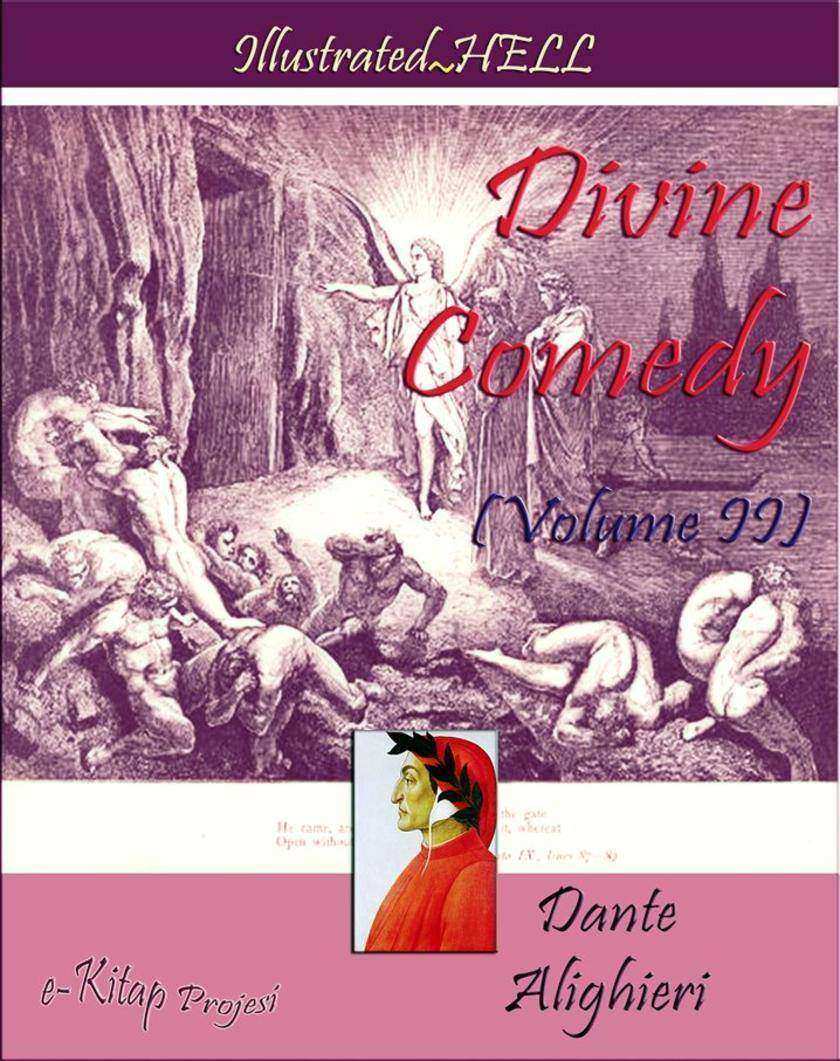
Divine Comedy (Volume II): Illustrated Hell
¥18.74
Micrographia is a historic book by Robert Hooke, detailing the then thirty-year-old Hooke's observations through various lenses. Published in September 1665, the first major publication of the Royal Society, it was the first scientific best-seller, inspiring a wide public interest in the new science of microscopy. It is also notable for coining the biological term cell. Observations: Hooke most famously describes a fly's eye and a plant cell (where he coined that term because plant cells, which are walled, reminded him of a monk's quarters). Known for its spectacular copperplate engravings of the miniature world, particularly its fold-out plates of insects, the text itself reinforces the tremendous power of the new microscope. The plates of insects fold out to be larger than the large folio itself, the engraving of the louse in particular folding out to four times the size of the book. Although the book is best known for demonstrating the power of the microscope, Micrographia also describes distant planetary bodies, the wave theory of light, the organic origin of fossils, and various other philosophical and scientific interests of its author. Publication: Published under the aegis of The Royal Society, the popularity of the book helped further the society's image and mission of being "the" scientifically progressive organization of London. Micrographia also focused attention on the miniature world, capturing the public's imagination in a radically new way. This impact is illustrated by Samuel Pepys' reaction upon completing the tome: "the most ingenious book that I ever read in my life." Hooke also selected several objects of human origin; among these objects were the jagged edge of a honed razor and the point of a needle, seeming blunt under the microscope. His goal may well have been as a way to contrast the flawed products of mankind with the perfection of nature (and hence, in the spirit of the times, of biblical creation). About Author: Robert Hooke (1635 – 1703) was an English natural philosopher, architect and polymath.His adult life comprised three distinct periods: as a scientific inquirer lacking money; achieving great wealth and standing through his reputation for hard work and scrupulous honesty following the great fire of 1666, but eventually becoming ill and party to jealous intellectual disputes. These issues may have contributed to his relative historical obscurity. He was at one time simultaneously the curator of experiments of the Royal Society and a member of its council, Gresham Professor of Geometry and a Surveyor to the City of London after the Great Fire of London, in which capacity he appears to have performed more than half of all the surveys after the fire. He was also an important architect of his time – though few of his buildings now survive and some of those are generally misattributed – and was instrumental in devising a set of planning controls for London whose influence remains today. Allan Chapman has characterised him as "England's Leonardo".Robert Gunther's Early Science in Oxford, a history of science in Oxford during the Protectorate, Restoration and Age of Enlightenment, devotes five of its fourteen volumes to Hooke.Hooke studied at Wadham College during the Protectorate where he became one of a tightly knit group of ardent Royalists led by John Wilkins. Here he was employed as an assistant to Thomas Willis and to Robert Boyle, for whom he built the vacuum pumps used in Boyle's gas law experiments. He built some of the earliest Gregorian telescopes and observed the rotations of Mars and Jupiter. In 1665 he inspired the use of microscopes for scientific exploration with his book, Micrographia. Based on his microscopic observations of fossils, Hooke was an early proponent of biological evolution. He investigated the phenomenon of refraction, deducing the wave theory of light, and was the first to suggest that matter expands when heated and that air is made of small particles separated by relatively large distances. He performed pioneering work in the field of surveying and map-making and was involved in the work, though his plan for London on a grid system was rejected in favour of rebuilding along the existing routes. He also came near to an experimental proof that gravity follows an inverse square law, and hypothesised that such a relation governs the motions of the planets, an idea which was subsequently developed by Newton.
Euthyphro
¥9.24
On the Origin of Species, published on 24 November 1859, is a work of scientific literature by Charles Darwin which is considered to be the foundation of evolutionary biology. Its full title was On the Origin of Species by Means of Natural Selection, or the Preservation of Favoured Races in the Struggle for Life. For the sixth edition of 1872, the short title was changed to The Origin of Species. Darwin's book introduced the scientific theory that populations evolve over the course of generations through a process of natural selection. It presented a body of evidence that the diversity of life arose by common descent through a branching pattern of evolution. Darwin included evidence that he had gathered on the Beagle expedition in the 1830s and his subsequent findings from research, correspondence, and experimentation. Various evolutionary ideas had already been proposed to explain new findings in biology. There was growing support for such ideas among dissident anatomists and the general public, but during the first half of the 19th century the English scientific establishment was closely tied to the Church of England, while science was part of natural theology. Ideas about the transmutation of species were controversial as they conflicted with the beliefs that species were unchanging parts of a designed hierarchy and that humans were unique, unrelated to other animals. The political and theological implications were intensely debated, but transmutation was not accepted by the scientific mainstream. The book was written for non-specialist readers and attracted widespread interest upon its publication. As Darwin was an eminent scientist, his findings were taken seriously and the evidence he presented generated scientific, philosophical, and religious discussion. The debate over the book contributed to the campaign by T. H. Huxley and his fellow members of the X Club to secularise science by promoting scientific naturalism. Within two decades there was widespread scientific agreement that evolution, with a branching pattern of common descent, had occurred, but scientists were slow to give natural selection the significance that Darwin thought appropriate. During the "eclipse of Darwinism" from the 1880s to the 1930s, various other mechanisms of evolution were given more credit. With the development of the modern evolutionary synthesis in the 1930s and 1940s, Darwin's concept of evolutionary adaptation through natural selection became central to modern evolutionary theory, and it has now become the unifying concept of the life sciences. Summary of Darwin's theory: Darwin's theory of evolution is based on key facts and the inferences drawn from them, which biologist Ernst Mayr summarised as follows: ? Every species is fertile enough that if all offspring survived to reproduce the population would grow (fact).? Despite periodic fluctuations, populations remain roughly the same size (fact).? Resources such as food are limited and are relatively stable over time (fact).? A struggle for survival ensues (inference).? Individuals in a population vary significantly from one another (fact).? Much of this variation is inheritable (fact).? Individuals less suited to the environment are less likely to survive and less likely to reproduce; individuals more suited to the environment are more likely to survive and more likely to reproduce and leave their inheritable traits to future generations, which produces the process of natural selection (inference).? This slowly effected process results in populations changing to adapt to their environments, and ultimately, these variations accumulate over time to form new species (inference).

Ebola ’76
¥73.49
Louis Nawa left the hospital, still wearing his inpatient's gown, which covered only the top half of his body, leaving the bottom half naked but for a thick coat of body hair, a few mosquito bites and a wealth of lesions left by Ebola, which were now beginning to heal over. The streets were dusty, baking in the midday August sun... Ebola's tragic victims were evident all around. With no one left to carry them, they crawled alone to the main square in the hope of finding help. Louis, meanwhile, was completely oblivious to his bare feet, already blistering as they pounded the baking road. Any feeling including that of a guilty conscience had been entirely deadened by the bottle of wine he had guzzled. By acclaimed Sudanese author Amir Tag Elsir, Ebola '76 follows the story of Louis, a?simple blue-collar worker who unwittingly transports a deadly disease back to his home?country, with disastrous consequences for his family, friends and colleagues alike. In?a series of bizarre and comical human encounters, the disease takes a firm hold of?the city of Anzara. Blind guitar players, comely barbers, tyrannical factory owners and?spurned wives all soon find themselves desperately fighting for their lives in the "Time?of Ebola". Among the novel's most unusual characters is Ebola itself, a strikingly dark and sinister?presence that haunts the pages of this fast-paced, tragicomic satire. Cackling with?glee, hovering in drops of spittle, and gliding slyly from body to body, Ebola represents?one of the evilest and unpredictable of villains.
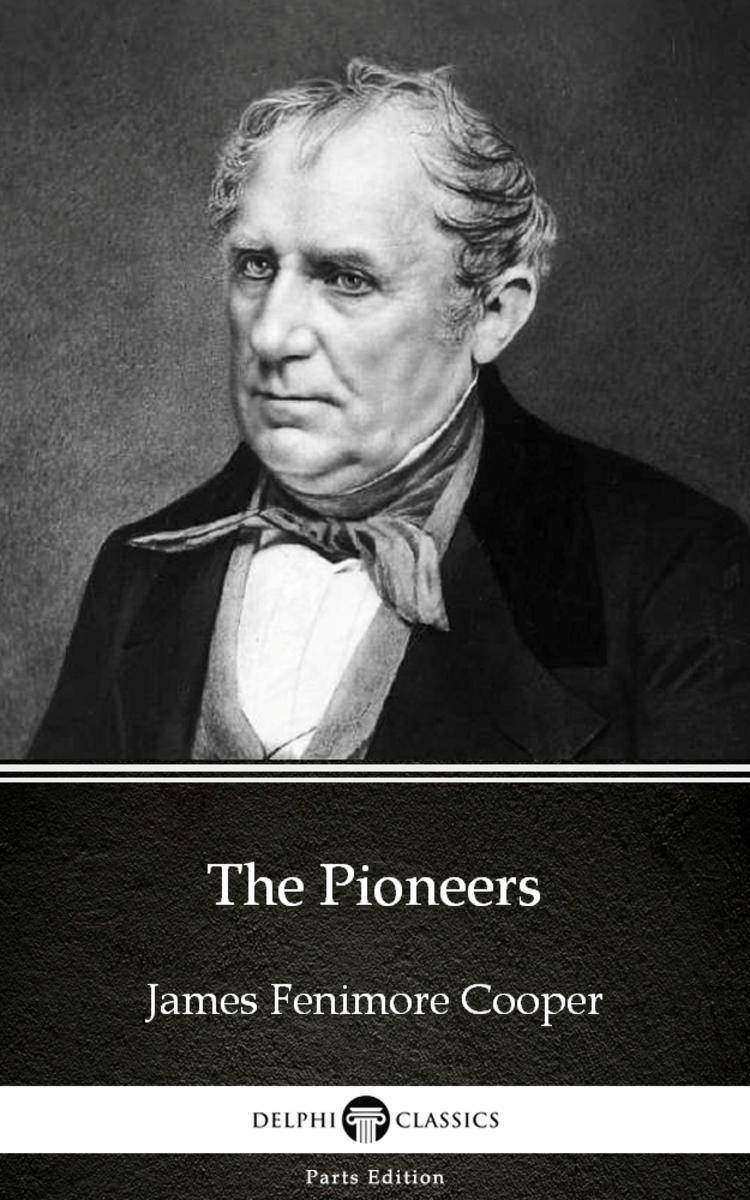
The Pioneers by James Fenimore Cooper - Delphi Classics (Illustrated)
¥8.09
This eBook features the unabridged text of ‘The Pioneers by James Fenimore Cooper - Delphi Classics (Illustrated)’ from the bestselling edition of ‘The Complete Works of James Fenimore Cooper’. Having established their name as the leading publisher of classic literature and art, Delphi Classics produce publications that are individually crafted with superior formatting, while introducing many rare texts for the first time in digital print. The Delphi Classics edition of Cooper includes original annotations and illustrations relating to the life and works of the author, as well as individual tables of contents, allowing you to navigate eBooks quickly and easily. eBook features: * The complete unabridged text of ‘The Pioneers by James Fenimore Cooper - Delphi Classics (Illustrated)’ * Beautifully illustrated with images related to Cooper’s works * Individual contents table, allowing easy navigation around the eBook * Excellent formatting of the text Please visit www.delphiclassics.com to learn more about our wide range of titles

Sacred
¥38.62
Sacred is the heart-breaking love story of a young woman and her husband, who live in the old part of the city in Jerusalem. After ten years of a loving relationship without children, Rachel’s husband is forced by custom to reject her. Does she dare to tell the truth – or will she let her beloved husband marry another? 'In Rachel and Naomi, Abecassis creates two powerful and sympathetic heroines, and the power and beauty of her writing renders their story both heartbreaking and hypnotic.'? Observer 'A terrifying book on the feminine condition.' ? Le Figaro


