


 购物车
购物车 个人中心
个人中心

The Way We Wed (Mills & Boon Vintage Intrigue)
¥31.10
THE AGENT: Jeff Kirby, M.D. in the making THE MISSION: Making sure his beautiful bride lives to see their wedding vows through! THE HEARTBREAKING TRUTH: Married in haste, Jeff and Tish were more strangers than man and wife… . They had married in secret, two undercover agents with nothing to lose– except maybe the love of a lifetime. For though Jeff Kirby tried to keep Tish Buckner by his side, tragedy tore the newlyweds apart. Now Tish' s life hung in the balance, and Jeff was hoping against hope that he and Tish would get a second chance at the life they once dreamed of. Because this time, the determined M.D. wouldn' t let his woman get away!

The Word of a Child (Mills & Boon Vintage Superromance)
¥31.10
On an ordinary day, in an ordinary neighborhood, a knock on the door of an ordinary house leads to an extraordinary revelation. Detective Connor McLean is the man who came to call, carrying with him a child's accusation. Connor's visit ended Mariah Stavig's marriage and left her a struggling single mother. Three years later, the word of another child brings Connor back into Mariah's life. Connor knows his investigations can ruin as much as they fix, but he has no choice. He has sworn to speak for the innocent and seek justice for the victims. And now, to do his job, he has to have Mariah's help–no matter how much she hates him.
Trouble In Tourmaline (Mills & Boon Vintage Cherish)
¥31.10
THERE'S A NEW MAN IN TOWN… Ex-lawyer David Severin came to Tourmaline to escape his problems. Psychologist Amy Simon came to Tourmaline to solve problems. But working at the counseling center run by David's aunt, she couldn't help but notice that the brooding, private man had issues. And a great body. The first time Amy saw David she mistook him for the gardener. He was naked from the waist up, and his muscular chest was beaded with sweat from a day of hard labor. But underneath his rough exterior, Amy knew there lay a man filled with raw pain and endearing tenderness. So when his young daughter showed up on his doorstep, Amy couldn't help butting in…and falling in love with them both. And that's when the trouble in Tourmaline began….

True Confessions of the Stratford Park PTA (Mills & Boon M&B)
¥27.27
WHEN THE GOING GETS TOUGH, THE TOUGH… Join the PTA? Yes, according to Maggie, Barbara and Elizabeth. Because despite their differences–one is a recent widow; one is a late-in-life mother; and one is a supermom whose surprise pregnancy, she fears, will result in complications–all three women have one thing in common: their daughters. They'd do anything for them…. But is anything enough? Because one girl just can't adjust, one is terrified to be alone–and one is the mystery blogger who's wreaking havoc from one end of the student body to the other. Seems as if there are a lot of secrets in this small town. And despite the gossip, not a lot of talking going on….
Twice a Princess (Mills & Boon Vintage Cherish)
¥31.10
Dearest Godmother, I only have one more match to make to break this curse…if only I wasn't utterly distracted by my devastatingly handsome boss, resort owner Alexander Rochelle. I know I should stay away from him–I am betrothed to a prince in my country, after all–but Alexander's kindness, his humor and his sexy kisses are keeping me up at night, in spite of my better judgment. And now Fate has decreed Alexander as the next match to find true love, in spite of his apparent disbelief in tender emotions. If I can convince him forever is a promise worth making, is it too much to hope that the woman he vows to cherish will be me? Your lovelorn goddaughter, Princess Meredith
What Goes With Blood Red, Anyway? (Mills & Boon M&B)
¥27.27
My life hasn't been what you'd call easy lately… Last year I, Teddi Bayer Gallo, nearly killed my husband. This year he's nearly my ex. Last year money grew on trees. This year if my three delicious children and I don't eat, my new interior decorating business might survive. Last year I'd never seen a dead person up close. But this year I've just discovered one. And it's my first paying client…. Can things get worse? Well, the police could suspect my partner, Bobbie, and me of doing the woman in. Then there's my mother, June, who even through all her newly acquired plastic surgery can still give me "the look." And I could fall for sexy detective Drew Scoones, who has fingered Bobbie as his prime suspect. I mean, really, can you say no to the police?

Whose Baby? (Mills & Boon Vintage Superromance)
¥31.10
For the sake of her daughters can she marry a stranger? Lynn Chanak is living the nightmare every mother fears. There was a mix-up at the hospital. Her baby isn't hers. And the only way she can have the baby she gave birth to and keep the child she loves is to marry Adam Landry–a man she doesn't even know. For the sake of his daughters can he marry a woman he'll never love? Adam was devastated when his Jenny died. And his only consolation was their daughter. But as much as he loves Rose, he can't stand to think that the child Jenny carried for nine months will grow up without him. If marrying a stranger is what it takes to have both his daughters, then that's what he'll do. Even though he still loves Jenny… For the sake of their daughters can they make this marriage work?

Wife Wanted (Mills & Boon M&B)
¥27.27
What other disaster could befall Natalie Fortune? Her long-awaited vacation had been waylaid, her "new life" postponed. Now she was marooned with a broken leg, a St. Bernard–and a way-too-sexy neighbor. Eric Dalton had made her an offer she couldn't refuse. But was letting the gorgeous bachelor and his sweet little boy into her life Mistake No. 999, or the new beginning she'd been waiting for?

Winning Jenna's Heart (Mills & Boon Historical)
¥25.60
Jenna Duncan Had Suffered Enough At The Hands Of Gambling Men Now, however, her happiness was secure, for her intended husband was here in her arms–or was he? As passionate and caring as the man she embraced was, he had no memory of their promised bond of love! Left for dead, Cash was awakened by an angel's caress. Leastways, that's how it felt when Jenna touched him and called him her "Blue," the man she'd pledged her heart to. But his fractured memory hinted at a life risking all on a card–and if he truly was the famous gambler Cash Callahan, then all bets for wedded bliss were off!

With a Little T.L.C. (Mills & Boon Vintage Cherish)
¥25.60
A racing heartbeak…check. Heightened senses…check. Flush of color to the cheeks…check. A shivery quiver in the pit of the stomach…check. An intense desire to throw herself into Joe Marchetti's arms…check-check-check-check. Yep, Nurse Liz Anderson had the classic symptoms of love. Worse, there wasn't any surefire cure. The best she could hope for was to believe her condition was contagious–and that Joe was equally susceptible to her! Hmm, maybe it could be transmitted by kisses…

Wrong Twin, Right Man (Mills & Boon Vintage Cherish)
¥23.45
HE WANTED A SECOND CHANCE Rafe Montoya had known his wife, Beth, was unhappy. She wanted him home earlier, wanted a baby, wanted more of himself than he could give. He thought that being her knight in shining armor would be enough. But then a tragic accident claimed Beth's life, and left her twin sister, Anne, injured–and he had run out of time. All he could do was help Anne recover her strength and her memory–it was what Beth would have wanted. Yet when Rafe looked in Anne's eyes, for a fleeting minute, he had the feeling it was Beth's eyes looking back at him. His Beth, ready and waiting to give him a second chance. But that was impossible…wasn't it?

Yellow Rose Bride
¥31.10
Seven years ago, seamstress Vonnie Taylor's husband of one day, Adam Baldwin, annulled their marriage. Now she faces the ultimate indignity: sewing his new intended's wedding dress! Vonnie hasn't forgotten the handsome rancher, despite the family feud that doomed their love. Now, as the past is uncovered and danger is unleashed, Vonnie finds herself again by Adam's side. Time for this Yellow Rose of Texas to learn that love is worth the wait.
The Secrets Of Ghosts
¥39.24
Step back into the magical world of Pendleford with Sarah Painter’s new book The Secrets of Ghosts. Don’t miss the magical, heart-warming story from the bestselling author of The Language of Spells! On her twenty-first birthday Katie Harper has only one wish: to become a real Harper woman. Mystical powers are passed down her family generation after generation – some even call them witches – yet every spell Katie attempts goes disastrously wrong. When her magic does appear, it’s in a form nobody expected and suddenly Katie is thrown into a dangerous new world with shadowy consequences. For the realm of the deceased is not as peaceful as she once thought. The dead are buried with their secrets and only Katie can help the ghosts of the past finally find peace. If that is what they are looking for… Praise for Sarah Painter 'The magic, the romance, the right amount of humour and drama, made this a perfectly well-rounded novel. I greatly look forward to Sarah’s next novel.' - Laura's Little Book Blog 'I would recommend this book as it is a real mix: it’s a love story and a thriller with a dash of magic thrown in for good measure.' - Laura's Book Review 'I really loved this book – and it is not often I say this, really. An amazing début, I was sucked in so much I could hardly put it down and finished it in about a day I think. I also couldn’t stop talking about it! That is it’s charm and the skill of the writer, you can’t quite put your finger on what it is… I hope to read more in the future by this author.' - Beloved Eleanor utterly enchanting’ - The Madwoman in the Attic 'an enjoyable, escapist read, light hearted romance and a bit of paranormal who dunnit.' - Jeannie Zelos 'I thoroughly enjoyed The Secret of Ghosts. It was just as magical and just as enjoyable as The Language of Spells and I am soooooo glad Sarah Painter decided to go back to Pendleford. … I really do love magical fiction and I think SarahPainter is one of the best at giving you a realistic look at magic and all that comes with it.' - Chick Lit Reviews
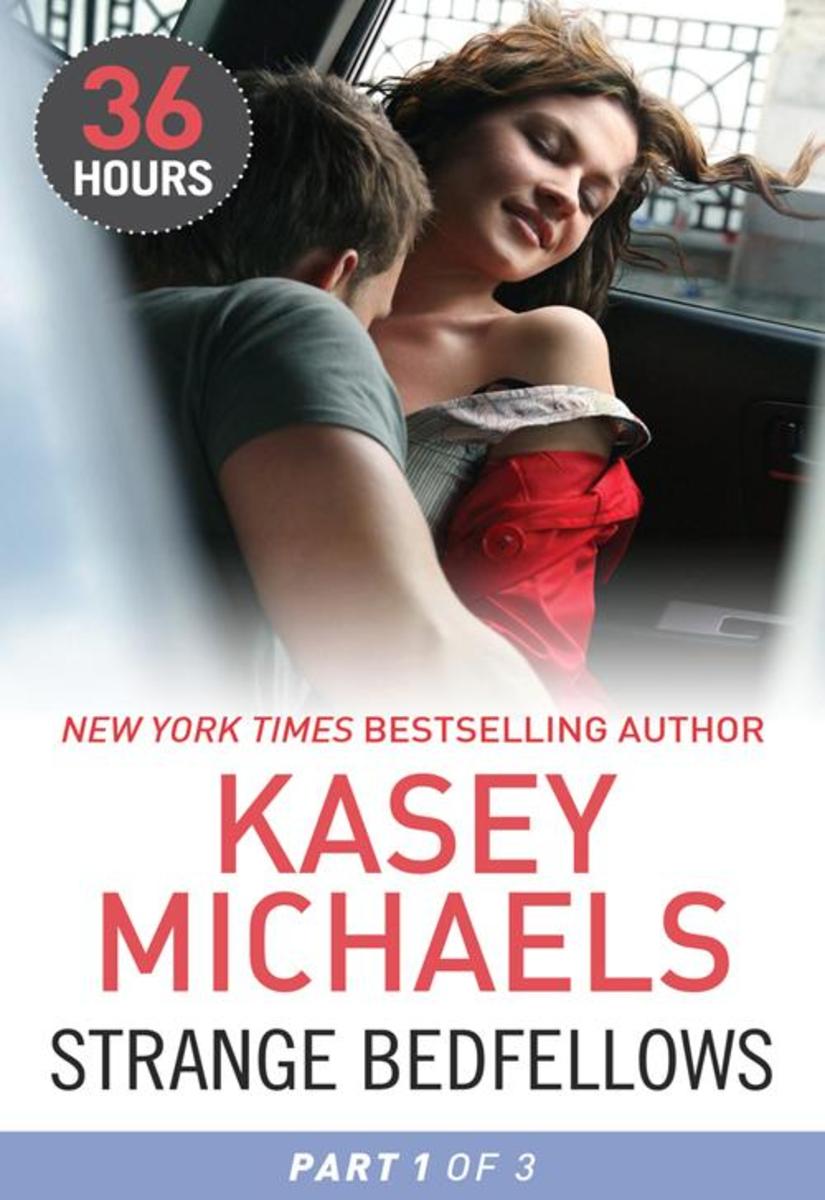
Strange Bedfellows Part 1 (36 Hours, Book 4)
¥14.62
36 Hours Serial As a devastating summer storm hits Grand Springs, Colorado, the next thirty-six hours will change the town and its residents forever…. Strange Bedfellows Part 1 Sworn enemies Cassandra Mercer and Sean Frame become more than friends when they’re trapped inside her car by a dangerous mudslide. Who would ever have pictured guidance counselor Cassandra Mercer at such close quarters with her nemesis, businessman Sean Frame? They’re usually facing off at school board meetings, where he arrogantly questions her methods every chance he gets. But when a mudslide traps the two inside Cassandra’s car, the will to live ignites a passion that brings them together. The story continues in Strange Bedfellows Parts 2 and 3.

Between A Rockstar And A Hard Place
¥15.50
Behind the music… Being best friends with a mega-star has its perks and Nicole Wilde, music journalist, laps them up. But when said friend, Dylan King, gorgeous lead singer of The Burnouts, has zero sense of self-preservation – once a drop of alcohol hits his blood stream ? and an inability to keep ‘little Dylan’ in his pants, it also comes with responsibilities. Now, Nicole has to track down Dylan in time to play a charity gig tomorrow. Half a dozen groupies, a haunted hotel, a tattoo parlour, a reality show runner-up and a crazy bed-hopping, sleepless night later – will she find him before the tour bus leaves town? And when she does, is it time to head home? Or to jump on the tour bus and go along for the ride! Between a Rockstar and a Hard Place is the fun and fabulous prequel to Portia MacIntosh’s How Not to be Starstruck. Look out for it March 2014. Praise for Portia MacIntosh 'I don’t usually get girl crushes but I totally wannabe Nicole or at least her BFF. Music, festivals all the elements the crazy rock ‘n’ roll lifestyle topped off with a cutting edge humour.' - Book Angel Booktopia 'Between A Rockstar And A Hard Place is such a fun, exciting and genuinely funny read. This is such a brilliant taster of what is to come from Portia, I am so excited to see what Dylan gets up to next.' - Victoria Loves Books 'A sweet novella about one woman, one rockstar and a whole heap of trouble!' - She Loves To Read

A Soldier Comes Home (Mills & Boon Cherish)
¥31.10
Single daddy Captain Ray Hughes and his little boy have to create their own version of a family and Chrissie Evans is a complication. Chrissie is everything he could desire in a woman and he wants a future with her. But can he promise her what she needs to hear?

A Summer Wedding At Willowmere (Mills & Boon Medical)
¥31.10
Willowmere in summer is breathtaking, but nurse Laurel Maddox has come to hide from her past. Local GP Dr David Trelawney is captivated by his new colleague and he determines to make Laurel blossom in the warmth of the village and, before the summer is out, make her his bride!

All She Wants for Christmas (Mills & Boon Cherish)
¥31.10
Former foster child Holly was determined to make this Christmas special for the kids at Hopewell House. Then handsome Clay Forrester stole her Father Christmas… Playing Santa was the only way to make it up to Holly. But could Clay convince her to give him a second chance?

Baby, I'm Yours (Mills & Boon Cherish)
¥31.10
Becca knows that her baby is her late husband's final gift to her. Her pregnancy couldn't be the result of one night when she tried to forget her grief. Rick's not convinced. He's not ready to give up on the prospect of being a father ; or of becoming more than just a friend to Becca. And he has nine months to ensure Becca feels the same way. . .

Bachelor Dad on Her Doorstep (Mills & Boon Cherish)
¥31.10
Jaz Harper is back in town, and determined to avoid her old flame Connor Reed – she won’t be hurt again. But Jaz hasn’t reckoned on still being irresistibly attracted to Connor…or the fact he’s now a bachelor dad!

Betrothed: To the People's Prince (Mills & Boon Cherish)
¥31.10
The majestic trilogy Marrying His Majesty continues… Nikos Andreadis is the Prince of people’s hearts, but the crown of Argyros now belongs to Princess Athena. Bringing the reluctant royal back from America is going to be Nikos’s most challenging duty!


