万本电子书0元读

万本电子书0元读

A jó palócok
A jó palócok
Mikszáth Kálmán
¥8.67
Vészesen apad a Tó. Vajon miért? Rév Fül?p, a lovaglegény a Litéri sárkány hátára pattan, hogy kiderítse. A nyomok Nagylapály birodalmába vezetnek, ahol találkozunk Nyár L?rinccel, Zivatarzug lovagjaival, H?t?dik H?b?r?d?tt királlyal, és a világ legpimaszabb leányzójával, akire nem lehet haragudni. Kiderül, mi van a Mély Kút mélyén, és hogy miért nincs tó, ha van.
The Three Musketeers
Alexandre Dumas
¥8.67
gy tnik, Analfa nem hajlandó beletrdni a vereségbe. A szigligeti Alkotóházban egyre külnsebb dolgok trténnek, és a konyhás nénik is olyan furcsák… Szerencsére az írón segítségére siet a kzelben táborozó 5. d. De ebbl vajon mi lesz! Ha szeretitek a kalandot, a humort, a Balcsit, ha izgalmas olvasmányra vágytok, ez a ti knyvetek! Ajánlom lányoknak és fiúknak. Gyereknek és felnttnek. Ez a knyv boszorkányosan tündéres. Vagy tündéresen boszorkányos De tudjátok, mit Dntsétek el magatok!” – Nagy Judit, aszódi okleveles Tündérknyvtáros Nem szeretsz olvasni Hiszen most is olvasol! Ráadásul pont az én ajánlómat. Ha már elkezdted, kérlek, olvasd végig… lehetleg a teljes Tündérboszorkány-trilógiát. Meglátod, nem fogod megbánni! Tündérknyvtárosi becsületszavam adom rá!” – Paraginé Tóth Edina, zákányszéki okleveles Tündérknyvtáros Analfa, add fel! A Jóhegyi Lacik és a Tündérknyvtárosok nyerésre állnak. Szerintünk mindenképp!” – Kolibri Kiadó
Fairy Tales of Hans Christian Andersen
Hans Christian Andersen
¥8.67
Egyszer emlékezet, elbb el kell mesélnem neki, kitalálni a részleteket, hogy legyen mire visszaemlékeznie. Legkisebb dolgok is megzavarhatják, elhangolják az egészet, elborítják, lefedik szépen. Akad azért mindig, ami már jól megy, újra meg újra elbukkan, mint a télikabát bélése, ha egyszer flfeslett a varrás. Visszatmkdd, kibújik megint. A fldrengés például eléggé megy, az be van rendesen gyakorolva. Egyetlen, jókora lendülés. Ha nem mese, nem csak képzelem, hogy emlékszem rá, hanem igazából volt. Nem azért emlékszem, mert annyiszor elmondták ugyanúgy. A csillár kilendült, mint a harang nyelve, a karácsonyfa végigkorcsolyázott a parketten a gyerekszoba sarkáig, aztán megindult visszafelé” – olvasható Kukorelly Endre TündérVlgy c. új regényében, ami az író eddigi legnagyobb vállalkozása. Nemcsak abban az értelemben, hogy a szerz kilenc évig írta knyvét, hanem a regény szintézis jelleg alkotás. rvényesülnek benne Kukorelly írásmódjának legfbb erényei: a nyelvi pontosság és szigorúság, irónia és gyngéd humor, az emlékezet mkdésének állandó felülvizsgálata, az elbeszéli n oszcilláló mozgása a múlt és jelen kztt, a lírai hangoltság. Tematikusan a regény az apa alakja kré szervezdik, és ezáltal felleli az elmúlt fél évszázad trténéseit. Metaforikusan szólva: a regény beszélje mintegy az apa hallgatását próbálja megérteni, aki horthysta katonatisztként megjárta a Don-kanyart, megsebesült, majd a kommunista diktatúrában banktisztviselként másodosztályú élet”-re kényszerült. A család deklasszálódását és saját szenvedését néma beletrdéssel elvisel apa mindvégig hallgat a múltjáról: a regény melankolikus nyomozása ennek a lehetséges okait és trténéseit rekonstruálja. Minden egyes fejezete az emlékezet próbája: kísérlet arra, hogy mítoszok és ráfogások nélkül férjen hozzá az élet legszemélyesebb tapasztalataihoz. Túlzás nélkül állítható, hogy a TündérVlgy az író legautentikusabb knyve.
A Hamupip?ke-gyilkosság
Mary Higgins Clark
¥70.80
Belenéztél már a párod mobiljába? Tényleg ezt akarod? Felkészültél a k?vetkezményekre? Minden egy e-maillel kezd?d?tt. Rachel meg sem akarta nézni. Szereti Jacket, és k?z?s gyermeküket hordja a szíve alatt. Megbízik a férfiban. Most azonban, miután látta, már nem tudja meg nem t?rténtté tenni azt a percet. Sem az események láncolatát, amelyet elindított. Vajon miért hazudik Jack a múltjáról? Mi az, amit rejteget? ?s Rachelnek van joga hozzá, hogy mindenáron megtudja az igazat? Te mit tennél, ha úgy gondolnád, hogy a párod titkol valamit? A Bármit, csak ne az igazat Gillian McAllister leny?g?z?, átüt? thrillere csalásról, árulásról és egy asszony megszállottságáról, hogy kiderítse az igazságot. " Ahogy elkezdtem olvasni, t?bbé nem volt er?m abbahagyni. Bámulatos, okos és életszer?. Imádtam." Jill Mansell "Csodálatos írás, és egy brilliáns sztori.Bámulatos debütálás." B.A. Paris, a Zárt ajtók m?g?tt bestseller szerz?je
A magyar népi mozgalom t?rténete
Papp István
¥57.31
Márton László új regénye, A mi kis k?ztársaságunk a t?kéletes állam megalapításának groteszk-tragikus kísérletét jeleníti meg. 1944 végén, amikor a felszabadító és egyben megszálló szovjet csapatok megérkeztek a Viharsarokba, az ott él? agrárproletárok létrehozták a saját kis k?ztársaságukat. A regényben a t?rténelmi tények és az írói képzelet t?rténetei keverednek – a keser? szatírában tegnapi-mai ?nmagunkra ismerhetünk és saját kisszer?ségünk?n nevethetünk.
A Gustav-szonáta
A Gustav-szonáta
Rose Tremain
¥70.80
One day – actor-turned-detective – Anthony Noir receives a letter from California, in which an old lady asks his help in the investigation of a long-ago case. On New Year’s Eve 1929 a famous Hollywood actress died in a car accident. The mysterious client implies it was – in fact – a deliberate murder. Anthony discovers all the possible details of the extraordinary assignment, even so he has to embark on an extensive journey to the past before he can unveil the secret of the movie star…
Sz?kés Egyiptomba
Sz?kés Egyiptomba
Durica Katarina
¥57.31
Addison Holmes élete romokban hever. Szerelme az oltár el?tt úgy d?nt, mégsem mondja ki a boldogító igent, a balul sikerült esküv? számlái pedig kifizetetlenül hevernek állandóan beázó lakásában. Mit tesz egy elhivatott tanárn?, ha komoly pénzzavarba kerül? Talán kül?nórákat vállal? Esetleg k?lcs?nkér a szüleit?l? Egy józan gondolkodású lány bizonyára ezt tenné, Addison azonban nagyobb haszonnal kecsegtet?, de annál is t?bb kockázattal járó mellékállást vállal, és elszeg?dik sztriptíztáncosn?nek. A lány, aki mágnesként vonzza a bajt, r?vid úton egy gyilkossági ügybe keveredik, így jobb híján felcsap magándetektívnek. Még szerencse, hogy segítséget kap egy hihetetlenül szexi, de elviselhetetlenül szemtelen rend?rnyomozótól, akinek élete titkokat rejt… Kaland, szerelem, romantika, humor és mindenekfelett egy ?rülten szerethet? f?szerepl? teszi felejthetetlenné a Go-go girl sorozatot. Fej?s ?va
Anyak?nyv
Anyak?nyv
Kalas Györgyi
¥54.45
Fiatal, gy?ny?r?, gazdag és tehetséges, ráadásul a világ egyik legnépszer?bb színészn?je. Kell ennél t?bb a boldogsághoz? Bizony kell! Ha valaki, hát a huszonnyolc éves Connie pontosan tudja, hogy a jó adag csillámporral beszórt hollywoodi álomgyár valójában darálógép, ami szép lassan kizsigereli az embert. De egy nap betelik a pohár! Amerika üdv?skéje fogja magát, és elsz?kik Los Angelesb?l. Nagy titokban egy aprócska skót faluba utazik, mert cs?ndre és nyugalomra vágyik. Lochnabrae tényleg képeslapra kívánkozóan idilli hely, na de hogy békés lenne? Ugyan! Az amerikai sztár nem számolt a végletekig szókimondó és pletykás helyiekkel, akiket hosszú távon szinte lehetetlen elviselni, mik?zben jóval szerethet?bbek, mint a lány által túl jól ismert sztárok. Színpadra vinni a falubeli amat?r társulattal a Vízkeresztet egyszerre vicces és ideg?rl? feladat Connie számára. Persze valószín?leg k?nnyebben boldogulna, ha a szívd?gleszt? rendez? – aki megfogadta, hogy soha t?bbet nem kezd színészn?kkel ? nem lenne annyira undok vele. ?s f?leg, ha kevésbé szikrázna a leveg?, valahányszor egymásra néznek… ?Kiugrani a sajátunkból, hogy kipróbáljunk egy másik életet? Ki ne játszott volna még el a gondolattal? Hiszen ?másnak mindig k?nnyebb?... Sz?kés, szerelem, újrakezdés – err?l szól Victoria Connelly romantikus regénye. Akinek tetszett a Bárcsak itt lennél, vagy rajong Cecelia Ahern regényeiért, az ezt a k?nyvet is szeretni fogja!” Fej?s ?va
Notes from the Underground: "Illustrated"
Fyodor Dostoyevsky
¥18.74
In 1888 a client, Mary Morstan, comes with two puzzles for Holmes. The first is the disappearance of her father Captain Arthur Morstan in December 1878 and the second is that she has received 6 pearls in the mail from an anonymous benefactor once a year since 1882, since she answered an anonymous newspaper query inquiring for her. With the last pearl she has received a letter remarking that she has been a wronged woman and asks for meeting. Holmes takes the case and soon discovers that Major Sholto — Morstan's only friend who had denied seeing Morstan — had died in 1882 and that within a short span of time Mary began to receive the pearls, implying a connection. The only clue Mary can give Holmes is a map of a fortress with the names of Jonathan Small and three Sikhs, who are named Dost Akbar, Abdullah Khan, and Mahomet Singh. Holmes, Watson, and Mary meet Thaddeus Sholto, the son of the late Major Sholto and Capt Morstan's Army friend who has sent her the pearls. Thaddeus remarks that his father had a paranoid fear of one-legged men and confirms that Mary's father had seen the Major the night he died. That night, in a quarrel about an Agra Treasure, Morstan — who was in weak health — suffered a heart attack. Not wanting to bring attention to the object of the quarrel to public notice, Sholto disposed of the body and hid the treasure. However his own health became worse when he received a letter from India. Dying, he called his two sons and confessed to Morstan's death and was about to divulge the location of the treasure when he suddenly cried "Keep him out!". The puzzled sons glimpsed a face in the window but the only trace was a single footstep in the dirt. On their father's body is a note reading "The Sign of Four". Both brothers quarreled over whether a legacy should be left to Mary Morstan and Thaddeus left his brother Bartholomew, taking a chaplet and sending its pearls to Mary. The reason he sent the letter is that Bartholomew has found the treasure and possibly Thaddeus and Mary might confront him for a division of it. Bartholomew is found dead in his home from a poison dart and the treasure is missing. While the police wrongly take Thaddeus in as a suspect Holmes deduces that there are two persons involved in the murder: a one-legged man, Jonathan Small, as well as another "small" accomplice. He traces them to a boat landing where Small has hired a launch named the Aurora. With the help of his Baker Street Irregulars and his own disguise Holmes traces the launch. In a Police launch Holmes and Watson chase the Aurora and capture it but in the process end up killing the "small" companion after he attempts to kill Holmes with a poisoned dart shot from a blow-pipe. Small tries to escape but is captured. However the iron treasure box is empty; Small claims to have dumped the treasure over the side during the chase.
Pen Drawing: "An Illustrated Treatise"
Charles D. Maginnis
¥18.74
The book's protagonist is an English scientist and gentleman inventor living in Richmond, Surrey in Victorian England, and identified by a narrator simply as the Time Traveller. The narrator recounts the Traveller's lecture to his weekly dinner guests that time is simply a fourth dimension, and his demonstration of a tabletop model machine for travelling through it. He reveals that he has built a machine capable of carrying a person, and returns at dinner the following week to recount a remarkable tale, becoming the new narrator.In the new narrative, the Time Traveller tests his device with a journey that takes him to A.D. 802,701, where he meets the Eloi, a society of small, elegant, childlike adults. They live in small communities within large and futuristic yet slowly deteriorating buildings, doing no work and having a frugivorous diet. His efforts to communicate with them are hampered by their lack of curiosity or discipline, and he speculates that they are a peaceful communist society, the result of humanity conquering nature with technology, and subsequently evolving to adapt to an environment in which strength and intellect are no longer advantageous to survival. Returning to the site where he arrived, the Time Traveller is shocked to find his time machine missing, and eventually works out that it has been dragged by some unknown party into a nearby structure with heavy doors, locked from the inside, which resembles a Sphinx. Later in the dark, he is approached menacingly by the Morlocks, ape-like troglodytes who live in darkness underground and surface only at night. Within their dwellings he discovers the machinery and industry that makes the above-ground paradise possible. He alters his theory, speculating that the human race has evolved into two species: the leisured classes have become the ineffectual Eloi, and the downtrodden working classes have become the brutish light-fearing Morlocks. Deducing that the Morlocks have taken his time machine, he explores the Morlock tunnels, learning that they feed on the Eloi. His revised analysis is that their relationship is not one of lords and servants but of livestock and ranchers. The Time Traveller theorizes that intelligence is the result of and response to danger; with no real challenges facing the Eloi, they have lost the spirit, intelligence, and physical fitness of humanity at its peak. Meanwhile, he saves an Eloi named Weena from drowning as none of the other Eloi take any notice of her plight, and they develop an innocently affectionate relationship over the course of several days. He takes Weena with him on an expedition to a distant structure that turns out to be the remains of a museum, where he finds a fresh supply of matches and fashions a crude weapon against Morlocks, whom he fears he must fight to get back his machine. He plans to take Weena back to his own time. Because the long and tiring journey back to Weena's home is too much for them, they stop in the forest, and they are then overcome by Morlocks in the night, and Weena faints. The Traveller escapes only when a small fire he had left behind them to distract the Morlocks catches up to them as a forest fire; Weena is presumably lost in the fire, as are the Morlocks. The Morlocks use the time machine as bait to ensnare the Traveller, not understanding that he will use it to escape. He travels further ahead to roughly 30 million years from his own time. There he sees some of the last living things on a dying Earth, menacing reddish crab-like creatures slowly wandering the blood-red beaches chasing butterflies in a world covered in simple lichenous vegetation. He continues to make short jumps through time, seeing Earth's rotation gradually cease and the sun grow larger, redder, and dimmer, and the world falling silent and freezing as the last degenerate living things die out.
Prodigal Village: "A Christmas Tale"
Irving Bacheller
¥18.74
Through the Looking-Glass, and What Alice Found There (1871) is a novel by Lewis Carroll (Charles Lutwidge Dodgson), the sequel to Alice's Adventures in Wonderland (1865). The themes and settings of Through the Looking-Glass make it a kind of mirror image of Wonderland: the first book begins outdoors, in the warm month of May (4 May), uses frequent changes in size as a plot device, and draws on the imagery of playing cards; the second opens indoors on a snowy, wintry night exactly six months later, on 4 November (the day before Guy Fawkes Night), uses frequent changes in time and spatial directions as a plot device, and draws on the imagery of chess. In it, there are many mirror themes, including opposites, time running backwards, and so on. Short Summary: Alice is playing with a white kitten (whom she calls "Snowdrop") and a black kitten (whom she calls "Kitty")—the offspring of Dinah, Alice's cat in Alice's Adventures in Wonderland—when she ponders what the world is like on the other side of a mirror's reflection. Climbing up on the fireplace mantel, she pokes at the wall-hung mirror behind the fireplace and discovers, to her surprise, that she is able to step through it to an alternative world. In this reflected version of her own house, she finds a book with looking-glass poetry, "Jabberwocky", whose reversed printing she can read only by holding it up to the mirror. She also observes that the chess pieces have come to life, though they remain small enough for her to pick up. Upon leaving the house (where it had been a cold, snowy night), she enters a sunny spring garden where the flowers have the power of human speech; they perceive Alice as being a "flower that can move about." Elsewhere in the garden, Alice meets the Red Queen, who is now human-sized, and who impresses Alice with her ability to run at breathtaking speeds. This is a reference to the chess rule that queens are able to move any number of vacant squares at once, in any direction, which makes them the most "agile" of pieces. The Red Queen reveals to Alice that the entire countryside is laid out in squares, like a gigantic chessboard, and offers to make Alice a queen if she can move all the way to the eighth rank/row in a chess match. This is a reference to the chess rule of Promotion. Alice is placed in the second rank as one of the White Queen's pawns, and begins her journey across the chessboard by boarding a train that literally jumps over the third row and directly into the fourth rank, thus acting on the rule that pawns can advance two spaces on their first move.
Rubens: "Masterpieces in Colour" Series: Book-IV
Samuel Levy Bensusan
¥28.04
In “True Ghost Stories,” Mr. Carrington presents a number of startling cases of this character; but they are not the ordinary “ghost stories”—based on pure fiction, and having no foundation in reality. Here we have a well-arranged collection of incidents, all thoroughly investigated and vouched for, and the testimony obtained first-hand and corroborated by others. The chapter on “Haunted Houses” is particularly striking. The first chapter deals with the interesting question, “What is a Ghost?” and attempts to answer this question in the light of the latest scientific theories which have been advanced to explain these supernatural happenings and visitants. It is a book of absorbing interest, and cannot fail to grip and hold the attention of every reader—no matter whether he be a student of these questions, or one merely in search of hair-raising anecdotes and stories. He will find them here a-plenty! The following little book endeavors to bring together a number of “ghost stories” of the more startling and dramatic type,—but stories, nevertheless, which seem to be well authenticated; and which have been obtained, in most instances, at first hand, from the original witnesses; and often contain corroborative testimony from others who also experienced the ghostly phenomena. Some of these incidents, indeed, rise to the dignity of scientific evidence; others are less well authenticated cases,—but interesting for all that. These have been grouped in various Chapters, according to their evidential value. Chapters II. and III. contain well-evidenced cases, some of which have been taken from the Proceedings and Journals of the Society for Psychical Research (S. P. R.), or from Phantasms of the Living, or from other scientific books, in which narratives of this character receive serious consideration. Chapter V., on the contrary, contains a number of incidents which,—striking and dramatic as they are,—cannot be included in the two earlier Chapters, as presenting real evidence of Ghosts; but are published rather as startling and interesting ghost stories. Chapter IV., devoted to “Haunted Houses,” contains brief accounts of the most famous Haunted Houses, and of the phenomena which have been witnessed within them. Appendix A gives a list of a few of the important “Historical Ghosts,” Appendix B describes the “Phantom Armies” lately seen by the Allied troops in France—while Appendix C lists a number of books of Ghost Stories which the interested reader may care to peruse. A short Glossary, at the beginning of the book, explains the meaning of certain terms used,—which are not, perhaps, ordinarily met with in books of this character. In the Introductory Chapter, I have endeavored to explain, very briefly, the nature and character of Ghosts; what they are; and the various scientific theories which have been brought forward, of late years, to explain Ghosts. I hope that this may prove of interest to the reader; in case it does not do so, he is invited to “skip” directly to Chapter II., which begins our account of “True Ghost Stories.” I wish to express my thanks in this place to the Council of the English S. P. R. for special permission to quote and to summarize several striking cases here reproduced; also to Miss Estelle Stead, for permission to utilize several cases previously printed at length in Mr. Wm. T. Stead’s collections of Ghost Stories. H. C. [Author]
Сочные блюда из курицы. Мамочкина вкуснятина!
Popovich Natalija
¥17.74
Доля ж?нки в Пакистан? визначена наперед: бути пок?рною дружиною, догоджати чолов?ков? й виховувати д?тей. Але 1997 року народилася ??накша? д?вчинка. Вона хот?ла ходити в школу, носити яскравий одяг ? не ховати обличчя. В цей час владу в ?? р?дних краях, в долин? Сват, захопив ?Тал?бан?. За найменшу провину перед ?законом? терористи карали людей побоями ? нав?ть смертю. Геро?ня ? авторка ц??? книжки розум?ла важлив?сть осв?ти ? боронила права ж?нок, за що й отримала кулю в голову... ?? звуть Малала. ? це т?льки початок ?? ?стор??...
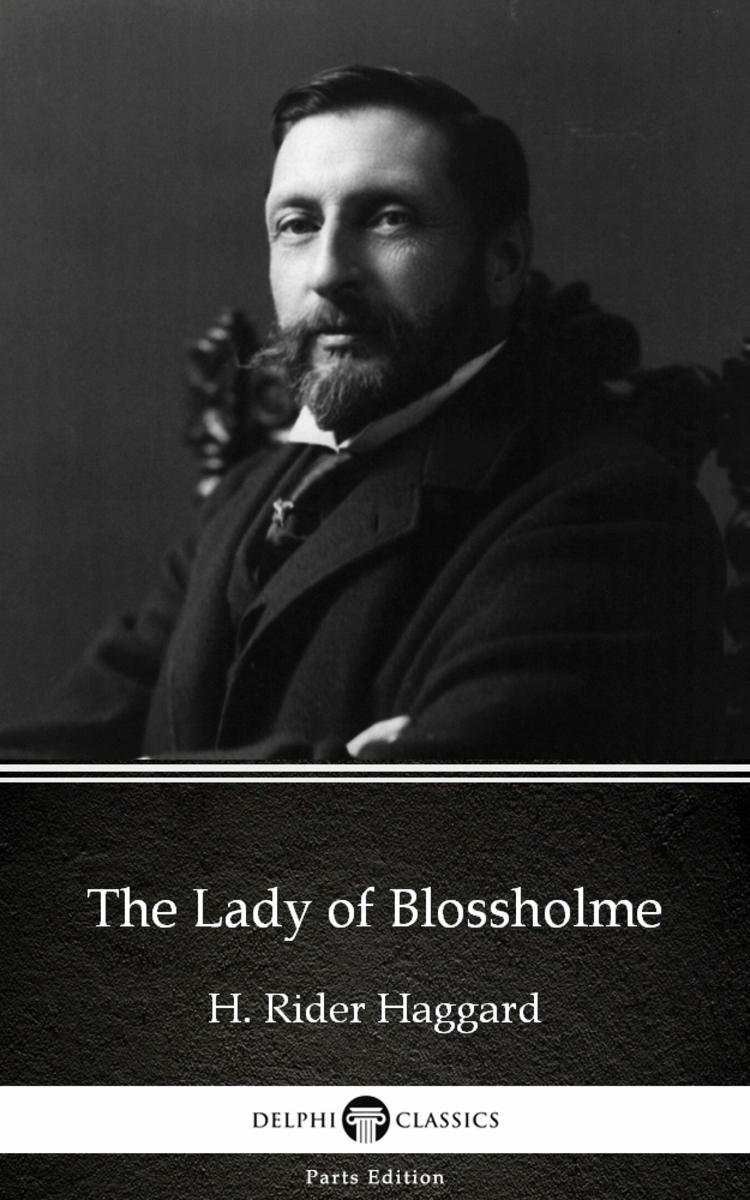
She
She
H. Rider Haggard
¥18.74
The War of the Worlds is a military science fiction novel by H. G. Wells. It first appeared in serialized form in 1897, published simultaneously in Pearson's Magazine in the UK and Cosmopolitan magazine in the US. The first appearance in book form was published by William Heinemann of London in 1898. It is the first-person narrative of the adventures of an unnamed protagonist and his brother in Surrey and London as Earth is invaded by Martians. Written between 1895 and 1897, it is one of the earliest stories that detail a conflict between mankind and an extraterrestrial race. The novel is one of the most commented-on works in the science fiction canon. The War of the Worlds has two parts, Book One: The Coming of the Martians and Book Two: The Earth under the Martians. The narrator, a philosophically-inclined author, struggles to return to his wife while seeing the Martians lay waste to southern England. Book One also imparts the experience of his brother, also unnamed, who describes events in the capital and escapes the Martians by boarding a ship near Tillingham, on the Essex coast. The plot has been related to invasion literature of the time. The novel has been variously interpreted as a commentary on evolutionary theory, British Imperialism, and generally Victorian superstitions, fears and prejudices. At the time of publication it was classified as a scientific romance, like his earlier novel The Time Machine. The War of the Worlds has been both popular (having never gone out of print) and influential, spawning half a dozen feature films, radio dramas, a record album, various comic book adaptations, a television series, and sequels or parallel stories by other authors. It has even influenced the work of scientists, notably Robert Hutchings Goddard. Plot SummaryYet across the gulf of space, minds that are to our minds as ours are to those of the beasts that perish, intellects vast and cool and unsympathetic, regarded this earth with envious eyes, and slowly and surely drew their plans against us.— H. G. Wells (1898), The War of the Worlds The Coming of the MartiansThe narrative opens in an astronomical observatory at Ottershaw where explosions are seen on the surface of the planet Mars, creating much interest in the scientific community. Later a "meteor" lands on Horsell Common, near the narrator's home in Woking, Surrey. He is among the first to discover that the object is an artificial cylinder that opens, disgorging Martians who are "big" and "greyish" with "oily brown skin," "the size, perhaps, of a bear," with "two large dark-coloured eyes," and a lipless "V-shaped mouth" surrounded by "Gorgon groups of tentacles." The narrator finds them "at once vital, intense, inhuman, crippled and monstrous." They briefly emerge, have difficulty in coping with the Earth's atmosphere, and rapidly retreat into the cylinder. A human deputation (which includes the astronomer Ogilvy) approaches the cylinder with a white flag, but the Martians incinerate them and others nearby with a heat-ray before beginning to assemble their machinery. Military forces arrive that night to surround the common, including Maxim guns. The population of Woking and the surrounding villages are reassured by the presence of the military. A tense day begins, with much anticipation of military action by the narrator.
Воздушные блинчики, оладьи, вафли.
Ivchenko Zorjana
¥17.99
Кра?на, яку залишили ?? творц?, винах?дники та мислител?, приречена на в?йну, голод ? смерть. Владу захоплюють нев?гласи, корупц?онери й мародери. ?стор?я трива? бодай тому, що одна вольова ж?нка на ?м’я Да?н? Та??арт переконана, що досконалий св?т справжн?х ц?нностей ?сну?. Вона намага?ться зламати сценар?й неминучо? катастрофи. ?? Атлантида не м?ф. У св?т? ще ? см?ливц?, спроможн? створити сусп?льний лад, де нема? конфл?кт?в, не виника? потреби в самопожертв?, жодна людина не становить загрози для мети ?нших. Бунт?вн? атланти знають, що розум таки переможе. Риторичне питання, хто такий Джон ?олт, насправд? ма? в?дпов?дь, а неймов?рн? ?де? — сво? вт?лення, яке проголомшу? людську уяву. В останн?й частин? свого фундаментального роману ?дей Айн Ренд змальову? ц?л?сну ф?лософську систему, яка дос? виклика? палк? дискус??, де в?д захвату до обурення — один крок.
Spiders
Spiders
Cecil Warburton
¥18.74
This book is called The White Spark as the white spark or vacuum cell in Nature IS THE RIGHT HAND OF GOD—it is a ubiquitous principle of the universe and is the cause and parent of electricity, combustion, radium, snow-flakes, flowers, trees, leaves, crystallization, wireless telegraphy, animal forms and EVEN LIFE ITSELF. This book is the key to every department of human endeavor, as it enunciates the basic principle and THE PRIME MOVER of the universe.?It tells the road to health, the cause and cure of disease, the truth about the germ humbug and drug treatments, serums and antitoxins. It shows why luminosity is produced on the flesh of various organisms, why a slice of pollock when first iced, then heated to 100 degrees and then thrust into a temperature of 50 degrees becomes luminous. It shows the farmer that he can become a magician of agriculture—tells that the nitrogen of the air is only a dust of quartz rocks, like the invisible moisture of the air is "a dust of water"—that the nodules on the roots of the clover and legumes do not abstract nitrogen from the air, for if they did nature would have placed these bacteriological growths on the vine and not the root, the scientists have the cart before the horse in this case and the nodular cells form the proteids from sand or silica, this book tells how it is done. It tells what a trance is and how the soul can leave the body temporarily. How JESUS CHRIST is carrying out the biblical prophesy by TELEPATHY. Gives the truths about the ideal society, alcohol, drunkenness, causes of crime, longevity and law.
Энциклопедия разумного огородника
Bublik Boris
¥17.74
Нельсон Мандела — п?вденноафриканський правозахисник, юрист, пол?тик, президент П?вденно-Африкансько? Республ?ки (1994 –??1999 рр.). Мандела був першим президентом ПАР, обраним на демократичних, не сфальсиф?кованих виборах. У сво?й трет?й книз? Нельсон Мандела в?дверто опису? ?н?ц?ац?ю африканських хлопчик?в, побут ? злидн? свого дитинства, навчання й одруження, народження ? смерть сво?х д?тей, жах самотност? в’язня на остров? Роббен ? вистраждану Свободу. Житт?вий досв?д та погляди Нельсона Мандели як н?коли актуальн? в контекст? нин?шн?х укра?нських реал?й, бо ?правда поляга? в тому, що ми ще не в?льн?, ми просто здобули свободу бути в?льними, право не бути пригноблюваними…справжн? випробування нашо? в?дданост? свобод? лише почина?ться?.??
Tales Of Humour, Gallantry and Romance: New from the Italian Tales (Illustrated)
Anonymous Anonymous
¥9.24
THE history, the features, and the most famous examples of European architecture, during a period extending from the rise of the Gothic, or pointed, style in the twelfth century to the general depression which overtook the Renaissance style at the close of the eighteenth, form the subject of this little volume. I have endeavoured to adopt as free and simple a mode of treatment as is compatible with the accurate statement of at least the outlines of so very technical a subject. Though it is to be hoped that many professional students of architecture will find this hand-book serviceable to them in their elementary studies, it has been my principal endeavour to adapt it to the requirements of those who are preparing for the professional pursuit of the sister arts, and of that large and happily increasing number of students who pursue the fine arts as a necessary part of a complete liberal education, and who know that a solid and comprehensive acquaintance with art, especially if joined to some skill in the use of the pencil, the brush, the modelling tool, or the etching needle, will open sources of pleasure and interest of the most refined description. The broad facts of all art history; the principles which underlie each of the fine arts; and the most precious or most noteworthy examples of each, ought to be familiar to every art student, whatever special branch he may follow. Beyond these limits I have not attempted to carry this account of Gothic and Renaissance architecture; within them I have endeavoured to make the work as complete as the space at my disposal permitted. THE architecture generally known as Gothic, but often described as Christian Pointed, prevailed throughout Europe to the exclusion of every rival for upwards of three centuries; and it is to be met with, more or less, during two others. Speaking broadly, it may be said that its origin took place in the twelfth century, that the thirteenth was the period of its development, the fourteenth that of its perfection, and the fifteenth that of its decline; while many examples of its employment occur in the sixteenth. In the following chapters the principal changes in the features of buildings which occurred during the progress of the style in England will be described. Subsequently, the manner in which the different stages of development were reached in different countries will be given; for architecture passed through very nearly the same phases in all European nations, though not quite simultaneously. It must be understood that through the whole Gothic period, growth or at least change was going on; the transitions from one stage to another were only periods of more rapid change than usual. The whole process may be illustrated by the progress of a language. If, for instance, we compare round-arched architecture in the eleventh century to the Anglo-Saxon form of speech of the time of Alfred the Great, and the architecture of the twelfth century to the English of Chaucer, that of the thirteenth will correspond to the richer language of Shakespeare, that of the fourteenth to the highly polished language of Addison and Pope, and that of the fifteenth to the English of our own day. We can thus obtain an apt parallel to the gradual change and growth which went on in architecture; and we shall find that the oneness of the language in the former case, and of the architecture in the latter, was maintained throughout. For an account of the Christian round-arched architecture which preceded Gothic, the reader is referred to the companion volume in this series. Here it will be only necessary briefly to review the circumstances which went before the appearance of the pointed styles.
Az acél csók
Az acél csók
Jeffery Deaver
¥119.27
1609 októberében?Fabricius Flóra, egy pozsonyi orvos lánya?Báthori Erzsébet ?udvarába érkezik, hogy megkeresse elt?nt n?vérét. Ha tudta volna, mi vár rá, talán útnak sem indul. Hamarosan megtanulja, semmi sem az, aminek látszik, és semmi sem biztos, csak a halál. Ki mozgatja vajon a szálakat? Ki az, aki befolyásolja az eseményeket, és a gyilkolástól sem riad vissza?? Minden erejére szüksége van, hogy legy?zze az akadályokat és kibogozza a s?tét titkot, melyet a csejtei vár falai rejtenek.? Egyetlen emberre számíthat csupán, az Itáliából érkezett, kétes jellem?, mégis rendkívül vonzó férfira, akir?l azt sem tudja pontosan, hogy kicsoda, és azt sem, miért segít neki.? R.?Kelényi Angelika, Terézanyu-díjas írón??17. század elején játszódóregénye kalandos, izgalmas, és vérfagyasztó t?rténetet mesél el, korh? t?rténelmi háttérbe helyezve.? Ahogy azt már megszokhattuk t?le, írása nem nélkül?zi a romantikát és a politikai cselsz?vést sem.?
Echo
Echo
E. K. Blair
¥119.27
1610-ben, egy borzalmas évet maga m?g?tt hagyva, Fabricius Flóra kénytelen Velencébe utazni.?A ?b?n?s ?r?m?k városába érve egy ismert és az urak által gyakran látogatott házban találja magát.?Vendéglátója nem más, mint a híres kurtizán, megment?jének édesanyja. Velence urai hamarosan versengeni kezdenek az ártatlan lány kegyeiért, ám ? csupán egyetlen férfi után vágyakozik,?Lorenzo Marianit azonban nem k?nny? ?r?kre rabul ejteni.?Flóra úgy d?nt, segít neki egy gyilkosság leleplezésében, noha az áldozatot egy cseppet sem szívlelte.?A szálak a legmagasabb k?r?kbe, a Collegió tagjai k?zé vezetnek, akik k?zül a legfiatalabb consiglieri bármit megadna, hogy a szép magyar lányt a magáénak tudhassa.?Képes lesz-e Flóra ellenállni a gazdagság és a hatalom csábításának??R. Kelényi Angelika, Az ártatlan cím? k?nyve második részében, egy izgalmas, kalandos és romantikus utazásra invitálja az olvasókat a 17. század Velencéjébe.?Ahogy azt már megszokhattuk, a regény t?rténete a hatalom, a vágy, a b?n és a szerelem gyilkos kombinációja, t?rténelmi korba ágyazva.?
Torzonborz megjavul
Torzonborz megjavul
Otfried Preussler
¥57.80
Te is szereted, ha lustán elnyújtózhatsz a parton, szikrázik a nap, szemed el?tt a nagy kékség, ?sszecsúszik a víz és az ég, nem szól a telefon és az sem foglalkoztat, mi t?rténik a k?z?sségi oldalakon? ?ppen kikérted a kedvenc koktélodat, koccintasz a szeretteiddel, majd belenyúlsz a strandtáskába és el?veszed azt a k?nyvet, ami elfeledtet veled minden gondot, és a nyaralásod idejére teljes kikapcsolódást ígér. Igen, ez az igazi Holiday-érzés! Fej?s ?va legújabb k?nyvében is gondoskodik arról, hogy vele utazzunk, akár ha otthon, a kedvenc karosszékünkbe ülve vesszük is kezünkbe a k?tetet. Romantika, b?nügyi szál, kaland, utazás, nosztalgia, boldogságkeresés vár ránk - akárcsak az eddigi k?tetekben.? ?s hogy mit?l más a Holiday? Ebben a k?nyvben hosszabb-r?videbb t?rténetekkel szórakoztat a szerz? - mindenki maga d?nti el az olvasási sorrendet, ahogyan a hangulata diktálja. Egy biztos: mire az olvasó a vaskos k?tet utolsó lapjához érkezik, és véget ér a "holiday", t?kéletesen felt?lt?dik - és talán ez lesz élete legmesésebb nyara.