


 购物车
购物车 个人中心
个人中心
Oracle Siebel CRM 8 Developer's Handbook
¥125.34
This book uses a real-life case study to provide easy-to-follow examples that are radically practical and can be easily adapted to similar situations in Siebel CRM implementation projects. The book ensures that you know what you are doing and why you are doing it by providing useful insight along with detailed practical instructions. It contains a multitude of explanatory tables, screenshots, and precise diagrams to illustrate the topics. When you have finished the book you will feel prepared to participate in Siebel CRM implementation projects. In addition you will be able to teach the "old dogs" some new tricks. This book is written for developers who want to develop their Siebel Tools skill set. While the book is intended for beginners, even experienced developers will benefit from the topics presented in this book. Preliminary exposure to or training on technical Siebel topics would be beneficial but is not mandatory before you start reading this book.
Microsoft Dynamics GP 2010 Reporting
¥107.90
Part tutorial, part reference guide, this book will show you how to create and manage reports as well as identify the most appropriate reporting tool for any reporting challenge. In addition, you will learn universal topics such as how to locate data for any given report. Although some of the reporting tools addressed in this book are exclusive to Dynamics GP 2010, many of the topics discussed also apply to older versions of GP. If you are a Microsoft Dynamics GP developer, consultant, or power user who wants to create and manage reports, then this book is for you. A working knowledge of Microsoft Dynamics GP is required. A basic understanding of business management systems and reporting applications such as Microsoft Excel and SQL Reporting Services is highly recommended.
Zenoss Core 3.x Network and System Monitoring
¥90.46
The book starts by covering installation and configuration, before moving on to administration and dashboard usage. It contains step-by-step instructions for setting up and using a working, capable Zenoss system. This book is written primarily for network and systems administrators who are monitoring their IT assets with Zenoss Core or who plan to monitor them. In reality, this book will benefit anyone, regardless of job title, who recognizes the importance of proactively monitoring the servers, routers, computers, websites, and devices that connect companies to customers.
Backtrack 4: Assuring Security by Penetration Testing
¥90.46
Written as an interactive tutorial, this book covers the core of BackTrack with real-world examples and step-by-step instructions to provide professional guidelines and recommendations to you. The book is designed in a simple and intuitive manner, which allows you to explore the whole BackTrack testing process or study parts of it individually. If you are an IT security professional or network administrator who has a basic knowledge of Unix/Linux operating systems including awareness of information security factors, and you want to use BackTrack for penetration testing, then this book is for you.
Panda3d 1.7 Game Developers Cookbook
¥80.65
This is a cookbook with over 80 recipes offering solutions to common game development problems with Panda3D with explained sample code and screenshots added in. If you are a developer with experience in Python, Panda3D, and optionally C++ and shading languages and you are looking for quick and easy to integrate solutions to common game development problems with Panda3D, this book is for you.
pfSense 2 Cookbook
¥80.65
This book is written in a cookbook style. Each chapter consists of recipes, each of which is composed of step-by-step instructions to complete a particular task. Each recipe also includes tips, alternatives, and references to other recipes or appropriate external sources. The book can be explored chapter by chapter or in no particular order. This book is intended for all levels of network administrators. If you are an advanced user of pfSense, then you can flip to a particular recipe and quickly accomplish the task at hand, while if you are new to pfSense, you can read chapter by chapter and learn all of the features of the system from the ground up.
IBM Lotus Domino: Classic Web Application Development Techniques
¥107.90
Chapters present principles and techniques in an order that roughly mirrors the application development process itself, from gathering requirements through final testing. The focus is on understanding and enhancing applications using classic techniques, in circumstances where it is impractical to rewrite applications using XPages. Each chapter focuses upon a particular aspect of Domino Web applications and provides guidance, recommendations, illustrations, and sample code. This book is for novice to moderately experienced Domino developers who are new to the task of Web-enabling traditional Domino applications. Readers should be familiar with using Domino Designer to develop applications for the Lotus Notes client. It is also assumed that readers have, or can acquire, at least rudimentary knowledge of HTML, CSS, and JavaScript.
ASP.NET MVC 4 Mobile App Development
¥80.65
A step-by-step tutorial to get acquainted with the ASP.NET MVC4 Framework and its features in order to discover how to develop web applications using them.This book is targeted at people who are familiar with C# development on the .NET platform and are interested in web development with the ASP.NET development framework. No prior web or mobile development experience is required
Apache Flume: Distributed Log Collection for Hadoop
¥66.58
A starter guide that covers Apache Flume in detail.Apache Flume: Distributed Log Collection for Hadoop is intended for people who are responsible for moving datasets into Hadoop in a timely and reliable manner like software engineers, database administrators, and data warehouse administrators
BeagleBone Home Automation Blueprints
¥80.65
Automate and control your home using the power of the BeagleBone Black with practical home automation projectsAbout This BookBuild, set up, and develop your circuits via step-by-step tutorial of practical examples, from initial board setup to device driver managementGet access to several kinds of computer peripherals to monitor and control your domestic environment using this guideThis book is spread across 10 chapters all focused on one practical home automation projectWho This Book Is ForThis book is for developers who know how to use BeagleBone and are just above the “beginner” level. If you want to learn to use embedded machine learning capabilities, you should have some experience of creating simple home automation projects.What You Will LearnBuild a CO (and other gas) sensor with a buzzer/LED alarm to signal high concentrationsLog environment data and plot it in a fancy mannerDevelop a simple web interface with a LAMP platformPrepare complex web interfaces in JavaScript and get to know how to stream video data from a webcamUse APIs to get access to a Google Docs account or a WhatsApp/Facebook account to manage a home automation systemAdd custom device drivers to manage an LED with different blinking frequenciesDiscover how to work with electronic components to build small circuitsUse an NFS, temperature sensor, relays, and other peripherals to monitor and control your surroundingsIn DetailBeagleBone is a microboard PC that runs Linux. It can connect to the Internet and can run OSes such as Android and Ubuntu. BeagleBone is used for a variety of different purposes and projects, from simple projects such as building a thermostat to more advanced ones such as home security systems.Packed with real-world examples, this book will provide you with examples of how to connect several sensors and an actuator to the BeagleBone Black. You’ll learn how to give access to them, in order to realize simple-to-complex monitoring and controlling systems that will help you take control of the house. You will also find software examples of implementing web interfaces using the classical PHP/HTML pair with JavaScript, using complex APIs to interact with a Google Docs account, WhatsApp, or Facebook. This guide is an invaluable tutorial if you are planning to use a BeagleBone Black in a home automation project.Style and approachThis step-by-step guide contains several home automation examples that can be used as base projects for tons of other home automation and control systems. Through clear, concise examples based on real-life situations, you will quickly get to grips with the core concepts needed to develop home automation applications with the BeagleBone Black using both the C language and high-level *ing languages such as PHP, Python, and JavaScript.
Multimedia Programming with Pure Data
¥80.65
A quick and comprehensive tutorial book for media designers to jump-start interactive multimedia production with computer graphics, digital audio, digital video, and interactivity, using the Pure Data graphical programming environment.An introductory book on multimedia programming for media artists/designers who like to work on interactivity in their projects, digital art/design students who like to learn the first multimedia programming technique, and audio-visual performers who like to customize their performance sets
BackTrack – Testing Wireless Network Security
¥54.49
Written in an easy-to-follow step-by-step format, you will be able to get started in next to no time with minimal effort and zero fuss.BackTrack: Testing Wireless Network Security is for anyone who has an interest in security and who wants to know more about wireless networks.All you need is some experience with networks and computers and you will be ready to go.
HTML5 Web Application Development By Example Beginner's guide
¥80.65
The best way to learn anything is by doing. The author uses a friendly tone and fun examples to ensure that you learn the basics of application development. Once you have read this book, you should have the necessary skills to build your own applications.If you have no experience but want to learn how to create applications in HTML5, this book is the only help you'll need. Using practical examples, HTML5 Web Application Development by Example will develop your knowledge and confidence in application development.
Learn HTML5 by Creating Fun Games
¥90.46
By teaching HTML5 by developing exciting games, the reader will see concrete applications for each of the concepts, and will also have a powerful deliverable at the end of each chapter – a fully functional game. We learn the various concepts using very abstract examples – how to model animals, foods, or fictitious machines. This makes learning and understanding a lot easier, and much more enjoyable.If you are are looking to get a good grounding in how to use the new awesome technology that is HTML5, this book is for you. Basic knowledge of HTML and/or HTML5 is welcome, but optional. The book is a friendly and exciting reference for beginners.
Advanced Oracle PL/SQL Developer's Guide - Second Edition
¥107.90
Master the advanced concepts of PL/SQL for professional-level certification and learn the new capabilities of Oracle Database 12cAbout This BookLearn advanced application development features of Oracle Database 12c and prepare for the 1Z0-146 examinationBuild robust and secure applications in Oracle PL/SQL using the best practicesPacked with feature demonstrations and illustrations that will help you learn and understand the enhanced capabilities of Oracle Database 12cWho This Book Is ForThis book is for Oracle developers responsible for database management. Readers are expected to have basic knowledge of Oracle Database and the fundamentals of PL/SQL programming. Certification aspirants can use this book to prepare for 1Z0-146 examination in order to be an Oracle Certified Professional in Advanced PL/SQL.What You Will LearnLearn and understand the key SQL and PL/SQL features of Oracle Database 12cUnderstand the new Multitenant architecture and Database In-Memory option of Oracle Database 12cKnow more about the advanced concepts of the Oracle PL/SQL language such as external procedures, securing data using Virtual Private Database (VPD), SecureFiles, and PL/SQL code tracing and profilingImplement Virtual Private Databases to prevent unauthorized data accessTrace, analyze, profile, and debug PL/SQL code while developing database applicationsIntegrate the new application development features of Oracle Database 12c with the current conceptsDiscover techniques to analyze and maintain PL/SQL codeGet acquainted with the best practices of writing PL/SQL code and develop secure applicationsIn DetailOracle Database is one of the most popular databases and allows users to make efficient use of their resources and to enhance service levels while reducing the IT costs incurred. Oracle Database is sometimes compared with Microsoft SQL Server, however, Oracle Database clearly supersedes SQL server in terms of high availability and addressing planned and unplanned downtime. Oracle PL/SQL provides a rich platform for application developers to code and build scalable database applications and introduces multiple new features and enhancements to improve development experience.Advanced Oracle PL/SQL Developer's Guide, Second Edition is a handy technical reference for seasoned professionals in the database development space. This book starts with a refresher of fundamental concepts of PL/SQL, such as anonymous block, subprograms, and exceptions, and prepares you for the upcoming advanced concepts. The next chapter introduces you to the new features of Oracle Database 12c, not limited to PL/SQL. In this chapter, you will understand some of the most talked about features such as Multitenant and Database In-Memory. Moving forward, each chapter introduces advanced concepts with the help of demonstrations, and provides you with the latest update from Oracle Database 12c context. This helps you to visualize the pre- and post-applications of a feature over the database releases. By the end of this book, you will have become an expert in PL/SQL programming and will be able to implement advanced concepts of PL/SQL for efficient management of Oracle Database.Style and approach The book follows the structure of the Oracle Certification examination but doesn't restrict itself to the exam objectives. Advanced concepts have been explained in an easy-to-understand style, supported with feature demonstrations and case illustrations.
Opa Application Development
¥54.49
It is a tutorial guide to learning how to use Opa with JavaScript, Nodejs, and MongoDB to develop web applications easily and effectively.If you are a web developer who wants to get started with the Opa framework and build web applications with itThen this book is for you. Web development experience is assumed and would be helpful.
Liferay Portal Performance Best Practices
¥63.21
A step-by-step tutorial on implementing Liferay- based portals to learn performance best practices.The book is good for Liferay portal developers and architects who want to learn performance best practices for implementing Liferay- based solutions. It is assumed that you have a working knowledge of the Liferay portal.
Instant Hands-on Testing with PHPUnit How-to
¥45.77
Filled with practical, step-by-step instructions and clear explanations for the most important and useful tasks. This is a Packt Instant How-to guide, which provides concise and clear recipes for getting started with PHPUnit for performing code testing and improving code quality."Instant Hands-on Testing with PHPUnit How-to" is for PHP developers that have an appreciation for writing accurate code. If you are new to PHPUnit, it will give you a solid foundation for understanding how to use PHPUnit to write tests for your projects. If you already have a cursory understanding of PHPUnit it will whet your appetite for some of the more difficult-to-understand concepts in PHPUnit.
Instant MapReduce Patterns – Hadoop Essentials How-to
¥50.13
Filled with practical, step-by-step instructions and clear explanations for the most important and useful tasks. This is a Packt Instant How-to guide, which provides concise and clear recipes for getting started with Hadoop.This book is for big data enthusiasts and would-be Hadoop programmers. It is also meant for Java programmers who either have not worked with Hadoop at all, or who know Hadoop and MapReduce but are not sure how to deepen their understanding.
IBM Cognos 10 Framework Manager
¥63.21
Presented in a hands-on style, this guide presents you with real world examples to guide you through every process step by step.This book will be useful for any developer, novice or expert, who uses Framework Manager to build packages, but wants to expand their knowledge even further.
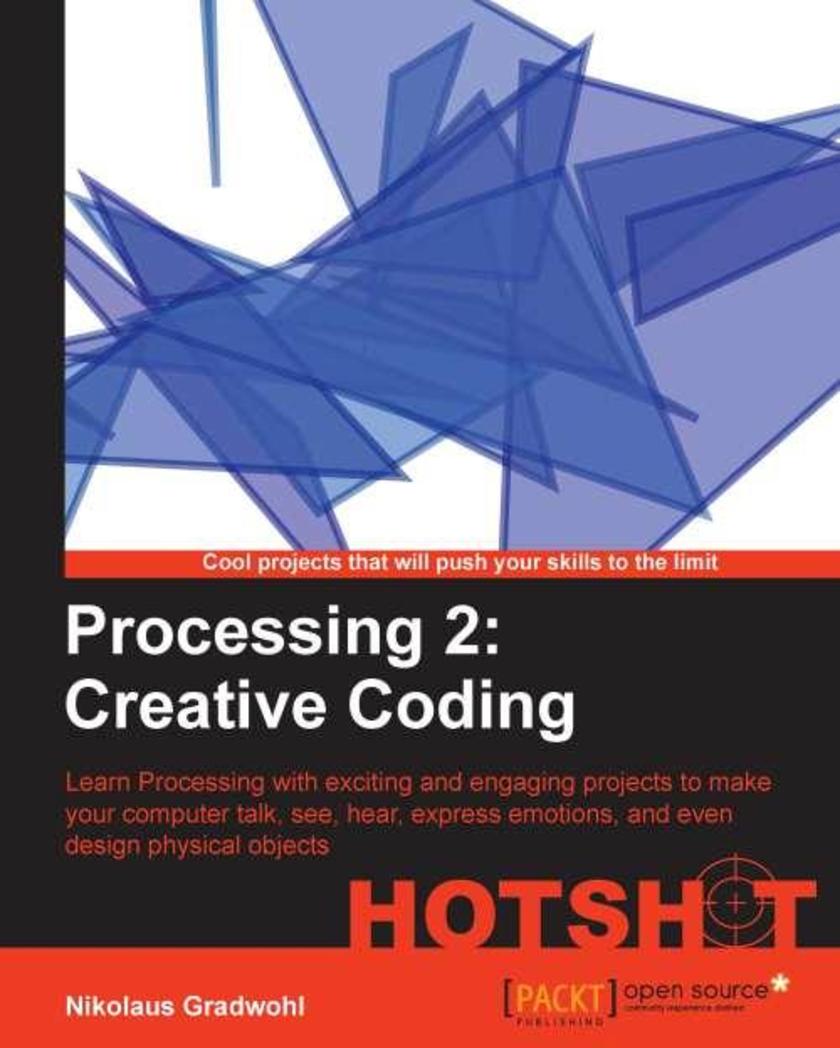
Processing 2: Creative Coding Hotshot
¥80.65
Using a project-based approach, you will be able to learn the coolest aspects of working with Processing. Each project contains step-by-step explanations, diagrams, screenshots, and downloadable material to make learning Processing even easier.This book targets Processing developers ,visual artists, creative professionals, and students who want to move to the next level of learning Processing for gaining inspiration, work, or just for fun. The book assumes a basic understanding of programming. However, this book is also recommended to non-artistic readers, looking to expand their graphics and develop their creativity.


