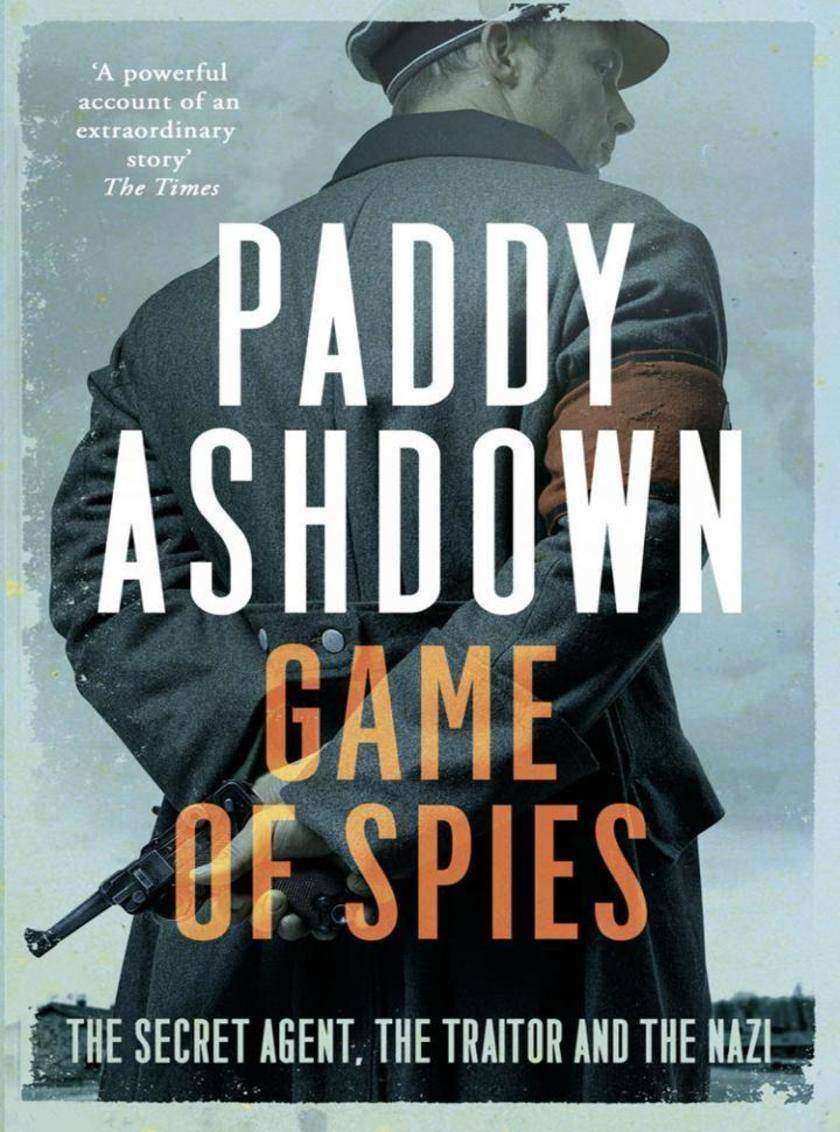
Game of Spies: The Secret Agent, the Traitor and the Nazi, Bordeaux 1942-1944
¥73.58
After service as a Royal Marine and as an intelligence officer for the UK security services, Paddy Ashdown was a Member of Parliament for Yeovil from 1983 to 2001, and leader of the Liberal Democrats from 1988 until 1999. Later he was the international High Representative for Bosnia and Herzegovina from 2002 to 2006. He was made a Knight Grand Cross of the Most Distinguished Order of Saint Michael and Saint George in 2006.
Zen in the Art of Writing
¥67.49
One of the greatest science fiction and fantasy writers of all time, Ray Bradbury was born in Waukegan, Illinois, in 1920. He moved with his family to Los Angeles in 1934. Since his first story appeared in Weird Tales when he was twenty years old, he published some 500 short stories, novels, plays, scripts and poems. Among his many famous works are Fahrenheit 451, The Illustrated Man and The Martian Chronicles. Ray Bradbury died in 2012 at the age of 91.
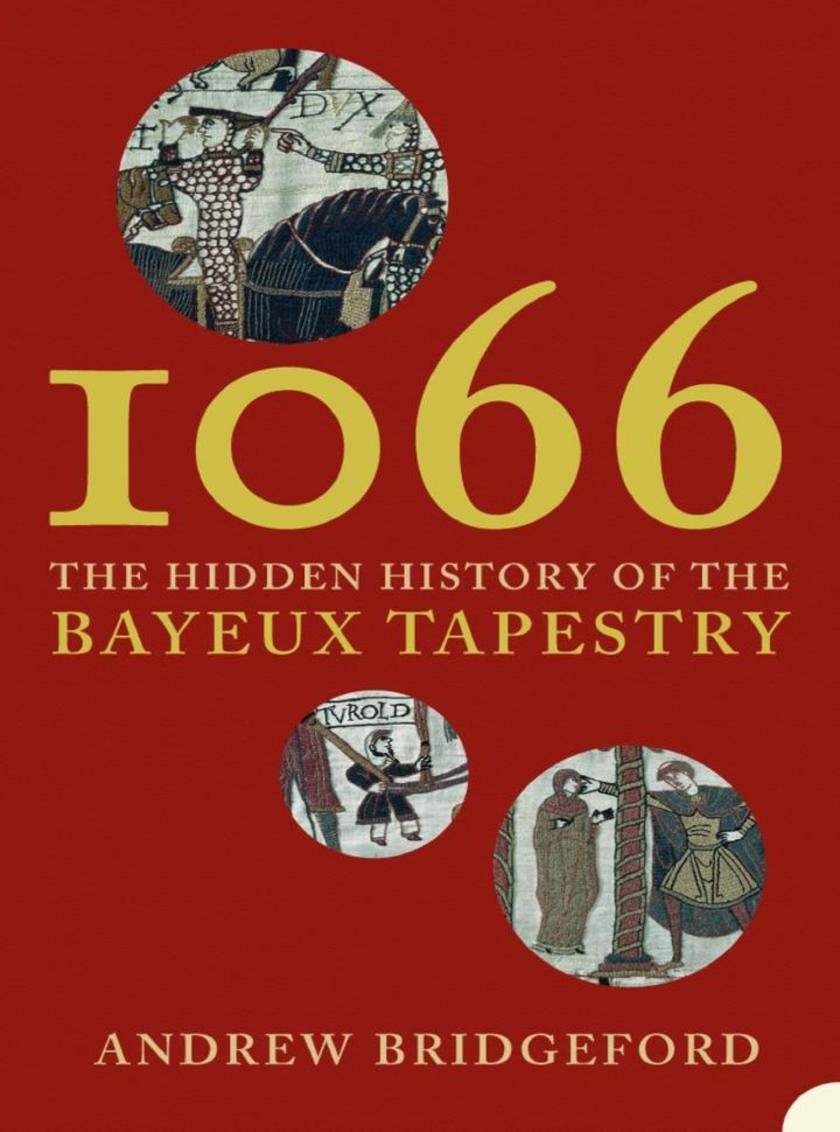
1066: The Hidden History of the Bayeux Tapestry
¥85.74
Five miles from the coast at Arromanches, in the gently shelving valley of the River Aure, lies the historic Norman town of Bayeux. From a distance the medieval cathedral emerges first into view, a faint impression of towers and spires, which gradually falls into sharper perspective as you approach the fringes of the town. War has touched Bayeux, but not scarred it. A ring road circumscribes the old centre, like a protective wall, and within its confines lies a network of shadowy streets and old stone buildings; and here and there the late-medieval frontage of a half-timbered house protrudes into the sunlight, as if it had emerged unwittingly out of the past into the present. At the centre of the town rises the enormous cathedral, a Gothic masterpiece built upon a Romanesque shell, its stark western towers, completed in the days of William the Conqueror, still soaring above the family of little houses gathered closely around its base. But it is not the cathedral, remarkable as it is, that every year draws half a million visitors to Bayeux. They come to see one of the most famous, intricate and mysterious works of art that has ever been made. Signs directing you to this masterpiece are dotted around the centre of the town. They are marked with a single descriptive word, in French and in English: ‘Tapisserie. Tapestry’. Here, in Bayeux, anything else would be redundant.
Railway Day Trips: 160 classic train journeys around Britain
¥95.06
From a very young age Julian Holland has had a fascination with railways. He is a writer and photographer on many railway books, including the highly acclaimed and award winning The Times Mapping the Railways (2011), Exploring Britain’s Lost Railways (2013) and Great Railway Journeys of the World (HarperCollins, 2014). As well as being passionate about train travel, Julian is a leading commentator in the media on railways.
To Catch A King: Charles II's Great Escape
¥73.58
Charles Spencer was educated at Eton College and obtained his degree in Modern History at Magdalen College, Oxford. He was a reporter on NBC’s Today show from 1986 until 1995, and is the author of four books, including the Sunday Times bestseller Blenheim: Battle for Europe (shortlisted for History Book of the Year, National Book Awards) and Prince Rupert: The Last Cavalier.
Rites of Peace: The Fall of Napoleon and the Congress of Vienna
¥80.25
Following on from his epic ‘1812: Napoleon's Fatal March on Moscow’, bestselling author Adam Zamoyski has written the dramatic story of the Congress of Vienna. In the wake of his disastrous Russian campaign of 1812, Napoleon's imperious grip on Europe began to weaken, raising the question of how the Continent was to be reconstructed after his defeat. There were many who dreamed of a peace to end all wars, in which the interests of peoples as well as those of rulers would be taken into account. But what followed was an unseemly and at times brutal scramble for territory by the most powerful states, in which countries were traded as if they had been private and their inhabitants counted like cattle. The results, fixed at the Congress of Vienna in 1815, not only laid the foundations of the European world we know; it put in place a social order and a security system that lie at the root of many of the problems which dog the world today. Although the defining moments took place in Vienna, and the principle players included Tsar Alexander I of Russia, the Austrian Chancellor Metternich, the Duke of Wellington and the French master of diplomacy Talleyrand, as well as Napoleon himself, the accepted view of the gathering of statesmen reordering the Continent in elegant salons is a false one. Many of the crucial questions were decided on the battlefield or in squalid roadside cottages amid the vagaries of war. And the proceedings in Vienna itself were not as decorous as is usually represented. Drawing on a wide range of first-hand sources in six languages, which include not only official documents, private letters, diaries and first-hand accounts, but also the reports of police spies and informers, Adam Zamoyski gets below the thin veneer of courtliness and reveals that the new Europe was forged by men in thrall to fear, greed and lust, in an atmosphere of moral depravity in which sexual favours were traded as readily as provinces and the 'souls' who inhabited them. He has created a chilling account, full of menace as well as frivolity.
The Nineties: When Surface was Depth
¥72.99
the first clear anatomy of a confused decade, the 1990s – ‘Bracewell, with great verve and style, animates the cultural conversation’, Greil Marcus 'Michael Bracewell is the most adroitly gifted writer of his generation.' Morrissey Michael Bracewell is now clearly established as one of the most subtle, penetrating, amusing and far-sighted of all observers of the contemporary scene in Britain. His writing on culture high and low is coveted by every broadsheet, every stylish glossy monthly magazine and on radio and TV punditry platforms. His book, England Is Mine, about the distinctive Englishness of these islands’ twentieth-century popular culture, earned him incredible reviews and an unchallenged position as the first person any right-minded arts producer/editor turns to when they need a definitive opinion about how English or otherwise some new-fangled cultural phenomenon is. With this book Bracewell gives us the first consideration of that still-warm, still-bizarre, still-confused and confusing decade. He talks to and talks about a host of representative Nineties figures, some already forgotten, some absolutely emblematic of their times – from Hanson to Alexander McQueen, from Tracey Emin to Ulrika Jonsson, from the Spice Girls to Duran Duran (yes, Duran Duran). Painstakingly, sometimes painfully, he puts all the pieces together and starts to make sense of it all…
The Last Veteran: Harry Patch and the Legacy of War
¥73.58
This moving and timely book explores the way the First World War has been thought about and commemorated, and how it has affected its own, and later, generations. On 11 November 1920, huge crowds lined the streets of London for the funeral of the Unknown Warrior. As the coffin was drawn on a gun carriage from the Cenotaph to Westminster Abbey, the King and Ministers of State followed silently behind. The modern world had tilted on its axis, but it had been saved. Armistice Day was born, the acknowledgement of the great sacrifice made by a whole generation of British men and women. Now, almost a century later, Harry Patch, the last British veteran who saw active service, has died. Our final link with the First World War is broken. Harry Patch was born in 1898 and was con*ed in 1916. He served with a Lewis gun team at the Battle of Passchendaele and in September 1917 was wounded by a shell that killed three of his comrades. After the war, Patch returned to Somerset to work as a plumber, a job he continued to do until his retirement. The First World War was fought not by a professional army but by ordinary civilians like Patch, who epitomised Edwardian Britain and the sense, now lost, of what Britain stood for and why it was worth fighting for. The Last Veteran tells Patch's story, and explores the meaning of the war to those who fought in it and the generations that have followed. Peter Parker's illuminating and timely book is a moving tribute to a remarkable generation.
The Slow Fix: Solve Problems, Work Smarter and Live Better in a Fast World
¥68.67
What do we do when things go wrong in a fast world? Many of us go for the quick fix that delays the problem rather than solving it. To make real progress we need real solutions – we need to take time for THE SLOW FIX. People have long been in search of a quick fix. Truth is, it doesn’t work. The problems facing us today are bigger and more urgent than ever before and we need to learn to start fixing things properly, rather than settling for short-term solutions. The Slow Fix offers real, life-changing solutions to tackling these problems and extends the movement defined by Carl Honore in his global bestseller, In Praise of Slow, to offer a recipe for problem-solving that can be applied to every walk of life, from business and politics to relationships, education and health reform.
The Birth of Modern Britain: A Journey into Britain’s Archaeological Past
¥76.91
From the author of ‘Britain BC’, ‘Britain AD’ and ‘Britain in the Middle Ages’ comes the fourth and final part in a critically acclaimed series on Britain's hidden past. The relevance of archaeology to the study of the ancient world is indisputable. But, when exploring our recent past, does it have any role to play? In ‘The Birth of Modern Britain’ Francis Pryor highlights archaeology’s continued importance to the world around us. The pioneers of the Industrial Revolution were too busy innovating to record what was happening around them but fortunately the buildings and machines they left behind bring the period to life. During the Second World War, the imminent threat of invasion meant that constructing strong defences was much more important than keeping precise records. As a result, when towns were flattened, archaeology provided the only real means of discovering what had been destroyed. Surveying the whole post-medieval period, from 1550 until the present day, Francis Pryor takes us on an exhilarating journey, bringing to a gripping conclusion his illuminating study of Britain’s hidden past.
Twenty-One: Coming of Age in World War II
¥72.99
World War II affected the lives of ordinary men and women more directly than any other conflict before or since. This is an unprecedented look at the lives of twenty-one young men who answered their country’s call to arms and left their homes to fight in unfamiliar and far-reaching corners of the globe. Many never returned, and those who did found their homes and countries much changed by long years of war. Most discovered they had become different people: having seen death and destruction on a scale they had never imagined they would witness, the return to civilian life was often far from easy. Now, more than sixty years on, this remarkable generation is fading. Most are now over eighty and around the world more than two thousand veterans of the war are passing away every day. In this new book ‘Sunday Times’ bestselling author James Holland recounts the real-life stories of twenty-one young men from around the world who served in different services and theatres of the war. Whether it be the Byers brothers from Canada or Bill Laity from Cornwall, Wlad Rubnikowicz from Poland or Tom Finney from Preston, each began the war with little idea of what lay in store; and yet, each displayed astonishing courage, fortitude and resilience, united by a sense of honour and duty, and bound by the fellowship of their comrades. Often reacting in very different ways to the strange and frequently terrifying situations in which they found themselves, they each suffered hardships and loss, making sacrifices that have ensured a lasting peace amongst the warring nations; and if some of these survivors are perplexed by how the world has developed, none doubts the value of what they did all those years ago. Moving, poignant, and conveying all the drama, tension and fear experienced in war, ‘Twenty-One’ is an uplifting tribute to a passing generation, describing the wide range of experiences and extremes these remarkable men and women witnessed during World War II. Note that it has not been possible to include the same picture content that appeared in the original print version.
SOE Manual: How to be an Agent in Occupied Europe
¥54.65
The actual course given to all secret agents in SOE before working behind enemy lines. It includes everything you needed to know to go undercover – from documents, cover stories and how to live off the land to how to get through an interrogation. The Special Operations Executive (SOE) was a secret British World War II organisation formed in 1940 to conduct espionage, sabotage and reconnaissance in occupied Europe against the Axis powers, and to aid local resistance movements. In late 1942, SOE was asked to increase the number of agents to aid the invasion of mainland Europe. Part of agent training was ‘tradecraft’ – the practical details on how to be a clandestine agent behind enemy lines – which every agent had to attend at various bases centred around Beaulie in Hampshire. The course was a set of lectures and this book contains the actual text of those lectures which were discovered in the National Archives this year. It is not only a fascinating insight into the workings of one of the Second World Wars most famous and secretive organisations, but is also a reminder of the huge danger anyone being dropped behind enemy lines had to face. SYLLABUS Introduction to Course. Individual Security. Informant Service. Cover. Interrogations. Operational Orders. Know your Enemy. Surveillance. Internal Communications. Premises. Security and Premises for W/T Operator. W/T Operator. External Communications. Organisation. Cell System. Security of Organisation. Recruiting. Discipline and Morale. Burglary. Lock-picking. Selection of Dropping Points and Reception Arrangements. To be given on instructions from London.). Handcuffs. Pigeons. German Counter Espionage. German Uniformed Police. National Police – e.g. of France, Belgium etc. (Given according to student's destination.). The Nazi Party and its Formations in Occupied Territory. Recognition of German Troops by weapons and equipment. Recognition of German Troops by uniforms. Military Intelligence Reports. Handling of German Light Weapons. Morale Warfare. Methods of Morale Warfare. Subversion of enemy troops. Instructions for Foreign Workers in Germany. Passive Resistance in Occupied Countries. Current German Propaganda to Europe. Tasks Preparatory to Allied arrival.
Leviathan:The Rise of Britain as a World Power
¥95.75
For viewers of BBC One’s ‘Britain and the Sea’, ‘Leviathan’ is a must-read; overturning long-held beliefs about our ancestry and weaving together the disparate strands that made the fabric of the Empire. The 350 years between the accession of the Tudors and the beginning of the Victorian era saw one of the great transformations of any nation in history:Britain emerged from its lowly position as European underdog to become the world's only maritime superpower. It was a period that saw the creation of Protestant kingdoms in England and Scotland, the gain and loss of American colonies and the beginnings of a new empire in Africa, India and Australasia. It is a slice of our past represented by some of the most compelling personalities to have graced the historical stage – Elizabeth I, Nelson, Cromwell and Byron amongst them. In this wide-ranging yet succinct history, David Scott challenges some of our longest held beliefs in how Britain achieved its constitutional might. Where other histories have concentrated on a narrow chronology, 'Leviathan:A World of Ships and Men' encompasses a broad spectrum, tracing the connections made across time as never before.
Nature Near London (Collins Nature Library)
¥147.35
The Collins Nature Library is a new series of classic British nature writing – reissues of long-lost seminal works. The titles have been chosen by one of Britain’s best known and highly acclaimed nature writers, Robert Macfarlane, who has also written new introductions that put these classics into a modern context. Nature Near London is a collection of observational pieces from locations near London at the end of the 19th Century. The depth of knowledge and of familiarity with particular places and particular species gives the impression that each small piece is the product of many years of observation. His style of observation is a work in miniature – cataloguing the most minute details; the dancing of a flower in the wind or the darting of a cautious trout. The chapters centre on a special place, a certain species, geographical feature or habitat – everything from orchards and copses to rivers and streams. Jefferies always explains the typical behaviour of whatever he is describing, and often contrasts what he sees with what one would expect to see in another part of the country, or in a different season. His knowledge of flowers is wide-ranging, and his ability to describe one particular patch of a field in such a specific way brings tremendous variety to the chapters that make up the book. The final chapters are a departure – both from the character of the rest of the book, and from London itself, as Jefferies boards the train to Brighton. Suddenly he is describing people and their relationship to nature, as much as nature itself. The scope widens, less a work in miniature, more surging towards a triumphant end as Jefferies becomes ever more philosophical. 100 years on, the book becomes even more relevant than when it was published – as a reminder of the dangers of unrelenting urbanisation, but also the context of the trend that aims to recreate nature where we need it most – around our cities. Nature near London is a portrait of what we’ve lost, and a reminder of nature’s positive and calming influence. Going along with Jefferies is like taking an afternoon stroll out of the city, without having to leave your armchair.
Battle for the Falklands:The Winter War
¥54.65
‘Boldly planned, bravely executed and brilliantly accomplished’ was Margaret Thatcher’s assessment of the Falklands campaign. But what did the war mean to the men in the trenches and below decks? This gripping first-hand account of the Falklands War, written by bestselling military historian Patrick Bishop and Sunday Times Editor John Witherow, reveals the true experiences of the British soldiers and seamen on the front line. The authors, then rookie reporters, lived alongside the fighting men, experiencing the daily realities of a British task force that was hugely outnumbered on a barren island 8,000 miles from home. The Falklands: The Winter War looks at the covert role of the SAS and the heroic death of Colonel ‘H’ Jones at Goose Green, and considers just how close Britain came to defeat. This is an extraordinarily frank and unsparing account of a military campaign that has held a defining place within the British national conscience since victory in 1982.
A History of Food in 100 Recipes
¥114.48
The ingredients, cooks, techniques and tools that have shaped our love of food. We all love to eat and most of us have a favourite ingredient or dish. In today's world we can get the food we want, when we want it, but how many of us really know where our much-loved recipes come from, who invented them and how they were originally cooked? In this book William Sitwell, culinary expert on BBC2's 'A Question of Taste' and editor of Waitrose Kitchen magazine, takes us on a colourful, whirlwind journey as he explores the fascinating history of cuisine. This book is a celebration of the great dishes, techniques and above all brilliant cooks who have, over the centuries, created the culinary landscape we now enjoy. Any lover of fine food who has ever wondered about the origins of the methods and recipes we now take for granted will find A History of Food in 100 Recipes required reading. As well as shining a light on food's glorious past, there are contributions from a glittering array of stars of British cuisine, including Marco Pierre White, Delia Smith, Heston Blumenthal, Nigella Lawson and Jamie Oliver. In an incisive and humorous narrative, Sitwell enters an Egyptian tomb to reveal the earliest recipe for bread and discovers the greatest party planner of the Middle Ages. He uncovers the extraordinary and poetic roots of the roast dinner and tells the heart-rending story of the forgotten genius who invented the pressure cooker. And much, much more.
The Ocean Railway
¥81.52
An epic social history of steamship travel from the 19th-century to the ‘Lusitania’, the ‘Mauretania’ and the ‘Titanic’. The great transatlantic steamships became emblems of an age, of a Victorian audacity of spirit-cathedrals to man's harnessing of new technology. Through the innovations and designs of key engineers and shipping magnates – Samuel Cunard, Isambard Kingdom Brunel and Edward Knights Collins – ‘the largest movable objects in human history' were created. To the wealthy, steamships represented glamorous travel, but to most they offered cheap passage out of Europe to the New World. At their peak, steamships delivered one million new Americans each year, transforming the world’s oceans from barriers into highways. In this fascinating history, Stephen Fox chronicles the tragedies that marked the evolution of the ocean liner, including the 1852 sinking of the ‘Arctic’, with the loss of three hundred and twenty-two lives, and the early 20th-century losses of the ‘Lusitania’ and the ‘Titanic’. Using contemporary records, diaries and writing, he penetrates the experience of transatlantic passage and examines the societies created on the vast floating cities, ‘a kind of third human environment, neither land nor sea but partaking of each, and bridging them in unprecedented ways’.
LZ-’75: Across America with Led Zeppelin
¥18.74
Stephen Davis’s brilliantly-written personal account of criss-crossing America with Led Zeppelin on their 1975 tour. A warts-and-all snapshot of the world’s biggest hard-rock band at their peak. As a young rock writer Stephen Davis landed the ultimate commission – touring America with Led Zeppelin. This is a personal account by Davis of his journey, which saw him crossing the country with the band on board the Starship, their famous Boeing passenger jet, complete with deep shag purple carpet, electric pianos, girlfriends and star-struck hangers-on. This is also the story of one of the hardest-living bands in the world at their peak. For Robert Plant, Jimmy Page, John Paul Jones and John Bonham, the most beautiful women in America tear their spangled jackets from them and riots start outside their gigs. LZ-75 captures a few perfect months in rock, when Led Zeppelin epitomised the free-living rock dream, but, like Icarus, their wings were already beginning to melt. It wouldn't be long before John Bonham died of a vodka overdose, and punk killed their brand of monumental rock. With it's up-close-and-personal accounts of band members, managers, groupies, fans and drug-dealers, there's a lot of Almost Famous about this book – Led Zep's 1975 tour is in fact the very one on which Cameron Crowe's film was based. Stephen Davis was barely twenty in 1975, but now he is recognised as one of the best rock writers in the world. He is the author of the mega-selling Hammer of the Gods – a biography of Led Zeppelin. He recently unearthed his notebooks of the 1975 tour – which he didn't use for Hammer of the Gods – to write LZ-75. LZ-75: Across America with Led Zeppelin is a wonderful and unique thing – a beautifully succinct account of a single moment in rock, when no lyric was too far-fetched, no drink went undrunk and no expense was ever, ever spared. It's a moment that will never be repeated.
Dragonflies (Collins New Naturalist Library, Book 106)
¥192.67
Dragonflies are among the most ancient of living creatures – few insect groups fascinate as much or are more immediately recognisable. In this seminal new work, Philip Corbet and Stephen Brooks examine the behaviour, ecology and distribution of dragonflies in Britain and Ireland, placing emphasis on the insects' habitats and also on measures needed to conserve them. Published in 1960 – with Philip Corbet as contributing author – volume 41 of the New Naturalist series provided the first in-depth study of the biology of British dragonflies, helping to inspire many people to take an interest in these intriguing insects. In this new volume, Corbet has teamed up with Stephen Brooks, offering a fascinating new outlook on the natural history of dragonflies. The authors have combined their knowledge and experience to help illuminate the relevance of British dragonfly species, placing them in the overall context of natural history from a broader, worldwide perspective. Illustrated with beautiful photography throughout, New Naturalist Dragonflies explores all aspects of the biological significance of dragonfly behaviour, thus revealing the beauty and hidden complexity of these powerful, agile, flying predators.
Woodlands (Collins New Naturalist Library, Book 100)
¥95.75
The 100th volume of the prestigious New Naturalist series, written by one of Britain's best-known naturalists, explores the significance and history of woodlands on the British landscape ‘Trees are wildlife just as deer or primroses are wildlife. Each species has its own agenda and its own interactions with human activities…’ This 100th volume of the New Naturalist series presents a landmark in natural history publishing. Looking at such diverse evidence as the woods used in buildings and ships, and how woodland has been portrayed in pictures and photographs, Rackham reconstructs British woodland through the ages. Aimed at the non-specialist, ‘New Naturalist Woodlands’ investigates what woods are and how they function. In lively style, Rackham takes us through: ? How woods evolved and how they are managed, ? The basic botany (understanding roots, partnerships, longevity, tree-rings), ? Outline of woodland history, ? Pollen analysis and wildwood, ? Archives of woodland and how to study them, ? Different types of woodland, ? The rise and fall of modern forestry. Illustrated with beautiful colour photographs throughout, this New Naturalist is set to be a classic for collectors and general readers alike.
British Game (Collins New Naturalist Library, Book 2)
¥456.66
British Game ranges beyond the strict legal interpretation of game and is full of interesting details about the birds and beasts that should interest sportsmen. Collins are delighted to announce the republication in facsimile form of the first editions of the very first volumes in the New Naturalist Library. Originally planned in the darkest days of World War II and first published in 1945, this series is the longest running nature series in the world. It is a reflection of the quality of the authors and the books they wrote, that they are still sought after 73 years later. The books will be identical in every way to the original first editions, including the iconic jackets by Clifford and Rosemary Ellis.

购物车
个人中心