


 购物车
购物车 个人中心
个人中心

The Winning of the West: all four volumes
¥8.09
Volume 1 - from the Alleghanies to the Mississippi 1769-1776; Volume 2 - from the Alleghanies to the Mississippi 1777-1783; Volume 3 -- The Founding of the Trans-Alleghany Commonwealths 1784-1790; Volume 4 - Louisiana and the Northwest 1791-1807. According to Wikipedia: "Theodore Roosevelt (October 27, 1858 – January 6, 1919), also known as T.R., and to the public (but never to friends and intimates) as Teddy, was the 26th President of the United States. A leader of the Republican Party and of the Progressive Party, he was a Governor of New York and a professional historian, naturalist, explorer, hunter, author, and soldier. He is most famous for his personality: his energy, his vast range of interests and achievements, his model of masculinity, and his "cowboy" image. Originating from a story from one of Roosevelt's hunting expeditions, teddy bears are named after him."

Critique of Practical Reason
¥8.09
According to Wikipedia: "Immanuel Kant (22 April 1724 – 12 February 1804) was an 18th-century German philosopher from the Prussian city of K?nigsberg (now Kaliningrad, Russia). He is regarded as one of the most influential thinkers of modern Europe and of the late Enlightenment. Kant created a new widespread perspective in philosophy which is influencing enlightened philosophy until the 21st Century. He published important works of epistemology as also scripts in coherence to religion, law and history. His most important work is the Critique of Pure Reason, an investigation into the limitations and structure of reason itself. It encompasses an attack on traditional metaphysics and epistemology, and highlights Kant's own contribution to these areas. The other main works of his maturity are the Critique of Practical Reason, which concentrates on ethics, and the Critique of Judgment, which investigates aesthetics and teleology."
American Lutheranism
¥8.09
According to Wikipedia: "Lutheranism is a major branch of Western Christianity that identifies with the teachings of the sixteenth-century German Reformer Martin Luther. Luther's efforts to reform the theology and practice of the Catholic Church launched the Protestant Reformation and, through the reactions of his contemporaries, left Western Christianity divided. The split between Lutherans and the Roman Church of his time arose mainly over the doctrine of justification before God. Specifically, Lutheranism advocates a doctrine of justification "by grace alone through faith alone because of Christ alone," which varied from the Roman view of "faith formed by love", or "faith and works". Lutheranism is also distinct from the Reformed Churches, which arose during the Reformation. Unlike the Reformed Churches, Lutherans have retained many of the sacramental understandings and liturgical practices of the pre-Reformation Church. Lutheran theology differs considerably from Reformed theology in its understanding of divine grace and predestination to eternity after death."
Institutes of the Christian Religion
¥8.09
According to Wikipedia: "John Calvin (né Jean Cauvin; 10 July 1509 – 27 May 1564) was an influential French theologian and pastor during the Protestant Reformation. He was a principal figure in the development of the system of Christian theology later called Calvinism. Originally trained as a humanist lawyer, he suddenly converted and broke from the Roman Catholic Church in the 1520s. After a violent uprising against Protestants in France, he was forced to flee to Basel, Switzerland, where in 1536 he published the first edition of his seminal work, Institutes of the Christian Religion. Calvin was invited by William Farel to help reform the church in Geneva. However, the city council resisted the implementation of Calvin and Farel's ideas and both were expelled. At the invitation of Martin Bucer, Calvin proceeded to Strasbourg where he became the minister of a church of French refugees. He continued to support the reform movement in Geneva, and was eventually invited back to lead its church. Following his return he introduced new forms of church government and liturgy, despite the opposition of several powerful families in the city who tried to curb his authority. During this period, Michael Servetus, a Spaniard known for his heretical views, arrived in Geneva. He was denounced by Calvin and executed by the city council. Following an influx of supportive refugees and new elections to the council, Calvin's opponents were forced out. He spent his final years promoting the Reformation both within Geneva and throughout Europe."
Pulpit and Press
¥8.09
According to Wikipedia: "Mary Baker Eddy (born Mary Morse Baker July 16, 1821 – December 3, 1910) was the founder of the Christian Science movement. Deeply religious, she advocated Christian Science as a spiritual practical solution to health and moral issues. She wrote Science and Health with Key to the Scriptures, founded The First Church of Christ, Scientist of Boston in 1879, and several periodicals including The Christian Science Monitor. She took the name Mary Baker Glover from her first marriage and was also known as Mary Baker Glover Eddy or Mary Baker G. Eddy from her third marriage. She did much spiritual teaching, lecturing, and instantaneous healing. Her influence continues to grow through her writings."
The Naval War of 1812
¥8.09
Dodo Collections brings you another classic from Theodore Roosevelt, ‘The Naval War of 1812.’ ? Roosevelt was 23 when this was published. He had just been elected to the New York State Assembly; it was begun as his senior thesis at Harvard. A masterpiece, for those of us who relish naval history. This is a remarkable piece of historical writing, based on original documents, ships’ logs, letters, official correspondence, study of blueprints and plans. He had to learn about sailing while he was writing the book. ? Theodore Roosevelt, Jr., also known as T.R., and to the public (but never to friends and intimates) as Teddy, was the twenty-sixth President of the United States, and a leader of the Republican Party and of the Progressive Movement. He became the youngest President in United States history at the age of 42. He served in many roles including Governor of New York, historian, naturalist, explorer, author, and soldier. Roosevelt is most famous for his personality: his energy, his vast range of interests and achievements, his model of masculinity, and his "cowboy" persona. Roosevelt was mostly home schooled by tutors and his parents. ? Biographer H. W. Brands argues that "The most obvious drawback to the home schooling Roosevelt received was uneven coverage of the various areas of human knowledge." He was solid in geography (as a result of self study during travels), and bright in history, biology, French, and German; however, he struggled in mathematics and the classical languages. He entered Harvard College on September 27, 1876; his father told him "Take care of your morals first, your health next, and finally your studies".
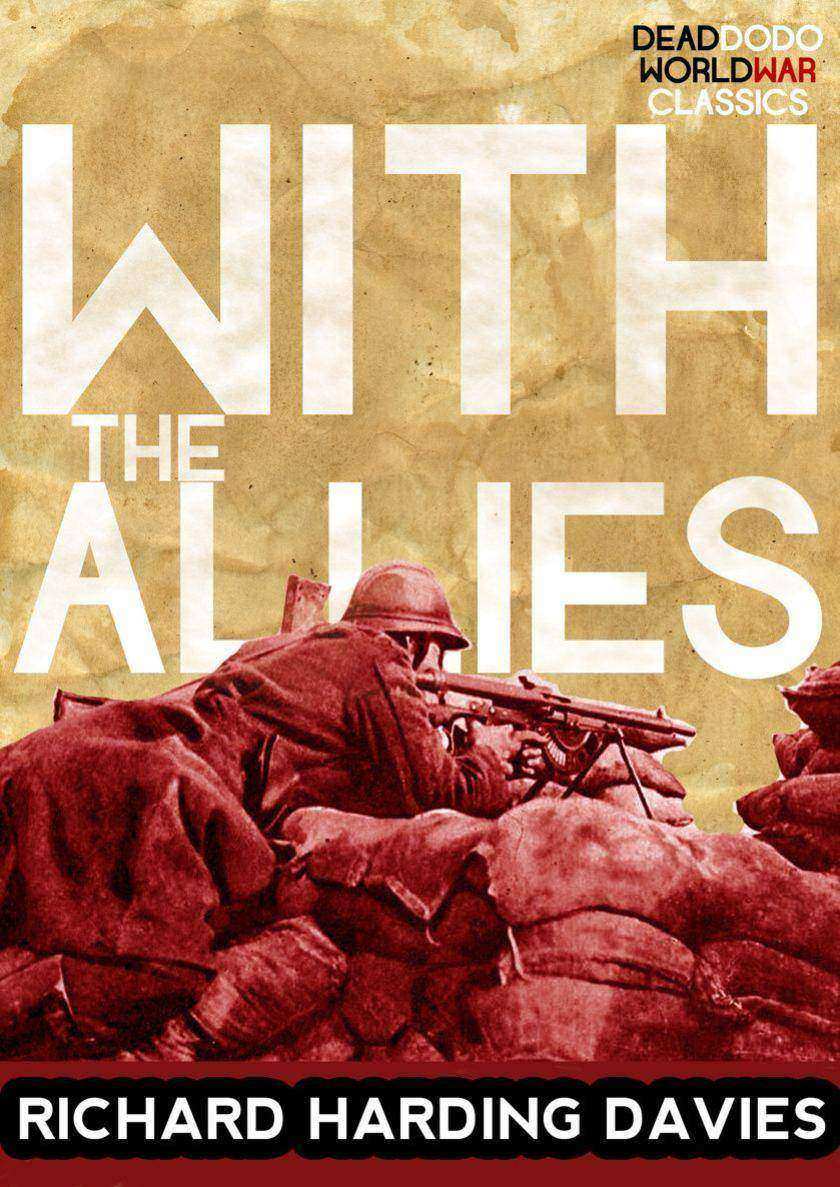
With the Allies
¥8.09
An early appeal by Richard Davis, American war correspondent, to denounce neutrality and take an active role in the conflict on the side of the Triple Entente. Makes his case from German ‘crimes of aggression’. ? ‘I have not seen the letter addressed by President Wilson to the American people calling upon them to preserve toward this war the mental attitude of neutrals. But I have seen the war. And I feel sure had President Wilson seen my war he would not have written his letter. This is not a war against Germans, as we know Germans in America … It is a war, as Winston Churchill has pointed out, against the military aristocracy of Germany …’
Tik-Tok of Oz by L. Frank Baum - Delphi Classics (Illustrated)
¥8.09
This eBook features the unabridged text of ‘Tik-Tok of Oz by L. Frank Baum - Delphi Classics (Illustrated)’ from the bestselling edition of ‘The Complete Works of L. Frank Baum’. Having established their name as the leading publisher of classic literature and art, Delphi Classics produce publications that are individually crafted with superior formatting, while introducing many rare texts for the first time in digital print. The Delphi Classics edition of Baum includes original annotations and illustrations relating to the life and works of the author, as well as individual tables of contents, allowing you to navigate eBooks quickly and easily. eBook features: * The complete unabridged text of ‘Tik-Tok of Oz by L. Frank Baum - Delphi Classics (Illustrated)’ * Beautifully illustrated with images related to Baum’s works * Individual contents table, allowing easy navigation around the eBook * Excellent formatting of the text Please visit www.delphiclassics.com to learn more about our wide range of titles
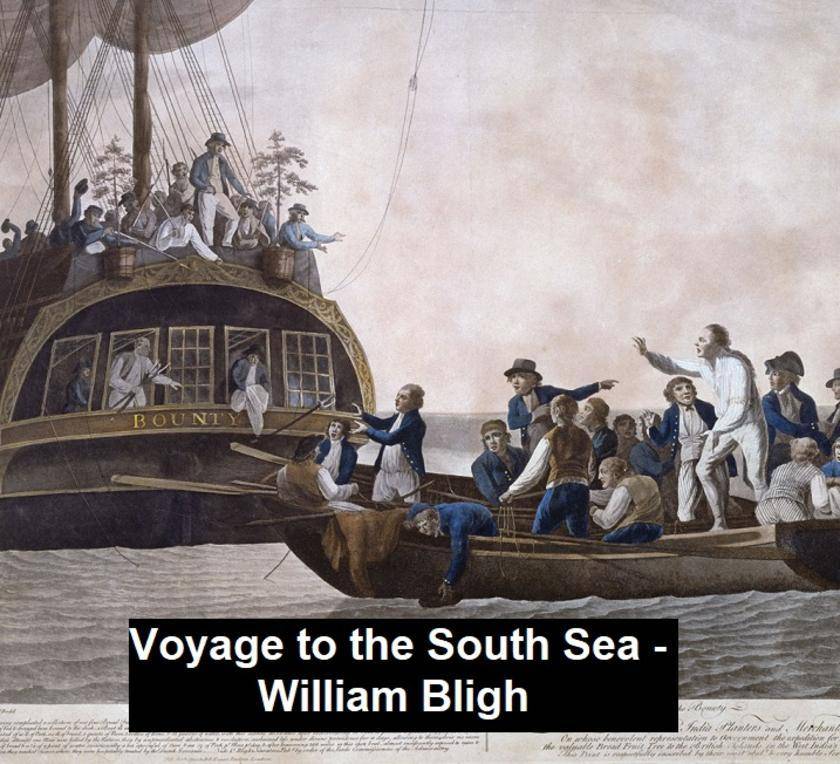
Voyage to the South Sea
¥8.09
A Voyage to the South Sea, undertaken by command of his majesty, for the purpose of conveying the bread-fruit tree to the west indies, in his majesty's ship the Bounty, commanded by Lieutenant William Bligh. Including an account of the mutiny on board the said ship, and the subsequent voyage of part of the crew, in the ship's boat, from Tofoa, one of the Friendly Islands, to Timor, a Dutch settlement in the East Indies. According to Wikipedia: "Vice Admiral William Bligh, (9 September 1754 – 7 December 1817) was an officer of the British Royal Navy and a colonial administrator. A historic mutiny occurred during his command of HMS Bounty in 1789; Bligh and his loyal men made a remarkable voyage to Timor, after being set adrift in the Bounty's launch by the mutineers. Fifteen years after the Bounty mutiny, he was appointed Governor of New South Wales in Australia, with orders to clean up the corrupt rum trade of the New South Wales Corps, resulting in the so-called Rum Rebellion."

The Cumberland Road
¥8.09
Volume 10 of the series "Historic Highways of America". According to Wikipedia: "Archer Butler Hulbert (26 Jan 1873 – 24 Dec 1933), historical geographer, writer, and professor of American history... He was Vice-Principal of the Putnam Military Academy, Zanesville, Ohio, until 1897. Hulbert then did newspaper work in Korea in 1897 and '98: he was editor of the Korean Independent (Seoul) and edited Far East American newspapers... He was Professor of American History at Marietta College 1904-18. After Marietta College, Hulbert became a lecturer in American History at Clark University from 1918 to 1919. He also was a lecturer at the University of Chicago in 1904 and 1923; and he served as archivist for the Harvard Commission on Western History (1912-16). Hulbert's last position was at Colorado College, from 1920 until his death... Hulbert's interest in trails dated from fishing trips taken during his college, when he noticed Indian trails. This interest led at first to his 16 volumes of Historic Highways of America (1902-05)."
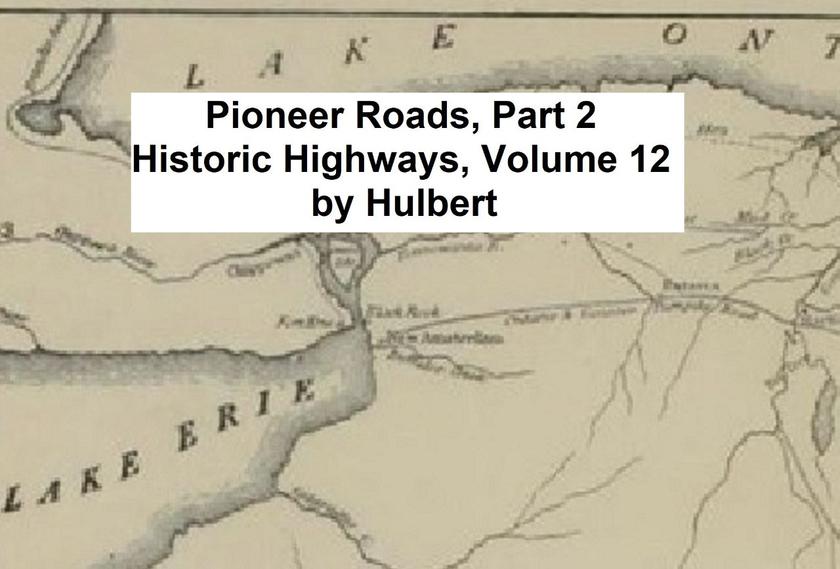
Pioneer Roads, Part 2
¥8.09
Volume 12 of the series "Historic Highways of America". According to Wikipedia: "Archer Butler Hulbert (26 Jan 1873 – 24 Dec 1933), historical geographer, writer, and professor of American history... He was Vice-Principal of the Putnam Military Academy, Zanesville, Ohio, until 1897. Hulbert then did newspaper work in Korea in 1897 and '98: he was editor of the Korean Independent (Seoul) and edited Far East American newspapers... He was Professor of American History at Marietta College 1904-18. After Marietta College, Hulbert became a lecturer in American History at Clark University from 1918 to 1919. He also was a lecturer at the University of Chicago in 1904 and 1923; and he served as archivist for the Harvard Commission on Western History (1912-16). Hulbert's last position was at Colorado College, from 1920 until his death... Hulbert's interest in trails dated from fishing trips taken during his college, when he noticed Indian trails. This interest led at first to his 16 volumes of Historic Highways of America (1902-05)."
The Reign of Tiberius
¥8.09
"Out of the first six Annals of Tacitus, with his account of German and Life of Agricola." According to Wikipedia: "Publius (or Gaius) Cornelius Tacitus (c. AD 56 – after 117) was a senator and a historian of the Roman Empire. The surviving portions of his two major works—the Annals and the Histories—examine the reigns of the Roman Emperors Tiberius, Claudius, Nero, and those who reigned in the Year of the Four Emperors (AD 69). These two works span the history of the Roman Empire from the death of Augustus in AD 14 to the years of the First Jewish–Roman War in AD 70. There are substantial lacunae in the surviving texts, including a gap in the Annals that is four books long."
Conspiracy of Cataline and Jugurthine War
¥8.09
A literal translation. According to Wikipedia: "Gaius Sallustius Crispus, usually anglicised as Sallust (86 BC – c. 35 BC) was a Roman historian, politician, and novus homo from a provincial plebeian family. Sallust was born at Amiternum in the country of the Sabines and was a popularis, opposer of the old Roman aristocracy throughout his career, and later a partisan of Julius Caesar. Sallust is the earliest known Roman historian with surviving works to his name, of which we have Catiline's War (about the conspiracy in 63 BC of L. Sergius Catilina), The Jugurthine War (about Rome's war against the Numidians from 111 to 105 BC), and the Histories (of which only fragments survive). Sallust was primarily influenced by the Greek historian Thucydides and amassed great (and ill-gotten) wealth from his governorship of Africa."
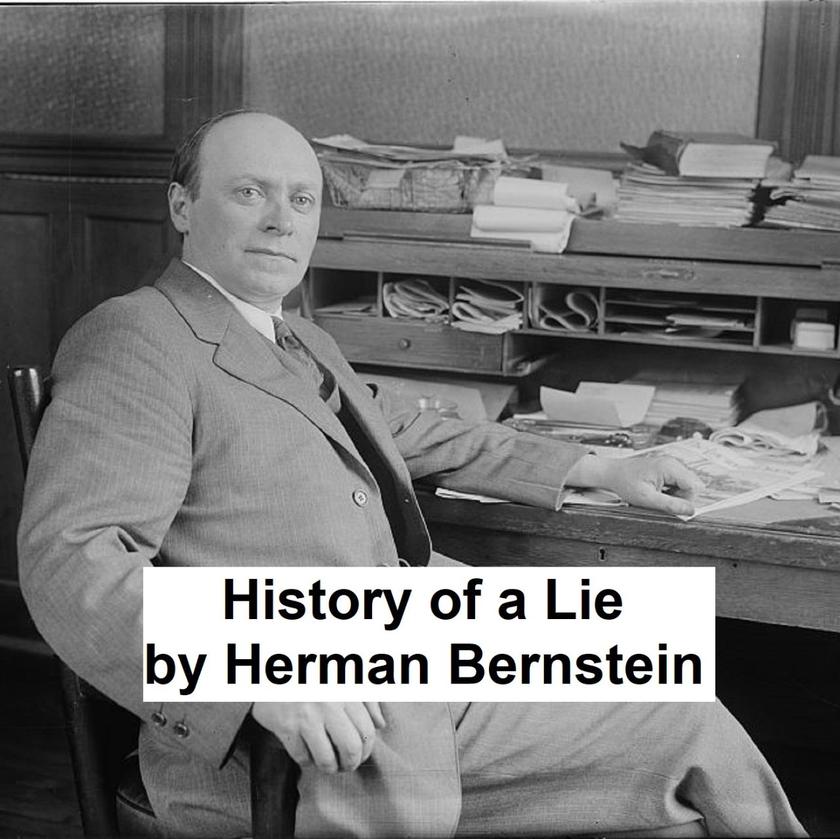
History of a Lie
¥8.09
Classic in the history of anti-semitism. First published in 1921. According to the Foreword: "This is the history of a Lie--of a cruel and terrible Lie invented for the purpose of defaming the entire Jewish people. Given out as fiction, by a German anti-Semitic writer, involved in the Waldeck forgery case, who concealed his identity under the pen-name of an Englishman, it was gradually changed and elaborated, and finally groomed as fact. Agents of the Russian secret police department and of the unscrupulous "Black Hundreds" then utilized this fiction as the framework for the "protocols" through which they sought to crush the Jews and prop up the tottering Russian dynasty." According to Wikipedia: "Herman Bernstein (September 21, 1876 – August 31, 1935) was an American journalist, poet, novelist, playwright, translator, Jewish activist, and diplomat."
The Life of Nelson
¥8.09
Classic biography. According to Wikipedia: "Alfred Thayer Mahan (September 27, 1840 - December 1, 1914) was a United States Navy officer, geostrategist, and educator. His ideas on the importance of sea power influenced navies around the world, and helped prompt naval buildups before World War I. Several ships were named USS Mahan, including the lead vessel of a class of destroyers. His research into naval History led to his most important work, The Influence of Seapower Upon History,1660-1783, published in 1890."
All of Grace
¥8.09
Inspirational book by 19th-century Baptist preacher, known as "the Prince of Preachers". According to Wikipedia: "Charles Haddon Spurgeon, commonly C.H. Spurgeon, (June 19, 1834 – January 31, 1892) was a British Reformed Baptist preacher who remains highly influential among Christians of different denominations, among whom he is still known as the "Prince of Preachers." He also founded the charity organization now known as Spurgeon's, that works worldwide with families and children, as well as a famous theological college which after his death was called after him: Spurgeon's College. Spurgeon was a prolific author of many types of works including sermons, an autobiography, a commentary, books on prayer, a devotional, a magazine, and more. Many sermons were transcribed as he spoke and were translated into many languages during his lifetime. Arguably, no other author, Christian or otherwise, has more material in print than C.H. Spurgeon."
Critique of Pure Reason
¥8.09
According to Wikipedia: "Immanuel Kant (22 April 1724 – 12 February 1804) was an 18th-century German philosopher from the Prussian city of K?nigsberg (now Kaliningrad, Russia). He is regarded as one of the most influential thinkers of modern Europe and of the late Enlightenment. Kant created a new widespread perspective in philosophy which is influencing enlightened philosophy until the 21st Century. He published important works of epistemology as also scripts in coherence to religion, law and history. His most important work is the Critique of Pure Reason, an investigation into the limitations and structure of reason itself. It encompasses an attack on traditional metaphysics and epistemology, and highlights Kant's own contribution to these areas. The other main works of his maturity are the Critique of Practical Reason, which concentrates on ethics, and the Critique of Judgment, which investigates aesthetics and teleology."
The History of the Decline and Fall of the Roman Empire
¥8.09
The complete 6-volume work, which covers from the reign of Marcus Aurelius to the fall of Constantinople in 1453. According to Wikipedia: "Edward Gibbon (1737 - 1794) was an English historian and Member of Parliament. His most important work, The History of the Decline and Fall of the Roman Empire, was published in six volumes between 1776 and 1788. The History is known principally for the quality and irony of its prose..."

Montcalm and Wolfe
¥8.09
Classic work of history about the war between France and England for Canada. According to Wikipedia: "Francis Parkman (September 16, 1823 - November 8, 1893) was an American historian, best known as author of The Oregon Trail: Sketches of Prairie and Rocky-Mountain Life and his monumental seven volume France and England in North America. These works are still valued as history and especially as literature, although the biases of his work have met with criticism. "

Story of the War in South Africa 1899-1900
¥8.09
Classic work of history. According to Wikipedia: "Alfred Thayer Mahan (September 27, 1840 - December 1, 1914) was a United States Navy officer, geostrategist, and educator. His ideas on the importance of sea power influenced navies around the world, and helped prompt naval buildups before World War I. Several ships were named USS Mahan, including the lead vessel of a class of destroyers. His research into naval History led to his most important work, The Influence of Seapower Upon History,1660-1783, published in 1890."

Homiles on the Gospel of St. John and the Epistle of the Hebrews
¥8.09
According to Wikipedia: "Saint John Chrysostom (c. 347–407, Greek: Ιω?ννη? ο Χρυσ?στομο?), archbishop of Constantinople, was an important Early Church Father. He is known for his eloquence in preaching and public speaking, his denunciation of abuse of authority by both ecclesiastical and political leaders, the Divine Liturgy of St. John Chrysostom, and his ascetic sensibilities. After his death (or, according to some sources, during his life) he was given the Greek surname chrysostomos, meaning "golden mouthed", rendered in English as Chrysostom.


