


 购物车
购物车 个人中心
个人中心
十年以后(英语文库)
¥23.99
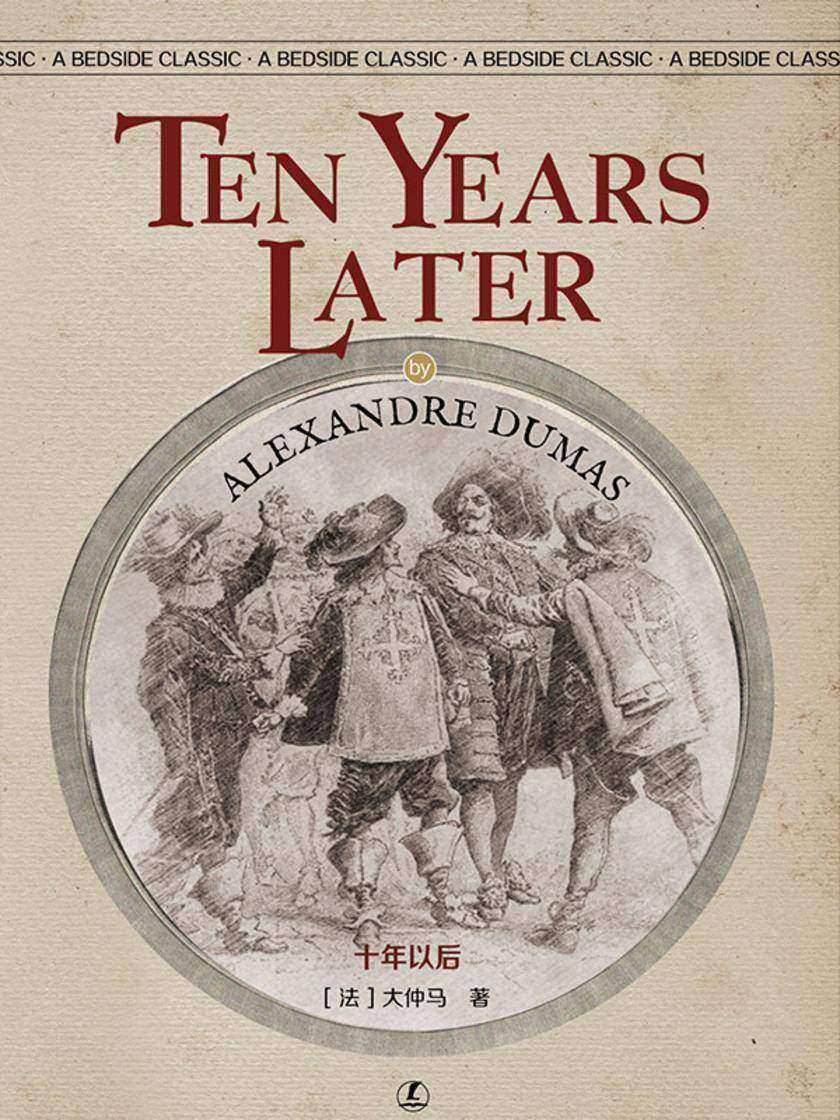
本书作为我社“经典英语文库”第15辑中的一种,精选法国十九世纪著名作家大仲马所作长篇小说《十年以后》。本书是《三个火枪手》的续集。为“达塔尼昂浪漫三部曲”之一。三部曲的故事发展到《十年以后》一书中的阶段,个中的场景已不再是三十年前的刀光剑影、血雨腥风,取而代之的是法王路易十四挥金如土、宫闱暧昧、官场明争暗斗以及贵妇人之间争风吃醋等情节。其中,柔弱质朴、胆小怕事的路易丝·德拉瓦利埃小姐如何一步步被设局沦落为路易十四情妇的经过,为下来《路易丝·德拉瓦利埃》的展做足了铺垫。

雅各的房间(英语文库)
¥7.99
本书作为我社“经典英语文库”第15辑中的一种,精选由英国著名作家弗吉尼亚·伍尔芙的经典作品《雅各的房间》。作品讲述了一位年轻人短暂的一生。海边的童年、剑桥求学、独立成长、与不同女性的情感、到法国及希腊游学、及后丧生于次世界大战中。此书通常被认为是伍尔夫在文学创新方面次较大规模的探索和实验,是她创作过程中的一个转折,是她尝试用意识流手法创作的一个端。这本小说时间背景设置在英格兰,始于雅各的童年。

悲惨世界(五卷之第五卷)(英语文库)
¥16.99
本书作为我社“*经典英语文库”第14辑中的一种,精选法国著名作家维克多·雨果的经典作品《悲惨世界 (五卷之第五卷)》(前四卷已出)。作品讲述了主人公土伦苦刑犯冉·阿让(Jean Valjean)的个人经历,并融了法国的历史、革命、战争、道德哲学、法律、正义、宗教信仰。《悲惨世界》以冉·阿让出狱后的种种经历贯穿全书,深刻反映了时代的问题。雨果在作品中融了从拿破仑在滑铁卢的失败到反对“七月王朝”的人民起义这一阶段的历史,反映了当时的社会生活和政治状况。作品不仅描述了获释犯人冉·阿让和流浪妇女芳汀的不幸生活以及芳汀的私生女柯赛特的悲惨遭遇,而且揭示了当时社会中勤劳善良的劳动人民却受歧视和压迫的不公平命运。雨果还在作品中揭露了当时残酷不公的法典和秩序,猛烈抨了那种人们饿死可以而偷面包却要坐牢的社会制度,谴责了那些安于现状和铁石心肠的市民在面对处于困境中的他人时的那种袖手旁观的冷漠态度。

Flush 阿弗小传(英文版)
¥29.99
“事情并不简单,而是错综复杂的。如果它咬了布朗宁先生,那是因为他也咬了她。仇恨并非只是仇恨;仇恨也可以是爱。” 弗吉尼亚·伍尔夫为诗人伊丽莎白·巴雷特·勃朗宁(Elizabeth Barrett Browning)的西班牙猎犬所著的传记,令人愉悦,探讨了作为人类以及作为狗的意义。

莎士比亚戏剧典藏:威尼斯商人
¥12.99
《威尼斯商人》 是莎士比亚早期的重要作品,是一部具有极大讽刺性的喜剧。主要讲述了威尼斯商人安东尼奥为了帮助好友巴萨尼奥成婚,向犹太人高利贷者夏洛克借了三千金币。夏洛克因为安东尼奥借给别人钱不要利息,影响了他的生意,又侮辱过他,所以借机报复,在借约上戏言三个月期满还不上钱,就从安东尼奥身上割下一磅肉抵债。安东尼奥因船失事,不能如期还钱,夏洛克就提起公诉,要安东尼奥履行借约。 为救安东尼奥的性命,巴萨尼奥的未婚妻鲍西亚假扮律师,利用智慧巧妙地让夏洛克无法执行割一磅肉而败诉,害人不成反而失去财产。
Family of Love - The devil's engine and the soul's corrupter.
¥26.98
Thomas Dekker was a playwright, pamphleteer and poet who, perhaps, deserves greater recognition than he has so far gained. Despite the fact only perhaps twenty of his plays were published, and fewer still survive, he was far more prolific than that. Born around 1572 his peak years were the mid 1590's to the 1620's - seven of which he spent in a debtor's prison. His works span the late Elizabethan and Caroline eras and his numerous collaborations with Ford, Middleton, Webster and Jonson say much about his work. His pamphlets detail much of the life in these times, times of great change, of plague and of course that great capital city London a swirling mass of people, power, intrigue.

Thuvia, Maid Of Mars - And yet I feel that I cannot go on living forever
¥35.22
Edgar Rice Burroughs was born on September 1, 1875, in Chicago, Illinois. His early career was unremarkable. After failing to enter West Point he enlisted in the 7th Calvary but was discharged after heart problems were diagnosed. A series of short term jobs gave no indication as to a career path but finally, in 1911, married and with two young children, he turned his hand to writing. He aimed his works squarely at the very popular pulp serial magazines. His first effort 'Under The Moons Of Mars' ran in Munsey's Magazine in 1912 under the pseudonym Norman Bean. With its success he began writing full time. A continuing theme of his work was to develop series so that each character had ample opportunities to return in sequels. John Carter was in the Mars series and there was another on Venus and one on Pellucidar among others. But perhaps the best known is Tarzan. Indeed Burroughs wanted so much to capitalise upon the brand that he introduced a syndicated Tarzan comic strip, movies and merchandise. He purchased a large ranch north of Los Angeles, California, which he named "e;Tarzana."e; The surrounding communities outside the ranch voted in 1927 to adopt the name as their own. By 1932 Burroughs set up his own company to print his own books. Here we publish the fourth in the Barsoom series and its enduring hero John Carter 'Thuvia, Maid of Mars'. Another cultural classic.
Marion de Lorme - Concision in style, precision in thought, decision in life
¥29.33
Victor Marie Hugo was born on 26th February 1802 and is revered as the greatest of all French writers. A poet, novelist, dramatist and painter he was a passionate supporter of Republicanism and made a notable contribution to the politics of his Country.His life was paralleled by the immense political and social movements of the 19th Century. When he was two Napoleon was proclaimed Emperor but before he was eighteen the Bourbon Monarchy was restored.It was only with his Mother's death in 1821 that he felt confident enough to marry Adele Foucher, a relationship he had kept secret from his mother. Their first child was born inside a year but died in infancy. Leopoldine was born the following year, followed by three further siblings.Hugo published his first novel the year following year, Han d'Islande, (1823). Three years later his second, Bug-Jargal (1826).Between 1829 and 1840 he would publish five further volumes of poetry solidifying his reputation as one of the greatest elegiac and lyric poets of his time. His reputation was growing not only in France but across Europe.In 1841 he was elected to the Academie Francaise, cementing his position in the world of French arts and letters. Hugo also now began to turn his attention to an involvement in French politics.Elevated to the peerage by King Louis-Philippe in 1841 he spoke eloquently and at length against the death penalty and social injustice as well as passionately in favour of freedom of the press and self-government for Poland.When Napoleon III seized power in 1851, and established an anti-parliamentary constitution, Hugo openly declared him a traitor to France and began a long exile, based mainly in Guernsey.In exile, Hugo published his famous political pamphlets; Napoleon le Petit and Histoire d'un crime. Although the pamphlets were banned in France, they nonetheless made a strong impact there. His exile also seemed to have a creative impetus. He composed or published some of his greatest work including Les Miserables, and three widely honoured collections of poetry (Les Chatiments, 1853; Les Contemplations, 1856; and La Legende des siecles, 1859).In 1870 the Third Republic was established and Hugo finally returned home, where he was elected to the National Assembly and the Senate. That same year War erupted between France and Prussia and the French were badly beaten.With the end of the War Hugo began his campaign for a great valuation and protection for the rights of artists and copyright. He was a founding member of the Association Litteraire et Artistique Internationale, which led to the Berne Convention for the Protection of Literary and Artistic Works.Victor Hugo's death on 22nd May 1885, at the age of 83, generated intense nation-wide mourning. Revered not only as a towering figure in literature, he was a statesman who had helped to shape the Third Republic and democracy in France. Index of ContentsDRAMATIS PERSONTIME: 1638MARION DE LORMEACT ITHE MEETINGSCENE ISCENE IISCENE IIISCENE IVACT IITHE ENCOUNTERSCENE ISCENE IISCENE IIISCENE IVSCENE VACT IIITHE COMEDYSCENE ISCENE IISCENE IIISCENE IVSCENE VSCENE VISCENE VIISCENE VIIISCENE IXSCENE XACT IVTHE KINGSCENE ISCENE IISCENE IIISCENE IVSCENE VSCENE VISCENE VIISCENE VIIIACT VTHE CARDINALSCENE ISCENE IISCENE IIISCENE IVSCENE VSCENE VIVICTOR HUGO - A SHORT BIOGRAPHYVICTOR HUGO - A CONCISE BIBLIOGRAPHY

Duet - The love of books is among the choicest gifts of the gods.
¥29.33
If ever a writer needed an introduction Arthur Conan Doyle would not be considered that man. After all, Sherlock Holmes is perhaps the foremost literary detective of any age. Add to this canon his stories of science fiction and his poems, his historical novels, his political campaigning, his efforts in establishing a Court Of Appeal and there is little room for anything else. Born in Arthur Conan Doyle was born on 22 May 1859 at 11 Picardy Place, Edinburgh, Scotland. From 1876 - 1881 he studied medicine at the University of Edinburgh following which he was employed as a doctor on the Greenland whaler Hope of Peterhead in 1880 and, after his graduation, as a ship's surgeon on the SS Mayumba during a voyage to the West African coast in 1881. Arriving in Portsmouth in June of that year with less than GBP10 (GBP700 today to his name, he set up a medical practice at 1 Bush Villas in Elm Grove, Southsea. The practice was initially not very successful. While waiting for patients, Conan Doyle again began writing stories and composed his first novel The Mystery of Cloomber. Although he continued to study and practice medicine his career was now firmly set as a writer. And thereafter great works continued to pour out of him. Here we one of those pieces for which his fame does not spread quite so far but which is an essential part of his work - 'The Duet'.
Lady from the Sea (1888)
¥23.45
Henrik Ibsen (20th March, 1828 - 23rd May, 1906) is often referred to as the father of realism and ranked just below Shakespeare as Europe's greatest ever playwright especially as his plays are performed most frequently throughout the world after Shakespeare's. He was Norwegian and although set his plays in Norway, he wrote them in Danish and lived most of his professional life in Italy and Germany. His affect on the theatre is still evident today and shapes the distinction of plays being art as opposed to entertainment since he broke down all previous traditions and explored issues, developed characterisation, revealed uncomfortable truths, challenged assumptions and brokedown facades in ourselves as well as society. These factors are clearly demonstrated in The Lady from the Sea, the lady being Ellida, the daughter of a lighthouse keeper who therefore grew up by the open sea and has a deep love for it. She married Dr Wangel who had two daughters by his former wife, Bolette and Hilda and they had a son who died as a baby. Her husband recognises the strains put on the marriage by the infant death and is concerned for Ellida's mental health but more important to Ellida is the return of her former love who she had promised to wait for. She does decide between the two men and her reasons make for good reading in this symbolic play.
What Katy Did At School (Mermaids Classics)
¥35.22
What Katy Did At School (1873) by Sarah Chauncey Woolsey (aka Susan Coolidge) (1835-1905) is the sequel to the classic childrens novel What Katy Did which is based on a young 12 year tomboyish type of girl named Katy Carr who endures an accident by falling off a swing and becomes an invalid. Her cousin Helen also an invalid teaches Katy how to be a happier and kinder person by appreciating and making the most of what she has and how to be optimistic and cheerful especially around her siblings. At the end of the story, Katy learns to walk.Mermaids Classics, an imprint of Mermaids Publishing brings the very best of old classic literature to a modern era of digital reading by producing high quality books in ebook format. All of the Mermaids Classics epublications are reproductions of classic antique books that were originally published in print format, mostly over a century ago and are now republished in digital format as ebooks. Begin to build your collection of digital books by looking for more literary gems from Mermaids Classics.
Oliver Twist (Mermaids Classics)
¥35.22
Oliver Twist, (also known as The Parish Boys Progress) by Charles Dickens (1812-1870) was first published in 1838. The story is about an orphan, Oliver Twist, who endures a miserable existence in a workhouse and then is placed with an undertaker. He escapes and travels to London where he meets the Artful Dodger, leader of a gang of juvenile pickpockets. Naively unaware of their unlawful activities, Oliver is led to the lair of their elderly criminal trainer Fagin. (Citation from Wikipedia)Mermaids Classics, an imprint of Mermaids Publishing brings the very best of old classic literature to a modern era of digital reading by producing high quality books in ebook format. All of the Mermaids Classics epublications are reproductions of classic antique books that were originally published in print format, mostly over a century ago and are now republished in digital format as ebooks. Begin to build your collection of digital books by looking for more literary gems from Mermaids Classics.
Pickwick Papers (Mermaids Classics)
¥35.22
The Pickwick Papers (1836), by Charles Dickens (1812-1870) follows the travelling adventures of Samuel Pickwick. Samuel is the president of the Pickwick Club and along with a few other members they set out on a journey to discover anything interesting about life and report it back to those remaining members of the Club.Mermaids Classics, an imprint of Mermaids Publishing brings the very best of old classic literature to a modern era of digital reading by producing high quality books in ebook format. All of the Mermaids Classics epublications are reproductions of classic antique books that were originally published in print format, mostly over a century ago and are now republished in digital format as ebooks. Begin to build your collection of digital books by looking for more literary gems from Mermaids Classics.
Scarlet Letter (Mermaids Classics)
¥35.22
The Scarlet Letter (1850) is a historical romantic fiction novel written by American author Nathaniel Hawthorne (1804-1864). It is considered to be his magnum opus. Set in 17th-century Puritan Boston, Massachusetts during the years 1642 to 1649, it tells the story of Hester Prynne, who conceives a daughter through an adulterous affair and struggles to create a new life of repentance and dignity. Throughout the book, Hawthorne explores themes of legalism, sin and guilt. (Citation from Wikipedia: The free Encyclopaedia)Mermaids Classics, an imprint of Mermaids Publishing brings the very best of old classic literature to a modern era of digital reading by producing high quality books in ebook format. All of the Mermaids Classics epublications are reproductions of classic antique books that were originally published in print format, mostly over a century ago and are now republished in digital format as ebooks. Begin to build your collection of digital books by looking for more literary gems from Mermaids Classics.
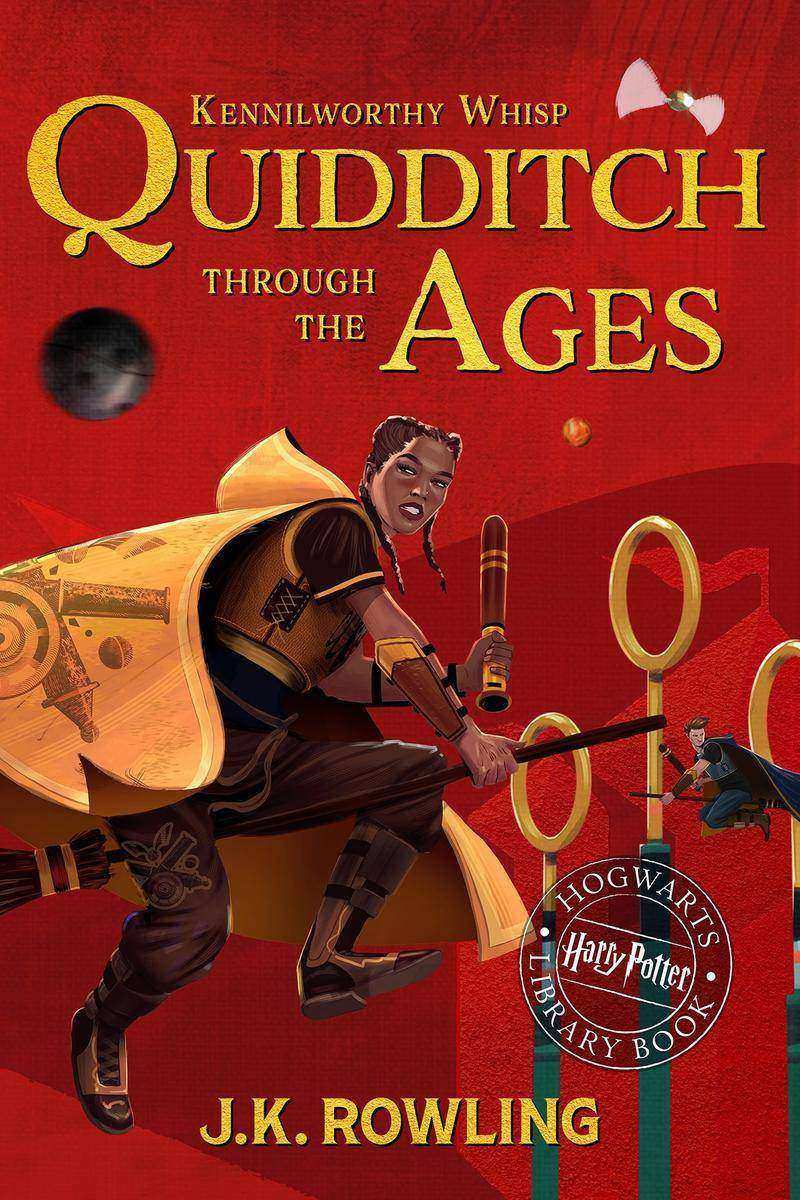
Quidditch Through the Ages
¥20.00
A perennial bestseller in the wizarding world and one of the most popular books in the Hogwarts School library, Quidditch Through the Ages contains all you will ever need to know about the history, the rules - and the breaking of the rules - of the noble sport of Quidditch. Packed with fascinating facts, this definitive guide by the esteemed Quidditch writer Kennilworthy Whisp charts the game's history from its early origins in the medieval mists on Queerditch Marsh, through to the modern-day sport loved by so many wizard and Muggle families around the world. With comprehensive coverage of famous Quidditch teams, the commonest fouls, the development of racing brooms, and much more, this is a must-have sporting bible for all Harry Potter fans, Quidditch lovers and players, whether the weekend amateur or the seasoned Chudley Cannons season-ticket holder.At least 15% of the net retail price* of this eBook will be available to Comic Relief and Lumos Foundation for their work with children and young people to help them have a better life. 20% of these monies will be used by Comic Relief and 80% will be used by Lumos Foundation.Comic Relief is a registered charity in the UK with charity nos. 326568 (England/Wales) and SC039730 (Scotland). Lumos Foundation is a registered charity in the UK with no. 1112575.* The net retail price means the price paid by the consumer less applicable sales taxes

Beyond: The Stars
¥26.07
Three thrilling short stories of adventure among the stars: Node Of Thought A spaceship pilot on a solo mission between the stars begins to see visions of other people. Are they trace thoughts from others who’ve passed that way? It’s not just an academic question when the ship’s computer starts to obey commands that aren’t his. ? Marathon of the Devil In a death-defying marathon on a desert planet, Eli Marone has managed to get lost. It’s now a race for survival, especially when the barren world might not be so lifeless after all. ? The Rift Twenty-seven years after a reckless experiment created a vast rift across the galaxy, a survey ship’s crew encounters a being with strange abilities and an even stranger disability. What they learn will test every belief they’ve ever had. Praise for Scott Overton: “A storyteller of boundless skill…a writer to watch.” “A gifted wordsmith.”

Terrestrial Magic
¥34.79
Most sensible people avoid fire-breathing carnivores that prey on humans. But Jordan has built a career out of studying such legendary animals, creatures thought mythological until their reemergence in the world three decades ago. She and researchers like her believe that knowledge is the key to reclaiming the land they'd lost back then, when humanity retreated into designated safety zones.? But when the humans moved out, the legends moved in. They were the descendants of mythical heroes, inheriting the powers of their ancestors, and they weren't afraid of the monsters. Jordan never expected to run into a legend, but when a field expedition turns into a trap for her team, she realizes that one deliberately tried to kill her. It's a diplomatic nightmare the Roman authorities might happily sweep under the rug. But if Jordan doesn't figure out who attacked her and why, they could try again. Yet even if she does solve the mystery, what could one stubborn scientist possibly do to stop a powerful legend? Almost 7,000 words of bonus content included. Embark on this urban fantasy/post-apocalyptic adventure today!

Autism Questions Parents Ask: Autism Help Series - Book One
¥52.23
Your child has an autism diagnosis. Now what??First, do no harm. Well, that’s a no-brainer, right??When your child receives an autism diagnosis, the research begins. You want to learn all that you can and find the best ways to help him or her.You will receive advice from specialists that makes sense to you - that fits with your life philosophy and with what you know of your child. You will receive advice that does not sit so well with you, the needs of your family and what you believe are the needs of your child.?Trust your instincts. You know your child the best and no one has his well-being at heart as much as you.Whether or not you feel prepared right now, you as the parent will be your child's primary therapist. You spend the most time with him and have the biggest impact on his life.?This book is for you. It's written by a parent who is also a special ed teacher, counselor, school psychologist, district consultant and autism consultant. The language won't require that you sit with a dictionary in your other hand but when you do find something that makes you want to research further, links and provided to help you with your search.Helping your autistic child be the best he can be is doable. It's within your reach and this is the book to guide you.

Sheryl's Last Stand: Bitter Sweet Comedy
¥26.07
Thirty Shades of Red Sheryl has lost her mojo Sheryl has seen better days, and now, on the wrong side of thirty-five she has lost it all and must start again. Not alone; but under the watchful eye of her mother. A woman with as much sensitivity as a comedian at a hen do.? Where does she start? With a newly discovered passion for belly dancing, Sheryl sets out to chase her fantasies. But, with a teacher like Nefertiti, and mother like Beatrice chasing your fantasies is easier said than done… Sheryl’s Last Stand is a Bridget Jones type comedy with a heroine we can all relate to and a great read if you’re having one of those "stick your head in the sand-I don’t want to get out of bed" days. Sheryl makes you laugh, cry but most of all not give up. She is the first in the Belly Dancing and Beyond series- laugh out loud stories about a group of women who have at one time or another danced with the great Nefertiti.? Each book is a stand-alone tale jam packed with familiar characters you will grow to love, maybe hate but will definitely want to read about again.? ?
Secrets in the Land
¥34.79
Mark Hersch’s life changed for the better when he met Beth Azen. Except for those long drives from Richmond to Hartstown, Virginia, to see her. Mark jumps at a surprise trip for a routine investigation of a polluted stream, never expecting anything out of the ordinary. But a bizarre secret from before the town’s founding awaits. Can Mark, Beth, and their shared magic solve the deadly mystery before all of Hartstown runs out of time? An excerpt from Secrets in the Land: Sometimes, you need to leave the bad things in the past. Art smiled, but it didn’t get anywhere within a mile of his eyes. “I have to ask if this is something you’re willing to take on, Mark. I’m not fibbing or lying or anything else when I say I’d understand if you’re not. Whatever’s up there half scared the life out of me. You ever feel that way about a place?” This time Mark did shiver, and he didn’t try to hide it. Maybe it was time he admitted at least a bit of what he and Beth (and Clina) had actually gotten into back in December. “Just one time. When we were taking your lost miner’s bones out of that old house pit. I was sure then and I’m more sure now that he dropped the rock that hit Beth on purpose. Thing is, I know in my bones that the rock was really aimed at me.”
Fighting the Storm
¥43.51
The Storm Breaks Alex Collins and Etan Griffith thought love, hard work, and magic protected them from the end of the world. Until heartbreak struck much closer to home. Picking up the pieces brings new friends and new challenges. Threats unseen and unexpected. Will the power of family bring them all through, together? An excerpt from Fighting the Storm: Etan didn’t have to look at Alex to know he was biting his tongue, dying to say something. He could feel how tense Alex’s leg was against his own, could just about hear?his agitation. “What are you wanting to say, Alex?” “I don’t want to be an asshole, but if we have to set you up as a prophet, that’s what we need to do. I hated what happened in Maple Ridge and everywhere else. But we can’t have gone through so much hell to get here and let everything fall apart again. If people will follow the Great Prophet Etan and that lets us survive, then that’s who you need to be.” Etan did groan then, closing his eyes for a second. Not only because this was what he’d been afraid of. Because the words and the ideas sounded true. They felt?true, no matter how much he might dislike them. “I don’t know if I can agree to that, not right now. I have no idea how to do any?of this, much less create a new religion. I’m scared to death of making a hard situation worse.”


