


 购物车
购物车 个人中心
个人中心
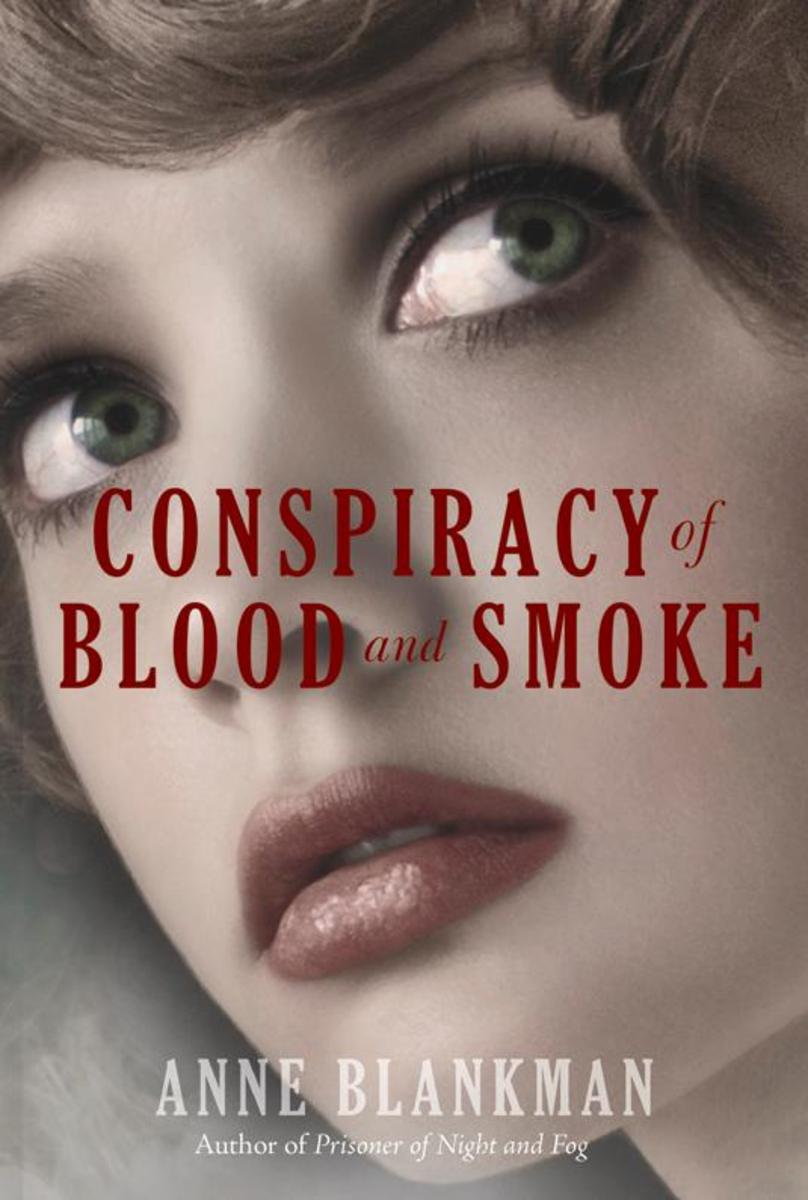
Conspiracy of Blood and Smoke
¥101.00
Acclaimed author Anne Blankman returns to the shadowy and dangerous world of 1930s Germany in this thrilling sequel to Prisoner of Night and Fog, perfect for fans of Code Name Verity.The girl known as Gretchen Whitestone has a secret: She used to be part of Adolf Hitler's inner circle. More than a year after she made an enemy of her old family friend and fled Munich, she lives in England, posing as an ordinary German immigrant, and is preparing to graduate from high school. Her love, Daniel, is a reporter in town. For the first time in her life, Gretchen is content.But then Daniel gets a telegram that sends him back to Germany, and Gretchen's world turns upside down. When she receives word that Daniel is wanted for murder, she has to face the danger she thought she'd escaped—and return to her homeland. Gretchen must do everything she can to avoid capture, even though saving Daniel will mean consorting with her former friends, the Nazi elite. And as they work to clear Daniel's name, Gretchen and Daniel discover a deadly conspiracy stretching from the slums of Berlin to the Reichstag itself. Can they dig up the explosive truth and get out in time—or will Hitler discover them first?

A Thousand Pieces of You
¥55.33
Cloud Atlas meets Orphan Black in this epic dimension-bending trilogy by New York Times bestselling author Claudia Gray about a girl who must chase her father's killer through multiple dimensions.Marguerite Caine's physicist parents are known for their groundbreaking achievements. Their most astonishing invention, called the Firebird, allows users to jump into multiple universes—and promises to revolutionize science forever. But then Marguerite's father is murdered, and the killer—her parent's handsome, enigmatic assistant Paul— escapes into another dimension before the law can touch him.Marguerite refuses to let the man who destroyed her family go free. So she races after Paul through different universes, always leaping into another version of herself. But she also meets alternate versions of the people she knows—including Paul, whose life entangles with hers in increasingly familiar ways. Before long she begins to question Paul's guilt—as well as her own heart. And soon she discovers the truth behind her father's death is far more sinister than she expected.A Thousand Pieces of You explores an amazingly intricate multi-universe where fate is unavoidable, the truth elusive, and love the greatest mystery of all.
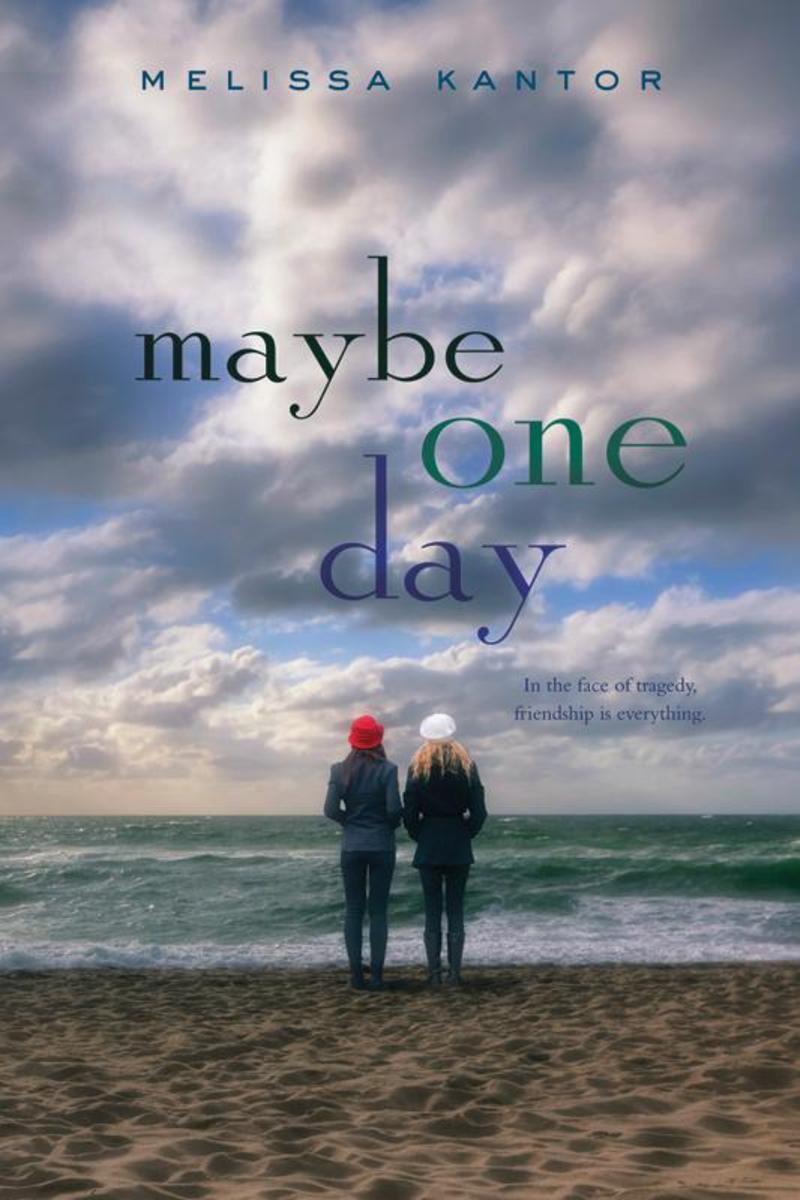
Maybe One Day
¥56.08
In the tradition of The Fault in Our Stars, critically acclaimed author Melissa Kantor masterfully captures the joy of friendship, the agony of loss, and the unique experience of being a teenager in this poignant new novel about a girl grappling with her best friend's life-threatening illness. A person's whole life, she's lucky to have one or two real friends. Friends who are like family… For Zoe, that someone is Olivia. So when Olivia is diagnosed with leukemia, Zoe is determined to put on a brave face and be positive for her best friend.Even when she isn't sure what to say. Even when Olivia misses months of school. Even when Zoe starts falling for Calvin, Olivia's crush. The one thing that keeps Zoe moving forward is knowing that Olivia will beat this, and everything will go back to the way it was before. It has to. Because the alternative is too terrifying for her to even imagine.

Better Than Perfect
¥101.00
From the acclaimed author of Maybe One Day, Melissa Kantor, comes a poignant coming-of-age story that skillfully captures the singular experience of being a teenage girl. This beautifully woven tale will appeal to fans of Jenny Han and Sarah Dessen.Juliet Newman has it all. A picture-perfect family; a handsome, loving boyfriend; and a foolproof life plan: ace her SATs, get accepted into Harvard early decision, and live happily ever after.But when her dad moves out and her mom loses it, Juliet begins questioning the rules she's always lived by. And to make everything even more complicated there's Declan, the gorgeous boy who makes her feel alive and spontaneous—and who's totally off-limits. Torn between the life she always thought she wanted and one she never knew was possible, Juliet begins to wonder: What if perfect isn't all it's cracked up to be?
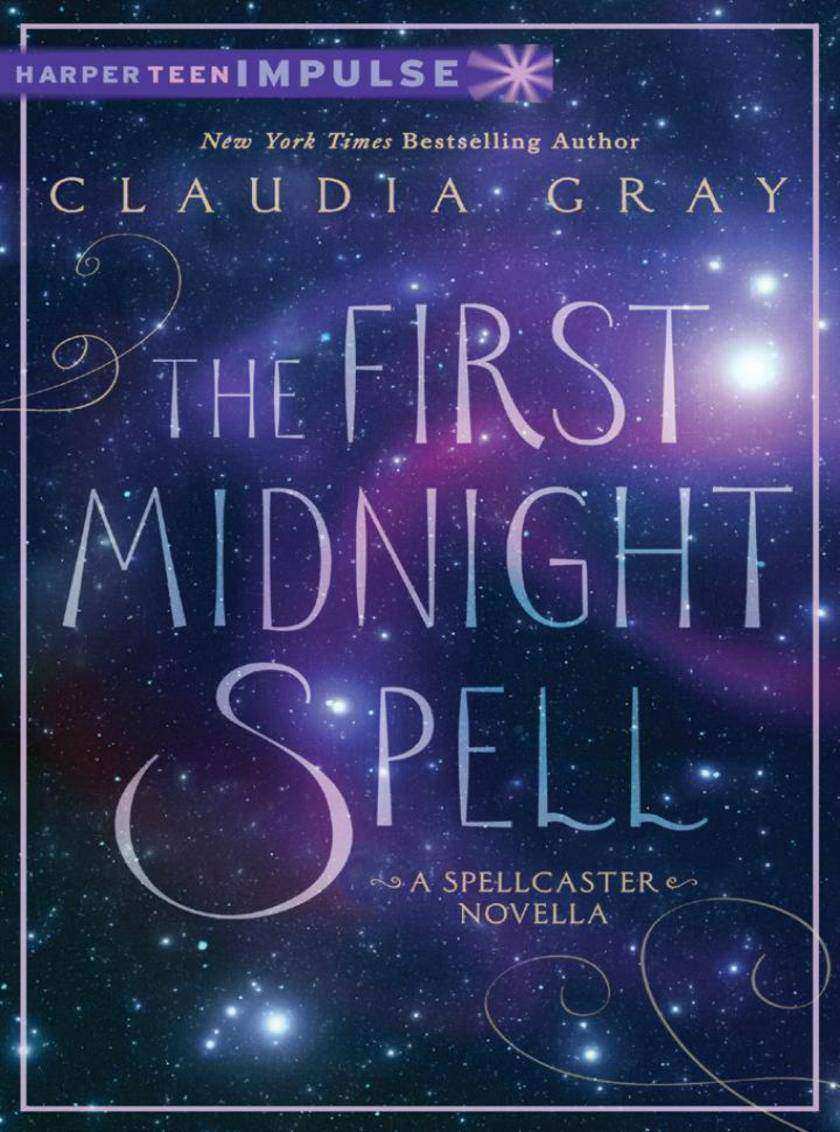
The First Midnight Spell
¥54.42
In this suspenseful companion novella to New York Times bestselling author Claudia Gray's Spellcaster, learn the tragic origins of the dark witch Elizabeth.It's 1695, and Elizabeth Cooper is a young witch in Fortune's Sound, Rhode Island. She spends her days perfecting spells with the local coven and dreaming about one day marrying Nat Porter. But Nat is the son of Widow Porter, another witch and the leader of their coven. According to the First Laws of the Craft, Elizabeth is strictly forbidden to marry him.Elizabeth never imagined dabbling in the dark arts, bringing herself close to serving the One Beneath. But as she feels Nat slipping away from her, she will do anything to secure his love. How much harm could she do with one single spell, even if it is black magic?Epic Reads Impulse is a digital imprint with new releases each month.
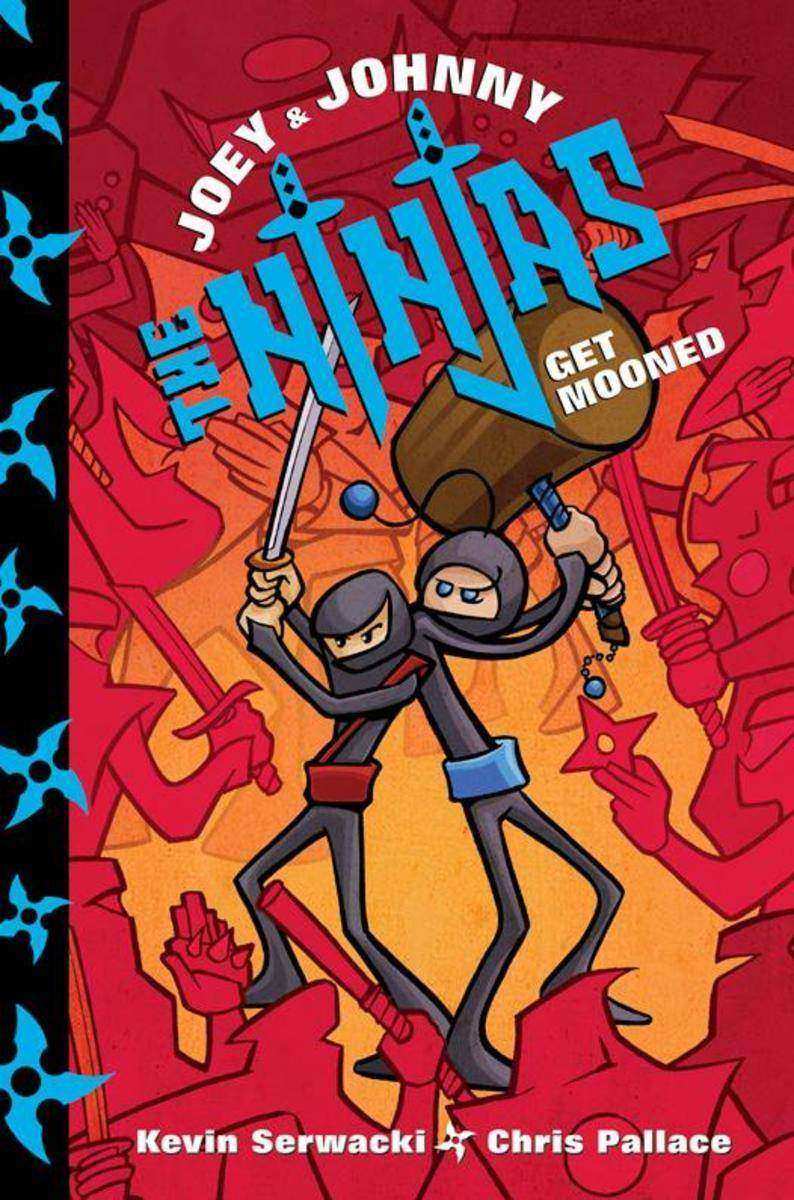
Joey and Johnny, the Ninjas: Get Mooned
¥72.93
Joey and Johnny, the Ninjas: Get Mooned is the first book in a clever, insanely funny, and highly entertaining illustrated series about two best friends and ninjas-in-training, perfect for fans of the Origami Yoda series.Joey and Johnny are best friends, but they could not be more different. Joey follows all the rules. Johnny doesn't know what rules are. Joey is strategic. Johnny leaves everything up to chance. Joey is serious. Johnny is . . . well, he carries a clown hammer and wears a dooly-bopper on his head. But there is something these two boys have in common: They are ninjas. And they're both students at Kick Foot Academy, the premier ninja school in Lemming Falls.But Kick Foot Academy's reputation is about to be put to the test. Their rivals at Red Moon Clan have mysteriously come into possession of state-of-the-art weapons—something that is totally not ninja. And now they have challenged Kick Foot Academy to a Test of Three, culminating in an epic Battle Royal. The outcome will determine which ninja school reigns supreme . . . and which shuts down forever.

Blackbird
¥56.08
From the author of the Eve trilogy comes the breathless story of a girl racing to figure out who she is—and how to stay alive. When a nameless girl wakes up on the subway tracks, she knows only one thing for sure: people want her dead. Can she find them before they track her downThis pulse-pounding contemporary thriller is perfect for fans of The Maze Runner, The Darkest Minds, and Legend.Things I Know Are True: I am in Los Angeles I woke up on the train tracks at the Vermont/Sunset station I am a teenage girl I have long black hair I have a bird tattoo on the inside of my right wrist with the letters and numbers FNV02198 People are trying to kill me
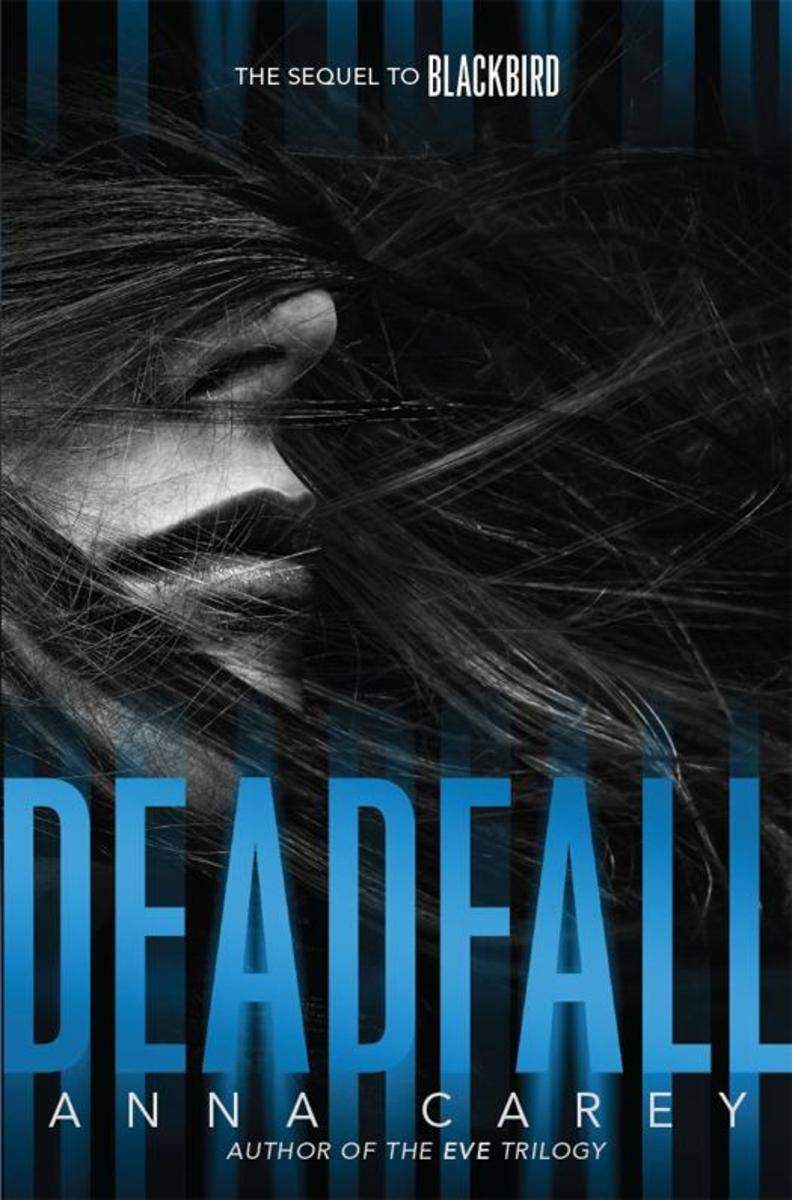
Deadfall
¥56.08
In the compelling sequel to Blackbird, Anna Carey delivers a gritty and adrenaline-filled story of a girl desperate to escape her mysterious and terrifying assailants. Told in second person, this heart-pounding thriller puts the reader in front of the target, and is perfect for fans of The Maze Runner and Legend.A week ago, you woke up in Los Angeles with no memory of who you are. The only thing you knew: people are trying to kill you. You put your trust in Ben, but he betrayed you and broke your heart. Now you’ve escaped to New York City with a boy named Rafe, who says he remembers you from before. But the two of you are not safe. The same people who are after you are tailing Rafe as well. As the chase heats up, your memory starts to return, but your past cannot save you from the terrifying circumstances of your present, or the fact that one wrong move could end this game forever.
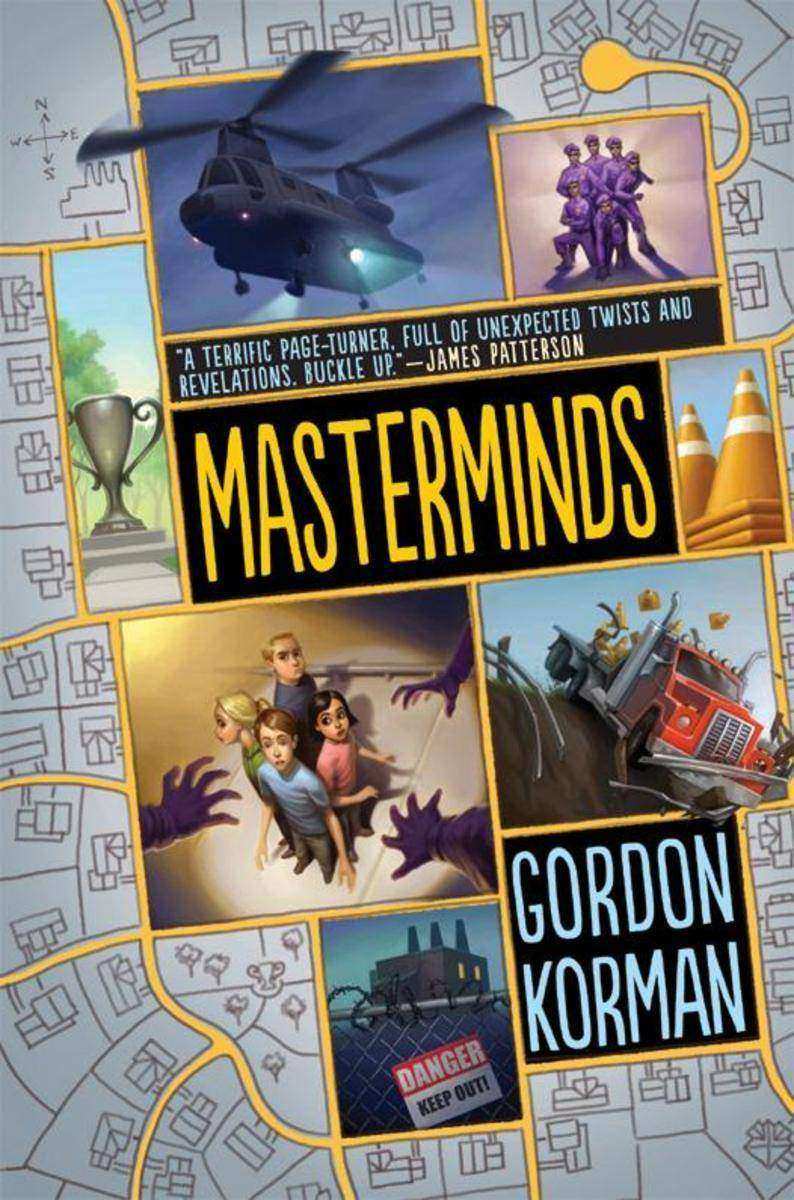
Masterminds
¥44.85
"A terrific page-turner, full of unexpected twists and revelations. Buckle up."—James PattersonThe first book in a new action-packed series from New York Times bestselling author Gordon Korman is perfect for young fans of James Patterson and John Grisham.?Eli Frieden lives in the most perfect town in the world: Serenity, New Mexico. Honesty and integrity are valued above all else. The thirty kids who live there never lie—they know it’s a short leap from that to the awful problems of other, less fortunate places.Eli has never left Serenity . . . why would he ever want toThen one day, he bikes to the edge of the city limits and something so crazy and unexpected happens, it changes everything. Eli convinces his friends to help him investigate further, and soon it becomes clear that nothing is as it seems in Serenity. The clues mount to reveal a shocking discovery, connecting their ideal crime-free community to some of the greatest criminal masterminds ever known. The kids realize they can trust no one—least of all their own parents.
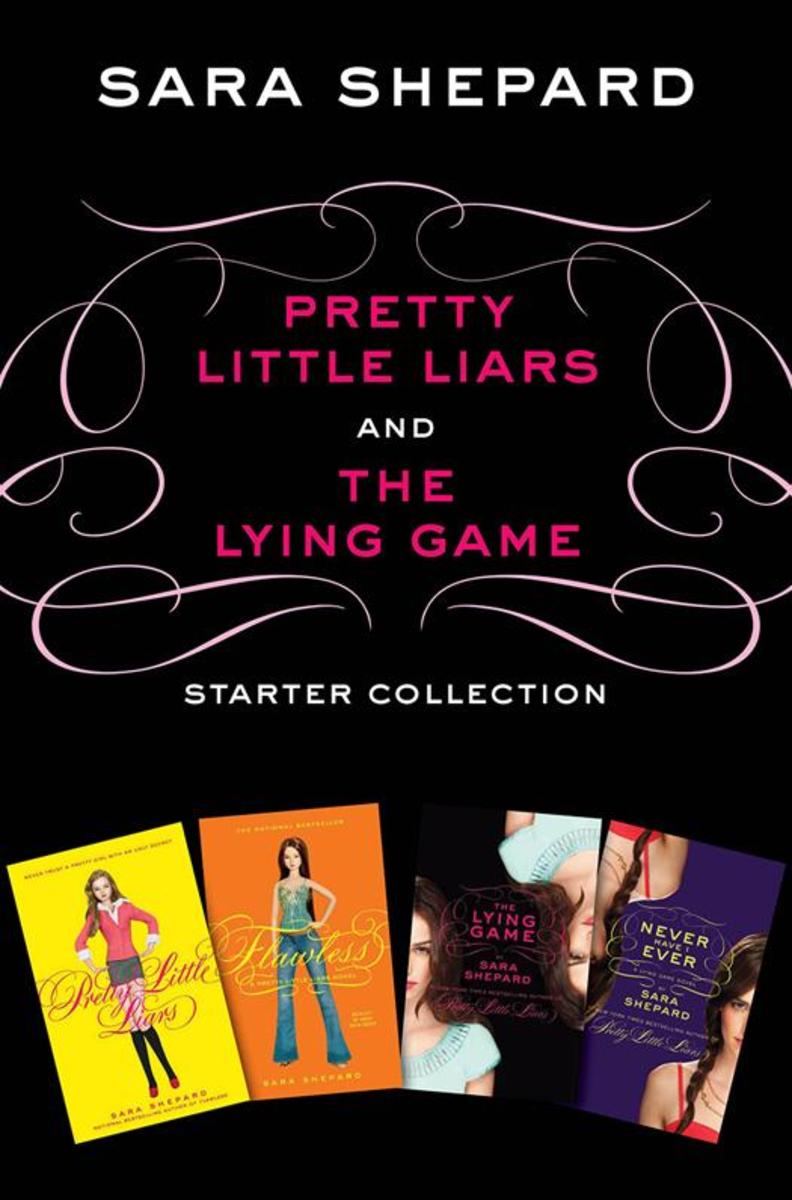
Pretty Little Liars and The Lying Game Starter Collection
¥261.68
This collection contains the first two novels in Sara Shepard's New York Times bestselling Pretty Little Liars and Lying Games series, plus a sneak peek at The Perfectionists, the first book in a brand-new Sara Shepard series!Pretty Little Liars: This page-turning start to the Pretty Little Liars series introduces readers to Rosewood and the pretty little liars who call it home. High school juniors Spencer, Hanna, Aria, and Emily thought their darkest secrets vanished when their best friend, Alison, went missing three years ago. But now someone named "A" is sending them notes and threatening to reveal their ugliest secrets—things only Alison knew.Pretty Little Liars #2: Flawless: Four pretty little liars have been very bad girls. But their most horrible secret yet is so scandalous that the truth would ruin them forever.The Lying Game: Separated at birth, twin sisters Emma Paxton and Sutton Mercer never had a chance to meet. And now they never will. Someone murdered Sutton and forced Emma into taking her place.The Lying Game #2: Never Have I Ever: The deeper Emma digs, the more suspects she uncovers. It turns out Sutton and her friends played a lot of games—games that ruined people's lives. Anyone could want revenge . . . anyone could want Sutton—and now Emma—dead.Plus, a sneak peek at The Perfectionists, another series full of Sara Shepard's trademark juicy secrets, nail-biting suspense, and beautiful girls who will do anything to hide the ugly truth.
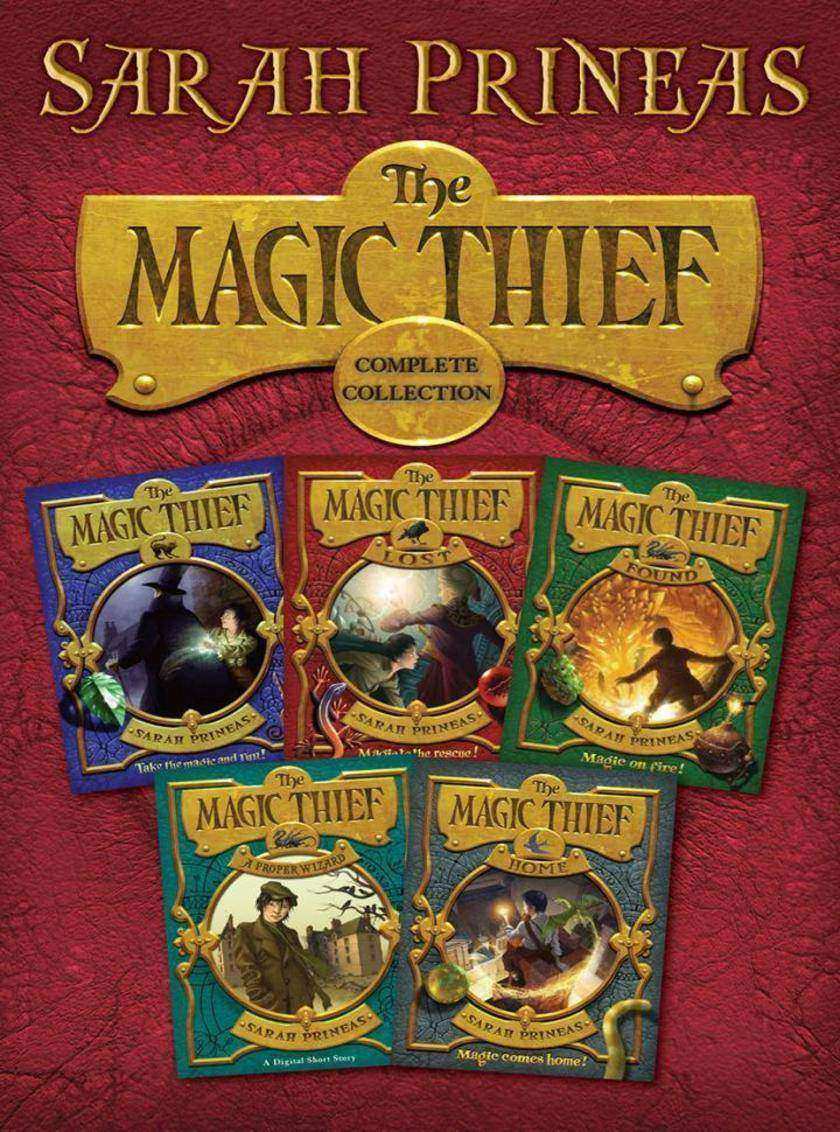
The Magic Thief Complete Collection
¥302.05
In a city that runs on a dwindling supply of magic, a young boy is drawn into a life of wizardry and adventure. Author Sarah Prineas works her own spells as she transports us to an extraordinary world where cities are run on living magic and even a thief can become a wizard's apprentice. Diana Wynne Jones, author of Howl's Moving Castle, praised this middle grade fantasy series filled with magic and wonder, saying of the first, "I couldn't put it down. Wonderful, exciting stuff." This collection contains all four novels in the series, plus the digital original novella The Magic Thief: A Proper Wizard.The Magic Thief: Conn should have dropped dead the day he picked Nevery's pocket and touched the wizard's locus magicalicus, a stone used to focus magic and work spells. But for some reason he did not. Nevery finds that interesting, and he takes Conn as his apprentice on the provision that the boy find a locus stone of his own. But Conn has little time to search for his stone between wizard lessons and helping Nevery discover who—or what—is stealing the city of Wellmet's magic.The Magic Thief: Lost: Conn may only be a wizard's apprentice, but even he knows it's dangerous to play with fire . . . especially around magic. But Conn is drawn to the murmurs he hears every time he sets off an explosion—something is trying to talk to him, to warn him. When none of the wizards listen, Conn takes matters into his own hands. His quest to protect everything he loves brings him face-to-face with a powerful sorcerer-king and a treachery beyond even his vivid imagination.The Magic Thief: Found: Sneaking out of prison isn't easy, unless you are a thief, or a wizard. Luckily, Conn is both! Trouble is, once he's out, where does he goHis home is a pile of rubble since he blew it up doing magic. His master, the wizard Nevery, is not happy with him. Worst of all, Conn's been exiled, and staying in the city will mean his death.The Magic Thief: A Proper Wizard: When Verent, a young apprentice from neighboring Danivelle, comes to Wellmet to ask for Conn's help with his city's magical problems, he is less than impressed with Conn. Will Verent be able to overcome his misgivings about Conn in order to help his townAnd with Conn's help, will Verent become a proper wizard?The Magic Thief: Home: Duchess Rowan has promoted Conn to ducal magister, but the other wizards see him only as a thief. But something sinister is brewing, as magicians' locus stones are being stolen and magical spells are going awry. As Conn faces old enemies and powerful magical forces, is he strong enough to save the city he calls home?
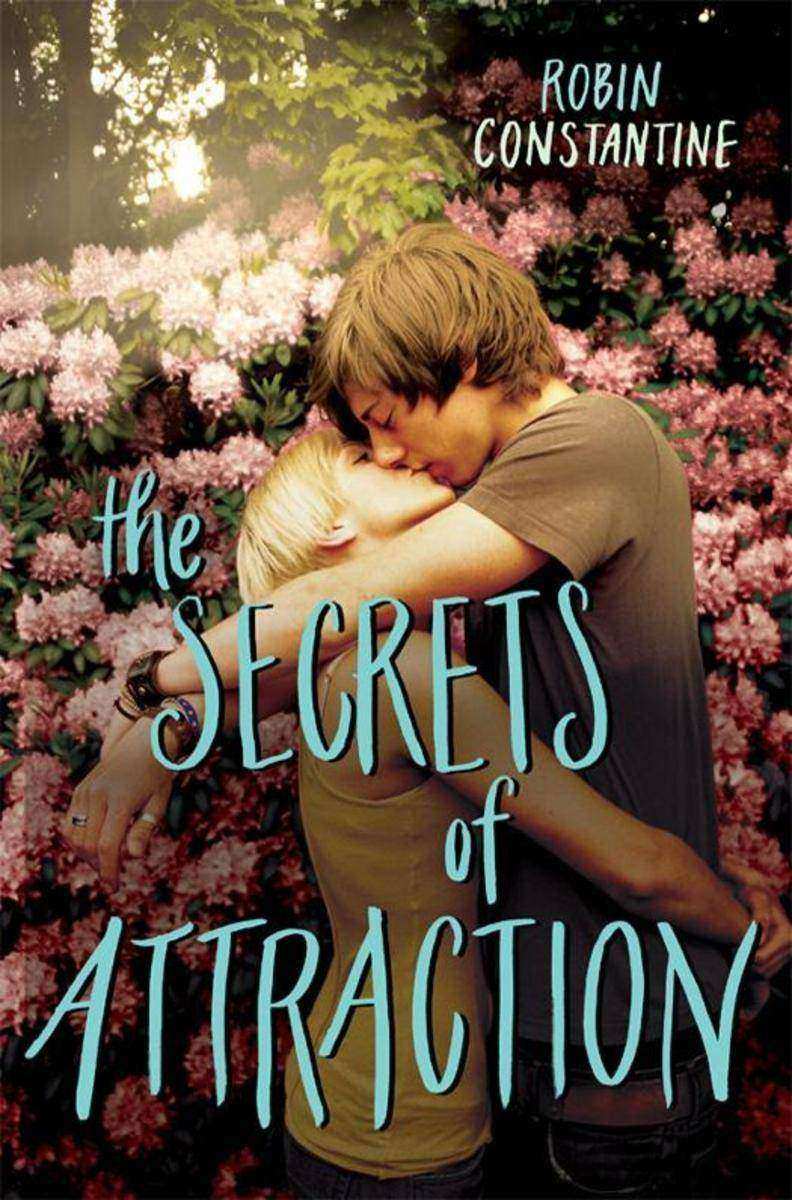
The Secrets of Attraction
¥56.08
Set in the same world as The Promise of Amazing, this smart, surprising, and romantic follow-up to Robin Constantine's debut novel follows two New Jersey teens as they become friends and fall in love. Perfect for fans of Stephanie Perkins, Sarah Mlynowski, and Jennifer E. Smith.Madison Pryce thinks she's got everything figured out—she's working on a portfolio for a summer art program and hanging with her friends. Plus she has her hot boyfriend, Zach. But then a visit from a family friend turns Maddie's life upside down.Jesse McMann is still reeling from a breakup that shattered his heart and his band. Then pride (and some goading from his bass player and fellow barista) forces him to find a new drummer—and the inspiration to write music again.Kismet arrives in the unlikely form of Grayson Barrett, who tries out for Jesse's band, and whose girlfriend is BFFs with the cute girl who orders a chai latte after yoga every Thursday: Maddie. What Jesse and Maddie thought they knew about the secrets of attraction and the rules of romance changes once they start falling for each other.

The Girl of Fire and Thorns Complete Collection
¥312.84
All three volumes of Rae Carson's New York Times?bestselling The Girl of Fire and Thorns trilogy plus the three novellas set in the same world, available together! An insecure princess with an unclear destiny becomes a secret bride, a revolutionary, a queen, and—finally—the champion her world so desperately needs in this epic fantasy series that Tamora Pierce called "engrossing" and that Veronica Roth said was "intense, unique . . . definitely recommended."This complete collection includes the three volumes of the trilogy: book one, The Girl of Fire and Thorns; book two, The Crown of Embers; and book three, The Bitter Kingdom. It also includes the three novellas set in the world of the series: The Shadow Cats, The Shattered Mountain, and The King's Guard.Once every century, one person is chosen for greatness. But the prophecy is vague, and Elisa has no idea why she was chosen or how she will fulfill the expectations. Her future is unknown and her potential is tremendous—even if she doesn't realize it. A sweeping fantasy series about a young woman finding her true strength, this is perfect for fans of Kristin Cashore's Graceling and George R. R. Martin's Game of Thrones.
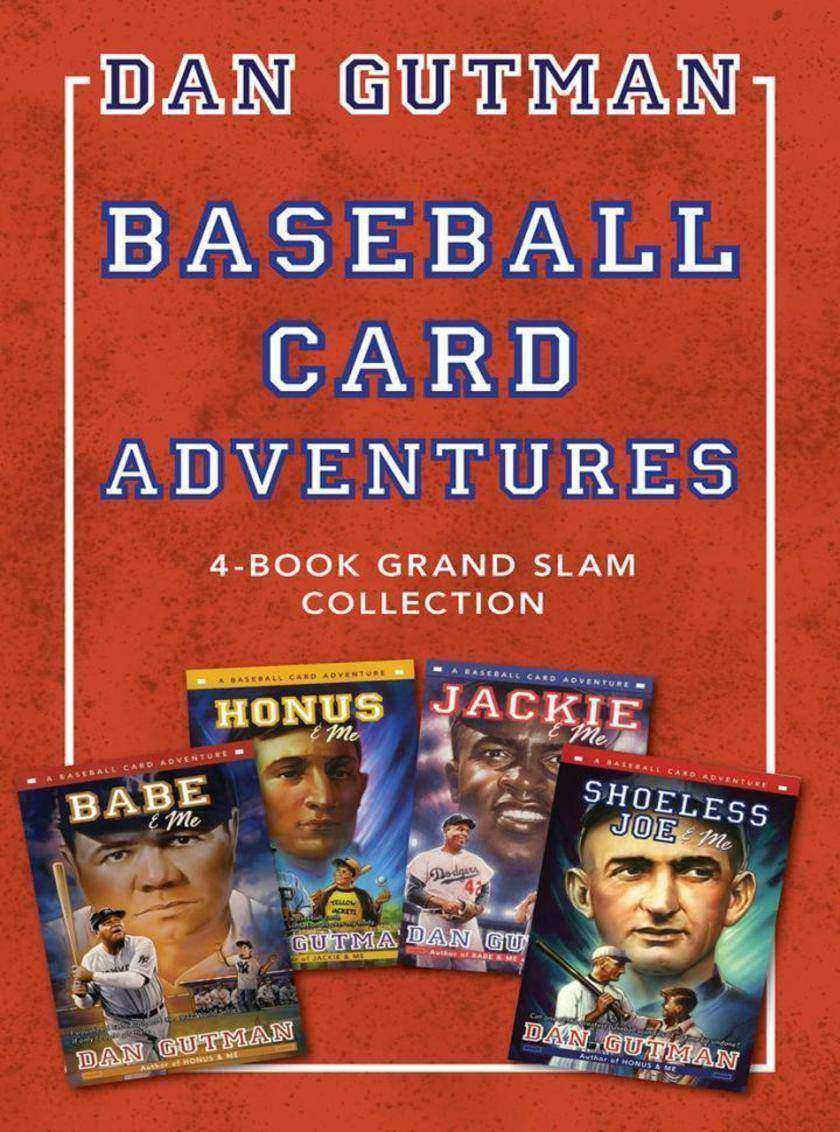
Baseball Card Adventures: 4-Book Grand Slam Collection
¥196.24
Twelve-year-old Joe Stoshack is an average kid with two amazing talents: getting his hands on rare baseball cards, and traveling through time to meet the famous players they depict. Sports buffs and fans of authors like Tim Green and Jon Scieszka will love this imaginative series.Together for the first time, this collection includes:Honus & Me, featuring Honus Wagner, the greatest shortstop ever, from the turn of the century. Honus Wagner’s baseball card is the rarest and most expensive of all; one specimen sold for $2.8 million in 2007. Jackie & Me, featuring Jackie Robinson, the first African-American player in Major League Baseball, six-time All-Star, and recipient of the Presidential Medal of Freedom and the Congressional Gold Medal. Babe & Me, featuring Babe Ruth, all-time great batter and seven-time World Series champion, who set records that still stand today. Shoeless Joe & Me, featuring Shoeless Joe Jackson, who was banned from baseball in the prime of his career and whose involvement in the Black Sox Scandal is still disputed.

The Hero's Guide Complete Collection
¥215.70
In the Hero's Guide books, readers discover that Prince Charming isn't one man—there are four of them: Liam, Frederick, Duncan, and Gustav. And they all have their own challenges to overcome as they try to grow from goofy, average-guy princes into impossibly perfect knights of legend. Joined by princesses Ella, Snow White, Briar Rose, Rapunzel, and Lila, they're off on adventures that they—and their kingdoms—can only hope to survive. Tween fans of Shrek and How to Train Your Dragon will love this fast-paced, funny series that's been applauded by the LA Times, the New York Times, Publishers Weekly, and Kirkus Reviews.This collection includes:The Hero’s Guide to Saving Your Kingdom The Hero’s Guide to Storming the Castle The Hero’s Guide to Being an Outlaw
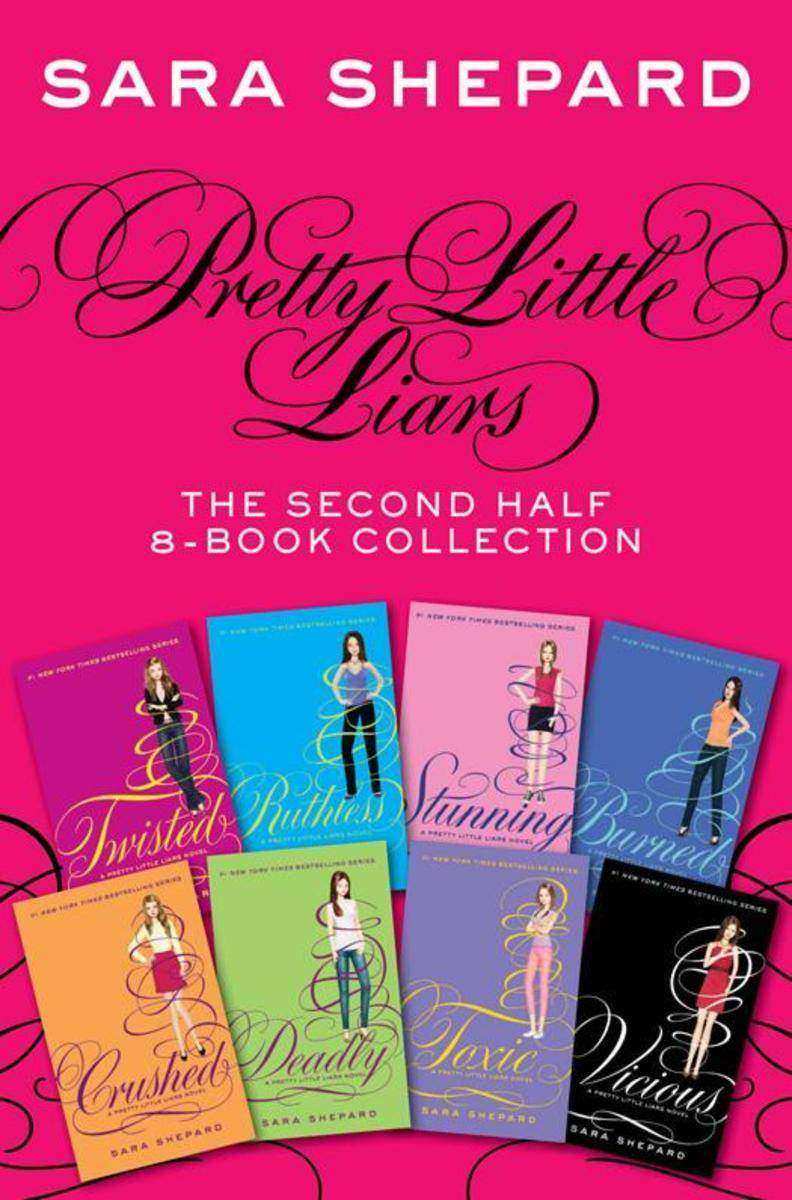
Pretty Little Liars: The Second Half 8-Book Collection
¥708.84
In Rosewood, majestic estates sprawl for acres, and Tiffany toggle bracelets dangle from every girl's wrist. But not all that glitters is gold, and the town harbors secrets darker than anyone could imagine—like the truth about what really happened the night Alison DiLaurentis went missing. . . . Sara Shepard's #1 New York Times bestselling Pretty Little Liars series is the inspiration for the hit ABC Family original TV show. This collection contains the final eight novels in the series.Includes:Pretty Little Liars #9: Twisted Pretty Little Liars #10: Ruthless Pretty Little Liars #11: Stunning Pretty Little Liars #12: Burned Pretty Little Liars #13: Crushed Pretty Little Liars #14: Deadly Pretty Little Liars #15: Toxic Pretty Little Liars #16: Vicious

The Seventh Miss Hatfield
¥54.42
Romantic and action packed, The Seventh Miss Hatfield is a 300-page novel about a young girl with the ability to travel through time—and the secret she must protect. With an epic romance that cannot be stopped by the bounds of time, as well as deeper questions regarding immortality, The Seventh Miss Hatfield is the beginning of a series perfect for fans of love stories such as The Time Traveler's Wife as well as historical fiction with a fantastical twist like The Diviners by Libba Bray.As a child, Cynthia was lured into the home of her mysterious neighbor, Miss Hatfield. There, Miss Hatfield tells her they are both part of a long line of immortal women able to travel through time. But this gift might be more of a curse, and it comes with a price. Cynthia is beginning to lose herself: she is becoming the next Miss Hatfield.But before the process goes too far, Cynthia must travel back in time to turn-of-the-century New York and steal a painting. This picture might provide a clue to the whereabouts of the source of immortality, a clue that must remain hidden from the world.Her assignment isn't as easy as it appears, especially when Cynthia meets an attractive yet sullen boy named Henley. As their friendship grows into something stronger, Cynthia is hesitant to leave. But how can she stay with the boy she cares for when she must return to her own time before the time travel has a fatal effect on her bodyAnd would she rather stay and die in love or leave and live alone?And who is the mysterious stranger who shadows her from place to placeA hunter for the secret of immortality—or someone who has already found it?Epic Reads Impulse is a digital imprint with new releases each month.
Radiant
¥10.83
From New York Times bestselling author Cynthia Hand comes a riveting original novella (available only as an ebook) set in the world of the Unearthly series.Clara is desperate to get away—from the memories that haunt her in Wyoming and the visions of a future she isn't ready to face—and spending the summer in Italy with her best friend, Angela, should be the perfect escape. . . .For as long as she can remember, Angela has been told that love is dangerous, that she must always guard her heart. But when she met Phen two years ago she was determined to be with him, no matter the costs. Now she must decide whether she can trust Clara with her secret, or if telling her the truth will risk everything she cares about.Alternating between Angela and Clara's perspectives, Radiant chronicles the unforgettable summer that will test the bounds of their friendship and change their lives forever.Epic Reads Impulse is a digital imprint with new releases each month.

One Direction: Meet One Direction
¥61.70
The only 100% fully official annual—written in collaboration with One Direction. This is the annual for all 1D fans! Find out straight from Harry, Liam, Louis, Niall, and Zayn what they think about success, their musical influences, the making of their movie, their style, their amazing fans, and much more! With exclusive interviews, up-to-the-minute news, and fantastic never-before-seen photos, this is a must-have for all One Direction fans and a fantastic gift for any occasion!

The Half-a-Moon Inn
¥38.72
Aaron has never left alone before. He is mute, and depends on his mother for everything. But tomorrow Aaron will be twelve years old, old enough to stay home by himself while his mother goes to town. Everything will be fine, as long as he stays close to the house. And if there's trouble, Aaron can write what he needs to say.Trouble there is aplenty. When a terrible blizzard keeps his mother from returning home, Aaron sets out to search for her—but he stumbles upon the mysterious Half-a-Moon Inn, where the crafty Miss Grackle forces him to work for her. How can Aaron stop her from carrying out her devilish schemes—before it's too late?
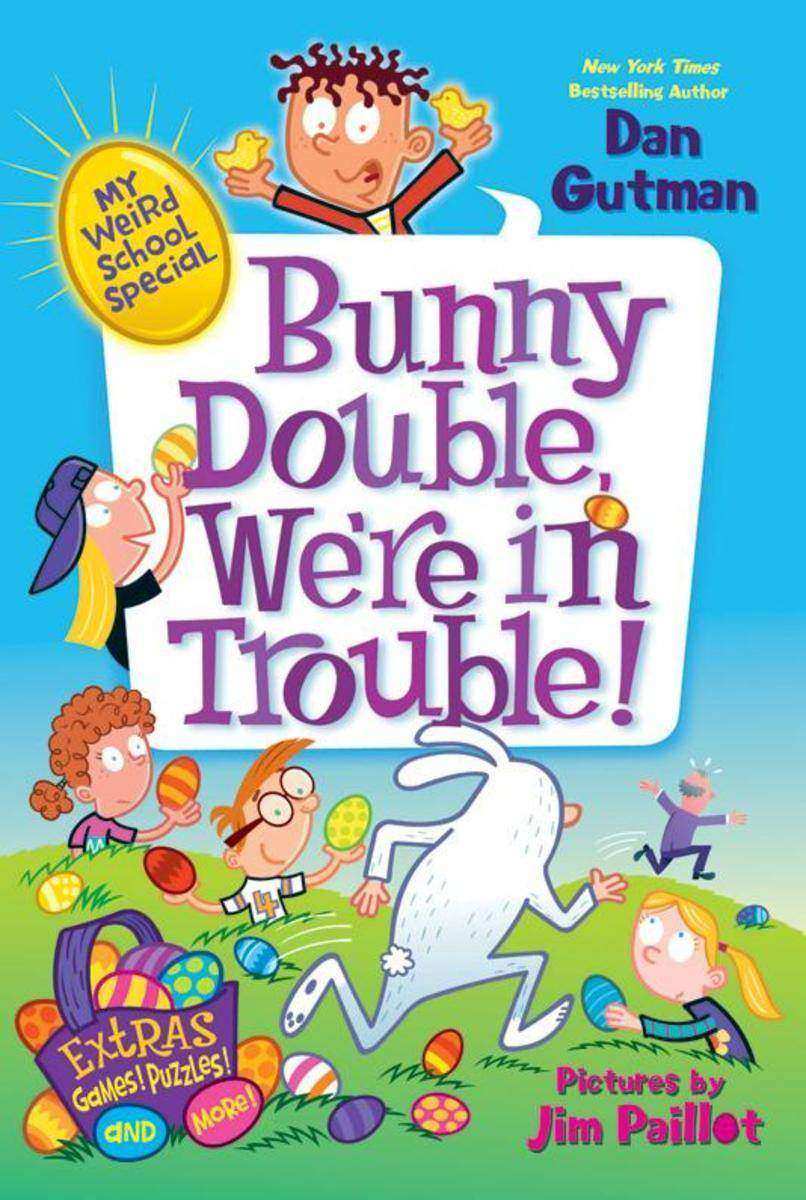
My Weird School Special: Bunny Double, We're in Trouble!
¥33.53
A.J. and the gang from My Weird School star in this series of after-school, holiday-themed chapter books featuring all-new hilarious stories and thirty-two pages of games, puzzles, and more. Hip hop hooray! It's Easter! And this year, Mayor Hubble is hosting an Easter egg roll and a special egg hunt at the mayor's mansion. But when Mayor Hubble reveals that the prize golden egg has a thousand dollars inside it, the egg hunt becomes a wacky free-for-all with a photo finish! Bestselling author Dan Gutman brings his kid-friendly sense of humor to this all-new series of holiday adventures. With My Weird School checklists and trivia plus tons of Easter-themed facts and puzzles, this is one weird Easter special you don't want to miss!


