


 购物车
购物车 个人中心
个人中心
Did You Really Shoot the Television?: A Family Fable
¥73.58
Max Hastings's account of his family's tumultuous 20th century experiences embraces the worlds of fashion and newspapers, theatre and TV, pioneering in Africa and even – his father's most exotic 1960 stunt – being cast away on a desert island in the Indian Ocean. The author is the son of broadcaster and adventurer Macdonald Hastings and journalist and gardening writer Anne Scott-James. One of his grandfathers was a literary editor while the other wrote plays and essays, and penned an enchanting memoir of his own Victorian childhood. His great-uncle was an African hunter who wrote poetry and became one of Max's heroes. The author tells a richly picaresque story, featuring guest appearances by a host of celebrities from Thomas Hardy and Joseph Conrad to John Betjeman and Osbert Lancaster, who became Anne Scott-James's third husband. 'All families are dysfunctional', Anne asserted impenitently to Max, but the Hastings’ managed to be more dysfunctional than most. His father roamed the world for newspapers and as a presenter for BBC TV's legendary Tonight programme, while his mother edited ‘Harper's Bazaar’, became a famous columnist and wrote best-selling gardening books. Here, the author brings together this remarkable cast of forebears, 'a tribe of eccentrics', as he himself characterises them. By turns moving, dramatic and comic, the book portrays Max's own childhood fraught with rows and explosions, in which the sudden death of a television set was only one highlight. His story will make a lot of people laugh and perhaps a few cry. It helps to explain why Max Hastings, whose family has produced more than eighty books over three generations, felt bound to follow their path of high adventure and popular journalism.
Memories of Milligan
¥73.58
An arresting collection of interviews, collated by Norma Farnes, Spike Milligan's close friend and longstanding agent, bringing to life the late, great Milligan in all his various guises. Heralded as brilliant and difficult in equal measure, Spike Milligan is one of the most prolific and mould-breaking writers of the twentieth century. Fantastically funny and incredibly talented, on his death in 2002, Spike left behind him one of the most diverse legacies in British entertainment history. Creative, inspirational, and at times doggedly loyal, yet famously tempestuous and fickle, Spike was many things to many people. In Memories of Milligan, Norma Farnes sets out to interview those who knew him best, amassing an array of personal memories from fellow performers and comedians, long time friends and former girlfriends. Compiled of intimate stories, small exchanges and habits that go into making up a relationship, be it personal or professional, Memories of Milligan captures another side to the performer's well-known public persona, to build a complete picture of one of the greatest British comic writers to date. Ranging from interviews with fellow comedian Barry Humphries, *writers Galton and Simpson, director Jonathan Miller, stalwart presenters Michael Palin and Terry Wogan, to comic geniuses such as Eric Sykes and producer George Martin, this original book encapsulates a moving portrait of a man who is synonymous with a unique era in post-war entertainment.
Elizabeth and Mary: Cousins, Rivals, Queens
¥81.52
This is the first biography of the fateful relationship between Elizabeth I and Mary Queen of Scots. It was the defining relationship of their lives and marked the intersection of the great Tudor and Stuart dynasties. At its core were their rival claims to the throne of England. Distinguished biographer Jane Dunn reveals an extraordinary story of two queens ruling in one isle, both embodying opposing qualities of character, ideals of womaliness and divinely ordained kingship. Theirs is a drama of sex and power, recklessness, ambition and political intrigue, with a rivalry that could only be resolved by death. As regnant queens in an overwhelmingly masculine world they were deplored for their femaleness, compared unfavourably with each other, and courted by the same men. By placing this dynamic and ever-changing relationship at the centre of the book, Dunn throws new light and meaning on the complexity of their natures. She reveals an Elizabeth revolutionary in her insistence on ruling alone and inspired in her use of celibacy as a political tool, yet deeply feeling and more sympathetic than the usual picture of the virgin queen. Mary, too, is not the romantic victim of history but a courageous adventurer with a reckless heart, and a magnetic influence over men and women alike. Vengeful against her enemies and the more ruthless of the two, she was untroubled by plotting Elizabeth’s murder. Elizabeth, however, was in anguish at having to sanction Mary’s death warrant for treason. Jane Dunn brings her skills as a biographer to bear on history’s two most charismatic queens. Working almost exclusively from contemporary letters and writings, she lets them speak to us across more than 400 years, their voices and responses surprisingly familiar to our own, their characters vivid, by turns touching and terrible. The death in 1603 of Elizabeth, our greatest English queen, was to mark the end of the Tudors and the posthumous triumph of Mary, whose son, James I united the English and Scottish thrones under a Stuart king.

Silent Boy
¥45.62
From the author of Sunday Times bestsellers One Child and Ghost Girl comes a heartbreaking story of a boy trapped in silence and the teacher who rescued him. When special education teacher Torey Hayden first met fifteen-year-old Kevin, he was barricaded under a table. Desperately afraid of the world around him, he hadn’t spoken a word in eight years. He was considered hopeless, incurable. But Hayden refused to believe it, though she realised it might well take a miracle to break through the walls he had built around himself. With unwavering devotion and gentle, patient love, she set out to free him – and slowly uncovered a shocking violent history and a terrible secret that an unfeeling bureaucracy had simply filed away and forgotten. Torey refused to give up on this tragic “lost case.” For a trapped and frightened boy desperately needed her help – and she knew in her heart she could not rest easy until she had rescued him from the darkness.
Humble Pie
¥12.56
Everyone thinks they know the real Gordon Ramsay: rude, loud, driven, stubborn. But this is his real story… In this fast-paced, bite-sized edition of his bestselling autobiography Ramsay tells the real story of how he became the world’s most famous and infamous chef: his difficult childhood, his brother’s heroin addiction, his failed first career as a footballer, his fanatical pursuit of gastronomic perfection and his TV persona - all the things that have made him the celebrated culinary talent and media powerhouse that he is today. Gordon talks frankly about: ? his tough childhood: his father’s alcoholism and violence and the effects on his relationships with his mother and siblings ? his first career as a footballer: how the whole family moved to Scotland when he was signed by Glasgow Rangers at the age of fifteen, and how he coped when his career was over due to injury just three years later ? his brother’s heroin addiction. ? Gordon’s early career: learning his trade in Paris and London; how his career developed from there: his time in Paris under Albert Roux and his seven Michelin-starred restaurants. ? kitchen life: Gordon spills the beans about life behind the kitchen door, and how a restaurant kitchen is run in Anthony Bourdain-style. ? and how he copes with the impact of fame on himself and his family: his television career, the rapacious tabloids, and his own drive for success.
Queen Victoria: A Personal History
¥80.25
Christopher Hibbert’s acclaimed biography of Queen Victoria is as impressive and authoritative as the great woman herself. In 1837 an eighteen-year-old girl, raised by a German mother, inherited the throne of the United Kingdom. She was to reign as queen – and later Empress of India – for almost sixty-four years, presiding over twenty prime ministers and a period of unprecedented social and political change. Her era became synonymous with moral rigidity and colonial expansion, and this absorbing biography of Queen Victoria, the unlikely figurehead of a vast and powerful empire, explores how the young monarch transformed herself into a formidable matriarch and the epitome of an age. Embracing her life and family, her politics and personality, her love for Prince Albert and her relationship with John Brown, Hibbert’s touching biography is a persuasive portrait of a remarkable woman.
The Mitfords: Letters between Six Sisters
¥100.26
Carefree, revelatory and intimate, this selection of unpublished letters between the six legendary Mitford sisters, compiled by Diana Mitford’s daughter-in-law, is alive with wit, passion and heartbreak. The letters chronicle the social quirks and political upheavals of the twentieth century but also chart the stormy, enduring relationships between the uniquely gifted – and collectively notorious – Mitford sisters. There’s Nancy, the scalding wit and bestselling novelist; Pamela, who craved a quiet country life; Diana, the fascist wife of Sir Oswald Mosley; Unity, whose obsession with Adolf Hitler led to personal tragedy; Jessica, the runaway communist; and Deborah, the socialite who became Duchess of Devonshire. Writing to one another to confide, tease, rage and gossip, the Mitford sisters set out, above all, to amuse. A correspondence of this scope is rare; a collection penned by six born storytellers is irreplaceable.
The Friendship: Wordsworth and Coleridge
¥91.23
The first book to explore the extraordinary story of the legendary friendship – and quarrel – between Wordsworth and Coleridge, two giants of English Romanticism. Wordsworth and Coleridge’s passionate intimacy, shared ambition and subsequent estrangement contribute to a tragic tale. But Sisman’s biography of this most remarkable friendship – the first to devote itself wholly to exploring the impact of their relationship on each other – seeks to re-examine the orthodox assumption that these two poets flourished as a result of it. Instead, Sisman argues that it was a meeting that may well have been disastrous for both: for it was Wordsworth’s rejection of Coleridge, and not primarily his opium addiction, that destroyed the latter as a poet, and that Coleridge’s impossible ambitions for Wordsworth pushed the latter towards failure and disappointment. Underlying the poignancy of the tale is the intriguing subject of the influence one writer can have on another. Sisman seeks to answer fundamental questions about this relationship: why was Wordsworth so reliant on Coleridge, and why was he so easily swayed in the most critical decision of his career? Was it in Coleridge’s nature to play second fiddle? Would it, in fact, have been better for both men if they had never met?
The Times Great Irish Lives
¥67.49
For the first time, The Times brings together a unique collection of obituaries of Ireland's most distinguished individuals from the last two centuries.
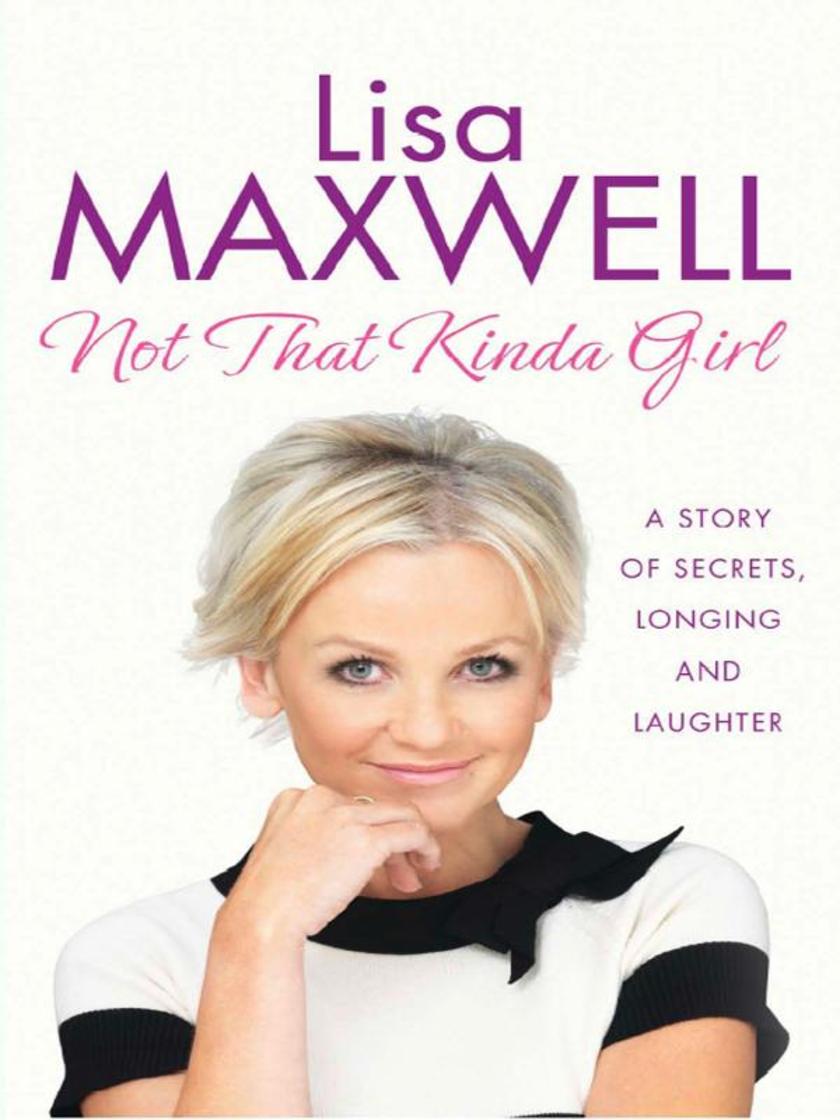
Not that Kinda Girl
¥58.86
Lisa Maxwell, an addition to the quick-witted Loose Women team, is a bundle of fun and laughter and a natural storyteller. Here, for the first time, she tells her astonishing story - a tale of remarkable spirit, incredible experiences and family secrets. A much-loved presenter and respected actress, Lisa got her first onscreen role at the age of just 11. In the eighties she became a TV presenter on series like Splash and No Limits, interviewing the icons of the time and partying with the likes of George Michael, Robert Downey Junior and Michael Hutchence, before moving more firmly into comedy, appearing on sketch shows like, The Les Dennis Laughter Show, The Russ Abbott Show and her very own, self-titled, The Lisa Maxwell Show. She narrowly missed out on the part of Daphne in a little show called Frasier. And then for seven years played the part of The Bill's DI Sam Nixon, before joining Loose Women in 2009, where she quickly became an audience favourite. But behind the fun, glamour and onscreen success, is a south London girl, hiding the secret she's been taught never to talk about. An illegitimate child, brought up in Elephant and Castle, Lisa's life very nearly took a different path. Lucky for her, her dear old Nan had a kind heart, and in a last minute change of plan she was brought home to her grandparent's flat on the Rockingham Estate. With warmth, honesty and humour, Lisa takes us to the heart of the Elephant, revealing a home filled with love, laughter and drama. From having the drawer of an old chest for her bed to hiding from the Tally Man, waiting for her Nan outside the betting shop to dabbling in petty crime, discovering her dad was still alive, and always looking for a way to be in the lime light, Lisa has written a colourful memoir of life as a daughter, a granddaughter, a mother, and an actress.
Tommy’s Honour: The Extraordinary Story of Golf’s Founding Father and Son
¥81.03
The definitive account of golf’s founding father and son, Old and Young Tom Morris. For the first time, the two will be portrayed as men of flesh and blood – heroic but also ambitious, loving but sometimes confused and angry. Two men from one household, with ambitions that made them devoted partners as well as ardent foes. Tommy's Honour is a compelling story of the two Tom Morrises, father and son, both supremely talented golfers but utterly different, constituting a record-breaking golfing dynasty that has never been known before or since. Father, Old Tom Morris, grew up a stone's throw away from golf's ancestral home at St Andrews, a whisky-fuelled caddie, a wonderful 19th century character who became an Open Champion three times before running the Royal & Ancient, then sole governing body of the game. His son, Young Tom, arguably an even more prodigious talent than his father, was a golfing genius, the Tiger Woods of his era, who at 17 became the youngest player, to this day, to win the Open Championship. He then went on to win it four times in a row, an unprecedented achievement. On one occasion, father and son fought it out at the last hole of the Championship before the son finally triumphed. But then came the pivotal day that would change their lives forever, the death of Young Tom’s wife and unborn child. The cataclysmic events of that day eventually lead to Young Tom’s tragic death, aged 24, with his father living on for another 20 years in deep remorse. So on the one hand, you have the story of one of the most influential figures in the history of golf, a pioneer in the birth of the modern game and of Scottish and Open Championship golf. And on the other hand – and this is the real appeal of this book – you have an extraordinary father-and-son story. It’s for every son who ever competed with his father, and every father who has guided his son towards manhood, then found it hard to let go.

Westlife: Our Story
¥66.22
The biggest pop band in the world celebrate 10 years at the top – telling their full story in their own words for the very first time. 40 million albums 14 UK number 1 singles 7 UK number 1 albums Westlife have had more number ones than any other artist apart from The Beatles and Elvis and with songs that have become modern classics like Flying without Wings, they have ensured their place in the annals of pop history. Westlife – The Autobiography will chart the highs and lows of their phenomenonal career and a unique friendship that has seen them endure as a band for an extraordinary ten years. The book will chronicle the band’s story from the grass-roots of Sligo, Ireland to multi-platinum records, celebrity collaborations and chart achievements. But bubbling under this public face is a private and unseen story never before recorded, crammed with candid personal revelations, including of course the departure of Brian McFadden. Westlife have been a staple part of British entertainment for years, yet the public has no idea of the astounding life they have led – and still live – behind the headlines and soundbites. Here, for the first time, Westlife will take us into their confidence and reveal their lives and amazing ten year journey as the UK’s biggest pop band as never before.
Street Kid Fights On: She thought the nightmare was over
¥73.58
How can you forget your past when it keeps coming back to haunt you? Judy Westwater, the Sunday Times bestselling author of Street Kid, was determined to turn her back on her cruel and violent childhood. She didn't stand a chance. All too soon hope turned to fear and she knew she'd have to run again. Judy was only 11 years old when she was forced to live on the streets. Beaten, half-starved and horrifically abused, she finally escaped to a life in the circus and fell in love with one of the circus hands. But the charming man who seemed so perfect had a dark and sinister side. If she wanted to survive she had to get away. Judy fled to South Africa, taking with her her two young children. But the streets of South Africa were just as cruel. One day a man took her five-year-old daughter and her violent past was replayed in front of her eyes. Judy's incredible story of courage and determination will inspire as it will amaze.
The Other Side of Me
¥51.50
A brilliant, highly spirited memoir of Sidney Sheldon's early life that provides as compulsively readable and racy a narrative as any of his bestselling novels. Growing up in 1930s America, the young Sidney knew what it was to struggle to get by. Millions were out of work and the Sheldon family was forced to journey around America in search of employment. Grabbing every chance he could, Sidney worked nights as a busboy, a clerk, an usher – anything – but he dreamt of becoming something more. His dream was to become a writer and to break Hollywood. By a stroke of luck, he found work as a reader for David Selznick, a top Hollywood producer, and the dream began to materialise. Sheldon worked through the night writing stories for the movies, and librettos for the musical theatre. Little by little he gained a reputation and soon found himself in demand by the hottest producers and stars in Hollywood. But, this was wartime Hollywood and Sidney had to play his part. He trained as a pilot in the US Army Air Corps and waited for the call to arms which could put a stop to his dreams of stardom. Returning to Hollywood and working with actors like Cary Grant and Shirley Temple; with legendary producers like David Selznick and Dore Schary; and musical stars like Irving Berlin, Judy Garland and Gene Kelly, memories of poverty were finally behind Sheldon. This is his story: the story of a life on both sides of the tracks, of struggles and of success, and of how one man rose against the odds to become the master of his game.
Manhood for Amateurs
¥81.03
Michael Chabon, author of WONDER BOYS and the Pulitzer Prize-wining THE AMAZING ADVENTURES OF KAVALIER & CLAY, has written an autobiographical narrative as inventive, beautiful and powerful as his novels. In these insightful, provocative, slyly interlinked essays, one of our most brilliant and humane writers presents his autobiography and vision of life in the way so many of us experience our own: as a series of reflections, regrets and re-examinations, each sparked by an encounter, in the present, that holds some legacy of the past. What does it mean to be a man today? Chabon invokes and interprets and struggles to reinvent for us, with characteristic warmth and lyric wit, the personal and family history that haunts him even as it goes on being written every day. As a son, a husband and above all as a father of four young children, Chabon’s memories of childhood, of his parents’ marriage and divorce, of moments of painful adolescent comedy and giddy encounters with the popular art and literature of his own youth, are like a theme played – on different instruments, with a fresh tempo and in a new key – by the mad quartet of which he now finds himself co-conductor.
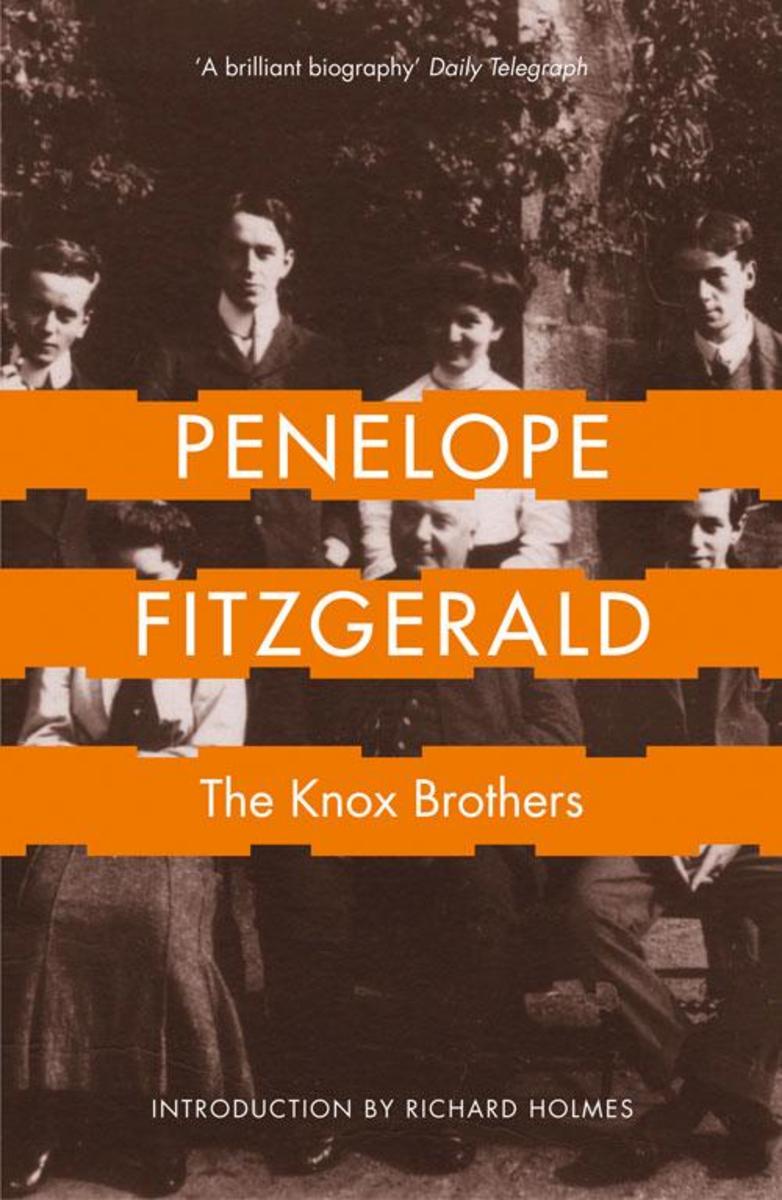
The Knox Brothers
¥76.52
Penelope Fitzgerald’s biography of her remarkable family. ‘When I was very young I took my uncles for granted, and it never occurred to me that everyone else in the world was not like them.’ In this, only her second book, Penelope Fitzgerald turned her novelist’s gaze on the quite extraordinary lives of her father and his three brothers. A masterly work of biography, within which we see Penelope Fitzgerald exercising her pen magnificently before she began her novel-writing career. Edmund Knox, her father, was one of the most successful editors of Punch. Dillwyn, a Cambridge Greek scholar, was the first to crack the Nazi’s message decoding system, Enigma, and in so doing, is estimated to have shortened the Second World War by six months. Wilfred became an Anglo-Catholic priest and an active welfare worker in the East End of London. Ronald, the best known of the four during his lifetime, was Roman Catholic chaplain to Oxford University’s student body, preacher, wit, scholar, crime-writer and translator of the Bible. A homage to a long-forgotten world and a fascinating account of the generation straddling the divide between late Victorian and Edwardian.
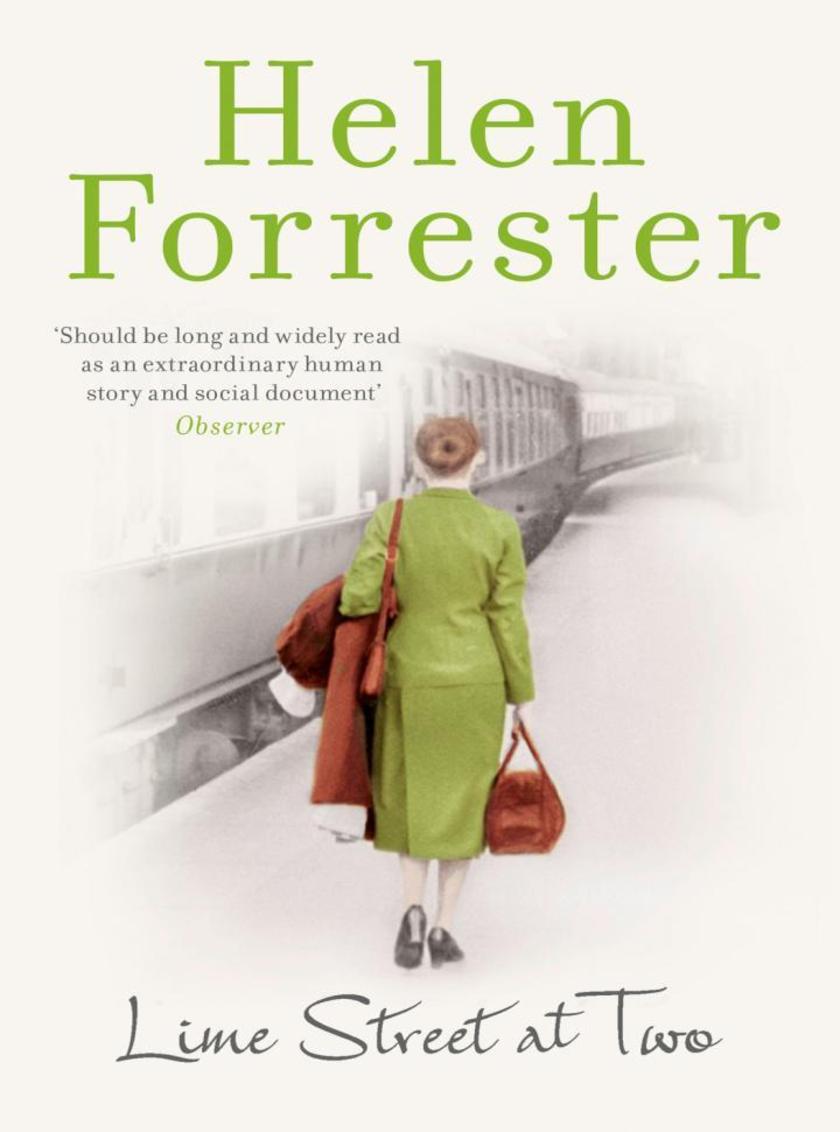
Lime Street at Two
¥54.25
The fourth and final part of Helen Forrester’s bestselling autobiography continues the moving story of her early poverty-stricken life with an account of the war years in Blitz-torn Liverpool In 1940 Helen, now twenty, reeling from the news that her fiance Harry has been killed on an Atlantic convoy, is working long hours at a welfare centre in Bootle, five miles from home. Her wages are pitifully low and her mother claims the whole of them for housekeeping. Then, early in 1941, she gets a new job and begins to enjoy herself a little. But in May the bombing starts again and another move brings more trouble to Helen, trouble which will be faced, as ever, with courage and determination.
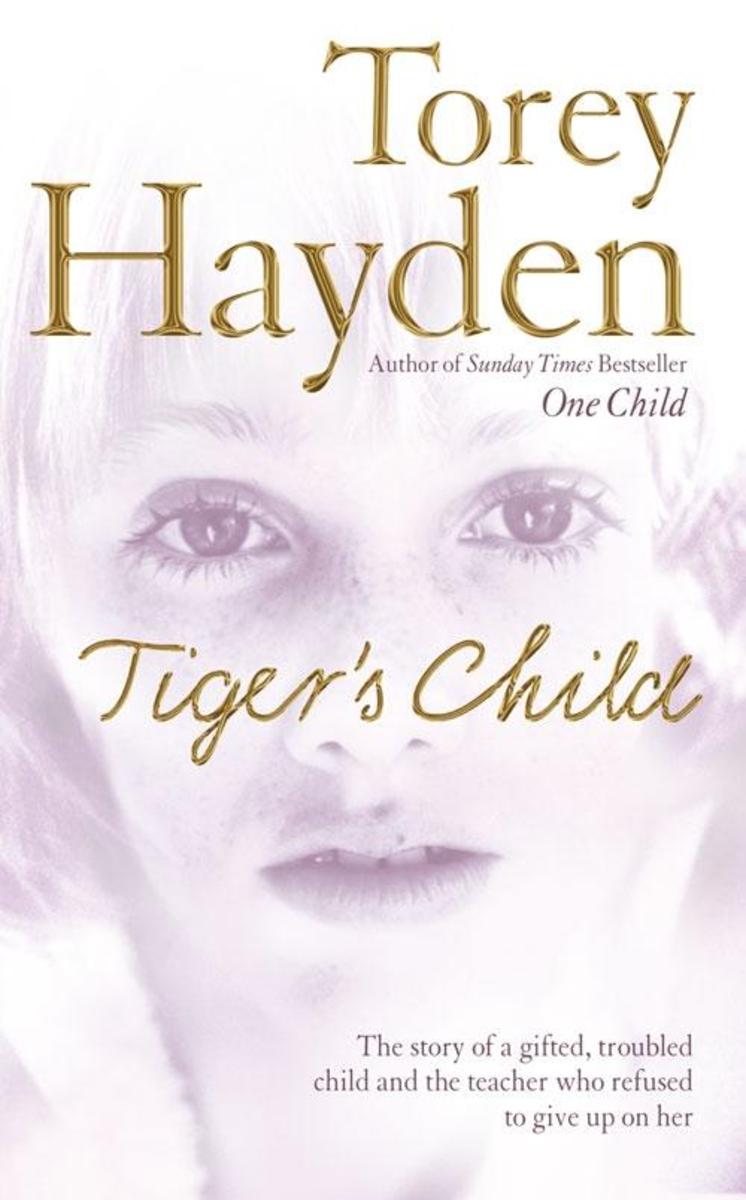
The Tiger’s Child
¥58.47
Torey Hayden returns with this deeply-moving sequel to her first book, One Child (the Sunday Times bestseller). After seven years, Torey is reunited with Sheila, the disturbed 6-year-old she tried to rescue. Sheila was a deeply disturbed six-year-old when she came into Torey Hayden's life – a story poignantly chronicled One Child. The Tiger's Child picks up the story seven years later. Hayden has lost touch with the child she helped to free from a hellish inner prison of rage and silence. But now Sheila is back, now a gangly teenager with bright orange hair – no longer broken and lost, but still troubled and searching for answers. This story of dedication and caring that began in childhood moves into a new and extraordinary chapter that tests the strength and heart of both Sheila and her one-time teacher. In The Tiger's Child the skilled and loving educator answers the call once again to help a child in need through her difficult yet glorious transition into young womanhood.

Burnt Toast
¥57.09
Toast. You know when you're trying to make it and you just can't get it right? It's too light or too soft, then totally burnt. Are you the kind of person who tries to scrape off the black? Or do you smother it with jam to hide the taste? Do you throw it away, or do you just eat it? Up until now, I ate the burnt toast … then I hit forty. It took Teri Hatcher a divorce, the experience of single motherhood, a parade of bad dates, a stalled career and a memorable fortieth birthday to realize that she didn't want to spend another decade preparing herself for the next disaster. Burnt Toast is the heartfelt, funny, poignant and inspiring account of Teri's jagged route to happiness. Teri reveals her life in unexpected ways, in the hopes of keeping other women from eating the burnt toast, and explains why you'll never get a second chance if you don't open yourself up to the possibility.
Niall Mackenzie: The Autobiography
¥63.77
he 40-year-old Scot has been Britain's most successful Grand Prix racer since the legendary Barry Sheene. At his final race in Knockhill in August 2001, more than 20,000 fans turned up to watch Mackenzie and to bid farewell to their local hero. Niall has come a long way from Denny where he would regularly get into trouble for racing round the streets, as well as in and out of the local chip shops, to impress the girls. As an amateur it was recognized he had an abundance of talent, especially after winning his first race at Knockhill, but he also had a wild side and looks back on a time when chasing girls and getting drunk were as important as winning races. After moving up through the amateur ranks and securing his first factory 500cc rides on a Suzuki, Niall notched up a host of 500cc GP podium finishes before moving to Superbikes. He proved unbeatable between 1996 and 1998 when he claimed a hat-trick of British Superbike titles. On each occasion he beat big-name team-mates such as Jamie Whitham, Chris Walker and Steve Hislop. This fascinating look into the British GP and Superbike scene through the eyes of one of its legends, has now been fully updated with Mackenzie’s latest adventures in his career off the track in 2003.
So I Have Thought of You: The Letters of Penelope Fitzgerald
¥76.91
A fascinating collection of letters from the great English novelist – and prolific correspondent – Penelope Fitzgerald. Acclaimed for her exquisitely elegant novels – including the Booker Prize-winning ‘Offshore’ – and superb biographies, Penelope Fitzgerald was one of the finest British authors of the last century. Published here for the first time are her collected letters. An unparalleled record of the life of this greatly admired writer, these letters reveal her most important family relationships and friendships, and paint a clear picture both of herself and of her correspondents. They show us how she managed her own career – according to her own convictions – and how determined she was to put her world view across. A fascinating portrait of Penelope Fitzgerald as a mother, as a friend and as a writer, these letters give the same pleasure they gave to those who first opened them. Penelope Fitzgerald was one of the most distinctive voices in British literature. The prize-winning author of nine novels, three biographies and one collection of short stories, she died in 2000.


