


 购物车
 个人中心

History of the Federal Reserve, Volume 1
¥265.87
Allan H. Meltzer's monumental history of the Federal Reserve System tells the story of one of America's most influential but least understood public institutions. This first volume covers the period from the Federal Reserve's founding in 1913 through the Treasury-Federal Reserve Accord of 1951, which marked the beginning of a larger and greatly changed institution.To understand why the Federal Reserve acted as it did at key points in its history, Meltzer draws on meeting minutes, correspondence, and other internal documents (many made public only during the 1970s) to trace the reasoning behind its policy decisions. He explains, for instance, why the Federal Reserve remained passive throughout most of the economic decline that led to the Great Depression, and how the Board's actions helped to produce the deep recession of 1937 and 1938. He also highlights the impact on the institution of individuals such as Benjamin Strong, governor of the Federal Reserve Bank of New York in the 1920s, who played a key role in the adoption of a more active monetary policy by the Federal Reserve. Meltzer also examines the influence the Federal Reserve has had on international affairs, from attempts to build a new international financial system in the 1920s to the Bretton Woods Agreement of 1944 that established the International Monetary Fund and the World Bank, and the failure of the London Economic Conference of 1933.Written by one of the world's leading economists, this magisterial biography of the Federal Reserve and the people who helped shape it will interest economists, central bankers, historians, political scientists, policymakers, and anyone seeking a deep understanding of the institution that controls America's purse strings."e;It was 'an unprecedented orgy of extravagance, a mania for speculation, overextended business in nearly all lines and in every section of the country.' An Alan Greenspan rumination about the irrational exuberance of the late 1990sTry the 1920 annual report of the board of governors of the Federal Reserve. . . . To understand why the Fed acted as it did-at these critical moments and many others-would require years of study, poring over letters, the minutes of meetings and internal Fed documents. Such a task would naturally deter most scholars of economic history but not, thank goodness, Allan Meltzer."e;-Wall Street Journal"e;A seminal work that anyone interested in the inner workings of the U. S. central bank should read. A work that scholars will mine for years to come."e;-John M. Berry, Washington Post"e;An exceptionally clear story about why, as the ideas that actually informed policy evolved, things sometimes went well and sometimes went badly. . . . One can only hope that we do not have to wait too long for the second installment."e;-David Laidler, Journal of Economic Literature"e;A thorough narrative history of a high order. Meltzer's analysis is persuasive and acute. His work will stand for a generation as the benchmark history of the world's most powerful economic institution. It is an impressive, even awe-inspiring achievement."e;-Sir Howard Davies, Times Higher Education Supplement

Charleston Orphan House
¥265.87
The first public orphanage in America, the Charleston Orphan House saw to the welfare and education of thousands of children from poor white families in the urban South. From wealthy benefactors to the families who sought its assistance to the artisans and merchants who relied on its charges as apprentices, the Orphan House was a critical component of the city's social fabric. By bringing together white citizens from all levels of society, it also played a powerful political role in maintaining the prevailing social order.?John E. Murray tells the story of the Charleston Orphan House for the first time through the words of those who lived there or had family members who did. Through their letters and petitions, the book follows the families from the events and decisions that led them to the Charleston Orphan House through the children's time spent there to, in a few cases, their later adult lives. What these accounts reveal are families struggling to maintain ties after catastrophic loss and to preserve bonds with children who no longer lived under their roofs.?An intimate glimpse into the lives of the white poor in early American history, The Charleston Orphan House is moreover an illuminating look at social welfare provision in the antebellum South.
Lyric Powers
¥288.41
The authority of poetry varies from one period to another, from one culture to another. For Robert von Hallberg, the authority of lyric poetry has three sources: religious affirmation, the social institutions of those who speak the idioms from which particular poems are made, and the extraordinary cognition generated by the formal and musical resources of poems. Lyric Powers helps students, poets, and general readers to recognize the pleasures and understand the ambitions of lyric poetry.To explain why a reader might prefer one kind of poem to another, von Hallberg analyzes-beyond the political and intellectual significance of poems-the musicality of both lyric poetry and popular song, including that of Tin Pan Alley and doo-wop. He shows that poets have distinctive intellectual resources-not just rhetorical resources-for examining their subjects, and that the power of poetic language to generalize, not particularize, is what justly deserves a critic's attention.The first book in more than a decade from this respected critic, Lyric Powers will be celebrated as a genuine event by readers of poetry and literary criticism.
Futurity
¥353.16
When looking at how trauma is represented in literature and the arts, we tend to focus on the weight of the past. In this book, Amir Eshel suggests that this retrospective gaze has trapped us in a search for reason in the madness of the twentieth century's catastrophes at the expense of literature's prospective vision. Considering several key literary works, Eshel argues in Futurity that by grappling with watershed events of modernity, these works display a future-centric engagement with the past that opens up the present to new political, cultural, and ethical possibilities-what he calls futurity.?Bringing together postwar German, Israeli, and Anglo-American literature, Eshel traces a shared trajectory of futurity in world literature. He begins by examining German works of fiction and the debates they spurred over the future character of Germany's public sphere. Turning to literary works by Jewish-Israeli writers as they revisit Israel's political birth, he shows how these stories inspired a powerful reconsideration of Israel's identity. Eshel then discusses post-1989 literature-from Ian McEwan's Black Dogs to J. M. Coetzee's Diary of a Bad Year-revealing how these books turn to events like World War II and the Iraq War not simply to make sense of the past but to contemplate the political and intellectual horizon that emerged after 1989. Bringing to light how reflections on the past create tools for the future, Futurity reminds us of the numerous possibilities literature holds for grappling with the challenges of both today and tomorrow.
Economy of Glory
¥370.82
From the outset of Napoleon's career, the charismatic Corsican was compared to mythic heroes of antiquity like Achilles, and even today he remains the apotheosis of French glory, a value deeply embedded in the country's history. From this angle, the Napoleonic era can be viewed as the final chapter in the battle of the Ancients and Moderns. In this book, Robert Morrissey presents a literary and cultural history of glory and its development in France and explores the "e;economy of glory"e; Napoleon sought to implement in an attempt to heal the divide between the Old Regime and the Revolution. ?Examining how Napoleon saw glory as a means of escaping the impasse of Revolutionary ideas of radical egalitarianism, Morrissey illustrates the challenge the leader faced in reconciling the antagonistic values of virtue and self-interest, heroism and equality. He reveals that the economy of glory was both egalitarian, creating the possibility of an aristocracy based on merit rather than wealth, and traditional, being deeply embedded in the history of aristocratic chivalry and the monarchy-making it the heart of Napoleon's politics of fusion. Going beyond Napoleon, Morrissey considers how figures of French romanticism such as Chateaubriand, Balzac, and Hugo constantly reevaluated this legacy of glory and its consequences for modernity. Available for the first time in English, The Economy of Glory is a sophisticated and beautifully written addition to French history.
Shock of the Ancient
¥447.34
The cultural battle known as the Quarrel of the Ancients and Moderns served as a sly cover for more deeply opposed views about the value of literature and the arts. One of the most public controversies of early modern Europe, the Quarrel has most often been depicted as pitting antiquarian conservatives against the insurgent critics of established authority. The Shock of the Ancient turns the canonical vision of those events on its head by demonstrating how the defenders of Greek literature-rather than clinging to an outmoded tradition-celebrated the radically different practices of the ancient world.At a time when the constraints of decorum and the politics of French absolutism quashed the expression of cultural differences, the ancient world presented a disturbing face of otherness. Larry F. Norman explores how the authoritative status of ancient Greek texts allowed them to justify literary depictions of the scandalous. The Shock of the Ancient surveys the diverse array of aesthetic models presented in these ancient works and considers how they both helped to undermine the rigid codes of neoclassicism and paved the way for the innovative philosophies of the Enlightenment. Broadly appealing to students of European literature, art history, and philosophy, this book is an important contribution to early modern literary and cultural debates.
Lucretian Renaissance
¥447.34
With The Lucretian Renaissance, Gerard Passannante offers a radical rethinking of a familiar narrative: the rise of materialism in early modern Europe. Passannante begins by taking up the ancient philosophical notion that the world is composed of two fundamental opposites: atoms, as the philosopher Epicurus theorized, intrinsically unchangeable and moving about the void; and the void itself, or nothingness. Passannante considers the fact that this strain of ancient Greek philosophy survived and was transmitted to the Renaissance primarily by means of a poem that had seemingly been lost-a poem insisting that the letters of the alphabet are like the atoms that make up the universe.?By tracing this elemental analogy through the fortunes of Lucretius's On the Nature of Things, Passannante argues that, long before it took on its familiar shape during the Scientific Revolution, the philosophy of atoms and the void reemerged in the Renaissance as a story about reading and letters-a story that materialized in texts, in their physical recomposition, and in their scattering.?From the works of Virgil and Macrobius to those of Petrarch, Poliziano, Lambin, Montaigne, Bacon, Spenser, Gassendi, Henry More, and Newton, The Lucretian Renaissance recovers a forgotten history of materialism in humanist thought and scholarly practice and asks us to reconsider one of the most enduring questions of the period: what does it mean for a text, a poem, and philosophy to be "e;reborn"e;?
Masculine Self in Late Medieval England
¥247.21
What did it mean to be a man in medieval EnglandMost would answer this question by alluding to the power and status men enjoyed in a patriarchal society, or they might refer to iconic images of chivalrous knights. While these popular ideas do have their roots in the history of the aristocracy, the experience of ordinary men was far more complicated. Marshalling a wide array of colorful evidence-including legal records, letters, medical sources, and the literature of the period-Derek G. Neal here plumbs the social and cultural significance of masculinity during the generations born between the Black Death and the Protestant Reformation. He discovers that social relations between men, founded on the ideals of honesty and self-restraint, were at least as important as their domination and control of women in defining their identities. By carefully exploring the social, physical, and psychological aspects of masculinity, The Masculine Self in Late Medieval England offers a uniquely comprehensive account of the exterior and interior lives of medieval men.

Becoming a Marihuana User
¥82.40
OG Kush. Sour Diesel. Wax, shatter, and vapes. Marijuana has come a long way since its seedy days in the back parking lots of our culture. So has Howard S. Becker, the eminent sociologist, jazz musician, expert on "e;deviant"e; culture, and founding NORML board member. When he published Becoming a Marihuana User more than sixty years ago, hardly anyone paid attention-because few people smoked pot. Decades of Cheech and Chong films, Grateful Dead shows, and Cannabis Cups later, and it's clear-marijuana isn't just an established commodity, it's an entire culture. And that's just the thing-Becker totally called it: pot has everything to do with culture. It's not a blight on culture, but a culture itself-in fact, you'll see in this book the first use of the term "e;users,"e; rather than "e;abusers"e; or "e;addicts."e; Come along on this short little study-now a famous timestamp in weed studies-and you will be astonished at how relevant it is to us today.?Becker doesn't judge, but neither does he holler for legalization, tell you how to grow it in a hollowed-out dresser, or anything else like that for which there are plenty of other books you can buy. Instead, he looks at marijuana with a clear sociological lens-as a substance that some people enjoy, and that some others have decided none of us should. From there he asks: so how do people decide to get high, and what kind of experience do they have as a result of being part of the marijuana worldWhat he discovers will bother some, especially those who proselytize the irrefutably stunning effects of the latest strain: chemistry isn't everything-the important thing about pot is how we interact with it. We learn to be high. We learn to like it. And from there, we teach others, passing the pipe in a circle that begins to resemble a bona fide community, defined by shared norms, values, and definitions just like any other community.?All throughout this book, you'll see the intimate moments when this transformation takes place. You'll see people doing it for the first time and those with considerable experience. You'll see the early signs of the truths that have come to define the marijuana experience: that you probably won't get high at first, that you have to hold the hit in, and that there are other people here who are going to smoke that, too.?

Medea
¥65.75
In the centuries since it was first performed, Euripides's Medea has established itself as one of the most influential of the Greek tragedies. The story of the wronged wife who seeks revenge against her unfaithful husband by murdering their children is lodged securely in the popular imagination, a touchstone for politics, law, and psychoanalysis and the subject of constant retellings and reinterpretations.This new translation of Medea by classicist Oliver Taplin, originally published as part of the acclaimed third edition of Chicago's Complete Greek Tragedies, brilliantly replicates the musicality and strength of Euripides's verse while retaining the play's dramatic and emotional impact.?Taplin has created an edition of Medea that is particularly suited to performance, while not losing any of the power it has long held as an object of reading or study. This edition is poised to become the new standard, and to introduce a new generation of readers to the heights and depths of Greek tragedy.

Hidden Wealth of Nations
¥147.15
We are well aware of the rise of the 1% as the rapid growth of economic inequality has put the majority of the world's wealth in the pockets of fewer and fewer. One much-discussed solution to this imbalance is to significantly increase the rate at which we tax the wealthy. But with an enormous amount of the world's wealth hidden in tax havens-in countries like Switzerland, Luxembourg, and the Cayman Islands-this wealth cannot be fully accounted for and taxed fairly. No one, from economists to bankers to politicians, has been able to quantify exactly how much of the world's assets are currently hidden-until now. Gabriel Zucman is the first economist to offer reliable insight into the actual extent of the world's money held in tax havens. And it's staggering.In The Hidden Wealth of Nations, Zucman offers an inventive and sophisticated approach to quantifying how big the problem is, how tax havens work and are organized, and how we can begin to approach a solution. His research reveals that tax havens are a quickly growing danger to the world economy. In the past five years, the amount of wealth in tax havens has increased over 25%-there has never been as much money held offshore as there is today. This hidden wealth accounts for at least $7.6 trillion, equivalent to 8% of the global financial assets of households. Fighting the notion that any attempts to vanquish tax havens are futile, since some countries will always offer more advantageous tax rates than others, as well the counter-argument that since the financial crisis tax havens have disappeared, Zucman shows how both sides are actually very wrong. In The Hidden Wealth of Nations he offers an ambitious agenda for reform, focused on ways in which countries can change the incentives of tax havens. Only by first understanding the enormity of the secret wealth can we begin to estimate the kind of actions that would force tax havens to give up their practices.Zucman's work has quickly become the gold standard for quantifying the amount of the world's assets held in havens. In this concise book, he lays out in approachable language how the international banking system works and the dangerous extent to which the large-scale evasion of taxes is undermining the global market as a whole. If we are to find a way to solve the problem of increasing inequality, The Hidden Wealth of Nations is essential reading.
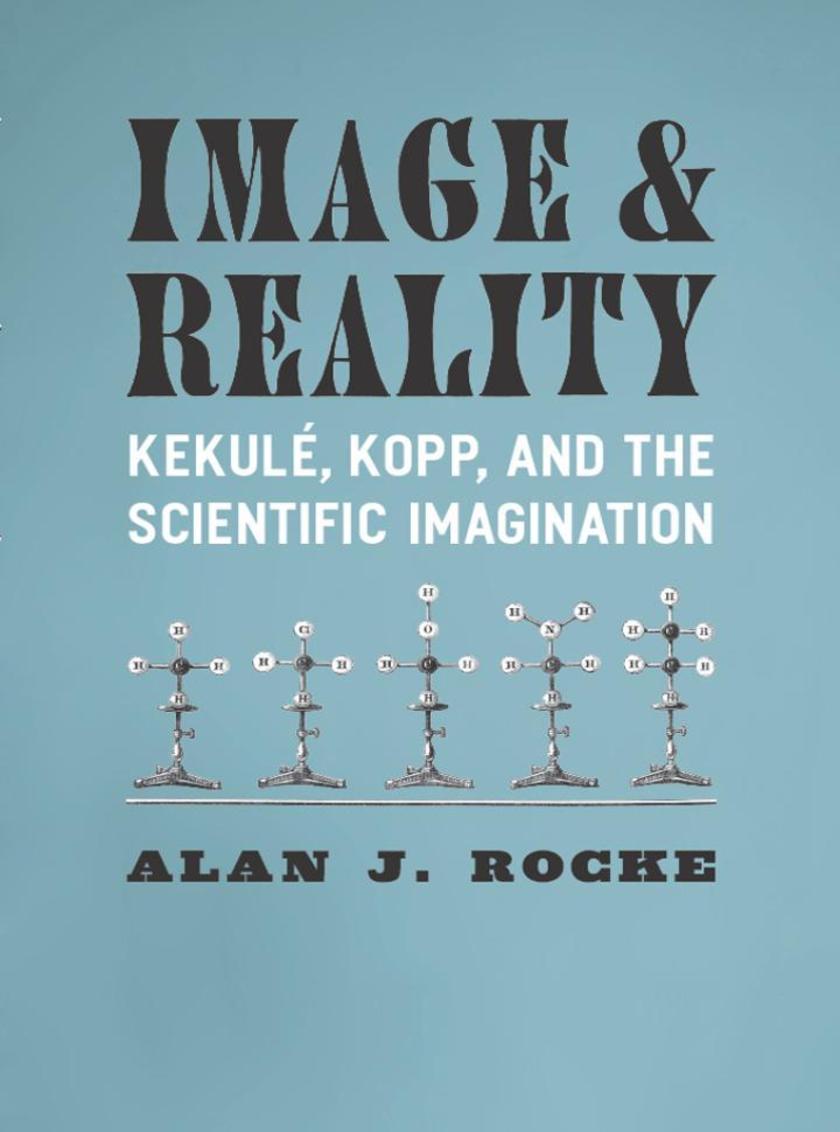
Image and Reality
¥447.34
Nineteenth-century chemists were faced with a particular problem: how to depict the atoms and molecules that are beyond the direct reach of our bodily senses. In visualizing this microworld, these scientists were the first to move beyond high-level philosophical speculations regarding the unseen. In Image and Reality, Alan Rocke focuses on the community of organic chemists in Germany to provide the basis for a fuller understanding of the nature of scientific creativity.?Arguing that visual mental images regularly assisted many of these scientists in thinking through old problems and new possibilities, Rocke uses a variety of sources, including private correspondence, diagrams and illustrations, scientific papers, and public statements, to investigate their ability to not only imagine the invisibly tiny atoms and molecules upon which they operated daily, but to build detailed and empirically based pictures of how all of the atoms in complicated molecules were interconnected. These portrayals of "e;chemical structures,"e; both as mental images and as paper tools, gradually became an accepted part of science during these years and are now regarded as one of the central defining features of chemistry.In telling this fascinating story in a manner accessible to the lay reader, Rocke also suggests that imagistic thinking is often at the heart of creative thinking in all fields.Image and Reality is the first book in the Synthesis series, a series in the history of chemistry, broadly construed, edited by Angela N. H. Creager, John E. Lesch, Stuart W. Leslie, Lawrence M. Principe, Alan Rocke, E.C. Spary, and Audra J. Wolfe, in partnership with the Chemical Heritage Foundation.
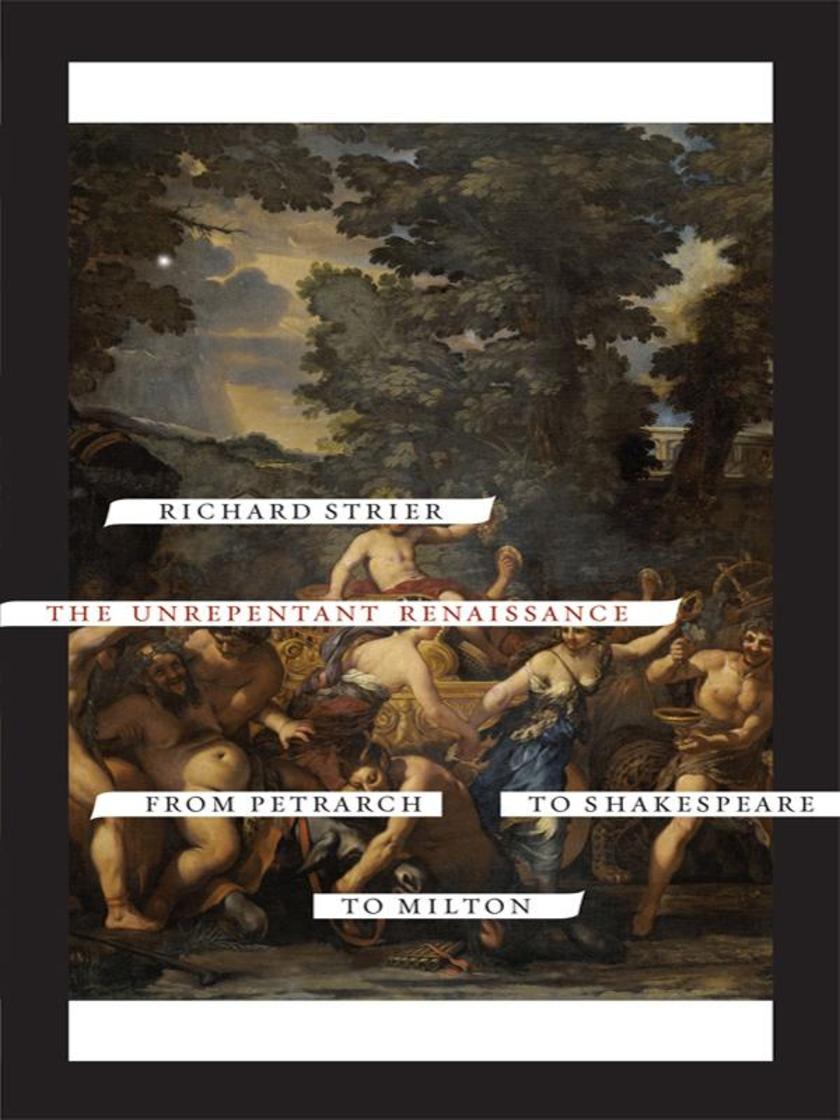
Unrepentant Renaissance
¥447.34
Who during the Renaissance could have dissented from the values of reason and restraint, patience and humility, rejection of the worldly and the physicalThese widely articulated values were part of the inherited Christian tradition and were reinforced by key elements in the Renaissance, especially the revival of Stoicism and Platonism. This book is devoted to those who did dissent from them.?Richard Strier reveals that many long-recognized major texts did question the most traditional values and uncovers a Renaissance far more bumptious and affirmative than much recent scholarship has allowed.The Unrepentant Renaissance counters the prevalent view of the period as dominated by the regulation of bodies and passions, aiming to reclaim the Renaissance as an era happily churning with surprising, worldly, and self-assertive energies. Reviving the perspective of Jacob Burckhardt and Nietzsche, Strier provides fresh and uninhibited readings of texts by Petrarch, More, Shakespeare, Ignatius Loyola, Montaigne, Descartes, and Milton. Strier's lively argument will stir debate throughout the field of Renaissance studies.
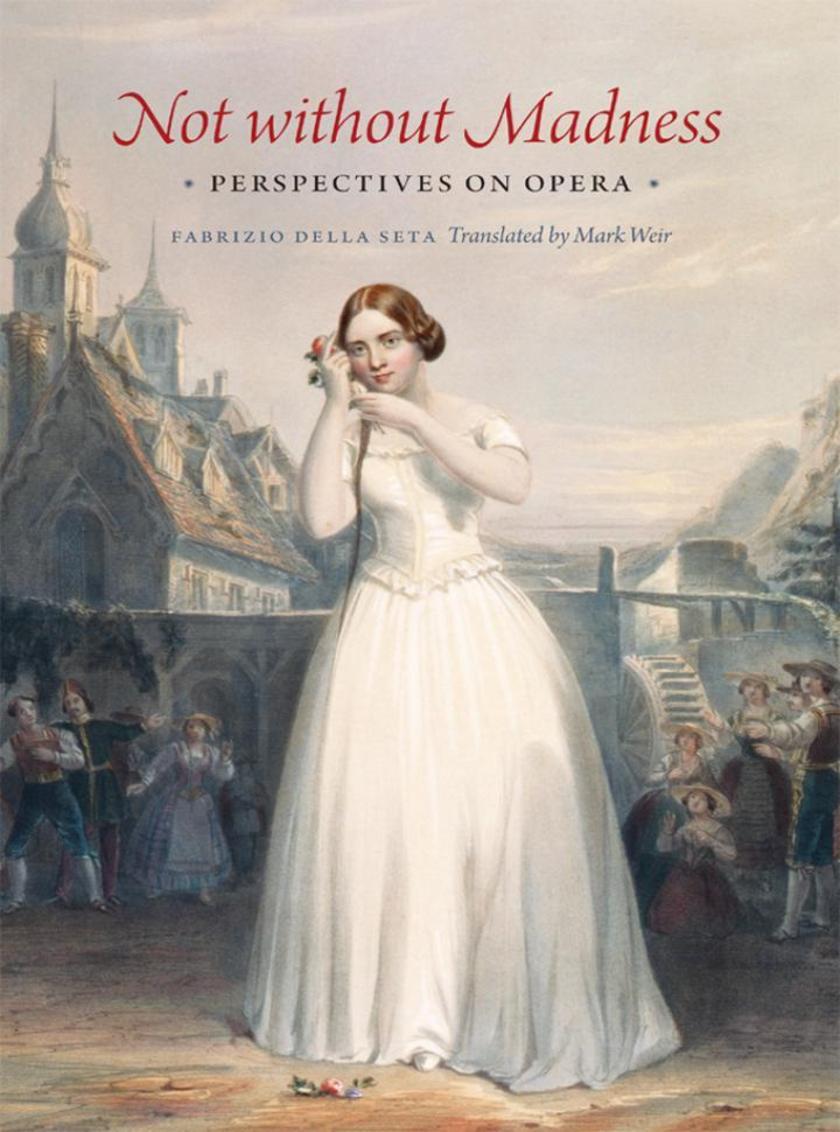
Not without Madness
¥488.54
Opera often seems to arouse either irrational enthusiasm or visceral dislike. Such madness, as Goethe wrote, is indispensable in all theater, and yet in practice, sentiment and passion must be balanced by sense and reason. Exploring this tension between madness and reason, Not without Madness presents new analytical approaches to thinking about eighteenth- and nineteenth-century opera through the lenses of its historical and cultural contexts.?In these twelve essays, Fabrizio Della Seta explores the concept of opera as a dramatic event and an essential moment in the history of theater. Examining the meaning of opera and the devices that produce and transmit this meaning, he looks at the complex verbal, musical, and scenic mechanisms in parts of La sonnambula, Ernani, Aida, Le nozze di Figaro, Macbeth, and Il trovatore. He argues that approaches to the study of opera must address performance, interpretation, composition, reception, and cultural ramifications. Purely musical analysis does not make sense unless we take into account music's dramatic function. Containing many essays available for the first time in English, Not without Madness bridges recent divisions in opera studies and will attract musicologists, musicians, and opera lovers alike.

Discoveries in the Economics of Aging
¥906.54
The oldest members of the Baby-Boomer generation are now crossing the threshold of eligibility for Social Security and Medicare with extensive and significant implications for these programs' overall spending and fiscal sustainability. Yet the aging of the Baby Boomers is just one part of the rapidly changing landscape of aging in the United States and around the world.The latest volume in the NBER's Economics of Aging series, Discoveries in the Economics of Aging assembles incisive analyses of the most recent research in this expanding field of study. A substantive focus of the volume is the well-documented relationship between health and financial well-being, especially as people age. The contributors explore this issue from a variety of perspectives within the context of the changing demographic landscape. The first part of the volume explores recent trends in health measurement, including the use of alternative measurement indices. Later contributions explore, among other topics, alternate determinants of health, including retirement, marital status, and cohabitation with family, and the potential for innovations, interventions, and public policy to improve health and financial well-being.

Shareholder Democracies?
¥618.03
Understanding the challenges of corporate governance is central to our comprehension of the economic dynamics driving corporations today. Among the most important institutions in capitalism today, corporations and joint-stock companies had their origins in Europe during the seventeenth and eighteenth centuries. And as they became more prevalent, the issue of internal governance became more pressing. At stake-and very much contested-was the allocation of rights and obligations among shareholders, directors, and managers.This comprehensive account of the development of corporate governance in Britain and Ireland during its earliest stages highlights the role of political factors in shaping the evolution of corporate governance as well as the important debates that arose about the division of authority and responsibility. Political and economic institutions confronted similar issues, including the need for transparency and accountability in decision making and the roles of electors and the elected, and this book emphasizes how political institutions-from election procedures to assemblies to annual reporting-therefore provided apt models upon which companies drew readily. Filling a gap in the literature on early corporate economy, this book provides insight into the origins of many ongoing modern debates.
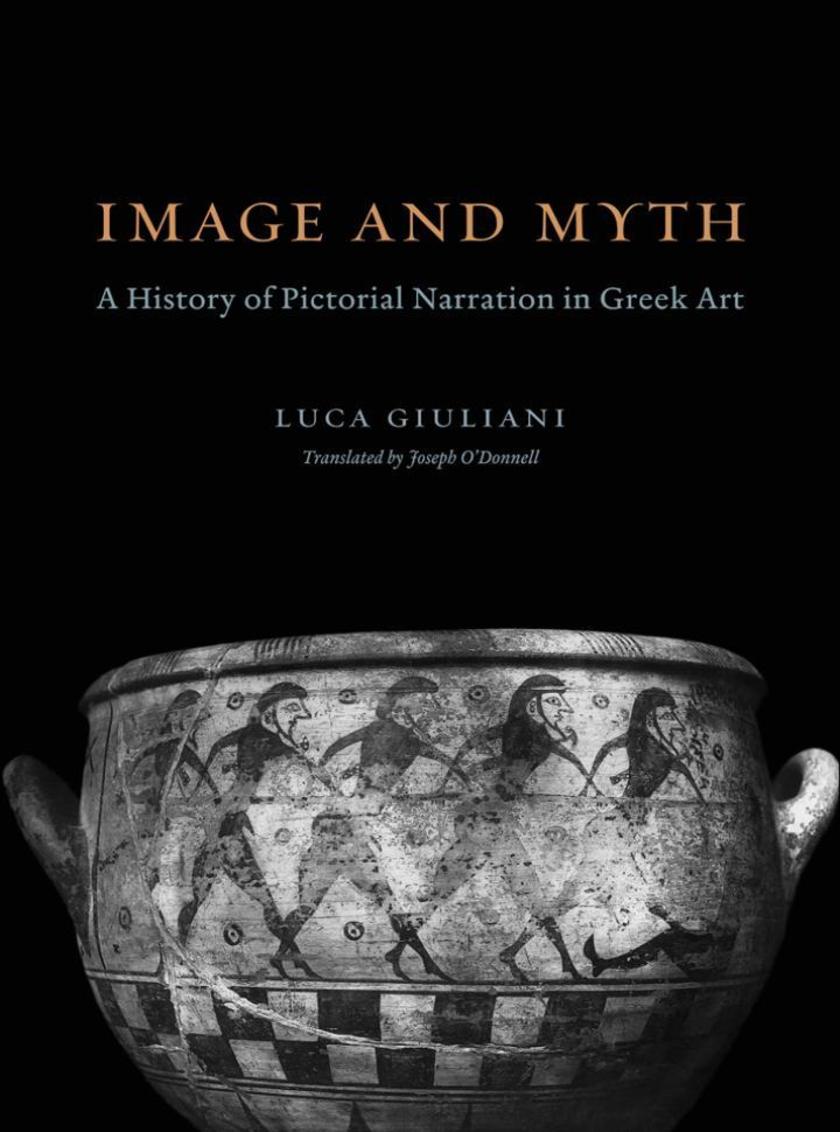
Image and Myth
¥535.63
On museum visits, we pass by beautiful, well-preserved vases from ancient Greece-but how often do we understand what the images on them depictIn Image and Myth, Luca Giuliani tells the stories behind the pictures, exploring how artists of antiquity had to determine which motifs or historical and mythic events to use to tell an underlying story while also keeping in mind the tastes and expectations of paying clients.?Covering the range of Greek style and its growth between the early Archaic and Hellenistic periods, Giuliani describes the intellectual, social, and artistic contexts in which the images were created. He reveals that developments in Greek vase painting were driven as much by the times as they were by tradition-the better-known the story, the less leeway the artists had in interpreting it. As literary culture transformed from an oral tradition, in which stories were always in flux, to the stability of written texts, the images produced by artists eventually became nothing more than illustrations of canonical works. At once a work of cultural and art history, Image and Myth builds a new way of understanding the visual culture of ancient Greece.

Large Carnivore Conservation
¥494.42
Drawing on six case studies of wolf, grizzly bear, and mountain lion conservation in habitats stretching from the Yukon to Arizona, Large Carnivore Conservation argues that conserving and coexisting with large carnivores is as much a problem of people and governance-of reconciling diverse and sometimes conflicting values, perspectives, and organizations, and of effective decision making in the public sphere-as it is a problem of animal ecology and behavior. By adopting an integrative approach, editors Susan G. Clark and Murray B. Rutherford seek to examine and understand the interrelated development of conservation science, law, and policy, as well as how these forces play out in courts, other public institutions, and the field.In combining real-world examples with discussions of conservation and policy theory, Large Carnivore Conservation not only explains how traditional management approaches have failed to meet the needs of all parties, but also highlights examples of innovative, successful strategies and provides practical recommendations for improving future conservation efforts.
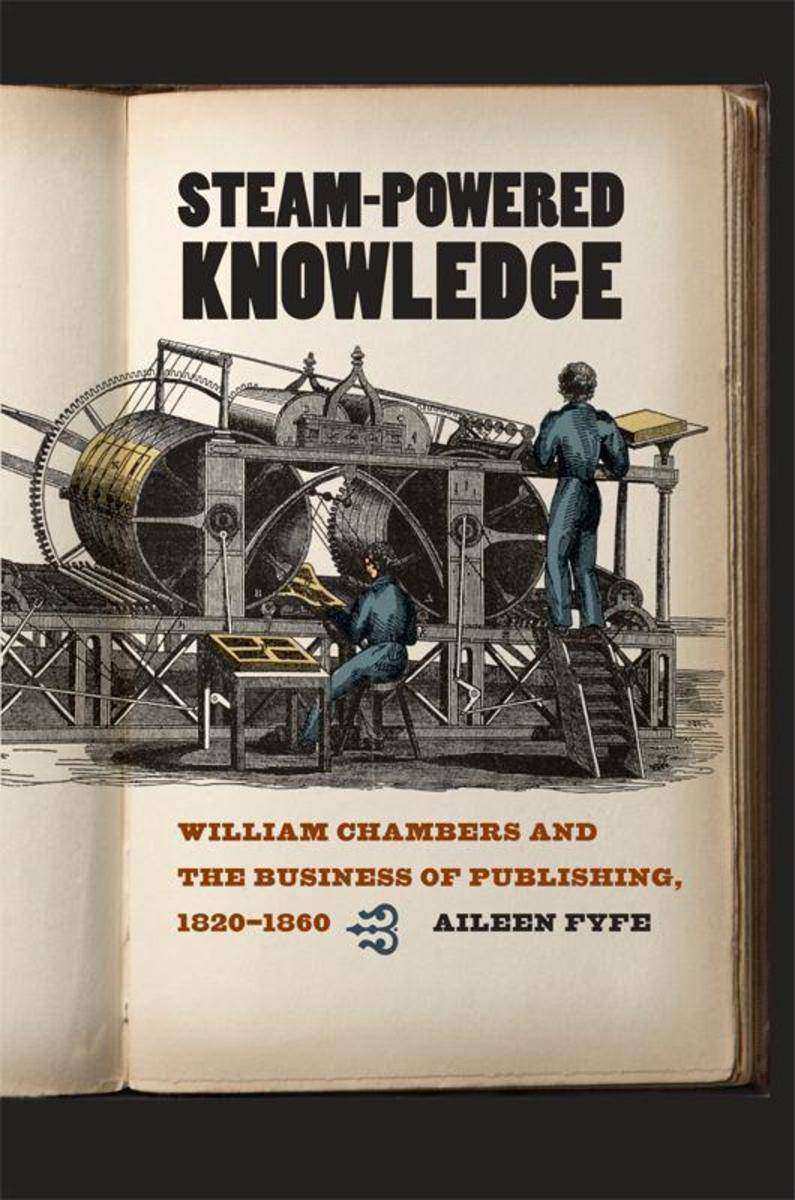
Steam-Powered Knowledge
¥488.54
With the overwhelming amount of new information that bombards us each day, it is perhaps difficult to imagine a time when the widespread availability of the printed word was a novelty. In early nineteenth-century Britain, print was not novel-Gutenberg's printing press had been around for nearly four centuries-but printed matter was still a rare and relatively expensive luxury. All this changed, however, as publishers began employing new technologies to astounding effect, mass-producing instructive and educational books and magazines and revolutionizing how knowledge was disseminated to the general public.In Steam-Powered Knowledge, Aileen Fyfe explores the activities of William Chambers and the W. & R. Chambers publishing firm during its formative years, documenting for the first time how new technologies were integrated into existing business systems. Chambers was one of the first publishers to abandon traditional skills associated with hand printing, instead favoring the latest innovations in printing processes and machinery: machine-made paper, stereotyping, and, especially, printing machines driven by steam power. The mid-nineteenth century also witnessed dramatic advances in transportation, and Chambers used proliferating railway networks and steamship routes to speed up communication and distribution. As a result, his high-tech publishing firm became an exemplar of commercial success by 1850 and outlived all of its rivals in the business of cheap instructive print. Fyfe follows Chambers's journey from small-time bookseller and self-trained hand-press printer to wealthy and successful publisher of popular educational books on both sides of the Atlantic, demonstrating along the way the profound effects of his and his fellow publishers' willingness, or unwillingness, to incorporate these technological innovations into their businesses.
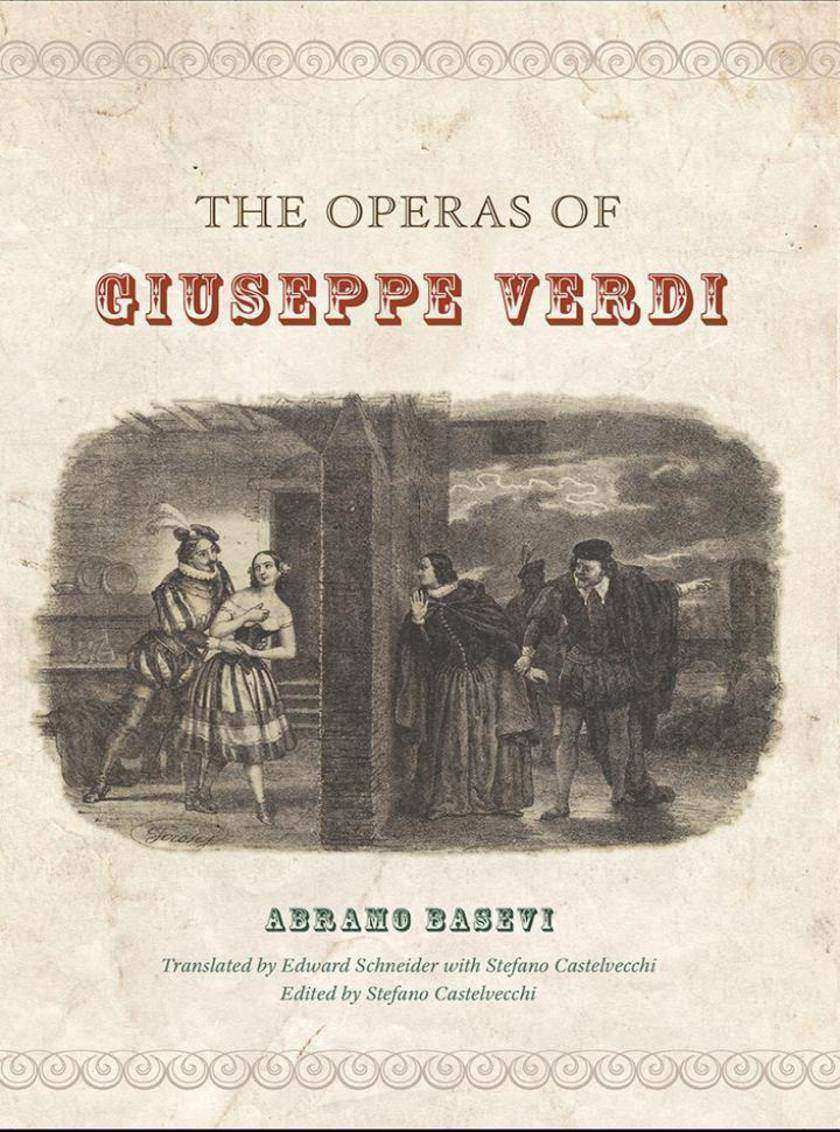
Operas of Giuseppe Verdi
¥453.22
Abramo Basevi published his study of Verdi's operas in Florence in 1859, in the middle of the composer's career. The first thorough, systematic examination of Verdi's operas, it covered the twenty works produced between 1842 and 1857-from Nabucco and Macbeth to Il trovatore, La traviata, and Aroldo. But while Basevi's work is still widely cited and discussed-and nowhere more so than in the English-speaking world-no translation of the entire volume has previously been available. The Operas of Giuseppe Verdi fills this gap, at the same time providing an invaluable critical apparatus and commentary on Basevi's work. ?As a contemporary of Verdi and a trained musician, erudite scholar, and critic conversant with current and past operatic repertories, Basevi presented pointed discussion of the operas and their historical context, offering today's readers a unique window into many aspects of operatic culture, and culture in general, in Verdi's Italy. He wrote with precision on formal aspects, use of melody and orchestration, and other compositional features, which made his study an acknowledged model for the growing field of music criticism. Carefully annotated and with an engaging introduction and detailed glossary by editor Stefano Castelvecchi, this translation illuminates Basevi's musical and historical references as well as aspects of his language that remain difficult to grasp even for Italian readers.?Making Basevi's important contribution to our understanding of Verdi and his operas available to a broad audience for the first time, The Operas of Giuseppe Verdi will delight scholars and opera enthusiasts alike.

Preserving the Spell
¥453.22
Fairy tales are supposed to be magical, surprising, and exhilarating, an enchanting counterpoint to everyday life that nonetheless helps us understand and deal with the anxieties of that life. Today, however, fairy tales are far from marvelous-in the hands of Hollywood, they have been stripped of their power, offering little but formulaic narratives and tame surprises.?If we want to rediscover the power of fairy tales-as Armando Maggi thinks we should-we need to discover a new mythic lens, a new way of approaching and understanding, and thus re-creating, the transformative potential of these stories. In Preserving the Spell, Maggi argues that the first step is to understand the history of the various traditions of oral and written narrative that together created the fairy tales we know today. He begins his exploration with the ur-text of European fairy tales, Giambattista Basile's The Tale of Tales, then traces its path through later Italian, French, English, and German traditions, with particular emphasis on the Grimm Brothers' adaptations of the tales, which are included in the first-ever English translation in an appendix. Carrying his story into the twentieth century, Maggi mounts a powerful argument for freeing fairy tales from their bland contemporary forms, and reinvigorating our belief that we still can find new, powerfully transformative ways of telling these stories.


