


 购物车
购物车 个人中心
个人中心

?tveszt?
¥65.40
HA RVID AZ LET, TOLDD MEG EGY BALLPSSEL!” A knyvben hét beszélgetést olvashatsz volt brtnlakókkal, igazi nehézfiúkkal, akik együttesen csaknem 100 évet tltttek a rácsok mgtt, és most az életükrl vallanak Dorkának. Megismerkedhetsz az Isten ostorával, aki 13 évesen lóktéssel kezdte, Felipével, akit fénykorában a fél magyar rendrség üldztt az M3-ason, a Profival, aki a magánzárkán hosszú éveken át csak gyúrt és olvasott, vagy rpival, aki már régen nem is élne, ha nem került volna be a sittre. Elgondolkodhatsz a pokolról, az emberlésrl és az ártatlanságról, borzadhatsz, félhetsz, nevethetsz és sírhatsz.BKY DORKA, a Feldmár Intézet igazgatója 2011 óta dolgozik a brtnben, a Feldmár Andrással kifejlesztett Mesekr program keretében. A fogvatartottak saját életük élményeibl állítanak ssze mesejátékokat, amit aztán dramatizálnak, rendeznek, megzenésítenek és eladják a gyerekeiknek.

Father Goriot
¥18.74
In 1861, Henry Dircks, a civil engineer, of London, published a work entitled "Perpetuum Mobile; or, Search for Self-Motive Power, During the Seventeenth, Eighteenth and Nineteenth Centuries." The book contains 599 pages, and was followed in 1870, by a second series by the same author entitled "Perpetuum Mobile, or a History of the Search for Self-Motive Power from the Thirteenth, to the Nineteenth Century." In these two books there is amassed a wonderful amount of material showing on the part of the author diligence, great patience and wide and thorough search.The author of these works was not enamoured of his subject, and his books clearly show that he was not writing them because of any interest he had in the subject of Perpetual Motion. On the contrary, they appear to have been written because of a deep detestation entertained by the author for the subject of Perpetual Motion, and a contemptuous pity for any one seriously interested in the subject. Mr. Dircks's works may be said to be the works of a scold. His sentiments were deep, and his impulses strong, which accounts for the vast amount of labor he did in the preparation of his books. Those books are now out of print, and it is believed by the author of this book that they may well remain so. They contain much material that no one would be justified in wading through. The most complicated mechanisms devised by enthusiastic dreamers are shown in the same detail with which the inventors described them in presenting them to the public, or to the patent offices. Little is to be gained by this. So complicated are many of the devices that only technically trained engineers could read them understandingly, and few technically trained engineers are now greatly interested in self-motive power devices. We believe that every useful or interesting purpose is served if enough devices are collected, classified and presented to show the various principles relied upon by the inventors; with an explanation of why they failed—i. e., wherein the principles relied upon are wrong, and while possibly not out of harmony with any mechanical principles then known, are entirely out of harmony with principles since discovered and now well known. In the preparation of this volume a vast amount of the information furnished by the two works of Mr. Dircks has been rearranged, reclassified, and used.Everyone who has to any extent, by environment, associated with the mass of people who are not technically educated, knows that the persons who are still interested in the subject of Perpetual Motion, and who still seek its attainment, are not technically trained engineers or mathematicians, but for the greater part untrained people of naturally strong mechanical sense, and of natural mechanical and mathematical adaptation.This book is written for the perusal of that large class of people. It is not designed as an argument either for or against the possibility of the attainment of Perpetual Motion. The author is content to classify and present—clearly, it is hoped—the leading endeavors that have been known in that field of effort, and to explain their failure. It is believed by the author that the perusal of the present volume by anyone whose mind has been attracted by the subject of Perpetual Motion will result in an enlightenment, and, it is also believed, will have a tendency to direct his mind from a struggle with theories long ago exploded, and may result in directing his efforts to things practical, and not without hope of attainment.This work is offered only to minds mechanically or mathematically inclined. It is not even hoped that it will interest people who prefer fiction to fact, nor people who read simply for idle entertainment. ABOUT AUTHOR: The author has no apology to offer for the production of this book. He has spent his life in environments that have brought him into constant contact with mechanics, artisans and laborers as well as professional men, engineers, chemists and technical experts of various types. He knows a great many men—young men, for the most part—are constantly working on the old, old problem of Perpetual Motion; that much money, and much time are being spent in search of a solution for that problem which all scientific and technical men tell us is impossible of solution.It is believed by the author that a classification and presentation of selected groups of the devices produced in the past by which it was by the inventor believed, self-motive power had been attained, will save much work in fields already thoroughly exploited.So far as the author knows no book on the subject has appeared since 1870. The various encyclopedias published contain articles on the subject, but they are necessarily brief, and not satisfying to young men who have become interested in the subject.
Clinical Teaching Made Easy
¥171.58
Increasingly, nurses and other health professionals are required to teach doctors, trainees and medical students. This book also helps to contextualise learning and provide practical tips for teaching in the clinical context for all health professionals. The book will be useful for clinical teachers at whichever stage of career as it covers all areas of health professions' education in an easy to follow style. It provides a theoretical basis to how clinical teaching and learning might be carried out and draws on the experience of well-regarded clinical teachers to highlight practice points. All aspects of clinical teaching and learning, appraisal, supervision and career development are included. This book is written in an easy to follow format with short chapters, sections, diagrams and practice points. The theory is always related to teaching practice in the clinical context.

Tap Once For Yes
¥58.76
You will read in these pages a hugely inspiring and joyful account of survival. This narrative presents extremely strong evidence that the human spirit lives beyond physical death and is able to communicate with and genuinely comfort those who grieve in this life. It is evidence that demands to be taken very seriously.But not least it is also a story of human courage in facing life's often terrible difficulties, and coming through them all with spirit unbroken and uplifted.

Dream Dictionary
¥53.86
Have you ever wondered what your dreams may mean? This excellent ebook might just help you find out! Written by Gustavus Miller, the book aims to interpret your dreams, and let you know what the future may hold for you. From Accordions to Zebras, this dream dictionary has individual accounts for thousands of different things you may see in your dreams, and is a fascinating read. It has been specially formatted for today's e-readers.

Paul Andrews Presents - The Book of Werewolves
¥29.33
This gripping read is based on an original book by Sabine Baring-Gould, which details historical reports of alleged Were-Wolf reports over many hundreds of years. Some are clearly just deranged people who slaughtered people due to insanity and murderous intents, some are more mysterious and potentially could be real.... Newly edited, and with some new illustrations added, this is a must have book for the person interested in Werewolves

Fundamental Aspects of Legal, Ethical and Professional Issues in Nursing 2nd Edi
¥117.62
This popular title from the Fundamental Aspects of Nursing series has been revised and updated to reflect the advances in the field. Vital reading for all student nurses to help them develop an understanding of the myriad of dilemmas in professional practice and ensure they meet professional standards. This book will outline the implications and application of the relevant recent legislation that relates to nursing practice. Professionally, this book will look at the demands and requirements of nursing, as it moves to an all graduate profession, and the subsequent legal and ethical implications. It will also be helpful for qualified nurses as a refresher text & for those undertaking Overseas Nurses' Programmes. With the new Nursing and Midwifery Council's proposals, there is a greater emphasis on nurses' awareness and ability to use, and be assessed in, legal, ethical and professional issues in their clinical practice.
Structure of Thinking
¥220.63
Analytic philosophers and cognitive scientists have long argued that the mind is a computer-like syntactical engine, and that all human mental capacities can be described as digital computational processes. This book presents an alternative, naturalistic view of human thinking, arguing that computers are merely sophisticated machines. Computers are only simulating thought when they crunch symbols, not thinking. Human cognition - semantics, de re reference, indexicals, meaning and causation - are all rooted in human experience and life. Without life and experience, these elements of discourse and knowledge refer to nothing. And without these elements of discourse and knowledge, syntax is vacant structure, not thinking.

Just as You are
¥58.76
Just as You are is a Bible based personal resource which examines a selection of the parables of Jesus, from Luke's Gospel; looking at what it means to be loved unconditionally, valued for who we are, accepted and part of God's eternal plan. Just as You are is an interactive resource, encouraging personal involvement and a positive response to Bible study. In addition, suggestions are made for prayer.

101 Amazing Slenderman Facts
¥19.52
Here's a spooky story: Slenderman has been seen around the world for over 2,000 years. This book - dedicated to the authors who tragically and violently lost their lives shortly after writing it - aims to tell you everything you want to know about Slenderman. What does he look like? What are his powers? What is his purpose? All this and more can be found within these very pages. Including excerpts from historical Slenderman documents (such as the 15th century poem that ends with the words 'He watches you yet has no sight, He taketh you away at night') this is the surefire way to learn all about Slenderman. The question - of course - is dare you read it?

Legal Aspects of Consent 2nd edition
¥166.67
This second edition has been revised and updated to reflect current changes in legislation on consent in the medical and healthcare setting. This book explores the law relating to consent, covering both the general principles where the patient is a mentally competent adult, and also the specialist areas of mental incapacity, children and parents. The text is written for all health professionals who care for the patient, and for patient service managers, patient groups, relatives, lecturers and others who are interested in understanding the law relating to consent.

Professionalism and Ethics
¥147.05
This book contains guidance for all dental care professionals, especially dental nurses. It also provides explanations of the implications of General Dental Council guidance on the Standards for Dental Care professionals, case study examples and checklists and self-assured responses to case study questions.
Communication Skills for Nurses
¥147.05
Over a third of all consultations in general practice are now conducted by nurses. The consultation is the key element of primary care, with patients being more satisfied with the care given by clinicians who have good communication skills. Poor communication or dissatisfaction with a consultation is reported to be one reason why patients decide not to attend or do not take a prescribed treatment. Patients need to be satisfied with the consultation, understand their condition and understand the reasons for their treatment or management plan. This book has been written to reinforce good consultation and communication skills and highlights areas where readers might wish to to review and improve their own consultation techniques. This is done though case studies and scenarios that are likely to be common in many practices. Although the text and scenarios relate to practice nurse consultations, the content can be transferred to all primary care nursing settings.

Words to Ease your Soul
¥58.76
From time to time we all need to hear words of support and encouragement on our life journey. But we don't always have someone at hand to say them. This collection of poetry and prose, full of compassion, is inspired by the spirit world for when we need a little extra help, written through the acclaimed mediumship of Jacqui Rogers.

On Being Someone
¥107.81
This book continues the discussions in "e;What a piece of work: on being human"e; (Imprint Academic 2006) and may be considered its sequel.Among all the creatures in the physical universe, humans seem to be more than simply physical, because they are aware of being creatures in the universe. Human beings essentially belong to the world of nature, yet stand out as the most complex and fascinating of all living beings. Like and also unlike other animals, they respond to what happens to them; they make plans and carry them out; they recognize one another, sometimes lovingly; they make friends and enjoy their company; they shape the world around them for convenience and for delight; they ask questions both practical and theoretical; and many of them try to praise God. In What a Piece of Work, Helen Oppenheimer considered humankind as part of the natural universe which Christians believe God set in motion, asking how human beings stand among other creatures and how they are to be valued. In this volume she leaves aside comparisons with our fellow creatures in order to attend to our own experience. It makes a good start to think of oneself as a human animal, but then we need to go further and ask what does it mean to be a person, to be counted as someone?
Reforming Science
¥107.81
In the 17th century Sir Francis Bacon advocated the patient study of Nature for the benefit of mankind. Most of science today, in its study of medicine, genetics, electronics etc., continues that pragmatic Baconian tradition without fuss. Over the years, however, as its investigation of Nature probed ever deeper into regions far removed from common experience, science has increasingly exhibited traits more usually associated with fundamentalist religion that with dispassionate study. Articulate voices from biology preach the belief in 18th century materialism in the study of evolution; those from physics promulgate a kind of mathematical theology in its study of elementary particles and cosmology; both inveigh against heresy. But science should be beyond that sort of belief. It should not see its undoubted success in manipulating matter as justifying any sort of religious status, as offering a spiritual foundation alternative to religion. As a scientist himself, Brian Ridley is appalled by such theological trends, hence this book. It is an attempt to address these concerns, to reform science, to place science in its broad historical and philosophical context where dogmatic belief has no place, to remind science itself that it has limitations.
Why the Mind Is Not a Computer
¥63.67
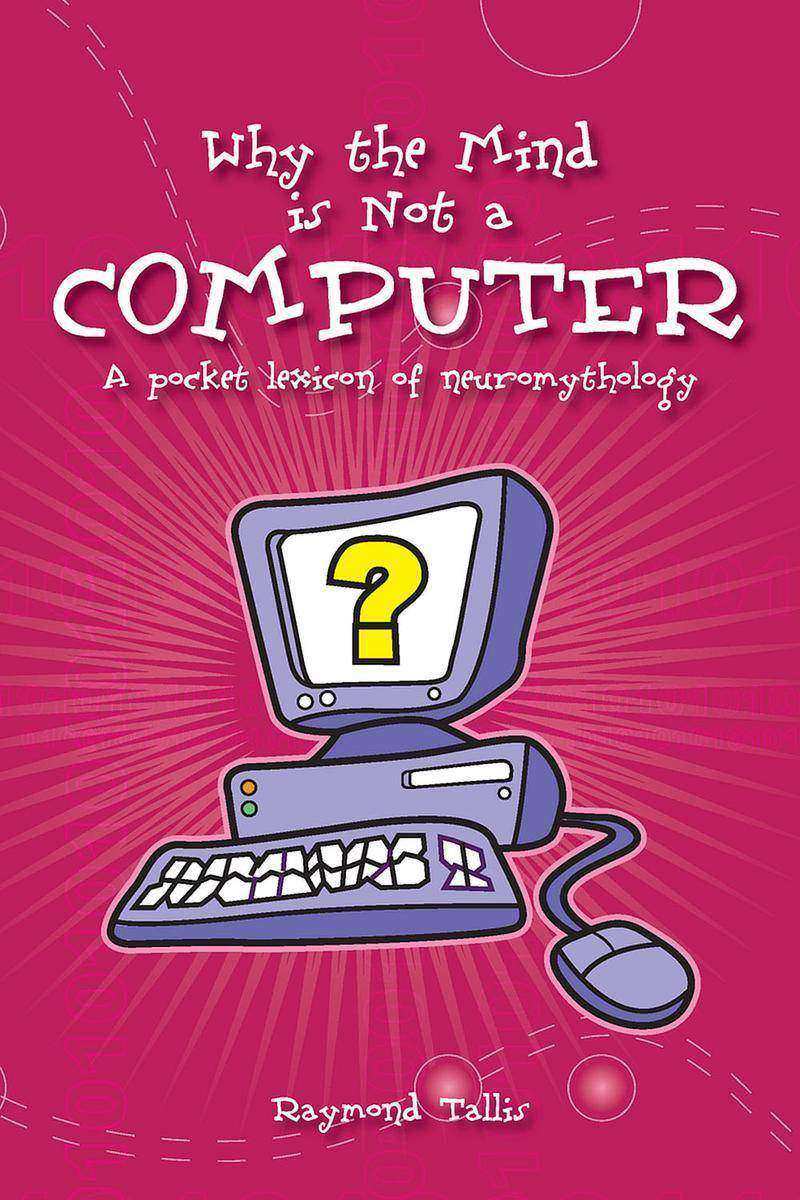
The equation "e;Mind = Machine"e; is false. This pocket lexicon of "e;neuromythology"e; shows why. Taking a series of key words such as calculation, language, information and memory, Professor Tallis shows how their misuse has a lured a whole generation into accepting the computational model of the mind.First of all these words were used literally in the description of the human mind. Then computer scientists applied them metaphorically to the workings of their machines. And finally, their metaphorical status forgotten, the use of the terms was called as evidence of artificial intelligence in machines and the computational nature of conscious thought.

Book of Dreams and Ghosts
¥19.52
Famed Scottish anthropologist Andrew Lang's classic 'Psychical Research' work 'The Book of Dreams and Ghosts'.

Reflection
¥147.05
In this newly updated edition of the bestselling Reflections: Principles and Practice for Healthcare Professionals, the authors reinforce the need to invest in the development of reflective practice, not only for practitioners, but also for healthcare students. The book discusses the need for skilful facilitation, high quality mentoring and the necessity for good support networks. The book describes the 12 principles of reflection and the many ways it can be facilitated. It attempts to support, with evidence, the claims that reflection can be a catalyst for enhancing clinical competence, safe and accountable practice, professional self-confidence, self-regulation and the collective improvement of more considered and appropriate healthcare. Each principle is illustrated with examples from practice and clearly positioned within the professional literature. New chapters on appreciative reflection and the value of reflection for continuing professional development are included making this an essential guide for all healthcare professionals.

Legal Aspects of Pain Management 2nd Edition
¥166.67
This revised and updated edition explores the law relating to pain management in recent years.It considers the legal issues which have arisn in recent high-profile cases and discusses the implications of legisation extending prescribing powers. The text is written in a user-friendly, readable form for the non-lawyer. It aims to provide a succinct, useful basis from which practtioner and others can extend their knowledge of the law for the protection of their patients, their colleagues and themselves. Scope and contents Human rights law Criminal law and procedure Negligence Professional registration Consent in relation to adults, children and mentally disabled adults.
Decision Trap
¥107.81
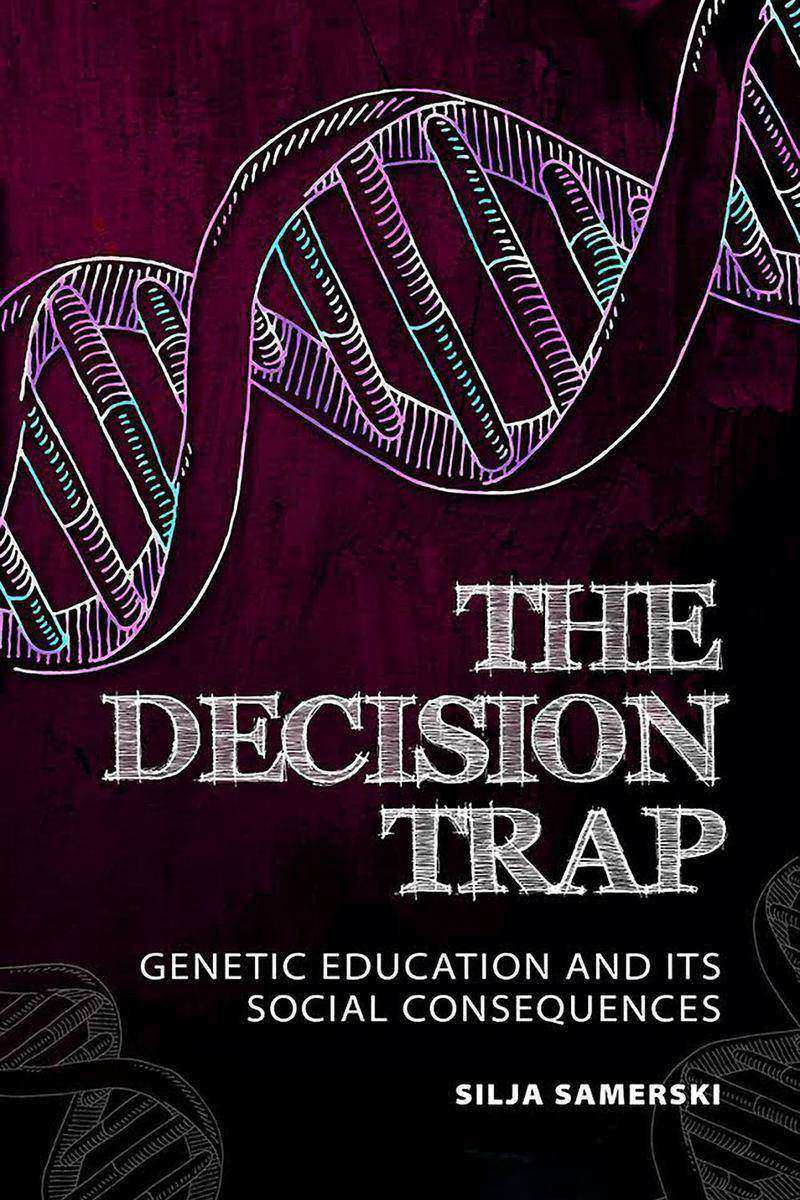
The Decision Trap questions a dogma of our time: the assumption that genetic education empowers citizens and increases their autonomy. It argues that professional instructions about genes, genetic risks, and genetic test options convey a genetic worldview which destroys self-confidence and makes clients dependent on genetic experts and technologies. Part one of the book introduces the reader to the idea of genetic education. It clarifies the notion of the "e;gene"e; as it is commonly understood, and shows that, scientifically, the concept of genes as definable, causal agents is outdated. Part two of the book investigates the hidden curriculum of genetic education, using genetic counselling as a prime example. Genetic counselling is a professional service that aims to enable clients to make autonomous decisions about genetic test options and cope with the results.


