


 购物车
购物车 个人中心
个人中心
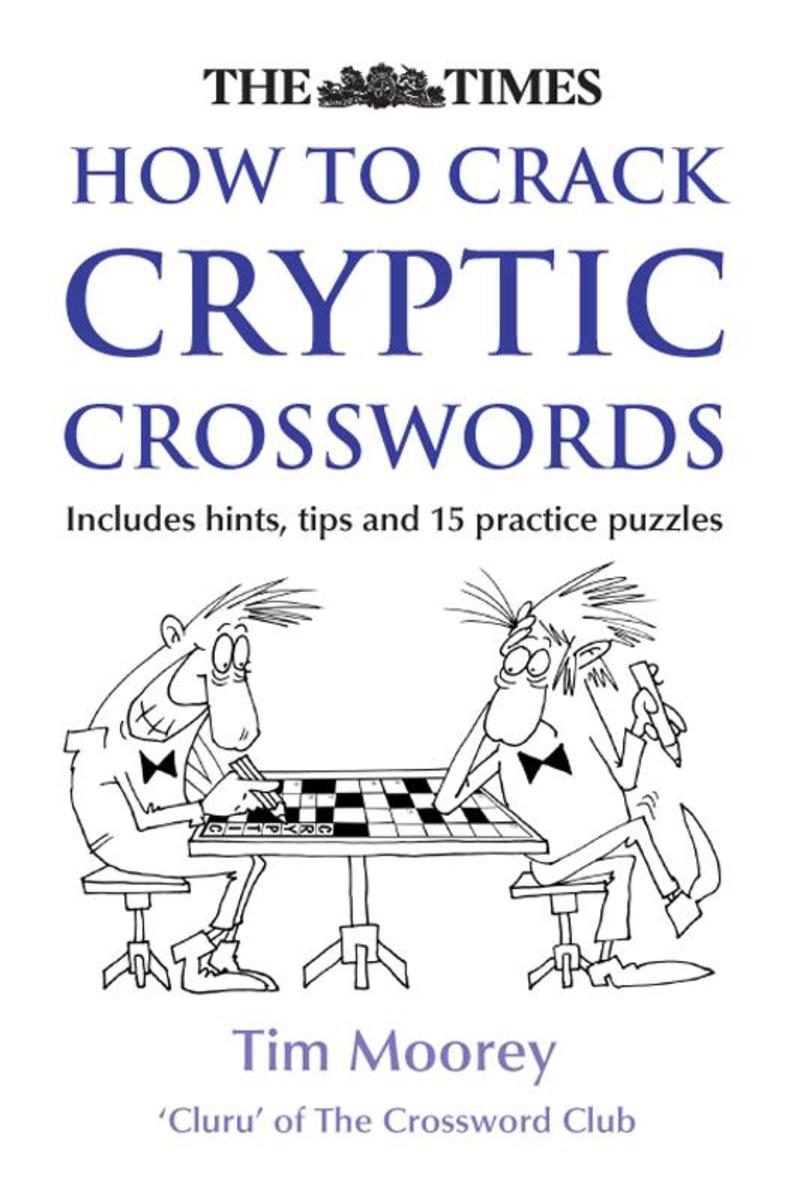
The Times How to Crack Cryptic Crosswords
¥58.86
Expert crossword solver and setter, Tim Moorey, seeks to dispel the myth that cryptic crosswords are the preserve of the elite. In this easy guide, he demonstrates that anyone who enjoys words and word play can learn to solve a cryptic crossword clue. With clear pictorially presented explanations for many clues, you can revel in the deep satisfaction that comes from finishing cryptic crossword puzzles. Designed to apply to the solving of any cryptic crossword, this book develops and expands Tim’s first book, How to Master The Times Crossword, and is designed to guide the cryptic crossword beginner to an enriched solving experience. ? Contains 15 new practice puzzles from 15 different newspaper and magazine sources. ? Many new hints and tips to help every solver ? Greatly expanded lists e.g. of those all-important abbreviations you should know ? A completely new demonstration of how one solver tackles a typical daily cryptic ? Up-to-date sections on the latest help available online eg smartphone and tablet apps ? In-depth and clear explanations of every clue and puzzle answer ? Previously published as ‘How To Master The Times Crossword: The Times Cryptic Crossword Demystified’. This book is a revised and updated version.
Goriot apó
¥8.67
These Essays, or rather Lectures, contain the first-fruits of the earliest systematic attempt to apply the theory of Evolution to the products of human handiwork. In their original form they have long been difficult to obtain; and they are reprinted now to supply the needs of candidates for the Oxford Diploma in Anthropology, and of the numerous visitors to the Pitt-Rivers Museum in Oxford. But they will certainly appeal to a far wider public also, as a brief and authentic statement of their author’s discoveries. The four Essays are reprinted substantially as they were first delivered and published. But verbal errors and actual misquotations have been corrected; and allusions to specimens or diagrams exhibited during the original discourses, but not published, have been replaced so far as possible by references to similar objects figured in the Plates. The Plates are photographic reproductions of the original illustrations, with the exception of Plates V, XIII, XVII, XVIII. Of these, Plate XIII has simply been re-drawn, from a faded original; Plates XVII and XVIII have been translated, without loss of detail, from colours to monochrome shading; Plate V has been reconstituted from illustrations quoted in the text, with the permission of their publisher, Mr. Murray. Plate XXI is reproduced, by permission of Sir John Evans, from the paper which it illustrated originally. The footnotes demand a word of explanation. The author, as the original publications show, was not precise in indicating his sources: he frequently gave, as a quotation, the general sense rather than the exact words of his authority; and occasionally his memory played him false. In the reprint, the precise references have been identified, and are given in full, and obvious errors in the text have been either amended or corrected in a footnote. The editor desires to acknowledge much valuable help in the search for references from Miss C. M. Prior, of Headington.
The Sign of the Four
¥18.74
Copernicus, the astronomer, whose discoveries make him the great predecessor of Kepler and Newton, did not come from a noble family, as certain other early astronomers have done, for his father was a tradesman. Chroniclers are, however, careful to tell us that one of his uncles was a bishop. We are not acquainted with any of those details of his childhood or youth which are often of such interest in other cases where men have risen to exalted fame. It would appear that the young Nicolaus, for such was his Christian name, received his education at home until such time as he was deemed sufficiently advanced to be sent to the University at Cracow. The education that he there obtained must have been in those days of a very primitive description, but Copernicus seems to have availed himself of it to the utmost. He devoted himself more particularly to the study of medicine, with the view of adopting its practice as the profession of his life. The tendencies of the future astronomer were, however, revealed in the fact that he worked hard at mathematics, and, like one of his illustrious successors, Galileo, the practice of the art of painting had for him a very great interest, and in it he obtained some measure of success.??By the time he was twenty-seven years old, it would seem that Copernicus had given up the notion of becoming a medical practitioner, and had resolved to devote himself to science. He was engaged in teaching mathematics, and appears to have acquired some reputation. His growing fame attracted the notice of his uncle the bishop, at whose suggestion Copernicus took holy orders, and he was presently appointed to a canonry in the cathedral of Frauenhurg, near the mouth of the Vistula.? To Frauenburg, accordingly, this man of varied gifts retired. Possessing somewhat of the ascetic spirit, he resolved to devote his life to work of the most serious description. He eschewed all ordinary society, restricting his intimacies to very grave and learned companions, and refusing to engage in conversation of any useless kind. It would seem as if his gifts for painting were condemned as frivolous; at all events, we do not learn that he continued to practise them. In addition to the discharge of his theological duties, his life was occupied partly in ministering medically to the wants of the poor, and partly with his researches in astronomy and mathematics. His equipment in the matter of instruments for the study of the heavens seems to have been of a very meagre description. He arranged apertures in the walls of his house at Allenstein, so that he could observe in some fashion the passage of the stars across the meridian. That he possessed some talent for practical mechanics is proved by his construction of a contrivance for raising water from a stream, for the use of the inhabitants of Frauenburg. Relics of this machine are still to be Been.??The intellectual slumber of the Middle Ages was destined to be awakened by the revolutionary doctrines of Copernicus. It may be noted, as an interesting circumstance, that the time at which he discovered the scheme of the solar system has coincided with a remarkable epoch in the world's history. The great astronomer had just reached manhood at the time when Columbus discovered the new world.??Before the publication of the researches of Copernicus, the orthodox scientific creed averred that the earth was stationary, and that the apparent movements of the heavenly bodies were indeed real movements. Ptolemy had laid down this doctrine 1,400 years before. In his theory this huge error was associated with so much important truth, and the whole presented such a coherent scheme for the explanation of the heavenly movements, that the Ptolemaic theory was not seriously questioned until the great work of Copernicus appeared. No doubt others, before Copernicus, had from time to time in some vague fashion surmised, with more or less plausibility, that the sun..

Ихтияндр: Повесть, основанная на реальных событиях
¥11.77
A ciência e a tecnologia na contemporaneidade condicionam a organiza??o social e as formas existentes e emergentes de desigualdade e exclus?o tanto em cada sociedade como entre sociedades e regi?es do mundo. Os contextos de acesso e apropria??o do conhecimento científico e tecnológico s?o diversificados, como diferenciados s?o os públicos que se constituem em rela??o com esses contextos e modos de acesso e de apropria??o. Os textos desta colet?nea problematizam sob diferentes aspectos as quest?es críticas para a compreens?o e aplica??o do conceito de apropria??o social do conhecimento científico e tecnológico.
Becoming Dead Right:A Hospice Volunteer in Urban Nursing Homes
¥65.99
All of us are entitled to the rewards of a peaceful, pain-free death. This book honors that with true stories about hospice patients and inspiring insights from the author. Becoming Dead Right guides us through the general and "how to" information maze that prepares us for dealing with death. Improving and expanding hospice services will require systemic changes in healthcare institutionss outreach to diverse populations, and funding. With the inclusion of hospice programs in nursing homes, dying with dignity becomes even more important. Millions of aging baby boomers heighten the urgency for better hospice care and conditions in nursing homes. Praise for Becoming Dead Right "A school principal and hospice volunteer, Frances Shani Parker relates her experiences with dying people in nursing homes. The second part of her book is about what we as individuals and as a society must do to improve things for those who are dying. I particularly enjoyed the guided tour, conducted from a wheelchair, of Baby Boomer Haven." -- Dr. Roger Woodruff, Director of Palliative Care, International Association for Hospice and Palliative Care, Austin Health, Melbourne, Australia "The writing is eloquent and powerful, and the stories are instructive and lasting. After finishing this book, I wanted to do more for other individuals who are dying, for as Ms. Parker so clearly imparts, the dying teach us so much about living well." -- Dr. Peter A. Lichtenberg, Director, Institute of Gerontology, Wayne State University, Detroit, Michigan "This book is filled with poetry, stories, wisdom and common sense that can help boomers, students, caregivers and policy makers understand their own aging and realize that our society can - and should - make important changes that can ensure safe, dignified, individualized care at the end of our lives." --Alice Hedt, Executive Director, National Citizens Coalition for Nursing Home Reform Learn more at www.BecomingDeadRight.com From Loving Healing Press (www.LovingHealing.com) MED042000 Medical : Terminal Care FAM017000 Family & Relationships : Eldercare SOC036000 Social Science : Death & Dying

The Riddle of the Sands
¥40.79
Davies is suspicious about what would motivate the Germans to try to kill him when he saw something unusual around Frisian islands in the Baltic sea. Having failed to interest anyone in the government in the incident, he feels it is his patriotic duty to investigate further and invites one of his friends, Carruthers to join in a yachting holiday in the Baltic Sea.
The Nightingale And the Rose
¥40.79
A nightingale finds a young romantic student in tears because he cannot find a red rose for his beautiful ball partner. There are no red roses in the garden. The nightingale visits all the rose-trees in the area, and one of the roses tells her there is a way to produce a red rose, but only if the nightingale is prepared to sing the sweetest song for the rose all night with her heart pressing into a thorn, sacrificing her life. Seeing the student in tears, and valuing his human life above her bird life, the nightingale carries out the ritual.
Memoirs of Sherlock Holmes
¥40.79
Original Sherlock Holmes stories written by Sir Arthur Conan Doyle which brought him international fame as one of the greatest crime fiction writers. Conan Doyle wrote several volumes of stories featuring detective Holmes and Dr. Watson but, in 1893, hoping to concentrate on more serious writing, he attempted to kill off Holmes. This attempt resulted in a public outcry and later made him resurrect Holmes. This edition features some of the most popular original Sherlock Holmes stories including: Silver Blaze, The Yellow Face, The Stock-Broker's Clerk, The “Gloria Scott”, The Musgrave Ritual, The Reigate Puzzle, The Crooked Man, The Resident Patient, The Greek Interpreter, The Naval Treaty, The Final Problem.
The City of Dreadful Night by Rudyard Kipling - Delphi Classics (Illustrated)
¥8.09
This eBook features the unabridged text of ‘The City of Dreadful Night by Rudyard Kipling - Delphi Classics (Illustrated)’ from the bestselling edition of ‘The Complete Works of Rudyard Kipling’. Having established their name as the leading publisher of classic literature and art, Delphi Classics produce publications that are individually crafted with superior formatting, while introducing many rare texts for the first time in digital print. The Delphi Classics edition of Kipling includes original annotations and illustrations relating to the life and works of the author, as well as individual tables of contents, allowing you to navigate eBooks quickly and easily. eBook features: * The complete unabridged text of ‘The City of Dreadful Night by Rudyard Kipling - Delphi Classics (Illustrated)’ * Beautifully illustrated with images related to Kipling’s works * Individual contents table, allowing easy navigation around the eBook * Excellent formatting of the text Please visit www.delphiclassics.com to learn more about our wide range of titles

Neuropsychopharmacology: An Introduction: A Tutorial Study Guide
¥32.62
Neuropsychopharmacology: An Introduction: A Tutorial Study Guide
Pharmacology: An Introduction: A Tutorial Study Guide
¥32.62
Pharmacology: An Introduction: A Tutorial Study Guide
Cytoplasmic Release of Neurotransmitters: A Tutorial Study Guide
¥32.62
Cytoplasmic Release of Neurotransmitters: A Tutorial Study Guide

The Astronomy of the Bible
¥24.44
The Astronomy of the Bible
Astronomy for Amateurs
¥24.44
Astronomy for Amateurs

Tools and Function Lists: Engineering Tools Manual
¥20.44
Tools and Function Lists: Engineering Tools Manual

Clinical Updates in the Management of Severe Asthma
¥0.01
Clinical Updates in the Management of Severe Asthma
The Nutcracker
¥40.79
On Christmas Eve, the children of Doctor Stahlbaum were not allowed into the family room, let alone the adjoining living room. Evening had come, and Fritz and Marie Stahlbaum sat huddled in a corner. As was usual on Christmas Eve, no-one had brought in a light, and so they sat in an eerie darkness.
Pride and Prejudice
¥40.79
Pride and prejudice, one of the most famous novels by Jane Austen, follows uneasy relationship between Elizabeth Bennet and Mr. Darcy, a landowning aristocrat who is too proud to speak to any of the locals and whom Elizabeth overhears refusing to dance with her.

A History of Belarus: A Non-Literary Essay that Explains the Ethnogenesis of the
¥90.03
Rare materials on Belarus are a potential treasure trove for the English language reader. A blank spot on the map for many, Belarus is an undiscovered mystery in the heart of Europe – undiscovered, because little has been published on the country’s history and current affairs, and the origin of the ethnic group that calls itself ‘Belarusians’. Author Lubov Bazan attempts to uplift the veil of secrecy surrounding Belarus and answer an important question of the ethnogenesis of the Belarusians. Unique in its ongoing struggle for independence, throughout its history Belarus has been deprived of this luxury by being continuously included in various state formations such as Kievan Rus’, the Grand Duchy of Lithuania, the Kingdom of Poland, the Russian Empire and later the Soviet Union. A History of Belarus is a thorough chronological narrative that covers major milestones of Belarus’s journey into the 21st century. Lubov Bazan gives her readers plenty of leeway to form their own conclusions about the historical material presented. By incorporating different theoretical viewpoints on fundamental issues such as the ethnic background of the Belarusian people and formation of their national identity, the origins of the language, and the historically complex religious composition of the country, Bazan offers a platform for discussion.

You've Gotta Fight Back!:Winning with serious illness, injury, or disability
¥65.99
The heart of this book consists of thirteen, riveting, in-depth stories of people who fought back with courage, humor, and a positive attitude. In doing so, they have provided valuable guidance for you, the readers of this inspiring work. ·The seriously ill, their friends and family will gain priceless advice on coping, dealing with depression, how to partner with the medical profession, the tremendous value of self-help groups and the vital importance of attitude. ·Those with disabilities will learn how others have successfully played the hand they were dealt and managed to live successful, fulfilling lives. The disabled and those with serious illnesses can learn from each other. There are no silver bullets buried in these pages, just the sound, useable experience of others. ·Caregivers, be they family, friends, or health professionals will gain great insight from the in-depth stories of survivors, the bereaved, and those who died with grace and even style. "This book helps sufferers and caregivers alike to make sense of their situation, to avoid the mistakes while copying the successful strategies of these very real people."--Bob Rich, PhD, author of Cancer: A Personal Challenge"Far from a mere theoretical discourse and despite its potentially morbid topic, it brims with life: real cases, real people, real triumphs over a variety of illnesses and the distress they cause. A treasure trove of celebrated stories of survival and passages from the memoirs of those who made it." --Sam Vaknin, PhD, author of Malignant Self Love
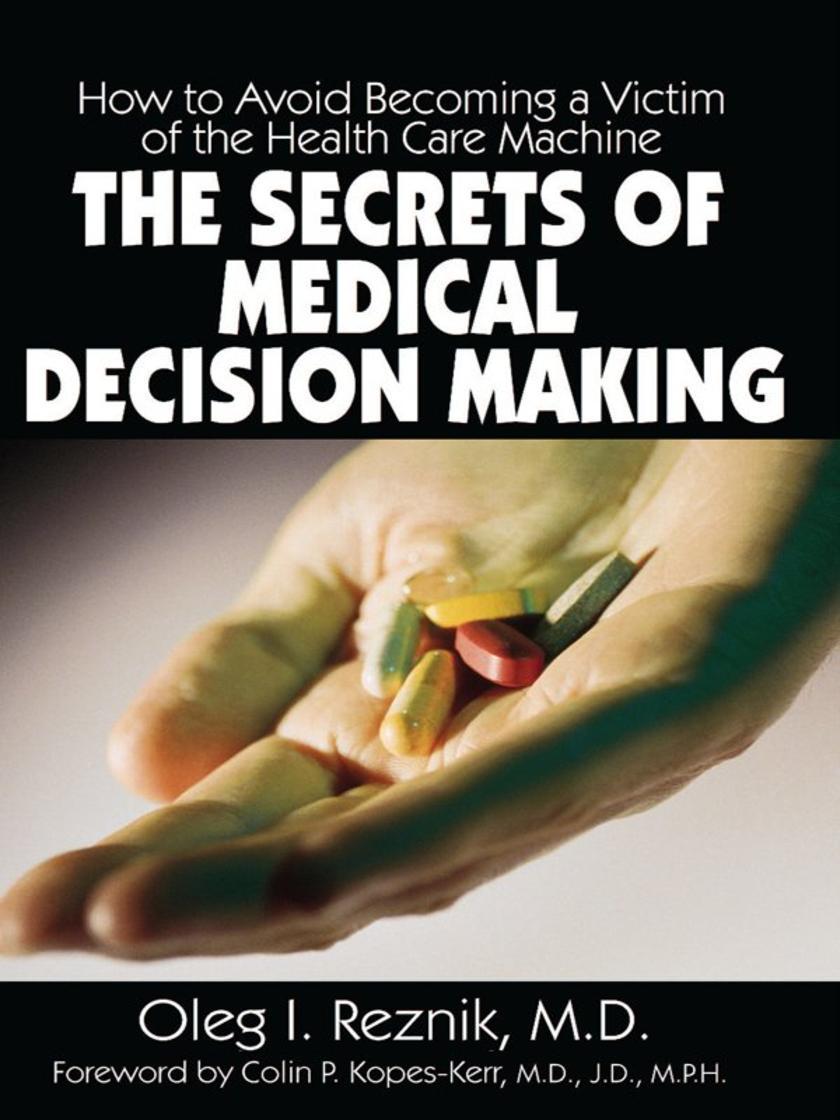
The Secrets of Medical Decision Making
¥65.99
We are all patients at some time. Is the medical industry giving us the best treatment possible, at the best price? We all know that it isn't. This new book shows what goes on behind the scenes of the current medical care and how it impacts the patient. Dr. Reznik describes actual cases from his clinical practice showing the most common paths that lead to increased patient suffering. This book offers possible solutions for outpatient, inpatient, preventive, and end-of-life care settings. Learn about: ·The Medical Box and how it affects the care you receive ·When to avoid risky and uncomfortable tests ·Hazards of under-treatment, over-treatment, and mistreatment ·How to make an informed medical decision in your best interests ·Cancer and how to approach your treatment ·Planning for quality of life during end-of-life issuesForeword by Colin P. Kopes-Kerr, MD, JD, MPH, Vice-Chairman of the Department of Family Medicine, and Program Director of the Family Medicine Residency Program, at University Hospital and SUNY Stony Brook School of Medicine, Stony Brook, NY."The Secrets of Medical Decision Making should be read by everyone, because all of us are sometimes in need of medical care. It is an eye-opener, a call to arms and a guide." -Robert Rich, Ph.D., author of Cancer: A Personal Challenge"Dr. Reznik candidly exposes the conflicting interests inherent in contemporary medical practice. This empowering and insightful book is a must read for healthcare professionals and the patients they treat." -Beth Maureen Gray, R.N., B.S."The Secrets of Medical Decision Making awakens the reader rather quickly with startling revelations about the lack of seriousness the health care industry has towards a society of wellness. If this book at least motivates its readers to become more involved in medical decision making when seeking treatment, it will have succeeded as a critically needed public service."- James W. Clifton, Ph.D., LCSW"As a Canadian and a health care provider this book frightens me. This book lays out what our country is headed for if we privatize health care in Canada. A must read for everyone working, or accessing, health care in North America and for anyone who has any doubts that we must take drastic action to preserve Universal Health Care in Canada."- Ian Landry, MA, MSW, RSW


