


 购物车
购物车 个人中心
个人中心

Чотири сезони (Chotiri sezoni)
¥35.56
Народные средства и рецепты лечения геморроя и варикоза, как и многих других хронических заболеваний, несмотря на простоту и доступность, станут надежной поддержкой медикаментозного лечения и самым эффективным средством профилактики. Продуманная и доступная лечебная диета с рецептами блюд на каждый день, рецепты отваров, настоек и мазей на лекарственных травах, продуктах пчеловодства, лечение лечебной глиной, с помощью соли, квасцов и металлов, водные процедуры, приемы массажа и самомассажа для снятия боли и облегчения симптомов заболевания при регулярном применении заметно и надолго улучшат ваше самочувствие.Narodnye sredstva i recepty lechenija gemorroja i varikoza, kak i mnogih drugih hronicheskih zabolevanij, nesmotrja na prostotu i dostupnost', stanut nadezhnoj podderzhkoj medikamentoznogo lechenija i samym jeffektivnym sredstvom profilaktiki. Produmannaja i dostupnaja lechebnaja dieta s receptami bljud na kazhdyj den', recepty otvarov, nastoek i mazej na lekarstvennyh travah, produktah pchelovodstva, lechenie lechebnoj glinoj, s pomoshh'ju soli, kvascov i metallov, vodnye procedury, priemy massazha i samomassazha dlja snjatija boli i oblegchenija simptomov zabolevanija pri reguljarnom primenenii zametno i nadolgo uluchshat vashe samochuvstvie.
A kapitány
¥8.67
CURIOUS creatures of Animal Life have been objects of interest to mankind in all ages and countries; the universality of which may be traced to that feeling which "makes the whole world kin." The Egyptian records bear testimony to a familiarity not only with the forms of a multitude of wild animals, but with their habits and geographical distribution." The collections of living animals, now popularly known as Zoological Gardens, are of considerable antiquity. We read of such gardens in China as far back as 2,000 years; but they consisted chiefly of some favourite animals, such as stags, fish, and tortoises. The Greeks, under Pericles, introduced peacocks in large numbers from India. The Romans had their elephants; and the first giraffe in Rome, under C?sar, was as great an event in the history of zoological gardens at its time as the arrival in 1849 of the Hippopotamus was in London. The first zoological garden of which we have any detailed account is that in the reign of the Chinese Emperor, Wen Wang, founded by him about 1150 A.D., and named by him "The Park of Intelligence;" it contained mammalia, birds, fish, and amphibia. The zoological gardens of former times served their masters occasionally as hunting-grounds. This was constantly the case in Persia; and in Germany, so late as 1576, the Emperor Maximilian II. kept such a park for different animals near his castle, Neugebah, in which he frequently chased.Alexander the Great possessed his zoological gardens. We find from Pliny that Alexander had given orders to the keepers to send all the rare and curious animals which died in the gardens to Aristotle. Splendid must have been the zoological gardens which the Spaniards found connected with the Palace of Montezuma. The letters of Ferdinand Cortez and other writings of the time, as well as more recently "The History of the Indians," by Antonio Herrera, give most interesting and detailed accounts of the menagerie in Montezuma's park. The collections of animals exhibited at fairs have added little to Zoological information; but we may mention that Wombwell, one of the most noted of the showfolk, bought a pair of the first Boa Constrictors imported into England: for these he paid 75l., and in three weeks realised considerably more than that sum by their exhibition. At the time of his death, in 1850, Wombwell was possessed of three huge menageries, the cost of maintaining which averaged at least 35l. per day; and he used to estimate that, from mortality and disease, he had lost, from first to last, from 12,000l. to 15,000l. Our object in the following succession of sketches of the habits and eccentricities of the more striking animals, and their principal claims upon our attention, is to present, in narrative, their leading characteristics, and thus to secure a willing audience from old and young.

Szív-hangok 2.: Nem csak egy év
¥34.58
Проверенные веками рецепты целителей! ? Рецепты отваров, настоев, мазей из целебных трав ? Лечение недугов медом, глиной, яблочным уксусом, луком, чесноком ? Исцеление словом: заговоры и шепотки от болезней Народные знахари бережно хранят древние секреты лечения недугов, укрепления душевных сил и оздоровления всего организма. Сегодня эти секреты откроются вам. Благодаря лечебнику с огромным количеством народных способов исцеления травами, чистой водой, ягодами, медом, глиной и другими дарами природы, а также заговорам от сглаза, всякой напасти, злых слов и порчи, различных недугов вы избавитесь от:? простудных и воспалительных заболеваний ? болезней сердца, желудка, суставов ? головных болей, повышенного давления ? аллергии и болезней обмена веществ.Proverennye vekami recepty celitelej! ? Recepty otvarov, nastoev, mazej iz celebnyh trav ? Lechenie nedugov medom, glinoj, jablochnym uksusom, lukom, chesnokom ? Iscelenie slovom: zagovory i shepotki ot boleznej Narodnye znahari berezhno hranjat drevnie sekrety lechenija nedugov, ukreplenija dushevnyh sil i ozdorovlenija vsego organizma. Segodnja jeti sekrety otkrojutsja vam. Blagodarja lechebniku s ogromnym kolichestvom narodnyh sposobov iscelenija travami, chistoj vodoj, jagodami, medom, glinoj i drugimi darami prirody, a takzhe zagovoram ot sglaza, vsjakoj napasti, zlyh slov i porchi, razlichnyh nedugov vy izbavites' ot:? prostudnyh i vospalitel'nyh zabolevanij ? boleznej serdca, zheludka, sustavov ? golovnyh bolej, povyshennogo davlenija ? allergii i boleznej obmena veshhestv.

Hands-On Android UI Development
¥297.10
Master the art of creating impressive and reactive UIs for mobile applications on the latest version of Android Oreo. About This Book A comprehensive guide to designing and developing highly interactive user interfaces for your app. Design responsive and agile applications targeting multiple Android devices (up to Android Oreo) using Android Studio 3.0 Write reactive user interfaces with minimal effort by leveraging the latest Android technologies, such as Architecture components and the Lifecycle API Avoid common design problems and pitfalls with the help of shared UI design patterns and best practices. Who This Book Is For This book is for novice Android and Java developers who have a basic knowledge of Android development and want to start developing stunning user interfaces. What You Will Learn Create effective and efficient user interfaces that allow users to carry out tasks smoothly Understand the fundamentals of Android UI design, and take a look at the basic layouts, Inputs, and controls Learn about various UI components provided by Android, which include structured layout objects and UI controls that allow you to build the graphical user interface for your app Explore various styles and themes that allow you to customize the look and feel of your app Leverage the animation and graphics APIs to improve user experience and draw custom 2D graphics In Detail A great user interface (UI) can spell the difference between success and failure for any new application. This book will show you not just how to code great UIs, but how to design them as well. It will take novice Android developers on a journey, showing them how to leverage the Android platform to produce stunning Android applications. Begin with the basics of creating Android applications and then move on to topics such as screen and layout design. Next, learn about techniques that will help improve performance for your application. Also, explore how to create reactive applications that are fast, animated, and guide the user toward their goals with minimal distraction. Understand Android architecture components and learn how to build your application to automatically respond to changes made by the user. Great platforms are not always enough, so this book also focuses on creating custom components, layout managers, and 2D graphics. Also, explore many tips and best practices to ease your UI development process. By the end, you'll be able to design and build not only amazing UIs, but also systems that provide the best possible user experience. Style and approach This book takes an easy tutorial approach to help you learn how to create consistent and efficient user interfaces for your apps. The book first takes you through the basics of user interfaces such as basic layouts, inputs, and controls, and also covers animations and graphics. By the end of the book, you will have learned best practices and will be able to develop inspired interfaces that look good and also work subtly in the background.

Unity 2017 Game Optimization - Second Edition: Optimize all aspects of Unity per
¥334.25
Master a series of performance-enhancing coding techniques and methods that help them improve the performance of their Unity3D applications About This Book Discover features and techniques to optimize Unity Engine's CPU cycles, memory usage, and the GPU throughput of any application Explore multiple techniques to solve performance issues with your VR projects Learn the best practices for project organization to save time through an improved workflow Who This Book Is For This book is intended for intermediate and advanced Unity developers who have experience with most of Unity's feature-set, and who want to maximize the performance of their game. Familiarity with the C# language will be needed. What You Will Learn Use the Unity Profiler to find bottlenecks anywhere in your application, and discover how to resolve them Implement best practices for C# scripting to avoid common pitfalls Develop a solid understanding of the rendering pipeline, and maximize its performance by reducing draw calls and avoiding fill rate bottlenecks Enhance shaders in a way that is accessible to most developers, optimizing them through subtle yet effective performance tweaks Keep your scenes as dynamic as possible by making the most of the Physics engine Organize, filter, and compress your art assets to maximize performance while maintaining high quality Discover different kinds of performance problems that are critical for VR projects and how to tackle them Use the Mono Framework and C# to implement low-level enhancements that maximize memory usage and avoid garbage collection Get to know the best practices for project organization to save time through an improved workflow In Detail Unity is an awesome game development engine. Through its massive feature-set and ease-of-use, Unity helps put some of the best processing and rendering technology in the hands of hobbyists and professionals alike. This book shows you how to make your games fly with the recent version of Unity 2017, and demonstrates that high performance does not need to be limited to games with the biggest teams and budgets. Since nothing turns gamers away from a game faster than a poor user-experience, the book starts by explaining how to use the Unity Profiler to detect problems. You will learn how to use stopwatches, timers and logging methods to diagnose the problem. You will then explore techniques to improve performance through better programming practices. Moving on, you will then learn about Unity's built-in batching processes; when they can be used to improve performance, and their limitations. Next, you will import your art assets using minimal space, CPU and memory at runtime, and discover some underused features and approaches for managing asset data. You will also improve graphics, particle system and shader performance with a series of tips and tricks to make the most of GPU parallel processing. You will then delve into the fundamental layers of the Unity3D engine to discuss some issues that may be difficult to understand without a strong knowledge of its inner-workings. The book also introduces you to the critical performance problems for VR projects and how to tackle them. By the end of the book, you will have learned to improve the development workflow by properly organizing assets and ways to instantiate assets as quickly and waste-free as possible via object pooling. Style and approach This practical book will help readers understand the essentials of the Unity3D engine and how to build games while improving the performance of their applications.

The Souls of Black Folk
¥8.09
According to Wikipedia: "William Edward Burghardt Du Bois (February 23, 1868 – August 27, 1963) was an American civil rights activist, public intellectual, Pan-Africanist, professor of sociology, historian, writer, and editor. At the age of 95, in 1963, he became a naturalized citizen of Ghana. David Levering Lewis, a biographer, wrote, 'In the course of his long, turbulent career, W. E. B. Du Bois attempted virtually every possible solution to the problem of twentieth-century racism— scholarship, propaganda, integration, national self-determination, human rights, cultural and economic separatism, politics, international communism, expatriation, third world solidarity.'"

On Airs, Waters, and Places
¥40.79
Whoever wishes to investigate medicine properly, should proceed thus: in the first place to consider the seasons of the year, and what effects each of them produces for they are not at all alike, but differ much from themselves in regard to their changes. Then the winds, the hot and the cold, especially such as are common to all countries, and then such as are peculiar to each locality. We must also consider the qualities of the waters, for as they differ from one another in taste and weight, so also do they differ much in their qualities.
Dac? ??i pas? de copilul t?u
¥65.32
A tr?i mult, ?n s?n?tate ?i fericire, a fost preocuparea dintotdeauna a omenirii. Antropologi, biologi ?i medici s-au str?duit de mii de ani s? g?seasc? cele mai bune c?i pentru a le asigura semenilor no?tri o via?? c?t mai lung?.Sintetiz?nd o asemenea experien?? ?n domeniul medicinei complementare ?i ad?ug?ndu-i rezultatele cercet?rilor gerontologice proprii, Fanic?-Voinea Ene, renumit specialist ?n sfera terapiilor naturiste, prezint? ?n aceast? lucrare metode ?i procedee practice, la ?ndem?na fiec?ruia dintre noi, pentru a ne prelungi via?a. Astfel, ve?i g?si ?n lucrare recomand?ri originale ?i de mare folos privind alimenta?ia s?n?toas?, m?surile pe care trebuie s? le lu?m pentru ?ncetinirea proceselor oxidative ?i, implicit, a ?mb?tr?nirii organismului, fortificarea sistemului imunitar, echilibrarea metabolismului, respectarea cronobiologiei umane, ?ntoarcerea la natur?, toate acestea constituind repere majore ale stilului de via?? pentru a deveni longevivi.

Honest Abe: "A Study in Integrity Based on the Early Life of Abraham Lincoln"
¥27.88
HE who seeks to understand the character and achievement of Abraham Lincoln must begin with a study of the man’s honesty. At the base of his nature, in the tap-root and very fiber of his being, pulsed a fidelity to truth, whether of thought or of deed, peculiar to itself. So thoroughgoing was this characteristic that it seems to have begun in him where in other men it generally leaves off. Politicians without number have yielded a work-a-day obedience to the rules of honor, but there is record of no other public leader in recent times who, among the vicissitudes of a trying career, has endeav-ored to balance actions and principles with such painstaking nicety. To trace these efforts from Lincoln’s early years is to pass with him, pace for pace, over part of the road that led to distinction. As we go we shall have to take account of hap-penings, little as well as big; for every man is the sum of all his parts, and in no other way may we hope to comprehend how the esteem that began with a few rustic neighbors grew until it filled the heart of a nation. To what extent, if any, Lincoln inherited his uprightness of mind from remote ancestors will probably never be known. The bare lines of the genealogical chart afford no clues to the characters of the men and women whose names appear there. If any of the threads spun out of their several lives met and twined in the broad strand of blue that enriched his, there is no way of identifying the spinners. Less obscure, though per-haps of only passing interest, is what may be gleaned under this head about two of Lincoln’s nearer relations. His father’s brothers, Mordecai and Josiah, appear to have enjoyed general respect on account of their probity. “They were excellent men,” said one who claimed to know them intimately, “plain, moderately educated, candid in their manners and inter-course, and looked upon as honorable as any men I have ever heard of.”[i-1] Their younger brother Thomas, however, cannot be so readily portrayed. He has, like his illustrious son, been, in turn, depreciated and idealized to such a degree that the inquirer, who would reach safe conclusions in respect to him, must tread warily through a maze of contradictions. Rejecting the praise as well as the blame of hearsay histori-ans, and following the testimony of those only who knew the man, we learn from one that he was “honest”; from another that he “was regarded as a very honest man”; and still another found him “always truthful—conscientious.”[i-2] To these tributes must be added what one who was doubly connected with Thomas Lincoln had to say about him:—“I’m just tired of hearing Grandfather Lincoln abused,” said Mrs. Dowling, the daughter of Dennis Hanks and Matilda John-son, speaking to an attentive listener, not many years ago. “Everybody runs him down.”
Semiologie medical? pentru asisten?i medicali
¥65.32
Medicin? este un domeniu aflat ?ntr-o continu? schimbare, prin experien?a clinic? ?i studiile care l?rgesc mereu orizontul de cunoa?tere.Cartea de fa?? ?i ofer? viitorului asistent medical oportunitatea ?nsu?irii unor no?iuni de baz? din domeniul medicinii de laborator, la care se adaug? modalit??ile de prevenire ?i combatere a bolilor infec?ioase, precum ?i posibilit??ile actuale de tratare a acestora.Lucrarea comprim? ?i integreaz? informa?ii importante din domeniul virusologiei, bacteriologiei, parazitologiei, micologiei ?i imunologiei, fiecare dintre aceste ramuri cunosc?nd o dezvoltare independent? remarcabil? ?n ultimele decade.?ntregul material respect? programa de preg?tire a asisten?ilor medicali, adres?ndu-se tuturor elevilor ?colilor sanitare, indiferent de specialitate.
Virusologie, bacteriologie ?i parazitologie pentru asisten?i medicali
¥65.32
Geriatrie ?i geropatologie pentru asisten?i medicali vine ?n sprijinul elevilor ?colilor postliceale sanitare, la baza sa afl?ndu-se nevoia de cunoa?tere ?i perfec?ionare a viitorului asistent medical. Cre?terea demografic? a popula?iei v?rstnice impune o bun? cunoa?tere a particularit??ilor v?rstei a treia, at?t de publicul larg, c?t mai ales de personalul sanitar.Aceast? lucrare respect? programa de preg?tire a asisten?ilor medicali, ad?ug?nd ?i o serie de informa?ii care s? confere o perspectiv? unitar? asupra particularit??ilor fiziologice, patologice ?i terapeutice ale v?rstei a treia. Sunt abordate aspectele medico-sociale complexe ale procesului de ?mb?tr?nire, dar ?i evenimente cu un important r?sunet ?n via?a psiho-afectiv? a individului, precum pensionarea sau integrarea v?rstnicului ?n institu?ii specializate.Abordarea medico-psiho-social? a problematicii v?rstnicului ofer? o viziune integrat? a informa?iei, util? at?t elevilor ?colilor sanitare, c?t ?i asisten?ilor medicali. Totodat?, poate fi considerat un ?ndrumar util ?i studen?ilor facult??ilor de medicin? general? ?i farmacie, asisten?ilor sociali, psihologilor, medicilor de familie sau de alte specialit??i etc.

Lezzetten ?dün Vermeyen Diyet
¥27.88
Pek ?ok diyet program? ve kitab? sizlere diyet listeleri vermekte bunlar? uygulaman?z? sizlerden istemektedir. Peki siz bu listeleri uygulayabiliyor musunuz? ?al??t???n?z yerde tabldot yemek servisi yapan g?revliye bu listeleri verebiliyor musunuz? D??ar?da büfede veya lokantada yemek yerken garsondan sizin günlük diyet listenizi size haz?rlamas?n? isteyebiliyor musunuz? Günlük hayatta uygulayamad???n?z bu listelerin size ne faydas? var? Biz size liste vermeyece?iz. Biz sizi diyet listelerine uymak zorunda b?rakmayaca??z, sizin günlük ya?amda ?evrenizde size sunulan yemekleri nas?l diyetinize uygun hale getirilebilece?ini g?stermek istiyoruz.Kitab?m?z? haz?rlarken hekimlik bilgilerimizi de sizlere sunmay? ama?lad?k. Kitab?n haz?rlanmas?nda bana yard?mc? olan sevgili e?im Uzm. Dr. Candan Engin’e ?ok te?ekkür ediyorum.Kitab?m?z? olabildi?ince k?sa tutmay? hedefledik. Uzun yaz?lan kitaplar okuyucuya s?k?c? gelebiliyor ve kitap ?zümsenme-yebiliyor. Amac?m?z sizi s?kmadan gerekli bilgileri verebilmektir.Keyifli okumalar dile?iyle, Uz. Dr. ?mer Engin Genel Cerrahi Uzman?

Magáért beszél
¥23.30
Mér? László korábbi nagy siker? k?nyvei komoly szellemi kalandot jelent?, gondolkodásra késztet?, ugyanakkor szórakoztató olvasmánynak bizonyultak. A Mindenki másképp egyforma 1999-ben elnyerte az ??v tudományos k?nyve Németországban” díjak egyikét. Mér? László új k?nyve a szerz? r?videbb, de nem kevésbé elmélyült, elgondolkodtató és szórakoztató írásait tartalmazza. Ezek t?bbsége a Magyar Narancs Egotrip rovatában jelent meg, a k?nyv címe azonos a szerz? ottani sorozatcímével. Ebben a k?nyvben a szerz? a legt?bb írást alaposan átdolgozta. A lényeg nemigen változott, de a szigorú újságcikk-m?faj szorításából kiszabadulva némelyik írás hosszabb, némelyik r?videbb lett – ahogy a téma kívánta. ?s hogy mi ez a talányos cím? A magyarázatot keresse a k?tetben! ?Eredeti szakmám matematikus, majd a m?szaki tudományokból kandidáltam, kés?bb pszichológiából lettem habilitált doktor, nemrég pedig a gazdaságpszichológia professzorává neveztek ki. Emellett k?zel húsz éve vezetek egy játékszoftver-fejleszt? céget, amelynek egyik alapítója vagyok. Tudományos szakcikkek mellett írtam néhány k?nyvet a szélesebb olvasók?z?nség számára is, ezek t?bb idegen nyelven is megjelentek. Az utóbbi években megszerettem a tárca m?faját is – ennek termését mutatja be ez a k?nyv.” Mér? László

A múlt ára
¥37.44
Latkóczy Mihály ért? tudással foglalja ?ssze a nagy világvallások k?zül a buddhizmus eredetét fejl?dését, valamint a germán mitológia eredetét, isteneit és legfontosabb alapvetéseit. Ajánljuk mindazoknak, akik klasszikus megk?zelítésben kívánják megismerni ezeket a napjainkra is hatást gyakorló vallások és mitológiák eredetét.

Paradigm? ?i incomensurabilitate
¥24.44
Aceast? carte, bazat? pe 20 de ani de cercetare clinic? ?i ?tiin?ific? ?n ce prive?te rolul apei ?n organism, prezint? descoperirea extraordinar? c? deshidratarea cronic? neinten?ionat? produce stres, dureri cronice ?i multe boli degenerative ?nso?ite de durere. Gura uscat? nu este singurul semn de deshidratare; este gre?it s? a?tepta?i p?n? vi se face sete. Ve?i afla care sunt semnalele emise de organism c?nd duce lips? de ap?. Corectarea aportului de ap? – da, de ap?! ap? natural?, c?t mai curat? – v? poate ajuta s? tr?i?i mai s?n?tos, bucur?ndu-v? de o via?? lipsit? de durere. Ve?i ?nv??a: cum s? preveni?i ?n mod natural boli precum astmul bron?ic, alergiile, hipertensiunea arterial?; cum s? ameliora?i durerile, inclusiv pirozisul, durerea de spate, durerea artritic?, durerea din colit? ?i migrenele; cum s? folosi?i apa pentru a preveni ?i combate ?mb?tr?nirea prematur?; cum s? elimina?i f?r? efort kilogramele ?n plus, natural ?i f?r? restric?ii alimentare.

At Christmas Time
¥40.79
Vasilisa had not seen her daughter for four years. Her daughter Yefimya had gone after her wedding to Petersburg, had sent them two letters, and since then seemed to vanish out of their lives; there had been no sight nor sound of her. And whether the old woman were milking her cow at dawn, or heating her stove, or dozing at night, she was always thinking of one and the same thing—what was happening to Yefimya, whether she were alive... Read in English, unabridged.

Black Pearls and Red Tide
¥8.09
The strange death of three young children in a small coastal village in far away Papua New Guinea in March 1972 did not rate a mention in the territory’s annual report that year to its Australian governors—let alone make a ripple in international ponds. Yet, it was an event of incredible proportions. It marked the end of a chain of knowledge that extended back more than 45,000 years; it heralded the beginning of an era of immense, baffling phenomena and disasters around the world; and it marked the rise of a deadly toxin from the seabed that would spread from country to country. The book works back in time to discover the origin of the toxin’s host, traces its emergence and bizarre spread from country to country with resulting deaths, and projects into the future the likely, unsettling to horrific, consequences for the world’s food security, already set irreversibly in motion. It is a story that encompasses much of the globe, from the Pacific islands to Asia—Brunei Darussalam, Indonesia, Japan, Malaysia and the Philippines—to the Middle East—Persian Gulf and Red Sea, and the Egypt of the Pharaohs—to the Pacific and Atlantic coasts of the Americas, and to Australia and Antarctica. It is a detective story too, about who or what killed the three children, taking us in helicopters, light planes, speedboats and a naval patrol vessel, and on underwater explorations. It is a romance spanning a period from the tail end of the Palaeolithic era, pausing for a less ancient exodus, that of the Jews from Egypt, and for Cleopatra’s—incredibly expensive as we will see—dinner with Marc Antony, and leap-frogging through events over the following two millennia via connections with Spanish kings, Napoleon Bonaparte, and the most famous pair to play the part of Cleopatra and Marc Antony in modern times: Elizabeth Taylor and Richard Burton. Finally, it is the story of a young scientist sent unknowingly as a spy into Papua New Guinea shortly before its independence. How did he find himself enmeshed in the threads of this strange puzzle and what did he discover?
Pastoral land management
¥105.13
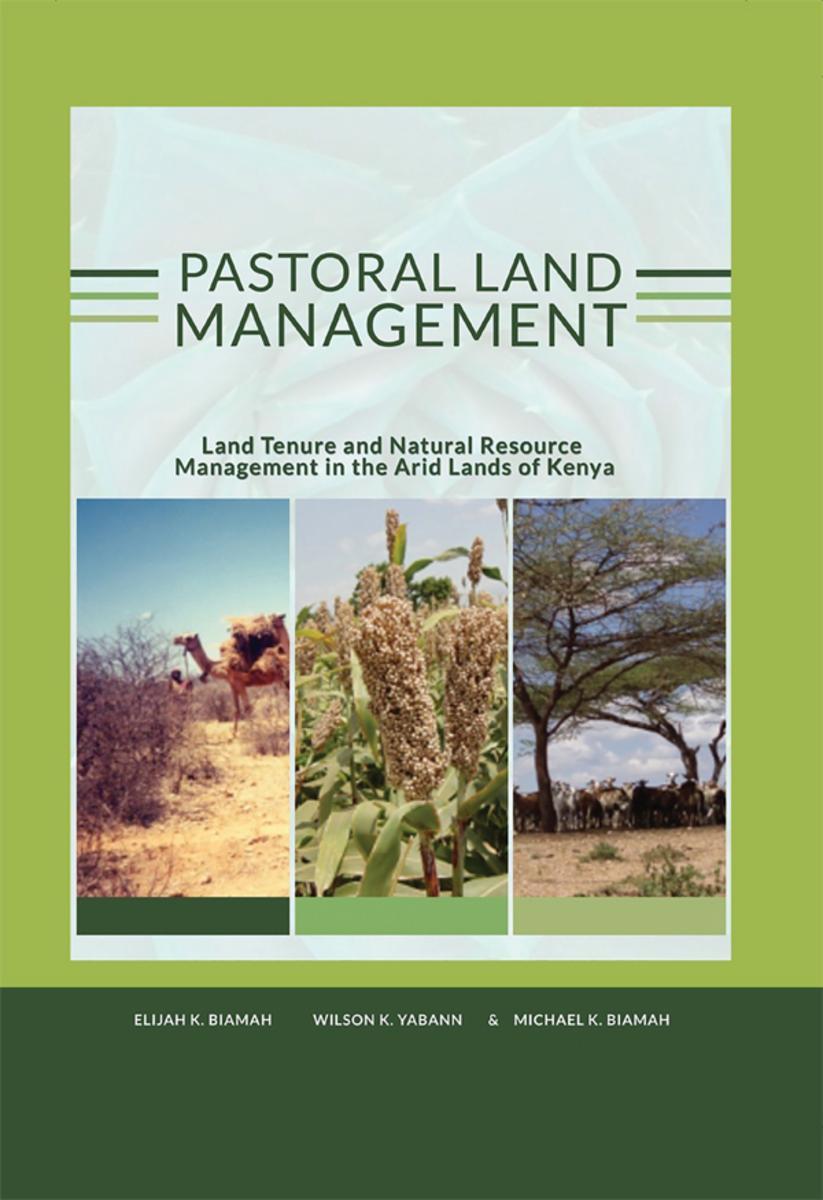
In the arid lands of Kenya, the social structure system associated with traditional pastoralism has evolved useful mechanisms for achieving sustainable resource utilization within fragile dryland environments. The sustainability of traditional pastoralism in Kenya is no longer feasible due to the increasing pressure on a shrinking resource base. This uncertainty with the sustainability of this traditional life style, calls for a radical shift in thinking from traditional to commercial pastoralism. Commercial pastoralism allows for the emergence of dynamic pastoralism which adapts quickly to technological changes and evolving market conditions in a fast changing pastoral environment. Whereas this futuristic form of pastoralism must recognize pastoral communities as legal entities and accord them the rights of control and disposal or transfer, it should also bestow the rights of access and use on individual pastoralists. The individualization of the right of land disposal or transfer in non-enlightened pastoral communities has led to the emergence of destitution and poverty in pastoral areas of Kenya. This book publication provides valuable information on emerging issues and options on pastoral land management in Kenya. It is based on a three year study on Land Tenure and Natural Resource Management in the Arid Lands of Kenya. It also does provide the requisite information for the formulation of a policy and legal framework on sustainable pastoral land management in Kenya.
Protecting Our Drylands
¥104.80
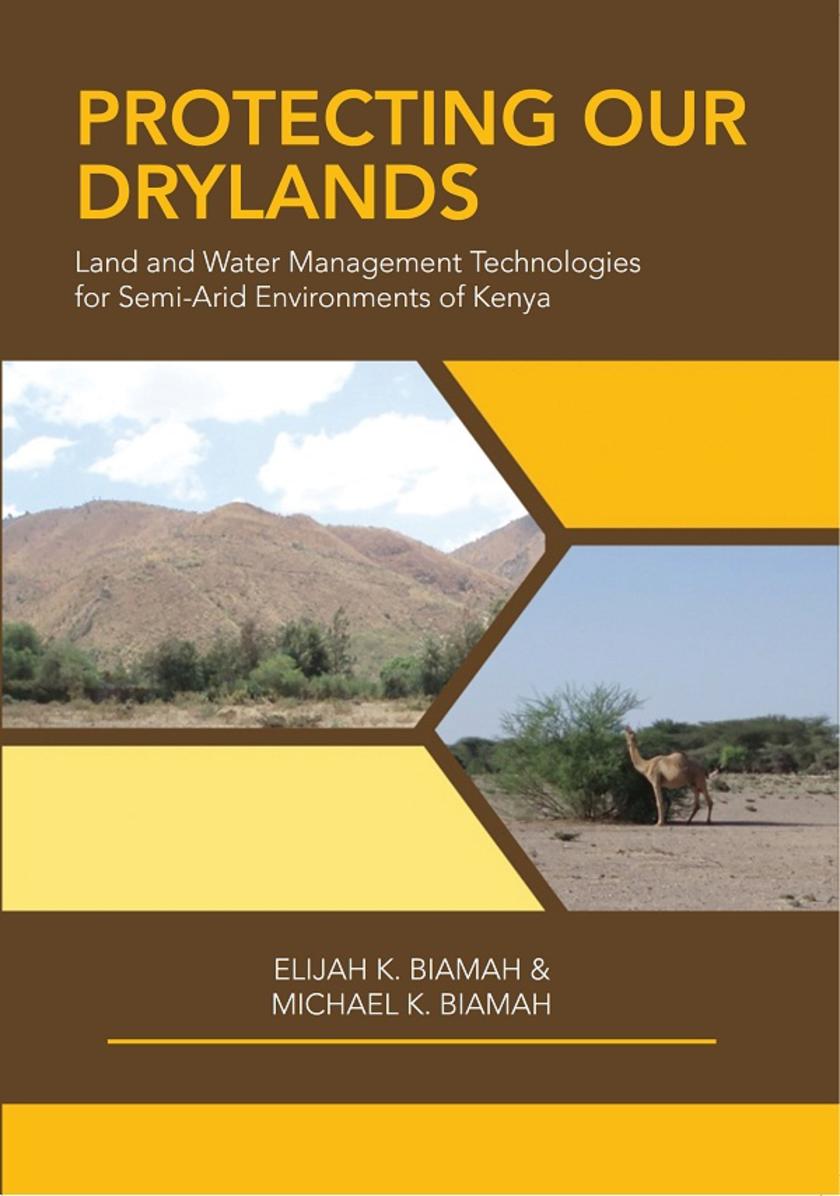
Kenya covers a total land area of 582,646 km2. This land area is classified in terms of agricultural potential as: 12.7% of medium to high potential for agricultural production; 11.5% of arable land, subject to periodic droughts; 70.7% of drylands; and 5.6% of non-agricultural land. High population densities are more prevalent in areas of high agricultural potential than those of low potential (drylands). Most of Kenya's population (approx. 80%) lives in rural areas and therefore depends on agriculture and livestock for food and income.This book reviews sustainable technological options for land and water management and that are appropriate to soil and moisture conservation in drylands areas of Kenya. Of significant importance are: Environment and Resource Conservation in Semi-Arid Kenya; Dryland agriculture and conservation technologies in Kenya; Sustainable Soil Management Technologies for Effective Erosion Control in Semi-Arid Kenya; Development of Sustainable Conservation Techniques for Dryland Agriculture in Semi-arid Kenya; Agroforestry for Environmental Conservation in Dryland Environments of Kenya; Carbon Sequestration in Dryland Soils; Integrated Watershed Resource Management in Semi-arid Kenya; Runoff Water Management Systems for Dryland Agriculture in Semi-Arid Kenya; Land and Water Management for Poverty Alleviation: Experiences from Iiuni Watershed, Machakos County, Kenya; and Participatory Role of Communities in Sustainable Development and Management of Resources in semi - arid environments of Kenya?

The Casebook of Sherlock Holmes: Sherlock Holmes #9
¥16.27
The publication of Darwin’s The Origin of Species in 1859 marked a dramatic turning point in scientific thought. The volume had taken Darwin more than twenty years to publish, in part because he envisioned the storm of controversy it was certain to unleash. Indeed, selling out its first edition on its first day, The Origin of Species revolutionized science, philosophy, and theology. Darwin’s reasoned, documented arguments carefully advance his theory of natural selection and his assertion that species were not created all at once by a divine hand but started with a few simple forms that mutated and adapted over time. Whether commenting on his own poor health, discussing his experiments to test instinct in bees, or relating a conversation about a South American burrowing rodent, Darwin’s monumental achievement is surprisingly personal and delightfully readable. Its profound ideas remain controversial even today, making it the most influential book in the natural sciences ever written—an important work not just to its time but to the history of humankind.
Memoriile unui om prost
¥48.97
De unde vine universul? Ce a fost ?naintea lui? Ce ne va aduce viitorul? ?ntr-un story cosmologic care captiveaz? ?n aceea?i m?sur? ?n care l?mure?te, autorul explic? cele mai recente progrese revolu?ionare ale ?tiin?ei, ce r?stoarn? din temelii probleme filosofice esen?iale. Observa?iile experimentale uluitoare ?i noile teorii fascinante sunt descrise ?ntr-o manier? accesibil? ?i sugereaz? nu doar c? din nimic poate s? ia na?tere ceva, dar ?i c? ?ntotdeauna din nimic va lua na?tere ceva. Un fascinant antidot la g?ndirea filosofic? ?i religioas? perimat?, Universul din nimic este o contribu?ie provocatoare la controversa privind existen?a lui Dumnezeu ?i a tuturor lucrurilor care ne ?nconjoar?. ?Uita?i-l pe Iisus“, argumenteaz? Krauss, ?stelele au murit pentru ca voi s? v? pute?i na?te“. ?Suntem martorii unei revolu?ii cosmologice la fel de important? precum revolu?ia copernican?. Avem acum la dispozi?ie acest ghid substan?ial ?i captivant, o lucrare memorabil?.“ – Ian McEwan


