


 购物车
购物车 个人中心
个人中心

Up All Night
¥151.53
The all-American chronicle of radio legend Carol Miller, from her rise to success in a male dominated world, to the rockstars she's know along the way, to, for the first time, the private story of her quietly waged battle with a deadly disease.As one of the nation's top radio DJs, Carol Miller introduced the music of Bruce Springsteen to the New York airwaves, was on a first-name basis with Sir Paul McCartney, dated Steven Tyler, and has been recognized by the Rock and Roll Hall of Fame. Her on-air approach and singular voice have infl uenced the sound of rock radio for more than four decades, and her satellite and syndicated Get the Led Out programs are heard nationwide. In Up All Night, Carol spins the entertaining, moving, and revealing story of her life and times in rock radio and beyond. A nice Jewish girl from Queens, Carol was supposed to be a doctor or, at the very least, a lawyer. But hearing a doo-wop trio in the alley under her window changed the direction of her life forever: she fell in love with popular music. As the tumult and excitement of the sixties rocked colleges across America, Carol a biology major at the University of Pennsylvania became an underground rock DJ at the campus radio station. Radio jobs in Philadelphia and New York City quickly followed, and Carol rose to the top of the profession. But even as she enjoyed a professional and personal life imbued with rock and roll glamour, Carol harbored guilt, disappointment, and alienation, believing she'd failed her traditional, intellectual Jewish parents and often feeling like an outsider in the very culture she had helped to create. The specter of an unnamed illness that had claimed many of her relatives' lives hung over hers as well, and she too would face a monumental challenge when diagnosed with breast and uterine cancer. Told in the distinctive voice that has charmed millions of listeners for decades, Up All Night is a frank, funny, and inspiring memoir. Offering snapshots of the rarefied world of pop music and the shifting social history of our times, it is as much a cultural chronicle as it is one woman's candid and moving story.

It Books
¥95.11
Tabatha is back to share her secrets of business success . . .With her characteristic savvy expertise and no-nonsense advice, the perfectly coiffed celebrity hairstylist, Tabatha Coffey, returns with her second book, teaching readers that the secret of success is taking charge of your priorities, your future, and your life. Fans of her hit show, Tabatha Takes Over, value Tabatha's sound approach to overhauling failing businesses, and now, in Own It!, she takes to the page to reach out to anyone with a dream: whether you're just beginning, revamping your career, or starting your own enterprise.Sharing her blunt but rock-solid wisdom, Tabatha provides tips for every aspect of business from entrepreneurship, to customer service, to management as well as on the home front, to help women seeking to balance their family lives with their careers. Filled with stories about real people who have faced challenging transitions, in addition to anecdotes from Tabatha's own experiences, this book reveals, through her unflinching honesty, Tabatha's commitment to the dreams and goals of her readers, and her never-say-never attitude when it comes to bringing them to life. Success is the result when you Own It! in all aspects of your life, and Tabatha breaks it down step-by-step as your straight-shooting personal coach to show you how it's done.
Women Want More
¥157.15
Haven't women gotten everything they wantEconomic powerSocial influenceBusiness cloutYes, but it turns out that these fantastic gains have come at a heavy price, as consumer goods experts Michael J. Silverstein and Kate Sayre discovered in an unprecedented study of 12,000 women in forty countries.That relentless upward climb has left women feeling stressed out, time starved, and overburdened. As a result, they look to products and services that will help them claw back time, juggle multiple roles, and capture a few moments of enjoyment.Women want more much more, in every category of goods and services. And no matter what their age or economic situation or where they live in the world, women will spend trillions of dollars over the next decade on the brands that truly deliver: Home-cleaning products that enable women to do in an hour what used to take a day Financial-services products that recognize that women control half the United States' wealth Food products that help keep the whole family happy and healthy Health care services designed for working-women's hectic schedules In the coming years, women's influence will be so enormous that it will not only help bring us out of the economic downturn but also create one of the most dramatic market opportunities of our lifetime bigger than the rise of China and India; more sustainable than any bailout package.Through quantitative data, profiles of individual women, and stories of winning companies, Women Want More provides business leaders with the understanding and practices they need to capture their share of the rising "female economy."

Joe Biden
¥157.15
"When I got knocked down by guys bigger than me . . . [my mother] sent me back out and demanded that I bloody their nose so I could walk down the street the next day." Joe Biden In this, the first definitive biography of Vice President Joe Biden, renowned journalist Jules Witcover examines the fascinating life of a man who, with his tenacity, outspokenness, and charming smile, has shaped Washington politics for the past forty years and who now serves as the forty-seventh vice president of the United States.Raised in the working-class towns of Scranton, Pennsylvania, and Wilmington, Delaware, and with lackluster grades in school and no particular goals other than to play sports or, fleetingly, to become a priest, Biden shocked the nation in 1972 when he became one of the youngest elected senators in U.S. history. From that point forward, he carved a legacy for himself as one of the most respected legislators in the country. Biden's record in Congress was impressive. He chaired three Senate committees, confronted Slobodan Miloevic head-on as a war criminal, and conducted the confirmation hearings of Supreme Court justices. After voting for the 2002 Senate resolution to use force in Iraq, he later called for its repeal and became an outspoken critic of the conduct of the war.Yet for all of Biden's achievements in the Senate, his life has been filled with tragedy and countless challenges. Within two months of being elected in 1972, Biden lost his wife, Neilia, and his young daughter in a tragic accident a loss that brought him to the nadir of despair and shook his resolve to stay in politics. And even after Biden vowed to continue his career, his tenure was marked by two brain aneurysms and career-threatening verbal gaffes. Then, after being considered among the front-runners in the 1988 Democratic presidential primaries, Biden was accused of plagiarism for a speech he made at the Iowa State Fair. He dropped out of the race to the sounds of Washington pundits chattering that the presidency would never be his. Through it all, Biden survived and ran and eventually dropped out again in the 2008 primaries. But even with this defeat, Barack Obama recognized Biden's vast experience in domestic and foreign affairs, and selected him to be his running mate.Joe Biden: A Life of Trial and Redemption is based on exhaustive research by one of Washington's most prolific journalists. In drawing on numerous exclusive interviews with Biden's confidants and family members, as well as President Obama and Vice President Biden, Witcover has gone beyond conventional biography to track the forces that have shaped a man who, with his plainspoken style and inspiring life story, has resonated with millions of Americans and whose work is now influencing the Obama-Biden administration and shaping America.
Necessary Endings
¥155.02
End Pain.Foster Personal and Professional Growth.Live Better. While endings are a natural part of business and life, we often experience them with a sense of hesitation, sadness, resignation, or regret. But consultant, psychologist, and bestselling author Dr. Henry Cloud sees endings differently. He argues that our personal and professional lives can only improve to the degree that we can see endings as a necessary and strategic step to something better. If we cannot see endings in a positive light and execute them well, he asserts, the "better" will never come either in business growth or our personal lives.In this insightful and deeply empathetic book, Dr. Cloud demonstrates that, when executed well, "necessary endings" allow us to proactively correct the bad and the broken in our lives in order to make room for the professional and personal growth we seek. However, when endings are avoided or handled poorly as is too often the case good opportunities may be lost, and misery repeated. Drawing on years of experience as an executive coach and a psychologist, Dr. Cloud offers a mixture of advice and case studies to help readers know when to have realistic hope and when to execute a necessary ending in a business, or with an individual; identify which employees, projects, activities, and relationships are worth nurturing and which are not; overcome people's resistance to change and create change that works; create urgency and an action plan for what's important; stop wasting resources needed for the things that really matter. Knowing when and how to let go when something, or someone, isn't working a personal relationship, a job, or a business venture is essential for happiness and success. Necessary Endings gives readers the tools they need to say good-bye and move on.
Blind Spot
¥157.15
What can chess masters teach us about how humans become expertsWhy can't race car drivers explain decisions they've made behind the wheel?What does predicting the winner of a soccer match say about our ability to make the right choiceWhen we talk about experts, we typically have bought into the idea that they have all the answers. Now, in this groundbreaking book, Gordon Rugg exposes the surprising ways in which all people tend to make the same sorts of mistakes, regardless of what field they are in, how smart they are, or even their level of expertise. Focusing on why and how we make decisions, Rugg offers insight into what motivates us, how we fail to find the answers we are looking for, how we can learn to ask the essential questions, and more. Rugg has devoted his life to learning how experts solve problems. He gained international attention after arguing persuasively that the famous Voynich Manu* is a hoax. Now, he demonstrates his techniques in the Verifier Method, which can be applied to any seemingly unsolvable problem.Drawing on his personal odyssey in the field of human expertise, Rugg makes astute and entertaining conclusions about how and why we inevitably fail, and explains how to make better mistakes, work backward, and reengineer the ways we pursue success.
George Lucas's Blockbusting
¥168.37
A comprehensive look at 300 of the most financially and/or critically successful motion pictures of all time many made despite seemingly insurmountable economic, cultural, and political challenges set against the prevailing production, distribution, exhibition, marketing, and technology trends of each decade in movie business history.

We Are Indie Toys
¥168.37
The indie world is producing extraordinary toy characters but little is known about the designers creating them or the processes used to make them. We Are Indie Toys! profiles the most interesting toymakers and reveals how they turn their unique ideas into one-of-a-kind collectibles.
Deadly Departure
¥72.99
The in-flight explosion of TWA Flight 800 on July 17, 1996, was one of the deadliest disasters in American history, spurring the most expensive airline investigation ever undertaken by the U.S. government. To this day the crash remains clouded in doubt and shadowed by suspicion of a government conspiracy.If there was any conspiracy to hide the truth about what really happened to Flight 800, it began long before the crash. Past crashes tell the story: What happened on Flight 800 has happened before and will again, unless drastic changes are made. Now veteran journalist Christine Negroni reveals what the commercial aviation industry has known for more than thirty-five years that during flight confined vapors in the fuel tanks can create a bomb like environment. It takes only a small energy source to ignite it.TWA Flight 800 was the fourteenth fuel tank explosion on a commercial airliner in thirty-five years. Yet each and every time, the airline industry persuaded regulators to deal with the symptoms of the problem and ignore the cause. When investigators could not immediately determine what happened, they were finally forced to look at the bigger picture. And, for the first time, this book exposes the hubris of aircraft manufacturers who knew all along, but dismissed as acceptable, the risk of fuel tank explosions.Deadly Departure shines a spotlight on the chaos behind the most massive crash investigation ever conducted, how the White House had to intervene between feuding investigators, and the surprising stories behind the missile theory conspiracies. It also tells the stories of the passengers and their families, the people of TWA and Boeing, the rescue and crisis workers, and the investigators and scientists involved illustrating the devastating effects on human lives. An impeccably researched, eye-opening examination of one of the great disasters of our time, Deadly Departure is a stunning exposé of how industry pressure continues to undermine regulatory policy, placing air travelers' lives at risk.
Dorothy and Otis
¥280.71
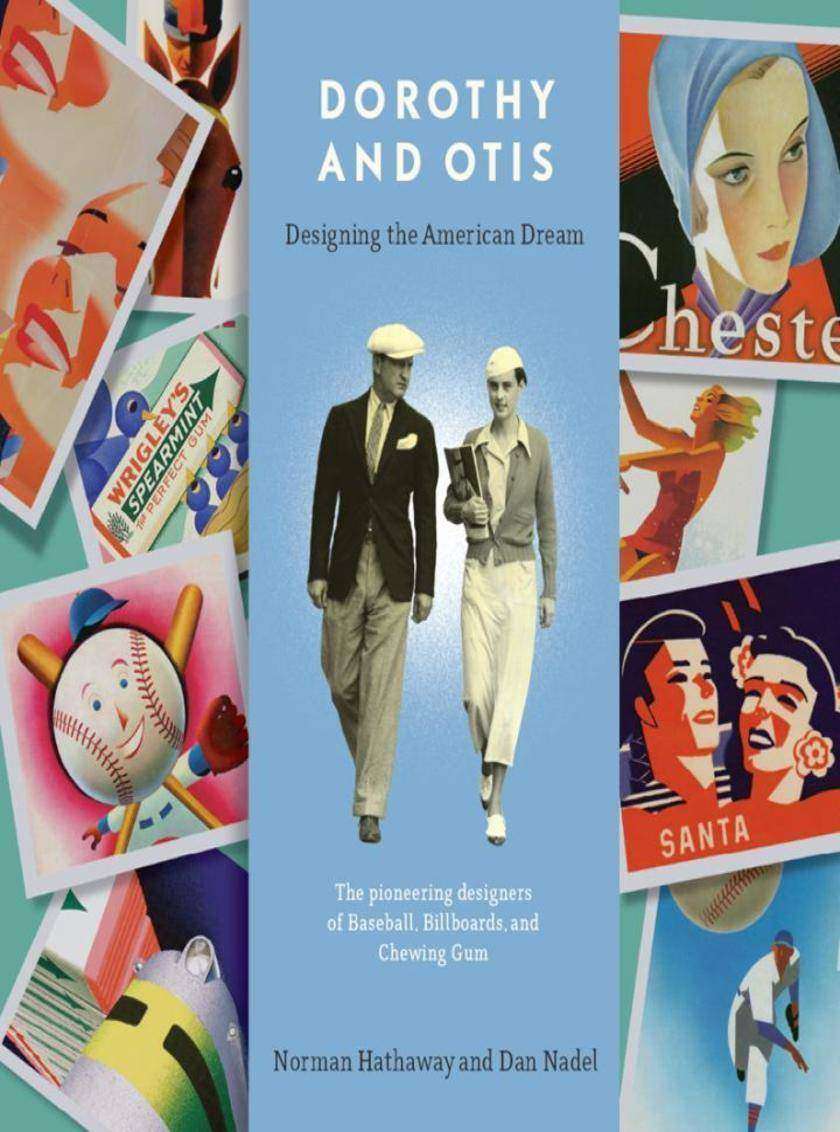
Dorothy and Otis Shepard are the groundbreaking heroes of North American visual culture. They were the first American graphic designers to work in multiple mediums and scales, but despite the brilliance of their work, their names are little known today. With 330 stunning, colorful images, Dorothy and Otis chronicles their story for the first time. It explores the Shepards' penchant for abstraction and modernism, and shows how the advent of billboard advertising inspired their creativity their large campaigns matched the grandeur of their lifestyle. Throughout, this book demonstrates how their work influenced all aspects of consumer culture, from the styling of Wrigley's Gum and the Chicago Cubs to the design of Catalina Island, which Charlie Chaplin, Clark Gable, and other celebrities frequented.As Dorothy and Otis brings these artists to life, it elevates them to their rightful place in popular culture and makes clear how their work shaped the American dream.With more than 330 full-color photographs throughout
The Wealth of My Mother's Wisdom
¥84.16
"It's amazing how much my mom did on my behalf. As a seventeen-year-old single mom with relatively little support and all the chips stacked against her, she was able to provide an incredible amount of support for me. Her lessons enriched my spirit, my emotions, and my relationship with God." When Lisa, a seventeen-year-old from Queens, New York, found out she was pregnant, she knew she only had one choice—to keep the child and give him the best life she could. That baby was Terrence Jenkins, better known to the world as Terrence J. From hosting gigs on BET's 106 and Park and E! News to roles in some of Hollywood's biggest movies, Terrence J is living a life he could have only imagined when he was a young boy. But it was the lessons he learned from his mother that helped make him a man—lessons about sacrifice, courage, loyalty, dreams, and perseverance. Through her words and her actions, Lisa showed Terrence the right path. From an early age Terrence's mother pushed him to succeed and led by example. Most important, she put her son first—even if it meant leaving behind the only life she had ever known in New York City in search of a safer environment for her son, having the drive to go back to school to learn a new skill, or having the courage to start her own business and build it from the ground up. Her drive eventually became Terrence's drive. Inspirational, funny, current, and down-to-earth, The Wealth of My Mother's Wisdom offers advice for a new generation. With stories, lessons, and advice from one of the top young names in Hollywood, along with input from some of his famous friends like Kevin Hart, Ludacris, T.I., Trey Songz, and Laz Alonso, Terrence J offers a positive, powerful message: with a strong family bond, the possibilities are endless.

Gender Intelligence
¥155.02
World-renowned experts on Gender Intelligence argue that it is time to move beyond politics and fairness to build an economic business case for gender diversity in the workplace.For too long, companies have played the numbers game attempting to tackle the problem of gender imbalance through affirmative action, numeric standards, and quotas. Yet these efforts have had no measurable impact on the number of women in leadership or on a company's bottom line. Meanwhile, the dominant paradigm of traditional business remains the same.In Gender Intelligence, Barbara Annis and Keith Merron introduce a revolutionary and effective approach that is fundamentally altering the cultures of major corporations around the world. They uncover the forces that create the current condition of gender inequality and reveal, for the first time, the powerful principles that are bringing about a shift in thinking. They highlight organizations that have made the transformation from a focus on gender equity to the more powerful objective of welcoming the natural differences between men and women, which ultimately produces greater economic value. Gender Intelligence proves that the true measure of gender equality does not reside in a percentage but in the untapped power of men and women openly working and winning together.

Dark Forces
¥155.02
In this explosive expose, bestselling author Kenneth Timmerman gives us the real story of what happened in Benghazi, and the lengths to which the Obama administration has gone to hide the truth from the American people.Forget what you've heard: the September 11, 2012, attack on U.S. Government Compounds in Benghazi, which resulted in the deaths of four Americans, including our ambassador, was not a spontaneous demonstration. Nor was it planned by local militias.It was a state-sponsored terrorist attack with Iranian fingerprints all over it.What's more, the Obama administration knew from the first minutes of the attack that the compound had been targeted by an organized, professionally trained terrorist group. But the administration made up a ridiculous cover story about a nonexistent demonstration over an Internet movie in an attempt to fool the American public on the eve of a national election. The Iran-Contra scandal consumed Ronald Reagan's second term and nearly destroyed his presidency. Yet as bad as that was, what happened in Benghazi is much worse. As Ken Timmerman reveals in Dark Forces, the Benghazi affair will go down as the deepest, darkest, dirtiest political scandal of recent American history. And for all the coverage it has received, the real story has still not been told. It's a story of clandestine arms deliveries to Libyan rebels that wound up in the hands of Islamist guerrillas allied with al Qaeda. It's a story of a romantic American diplomat who gets caught up in a whirlwind beyond his comprehension or control. It's a story of bald-faced lies, heroic acts, and the deepest corruption. Dark Forces is much more than a retelling of what happened in Benghazi on September 11, 2012. It puts those events into the larger context of the Obama administration's policy toward the Middle East from Iran to the Arab Spring. It examines the administration's record of systematically supporting the Muslim Brotherhood and al Qaeda affiliated groups in their efforts to overthrow pro-U.S. autocrats in Tunisia, Egypt, and Libya. It shows how this went along with the administration's outreach to the Islamist regime in Iran. It argues that President Obama's obsessive outreach to the leadership of the Islamic Republic of Iran led the Iranian regime to dismiss him as a weak, ineffective leader who would not fight back when hit. And it reveals why and how this deadly combination cost the lives of four Americans, and today endangers thousands more.Written with the breakneck pacing of a political thriller, and drawing on exclusive research and privileged sources, Dark Forces tells the full story of Benghazi as you have never heard it before.

The Looks of Love
¥224.56
Hal Rubenstein, author of the bestselling 100 Unforgettable Dresses, explores the union of love and fashion in fifty fully illustrated, entertaining stories highlighting landmark moments in style.This gorgeous anthology examines the marriage of love and style in fashion, film and television, music, politics and royalty, and advertising in contemporary culture. From extraordinary runway shows like Alexander McQueen's stunning dance-marathon presentation inspired by the film They Shoot Horses, Don't Theyto shoulder-pad-clad Krystle and Alexis Carrington's jealous catfights on Dynasty, from all eight of Elizabeth Taylor's wedding ensembles to the gleaming, entwined nude bodies in Calvin Klein's first ad campaign for Obsession, every entry addresses the concept and entertaining backstory of each significant stop along our cultural timeline, elaborating on its influences and design details as well as its contribution to fashion and sway in popular culture. Rubenstein also includes stories and quotations from more than a dozen world-class designers and commercial artisans interviewed especially for the book. Travel to Paris to experience some of the greatest fashion shows in history, including Marc Jacobs's Louis Vuitton Express and John Galliano's extravaganza for Christian Dior at the Palais Garnier. Discover the secrets about the making of director Baz Luhrmann's $30 million short film for Chanel No 5, starring Nicole Kidman. Go behind the scenes in Vera Wang's studio to learn the real story of the unforgettable yellow gown Michelle Williams wore to the Academy Awards, when she and Heath Ledger were Hollywood's "It" couple. Examine the world's ongoing romance with James Dean and his black motorcycle jacket, how Doris Day's sex comedies made her a pioneer of women's liberation, and why Woodstock lives on in bohemian style.With its delightful anecdotes, captivating facts, insider's perspective on fashion, and lots of pop-culture dish, The Looks of Love is an informative, entertaining read for anyone who loves fashion, film and music, celebrity, and a tug or two at the heart.With 225 full-color and black-and-white photographs

The Son of Laughter
¥94.10
Rich in family drama, passion, and human affinity, critically acclaimed author Frederick Buechner's contemporary retelling of this captivating and timeless biblical saga revitalizes the ancient story of Jacob, delighted our senses and modern sensibilities and gracing us with his exceptional eloquence and wit.

McIlhenny's Gold
¥94.10
In this fascinating history, Jeffrey Rothfeder tells how, from a simple idea the outgrowth of a handful of peppers planted on an isolated island on the Gulf of Mexico a secretive family business emerged that would produce one of the best-known products in the world. A delectable and satisfying read for both Tabasco fans and business buffs, McIlhenny's Gold is the untold story of the continuing success of an eccentric, private company; a lively history of one of the most popular consumer products of all times; and an exploration of our desire to test the limits of human tolerance for fiery foods.

Bloom
¥110.71
Love me. Love me. I'm not what you expected, but oh, please love me.That was the most defining moment of my life. That was the beginning of my story.From the outside looking in, Kelle Hampton had the perfect life: a beautiful two-year-old daughter, a loving husband, a thriving photography career, and great friends. When she learned she was pregnant with her second child, she and her husband, Brett, were ecstatic. Her pregnancy went smoothly and the ultrasounds showed a beautiful, healthy, high-kicking baby girl. But when her new daughter was placed in her arms in the delivery room, Kelle knew instantly that something was wrong. Nella looked different than her two-year-old sister, Lainey, had at birth. As she watched friends and family celebrate with champagne toasts and endless photographs, a terrified Kelle was certain that Nella had Down syndrome a fear her pediatrician soon confirmed. Yet gradually Kelle's fear and pain were vanquished by joy, as she embraced the realization that she had been chosen to experience an extraordinary and special gift.With lyrical prose and gorgeous full-color photography, Bloom takes readers on a wondrous journey through Nella's first year of life a gripping, hilarious, and intensely poignant trip of transformation in which a mother learns that perfection comes in all different shapes. It is a story about embracing life and really living it, of being fearless and accepting difference, of going beyond constricting definitions of beauty, and of the awesome power of perspective. As Kelle writes, "There is us. Our Family. We will embrace this beauty and make something of it. We will hold our precious gift and know that we are lucky."
Girltalk Fourth Edition
¥84.16
From bra shopping to babysitting, from making close friends to making great grades, Girltalk has all the answers Upbeat and up-to-date, honest and hip, Girltalk is an "indispensable guide" (Working Mother) for girls ages eleven to eighteen. This Fourth Edition is the ultimate preteen and teen source for advice on: Body: looking and feeling your best Friendship: you don't like everybody -- why should everybody like youLove: falling in, falling out Sex: what you should know before saying yes Family: making the best of your nest Education: getting through school, getting into college Money: making it, saving it, spending it Smoking, Drinking, and Drugs: advice without lectures Quizzes: getting to know yourself

Co-Dependence
¥72.93
The explosive bestseller that revolutionized our understanding of the addictive process. With a new introduction addressing the backlash to the co-dependency movement.

Ready, Set, Grow!
¥88.56
Ready, Set, Grow!Young girls before the onset of puberty have a curiosity abouttheir soon-to-be changing bodiesthat needs addressing in a simplerway than for their older sisters. In Madaras's proven, trust-worthy,friendly voice and style, this entirelynew book now brings them thesame kind of thoughtful, down-toearthinformation but at a readingand comprehension level that's just right for them.Responding throughout to reallifequestions and observationsfrom younger girls, Madarasexplores the changes that arehappening, or about to happen, tothem, including: the developmentof breasts, body hair, and bodyfat; the changes in their reproductiveorgans, both inside and out;their first period and all the complexfeelings surrounding it; theunwelcome appearance of acneand new body odors; and, perhapsmost important, how to respectand celebrate their unique bodies,even when the outside world isnot always so accepting.Lively cartoon drawings throughoutmake the book not only helpful,but fun to read, too.

Beethoven
¥83.92
Ludwig van Beethoven (1770-1827) was a genius so universal that his popularity, extraordinary even during his lifetime, has never ceased to grow. It now encircles the globe: Beethoven's most famous works are as beloved in Beijing as they are in Boston.Edmund Morris, the author of three bestselling presidential biographies and a lifelong devotee of Beethoven, brings the great composer to life as a man of astonishing complexity and overpowering intelligence. A gigantic, compulsively creative personality unable to tolerate constraints, he was not so much a social rebel as an astute manipulator of the most powerful and privileged aristocrats in Germany and Austria, at a time when their world was threatened by the rise of Napoleon Bonaparte.But Beethoven's achievement rests in his immortal music. Struggling against progressive, incurable deafness (which he desperately tried to keep secret), he nonetheless produced towering masterpieces, such as his iconic Fifth and Ninth symphonies. With sensitivity and insight, Edmund Morris illuminates Beethoven's life, including his interactions with the women he privately lusted for but held at bay, and his work, whose grandeur and beauty were conceived "on the other side of silence."


