


 购物车
购物车 个人中心
个人中心
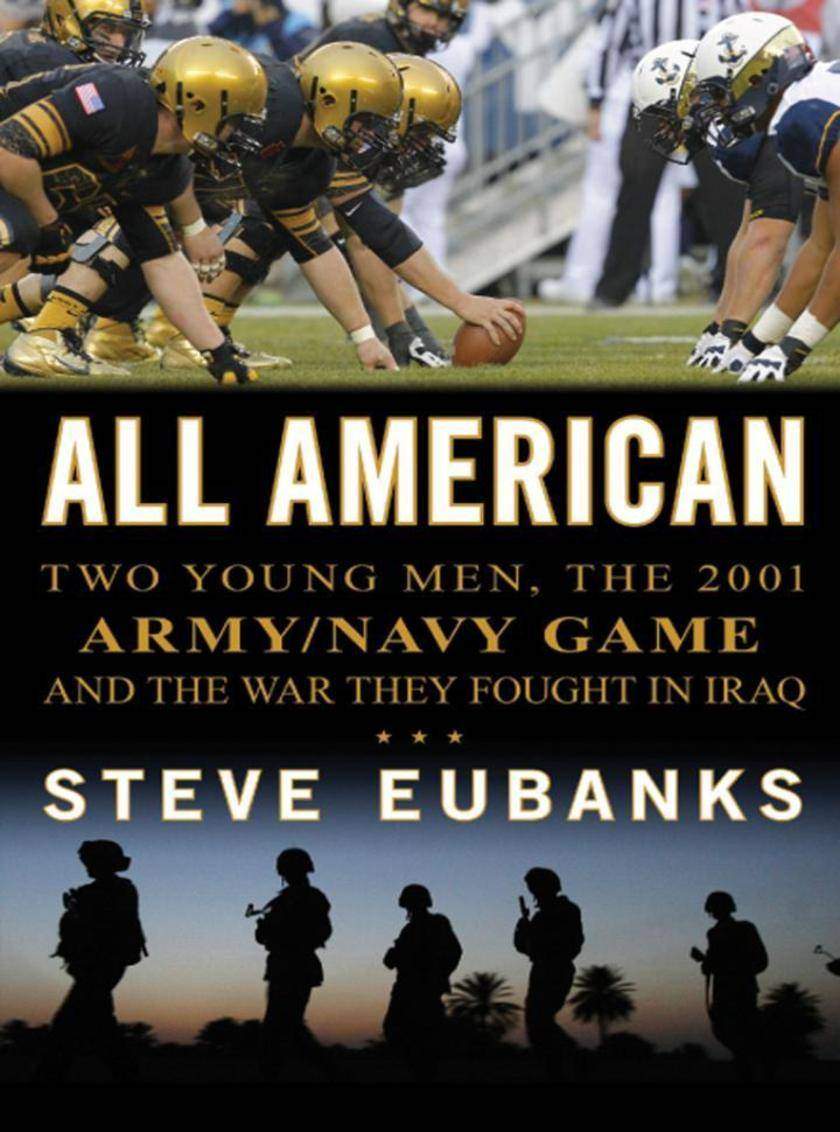
All American
¥88.56
In December 2001, as fires still burned beneath the ruins of the World Trade Center, West Point cadet Chad Jenkins and Naval Academy midshipman Brian Stann faced off at Veterans Stadium in Philadel-phia in what would become the most-watched college football game of the decade: the matchup between the Army Black Knights and the Navy Midshipmen. At opposing stadiums throughout the season, the Army and Navy teams, used to jeers from their oppo-nents' fans, had instead been greeted with standing ovations from respectful crowds who knew that these young players, military officers in training, were soon going to fight a war in the Middle East. On this day, before this momentous game, President George W. Bush along with others such as General Norman Schwarzkopf and Senator John McCain visited both locker rooms before watching the game from the sidelines.When Stann, a Navy linebacker, first came into contact with Jenkins, the Army quarterback, his team was behind by thirteen points. Yet he managed to land the perfect tackle against Jenkins. Though these two players?would not meet again for a decade, Stann and Jenkins shared the same path: both went to war. As first-class officers serving several tours of duty, they led soldiers and marines and participated in events they never imagined possible. A moving and fascinating dual profile of honor, duty, courage, and competition, All American is a thoughtful exploration of American character and values, embodied in the lives of two remarkable young men.
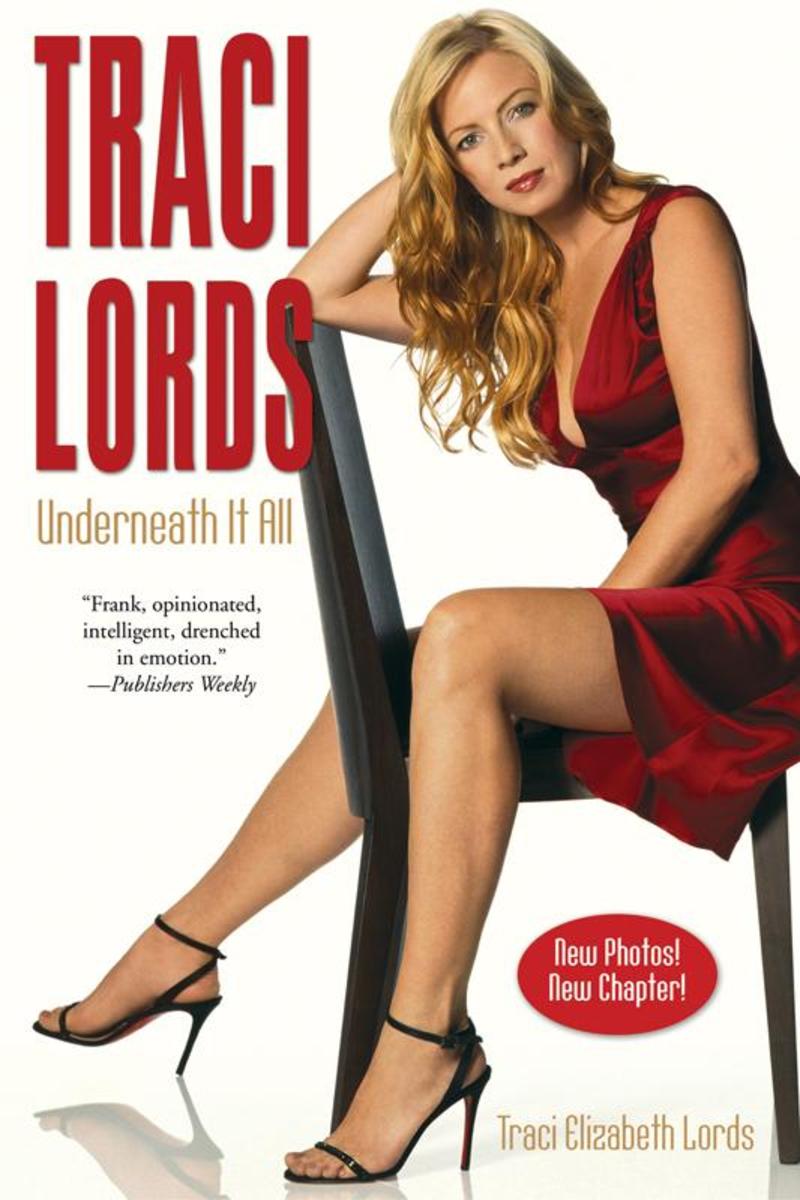
Traci Lords: Underneath It All
¥88.56
The moving, gripping, and tell–all autobiography of Traci Elizabeth Lords, a former child porn queen, electronica maven, and cult movie and TV star. At 14, Nora Kuzma ran away from home and ended up on the dirty streets of Hollywood. She fell in with a fast crowd, and her dreams of modelling soon landed her a spectacular centrefold in Penthouse Magazine, where at 15 she became internationally known as TRACI LORDS. From there she appeared in numerous adult films and magazines, denying her past and battling a deep addiction to cocaine and men. Three years later she got out. This is her memoir–a tale of loss, redemption, and ultimate survival as Traci Elizabeth Lords takes you into her secretive past, faces her demons, and shares her extraordinary journey of personal growth.
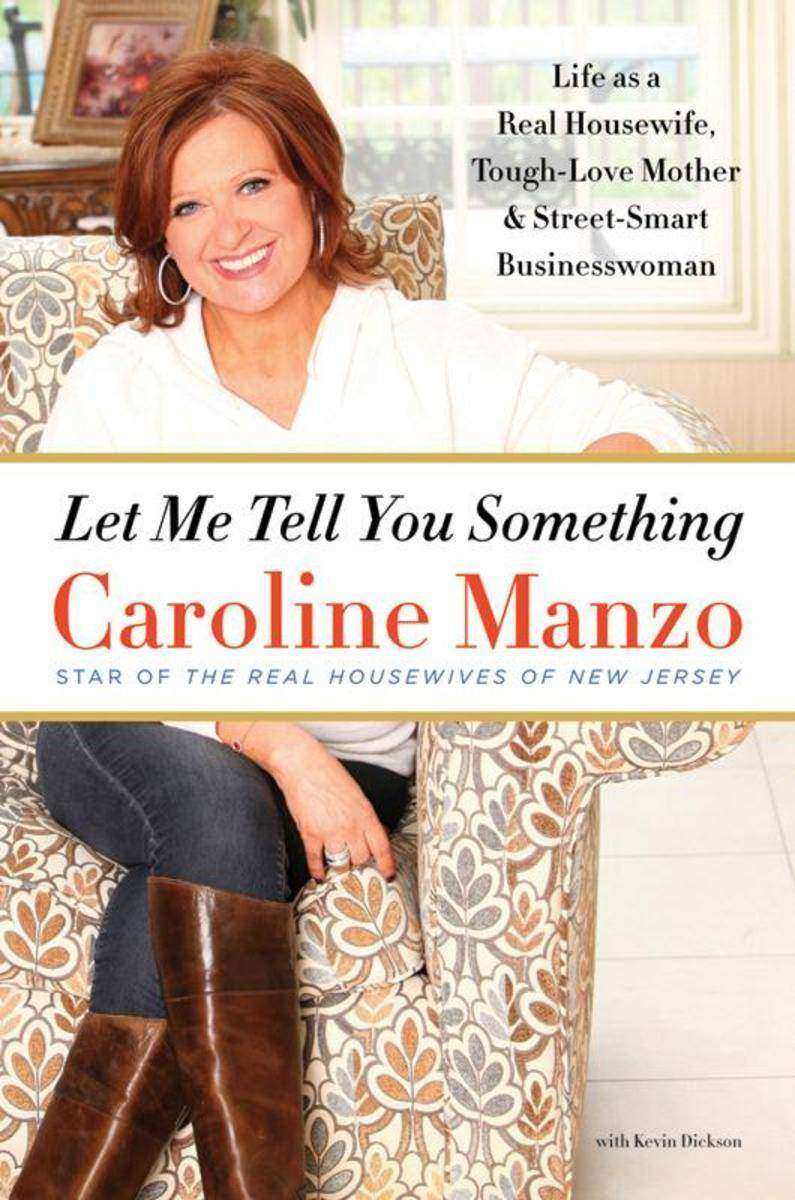
Let Me Tell You Something
¥90.77
Red-hot advice from the redhead who doesn't pull any punches Mother, wife, and fan favorite Caroline Manzo has been through it all as one of the original breakout stars of Bravo's The Real Housewives of New Jersey. The explosive and addicting reality series has seen some of the craziest moments in Real Housewives history, but Caroline has managed to set herself apart as the levelheaded, fiercely loyal, and down-to-earth member of the cast. Now Caroline, who is known for her no-nonsense advice, "tells you something" about what it really takes to juggle three kids and a husband (and still maintain your sanity), all while living in the spotlight. Her wisdom on family, life, and love, and her shockingly honest confessions about beauty, body image, and even plastic surgery, resonate with women of every generation. Equal parts funny, sincere, and revealing, Caroline exposes the sweeter, more reflective side of herself that fans of the show might not always see. Filled with personal stories, family photos, and Caroline's characteristic humor, Let Me Tell You Something gives fans and readers an all-access, behind-the-scenes pass into the life of this real New Jersey housewife and her family, where honest advice and practical life lessons are served up as only Caroline can.
We Were There
¥90.77
The Greatest Generation meets Bloods in this revealing oral history of the unrecognized contributions of African American veterans.Award-winning journalist Yvonne Latty never bothered to find out the extent of her father's service until it was almost too late. Inspired by his moving story -- and eager to uncover the little-known stories of other black veterans, from those who served in the Second World War to the War in Iraq -- Latty set about interviewing veterans of every stripe: men and women; army, navy, and air force personnel; prisoners of war; and brigadier generals.In a book that has sparked discussions in homes, schools, and churches across America, Latty, along with acclaimed photographer Ron Tarver, captures not only what was unique about the experiences of more than two dozen veterans but also why it is important for these stories to be recorded. Whether it's the story of a black medic on Omaha Beach or a nurse who ferried wounded soldiers by heli-copter to medical centers throughout Asia during the Vietnam War, We Were There is a must-have for every black home, military enthusiast, and American patriot.

President Me
¥88.56
My fellow Americans,President John F. Kennedy once famously said, "Hey, is that blond intern eighteen yet?" He also said, "Ask not what your country can do for you, but what you can do for your country."We've changed a lot since JFK asked us all to pitch in. We've become a nation of narcissistic, yoga-mat-toting, service-dog-having, absentee dads and gluten-free, hand-wringing, hypochondriac moms of overcaffeinated (yet somehow still lazy) twerking tweens. And our government is an inept bureaucracy incapable of doing anything except getting in our wallets and in our way. We've got to get it together, America.That is why I, Adam Carolla, hereby declare myself Candidate Carolla. The tome you hold in your hands is a statement of my intent to whip our country back into fighting shape, to eliminate the "what are you going to do for me?" mentality that has invaded our country.President Me is my manifesto, my vision for a better place . . . free of Big Government, barefoot fliers, lazy hipsters who'd rather "Occupy" than work, and the other things that are bringing our country down. With my cabinet appointees, my list of worthy and necessary presidential ManDates, and tons of great ideas for fixing our health care, education, energy, and even national parks systems . . . behold an America we can be proud of. The America I see in my head.You're welcome in advance.Your future leader,Adam
vSphere Virtual Machine Management
¥107.90
This book follows a stepbystep tutorial approach with some realworld scenarios that vSphere businesses will be required to overcome every day. This book also discusses creating and configuring virtual machines and also covers monitoring virtual machine performance and resource allocation options. This book is for VMware administrators who want to build their knowledge of virtual machine administration and configuration. It’s assumed that you have some experience with virtualization administration and vSphere.
Minitab Cookbook
¥99.18
This practical cookbook covers a broad range of topics in an easytounderstand manner. Stepbystep instructions guide you through even the most complicated of tools in Minitab. This book is great for anyone who is familiar with statistics and who wants to learn how Minitab works. Whilst you do not need to be an expert in all areas of statistics, you should understand the basics of the chapters you are interested in.
Mastering Python Regular Expressions
¥45.77
A short and straight to the point guide that explains the implementation of Regular Expressions in Python. This book is aimed at Python developers who want to learn how to leverage Regular Expressions in Python. Basic knowledge of Python is required for a better understanding.
Optimizing Hadoop for MapReduce
¥63.21
This book is an examplebased tutorial that deals with Optimizing Hadoop for MapReduce job performance. If you are a Hadoop administrator, developer, MapReduce user, or beginner, this book is the best choice available if you wish to optimize your clusters and applications. Having prior knowledge of creating MapReduce applications is not necessary, but will help you better understand the concepts and snippets of MapReduce class template code.
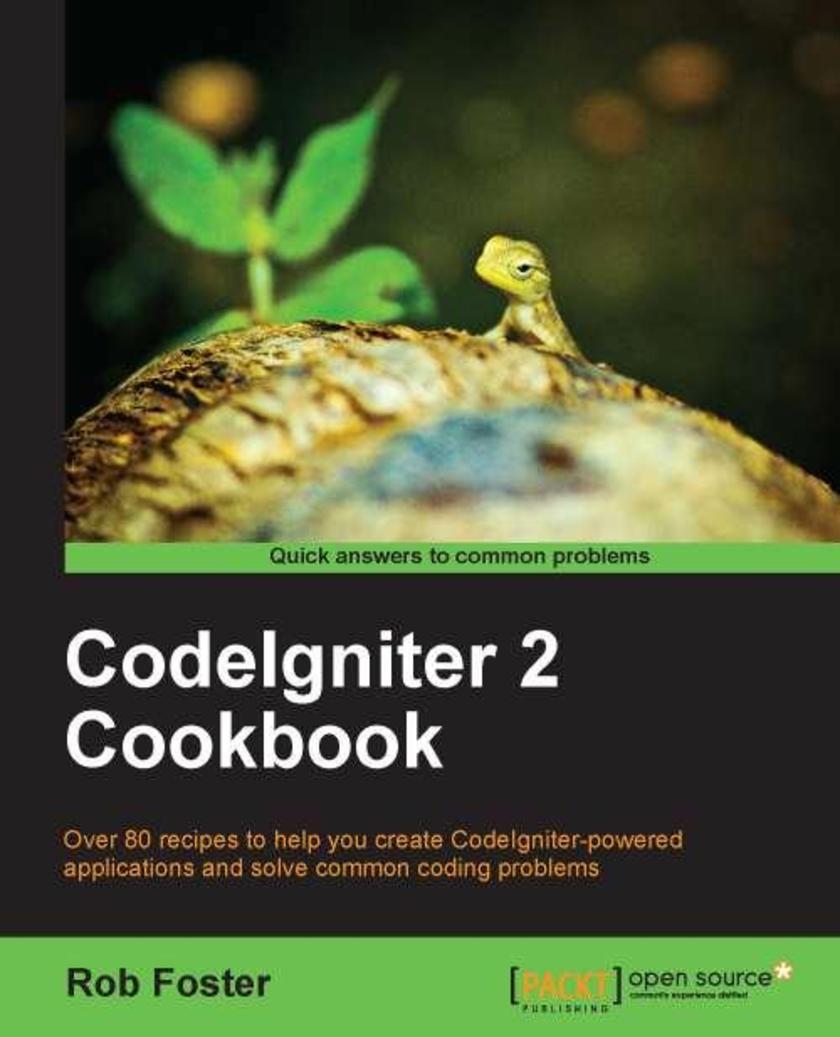
CodeIgniter 2 Cookbook
¥90.46
Presented in a recipe-based format, you are led step-by-step through each aspect of CodeIgniter, allowing you to dip in and out as you choose.CodeIgniter 2 Cookbook is for intermediate to advanced PHP developers who want to begin using the powerful CodeIgniter framework to create web applications. Familiarity with CodeIgniter isn’t essential, but it will be useful if you have been introduced to the framework before.
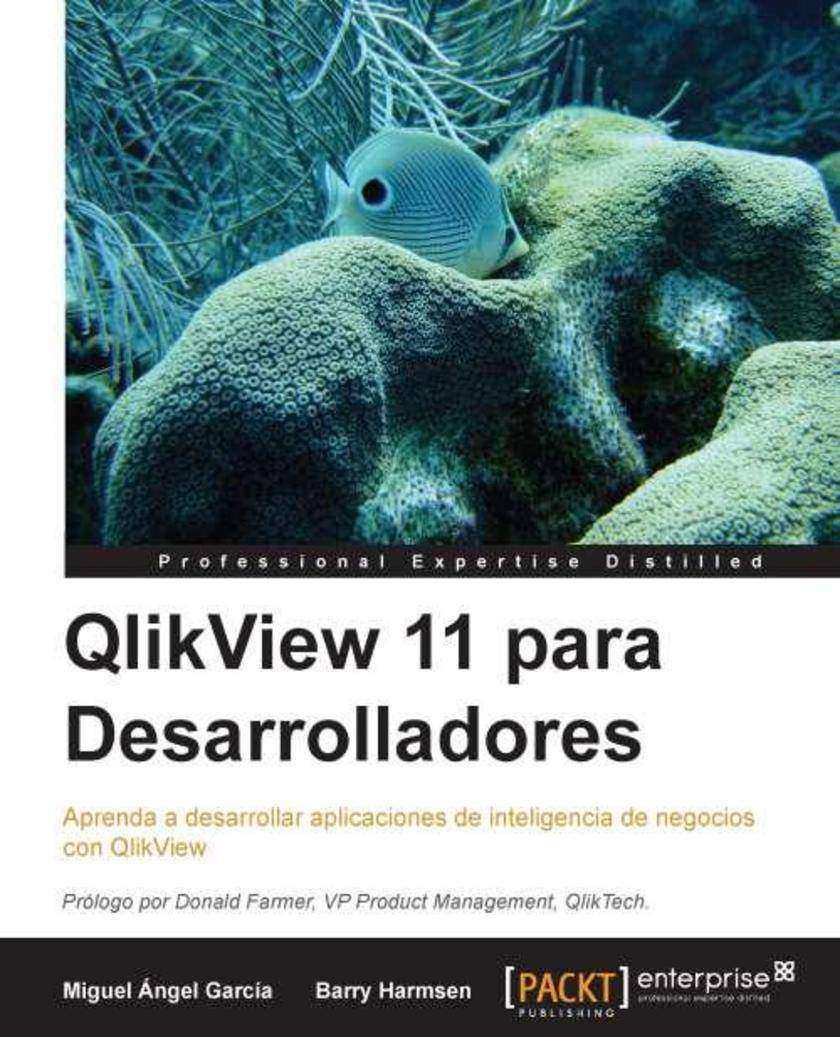
QlikView 11 para Desarrolladores
¥107.90
Los ejercicios de este libro tienen un enfoque de tutorial paso a paso y en los que al mismo tiempo se van presentando mejores prácticas de desarrollo. El libro está estructurado de forma que puede ser leído de inicio a fin o leer solamente partes del mismo.Este libro va dirigido a desarrolladores y usuarios que quieren aprender a crear aplicaciones de Inteligencia de Negocios con QlikView. Desarrolladores que ya hayan usado QlikView por un tiempo podrán encontrar recomendaciones útiles y mejores prácticas para hacer uso más efectivo de QlikView. Este libro solamente cubre QlikView Desktop. Implementaciones en QlikView Server y Publisher est?an fuera del alcance de este libro. Este libro no va enfocado a administradores de servidores QlikView.
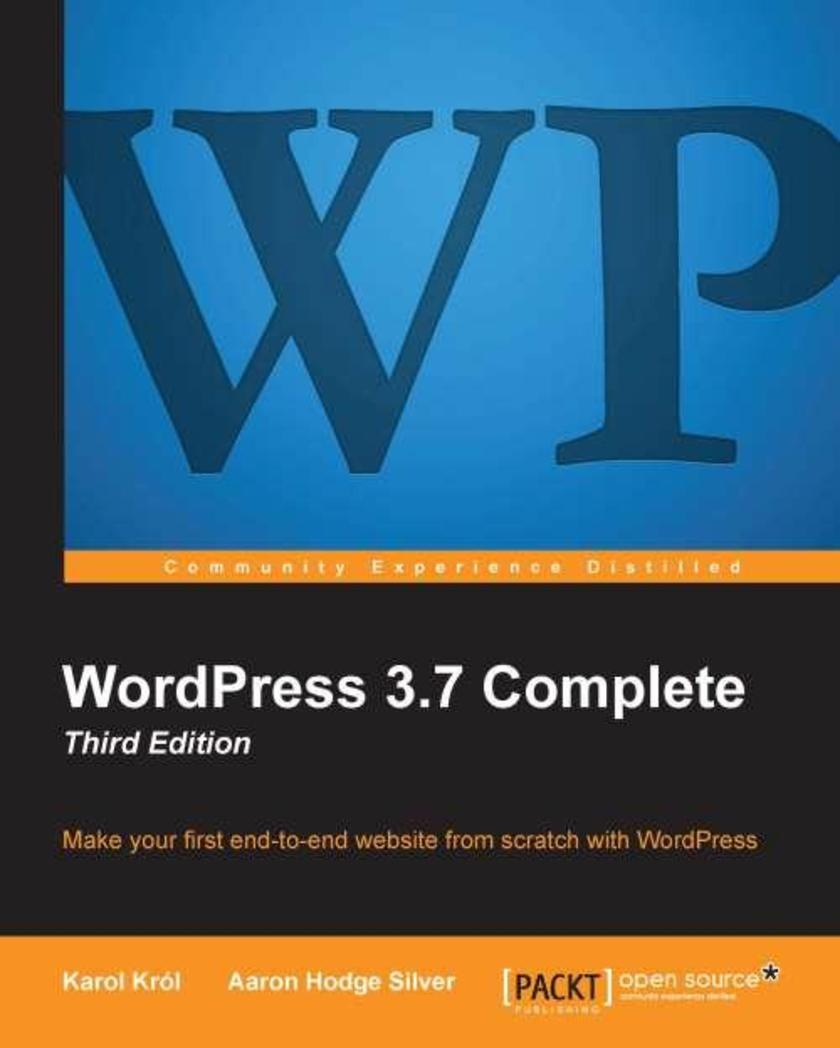
WordPress 3.5 Complete: Third Edition
¥80.65
WordPress 3.5 Complete: Third Edition is a comprehensive and step-by-step tutorial packed with screenshots and examples to make it easy and quick to pick it up.This WordPress book is a guide to WordPress for online publishers and web developers. If you are new to blogging and want to create your own blog or website from scratch, then "WordPress 3.5 Complete: Third Edition" is for you. No prior knowledge of HTML/CSS or PHP is required.
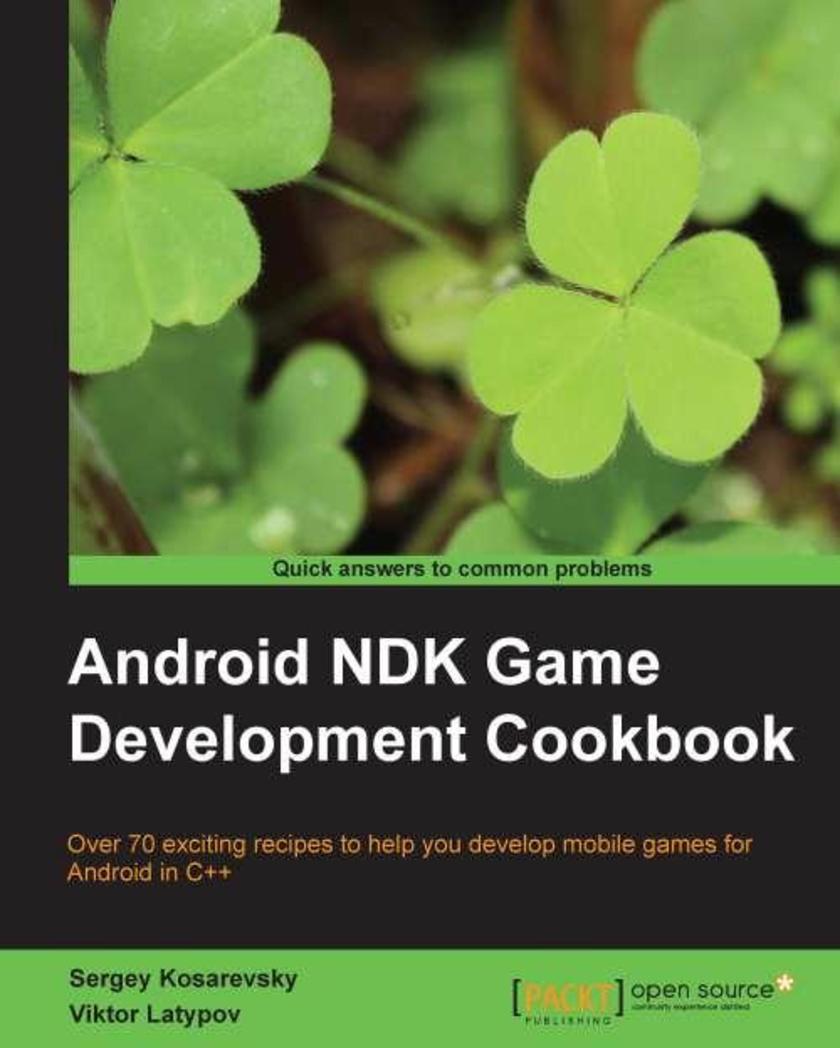
Android NDK Game Development Cookbook
¥90.46
A systematic guide consisting of over 70 recipes which focus on helping you build portable mobile games and aims to enhance your game development skills with clear instructions.If you are a C++ developer who wants to jump into the world of Android game development and who wants to use the power of existing C++ libraries in your existing Android Java applications, then this book is for you. You need to have basic knowledge of C or C++ including pointer manipulation, multithreading, and object-oriented programming concepts as well as some experience developing applications without using an IDE.

Microsoft SCCM High Availability and Performance Tuning
¥71.93
This book is a step-by-step tutorial that guides you through the key steps in implementing best solutions for high availability and performance tuning. It is split into two distinct approaches: client and site side HA and optimization.Microsoft SCCM High Availability and Performance Tuning is for IT professionals and consultants working with Configuration Manager who wish to learn the skills to deploy a redundant and scalable solution.
Hadoop Cluster Deployment
¥63.21
This book is a step-by-step tutorial filled with practical examples which will show you how to build and manage a Hadoop cluster along with its intricacies.This book is ideal for database administrators, data engineers, and system administrators, and it will act as an invaluable reference if you are planning to use the Hadoop platform in your organization. It is expected that you have basic Linux skills since all the examples in this book use this operating system. It is also useful if you have access to test hardware or virtual machines to be able to follow the examples in the book.
Instant RubyMine
¥45.77
Filled with practical, step-by-step instructions and clear explanations for the most important and useful tasks. Get the job done and learn as you go. A practical guide comprising of easy-to-follow recipes which provide concise and clear steps to help you enter the world of RubyMine.Instant RubyMine is ideal for you, if you are new to RubyMine or well acquainted with the technology. All you need is basic knowledge of writing in Ruby or Ruby on Rails.
Learning Bing Maps API
¥63.21
This is a practical, hands-on guide with illustrative examples, which will help you explore the vast universe of Bing maps.If you are a developer who wants to learn how to exploit the numerous features of Bing Maps then this book is ideal for you. It can also be useful for more experienced developers who wish to explore other areas of the APIs. It is assumed that you have some knowledge of JavaScript, HTML, and CSS. For some chapters a working knowledge of .Net and Visual Studio is also needed.
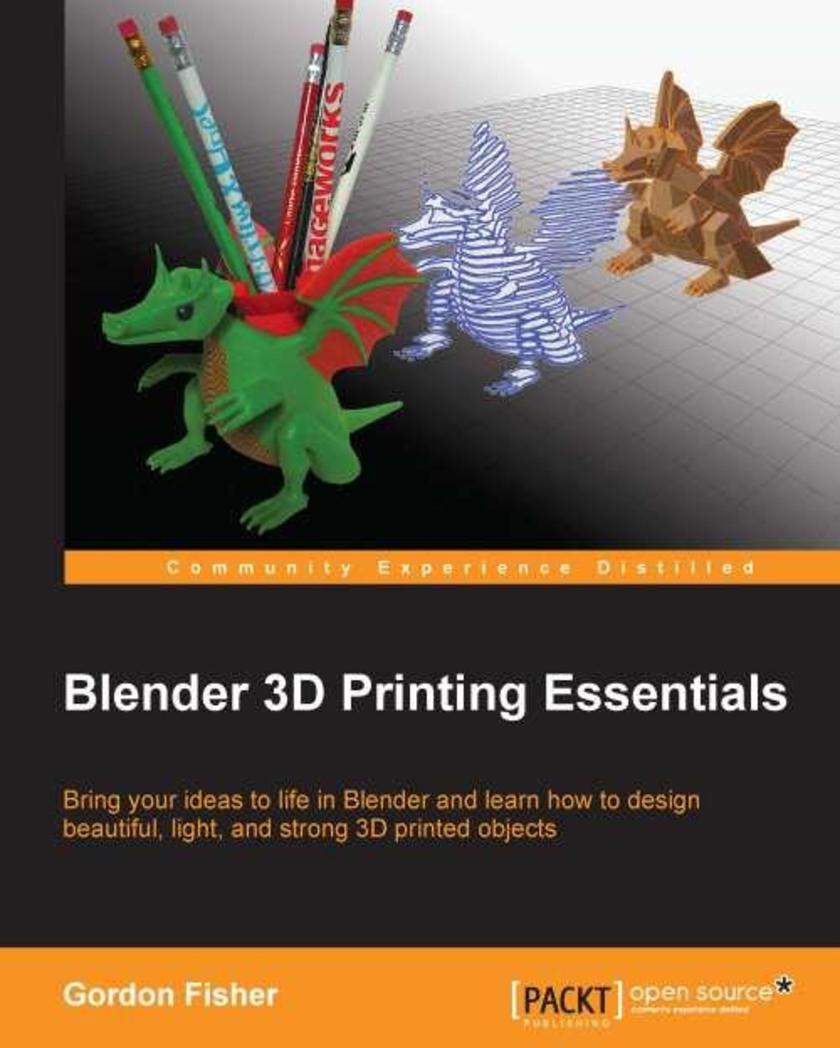
Blender 3D Printing Essentials
¥63.21
This book adopts a practical approach, with the use of step-by-step instructions to help guide readers. There are lots of screenshots covering each and every step needed to design a high-quality model in Blender for 3D printing.If you are a Blender user or someone who wants to use Blender to make 3D objects suitable for 3D printing, this book is ideal for you. You should already be comfortable with basic modeling in Blender - including using modifiers - although advanced skills are not required. All of the models that you will need are explored in-depth. This book does not assume that you will use any specific printer and teaches the general principles common to building models for most printers. It also gives you tips on discovering the requirements of the specific printer you will be using.
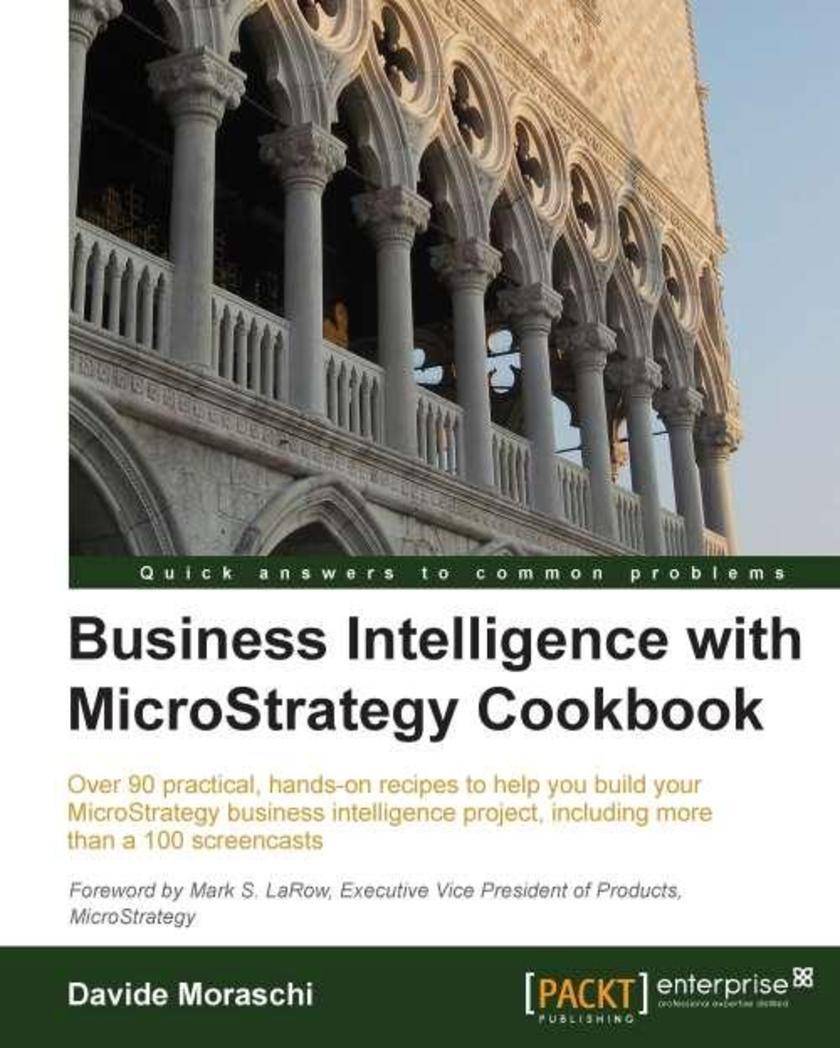
Business Intelligence with MicroStrategy Cookbook
¥99.18
Written in a cookbook style, this book will teach you through the use of recipes with examples and illustrations. Each recipe contains step-by-step instructions about everything necessary to execute a particular task.This book is intended for both BI and database developers who want to expand their knowledge of MicroStrategy. It is also useful for advanced data analysts who are evaluating different technologies. You do not need to be an SQL master to read this book, yet knowledge of some concepts like foreign keys and many-to-many relationships is assumed. Some knowledge of basic concepts such as dimensional modeling (fact tables, dimensions) will also help your comprehension of this book. No previous MicroStrategy knowledge is needed.
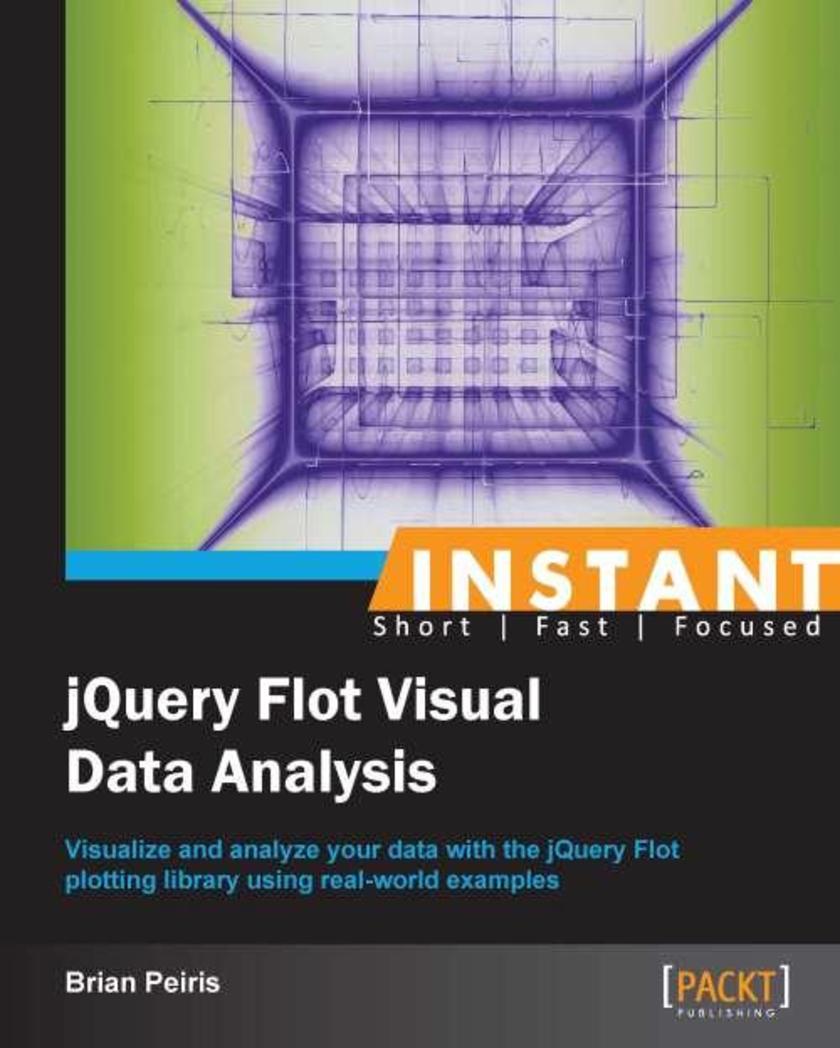
Instant JQuery Flot Visual Data Analysis
¥41.41
Filled with practical, step-by-step instructions and clear explanations for the most important and useful tasks. A quick, instruction-based guide full of examples that details on the various aspects of Flot and how users can apply it to data groups for interactive data representation techniques.If you are a data visualization developer, mapping and presentation software developer, or anyone with an interest in jQuery visualization, this book is ideal for you. If you have a working knowledge of jQuery and JavaScript, you can use this book to add sophisticated visualizations to your web application so that your users can easily understand data that is crucial to them.
Instant Responsive Web Design
¥41.41
A step-by-step tutorial approach which will teach the readers what responsive web design is and how it is used in designing a responsive web page.If you are a web-designer looking to expand your skill set by learning the quickly growing industry standard of responsive web design, this book is ideal for you. Knowledge of CSS is assumed.


