


 购物车
购物车 个人中心
个人中心
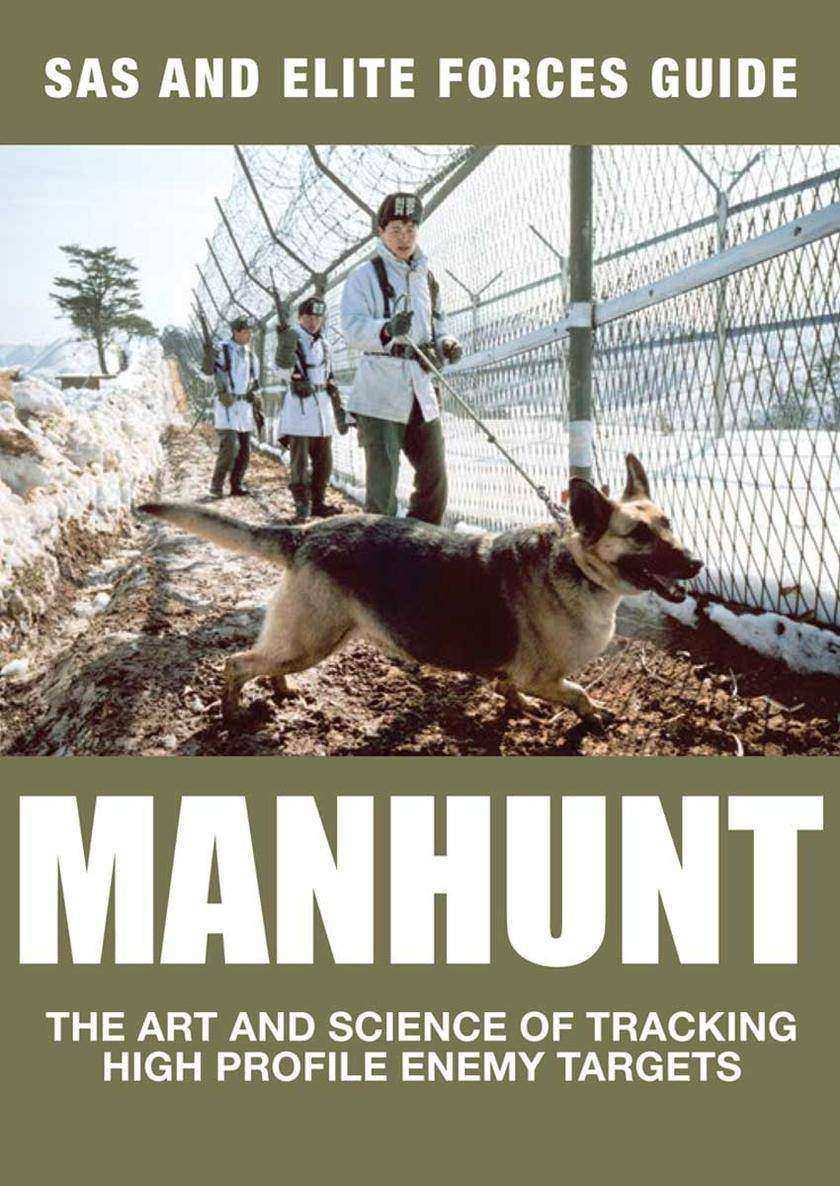
Manhunt: The Art and Science of Tracking High Profile Enemy Targets
¥65.32
A manhunt can involve helicopters, hounds and hundreds of military or police personnel, but it can also turn on the evidence of one broken spider’s web. Manhunts today might involve the technology of infrared cameras and surveillance devices such as powerful satellite technology, but they may also rely on examining the width, depth, tread and intervals of footprints, or observing minute changes in the natural environment. From searching for high-value enemy targets such as Osama bin Laden and Saddam Hussein to finding soldiers caught behind enemy lines, from escaped prisoners and serial killers to a missing child, SAS and Elite Forces Guide: Manhunt explores just how the military and police forces track people down. Including many case studies of high-value targets, suspected criminals and fugitives from justice, and with extensive background on the different techniques in tracking used, from traditional Native American trackers’ skills to the latest high-tech methods, Manhunt brings together the history and science of tracking. Illustrated with 150 maps and photographs, SAS and Elite Forces Guide: Manhunt is an authoritative examination of tracking from footprints to forensics and a must for anyone interested in the latest military practices, true crime and survival skills.
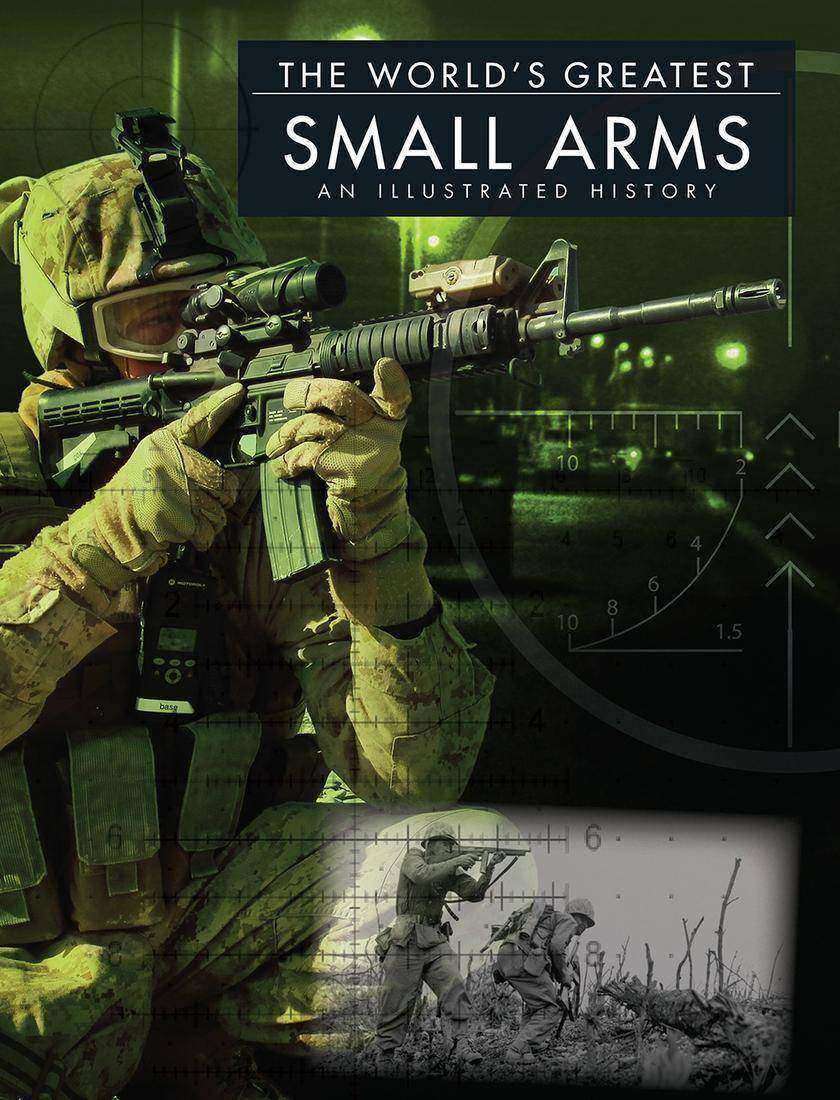
The World's Greatest Small Arms: An Illustrated History
¥81.67
Small arms have developed hugely since the introduction of the machine gun in the 1870s. Magazine-fed rifles, submachine guns, automatic pistols and, later, assault rifles and personal defence weapons have changed the face of infantry warfare, offering a range of weaponry designed for both the specialist and novice. The World’s Greatest Small Arms features 52 weapons from the late 19th century to the present day. The book includes the best-known weapons from throughout the modern era, from the Gatling gun, SMLE rifle and Luger pistol, to the Uzi, FN MAG and the M110 sniper rifle. Great iconic weapons, such as the Colt M1911 pistol, Bren Gun, MP5 submachine gun, and Steyr AUG rifle are featured, as well as timeless classics still in use today: the M2 Browning 50 cal, AK-47 and M16 rifle. Each weapon is illustrated with a colour profile artwork and photographs, along with a description of the weapon’s development and history, key features and a full specifications box. Including more than 200 artworks and photographs, The World’s Greatest Small Arms is a colourful guide for the military historian.

D-Day: Airborne Assault
¥40.79
In any military operation throughout history, few 24-hour periods have been as crucial as that of 6th June 1944. With the aid of specially commissioned maps, D-Day: The First 24 Hours series gives the dramatic history of the first 24 hours of the Normandy landings, and explains in detail the events that occurred in each landing zone. In this second volume of the series, the book describes the airborne landings by paratroopers and glider troops that secured the flanks of the Allied beachheads, including such famous encounters as Pegasus Bridge and Ste Mère Eglise, as well as the more secret operations carried out by the SAS, SOE and Maquis. With colour and black & white photographs and specially commissioned maps, the book is a guide to key events in the first 24 hours of the D-Day landings that saw the Allies successfully achieve a foothold in Northern Europe.

All Talk Monologues for Young People: 6 Solo Plays
¥40.79
A series of short, single voice plays by writers based in the North West of England. These powerful, contemporary monologues share the struggles, courage, conflicts and joys of different characters facing difficult decisions in their lives. Developed through consultation with young people, they offer a range of authentic, memorable voices to stimulate discussion and participatory drama work. ‘First Date’ by Anne-Marie O’Connor: Sometimes friendship comes with a heavy price tag. ‘Getting it Right’ by Peter Spafford: Luke can't choose between his shirts, let alone his parents. ‘Results Day’ by Aelish Michael: Karly’s mum thinks she’s an angel, but what if she flaps her wings? ‘Close to Home’ by Mary Cooper: Jay’s little sister is pregnant and he’s livid – who’s he going to punish? ‘Weighed Down’ by Carla Monvid-Jenkinson and Mary Cooper: When Claire’s dad left, she thought that he was all she would lose. ‘Giggsy’s Legs’ by Michael Harvey: Do you choose everything you are or does it choose you?
The Value of Nothing
¥24.44
Welcome! Come on in! Take part in the project launch of ArtWorks, the new back to work initiative created and run by your friend and ours, the one, the only, the most fantastic… Vince Fine! And so begins the project launch from hell… Exploring issues of how society views those living on benefits, the ‘creative industries’ and what we should value in life, this dark comedy (running in real time) charts the fall from grace of the central comedic hero, Vince Fine, as he watches everything he’s ever dreamed of slip from his fingers. Includes some audience participation and interaction.

Playing Sherlock Holmes
¥19.52
Playing Sherlock Holmes contains three verbatim interviews - with John Wood, Robert Stephens and Christopher Lee - about their very different experiences of appearing as Holmes on stage and screen. The interviews were conducted in 1974. At the time, John Wood was appearing on stage in an acclaimed revival of William Gillette's play Sherlock Holmes, a Royal Shakespeare Company production; Robert Stephens had recently completed The Private Life of Sherlock Holmes for film director Billy Wilder; and Christopher Lee - who had a role as Mycroft Holmes in that film - had earlier played the lead role in Sherlock Holmes and the Deadly Necklace. The interviews have been transcribed from tapes held in the Arthur Conan Doyle Collection - Richard Lancelyn Green Bequest at Portsmouth Museum.

Fifth Harmony Quiz Book
¥24.43
Are you a fan of American girl band Fifth Harmony? Have you followed the girls' success from auditioning as solo artists on The X Factor USA to the formation of Fifth Harmony and beyond? If you think you know all about Ally, Normani, Dinah, Lauren and Camilla, or would like to find out more about them, dip inside The Fifth Harmony Quiz Book. What song did Ally sing during her audition on The X Factor USA in 2012? When the group was formed by Simon Cowell and Demi Lovato, what was the band's original name? What award did Fifth Harmony win at the 'People's Choice Awards 2016'? The answers can all be found in this exciting new quiz book. With 100 questions and fascinating facts all about Fifth Harmony, including many personal details, you are certain to learn something new about this popular girl band. This is a must-have book for everyone who supported the girls on their The X Factor USA journey and who continue to enjoy the music of Fifth Harmony.
Trusts a Practical Guide
¥24.44
Within the genre of financial selfhelp, ‘Trusts A Practical Guide’ is an invaluable and rare resource for financial experts and members of the public alike who need a reference work on a subject that is, on the face of it, complex but which undeniably affects many people’s lives at one point or another. Whatever your occupation or background, you are almost certain at some time to need some understanding of this subject, whether in your own financial planning or in advising those around you – and this guide is particularly helpful when dealing with a relative’s probate or the complex issues arising from an inheritance.After thirtyfive years at the top of his profession, FSA member Terry O'Halloran writes passionately and informatively, not only about his subject but also about the importance of spreading the word to others. He has seen many times first hand the benefits of wellorganized and implemented financial planning on people’s lives. More poignantly, he has seen what can happen when such matters are left to chance.Using famous historical characters, placing them in recognizable situations and using real life case histories, he explains the organization and procedure of Trusts simply and easily bringing his subject alive by putting it in a perspective that is easily assimilated by the layman. Terry O'Halloran clearly explains the intricacies of Trusts and confronts their realities with reallife examples such as a family case involving a number of exwives, a business partnership that goes very expensively wrong and even the attempted murder of a director and removal of the wouldbe assassin (as a Trustee). Building the full picture from simple steps, the author explains the merits or otherwise of trusts and their uses with life assurance and pension products. “Trusts are the most important adjunct to life assurance, business protection, estate planning and pension provision. A basic understanding is essential,” he insists. After searching in vain for a book for his own use, the need for a reference book on this subject was clear. “I needed a reference book that I could refer to during the working day but which would also be simple enough for any of my clients to understand. So I wrote one – in fact I had to write it because there was simply nothing suitable in existence. Moreover, I use it all the time. My own copies are dogeared from use.” “I believe,’ Trusts’ is a practical tool for the professional’s everyday use and a good guide for the layman.
Portraits of Conflict
¥484.91
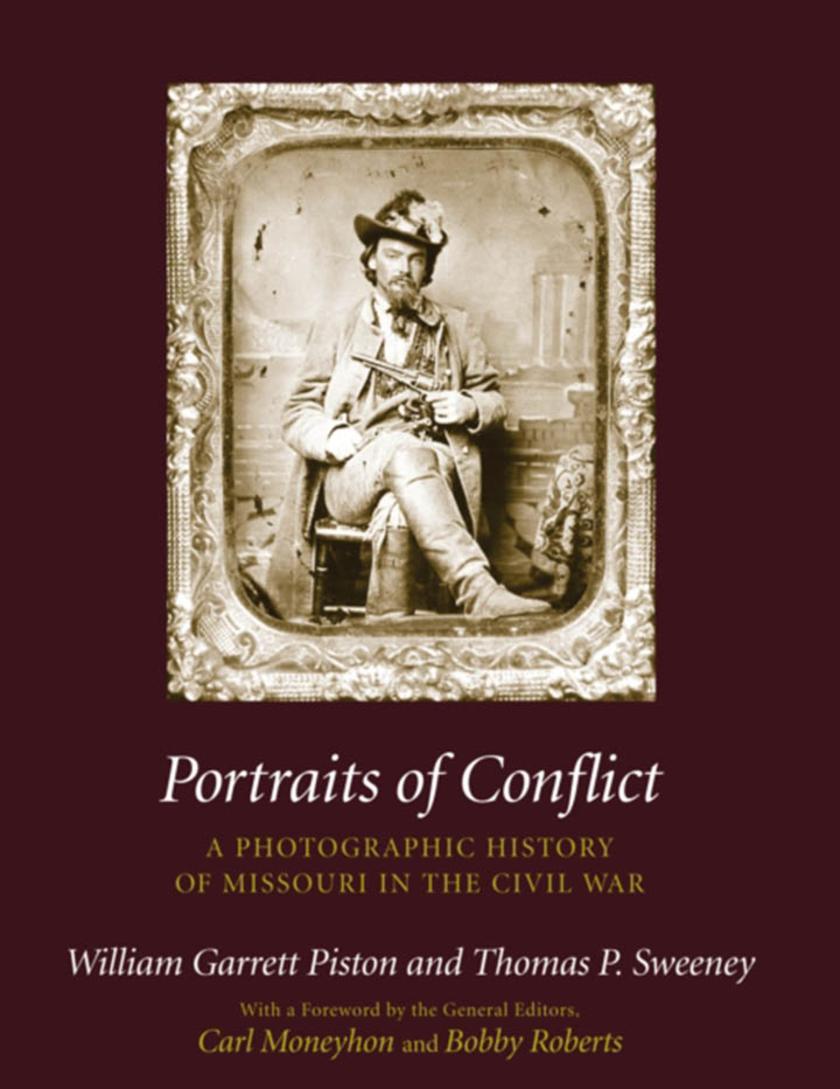
A deeply divided border state, heir to the "Bleeding Kansas" era, Missouri became the third most fought-over state in the war, following Virginia and Tennessee. Rich in resources and manpower, critical politically to both the Union and the Confederacy, it was the scene of conventional battles, river warfare, and cavalry raids. It saw the first combat by organized units of Native Americans and African Americans. It was also marked by guerrilla warfare of unparalleled viciousness. This volume, the ninth in the series, includes hundreds of photographs, many of them never before published. The authors provide text and commentary, organizing the photographs into chapters covering the origins of the war, its conventional and guerrilla phases, the war on the rivers, medicine (Sweeny's medical knowledge adds a great deal to this chapter and expands our knowledge of its practice in the west), the experiences of Missourians who served out of state, and the process of reunion in the postwar years.

Just Below the Line
¥372.78
With America on the brink of the largest number of older adults and persons with disabilities in the country's history, the deceleration in housing production during the first decade of the twenty-first century, and a continued reliance on conventional housing policies and practices, a perfect storm has emerged in the housing industry. The lack of fit between the existing housing stock and the needs of the U.S. population is growing pronounced. Just as housing needed to be retooled at the end of WWII, the American housing industry is in dire need of change today. The South-with its high rates of poverty, older residents, residents with disabilities, extensive rural areas, and out-of-date housing policies and practices-serves as a "canary in the coal mine" for the impending, nationwide housing crisis. Just Below the Line discusses how reworking the policies and practices of the housing industry in the South can serve as a model for the rest of the nation in meeting the physical and social needs of persons with disabilities and aging boomers. Policy makers, designers, builders, realtors, advocates, and housing consumers will be able to use this book to promote the production of equitable housing nationwide.Published in collaboration with the Fay Jones School of Architecture.
Prehistoric Future
¥370.82
One of the most admired artists of the twentieth century, Max Ernst was a proponent of Dada and founder of surrealism, known for his strange, evocative paintings and drawings. In Prehistoric Future, Ralph Ubl approaches Ernst like no one else has, using theories of the unconscious-surrealist automatism, Freudian psychoanalysis, the concept of history as trauma-to examine how Ernst's construction of collage departs from other modern artists. ?Ubl shows that while Picasso, Braque, and Man Ray used scissors and glue to create collages, Ernst employed techniques he himself had forged-rubbing and scraping to bring images forth onto a sheet of paper or canvas to simulate how a screen image or memory comes into the mind's view. In addition, Ernst scoured the past for obsolete scientific illustrations and odd advertisements to illustrate the rapidity with which time passes and to simulate the apprehension generated when rapid flows of knowledge turn living culture into artifact. Ultimately, Ubl reveals, Ernst was interested in the construction and phenomenology of both collective and individual modern history and memory. Shedding new light on Ernst's working methods and the reasons that his pieces continue to imprint themselves in viewers' memories, Prehistoric Future is an innovative work of critical writing on a key figure of surrealism.
How to Relax Without Getting the Axe
¥77.49
If business is a hamster wheel, what kind of hamster do you want to beThe one who runs all day long, huffing and puffing to keep things turningOr the sleek and happy rodent who works in the corner office down the hallStanley Bing has seen the way the big furballs operate in good times and bad.Core skills taught in this book:DelegationTelling people what to do and having them do it.AbsenceOperating from the digital vacuum.Abuse of statusIt can be done.DecisivenessEven when confused.EngagementBut only when necessary.Step off the wheel.Grab this book.And relax.
Arts of Wonder
¥353.16
"e;The fate of our times is characterized by rationalization and intellectualization and, above all, by 'the disenchantment of the world.'"e; Max Weber's statement remains a dominant interpretation of the modern condition: the increasing capabilities of knowledge and science have banished mysteries, leaving a world that can be mastered technically and intellectually. And though this idea seems empowering, many people have become disenchanted with modern disenchantment. Using intimate encounters with works of art to explore disenchantment and the possibilities of re-enchantment, Arts of Wonder addresses questions about the nature of humanity, the world, and God in the wake of Weber's diagnosis of modernity.?Jeffrey L. Kosky focuses on a handful of artists-Walter De Maria, Diller + Scofidio, James Turrell, and Andy Goldworthy-to show how they introduce spaces hospitable to mystery and wonder, redemption and revelation, and transcendence and creation. What might be thought of as religious longings, he argues, are crucial aspects of enchanting secularity when developed through encounters with these works of art. Developing a model of religion that might be significant to secular culture, Kosky shows how this model can be employed to deepen interpretation of the art we usually view as representing secular modernity. A thoughtful dialogue between philosophy and art, Arts of Wonder will catch the eye of readers of art and religion, philosophy of religion, and art criticism.

Mental Floss: What's the Difference?
¥72.70
Enlighten Up Already!MonetManetWho can even tell the differenceWell, with the help of the newest mental_floss tome, you can! Want to learn how to tell egg rolls from spring rolls, nuclear bombs from dirty nuclear bombs, or even how to tell an idiot from a moron (there's a real scientific difference)Piece of cake! Whether you're trying to impress your boss, your mother-in-law, attractive singles, or a pack of fourth graders (you know how they love semantics), mental_floss gives you all the tips and tricks to have you sounding like a genius.

Everybody Dies
¥84.16
Nobody likes to think about death, but the world would be awfully crowded without it.From YouTube sensation Ken Tanaka and actor David Ury, who was crushed by an ATM on AMC's Breaking Bad, comes Everybody Dies, a colorful story and delightful assemblage of games that makes it easy-even fun- to come to grips with mortality.

My Dead Dad Was in ZZ Top
¥83.03
An irreverent and ridiculous collection of "found" documents that will change everything you thought you knew about rock and roll, by the creator and star of Adult Swim's DelocatedJon Glaser delves into the unknown and highly secretive histories of dozens of rock and roll's greatest bands with sometimes spectacular, sometimes heartbreaking, always completely made-up results. In this book, you'll discover the following: Handwritten letters by Glaser's own father, which reveal him to be an early member of the band we now know as ZZ Top Old lyrics journals of, among others, Bob Dylan and David Bowie, featuring a collection of songs they probably hoped would never see the light of day A letter from Ringo to the rest of the Beatles, the week after their breakup, informing them of his plans to start a Beatles tribute band Formerly classified government documents with shocking revelations about the Navy SEALs and the Butthole Surfers Prince's set list for the bat mitzvah of Steven Spielberg's daughter Rachel, including the songs "Purple Oy Vey," "I Could Never Take the Place of Your Rabbi," and "When Doves Kvetch" My Dead Dad Was in ZZ Top is for everyone who loves absurd, made-up stories about their favorite bands. It's also for everyone who doesn't love absurd, made-up stories about their favorite real bands they just might not enjoy it as much.
Mirth of a Nation
¥90.54
A salvo of hilarity from that loose canon of American humor that Mirth of a Nation editor Michael J. Rosen has culled from some 1200 pages of brilliantly original works by our best contemporary humorists. This action-packed compilation of highlights includes Bobbie Ann Mason's stint at the La Bamba hotline, David Rakoff's insights on families, Andy Borowitz's memoir of Emily Dickinson (basically, she was a drunken jerk), and Michael Feldman's helpful (re)locating of the Midwest.
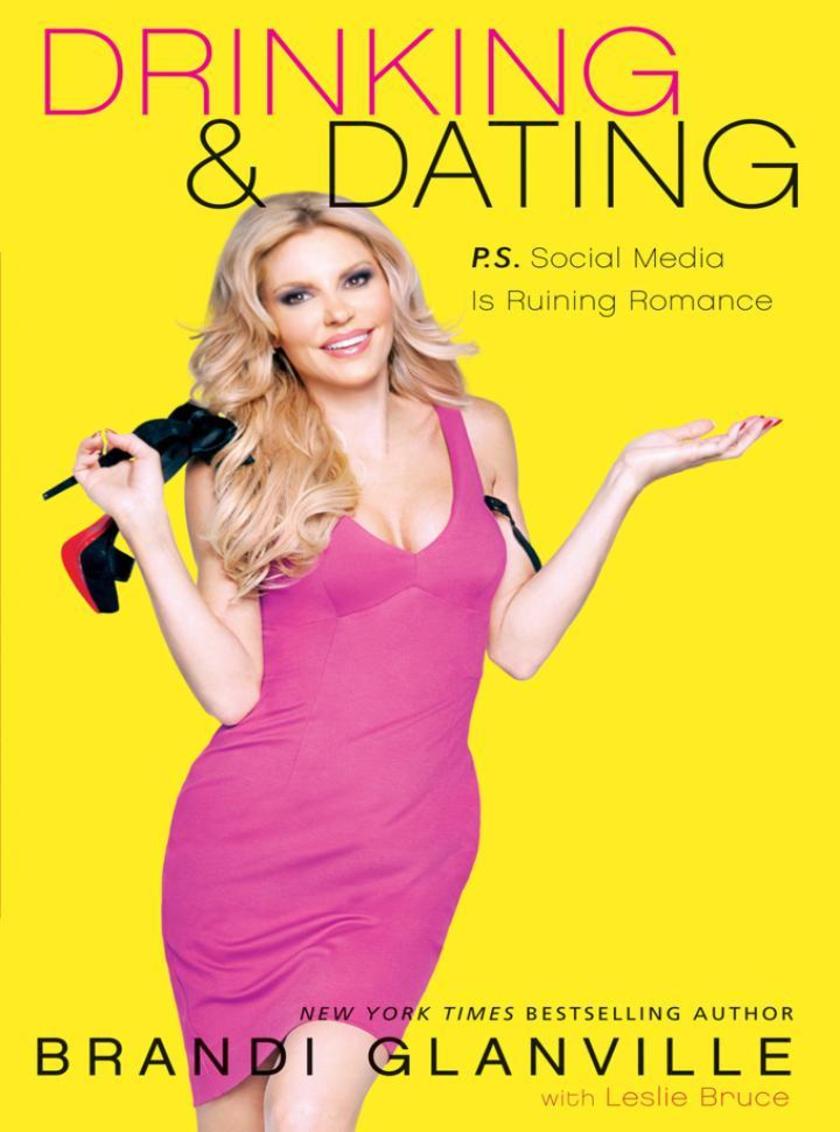
Drinking and Dating
¥83.03
Feisty, funny, and almost fabulous: A relationship guide and collection of outrageous dating mishaps from the unfiltered and often inappropriate Real Housewives of Beverly Hills star. Welcome to Drinking and Dating . . . and how social media is ruining us all. In this honest, hilarious, and wild tell-all, reality TV starlet and number one New York Times bestselling author Brandi Glanville chronicles her misadventures stumbling through today's dating world. From felons to social media blunders and bedroom esca-pades, Brandi withholds nothing as she writes about the perils of getting back . . . on her back. Despite Brandi's life in the public spotlight, she has the same difficulty meeting, trusting, and even dating new people as the rest of us—perhaps even more. She hopes to develop a lasting, loving relationship, but it's been a struggle. With her signature tell-it-like-it-is voice, the single mother of two brings you along on her journey as the controversial but charming former fashion model shows her all-too-human side, candidly sharing the humorous and unforeseen ups and downs—literally and figuratively—in her search for love. Brandi Glanville is surprising, vulnerable, and outspoken, and her take on dating after heartbreak—and life in general—is as unique as she is. Just like Brandi herself, Drinking and Dating is sexy, funny, and eyebrow-raising—not that she can raise hers. #Botox.
Dump 'Em
¥90.77
Everybody has that special someone in their life that they can't wait to get rid of. Whether it's a housekeeper, a therapist, or a personal trainer, the time comes when you have to pull the plug on the relationship.Featuring personal stories, useful *s, and interviews with experts such as Bob Harper from The Biggest Loser, funnyman Adam Carolla, and Michael Jackson's attorney, Thomas Mesereau, Dump 'Em is a practical guide for giving any bad relationship the boot. Jodyne L. Speyer provides a roadmap to finding your own way of saying "thanks, but no thanks." Written with honesty, empathy, and ruthless wit, Dump 'Em will teach you to conquer your fear of confrontation and master the art of the peaceful and permanent breakup. So what are you waiting forDump 'em!
Cubicle Warfare
¥90.77
Get revenge on all your annoying coworkers with this guide to 101 awesome office pranks Are your eyes beginning to glaze over from the fluorescent lights in your tiny cubicleHave you had one too many burnt cups of coffeeDoes the guy in the cube next to you insist on pencil-drumming while cranking "Hells Bells" and five-finger discounting your paper clipsIf your answer to any of these questions is yes, then you're in need of some Cubicle Warfare.With Cubicle Warfare, you'll never be bored at the office again. Make your coworkers jump, squeal, and run for cover with hilarious pranks such as the Paper Clip Chain, Bottomless Box, and the Sticky Note Office, as well as the more advanced Freezer Bomb, Chair Chaos, and Textless Keyboard. Even if you're not a prankster yourself, you can still use this riotous guide to recognize the warning signs and defend your desk from conniving coworkers. Bad days at the office will be a thing of the past.
Power Moves
¥90.90
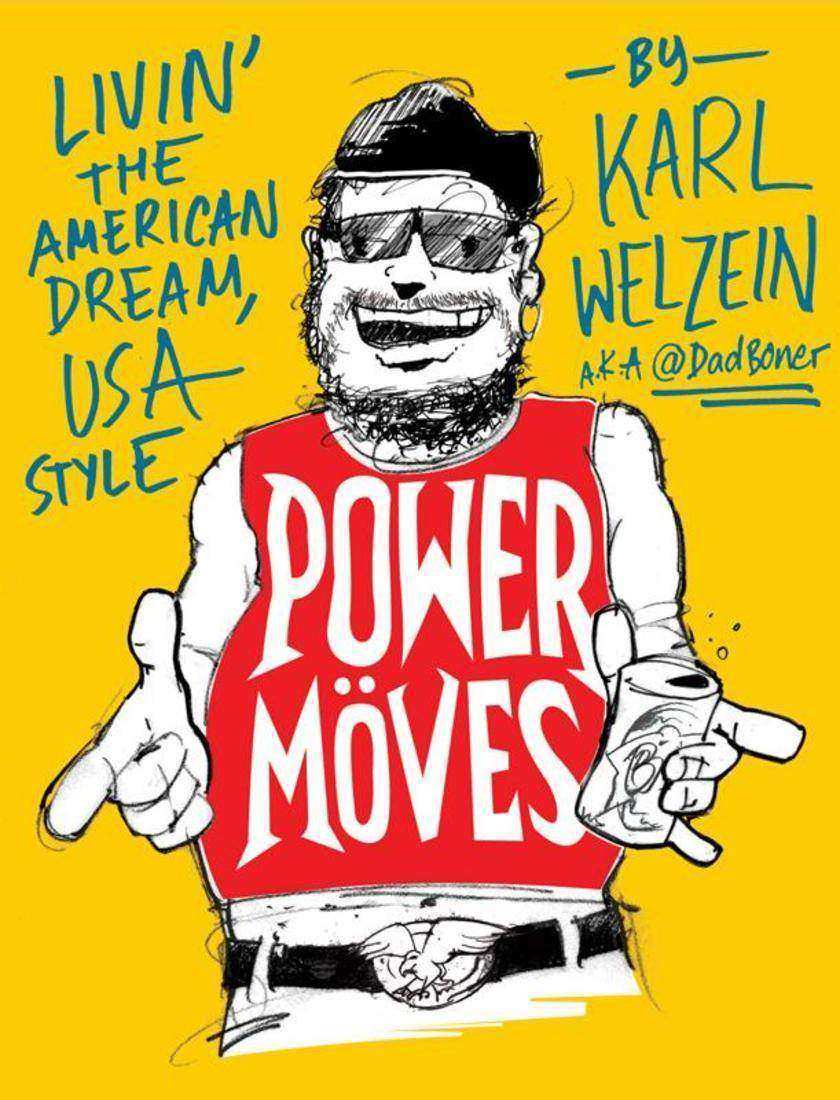
Meet Karl Welzein, aka Captain Karl, aka @DadBoner on Twitter—the Midwest's most beautiful loser Karl Welzein is really lookin' forward to the weekend, you guys. His job is a drag and his wife kicked him out, but that's okay. She wears granny panties and is constantly dropping wads of cash at Target, and his son cries all the time. Now his "temporary" roommate, Dave, ate all the Totino's pizza rolls. Again. Karl Welzein is sick of this. So sick of this. Power Moves chronicles the hilarious decline of Karl Welzein on his journey from life as a Dockers-and-golfshirt-wearing dad to a ponytailed party maniac who spits out his life philosophies like a modern-day Charles Bukowski (if he preferred to get drunk at Applebee's). A middle-aged Michigan native, Karl may be overweight, prone to questionable fashion and culinary choices, oblivious to his drinking problem, a poor excuse for an employee, obsessed with the restroom, and a terrible husband, father, and friend . . . but in his heart he means well. He's just like a lot of us—he loves the USA, Guy Fieri, bold flavors, Bob Seger, and thinking he looks jacked in a tight tee and Maui Jim sunglasses. Karl is an everyman and like no other man on the planet all at once. Inspired by the Twitter feed @DadBoner, Karl finally tells his full story. He shares his wisdom on fitness (1. Look at a pic of Stone Cold Steve Austin. 2. Do 'shups 'til you look like Stone Cold. 3. Cut off your sleeves), diet (Eat only the filling of the Taco Bell Beefy Melts for maximum flavor and low-carb health), fashion (Wearin' boots with jean shorts says "I like to keep cool, but I'm ready if the action gets hot"), work life (If you don't have a job that makes you want to kill yourself, you don't deserve to drink until you want to die), and the bliss of the perfect weekend (beers, brats, and babes' chest beefers). But above all, this is a story about America—the real red, white, and blue America of today. Welcome to Karl's world. Reading this book is the ultimate Power Move.


