


 购物车
购物车 个人中心
个人中心
Bird in the House
¥141.26
A Bird in the House is a series of eight interconnected short stories narrated by Vanessa MacLeod as she matures from a child at age ten into a young woman at age twenty. Wise for her years, Vanessa reveals much about the adult world in which she lives."e;Vanessa rebels against the dominance of age; she watches [her grandfather] imitate her aunt Edna; and her rage at times is such that she would gladly kick him. It takes great skill to keep this story within the expanding horizon of this young girl and yet make it so revealing of the adult world."e;-Atlantic"e;A Bird in the House achieves the breadth of scope which we usually associate with the novel (and thereby is as psychologically valid as a good novel), and at the same time uses the techniques of the short story form to reveal the different aspects of the young Vanessa."e; -Kent Thompson, The Fiddlehead"e;I am haunted by the women in Laurence's novels as if they really were alive-and not as women I've known, but as women I've been."e;-Joan Larkin, Ms. Magazine"e;Not since . . . To Kill a Mockingbird has there been a novel like this. It should not be missed by anyone who has a child or was a child."e;-Pittsburgh Post-GazetteOne of Canada's most accomplished writers, Margaret Laurence (1926-87) was the recipient of many awards including Canada's prestigious Governor General's Literary Award on two separate occasions, once for The Diviners.

Narration
¥147.15
Newly famous in the wake of the publication of her groundbreaking Autobiography of Alice B. Toklas, Gertrude Stein delivered her Narration lectures to packed audiences at the University of Chicago in 1935. Stein had not been back to her home country since departing for France in 1903, and her remarks reflect on the changes in American culture after thirty years abroad.In Stein's trademark experimental prose, Narration reveals the legendary writer's thoughts about the energy and mobility of the American people, the effect of modernism on literary form, the nature of history and its recording, and the inventiveness of the English language-in particular, its American variant. Stein also discusses her ambivalence toward her own literary fame as well as the destabilizing effect that notoriety had on her daily life. Restored to print for a new generation of readers to discover, these vital lectures will delight students and scholars of modernism and twentieth-century literature."e;Narration is a treasure waiting to be rediscovered and to be pirated by jolly marauders of sparkling texts."e;-Catharine Stimpson, NYU
Haiku for a Season / Haiku per una stagione
¥170.69
Andrea Zanzotto is one of the most important and acclaimed poets of postwar Italy. This collection of ninety-one pseudo-haiku in English and Italian-written over several months during 1984 and then revised slowly over the years-confirms his commitment to experimentation throughout his life. Haiku for a Season represents a multilevel experiment for Zanzotto: first, to compose poetry bilingually; and second, to write in a form foreign to Western poetry. The volume traces the life of a woman from youth to adulthood, using the seasons and the varying landscape as a mirror to reflect her growth and changing attitudes and perceptions. With a lifelong interest in the intersections of nature and culture, Zanzotto displays here his usual precise and surprising sense of the living world. These never-before-published original poems in English appear alongside their Italian versions-not strict translations but parallel texts that can be read separately or in conjunction with the originals. As a sequence of interlinked poems, Haiku for a Season reveals Zanzotto also as a master poet of minimalism. Zanzotto's recent death is a blow to world poetry, and the publication of this book, the last that he approved in manu*, will be an event in both the United States and in Italy.

Whale and the Reactor
¥188.35
"e;The questions he poses about the relationship between technical change and political power are pressing ones that can no longer be ignored, and identifying them is perhaps the most a nascent 'philosophy of technology' can expect to achieve at the present time."e;-David Dickson, New York Times Book Review"e;The Whale and the Reactor is the philosopher's equivalent of superb public history. In its pages an analytically trained mind confronts some of the most pressing political issues of our day."e;-Ruth Schwartz Cowan, Isis
Conceived in Doubt
¥200.12
Americans have long acknowledged a deep connection between evangelical religion and democracy in the early days of the republic. This is a widely accepted narrative that is maintained as a matter of fact and tradition-and in spite of evangelicalism's more authoritarian and reactionary aspects.In Conceived in Doubt, Amanda Porterfield challenges this standard interpretation of evangelicalism's relation to democracy and describes the intertwined relationship between religion and partisan politics that emerged in the formative era of the early republic. In the 1790s, religious doubt became common in the young republic as the culture shifted from mere skepticism toward darker expressions of suspicion and fear. But by the end of that decade, Porterfield shows, economic instability, disruption of traditional forms of community, rampant ambition, and greed for land worked to undermine heady optimism about American political and religious independence. Evangelicals managed and manipulated doubt, reaching out to disenfranchised citizens as well as to those seeking political influence, blaming religious skeptics for immorality and social distress, and demanding affirmation of biblical authority as the foundation of the new American national identity.As the fledgling nation took shape, evangelicals organized aggressively, exploiting the fissures of partisan politics by offering a coherent hierarchy in which God was king and governance righteous. By laying out this narrative, Porterfield demolishes the idea that evangelical growth in the early republic was the cheerful product of enthusiasm for democracy, and she creates for us a very different narrative of influence and ideals in the young republic.
How Life Began
¥229.55
The origin of life is a hotly debated topic. The Christian Bible states that God created the heavens and the Earth, all in about seven days roughly six thousand years ago. This episode in Genesis departs markedly from scientific theories developed over the last two centuries which hold that life appeared on Earth about 3.5 billion years ago in the form of bacteria, followed by unicellular organisms half a millennia later. It is this version of genesis that Alexandre Meinesz explores in this engaging tale of life's origins and evolution.?How Life Began elucidates three origins, or geneses, of life-bacteria, nucleated cells, and multicellular organisms-and shows how evolution has sculpted life to its current biodiversity through four main events-mutation, recombination, natural selection, and geologic cataclysm.?As an ecologist who specializes in algae, the first organisms to colonize Earth, Meinesz brings a refreshingly novel voice to the history of biodiversity and emphasizes here the role of unions in organizing life. For example, the ingestion of some bacteria by other bacteria led to mitochondria that characterize animal and plant cells, and the chloroplasts of plant cells.?As Meinesz charmingly recounts, life's grandeur is a result of an evolutionary tendency toward sociality and solidarity. He suggests that it is our cohesion and collaboration that allows us to solve the environmental problems arising in the decades and centuries to come. Rooted in the science of evolution but enlivened with many illustrations from other disciplines and the arts, How Life Began?intertwines the rise of bacteria and multicellular life with Vermeer's portrait of Antoni van Leeuwenhoek, the story of Genesis and Noah, Meinesz's son's early experiences with Legos, and his own encounters with other scientists. All of this brings a very human and humanistic tone to Meinesz's charismatic narrative of the three origins of life.?

On the Nature of Limbs
¥229.55
The most prominent naturalist in Britain before Charles Darwin, Richard Owen made empirical discoveries and offered theoretical innovations that were crucial to the proof of evolution. Among his many lasting contributions to science was the first clear definition of the term homology-"e;the same organ in different animals under every variety of form and function."e; He also graphically demonstrated that all vertebrate species were built on the same skeletal plan and devised the vertebrate archetype as a representation of the simplest common form of all vertebrates.Just as Darwin's ideas continue to propel the modern study of adaptation, so too will Owen's contributions fuel the new interest in homology, organic form, and evolutionary developmental biology. His theory of the archetype and his views on species origins were first offered to the general public in On the Nature of Limbs, published in 1849. It reemerges here in a facsimile edition with introductory essays by prominent historians, philosophers, and practitioners from the modern evo-devo community.
Freudian Robot
¥247.21
The identity and role of writing has evolved in the age of digital media. But how did writing itself make digital media possible in the first placeLydia H. Liu offers here the first rigorous study of the political history of digital writing and its fateful entanglement with the Freudian unconscious.Liu's innovative analysis brings the work of theorists and writers back into conversation with one another to document significant meetings of minds and disciplines. She shows how the earlier avant-garde literary experiments with alphabetical writing and the word-association games of psychoanalysis contributed to the mathematical making of digital media. Such intellectual convergence, she argues, completed the transformation of alphabetical writing into the postphonetic, ideographic system of digital media, which not only altered the threshold of sense and nonsense in communication processes but also compelled a new understanding of human-machine interplay at the level of the unconscious.Ranging across information theory, cybernetics, modernism, literary theory, neurotic machines, and psychoanalysis, The Freudian Robot rewrites the history of digital media and the literary theory of the twentieth century.

Mapping the Nation
¥247.21
In the nineteenth century, Americans began to use maps in radically new ways. For the first time, medical men mapped diseases to understand and prevent epidemics, natural scientists mapped climate and rainfall to uncover weather patterns, educators mapped the past to foster national loyalty among students, and Northerners mapped slavery to assess the power of the South. After the Civil War, federal agencies embraced statistical and thematic mapping in order to profile the ethnic, racial, economic, moral, and physical attributes of a reunified nation. By the end of the century, Congress had authorized a national archive of maps, an explicit recognition that old maps were not relics to be discarded but unique records of the nation's past.All of these experiments involved the realization that maps were not just illustrations of data, but visual tools that were uniquely equipped to convey complex ideas and information. In Mapping the Nation, Susan Schulten charts how maps of epidemic disease, slavery, census statistics, the environment, and the past demonstrated the analytical potential of cartography, and in the process transformed the very meaning of a map.Today, statistical and thematic maps are so ubiquitous that we take for granted that data will be arranged cartographically. Whether for urban planning, public health, marketing, or political strategy, maps have become everyday tools of social organization, governance, and economics. The world we inhabit-saturated with maps and graphic information-grew out of this sea change in spatial thought and representation in the nineteenth century, when Americans learned to see themselves and their nation in new dimensions.
Eating the Enlightenment
¥247.21
Eating the Enlightenment offers a new perspective on the history of food, looking at writings about cuisine, diet, and food chemistry as a key to larger debates over the state of the nation in Old Regime France. Embracing a wide range of authors and scientific or medical practitioners-from physicians and poets to philosophes and playwrights-E. C. Spary demonstrates how public discussions of eating and drinking were used to articulate concerns about the state of civilization versus that of nature, about the effects of consumption upon the identities of individuals and nations, and about the proper form and practice of scholarship. En route, Spary devotes extensive attention to the manufacture, trade, and eating of foods, focusing upon coffee and liqueurs in particular, and also considers controversies over specific issues such as the chemistry of digestion and the nature of alcohol. Familiar figures such as Fontenelle, Diderot, and Rousseau appear alongside little-known individuals from the margins of the world of letters: the draughts-playing cafe owner Charles Manoury, the "e;Turkish envoy"e; Soliman Aga, and the natural philosopher Jacques Gautier d'Agoty. Equally entertaining and enlightening, Eating the Enlightenment will be an original contribution to discussions of the dissemination of knowledge and the nature of scientific authority.

Divas in the Convent
¥253.10
When eight-year-old Lucrezia Orsina Vizzana (1590-1662) entered one of the preeminent convents in Bologna in 1598, she had no idea what cloistered life had in store for her. Thanks to clandestine instruction from a local maestro di cappella-and despite the church hierarchy's vehement opposition to all convent music-Vizzana became the star of the convent, composing works so thoroughly modern and expressive that a recent critic described them as "e;historical treasures."e; But at the very moment when Vizzana's works appeared in 1623-she would be the only Bolognese nun ever to publish her music-extraordinary troubles beset her and her fellow nuns, as episcopal authorities arrived to investigate anonymous allegations of sisterly improprieties with male members of their order.?Craig A. Monson retells the story of Vizzana and the nuns of Santa Cristina to elucidate the role that music played in the lives of these cloistered women. Gifted singers, instrumentalists, and composers, these nuns used music not only to forge links with the community beyond convent walls, but also to challenge and circumvent ecclesiastical authority. Monson explains how the sisters of Santa Cristina-refusing to accept what the church hierarchy called God's will and what the nuns perceived as a besmirching of their honor-fought back with words and music, and when these proved futile, with bricks, roof tiles, and stones. These women defied one Bolognese archbishop after another, cardinals in Rome, and even the pope himself, until threats of excommunication and abandonment by their families brought them to their knees twenty-five years later. By then, Santa Cristina's imaginative but frail composer literally had been driven mad by the conflict.?Monson's fascinating narrative relies heavily on the words of its various protagonists, on both sides of the cloister wall, who emerge vividly as imaginative, independent-minded, and not always sympathetic figures. In restoring the musically gifted Lucrezia Orsina Vizzana to history, Monson introduces readers to the full range of captivating characters who played their parts in seventeenth-century convent life.?
History of the Federal Reserve, Volume 1
¥265.87
Allan H. Meltzer's monumental history of the Federal Reserve System tells the story of one of America's most influential but least understood public institutions. This first volume covers the period from the Federal Reserve's founding in 1913 through the Treasury-Federal Reserve Accord of 1951, which marked the beginning of a larger and greatly changed institution.To understand why the Federal Reserve acted as it did at key points in its history, Meltzer draws on meeting minutes, correspondence, and other internal documents (many made public only during the 1970s) to trace the reasoning behind its policy decisions. He explains, for instance, why the Federal Reserve remained passive throughout most of the economic decline that led to the Great Depression, and how the Board's actions helped to produce the deep recession of 1937 and 1938. He also highlights the impact on the institution of individuals such as Benjamin Strong, governor of the Federal Reserve Bank of New York in the 1920s, who played a key role in the adoption of a more active monetary policy by the Federal Reserve. Meltzer also examines the influence the Federal Reserve has had on international affairs, from attempts to build a new international financial system in the 1920s to the Bretton Woods Agreement of 1944 that established the International Monetary Fund and the World Bank, and the failure of the London Economic Conference of 1933.Written by one of the world's leading economists, this magisterial biography of the Federal Reserve and the people who helped shape it will interest economists, central bankers, historians, political scientists, policymakers, and anyone seeking a deep understanding of the institution that controls America's purse strings."e;It was 'an unprecedented orgy of extravagance, a mania for speculation, overextended business in nearly all lines and in every section of the country.' An Alan Greenspan rumination about the irrational exuberance of the late 1990sTry the 1920 annual report of the board of governors of the Federal Reserve. . . . To understand why the Fed acted as it did-at these critical moments and many others-would require years of study, poring over letters, the minutes of meetings and internal Fed documents. Such a task would naturally deter most scholars of economic history but not, thank goodness, Allan Meltzer."e;-Wall Street Journal"e;A seminal work that anyone interested in the inner workings of the U. S. central bank should read. A work that scholars will mine for years to come."e;-John M. Berry, Washington Post"e;An exceptionally clear story about why, as the ideas that actually informed policy evolved, things sometimes went well and sometimes went badly. . . . One can only hope that we do not have to wait too long for the second installment."e;-David Laidler, Journal of Economic Literature"e;A thorough narrative history of a high order. Meltzer's analysis is persuasive and acute. His work will stand for a generation as the benchmark history of the world's most powerful economic institution. It is an impressive, even awe-inspiring achievement."e;-Sir Howard Davies, Times Higher Education Supplement
Stations in the Field
¥329.62
When we think of sites of animal research that symbolize modernity, the first places that come to mind are grand research institutes in cities and near universities that house the latest in equipment and technologies, not the surroundings of the bird's nest, the octopus's garden in the sea, or the parts of inland lakes in which freshwater plankton reside. Yet during the late nineteenth and early twentieth centuries, a group of zoologists began establishing novel, indeed modern ways of studying nature, propagating what present-day ecologists describe as place-based research.Raf De Bont's Stations in the Field focuses on the early history of biological field stations and the role these played in the rise of zoological place-based research. Beginning in the 1870s, a growing number of biological field stations were founded-first in Europe and later elsewhere around the world-and thousands of zoologists received their training and performed their research at these sites. Through case studies, De Bont examines the material and social context in which field stations arose, the actual research that was produced in these places, the scientific claims that were developed there, and the rhetorical strategies that were deployed to convince others that these claims made sense. From the life of parasitic invertebrates in northern France and freshwater plankton in Schleswig-Holstein, to migratory birds in East Prussia and pest insects in Belgium, De Bont's book is fascinating tour through the history of studying nature in nature.

The Official Narnia Cookbook
¥65.33
The only OFFICIAL Narnia cookbook! Explore over 60 illustrated recipes inspired by the classic fantasy series The Chronicles of Narnia. Illustrations in this ebook appear in vibrant full color on a full-color ebook device, and in rich black-and-white on all other devices.From the White Witch's spellbinding Turkish Delight to the centaurs' mouthwatering oatcakes and the Dryads' favorite gooseberry fools, each recipe in The OFFICIAL Narnia Cookbook is a culinary tribute to the overwhelming influence The Chronicles of Narnia has had on generations of readers. With anecdotes by C. S. Lewis's stepson, Douglas Gresham, and illustrations by the original artist, Pauline Baynes, this is a delicious way to expand your journey into Narnia whether you are a fan of the books or like to cook and read about food.Enjoy these treats with any or all of the seven books from The Chronicles of Narnia The Magician's Nephew; The Lion, the Witch and the Wardrobe; The Horse and His Boy; Prince Caspian; The Voyage of the Dawn Treader; The Silver Chair; and The Last Battle.
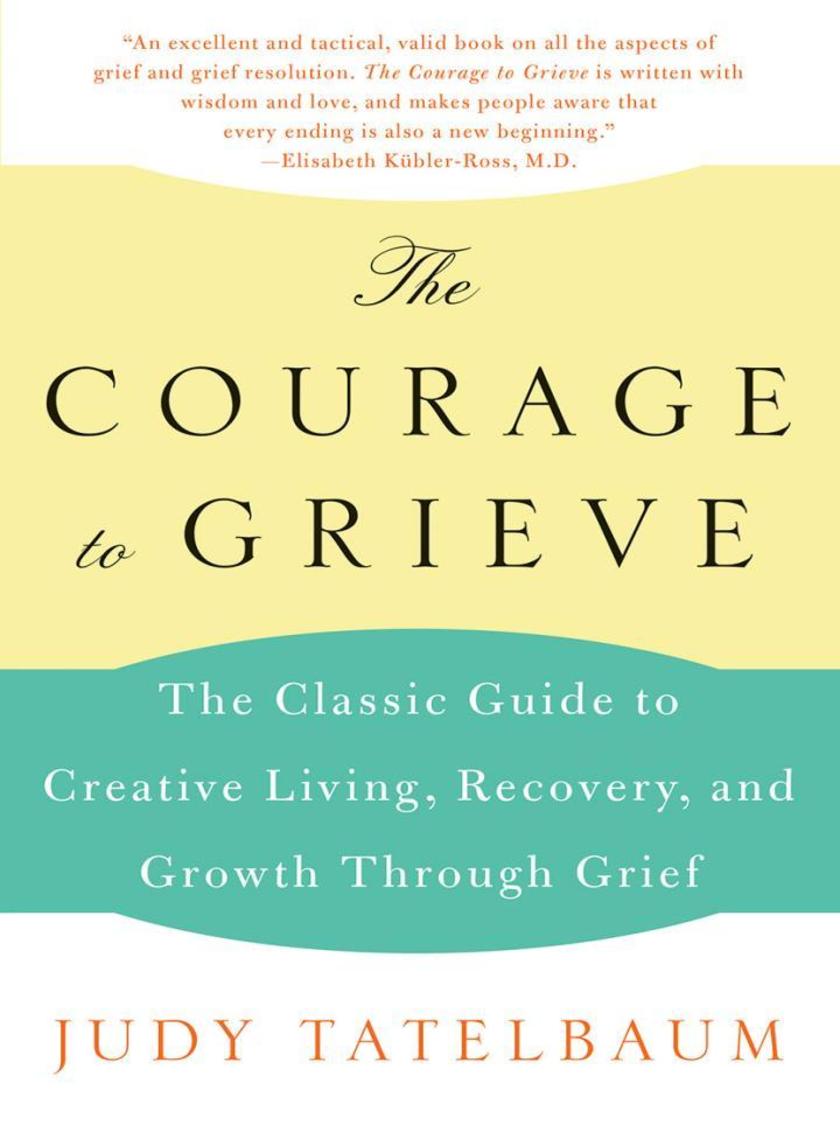
The Courage to Grieve
¥88.56
This unusual self-help book about surviving grief offers the reader comfort and inspiration. Each of us will face some loss, sorrow and disappointment in our lives, and The Courage to Grieve provides the specific help we need to enable us to face our grief fully and to recover and grow from the experience. Although the book emphasizes the response to the death of a loved one, The Courage to Grieve can help with every kind of loss and grief.Judy Tatelbaum gives us a fresh look at understanding grief, showing us that grief is a natural, inevitable human experience, including all the unexpected, intense and uncomfortable emotions like sorrow, guilt, loneliness, resentment, confusion, or even the temporary loss of the will to live. The emphasis is to clarify and offer help, and the tone is spiritual, optimistic, creative and easy to understand. Judy Tatelbaum provides excellent advice on how to help oneself and others get through the immediate experience of death and the grief that follows, as well as how to understand the special grief of children. Particularly useful are the techniques for completing or "finishing" grief--counteracting the popular misconception that grief never ends. The Courage to Grieve shows us how to live life with the ultimate courage: not fearing death. This book is about so much more than death and grieving it is about life and joy and growth.

The Pocket Enneagram
¥55.33
The Enneagram -- a centuries-old psychological system -- is catching fire across the country, being applied to everything from career management to relationships to conflict resolution. Now nationally acclaimed Enneagram expert and bestselling author Helen Palmer condenses the ideas from her popular books into a compact guide that will appeal to newcomers as well as to longtime Enneagram enthusiasts, with its succinct presentation of the nine types, how to optimize them, and how the different types relate to one author.

Blackstone's Bride
¥109.31
California rancher Jarrod Blackstone is stunned when Abby Miller appears on his doorstep to deliver his sister's orphaned children. But even more surprising and disturbing are the sparks that ignite between the rugged bachelor and the and the independent beauty. From the author of Reckless Destiny and Winter Bride.

Devil to Pay
¥21.51
Blake Turner had it all until a demon decided to take residence in his soul. Plagued with constant black outs and a trail of dead bodies in his wake, Blake thinks vampire Elise is his best chance at ending the nightmare. It's just too bad he's fallen in love with the gorgeous vamp right before he has to die; Featuring characters from New York Times bestselling author Jeaniene Frost's Night Huntress world. (Originally appeared in Four Dukes and a Devil anthology)

Avon
¥107.82
Previously published in the print anthologies Five Gold Rings and A Historical Christmas Present.Brinna, a twelfth-century scullery maid, gets the chance to play a lady and win the true love of an impoverished lord. Her fate changes when a new guest, Lady Joan, arrives at the castle. Desperate to escape her arranged marriage to Royce of Thurleah, Joan suggests that look-alike Brinna take her place at the Christmas festivities. Suddenly, Brinna finds herself being wooed by a true gentleman, getting perhaps the best Christmas present of all: a new life. A classic novella from New York Times bestselling author Lynsay Sands.
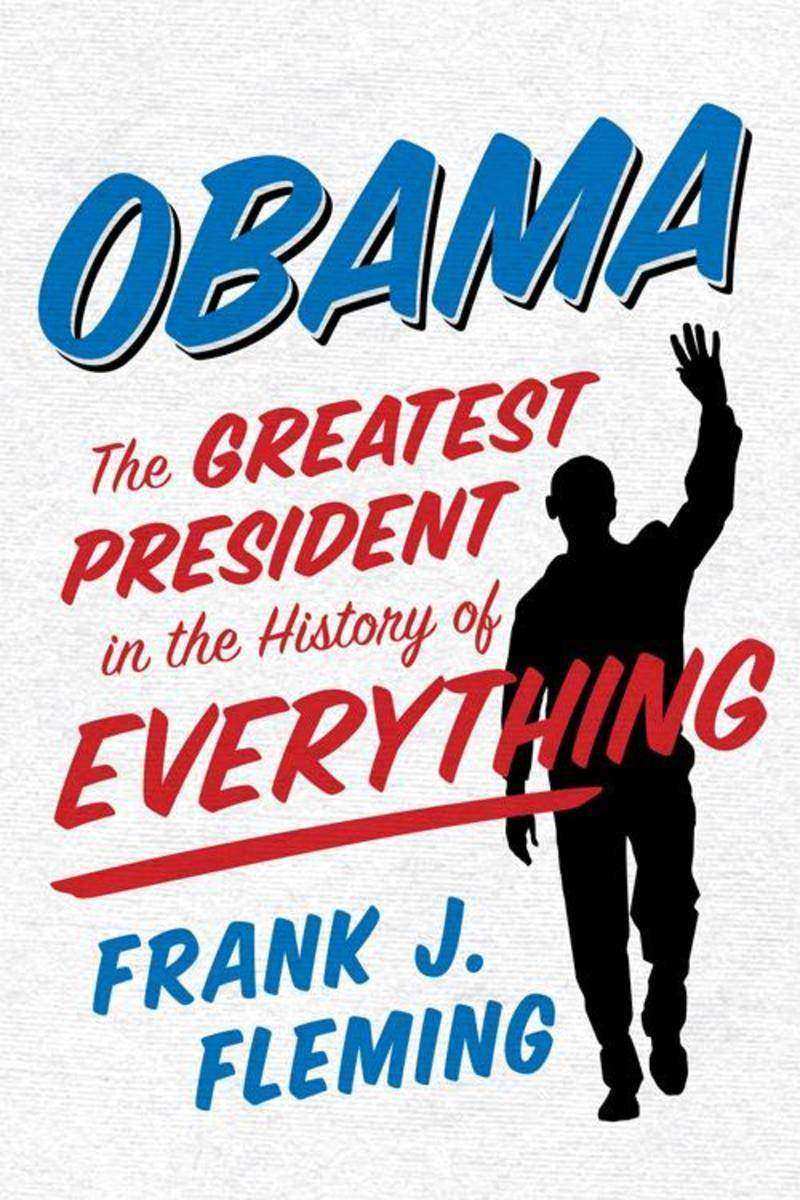
Broadside e-books
¥109.31
It's hard to remember the dark days before 2008. It was a time of hatred, racism, violence, obese children, war, untaxed rich people, and incandescent light bulbs -- perhaps the worst days we had ever seen. And at the heart of it all was a thuggish, thoughtless man, George W. Bush, who lashed out angrily at whatever he didn't understand -- and he understood so very little. Then there was that laugh of his -- that horrible snicker that mocked everything intelligent and nuanced. Also, he looked like a chimp. It seemed like the end for the United States of America. We would crumble in the hands of vicious, superstitious dimwits determined to hunt "ter'ists" or other figments of Bush's rotten mind. There was nothing left to do but head to Whole Foods to prepare our organic, sustainable, fair-trade last meal as the country ended around us. Despair had overtaken us, and we wondered aloud whether we could ever feel hope again. And then a man emerged who firmly answered, "Yes we can!" Oh, but Barack Obama was no mere man. He was a paragon of intelligence and civilized society. A savior to the world's depressed. A lightbringer. A genius thinking thoughts the common man could never hope to comprehend. And his words -- his beautiful words read from crystal panes -- reached down to our souls and told us all would be well. With the simple act of casting a ballot for Barack Obama, we could make the world an immeasurably better place -- a world of peace, of love, of understanding, of unicorns, of rainbows, of expanded entitlements. This was his promise. And now, having had him as president for more than two years, we can say without reservation that he has delivered all his promises and more and is the best president this country -- or any country -- has ever had or could even imagine to have.

Putting Education to Work
¥78.32
With its revolutionary work-study program and focus on character development, the Cristo Rey Network's values-based education model has presented a new vision in school administration and reinvented urban education. In Putting Education to Work, the inspiring Cristo Rey story is told from its humble beginnings in an inner-city Chicago neighborhood to its current network of 28 participating schools and 9,000 students in underserved communities across the nation, boasting an unprecedented 100 percent college acceptance rate. Through amazing stories of hardship and transformation, the effectiveness of the Cristo Rey method is brought to life, embodied by lifelong learners who can now reimagine their futures, unleash their inner potential, and fulfill their hopes and dreams by preparing for success in college and in life.Proceeds from this book will go toward the Cristo Rey Network's mission of providing quality Catholic college preparatory education to young people who live in urban communities with limited educational options. By purchasing this book, you become part of the Network, joining schools, employers, university partners, and other benefactors in providing the opportunity for college success to thousands of students across America today.


