


 购物车
 个人中心


Ice Shear
¥84.16
As a cop on the night shift in Hopewell Falls, New York, June Lyons drives drunks home and picks up the doughnuts. A former FBI agent, she left the Bureau when her husband died, and now she and her young daughter are back in upstate New York, living with her father, the town's retired chief of police.When June discovers a young woman's body impaled on an ice shear in the frozen Mohawk River, news of the murder spreads fast; the dead girl was the daughter of a powerful local congresswoman, and her troubled youth kept the gossips busy. Though June was born and raised in Hopewell Falls, the local police see her as an interloper—resentment that explodes in anger when the FBI arrive and deputize her to work on the murder investigation. But June may not find allies among the feds. The agent heading the case is someone from her past—someone she isn't sure she can trust.As June digs deeper, her already tumultuous murder case turns red-hot when it leads to a notorious biker gang and a meth lab hidden in plain sight—and an unmistakable sign that the river murder won't be the last.
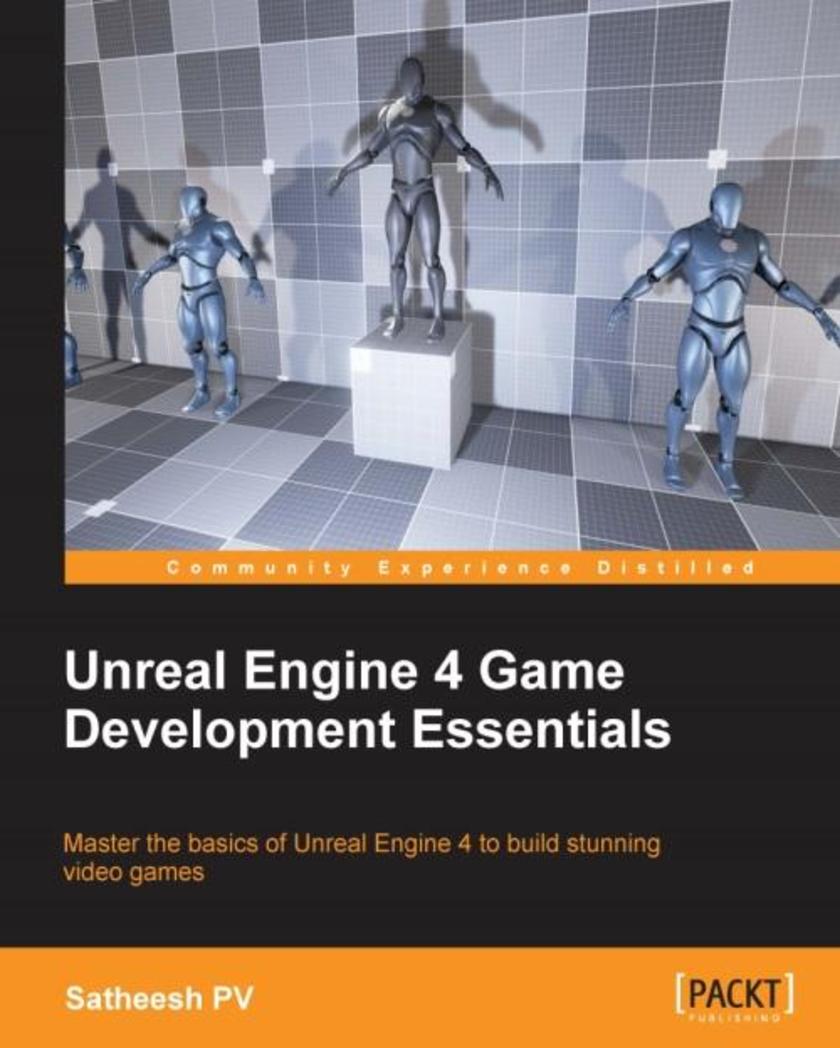
Unreal Engine 4 Game Development Essentials
¥80.65
Master the basics of Unreal Engine 4 to build stunning video gamesAbout This BookGet to grips with the user interface of Unreal Engine 4 and find out more about its various robust featuresCreate dream video games with the help of the different tools Unreal Engine 4 offersCreate video-games and fully utilize the power of Unreal Engine 4 to bring games to life through this step-by-step guideWho This Book Is ForIf you have a basic understanding of working on a 3D environment and you are interested in video game development, then this book is for you. A solid knowledge of C++ will come in handy.What You Will LearnDownload both the binary and source version of Unreal Engine 4 and get familiar with the UIGet to know more about the Material Editor and how it worksAdd a post process to the scene and alter it to get a unique look for your sceneAcquaint yourself with the unique and exclusive feature of Unreal Engine 4—BlueprintsFind out more about Static and Dynamic lighting and the difference between various lightsUse Matinee to create cut scenesCreate a health bar for the player with the use of Unreal Motion Graphics (UMG)Get familiar with Cascade Particle EditorIn DetailUnreal Engine 4 is a complete suite of game development tools that gives you power to develop your game and seamlessly deploy it to iOS and Android devices. It can be used for the development of simple 2D games or even stunning high-end visuals. Unreal Engine features a high degree of portability and is a tool used by many game developers today.This book will introduce you to the very popular Unreal 4 engine with hands-on instructions to build stunning video games. You will begin by creating a new project or prototype by learning the essentials of Unreal engine, then you’ll get an understanding of how the World Browser can help to improve performance of our game. Next, we’ll create a level of detailed models and materials to further improve performance. After that, you’ll see how to import textures, create different materials, and see what materials can do in terms of post-processing. Finally, you will get acquainted with the Paper2D tool and the blueprints system to further increase our project's performance with Engine’s scalability tools.Style and approachThis step-by-step guide will help you gain practical knowledge about Unreal Engine through detailed de*ions of all the tools offered by Unreal Engine.
Mapbox Cookbook
¥71.93
Over 35 recipes to design and implement uniquely styled maps using the Mapbox platform About This Book Design and develop beautifully styled maps using TileMill, MapBox Studio, and CartoCSS Get to grips with the mapbox.js and Leaflet to create visually stunning web and mobile applications An easy-to-follow, quick reference guide to integrate powerful APIs and services like Foursquare, Fusion Tables, Geoserver, and CartoDB to populate your maps Who This Book Is For If you are a web developer seeking for GIS expertise on how to create, style, and publish interactive and unique styled maps, then this book is for you. Basic knowledge of programming and java*s is assumed. What You Will Learn Get accustomed to the MapBox Editor to visually style your maps Learn everything about CartoCSS, and how it will help you fine tune your styled maps Use MapBox Studio and Tilemill to generate your own tiles and vector maps Publish your maps using a variety of technologies like node.js, PHP, and Geoserver Integrate with third party APIs and services to populate your maps with public or private data Create many different map visualization styles like choropleth and heat maps, add interactivity, and even learn how to animate data over time Work with many different data formats and external services to create robust maps Learn to use MapBox GL to create a mobile application In Detail Maps are an essential element in today’s location aware applications. Right from displaying earth surface information to creating thematic maps displaying plethora of information, most of the developers lack the necessary knowledge to create customizable maps with combination of various tools and libraries. The MapBox platform is one such platform which offers all the tools and API required to create and publish a totally customizable map. Starting with building your first map with the online MapBox Editor, we will take you all the way to building advanced web and mobile applications with totally customizable map styles. Through the course of chapters we’ll learn CartoCSS styling language and understand the various components of MapBox platform and their corresponding JavaScript API. In the initial few chapters we will dive deeper into the TileMill and MapBox Studio components of MapBox and use them to generate custom styled map tiles and vector maps. Furthermore, we will publish these custom maps using PHP, node.js and third party tools like Geoserver. We’ll also learn to create different visualizations and map styles like a choropleth map, a heat map and add user interactivity using a UFTGrid. Moving on, we dive into advanced concepts and focus on integration with third party services like Foursquare, Google FusionTables, CartoDB, and Torque to help you populate and even animate your maps. In the final chapter we’ll learn to use the Mapbox SDK to create and publish interactive maps for the iOS platform. By the end of this book, you will learn about MapBox GL and how to create a fully functional, location-aware mobile app, using the maps styles created in the recipes. Style and approach An easy-to-use recipe driven book that will not just serve code samples, but also explains all the theory and concepts required to fully understand each recipe.
Learning Swift - Second Edition
¥71.93
Develop the skills required to create compelling, maintainable, and robust iOS and OS X apps with Swift About This Book Write expressive, understandable, and maintainable Swift 2 code with this hands-on tutorial Unveil the complex underpinnings of Swift to turn your app ideas into reality This book is packed with real-life examples to help you implement concepts as you learn Who This Book Is For If you are looking to build iOS or OS X apps using the most modern technology, this book is ideal for you. You will find this book especially useful if you are new to programming or if you are yet to develop for iOS or OS X. No prior programming exposure is required. What You Will Learn Form a solid understanding of the Swift 2 language Get to know the practical aspects of how a computer program actually works Understand the paradigms used by Apple’s frameworks so you are not intimidated by them Utilize the vast resources written in Objective-C to better inform your Swift programming Develop a basic portfolio of Swift code by learning the critical concepts Experience both object-oriented and functional programming Get to know the new coding techniques made available by Swift 2 Discover resources to ensure you never stop becoming a better developer In Detail Swift is Apple’s new programming language and the future of iOS and OS X app development. It is a high-performance language that feels like a modern *ing language. On the surface, Swift is easy to jump into, but it has complex underpinnings that are critical to becoming proficient at turning an idea into reality. This book is an approachable, step-by-step introduction into programming with Swift for everyone. It begins by giving you an overview of the key features through practical examples and progresses to more advanced topics that help differentiate the proficient developers from the mediocre ones. It covers important concepts such as Variables, Optionals, Closures, Generics, and Memory Management. Mixed in with those concepts, it also helps you learn the art of programming such as maintainability, useful design patterns, and resources to further your knowledge. This all culminates in writing a basic iOS app that will get you well on your way to turning your own app ideas into reality. Style and approach This is an approachable, step-by-step guide to programming in Swift 2. Each topic is separated into compressible sections that are full of practical examples and easy-to-understand explanations. Each section builds on the previous topics so you can develop a proficient and comprehensive understanding of app development in Swift 2.
Drupal 8 Theming with Twig
¥80.65
Master Drupal 8’s new Twig templating engine to create fun and fast websites with simple steps to help you move from concept to completion About This Book Create beautiful responsive Drupal 8 websites using Twig Quickly master theme administration, custom block layouts, views, and the Twig template structure A step-by-step guide to the most common approaches in web design Who This Book Is For This book is intended for front-end developers, designers, and anyone who is generally interested in learning all the new features of Drupal 8 theming. Discover what has changed from Drupal 7 to Drupal 8 and immerse yourself in the new Twig PHP templating engine. Familiarity with HTML5, CSS3, JavaScript, and the Drupal Admin interface would be helpful. Prior experience with setting up and configuring a standalone development environment is required as we will be working with PHP and MySQL. What You Will Learn Navigate the Drupal 8 Admin interface Build custom block layouts with reusable and fieldable blocks Create subthemes based on the Bartik and Classy base themes Construct a responsive theme with Twitter Bootstrap Work with the new Twig PHP templating engine Configure Drupal for Twig debugging Enable preprocessing of Twig variables Develop a theme from scratch following a step-by-step project outline In Detail Drupal 8 is an open source content management system and powerful framework that helps deliver great websites to individuals and organizations, including non-profits, commercial, and government around the globe. This new release has been built on top of object-oriented PHP and includes more than a handful of improvements such as a better user experience, cleaner HTML5 markup, a new templating engine called Twig, multilingual capabilities, new configuration management, and effortless content authoring. Drupal 8 will quickly become the new standard for deploying content to both the web and mobile applications. However, with so many new changes, it can quickly become overwhelming knowing where to start and how to quickly. Starting from the bottom up, we will install, set up, and configure Drupal 8. We’ll navigate the Admin interface so you can learn how to work with core themes and create new custom block layouts. Walk through a real-world project to create a Twig theme from concept to completion while adopting best practices to implement CSS frameworks and JavaScript libraries. We will see just how quick and easy it is to create beautiful, responsive Drupal 8 websites while avoiding the common mistakes that many front-end developers make. Style and approach Drupal 8 Theming with Twig is intended for front-end developers, designers, and anyone who is generally interested in learning all the new features of Drupal 8 theming. Discover what has changed from Drupal 7 to Drupal 8 and immerse yourself in the new Twig PHP templating engine. Familiarity with HTML5, CSS3, JavaScript, and the Drupal Admin interface would be helpful. Prior experience with setting up and configuring a standalone development environment is required as we will be working with PHP and MySQL.
Mastering JBoss Drools 6
¥90.46
Discover the power of Drools 6 and Business Rules for developing complex scenarios in your applications About This Book Implement and model different rules using the DRL full syntax Model complex business decisions and domain models in order to automate and improve your operational decisions with the Drools framework A practical, fast-paced, hands-on guide to help you use the different components provided by the Drools Rule Engine Who This Book Is For This book is for Java developers and architects who need to have a deep understanding of how to create or integrate your applications with the Drools Rules Framework. The book assumes that you know the Java language well and also have experience with some widely used frameworks, such as Spring. You should also know the basics of Maven-based applications. What You Will Learn Automate your application’s decisions, such as promotion applying, discount policies, fraud detection, and more. Quickly get started with writing your first rules using the DRL full syntax. Discover the power of the new syntax components of the rule language. Define inferences in your business rules to simplify complex decisions. Write decision tables, templates,domain-specific languages, and scorecards, and learn how to map them to the Drools framework. Harness the full operational power of Drools through all of its configuration points. Use Drools configurations and architectures for different environments and scenarios. In Detail Mastering JBoss Drools 6 will provide you with the knowledge to develop applications involving complex scenarios. You will learn how to use KIE modules to create and execute Business Rules, and how the PHREAK algorithm internally works to drive the Rule Engine decisions. This book will also cover the relationship between Drools and jBPM, which allows you to enrich your applications by using Business Processes. You will be briefly introduced to the concept of complex event processing (Drools CEP) where you will learn how to aggregate and correlate your data based on temporal conditions. You will also learn how to define rules using domain-specific languages, such as spreadsheets, database entries, PMML, and more. Towards the end, this book will take you through the integration of Drools with the Spring and Camel frameworks for more complex applications. Style and approach Approached from a developer’s perspective, the book teaches you all the advanced concepts of Business Rules applicable examples with helpful screenshots, diagrams, tutorials, and examples.
Mastering Cross-Platform Development with Xamarin
¥80.65
Master the skills required to steer cross-platform applications from drawing board to app store(s) using Xamarin About This Book Develop your Xamarin development skills with this comprehensive guide on various patterns and features so you can create elegant and high-quality applications Create adaptive user interfaces on separate platforms without compromising the user experience and platform identity Implement application lifecycle management concepts to manage and finalize cross-platform projects and efficiently collaborate with others Who This Book Is For This book is ideal for those who want to take their entry–level Xamarin mobile development skills to the next level to become the go-to person within their organization. To fully understand the patterns and concepts described, you should possess a reasonable level of knowledge about the core elements of Xamarin and cross-platform application development with it. What You Will Learn Configure your environment for cross-platform projects with Xamarin Gain memory management skills to avoid memory leaks and premature code cycles while decreasing the memory print of your applications Employ asynchronous and parallel patterns to execute non-interactive and non-blocking processes Create and use SQLite databases for offline scenarios Integrate network resources with cross-platform applications Design and implement eye-catching and reusable UI components without compromising nativity in mobile applications Manage the application lifecycle of cross-platform development projects Distribute Xamarin applications through public or private channels In Detail The main goal of this book is to equip you with the required know-how to successfully analyze, develop, and manage Xamarin cross-platform projects using the most efficient, robust, and scalable implementation patterns. This book starts with general topics such as memory management, asynchronous programming, local storage, and networking, and later moves onto platform-specific features. During this transition, you will learn about key tools to leverage the patterns described, as well as advanced implementation strategies and features. The book also presents User Interface design and implementation concepts on Android and iOS platforms from a Xamarin and cross-platform perspective, with the goal to create a consistent but native UI experience. Finally, we show you the toolset for application lifecycle management to help you prepare the development pipeline to manage and see cross-platform projects through to public or private release. Style and approach This is a comprehensive guide on various Xamarin features and patterns. Each topic is explained and demonstrated with code samples, which are revised in each section in an iterative manner and analyzed with available diagnostic tools to demonstrate the benefits of different patterns.
Mastering Wireshark
¥90.46
Analyze data network like a professional by mastering Wireshark - From 0 to 1337 About This Book Master Wireshark and train it as your network sniffer Impress your peers and get yourself pronounced as a network doctor Understand Wireshark and its numerous features with the aid of this fast-paced book packed with numerous screenshots, and become a pro at resolving network anomalies Who This Book Is For Are you curious to know what’s going on in a networkDo you get frustrated when you are unable to detect the cause of problems in your networksThis is where the book comes into play. Mastering Wireshark is for developers or network enthusiasts who are interested in understanding the internal workings of networks and have prior knowledge of using Wireshark, but are not aware about all of its functionalities. What You Will Learn Install Wireshark and understand its GUI and all the functionalities of it Create and use different filters Analyze different layers of network protocols and know the amount of packets that flow through the network Decrypt encrypted wireless traffic Use Wireshark as a diagnostic tool and also for network security analysis to keep track of malware Troubleshoot all the network anomalies with help of Wireshark Resolve latencies and bottleneck issues in the network In Detail Wireshark is a popular and powerful tool used to analyze the amount of bits and bytes that are flowing through a network. Wireshark deals with the second to seventh layer of network protocols, and the analysis made is presented in a human readable form. Mastering Wireshark will help you raise your knowledge to an expert level. At the start of the book, you will be taught how to install Wireshark, and will be introduced to its interface so you understand all its functionalities. Moving forward, you will discover different ways to create and use capture and display filters. Halfway through the book, you’ll be mastering the features of Wireshark, analyzing different layers of the network protocol, looking for any anomalies. As you reach to the end of the book, you will be taught how to use Wireshark for network security analysis and configure it for troubleshooting purposes. Style and approach Every chapter in this book is explained to you in an easy way accompanied by real-life examples and screenshots of the interface, making it easy for you to become an expert at using Wireshark.
OpenStack Trove Essentials
¥63.21
Build your own cloud based Database as a Service using OpenStack Trove About This Book Familiarize yourself with the concept of Database as a Service and make your existing system scalable and efficient with OpenStack Trove Minimize the administrative tasks and complexities of managing your cloud infrastructure This is a fast-paced guide to datastore management on the OpenStack platform using OpenStack Trove Who This Book Is For If you are a DBA / system administrator / architect, or a student who wants to build a Database as a Service based on OpenStack, this book is for you. You should have a basic knowledge of OpenStack components, RDBMS/NoSQL, IaaS, and cloud computing. What You Will Learn Get to grips with the basics of OpenStack and the prerequisites to install Trove Understand the expectations of DBaaS and how Trove can help you achieve them Set up a basic installation of DevStack (Development Stack) in a virtual box Install Trove and utilize its configuration groups to manage and tune databases Use Image builder to create guest images for Trove Utilize Trove to provision your first database instance Back up and restore your databases with the help of Trove In Detail OpenStack has become an extremely popular solution to build public and private clouds with. Database as a Service (DBaaS) enables the delivery of more agile database services at lower costs. Some other benefits of DBaaS are secure database deployments and compliance to standards and best practices. Trove is a DBaaS built on OpenStack and is becoming more popular by the day. Since Trove is one of the most recent projects of OpenStack, DBAs and system administrators can find it difficult to set up and run a DBaaS using OpenStack Trove. This book helps DBAs make that step. We start by introducing you to the concepts of DBaaS and how is it implemented using OpenStack Trove. Following this, we look at implementing OpenStack and deploying Trove. Moving on, you will learn to create guest images to be used with Trove. We then look at how to provision databases in self-service mode, and how to perform administration tasks such as backup and recovery, and fine-tuning databases. At the end of the book, we will examine some advanced features of Trove such as replication. Style and approach This fast-paced, step-by-step guide introduces you to DBaaS, OpenStack Trove, and its components, leading you through building your own Cloud-based DBaaS. Using the DevStack deployment method, you will spend less time on installing OpenStack so you can devote more time to learning how to provision and manage databases in a DBaaS environment.

Flask By Example
¥63.21
Unleash the full potential of the Flask web framework by creating simple yet powerful web applications About This Book The most up-to-date book on Flask on the market Create your own world-class applications and master the art of Flask by unravelling its enigma through this journey This step-by-step tutorial is packed with examples on blending different technologies with Flask to get you up and running Who This Book Is For Have you looked at PHP and hated the clunky bloated syntaxOr looked at .Net and wished it was more open and flexibleMaybe you’ve tried your hand at GUI libraries in Python and found them hard to useIf your answer to any one of these questions is a yes, then this is just the book for you. It is also intended for people who know the basics of Python and want to learn how to use it to build powerful solutions with a web front-end. What You Will Learn Build three web applications from the ground up using the powerful Python micro framework, Flask. Dynamically display data to your viewers, based on their requests Store user and static data in SQL and NoSQL databases and use this data to power your web applications Create a good user experience by combining HTML, CSS, and JavaScript Harness the convenience of freely available APIs, including OpenWeatherMap, Open Exchange Rates, and bitly Extend your applications to build advanced functionality, such as a user account control system using Flask-Login Learn about web application security and defend against common attacks, such as SQL injection and XSS In Detail This book will take you on a journey from learning about web development using Flask to building fully functional web applications. In the first major project, we develop a dynamic Headlines application that displays the latest news headlines along with up-to-date currency and weather information. In project two, we build a Crime Map application that is backed by a MySQL database, allowing users to submit information on and the location of crimes in order to plot danger zones and other crime trends within an area. In the final project, we combine Flask with more modern technologies, such as Twitter's Bootstrap and the NoSQL database MongoDB, to create a Waiter Caller application that allows restaurant patrons to easily call a waiter to their table. This pragmatic tutorial will keep you engaged as you learn the crux of Flask by working on challenging real-world applications. Style and approach This book will provide you with rich, practical experience of Flask. Every technology, that is employed along with Flask is comprehensively introduced, while the book focusses on developing web applications. Pointers to educational material are always given if you want to gain in-depth knowledge of the various technologies used.

Doctors and Demonstrators
¥353.16
Since Roe v. Wade, abortion has continued to be a divisive political issue in the United States. In contrast, it has remained primarily a medical issue in Britain and Canada despite the countries' shared heritage. Doctors and Demonstrators looks beyond simplistic cultural or religious explanations to find out why abortion politics and policies differ so dramatically in these otherwise similar countries.?Drew Halfmann argues that political institutions are the key. In the United States, federalism, judicial review, and a private health care system contributed to the public definition of abortion as an individual right rather than a medical necessity. Meanwhile, Halfmann explains, the porous structure of American political parties gave pro-choice and pro-life groups the opportunity to move the issue onto the political agenda. A groundbreaking study of the complex legal and political factors behind the evolution of abortion policy, Doctors and Demonstrators will be vital for anyone trying to understand this contentious issue.
Subject of Murder
¥241.33
The subject of murder has always held a particular fascination for us. But, since at least the nineteenth century, we have seen the murderer as different from the ordinary citizen-a special individual, like an artist or a genius, who exists apart from the moral majority, a sovereign self who obeys only the destructive urge, sometimes even commanding cult followings. In contemporary culture, we continue to believe that there is something different and exceptional about killers, but is the murderer such a distinctive typeAre they degenerate beasts or supermen as they have been depicted on the page and the screenOr are murderers something else entirely?In The Subject of Murder, Lisa Downing explores the ways in which the figure of the murderer has been made to signify a specific kind of social subject in Western modernity. Drawing on the work of Foucault in her studies of the lives and crimes of killers in Europe and the United States, Downing interrogates the meanings of media and texts produced about and by murderers. Upending the usual treatment of murderers as isolated figures or exceptional individuals, Downing argues that they are ordinary people, reflections of our society at the intersections of gender, agency, desire, and violence.
Black New Orleans, 1860-1880
¥282.53
Reissued for the first time in over thirty years, Black New Orleans explores the twenty-year period in which the city's black population more than doubled. Meticulously researched and replete with archival illustrations from newspapers and rare periodicals, John W. Blassingame's groundbreaking history offers a unique look at the economic and social life of black people in New Orleans during Reconstruction. Not a conventional political treatment, Blassingame's history instead emphasizes the educational, religious, cultural, and economic activities of African Americans during the late nineteenth century."e;Blending historical and sociological perspectives, and drawing with skill and imagination upon a variety of sources, [Blassingame] offers fresh insights into an oft-studied period of Southern history. . . .In both time and place the author has chosen an extraordinarily revealing vantage point from which to view his subject.?"e;-Neil R. McMillen, American Historical Review

Interaction and Coevolution
¥165.81
"e;It is not only the species that change evolutionarily through interactions . . . the interactions themselves also change."e; Thus states John N. Thompson in the foreword to Interaction and Coevolution, the first title in his series of books exploring the relentless nature of evolution and the processes that shape the web of life. Originally published in 1982 more as an idea piece-an early attempt to synthesize then academically distinct but logically linked strands of ecological thought and to suggest avenues for further research-than as a data-driven monograph, Interaction and Coevolution would go on to be considered a landmark study that pointed to the beginning of a new discipline. Through chapters on antagonism, mutualism, and the effects of these interactions on populations, speciation, and community structure, Thompson seeks to explain not only how interactions differ in the selection pressures they exert on species, but also when interactions are most likely to lead to coevolution. In this era of climate change and swiftly transforming environments, the ideas Thompson puts forward in Interaction and Coevolution are more relevant than ever before.
History of the Twentieth Century in 100 Maps
¥317.84
The twentieth century was a golden age of mapmaking, an era of cartographic boom. Maps proliferated and permeated almost every aspect of daily life, not only chronicling geography and history but also charting and conveying myriad political and social agendas. Here Tim Bryars and Tom Harper select one hundred maps from the millions printed, drawn, or otherwise constructed during the twentieth century and recount through them a narrative of the century's key events and developments.?As Bryars and Harper reveal, maps make ideal narrators, and the maps in this book tell the story of the 1900s-which saw two world wars, the Great Depression, the Swinging Sixties, the Cold War, feminism, leisure, and the Internet. Several of the maps have already gained recognition for their historical significance-for example, Harry Beck's iconic London Underground map-but the majority of maps on these pages have rarely, if ever, been seen in print since they first appeared. There are maps that were printed on handkerchiefs and on the endpapers of books; maps that were used in advertising or propaganda; maps that were strictly official and those that were entirely commercial; maps that were printed by the thousand, and highly specialist maps issued in editions of just a few dozen; maps that were envisaged as permanent keepsakes of major events, and maps that were relevant for a matter of hours or days.?As much a pleasure to view as it is to read, A History of the Twentieth Century in 100 Maps celebrates the visual variety of twentieth century maps and the hilarious, shocking, or poignant narratives of the individuals and institutions caught up in their production and use.

Phytomedicines, Herbal Drugs, and Poisons
¥317.84
Plants have been used to treat disease throughout human history. On a clay slab that dates back approximately five thousand years, the Sumerians recorded medicinal recipes that made use of hundreds of plants, including poppy, henbane, and mandrake. During the Middle Ages, monks commonly grew and prescribed plants such as sage, anise, and mint in their monasteries. And as the market for herbal remedies and natural medicine grows, we continue to search the globe for plants and plant compounds to combat our various ailments.?In Phytomedicines, Herbal Drugs, and Poisons, Ben-Erik van Wyk offers a richly illustrated, scientific guide to medicinal and poisonous plants, including those used for their mind-altering effects. Van Wyk covers approximately 350 species-from Aloe vera and Ephedra sinica to Cannabis sativa and Coffea arabica-detailing their botanical, geographical, pharmacological, and toxicological data as well as the chemical structures of the active compounds in each. Readers learn, for example, that Acacia senegal, or gum acacia, is used primarily in Sudan and Ethiopia as a topical ointment to protect the skin and mucosa from bacterial and fungal infections, and that Aconitum napellus, more commonly known as aconite, is used in cough syrups but can be psychedelic when smoked or absorbed through the skin. With 350 full-color photographs featuring the plants and some of their derivative products, Phytomedicines, Herbal Drugs, and Poisons will be an invaluable reference not only for those in the health care field but also for those growing their own medicinal herb gardens, as well as anyone who needs a quick answer to whether a plant is a panacea or a poison.

Treasuring the Gaze
¥412.02
The end of the eighteenth century saw the start of a new craze in Europe: tiny portraits of single eyes that were exchanged by lovers or family members. Worn as brooches or pendants, these minuscule eyes served the same emotional need as more conventional mementoes, such as lockets containing a coil of a loved one's hair. The fashion lasted only a few decades, and by the early 1800s eye miniatures had faded into oblivion. Unearthing these portraits in Treasuring the Gaze, Hanneke Grootenboer proposes that the rage for eye miniatures-and their abrupt disappearance-reveals a knot in the unfolding of the history of vision.?Drawing on Alois Riegl, Jean-Luc Nancy, Marcia Pointon, Melanie Klein, and others, Grootenboer unravels this knot, discovering previously unseen patterns of looking and strategies for showing. She shows that eye miniatures portray the subject's gaze rather than his or her eye, making the recipient of the keepsake an exclusive beholder who is perpetually watched. These treasured portraits always return the looks they receive and, as such, they create a reciprocal mode of viewing that Grootenboer calls intimate vision. Recounting stories about eye miniatures-including the role one played in the scandalous affair of Mrs. Fitzherbert and the Prince of Wales, a portrait of the mesmerizing eye of Lord Byron, and the loss and longing incorporated in crying eye miniatures-Grootenboer shows that intimate vision brings the gaze of another deep into the heart of private experience.?With a host of fascinating imagery from this eccentric and mostly forgotten yet deeply private keepsake, Treasuring the Gaze provides new insights into the art of miniature painting and the genre of portraiture.

Rebellion in the Backlands
¥394.36
Euclides da Cunha's classic account of the brutal campaigns against religious mystic Antonio Conselheiro has been called the Bible of Brazilian nationality."e;Euclides da Cunha went on the campaigns [against Conselheiro] as a journalist and what he returned with and published in 1902 is still unsurpassed in Latin American literature. Cunha is a talent as grand, spacious, entangled with knowledge, curiosity, and bafflement as the country itself. . . . On every page there is a heart of idea, speculation, dramatic observation that tells of a creative mission undertaken, the identity of the nation, and also the creation of a pure and eloquent prose style."e;-Elizabeth Hardwick, Bartleby in Manhattan

Frankenstein of 1790 and Other Lost Chapters from Revolutionary France
¥394.36
The French Revolution brings to mind violent mobs, the guillotine, and Madame Defarge, but it was also a publishing revolution: more than 1,200 novels were published between 1789 and 1804, when Napoleon declared the Revolution at an end. In this book, Julia V. Douthwaite explores how the works within this enormous corpus announced the new shapes of literature to come and reveals that vestiges of these stories can be found in novels by the likes of Mary Shelley, E. T. A. Hoffmann, Honore de Balzac, Charles Dickens, Gustave Flaubert, and L. Frank Baum.?Deploying political history, archival research, and textual analysis with eye-opening results, Douthwaite focuses on five major events between 1789 and 1794-first in newspapers, then in fiction-and shows how the symbolic stories generated by Louis XVI, Robespierre, the market women who stormed Versailles, and others were transformed into new tales with ongoing appeal. She uncovers a 1790 story of an automaton-builder named Franknsten, links Baum to the suffrage campaign going back to 1789, and discovers a royalist anthem's power to undo Balzac's Pre Goriot. Bringing to light the missing links between the ancien rgime and modernity, The Frankenstein of 1790 and Other Lost Chapters from Revolutionary France is an ambitious account of a remarkable politico-literary moment and its aftermath.

Tristan's Shadow
¥370.82
Das Rheingold, Die Walkre, and Siegfried. Parsifal. Tristan und Isolde. Both revered and reviled, Richard Wagner conceived some of the nineteenth century's most influential operas-and created some of the most indelible characters ever to grace the stage. But over the course of his polarizing career, Wagner also composed volumes of essays and pamphlets, some on topics seemingly quite distant from the opera house. His influential concept of Gesamtkunstwerk-the "e;total work of art"e;-famously and controversially offered a way to unify the different media of an opera into a coherent whole. Less well known, however, are Wagner's strange theories on sexuality-like his ideas about erotic acoustics and the metaphysics of sexual difference. Drawing on the discourses of psychoanalysis, evolutionary biology, and other emerging fields of study that informed Wagner's thinking, Adrian Daub traces the dual influence of Gesamtkunstwerk and eroticism from their classic expressions in Tristan und Isolde into the work of the generation of composers that followed, including Zemlinsky, d'Albert, Schreker, and Strauss. For decades after Wagner's death, Daub writes, these composers continued to grapple with his ideas and with his overwhelming legacy, trying in vain to write their way out from Tristan's shadow.

Frontier Seaport
¥370.82
Detroit's industrial health has long been crucial to the American economy. Today's troubles notwithstanding, Detroit has experienced multiple periods of prosperity, particularly in the second half of the eighteenth century, when the city was the center of the thriving fur trade. Its proximity to the West as well as its access to the Great Lakes and the St. Lawrence River positioned this new metropolis at the intersection of the fur-rich frontier and the Atlantic trade routes.In?Frontier Seaport, Catherine Cangany details this seldom-discussed chapter of Detroit's history. She argues that by the time of the American Revolution, Detroit functioned much like a coastal town as a result of the prosperous fur trade, serving as a critical link in a commercial chain that stretched all the way to Russia and China-thus opening Detroit's shores for eastern merchants and other transplants. This influx of newcomers brought its own transatlantic networks and fed residents' desires for popular culture and manufactured merchandise. Detroit began to be both a frontier town and seaport city-a mixed identity, Cangany argues, that hindered it from becoming a thoroughly "e;American"e; metropolis.


