


 购物车
 个人中心

War of the Worlds
¥23.30
The Wizard was written in the year 1896 by Henry Rider Haggard. This book is one of the most popular novels of Henry Rider Haggard, and has been translated into several other languages around the world.This book is published by Booklassic which brings young readers closer to classic literature globally.
A Treatise on Painting: "Translated from the Original Italian"
¥36.54
Tickets, Please!' was written in the year 1919 by David Herbert Lawrence. This book is one of the most popular novels of David Herbert Lawrence, and has been translated into several other languages around the world.This book is published by Booklassic which brings young readers closer to classic literature globally.
A Little Frog’s Heart:The Golden Quill, Angel Or Executioner?
¥57.14
Huckleberry Finn is a wonderful story filled with adventure and unforgettable characters that no one who has read it will ever forget.?The book is noted for its colorful description of people and places along the Mississippi River. Set in a Southern antebellum society that had ceased to exist about twenty years before the work was published, Adventures of Huckleberry Finn is an often scathing satire on entrenched attitudes, particularly racism.
Devil Stories: An Anthology
¥28.61
Monkey Nuts was written in the year 1922 by David Herbert Lawrence. This book is one of the most popular novels of David Herbert Lawrence, and has been translated into several other languages around the world.This book is published by Booklassic which brings young readers closer to classic literature globally.
Спогади
¥24.53
Dvadeset godina nakon epohalne promjene 1989., koja je na postjugoslavenski prostor djelovala na posve druk?iji na?in nego na druge prija?nje realsocijalisti?ke europske zemlje, ova studija predstavlja poku?aj analiti?kog osvrta na dva desetlje?a razvoja civilnog dru?tva na zapadnom Balkanu. Njen autor Sr?an Dvornik iz Hrvatske, u to je dobro upu?en. Nije slu?ajno ?to se kroz cijeli sadr?aj i u strukturi ove knjige ispreple?u teorija i praksa te odnosi unutar i izvan “civilnodru?tvenog” razvoja. (...) Ova je studija va?an doprinos, dosad nedostatnim, razmatranjima o mogu?nostima i ograni?enjima akter? civilnog dru?tva u (post)autoritarnim dru?tvima. Istovremeno ona donosi i pouku da instrumenti zapadne politike demokratizacije imaju pred sobom jo? dug put razvoja do to?ke na kojoj ?e posve iscrpsti svoje dosada?nje organizacijske i politi?ke potencijale, da bi potom na nove me?unarodne izazove, koje nam novi svjetski (ne)red postavlja posljednja dva desetlje?a, mogli primjerenije reagirati. dr. Azra D?aji?-Weber
A várúr
¥80.03
"When Jesus arrives, Hades bids his servants to bolt and lock the doors, but to no avail; Jesus shatters the gates and enters. He seizes Satan and binds him in iron chains, then consigning him into Hades’s keeping until the second coming. Jesus next turns his attention to the patriarchs. He raises up Adam, along with all the prophets and the saints. Together, they all depart up out of Hades, and ascend into Paradise.) The “Harrowing of Hell” portion of that Gospel was widely circulated in other compilations of religious literature, most notably in the Golden Legend of the lives of the saints, compiled by Jacob of Voragine in the 13th century." The literary versions of the “Harrowing of Hell” in turn gave rise to many works of art, including the “mystery play” tradition of medieval religious drama. Most commonly, however, people would learn about Jesus’s descent into the underworld from the artwork which decorated the churches and cathedrals of Europe. A Dialogue in Hades, this illlustrated version of the book, gives a many perspective to the readers, With WELL ILLUSTRATIONS BY MURAT UKRAY {E-KITAP PROJESI}..
Great Astronomers (Nicolaus Copernicus): Illustrated
¥18.74
Skye a világon mindennél jobban szereti az ikertesóját, Summert. Mindig mindent együtt csinálnak, ám a Skye újabban kezdi azt érezni, teljesen elt?nik testvére árnyékában, mellette mindig csak a második legjobb lehet. Emiatt is érinti annyira fájdalmasan, mikor kiderül, Alfie is csak azért barátkozik vele, hogy meghódíthassa Summer szívét. Skye szeretne ?nmaga lenni, megmutatni saját stílusát és egyéniségét. De nem k?nny? elszánnia magát, hiszen egy t?kéletes, men? és népszer? ikertestvér mellett miért lenne bárki pont rá kíváncsi? ?t lány, ?t néz?pont, ?t k?nyv. Cherry után a Mályvacukor égboltból megismerjük Skye t?rténetét. Egy k?nyvsorozat, melyben minden testvérnek megvan a maga t?rténete Neked melyik lány lesz a kedvenced? Talán a Mályvacukor égbolt f?h?se, Skye? ? az a lány, akinek sz?ke, hullámos a haja, kék a szeme, egy kissé talán kül?nc, de mindig vidám, kedves és barátságos. Igazi egyéniség. A szerz?r?l: Cathy Cassidy nyolc-kilencéves korában írta meg els? képesk?nyvét kis?ccsének, és azóta ontja magából a t?rténeteket. Magyarul els?ként a Csajok és csokik-sorozata jelent meg (a Cseresznyés ábrándot most a második k?tet, a Mályvacukor égbolt k?veti), melynek a vagány Tanberry-n?vérek a f?h?sei. De mellettük felt?nik néhány szupermen? srác is, valamint Cathy egyik legnagyobb szerelme, a csokoládé is fontos szerepet kap. Cathy Skóciában él a családjával. Az ?sszes munka k?zül, amivel valaha megpróbálkozott, az írást szereti a legjobban hiszen amikor ír, mást sem kell csinálnia, mint ébren álmodozni egész álló nap.
Metamorphosis: {Illustrated}
¥9.24
The third novel, The Vicomte de Bragelonne (serialized October, 1847—January, 1850), has enjoyed a strange history in its English translation. It has been split into three, four, or five volumes at various points in its history. The five-volume edition generally does not give titles to the smaller portions, but the others do. In the three-volume edition, the novels are entitled The Vicomte de Bragelonne, Louise de la Valliere, and The Man in the Iron Mask. For the purposes of this etext, I have chosen to split the novel as the four-volume edition does, with these titles: The Vicomte de Bragelonne, Ten Years Later, Louise de la Valliere, and The Man in the Iron Mask. In the first three etexts: The Vicomte de Bragelonne (Etext 2609): It is the year 1660, and D'Artagnan, after thirty-five years of loyal service, has become disgusted with serving King Louis XIV while the real power resides with the Cardinal Mazarin, and has tendered his resignation. He embarks on his own project, that of restoring Charles II to the throne of England, and, with the help of Athos, succeeds, earning himself quite a fortune in the process. D'Artagnan returns to Paris to live the life of a rich citizen, and Athos, after negotiating the marriage of Philip, the king's brother, to Princess Henrietta of England, likewise retires to his own estate, La Fere. Meanwhile, Mazarin has finally died, and left Louis to assume the reigns of power, with the assistance of M. Colbert, formerly Mazarin's trusted clerk. Colbert has an intense hatred for M. Fouquet, the king's superintendent of finances, and has resolved to use any means necessary to bring about his fall. With the new rank of intendant bestowed on him by Louis, Colbert succeeds in having two of Fouquet's loyal friends tried and executed. He then brings to the king's attention that Fouquet is fortifying the island of Belle-Ile-en-Mer, and could possibly be planning to use it as a base for some military operation against the king. Louis calls D'Artagnan out of retirement and sends him to investigate the island, promising him a tremendous salary and his long-promised promotion to captain of the musketeers upon his return. At Belle-Isle, D'Artagnan discovers that the engineer of the fortifications is, in fact, Porthos, now the Baron du Vallon, and that's not all. The blueprints for the island, although in Porthos's handwriting, show evidence of another script that has been erased, that of Aramis. D'Artagnan later discovers that Aramis has become the bishop of Vannes, which is, coincidentally, a parish belonging to M. Fouquet. Suspecting that D'Artagnan has arrived on the king's behalf to investigate, Aramis tricks D'Artagnan into wandering around Vannes in search of Porthos, and sends Porthos on an heroic ride back to Paris to warn Fouquet of the danger. Fouquet rushes to the king, and gives him Belle-Isle as a present, thus allaying any suspicion, and at the same time humiliating Colbert, just minutes before the usher announces someone else seeking an audience with the king. Ten Years Later (Etext 2681): As 1661 approaches, Princess Henrietta of England arrives for her marriage, and throws the court of France into complete disorder. The jealousy of the Duke of Buckingham, who is in love with her, nearly occasions a war on the streets of Le Havre, thankfully prevented by Raoul's timely and tactful intervention. After the marriage, though, Monsieur Philip becomes horribly jealous of Buckingham, and has him exiled. Before leaving, however, the duke fights a duel with M. de Wardes at Calais. De Wardes is a malicious and spiteful man, the sworn enemy of D'Artagnan, and, by the same token, that of Athos, Aramis, Porthos, and Raoul as well. Both men are seriously wounded, and the duke is taken back to England to recover. Raoul's friend, the Comte de Guiche, is the next to succumb to Henrietta's charms, and Monsieur obtains his exile as well, though De Guiche soon effects a reconciliation.
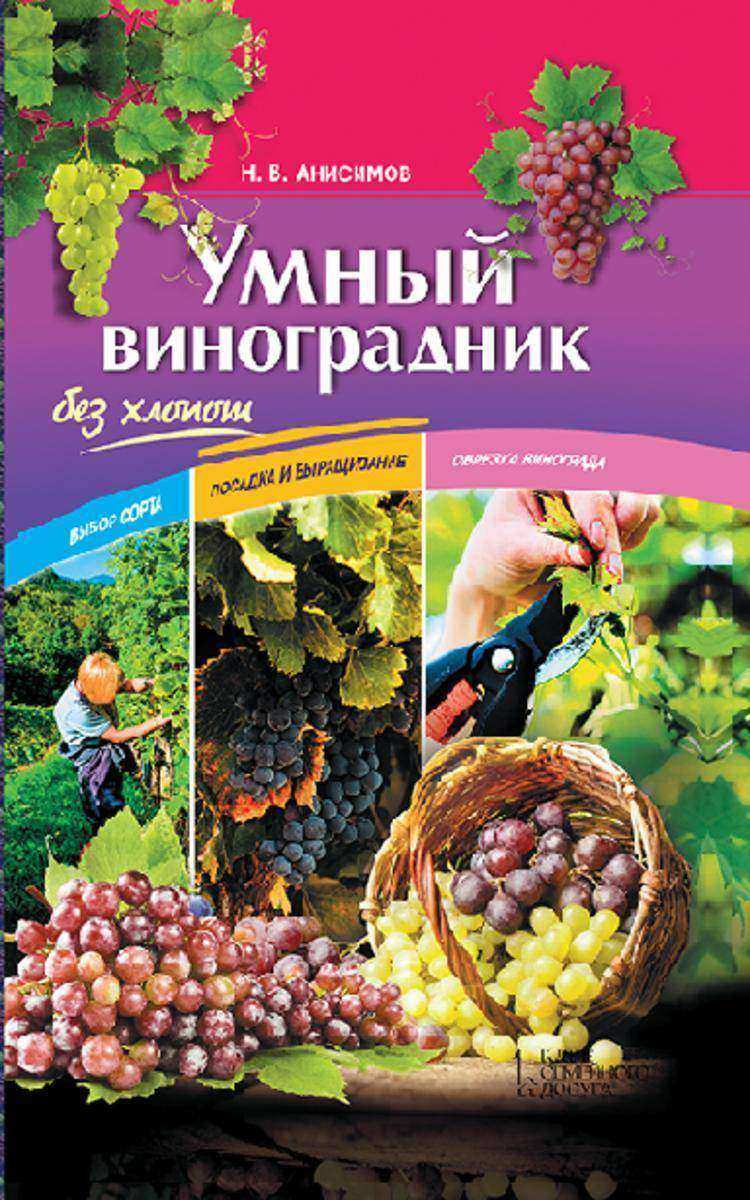
Умный виноградник без хлопот (Umnyj vinogradnik bez hlopot)
¥17.74
Кра?на стр?мко летить у пр?рву: моторошна криза охоплю? вс? царини людського життя. Псевдовчен? наполегливо пропагують: мислення – це ?люз?я, пошук будь-якого сенсу – абсурд, ? зрештою уряд оголошу? моратор?й на розум. Талано- вит? п?дпри?мц? безсл?дно зникають, кидаючи сво? виробництво напризволяще або знищуючи його. Головн? геро? роману – Да?н? Та??арт ? Генк Р?арден – в?дчайдушно намагаються в?двернути катастрофу. Да?н? переконана, що в кра?н? з’явився та?м- ничий Руйн?вник, ц?ль якого – крах економ?ки ? тотальна деградац?я людей. Ж?нка не покида? над?? в?дтворити досконалий двигун, але перспективний молодий нау- ковець, який погодився допомогти ?й, в?дмовля?ться працювати на благо нев?глас?в. Да?н? не хоче в?дмовлятися в?д свого задуму, тож ?де на зустр?ч з? знев?реним до- сл?дником, а в дороз? знайомиться з волоцюгою. Свого часу в?н працював там, де й зародилося ?чисте зло?, яке зараз пожира? кра?ну… Друга частина роману м?стить блискуч? св?тоглядн? монологи, вкладен? в уста Франциско Д’Анкон?? та Генка Р?ардена.
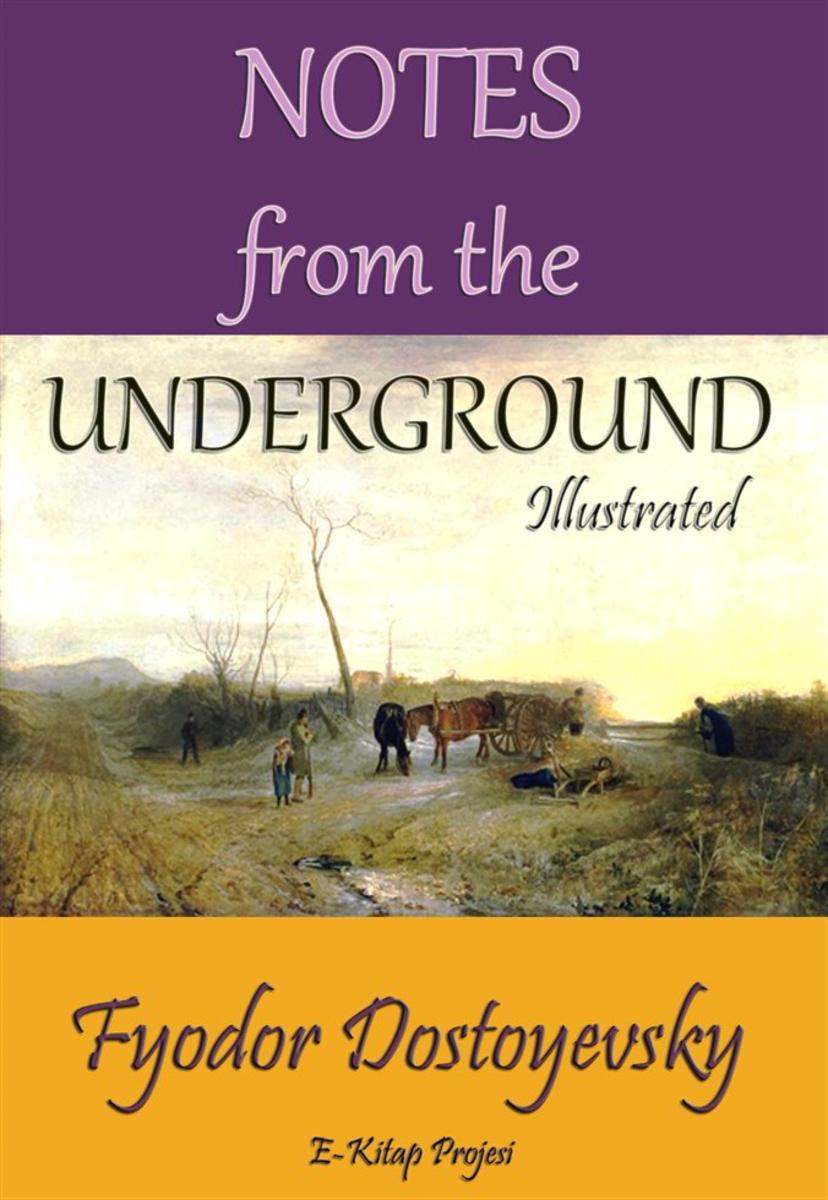
Notes from the Underground: "Illustrated"
¥18.74
In 1888 a client, Mary Morstan, comes with two puzzles for Holmes. The first is the disappearance of her father Captain Arthur Morstan in December 1878 and the second is that she has received 6 pearls in the mail from an anonymous benefactor once a year since 1882, since she answered an anonymous newspaper query inquiring for her. With the last pearl she has received a letter remarking that she has been a wronged woman and asks for meeting. Holmes takes the case and soon discovers that Major Sholto — Morstan's only friend who had denied seeing Morstan — had died in 1882 and that within a short span of time Mary began to receive the pearls, implying a connection. The only clue Mary can give Holmes is a map of a fortress with the names of Jonathan Small and three Sikhs, who are named Dost Akbar, Abdullah Khan, and Mahomet Singh. Holmes, Watson, and Mary meet Thaddeus Sholto, the son of the late Major Sholto and Capt Morstan's Army friend who has sent her the pearls. Thaddeus remarks that his father had a paranoid fear of one-legged men and confirms that Mary's father had seen the Major the night he died. That night, in a quarrel about an Agra Treasure, Morstan — who was in weak health — suffered a heart attack. Not wanting to bring attention to the object of the quarrel to public notice, Sholto disposed of the body and hid the treasure. However his own health became worse when he received a letter from India. Dying, he called his two sons and confessed to Morstan's death and was about to divulge the location of the treasure when he suddenly cried "Keep him out!". The puzzled sons glimpsed a face in the window but the only trace was a single footstep in the dirt. On their father's body is a note reading "The Sign of Four". Both brothers quarreled over whether a legacy should be left to Mary Morstan and Thaddeus left his brother Bartholomew, taking a chaplet and sending its pearls to Mary. The reason he sent the letter is that Bartholomew has found the treasure and possibly Thaddeus and Mary might confront him for a division of it. Bartholomew is found dead in his home from a poison dart and the treasure is missing. While the police wrongly take Thaddeus in as a suspect Holmes deduces that there are two persons involved in the murder: a one-legged man, Jonathan Small, as well as another "small" accomplice. He traces them to a boat landing where Small has hired a launch named the Aurora. With the help of his Baker Street Irregulars and his own disguise Holmes traces the launch. In a Police launch Holmes and Watson chase the Aurora and capture it but in the process end up killing the "small" companion after he attempts to kill Holmes with a poisoned dart shot from a blow-pipe. Small tries to escape but is captured. However the iron treasure box is empty; Small claims to have dumped the treasure over the side during the chase.
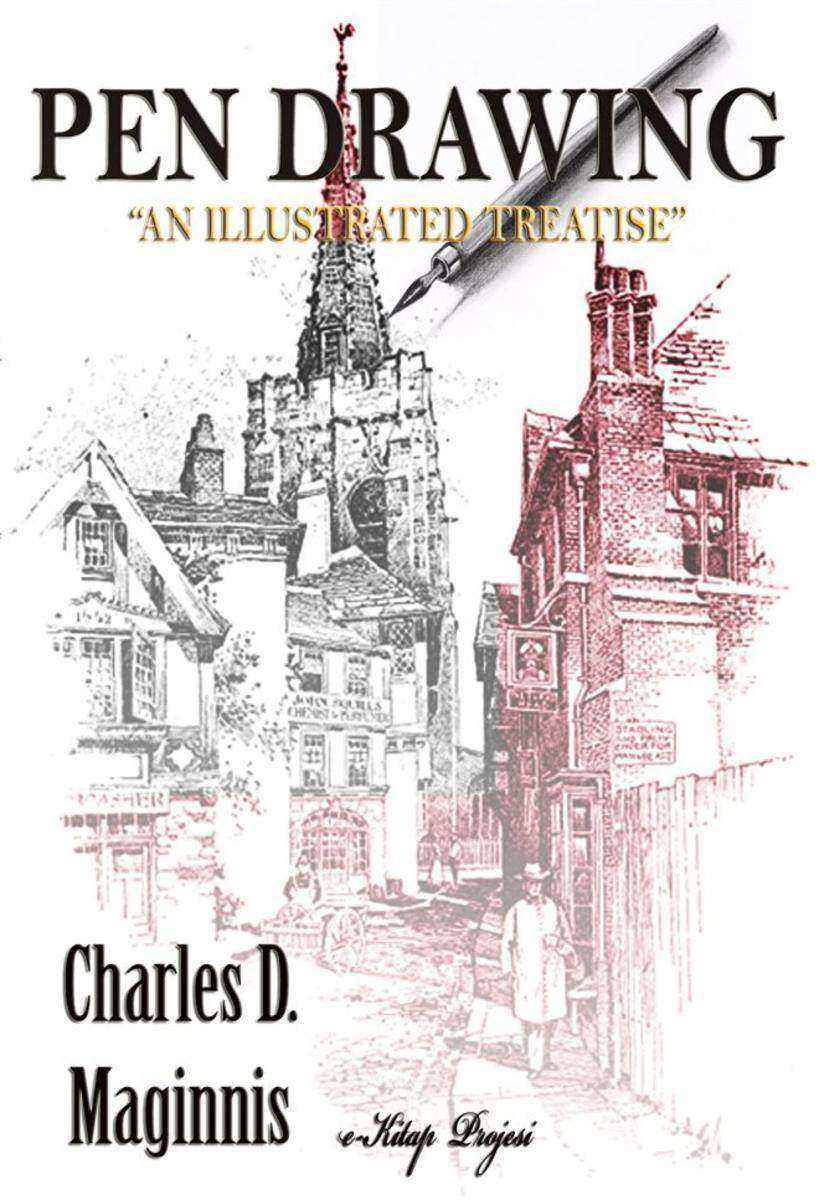
Pen Drawing: "An Illustrated Treatise"
¥18.74
The book's protagonist is an English scientist and gentleman inventor living in Richmond, Surrey in Victorian England, and identified by a narrator simply as the Time Traveller. The narrator recounts the Traveller's lecture to his weekly dinner guests that time is simply a fourth dimension, and his demonstration of a tabletop model machine for travelling through it. He reveals that he has built a machine capable of carrying a person, and returns at dinner the following week to recount a remarkable tale, becoming the new narrator.In the new narrative, the Time Traveller tests his device with a journey that takes him to A.D. 802,701, where he meets the Eloi, a society of small, elegant, childlike adults. They live in small communities within large and futuristic yet slowly deteriorating buildings, doing no work and having a frugivorous diet. His efforts to communicate with them are hampered by their lack of curiosity or discipline, and he speculates that they are a peaceful communist society, the result of humanity conquering nature with technology, and subsequently evolving to adapt to an environment in which strength and intellect are no longer advantageous to survival. Returning to the site where he arrived, the Time Traveller is shocked to find his time machine missing, and eventually works out that it has been dragged by some unknown party into a nearby structure with heavy doors, locked from the inside, which resembles a Sphinx. Later in the dark, he is approached menacingly by the Morlocks, ape-like troglodytes who live in darkness underground and surface only at night. Within their dwellings he discovers the machinery and industry that makes the above-ground paradise possible. He alters his theory, speculating that the human race has evolved into two species: the leisured classes have become the ineffectual Eloi, and the downtrodden working classes have become the brutish light-fearing Morlocks. Deducing that the Morlocks have taken his time machine, he explores the Morlock tunnels, learning that they feed on the Eloi. His revised analysis is that their relationship is not one of lords and servants but of livestock and ranchers. The Time Traveller theorizes that intelligence is the result of and response to danger; with no real challenges facing the Eloi, they have lost the spirit, intelligence, and physical fitness of humanity at its peak. Meanwhile, he saves an Eloi named Weena from drowning as none of the other Eloi take any notice of her plight, and they develop an innocently affectionate relationship over the course of several days. He takes Weena with him on an expedition to a distant structure that turns out to be the remains of a museum, where he finds a fresh supply of matches and fashions a crude weapon against Morlocks, whom he fears he must fight to get back his machine. He plans to take Weena back to his own time. Because the long and tiring journey back to Weena's home is too much for them, they stop in the forest, and they are then overcome by Morlocks in the night, and Weena faints. The Traveller escapes only when a small fire he had left behind them to distract the Morlocks catches up to them as a forest fire; Weena is presumably lost in the fire, as are the Morlocks. The Morlocks use the time machine as bait to ensnare the Traveller, not understanding that he will use it to escape. He travels further ahead to roughly 30 million years from his own time. There he sees some of the last living things on a dying Earth, menacing reddish crab-like creatures slowly wandering the blood-red beaches chasing butterflies in a world covered in simple lichenous vegetation. He continues to make short jumps through time, seeing Earth's rotation gradually cease and the sun grow larger, redder, and dimmer, and the world falling silent and freezing as the last degenerate living things die out.
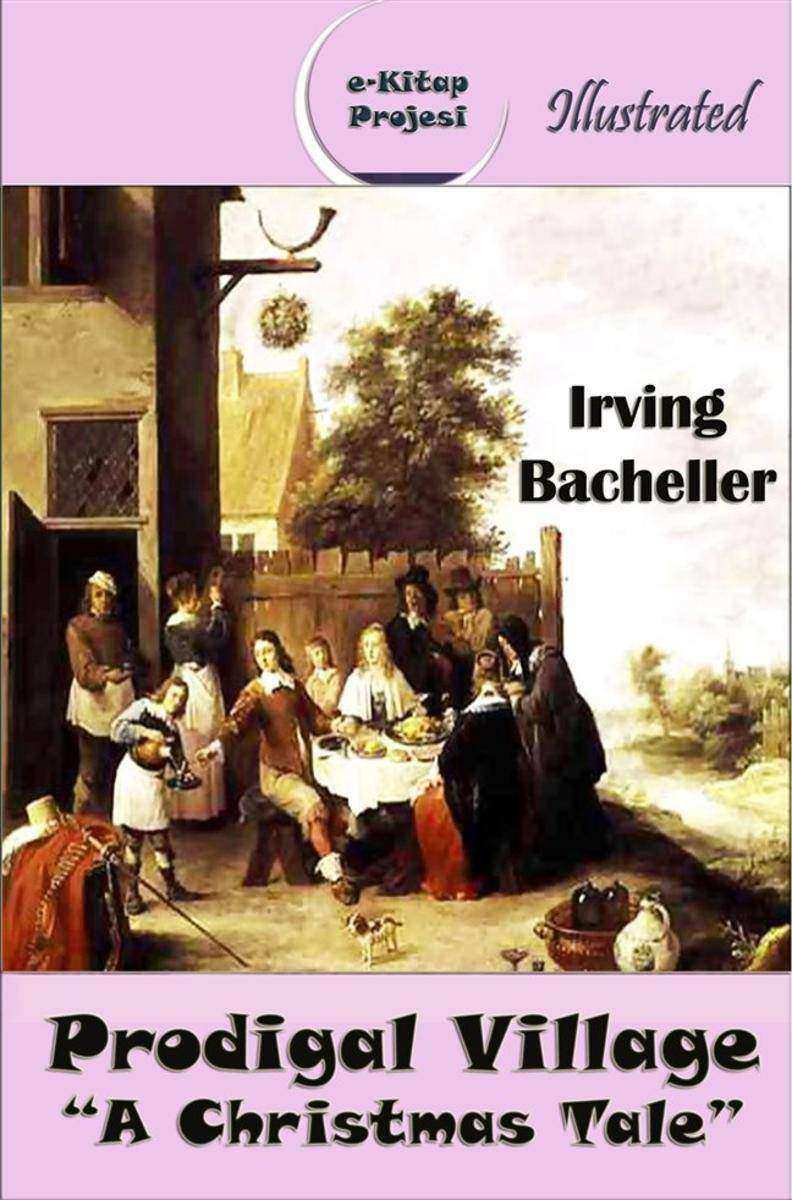
Prodigal Village: "A Christmas Tale"
¥18.74
Through the Looking-Glass, and What Alice Found There (1871) is a novel by Lewis Carroll (Charles Lutwidge Dodgson), the sequel to Alice's Adventures in Wonderland (1865). The themes and settings of Through the Looking-Glass make it a kind of mirror image of Wonderland: the first book begins outdoors, in the warm month of May (4 May), uses frequent changes in size as a plot device, and draws on the imagery of playing cards; the second opens indoors on a snowy, wintry night exactly six months later, on 4 November (the day before Guy Fawkes Night), uses frequent changes in time and spatial directions as a plot device, and draws on the imagery of chess. In it, there are many mirror themes, including opposites, time running backwards, and so on. Short Summary: Alice is playing with a white kitten (whom she calls "Snowdrop") and a black kitten (whom she calls "Kitty")—the offspring of Dinah, Alice's cat in Alice's Adventures in Wonderland—when she ponders what the world is like on the other side of a mirror's reflection. Climbing up on the fireplace mantel, she pokes at the wall-hung mirror behind the fireplace and discovers, to her surprise, that she is able to step through it to an alternative world. In this reflected version of her own house, she finds a book with looking-glass poetry, "Jabberwocky", whose reversed printing she can read only by holding it up to the mirror. She also observes that the chess pieces have come to life, though they remain small enough for her to pick up. Upon leaving the house (where it had been a cold, snowy night), she enters a sunny spring garden where the flowers have the power of human speech; they perceive Alice as being a "flower that can move about." Elsewhere in the garden, Alice meets the Red Queen, who is now human-sized, and who impresses Alice with her ability to run at breathtaking speeds. This is a reference to the chess rule that queens are able to move any number of vacant squares at once, in any direction, which makes them the most "agile" of pieces. The Red Queen reveals to Alice that the entire countryside is laid out in squares, like a gigantic chessboard, and offers to make Alice a queen if she can move all the way to the eighth rank/row in a chess match. This is a reference to the chess rule of Promotion. Alice is placed in the second rank as one of the White Queen's pawns, and begins her journey across the chessboard by boarding a train that literally jumps over the third row and directly into the fourth rank, thus acting on the rule that pawns can advance two spaces on their first move.
Rubens: "Masterpieces in Colour" Series: Book-IV
¥28.04
In “True Ghost Stories,” Mr. Carrington presents a number of startling cases of this character; but they are not the ordinary “ghost stories”—based on pure fiction, and having no foundation in reality. Here we have a well-arranged collection of incidents, all thoroughly investigated and vouched for, and the testimony obtained first-hand and corroborated by others. The chapter on “Haunted Houses” is particularly striking. The first chapter deals with the interesting question, “What is a Ghost?” and attempts to answer this question in the light of the latest scientific theories which have been advanced to explain these supernatural happenings and visitants. It is a book of absorbing interest, and cannot fail to grip and hold the attention of every reader—no matter whether he be a student of these questions, or one merely in search of hair-raising anecdotes and stories. He will find them here a-plenty! The following little book endeavors to bring together a number of “ghost stories” of the more startling and dramatic type,—but stories, nevertheless, which seem to be well authenticated; and which have been obtained, in most instances, at first hand, from the original witnesses; and often contain corroborative testimony from others who also experienced the ghostly phenomena. Some of these incidents, indeed, rise to the dignity of scientific evidence; others are less well authenticated cases,—but interesting for all that. These have been grouped in various Chapters, according to their evidential value. Chapters II. and III. contain well-evidenced cases, some of which have been taken from the Proceedings and Journals of the Society for Psychical Research (S. P. R.), or from Phantasms of the Living, or from other scientific books, in which narratives of this character receive serious consideration. Chapter V., on the contrary, contains a number of incidents which,—striking and dramatic as they are,—cannot be included in the two earlier Chapters, as presenting real evidence of Ghosts; but are published rather as startling and interesting ghost stories. Chapter IV., devoted to “Haunted Houses,” contains brief accounts of the most famous Haunted Houses, and of the phenomena which have been witnessed within them. Appendix A gives a list of a few of the important “Historical Ghosts,” Appendix B describes the “Phantom Armies” lately seen by the Allied troops in France—while Appendix C lists a number of books of Ghost Stories which the interested reader may care to peruse. A short Glossary, at the beginning of the book, explains the meaning of certain terms used,—which are not, perhaps, ordinarily met with in books of this character. In the Introductory Chapter, I have endeavored to explain, very briefly, the nature and character of Ghosts; what they are; and the various scientific theories which have been brought forward, of late years, to explain Ghosts. I hope that this may prove of interest to the reader; in case it does not do so, he is invited to “skip” directly to Chapter II., which begins our account of “True Ghost Stories.” I wish to express my thanks in this place to the Council of the English S. P. R. for special permission to quote and to summarize several striking cases here reproduced; also to Miss Estelle Stead, for permission to utilize several cases previously printed at length in Mr. Wm. T. Stead’s collections of Ghost Stories. H. C. [Author]

Сочные блюда из курицы. Мамочкина вкуснятина!
¥17.74
Доля ж?нки в Пакистан? визначена наперед: бути пок?рною дружиною, догоджати чолов?ков? й виховувати д?тей. Але 1997 року народилася ??накша? д?вчинка. Вона хот?ла ходити в школу, носити яскравий одяг ? не ховати обличчя. В цей час владу в ?? р?дних краях, в долин? Сват, захопив ?Тал?бан?. За найменшу провину перед ?законом? терористи карали людей побоями ? нав?ть смертю. Геро?ня ? авторка ц??? книжки розум?ла важлив?сть осв?ти ? боронила права ж?нок, за що й отримала кулю в голову... ?? звуть Малала. ? це т?льки початок ?? ?стор??...
She
¥18.74
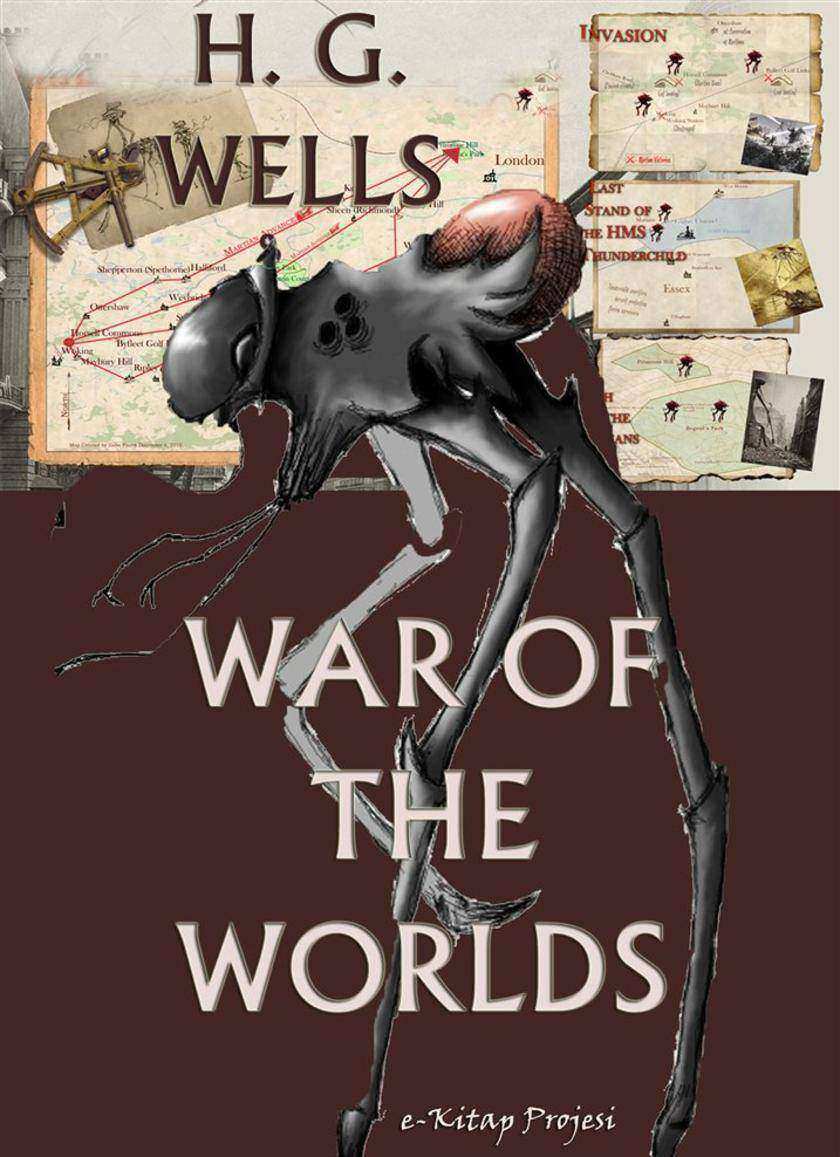
The War of the Worlds is a military science fiction novel by H. G. Wells. It first appeared in serialized form in 1897, published simultaneously in Pearson's Magazine in the UK and Cosmopolitan magazine in the US. The first appearance in book form was published by William Heinemann of London in 1898. It is the first-person narrative of the adventures of an unnamed protagonist and his brother in Surrey and London as Earth is invaded by Martians. Written between 1895 and 1897, it is one of the earliest stories that detail a conflict between mankind and an extraterrestrial race. The novel is one of the most commented-on works in the science fiction canon. The War of the Worlds has two parts, Book One: The Coming of the Martians and Book Two: The Earth under the Martians. The narrator, a philosophically-inclined author, struggles to return to his wife while seeing the Martians lay waste to southern England. Book One also imparts the experience of his brother, also unnamed, who describes events in the capital and escapes the Martians by boarding a ship near Tillingham, on the Essex coast. The plot has been related to invasion literature of the time. The novel has been variously interpreted as a commentary on evolutionary theory, British Imperialism, and generally Victorian superstitions, fears and prejudices. At the time of publication it was classified as a scientific romance, like his earlier novel The Time Machine. The War of the Worlds has been both popular (having never gone out of print) and influential, spawning half a dozen feature films, radio dramas, a record album, various comic book adaptations, a television series, and sequels or parallel stories by other authors. It has even influenced the work of scientists, notably Robert Hutchings Goddard. Plot SummaryYet across the gulf of space, minds that are to our minds as ours are to those of the beasts that perish, intellects vast and cool and unsympathetic, regarded this earth with envious eyes, and slowly and surely drew their plans against us.— H. G. Wells (1898), The War of the Worlds The Coming of the MartiansThe narrative opens in an astronomical observatory at Ottershaw where explosions are seen on the surface of the planet Mars, creating much interest in the scientific community. Later a "meteor" lands on Horsell Common, near the narrator's home in Woking, Surrey. He is among the first to discover that the object is an artificial cylinder that opens, disgorging Martians who are "big" and "greyish" with "oily brown skin," "the size, perhaps, of a bear," with "two large dark-coloured eyes," and a lipless "V-shaped mouth" surrounded by "Gorgon groups of tentacles." The narrator finds them "at once vital, intense, inhuman, crippled and monstrous." They briefly emerge, have difficulty in coping with the Earth's atmosphere, and rapidly retreat into the cylinder. A human deputation (which includes the astronomer Ogilvy) approaches the cylinder with a white flag, but the Martians incinerate them and others nearby with a heat-ray before beginning to assemble their machinery. Military forces arrive that night to surround the common, including Maxim guns. The population of Woking and the surrounding villages are reassured by the presence of the military. A tense day begins, with much anticipation of military action by the narrator.
Spiders
¥18.74
This book is called The White Spark as the white spark or vacuum cell in Nature IS THE RIGHT HAND OF GOD—it is a ubiquitous principle of the universe and is the cause and parent of electricity, combustion, radium, snow-flakes, flowers, trees, leaves, crystallization, wireless telegraphy, animal forms and EVEN LIFE ITSELF. This book is the key to every department of human endeavor, as it enunciates the basic principle and THE PRIME MOVER of the universe.?It tells the road to health, the cause and cure of disease, the truth about the germ humbug and drug treatments, serums and antitoxins. It shows why luminosity is produced on the flesh of various organisms, why a slice of pollock when first iced, then heated to 100 degrees and then thrust into a temperature of 50 degrees becomes luminous. It shows the farmer that he can become a magician of agriculture—tells that the nitrogen of the air is only a dust of quartz rocks, like the invisible moisture of the air is "a dust of water"—that the nodules on the roots of the clover and legumes do not abstract nitrogen from the air, for if they did nature would have placed these bacteriological growths on the vine and not the root, the scientists have the cart before the horse in this case and the nodular cells form the proteids from sand or silica, this book tells how it is done. It tells what a trance is and how the soul can leave the body temporarily. How JESUS CHRIST is carrying out the biblical prophesy by TELEPATHY. Gives the truths about the ideal society, alcohol, drunkenness, causes of crime, longevity and law.
Энциклопедия разумного огородника
¥17.74
Нельсон Мандела — п?вденноафриканський правозахисник, юрист, пол?тик, президент П?вденно-Африкансько? Республ?ки (1994 –??1999 рр.). Мандела був першим президентом ПАР, обраним на демократичних, не сфальсиф?кованих виборах. У сво?й трет?й книз? Нельсон Мандела в?дверто опису? ?н?ц?ац?ю африканських хлопчик?в, побут ? злидн? свого дитинства, навчання й одруження, народження ? смерть сво?х д?тей, жах самотност? в’язня на остров? Роббен ? вистраждану Свободу. Житт?вий досв?д та погляди Нельсона Мандели як н?коли актуальн? в контекст? нин?шн?х укра?нських реал?й, бо ?правда поляга? в тому, що ми ще не в?льн?, ми просто здобули свободу бути в?льними, право не бути пригноблюваними…справжн? випробування нашо? в?дданост? свобод? лише почина?ться?.??
Tales Of Humour, Gallantry and Romance: New from the Italian Tales (Illustrated)
¥9.24
THE history, the features, and the most famous examples of European architecture, during a period extending from the rise of the Gothic, or pointed, style in the twelfth century to the general depression which overtook the Renaissance style at the close of the eighteenth, form the subject of this little volume. I have endeavoured to adopt as free and simple a mode of treatment as is compatible with the accurate statement of at least the outlines of so very technical a subject. Though it is to be hoped that many professional students of architecture will find this hand-book serviceable to them in their elementary studies, it has been my principal endeavour to adapt it to the requirements of those who are preparing for the professional pursuit of the sister arts, and of that large and happily increasing number of students who pursue the fine arts as a necessary part of a complete liberal education, and who know that a solid and comprehensive acquaintance with art, especially if joined to some skill in the use of the pencil, the brush, the modelling tool, or the etching needle, will open sources of pleasure and interest of the most refined description. The broad facts of all art history; the principles which underlie each of the fine arts; and the most precious or most noteworthy examples of each, ought to be familiar to every art student, whatever special branch he may follow. Beyond these limits I have not attempted to carry this account of Gothic and Renaissance architecture; within them I have endeavoured to make the work as complete as the space at my disposal permitted. THE architecture generally known as Gothic, but often described as Christian Pointed, prevailed throughout Europe to the exclusion of every rival for upwards of three centuries; and it is to be met with, more or less, during two others. Speaking broadly, it may be said that its origin took place in the twelfth century, that the thirteenth was the period of its development, the fourteenth that of its perfection, and the fifteenth that of its decline; while many examples of its employment occur in the sixteenth. In the following chapters the principal changes in the features of buildings which occurred during the progress of the style in England will be described. Subsequently, the manner in which the different stages of development were reached in different countries will be given; for architecture passed through very nearly the same phases in all European nations, though not quite simultaneously. It must be understood that through the whole Gothic period, growth or at least change was going on; the transitions from one stage to another were only periods of more rapid change than usual. The whole process may be illustrated by the progress of a language. If, for instance, we compare round-arched architecture in the eleventh century to the Anglo-Saxon form of speech of the time of Alfred the Great, and the architecture of the twelfth century to the English of Chaucer, that of the thirteenth will correspond to the richer language of Shakespeare, that of the fourteenth to the highly polished language of Addison and Pope, and that of the fifteenth to the English of our own day. We can thus obtain an apt parallel to the gradual change and growth which went on in architecture; and we shall find that the oneness of the language in the former case, and of the architecture in the latter, was maintained throughout. For an account of the Christian round-arched architecture which preceded Gothic, the reader is referred to the companion volume in this series. Here it will be only necessary briefly to review the circumstances which went before the appearance of the pointed styles.

Együgy? lexikon
¥19.87
Együgy? lexikon

Eltitkolt származás
¥42.92
Eltitkolt származás
Kísértetek
¥19.87
Kísértetek


