


 购物车
购物车 个人中心
个人中心
A Time of War
¥80.25
Book seven of the celebrated Deverry series, an epic fantasy rooted in Celtic mythology that intricately interweaves human and elven history over several hundred years. Book seven of the celebrated Deverry series, an epic fantasy rooted in Celtic mythology that intricately interweaves human and elven history over several hundred years.
The Fire Dragon
¥44.73
Book eleven of the celebrated Deverry series, an epic fantasy rooted in Celtic mythology that intricately interweaves human and elven history over several hundred years. The Fire Dragon tells two separate stories: one set in the “present” of 1117, and one set in the past, the era of the Civil Wars. In the present, Raena’s trouble-making in Cerr Cawnen leads to terrible death and destruction but may ultimately succeed in offering the final working-out of Rhodry’s Wyrd. In the past, Nevyn and Lilli attempt to solve the riddle of the curse tablet, but the price will be high. In this, the eleventh volume in the Deverry cycle and third of the Dragon Mage series, storylines begun in Dawnspell: The Bristling Wood, A Time of Exile and The Black Raven – both the ‘present’ of 1117 and the past – will reach their triumphant and spellbinding conclusion. But there will be more Deverry books to unravel the situation that climaxes The Fire Dragon…

Little Bird of Heaven
¥57.09
‘A writer of extraordinary strengths’ Guardian Set in the mythical small city of Sparta, New York, this searing, vividly rendered exploration of the mysterious conjunction of erotic romance and tragic violence in late 20th-century America. When a young wife and mother named Zoe Kruller is found brutally murdered, the Sparta police target two primary suspects: her estranged husband Delray and her longtime lover Eddy Diehl. In turn, the Krullers's son Aaron and Eddy's daughter Krista become obsessed with one another, each believing the other's father is guilty. Told in halves in the very different voices of Krista and Aaron, Little Bird of Heaven is classic Joyce Carol Oates, in which the lyricism of intense sexual love is intertwined with the anguish of loss, and tenderness is barely distinguishable from cruelty. By the novel's end, the fated lovers, meeting again as adults, are at last ready to exorcise the ghosts of the past and come to terms with their legacy of guilt, misplaced love and redemptive yearning. With Little Bird of Heaven, Joyce Carol Oates once again confirms her place as one of the most outstanding writers at work today.

Best Loved Hymns and Readings
¥100.06
An indispensable combination of 200 best loved hymns, poems and readings for every occasion, and ideal for personal reflection. Complete with a brief introduction to each piece and its author, this book is a wonderful personal reference and devotional guide. From Away in a Manger to God Save the Queen, and the famous Bible passage on love, 1 Corinthians 13, to Tennyson’s Crossing the Bar, it has passages suitable for every occasion, and has all you need to plan a baptism, a wedding or, should the need arise, a funeral.

Witnessing Waterloo: 24 Hours, 48 Lives, A World Forever Changed
¥73.58
‘Of all the books marking the bicentenary Waterloo, this has to be the best’ Spectator ‘A book to die for’ Evening Standard From Samuel Johnson Prize shortlisted author David Crane, this is a breathtaking portrait of the Britain that fought the battle of Waterloo. As Wellington’s rain-sodden army retreated towards an obscure valley called Waterloo, the men and women of Britain were still going to the theatre and science lectures, working in the fields and the factories, reading and writing books and sermons, painting their pictures and sitting in front of Lord Elgin’s marbles. David Crane’s stunning freeze-frame of Britain on this day of momentous change shifts hour by hour between Britain and Belgium. The Britain that fought Waterloo – its radicals and patriots, artisans and aristocrats, prisoners and poets – appears through the smoke of battle and the mythology of Waterloo in this magnificent and original tracing of the endless, overlapping connections between people’s lives.
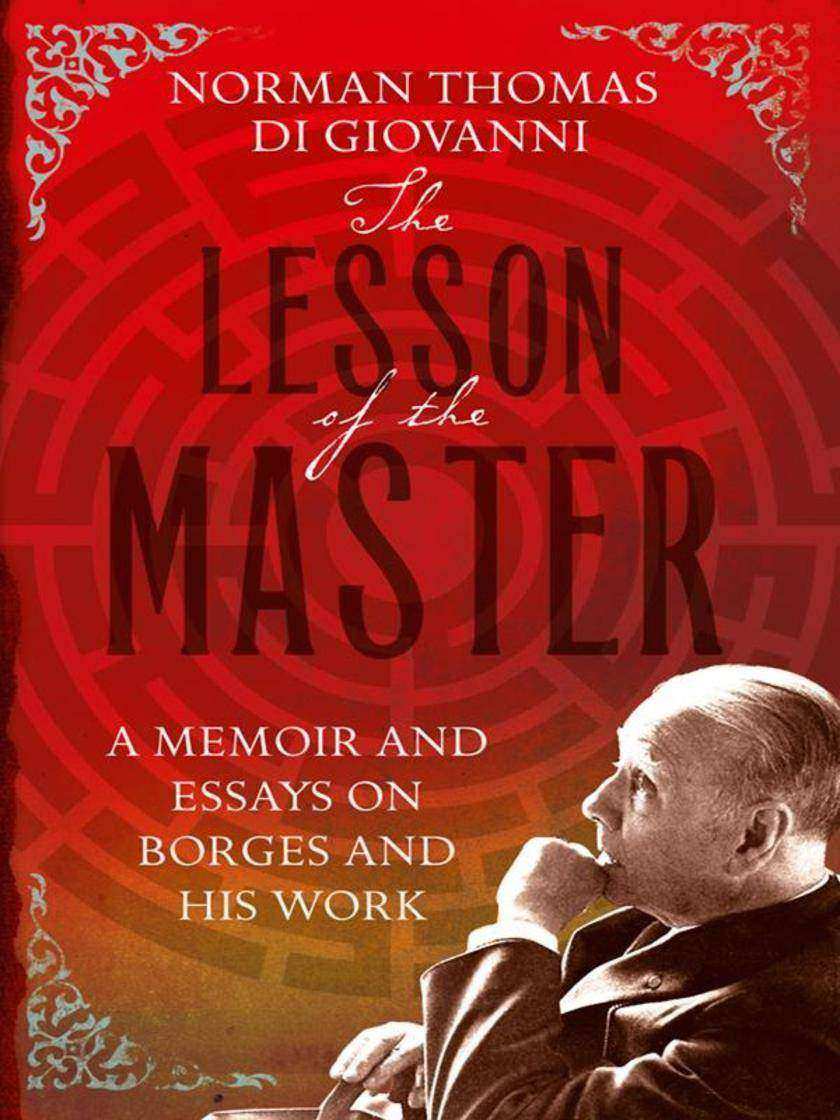
The Lesson of the Master
¥34.14
A collection of essays on Jorge Luis Borges by his long-time friend and collaborator. Jorge Luis Borges - Argentine poet, essayist, and short-story writer - is widely considered one of the giants of 20th-century world literature. Norman Thomas di Giovanni worked alongside Borges for a number of years creating English translations of his work, the only translations personally overseen by Borges himself. In The Lesson of the Master, a memoir and essays, he writes about his time with Borges but also offers us a unique insight on the man and his work. It is an indispensable volume for Borges readers and his growing legion of students and scholars.

Corrag
¥73.58
A novel from Susan Fletcher, author of the bestselling Eve Green and Oystercatchers. The Massacre of Glencoe happened at 5am on 13th February 1692 when thirty-eight members of the Macdonald clan were killed by soldiers who had enjoyed the clan's hospitality for the previous ten days. Many more died from exposure in the mountains. Fifty miles to the south Corrag is condemned for her involvement in the Massacre. She is imprisoned, accused of witchcraft and murder, and awaits her death. The era of witch-hunts is coming to an end - but Charles Leslie, an Irish propagandist and Jacobite, hears of the Massacre and, keen to publicise it, comes to the tollbooth to question her on the events of that night, and the weeks preceding it. Leslie seeks any information that will condemn the Protestant King William, rumoured to be involved in the massacre, and reinstate the Catholic James. Corrag agrees to talk to him so that the truth may be known about her involvement, and so that she may be less alone, in her final days. As she tells her story, Leslie questions his own beliefs and purpose - and a friendship develops between them that alters both their lives. In Corrag, Susan Fletcher tells us the story of an epic historic event, of the difference a single heart can make - and how deep and lasting relationships that can come from the most unlikely places.

The Family
¥34.14
The follow-up novel to the hugely successful debut THE STREET In this dank corner of town, you have to keep your friends close and your enemies closer – even if those enemies are your family. Jimmy Wild saunters around the streets of Campbell Road, and among the people he used to terrorise. Even though the years have passed, he’s still a tyrant. The sight of his lanky frame is enough to terrify the inhabitants of this close-knit community, who reside in this villainous corner of London. Jimmy’s beautiful step-daughter Faye and his downtrodden wife Edie eek out a meagre existence for their family, having left behind their lives in Kent. What devastating act was so bad that it drove them away from the place they called home to this hovel of a house in Campbell Road? Robert and Steven Wild thought they’d moved on. It was hard enough coming to terms with the death of their mother – and now their abusive father, presumed dead, has returned. One thing you can bet on, Jimmy Wild’s not returned to start playing happy families… How can young Faye make a life for herself and carve a future for young siblings? Who is this aged woman that Jimmy Wild has come back to see? And can a romance between Faye and Rob blossom amidst a family at War?
Time Management (Collins Business Secrets)
¥18.74
The time management secrets that experts and top professionals use. Get results fast with this quick, easy guide to the fundamentals of Time Management. Includes how to: ? Identify your biggest priorities and find time to achieve them ? Deal with the biggest hidden time-wasters ? Communicate effectively with colleagues and clients ? Cope with information overload ? Take control of your inbox and voicemail

Presenting (Collins Business Secrets)
¥44.24
The presenting secrets that experts and top professionals use. Get results fast with this quick, easy guide to the fundamentals of Presenting. Includes how to: ? Enjoy presenting and approach it with confidence ? Assess your audience and their reactions ? Prepare presentations for maximum impact ? Use your voice and body to make your point ? Use visual aids and handle questions
Interview (Collins Business Secrets)
¥51.50
The interview secrets that experts and top professionals use. Get results fast with this quick, easy guide to the fundamentals of Interviews. Includes how to: ? Research the needs of the employer ? Focus the interview on your strengths ? Use body language to impress ? Deal with difficult questions ? Negotiate the perfect package

The Little Prisoner: How a childhood was stolen and a trust betrayed
¥45.62
An inspirational true story of a 4 year old girl who fell into the power of a man whose evil knew no bounds. She encountered terrifying mental and physical torture from her psychopathic stepfather for a period of 17 years until she managed to break free, her spirit still unbroken Jane Elliott fell into the hands of her sadistic and brutal stepfather when she was 4 years old. Her story is both inspiring and horrifying. Kept a virtual prisoner in a fortress-like house and treated to daily and ritual abuse, Jane nonetheless managed to lose herself in a fantasy world which would keep her spirit alive. Equally as horrifying as the physical abuse Jane suffered, were the mental games her tormentor played – getting his kicks from seeing Jane humiliated, confused, crushed and defeated at every turn. Her family and neighbourhood were all terrified of Jane’s stepfather so no-one held out a rescuing hand. So Jane had to help herself. When she was 21 she ran away with her baby daughter and boyfriend to start a new life in hiding. Several years on she found the courage to go to the police. A court case followed where Jane bravely stood up against the unrepentant aggressor she so feared. He was jailed for 17 years. Jane’s family took his side.
Mastering Java Machine Learning
¥99.18
Become an advanced practitioner with this progressive set of master classes on application-oriented machine learning About This Book ? Comprehensive coverage of key topics in machine learning with an emphasis on both the theoretical and practical aspects ? More than 15 open source Java tools in a wide range of techniques, with code and practical usage. ? More than 10 real-world case studies in machine learning highlighting techniques ranging from data ingestion up to analyzing the results of experiments, all preparing the user for the practical, real-world use of tools and data analysis. Who This Book Is For This book will appeal to anyone with a serious interest in topics in Data Science or those already working in related areas: ideally, intermediate-level data analysts and data scientists with experience in Java. Preferably, you will have experience with the fundamentals of machine learning and now have a desire to explore the area further, are up to grappling with the mathematical complexities of its algorithms, and you wish to learn the complete ins and outs of practical machine learning. What You Will Learn ? Master key Java machine learning libraries, and what kind of problem each can solve, with theory and practical guidance. ? Explore powerful techniques in each major category of machine learning such as classification, clustering, anomaly detection, graph modeling, and text mining. ? Apply machine learning to real-world data with methodologies, processes, applications, and analysis. ? Techniques and experiments developed around the latest specializations in machine learning, such as deep learning, stream data mining, and active and semi-supervised learning. ? Build high-performing, real-time, adaptive predictive models for batch- and stream-based big data learning using the latest tools and methodologies. ? Get a deeper understanding of technologies leading towards a more powerful AI applicable in various domains such as Security, Financial Crime, Internet of Things, social networking, and so on. In Detail Java is one of the main languages used by practicing data scientists; much of the Hadoop ecosystem is Java-based, and it is certainly the language that most production systems in Data Science are written in. If you know Java, Mastering Machine Learning with Java is your next step on the path to becoming an advanced practitioner in Data Science. This book aims to introduce you to an array of advanced techniques in machine learning, including classification, clustering, anomaly detection, stream learning, active learning, semi-supervised learning, probabilistic graph modeling, text mining, deep learning, and big data batch and stream machine learning. Accompanying each chapter are illustrative examples and real-world case studies that show how to apply the newly learned techniques using sound methodologies and the best Java-based tools available today. On completing this book, you will have an understanding of the tools and techniques for building powerful machine learning models to solve data science problems in just about any domain. Style and approach A practical guide to help you explore machine learning—and an array of Java-based tools and frameworks—with the help of practical examples and real-world use cases.
Building Serverless Architectures
¥80.65
Build scalable, reliable, and cost-effective applications with a serverless architecture About This Book ? Design a real-world serverless application from scratch ? Learn about AWS Lambda function and how to use Lambda functions to glue other AWS Services ? Use the Java programming language and well-known design patterns. Although Java is used for the examples in this book, the concept is applicable across all languages ? Learn to migrate your JAX-RS application to AWS Lambda and API Gateway Who This Book Is For This book is for developers and software architects who are interested in designing on the back end. Since the book uses Java to teach concepts, knowledge of Java is required. What You Will Learn ? Learn to form microservices from bigger Softwares ? Orchestrate and scale microservices ? Design and set up the data flow between cloud services and custom business logic ? Get to grips with cloud provider’s APIs, limitations, and known issues ? Migrate existing Java applications to a serverless architecture ? Acquire deployment strategies ? Build a highly available and scalable data persistence layer ? Unravel cost optimization techniques In Detail Over the past years, all kind of companies from start-ups to giant enterprises started their move to public cloud providers in order to save their costs and reduce the operation effort needed to keep their shops open. Now it is even possible to craft a complex software system consisting of many independent micro-functions that will run only when they are needed without needing to maintain individual servers. The focus of this book is to design serverless architectures, and weigh the advantages and disadvantages of this approach, along with decision factors to consider. You will learn how to design a serverless application, get to know that key points of services that serverless applications are based on, and known issues and solutions. The book addresses key challenges such as how to slice out the core functionality of the software to be distributed in different cloud services and cloud functions. It covers basic and advanced usage of these services, testing and securing the serverless software, automating deployment, and more. By the end of the book, you will be equipped with knowledge of new tools and techniques to keep up with this evolution in the IT industry. Style and approach The book takes a pragmatic approach, showing you all the examples you need to build efficient serverless applications.

Performance Testing with JMeter 3 - Third Edition
¥63.21
A practical guide to help you undertand the ability of Apache jMeter to load and performance test various server types in a more efficient way. About This Book ? Use jMeter to create and run tests to improve the performance of your webpages and applications ? Learn to build a test plan for your websites and analyze the results ? Unleash the power of various features and changes introduced in Apache jMeter 3.0 Who This Book Is For This book is for software professionals who want to understand and improve the performance of their applications with Apache jMeter. What You Will Learn ? See why performance testing is necessary and learn how to set up JMeter ? Record and test with JMeter ? Handle various form inputs in JMeter and parse results during testing ? Manage user sessions in web applications in the context of a JMeter test ? Monitor JMeter results in real time ? Perform distributed testing with JMeter ? Get acquainted with helpful tips and best practices for working with JMeter In Detail JMeter is a Java application designed to load and test performance for web application. JMeter extends to improve the functioning of various other static and dynamic resources. This book is a great starting point to learn about JMeter. It covers the new features introduced with JMeter 3 and enables you to dive deep into the new techniques needed for measuring your website performance. The book starts with the basics of performance testing and guides you through recording your first test scenario, before diving deeper into JMeter. You will also learn how to configure JMeter and browsers to help record test plans. Moving on, you will learn how to capture form submission in JMeter, dive into managing sessions with JMeter and see how to leverage some of the components provided by JMeter to handle web application HTTP sessions. You will also learn how JMeter can help monitor tests in real-time. Further, you will go in depth into distributed testing and see how to leverage the capabilities of JMeter to accomplish this. You will get acquainted with some tips and best practices with regard to performance testing. By the end of the book, you will have learned how to take full advantage of the real power behind Apache JMeter. Style and approach The book is a practical guide starting with introducing the readers to the importance of automated testing. It will then be a beginner’s journey from getting introduced to Apache jMeter to an in-detail discussion of more advanced features and possibilities with it.
Statistics for Machine Learning
¥90.46
Build Machine Learning models with a sound statistical understanding. About This Book ? Learn about the statistics behind powerful predictive models with p-value, ANOVA, and F- statistics. ? Implement statistical computations programmatically for supervised and unsupervised learning through K-means clustering. ? Master the statistical aspect of Machine Learning with the help of this example-rich guide to R and Python. Who This Book Is For This book is intended for developers with little to no background in statistics, who want to implement Machine Learning in their systems. Some programming knowledge in R or Python will be useful. What You Will Learn ? Understand the Statistical and Machine Learning fundamentals necessary to build models ? Understand the major differences and parallels between the statistical way and the Machine Learning way to solve problems ? Learn how to prepare data and feed models by using the appropriate Machine Learning algorithms from the more-than-adequate R and Python packages ? Analyze the results and tune the model appropriately to your own predictive goals ? Understand the concepts of required statistics for Machine Learning ? Introduce yourself to necessary fundamentals required for building supervised & unsupervised deep learning models ? Learn reinforcement learning and its application in the field of artificial intelligence domain In Detail Complex statistics in Machine Learning worry a lot of developers. Knowing statistics helps you build strong Machine Learning models that are optimized for a given problem statement. This book will teach you all it takes to perform complex statistical computations required for Machine Learning. You will gain information on statistics behind supervised learning, unsupervised learning, reinforcement learning, and more. Understand the real-world examples that discuss the statistical side of Machine Learning and familiarize yourself with it. You will also design programs for performing tasks such as model, parameter fitting, regression, classification, density collection, and more. By the end of the book, you will have mastered the required statistics for Machine Learning and will be able to apply your new skills to any sort of industry problem. Style and approach This practical, step-by-step guide will give you an understanding of the Statistical and Machine Learning fundamentals you'll need to build models.
Mastering Machine Learning with scikit-learn - Second Edition
¥80.65
Use scikit-learn to apply machine learning to real-world problems About This Book ? Master popular machine learning models including k-nearest neighbors, random forests, logistic regression, k-means, naive Bayes, and artificial neural networks ? Learn how to build and evaluate performance of efficient models using scikit-learn ? Practical guide to master your basics and learn from real life applications of machine learning Who This Book Is For This book is intended for software engineers who want to understand how common machine learning algorithms work and develop an intuition for how to use them, and for data scientists who want to learn about the scikit-learn API. Familiarity with machine learning fundamentals and Python are helpful, but not required. What You Will Learn ? Review fundamental concepts such as bias and variance ? Extract features from categorical variables, text, and images ? Predict the values of continuous variables using linear regression and K Nearest Neighbors ? Classify documents and images using logistic regression and support vector machines ? Create ensembles of estimators using bagging and boosting techniques ? Discover hidden structures in data using K-Means clustering ? Evaluate the performance of machine learning systems in common tasks In Detail Machine learning is the buzzword bringing computer science and statistics together to build smart and efficient models. Using powerful algorithms and techniques offered by machine learning you can automate any analytical model. This book examines a variety of machine learning models including popular machine learning algorithms such as k-nearest neighbors, logistic regression, naive Bayes, k-means, decision trees, and artificial neural networks. It discusses data preprocessing, hyperparameter optimization, and ensemble methods. You will build systems that classify documents, recognize images, detect ads, and more. You will learn to use scikit-learn’s API to extract features from categorical variables, text and images; evaluate model performance, and develop an intuition for how to improve your model’s performance. By the end of this book, you will master all required concepts of scikit-learn to build efficient models at work to carry out advanced tasks with the practical approach. Style and approach This book is motivated by the belief that you do not understand something until you can describe it simply. Work through toy problems to develop your understanding of the learning algorithms and models, then apply your learnings to real-life problems.
Scala and Spark for Big Data Analytics
¥116.62
Harness the power of Scala to program Spark and analyze tonnes of data in the blink of an eye! About This Book ? Learn Scala’s sophisticated type system that combines Functional Programming and object-oriented concepts ? Work on a wide array of applications, from simple batch jobs to stream processing and machine learning ? Explore the most common as well as some complex use-cases to perform large-scale data analysis with Spark Who This Book Is For Anyone who wishes to learn how to perform data analysis by harnessing the power of Spark will find this book extremely useful. No knowledge of Spark or Scala is assumed, although prior programming experience (especially with other JVM languages) will be useful to pick up concepts quicker. What You Will Learn ? Understand object-oriented & functional programming concepts of Scala ? In-depth understanding of Scala collection APIs ? Work with RDD and DataFrame to learn Spark’s core abstractions ? Analysing structured and unstructured data using SparkSQL and GraphX ? Scalable and fault-tolerant streaming application development using Spark structured streaming ? Learn machine-learning best practices for classification, regression, dimensionality reduction, and recommendation system to build predictive models with widely used algorithms in Spark MLlib & ML ? Build clustering models to cluster a vast amount of data ? Understand tuning, debugging, and monitoring Spark applications ? Deploy Spark applications on real clusters in Standalone, Mesos, and YARN In Detail Scala has been observing wide adoption over the past few years, especially in the field of data science and analytics. Spark, built on Scala, has gained a lot of recognition and is being used widely in productions. Thus, if you want to leverage the power of Scala and Spark to make sense of big data, this book is for you. The first part introduces you to Scala, helping you understand the object-oriented and functional programming concepts needed for Spark application development. It then moves on to Spark to cover the basic abstractions using RDD and DataFrame. This will help you develop scalable and fault-tolerant streaming applications by analyzing structured and unstructured data using SparkSQL, GraphX, and Spark structured streaming. Finally, the book moves on to some advanced topics, such as monitoring, configuration, debugging, testing, and deployment. You will also learn how to develop Spark applications using SparkR and PySpark APIs, interactive data analytics using Zeppelin, and in-memory data processing with Alluxio. By the end of this book, you will have a thorough understanding of Spark, and you will be able to perform full-stack data analytics with a feel that no amount of data is too big. Style and approach Filled with practical examples and use cases, this book will hot only help you get up and running with Spark, but will also take you farther down the road to becoming a data scientist.
Mastering Apache Spark 2.x - Second Edition
¥90.46
Advanced analytics on your Big Data with latest Apache Spark 2.x About This Book ? An advanced guide with a combination of instructions and practical examples to extend the most up-to date Spark functionalities. ? Extend your data processing capabilities to process huge chunk of data in minimum time using advanced concepts in Spark. ? Master the art of real-time processing with the help of Apache Spark 2.x Who This Book Is For If you are a developer with some experience with Spark and want to strengthen your knowledge of how to get around in the world of Spark, then this book is ideal for you. Basic knowledge of Linux, Hadoop and Spark is assumed. Reasonable knowledge of Scala is expected. What You Will Learn ? Examine Advanced Machine Learning and DeepLearning with MLlib, SparkML, SystemML, H2O and DeepLearning4J ? Study highly optimised unified batch and real-time data processing using SparkSQL and Structured Streaming ? Evaluate large-scale Graph Processing and Analysis using GraphX and GraphFrames ? Apply Apache Spark in Elastic deployments using Jupyter and Zeppelin Notebooks, Docker, Kubernetes and the IBM Cloud ? Understand internal details of cost based optimizers used in Catalyst, SystemML and GraphFrames ? Learn how specific parameter settings affect overall performance of an Apache Spark cluster ? Leverage Scala, R and python for your data science projects In Detail Apache Spark is an in-memory cluster-based parallel processing system that provides a wide range of functionalities such as graph processing, machine learning, stream processing, and SQL. This book aims to take your knowledge of Spark to the next level by teaching you how to expand Spark’s functionality and implement your data flows and machine/deep learning programs on top of the platform. The book commences with an overview of the Spark ecosystem. It will introduce you to Project Tungsten and Catalyst, two of the major advancements of Apache Spark 2.x. You will understand how memory management and binary processing, cache-aware computation, and code generation are used to speed things up dramatically. The book extends to show how to incorporate H20, SystemML, and Deeplearning4j for machine learning, and Jupyter Notebooks and Kubernetes/Docker for cloud-based Spark. During the course of the book, you will learn about the latest enhancements to Apache Spark 2.x, such as interactive querying of live data and unifying DataFrames and Datasets. You will also learn about the updates on the APIs and how DataFrames and Datasets affect SQL, machine learning, graph processing, and streaming. You will learn to use Spark as a big data operating system, understand how to implement advanced analytics on the new APIs, and explore how easy it is to use Spark in day-to-day tasks. Style and approach This book is an extensive guide to Apache Spark modules and tools and shows how Spark's functionality can be extended for real-time processing and storage with worked examples.
PowerShell for Office 365
¥71.93
Learn the art of leveraging PowerShell to automate Office 365 repetitive tasks About This Book ? Master the fundamentals of PowerShell to automate Office 365 tasks. ? Easily administer scenarios such as user management, reporting, cloud services, and many more. ? A fast-paced guide that leverages PowerShell commands to increase your productivity. Who This Book Is For The book is aimed at sys admins who are administering office 365 tasks and looking forward to automate the manual tasks. They have no knowledge about PowerShell however basic understanding of PowerShell would be advantageous. What You Will Learn ? Understand the benefits of *ing and automation and get started using Powershell with Office 365 ? Explore various PowerShell packages and permissions required to manage Office 365 through PowerShell ? Create, manage, and remove Office 365 accounts and licenses using PowerShell and the Azure AD ? Learn about using powershell on other platforms and how to use Office 365 APIs through remoting ? Work with Exchange Online and SharePoint Online using PowerShell ? Automate your tasks and build easy-to-read reports using PowerShell In Detail While most common administrative tasks are available via the Office 365 admin center, many IT professionals are unaware of the real power that is available to them below the surface. This book aims to educate readers on how learning PowerShell for Office 365 can simplify repetitive and complex administrative tasks, and enable greater control than is available on the surface. The book starts by teaching readers how to access Office 365 through PowerShell and then explains the PowerShell fundamentals required for automating Office 365 tasks. You will then walk through common administrative cmdlets to manage accounts, licensing, and other scenarios such as automating the importing of multiple users,assigning licenses in Office 365, distribution groups, passwords, and so on. Using practical examples, you will learn to enhance your current functionality by working with Exchange Online, and SharePoint Online using PowerShell. Finally, the book will help you effectively manage complex and repetitive tasks (such as license and account management) and build productive reports. By the end of the book, you will have automated major repetitive tasks in Office 365 using PowerShell. Style and approach This step by step guide focuses on teaching the fundamentals of working with PowerShell for Office 365. It covers practical usage examples such as managing user accounts, licensing, and administering common Office 365 services. You will be able to leverage the processes laid out in the book so that you can move forward and explore other less common administrative tasks or functions.

The Hour Before Dawn
¥57.09
A rich, multi-generational saga, set in Singapore and New Zealand. The mysterious disappearance of a young child sets in motion a series of events that will haunt future generations of the family. Singapore in the 1970s. A handsome army officer falls in love with the young daughter of his captain. Although she is determined to become a ballerina, Fleur falls deeply for David and abandons her aspirations to become an army wife and mother. After their first blissfully happy years together, tragedy strikes and Fleur is left widowed with her young twin daughters, Nikki and Saffie. Grief-stricken, she prepares to take her daughters back to England – and then one of them mysteriously vanishes, without a trace. New Zealand, present day. Nikki Montrose, pregnant, is still haunted by the disappearance of her twin sister. Unable to reconcile with her mother, the ghosts of the past haunt her dreams. Fleur’s impending visit forces her to confront her fears. Then when her mother goes missing en route, Nikki must journey to Singapore and attempt a reconciliation. But what they discover back in Port Dickson will send shockwaves through the entire family. Sara MacDonald has written another rich, absorbing family saga which will appeal to all fans of Rosamunde Pilcher and Anita Shreve.


