


 购物车
购物车 个人中心
个人中心
Dialogues Concerning Natural Religion
¥8.09
Dialogues Concerning Natural Religion is a philosophical work by the Scottish philosopher David Hume. Through dialogue, three philosophers named Demea, Philo, and Cleanthes debate the nature of God's existence. Whether or not these names reference specific philosophers, ancient or otherwise, remains a topic of scholarly dispute. While all three agree that a god exists, they differ sharply in opinion on God's nature or attributes and how, or if, humankind can come to knowledge of a deity. ? In the Dialogues, Hume's characters debate a number of arguments for the existence of God, and arguments whose proponents believe through which we may come to know the nature of God. Such topics debated include the argument from design—for which Hume uses a house—and whether there is more suffering or good in the world (argument from evil). ? Hume started writing the Dialogues in 1750 but did not complete them until 1776, shortly before his death. They are based partly on Cicero's De Natura Deorum. The Dialogues were published posthumously in 1779, originally with neither the author's nor the publisher's name.

Missing
¥97.69
Discover the astonishing true stories--that will make readers laugh, cry, and gasp--behind the headlines: FBI's 10 Most Wanted, The Bermuda Triangle, Mission to Mars, Missing Treasure, The Ivory-billed Woodpecker, Missing Planet, and more. This series of nonfiction readers will grab a student's interest from the very first page! Designed with struggling readers in mind, these riveting books offer short chapters on high-interest headlines. Each chapter is its own mini-book, which includes a timeline, key terms, and interesting facts. Fascinating black and white photographs keep the pages turning. A bibliography encourages further topical reading.
The Inner Teachings Of The Master:Mystic Christianity
¥8.09
This book fills in the gap in the canonical gospels concerning the life of Jesus from about age 12 to age 30. It also provides a refreshing alternative to the "thou shalt have faith and fear" approach found in the orthodox religions.

Forensics
¥97.69
Bursting with facts, these books will truly enthrall struggling readers. Nonfiction titles cover high-interest topics both creepy and utterly terrifying. Each title is thoroughly researched and includes an introduction, five chapters, an epilogue, glossary, and index. On-the-scene photography captures students' imagination and spurs further reading. These are books that struggling readers will not put down! The science of forensics is little understood except for what we watch in prime time. Five chapters explore forensic dentistry; ballistics; computer forensics; facial reconstruction; and fingerprinting.
Os 60 Minutos No Paraíso
¥90.60
A HIST?RIA REAL E EXTRAORDIN?RIA DE QUEM ESTEVE NO PARA?SO E SAIBA O QUE ACONTECEU DE VERDADE!!!_______________________________ Um acidente de trabalho que vitimou o jovem que resultou na morte, e hoje tornou-se pastor. Hoje ele é uma testemunha viva que o livro conta em detalhes tudo que aconteceu de verdade em sua jornada para o céu e seus planos para aqui na terra. Você já sentiu isso? Aquele frio na barriga e o cora??o batendo forte? O medo, a emo??o o sangue correndo pelo nosso corpo em disparada, sem controle, só acontece é que tudo isso para de funcionar, às vezes volte, às vezes n?o! Eu, estava com essa mesma sensa??o quando tudo isso aconteceu comigo! Uma sensa??o de descanso, de repouso, de bem-estar, de saúde, a energia empreendida que n?o tem fimE MAIS NESTE LIVRO VOC? VAI ENCONTRAR AJUDA PARA TODA FAM?LIA, SOBRE DROGAS, MEDO, PROSPERIDADE, DESAFIOS, DOEN?AS, FUTURO, FINAN?AS…
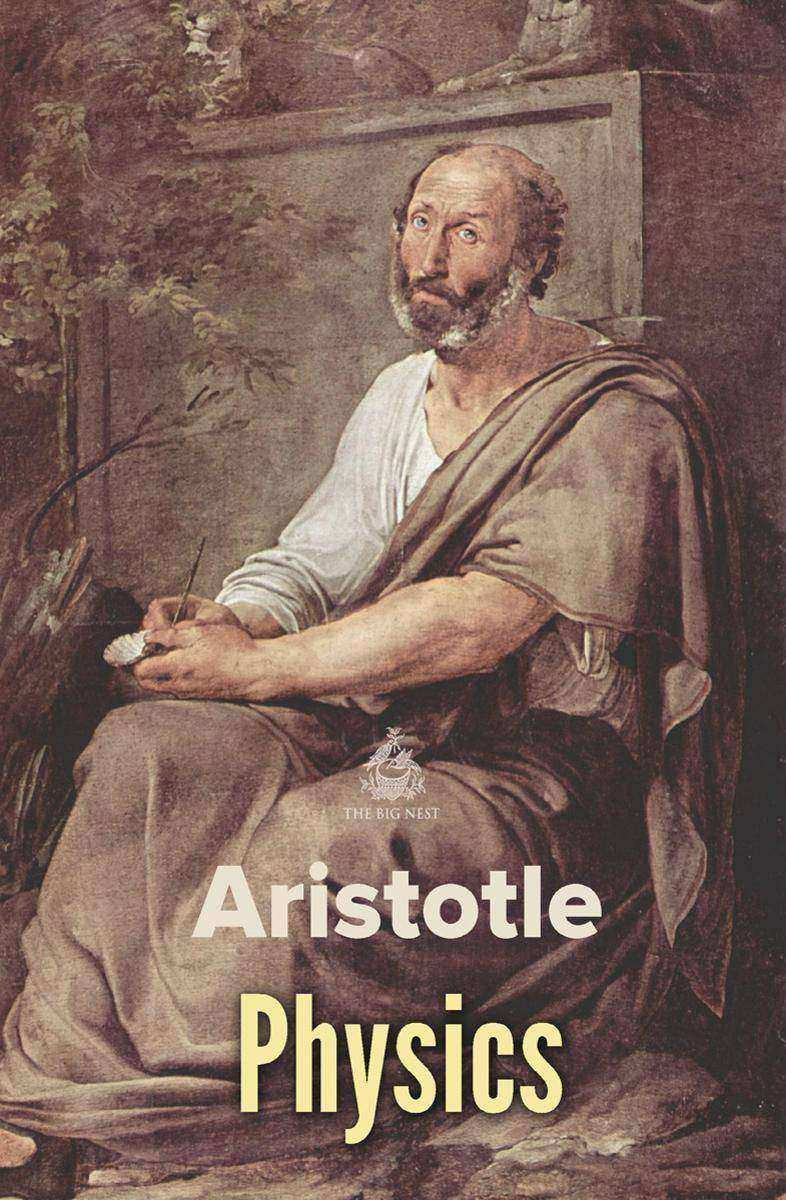
Physics
¥40.79
Physics is a collection of lessons that deal with the general principles of natural or moving things, both living and non-living, rather than physical theories or investigations of the particular contents of the universe. The chief purpose of the work is to discover the principles and causes of change, or movement.
Rhetoric
¥40.79
Aristotle's Rhetoric is an ancient Greek text on the art of persuasion, dating from the 4th century BC.
On Sleep and Sleeplessness
¥40.79
With regard to sleep and waking, we must consider what they are: whether they are peculiar to soul or to body, or common to both; and if common, to what part of soul or body they appertain: further, from what cause it arises that they are attributes of animals, and whether all animals share in them both, or some partake of the one only, others of the other only, or some partake of neither and some of both.
Meditations
¥40.79
Meditations contains a series of personal writings by Marcus Aurelius, Roman Emperor from 161 to 180 AD, recording his private notes to himself and ideas on Stoic philosophy. Stoics often present their philosophy as a way of life. To live a good life, one has to understand the rules of the natural order since they taught that everything is rooted in nature.
On Benefits
¥40.79
On Benefits contains series of moral essays and dialogues composed by the Roman Stoic philosopher Seneca. The work explores such philosophical themes as providence, steadfastness, the happy life, anger, leisure, tranquility, the brevity of life, gift-giving, forgiveness, and treatises on natural phenomena.
Condemned
¥97.69
Discover the astonishing true stories--that will make readers laugh, cry, and gasp--behind the headlines: Salem Witches, Saving Grand Central, Yellowstone Wolf Gunned Down, Redwood to Get Ax, Snaggletooth Killer, DogTown, and more. This series of nonfiction readers will grab a student's interest from the very first page! Designed with struggling readers in mind, these riveting books offer short chapters on high-interest headlines. Each chapter is its own mini-book, which includes a timeline, key terms, and interesting facts. Fascinating black and white photographs keep the pages turning. A bibliography encourages further topical reading.
Delphi Complete Works of Manetho (Illustrated)
¥24.44
An Egyptian priest that flourished in the third century BC, Manetho wrote ‘Aegyptiaca’ (History of Egypt), which provided a detailed history of his homeland to the Hellenic world. Although his original texts are now largely lost, important remains have survived, transmitted to us as fragments from several ancient authors. For many centuries, before hieroglyphics could be read, Manetho’s writings were one of the chief sources of information on Egyptian history. Delphi’s Ancient Classics series provides eReaders with the wisdom of the Classical world, with both English translations and the original Latin and Greek texts. This comprehensive eBook presents Manetho’s complete extant works, with illustrations, informative introductions and the usual Delphi bonus material. (Version 1) * Beautifully illustrated with images relating to Manetho's life and works* Features the complete extant works of Manetho, in both English translation and the original Greek and Latin fragments* Concise introduction to ‘Aegyptiaca’* Includes W. G. Waddell’s translations, previously appearing in the Loeb Classical Library edition of Manetho* Excellent formatting of the texts* Easily locate the works you want to read with individual contents tables* Includes rare fragments of Manetho's other works, first time in digital print* Features a bonus biography – discover Manetho's ancient world* Scholarly ordering of texts into chronological order and literary genres Please visit www.delphiclassics.com to explore our range of Ancient Classics titles or buy the entire series as a Super Set CONTENTS: The TranslationsAEGYPTIACAOTHER FRAGMENTS The Greek and Latin TextsLIST OF GREEK AND LATIN TEXTS The BiographyINTRODUCTION TO MANETHO by W. G. Waddell Please visit www.delphiclassics.com to browse through our range of exciting titles

Pretreatment Guide for Homeless Outreach & Housing First
¥48.74
This book provides social workers, outreach clinicians, case managers, and concerned community members with a pretreatment guide for assisting homeless couples, youth, and single adults. The inter-relationship between Homeless Outreach and Housing First is examined in detail to inform program development and hands on practice. Pretreatment Guide for Homeless Outreach & Housing First shares five detailed case studies from the field to elucidate effective ways of helping and to demonstrate how the most vulnerable among us can overcome trauma and homelessness. Readers will: ·Expand their assessment skills and discover new interventions for helping people who have experienced long-term or chronic homelessness. ·Understand and be able to integrate the stages of common language construction with their own practice. ·Learn about the positive measurable impact of a Housing First approach and its moral, fiscal, and quality of life implications. ·Understand how to better integrate program policy and supervision with Homeless Outreach & Housing First initiatives. ·Learn how to utilize a Pretreatment Approach with couples, youth, and unaccompanied adults experiencing untreated major mental illness and addiction. "Jay S. Levy's book is essential reading to both people new to the movement to end homelessness and folks who have been in the trenches for many years. Learn how to do effective outreach with the chronic homeless population, and the ins and outs of the Housing First model. The personal stories and the success cases will give inspiration to work even harder to help both individuals and for ending homelessness in your community." Michael Stoops, Director of Community Organizing National Coalition for the Homeless, Washington, DC Learn more at www.JaySLevy.com Another empowering book from Loving Healing Press www.LovingHealing.com
I Want a Dog:My Opinion Essay
¥24.44
Hurrah for Essays! All writing lessons should be this much fun. When cousins Dennis and Mellie decide to get a dog, they consider carefully what breed would be best for each family. For example, Dennis wants a big dog, but Mellie wants tiny. He has no other pets, but she has other pets that a dog must get along with. They consider different dog personalities, family situations, and personal preferences. Dennis writes an opinion essay for his teacher, Mrs. Shirky. But will his essay convince his parents to get the dog of his dreams? This story takes a popular subject—kids getting a pet—and adds dogs of all sizes and shapes: all writing lessons should be this much fun. In the end, it’s cousins and the dogs that keep a reader turning the page. What kind of dog will Dennis choose? Will Mellie want the same kind of dog? PRAISE FROM DOG EXPERTS “Darcy Pattison does a remarkable job on several fronts with her wonderful new book I Want A Dog: My Opinion Essay. She introduces the value of the written text at an early age to children. This cannot be emphasized enough in our early classrooms. With this comes an important lesson regarding the responsibility of owning and caring for a dog. As President of the Labrador Retriever Club representing the breed with the largest number of dogs I know how imperative responsible dog ownership is and Darcy does a wonderful job instilling this at an early age. This is a remarkable children’s book that has a lesson.” –Fred Kampo, President of the Labrador Retriever Club This story hits many notes: A family story about cousins, Dennis and Mellie Information on dog breeds Responsible dog ownership Mentor-text for teaching writing Model opinion essay for elementary students Models the writing process, especially the importance of pre-writing or planning before you write Completes the writing process by showing the results of Dennis’s essay I WANT A DOG almost makes opinion essays look too easy. For STEM classes, a good study of dog species. See other books in THE READ AND WRITE series I Want a Cat: My Opinion Essay My Crazy Dog: My Narrative Essay ABOUT THE AUTHOR Growing up, author Darcy Pattison (www.darcypattison.com) wanted to be an astronaut. Instead, she writes about aliens in her early chapter book series, ALIEN, INC. SERIES (Mims House), which includes Kell, the Alien; Kell and the Horse Apple Parade; Kell and the Giants; and Kell and the Detectives. Published in eight languages, her middle grade novels include: Saucy and Bubba: A Hansel and Gretel Tale (Mims House); The Girl, the Gypsy and the Gargoyle (Mims House); and Vagabonds (Mims House). Recent nature books for children include: Abayomi, the Brazilian Puma: The True Story of an Orphaned Cub (Mims House); Wisdom, the Midway Albatross (Mims House), a Starred Review in Publisher’s Weekly; Desert Baths (Arbordale), an NSTA Outstanding Science Trade Book 2013; and, Prairie Storms (Arbordale). Darcy Pattison is the 2007 recipient of Arkansas Governor’s Arts Awards for her work in Children’s Literature. For more see darcypattison.com/about ABOUT THE ILLUSTRATOR In her debut picture book, Ewa O’Neill (ewaoneill.com) creates art that is luscious, inventive, and colorful, bringing the story energy and humor. A dog-lover herself, Ewa (pronounced Eh-vuh) gives each breed a personality that helps kids begin to tell dog breeds apart.
I Want a Cat:My Opinion Essay
¥24.44
Hurrah for Essays! All writing lessons should be this much fun. When cousins Mellie and Dennis decide to get a cat, they consider carefully what breed would be best for each family. For example, Mellie wants a cat that pounces, but Dennis wants a lazy cat, like his lazy dog, Clark Kent. Mellie wants a lap cat, but Dennis just wants a warm body BESIDE him. They consider different cat personalities, family situations, and personal preferences. Mellie writes an opinion essay for her teacher, Mr. Eagle. But will her essay convince her parents to get the cat of her dreams? This story takes a popular subject—kids getting a pet—and adds cats of all sizes and shapes: all writing lessons should be this much fun. In the end, it’s the cousins and the cats that keep a reader turning the page. What kind of cat will Mellie choose? Will Dennis want the same kind of cat? PRAISE FROM CAT EXPERTS “This is an absolutely delightful book intended for children, but actually one that is informative for adults as well, it reinforces the importance of considering various factors when selecting a cat as a pet. The two cousins are exchanging thoughts about their lifestyles and priorities. They each have a vision of their ‘ideal cat.’ Though every cat is an individual, the book expresses the value of predictable personality traits and other characteristics of various pedigreed cat breeds. It is a charming story of the two children each going through the process of finding a cat who best fits their own preferences. The playful illustrations compliment the humorous and educational quality of the book.” --Joan Miller, Cahir, CFA Outreach and Education, Cat Fancier’s Association This is quite simply as informative a cat book as any text out there. Each selected breed pinpoints the single most important trait to know about it before choosing a cat ‘purrfect’ for you. Although written from a child’s perspective, it makes clear sense to readers of all ages. As a cat lover and Maine Coon Cat breeder and enthusiast, I was thrilled with the spot on description and story of this beloved breed. — Alexis Mitchell, Syracoon/Furensics, Maine Coon Cat Breed Council Secretary, Maine Coon Cat breeders of CFA This story hits many notes: A family story about cousins, Dennis and Mellie Scientific information on cat breeds Responsible cat ownership Mentor-text for teaching writing Model opinion essay for elementary students Models the writing process, especially the importance of pre-writing or planning before you write Completes the writing process by showing the results of Dennis’s essay I WANT A DOG almost makes opinion essays look too easy. For STEM classes, a good study of cat species. See other books in THE READ AND WRITE series I Want a Dog: My Opinion Essay My Crazy Dog: My Narrative Essay (forthcoming) ABOUT THE AUTHOR Growing up, author Darcy Pattison (www.darcypattison.com) wanted to be an astronaut. Instead, she writes about aliens in her early chapter book series, ALIEN, INC. SERIES (Mims House), which includes Kell, the Alien; Kell and the Horse Apple Parade; Kell and the Giants; and Kell and the Detectives. Published in eight languages, her middle grade novels include: Saucy and Bubba: A Hansel and Gretel Tale (Mims House); The Girl, the Gypsy and the Gargoyle (Mims House); and Vagabonds (Mims House). Recent nature books for children include: Abayomi, the Brazilian Puma: The True Story of an Orphaned Cub (Mims House); Wisdom, the Midway Albatross (Mims House), a Starred Review in Publisher’s Weekly; Desert Baths (Arbordale), an NSTA Outstanding Science Trade Book 2013; and, Prairie Storms (Arbordale). Darcy Pattison is the 2007 recipient of Arkansas Governor’s Arts Awards for her work in Children’s Literature. For more see darcypattison.com/about ABOUT THE ILLUSTRATOR In her debut picture book, Ewa O’Neill (ewaoneill.com) creates art that is luscious, inventive, and colorful, bringing the story energy and humor. A cat-lover herself, Ewa (pronounced Eh-vuh) gives each breed a personality that helps kids begin to tell cat breeds apart.
The Nantucket Sea Monster:A Fake News Story
¥40.79
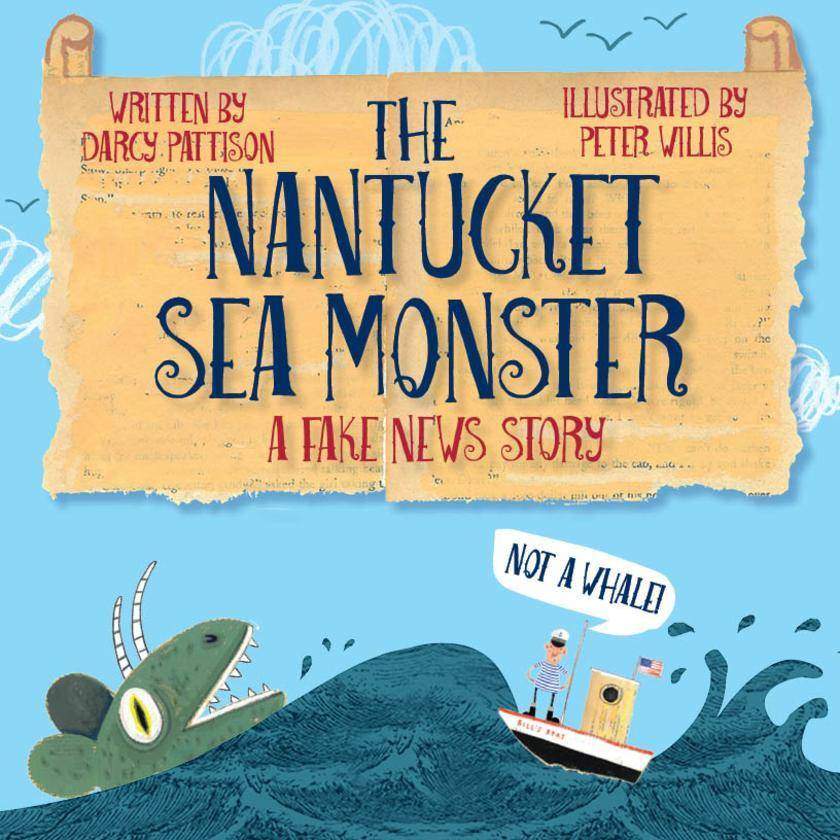
A JUNIOR LIBRARY GUILD SELECTION Do you believe everything you read in the newspaper? Early in August 1937, a news flash came: a sea monster had been spotted lurking off the shore of Nantucket Island. Historically, the Massachusetts island had served as port for whaling ships. Eyewitnesses swore this wasn’t a whale, but some new, fearsome creature. As eyewitness account piled up, newspaper stories of the sea monster spread quickly. Across the nation, people shivered in fear. Then, footprints were found on a Nantucket beach. Photographs were sent to prominent biologists for their opinion. Discussion swirled about raising a hunting party. On August 18, news spread across the island: the sea monster had been captured. Islanders ran to the beach and couldn’t believe their eyes. This nonfiction picture book is a perfect tool to discuss non-political fake news stories. Back matter discusses the freedom of the press guaranteed by the First Amendment to the U.S. Constitution. Quotes from Thomas Jefferson make it clear that fake news has always been one of the costs of a free press. A Timeline lists actual events in the order they occurred. A vocabulary list defines relevant words.

Air Disasters
¥97.69
This series of nonfiction readers will grab a student's interest from the very first page! Designed with struggling readers in mind, these riveting 92-page books offer short chapters on significant disasters. Each chapter is its own mini-book, which includes a timeline, key terms, and interesting facts. Fascinating black and white photographs keep the pages turning. A bibliography encourages further topical reading. Disasters are inherently frightening, riveting, and involving. Grabbed straight from the headlines, these disasters leave tragedy, destruction, and years of anguish: 1977 Tenerife, 1972 Chile, 1982 The Potomac River, Shot Down, Terrorism, Captain Sully Sullenberger, and more.
Mountain Disasters
¥97.69
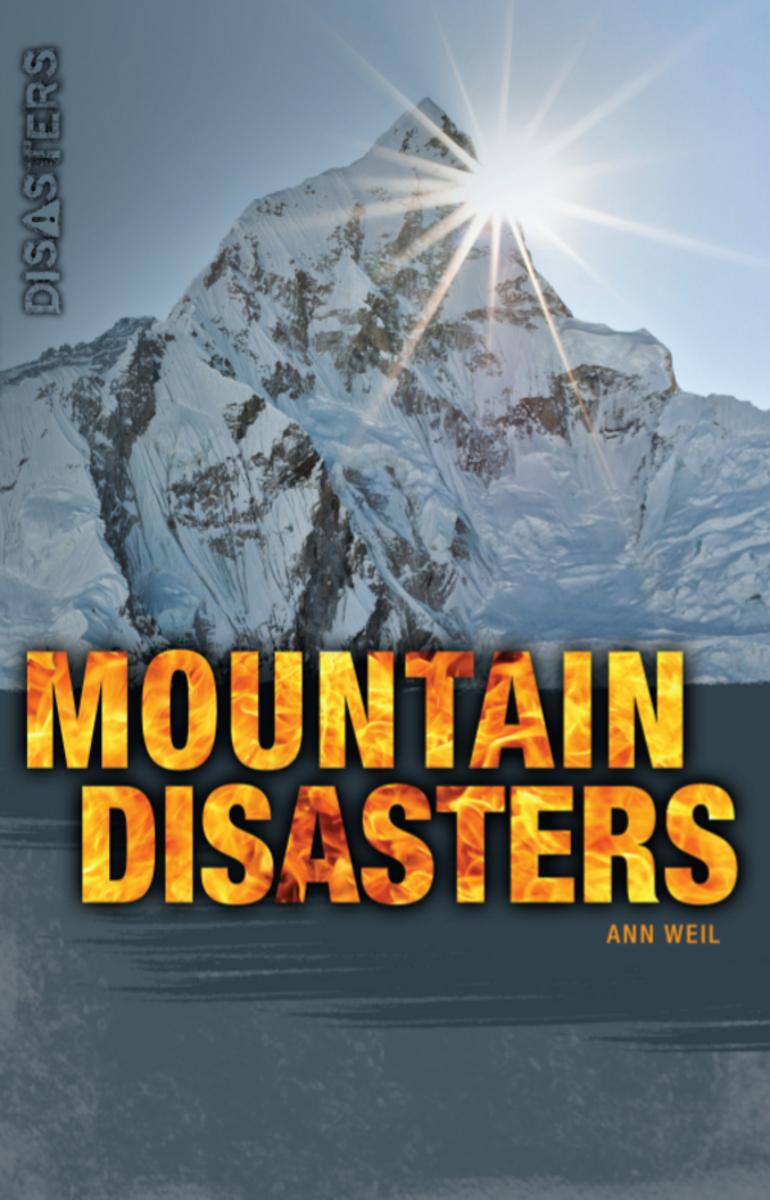
This series of nonfiction readers will grab a student's interest from the very first page! Designed with struggling readers in mind, these riveting 92-page books offer short chapters on significant disasters. Each chapter is its own mini-book, which includes a timeline, key terms, and interesting facts. Fascinating black and white photographs keep the pages turning. A bibliography encourages further topical reading. Disasters are inherently frightening, riveting, and involving. Grabbed straight from the headlines, these disasters leave tragedy, destruction, and years of anguish: The Eiger, Mount Everest, Mount Hood, Siula Grande, Denali, The Deadly Fourteeners, and more.

Sea Disasters
¥97.69
This series of nonfiction readers will grab a student's interest from the very first page! Designed with struggling readers in mind, these riveting 92-page books offer short chapters on significant disasters. Each chapter is its own mini-book, which includes a timeline, key terms, and interesting facts. Fascinating black and white photographs keep the pages turning. A bibliography encourages further topical reading. Disasters are inherently frightening, riveting, and involving. Grabbed straight from the headlines, these disasters leave tragedy, destruction, and years of anguish: The Titanic, Ferry Disasters, Sydney to Hobart, War and Military, The Prestige Oil Spill, The Costa Concordia, and more.
Space Disasters
¥97.69
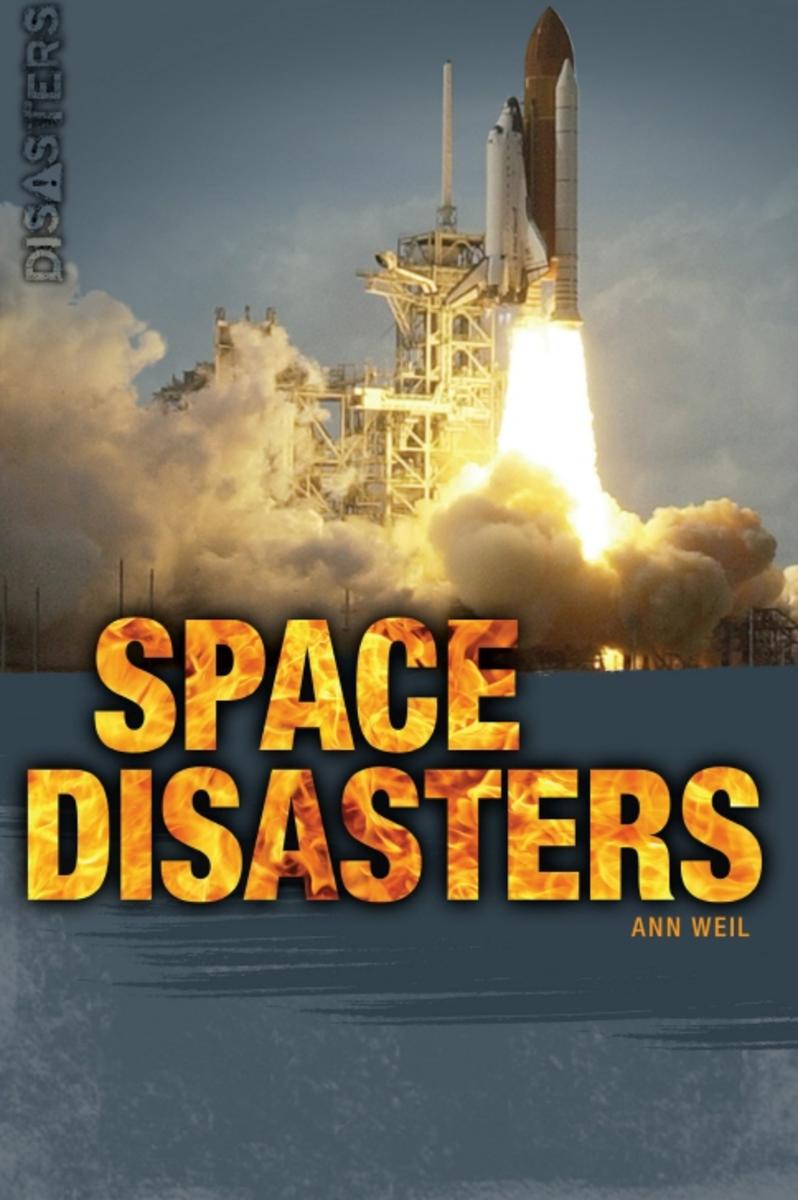
This series of nonfiction readers will grab a student's interest from the very first page! Designed with struggling readers in mind, these riveting 92-page books offer short chapters on significant disasters. Each chapter is its own mini-book, which includes a timeline, key terms, and interesting facts. Fascinating black and white photographs keep the pages turning. A bibliography encourages further topical reading. Disasters are inherently frightening, riveting, and involving. Grabbed straight from the headlines, these disasters leave tragedy, destruction, and years of anguish: Apollo 1, Apollo 13, Soyuz 11, Challenger, Columbia, Asteroid Collisions, and more.
Lost and Found
¥97.69
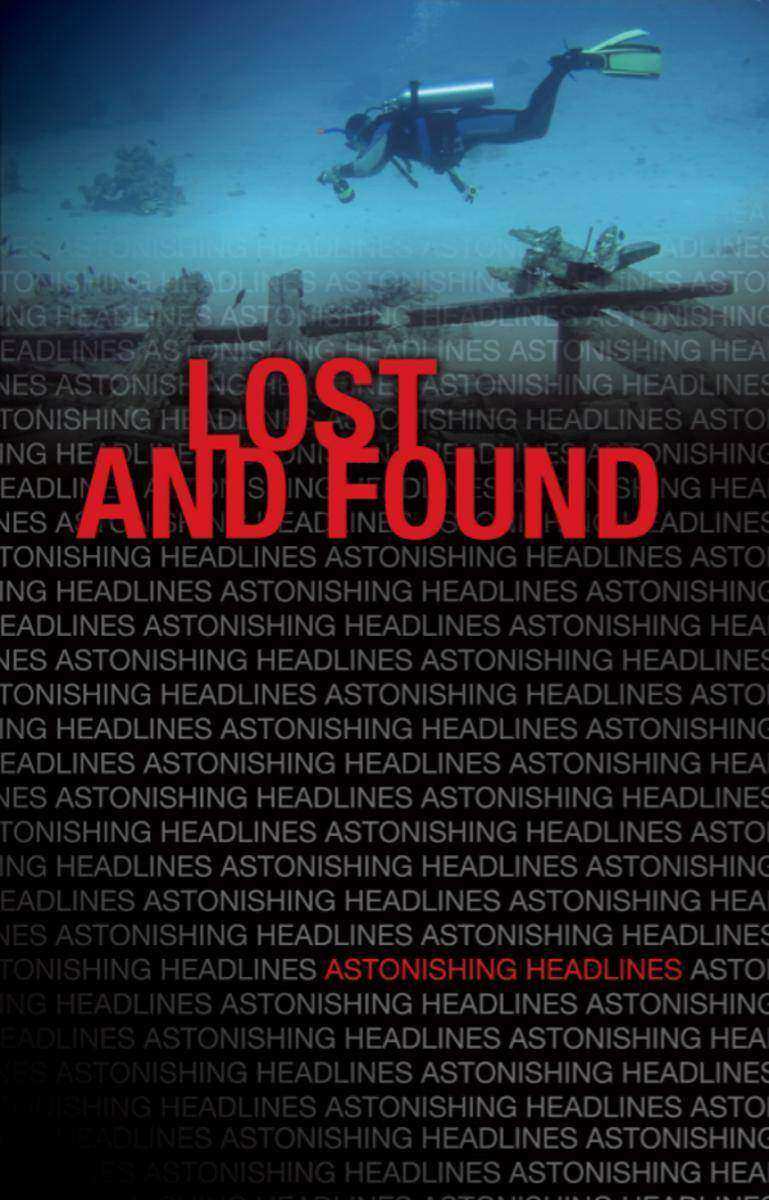
Discover the astonishing true stories--that will make readers laugh, cry, and gasp--behind the headlines: Pompeii, Amelia Earhart, Twins Reunite, Tuffy, HMS Beagle, Stolen Holocaust Masterpiece Fetches Millions, and more. This series of nonfiction readers will grab a student's interest from the very first page! Designed with struggling readers in mind, these riveting books offer short chapters on high-interest headlines. Each chapter is its own mini-book, which includes a timeline, key terms, and interesting facts. Fascinating black and white photographs keep the pages turning. A bibliography encourages further topical reading.


