


 购物车
购物车 个人中心
个人中心
Of the Nature of Things
¥8.09
Classic work of philosophy, in English translation. Titus Lucretius Carus (ca. 99 BC – ca. 55 BC) was a Roman poet and philosopher. His only known work is an epic philosophical poem laying out the beliefs of Epicureanism, De rerum natura, translated into English as On the Nature of Things or "On the Nature of the Universe".
Inaugural Addresses Washington to Obama
¥8.09
Collection of speeches by U.S. presidents. According to Wikipedia: "The inauguration of the President of the United States takes place during the commencement of a new term of a President of the United States, which is every four years... "
Half-Century of Conflict
¥8.09
Part 6 of the Parkman series "France and England in North America". According to Wikipedia: "Francis Parkman (September 16, 1823 - November 8, 1893) was an American historian, best known as author of The Oregon Trail: Sketches of Prairie and Rocky-Mountain Life and his monumental seven volume France and England in North America. These works are still valued as history and especially as literature, although the biases of his work have met with criticism. "
Discovery of the Great West
¥8.09
Part three of the series of historical narratives England and France in North America. According to Wikipedia: "Francis Parkman (September 16, 1823 - November 8, 1893) was an American historian, best known as author of The Oregon Trail: Sketches of Prairie and Rocky-Mountain Life and his monumental seven volume France and England in North America. These works are still valued as history and especially as literature, although the biases of his work have met with criticism. "
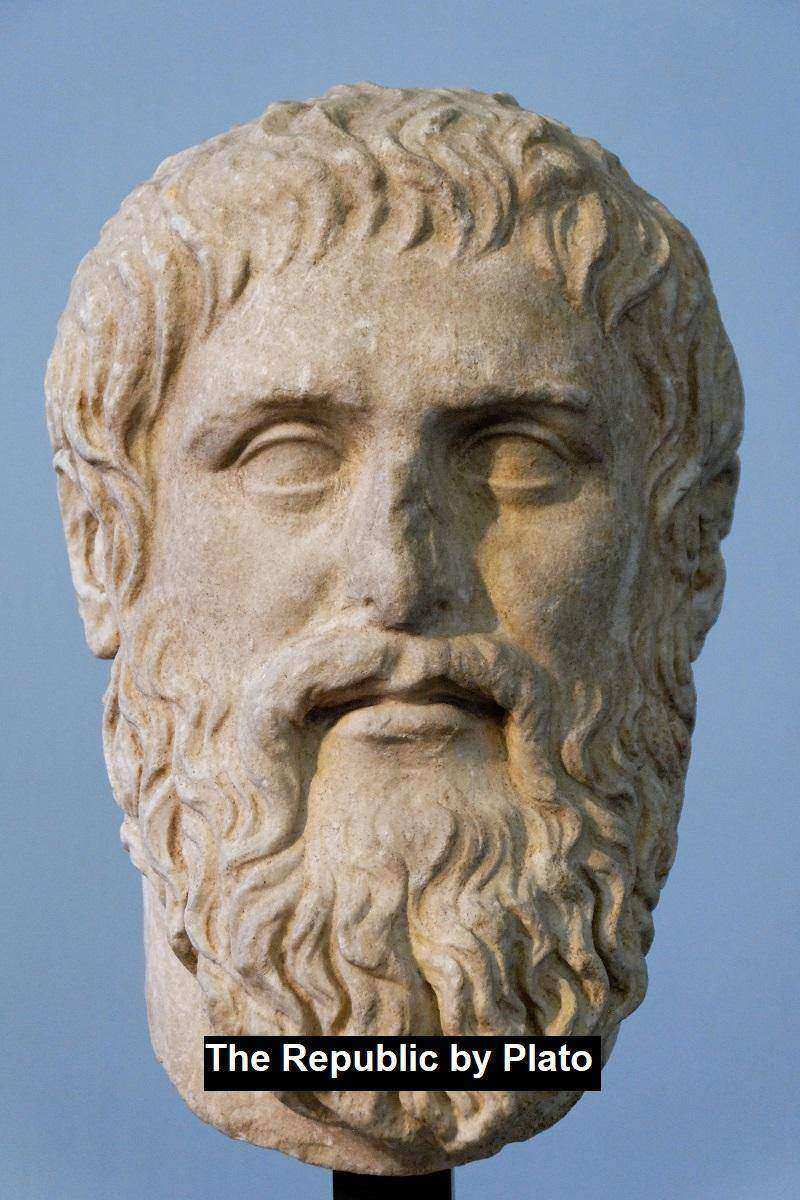
The Republic
¥8.09
Plato's best-known dialogue. According to Wikipedia: "The Republic is a Socratic dialogue written by Plato around 380 BC concerning the definition of justice and the order and character of the just city-state and the just man. The dramatic date of the dialogue has been much debated and though it must take place some time during the Peloponnesian War, "there would be jarring anachronisms if any of the candidate specific dates between 432 and 404 were assigned".[2] It is Plato's best-known work and has proven to be one of the most intellectually and historically influential works of philosophy and political theory. In it, Socrates along with various Athenians and foreigners discuss the meaning of justice and examine whether or not the just man is happier than the unjust man by considering a series of different cities coming into existence "in speech", culminating in a city (Kallipolis) ruled by philosopher-kings; and by examining the nature of existing regimes. The participants also discuss the theory of forms, the immortality of the soul, and the roles of the philosopher and of poetry in society."
Anabasis
¥8.09
The classic tale of Xenophon's long march through enemy territory from Persia (Iran), through present-day Iraq and Turkey, home to Greece. According to Wikipedia: "Xenophon (ca. 431 – 355 BC), son of Gryllus, of the deme Erchia of Athens, also known as Xenophon of Athens and Xenophon of Thebes, was a soldier, mercenary and a contemporary and admirer of Socrates. He is known for his writings on the history of his own times, preserving the sayings of Socrates, and the life of ancient Greece."
The Frontier in American History
¥8.09
Classic work of American history. According to Wikipedia: "Frederick Jackson Turner (November 14, 1861 - March 14, 1932) is widely regarded, along with Charles A. Beard, as one of the two most influential American historians of the early 20th century. He is best known for The Significance of the Frontier in American History."
Count Frontenac and New France Under Louis XIV
¥8.09
Classic work of history. According to Wikipedia: "Francis Parkman (September 16, 1823 - November 8, 1893) was an American historian, best known as author of The Oregon Trail: Sketches of Prairie and Rocky-Mountain Life and his monumental seven volume France and England in North America. These works are still valued as history and especially as literature, although the biases of his work have met with criticism. "

The Will to Believe and Other Essays in Popular Philosophy
¥8.09
According to Wikipedia: ""The Will to Believe" is a lecture by William James, first published in 1896, which defends, in certain cases, the adoption of a belief without prior evidence of its truth. In particular, James is concerned in this lecture about defending the rationality of religious faith even lacking sufficient evidence of religious truth. James' central argument in "The Will to Believe" hinges on the idea that access to the evidence for whether or not certain beliefs are true depends crucially upon first adopting those beliefs without evidence. As an example, James argues that it can be rational to have unsupported faith in one's own ability to accomplish tasks that require confidence. Importantly, James points out that this is the case even for pursuing scientific inquiry. James then argues that like belief in one's own ability to accomplish a difficult task, religious faith can also be rational even if one at the time lacks evidence for the truth of one's religious belief.
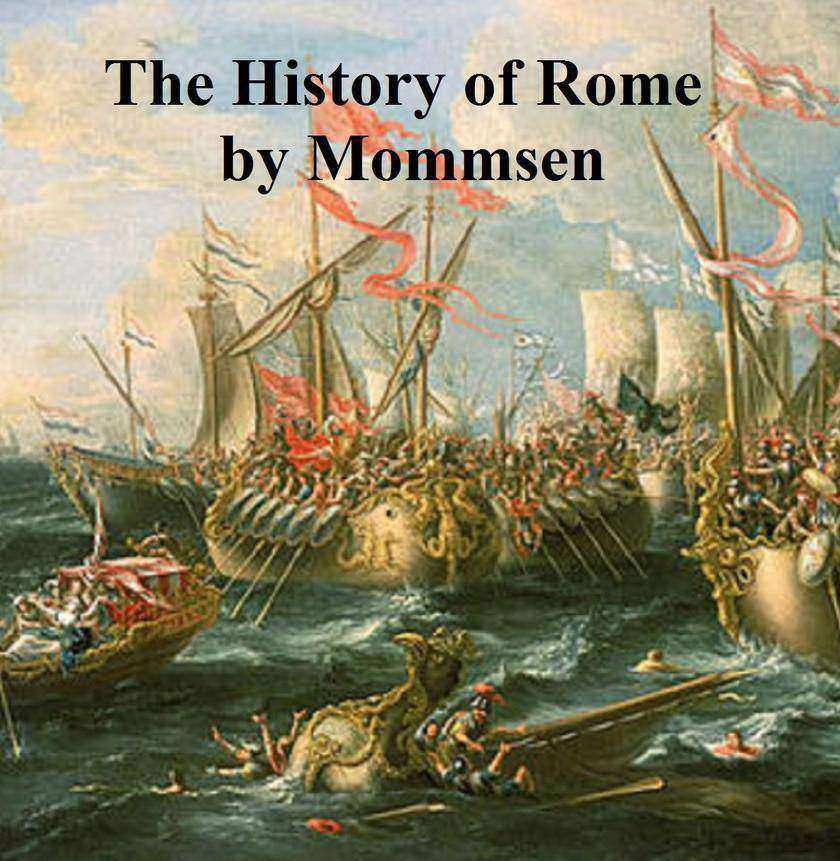
The History of Rome
¥8.09
Mommsen's history of the Roman Republic in five volumes. These volumes cover from the founding of Rome up to the disintegration of the First Triumvirate (Caesar, Pompey, Crassus). The author cites dates in the Roman style, AUC, from the founding of the city in 753 BC. A table at the end shows modern-day equivalents. According to Wikipedia, Mommsen is "generally regarded as the greatest classicist of the 19th century." This work complements Gibbon's "Decline and Fall of the Roman Empire".
The Vital Message
¥8.09
Work of spiritualism by the author of Sherlock Holmes. According to the Preface: "In "The New Revelation" the first dawn of the coming change has been described. In "The Vital Message" the sun has risen higher, and one sees more clearly and broadly what our new relations with the Unseen may be. As I look into the future of the human race I am reminded of how once, from amid the bleak chaos of rock and snow at the head of an Alpine pass, I looked down upon the far stretching view of Lombardy, shimmering in the sunshine and extending in one splendid panorama of blue lakes and green rolling hills until it melted into the golden haze which draped the far horizon. Such a promised land is at our very feet which, when we attain it, will make our present civilisation seem barren and uncouth. Already our vanguard is well over the pass. Nothing can now prevent us from reaching that wonderful land which stretches so clearly before those eyes which are opened to see it."
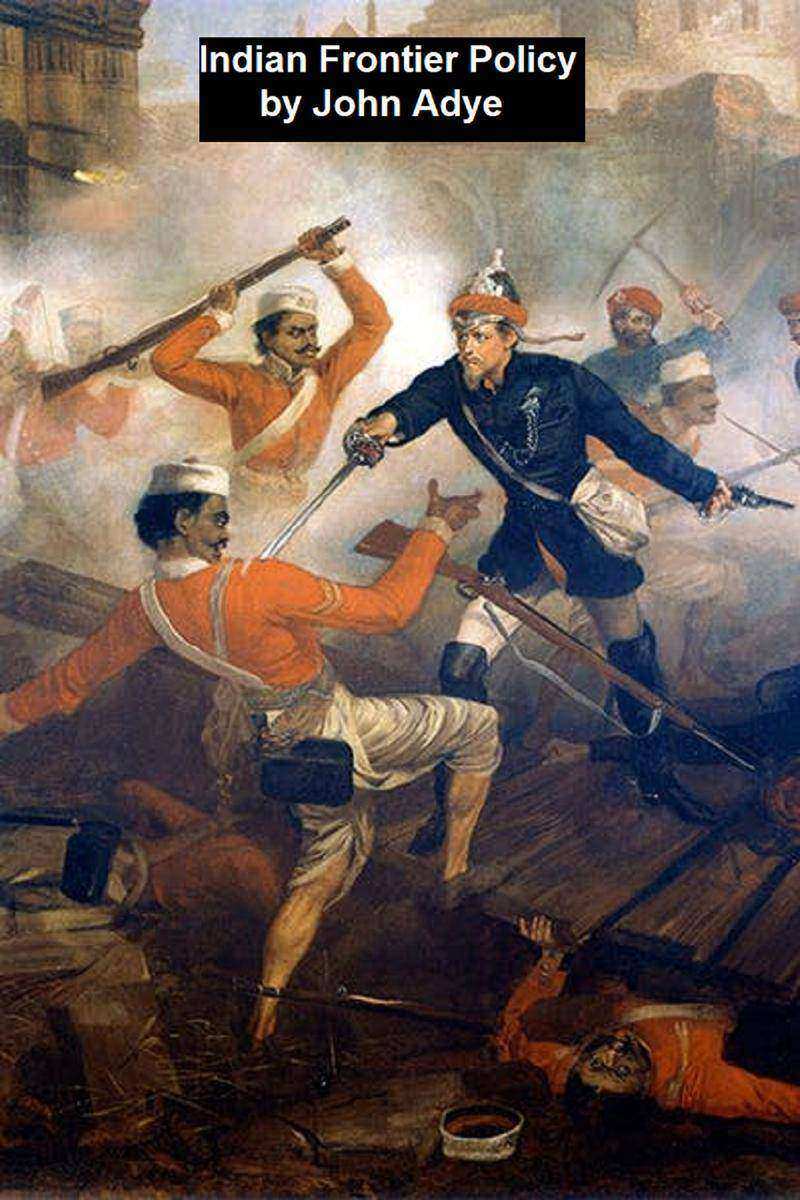
Indian Frontier Policy
¥8.09
According to Wikipedia: "General Sir John Miller Adye GCB (1 November 1819 – 26 August 1900) was a British general and amateur artist." According to the Preface: "The subject of our policy on the North-West frontier of India is one of great importance, as affecting the general welfare of our Eastern Empire, and is specially interesting at the present time, when military operations on a considerable scale are being conducted against a combination of the independent tribes along the frontier. It must be understood that the present condition of affairs is no mere sudden outbreak on the part of our turbulent neighbours. Its causes lie far deeper, and are the consequences of events in bygone years."
The War in South Africa
¥8.09
Account of the Boer War, first published in 1902. According to Wikipedia: "Sir Arthur Ignatius Conan Doyle (22 May 1859 – 7 July 1930) was a Scottish physician and writer who is most noted for his fictional stories about the detective Sherlock Holmes, which are generally considered milestones in the field of crime fiction. He is also known for writing the fictional adventures of a second character he invented, Professor Challenger, and for popularising the mystery of the Mary Celeste. He was a prolific writer whose other works include fantasy and science fiction stories, plays, romances, poetry, non-fiction, and historical novels.
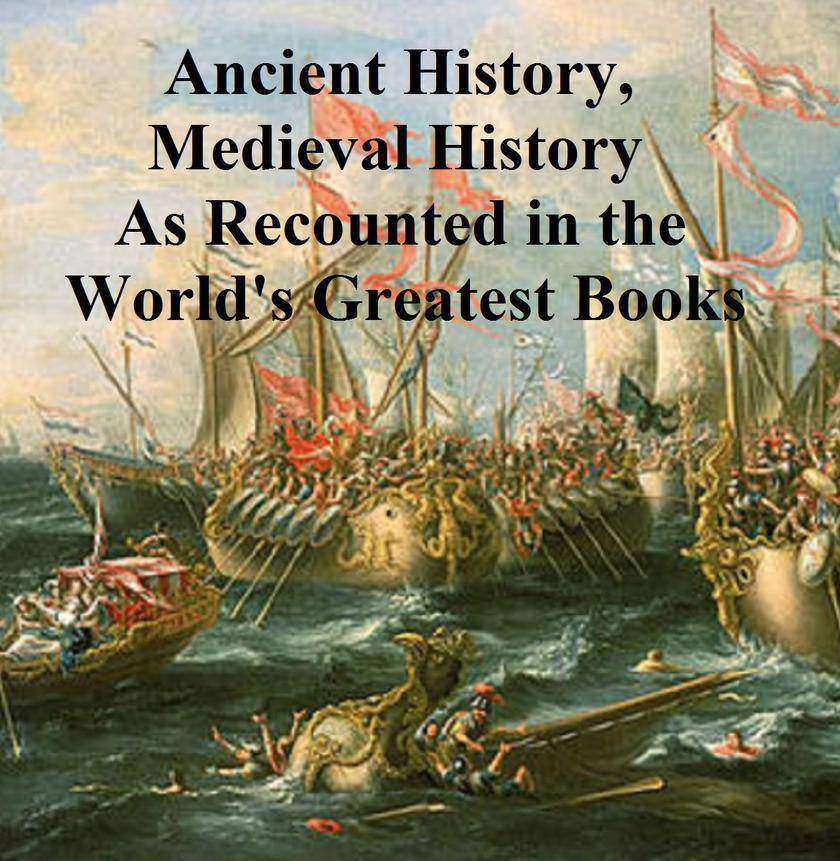
Ancient History, Mediaeval History As Recounted in the World's Greatest Books
¥8.09
First published in 1910, abridgements of such works as: Maspero's Dawn of Civilizatino, Struggle of the Nations, and Passing of the Empires; Josephus' Antiquities of the Jews and Wars of the Jews;Milman's History of the Jews; Herodotus' History; Thucydides' Pelpoonnesian War; Xeophon's Anabasis; Grote's History of Greece, Schliemann's Troy and Its Remains; Caesar's Gallic War; Tacitus' Annals; Sallust's Conspiracy of Catline, Gibbon's Decline and Fal of the Roman Empire; Mommsen's History of Rome; Gibbon's Holy Roman Empire;Guizot's History of civilizatin in Europe, Halam's View of the State of Europe During the MiddleAges; Lane-Poole's Egypt inthe Middle Ages; Holinshed's Chronicles of England, Scotland and Ireland; Freeman's NormanConquest of England, and Froude's History of England.
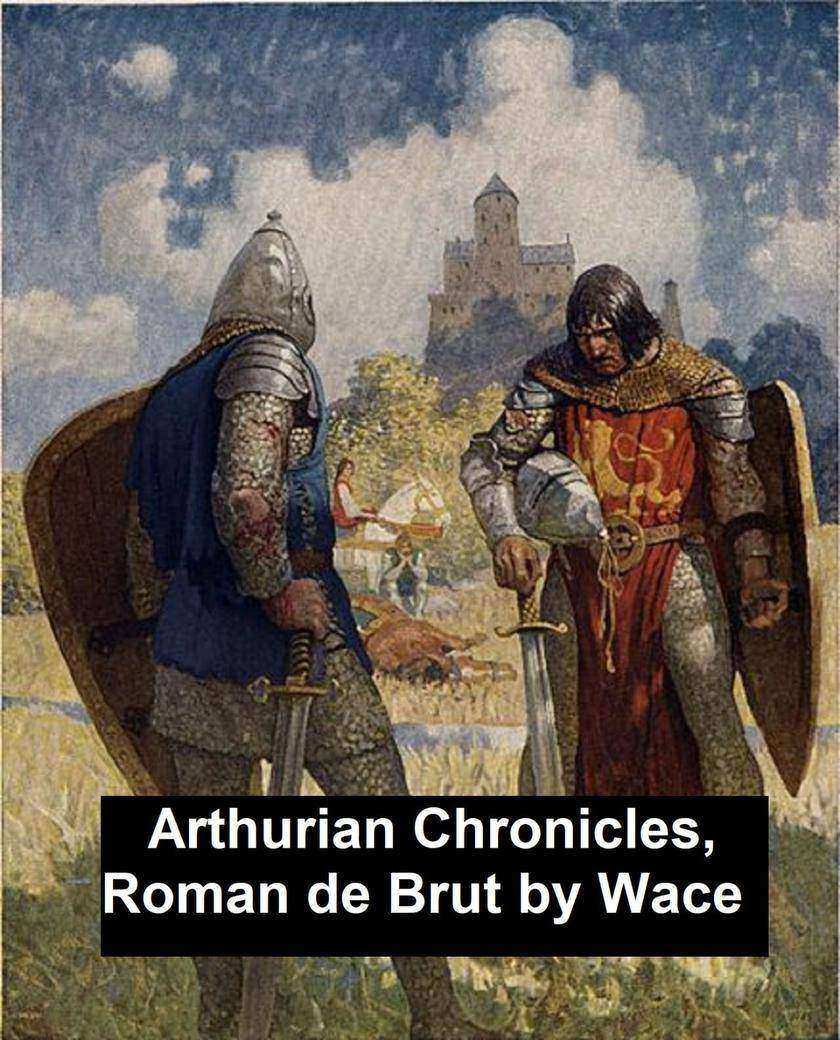
Arthurian Chronicles: Roman de Brut
¥8.09
According to Wikipedia: "Wace (c. 1115 – c. 1183) was an Anglo-Norman poet, who was born in Jersey and brought up in mainland Normandy (he tells us in the Roman de Rou that he was taken as a child to Caen), ending his career as Canon of Bayeux. His extant works include: Roman de Brut - a verse history of Britain and Roman de Rou - a verse history of the Dukes of Normandy. Other works, also in verse, include lives of Saint Margaret and Saint Nicholas. Roman de Brut (c. 1155) was based on the Historia Regum Britanniae of Geoffrey of Monmouth. It cannot be regarded as a history in any modern sense, although Wace often distinguishes between what he knows and what he does not know, or has been unable to find out. Wace narrates the founding of Britain, by Brutus of Troy, to the end of the legendary British history created by Geoffrey of Monmouth."
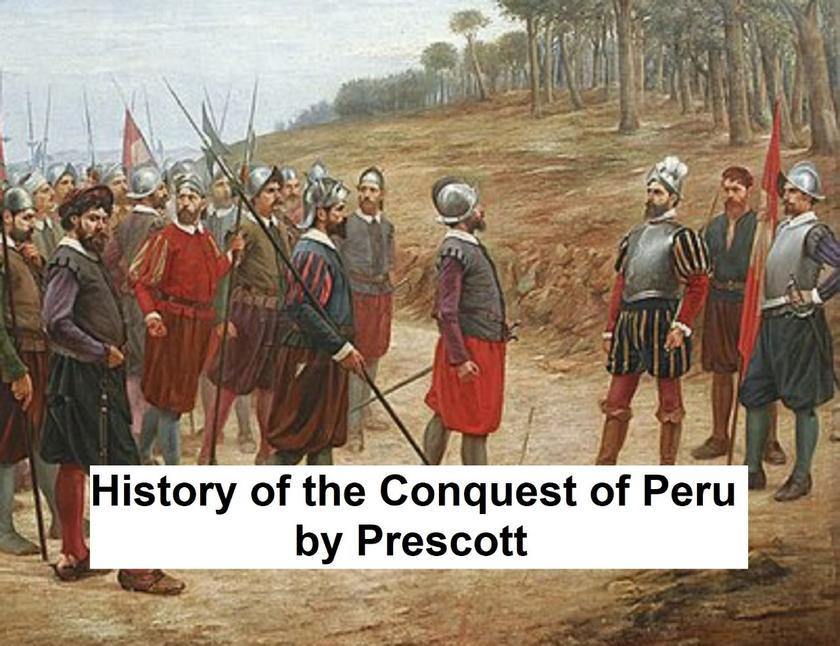
The History of the Conquest of Peru
¥8.09
According to Wikipedia: "The Spanish conquest of the Inca Empire was one of the most important campaigns in the Spanish colonization of the Americas. After years of preliminary exploration and military skirmishes, 168 Spanish soldiers under Francisco Pizarro and their native allies captured the Sapa Inca Atahualpa in the 1532 Battle of Cajamarca. It was the first step in a long campaign that took decades of fighting but ended in Spanish victory and colonization of the region as the Viceroyalty of Peru. The conquest of the Inca Empire led to spin-off campaigns into present-day Chile and Colombia as well as expeditions towards the Amazon Basin.... William Hickling Prescott (May 4, 1796 – January 29, 1859) was an American historian, known for his books The History of the Reign of Ferdinand and Isabella the Catholic and The History of the Conquest of Mexico… After ten years of study, he published in 1837 his History of Ferdinand and Isabella, which at once gained for him a high place among historians. It was followed in 1843 by the History of the Conquest of Mexico, and in 1847 by the Conquest of Peru. His last work was the History of Philip II, of which the third volume appeared in 1858, and which was left unfinished. In that year he had an apoplectic shock, and another in 1859 was the cause of his death. In all his works he displayed great research, impartiality, and an admirable narrative power. The great disadvantage at which, owing to his very imperfect vision, he worked, makes the first of these qualities specially remarkable, for his authorities in a foreign tongue were read to him, while he had to write on a frame for the blind. Prescott was a man of amiable and benevolent character, and enjoyed the friendship of many of the most distinguished men in Europe as well as in America. Much of Prescott's work was based on his researches with unpublished documents in archives in Spain."
Apocrypha (King James Version)
¥8.09
Long-revered religious works that were excluded from the King James version of the Bible, including: The First Book of Esdras, The Second Book of Esdras Esdras [sometimes Fourth Book of Ezra], The Greek Additions to Esther, The First Book of the Maccabees, The Second Book of the Maccabees, The Book of Tobit, The Book of Judith, The Wisdom of Solomon, The Book of Sirach (or Ecclesiasticus), The Book of Baruch, The Epistle (or letter) of Jeremiah, The Book of Susanna (in Daniel), The Prayer of Azariah, and The Prayer of Manasseh.

Grace
¥8.09
According to Wikipedia: "Lewis Sperry Chafer (February 27, 1871 – August 22, 1952) was the founder and first president of Dallas Theological Seminary, and an influential founding member of modern Christian Dispensationalism.
Science and Health, with Key to the Scriptures
¥8.09
According to Wikipedia: "Mary Baker Eddy (born Mary Morse Baker July 16, 1821 – December 3, 1910) was the founder of the Christian Science movement. Deeply religious, she advocated Christian Science as a spiritual practical solution to health and moral issues. She wrote Science and Health with Key to the Scriptures, founded The First Church of Christ, Scientist of Boston in 1879, and several periodicals including The Christian Science Monitor. She took the name Mary Baker Glover from her first marriage and was also known as Mary Baker Glover Eddy or Mary Baker G. Eddy from her third marriage. She did much spiritual teaching, lecturing, and instantaneous healing. Her influence continues to grow through her writings."
Cyrus the Great
¥8.09
According to Wikipedia: "Jacob Abbott (November 14, 1803 – October 31, 1879) was an American writer of children's books. Abbott was born at Hallowell, Maine to Jacob and Betsey Abbott. He graduated from Bowdoin College in 1820; studied at Andover Theological Seminary in 1821, 1822, and 1824; was tutor in 1824-1825, and from 1825 to 1829 was professor of mathematics and natural philosophy at Amherst College; was licensed to preach by the Hampshire Association in 1826; founded the Mount Vernon School for Young Ladies in Boston in 1829, and was principal of it in 1829-1833; was pastor of Eliot Congregational Church (which he founded), at Roxbury, Massachusetts in 1834-1835; and was, with his brothers, a founder, and in 1843-1851 a principal of Abbott's Institute, and in 1845-1848 of the Mount Vernon School for Boys, in New York City. He was a prolific author, writing juvenile fiction, brief histories, biographies, religious books for the general reader, and a few works in popular science. He died in Farmington, Maine, where he had spent part of his time after 1839, and where his brother, Samuel Phillips Abbott, founded the Abbott School."

The Prince
¥8.09
Based largley on examples from the life of Cesare Borgia (son of Pope Alexander VI and sister of Lucrezia Borgia), this book was intended as practical advice for how to unify Italy with force. Machiavelli begins with the assumption that the end justifies the means -- so any action is permitted that leads to a unified Italy. His work has served for centuries as a handbook for would-be dictators and conquerors. According to Wikipedia: "Niccolò di Bernardo dei Machiavelli (1469 – 1527) was an Italian diplomat, political philosopher, musician, poet and playwright. Machiavelli was a figure of the Italian Renaissance, and a servant of the Florentine republic. In June of 1498, following the ouster and execution of Savonarola, the Great Council elected Machiavelli as the Secretary to the second Chancery of the Republic of Florence. He is most famous — or notorious — for one of his shorter works, The Prince, sometimes described as a work of realist political theory. However, both that text and the more substantial republican Discourses on Livy — as well as History of Florence (commissioned by the Medici family) — were printed only after his death, all appearing in the early 1530s. In his own lifetime, while he circulated The Prince among friends, the only work Machiavelli promoted through printing was his dialogue on The Art of War. But generations from the sixteenth century onwards were most attracted and repelled by the cynical approach to power on display in The Prince, Discourses and History. Whatever Machiavelli's own intentions (and they remain a matter of heated debate), his name became synonymous with ruthless politics, deceit and the pursuit of power by any means."


