


 购物车
购物车 个人中心
个人中心
Cyclops - Talk sense to a fool and he calls you foolish
¥14.03
Euripides is rightly lauded as one of the great dramatists of all time. In his lifetime, he wrote over 90 plays and although only 18 have survived they reveal the scope and reach of his genius. Euripides is identified with many theatrical innovations that have influenced drama all the way down to modern times, especially in the representation of traditional, mythical heroes as ordinary people in extraordinary circumstances. As would be expected from a life lived 2,500 years ago, details of it are few and far between. Accounts of his life, written down the ages, do exist but whether much is reliable or surmised is open to debate. Most accounts agree that he was born on Salamis Island around 480 BC, to mother Cleito and father Mnesarchus, a retailer who lived in a village near Athens. Upon the receipt of an oracle saying that his son was fated to win "e;crowns of victory"e;, Mnesarchus insisted that the boy should train for a career in athletics. However, what is clear is that athletics was not to be the way to win crowns of victory. Euripides had been lucky enough to have been born in the era as the other two masters of Greek Tragedy; Sophocles and schylus. It was in their footsteps that he was destined to follow. His first play was performed some thirteen years after the first of Socrates plays and a mere three years after schylus had written his classic The Oristria. Theatre was becoming a very important part of the Greek culture. The Dionysia, held annually, was the most important festival of theatre and second only to the fore-runner of the Olympic games, the Panathenia, held every four years, in appeal. Euripides first competed in the City Dionysia, in 455 BC, one year after the death of schylus, and, incredibly, it was not until 441 BC that he won first prize. His final competition in Athens was in 408 BC. The Bacchae and Iphigenia in Aulis were performed after his death in 405 BC and first prize was awarded posthumously. Altogether his plays won first prize only five times. Euripides was also a great lyric poet. In Medea, for example, he composed for his city, Athens, "e;the noblest of her songs of praise"e;. His lyric skills however are not just confined to individual poems: "e;A play of Euripides is a musical whole....one song echoes motifs from the preceding song, while introducing new ones."e; Much of his life and his whole career coincided with the struggle between Athens and Sparta for hegemony in Greece but he didn't live to see the final defeat of his city. Euripides fell out of favour with his fellow Athenian citizens and retired to the court of Archelaus, king of Macedon, who treated him with consideration and affection. At his death, in around 406BC, he was mourned by the king, who, refusing the request of the Athenians that his remains be carried back to the Greek city, buried him with much splendor within his own dominions. His tomb was placed at the confluence of two streams, near Arethusa in Macedonia, and a cenotaph was built to his memory on the road from Athens towards the Piraeus.
King John
¥17.56
William Shakespeare was born in Stratford-upon-Avon in late April 1565 and baptised there on 26th April. He was one of eight children. Little is known about his life but what is evident is the enormous contribution he has made to world literature. His writing was progressive, magnificent in scope and breathtaking in execution. His plays and sonnets helped enable the English language to speak with a voice unmatched by any other. William Shakespeare died on April 23rd 1616, survived by his wife and two daughters. He was buried two days after his death in the chancel of the Holy Trinity Church. The epitaph on the slab which covers his grave includes the following passage, Good friend, for Jesus's sake forbear, To dig the dust enclosed here. Blessed me the man that spares these stones, And cursed be he that moves my bones. Here we publish his historical play from 1596 'King John'.
Romeo and Juliet - Tempt not a desperate man
¥11.67
The life of William Shakespeare, arguably the most significant figure in the Western literary canon, is relatively unknown. Shakespeare was born in Stratford-upon-Avon in 1565, possibly on the 23rd April, St. George's Day, and baptised there on 26th April. Little is known of his education and the first firm facts to his life relate to his marriage, aged 18, to Anne Hathaway, who was 26 and from the nearby village of Shottery. Anne gave birth to their first son six months later. Shakespeare's first play, The Comedy of Errors began a procession of real heavyweights that were to emanate from his pen in a career of just over twenty years in which 37 plays were written and his reputation forever established. This early skill was recognised by many and by 1594 the Lord Chamberlain's Men were performing his works. With the advantage of Shakespeare's progressive writing they rapidly became London's leading company of players, affording him more exposure and, following the death of Queen Elizabeth in 1603, a royal patent by the new king, James I, at which point they changed their name to the King's Men. By 1598, and despite efforts to pirate his work, Shakespeare's name was well known and had become a selling point in its own right on title pages. No plays are attributed to Shakespeare after 1613, and the last few plays he wrote before this time were in collaboration with other writers, one of whom is likely to be John Fletcher who succeeded him as the house playwright for the King's Men. William Shakespeare died two months later on April 23rd, 1616, survived by his wife, two daughters and a legacy of writing that none have since yet eclipsed.
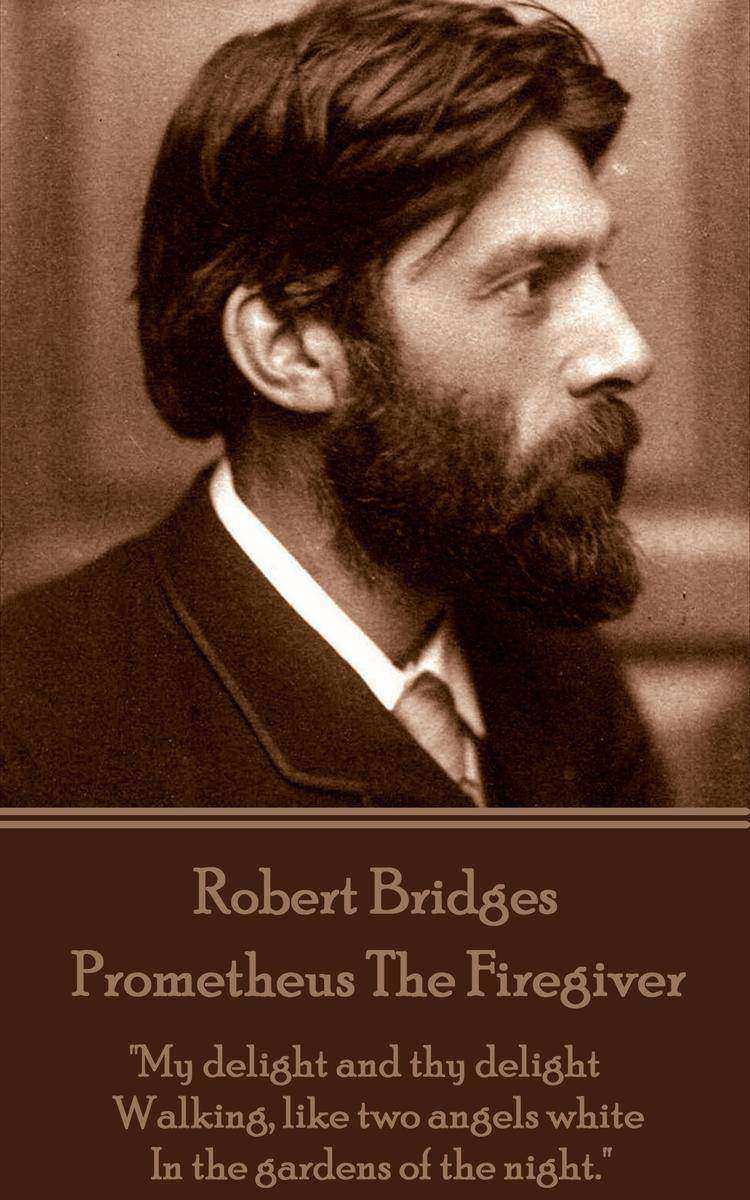
Prometheus The Firegiver - My delight and thy delight Walking
¥29.33
Robert Bridges was born in Walmer, Kent on the 23rd of October 1844. He went to study medicine intending to practise until the age of forty and then retire to write poetry. Lung disease forced him to retire in 1882, and from that point on he devoted himself to writing and literary research. However, Bridges' literary work started long before his retirement, his first collection of poems having been published in 1873. He was appointed Poet Laureate in 1913 by George V, the only medical graduate to have held the office. He died in Oxford on the 21st of April 1930. Here we present Prometheus The Firegiver.

Old Law - Tis time to die, when 'tis a shame to live.
¥23.45
Thomas Middleton was born in London in April 1580 and baptised on 18th April. Middleton was aged only five when his father died. His mother remarried but this unfortunately fell apart into a fifteen year legal dispute regarding the inheritance due Thomas and his younger sister. By the time he left Oxford, at the turn of the Century, Middleton had and published Microcynicon: Six Snarling Satirese which was denounced by the Archbishop of Canterbury and publicly burned. In the early years of the 17th century, Middleton wrote topical pamphlets. One - Penniless Parliament of Threadbare Poets was reprinted several times and the subject of a parliamentary inquiry. These early years writing plays continued to attract controversy. His writing partnership with Thomas Dekker brought him into conflict with Ben Jonson and George Chapman in the so-called War of the Theatres. His finest work with Dekker was undoubtedly The Roaring Girl, a biography of the notorious Mary Frith. In the 1610s, Middleton began another playwriting partnership, this time with the actor William Rowley, producing another slew of plays including Wit at Several Weapons and A Fair Quarrel. The ever adaptable Middleton seemed at ease working with others or by himself. His solo writing credits include the comic masterpiece, A Chaste Maid in Cheapside, in 1613. In 1620 he was officially appointed as chronologer of the City of London, a post he held until his death. The 1620s saw the production of his and Rowley's tragedy, and continual favourite, The Changeling, and of several other tragicomedies. However in 1624, he reached a peak of notoriety when his dramatic allegory A Game at Chess was staged by the King's Men. Though Middleton's approach was strongly patriotic, the Privy Council silenced the play after only nine performances at the Globe theatre, having received a complaint from the Spanish ambassador. What happened next is a mystery. It is the last play recorded as having being written by Middleton. Thomas Middleton died at his home at Newington Butts in Southwark in the summer of 1627, and was buried on July 4th, in St Mary's churchyard which today survives as a public park in Elephant and Castle.
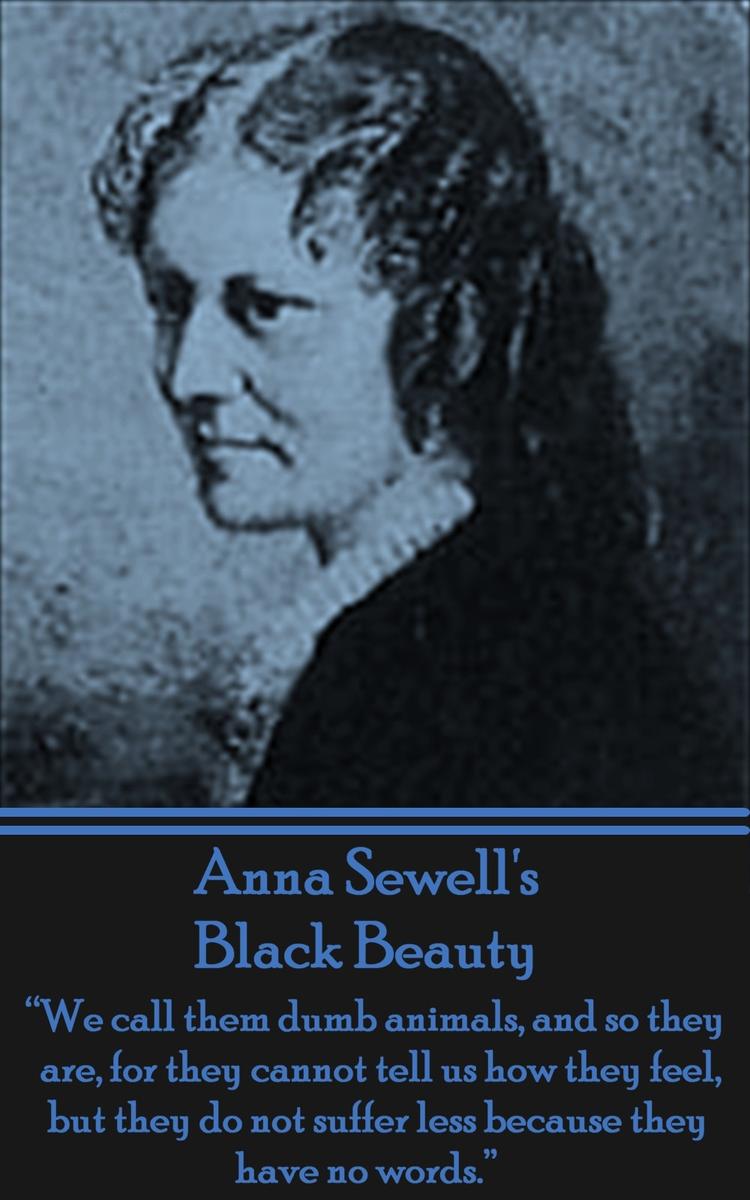
Black Beauty - We call them dumb animals, and so they are
¥16.38
Anna Sewell's only published novel, Black Beauty, is an extraordinary classic that deals with animal life and focuses on the importance of good animal treatment. The idea of writing a book about animal rights has been inspired by Sewell's own physical disability which has made her dependent on horse-drawn transportation. The narrator in Black Beauty is himself a personified horse who tells his life story and describes the world through his own lenses. Sewell says that the objective of writing the novel is to sensitize people to the sufferings of "e;working animals"e; and she has actually succeeded in fostering legislation protecting horses and in influencing public attitudes towards animal pain. Black Beauty's life crucially changes when he is taken from a country farm to pull cabs in the city of London. The different ordeals that he has to go through often contain a moral lesson that teaches kindness and sympathy not only for the poor animals, but also between human beings themselves. Indeed, the novel does not miss to cover the hardships of London taxi drivers either. Generally, Sewell's seminal classic has had a great influence on other writers of animal stories and has opened up new windows of discovering animal life.
Love's Triumph
¥21.09
Edward Cooke was a 17th Century English playwright and translator. His major work is 'Love's Triumph' which celebrates the marriage of Princess Mary and William of Orange in 1677.The only other work known is a translation by him of The Divine Epicurus, or, The Empire of Pleasure over the vertues compos'd by Antoine LeGrand.No other details on his work or life are available.
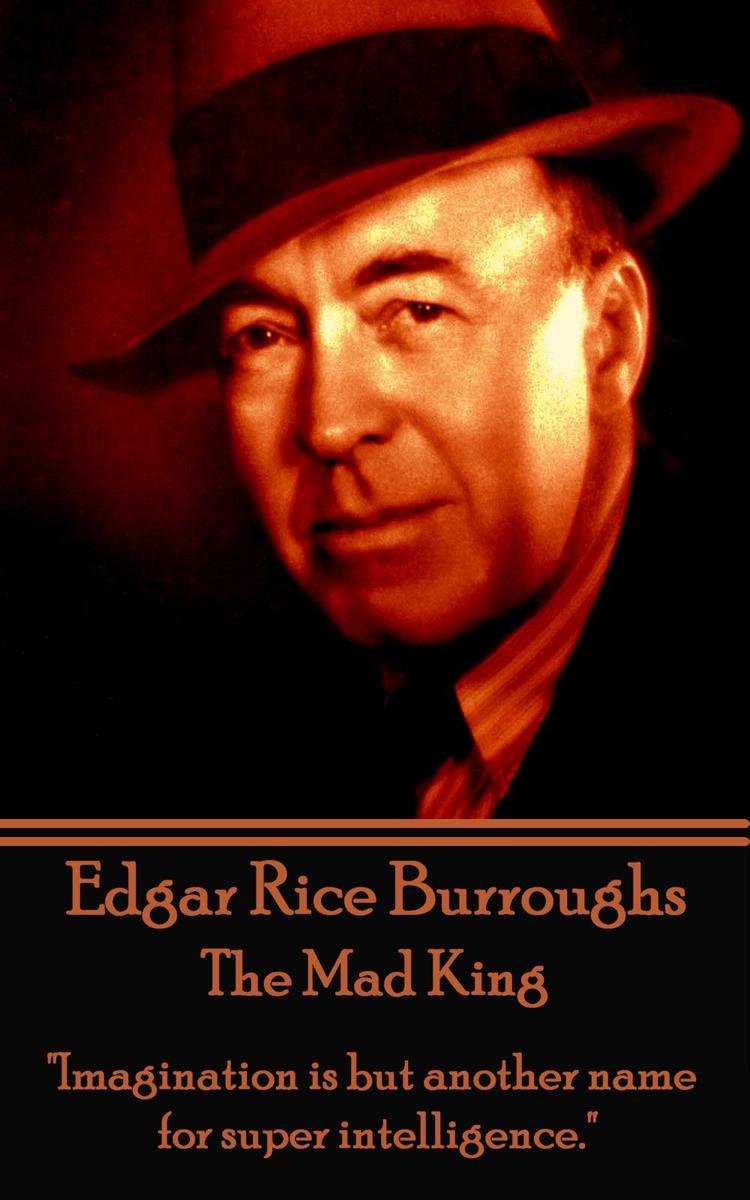
Mad King - Imagination is but another name for super intelligence.
¥35.22
Edgar Rice Burroughs was born on September 1, 1875, in Chicago, Illinois. His early career was unremarkable. After failing to enter West Point he enlisted in the 7th Calvary but was discharged after heart problems were diagnosed. A series of short term jobs gave no indication as to a career path but finally, in 1911, married and with two young children, he turned his hand to writing. He aimed his works squarely at the very popular pulp serial magazines. His first effort 'Under The Moons Of Mars' ran in Munsey's Magazine in 1912 under the pseudonym Norman Bean. With its success he began writing full time. A continuing theme of his work was to develop series so that each character had ample opportunities to return in sequels. John Carter was in the Mars series and there was another on Venus and one on Pellucidar among others. But perhaps the best known is Tarzan. Indeed Burroughs wanted so much to capitalise upon the brand that he introduced a syndicated Tarzan comic strip, movies and merchandise. He purchased a large ranch north of Los Angeles, California, which he named "e;Tarzana."e; The surrounding communities outside the ranch voted in 1927 to adopt the name as their own. By 1932 Burroughs set up his own company to print his own books. Here we publish 'The Mad King' somewhat different to what you think Burroughs would write but an engaging and crafted work that shows why Burroughs was able to weave his talents into so many stories.
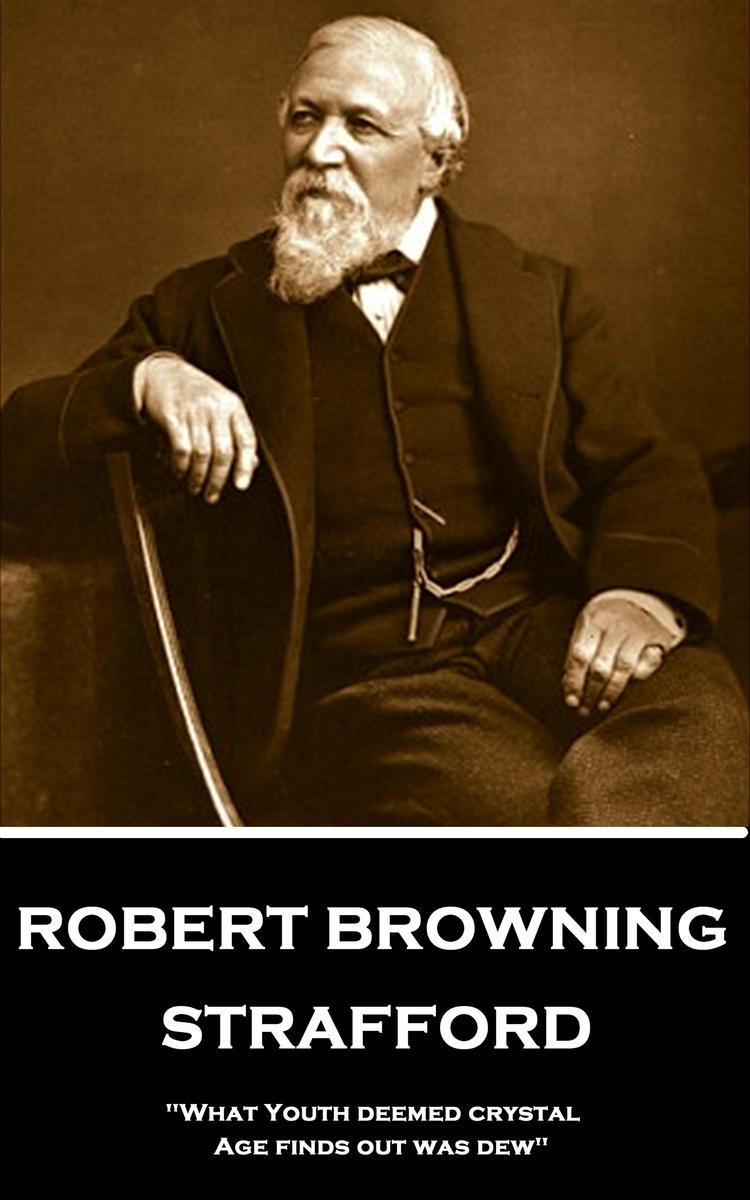
Strafford - What Youth deemed crystal, Age finds out was dew
¥21.09
Robert Browning is one of the most significant Victorian Poets and, of course, English Poetry.Much of his reputation is based upon his mastery of the dramatic monologue although his talents encompassed verse plays and even a well-regarded essay on Shelley during a long and prolific career. He was born on May 7th, 1812 in Walmouth, London. Much of his education was home based and Browning was an eclectic and studious student, learning several languages and much else across a myriad of subjects, interests and passions. Browning's early career began promisingly. The fragment from his intended long poem Pauline brought him to the attention of Dante Gabriel Rossetti, and was followed by Paracelsus, which was praised by both William Wordsworth and Charles Dickens. In 1840 the difficult Sordello, which was seen as willfully obscure, brought his career almost to a standstill. Despite these artistic and professional difficulties his personal life was about to become immensely fulfilling. He began a relationship with, and then married, the older and better known Elizabeth Barrett. This new foundation served to energise his writings, his life and his career. During their time in Italy they both wrote much of their best work. With her untimely death in 1861 he returned to London and thereafter began several further major projects. The collection Dramatis Personae (1864) and the book-length epic poem The Ring and the Book (1868-69) were published and well received; his reputation as a venerated English poet now assured. Robert Browning died in Venice on December 12th, 1889.
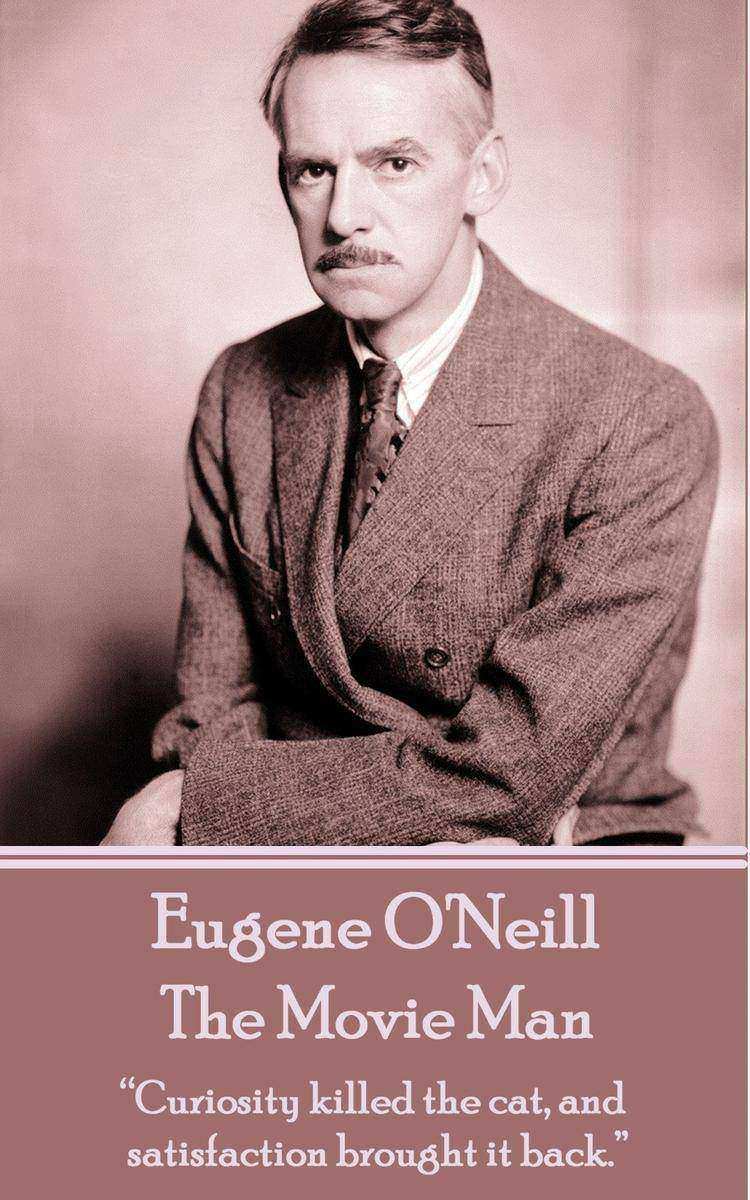
Movie Man - Curiosity killed the cat, and satisfaction brought it back.
¥14.03
Eugene Gladstone O'Neill was born on October 16, 1888 in a hotel bedroom in what is now Times Square, New York. Much of his childhood was spent in the comfort of books at boarding schools whilst his actor father was on the road and his Mother contended with her own demons. He spent only a year at University - Princeton - and various reasons have been given for his departure. However whatever his background and education denied or added to his development it is agreed amongst all that he was a playwright of the first rank and possibly America's greatest. His introduction of realism into American drama was instrumental in its development and paved a path for many talents thereafter. Of course his winning of both the Pulitzer Prize (4 times) and the Nobel Prize are indicative of his status. His more famous and later works do side with the disillusionment and personal tragedy of those on the fringes of society but continue to build upon ideas and structures he incorporated in his early one act plays. Eugene O'Neill suffered from various health problems, mainly depression and alcoholism. In the last decade he also faced a Parkinson's like tremor in his hands which made writing increasingly difficult. But out of such difficulties came plays of the calibre of The Iceman Cometh, Long Day's Journey Into Night, and A Moon for the Misbegotten. Eugene O'Neill died in Room 401 of the Sheraton Hotel on Bay State Road in Boston, on November 27, 1953, at the age of 65. As he was dying, he whispered his last words: "e;I knew it. I knew it. Born in a hotel room and died in a hotel room."e;
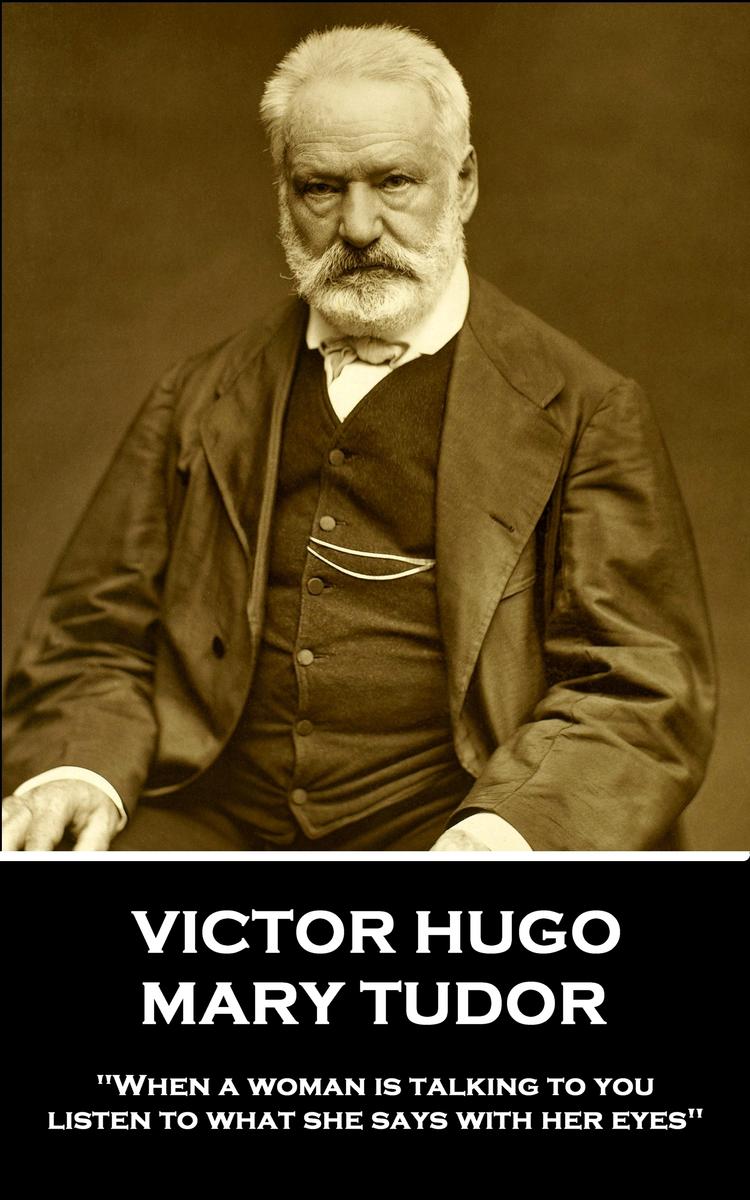
Mary Tudor - When a woman is talking to you, listen to what she says with her ey
¥29.33
Victor Marie Hugo was born on 26th February 1802 and is revered as the greatest of all French writers. A poet, novelist, dramatist and painter he was a passionate supporter of Republicanism and made a notable contribution to the politics of his Country.His life was paralleled by the immense political and social movements of the 19th Century. When he was two Napoleon was proclaimed Emperor but before he was eighteen the Bourbon Monarchy was restored.It was only with his Mother's death in 1821 that he felt confident enough to marry Adele Foucher, a relationship he had kept secret from his mother. Their first child was born inside a year but died in infancy. Leopoldine was born the following year, followed by three further siblings.Hugo published his first novel the year following year, Han d'Islande, (1823). Three years later his second, Bug-Jargal (1826).Between 1829 and 1840 he would publish five further volumes of poetry solidifying his reputation as one of the greatest elegiac and lyric poets of his time. His reputation was growing not only in France but across Europe.In 1841 he was elected to the Academie Francaise, cementing his position in the world of French arts and letters. Hugo also now began to turn his attention to an involvement in French politics.Elevated to the peerage by King Louis-Philippe in 1841 he spoke eloquently and at length against the death penalty and social injustice as well as passionately in favour of freedom of the press and self-government for Poland.When Napoleon III seized power in 1851, and established an anti-parliamentary constitution, Hugo openly declared him a traitor to France and began a long exile, based mainly in Guernsey.In exile, Hugo published his famous political pamphlets; Napoleon le Petit and Histoire d'un crime. Although the pamphlets were banned in France, they nonetheless made a strong impact there. His exile also seemed to have a creative impetus. He composed or published some of his greatest work including Les Miserables, and three widely honoured collections of poetry (Les Chatiments, 1853; Les Contemplations, 1856; and La Legende des siecles, 1859).In 1870 the Third Republic was established and Hugo finally returned home, where he was elected to the National Assembly and the Senate. That same year War erupted between France and Prussia and the French were badly beaten.With the end of the War Hugo began his campaign for a great valuation and protection for the rights of artists and copyright. He was a founding member of the Association Litteraire et Artistique Internationale, which led to the Berne Convention for the Protection of Literary and Artistic Works.Victor Hugo's death on 22nd May 1885, at the age of 83, generated intense nation-wide mourning. Revered not only as a towering figure in literature, he was a statesman who had helped to shape the Third Republic and democracy in France.Index of ContentsDRAMATIS PERSONTIME: LONDON, 1553MARY TUDORFIRST DAYA MAN OF THE PEOPLESCENE:-Border of the Thames.SCENE ISCENE IISCENE IIISCENE IVSCENE VSCENE VISCENE VIISCENE VIIISCENE IXSECOND DAYTHE QUEENSCENE:-A Room in the royal apartment.SCENE ISCENE IISCENE IIISCENE IVSCENE VSCENE VISCENE VIISCENE VIIISCENE IXTHIRD DAYPART IWHICH OF THE TWO?SCENE:-Hall in the Interior of the Tower of London.SCENE ISCENE IISCENE IIISCENE IVSCENE VSCENE VISCENE VIIISCENE IXSCENE XTHIRD DAYPART IISCENE:-A Hall or Room into Which lead Two Staircases.SCENE ISCENE IIVICTOR HUGO - A SHORT BIOGRAPHYVICTOR HUGO - A CONCISE BIBLIOGRAPHY
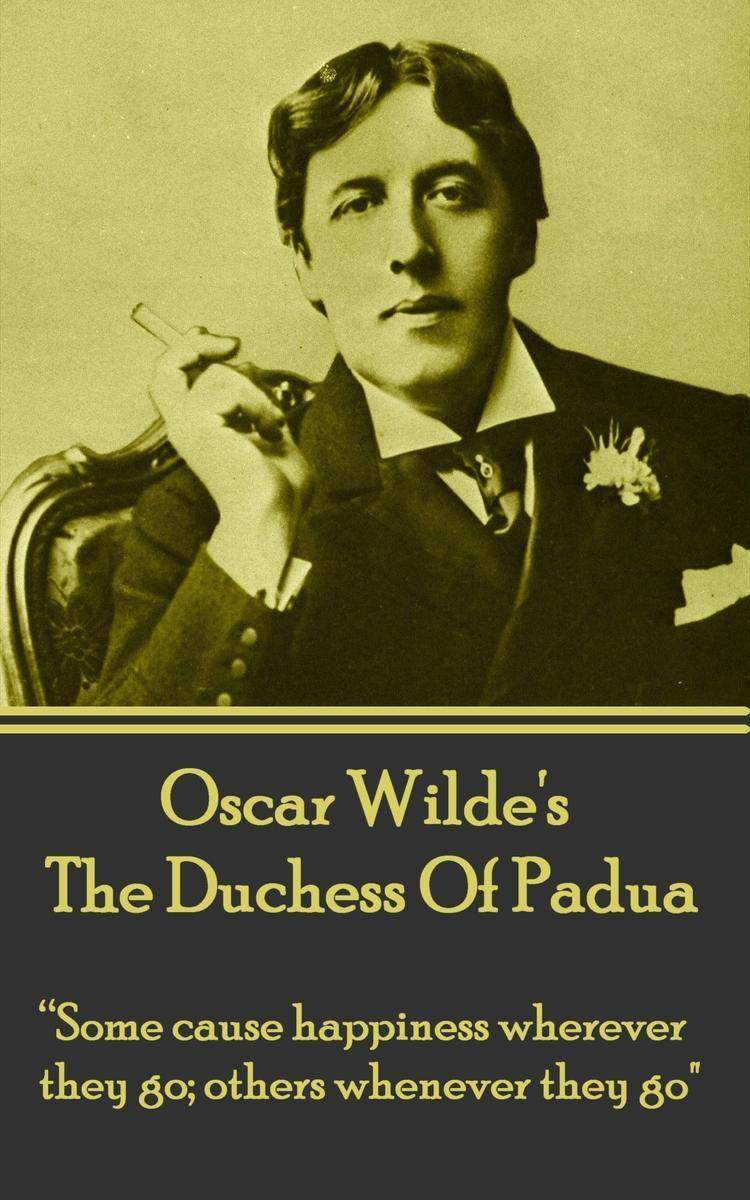
Duchess Of Padua - Some cause happiness wherever they go; others whenever they g
¥23.45
The Duchess of Padua is a play by the world famous wit Oscar Wilde. A five-act melodramatic tragedy set in Padua and written in blank verse. It was written for the actress Mary Anderson in early 1883 while in Paris. Alas she turned it down and it was abandoned until a run on Broadway re-titled Guido Ferranti. It ran for three weeks. It is rarely seen but on account of the immense talents of its author we thought it deserved a wider audience. We hope that includes you.
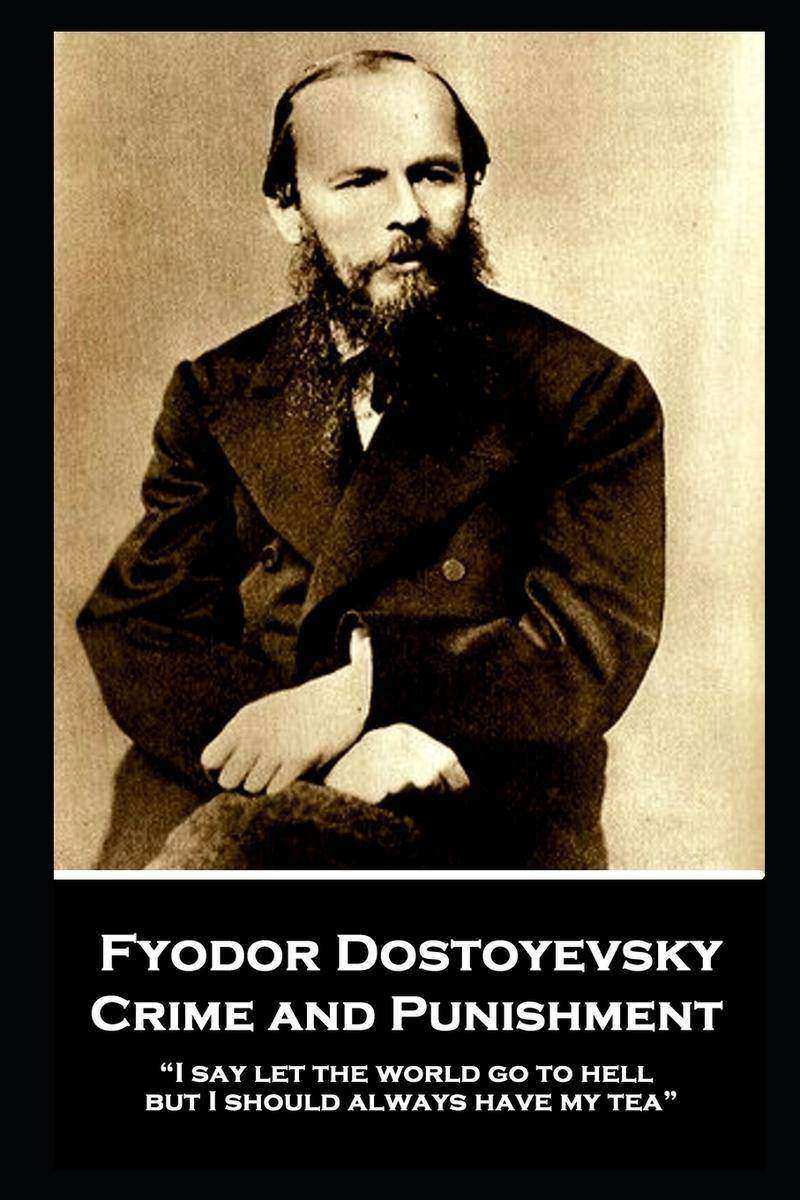
Crime and Punishment - I say let the world go to hell, but I should always have
¥38.75
Fyodor Dostoyevsky was born on 11th November 1821.He was introduced to literature very early. At age three, it was heroic sagas, fairy tales and legends. At four his mother used the Bible to teach him to read and write. His immersion in literature was wide and varied. His imagination, he later recalled, was brought to life by his parents' nightly readings.On 27th September 1837 tragedy struck. Dostoyevsky's mother died of tuberculosis.Dostoyevsky and his brother were now enrolled at the Nikolayev Military Engineering Institute, their academic studies abandoned for military careers. Dostoyevsky disliked the academy, his interests were drawing and architecture.His father died on 16th June 1839 and perhaps triggered Dostoyevsky's epilepsy. However, he continued his studies, passed his exams and obtained the rank of engineer cadet.Dostoyevsky's first completed work was a translation of Honore de Balzac's novel Eugenie Grandet, published in 1843. It was not successful. He believed his financial difficulties could be overcome by writing his own novel. The result was 'Poor Folk', published in 1846, and a commercial success.His next novel, 'The Double', appeared in January 1846. Dostoyevsky now became immersed in socialism. However, 'The Double' received bad reviews and he now had more frequent seizures. With debts mounting he joined the utopian socialist Betekov circle, which helped him to survive. When that dissolved he joined the Petrashevsky Circle, which proposed social reforms. The Petrashevsky Circle was then denounced and Dostoyevsky accused of reading and distributing banned works. Arrests took place in late April 1849 and its members sentenced to death by firing squad. The Tsar commuted the sentence to four years of exile with hard labour in Siberia.His writings on these prison experiences, 'The House of the Dead' were published in 1861.In Saint Petersburg that September he promised his editor he would deliver 'The Gambler', a novella on gambling addiction, by November, although work had yet to begin. It was completed in a mere 26 days.Other works followed but a different approach helped immensely. In 1873 'Demons' was published by the "e;Dostoyevsky Publishing Company"e;. Only payment in cash was accepted and the bookshop was the family apartment. It sold around 3,000 copies.However, Dostoyevsky's health continued to decline, and in March 1877 he had four epileptic seizures. In August 1879 he was diagnosed with early-stage pulmonary emphysema. He was told it could be managed, but not cured.On 26th January 1881 Dostoyevsky suffered a pulmonary haemorrhage. After the second the doctors gave a poor prognosis. A third haemorrhage followed shortly afterwards.Fyodor Dostoyevsky died on 9th February, 1881.

Tamerlane
¥23.45
Nicholas Rowe was born in Little Barford, Bedfordshire, England, on June 20th, 1674. He was educated at Highgate School, and then at Westminster School under the tutelage of Dr. Busby.In 1688, Rowe became a King's Scholar, and then in 1691 gained entrance into Middle Temple. This was his father's decision (he was a barrister) who felt that his son had made sufficient progress to study law. While at Middle Temple, he decided that studying law was easier if seen as a system of rational government and impartial justice and not as a series of precedents, or collection of positive precepts.On his father's death, when he was nineteen, he became the master of a large estate and an independent fortune. His future path now was to ignore law and write poetry with a view to eventually writing plays.The Ambitious Stepmother, Rowe's first play, produced in 1700 at Lincoln's Inn Fields by Thomas Betterton and set in Persepolis, was well received. This was followed in 1701 by Tamerlane. In this play the conqueror Timur represented William III, and Louis XIV is denounced as Bajazet. It was for many years regularly acted on the anniversary of William's landing at Torbay. In 1704, he tried his hand at comedy, with The Biter at Lincoln's Inn Fields. The play is said to have amused no one except the author, and Rowe returned to tragedy in Ulysses (1706). For Johnson, this play was to share the fate of many such plays based on mythological heroes, as, "e;We have been too early acquainted with the poetical heroes to expect any pleasure from their revival"e;The Royal Convert (1707) dealt with the persecutions endured by Aribert, son of Hengist and the Christian maiden Ethelinda. The story was set in England in an obscure and barbarous age. Rodogune was a tragic character, of high spirit and violent passions, yet with a wicked with a soul that would have been heroic if it had been virtuous.Rowe is however well known for his work on Shakespeare's plays. He published the first 18th century edition of Shakespeare in six volumes in 1709. His practical knowledge of the stage helped him divide the plays into scenes and acts, with entrances and exits of the players noted. The spelling of names was normalized and each play prefixed with a dramatis personae. This 1709 edition was also the first to be illustrated, a frontispiece engraving being provided for each play. Unfortunately, Rowe based his text on the discredited Fourth Folio, a failing which many succeeding him also followed.Rowe also wrote a short biography of William Shakespeare, entitled, Some Account of the Life of Mr. William Shakespeare.In Dublin in 1712 a revival of his earlier play, Tamerlane, at a time when political passions were running high, the performance provoked a serious riot.The Tragedy of Jane Shore, played at Drury Lane with Mrs Oldfield in the title role in 1714. It ran for nineteen nights, and kept the stage longer than any other of Rowe's works. In the play, which consists chiefly of domestic scenes and private distress, the wife is forgiven because she repents, and the husband is honoured because he forgives.Whilst his plays met with little success at the time his poems were received extremely well. Although he was not prolific nor his output large the quality was high. With the accession to the throne of George I he was made a surveyor of customs, and then, in 1715, he succeeded Nahum Tate as poet laureate. It was the high point of his artistic life.He was also appointed clerk of the council to the Prince of Wales, and in 1718 was nominated by Lord Chancellor Parker as clerk of the presentations in Chancery. Nicholas Rowe died on December 6th, 1718, and was buried in Westminster Abbey.Rowe married first a daughter of a Mr Parsons and left a son John. By his second wife Anne, nee Devenish, he had a daughter Charlotte.
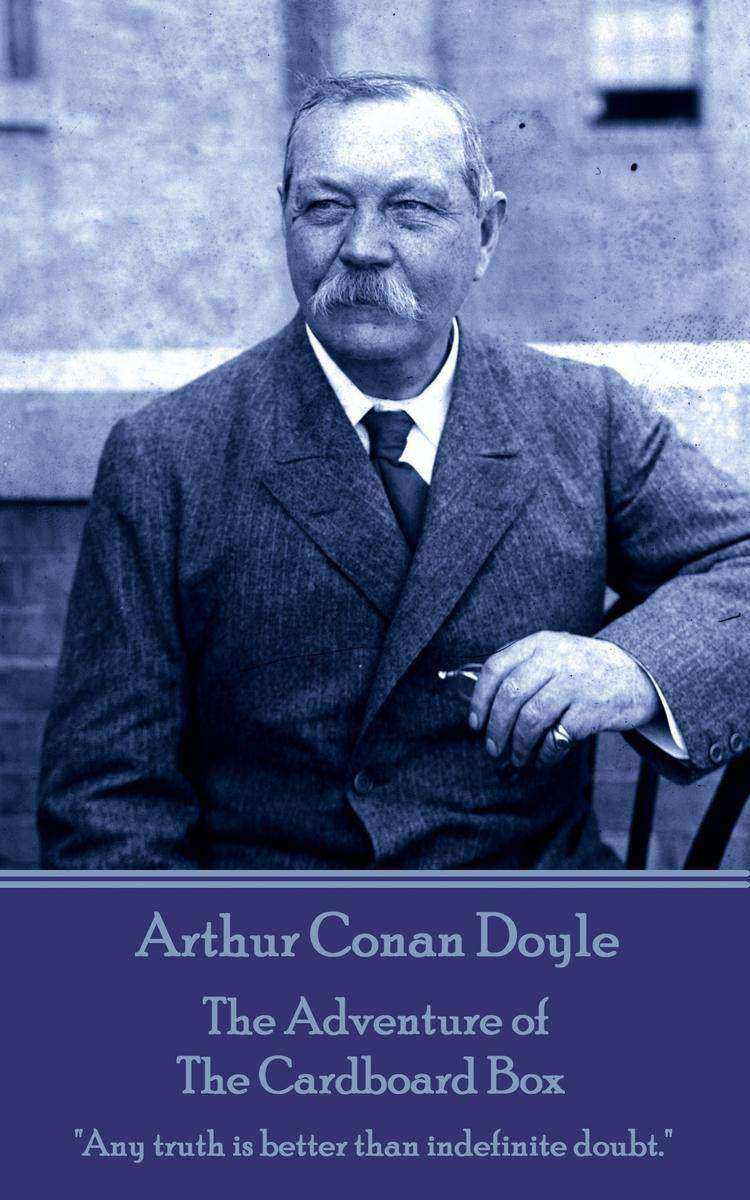
Adventure of the Cardboard Box - Any truth is better than indefinite doubt.
¥14.03
If ever a writer needed an introduction Arthur Conan Doyle would not be considered that man. After all, Sherlock Holmes is perhaps the foremost literary detective of any age. Add to this canon his stories of science fiction and his poems, his historical novels, his plays, his political campaigning, his efforts in establishing a Court of Appeal and there is little room for anything else. Except he was also an exceptional writer of short stories of the horrific and macabre. Something very different from what you might expect. Born in Arthur Conan Doyle was born on 22 May 1859 at 11 Picardy Place, Edinburgh, Scotland. From 1876 - 1881 he studied medicine at the University of Edinburgh following which he was employed as a doctor on the Greenland whaler Hope of Peterhead in 1880 and, after his graduation, as a ship's surgeon on the SS Mayumba during a voyage to the West African coast in 1881. Arriving in Portsmouth in June of that year with less than GBP10 (GBP700 today) to his name, he set up a medical practice at 1 Bush Villas in Elm Grove, Southsea. The practice was initially not very successful. While waiting for patients, Conan Doyle again began writing stories and composed his first novel The Mystery of Cloomber. Although he continued to study and practice medicine his career was now firmly set as a writer. And thereafter great works continued to pour out of him.
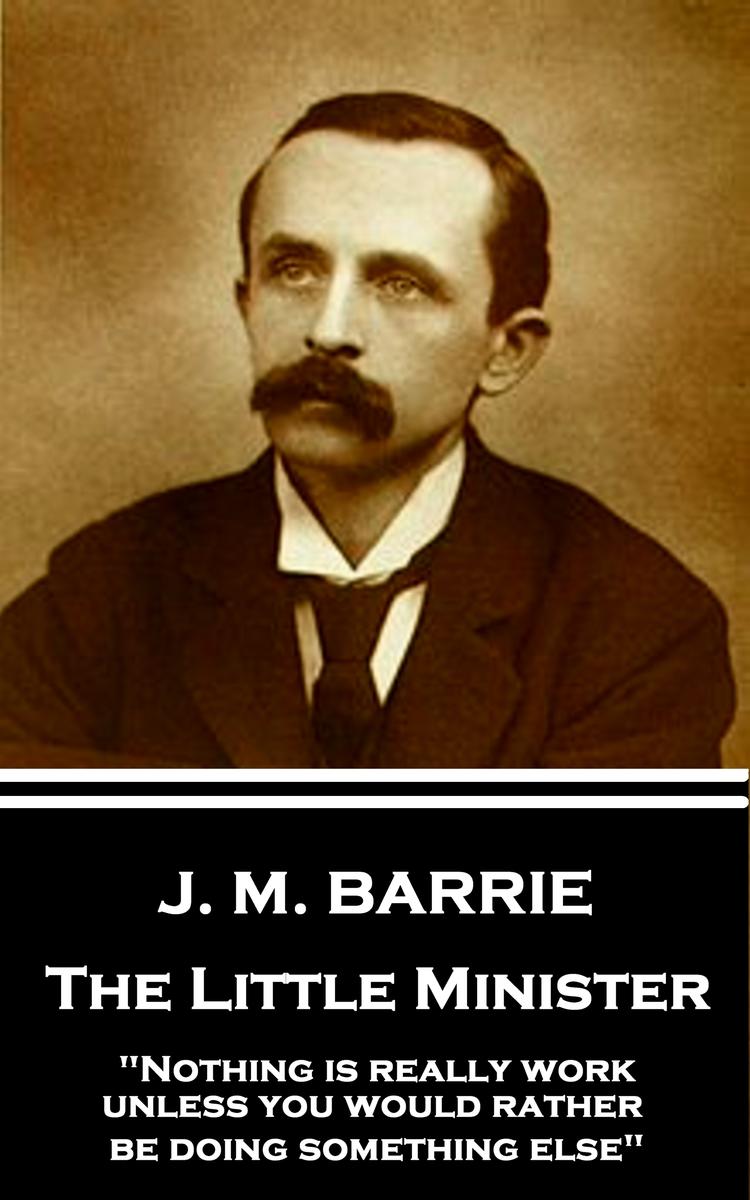
Little Minister - Nothing is really work unless you would rather be doing someth
¥25.80
Sir James Matthew Barrie, 1st Baronet, OM, was born in Kirriemuir, Angus the ninth of ten children on May 9th, 1860. From early formative experiences, Barrie knew that he wished to follow a career as an author. His family wished otherwise and sought to persuade him to choose a profession, such as the ministry. The compromise was that he would attend university to study literature at the University of Edinburgh. He graduated with an M.A. on April 21st, 1882. His first job was as a staff journalist for the Nottingham Journal. The London editor of the St. James's Gazette "e;liked that Scotch thing"e; in Barrie's short stories about his mother's early life. They also served as the basis for his first novels. Barrie though was increasingly drawn to working in the theatre. His first play, a biography of Richard Savage, was only performed once and critically panned. Undaunted he immediately followed this with Ibsen's Ghost in 1891, a parody of Ibsen's plays Hedda Gabler and Ghosts. Barrie's third play, Walker, London, in 1892 led to an introduction to his future wife, a young actress by the name of Mary Ansell. The two became friends, and she helped his family to care for him when he fell very ill in 1893 and 1894. Barrie proposed and they were married, in Kirriemuir, on July 9th, 1894. By some accounts the relationship was unconsummated and indeed the couple had no children. The story of Peter Pan had begun to formulate when Barrie became acquainted with the Llewelyn Davis family in 1897, meeting George, Jack and baby Peter with their nanny in London's Kensington Gardens. In 1901 and 1902, Barrie had back-to-back theatre successes with Quality Street and The Admirable Crichton. The character of "e;Peter Pan"e; first appeared in The Little White Bird in 1902. This most famous and enduring of his works; Peter Pan, or The Boy Who Wouldn't Grow Up had its first stage performance on December 27th, 1904. Peter Pan would overshadow everything written during his career. He continued to write for the rest of his life contributing many other fine and important works. Sir James Matthew Barrie, 1st Baronet, OM, died of pneumonia on June 19th,1937 and was buried at Kirriemuir next to his parents and two of his siblings.

Thirst - Man is born broken. He lives by mending. The grace of God is glue.
¥14.03
Eugene Gladstone O'Neill was born on October 16, 1888 in a hotel bedroom in what is now Times Square, New York. Much of his childhood was spent in the comfort of books at boarding schools whilst his actor father was on the road and his Mother contended with her own demons. He spent only a year at University - Princeton - and various reasons have been given for his departure. However whatever his background and education denied or added to his development it is agreed amongst all that he was a playwright of the first rank and possibly America's greatest. His introduction of realism into American drama was instrumental in its development and paved a path for many talents thereafter. Of course his winning of both the Pulitzer Prize (4 times) and the Nobel Prize are indicative of his status. His more famous and later works do side with the disillusionment and personal tragedy of those on the fringes of society but continue to build upon ideas and structures he incorporated in his early one act plays. Eugene O'Neill suffered from various health problems, mainly depression and alcoholism. In the last decade he also faced a Parkinson's like tremor in his hands which made writing increasingly difficult. But out of such difficulties came plays of the calibre of The Iceman Cometh, Long Day's Journey Into Night, and A Moon for the Misbegotten. Eugene O'Neill died in Room 401 of the Sheraton Hotel on Bay State Road in Boston, on November 27, 1953, at the age of 65. As he was dying, he whispered his last words: "e;I knew it. I knew it. Born in a hotel room and died in a hotel room."e;
King A dipus - Not all things are to be discovered; many are better concealed
¥11.67
The village of Colonus, near Athens, was, in the year 495 BC, the birthplace of Sophocles. Sophocles place in Greek Tragedy is assured. His birth places him between the two other giants of Greek tragedy; schylus and Euripides. He was 30 years younger than schylus, the reigning master of drama and was fifteen years older than Euripides, who would, in turn, usurp Sophocles. Sophocles was a handsome and agile youth and selected, at the age of sixteen, to lead with dance and lyre the chorus which celebrated the triumph of Athens and its Allies over Persia at the battle at Salamis. Sophocles career as a dramatist was marked by a victory in competition with schylus, under exceptional circumstances. At the time the remains of the hero Theseus were being removed by Cimon from the isle of Scyros to Athens and, at the same time, a contest involving the two dramatists was being held. schylus was lauded at the time as the supreme dramatist but Sophocles was popular if inexperienced. The first prize was awarded to Sophocles, greatly to the disgust of the veteran schylus, who taking umbrage, soon afterward departed for Sicily. By all accounts Sophocles would now write and exhibit tragedies and satyric dramas for the next sixty years. The canon of his work varies to between 120 and 180 plays, naturally a number were fillers and not of his highest standard but the prodigious output is extraordinary. In the annual Dionysia, the number of first prizes he won is put at between eighteen and twenty-four, with many more second prizes. On this basis alone schylus and Euripides were left a long way behind. So far from being dulled with age and toil, his powers seem only to have assumed a mellower tone, a more touching pathos, a sweeter and gentler mode of thought and expression. Sophocles was spared the misery of witnessing the final overthrow of his country, dying, at the age or around 90 after a long life full of triumphs and honours, a few months before the defeat of Aegospotami brought the downfall of his beloved Athens. This naval Battle of Aegospotami took place in 405 BC and decisively determined the outcome of the Peloponnesian War. In the battle, a Spartan fleet under Lysander destroyed the Athenian navy. This effectively ended the war, since Athens could not import grain or communicate with its empire without control of the sea. There are only seven dramas of Sophocles that have survived. It can be argued that Sophocles and his works were the high-water mark of Athenian excellence. He is rightly lauded and we can only wonder at the splendours he wrote that are now lost to us.
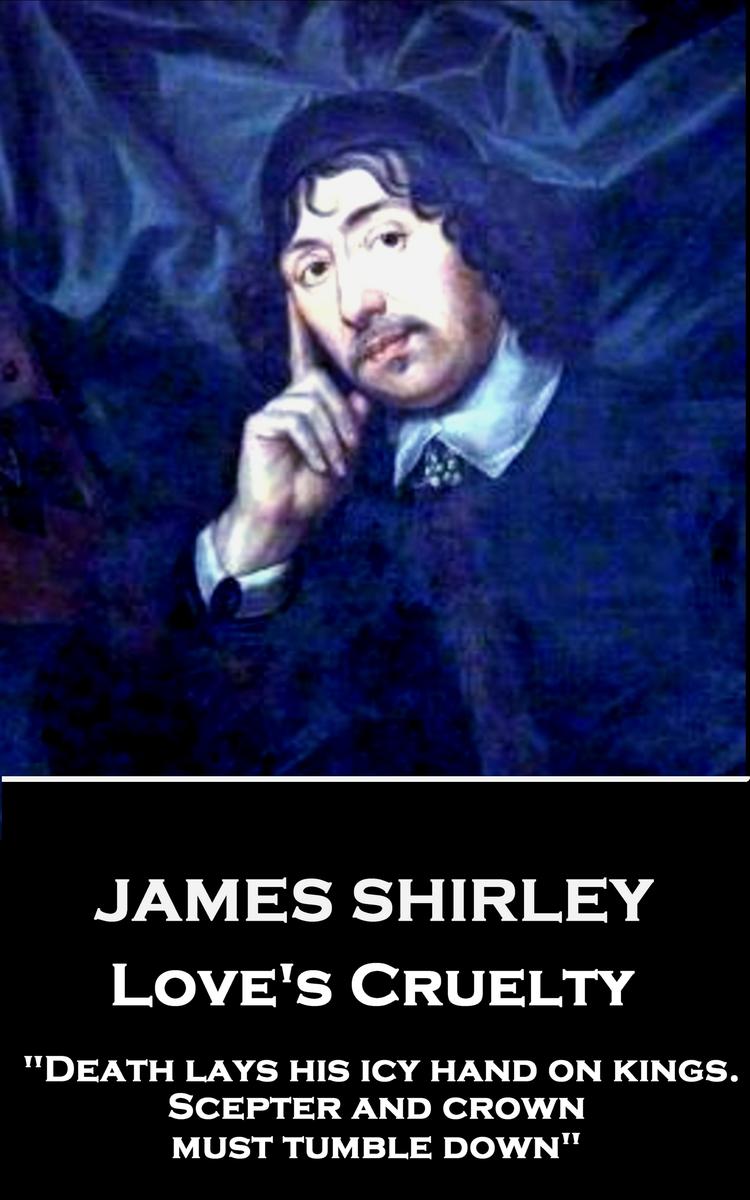
Love's Cruelty - Death lays his icy hand on kings. Scepter and crown must tumble
¥25.80
James Shirley was born in London in September 1596. His education was through a collection of England's finest establishments: Merchant Taylors' School, London, St John's College, Oxford, and St Catharine's College, Cambridge, where he took his B.A. degree in approximately 1618. He first published in 1618, a poem entitled Echo, or the Unfortunate Lovers. As with many artists of this period full details of his life and career are not recorded. Sources say that after graduating he became "e;a minister of God's word in or near St Albans."e; A conversion to the Catholic faith enabled him to become master of St Albans School from 1623-25. He wrote his first play, Love Tricks, or the School of Complement, which was licensed on February 10th, 1625. From the given date it would seem he wrote this whilst at St Albans but, after its production, he moved to London and to live in Gray's Inn. For the next two decades, he would write prolifically and with great quality, across a spectrum of thirty plays; through tragedies and comedies to tragicomedies as well as several books of poetry. Unfortunately, his talents were left to wither when Parliament passed the Puritan edict in 1642, forbidding all stage plays and closing the theatres. Most of his early plays were performed by Queen Henrietta's Men, the acting company for which Shirley was engaged as house dramatist. Shirley's sympathies lay with the King in battles with Parliament and he received marks of special favor from the Queen. He made a bitter attack on William Prynne, who had attacked the stage in Histriomastix, and, when in 1634 a special masque was presented at Whitehall by the gentlemen of the Inns of Court as a practical reply to Prynne, Shirley wrote the text-The Triumph of Peace. Shirley spent the years 1636 to 1640 in Ireland, under the patronage of the Earl of Kildare. Several of his plays were produced by his friend John Ogilby in Dublin in the first ever constructed Irish theatre; The Werburgh Street Theatre. During his years in Dublin he wrote The Doubtful Heir, The Royal Master, The Constant Maid, and St. Patrick for Ireland. In his absence from London, Queen Henrietta's Men sold off a dozen of his plays to the stationers, who naturally, enough published them. When Shirley returned to London in 1640, he finished with the Queen Henrietta's company and his final plays in London were acted by the King's Men. On the outbreak of the English Civil War Shirley served with the Earl of Newcastle. However when the King's fortunes began to decline he returned to London. There his friend Thomas Stanley gave him help and thereafter Shirley supported himself in the main by teaching and publishing some educational works under the Commonwealth. In addition to these he published during the period of dramatic eclipse four small volumes of poems and plays, in 1646, 1653, 1655, and 1659. It is said that he was "e;a drudge"e; for John Ogilby in his translations of Homer's Iliad and the Odyssey, and survived into the reign of Charles II, but, though some of his comedies were revived, his days as a playwright were over. His death, at age seventy, along with that of his wife, in 1666, is described as one of fright and exposure due to the Great Fire of London which had raged through parts of London from September 2nd to the 5th. He was buried at St Giles in the Fields, in London, on October 29th, 1666.
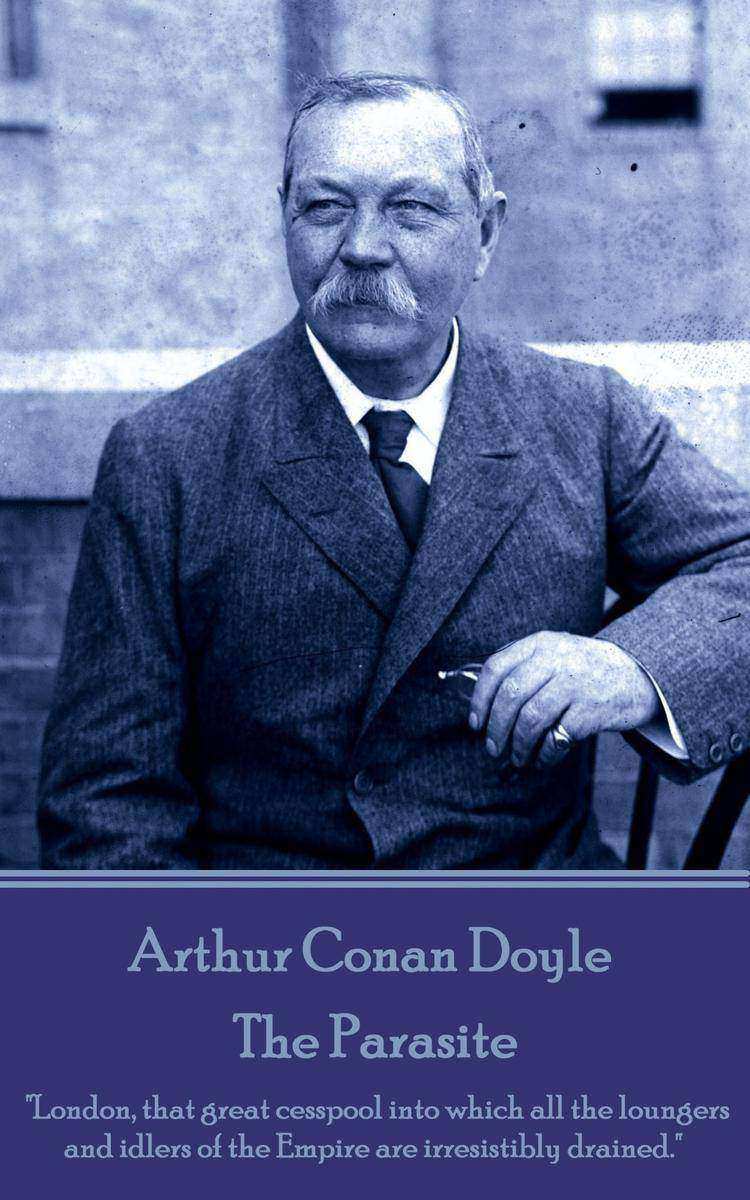
Arthur Conan Doyle - The Parasite
¥15.21
The Parasite is another celebrated novel belonging to the creator of Sherlock Holmes, Arthur Conan Doyle. The protagonist of the narrative is named Austin Gilroy. He is a young professor of physiology whose friend, Professor Wilson, is specializing in occult practices and mesmerism. In one occasion, Gilroy is introduced to Miss Penclosa, a strange, crippled woman who claims to have psychic powers. To persuade the incredulous young man, she hypnotizes his fiancee in front of him. Being now convinced of her powers, though without having any rational explanations for them, Gilroy decides to attend the occult gatherings organized by Wilson and allows Miss Penclosa to practice her powers on him. Miss Penclosa, who falls in love with Gilroy, manages to push him to break his engagement with his fiancee. Gradually, he becomes totally dependent on her and can no longer free himself from her grip. She plays her tricks to make him praise her and caress her until he becomes like a mere toy in her hands. He is only freed when one day, as he is heading towards her house for their daily date, her nurse announces that she has died.

Little Plays - These trenches are like Pompeii, sir.
¥14.03
Ford Madox Ford was born Ford Hermann Hueffer on 17th December 1873 in Wimbledon, London, England.Today he is best known for one book, 'The Good Soldier', which is regularly held to be one of the 100 greatest novels of all time. But, rather unfairly, the breadth of his career has been overshadowed. He wrote novels as well as essays, poetry, memoirs and literary criticism. Today he is well-regarded but known only for a few works rather than the grand arc of his career.Ford collaborated with Joseph Conrad on three novels but would later complain that, as with all his collaborators, and those he so readily championed, his contribution was overshadowed by theirs.He founded The English Review and The Transatlantic Review which were instrumental in publishing and promoting the works of so many authors and movements.During WWI he initially worked on propaganda books before enlisting. Ford was invalided back to Britain in 1917, remaining in the army and giving lectures until the War's end. After a spell recuperating in the Sussex countryside he lived mostly in France during the 1920s.He published the series of four novels known as Parade's End, between 1924 and 1928. These were particularly well-received in America, where Ford spent much of his time from the later 1920s to his death in 1939.His last years were spent teaching at Olivet College in Olivet, Michigan.Ford Madox Ford died on 26th June 1939 at Deauville, France at the age of 65.


