


 购物车
 个人中心

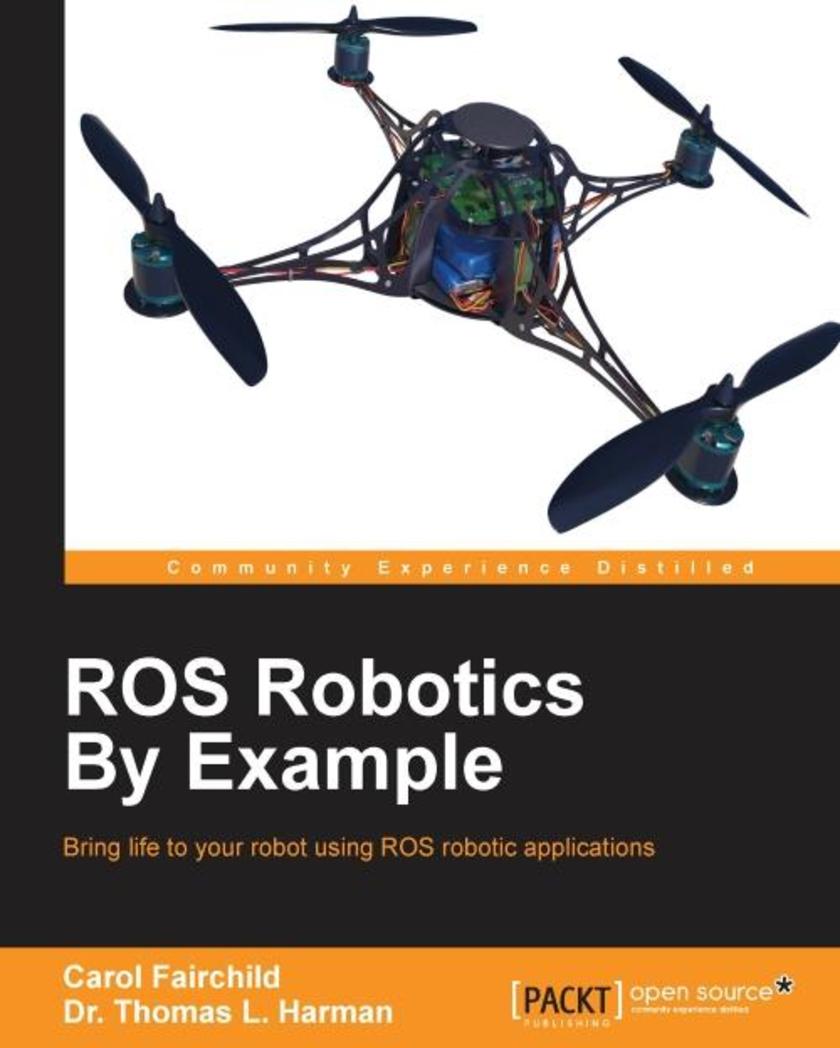
ROS Robotics By Example
¥90.46
Bring life to your robot using ROS robotic applications About This Book .This book will help you boost your knowledge of ROS and give you advanced practical experience you can apply to your ROS robot platforms.This is the only book that offers you step-by-step instructions to solidify your ROS understanding and gain experience using ROS tools.From eminent authors, this book offers you a plethora of fun-filled examples to make your own quadcopter, turtlebot, and two-armed robots Who This Book Is For If you are a robotics developer, whether a hobbyist, researchers or professional, and are interested in learning about ROS through a hands-on approach, then this book is for you. You are encouraged to have a working knowledge of GNU/Linux systems and Python. What You Will Learn .Get to know the fundamentals of ROS and apply its concepts to real robot examples.Control a mobile robot to navigate autonomously in an environment.Model your robot designs using URDF and Xacro, and operate them in a ROS Gazebo simulation.Control a 7 degree-of-freedom robot arm for visual servoing.Fly a quadcopter to autonomous waypoints.Gain working knowledge of ROS tools such as Gazebo, rviz, rqt, and Move-It.Control robots with mobile devices and controller boards In Detail The visionaries who created ROS developed a framework for robotics centered on the commonality of robotic systems and exploited this commonality in ROS to expedite the development of future robotic systems. From the fundamental concepts to advanced practical experience, this book will provide you with an incremental knowledge of the ROS framework, the backbone of the robotics evolution. ROS standardizes many layers of robotics functionality from low-level device drivers to process control to message passing to software package management. This book provides step-by-step examples of mobile, armed, and flying robots, describing the ROS implementation as the basic model for other robots of these types. By controlling these robots, whether in simulation or in reality, you will use ROS to drive, move, and fly robots using ROS control. Style and approach This is an easy-to-follow guide with hands-on examples of ROS robots, both real and in simulation.
Simulation for Data Science with R
¥90.46
Harness actionable insights from your data with computational statistics and simulations using R About This Book Learn five different simulation techniques (Monte Carlo, Discrete Event Simulation, System Dynamics, Agent-Based Modeling, and Resampling) in-depth using real-world case studies A unique book that teaches you the essential and fundamental concepts in statistical modeling and simulation Who This Book Is For This book is for users who are familiar with computational methods. If you want to learn about the advanced features of R, including the computer-intense Monte-Carlo methods as well as computational tools for statistical simulation, then this book is for you. Good knowledge of R programming is assumed/required. What You Will Learn The book aims to explore advanced R features to simulate data to extract insights from your data. Get to know the advanced features of R including high-performance computing and advanced data manipulation See random number simulation used to simulate distributions, data sets, and populations Simulate close-to-reality populations as the basis for agent-based micro-, model- and design-based simulations Applications to design statistical solutions with R for solving scientific and real world problems Comprehensive coverage of several R statistical packages like boot, simPop, VIM, data.table, dplyr, parallel, StatDA, simecol, simecolModels, deSolve and many more. In Detail Data Science with R aims to teach you how to begin performing data science tasks by taking advantage of Rs powerful ecosystem of packages. R being the most widely used programming language when used with data science can be a powerful combination to solve complexities involved with varied data sets in the real world. The book will provide a computational and methodological framework for statistical simulation to the users. Through this book, you will get in grips with the software environment R. After getting to know the background of popular methods in the area of computational statistics, you will see some applications in R to better understand the methods as well as gaining experience of working with real-world data and real-world problems. This book helps uncover the large-scale patterns in complex systems where interdependencies and variation are critical. An effective simulation is driven by data generating processes that accurately reflect real physical populations. You will learn how to plan and structure a simulation project to aid in the decision-making process as well as the presentation of results. By the end of this book, you reader will get in touch with the software environment R. After getting background on popular methods in the area, you will see applications in R to better understand the methods as well as to gain experience when working on real-world data and real-world problems. Style and approach This book takes a practical, hands-on approach to explain the statistical computing methods, gives advice on the usage of these methods, and provides computational tools to help you solve common problems in statistical simulation and computer-intense methods.
Ubuntu Server Cookbook
¥90.46
Arm yourself to make the most of the versatile, powerful Ubuntu Server with over 100 hands-on recipes About This Book Master the skills to setup secure and scalable web services with popular tools like Apache, Nginx, MySQL and HAProxy Set up your own cloud with Open Stack and quickly deploy applications with Docker or LXD Packed with clear, step-by-step recipes to let you protect you valuable data with your own chat servers, code hosting and collaboration tools. Who This Book Is For Ubuntu Server Cookbook is for system administrators or software developers with a basic understanding of the Linux operating system who want to set up their own servers. You are not required to have in-depth knowledge or hands-on experience with Ubuntu, but you should know the basics commands for directory navigation, file management, and the file editing tool. An understanding of computer networks is advisable What You Will Learn Set up high performance, scalable, and fault-tolerant back ends with web and database servers Facilitate team communication with a real-time chat service and collaboration tools Quickly deploy your applications to their own containers and scale your infrastructure as and when needed Find out how to set up your own cloud infrastructure for your internal use or rent it to the public Ensure quick and easy access for your users while also securing your infrastructure from intruders Set up a high performance private network with a personal VPN server and centralized authentication system Swiftly start a content streaming service Set up network storage for private data and source code and say good bye to costly and unreliable cloud services In Detail Ubuntu is one of the most secure operating systems and defines the highest level of security as compared other operating system. Ubuntu server is a popular Linux distribution and the first choice when deploying a Linux server. It can be used with a $35 Raspberry Pi to top-notch, thousand-dollar-per-month cloud hardware. Built with lists that there are 4 million + websites built using Ubuntu. With its easy-to-use package management tools and availability of well-known packages, we can quickly set up our own services such as web servers and database servers using Ubuntu. This book will help you develop the skills required to set up high performance and secure services with open source tools. Starting from user management and an in-depth look at networking, we then move on to cover the installation and management of web servers and database servers, as well as load balancing various services. You will quickly learn to set up your own cloud and minimize costs and efforts with application containers. Next, you will get to grips with setting up a secure real-time communication system. Finally, we’ll explore source code hosting and various collaboration tools. By the end of this book, you will be able to make the most of Ubuntu’s advanced functionalities. Style and approach This easy-to-follow guide contains a series of step-by-step recipes ranging from simple to complex. Each topic will start with basic introduction to each technology followed by a detailed step-by-step installation guide and then a detailed explanation of the approach taken during installation and the various advanced options available.
Mobile Device Exploitation Cookbook
¥71.93
Over 40 recipes to master mobile device penetration testing with open source tools About This Book Learn application exploitation for popular mobile platforms Improve the current security level for mobile platforms and applications Discover tricks of the trade with the help of code snippets and screenshots Who This Book Is For This book is intended for mobile security enthusiasts and penetration testers who wish to secure mobile devices to prevent attacks and discover vulnerabilities to protect devices. What You Will Learn Install and configure Android SDK and ADB Analyze Android Permission Model using ADB and bypass Android Lock Screen Protection Set up the iOS Development Environment - Xcode and iOS Simulator Create a Simple Android app and iOS app and run it in Emulator and Simulator respectively Set up the Android and iOS Pentesting Environment Explore mobile malware, reverse engineering, and code your own malware Audit Android and iOS apps using static and dynamic analysis Examine iOS App Data storage and Keychain security vulnerabilities Set up the Wireless Pentesting Lab for Mobile Devices Configure traffic interception with Android and intercept Traffic using Burp Suite and Wireshark Attack mobile applications by playing around with traffic and SSL certificates Set up the Blackberry and Windows Phone Development Environment and Simulator Setting up the Blackberry and Windows Phone Pentesting Environment Steal data from Blackberry and Windows phones applications In Detail Mobile attacks are on the rise. We are adapting ourselves to new and improved smartphones, gadgets, and their accessories, and with this network of smart things, come bigger risks. Threat exposure increases and the possibility of data losses increase. Exploitations of mobile devices are significant sources of such attacks. Mobile devices come with different platforms, such as Android and iOS. Each platform has its own feature-set, programming language, and a different set of tools. This means that each platform has different exploitation tricks, different malware, and requires a unique approach in regards to forensics or penetration testing. Device exploitation is a broad subject which is widely discussed, equally explored by both Whitehats and Blackhats. This cookbook recipes take you through a wide variety of exploitation techniques across popular mobile platforms. The journey starts with an introduction to basic exploits on mobile platforms and reverse engineering for Android and iOS platforms. Setup and use Android and iOS SDKs and the Pentesting environment. Understand more about basic malware attacks and learn how the malware are coded. Further, perform security testing of Android and iOS applications and audit mobile applications via static and dynamic analysis. Moving further, you'll get introduced to mobile device forensics. Attack mobile application traffic and overcome SSL, before moving on to penetration testing and exploitation. The book concludes with the basics of platforms and exploit tricks on BlackBerry and Windows Phone. By the end of the book, you will be able to use variety of exploitation techniques across popular mobile platforms with stress on Android and iOS. Style and approach This is a hands-on recipe guide that walks you through different aspects of mobile device exploitation and securing your mobile devices against vulnerabilities. Recipes are packed with useful code snippets and screenshots.
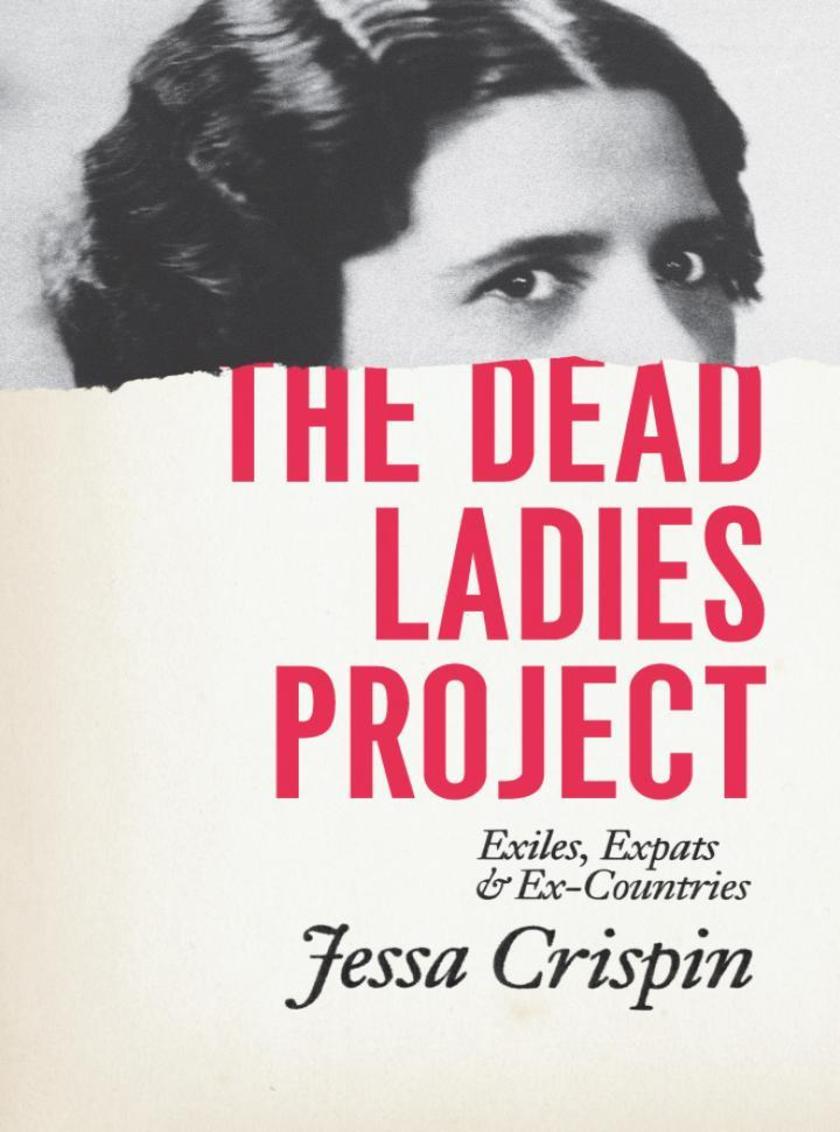
Dead Ladies Project
¥129.49
When Jessa Crispin was thirty, she burned her settled Chicago life to the ground and took off for Berlin with a pair of suitcases and no plan beyond leaving. Half a decade later, she's still on the road, in search not so much of a home as of understanding, a way of being in the world that demands neither constant struggle nor complete surrender.The Dead Ladies Project is an account of that journey-but it's also much, much more. Fascinated by exile, Crispin travels an itinerary of key locations in its literary map, of places that have drawn writers who needed to break free from their origins and start afresh. As she reflects on William James struggling through despair in Berlin, Nora Barnacle dependant on and dependable for James Joyce in Trieste, Maud Gonne fomenting revolution and fostering myth in Dublin, or Igor Stravinsky starting over from nothing in Switzerland, Crispin interweaves biography, incisive literary analysis, and personal experience into a rich meditation on the complicated interactions of place, personality, and society that can make escape and reinvention such an attractive, even intoxicating proposition.?Personal and profane, funny and fervent, The Dead Ladies Project ranges from the nineteenth century to the present, from historical figures to brand-new hangovers, in search, ultimately, of an answer to a bedrock question: How does a person decide how to live their life?

Venusberg
¥129.49
Written from a vantage point both high and deliberately narrow, the early novels of the late British master Anthony Powell nevertheless deal in the universal themes that would become a substantial part of his oeuvre: pride, greed, and the strange drivers of human behavior. More explorations of relationships and vanity than plot-driven narratives, Powell's early works reveal the stirrings of the unequaled style, ear for dialogue, and eye for irony that would reach their caustic peak in his epic, A Dance to the Music of Time.Powell's sophomore novel, Venusberg, follows journalist Lushington as he leaves behind his unrequited love in England and travels by boat to an unnamed Baltic state. Awash in a marvelously odd assortment of counts and ladies navigating a multicultural, elegant, and politically precarious social scene, Lushington becomes infatuated with his very own, very foreign Venus. An action-packed literary precursor to Wes Anderson's The Grand Budapest Hotel, Venusberg is replete with assassins and Nazis, loose countesses and misunderstandings, fatal accidents and social comedy. But beyond its humor, this early installment in Powell's literary canon will offer readers a welcome window onto the mind of a great artist learning his craft.

Planet of Viruses
¥105.95
The past year has been one of viral panic-panic about viruses, that is. Through headlines, public health warnings, and at least one homemade hazmat suit, we were reminded of the powerful force of viruses. They are the smallest living things known to science, yet they can hold the entire planet in their sway.A Planet of Viruses is Carl Zimmer's eye-opening look at the hidden world of viruses. Zimmer, the popular science writer and author of National Geographic's award-winning blog The Loom, has updated this edition to include the stories of new outbreaks, such as Ebola, MERS, and chikungunya virus; new scientific discoveries, such as a hundred-million-year-old virus that infected the common ancestor of armadillos, elephants, and humans; and new findings that show why climate change may lead to even deadlier outbreaks. Zimmer's lucid explanations and fascinating stories demonstrate how deeply humans and viruses are intertwined. Viruses helped give rise to the first life-forms, are responsible for many of our most devastating diseases, and will continue to control our fate for centuries. Thoroughly readable, and as reassuring as it is frightening, A Planet of Viruses is a fascinating tour of a formidable hidden world.
Becoming a Marihuana User
¥82.40
OG Kush. Sour Diesel. Wax, shatter, and vapes. Marijuana has come a long way since its seedy days in the back parking lots of our culture. So has Howard S. Becker, the eminent sociologist, jazz musician, expert on "e;deviant"e; culture, and founding NORML board member. When he published Becoming a Marihuana User more than sixty years ago, hardly anyone paid attention-because few people smoked pot. Decades of Cheech and Chong films, Grateful Dead shows, and Cannabis Cups later, and it's clear-marijuana isn't just an established commodity, it's an entire culture. And that's just the thing-Becker totally called it: pot has everything to do with culture. It's not a blight on culture, but a culture itself-in fact, you'll see in this book the first use of the term "e;users,"e; rather than "e;abusers"e; or "e;addicts."e; Come along on this short little study-now a famous timestamp in weed studies-and you will be astonished at how relevant it is to us today.?Becker doesn't judge, but neither does he holler for legalization, tell you how to grow it in a hollowed-out dresser, or anything else like that for which there are plenty of other books you can buy. Instead, he looks at marijuana with a clear sociological lens-as a substance that some people enjoy, and that some others have decided none of us should. From there he asks: so how do people decide to get high, and what kind of experience do they have as a result of being part of the marijuana worldWhat he discovers will bother some, especially those who proselytize the irrefutably stunning effects of the latest strain: chemistry isn't everything-the important thing about pot is how we interact with it. We learn to be high. We learn to like it. And from there, we teach others, passing the pipe in a circle that begins to resemble a bona fide community, defined by shared norms, values, and definitions just like any other community.?All throughout this book, you'll see the intimate moments when this transformation takes place. You'll see people doing it for the first time and those with considerable experience. You'll see the early signs of the truths that have come to define the marijuana experience: that you probably won't get high at first, that you have to hold the hit in, and that there are other people here who are going to smoke that, too.?

Medea
¥65.75
In the centuries since it was first performed, Euripides's Medea has established itself as one of the most influential of the Greek tragedies. The story of the wronged wife who seeks revenge against her unfaithful husband by murdering their children is lodged securely in the popular imagination, a touchstone for politics, law, and psychoanalysis and the subject of constant retellings and reinterpretations.This new translation of Medea by classicist Oliver Taplin, originally published as part of the acclaimed third edition of Chicago's Complete Greek Tragedies, brilliantly replicates the musicality and strength of Euripides's verse while retaining the play's dramatic and emotional impact.?Taplin has created an edition of Medea that is particularly suited to performance, while not losing any of the power it has long held as an object of reading or study. This edition is poised to become the new standard, and to introduce a new generation of readers to the heights and depths of Greek tragedy.

Hidden Wealth of Nations
¥147.15
We are well aware of the rise of the 1% as the rapid growth of economic inequality has put the majority of the world's wealth in the pockets of fewer and fewer. One much-discussed solution to this imbalance is to significantly increase the rate at which we tax the wealthy. But with an enormous amount of the world's wealth hidden in tax havens-in countries like Switzerland, Luxembourg, and the Cayman Islands-this wealth cannot be fully accounted for and taxed fairly. No one, from economists to bankers to politicians, has been able to quantify exactly how much of the world's assets are currently hidden-until now. Gabriel Zucman is the first economist to offer reliable insight into the actual extent of the world's money held in tax havens. And it's staggering.In The Hidden Wealth of Nations, Zucman offers an inventive and sophisticated approach to quantifying how big the problem is, how tax havens work and are organized, and how we can begin to approach a solution. His research reveals that tax havens are a quickly growing danger to the world economy. In the past five years, the amount of wealth in tax havens has increased over 25%-there has never been as much money held offshore as there is today. This hidden wealth accounts for at least $7.6 trillion, equivalent to 8% of the global financial assets of households. Fighting the notion that any attempts to vanquish tax havens are futile, since some countries will always offer more advantageous tax rates than others, as well the counter-argument that since the financial crisis tax havens have disappeared, Zucman shows how both sides are actually very wrong. In The Hidden Wealth of Nations he offers an ambitious agenda for reform, focused on ways in which countries can change the incentives of tax havens. Only by first understanding the enormity of the secret wealth can we begin to estimate the kind of actions that would force tax havens to give up their practices.Zucman's work has quickly become the gold standard for quantifying the amount of the world's assets held in havens. In this concise book, he lays out in approachable language how the international banking system works and the dangerous extent to which the large-scale evasion of taxes is undermining the global market as a whole. If we are to find a way to solve the problem of increasing inequality, The Hidden Wealth of Nations is essential reading.

Perspectives on Food-Safety Issues of Animal-Derived Foods
¥410.35
As recent stories in the news have shown, maintaining the integrity of the food supply is of critical importance to the consumer. Thousands of Americans die each year from food-borne illnesses, and millions more get sick. Tremendous strides have been made to reduce the incidence of food-borne diseases originating from animal-derived foods, but food safety and food-borne pathogens continue to remain problematic throughout the world. Food-safety scientists from around the nation continue to conduct groundbreaking research not only to understand causative factors in food-borne pathogen prevalence but to develop novel intervention strategies for limiting contamination in all phases of food animal production. The twenty-four essays in this book highlight research efforts of researchers from the tristate Food Safety Consortium established in 1988 by Congress as a research alliance of food-safety scientists at the University of Arkansas, Iowa State University, and Kansas State University. Members of the consortium conduct research through an annual grant approved by Congress and administered by the U.S. Department of Agriculture. Its mission is to conduct extensive investigation into all areas of poultry, beef, and pork meat production, from the farm to the consumer's table. In addition to the consortium researchers, collaborative university researchers, government officials, and industry personnel provide timely reviews of their latest findings with regard to five significant subject areas: preharvest food-borne pathogen ecology and intervention strategies, postharvest food-borne pathogen ecology, rapid methods and detection strategies for food-borne pathogens, antibiotics and antimicrobials in food safety, and emerging issues in food safety. Progress in these research areas provides opportunities to further enhance protection of animal-derived foods from farm to fork.

Collateral Knowledge
¥265.87
It has been more than twelve years since this project began.This book draws upon seventeen months of fieldwork conducted in Tokyo between summer 1997 and fall 2001 followed by frequent research visits in the years that followed.Research and writing were supported by the American Bar Foundation, a Howard Fellowship, an American Council of Learned Societies Fellowship, a residential fellowship at Girton College, Cambridge, and research grants from the Social Science Research Council, the Japan Foundation, and the National Endowment for the Humanities.During that time, I held visiting positions at the University of Tokyo Faculty of Law, the Department of Anthropology at Keio University, and the Institute of Social Science at the University of Tokyo.I am grateful to each of these institutions for their hospitality, and in particular to professors Yoshiko Terao, Satoshi Tanahashi, and Yuji Genda, respectively, for making each of these affiliations possible.
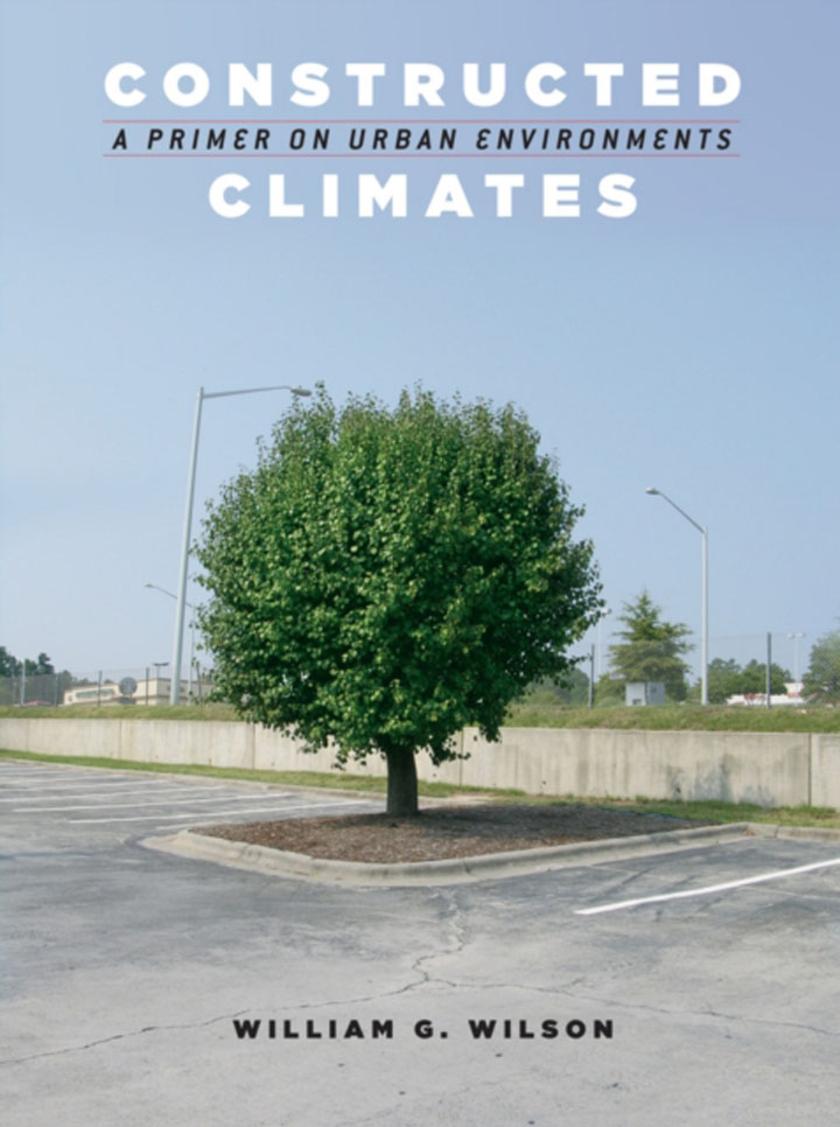
Constructed Climates
¥253.10
As our world becomes increasingly urbanized, an understanding of the context, mechanisms, and consequences of city and suburban environments becomes more critical. Without a sense of what open spaces such as parks and gardens contribute, it's difficult to argue for their creation and maintenance: in the face of schools needing resources, roads and sewers needing maintenance, and people suffering at the hands of others, why should cities and counties spend scarce dollars planting trees and preserving parksIn Constructed Climates, ecologist William G. Wilson demonstrates the value of urban green. Focusing specifically on the role of vegetation and trees, Wilson shows the costs and benefits reaped from urban open spaces, from cooler temperatures to better quality ground water-and why it all matters. While Constructed Climates is a work of science, it does not ignore the social component. Wilson looks at low-income areas that have poor vegetation, and shows how enhancing these areas through the planting of community gardens and trees can alleviate social ills. This book will be essential reading for environmentalists and anyone making decisions for the nature and well-being of our cities and citizens.
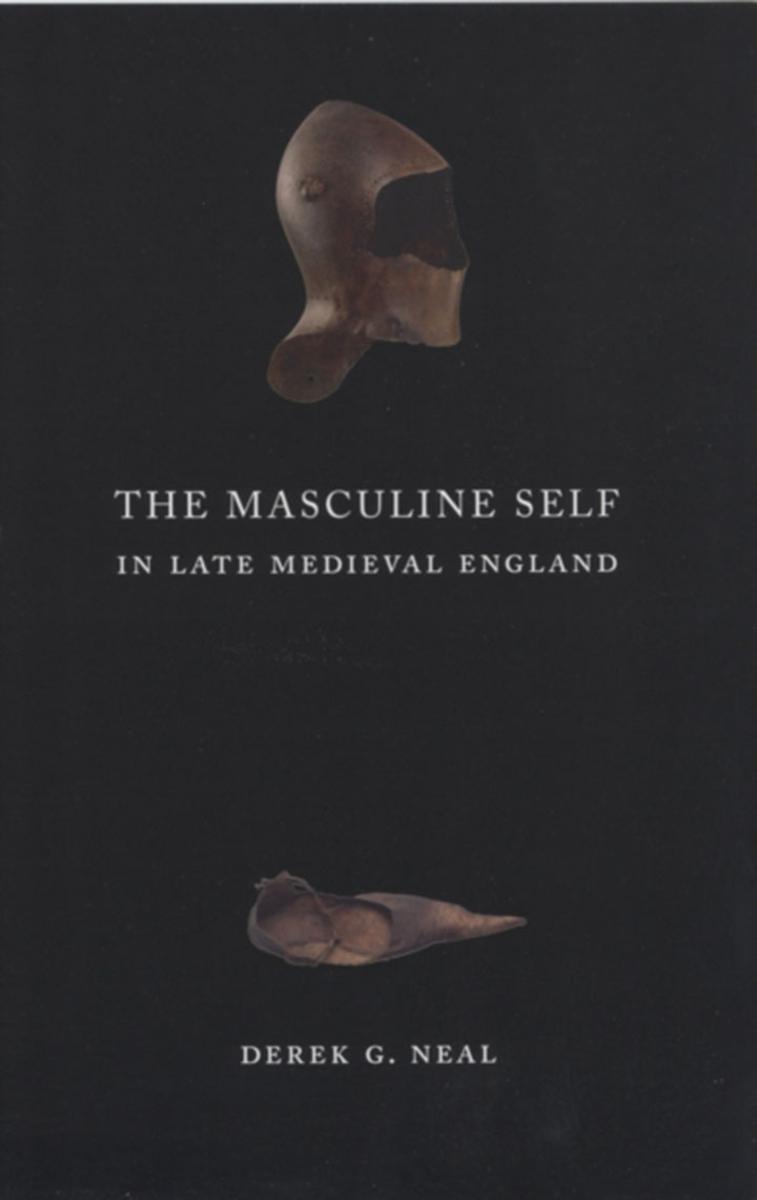
Masculine Self in Late Medieval England
¥247.21
What did it mean to be a man in medieval EnglandMost would answer this question by alluding to the power and status men enjoyed in a patriarchal society, or they might refer to iconic images of chivalrous knights. While these popular ideas do have their roots in the history of the aristocracy, the experience of ordinary men was far more complicated. Marshalling a wide array of colorful evidence-including legal records, letters, medical sources, and the literature of the period-Derek G. Neal here plumbs the social and cultural significance of masculinity during the generations born between the Black Death and the Protestant Reformation. He discovers that social relations between men, founded on the ideals of honesty and self-restraint, were at least as important as their domination and control of women in defining their identities. By carefully exploring the social, physical, and psychological aspects of masculinity, The Masculine Self in Late Medieval England offers a uniquely comprehensive account of the exterior and interior lives of medieval men.

The Sound of Poetry / The Poetry of Sound
¥247.21
Sound-one of the central elements of poetry-finds itself all but ignored in the current discourse on lyric forms. The essays collected here by Marjorie Perloff and Craig Dworkinbreak that critical silence to readdress some of thefundamental connections between poetry and sound-connections that go far beyond traditional metrical studies.Ranging from medieval Latin lyrics to a cyborg opera, sixteenth-century France to twentieth-century Brazil, romantic ballads to the contemporary avant-garde, the contributors to The Sound of Poetry/The Poetry of Sound explore such subjects as the translatability of lyric sound, the historical and cultural roles of rhyme,the role of sound repetition in novelistic prose, theconnections between "e;sound poetry"e; and music, between the visual and the auditory, the role of the body in performance, and the impact of recording technologies on the lyric voice. Along the way, the essaystake on the "e;ensemble discords"e; of Maurice Scve's Dlie, Ezra Pound's use of "e;Chinese whispers,"e; the alchemical theology of Hugo Ball's Dada performances, Jean Cocteau's modernist radiophonics, and an intercultural account of the poetry reading as a kind of dubbing.A genuinely comparatist study, The Sound of Poetry/The Poetry of Sound is designed to challenge current preconceptions about what Susan Howe has called "e;articulations of sound forms in time"e; as they have transformed the expanded poetic field of the twenty-first century.
At the Barriers
¥253.10
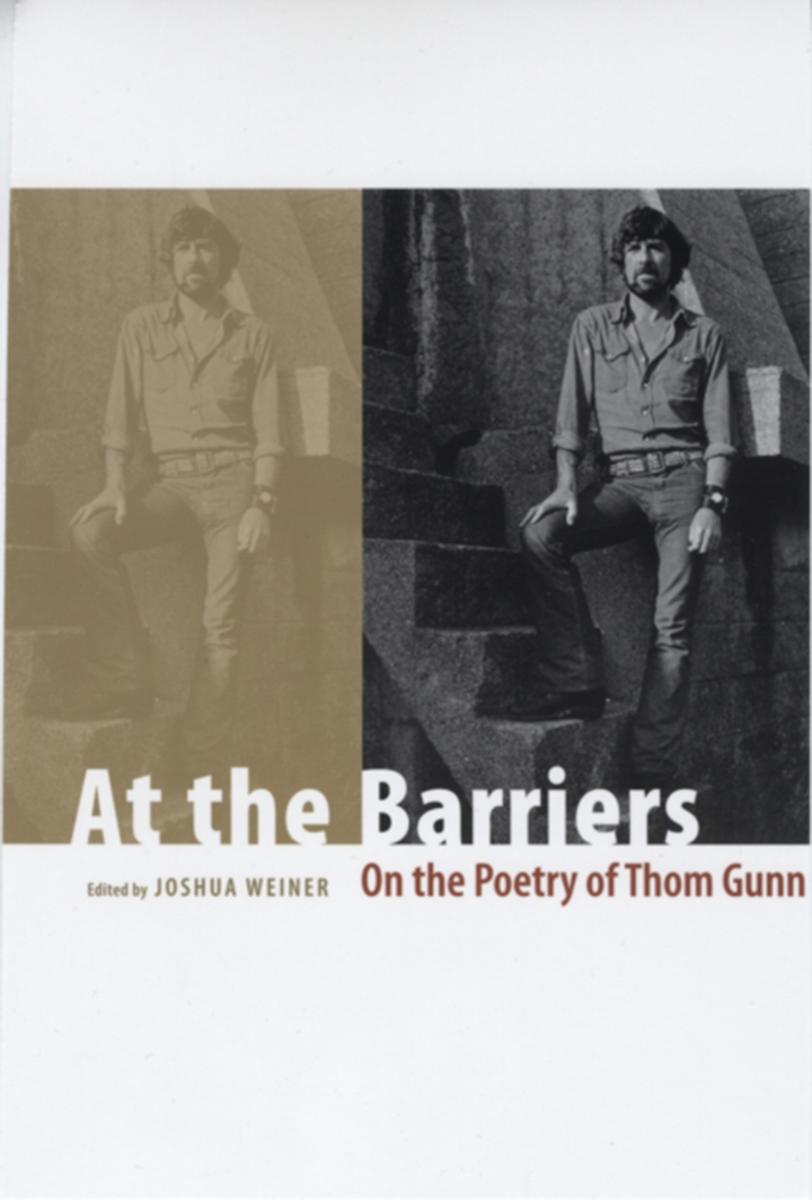
The contributors wish to thank the Hornbake Library at the University of Maryland, College Park, and the Bancroft Library at the University of California, Berkeley, for access to their holdings of Thom Gunn’s manu*s; the Graduate Research Board and the Department of English at the University of Maryland, for material support; Thom’s brother Ander, for the use of his photograph of Thom for this volume’s cover; and Mike Kitay, for permission to print excerpts from unpublished writings and the several published poems, in their entireties, in this volume.

From Mesopotamia to Iraq
¥141.26
In April 2003, the world watched in horror as part of Iraq's cultural heritage disintegrated among the rubble of Saddam Hussein's regime. Looters descended on the Iraq National Museum in Baghdad, Arabic manu*s disappeared from the National Library, and countless Iraqi government records were destroyed. For those to whom Iraq meant only terror, weapons of mass destruction, or oil, several thousand years of history between the Tigris and the Euphrates opened into view. Basic techniques and concepts of civilization, without which human society would not have attained its present level, had their origin there. A writing system, the prerequisite of modern and premodern societies, was part of the human knowledge that spread from Mesopotamia, as were bureaucratic techniques such as archiving, still basic to any modern administration, or early forms of monotheism. Such “firsts” will be highlighted in the following pages. But the uniqueness of the ancient Mesopotamian culture rests not only on countless innovations of this kind but, to an even greater degree, on the fact that we can follow its gradual development and its absorption into the cultural canon over a period of ten thousand years, almost without major gaps.

Church Mother
¥253.10
Imbued with character and independence, strength and articulateness, humor and conviction, abundant biblical knowledge and intense compassion, Katharina Schutz Zell (1498-1562) was an outspoken religious reformer in sixteenth-century Germany who campaigned for the right of clergy to marry and the responsibility of lay people-women as well as men-to proclaim the Gospel. As one of the first and most daring models of the pastor's wife in the Protestant Reformation, Schutz Zell demonstrated that she could be an equal partner in marriage; she was for many years a respected, if unofficial, mother of the established church of Strasbourg in an age when ecclesiastical leadership was dominated by men.Though a commoner, Schtz Zell participated actively in public life and wrote prolifically, including letters of consolation, devotional writings, biblical meditations, catechetical instructions, a sermon, and lengthy polemical exchanges with male theologians. The complete translations of her extant publications, except for her longest, are collected here in Church Mother, offering modern readers a rare opportunity to understand the important work of women in the formation of the early Protestant church.
Biology's First Law
¥211.90
So certain is this that we may boldly state that it is absurd for human beings even to attempt it, or to hope that perhaps some day another Newton might arise who would explain to us, in terms of natural laws unordered by intention, how even a mere blade of grass is produced.Kant, Critique of Judgment (1790)

Class War?
¥141.26
Recent battles in Washington over how to fix America's fiscal failures strengthened the widespread impression that economic issues sharply divide average citizens. Indeed, many commentators split Americans into two opposing groups: uncompromising supporters of unfettered free markets and advocates for government solutions to economic problems. But such dichotomies, Benjamin Page and Lawrence Jacobs contend, ring false. In Class Warthey present compelling evidence that most Americans favor free enterprise and practical government programs to distribute wealth more equitably.At every income level and in both major political parties, majorities embrace conservative egalitarianism-a philosophy that prizes individualism and self-reliance as well as public intervention to help Americans pursue these ideals on a level playing field. Drawing on hundreds of opinion studies spanning more than seventy years, including a new comprehensive survey, Page and Jacobs reveal that this worldview translates to broad support for policies aimed at narrowing the gap between rich and poor and creating genuine opportunity for all. They find, for example, that across economic, geographical, and ideological lines, most Americans support higher minimum wages, improved public education, wider access to universal health insurance coverage, and the use of tax dollars to fund these programs.In this surprising and heartening assessment, Page and Jacobs provide our new administration with a popular mandate to combat the economic inequity that plagues our nation.

Lawyers of the Right
¥200.12
A timely and multifaceted portrait of the lawyers who serve the diverse constituencies of the conservative movement, Lawyers of the Right explains what unites and divides lawyers for the three major groups-social conservatives, libertarians, and business advocates-that have coalesced in recent decades behind the Republican Party. Drawing on in-depth interviews with more than seventy lawyers who represent conservative and libertarian nonprofit organizations, Ann Southworth explores their values and identities and traces the implications of their shared interest in promoting political strategies that give lawyers leading roles. She goes on to illuminate the function of mediator organizations-such as the Heritage Foundation and the Federalist Society for Law and Public Policy-that have succeeded in promoting cooperation among different factions of conservative lawyers. Such cooperation, she finds, has aided efforts to drive law and the legal profession politically rightward and to give lawyers greater prominence in the conservative movement. Southworth concludes, though, that tensions between the conservative law movement's elite and populist elements may ultimately lead to its undoing.


